Posted: January 24, 2020 | Author: kayelynnebooth | Filed under: Book Review, Books, Nonfiction, Opinion, Teaching Writing, Writing | Tags: Book Review, Kevin J. Anderson, Martin L. Shoemaker, On Being a Dictator, Writing, Writing by dictation, Writing to be Read |
Writing Resource
Most writers are busy people. I know I am. Most of my 2019 writing goals are still sitting on a back burner, simmering, because I was way to busy with work, school and this blog, as well as launching WordCrafter Quality Writing & Author Services and WordCrafter Press, to stir up my own stories and bring them to a boil. So, I’ve been looking into different ways to manage my time better. As I get older, skipping sleep in order to write seems to be getting less and less feasible.
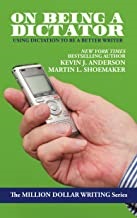
On Being a Dictator, by Kevin J. Anderson and Martin L. Shoemaker is a author’s resource about how writers can use idle times in your day to spark creativity and increase productivity through dictation. It is a part of the Million Dollar Writing series, designed to help aspiring authors along the way.
I was blessed, back in 2012, to hear Kevin J. Anderson speak during the Writing the Rockies Conference at Western State Colorado University, (then, just plain old Western State College), where he talked about using dictation in his writing. While the rest of us had all been indulging in Western’s wonderful cuisine, Kevin had written roughly two chapters of his latest novel while hiking a pristine trail in the beautiful Gunnison Valley, in beautiful Colorado.
I was impressed with the idea at the time, and soon went out and bought myself a digital recorder, much like the one featured on the book cover. Although, it did help me to preserve my writing ideas on the spot, it required me to be embarked in activities where I could stop frequently to turn on and off the recorder. Then when I went back to access these ideas and get them down in print, I had to skip around to find the ideas or perfect sentences I was looking for and then type them out myself, which took up just as much time, if not more, so it didn’t take me long to give up this idea and go back to pecking out my story, one word at a time, as I had always done.
Upon reading On Being a Dictator, my thoughts on the matter have changed a bit. Anderson and Shoemaker begin by emphasizing the point that, like everything else in life, dictation takes time and practice, making me realize how foolish it was for me to expect to go buy a digital recorder and immediately start cranking out novels.
This resource is also valuable because the two co-authors each have different approaches to dictation which fit best into their individual lifestyles, proving that there is no one ‘right way’ to use this method and technology. This made me realize that I really didn’t give dictation a chance. I didn’t play with it enough to discover the different ways it might be useful to me with practice.
The book also includes descriptive lists of the different types of equipment and transcription software available and the advantages and disadvantages of each, as well as transcription services. Since technology is changing very rapidly, there are devices and software available now, which were not even thought of back in 2012, and likely next year, there will be even better technology available that wasn’t mentioned here. But their efforts gave me a good idea of what is available now, and got me thinking about how it might be of use to me.
Once again, I am impressed with this idea of turning otherwise idle activities, creativity-wise into productive writing time. On Being a Dictator has convinced me I should give writing by dictation another go. Maybe you should, too. I give it four quills.

Buy Link: https://www.amazon.com/Being-Dictator-Dictation-Million-Writing-ebook/dp/B07TYJLJNS/ref=sr_1_1?keywords=On+Being+a+Dictator&qid=1578591530&sr=8-1
Kaye Lynne Booth does honest book reviews on Writing to be Read in exchange for ARCs. Have a book you’d like reviewed? Contact Kaye at kayebooth(at)yahoo(dot)com.
Posted: January 22, 2020 | Author: kayelynnebooth | Filed under: Advertising, Books, Copywriting, Editing, Promotion, WordCrafter, Writing | Tags: Book promotions, Editing, Social Media Marketing, Social Media Promotion, WordCrafter, WordCrafter Quality Writing & Author Services, Writing to be Read |

I started Write it Right Editing Services back in 2010 because I didn’t think an author should have to take out a mortgage just to pay for having their book edited. Book editing can be expensive! We all want our writing to shine and be flawless, but like they say, a patient who diagnoses oneself, or a defendant who represents oneself in a court of law, an author who edits their own work has a fool for a client. Okay, maybe it’s not quite the same. Good writers usually know how to edit, and may be able to do a fine job editing the work of others, because they know the basics of good writing. But, when you edit your own work, many times you see what you know the words are supposed to say, even if that isn’t what you put down on the page, and errors can be easily overlooked. Not only that, but authors don’t always have an unbiased eye when it comes to their own work, or perhaps they just are unable to see how their wonderful words could possibly be made any better.
This is why an author needs to have someone else go over their work. Some authors use critique partners, or writing groups to vette their work and get feedback to make their writing better, and that can work if your critique partner or the members of your writing group are talented writers themselves. But if they are not, or you don’t have any of those people readily available to you, you probably need to hire an editor to polish up your manuscript before publication.
Aspiring authors who have not yet been down the path to publication may need more than just a basic line edit. They may need guidance as to story structure and proper formatting, too. These are the services Write it Right Editing Services still offers under the WordCrafter umbrella, at rates that won’t break the bank or be too terribly hard on your pocketbook. Most of us are starving artists, after all.
I got my M.F.A. in Creative Writing during a transition period, when the education sector hadn’t caught up with the changes that the rapid growth new technologies, specifically the development and rising popularity of the Internet. Hence, the one thing about being an author that they didn’t teach me was how to market and promote my own books once they were published. Gone are the days when a publisher buys your book and not only publishes, but promotes it.
Traditional publishers are still out there, but with the rise of self-publishing, they realized that authors were capable of handling promotion, so the amount they are willing to offer has gone down considerably, and many small independent presses don’t have the resources to throw promotion of your book in with the deal. Besides, the majority of authors out there these days are self-published, so they have to manage their own promotions anyway.
An author today has a few choices to make. Self-promote or outsource by hiring a marketing company, which doesn’t come cheap. If you know a little about marketing, you might be okay handling these things yourself. But, that was the one area of the business of writing that my M.F.A. program didn’t cover, and that’s why I am currently back in school earning a B.A. in Marketing. I’ve got books out there, but it’s up to me to sell them.
Marketing and promotion can be a time consuming activity, especially if you design your own graphics, as well as creating content for your promos. And let’s face it, time spent creating promotional materials is time spent not writing. That’s the trade-off that we authors are faced with.
The solution is to outsource your promotions, but again, this can be expensive. So, I decided to offer WordCrafter Social Media Copywriting & Book Promotions as a way to assist my fellow authors in freeing up their time so they can spend more of it doing what they do best – writing. This service offers inexpensive promotion packages, or you can opt to purchase individual posts to be used on social media.
So, if you are a busy author who would love to have more time to write or you need a little help in making your work shine, pop on over and see what WordCrafter Quality Writing & Author Services has to offer you. You’ll be glad that you did.
Like this post? Let me know in the comments. You can be sure not to miss any of Writing to be Read’s great content by subscribe to e-mail or following on WordPress. If you found this content helpful or entertaining, please share.
Posted: January 20, 2020 | Author: kayelynnebooth | Filed under: Chatting with the Pros, Interview, Memoir, Nonfiction, Self-Help, Writing, Writing Workshops | Tags: Chatting with the Pros, Diana Raab, Memoir, Nonfiction, Self-Help, Writing, Writing to be Read |

My author guest today on “Chatting with the Pros” is someone who focuses on helping fellow authors to find and harness their positive inner energies and let them shine through, both in their writing and in their lives. She has written memoirs, poetry, written and/or compiled writing resource books, and she offers workshops focused on healing and transformation through memoir writing. Her works have won numerous awards, including Best Book Award, Feathered Quill Book Award, Mom’s Choice Award, Eric Hoffer Award, and Allbooks Review Editor’s Choice Award. Please help me welcome creative nonfiction author, Diana Raab, PhD.

Kaye: You have a PhD in Psychology with a research focus on the healing and transformative powers of memoir writing. Can you explain briefly what those powers are?
Diana: My research examined how pivotal experiences encouraged individuals to write memoirs as a way to transform, grow, and become empowered. I interviewed esteemed writers about the role writing their memoirs had in their lives. Poet Kim Stafford said that writing his memoir transformed him, in that it helped him come to a new understanding about his brother’s suicide. Another writer said that the writing experience relieved him from the pain of his past. And another writer who lost a son said that writing helped her look at life in a much larger context and also helped to keep her son “alive.” Writer Maxine Kingston said that she was transformed by penning her memoir because she was finally able to tell the stories from her past, which for a long time had been a secret. Thus, in most cases, the writers were liberated from the demons of their pasts.
Kaye: How can writing facilitate transformation and empowerment?
Diana: Transformation is a dramatic change in one’s physical or psychological well-being. It’s about becoming more aware of and facing our thoughts, feelings, and experiences. Writing down our feelings can lead to self-realization and a sense of empowerment, because we’re moving our feelings from inside of us and onto the page; and like therapy, it can help us work through our challenges. Writing can also be transformative because it helps us gain a better understanding of ourselves. With that understanding comes deeper reflection, and consequently a more profound sense of harmony.
Kaye: What is your biggest challenge of being a writer?
Diana: That’s a great question. In my earlier years, while raising children, my biggest challenge was carving out the time to write. These days, I would say that my biggest challenge as a writer is finding inspiration.
Kaye: What time of day do you prefer to do your writing? Why?
Diana: When I was younger, I used to love writing in the wee hours of the night, but now that I’m older, my preference is to write early in the morning. That’s when my mind and thought processes are most clear. I like writing just after my morning meditation, as sometimes thoughts emerge during this time that can move me into a highly creative and inspirational zone.
Kaye: Besides writing, what are your favorite things to do?
 Diana: I love being with my adult children (ages 36, 34, and 30) and playing with my grandchildren; and I love hiking and going for beach walks. I meditate every day, and like most writers, I love to read. I also love cooking, especially soups and desserts. I love doing needlepoint, a craft I learned from my maternal grandmother, Regina, who committed suicide when I was ten. She was my caretaker, and this was a huge loss for me. Her story is the basis of my first memoir, Regina’s Closet: Finding My Grandmother’s Secret Journal.
Kaye: How does memoir writing differ from other writing forms? Don’t most forms of writing “unleash the true voice of the inner self”?
Diana: I don’t believe that most forms of writing “unleash the true voice of the inner self.” It might start out that way when writing fiction, but soon the imagination comes into play. Memoir writing is a first-person account chronicling a slice of life, not an entire life. It is a subjective recollection from one’s own perspective. Typically, there is a theme or thread running through a memoir. What sets a memoir apart from other forms of nonfiction is that it weaves the story as it happened, but also includes reflection. It’s much more than a journalistic telling. Compelling memoirs definitely unleash the true inner self.
Kaye: Tell me about your writing workshops. What can I expect to come away with if I take a workshop with you?
Diana: What you will come away with will depend on the nature of the particular workshop. Each one is different, depending on its focus. I usually revise my workshop format accordingly. For example, I’ve taught high-risk youth, bereaved adults, hospice workers, and those battling with drug addiction. My regular workshops are related to memoir writing, where participants of different writing levels come together to work on their personal stories.
I limit these groups to ten individuals so that I can offer individualized coaching. Participants learn by hearing my comments about their memoirs, and we also discuss published memoirs. They’re grateful to hear about all the tidbits of information I’ve gathered during my 40-year writing career. I stress the idea that writing is a process, and like any other process, patience is necessary. Those who take my workshops say that they leave them feeling very inspired to continue their memoir-writing journeys.
Kaye: What lessons do you want readers to walk away with from reading Writing for Bliss: A Seven-Step Plan for Telling Your Story and Transforming Your Life?
Diana: There are many lessons within those pages, as I weave my story into a how-to book on personal writing. I want readers to understand the transformative powers of memoir writing and be aware that writing is a journey. I stress the idea of truly enjoying that journey and not becoming focused on the destination. People have called Writing for Bliss “instructive, inspiring, healing, and a blueprint for writing for healing and transforming your life.”
 Kaye: You put together a book project that was quite innovative with Writers and Their Notebooks. I thought it was a really cool idea, and apparently others did too, since it became a Best Books award finalist with USA Book News. In fact, I’d bet there is an abundance of valuable information for aspiring authors. What inspired you to compile an anthology of author essays about the value of an author’s notebook?
Diana: As I mention in the Preface, “As artists have sketchbooks, writers have notebooks.” My inspiration for creating this anthology originated from my own experience and the joy that journaling has brought into my own life. For more than five decades, journaling had helped ground and center me. My passion began with my mother giving me a Kahlil Gibran journal when I was ten to help me cope with my grandmother’s suicide.
This book is a celebration of well-published writers who use their notebooks to inspire, record, and document anything and everything that nurtures or sparks their creative energy. Many of the essays in the collection are confessional in nature. This year celebrates the book’s tenth anniversary. The project is even more meaningful for me now, as many of the writers in the anthology have passed away, such as Sue Grafton and Michael Steinberg.
 Kaye: Another valuable anthology which you put together is Writers on the Edge, a collection of 22 authors being brutally honest about their own battles with addiction. Was it difficult to get so many authors to open up?
Diana: Great question. Addiction is defined as the obsession and compulsion to self-destruct. Author James Brown and I co-compiled this anthology because of our passion for the subject. We contacted writers who we thought would be interested in writing about their journaling practices. We were honored when Jerry Stahl agreed to write the foreword. A number of authors said that they didn’t know if they could write so intimately and honestly, but they did. Some had never written nonfiction before, so it was a huge challenge for them, but in the end, they felt a huge sense of satisfaction. As we said in the preface, “These battles are not fought alone, and perhaps these stories will also provide insight and hope to all those and their loved ones struggling with some form of addiction and its inevitable consequences.”
 Kaye: You’ve written two memoirs yourself. Why did you choose to share with others your inner thoughts and feelings during a difficult time in your own life, with Healing with Words: A Writer’s Cancer Journey?
Diana: After my first cancer diagnosis in 2001, I decided, as a gift to myself, to enroll in graduate school for my MFA in writing. My two memoirs were a part of my creative thesis. In actuality, I had no intention of writing a memoir about my cancer journey. I was the type of person who believed that I got breast cancer, had a mastectomy and reconstruction, was healed, and that it was over and I’d be okay. I didn’t want my cancer diagnoses to define me.
During my recovery, I did a lot of journaling, but with no intention to publish a book on the subject. Five years later, to my surprise, I was diagnosed with multiple myeloma, an incurable form of bone marrow cancer. Supposedly, it’s not connected to breast cancer. I was devastated, but the silver lining was being told that I had smoldering myeloma and wouldn’t yet need treatment, just regular blood work.
My friends and colleagues encouraged me to write about my cancer journey because they thought it would help others. To make the book a little different and more universal, I decided to create a self-help memoir where I provided journaling opportunities for readers to share their own cancer journeys.
Kaye: You won the Mom’s choice award for your first memoir was Regina’s Closet: Finding My Grandmother’s Secret Journal. What kind of revelations does it contain?
Diana: During the writing process, I learned a lot about my grandmother. I began writing the book about the time of my first cancer diagnosis. I wanted to study my grandmother’s life to see if she’d committed suicide in 1964 because of cancer, but that wasn’t the case. I learned that at the time of her death, she was very depressed, and her doctor had given her a prescription for Valium, which she eventually overdosed on. By studying my grandmother’s life, I learned that she held on to the demons of her past, such as being orphaned during World War I and marrying an abusive man. All this inner turmoil eventually got to her, so she took her own life.
Kaye: Imagine a future where you no longer write. What would you do?
Diana: I don’t want to think about it. I love writing, whether it’s journaling; or writing poems, articles, letters, or blogs. It’s where I find my peace.
Kaye: What is next for Diana Raab? What can your readers and authors look forward to in the future?
Diana: Last year I turned 65 and felt that there was a huge shift in my vision. While I’ve always practiced mindfulness, I find that I’ve been living more in the moment. Also, in recent years, I’ve lost a number of loved ones, which is another reminder to enjoy the present. Thinking a little farther ahead, I hope to give more workshops and maybe create some short inspirational books. I’m currently working on my fifth book of poetry. I also have an unfinished novel that has been sitting in my drawer. Maybe one day I’ll be inspired to get back into it, or perhaps I’ll become inspired to write a children’s book for my grandchildren. Time will tell!
I want to extend my thanks to Diana Raab for joining us today and sharing with us. I have to agree with her philosophies, as I’ve experienced the healing powers of writing in my own life. I believe many of us have. If you’d like more information about Diana, her books, projects and events at her website: dianaraab.com.
You can catch the monthly segment “Chatting with the Pros” on the third Monday of every month in 2020, or you can be sure not to any of the great content on Writing to be Read by signing up by email or following on WordPress. Please share content you find interesting or useful.
Posted: January 13, 2020 | Author: kayelynnebooth | Filed under: Books, Interview, Nonfiction, Paranormal, Writing | Tags: Author Interview, Kym O'Connell Todd, Mark and Kym Todd, Mark Todd, Nonfiction, School, Wild West Ghosts, Writing to be Read |
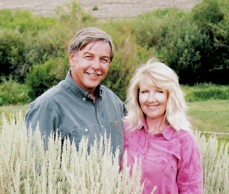
I am so excited to have these two authors, Mark Todd and Kym O’Connell Todd, as my guests today. They are both really great people and our conversations are always interesting, to say the least. Although I’ve never met Kym in person, Mark was my professor and mentor, and later my co-worker at Western State Colorado University. They also were a part of one of my 2018 “Ask the Authors” blog series and will be featured authors in the anthology of the same name, which is taken from that series and is planned for release in 2020.
You’ve heard of those couples who have been married so long and know each other so well that they can finish each other’s sentences? Well, these two really do that, both in speech and in writing, and they have co-authored several books together. We’re going to talk today about their nonfiction collaboration, Wild West Ghosts, which documents their paranormal research, (which was of course, carried out as a team). Let’s welcome them now and see what they have to share with us today.
Kaye: You’ve written both fiction and nonfiction. What are some of the major differences that you see between the two types of writing?
Kym-n-Mark: We both began as journalists, so we cut our eyeteeth writing nonfiction. Lots and lots of straight news stories.
Kym: For years my job as a newspaper features editor gave me plenty of practice at bringing out the lives of interviewees to readers by applying creative writing techniques such as scene dramatization, dialogue, setting, and “character” description.
Mark: This may sound flippant, but my favorite description of the difference is this: nonfiction is writing that pretends it’s true while fiction is writing that pretends it isn’t! Okay, that even sounds flippant to me. But I think there’s a kernel of truth in there.
 Kaye: In Wild West Ghosts, although the material is nonfiction, describing ghost hunts that you have been on, the historical characters which inhabited the locations in the past were very real and they had lives. How did you help those characters come to life for your readers?
Kym-n-Mark: We did a lot of research for each hotel and often found first-hand historical accounts either by the people we wrote about or about those folks by others from the time. During and after our paranormal investigations, we tried to be mindful the entitles we seemed to contact were once real people and respectful when we told the stories they had to share – or at least our encounters with them.
Kaye: What is the most unusual ghost hunt you’ve ever been on? Why?
Kym-n-Mark: We’d have to say the Norwood Hotel really stands out for all the things that happened. A cup flew off a table in front of us, we encountered a cold spot, and multiple pieces of equipment reported the same readings. In one room, there seemed to be a pathetic presence who identified herself as “Leah” who asked us to help her, and when we reviewed out digital recorder later asked us to remember her. In another room at the hotel, all our equipment red-lined and then shut down at the same time. We decided it was time to go.
Kaye: What time of day do you prefer to do your writing? Why?
Kym-n-Mark: Ha! As journalists we learned to write to deadline, so any time is good. But we also pick whatever time we’re both free to write together.
Kaye: You’ve been a college professor and Kym is a graphic designer, in addition to being authors. If writing suddenly made you rich and famous, what would you do?
Kym-n-Mark: Probably what we’re doing right now. We write because we enjoy it. Besides, we’ve turned a number of hobbies into businesses through the years, and it somehow kills the joy. We’d never want that to happen to our writing if that’s all we had to do.
Kaye: What is the biggest challenge when writing with a co-author?
Kym-n-Mark: For us it’s never been a challenge. But we’ve talked to other authors who found it hard. Most use “over the transom” writing, where each writes drafts and passes it to the other to revise back and forth. But all a matter of compatibility – in writing style, in work ethic, and in commitment.
Kym: Writing style and values are important. If either one of us had large egos, we’d either stop writing together or else we’d be divorced.
Mark: Yes, dear.
Kaye: What is the best part of writing with a co-author?
Kym-n-Mark: We’re sure there are others out there who do it like we do, but we can’t name anyone.
Kym: I start a sentence…
Mark: …and I finish it.
Kym: Or vice versa. Then before we finish a session, we reread and rewrite until –
Mark: — until we can’t tell who wrote what.
Kym: You’d think were married or something. Oh wait, we are!
Kaye: What is your favorite channel for book promotion?
Kym-n-Mark: That’s a toughie. We’ve tried most of them, and we ended up taking the sage advice to focus on just a handful that seemed to fit us best. Like you, Kaye, we like blogging, and have had a fair amount of success with that channel when cross-promoting with FB and Twitter.
Kaye: What’s the best piece of writing advice you were ever given?
Mark: I’ve always liked Natalie Goldberg’s advice from her book, “Writing Down the Bones: “Always give yourself permission to fail.”
Kym: I’ve always liked this: “Just start writing. If you don’t like it, that’s what the delete button is for.”
Kaye: What advice do you have for aspiring authors?
Kym: Don’t quit your day job. Until you make it, the electricity still needs to be paid.
Mark: I agree. I usually takes time to break in to publishing. Don’t put the pressure on yourself or your family. You’ll either find yourself blocked or you’ll crank out something that’s a waste of your time and your readers.
Kaye: Are there more books in the future for Mark and Kym Todd? What are you currently working on?
Mark: We’ve both really gotten into genealogy – we even have a blog dedicated to the more interesting skeletons we’ve each discovered in our closets. I’ve also always wanted to finish a memoir (one of those drafts-in-a drawer kinds of thing) about growing up in in a family mortuary business. A comedy, of course.
Kym: Our last book about ghosts happened because we were celebrating with our publisher the publication of our the third book in the Silverville trilogy. I never drink but had two Cape Cods that night. When our publisher asked us what was next, I blurted out a book about haunted hotels. Two days later, he called us and said he’d publish the ghost book. Maybe we’ll plan the next one when I get drunk again.
I want to thank Kym & Mark for joining us here and sharing today. As always when talking with them, the conversation was unique and entertaining, as well as being informative. I, for one, can’t wait to learn what that next book will be about, so I think Mark should take Kym out more often. You can learn more about Mark & Kym and their books on Mark’s Amazon Author page or on his Goodreads author page. To learn more about their paranormal investigations, visit their blog, Write in the Thick of Things.
Like this post? Let me know in the comments. You can be sure not to miss any of Writing to be Read’s great content by subscribe to e-mail or following on WordPress. If you found this content helpful or entertaining, please share.
Posted: January 10, 2020 | Author: kayelynnebooth | Filed under: Book Review, Books, Crime, Nonfiction | Tags: Austin Stone, Book Review, Ed Stone, Nonfiction, True Crime, Writing to be Read |
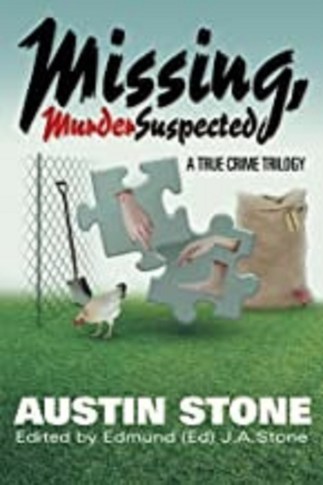
Missing: Murder Suspected is a true crime trilogy written by Austin Stone, compiled and edited by his son, Edmund J.A. Stone after his father’s death. In his investigative style of writing, similar to that of Truman Capote, Austin Stone has managed to bring the characters of each story to life in the reader’s mind in grisly detail.
A chicken farmer who buries a love struck woman beneath one of his chicken coops. A surgeon prone to fits of rage kills his wife and nanny, dismembering their bodies and concocting elaborate stories to account for their absence from his home. A firefighter kills his abusive wife in the heat of a moment, disposing of her body in a shroud of burlap sacks. These are murders which took place in the early 1900’s, and Stone offers a glimpse into the lives and motivations of the people involved through his telling.
If you like cold case type of stories, you will find these stories intriguing. There was too much telling and not enough showing for my own tastes, but giving the journalistic style, I don’t see how this could have been avoided. I give Missing: Murder Suspected three quills.

Buy Link: https://www.amazon.com/Missing-Murder-Suspected-Austin-Stone-ebook/dp/B075H2F1XM/ref=sr_1_2?keywords=Missing%3A+Murder+Suspected&qid=1578591806&sr=8-2
Kaye Lynne Booth does honest book reviews on Writing to be Read in exchange for ARCs. Have a book you’d like reviewed? Contact Kaye at kayebooth(at)yahoo(dot)com.
Posted: January 6, 2020 | Author: kayelynnebooth | Filed under: Blog Content, Books, Creative Nonfiction, Memoir, Nonfiction, Self-Help, Writing, Writing to be Read | Tags: Creative Nonfiction, essays, How To, Memoir, Self-Help, True Story, Writing to be Read |

Nonfiction is the stuff texts books are made of, the straight-out boring stuff that puts you to sleep, right? Not necessarily. Texts books don’t have to be boring. Nonfiction that is written creatively can capture the reader’s interest or immerse them into true life stories. From memoir, to self-help and how-to books, and yes, even text books can be highly entertaining.
True life circumstances and facts determine the story in nonfiction, yet nonfiction authors are faced with the same challenges as fiction authors to bring the characters and setting to life in the readers mind, or portray the information they wish to relate in a manner which readers can relate to. Both fiction and nonfiction authors strive to grab readers attention, now, in this digital age more so than ever before. But there are differences, as well.
To start off 2020, we’re going to delve into creative nonfiction in January. We have a pretty good sampling on the different forms that creative nonfiction might take. My author guest on “Chatting with the Pros” is bestselling author and memoirist, Diana Raab, who believes in the healing powers of writing. I will also be interviewing an author team, Mark Todd and Kym O’Connell Todd, who wrote Wild West Ghosts, one of the most informative and entertaining how-to books I’ve read. I will also be reviewing a true crime book, Missing: Murder Suspected, by Austin Stone, edited by his son Ed after his father’s passing, and a book on writing, On Being a Dictator, by Kevin J. Anderson and Martin Shoemaker. I do hope you will join us and help get Writing to be Read off to a good start for the year ahead.
For additional samplings of creative nonfiction see the following interviews and reviews:
“Chatting with the Pros: Interview with Nonfiction Author Mark Shaw”
“Interview with author Mark Shaw”
“Interview with author B.Lynn Goodwin”
Review: How I Sold 80,000 Books: Book Marketing for Authors by Alinka Rowkowski
“Interview with multi-genre author Brenda Mohammed”
“Interview with nature author Susan J. Tweit”
Review: How to Become a Published Author, by Mark Shaw
Review: The Well-Fed Writer, by Peter Bowerman
Review: Stress: How Stress Affects Your Life and How to Manage It, by Dr. Christine Rose
Review: Hack Your Reader’s Brain, by Jeff Gerke
Review: Horror 101: The Way Forward (Crystal Lake Publishing)
Review: Hollywood Game Plan, by Caro;e Kirschner
Review: Simplified Writing 101, by Erin Brown Conroy
Review: The Road Has Eyes, by Art Rosch
Review: The Reporter Who Knew Too Much, by Mark Shaw
Review: Denial of Justice, by Mark Shaw
Review: Courage in the Face of Evil, by Mark Shaw
Review: Letters of May, edited by Julie Alcin
Like this post? Let me know in the comments. You can be sure not to miss any of Writing to be Read’s great content by subscribe to e-mail or following on WordPress. If you found this content helpful or entertaining, please share.
Posted: December 30, 2019 | Author: kayelynnebooth | Filed under: Copywriting, Editing, Promotion, WordCrafter, WordCrafter Press, Writing, Writing Contest, Writing to be Read | Tags: Book promotions, Editing, Social media promotions, WordCrafter, WordCrafter Press, Write it Right Quality Editing Services, Writing to be Read |

Those of you who know me and many of my long time blog followers, know that I am passionate about writing. Not just my own writing, but writing as a craft, to be shaped and honed. That’s why I began Writing to be Read, and why I’ve founded WordCrafter Enterprises to promote quality writing and aide my fellow authors along the way.
I’m excited to announce the launch of this affordable quality writing enterprise. Writing to be Read is celebrating its 10 year anniversary. Based on the same respect for the craft of writing and my own writing background and experience, as you’ve come to respect from this blog, WordCrafter is designed to aide in the author’s journey.
Being an author is more than just writing a book or two. You want the books to sell, so people will read them. That means your books need to be of good quality writing and you have to promote them, too, in order to increase consumer awareness or no one will know that your book exists. But, all of those things take up valuable time which could be better spent doing what you do best – writing. (Online writing courses will also be offered in the future to aide aspiring authors along the way.)

Let WordCrafter Quality Writing & Author Services take over the tasks that take up valuable time which could be spent writing, and make your writing shine. Write it Right Quality Editing Services help make your writing the best that it can be. WordCrafter Social Media Copywriting & Book Promotions promotes your work, so you can spend more time writing. Produce and promote quality writing with WordCrafter.
Writing to be Read falls under the WordCrafter Trademark umbrella, as well as WordCrafter Press, which offers short fiction writing contests each year. (Learn more about the 2020 WordCrafter Short Fiction Contest and submit your story by April 30th.) If you are a longtime follower or a recent fan of Writing to be Read, I hope you will drop in and see what WordCrafter has to offer busy authors. Find out what WordCrafter Quality Writing & Author Services can do for you.
Like this post? Let me know in the comments. You can be sure not to miss any of Writing to be Read’s great content by subscribe to e-mail or following on WordPress. If you found it helpful, please share.
Posted: December 25, 2019 | Author: kayelynnebooth | Filed under: Uncategorized | Tags: Christmas, Writing to be Read |
Posted: December 23, 2019 | Author: kayelynnebooth | Filed under: Editorial, Opinion | Tags: Christmas, Giving, Spirit of Christmas, Writing to be Read |
When my kids were little, we didn’t have a lot of money, and many Christmases when there was nothing under the tree for me. It didn’t matter as long as there was something for each of my kids to open. To me, the joy of Christmas is in giving and making others happy. With twelve grandchildren, I haven’t always been able to do that, but this Christmas I was able to get a little something for my kids and for each one of my grandchildren. It wasn’t anything much, but it isn’t what I gave them that matters, as long as it puts a smile on their faces when they open them up on Christmas day.
This holiday is supposed to be a celebration of the birth of Jesus, right? When I was a girl, I believed that since Jesus is in heaven now, we couldn’t give him birthday gifts, so we gave gifts to each other instead. As I grew older, I found that giving gifts made me feel good inside. I came to understand that we give to each other in tribute to the greatest gift of all. The spirit of Christmas is about love, and kindness, and giving.
When watching the goings on that occur at this time of year, one can’t help but see that it has evolved into more of a commercialized celebration of materialism. The pre-Christmas hype starts even before Thanksgiving, as all the brands compete for our attention. Buy! Buy! Buy! We find ourselves competing with our neighbors to see who has the best and brightest decorative display in our yards, or give the most expensive gifts. We wait in lines through the wee hours of the night, just to ascertain that we get the best deals of the year on Black Friday, and some are willing to do bodily harm if necessary, in order to reach that goal. We’re all so busy keeping up with the Kardashians and emulating our favorite Hollywood icons that we’ve lost sight of the true spirit of Christmas.
We had a recent death in our family this past year, which brought together family who hadn’t seen one another in many years, and served as a reminder of how quickly things can change. It’s important to let those we care about know it while we can, because they could be gone from this life in the blink of an eye. We don’t have to give the latest video game systems or state-of-the-art tablets. We don’t have to buy the most expensive doll in the store or the deluxe gift box set. We can’t always be with all those who are dear to us on Christmas, but even a Christmas card with a lottery ticket inside, or a pocket knife, or a $5 gift basket, can let someone know that we are thinking of them, even if we can’t be with them in person. When they open it, they think of us and the knowledge that we love them and their feelings for us are what generates smiles, not the gift inside the wrappings. The love behind the gift always shines through, and that’s what gives us that good feeling inside. And that is the true spirit of Christmas.
Like this post? Let me know in the comments. You can be sure not to miss any of Writing to be Read’s great content by subscribe to e-mail or following on WordPress. If you found it helpful, please share.
Posted: December 16, 2019 | Author: kayelynnebooth | Filed under: Blog Content, Writing, Writing to be Read, WtbR Team Members | Tags: Arthur Rosch, Arthur's Visual Media Reviews, Chatting with the Pros, Growing Bookworms, Jeff Bowles, Jeff's Movie Reviews, Jordan Elizabeth, Mind Fields, Robbie Cheadle, Words to Live By, Write Me Better, Writing for a YA Audience, Writing to be Read |

Wow! It’s hard to believe that 2020 will be celebrating 10 years of Writing to be Read!
We have a promising line-up shaping up and I think it will be an exciting year ahead. I’ll share some of that line-up with you, but first, let’s take a brief look at how Writing to be Read has gotten to where it is today in celebration of those first nine years. (For long time followers who have been with me a while, I may have said some of this before because I reflect on the evolution of my endeavors often, but bear with me because there are some really great changes coming.)
When I started Writing to be Read, back in 2010, I didn’t know what I wanted to do with the blog, but I knew I wanted to write and I wanted somebody to read what I wrote. I was not yet a published author, and I didn’t really know what I was doing, but I was determined to do it. I’d written for three years as the “Southern Colorado Literature Examiner” for Examiner.com, and I knew how to get review books and find authors willing to be interviewed, so that’s what I did.
Yet, I was still kind of bungling my way through. Kind of like how Laurel and Hardy always seem to make a mess of things, but in the end they manage to set things right. Of course I learned a lot along the way, and made adjustments to my blogging strategy, striving to come up with content that would bring readers to the site, because I wanted people to read my blog. After all, isn’t that what all we authors want in the end? For our writing to be read?
After I graduated from the M.F.A. program at Western State Colorado University in 2016, things began to pick up. While I learned to write book length works at Western, it also showed me the value of community in writing, which is often a solitary endeavor. We are all embarked upon our own personal author’s journey. Our joys and sorrows may be of a nature that only another author would be able to comprehend. With the growing number of indie authors out there, is important that we support and help one another along the way. Not only was I sitting on the perfect platform to promote my own books and writing, but Writing to be Read is a tool that can be used to grow community among my fellow authors.
 The first blog series I created, was “Ask the Authors”, which I ran in two rounds in 2017, with the help of several great authors, who were willing to donate their time for twelve weeks for each segment. It was a successful series in which I interviewed participating authors on many aspects of writing, with the idea that we learn from those who have gone before us. Most of those authors’ words will be appearing in a book of the same name as the series, which I had hoped to publish this year through WordCrafter Press, but has now been pushed back into the coming year. (Before the release of Ask the Authors, the content must be removed from the web, so be aware that the series content will soon be removed from the blog.)
Over the past year, Writing to be Read is approaching 10,000, and many visitors have become WtbR followers. I think there are several contributing factors that account for this, starting with the Motivational Strips Certificate of Honor, which I received in April and which is now displayed proudly in the sidebar below the WordCrafter logo, for contributions made in the global online writing communities through social media. It is still a labor of love, with the payoff coming with views and engagement, rather than monetary profit.
 In 2019, I ran the monthly “Chatting with the Pros” series, featuring bestselling and award winning authors, in coincidence with monthly genre themes, which has been very popular. I had some wonderful authors, who graciously agreed to be interviewed for this series. The top two interviews, with award winning Christian fiction author Angela Hunt and with bestselling romance author Maya Rodale, brought over 100 views each, with the interview with the very prolific science fiction and fantasy author Kevin J. Anderson coming in a close third. Other great interviews that this series brought were with thriller novelist John Nichol, horror authors Paul Kane and Jeffrey J. Mariotte, women’s fiction author Barbara Chapaitis, young adult fiction author Carol Riggs, crime fiction author Jenifer Ruff, mystery author Gilly Macmillon, western author Scott Harris, and nonfiction author Mark Shaw.
Also aligned with the monthly genre themes were supporting interviews with less known, but talented authors. I am pleased to find the top viewed supporting interview to be with accomplished author and scholar Shiju Pallithazheth, who has dedicated himself to the support of achievement in quality writing and is the founder of the Motivational Strips social media group. The second and third top supporting interviews were with horror author Roberta Eaton Cheadle and with nature author Susan J. Tweit.
I also reviewed many top notch books over the year’s course. Book reviews don’t tend to bring in as many views as interviews do, but the views they do bring in add up when counted. The top review for 2019, was Simplified Writing 101, making this the top review every year since I posted it, back in 2016 with over 300 total views. That’s a lot of views for a book review.
The second most viewed book review was a review from 2018, Dan Alatorre’s Night Visions horror anthology, and the third was Jordan Elizabeth’s Cogling, from 2016. That’s the nice thing about book reviews – they’re all evergreen. The top reviews actually posted in 2019 were for God’s Body, by Jeff Bowles; Selected Stories: Science Fiction Volume 2, by Kevin J. Anderson, and Through the Nethergate, by Roberta Eaton Cheadle.

Also, the addition of team members and their blog series added variety to the blog and provided more consistent publication of content on a regular basis. Writing to be Read wouldn’t be where it is today without their content. Robin Conley is a team member who is no longer with WtbR, but her evergreen “Writing Memos” make her posts receive the most views each year because they offer good, solid writing tips on the basics of writing.
The active team member with the most views in 2019 is Robbie Cheadle with her “Growing Bookworms” blog series on children’s literature and the promotion of reading. Robbie joined us at the beginning of 2019 and she’s had over 1000 views of her posts over the course of the year. Her most popular post was “Developing imagination and creativity through reading”. (For the full 2019 active contributor line-up, see my Thanksgiving post.)

Arthur’s Visual Media Reviews

Jeff’s Movie Reviews
The Writing to be Read following has grown with each passing year, as has the daily average for views, and 2019 has been the best year yet. Now we are at a time when we must look ahead to the coming year and find ways to make WtbR even better. I’ve been working on the 2020 blog schedule and I’d like to share anticipated changes with you here.
For 2020, we are going to continue with the monthly genre themes and the “Chatting with the Pros” blog series. Obviously you can’t cover all the genres in twelve months, so next year we’ll cover some that we missed, as well as giving some we did some more in depth coverage. The tentative theme schedule includes creative nonfiction, romance, western, fantasy, comic books and superheroes, speculative fiction, science fiction, young adult fiction, mystery/suspense thriller, horror/dark fiction/paranormal, action adventure, and children’s fiction. Let me know in the comments what genres you think I am missing, or if you know of an author of one of the genres covered who would be interested in giving me an interview. Writing to be Read wants to create content that its readers want, so I want to hear from you.
There will be a few changes with the Writing to be Read team, including four great new blog series! I am sad to say that Jordan Elizabeth will no longer be with the team, and her “Writing for a Y.A. Audience” blog series will be discontinued. However, the other team members have jumped right in to fill all holes in the scheduling as we moved series around and made changes.
 For 2020, Art Rosch’s “The Many Faces of Poetry” will be discontinued, but it will be replaced the last Wednesday of each month with Art’s new series, “Mind Fields”. Art is always full of surprises and the segments for this new series may be on just about any topic, but they are guaranteed to be interesting and entertaining. Art actually posted a preview segment back in November to give us a little sample, with a journey into the realms beyond death in “Hitler’s Afterlife“. You may love it or hate it, but you’re sure to get a chuckle. “Arthur’s Visual Media Reviews” will continue to be on the last Friday of each month.
 Jeff Bowles will continue his “Jeff’s Movie
  Reviews” the third Friday of each month, but “Jeff’s Pep Talk” will not appear in 2020. Instead, Jeff will offer a new series, “Words to Live By” on the first Wednesday of every month. Jeff will also fill the series slot on the third Wednesday of each month that was left open by Jordan’s departure with a new series, “Write Me Better”, which will offer writing challenges to rewrite the classics. I’m really excited about this new series because it offers the potential for reader interaction. I can’t wait to see what each of you comes up with when stepping up to Jeff’s challenges to rewrite the classics with your own style and flair. It should be a lot of fun. I may even have to try my hand at this one.
 Robbie Cheadle will continue her “Growing Bookworms” series on the second Wednesday of each month and she will also offer a new poetry series on the last Saturday of each month, “Treasuring Poetry”. I was particularly pleased with the idea for this series because it offers a way to keep poetry alive on Writing to be Read. Poetry is like painting with words to create something that is beautiful for its structure and form, beyond simple meaning, and I’ve always felt it was important to have poetry included here in some way. When I first started Writing to be Read, before it was on this site, I ended each post I made with a poem. Although I have had a few poems published, my knowledge of verse is minimal. Robbie, however is quite involved in poetry communities on social media and she has the poetic know how to carry this new blog series.
As you can see, we have some really exciting new blog series for the coming year, as well as some old favorites. My guest authors and reviews are beginning to shape up, too, with some great authors and great books. I’m still searching for more though, so if you’d like to be interviewed or have a book you’d like reviewed in the coming year, please email me at kayebooth@yahoo.com. I’d love to hear from you and include you in my 2020 line-up.
On a final note, I’ve been considering switching to a paid site to eliminate some of the advertising and open up the options of what I can do with the blog. As you all know, Writing to be Read is a labor of love and the profit I get from it is in watching my following grow and engaging with my readers. So, my question to all of you now is, if I went to a paid site, would you be willing to make a donation to help cover the cost, or are you happy with the site the way it is? Please let me know what you think in the comments.
Like this post? Let me know in the comments. You can be sure not to miss any of Writing to be Read’s great content by subscribe to e-mail or following on WordPress. If you found it helpful, please share.




















