“The Christmas Cruise”: A science fiction time travel romance
Posted: April 12, 2019 Filed under: Book Review, Books, Contemporary Romance, Fiction, romance | Tags: Book Review, Contempoary Romance, romance, Science Fiction, Tammy Tate, The Christmas Cruise, Time travel, Writing to be Read Leave a comment
The Christmas Cruise, by Tammy Tate is a really cute romance story which could have been so much more. This story combines romance with science fiction when the two main characters, who are attracted to one another but won’t admit it to themselves, both happen to be swept from their Christmas cruise in the Burmuda Triangle onto a deserted island from the past.
It’s a good plot and it could work if the characters were more developed and didn’t just accept what was happening without a second thought. The story moves from point A to point B in a fairly straight line, at a fairly quick pace, lacking any real twists or surprises. Just the fact that they are the only two to be swept away gave me trouble buying in, and when they return without any logical explaination as to how it happened, it lost me totally.
If the author had taken the time and effort to expand the plot, and portray believable reactions to absurd circumstances, The Christmas Cruise could have been a really entertaining story. As it is, it lacks depth of character and is difficult to swollow. I can only give it three quills.

Kaye Lynne Booth does honest book reviews on Writing to be Read in exchange for ARCs. Have a book you’d like reviewed? Contact Kaye at kayebooth(at)yahoo(dot)com.
Share this:

How reading encourages diverse thinking
Posted: April 10, 2019 Filed under: Books, Children's Books, Diversity, Fiction, Growing Bookworms, Reading | Tags: Children's Books, Diversity, Growing Bookworms, Reading, Robbie Cheadle, Writing to be Read 27 Comments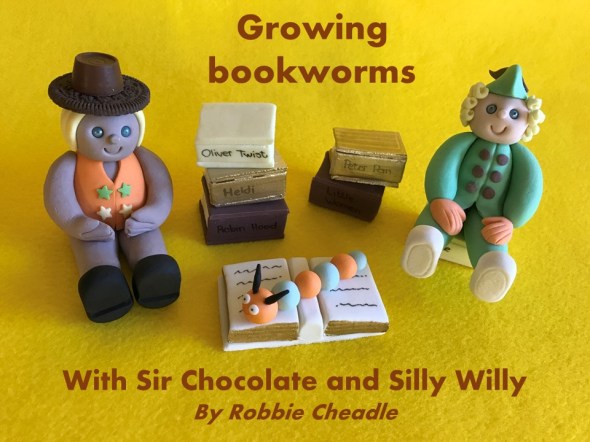
We all want our children to grow up to an environment free from bias and discrimination. We want them to have opportunities to achieve their dreams and to believe they can accomplish anything. We also want our children to feel included and loved in all situations, from school, to home to religious institutions.
The best way to achieve this is to weave diversity into the fabric of our children’s lives. We can do this in many ways, one of which is by providing our children with a selection of multicultural books which allow them to imagine experiencing life in a different way and from a different perspective.
When you read multicultural books you are transported to a different culture and are exposed to new ideas about housing, food, schooling, transport and religion. I always remember when I read the books written by Charlotte, Emily and Anne Brontë as a teenage girl. These books were my first real exposure to the poor treatment of children and women during the Victoria era. I was horrified by the terrible conditions the orphaned girls experienced at Lowood School and the terrible illnesses that ravaged the learners. Later on in my life I read books about the lives of several female Victorian writers and I came to realise just how restricted their lives were. Female’s were not considered to have the intelligence or seriousness necessary to write novels. My own mother experienced discrimination as a young girl when her father refused to buy her a school uniform when she won a scholarship to attend a local grammar school. He didn’t believe in educating girls.
As I have walked my path as a reader, I have read a wide variety of books about life in numerous countries from the great cities of the USA, London and Paris to country towns and rural villages in Africa and Asia. Through reading, I have experienced life in Japan, China and Chile. I have tried to share these experiences with my own children by reading them abridged versions of classic stories like The Story of Doctor Dolittle by Hugh Lofting, a story of an empathetic doctor who travels to Africa and has adventures on this great continent, The Last of the Mohicans by James Fennimore Cooper, set in Upper New York State during the French Indian wars, To Kill a Mockingbird by Harper Lee set in Alabama and Oliver Twist set in Victorian London. They have also read a number of more recent books set in various countries.
Multicultural books teach us about other peoples cultures and religious beliefs and helps to instill positive attitudes about acceptance and tolerance. Some of the books that spring to mind that I read to my pre-teen boys are Fattipuffs & Thinifers by André Maurois which teaches children about segregation in an entertaining and light hearted way, I am David by Anne Holm, the story of a boy who escapes from a Bulgarian communist concentration camp and makes his way to Denmark, and The Diary of a Young Girl written by Anne Frank, that tells of her life as a young Jewish girl growing up in the Netherlands during the Nazi occupation. These sorts of books help teach children that while we all have different religions, celebrations and traditions, we are actually all the same. We all need to eat, drink and sleep. We all aspire to an education, job and happy family life.
While it is good for children to understand history and learn from the mistakes of the past, it is best to select titles that present a variety of points of view so as to prevent stereotyping.
The modern world is becoming more cosmopolitan and diverse due to the ease with which people can travel and communicate. My son plays computer games with friends from all over the world including India, the UK, the USA and Dubai. His school provides a boarding option and caters to boys from all over the world and a variety of different backgrounds, including Chinese, American, British, German, French and a number of African countries. There are Jewish, Muslim, Hindu and Christian boys all attending classes together, doing activities and sports together and enjoying themselves as a group. Diversity is a popular topic with many modern authors and I have recently read three lovely picture books aimed at teaching children about acceptance in a fun and simple way.
Myrtle the Purple Turtle by Cynthia Reyes is about Myrtle, a turtle who is purple and, as a result, she and her family are different from other turtles. You can read my review on Goodreads here: Goodreads review of Myrtle the Purple Turtle.
Kids get it by Sally Huss is a story about self-worth and the equality of all children in the eyes of God. You can read my Goodreads review here: Goodreads review of Kids Get It.
The cover of Who do I see in the Mirror? by Vese Aghoghovbia Aladewolu shares “the important message relayed to children is to love the skin they’re in.”. You can read my Goodreads review here: Goodreads review of Who do I see in the Mirror?
There are also a large selection of non-fiction books for children which describe the cultures and lives of the people of the world.
What do you think about the role of books in promoting diversity? Let me know in the comments.
About Robbie Cheadle

Hello, my name is Robbie, short for Roberta. I am an author with six published children’s picture books in the Sir Chocolate books series for children aged 2 to 9 years old (co-authored with my son, Michael Cheadle), one published middle grade book in the Silly Willy series and one published preteen/young adult fictionalised biography about my mother’s life as a young girl growing up in an English town in Suffolk during World War II called While the Bombs Fell (co-authored with my mother, Elsie Hancy Eaton). All of my children’s book are written under Robbie Cheadle and are published by TSL Publications.
I have recently branched into adult horror and supernatural writing and, in order to clearly differential my children’s books from my adult writing, I plan to publish these books under Roberta Eaton Cheadle. I have two short stories in the horror/supernatural genre included in Dark Visions, a collection of 34 short stories by 27 different authors and edited by award winning author, Dan Alatorre. These short stories are published under Robbie Cheadle.
I have recently published a book of poetry called Open a new door, with fellow South African poet, Kim Blades.
Find Robbie Cheadle
Blog: https://bakeandwrite.co.za/
Blog: robbiesinspiration.wordpress.com
Goodreads: Robbie Cheadle – Goodreads
Twitter: BakeandWrite
Instagram: Robbie Cheadle – Instagram
Facebook: Sir Chocolate Books
Want to be sure not to miss any of Robbie’s Growing Bookworms segments? Subscribe to Writing to be Read for e-mail notifications whenever new content is posted or follow WtbR on WordPress.
Share this:

“Ripper”: Not your typical historical romance
Posted: April 5, 2019 Filed under: Book Review, Books, Fiction, Historical Fiction, Historical Romance, romance | Tags: Amy Cecil, Book Review, Historical Romance, Ripper, romance, Writing to be Read 2 Comments
Romance author Amy Cecil writes both contemporary and historical romance, but her latest release, Ripper, is like no historical romance I’ve ever read. Set in London, during the times of the Jack the Ripper roamed the streets of White Chapel, this story explores possibilities and throws in more than a few surprising twists.
Life is looking up for Marie, with a new client turned lover, it looks as if she might be able to leave behind her life of poverty. But Jax’s behaviors cause suspicions she can’t ignore, suspicions that, if proven true, might make it impossible to follow this dream life she’s found. What’s a girl to do when she learns the man she loves might be Jack the Ripper?
A cleverly-crafted tale that will keep readers guessing until the last pages. I give Ripper five quills.

Kaye Lynne Booth does honest book reviews on Writing to be Read in exchange for ARCs. Have a book you’d like reviewed? Contact Kaye at kayebooth(at)yahoo(dot)com.
Share this:

Jeff’s Pep Talk: Back in the Saddle
Posted: April 3, 2019 Filed under: Fiction, Opinion, Pep Talk, Writing | Tags: Editorial, Inspiration, Jeff's Pep Talk, Opnion, Writer's Block, Writing to be Read 3 Comments
Back in the Saddle
By Jeff Bowles
The first Wednesday of every month, science fiction and horror writer Jeff Bowles offers advice to new and aspiring authors. Nobody ever said this writing thing would be easy. This is your pep talk.
If you’ve been following the Pep Talk, you know I’m big on writers cutting themselves some slack. Burnout kills creativity and breeds writer’s block. So while I’ve always been a fan of the idea that we need to keep working in order to evolve, grow, and succeed, I’m incredibly cognizant of the ever-present reality most writers hit a wall every now and then, and that it’s okay to admit and even embrace that.
Now, a bit of an admission. The past two years or so, I’ve been struggling to rebound from my own slowdown. This decade has been intense for me, particularly on the creative front. I went from earning my MFA in a very hard and fast environment, to publishing short stories at a fairly decent rate, to suffering some unfortunate circumstances in my personal life, to not writing a single word for several years.
Really, this has been the worst burnout phase of my life. I’m in my mid-thirties now, so it stands to reason that ten years of working, practicing, and publishing finally caught up with me. Furthermore, we can’t stop living very human lives under very human circumstances. If I hadn’t experienced such a shake-up on a personal level, I might have been able to keep working. But things being what they were…
So this Pep Talk is not about showing yourself some love when you’re slowing down. It’s about being eager and ready when you’re speeding back up. I recently started a new writing project, a novel, and I’m pleased to report I’m about 9,000 words in. If that doesn’t sound like much of an achievement to you, it’s probably because you’re a hard-nosed writer who puts in your time, come rain or shine. And before my productivity started to drop off, I was right there with you. But the truth is we all need a break sometimes. All of us. Actually, very often life forces us to take breaks, and we can bemoan, resist, and condemn them, but it doesn’t change the fact that a career in the publishing industry is—in its most ideal form—a long-term project. As such, detours are something of an obligation.
For several years on end, my average yearly wordcount was around 120,000. And that was after a few years of maybe 75,000 to 100,000 words. Really, I was ramping up to something big. I’m a short story guy with some long-form publications in the indie realm. Not precisely a best-seller, but not a newbie either. And as I said, grad school was intense. I think a lot of people who go after an MFA have a similar experience, right on down to needing time off after graduation. The sad and torrid fact of the matter is I haven’t attempted a book-length project since I completed my thesis novel four years ago. That’s a huge dry spell for me, so I’ll take that nice 9,000-word head start, thank you very much.
If being kind to yourself in the face of writer’s block is about realizing you’re not a story machine (no matter how much you want to be), booting up your systems after some downtime requires acknowledging any fears or insecurities that might come up. It’s scary getting back in the saddle, or at least it can be. It’s also pretty exciting, isn’t it? Maybe, like me, you started wondering if you’d ever be productive again. Am I finally done with this whole writing thing? Where are my abilities?! Why don’t I feel like telling stories!? WHY, GOD, WHY!?
Got a flair for the dramatic? Well step right up, ‘cause this next one could be a doozy: in almost any case, we need to be able to accept the fact we might be rusty. Now I took a break of a few years, but I’ve known authors who went ten, fifteen, or twenty, and who were startled to encounter really crummy writing on their part. I know, it’s disappointing. Turns out none of us is a miracle worker. So a little piece of advice, maybe start slow, a short story or two. Heck, start writing blog posts or flash fiction or maybe even try your hand at a new genre, like creative nonfiction or poetry. That’s actually a good place to start. Writing truth is, in my experience, almost always easier than writing fiction. The point is you need a jumping on point, something you can sink your teeth into that doesn’t require you to … well, break your damn teeth.
And respect yourself enough to know when it’s time to work and when it’s not. Again, I really do appreciate the workhorse model of writing. That’s how the beast feeds itself. It’s the lifeblood of what we do. I just think it’s a bit self-deluded and unkind to think you can go on like that forever. Maybe some of us can, but for the majority, it does no good to crash and burn. Don’t knock yourself for it, man. And don’t let colleagues or friends and family make you feel bad or lazy or lost.
When it’s time to get back to work, it’s time. You’ll know you’re ready because—hey, here’s a nice big no-brainer for you—you’ll actually feel like it. Don’t push yourself too hard too soon. It’s a pretty organic process when it comes down to it. You can’t get blood from a stone, though I’m sure if you hit yourself in the head enough times with said stone blood would ensue. Never imagine yourself to be something you aren’t, a literary god, born of good fortune and the primal mud from which warriors emerge, Achilles of the word processor, Odysseus of plot structure and acute character psychology. Nah, you’re just a humble guy or gal who likes to crank out some good writing every now and then. Maybe you thought this day would never come. How do you feel now that it has?
I believe that life is almost always a matter of two steps forward, one step back. It’s how we progress as human beings. So two steps forward, one step back, two steps forward: hey look, the math checks out. You’re one step ahead of where you were last time. It’s like a Jacob’s ladder, right? You zig left, zag right, but you’re always climbing higher. Don’t feel like writing today? Consider, if you will, investing in some fun. Watch a few old movies that always manage to inspire you. Read a good book. Listen to some music, or try your hand at painting, sculpting, songwriting, video production, anything that engages your creativity and that doesn’t have all that unbearable weight built up behind it.
This is a fun job. Remember that. It’s fun. We get to tell stories and entertain people with our words. If you’ve been at this a while, and you’ve done silly things before, like attempting to quit but finding it quite impossible, then consider the possibility you’re meant for this life. You shouldn’t shirk being meant for something. Any way you slice a lifelong love affair, it’s fate, my friends. It’s kismet. Maybe you aren’t a literary god, but rest assured, the real gods up on Mount Word-lympus have plans for you that go back eons. One last time, do however much you actually feel you can do, and get excited about the prospects. If, lord forbid, you someday end up in a terrible driving, skying, skydiving, or rogue spelunking accident, you’re going to want a surgeon who can put you back together with slow and steady hands. Do yourself a favor and be that surgeon for your writing.
Until next time, everybody. The straightest line between two points is … wait, you guys are using straight lines?! So that’s why my writing is so crooked.
Check out Jeff Bowles Central on YouTube – Movies – Video Games – Music – So Much More!
Share this:

Still Time to Get Submissions in for the WordCrafter Paranormal Short Story Contest
Posted: April 1, 2019 Filed under: Paranormal, romance, Stories, Writing, Writing Contest | Tags: Paranormal, romance, WordCrafter Paranormal Short Fiction Contest, Writing to be Read 3 Comments
As March goes out like a lion and the Writing to be Read theme switches from Science Fiction and Fantasy, to Romance, the submissions for the first WordCrafter paranormal fiction contest are rolling in. I can already tell you there are some really good stories. It’s going to be hard to pick a winner. The deadline is April 30th, so there is still plenty of time to get yours in. The entry fee for the contest is only $5, and the winner recieves a $25 Amazon Gift Certificate and guarunteed inclusion in the first WordCrafter Paranormal Anthology. The authors of stories submitted which are of exceptional quality may also recieve invitations to be included. You can get full submission guidelines here.
Also, looking ahead for April, we’ve got some must not miss content planned in accordance with April’s theme of romance. The guest author for “Chatting with the Pros” will be Maya Rodale, with supporting interviews with Chris Barili, who writes romance under the name B.T. Clearwater, and romance author and Christian western romance author, Patricia PacJac Carroll. My book reviews this month will also reflect different aspects of the romance genre, with an historical romance, Ripper, by Amy Cecil, and a time travel romance, The Christmas Cruise, by Tammy Tate.
I do hope you’ll join me this month as I explore the romance genre, and get those submissions in. We all have stories just waiting to be told. I can’t wait to read yours.
P.S. I still haven’t come up with a name for the anthology yet and I’d love to hear thuoghts from all of you. Please leave me your suggestions in the comments.
Like this post? Subscribe to Writing to be Read for e-mail notifications whenever new content is posted or follow WtbR on WordPress.
Share this:

“Shadow Blade”: A high fantasy novel of intrigue and mystery
Posted: March 29, 2019 Filed under: Book Review, Books, Dark Fantasy, Fantasy, Fiction | Tags: Book Review, Chris Barili, Dark Fantasy, Fantasy, High Fantasy, Shadow Blade, Writing to be Read 2 Comments
Spies and assassins, deception, adventure, magic – Shadow Blade, by Chris Barili has it all. With an intriguing story line that keeps readers guessing, with twists and turns around every corner, this story is everything a fantasy adventure should be. In the tradition of high fantasy, Barili has created a rich medieval style world of kings and castles, princesses and assassins, where magic is addictive and nothing is as it seems.
When a Denari Lai assassin falls in love with his target, it’s pretty certain that things are going to get complicated. Throw a second assassin into the mix and it’s near certain that there will be trouble and things may not end well. As you get to know Ashai, the Denari Lai assassin whose heart may be bigger than his training, and Princess Makari, whose kindness has earned the adoration and respect of an entire kingdom, you’ll find that you can’t help but root for them both to triumph against all odds.
Ashai didn’t intend to fall in love with Makari, but when he does it proves to be quite a dilemma. His love for her goes against everything he’s been taught, causing him to question his training. When a Denari Lai is set on a target, he stops at nothing to accomplish the sanction, but in a sudden turn of the tables, Ashai will now stop at nothing to prevent it. In his quest to save the woman who now haunts his dreams, he becomes a target. He doesn’t know who to trust, but he finds allies in some unsuspected places, enemies lurking in the shadows, and a surprise around every corner. He’ll do anything to keep Makari safe, even forfeiting the very magic that he draws his strength from and risking his very existence.
Chris Barili has crafted a delightful fantasy adventure in Shadow Blade. It has a well- developed fantasy world, with unique and memorable characters that will stay with you. You won’t want to put it down. I give it five quills.

Kaye Lynne Booth does honest book reviews on Writing to be Read in exchange for ARCs. Have a book you’d like reviewed? Contact Kaye at kayebooth(at)yahoo(dot)com.
Share this:

Game Of Thrones: IS It Toxic?
Posted: March 22, 2019 Filed under: Art's Visual Media Reviews, Film Review, Television review | Tags: Art's Visual Media Reviews, Fantasy, Game of Thrones, Review, Writing to be Read 6 Comments
My wife and I watched this series, all five available seasons (at the time), in one big gory splurge. Maybe that was our mistake. It is addictive viewing, it has memorable characters and every episode ends with a cliff-hanger.
I’ll be candid and admit that we have been in an emotional slump. My wife and I have had a difficult year. That being said, perhaps it wasn’t a good idea to expose ourselves to such villainy and gore. I can imagine that viewing this series one episode at a time might be less harrowing. But who does that? Are you kidding? In this age of Streaming?
Nah! Binge viewing is the thing we do. Doesn’t everybody grab a series and watch every episode, one after another? Don’t deny it. TV isn’t a guilty pleasure any more. TV is survival, an alternate reality in which to hide from our terrifying world.

Game of Thrones is High Fantasy. It has the medieval world-set, the armor, weapons, horses, castles, all that stuff that goes into High Fantasy. It has dragons, magical creatures and a looming menace that evokes our own present-day world with its apocalyptic terrors. As we watched we found that our depression began taking on a more vicious edge. Our dreams were disturbed. My wife muttered curses in the night and I went on a sleepwalking excursion, standing at the window completely unaware that my junk was exposed beneath the wrinkled edge of my t-shirt. I think I was waiting for some demon to creep into our home to steal our souls.
As a writer I must always ask a question of the story I’m writing: Is this story worth being told? If I apply that yardstick to Game of Thrones, I’m not sure it passes muster. Without the genius of Peter Dinklage playing “the imp” I wouldn’t have gotten sucked into the plot. Acting is an interesting process to watch. Great actors take good roles and define them for all history. Dinklage will hereafter always be known for his Tyrion Lannister role. Before Tyrion he was a famous dwarf and an actor. Now he is far more famous and completely identified with his character. No one cares that he has short legs. He has earned RESPECT. He carried Game of Thrones on his talent. The series is unimaginable without the work of Peter Dinklage.
There were so many beheadings, throat slittings, impalings, knives to the gut, arrows through the throat, squished eyeballs, spear thrusts through-and-through that it became like a creeping poison, leaking from the TV screen and crawling along the margins of the room, heading straight for our vulnerable psyches. We have no one to blame but ourselves. No one forced us to watch this wretched excess of medieval mayhem. We watched. We were sick with flu, flattened with fibro, fucked up with gastric distress, hamstrung with hernia….and we watched ten thousand extras get squashed by rocks and broiled with flaming oil. Oh, what a violent series! Add a healthy dollop of perfect naked titties and asses, muscular adolescent boys all frolicking with one another and whaddayaknow? It’s really all sex and violence, tits and ass. I can imagine the producer shouting on the set: “Did we book enough tits today?” He points to a Production Assistant. “We’re running out of tits! You, boy! Go find some tits, get out there on Sunset and round up a few dozen nice tits. Get some handsome boys while you’re at it. We need some asses, too….make sure they’re eighteen and have them sign their releases.”
Game Of Thrones. It was a relief when Season Five ended. We’d had enough. It was like eating a whole bag of miniature Reeses Pieces. It made us sick.
It was delicious when we started. Then it got a little cloying but we couldn’t stop. Then we wanted to puke and still we couldn’t stop. It was crazy! Get us to some Hallmark Entertainment, or….some Disney. No, wait. When you look deeply enough into Disney you find shit that’s even more creepy than Game Of Thrones.
Now, the temptation to watch Season Six looms ever more seductively.
A Midwesterner by birth, Arthur Rosch migrated to the West Coast just in time to be a hippie but discovered that he was more connected to the Beatnik generation. He harkened back to an Old School world of jazz, poetry, painting and photography. In the Eighties he received Playboy Magazine’s Best Short Story Award for a comic view of a planet where there are six genders. The timing was not good. His life was falling apart as he struggled with addiction and depression. He experienced the reality of the streets for more than a decade. Putting himself back together was the defining experience of his life. It wasn’t easy. It did, however, nurture his literary soul. He has a passion for astronomy, photography, history, psychology and the weird puzzle of human experience. He is currently a certified Seniors Peer Counselor in Sonoma County, California. Come visit his blogs and photo sites. www.artrosch.com and http://bit.ly/2uyxZbv.
Catch “Art’s Visual Media Reviews” the fourth Friday of every month. Better yet, sign up for email of follow on WordPress to catch all the great content on Writing to be Read.
Share this:

Chatting with the Pros: Interview with science fiction and fantasy author Kevin J. Anderson
Posted: March 18, 2019 Filed under: Books, Chatting with the Pros, Collaboration, Dark Fantasy, Fantasy, Fiction, Interview, Science Fiction, Speculative Fiction, Teaching Writing, World Building, Writing, Writing to be Read | Tags: Chatting with the Pros, Fantasy, Kevin J. Anderson, Writing to be Read 1 Comment
My guest today on “Chatting with the Pros” is an award winning and best selling author who has written countless novels and over 56 national and international best sellers. A majority of his works fall into the science fiction or fantasy genres, but he writes across many genres. In a recent introduction for “The Big Idea: Kevin J. Anderson“, an article about the latest release in his short fiction collection, Selected Stories, John Scalzi calls him, “one of the most prolific authors working today”, and one look at his immense book list on Amazon would leave no doubt that this is an accurate assessment. (You can find my review of selected stories here). He’s written a lot of books, 56 of which have hit the national and international best seller lists, and he’s been writing for many years, and I’m sure we will find his knowledge and experiences enlightening. Please help me welcome Kevin J. Anderson.
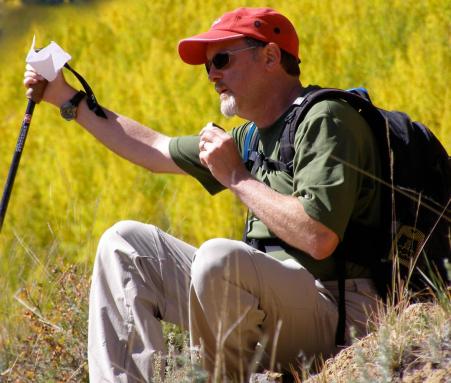
Kaye: You have written at least 56 national or international best sellers. What makes a good story in your mind?
Kevin: People want to read a good story with an exciting/interesting plot, a well-developed setting, and engaging characters. Make it a story you WANT to read, with clear prose and action. I don’t like muddled, glacial-paced stories where the prose is just too precious.
Kaye: Why science fiction and fantasy? Why not western or romance or mystery? What’s the attraction?
Kevin: Well, I’ve also written plenty of mysteries, and some of my work has been set in the old west, and most good stories have a strong romance component (though I don’t write category Romance or Westerns). I like to tell an interesting story, and I move around a lot among genres, even though I am primarily known for science fiction or fantasy. I grew up in a very mundane small town in rural Wisconsin, and I was captivated by SF/F from an early age, because it showed my imagination what was possible. I wanted to go to exotic places, whether they were filled with aliens or dragons. Science fiction took me to a much wider universe. (And as a skinny, nerdy kid with glasses and a bad haircut, “romance” wasn’t much of a possibility, so I stuck with spaceships and swords.)
Kaye: You wrote several Star Wars and X-Files novels. Is it difficult to immerse yourself in someone else’s settings and characters enough to pick up a thread and run with it in the same tone and writing style? How do you go about getting yourself into that mindset?
Kevin: It’s no more difficult than trying to immerse yourself in the old west or ancient Japan for a historical. A writer’s job is to absorb the story, characters, voice, and setting. I was already a big fan of Star Wars, Star Trek, X-Files, and Dune, and I enjoyed going to work in those universes. In each instance, I would completely surround myself with the property — whether that meant watching the Star Wars films over and over again, or the episodes of the X-Files, or repeatedly rereading DUNE and its sequels. You pick up the manner of speaking, the “look and feel” of the world, and you make it into your own story.
Kaye: You’ve done several collaborations, including books of the Dune series, with Brian Herbert and the Clockwork books which you collaborated with Neil Peart, drummer for the band Rush. What is the biggest challenge when collaborating on a book?
Kevin: You both need to have the same vision for the book—which means a LOT of talking and brainstorming ahead of time—and you both need the same work ethic (so each partner puts in the same amount of time and effort…a tortoise and hare collaboration will just cause a lot of friction), and you need to be flexible. There’s never only ONE way to write a sentence or describe a scene. I would never want to collaborate with a diva!
Kaye: Do you belong to any writing organizations? If so, which ones? Do you feel your membership in these writing organizations have been helpful in your writing successes? How so?
Kevin: I belong to the Horror Writers Association (and edited three anthologies for them, the BLOOD LITE series), IAMTW (International Association of Media Tie-In Writers), and SFWA, the Science Fiction and Fantasy Writers of America, although some of their recent decisions have made me so upset that I would not renew my membership if I wasn’t already a lifetime member. The problem with such organizations is that you can become to engrossed in the politics and bickering that you forget your real purpose, which is to WRITE.
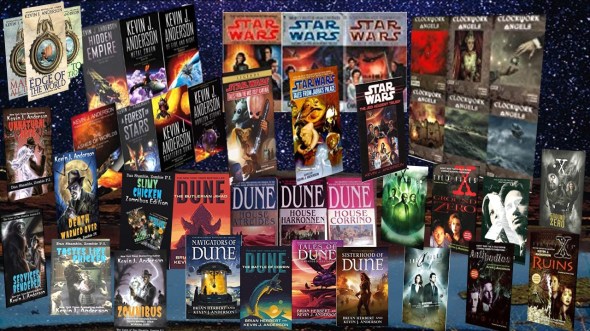
Kaye: You’ve written several series, including Saga of the Seven Suns, Dan Shamble P.I. and the Clockwork books? Are any of your books stand alone? Why do you lean toward series?
Kevin: I’ve written many standalone books. The one I just finished last week, a vampire/serial-killer thriller STAKE, that’s not part of a series. But I like to tell big stories, and once you’ve done all the effort of world building and character building an entire universe, you want to spend some time. To me, a trilogy is perfect — a beginning, middle, and end, with enough room to tell the story and describe the world in all its glory. Pragmatically speaking, it’s a much better decision commercially to build a series, because readers will want more and more, and each new book will help sell copies of previous volumes. Can you imagine if A.C. Doyle had stopped after writing only one Sherlock Holmes story?

Kaye: Science fiction authors create whole worlds from their imaginations, often with new languages created in their own minds, and you have created many. How do you go about creating a new language?
Kaye: Your work has won many prestigious awards. Which award are you most proud of? Why?
Kevin: Awards are awards, and it’s nice to have them, but I really prefer READERS. That’s what makes your writing worthwhile. It’s not terribly prestigious, but the award I value most is one I received very early in my career, when I received a trophy with an engraved brass plate and everything, naming me “The Writer with No Future” because I could produce more rejection slips than any other writer at an entire conference. To me, that didn’t mean I was a failure as a writer or that my work was awful—it proved that I was more persistent, that I kept trying, kept getting better, and never gave up. I still have that trophy.
Kaye: In addition to being an author, you and your wife, Rebecca Moesta, are publishers at Wordfire Press, but originally you were traditionally published. Why the switch to being your own publisher after being traditionally published for so many years?
Kevin: Survival. No choice. The publishing industry has undergone a tremendous upheaval equivalent to the Industrial Revolution, and I could either be a mammal and evolve or stay a dinosaur and go extinct. I am still traditionally published (four books released in 2018, in fact, and a new 3-book contract from Tor Books for an epic fantasy series), but I also have a lot of backlist titles that were out of print and my fans wanted to read them. So I started releasing them myself with all the innovations of new technology. It’s just another alternative.
Kaye: What does Wordfire press offer as a publisher for other authors?
Kevin: We are nimble and flexible, and we can produce books and get them to market far quicker than a traditional publisher can manage. But when you work with an indie publisher, or if you do it yourself, then you have to do all the work, all aspects of it. It’s another income stream and another way to get your book in front of your audience.
Kaye: Is Wordfire taking submissions? What type of fiction is Wordfire looking for?
Kevin: Not really, I’m afraid. When we are open, we’re looking for established writers who don’t need their hands held, writers who already have their own platforms, fanbases, and marketing efforts because we have to rely on them to do the work that a whole department at a traditional publisher would do.
Kaye: You recently signed on as an adjunct professor at Western State Colorado University and you are a finalist candidate for the director of their Certificate in Publishing program. What prompted you to venture into the world of academia?
Kevin: Actually, I’m now a full professor and I run their Masters program in Publishing. I will start the first group of MA students this coming summer. There’s a LOT of paperwork and bureaucracy in academia! I have taught writing and publishing quite often at countless writers’ conferences and conventions, most notably our own Superstars Writing Seminars, which is just hitting its tenth year. Becoming a professor and teaching at a beautiful university in the Colorado mountains is great, offers a little more stability than freelance writing, and (the bane of all freelancers) it gives me health insurance and benefits I wouldn’t otherwise get.
Kaye: Any writing pet peeves?
Kevin: I don’t like artsy-fartsy stuff, dense prose and opaque plots. Tell me a great story with a cool setting and interesting characters!
Kaye: Creating characters, developing plot, world building – what is the most challenging part of writing for you?
Kevin: Those are all fun, but if I had to choose I would say I have most difficulty with building rich, fleshed-out characters. Plotting and worldbuilding—that’s what I excel in.
Thanks to Kevin for sharing with us today. He’s given us food for thought with some really great answers. You can find more about Wordfire Press here: https://wordfirepress.com/. Kevin and his wife, Rebecca Moesta, head up the Superstars Writing Seminars each year in February, in Colorado Springs, Colorado, for those interested in learning the business of writing. If you’d like to become a member of the Superstars Tribe, or would just like more information about Superstars, visit the folowing link: superstarswriting.com. Visit the links below to learn more about Kevin J. Anderson and his works.
Amazon Author page: https://www.amazon.com/Kevin-J-Anderson/e/B000AQ0072/ref=sr_ntt_srch_lnk_1?qid=1545798018&sr=1-1-fkmr1
Wordfire Press: http://www.wordfire.com/
Blog: http://kjablog.com/
Join us next month on “Chatting with the Pros”, when I’ll be chatting with romance author Maya Rodale. You can catch the monthly segment “Chatting with the Pros” on the third Monday of every month in 2019, or you can be sure not to any of the great content on Writing to be Read by signing up by email or following on WordPress.
Share this:

Jeff’s Movie Reviews – Captain Marvel
Posted: March 15, 2019 Filed under: Comic Hero, Fantasy, Film Review, Jeff's Movie Reviews, Movie Review, Movies, Super Hero | Tags: Captain Marvel, Jeff's Movie Reviews, Movie Review, Movies, Super Heroes, Writing to be Read Leave a comment
The Marvelous Mrs. Marvel
by Jeff Bowles
(For more on Captain Marvel, be sure to check out my full video review)
As far as Marvel movies go, Captain Marvel feels refreshing, if a bit familiar. It carries with it little of the eccentric energy found in other recent Marvel flicks like Thor: Ragnarok and Guardians of the Galaxy Vol. 2, but it also requires less of audiences who have yet to drink the Marvel Kool-Aid. Much like 2018’s box office behemoth Black Panther, the hero in question is not a white male, and as the star of a major Hollywood production released in the #MeToo era, that makes all the difference.
Which isn’t to suggest Marvel Studios’ latest doesn’t give plenty of nods to what has come before, and perhaps in a more lucrative vein, to what’s still headed our way. We finally learn how Nick Fury lost his eye, for instance, but filmmakers Anna Boden and Ryan Fleck are also thrilled to butter us up for that big late-April showdown called Avengers: Endgame (check your calendars, kids. Don’t forget to pre-order all the toys, and oh yeah, maybe a movie ticket or five).
If superhero tropes and comic-isms are as indecipherable to you as Kree battle language, odds are good the scope and scale of the Marvel Cinematic Universe rings hollow. Some of us have been on board since we were kids, leafing through our favorite monthly Marvel comics like little back-issue hording zealots. But if your speed is less Captain America and more … well, any other movie ever made, really—it’s safe to take heart. Captain Marvel is a pretty good jumping on point.
Carol Danvers (Brie Larson) is an Air Force fighter pilot with super-powered amnesia. A strange event in her past wiped her memories clean and granted her incredible abilities, the sum total of which she’s dutifully employed freedom-fighting for a race of intergalactic warriors known as the Kree (best personified by her squad leader, Yon-Rogg—played by master geek-movie thespian, Jude Law). When the Kree’s deadliest enemies, a race of green shapeshifters known as the Skrulls, capture Carol and bring her back to Earth, the nascent Captain Marvel must team up with S.H.I.E.L.D. agent Nick Fury (an impressively de-aged Samuel L. Jackson) to discover the secret behind the pivotal accident. Plus, you know, she’ll get to rock out to an unquestionably righteous and eclectic 90s soundtrack.

The fact that this movie takes place in 1995 only adds to its charm. There are era-specific nods and in-jokes aplenty, including a fun Stan Lee cameo that’ll tug at your sense of nostalgia. The film’s setting also means that most of the super-heroic hi-jinks found in the other 20 MCU movies have yet to occur. It’s a prequel more than anything else. Rounding out the cast are an unexpectedly funny Ben Mendelsohn as Skrull commander Keller, Lashana Lynch as Carol’s best friend, Maria Rambeau, and a de-aged Clark Gregg, happy to take a break from playing Agent Coulson on ABC’s Agents of S.H.I.E.L.D. to play … a younger-looking version of the exact same character.
Additional highlights include a cute but vicious orange cat named Goose, though I won’t spoil the big reveal here, and the marvelously named Air Force marvel, Mar-Vell (a somewhat spaced out and liminal Annette Bening). For the most part, Captain Marvel gets by on its charm. It’s best described as an above average superhero origin story, but unfortunately, there remains a certain amount of roughness in its narrative. Big chunks of exposition get belted out from behind scads of green creature makeup, and the grand finale carries enough logic gaps you may find yourself wondering, “She was just fighting that guy. So now who are these people?”
A lot of early buzz surrounding this movie included controversial comments made by Larson herself, but really, if a storytelling medium largely created by boys for boys can’t come to grips with a few girls getting in on the action whenever they damn well please, there’s less hope for this world than any of us could have ever imagined. Captain Marvel as a character has been blasting across the universe since the late sixties, but it was only in recent years that a woman donned the suit. And Larson does a fantastic job portraying Danvers on film. She is cocky, self-assured, funny, compassionate, caring, and once her full powers get unleashed, wonderfully formidable. A certain kinship evolves between her and Samuel Jackson’s Agent Fury, and moments spent in the Louisiana home of her best friend Maria prove that an intergalactic badass can be all about family, too.
Audiences are likely to get more out of the experience if they possess a running mental lexicon of all things Marvel, but unlike last year’s Avengers: Infinity War and the forthcoming Avengers: Endgame, Captain Marvel is likely to be a fun time no matter what prior knowledge you have going in. If you’re burned out on films featuring god-like people beating the holy Skrull out of each other, you may be better entertained elsewhere. But as Thor Odinson once famously declared to the world-eating demon Surtur, “That’s what heroes do.”
It’s a very geeky multiverse we live in, people.
Jeff’s Movie Reviews gives Captain Marvel an 8 out of 10.
Check out Jeff Bowles Central on YouTube – Movies – Video Games – Music – Short Stories – So Much More!
You can keep up on what Jeff’s been watching and catch all of his great movie reviews the third Friday of each month. Subscribe to email or follow on WordPress today!










The Making of a Memoir: Obstacles and Roadblocks
Posted: April 8, 2019 | Author: kayelynnebooth | Filed under: Commentary, Memoir, Nonfiction, The Making of a Memoir, Writing, Writing Process | Tags: Creative Nonfiction, Losing Michael: Teen Suicide and a Mother's Grief, Memoir, Nonfiction, The Making of a Memoir, Writing Process, Writing to be Read | Leave a commentLosing Michael: Teen Suicide and a Mother’s Grief
“The Making of a Memoir” is a bi-monthly blog series which explores the stages of writing a memoir as I write the story of losing my nineteen year old son, Michael, to suicide, through his story and the tale of a life without him and the grief I experience every day, even after he’s been gone for a decade. Some progress has been made toward the actual writing of the book since the last segment. I made a final decision on the title above for the book, and work on the cover is in progress with Art Rosch at Starrts Creative. Although there is still a lot of material still to sort through and compile what I want to include, I managed to work through a considerable amount. The going is slow, as I knew it would be, due to the emotional nature of the material and the memories some of it awakens.
In the last segment, “Stage 1: Prewriting Tasks“, I said I expected this book to be the most difficult story I have ever attempted to write, and that has proven to be true. In fact, it has proven to be difficult in more ways than I had imagined. This segment was supposed to be titled “Stage 2: Selling the Story”, but alas, unexpected “Obstacles and Roadblocks” has become a more appropriate title. Over the past two months, I run into several and I’m still trying to find a way around, over or through one huge one in particular – legalities.
Memoir can and should be a work of creative nonfiction. It is a true story told creatively, so as to capture and hold the readers’ attention. What memoir is not, is a work of fiction, with fictitional characters and places. You are telling a true story, something that actually happened, something in which other real people played different roles, and to tell the story, their parts must be told as well, even if the tale doesn’t portray all of them in a positive light. A good memoir must be told with honesty, from the heart.
As I sorted through the plethora of material I have gathered and saved since my son’s death: his poetry, writings and artwork; my poetry and writings; and oh so many photos, I couldn’t help but think about the other people involved, directly or indirectly with the story of the events leading up to Mike’s death and also the events that came after, and I realized that there were more than a few, people associated with Mike, and law enforcement officers, who might not want this story to come out because of the manner in which they might be viewed for their parts in his death.
It normally wouldn’t be a problem at all. I’m writing the story of events as they happened to the best of my knowledge. Many facts surrounding Mike’s death were suspicious, and for a time I believed that Mike might have been murdered. Things didn’t add up, but the proof to back up what I know to be true was withheld from me by local law enforcement. I no longer entertain the idea that Mike’s death was anything other than suicide, without the proof that the events happened the way I claim they did, I could be open to liable in telling this story.
The individuals involved wouldn’t really be a problem. The obvious solution is to change the names. Even in a true story, real people can have fictitious names, without damaging author credibility. Authors do this all the time; you just state that some names have been changed and readers won’t feel cheated.
The law enforcement agency and certain individual agents present a bigger problem. Do I change the names of the law enforcement agents? Do I change the name of the area they represent? How much can be changed before a true story becomes a work of fiction? The proof I lack wouldn’t portray the local law in a positive way and they know it, so they aren’t likely to have a change of heart about sharing it with me for the book. They play major roles in the events leading up to Mike’s death, and the story really can’t be told without their inclusion.
Although this issue has presented a roadblock that appears it might be unsurpassable, I have a couple of ideas on how I might be able to get around it. I need to let it play out and see. If not, I’ll look for a way to go over, or under if I have to. This is a story that must be told, and I’m determined to tell it. By the next segment, in June, I should be moving forward once more. I’ll let you know how it gets resolved. I do hope you’ll join me then.
Join me in my writing journey through “The Making of a Memoir” the second Monday every other month on Writing to be Read: February, April, June, August, October and December. To be sure not to miss one segment, subscribe to email or follow on WordPress for notification of new content.
Share this: