Growing Bookworms – Tongue Twisters and a review of A Wrinkle in Time by Madeleine L’Engle
Posted: September 13, 2023 Filed under: Book Review, Books, Children's Books, Classics, Fiction, Growing Bookworms, Literacy, Nursery Rhymes, Reading, Review | Tags: A Wrinkle in Time, Growing Bookworms, Madeleine L'Engle, Robbie Cheadle, Tongue Twisters, Writing to be Read 57 Comments
The benefits of Tongue Twisters for children (and adults too)
What is a tongue twister?
A tongue twister is a sequence of words or sounds, usually of an alliterative kind, that are difficult to pronounce quickly and accurately.
An example of a tongue twister
One of the tongue twisters I grew up with is Peter Piper Picked a Peck of Pickled Pepper.
This is a video of the tongue twister:
Benefits of tongue twisters
Tongue twisters are fun and often results in lots of laughter, but they also have benefits for children.
Tongue twisters are a great way of introducing different consonant sounds to small children. They help pronunciation by teaching the brain how to form the necessary signals and organs of speech to make the required movements.
Regular recitation stimulates control of the muscles used for speech, ensuring clearer pronunciation of words with difficult syllables. Tongue twisters help children to decease instances of pauses in speech and reduce hesitation over pronunciation.
Listening to a parent or caregiver reciting tongue twisters helps to improve a child’s listening skills and comprehension of spoken English. Learning a tongue twister, promotes memorization which improves memory and cognitive skills.
Disadvantages of tongue twisters
The disadvantage of tongue twisters is that they take children a long time to master and thus a lot of patience from the teacher.
Did you learn tongue twisters as a child?
Did you teach tongue twisters to your children?
Let me know if the comments
My review of A Wrinkle in Time By Madeleine L’Engle

I was recommended this book by a friend of mine as I am unfamiliar with American children’s books and wanted to try a few.
I enjoyed this extraordinary science fantasy which involves three children with unique characteristics, a missing father, three fascinating good witches, time travel, different planets with unusual inhabitants and culminates in a battle for the preservation of creativity and difference against robotic sameness and loss of individuality represented by a disembodied brain called IT. I thought the author used an intriguing storyline and set of characters to support her central themes of rejection of difference and pressure to conform, the importance of love, not judging based on appearances, and that total understanding of everything in life is not possible.
Ultimately, I saw this as a book that celebrated individuality and uniqueness in people and reminded the reader about the importance of art, music, prose and poetry to society. The world of Camazotz, a world controlled by IT where sameness is glorified and exceptions to the accepted normal destroyed, is not portrayed in an appealing light. It is the main character, Meg Murray’s, individuality and difference that help save her father and brother and the greater world of humans from IT.
I liked the message of acceptance of difference in this book and think it will be a great read for all children. Reading about difference goes a long way towards acceptance.
About Robbie Cheadle
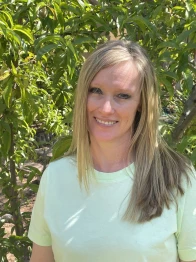
Award-winning, bestselling author, Robbie Cheadle, has published thirteen children’s book and three poetry books. Her work has also appeared in poetry and short story anthologies.
Robbie also has two novels published under the name of Roberta Eaton Cheadle and has horror, paranormal, and fantasy short stories featured in several anthologies under this name.
The ten Sir Chocolate children’s picture books, co-authored by Robbie and Michael Cheadle, are written in sweet, short rhymes which are easy for young children to follow and are illustrated with pictures of delicious cakes and cake decorations. Each book also includes simple recipes or biscuit art directions which children can make under adult supervision.
Robbie’s blog includes recipes, fondant and cake artwork, poetry, and book reviews. https://robbiesinspiration.wordpress.com/
Share this:

Treasuring Poetry – Meet poets, bloggers, and writers, Emily Gmitter and Zoe the Fabulous Feline, and a review #TreasuringPoetry #Poetrycommunity #review
Posted: July 19, 2023 Filed under: Book Review, Collection, Interview, Poetry, Review | Tags: Emily Gmitter, Happiness is a Warm Cat, Poetry, Robbie Cheadle, Treasuring Poetry, Writing to be Read, Zoe the Fabulous Feline 56 Comments
Today, I am delighted to welcome Emily Gmitter and her amazing writing cat, Zoe, to Treasuring Poetry. This is the first time I’ve interviewed such an interesting duo for this series and it has been a fabulous experience.
Welcome Emily and Zoe
I’d like to thank Robbie for inviting me and my co-author, Zoe the Fabulous Feline, to be guests on her lovely Treasuring Poetry blog. We’re happy to be here with her and all of you wonderful poets! Zoe says “hello” too—she’s waving her paw at the screen.
Is writing poetry easier for you compared to prose or do you do a lot of editing and revision of your poems?
While my initial writing efforts focused on poetry, and specifically, syllabic poetry, now I more often write short stories. However, poems or snippets of rhyme frequently find their way into my stories. My brain seems wired for rhyme, so if something comes to me, I don’t ignore it. But, to give you the short and direct answer to your question: I edit my prose far more than I do my poetry.
If I may elaborate, there is a distinct difference between the poet I thought I was back in the day, and the writer I hope I am today. Writing prose came much later in my life—that is, if you don’t count my very first short story, written in fourth grade, about a letter that was afraid of the dark. The story starts with a mom asking her daughter to take a letter to the mailbox. Just as the child is pulling the handle of the mailbox down and bringing the letter up to the opening, the letter starts to squirm and squeal in fear. It begs the child to not do it: “Please don’t drop me into the dark!” The child is startled, of course, but before she can say or do anything, the letter grows arms and legs and runs away. And that’s all I remember about that!
Getting back to your question … I’d add that, while I do edit my poetry, it seems most of my poems haven’t required heavy revision. I might tweak a word or two to keep the meter consistent or create an inner rhyme. Sometimes I’ve made an edit to deliberately include an alliterative phrase. But that’s about it. So I think syllabic poetry—unlike free verse—has always come easily to me. And it’s gotten easier as I’ve gotten older, or perhaps my personal bar has gotten lower. With my prose, though, it’s a far different story. The editing seems never-ending, but of course, at some point, you have to call it done.
I alluded to free verse; writing poetry in that style is not my forte, and has never been. Every once in a blue moon, something comes to me in that form, and usually it’s very short. (There is one example of that in my book, called “Soul Buddies.”) Free verse is much harder for me to write. I enjoy it, and I envy those who can create it, but it’s never come naturally to me. When I try to write it, it feels contrived. In one sense of the word, contrived is a positive thing; it’s what all writers do, right? We deliberately create a written piece; we calculate where to place an adjective, we assess whether a near-rhyme works well or at all. And on and on. So, contrived is not a dirty word. But it does have a negative sense, as well. When I find myself digging too deeply for words to convey what I wish to, the result sometimes feels forced and phony. I usually end up balling up the paper and aiming for the wastepaper basket. And that’s happened more times than I care to remember. I’ll leave free verse to those who can actually create it and spend my time enjoying the beauty of their creations.
Today I find that a poem is either there or it’s not. I most enjoy creating poetry when the words flow naturally. That feels like a gift. I write it down, and I leave it alone.
What mode (blog, books, YouTube, podcasts) do you find the most effective for sharing your poems with poetry lovers and readers?
I incorporated my poems into my newly released book and, while I’m not sure of its effectiveness over alternative modes, I really enjoyed using my poetry to mix up the flavor of the book. I also share my poetry (as well as my short stories and artwork) on social media.
Now, Zoe is more clever than I, or perhaps I should say, she’s a bit less technically challenged than I. She’s on Facebook, too, but she also posts on her The Life & Times of Zoe the Fabulous Feline blog. (A bit contrived if you ask me. To which Zoe just said, “Who’s asking you?”) Speaking of the little imp, she would like to say something. And I think I should be afraid.
Hi, Robbie, it’s me, Zoe the Fabulous Feline! I just wanted to point out something Emily neglected to tell you, which is that my poems are also in our book. Sheesh! Well, at least she gave me credit for my blog. My short stories sometimes include poetry, and I share my short stories on my social media pages. I did write one story completely in syllabic rhyme, which is in our book; it’s called “Zoe and Friends’ Strange Adventure.” It’s too long to include here,, so I’ll just summarize it for you:
A magic hat flies me and a couple of friends on a journey to different lands, one ruled by an evil dictator, and another led by a kind and compassionate old soul—the latter a land where a White Mist relays to us a message of hope and love. We return home with a new perspective.
I’m quite proud of that story-poem. (Story-poem might not be the right, or even a valid, term, but Emily would not let me say “epic poem”; she said I would sound terribly “arrogant.” I’m not even sure what that means, but it does not sound good.) About other modes for our writings: I’ve considered a podcast, but when I’d previously tried to teach Emily how to set up her own blog, that did not go well. Still, I took a chance and mentioned to her that I’d like her assistance with doing a “PodCAT” (a podcast for cats only). Well, I had to practically pick her up off the floor. So I took pity on her and did not push the idea. Anyway, I’m busy enough already. I’ll hand the baton back to Emily at this time and will be back if any other question catches my attention. Ciao for now!
Do you think poetry is still a relevant form of expressing ideas in our modern world? If yes, why?
Yes, I do, because poetry is a window into our souls. Poets write from the heart, and because people are multi-faceted creatures, and because there is so much going on around us all the time, there is no end to the food that will feed a poet’s imagination. Relevance abounds!
And then we have that other class of poets who are relevant in our modern world—the songwriter. Songwriters write lyrics that tell their own stories but also often speak to all our lives. Some artists may stick with the typical love song and/or love-gone-wrong song, and others may risk commercial success for at least occasionally penning songs that speak truth to power. In the latter category, the words of Kris Kristofferson come to mind. His diverse catalog includes every kind of song imaginable, from love songs to humor to satire, from the bittersweet of love and loss to the blessings bestowed on us by a higher power. He also writes biting, politically charged, contemporary songs; just one example of Kristofferson’s many topical tunes is an older one, called “In the News.” (A word of caution: Based on real life events, these lyrics are not easy to read.)
In the News
Read about the sorry way he done somebody’s daughter
Chained her to a heavy thing and threw her in the water
And she sank into the darkness with their baby son inside her
A little piece of truth and beauty died
Burning up the atmosphere and cutting down the trees
The billion dollar bombing of a nation on its knees
Anyone not marching to their tune they call it treason
Everyone says God is on his side
See the lightning, hear the cries
Of the wounded in a world in Holy war
Mortal thunder from the skies
Killing everything they say they’re fighting for
Broken babies, broken homes
Broken-hearted people dying everyday
How’d this happen, what went wrong
Don’t blame God, I swear to God I heard him say
Not in my name, not on my ground
I want nothing but the ending of the war
No more killing, or it’s over
And the mystery won’t matter anymore
Broken dreamers, broken rules
Broken-hearted people just like me and you
We are children of the stars
Don’t blame God, I swear to God he’s crying too
Not in my name, not on my ground
I want nothing but the ending of the war
No more killing, or it’s over
And the mystery won’t matter anymore
Read about the sorry way he done somebody’s daughter
Chained her to a heavy thing and threw her in the water
And she sank into the darkness with their baby son inside her
A little piece of truth and beauty died
~ Kris Kristofferson ~ (In the News – YouTube)
It would be hard to be any more relevant in our modern world than that.
Which of your own poems is your favorite and why?
Oh, this is a tough one! I have favorites in different categories. If we’re talking humorous, “The Spider” is my favorite. I understand some will not find the killing of insects to be a humorous topic, but I have a serious bug phobia, so perhaps I will be forgiven.
The Spider
There you were on my wall the other day,
It wasn’t easy for me, but I let you go on your way.
Soon you were out of sight, but not out of mind,
For I need to know where you are at all times.
I needn’t have worried,
Soon enough you were back.
And busily building a translucent track.
Can’t spare you again, you should’ve stayed gone.
But no, you had to come back and build a new home.
And now, Lord have mercy, I feel bad, it’s a sin,
But when it comes down to your home or mine—mine wins.
My favorite poem of poignancy is “Unjust Desserts.” And for a fun read, I would choose “Nashville-Rainbow Style,” because it tells the story of a most memorable vacation with a bunch of my musician friends. And finally I—
Helloooo, this is Zoe again. I mean, I love Emily, but she sure can go on and on sometimes. Here is a little ditty I wrote as the ending to my short story entitled “Zoe the Poet.” The publisher liked it so much, he insisted on including it in our book, and that’s why it’s my favorite.
Zoe the feline just checking in
To bring you a laugh, a tear, or a grin.
The stories I give you, they come from within,
Except when they come from without.
Please note: With that poem, I answered the question of poetry relevance, too … saying in four lines what Emily said in four paragraphs.
Why do you write poetry?
It’s a good question. You could just as well ask why do I write prose? Both art forms paint images with words, and I equate words with power. Power to evoke emotions both positive and negative, power to entertain. And that’s what poetry is all about.
I love words! And I love to have fun with them. So my love of the English language is why I write anything at all. It’s also a way to communicate with others, a way of expressing myself without censoring myself, which I tend to do in oral communications. That’s the short and sweet answer to this question. As Zoe so kindly pointed out, I can go on and on, so if this satisfies, that’s cool. But I will say a few things more for those who like to read on and on.
As previously mentioned, my first writings of so many moons ago consisted entirely of poetry. But the truth is, these days I don’t set out to write poetry. These days, my creative endeavors have centered on prose and painting instead. However, I do still dip my toes in the pools of poetry every so often. Because of my love for language, I make a concerted effort to take advantage of the various forms of writing tools, such as alliteration, which adds interest to a piece, especially when it’s subtle—when it slips easily into the ear the way an old, well-worn glove slides over one’s hand.
Some short stories and all songs are poetry. In the short story category, flash fiction comes to mind, and especially those restricted-word-count story challenges; those can be poetry of the highest order. In word-challenge stories, one must use language in a very efficient yet meaningful way. When every word has to count, the result is often a rhythmic cadence that shouts “I am poetry!” I wrote the following in response to a 79-word challenge story. I may be biased but, to my mind, it is nothing if not poetic.
Letting Go
No shame in letting go. The freedom of the fall was stronger than her sister’s hand. They were having a passionate discussion. A decade separated the sisters. Their differences, strengthened over every day of each of those years, became more apparent as the discussion threatened to explode. The younger sister stood firm against the fire of her older sister’s fears. She knew it came from love, as surely as she knew she would survive the freedom of letting go.
My early poems came from a place of typical teen-age angst, most often fairly short expressions of whatever was on my mind at the time. Looking back at some of those now… well, I won’t say I’m embarrassed, exactly; I never planned for anyone to read them. But I am, at the least, amused at having taken myself so seriously back then. This might be the first poem I ever wrote. Needless to say, Growing Old did not make it into my book!
Growing Old
My brain is numb,
My heart is cold.
I must be dead,
Or am I old?
Was I describing my youthful thoughts on senility, dementia, growing old in general? Most likely the latter—the concept of aging in general—but the former shows that I had no real sense or kind thoughts about what it meant to be old. Clearly, I was not going to age gracefully!
Many of us younger folks had some angst about our elders—you know, those folks over thirty years of age and considered part of the establishment. Everybody expressed it in their own way. One of my earlier poems relays how I envisioned our world if nuclear powers were to lose their senses. It’s too long to include in this interview (it’s in my book), but here’s a stanza that shows the basic theme of the poem:
The Future of the Child
“What shall I be, Dad, when I grow up?”
Looking toward the future, an eager young pup.
“Anything you want, Son,” you say with a smile.
And secretly pray for the future of the child.
So, that was then, when I set out to write poetry. And this is now when I don’t. “Soul Buddies” is one of those short, free-verse poems that gave birth to itself without any help from me.
Soul Buddies
I found you so easily, where I found you,
not because you are predictable,
but because you go where I go.
You are where I am.
Worlds apart in time, bound by soul.
And that is my long answer to your question, Robbie. And to anyone who has read this far, thank you!
Which poem by any other poet that you’ve read, do you relate to the most [please provide the poem or a link to the poem] and why?
So many speak to me that it’s hard to choose the one that speaks the loudest. The volume also seems to change depending on my mood at any given time. But, at the top of my list of poets are Kris Kristofferson and Gibran Khalil Gibran. You might think Kris and Khalil is a strange pairing, but when you read the lyrics written by Kris and the poems written by Khalil, you see that both write poetry that hits you in your heart. Poetry that makes you wonder how they knew your innermost feelings.
Shel Silverstein is another genius I admire. His body of work is relatable, his sense of humor is bound to give the reader a new perspective on this crazy little thing called life. A well-known author of children’s books and poetry collections, his poems appear funny and light-hearted, and they are. But most contain considerable substance, as well. I really love “Put Something In” simply because it’s a great message, and not just for children.
I relate to this one a lot, at least partly because it speaks to the artist I fancy is in there somewhere, and the child I pray is still in there somewhere.
Put Something In
Draw a crazy picture,
Write a nutty poem,
Sing a mumble-grumble song,
Whistle through your comb.
Do a loony-goony dance
‘Cross the kitchen floor,
Put something silly in the world
That ain’t been there before.
~ Shel Silverstein ~
But you asked which one poem I relate to the most. I would choose this one by Gibran Khalil Gibran, called “Do Not Love Half Lovers.” In this poem, Khalil takes two simple idioms we’ve probably all heard all our lives (Live life to the fullest and Do it well or not at all) and presents them in a poetic fashion that is brilliant. This piece is accessible and contains valuable advice, yet is so mundane that it cannot help but be universal. I feel as though he was in my head when he wrote it. Who hasn’t, at one time or another, found themselves exhibiting such negative or self-damaging behaviors? Who hasn’t, at one time or another, felt only half alive?
One might say this poem reminds them that life is too short to live it only halfway. Others might say life is too long.
Do Not Love Half Lovers
Do not love half lovers
Do not entertain half friends
Do not indulge in works of the half talented
Do not live half a life
and do not die a half death
If you choose silence, then be silent
When you speak, do so until you are finished
Do not silence yourself to say something
And do not speak to be silent
If you accept, then express it bluntly
Do not mask it
If you refuse then be clear about it
for an ambiguous refusal is but a weak acceptance
Do not accept half a solution
Do not believe half truths
Do not dream half a dream
Do not fantasize about half hopes
Half a drink will not quench your thirst
Half a meal will not satiate your hunger
Half the way will get you no where
Half an idea will bear you no results
Your other half is not the one you love
It is you in another time yet in the same space
It is you when you are not
Half a life is a life you didn’t live,
A word you have not said
A smile you postponed
A love you have not had
A friendship you did not know
To reach and not arrive
Work and not work
Attend only to be absent
What makes you a stranger to them closest to you
and they strangers to you
The half is a mere moment of inability
but you are able for you are not half a being
You are a whole that exists to live a life
not half a life
~ Gibran Khalil Gibran ~
********
Well, I think I better stop here, Robbie. Zoe and I thank you again for this opportunity to take part in such a fun feature!
Thank you, Emily and Zoe, for being such entertaining guests.
Happiness is a Warm Cat by Emily Gmitter and Zoe the Fabulous Feline

Blurb
In Happiness is a Warm Cat, author Emily Gmitter and her feline friend, Zoe, serve up a mixed genre of short stories and poems brimming with passion, love, and humor. The majority of the stories are told from the perspective of her cat, Zoe—a cool cat of perspicacity if ever there was one. Zoe’s stories will make you laugh, cry, and occasionally scratch your head in wonder, while Emily’s stories of fiction and nonfiction mingle humor with a sharp poignancy that you’ll find both heartwarming and entertaining.
My review
Happiness is a Warm Cat is a wonderfully unique book filled with experiences and adventures told through the eyes of Emily Gmitter’s fabulous cat, Zoe, as well as some beautifully written romantic and other fictional pieces and biographical stories about aspects of Emily’s life. There are also some lovely poems and several pictures of Emily’s artwork. All of the creations in this book are filled with vibrancy, colour, and passion.
The stories about Zoe and her adventures are fun filled and interesting. Zoe is typical of a cat and is filled with self importance and quite sure about her status as ‘top dog’. She does all manner of naughty things to ensure that Emily remembers her place in the family structure. Zoe is also big hearted and curious (aren’t all cats?) and likes to meet other animals, including Bella the dog and Burt the writing cat, Bella and Barre the Siamese twins, as well as spending time with her sister, Jaz. Zoe also gets to experience some pain and loss.
As a reader, I thought that experiencing daily life through the eyes of Zoe, was a wonderful way to make sense of everyday trials and tribulations and find the happiness in small things and moments.
A wonderful book for readers who appreciate experiencing the ordinary contentedness of life from a different perspective.
Purchase Happiness is a Warm Cat by Emily Gmitter and Zoe the Fabulous Feline
About Emily Gmitter
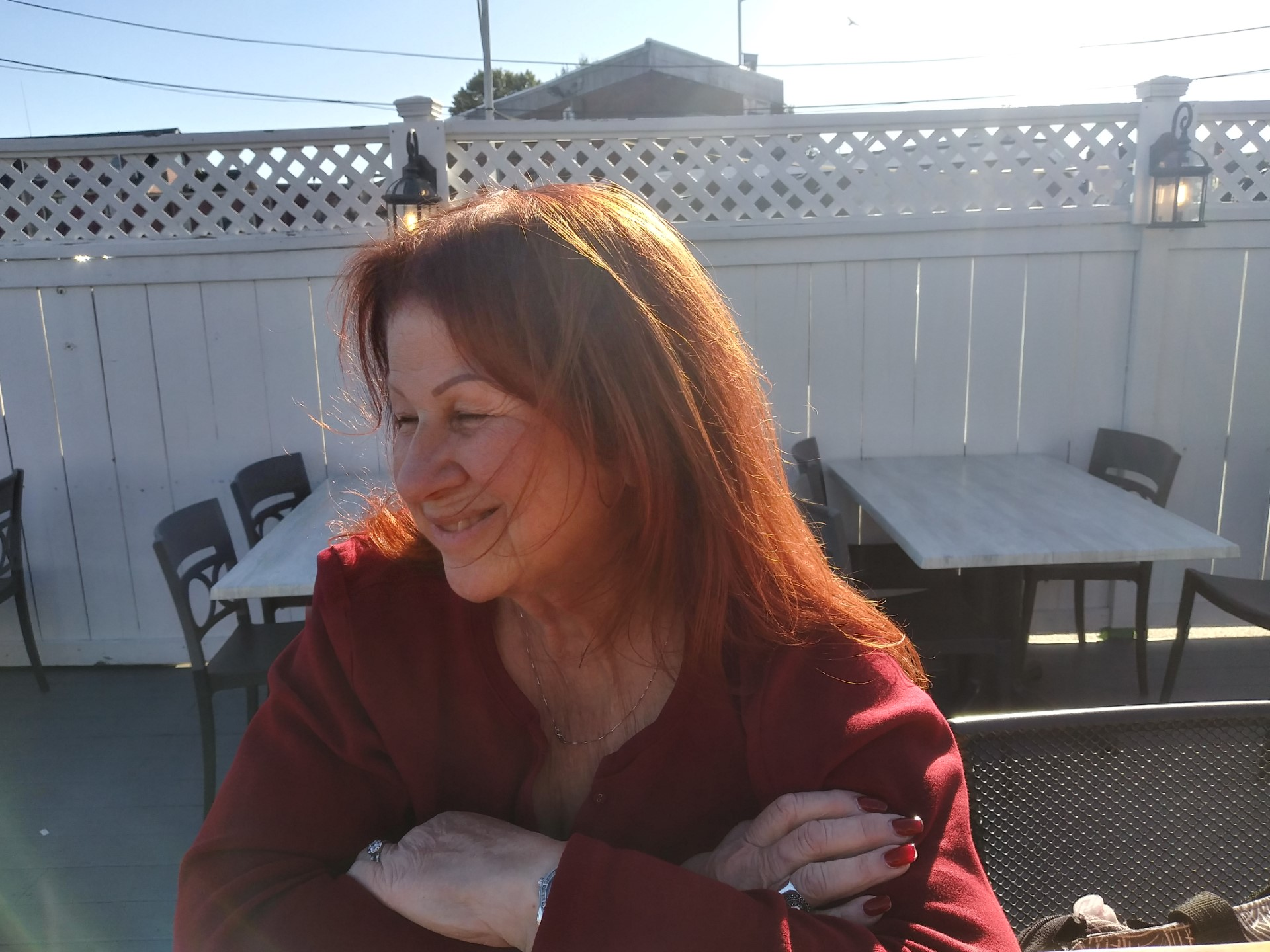
Emily lives on the North Shore of Massachusetts. She loves to spend alone-time at the beach, fun-time singing at local karaoke clubs, and the rest of her time engaged in activities with family and friends … when she’s not reading, writing, or painting.
Share this:

Dark Origins – The Second Mrs Astor, New York high society and the sinking of the Titanic
Posted: June 28, 2023 Filed under: Books, Dark Origins, Fiction, Historical Fiction, Historical Inspiration, history | Tags: Dark Origins, Historical Fiction, Robbie Cheadle, Shana Abe, The Second Mrs. Astor, Writing to be Read 44 Comments
The Titanic has been in the press again recently and has claimed five more lives. If you are out of the loop about this disaster, you can read about it here: https://www.reuters.com/world/search-intensifies-titanic-sub-with-only-hours-oxygen-left-2023-06-22/.
This disaster prompted me to write about a book I recently read, The Second Mrs Astor, and its dark origins.
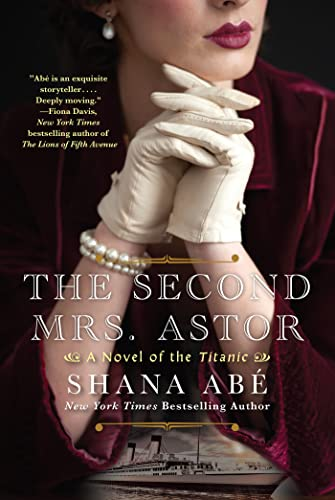
The Second Mrs Astor is a work of historical fiction by Shana Abe. It depicts the romance between the hugely wealthy John Jacob Astor IV and his second and very young wife, Madeleine Force Astor.
There are two aspects to this extraordinarily fine piece of fictionalised history that caught my attention: the snotty and superior attitudes of New York society created by John Astor IV’s mother, Caroline Schermerhorn Astor, and the sinking of the Titanic which claimed the lives of John Astor IV, his valet, and his dog, Kitty. Madeleine Force Astor, who was pregnant at the time, survived the disaster.
A History of New York’s high society in the late 19th century
New York high society started with The Four Hundred, a list of New York’s biggest names which achieved highly-coveted invitations to one of Mrs Caroline Astor’s most lavish parties in her Fifth Avenue mansion. At this time, called the Gilded Age, the Astor family were considered to be Manhattan’s old money – being one of the first Dutch settlers on the island, and they held the prestigious title of a true ‘Knickerbocker’ or a native New Yorker.
Caroline Astor was the ultimate authority of New York society at the time and many high-profile names from America’s 1 percent competed for a seat at her table. Once of these people was Ava Belmont, previously Ava Vanderbilt from the Vanderbilt railroad fortune, who tried to overthrow Caroline Astor thereby creating the most notorious high society rivalry in the late 19th century.
New York high society owned lavish summer homes in Newport, Rhode Island and enormous mansions in the heart of Midtown Manhattan and were known for their extreme extravagance.
Early romance between John Astor IV and Madeleine Force
Madeleine Force was 17 years old when she met John Astor IV. She came from a wealthy family who were part of Brooklyn high-society but was several rungs down the social ladder from the Astor’s.
At the time, John Astor IV was 47 years old and a divorcee with two children. At that time, divorce was considered to be scandalous by the clergy and high society.
Madeleine Force accepted John Astor IV’s marriage proposal despite the open disapproval of his societal circle and the malignant scrutiny of the press.
The early part of the couples marriage made for sad and difficult reading as Madeleine struggles to cope with social ostracism. This all happens against a background of outrageous privilege and extravagance. Both aspects made me angry as a reader.
The pair then went on an extended honeymoon to Egypt and elect to return to New York on the Titanic.

The sinking of the Titanic

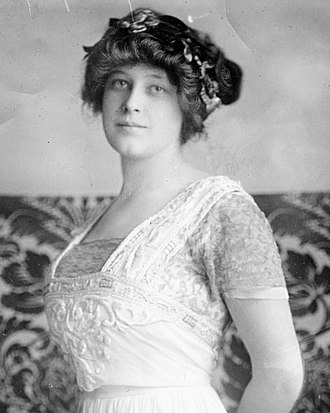
Madeleine Astor was five months pregnant when she boarded the Titanic with her husband at Cherbourg, France. They were first class passengers. On the night of the 14th of April 1912, John Astor woke his wife and informed her that the Titanic had hit an iceberg. He reassured her that the damage did not seem serious, but he made her put on a life jacket. Madeleine Astor, her nurse and maid managed to board lifeboat 4 by crawling through the first-class promenade window. John Astor asked if he could accompany his wife as she was pregnant but his request was refused.
John Astor and his valet died in the sinking and his body was recovered on the 22nd of April.
The author’s descriptions of life aboard the Titanic before it struck the iceberg, and of the three hours during which the great ship sank are very compelling. I felt as if I was on that ship experiencing the cold, fear, and loss.
Of the estimated 2,200 people aboard the Titanic more than 1,500 died.
A quote from The Second Mrs Astor:
“The best memory I have about Titanic was that she was so large. So epic. I never felt any swaying or bobbing or turbulence to interfere with my meals, my sensitive appetite, or my slumber. I never felt any sort of vulnerability aboard that ocean liner, right up until the very end. I imagine that’s a blessing, don’t you? Whoever wants to know how it’s all going to end before it actually does? Only poets and madmen, I would think.”
Conclusion
Most people know something about the sinking of the Titanic so I haven’t gone into a lot of detail in this post. I was so captivated by this book, I did my own research to determine how much of the Astor love story was fictionalised and how much was based on truth. It does seem that the Astor’s really were in love and it was a great romance. Madeleine Astor never really recovered from the shock and horror of that fateful night and while her death at the age of 46 is recorded as heart failure, it is believed she died of a drug overdose.
One interesting survival story I came across during my research related to the chief baker on board the Titanic called Charles Joughin.

Ahead of the actual sinking of the Titanic, Charles Joughin imbibed significant amounts of alcohol. When the ship started sinking, the baker stepped off the stern of the vessel. As 1,500 screaming and panicked people froze to death around him, he continued to paddle in the water until dawn when he was picked up by a lifeboat. Within a few days, he was back at work.
Rather a remarkable story.
About Roberta Eaton Cheadle

Award-winning, bestselling author, Roberta Eaton Cheadle, is a South African writer and poet specialising in historical, paranormal, and horror novels and short stories. She is an avid reader in these genres and her writing has been influenced by famous authors including Bram Stoker, Edgar Allan Poe, Amor Towles, Stephen Crane, Enrich Maria Remarque, George Orwell, Stephen King, and Colleen McCullough.
Roberta has two published novels and has horror, paranormal, and fantasy short stories included in several anthologies. She is also a contributor to the Ask the Authors 2022 (WordCrafter Writing Reference series).
Roberta also has thirteen children’s books and two poetry books published under the name of Robbie Cheadle, and has poems and short stories featured in several anthologies under this name.
Roberta’s blog features discussions about classic books, book reviews, poetry, and photography. https://roberta-writes.com/.
Find Roberta Eaton Cheadle
Blog: https://wordpress.com/view/robertawrites235681907.wordpress.com
Twitter: https://twitter.com/RobertaEaton17
Facebook: https://www.facebook.com/robertawrites
Amazon: https://www.amazon.com/Roberta-Eaton-Cheadle/e/B08RSNJQZ5
_____________________________________________________________________________________________
Want to be sure not to miss any of Robbie’s “Dark Origins” segments? Subscribe to Writing to be Read for e-mail notifications whenever new content is posted or follow WtbR on WordPress. If you found it interesting or entertaining, please share.
Share this:

Treasuring Poetry – Meet poet and author, D.L. Finn and a book review #TreasuringPoetry #bookreview #poetry
Posted: June 21, 2023 Filed under: Blog Tour, Book Release, Book Review, Books, Collection, Interview, Poetry, Treasuring Poetry | Tags: D.L. Finn, Just Her Poetry, Robbie Cheadle, Treasuring Poetry, Writing to be Read 93 Comments
My June Treasuring Poetry guest is the talented poet and author, D.L. Finn. Welcome Denise.
Why do you write poetry?
I write poetry for many reasons but the most important one is that I can describe what I’m seeing or feeling in ways I am unable to when I speak. Poetry also expresses or records the world as I see it or want it to be. I can use poetry to convey the pure awe of nature, share my thoughts, or vent frustrations. Writing poetry is not only a wonderful vehicle to communicate my emotions but I like that my perspective can be interpreted differently by the readers.
Do you think poetry is still a relevant form of expressing ideas in our modern world? If yes, why?
I do think poetry is still relevant. It is a beautiful art form that allows us to glimpse the world in new ways like any good painting would but through words.
Which poem by any other poet that you’ve read, do you relate to the most and why?
The first poem that captured me was A Road Less Traveled. I have the poem framed on my wall so I can enjoy it every day and appreciate that it can have a more layered meaning, and interpretations.
The Road Not Taken
BY ROBERT FROST
https://www.poetryfoundation.org/poems/44272/the-road-not-taken
Two roads diverged in a yellow wood,
And sorry I could not travel both
And be one traveler, long I stood
And looked down one as far as I could
To where it bent in the undergrowth;
Then took the other, as just as fair,
And having perhaps the better claim,
Because it was grassy and wanted wear;
Though as for that the passing there
Had worn them really about the same,
And both that morning equally lay
In leaves no step had trodden black.
Oh, I kept the first for another day!
Yet knowing how way leads on to way,
I doubted if I should ever come back.
I shall be telling this with a sigh
Somewhere ages and ages hence:
Two roads diverged in a wood, and I—
I took the one less traveled by,
And that has made all the difference.
Which of your own poems is your favourite and why?
I have two from when I first started writing poetry. So, these poems have a special place in my heart.
The Bearded Old Man
The bearded old man
Walks across the quiet desert,
His hooded white robe
Protecting and sheltering him
From the burning sky.
His feet are silent against the sand.
He walks day and night,
Going to a place that he knows exists.
He beckons strangers to join him
As he keeps walking toward…
That place he calls home.
Fingers of the Sea
The weightless world of the beach engulfs me
As the long, extended fingers of the sea
Gently
Stroke me—welcome me,
Enticing with its salty breath,
Satisfying my deep, hidden hunger.
Slowly
The fingers curl back
An invitation,
Beckoning toward the heart of the sea.
Beneath my gaze on the cold, wet world
Its subjects are sent out to tempt,
Screeching and scurrying
Above and below me,
All in a frenzied orchestrated rhythm.
The sea’s haunting song
Urgently
Seduces my soul.
All of my resistance floats away
Like the curling waves,
As I blissfully clutch
The fingers of the sea.
Is writing poetry easy for you compared to prose or do you do a lot of editing and revision of your poems?
Poetry does seem to come easily to me. I will usually write the poem by hand and then later put it on the computer. Editing comes later when I use the poem for my blog, a challenge, or a book. Each poem is different but when it feels and sounds right to me—it’s done. It is a different process for free verse over symbolic. In free verse I let the words flow naturally, while in symbolic poetry I need to make my words fit a pattern. I do enjoy writing both types of poetry and challenge myself to pen poetry in many different places. This includes the back of a Harley, underwater, or on a crowded plane. In writing prose, I need a quiet space and an idea to get me writing so it’s very different process from poetry.
What mode (blog, books, YouTube, podcasts) do you find the most effective for sharing your poems with poetry lovers and readers?
I share my poetry on my blogs, newsletters, and challenges. I also have a book, Just Her Poetry, and working on another one right now. I least like to read my poetry but will still do it.
My review of Just Her Poetry Seasons of a Soul (Poetry)

This book, packed with exquisite poems, is divided into two main sections, namely, Just her poetry about nature and the author’s experiences investigating sites of natural beauty from her seat behind the driver of a Harley and Seasons of a soul which includes a variety of passionate and evocative poems about the author’s emotional state during various experiences and circumstances she has faced during her life.
I was attracted particularly to the second section of poems and was captivated by the author’s depictions and descriptions of the states and stages of life. I selection of my favourite lines are as follows:
“I am alone
Yet the voices from my past sit with me.
They can haunt me – or comfort me.”
From Now
“It’s time to let go of the things I’ve collected.
Leaving room for my heart to shine through my smile.
Then my peace will be complete within my soul.”
From Simply Gone
And this extract from my favourite poem:
“I’m figuring out why I keep repeating the same issue over and over,
Like walking by a shoe in the middle of the room, tripping over it daily,
But not moving it or even taking another route so I don’t fall over that shoe.
Then it became guilt for me, always been there, while I kept tripping on it.”
From The Shoe.
This particular poem really spoke to me and I could relate to it completely. That, for me an avid reader of poetry, is a rare and wonderful thing.
Purchase link: https://www.amazon.com/gp/product/B07NVZ7FPF
My review of In the Tree’s Shadow (short story collection)

In the tree’s shadow is an entertaining collection of horror, paranormal and sci-fi short stories that is well worth reading. The stories all revolve around themes of self worth, love and relationships and use dark twists and turns to demonstrate the strength of love and its ability to overcome impossible seeming odds. The stories are of different lengths with some being quite long and detailed and others being 99-word flash fiction.
My favourite story was the first in the book called ‘End of the road’. The main character’s dismal life was well described and the reach of her grandmother’s love from beyond the grave was welcome and heart warming.
‘The Playdate’ and ‘A Man on the pier’ were both unexpectedly dark with most interesting twists that gave me quite a shock.
Another tale that I found particularly pleasing was ‘The Dolphin’. It was not dark, rather heart warming and unique.
All the stories are well written and the characters are nicely drawn.
Purchase Link: https://www.amazon.com/Trees-Shadow-collection-stories-nightmares-ebook/dp/B0BWL7LX9K
About D.L. Finn

D.L. Finn is an independent California local who encourages everyone to embrace their inner child. She was born and raised in the foggy Bay Area, but in 1990 relocated with her husband, kids, dogs, and cats to the Sierra foothills in Nevada City, CA. She immersed herself in reading all types of books, but especially loved romance, horror, and fantasy. She always treasured creating her own reality on paper. Finally, being surrounded by towering pines, oaks, and cedars, her creativity was nurtured until it bloomed. Her creations vary from children’s books, young adult fantasy, and adult paranormal romance to an autobiography with poetry. She continues on her adventures with an open invitation for her readers to join her.
About Robbie Cheadle
Award-winning, bestselling author, Robbie Cheadle, has published thirteen children’s book and two poetry books. Her work has also appeared in poetry and short story anthologies.
Robbie also has two novels published under the name of Roberta Eaton Cheadle and has horror, paranormal, and fantasy short stories featured in several anthologies under this name.
The ten Sir Chocolate children’s picture books, co-authored by Robbie and Michael Cheadle, are written in sweet, short rhymes which are easy for young children to follow and are illustrated with pictures of delicious cakes and cake decorations. Each book also includes simple recipes or biscuit art directions which children can make under adult supervision.
Robbie’s blog includes recipes, fondant and cake artwork, poetry, and book reviews. https://robbiesinspiration.wordpress.com/
Share this:

Growing Bookworms – Meet children’s fiction and adult fiction and non-fiction author, Toni Pike and a review #growingbookworms #childrensfiction #bookreview
Posted: June 14, 2023 Filed under: Book Promotion, Book Review, Books, Children's Books, Fiction, Mystery, Review, Thriller | Tags: Author Interview, Book Review, Children's Books, Cody Brody and the Step Mother From Outer Space, Growing Bookworms, Robbie Cheadle, The MAgus Covenant, Toni Pike, Writing to be Read 61 Comments
Today, I am delighted to introduce children’s and adult fiction author, Toni Pike. Toni is a prolific writer with at least two non-fiction books, six adult thrillers, one women’s fiction, and two children’s books, all available from Amazon. Today, we are focusing the discussion on Toni’s two children’s books in the Brody Cody series. I’ve read both and they are wonderful for middle school children.
I love your books about Brody Cody as they are filled with excellent, age-appropriate humour without resulting in facetious child characters which is a pitfall with many modern children’s books. Is there any particular children’s book author whom you admire and consider to be a role model for your writing?
Thank you so much for your lovely comments, Robbie – I’m delighted that you liked my characters. That means so much to me, coming from such a wonderful writer.
Roald Dahl is my favourite children’s author – his irreverent stories and characters are so wickedly delightful, and his plots are so beautifully constructed. I find children love this irreverence, and I was horrified to read recently that his stories were to be “sanitised” for the modern world. I think young readers could only benefit from enjoying his classic stories.
One of my other favourite role models is Judy Blume – I love the characters and familiar situations in “Tales of a Fourth Grade Nothing.”
Is Brody Cody entirely fictitious or are some of his characteristics based on real life models?
I always say that they are entirely a figment of my imagination – but quite a few aspects of Brody’s character are drawn from various real-life situations. In particular, I drew on memories of my own children and their friends, and also some snippets and ideas from children I taught at school. Having said that, nothing would be recognisable. I also drew on my own experience of childhood – even though that was a very long time ago! Two examples were Brody’s reluctance to get involved with extra-curricular activities, and also his insecurities, things Brody and I have in common.
How do you go about ensuring the language and flow of ideas in your children’s books are appropriate for the target age group?
Whether it’s for adults or children, I always try to write fast-moving stories that are plot-driven to keep the reader turning the page. That style seems suit me best, and it’s one of the reasons I like writing thrillers. To keep the language age-appropriate, I tried to think of how my children spoke when they were that age. I also made sure I used simple words and sentences, and always attempted to add humour. The setting was Australia, which of course is my home, so I knew the local idioms. I didn’t worry too much about the latest slang expressions – I tried to avoid that.
The theme of your first book, Brody Cody and the Stepmother from Outer Space, is very relevant in our modern age of frequent broken families and remarriages. Was there anything specific that compelled you to write this type of story? What were your aims with this book?
I wanted to write about a little boy who had lost his mother, because that immediately created sympathy for the character. I wanted it to be both scary and funny, but to have a very positive message about children and parents. I know there are a lot of blended families these days, so I hoped it would strike a chord but also be something all children could enjoy.
What are your goals for the Brody Cody series? Can we expect another book in this series soon?
I have a list of ideas for future Brody Cody stories, and want to add to the current two-book series. However, I also love writing books for adults, and I’m currently working on another thriller – which is still at a very early stage. I feel torn between the two, and don’t want to disappoint my grown-up readers who’ve followed me for a few years now. So, for the moment, I think my adult writing is winning.
Books for children are harder to market than books for adults. How do you go about marketing your books and what works best for you?
Attracting readers for the series has been far more difficult than I anticipated – much more so than for adult books. Of course, that’s only my experience and other writers may not find that. I was thrilled with the response from those who did read them, and many of the reviews were wonderful. But I would prefer to find a wider audience.
I use the same techniques for marketing that I used for my other books The first essential is to have some reviews – and I send out advance copies for that. I enrol my books in Kindle Unlimited, and have both the ebooks and paperbacks on Amazon. I find reads on Kindle Unlimited account for a fair proportion of my royalty income. Occasional free days, especially for the first book in the series, helps to boost subsequent sales of all books in the series and also helps to get some reviews. I also use Amazon sponsored ads, targeting similar books and authors. I do, however, keep a tight rein on my budget for that.
The best marketing tool of all, though, is a supportive writing community. I’ve become good friends over the last few years with other writers like yourself from all over the world, and supporting and sharing each other’s writing and blog posts is a great way to spread the word. Your Growing Bookworms series about children’s writing is a great inspiration for children’s writers, and a great learning tool for parents.
My review of Brody Cody and the Stepmother from outer space
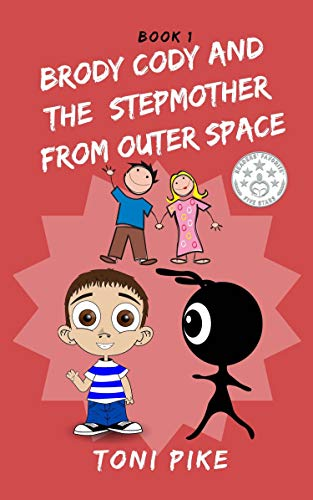
This book is a hilarious and fun read for young readers aged 7 to 13 years old. It is quite reminiscent, with its quirky and slightly dark humour, of Roald Dahl’s books, in particular, it reminded me a bit of James and the Giant Peach where James’ parents are eaten by a rampaging rhinoceros.
Cody, the young hero if this book, is raised by his relaxed and nonchalant father after his mother is mowed down unexpectedly by a runaway bus. Cody is spared because he flies out of his pram and across into the hands of the police constable who catches him like a baseball.
Cody is a happy boy who lives with no rules and little parental intervention. His father works from home in the afternoons, and is not given to checking on Cody’s homework or making sure it is done. They have an interesting diet too that comprises of sweet and sickly cereal in the morning and some fabulously unhealthy father created meals in the evenings.
Cody is happy and doesn’t believe he needs a mother like other children have. He has freedom and he is happy living with his father.
One day, Cody’s father needs to go away to an out-of-town conference. Cody cannot go with him and is sent to his friend’s home for this period. Cody’s friend has a mother and she sets about trying to mend Cody’s lackadaisical ways. Just before Cody is due to go home, he gets a quick call from his father telling him he has met and married a woman he met at the conference.
Cody is horrified and returns home quite determined to reject this new mother, but things don’t go quite according to plan. Cody discovers things about his new mother than lead him to believe she is an alien.
This really is a rollicking good story and young children will love it.
My review of The Magnus Covenant
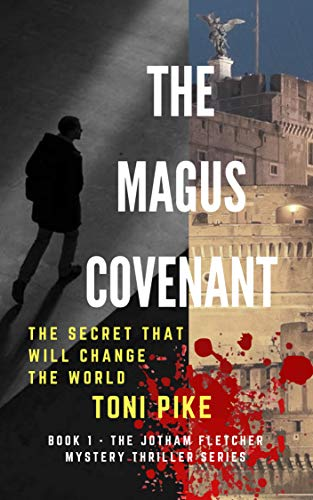
The Magnus Covenant is an exciting thriller that starts of with an unusual and strange murder. From there the excitement and pace just keep increasing, keeping you on the edge of your seat.
Jotham Fletcher and his girlfriend, Antonella Pavoni, a lecturer at the University of Rome, arrive at a famous Catholic Church where Jotham is expecting to deliver a lecture about Simon Magnus just in time to view the body of an elderly man in a black cape who may have committed suicide. As an expert on Simon Magnus, a cult leader from the time of Jesus, who thought he should be the head of the church and who was believed to have been a magician, Jotham mentions to the police the similarities between the deaths of Simon Magnus and this old man. Unfortunately, Jotham’s comments and interventions make him a prime suspect for murder.
Jotham does give his lecture and is the recipient of an extraordinary question from a journalist who subsequently disappears. He is also the recipient of antagonistic comments from a young Catholic brother who is also a member of the audience.
Shortly after the delivery of the lecture, Jotham is kidnapped and becomes embroiled in a complicated intrigue involving the members of the Simon Magnus cult, which has been in existence for 2,000 years, a brotherhood of extreme Catholics and a wealthy individual who may be the cause of all the agitation through the discovery and restoration of an ancient document. Jotham quickly realises that he can’t trust anyone he knows or meets and that his life is in danger.
Jotham is a great character. He has suffered personal loss through the deaths of his wife and child and is struggling with his faith. He’d thrown himself into researching Simon Magnus as a distraction from his loss and emotional turmoil. The deception of many people around him comes as a complete surprise to Jotham and he gets himself into a mess. He is able to pull himself together, discover his survival instincts and set about unravelling the intrigue all around him.
I thought the plot of this book was clever and interesting and the action kept me interested throughout.
About Toni Pike
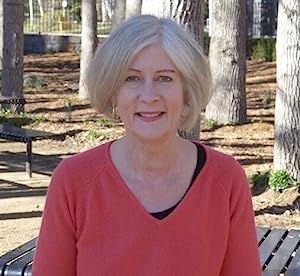
Toni Pike is a multi-genre author who enjoys writing page-turning fiction for adults, hilarious books for children, and non-fiction. She also loves travelling and being with family and friends. She lives in Australia and firmly believes that coffee and long walks are an essential part of any day.
Do you like books that you can’t stop reading? Pike is the author of LINDA’S MIDLIFE CRISIS, DESOLATION BLUFF, DEAD DRY HEART and The Jotham Fletcher Mystery Thriller Series: THE MAGUS COVENANT, THE ROCK OF MAGUS, THE MAGUS EPIPHANY and HOLY SPEAR OF MAGUS.
The Brody Cody Series is for children aged 6-9: BRODY CODY AND THE STEPMOTHER FROM OUTER SPACE and BRODY CODY AND THE HAUNTED VACATION HOUSE.
She’s also the author of two non-fiction books. THE ONE WAY DIET is a no-nonsense guide to losing weight. HAPPY TRAVELS 101 is a short book of travel tips with advice for anyone who wants to travel overseas.
To find out more, her website is tonipike.com.
About Robbie Cheadle
Award-winning, bestselling author, Robbie Cheadle, has published thirteen children’s book and three poetry books. Her work has also appeared in poetry and short story anthologies.
Robbie also has two novels published under the name of Roberta Eaton Cheadle and has horror, paranormal, and fantasy short stories featured in several anthologies under this name.
The ten Sir Chocolate children’s picture books, co-authored by Robbie and Michael Cheadle, are written in sweet, short rhymes which are easy for young children to follow and are illustrated with pictures of delicious cakes and cake decorations. Each book also includes simple recipes or biscuit art directions which children can make under adult supervision.
Robbie’s blog includes recipes, fondant and cake artwork, poetry, and book reviews. https://robbiesinspiration.wordpress.com/
Share this:

“Lion Scream” rakes in another five star review
Posted: May 29, 2023 Filed under: Book Review, Books, Collection, Poetry, Review | Tags: Book Review, Lion's Scream, Robbie Cheadle, Writing to be Read 2 CommentsShare this:

Dark Origins – The shockingly dark original story of Pinocchio
Posted: May 24, 2023 Filed under: Children's Books, Classics, Dark Fantasy, Dark Origins, Fairy Tales, Fiction | Tags: "Writing to be Read, 2018 Writing the Rockies Conference, Dark Origins, Pinochio, Robbie Cheadle 62 CommentsThe Adventures of Pinocchio is a children’s fantasy novel by Italian author, Carlo Collodi.
The story was originally published as a serial called The Story of a Puppet in the Giornale per I bambini, one of the earliest Italian weekly magazines for children starting from 7 July 1881. Originally, the story stopped after 8 episodes (published over 4 months) at Chapter 15. Due to popular demand, the episodes were resumed on 16 February 1882 and the following year, the story was published as a single book.
The storyline
In Tuscany, Italy, a carpenter named Master Antonio finds a block of wood which he immediately plans to carve into a table leg. The log cries out when he cuts it. Master Antonio falls to the floor as a result of shock and just at that moment his extremely poor neighbour, Geppetto, knocks on the door. The piece of wood instigates an altercation between the pair, but after a minor fisticuff, Geppetto receives the log as a gift. Geppetto is delighted and carves it into a marionette with the plan of making a living as a travelling puppeteer.
Quote: “On hearing himself called Polendina for the third time, Geppetto lost his head with rage and threw himself upon the carpenter. Then and there they gave each other a sound thrashing.
After this fight, Mastro Antonio had two more scratches on his nose, and Geppetto had two buttons missing from his coat. Thus having settled their accounts, they shook hands and swore to be good friends for the rest of their lives.
Then Geppetto took the fine piece of wood, thanked Mastro Antonio, and limped away toward home.”
As soon as Geppetto sets about carving the wood it becomes obvious that the puppet, called Pinocchio, will not be of good character.
Quote: “As he was about to put the last touches on the finger tips, Geppetto felt his wig being pulled off. He glanced up and what did he see? His yellow wig was in the Marionette’s hand. “Pinocchio, give me my wig!”
But instead of giving it back, Pinocchio put it on his own head, which was half swallowed up in it.
At that unexpected trick, Geppetto became very sad and downcast, more so than he had ever been before.
“Pinocchio, you wicked boy!” he cried out. “You are not yet finished, and you start out by being impudent to your poor old father. Very bad, my son, very bad!”
And he wiped away a tear.
The legs and feet still had to be made. As soon as they were done, Geppetto felt a sharp kick on the tip of his nose.
“I deserve it!” he said to himself. “I should have thought of this before I made him. Now it’s too late!””
Geppetto teaches Pinocchio to walk and he immediately runs away. The ungrateful puppet is caught by a law enforcement officer who, acting on the erroneous belief that Geppetto has mistreated the puppet, arrests Geppetto and puts him in prison.
Pinocchio returns to the empty house and meets the talking cricket which warns him of the perils of disobedience. In retaliation, Pinocchio throws a hammer at the cricket and accidentally kills it.

Having tried unsuccessfully to obtain some food, the puppet settles down to sleep on a stove. When he wakes up, his feet have been burned off. Luckily for Pinocchio, Geppetto is released from prison and returns home. He makes Pinocchio new feet. Caught up in short lived gratitude, Pinocchio agrees to attend school and Geppetto sells his only coat to buy him a schoolbook.
Pinocchio never makes it to school on that first day and his disobedience gets him into significant trouble. He narrowly escapes being used as firewood to cook a hungry puppeteer’s dinner. A fisherman coats him in flour and tries to fry him. As punishment for refusing to study, he is transformed into a donkey and thrown into the sea.
The worse of all his violent adventures is when Pinocchio is lynched from a tree by his recurring enemies, the Fox and the Cat. This is the point when Collodi ended his original Pinocchio magazine series. It was only popular demand by his readers that resulted in the Collodi reviving his puppet hero and finding a way out of this scrape for him.

Quote: “Happily for him, Pinocchio was made of very hard wood and the knives broke into a thousand pieces. The Assassins looked at each other in dismay, holding the handles of the knives in their hands.
“I understand,” said one of them to the other, “there is nothing left to do now but to hang him.”
“To hang him,” repeated the other.
They tied Pinocchio’s hands behind his shoulders and slipped the noose around his neck. Throwing the rope over the high limb of a giant oak tree, they pulled till the poor Marionette hung far up in space.
Satisfied with their work, they sat on the grass waiting for Pinocchio to give his last gasp. But after three hours the Marionette’s eyes were still open, his mouth still shut and his legs kicked harder than ever.
Tired of waiting, the Assassins called to him mockingly: “Good-by till tomorrow. When we return in the morning, we hope you’ll be polite enough to let us find you dead and gone and with your mouth wide open.” With these words they went.
A few minutes went by and then a wild wind started to blow. As it shrieked and moaned, the poor little sufferer was blown to and fro like the hammer of a bell. The rocking made him seasick and the noose, becoming tighter and tighter, choked him. Little by little a film covered his eyes.
Death was creeping nearer and nearer, and the Marionette still hoped for some good soul to come to his rescue, but no one appeared. As he was about to die, he thought of his poor old father, and hardly conscious of what he was saying, murmured to himself:
“Oh, Father, dear Father! If you were only here!”
These were his last words. He closed his eyes, opened his mouth, stretched out his legs, and hung there, as if he were dead.”
After this, Pinocchio’s story then continues its series of bleak set-pieces until finally our hero learns not to run away from his responsibilities. He begins to study hard and becomes a ‘good little kid’ and, at last, a real boy.
The dark origin of Pinocchio
It is clear from the narrative above the Pinocchio is a very dark story filled with violence, hunger, and illness. To understand how this story came about, the childhood of the author needs to be considered. According to https://metro.co.uk/, the house where Carlo Collodi was born in Florence in 1826, was on a long, narrow residential street which did not allow for any natural sunlight. He was the oldest of ten children and, to ease the burden on his parents, was sent away to live in a village with his mother’s family for much of his childhood.
While he was away, his family suffered a series of tragedies. Six of his nine siblings died before reaching adulthood. Some passed away as babies, while others lived long enough to become established parts of the family only to die later into childhood. The bleaker aspects of ‘The Adventures of Pinocchio’ are informed by the lasting impact of this pain on the author.
Themes
The themes of hunger, illness, and death are prevalent throughout the story.
Quotes:
“Are you not afraid of death?’
I am not in the least afraid!… I would rather die than drink that bitter medicine.’
At that moment the door of the room flew open, and four rabbits as black as ink entered carrying on their shoulders a little bier.
What do you want with me?’ cried Pinocchio, sitting up in bed in a great fright.
We are come to take you,’ said the biggest rabbit.
To take me?… But I am not yet dead!…’
No, not yet: but you have only a few minutes to live, as you have refused the medicine that would have cured you of the fever.’
Oh, Fairy, Fairy!’ the puppet then began to scream, ‘give me the tumbler at once… be quick, for pity’s sake, for I will not die–no… I will not die….”
***
“That puppet there,’ continued the Talking-cricket, ‘is a confirmed rogue. …’ Pinocchio opened his eyes, but shut them again immediately. ‘He is a ragamuffin, a do-nothing, a vagabond. …. Pinocchio hid his face beneath the clothes. ‘That puppet there is a disobedient son who will make his poor father die of a broken heart! …’ At that instant a suffocated sound of sobs and crying was heard in the room. Imagine everybody’s astonishment when, having raised the sheets a little, it was discovered that the sounds came from Pinocchio. ‘When the dead person cries, it is a sign that he is on the road to get well,’ said the Crow solemnly. ‘I grieve to contradict my illustrious friend and colleague,’ added the Owl, ‘but for me, when the dead person cries, it is a sign that he is sorry to die.”
***
“A boy’s appetite grows very fast, and in a few moments the queer, empty feeling had become hunger, and the hunger grew bigger and bigger, until soon he was as ravenous as a bear.
Poor Pinocchio ran to the fireplace where the pot was boiling and stretched out his hand to take the cover off, but to his amazement the pot was only painted! Think how he felt! His long nose became at least two inches longer.
He ran about the room, dug in all the boxes and drawers, and even looked under the bed in search of a piece of bread, hard though it might be, or a cookie, or perhaps a bit of fish. A bone left by a dog would have tasted good to him! But he found nothing.
And meanwhile his hunger grew and grew.”
Moral of the story
The moral of the story is that hard work, being good, and studying hard are the keys to success and it is only when Pinocchio devotes himself to the achievement of these three things that he transforms from a wooden puppet to a real boy with modern comforts. However, the author never lets the reader forget that disaster is always waiting to happen.
Quotes:
“I was just saying,” whined the Marionette in a whisper, “that it seems too late for me to go to school now.”
“No, indeed. Remember it is never too late to learn.”
“But I don’t want either trade or profession.”
“Why?”
“Because work wearies me!”
“My dear boy,” said the Fairy, “people who speak as you do usually end their days either in a prison or in a hospital. A man, remember, whether rich or poor, should do something in this world. No one can find happiness without work. Woe betide the lazy fellow! Laziness is a serious illness and one must cure it immediately; yes, even from early childhood. If not, it will kill you in the end.”
These words touched Pinocchio’s heart. He lifted his eyes to his Fairy and said seriously: “I’ll work; I’ll study; I’ll do all you tell me. After all, the life of a Marionette has grown very tiresome to me and I want to become a boy, no matter how hard it is. You promise that, do you not?”
“Yes, I promise, and now it is up to you.”
***
“Poor Pinocchio huddled close to the doghouse more dead than alive from cold, hunger, and fright. Now and again he pulled and tugged at the collar which nearly choked him and cried out in a weak voice:
“I deserve it! Yes, I deserve it! I have been nothing but a truant and a vagabond. I have never obeyed anyone and I have always done as I pleased. If I were only like so many others and had studied and worked and stayed with my poor old father, I should not find myself here now, in this field and in the darkness, taking the place of a farmer’s watchdog. Oh, if I could start all over again! But what is done can’t be undone, and I must be patient!””
If you would like to read the original The Adventures of Pinocchio, you can find it for free on Gutenberg here: https://www.gutenberg.org/files/500/500-h/500-h.htm
About Roberta Eaton Cheadle
Award-winning, bestselling author, Roberta Eaton Cheadle, is a South African writer and poet specialising in historical, paranormal, and horror novels and short stories. She is an avid reader in these genres and her writing has been influenced by famous authors including Bram Stoker, Edgar Allan Poe, Amor Towles, Stephen Crane, Enrich Maria Remarque, George Orwell, Stephen King, and Colleen McCullough.
Roberta has two published novels and has horror, paranormal, and fantasy short stories included in several anthologies. She is also a contributor to the Ask the Authors 2022 (WordCrafter Writing Reference series).
Roberta also has thirteen children’s books and two poetry books published under the name of Robbie Cheadle, and has poems and short stories featured in several anthologies under this name.
Roberta’s blog features discussions about classic books, book reviews, poetry, and photography. https://roberta-writes.com/.
Find Roberta Eaton Cheadle
Blog: https://wordpress.com/view/robertawrites235681907.wordpress.com
Twitter: https://twitter.com/RobertaEaton17
Facebook: https://www.facebook.com/robertawrites
Amazon: https://www.amazon.com/Roberta-Eaton-Cheadle/e/B08RSNJQZ5
_____________________________________________________________________________________________
Want to be sure not to miss any of Robbie’s “Dark Origins” segments? Subscribe to Writing to be Read for e-mail notifications whenever new content is posted or follow WtbR on WordPress. If you found it interesting or entertaining, please share.
Share this:

Treasuring Poetry – Meet poet and blogger, Luanne Castle, and a review #poetry #poetrycommunity #bookreview
Posted: May 17, 2023 Filed under: Book Review, Books, Interview, Poetry, Review, Treasuring Poetry | Tags: "Writing to be Read, Luanne Castle, Our Wolves, Robbie Cheadle, Rooted and Winged, Treasuring Poetry 56 CommentsToday, I am thrilled to introduce poet and blogger, Luanne Castle, as my May Treasuring Poetry Guest. Luanne has written four poetry books and had her work included in some anthologies too. I have read two of her four books and found her poetry to be unique and fascinating.
Welcome Luanne!
Why do you write poetry?
My connection to poetry feels as if it’s deeper than thought and precedes story. Until I was eight years old, I was an only child and spent time entertaining myself. Even before I could read, I listened to records of nursery rhymes and folk songs repeatedly, loving the rhythms and the magical way the words sounded. I started writing poetry when I was a child as it seemed a natural form of expression to me, possibly because of this nursery rhyme background. I still feel this same connection to poetry that I did as a child.
Do you think poetry is still a relevant form of expressing ideas in our modern world? If yes, why?
Poetry is very relevant because it can perform much of the same communication that prose does, but more besides! The music and delight in words found in poetry are memorable, even mnemonic. Poetry also tends to express on many levels, leaving gaps (ambiguity) where readers and listeners supply responses, emotions, and thoughts, thus making poetry the most active and interactive form. We need this activity as a guard against the increasing passivity of our culture.
Which poem by any other poet that you’ve read, do you relate to the most and why?
This is such a difficult question. In April I posted a favorite poem a day on Instagram, but being a favorite doesn’t mean the same thing as relating. Today’s choice for a poem I can really relate to is by Jane Kenyon. The beauty of the natural world, the shift of mood, and the comfort at the end are all very appealing to me.
Let Evening Come
Let the light of late afternoon
shine through chinks in the barn, moving
up the bales as the sun moves down.
***
Let the cricket take up chafing
as a woman takes up her needles
and her yarn. Let evening come.
***
Let dew collect on the hoe abandoned
in long grass. Let the stars appear
and the moon disclose her silver horn.
***
Let the fox go back to its sandy den.
Let the wind die down. Let the shed
go black inside. Let evening come.
***
To the bottle in the ditch, to the scoop
in the oats, to air in the lung
let evening come.
***
Let it come, as it will, and don’t
be afraid. God does not leave us
comfortless, so let evening come.
Which of your own poems is your favourite and why?
I have a few favorites from each book, but today’s favorite is this one from Rooted and Winged about my maternal grandfather. He and my grandmother (a big part of my roots) show in several poems throughout the collection. This one is a prose poem and although the majority of poems I write are lyrical, I do enjoy prose poems for the mix of storytelling and poetic language and imagery.
How to Create a Family Myth
My grandfather built a city with his tongue. Houses and little shops, celery fields and sand lots all connected to each other without roads or sidewalks. Once or twice he showed me a map of sewer lines running like Arcadia Creek underneath the cobblestones and packed dirt. We stood outside and found tall buildings in the clouds overhead. His hands gestured how his grandfather placed the bricks and taught his men to shape upwards, each building higher than the one before. Out there on the stoop, he pointed out where his mother, the one he said I looked like, had witnessed a man beating his horse. I saw her calico skirt billow out behind her, her hands wiping across her apron stomach even as she ran. When she reached the man, she snatched the whip from his hand, his surprise at her actions slowing him, rendering him stupid. When she cracked the whip down on his back time did not go on for her as it did for the rest of the world. Not until a week later, when she went to the market, did she realize that the story ran, too. It kept running until it reached all of us, each child and grandchild and great grandchild taking just what is needed from the tale. In my case, I plucked a heart from the clouds and tucked it safely inside a brick house in the city where it keeps the city alive to this day.
Is writing poetry easy for you compared to prose or do you do a lot of editing and revision of your poems?
I do edit and revise my poetry, but I can more quickly get to a finished poem than I used to be able to do. Practice really does improve speed. However, sometimes the fullest meaning doesn’t emerge for weeks after a poem is “finished,” so the best scenario is to put poem aside and look at it again later. As far as prose goes, I find prose fairly easy to write. Where I feel I would be out of my element would be in writing a novel. The plot intricacies and overall structure would drive me mad.
What mode (blog, books, YouTube, podcasts) do you find the most effective for sharing your poems with poetry lovers and readers?
Ah, that is such a good question. I think my blog is very effective for sharing poetry. I love interacting with blog readers and other bloggers about poetry. My books, of course, present a cohesive project to readers. I have a podcast hosted by Rebecca Budd coming up but have not done too much in that area to date. And I haven’t worked with YouTube yet other than some readings I have done have been posted by others. I would love to work more with YouTube and an audio format like Soundcloud in the future.
My review of Rooted and Winged by Luanne Castle

This is the second book of poetry and flash fiction by Luanne Castle I’ve read and I really like her style of writing.
Each piece is a reflection on a specific aspect of life and depicts the author’s thoughts and ideas about that particular aspect. It felt like a poetic journal of experiences and interpretations which I really appreciated. The poems are all freestyle and are written as a stream of consciousness without the restrictions imposed by strict sentence formation and punctuation. It flows well and suits the theme of the poetry.
An example of the thoughts and ideas expressed is this stanza from Gravity:
“Why are we only of the earth, Grandpa?
See your knees sunken in muck,
the sun sketching very plane of you.”
The imagery is rich and descriptive. An example of the language is as follows (extracted from Finding the House on Trimble Street):
“The house, once white and raw, has matured into gold. Ripened maples in October red temptingly frame the remembrance. The garage neatly unfolds from the side, the lawn edged in definition.”
My favourite piece is a slightly longer one entitled Today and Today and Today. It is about caregivers and is very poignant. The writer’s observations are so genuine and relatable.
“… She either ignores you or says mean things or praises you endlessly. Each response makes you sad.”
“He can wear only that one sweater. The others are too thin, too thick, too warm, too prickly, or pull over the head.”
Having recently had the experience of a close family member in intensive care in hospital for a period, completely dependent on the nurses who provide the medication and care, I felt as if this description had been pulled from my heart and mind:
“But you feel she knows you are at her side, joking with the staff, making sure that aides and nurses alike care for her as they would their mothers because her submissive form has been brushed with the glow of your personality.”
An extraordinary book of insightful poetry and prose.
Purchase Rooted and Winged: https://www.amazon.com/Rooted-Winged-Luanne-Castle/dp/1646628632
My review of Our Wolves by Luanne Castle
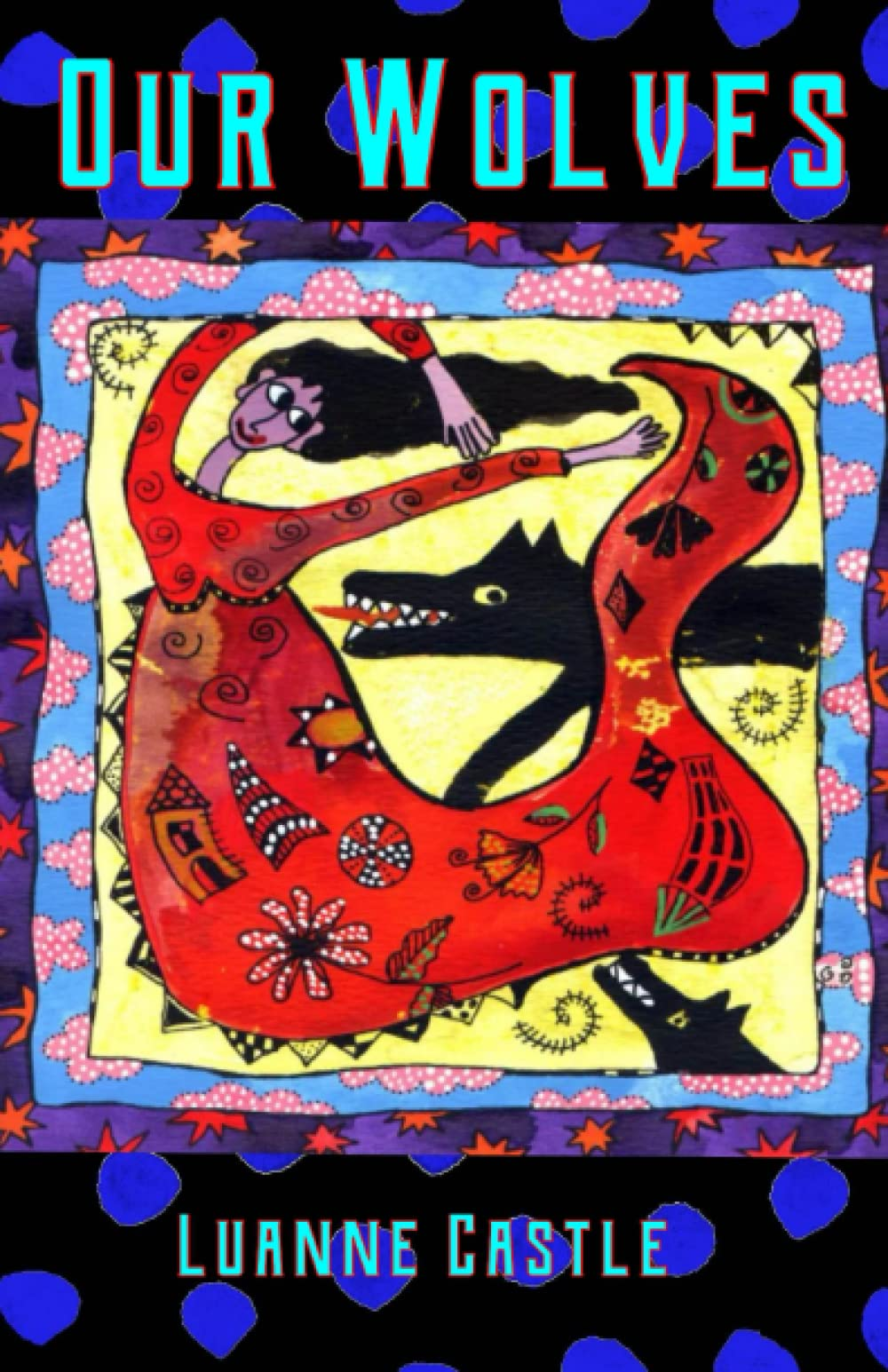
This book is an original and unique collection of poems that expose the wolves that appear in the lives of females during their formative years and through to maturity. The poet has linked many, but not all, of her poetic thoughts and interpretations of human predators to the wolf in the famous story Little Red Riding Hood or Le Petit Chaperon Rouge in the original French (which I have listed to with an English interpretation in my hand).
An example of this connection to the wolf is this extract from Our Old Wolves:
“But you will know how frightened they are
of the dark, shadowed forest and the abstruse mind.
Of human-like wolves concealed behind spruce and fir,
their shadows stretching out tentacles to grasp them
as they tremble past on their way to the locked river.”
Some of the poems turn the readers traditional idea of the hero and the predator on its head and force consideration of how misleading looks, perceptions of beauty and strength, and inbred prejudices can be. It highlights how frequently girls and young women walk right into trouble because of the messages drummed into them by their mothers and society. Women are not taught to accurately identify predators or ‘the wolf’.
Thanks for meeting me for coffee is a good example of this concept:
“I searched for the beginning
of your story and discovered you
were lost when you believed him.
All gone, One a milk carton missing.”
The poems in the book are mainly written in freestyle poetry and are filled with subtle meanings and innuendoes for the reader to consider. This book must be read with an alert and fresh mind in order to appreciate its full meaning and intrigue.
For me, the summary of the meaning and power of this book is set out in the following words from Your Sonnet:
“My mother taught me to be kind, to be helpful,
not to ignore the slow or less than able, the ones
who are different, the needy so I asked what
he needed from me and he misunderstood.
My story is not so very different from yours
and yours and yours and yours and yours.”
If you like interesting and thought provoking poetry, you will love Our Wolves.
Purchase Our Wolves: https://www.amazon.com/Our-Wolves-Luanne-Castle/dp/B0BTKNP31D
About Luanne Castle
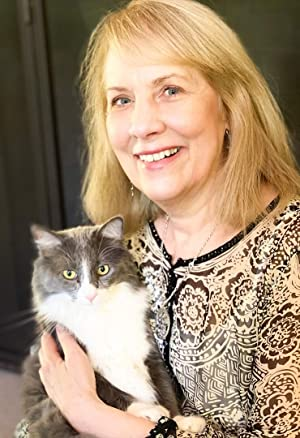
Luanne Castle lives in Arizona, next to a wash that wildlife use as a thoroughfare. She has published two full-length poetry collections, Rooted and Winged (Finishing Line 2022), a Book Excellence Award Winner, and Doll God (Kelsay 2015), which won the New Mexico-Arizona Book Award for Poetry. Her chapbooks are Our Wolves (Alien Buddha 2023) and Kin Types (Finishing Line 2017), a finalist for the Eric Hoffer Award. Luanne’s Pushcart and Best of the Net-nominated poetry and prose have appeared in Copper Nickel, American Journal of Poetry, Pleiades, River Teeth, TAB, Verse Daily, Saranac Review, and other journals.
Find Luanne Castle
Blog: https://writersite.org/
Website: https://www.luannecastle.com/
Twitter: https://twitter.com/writersitetweet
Luanne Castle Amazon Author Page
About Robbie Cheadle
Award-winning, bestselling author, Robbie Cheadle, has published thirteen children’s book and two poetry books. Her work has also appeared in poetry and short story anthologies.
Robbie also has two novels published under the name of Roberta Eaton Cheadle and has horror, paranormal, and fantasy short stories featured in several anthologies under this name.
The ten Sir Chocolate children’s picture books, co-authored by Robbie and Michael Cheadle, are written in sweet, short rhymes which are easy for young children to follow and are illustrated with pictures of delicious cakes and cake decorations. Each book also includes simple recipes or biscuit art directions which children can make under adult supervision.
Robbie’s blog includes recipes, fondant and cake artwork, poetry, and book reviews. https://robbiesinspiration.wordpress.com/
Share this:

Growing Bookworms – The benefits of cooking and baking with children
Posted: May 10, 2023 Filed under: Children's Books, Growing Bookworms, Literacy, Parenting, Teaching children | Tags: Baking, Children, cooking, Growing Bookworms, Robbie Cheadle, Teaching Life Skills, Writing to be Read 54 CommentsI wrote this post six years ago when I hadn’t been blogging for very long and didn’t have many followers. During my recent attendance at the South African Festival of Children’s Literature where I was asked to speak about cake and fondant art and its benefits to children, I thought again about all these benefits and decided to share it again for Growing Bookworms.
Most children love to spend time in the kitchen either cooking or baking. It is a fabulous bonding experience with Mom or another caregiver and they always enjoying eating the results of their hard work afterwards.
I love to bake and both my sons have travelled the cooking, baking and eating road with me. Michael, particularly, loves to cook. He prefers to make more practical things than I do such as savoury and/or sweet pancakes, French toast and even stews and curries which he sometimes makes with his Dad. I like to cook but I also enjoy making all sorts of fancy sweet treats and cakes.
I remember baking with my small boys. Gregory used to love to measure and pour the ingredients into the bowl. Funnily enough, Greg also loved to wash up. Sadly, this did not continued into his teenage years. I used to strip him down to his nappy and stand him on a few chairs lined up in front of the sink [so that he could not fall off] and set him free in front of a sink of soapy water. He used to splash around happy with a cloth washing up the bowl and wooden spoon. I kept the washing of any sharp implements and breakables for myself.
Michael, on the other hand, has never been a fan of any kind of cleaning up. He likes to measure, pour and, especially, to mix. He also likes to “lick” out the bowl. I have photographs of Michael covered from head to toe in chocolate cake mix with the bowl upside down on his head. What fabulous fun.
Other than the obvious fun and bonding factors, there are a list of other great benefits to baking with your children. I did some research on this and this is what I found:
- Maths skills: Baking helps children to learn maths concepts, in particular, measurement and simple fractions (half a cup, a quarter of a lemon). In addition, multiplication and division are involved if you half or double a recipe. Other kinds of cooking may also involve patterning (for example with salads and kebabs) and simple addition (how many people are you feeding? how many cupcakes do you need for the class?);
- Art skills: Decorating cupcakes, cutting out biscuits and making animals and people out of fondant (sugar dough). All of these activities encourage creativity and develop design abilities. An element of construction can also be involved if you are making a gingerbread house or a marshmallow tower and children learn how to fit pieces together and get a tower to stand up;

Cupcakes decorated for charity by the children of St Columba’s Presbyterian Church Sunday School – Parkview, South Africa
- Comprehension skills: Baking and cooking teaches children how to read and interpret a recipe. They learn to follow a sequence of steps and how to organise the required ingredients. Baking also teaches children techniques and vocabulary such as folding, beating, kneading and blending;
- Science skills: Contrary to popular belief, baking is a science. Children learn the scientific effects of raising agents such as yeast and baking powder. They learn about the interaction between certain substances such as salt and bicarbonate of soda, cream of tartar and milk, yeast and warm water. If they make a mistake and/or leave out an ingredient, disaster often follows which helps enforce these learning points;


Picture credit: Photographs by Robbie Cheadle. Cream of tartar, Bicarb and milk mixed together create a good raising agent for biscuits. It also froths and bubbles and makes a perfect fuel for a biscuit rocket ship to the moon.
- Life skills: Baking and cooking with your children teaches them lifelong skills. In the future, the job of feeding themselves and their future families will become theirs. Baking and cooking skills will stand them in good stead when they leave home; and
- Self-esteem: Baking and cooking helps increase children’s self-esteem as they see and taste the results of their efforts. It also teaches children to work together with someone else in a team and that hard work pays dividends in the end.
I am not an occupational therapist but I found the following additional benefits listed on an OT website for children:
- Bilateral coordination;
- Eye-hand coordination;
- Hand strengthening; and
- Spatial perception and planning skills.
These four benefits make perfect sense to me in the context of baking and cooking with children.
So, what are you waiting for, get cooking. An easy way to start is with mini pizzas. You can buy the bases ready made from most grocery stores and you can also buy the tomato paste source to spread on the bases. Grate some cheese, cut up some mushrooms, pineapple, ham and anything else that you fancy and let the kids have fun assembling their own pizzas.
About Robbie Cheadle
Award-winning, bestselling author, Robbie Cheadle, has published thirteen children’s book and three poetry books. Her work has also appeared in poetry and short story anthologies.
Robbie also has two novels published under the name of Roberta Eaton Cheadle and has horror, paranormal, and fantasy short stories featured in several anthologies under this name.
The ten Sir Chocolate children’s picture books, co-authored by Robbie and Michael Cheadle, are written in sweet, short rhymes which are easy for young children to follow and are illustrated with pictures of delicious cakes and cake decorations. Each book also includes simple recipes or biscuit art directions which children can make under adult supervision.
Robbie’s blog includes recipes, fondant and cake artwork, poetry, and book reviews. https://robbiesinspiration.wordpress.com/
Share this:

Dark Origins – The creepy true story behind Alice in Wonderland #DarkOrigins #AliceinWonderland
Posted: April 26, 2023 Filed under: Books, Children's Books, Classics, Dark Origins, Fantasy, Fiction | Tags: Alice in Wonderland, Children's Books, Classic Children's Literature, Dark Origins, Lewis Carroll, Robbie Cheadle, Writing to be Read 76 CommentsAlice in Wonderland is one of my favourite childhood books. I love it so much, I have seven different copies, one of which is vintage.
The book, Alice in Wonderland, starts with a young girl, Alice, sitting on a bank and watching her sister read a boring book with no pictures or conversations. Seeing a white rabbit passing by, she follows it down a rabbit hole. The rabbit walks and talks and has a pocket watch. Alice falls down and down the rabbit hole, all the while having an interesting conversation with herself, and ends up in a large entrance hall. There is a small door beyond which is a beautiful world, but Alice is to big to pass through it. She experiments with eating and drinking various items until she is finally small enough to gain entry to Wonderland.
Wonderland is a strange and mysterious world filled with unusual creatures and people. It is summed up by this quote: “If I had a world of my own, everything would be nonsense. Nothing would be what it is, because everything would be what it isn’t. And contrary wise, what is, it wouldn’t be. And what it wouldn’t be, it would.”
You can obtain a free copy of Alice in Wonderland from Gutenberg here: https://www.gutenberg.org/ebooks/11

About the author
Lewis Carroll was a pseudonym for Charles Lutwidge Dodgson, who was born in England in 1832. At the age of 18, Dodgson left home to attend Oxford University, where he studied and worked for the next 20 years. He was a student and then a professor and a mathematician.
Dodgson created the Lewis Carroll pseudonym while he was at Oxford, in order to write children’s books that would not be connected to his academic career. He was well known for developing close friendships with children but very few relationships with adults. He befriended the children of his colleagues and acquaintances and spent a lot of time with them, even writing them letters.
“Extra thanks and kisses for the lock of hair,” he wrote to a 10-year-old girl. “I have kissed it several times — for want of having you to kiss, you know, even hair is better than nothing.”
When Henry George Liddell became the Dean of Christ Church at Oxford, Dodgson became friends with his three young daughters: Lorina, Edith and Alice.
The story, Alice in Wonderland, came into existence in 1862 when Dodgson and a colleague took the three girls out on a picnic and rowing trip along the Thames. In order to keep the trio entertained, Dodgson started telling the story that would become Alice in Wonderland which was published in 1865.

Dodgson was also a keen photographer and it is known that he took photos of nude and semi-nude children – including a full-frontal nude shot of Alice’s sister Lorina.
Dodgson wrote:
“I confess I do not admire naked boys in pictures. They always seem to me to need clothes: whereas one hardly sees why the lovely forms of girls should ever be coverd [sic] up!”
In 1863, Dodgson’s friendship with the Liddell family came to a sudden end and he never again spent time alone with their daughters.
There’s no record of why Dodgson’s relationship with the family ended, but there is a theory that he proposed marriage to Alice. This wasn’t that unusual in the mid 1800s as the age of consent was 12 years old and some men did marry young girls.
Before even examining the deeper meaning and themes of Alice in Wonderland, its author and the creation of this story are cast in rather a creepy light.
Deeper meaning and themes of Alice in Wonderland
The Tragic and Inevitable Loss of Childhood Innocence
The theme of growing up is central to Alice in Wonderland. The author is credited with enjoying the innocence with which children approach the world. The multitude of physically changes Alice goes through in Wonderland are believed to be symbolic of puberty and the many changes that take place during that period of a person’s life.
Alice finds these changes disturbing and traumatic and she struggles to find a comfortable size, reverting eventually to her original size.
Relevant quotes:
“I wonder if I’ve been changed in the night. Let me think. Was I the same when I got up this morning? I almost think I can remember feeling a little different. But if I’m not the same, the next question is ‘Who in the world am I?’ Ah, that’s the great puzzle!”
“It was much pleasanter at home,” thought poor Alice, “when one wasn’t always growing larger and smaller, and being ordered about by mice and rabbits. I almost wish I hadn’t gone down the rabbit-hole–and yet–and yet–…”
“I knew who I was this morning, but I’ve changed a few times since then.”
Alice is also confused about who she is and her role in the world around her, namely, Wonderland.
“It’ll be no use their putting their heads down and saying “Come up again, dear!” I shall only look up and say “Who am I then? Tell me that first, and then, if I like being that person, I’ll come up: if not, I’ll stay down here till I’m somebody else”–but, oh dear!’ cried Alice, with a sudden burst of tears, ‘I do wish they WOULD put their heads down! I am so VERY tired of being all alone here!”
Life as a Meaningless Puzzle
As Alice travels through Wonderland, she encounters a series of situations and circumstances which she cannot make sense of and which have no clear solutions. This is symbolism for how life throws frustrating curveballs and problems that cannot be solved or unraveled in the expected way. Often, lateral thinking is required to circumvent issues and, sometimes, problems have no solution in life.
Relevant quotes:
“One day Alice came to a fork in the road and saw a Cheshire cat in a tree. ‘Which road do I take?’ she asked. ‘Where do you want to go?’ was his response. ‘I don’t know,’ Alice answered. ‘Then,’ said the cat, ‘it doesn’t matter.”
“Mad Hatter: Would you like a little more tea?
Alice: Well, I haven’t had any yet, so I can’t very well take more.
March Hare: Ah, you mean you can’t very well take less.
Mad Hatter: Yes. You can always take more than nothing.”
“The March Hare took the watch and looked at it gloomily: then he dipped it into his cup of tea, and looked at it again: but he could think of nothing better to say than his first remark, ‘It was the best butter, you know.’ Alice had been looking over his shoulder with some curiosity. ‘What a funny watch!’ she remarked. ‘It tells the day of the month, and doesn’t tell what o’clock it is!’ ‘Why should it?’ muttered the Hatter. ‘Does your watch tell you what year it is?’ ‘Of course not,’ Alice replied very readily: ‘but that’s because it stays the same year for such a long time together.’ ‘Which is just the case with mine,’ said the Hatter. Alice felt dreadfully puzzled. The Hatter’s remark seemed to have no sort of meaning in it, and yet it was certainly English. ‘I don’t quite understand you,’ she said, as politely as she could. ‘The Dormouse is asleep again,’ said the Hatter, and he poured a little hot tea upon its nose. The Dormouse shook its head impatiently, and said, without opening its eyes, ‘Of course, of course; just what I was going to remark myself.’ ‘Have you guessed the riddle yet?’ the Hatter said, turning to Alice again. ‘No, I give it up,’ Alice replied: ‘what’s the answer?’ ‘I haven’t the slightest idea,’ said the Hatter. ‘Nor I,’ said the March Hare. Alice sighed wearily. ‘I think you might do something better with the time,’ she said, ‘than waste it in asking riddles that have no answers.’ ‘If you knew Time as well as I do,’ said the Hatter, ‘you wouldn’t talk about wasting it.”

Death as a Constant and Underlying Menace
Over and over again, Alice finds herself in dangerous situations that suggest that death is lurking just around the corner. Although death never manifests in the book, the reader senses it and so does Alice. At the end of the book she comes to realise that despite the ridiculous circumstances in Wonderland, death could be a very real outcome and that is when she wakes up and the reader comes to understand the entire book is a dream.
Relevant quotes:
“Well!” thought Alice to herself. “After such a fall as this, I shall think nothing of tumbling down-stairs! How brave they’ll all think me at home! Why, I wouldn’t say anything about it, even if I fell off the top of the house!” (Which was very likely true.)”
“The executioner’s argument was that you couldn’t cut of something’s head unless there was a trunk to sever it from. He’d never done anything like that in his time of life, and wasn’t going to start now.
The King’s argument was that anything that had a head, could be beheaded, and you weren’t to talk nonsense.
The Queen’s argument was that if something wasn’t done about it in less than no time, she’d have everyone beheaded all round.
It was this last argument that had everyone looking so nervous and uncomfortable.”
Characterisation
Alice meets a plethora of characters that have become well known. It is believed that many of these characters, including Alice herself, suffer from mental health disorders. This is a list of some of the most famous characters with a description from Spark Notes (https://www.sparknotes.com/lit/alice/characters/)
The White Rabbit – “The frantic, harried Wonderland creature that originally leads Alice to Wonderland. The White Rabbit is figure of some importance, but he is manic, timid, and occasionally aggressive.” The White Rabbit suffers from an anxiety disorder and is in a constant state of panic.
The Queen of Hearts – “The ruler of Wonderland. The Queen is severe and domineering, continually screaming for her subjects to be beheaded.” The Queen of Hearts is completely self absorbed and has a narcissistic personality disorder.
The Cheshire Cat – “A perpetually grinning cat who appears and disappears at will. The Cheshire Cat displays a detached, clearheaded logic and explains Wonderland’s madness to Alice.” The Cheshire Cat is schizophrenic.
The Caterpillar – “A Wonderland creature. The Caterpillar sits on a mushroom, smokes a hookah, and treats Alice with contempt. He directs Alice to the magic mushroom that allows her to shrink and grow.” The Caterpillar is a drug addict who smokes a hookah and gives Alice a mushroom with mind and body-altering capabilities.

The Mad Hatter – “A small, impolite hatter who lives in perpetual tea-time. The Mad Hatter enjoys frustrating Alice.” The hatter is simply mad.
Have you read Alice in Wonderland? Did you spot these underlying themes and meanings?