Robbie Shares Her Poetry
Posted: April 6, 2024 Filed under: Poetry | Tags: Poetry, Robbie Cheadle 2 CommentsRobbie Cheadle shares her poem “He Walks Away”.
Share this:

In Touch With Nature – Lionesses, the queens of the savannah #lionesses #wildlife
Posted: March 27, 2024 Filed under: Animals, In Touch With Nature, Nature, Writing to be Read | Tags: Animal Kindom, In Touch With Nature, Lions, Robbie Cheadle, Writing to be Read 58 Comments
Last month, I discussed the role of male lions in the pride. If you missed it, you can read it here: https://writingtoberead.com/2024/02/28/in-touch-with-nature-the-vulnerable-life-of-male-lions-wildlife-lions/. This month I’m talking about female lions.
Lionesses are the primary hunters within the pride. They hunt in groups of three to eight females, all of whom are usually related. Lionesses display exceptional teamwork during hunts, deploying strategic hunting techniques, such as coordinated flanking and ambushing, to outmaneuver their prey. Their synchronized approach increases the likelihood of a successful kill. Lionesses, working together, are able to take down a target twice their size. Lion prey includes zebra, wildebeests, buffalo, antelope and other grassland animals.
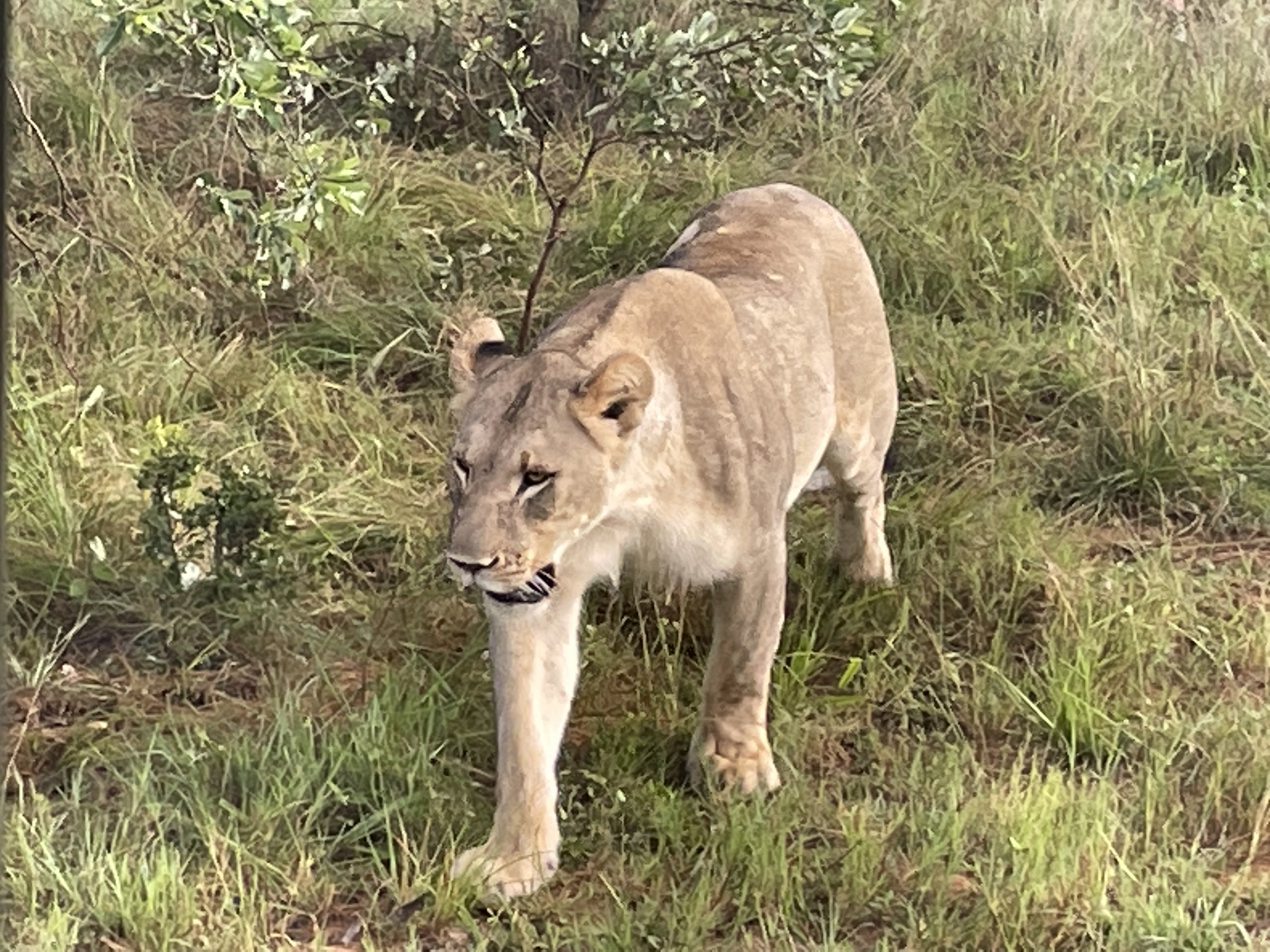
Lions will kill other predators including leopards, cheetahs, hyenas and African wild dogs. They do not eat them as the flesh of other predators is not nutritious. Lion predator kills are purely to remove competitors for food and territory, as well as threats to the lions young. In particular, lions actively kill leopards as leopards kill and eat their cubs.

This is my video of this lioness kill:
Lionesses are known to be excellent mothers and will go to great lengths to ensure the survival of their cubs. Lion mating is polygamous and takes place all year round. The dominant male will copulate with multiple females within his pride. Lionesses are receptive to mating for three or four days within their variable reproductive cycle and during this time they will mate frequently, up to fifty times per day. Female lions have the ultimate say in deciding which lion they will reproduce with. Lionesses observe the males carefully, accessing their physical condition, strength, and overall fitness, before committing to a partnership. Lionesses are also not monogamous and can mate with multiple lions during their estrous cycle, although it has been observed that approximately two-thirds of these mating events occur with the primary male, with the remaining third being distributed among multiple males from the peripheral coalitions of that primary male. This means that a single litter can have cubs from different fathers. Lionesses in the same pride often breed around the same time and the resultant cubs are raised together.
My video of lions mating:
Lionesses are pregnant for 105 to 112 days, during which time her belly will grow larger, and her nipples will enlarge and darken. Just before giving birth, the lioness will begin to look for a safe and secure place to give birth. Once she has found a suitable spot that is hidden from predators and close to water, she will start to build a den using grass and other materials. The actual birth is relatively quick, approximately 1 hour, and between two and four is the usual number for a litter.
The cubs are born blind and helpless and rely on their mothers to protect and care for them. During the first few weeks of their lives, the cubs feed on their mother’s milk and she only leaves them for short periods to hunt.
My video of lion clubs:
Last month I said that male lions commit infanticide and can kill the cubs of other males. Given that lionesses are fiercely protective of their cubs, why do they not defend their cubs from lions? The answer is simply that male lions are much bigger and more aggressive than lionesses. Challenging a male lion is risky for a lioness as it could lead to the serious injury or death of the lioness, as a result, in this situation the lioness will prioritise her own survival and the wellbeing of the rest of the pride over the survival of her cubs.
If you are interested in seeing more of my photographs, videos and artworks relating to Cats, please enjoy this stunning post created by the talented Resa McConaghy. Resa and I share a love for wildlife and a passion for conservation.
Lion Lust by Robbie Cheadle
Sidling up beside her
He strokes her shoulder
In a gesture of affection for his mate
He quickly mounts her
For the eighteenth time
***
She walks quickly away
He meekly follows
Lying down face-to-face in her chosen spot
A short period of rest
Before the next round
***
They will stay together
For twenty-four hours
Mating every twenty to thirty minutes
Despite his high demands
She lovingly purrs
This poem is from my book Lion Scream, Syllabic Poetry About Southern African Wildlife.

About Roberta Eaton Cheadle

Award-winning, bestselling author, Roberta Eaton Cheadle, is a South African writer and poet specialising in historical, paranormal, and horror novels and short stories. She is an avid reader in these genres and her writing has been influenced by famous authors including Bram Stoker, Edgar Allan Poe, Amor Towles, Stephen Crane, Enrich Maria Remarque, George Orwell, Stephen King, and Colleen McCullough.
Roberta has two published novels and has horror, paranormal, and fantasy short stories included in several anthologies. She is also a contributor to the Ask the Authors 2022 (WordCrafter Writing Reference series).
Roberta also has thirteen children’s books and two poetry books published under the name of Robbie Cheadle, and has poems and short stories featured in several anthologies under this name.
Roberta’s blog features discussions about classic books, book reviews, poetry, and photography. https://roberta-writes.com/.
Find Roberta Eaton Cheadle
Blog: https://wordpress.com/view/robertawrites235681907.wordpress.com
Twitter: https://twitter.com/RobertaEaton17
Facebook: https://www.facebook.com/robertawrites
Amazon: https://www.amazon.com/Roberta-Eaton-Cheadle/e/B08RSNJQZ5
_____________________________________________________________________________________________
Want to be sure not to miss any of Robbie’s “In Touch With Nature” segments? Subscribe to Writing to be Read for e-mail notifications whenever new content is posted or follow WtbR on WordPress. If you found it interesting or entertaining, please share.
Share this:

Growing Bookworms – Fun creations using fondant and Easter eggs #fondantart #Easter
Posted: March 13, 2024 Filed under: craft, Creative Projects, Growing Bookworms, Parenting, Teaching children | Tags: Easter Decorations, Fondant Art, Growing Bookworms, Robbie Cheadle, Writing to be Read 43 Comments
This month, I thought I would share a few ideas for making fun Easter creations using Easter eggs and fondant. Children love making things and modelling fondant is similar to modelling play dough.
I used candy coated hens eggs to make my creations but you can use any hens eggs sized Easter egg.
Step-by-step: How to make an Easter chick from fondant and an Easter egg


If you don’t have cutters, you can just cut the shapes freehand.


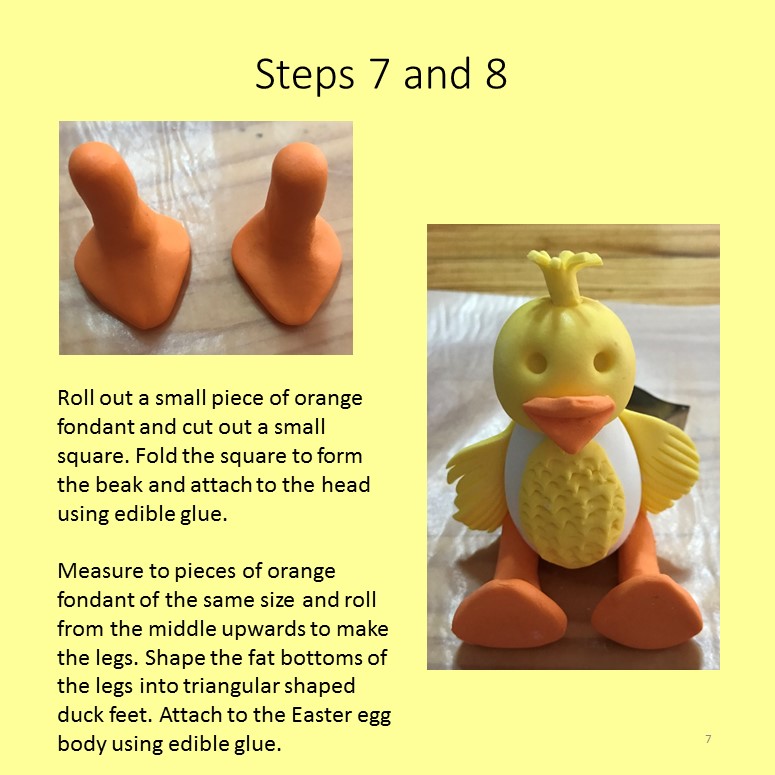


You can download a free PDF with these instructions here: https://robbiesinspiration.files.wordpress.com/2024/03/easter-chick.pdf
Step-by-step: How to make panda bear from fondant and an Easter egg


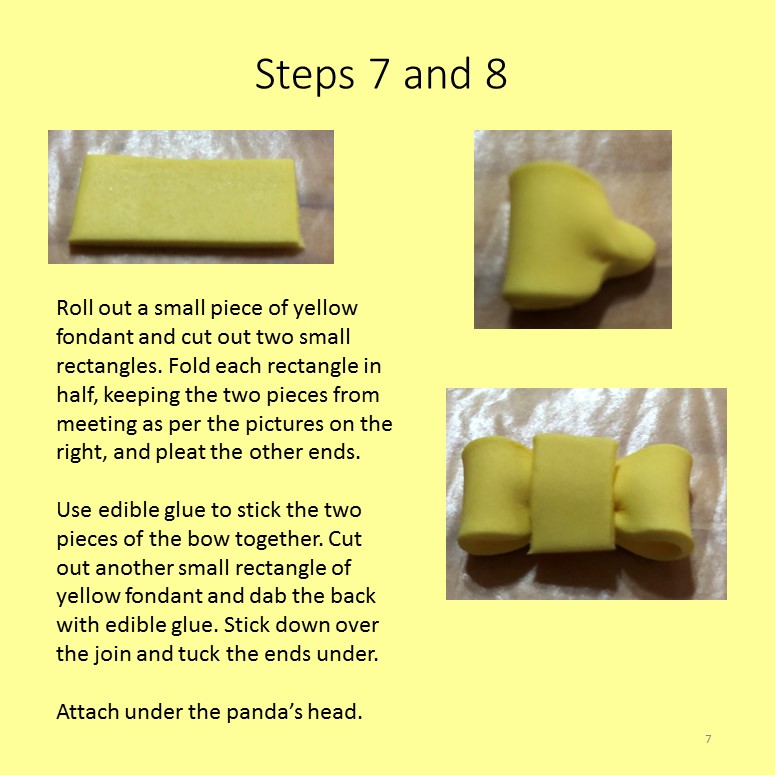

You can download a free PDF with these instructions here:
https://robbiesinspiration.files.wordpress.com/2024/03/panda-bear.pdf
Some other fondant and Easter egg idea – a dinosaur and a pig.


About Robbie Cheadle
Award-winning, bestselling author, Robbie Cheadle, has published fifteen children’s book and two poetry books. Her work has also appeared in poetry and short story anthologies.
Robbie also has two novels published under the name of Roberta Eaton Cheadle and has horror, paranormal, and fantasy short stories featured in several anthologies under this name.
The eleven Sir Chocolate children’s picture books, co-authored by Robbie and Michael Cheadle, are written in sweet, short rhymes which are easy for young children to follow and are illustrated with pictures of delicious cakes and cake decorations. Each book also includes simple recipes or biscuit art directions which children can make under adult supervision.
Robbie and Michael’s new Southern African Safari Adventures series is aimed at teaching young children about Southern African wildlife in a fun and entertaining way. Each book contains a rhyming verse story about a particular animal, as well as illustrations by Robbie Cheadle, photographs and links to video footage about that animal.
Robbie’s blog includes recipes, fondant and cake artwork, poetry, and book reviews. https://robbiesinspiration.wordpress.com/
Share this:

In Touch With Nature – The vulnerable life of male lions #wildlife #lions
Posted: February 28, 2024 Filed under: Animals, In Touch With Nature, Poetry, Wildlife | Tags: Animals, In Touch With Nature, Lions, Robbie Cheadle, South Africa, Wildlife, Writing to be Read 74 CommentsLions live in groups called prides. Each pride is comprised of related lionesses and one or more adult male lions will also be present with the dominant male being the pride leader. Female lionesses are loyal to their pride and not to their family members, and this often means that they don’t keep related males in their pride.
Male lion cubs are frequent victims of snake bits, hunting hyenas, and male lions that aren’t their father or uncle. One in two male lion cubs will die in their first year of life. The greatest single cause of male lion mortality in the first year of life is infanticide by unrelated male lions.

At approximately three years of age, male lions are pushed out of their pride by their fathers. Alternatively, they may be forced to leave the pride when a new coalition of male lions takes over the pride. For a period of two or three years after leaving their prides, young male lions wander on their own, trying to avoid confrontation with older, stronger male lions. Frequently, single males find other males of a similar age and join them to form a coalition. Coalitions typically comprise of two to four male lions and are often made up of brothers or cousins although some include unrelated males. The main purpose for male lions forming coalitions is to compete with other male lions for mates.
When the males in a coalition reach four to five years of age, they will challenge other male coalitions for access to a pride of lionesses. When a new coalition takes over a pride, the new males seek out and kill the cubs of other males or drive them away. The purpose of the killing of cubs is to accelerate the return of the lionesses to a reproductive state thereby allowing the new males to raise their own cubs. The dominant male or pride leader generally gets first mating rights but lionesses do mate with other pride males. The lesser males usually get their opportunity when several females are in heat at the same time and if the dominant male losses interest while the lionesses are still in heat.


The dominant male is usually the largest, strongest male lion. Dominant males usually only retain that position for a few years and then they are challenged by a younger male or an outside coalition. During their time as pride leader, the male is responsible for defending the females and their cubs from predators such as hyenas.
When a battle for leadership takes place within an existing pride, the battle is usually fierce but not deadly. If an outside coalition challenges the leader, the battle will be to the death.
Brothers, a 99-sylable Double Ennead poem by Robbie Cheadle

Dry, yellow grass stretches
To the horizon
Just there, under a scrub tree, lie two brothers
Within slumbers embrace
They soak up the sun
***
The colour of ripe wheat
They blend with the bush
Male lions resting peacefully
Enjoying blissful dreams
Concerning fat buck
***
One starts gently stirring
Rolls over and sighs
His underbelly unintimidating
But then he yawns widely
Showing great long teeth
This poem is included in Lion Scream, Syllabic Poetry About Southern African Wildlife
Lion brothers walking on the road:
About Roberta Eaton Cheadle
Award-winning, bestselling author, Roberta Eaton Cheadle, is a South African writer and poet specialising in historical, paranormal, and horror novels and short stories. She is an avid reader in these genres and her writing has been influenced by famous authors including Bram Stoker, Edgar Allan Poe, Amor Towles, Stephen Crane, Enrich Maria Remarque, George Orwell, Stephen King, and Colleen McCullough.
Roberta has two published novels and has horror, paranormal, and fantasy short stories included in several anthologies. She is also a contributor to the Ask the Authors 2022 (WordCrafter Writing Reference series).
Roberta also has thirteen children’s books and two poetry books published under the name of Robbie Cheadle, and has poems and short stories featured in several anthologies under this name.
Roberta’s blog features discussions about classic books, book reviews, poetry, and photography. https://roberta-writes.com/.
Find Roberta Eaton Cheadle
Blog: https://wordpress.com/view/robertawrites235681907.wordpress.com
Twitter: https://twitter.com/RobertaEaton17
Facebook: https://www.facebook.com/robertawrites
Amazon: https://www.amazon.com/Roberta-Eaton-Cheadle/e/B08RSNJQZ5
_____________________________________________________________________________________________
Want to be sure not to miss any of Robbie’s “In Touch With Nature” segments? Subscribe to Writing to be Read for e-mail notifications whenever new content is posted or follow WtbR on WordPress. If you found it interesting or entertaining, please share.
Share this:

Treasuring Poetry – Poet and editor of MasticadoresUSA, Barbara Harris Leonhard, talks about poetry and a review #poetrycommunity #bookreview
Posted: February 21, 2024 Filed under: Books, Collection, Poetry, Treasuring Poetry | Tags: Barbara Harris Leonhard, Memoir, Poetry, Robbie Cheadle, Three-Penny Memories, Treasuring Poetry, Writing to be Read 23 Comments
A huge welcome to Barbara Harris Leonard, editor of MasticardoresUSA, and talented poet, to Treasuring Poetry.
What is your favourite style of poetry to read i.e. haiku, ballad, epic, freestyle, etc?
I’ve studied different poetic forms but generally read freestyle poetry, especially Anne Sexton, Sylvia Plath, Elizabeth Bishop, and so many more. I also enjoy the more formal classic poetry and other modern poets like Frost, Sandburg, and others. A favorite poet of mine is Emily Dickinson. I’ve written poems in the manner of Dickinson. Overall, however, the majority of poems I have read and written have been free verse.
What is your favourite poem in your favourite style to read?
The first poem that comes to mind is Elizabeth Bishop’s poem “The Fish”. Here it is from poets.org. The description is exquisite, and the story is powerful. She catches a prize fish, admires him, and finds that the fish has been caught five prior times. After examining his wounds—the old hooks and broken fish-lines scabbed over in his mouth—she releases the fish. The imagery throughout the poem is stunning. The old fish is embattled and exhausted, not even resisting the catch. He represents something ancient and universal. He is more than a fish; he is history (“beard of wisdom”) and war as she describes his “weaponlike” lower lip and cutting gills. “The Fish” is a poem written with the skill I strive to have as a poet.
1911 –1979
I caught a tremendous fish
and held him beside the boat
half out of water, with my hook
fast in a corner of his mouth.
He didn’t fight.
He hadn’t fought at all.
He hung a grunting weight,
battered and venerable
and homely. Here and there
his brown skin hung in strips
like ancient wallpaper,
and its pattern of darker brown
was like wallpaper:
shapes like full-blown roses
stained and lost through age.
He was speckled with barnacles,
fine rosettes of lime,
and infested
with tiny white sea-lice,
and underneath two or three
rags of green weed hung down.
While his gills were breathing in
the terrible oxygen
—the frightening gills,
fresh and crisp with blood,
that can cut so badly—
I thought of the coarse white flesh
packed in like feathers,
the big bones and the little bones,
the dramatic reds and blacks
of his shiny entrails,
and the pink swim-bladder
like a big peony.
I looked into his eyes
which were far larger than mine
but shallower, and yellowed,
the irises backed and packed
with tarnished tinfoil
seen through the lenses
of old scratched isinglass.
They shifted a little, but not
to return my stare.
—It was more like the tipping
of an object toward the light.
I admired his sullen face,
the mechanism of his jaw,
and then I saw
that from his lower lip
—if you could call it a lip—
grim, wet, and weaponlike,
hung five old pieces of fish-line,
or four and a wire leader
with the swivel still attached,
with all their five big hooks
grown firmly in his mouth.
A green line, frayed at the end
where he broke it, two heavier lines,
and a fine black thread
still crimped from the strain and snap
when it broke and he got away.
Like medals with their ribbons
frayed and wavering,
a five-haired beard of wisdom
trailing from his aching jaw.
I stared and stared
and victory filled up
the little rented boat,
from the pool of bilge
where oil had spread a rainbow
around the rusted engine
to the bailer rusted orange,
the sun-cracked thwarts,
the oarlocks on their strings,
the gunnels—until everything
was rainbow, rainbow, rainbow!
And I let the fish go.
Copyright © 2011 by Elizabeth Bishop. Reprinted from Poems with the permission of Farrar, Straus and Giroux.
What is your favourite style of poetry to write? Why?
I like free style poetry, mainly narrative and persona poems. Sometimes poetic forms feel restrictive because mastering the form becomes more important than the message of the poem. However, I feel practicing with forms enables a poet to mature in many ways. As I’m writing free style, I use many poetic devices, such as alliteration, slant rhyme, assonance, meter, and others. With free style, for me, some challenges include where to place the line breaks and group the imagery into stanzas. How the poem is organized can affect the meaning. I like the potential for ambiguity in free verse poems.
In “The Fish”, the last three lines are ambiguous. What does “rainbow” refer to? Epiphany? Was the fish a Rainbow trout? Maybe both interpretations apply. But the em dash is important. It interrupts the description of the fish to state an insight “—until everything”. The line break allows the reader to recall everything that was just said and speculate on more things. The repetition of “rainbow” three times insists there is insight. Pay attention. Rainbows are multi-colored, much like the fish. Rainbows presents diversity, inclusivity, and friendship. It’s no wonder she freed the fish.
the gunnels—until everything
was rainbow, rainbow, rainbow!
And I let the fish go.
Formal poetry can also have ambiguity and surprise. It’s just that I feel I have more freedom to play with the lines and stanzas in free verse poems.
What is your favourite of your own poems in your favourite style?
In my book Three-Penny Memories: A Poetic Memoir, my poems are free style. I have several favorites, but “Marie Kondo Cleans My Purse at Starbucks” received recognition from Spillwords Press. It won Publication of the Month in Jan/Feb 2022. In this poem, I am carrying the grief from Mom’s decline due to Alzheimer’s and her death. I am burdened by the memories. Marie Kondo, who is famous for her books on how to declutter your house, offers to help clean my purse (let go of that which no longer serves me). As this poem is about healing from loss, it is in the last section of my book, “Echo”.
Marie Kondo Cleans My Purse at Starbucks
Konmari sees me at Starbucks,
my purse spilling over at the counter.
“May I help?”
She gathers me up
like I’m antique lace
washed too many times.
Before she begins, she whispers,
“Hello, the House,
I am safe. May I enter?”
She pokes through my purse,
pulling out the deck of cards
Mom once carried in her own purse.
A heavy bag of Mom’s pennies
to redeem for cash.
Her checkbook.
The messy old calendar
that listed her appointments
alongside my own.
The quilt she made me,
now falling apart. A cookbook
compiled in her own hand.
Konmari extracts other artifacts,
laying them gently on lined up tables.
People gather. My eyes bleed.
The extra-large pair of panties
Mom made me wear to Sunday school.
The wash, still not done.
A half-used bottle of Diethylstilbestrol,
she was prescribed to prevent spotting
when I was in vitro.
The tricycle she rode
around town at age three
because her mother never watched her.
My cancer scares, scattered
on the bottom of the purse
like cookie crumbs.
The scabs inflicted
by her compression stockings
I failed to wash one last time.
The clump of tissue
I miscarried, swaddled
in an inner pocket.
Her hysterectomy scar.
My hysterectomy scar.
Entwined on a spool.
My t-shaped uterus,
clenching a half-used packet
of Puffs Plus.
A dogeared photo of Mom.
A mirror reflecting
who I want to be.
Konmari has me
hold each item
one last time, saying,
“Thank you, tiny soul,
for sharing your life. I am
grateful.”
She teaches me
how to fold joy
three times.
How to throw out
what I can
no longer carry.
One strategy I appreciate about poetry, whether is is formal or free style, is the use of metaphor. In Bishops’s poem “The Fish”, the fish represents our history and ancient wisdom. Like the fish, we have all fought off death physically or spiritually. We are warriors who build muscle and bear wounds from our life battles. The fish holds our stories, and Bishop is masterful as she extends the metaphor to a universal level.
In my poem, I used the purse as a metaphor of my soul. In the book, Mom’s purse appears in several poems because her purse held her memories: her driver’s license (identity), her checkbook (finances), her comb (beauty), photos (family) and so on. Because I had to become Mom’s brain and hold her business along with mine, the purse took on significance as a brain, or a place to hold her life alongside my own. Grief work, for me, was a process of emptying the purse of all the attachments that no longer served me. And who could help declutter better than Marie Kondo? And revealing your wounds can be embarrassing, so why not do that at Starbucks? This choice gives a dream-like quality to the poem. It is surreal to carry your mother’s tricycle in your purse! Imagine all the nightmares of suddenly appearing naked on the first day of school or other important places. All my baggage is laid out on tables for everyone to see as though viewing a dead body. It’s no wonder “my eyes bleed”.
How do you promote your poetry and poetry books?
Connections sell books, so I’ve increased my online presence (Twitter/X, Mastodon, Linked-in, Instagram, Facebook, Threads, etc). I advertise my publications on social media. My position as Editor for MasticadoresUSA enables me to promote writers and get exposure. I also do interviews and readings online as well as readings, author showcases, and open mics in my hometown, Columbia, Missouri, and now other places in Missouri. I’ve gifted books to libraries. This past summer, 2023, Three-Penny Memories: A Poetic Memoir was chosen among other books for the summer reading program at our local library. My book sells on Amazon and is distributed everywhere, but I have also put it in independent bookstores in my hometown and in St. Louis, Missouri. I continue to publish poems mainly. I’ve started an account on Medium and am republishing poems there when the copyrights revert back to me. I sponsor Zoom poetry meetups and Zoom poetry critique sessions for the Columbia Writers Guild, a Chapter of the Missouri Writers Guild (https://ccmwg.org/ ) and The Garden of Neuro Institute (https://gardenofneuro.com/). I’ve developed relationships with other poets and have reviewed their books. I publish the reviews on MasticadoresUSA, my blog extraordinarysunshineweaver.blog, and Medium.
Thank you, Barbara, for being a wonderful guest.
My review of Three-Penny Memories: A Poetic Memoir by Barbara Harris Leonhard
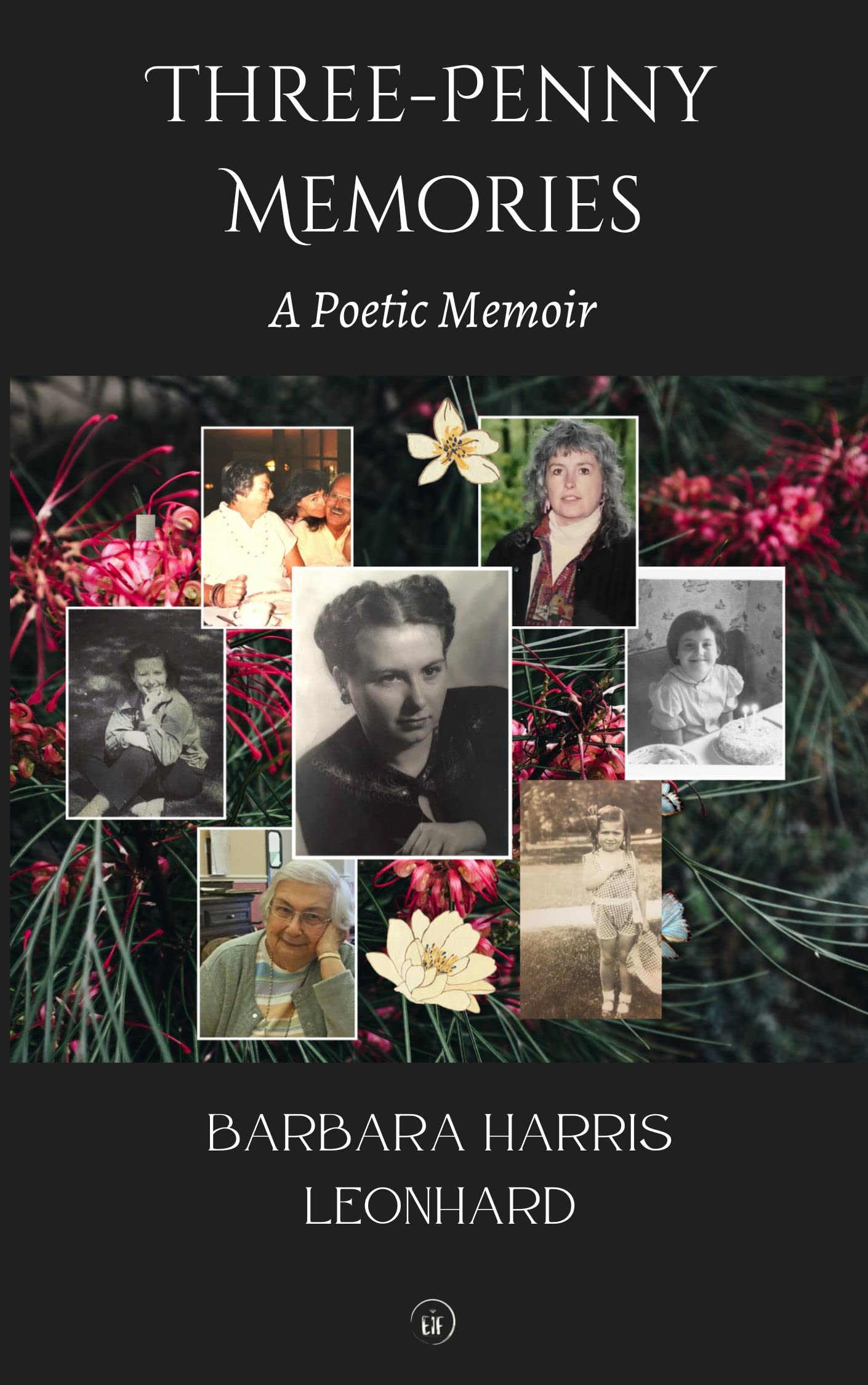
This collection of poems is a deep dive into the love between a mother and daughter. The collection takes the reader on a journey of the poet’s life and the development of the relationship with her mother. She covers her own life threatening illness and the subsequent incapacity and recovery process, as well as her later discovery of the poet’s inability to carry a child to term due to her mother’s ingestion of Diethylstilbestrol (DES) during her own pregnancy. How ironic that the poet’s mother took this drug to ensure the health of her own pregnancy and it resulted in childlessness for her own daughter. Life is full of bitter irony.
Throughout all the trials and tribulations of her life, the poet’s love for her mother burns like a flame, as does her mother’s love for her. And then came Alzheimer’s, the destroyer. The part of the book and the poet’s internal conflict and wrestle with her own feelings was close to my heart. Dementia and Alzheimer’s change people, turns them into someone you don’t know. Someone who doesn’t know you, someone who endlessly demands, complains, and makes bitter comments. In between, there are moments of normalcy and during those times, love returns in a rush, along with accompanying guilt for the conflicting emotions of the bad times.
This book captures the ebb and flow of human love and emotion exactly. It does not examine it, rather it describes and defines it.
A few stanzas from poems that stood out for me:
“One day says – out of nowhere –
shattering words out of her scattered mind
“You’re still childless? Don’t know why!
I dropped seven!”
From Mom’s DES Baby: The Hardest Pill to Swallow
“Mom, flat and detached
My fear. That she’s gone.
Now for good.”
From Fool’s Gold
“How will she manage
the mysterious passage?
This woman with no memories,
no way to find the path,
recall a friend, her mother,
recognise the welcoming
Angel of Death?”
From Departing from Gate 3
The collection is incredibly revealing and emotional, and exceptional read.
Purchase Three-Penny Memories: A Poetic Memoir by Barbara Harris Leonhard from Amazon US here: https://www.amazon.com/gp/product/B0BH99FS2T
About Barbara Harris Leonhard
I’m a retired Instructor of English as a Second Language. Although I have been writing since I was age 8, after retiring in 2017, I have had more time to devote to writing. My WordPress site is extraordinarysunshineweaver.blog. My work appears in online and print literary magazines, journals, and anthologies, and my poetry has won awards and recognition. My debut poetry collection, Three-Penny Memories: A Poetic Memoir (EIF (Experiments in Fiction, 2022), which is about my relationship with my mother, who suffered from Alzheimer’s, achieved best-seller status on Amazon. Also, on Spillwords, I was voted Author of the Month of October 2021, nominated Author of the Year for 2021, and recognized as a Spillwords Socialite of the Year in 2021. I enjoy bringing writers together and have been sponsoring open mics on Zoom. I live in the Midwest of the United States with my husband, Dierik, and our cat, Jasper. Dierik and I enjoy long drives to the wetlands to count the deer.
You can find out more about poet, Barbara Harris Leonhard, on her blog here: https://extraordinarysunshineweaver.blog/about/
About Robbie Cheadle
Award-winning, bestselling author, Robbie Cheadle, has published fourteen children’s books and two poetry books. Her work also features in several poetry and short story anthologies.
Robbie also has two novels published under the name of Roberta Eaton Cheadle and has horror, paranormal, and fantasy short stories featured in several anthologies under this name.
The eleven Sir Chocolate children’s picture books, co-authored by Robbie and Michael Cheadle, are written in sweet, short rhymes which are easy for young children to follow and are illustrated with pictures of delicious cakes and cake decorations. Each book also includes simple recipes or biscuit art directions which children can make under adult supervision.
Robbie and Michael Cheadle have recently launched a new series of children’s books called Southern African Safari Adventures. The first book, Neema the Misfit Giraffe is now available from Amazon.
Robbie’s blog includes recipes, fondant and cake artwork, poetry, and book reviews. https://robbiesinspiration.wordpress.com/
Share this:

Growing Bookworms – Meet prolific children’s book author, Janice Spina, and a review #GrowingBookworms #readingcommunity #childrensfiction
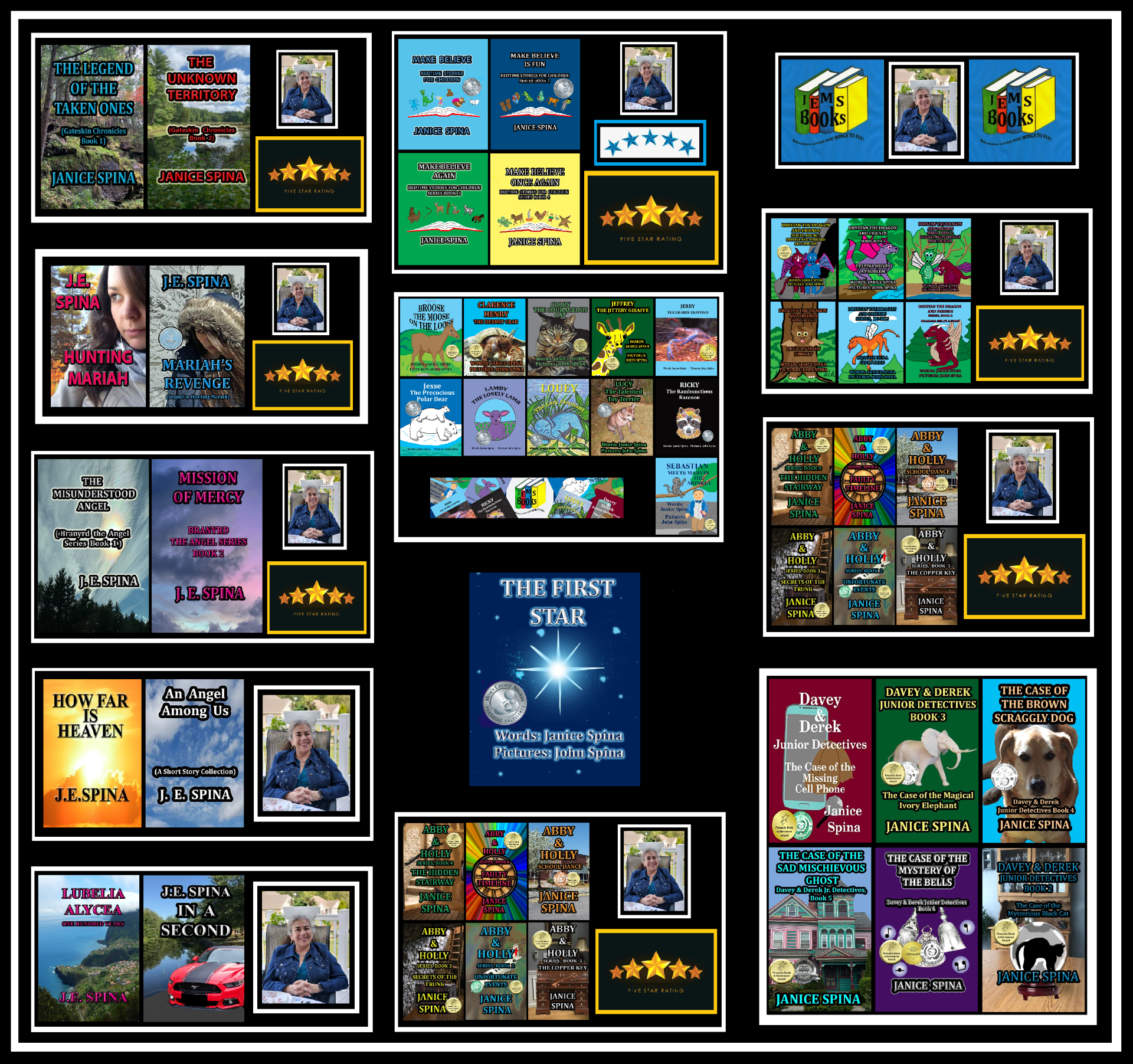
Posted: February 14, 2024 Filed under: Book Review, Books, Children's Books, Growing Bookworms, Interview, Review | Tags: Children's Books, Growing Bookworms, Janice Spina, Robbie Cheadle, The Case of the Sad Mischievous Ghost, Writing to be Read 50 CommentsMy featured guest for this month’s Growing Bookworms post is prolific children’s book author, Janice Spina. Janice also writes for adults as J.E. Spina. This is an overview of Janice’s books:
Welcome Janice!
Tell us a bit about your books and your history of writing for children
I have always love writing poetry since a young child. When I wrote my first book, Louey the Lazy Elephant,I had to put it into rhyme. I find that children love rhyming; it keeps them interested if there is a cadence to the story.
I have 22 children’s books at present. Most of them are in rhyme and all of them carry important life lessons and family values. I first began writing for children but branched out later on into MG/PT/YA and novels for 18+. I have books about animals, dragons, and even short stories in a series of six stories per book for children ages 5-8 called Bedtime Stories for Children Series. Some of my stories in this series are based on experiences while others are purely from my overwrought imagination.
A number of your children’s books feature animals and creatures. Are these stories based on personal experience with these creatures?
Many of my children’s books are dedicated to individuals or based on imaginary animals or real-life pets that I have had in the past such as: Jerry the Crabby Crayfish – a pet blue crayfish, Lamby the Lonely Lamb – dedicated to my granddaughter and her stuffed lamby, Jesse the Precocious Polar Bear – dedicated to a little boy I met while vacationing in Aruba, Sebastian Meets Marvin the Monkey – dedicated to my youngest grandson and his stuffed monkey, Colby the Courageous Cat – dedicated to my daughter’s cat, Jeffrey the Jittery Giraffe – dedicated to a little boy who was nervous about loud noises, Clarence Henry the Hermit Crab – a pet hermit crab we once had, Lucy the Talented Toy Terrier – my first dog, The First Star – dedicated to my two children when they were young. I hope to continue to create stories to delight and entertain children for uyears to come along with my husband’s help creating the beautiful illustrations and covers.
The illustrations in your picture books are lovely. Your husband helps you with your illustrations. How much input do you put into the illustration process?
My husband, John, does do the illustrations and covers for all of my children’s books. He also creates the covers for all the other books I publish. Thank God for him! I would be lost without him.
I had to convince him to do this many years ago beginning in 2013. He told me that he wasn’t an illustrator but would give it a try after I told him how much it would cost to hire someone who was an illustrator. John has a quirky sense of humor. I do give him plenty of input about each illustration and cover, much to his chagrin. We don’t always agree on each one and therefore there are many revisions. But I am always pleased with what he creates as the finished product and give him an ample number of kudos online when I present his work.
What do you like best about writing for children?
I love writing for children. What I like best is to see children reading and enjoying my books or anyone’s books. The joy in their faces when they read or are read to is priceless. Reading is so important at an early age and not only for children but also for adults.
I love to hear from parents that their children loved one of my books and look forward to reading more. That is why I write. Receiving positive feedback in reviews is another way to make authors happy and give them an early Christmas gift.
Children – preschool to grade 3 are like sponges soaking up all kinds of things. My goal is to create entertaining and good, clean stories that are educational and full of important life lessons and family values that will stay with them for a lifetime. I hope my stories will enhance their reading experience, increase their reading levels, help to encourage them to become lovers of reading, and create readers and thinkers of tomorrow.
I also write for middle-graders, preteens, and young adults. This age group is a difficult group to entice into reading. They are always absorbed into the newest technology such as X-Box and video games, etc. I create stories in series for this age-group that have plenty of magic, mystery, suspense, wizards, ghosts, and time travel. It is a tough job but I will continue to do all I can to encourage this age-group to read.
What is your favourite children’s book or series for children?
Of all my 22 young children’s books my favorite is still, Louey the Lazy Elephant. This was the first book John illustrated. I love the crayon drawings that he created and how sweet and innocent he made Louey look. It is one of my most popular books alongside Jerry the Crabby Crayfish.
My favorite MG/PT book is Davey & Derek Junior Detectives Series Books 1-6. I had such fun creating the twins and their twin-telepathy, adventures, magic, mystery, ghosts and even time travel. Kids enjoy this series but so do adults.
I was requested by a few readers to offer a series for girls after Davey and Derek were so popular. That is why I wrote Abby & Holly Series Books 1-6. These books are enjoyed by both girls and boys.
There are more stories in my head waiting to be written down, so stay tune for many more to come for all ages.
Thank you so much, Robbie, for inviting me as a guest. I thoroughly enjoyed answering your questions and sharing a little bit about myself and my books with you and your readers.
Thank you, Janice, for being a delightful guest.

My review of The Case of the Sad Mischievous Ghost (Davey & Derrick Jr. Detectives Book 5) by Janice Spina

This is the fifth book in the Davey and Derek Junior Detective Series. Davey and Derek, who are warlocks under the tutelage of their aunt, a witch, have already solved four mysterious cases and they have gained a reputation as detectives. Abby and her cousin, Holly, seek them out at school. The two girls believe the house they have recently moved into, called the Sheridan House after its previous owner, is haunted by a ghost. They have experienced some strange happenings. Davey and Derek agree to investigate and see if they can discover the source of the strange happenings and visitations.
With some advice from their Aunt Gigi, the pair set out to determine the cause of the girls’ anxiety. They embark on an intriguing adventure including cold spots, ghostly forms, and secret tunnels.
This book was reminiscent for me of the Secret Seven adventures series by Enid Blyton which I read as a young girl. It is full of the same energy and excitement as Enid Blyton’s books, but the Davey and Derek Junior Detective Series incorporates a taste of magic and the supernatural which appeals to modern children. This series also tackles topical issues faced by 21st century youngsters. The language is appropriate for the target audience and will keep young readers engaged and interested.
I enjoyed the subtle demonstrations of respect and family values incorporated throughout this book, which send an excellent message to young readers. An enjoyable book with an interesting storyline.
You can purchase The Case of the Sad Mischievous Ghost (Davey & Derrick Jr. Detectives Book 5) from Amazon US here: https://www.amazon.com/Mischievous-Ghost-Davey-Junior-Detectives-ebook/product-reviews/B072QBJ7LC
About Janice Spina

Janice Spina is a multi-award-winning author with 45 books of which there are 22 children’s books,12 MG/PT books and two books in a YA series with four more coming over the next few years, seven novels and a short story collection for 18+ written under J.E. Spina. She is also a copy editor, blogger, book reviewer and supporter of fellow authors. Her husband, John, is her illustrator and cover creator. Watch for more books to come over the next few years.
Jance has received the following awards for her books:
10 Mom’s Choice Awards – Silver Medals, 5 Readers’ Favorite Book Awards – Silver Medal, Bronze Medal, Honorable Mention and Finalist, 21 Pinnacle Book Achievement Awards, 1 AUTHORSDB – Cover Contest, 2 Book Excellence Award Finalists, 2 Top Shelf Awards – First Place & Runner up, one Maincrest Media Award
Her logo is Jemsbooks – books for all ages! Her motto is – Reading Gives You Wings to Fly! Come soar with Jemsbooks! Happy reading!
Janice loves to hear from readers and appreciates and happily welcomes reviews.
Find Janice Spina
About Robbie Cheadle
Award-winning, bestselling author, Robbie Cheadle, has published fifteen children’s book and two poetry books. Her work has also appeared in poetry and short story anthologies.
Robbie also has two novels published under the name of Roberta Eaton Cheadle and has horror, paranormal, and fantasy short stories featured in several anthologies under this name.
The eleven Sir Chocolate children’s picture books, co-authored by Robbie and Michael Cheadle, are written in sweet, short rhymes which are easy for young children to follow and are illustrated with pictures of delicious cakes and cake decorations. Each book also includes simple recipes or biscuit art directions which children can make under adult supervision.
Robbie and Michael’s new Southern African Safari Adventures series is aimed at teaching young children about Southern African wildlife in a fun and entertaining way. Each book contains a rhyming verse story about a particular animal, as well as illustrations by Robbie Cheadle, photographs and links to video footage about that animal.
Robbie’s blog includes recipes, fondant and cake artwork, poetry, and book reviews. https://robbiesinspiration.wordpress.com/
Share this:

In Touch With Nature – Giraffes chew bones and lions eat grass #animalkingdom #natureconservation
Posted: January 24, 2024 Filed under: Animals, In Touch With Nature, Nature, Wildlife | Tags: In Touch With Nature, Predators and Prey, Robbie Cheadle, Wildlife, Writing to be Read 107 CommentsKaye and I are starting a new series this year entitled “In Touch With Nature”. We will be sharing information about the natural environment, and I will include some of my nature videos, artworks, and photographs.
For any writers, poets and authors who have an interest in nature conservation and our natural environment, I have joined the Society of Environmental Authors and Journalists. You can find out more about it here: Society of Environmental Authors and Journalists – Robbie Cheadle
For this first post in this series, I am discussing the topic of herbivores and carnivores.
The Oxford dictionary defines a herbivore as an animal that feeds on plants.
National Geographic expands on this to say that a herbivore is an organism that mostly feeds on plants. Herbivores range in size from tiny insects such as aphids to large, lumbering elephants. You can read more on this topic here: Herbivore (nationalgeographic.org)
Conversely, Oxford defines a carnivore as an animal that feeds on other animals.
National Geographic says: “A carnivore is an organism that eats mostly meat, or the flesh of animals. Sometimes carnivores are called predators.” You can read more here: https://education.nationalgeographic.org/resource/carnivore/

With the above in mind, did you know that many herbivores chew on bones? It’s true. Giraffes, red deer, reindeer, camels, wildebeest, kudu, gemsbok, and sable antelopes, as well as domestic cows and sheep, are not the strict vegans we think they are. They have all been observed to consume bones in a practice called osteophagy.
These animals do not actually eat the bones or break them open to eat the marrow inside, they only chew on dry bones and only when they are mineral deprived. Chewing bones provides herbivores with essential nutrients, phosphorus, and a bit of sodium.
Phosphorus is an essential mineral for all animals. This mineral plays an important role in the formation of the skeletal system and is necessary for certain biological processes including energy metabolism, protein synthesis, cell signaling, and lactation. A lack of phosphorus results in delayed growth and failure to regenerate new bone as well as problems with the reproductive system.
Another way herbivores obtain essential minerals and other elements they need is natural licks, also called salt licks. These licks can be natural but many are artificial and created by humans for the animals. You will see deer, moose, elephants, hippos, rhinos, tapirs, woodchucks, fox squirrels, mountain goats, porcupines and frugivorous bats all making use of natural or artificial licks to obtain phosphorus and biometals (sodium, calcium, iron, zinc, and other trace elements).
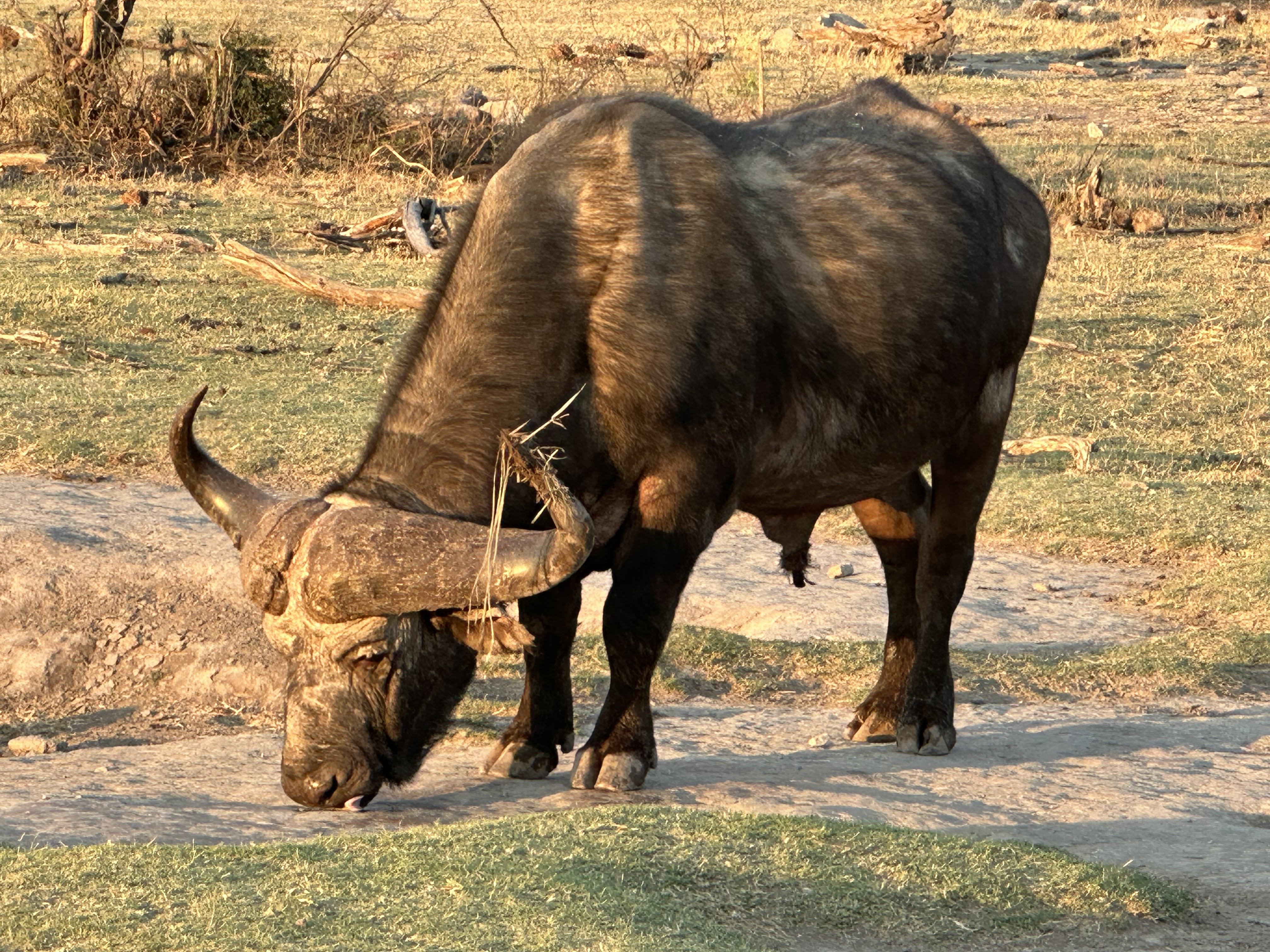
A further surprise is that lions sometimes eat small amounts of grass to extract certain nutrients they need. As their digestive system is designed to digest meat, they cannot digest the grass fully and often vomit soon after eating it.
Some of the reasons a lion may eat grass are as follows:
- It helps provide them with a source of water;
- It helps maintain their body weight;
- It helps keep them cool in hot weather;
- It helps settle stomach aches; and
- Its an easy way for a lion to get nutrients.
Lions are versatile. This means that if they are hunting in dry regions like the Kalahari Desert, lions may eat plants and fruits as an alternate source of water. Lions don’t drink very much.
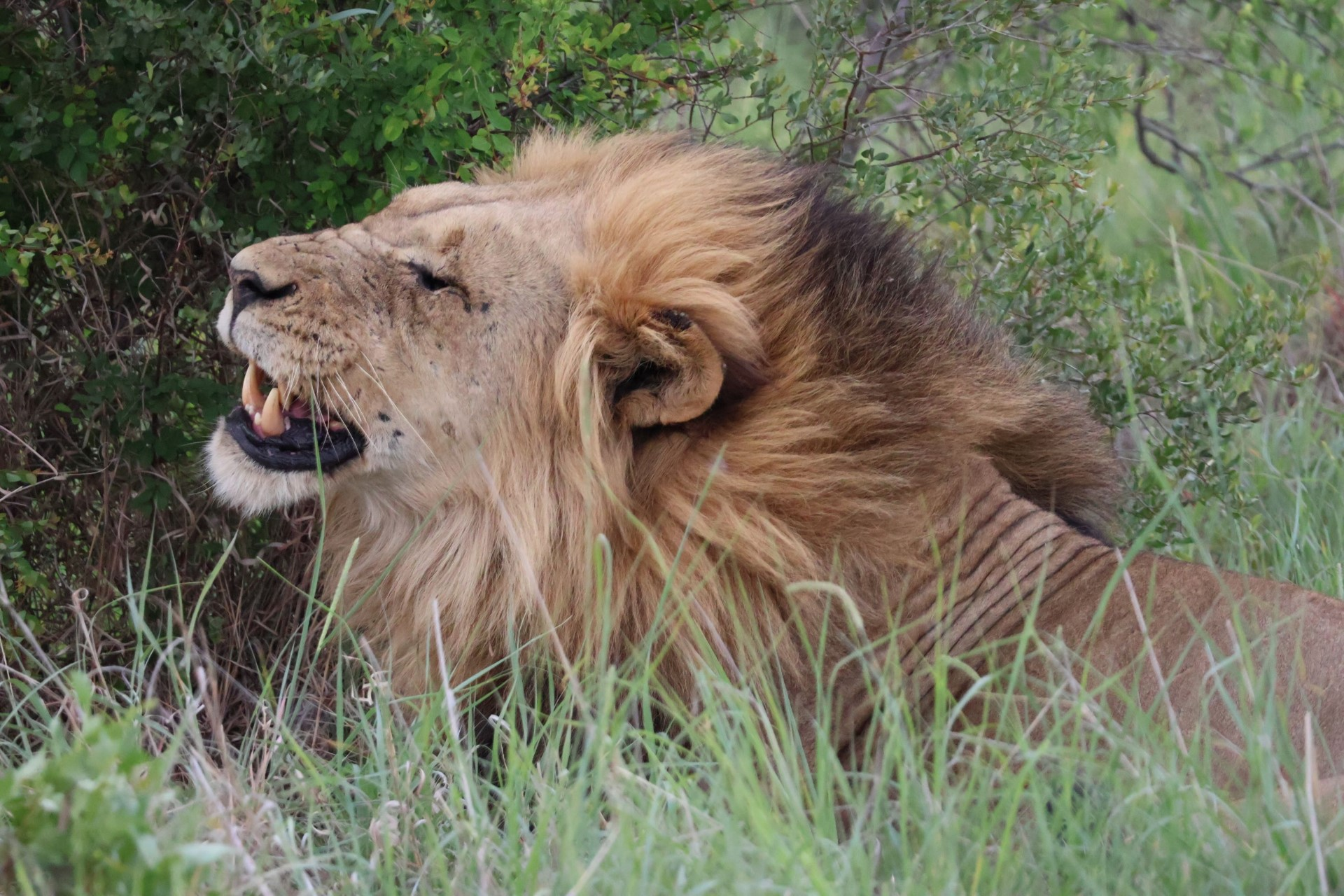

Domestic dogs and cats also sometimes eat grass for the same reasons as lions. Just like lions, they usually vomit after eating it.
Animals are adaptable and find ways to meet their dietary needs. There are few perfect examples of herbivores or carnivores in the wild.
Here are a few of my YouTube wildlife videos:
This black maned lion walked right past our vehicle:
About Roberta Eaton Cheadle
Award-winning, bestselling author, Roberta Eaton Cheadle, is a South African writer and poet specialising in historical, paranormal, and horror novels and short stories. She is an avid reader in these genres and her writing has been influenced by famous authors including Bram Stoker, Edgar Allan Poe, Amor Towles, Stephen Crane, Enrich Maria Remarque, George Orwell, Stephen King, and Colleen McCullough.
Roberta has two published novels and has horror, paranormal, and fantasy short stories included in several anthologies. She is also a contributor to the Ask the Authors 2022 (WordCrafter Writing Reference series).
Roberta also has thirteen children’s books and two poetry books published under the name of Robbie Cheadle, and has poems and short stories featured in several anthologies under this name.
Roberta’s blog features discussions about classic books, book reviews, poetry, and photography. https://roberta-writes.com/.
Find Roberta Eaton Cheadle
Blog: https://wordpress.com/view/robertawrites235681907.wordpress.com
Twitter: https://twitter.com/RobertaEaton17
Facebook: https://www.facebook.com/robertawrites
Amazon: https://www.amazon.com/Roberta-Eaton-Cheadle/e/B08RSNJQZ5
_____________________________________________________________________________________________
Want to be sure not to miss any of Robbie’s “In Touch With Nature” segments? Subscribe to Writing to be Read for e-mail notifications whenever new content is posted or follow WtbR on WordPress. If you found it interesting or entertaining, please share.
Share this:

Check it out! Robbie Cheadle on the subject of book covers over at Story Empire
Posted: January 17, 2024 Filed under: Book Covers, Books, Women's Fiction | Tags: Book Covers, Robbie Cheadle, Story Empire 9 Comments
Share this:

Growing Bookworms – The importance of character names in children’s fiction #GrowingBookworms #childrensfiction
Posted: January 10, 2024 Filed under: Children's Books, Fiction, Growing Bookworms | Tags: Character Names, characters, Enid Blyton, Growing Bookworms, Names, Robbie Cheadle, The Land of Far Beyond, Writing to be Read 57 CommentsThe name of a child is important to him/her as well as to their community.
From an individual point of view, a child’s name plays an important role in the advertisement and maintenance his/her self identity. The first word most children learn to write is their name. Some children and adults chose to be known by a nickname and others prefer to use their full name.
From a parental perspective, the name they chose is often symbolic of their hopes and dreams for that child. Some families practice namesaking or the naming of a child after the father or grandfather. The practice of namesaking is much more common in male children than in female children. Namesaking can be positive for a child, but it can also result in high expectations being placed on the child if the person after whom they are named is a high performer. Namesaking often happens in wealthy families and royalty and comes with an expectation for the child to live up to the accomplishments of the previous generation/s. John Jacob Astor IV and his son, John Jacob Astor VI, come to mind when I think of failures to live up to an inherited moniker.
From a community point of view, names often have religious or cultural significance. In these circumstances, the name of a child can impact the way in which they are accepted by, and integrate into, a community. Names also have meanings which can be important. I remember smiling when meeting a heavily pregnant lady with the name of Chastity.
Based on the above, it is obvious that the name of a character / characters in a children’s book are important. The names will immediately tell the child a lot about the character and the child will also make assumptions based on the names, as follows:
- the religion of the character/s – does the character have a Biblical name or a Hebrew name or a Muslim name?
- the ethnic background of the character – does the character have an Irish, Spanish, English, American, or Japanese name? In South Africa, there are 11 official languages and each group of language speakers has its own traditional names. For example, popular Afrikaans names are Pieter, Willem, Hans, and Mariska and popular Zulu names are Amahle, Bongani, Lindiwe, and Dumisani.
- does the character use a nickname or their full name? I have always been called Robbie although my full name is Roberta. Both my sons chose to use their full names of Gregory and Michael.
- a name can also tell you about a character’s employment or social position. For example, a lot of native African people who work in service industries chose to either use European names instead of their traditional names or they use a short form that is easier for customers to say and remember.
English author, Enid Blyton, made great use of names in her children’s books. You can always tell what type of character you are dealing with from their names. You can also usually get a good idea about the genre and type of story from her naming conventions, as follows:
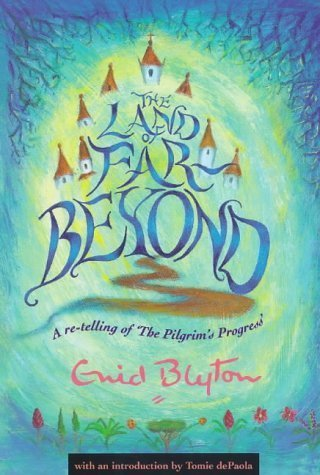
The Land of Far-Beyond is a Christian allegory and tells the story of a boy named Peter and his two sisters, Anna and Patience, who travel from the City of Turmoil to the City of Happiness in the Land of Far-Beyond. The three children carry the heavy burdens of their bad deeds on their backs. With them are two other children, Lily and John, and five adults—Mr Scornful, Mr Fearful, Dick Cowardly, Gracie Grumble and Sarah Simple.
The Enchanted Wood series of three books tells of the adventures of three children who live near the Enchanted Wood. One day they discover a great tree that reaches right up into the clouds called the Faraway Tree. The children climb the Faraway Tree and discover that it is inhabited by magical people, including Moon-Face, Silky, The Saucepan Man, Dame Washalot, Mr. Watzisname, and the Angry Pixie, whose houses are built in holes in the great trunk.
I have tried to make good use of names in my children’s book series. Sir Chocolate and Lady Sweet were intended to clearly indicate that the books are fantasy and are about sweet treats. All the illustrations are made from cake and fondant art and the books all include recipes.
Neema the Misfit Giraffe was intended to make it obvious that the book has an African setting. The name, Neema, means grace in Swahili. Neema’s companion, Amhale, has a Zulu name which means the beautiful one.

What are your thoughts on names in children’s fiction? Do you think they are important? Let me know in the comments.
About Robbie Cheadle
Award-winning, bestselling author, Robbie Cheadle, has published fifteen children’s book and two poetry books. Her work has also appeared in poetry and short story anthologies.
Robbie also has two novels published under the name of Roberta Eaton Cheadle and has horror, paranormal, and fantasy short stories featured in several anthologies under this name.
The eleven Sir Chocolate children’s picture books, co-authored by Robbie and Michael Cheadle, are written in sweet, short rhymes which are easy for young children to follow and are illustrated with pictures of delicious cakes and cake decorations. Each book also includes simple recipes or biscuit art directions which children can make under adult supervision.
Robbie and Michael’s new Southern African Safari Adventures series is aimed at teaching young children about Southern African wildlife in a fun and entertaining way. Each book contains a rhyming verse story about a particular animal, as well as illustrations by Robbie Cheadle, photographs and links to video footage about that animal.
Robbie’s blog includes recipes, fondant and cake artwork, poetry, and book reviews. https://robbiesinspiration.wordpress.com/
Share this:

Treasuring Poetry Special Remembrance Month Edition: Poet, Frank Prem, discusses his war poetry #poetrycommunity #warpoetry #TreasuringPoetry
Posted: November 15, 2023 Filed under: Book Review, Books, Collection, Interview, Poetry, Review | Tags: Book Review, Frank Prem, From Volyn to Kherson, Interview, Poetry, Poetry Collection, Review, Robbie Cheadle, Treasuring Poetry, War, War Poetry, Writing to be Read 51 CommentsToday, I am delighted to welcome prolific and masterful poet, Frank Prem, back to Treasuring Poetry. Frank writes incredibly relatable poetry that covers a wide variety of topics relevant to modern life including the bush fires that raged in Australia a few years ago, Devil in the Wind, working as a psychiatric nurse in an institution, The New Asylum: A Memoir of Psychiatry, as well as collections about war. I have read Frank’s beautiful and moving collections about World War 1, Sheep on the Somme, and the war in the Ukraine, From Volyn to Kherson: Interpretations of the War in Ukraine. Frank also writes romantic poetry, interpretive modern poetry and verse books for children. In the nicest way, nothing is safe from Frank’s poetic pen.

Tell us a bit about your war poetry collections
I developed an interest in the First World War many years ago and was particularly interested in the stories of Australian soldiers and their seeming need to volunteer to fight half a world away on the basis of loyalty to the British Empire and the Mother Country that was England, but also on the basis of a kind of chivalric principle. A moral fever that swept the nation.
I came across books that were written in the more modern historical style of telling stories to illustrate events – using the example of an identified soldier, from an identified town, with family details and background, then tracing their movements into the war and its various theatres and actions.
I found I was able to understand these individuals a little better and to empathise with them and their loved ones a little more than I otherwise could.
I also found myself interested in using images for my own poetic inspiration and that led me to the images held by Australia’s War Memorial. There was one image in particular that started me looking at pictures taken during the war. The image was of a white cross in a field of muddy and bloody craters. The cross marked the grave of Captain Ivor Margetts, much loved and respected by the men he led in battle. By the following day the cross and the grave were gone. They’d been blown to hell by the shelling.
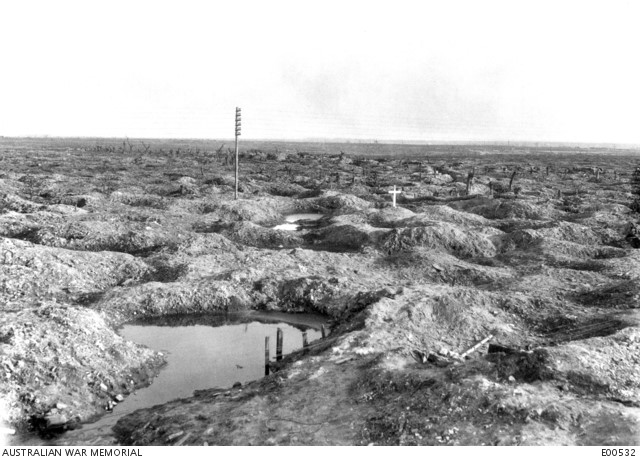
I was tremendously moved by this, and as I searched for a version of that particular image online, I encountered many more, each with a poignant story to tell and many were destined to feature in my book Sheep On The Somme (https://www.amazon.com.au/Sheep-Somme-World-Picture-Poetry/dp/1925963144 ).
More recently, I found myself watching the sabre rattling over the Ukraine that was being perpetrated by Russia and was reminded very clearly of reading I’d done long ago about the beginnings of the Spanish Civil War back in the late 1930s and of the rise of Right-Wing Fascism in Europe during that same period of the 1930s. I was struck by the similarities and the ways in which those events and movements evolved into what became World War II. It was – and remains – quite concerning to see these way events continue to unfold.
As the news and pictures of Russia’s military build-up on the Ukraine border kept emerging, along with the seeming inability on the part of Ukraine to do anything to stop it, I watched events more and more closely.
When Ukraine’s borders were finally breached, there were more photographers and journalists on the spot than has ever been the case previously in a conflict. We were flooded with formal and informal news and masses of un-curated and un-censored images.
During the first nine weeks of the conflict I became engrossed in reading the news and studying the images. And – of course – I began to write.
I produced 3 volumes of poetry interpreting the Ukraine war – two of them will not be released because they used images taken by journalists in the field and I don’t have rights to use those images. The volumes (Bullets Into The Starichi Sky and I Call The Hole The War) sit on my private bookshelf here in my writing studio.
The third volume – From Volyn to Kherson – is a collection of poems in which I have attempted to use such talent for empathy as I possess to interpret the news stories I was reading in a way that enabled any of my own readers to get a sense of what the invasion and the conflict was like as an experience for the everyday people of Ukraine. What if it happened here, in my town? What would it be like to have seventy kilometres of armoured assault vehicles coming to surround and destroy my home town? Or yours?
I like readers to know where the inspiration for these writings has come from and so each individual poem is referenced and has a link to the online sources that I relied on in my writing. After nine weeks I was a little burnt out and had to stop writing, but I follow events over there diligently and worry about what I see happening in the wider world and which still so resembles the events of the 1930s.
What draws you to writing about wars?
I’ve encroached a little on this question with my answer above, I think, but I’ll try to elaborate a little more.
In my professional life I was a psychiatric nurse. Back (so many years ago) when I was a student nurse one of the areas of interaction with patients that was taught and stressed was empathy.
As I understood it, empathy was the ability to walk in another person’s shoes. To see things from the perspective of the other person, but not to necessarily sympathise, or accept, merely to understand in order to be able to reflect that understanding back to the patient.
The patients that came my way in psychiatry were invariably involved in and generally overwhelmed by personal chaos. This might have been due to illness, or it might have been due their life being in a mess they could not resolve. They might have been psychotic, depressed, suicidal, or experiencing any number of out-of-control situations.
That tool of empathy has stayed with me, I think, and now reveals itself in my writing. The experience of chaos by a person finds itself being reflected back in my writings.
I think it is in this way that I am attracted to attempt to unravel what a person may be feeling or experiencing in a war zone. Similarly, I find myself writing a lot about the human toll of natural disasters that come close to me or to my little place in the world.
I have always tried to develop my understanding of these things by writing my way through them. To help myself and any subsequent reader to understand by feeling what is happening through my words.
Tell us a bit about how you use photographs and newspaper articles to assist with writing your war poems
With newspaper articles, I try to extract the meat of the story. That part of the article that is the actual purpose – the reason that it is a story in the first place.
Often enough, there is human interest in the genesis of the article. I then allow the information to assemble itself in a way that I can present it to a reader. For example
What is grandmother doing in the kitchen? Is she cooking Sunday lunch? No. She is cooking Molotov cocktails for others to throw at invading vehicles. And . . . wouldn’t you or I, each do the same if this was happening in our back yard?
With an image, I anticipate that it will have a story to tell. I try not to impose myself and my own current thoughts or fears or desires on it, but to allow the story to be whatever comes.
For example, a golden paper daisy with a bright glow might well have a story to tell that reflects light, and the sun. But equally, it might be a harbinger – a prophet of some kind that draws attention to itself in order to be heard. I don’t know in advance what the story will be, but I try to keep myself out of its road and not to shape the narrative too much.
I have come to know, also, that each image will have a different story to tell to each viewer, so to the extent that I can, I try to facilitate a receptive space for that to occur through what I end up writing. I’ll give an example of how I find a story in a tiny image taken during wartime over a hundred years ago.

The image above is the view from inside a German army dugout in World War I – around 1916. It is from within this space that a small group of individuals fought their war.
When I look at this image, I notice a few things and I feel a few things. In no particular order:
- From pitch darkness up into light. A very small doorway.
- Claustrophobia.
- Fear.
- The smell of habitation. Bodily odours – where would the latrine have been?
- The knowledge of death and destruction and battle rage just outside
- Movement of the ground as shells fall outside. Perhaps close.
- Maybe the sound of enemy troops approaching the bunker to destroy it.
- What of family. Has this soldier (have I) written them a note to say goodbye?
I don’t have a personal experience of war, but I know what fear feels like. I know claustrophobia and the smells of my own body . . . and so on. I can draw on these to understand a little of what the soldier in the dugout might have felt.
The willingness to engage with these elements that come from the image allow me to engage my empathy and to allow a story – which the image itself contains – to be told.
What is your own favourite war poem?
I think that my personal favourite of my own written war poems is one that hasn’t featured in a book to date, but was written to be read for a spoken-word poetry slam 2 years ago. The criteria were that it needed to be 2 minutes reading time or less and to include the term ‘full circle’.
The poem told stories in word pictures and referenced images, without actually including them, if that makes sense. I have since recorded it for my YouTube channel and included there the images that the poem references, spanning both World War I and the current Ukraine war.
The link to the poem on YouTube is here: https://www.youtube.com/watch?v=JI3vRaTg0tI .
The text of the poem is below:
THE TRUTH OF TIME
(AS TOLD BY THE PICTURES)
picture 1
a group
of soldiers
are hanging out
of the doors
and windows
of a moving train
leaving Egypt
heading
to the western front
ready
for a stoush
a bit
of a barney
it’s time
to come to grips
with the enemy
and they’re cherry ripe
for a
blue
picture 2
dimitriy
is holding olga –
tightly –
on the platform
a blue train
is nearly ready to leave
she’ll go
to poland
across the border
dimitriy
will join his friends
in the territorials
a week
to practice
how to hold a rifle
and to learn
first aid
then away
he must forget
to be an accountant
he’s
a front-line fighter
now
picture 3
a heap of rubble –
bricks
and half-bricks
timber and concrete
and dust –
lies as a mound
among mounds
it is
a streetscape
an avenue
of homes
destroyed by artillery
a soldier –
rifle
slung over a shoulder –
picks his way
toward camera
there is nothing left
that might hold
use
or meaning
picture 4
the village near kyiv
is a series
of mounds
rubble
that was homes
and houses
a month or so
ago
a woman
is sifting
searching
for something –
anything –
that might
have a use
it’s all been destroyed
by missiles
and artillery
she hasn’t found
a lot
that will be helpful
~
pictures
pictures
they won’t
let me sleep
in the night
they shout at me
that we have come
full circle
and the ukraine
is in 1916 all over again
Who is your favourite war poet?
I can’t honestly say I have a favourite war poet, but I have read with a deep sense of connection stories such as All Quiet on the Western Front by Erich Maria Remarque with its empathy for the soldiers of the day. Here is the Wikipedia link: https://en.wikipedia.org/wiki/All_Quiet_on_the_Western_Front .
What is your favourite war poem?
I’m aware of many of the great poet writers of the First World War, such as Owen, Sassoon, Brook and Graves, among others, but for my response to this question I have to refer you and readers to a song that I first encountered back when I was a teenager (50 years, who would ever have thought . . .).
The song was performed by a wonderful English Folk ensemble called Steeleye Span, and the song is called Fighting For Strangers. Here is the YouTube link: https://www.youtube.com/watch?v=JI3vRaTg0tI
YouTube Links
In addition to the links given above, I would welcome viewers, new followers (if any so desire) comments and feedback on my YouTube Channel, where there a re a number of video readings from my war poetry collections (and natural disasters and psychiatry and others). Click on the link below to be taken along to the Playlists available on the Channel.
https://www.youtube.com/@frankprempoetandauthor726/playlists
Robbie and readers, thanks so much for having me along to chat for November’s Treasuring Poetry post.
My review of From Volyn to Kherson: Interpretations of the War in Ukraine

This book is a ‘hard’ read. It exposes the realities of war; the filth, the noise, the fear, and the destruction and death. No civilian wants war, it is something that is imposed on individuals because of factors outside of the man on the street’s control. Civilians, however, bear the brunt of war as the women lose their husbands and sons. The entire population generally loses its collectively homes, food stability, economic stability, access to sanitation, food, and healthcare. Many countries and populations never recover from wars and their populations become unwanted refugees. The sympathy of the unaffected world shrinks rapidly when wars and the resultant refugees impacts on their economies, making the slices of the economic pie for their own populations smaller.
The war in Ukraine hit me especially hard when I read about the Russian soldiers who froze to death in their tanks. Although the Russians were the instigators and aggressors in this war, many of those young men are the same ages as my own two sons, and their dreadful fate couldn’t fail to stir compassion. Young men frequently have a glamorous and inaccurate picture of war when they enlist or are called up. The realities of war quickly displace these notions but it is already too late.
A few stirring stanzas from this collection of freestyle poems:
From fallen (quietly weeping)
“here it is safe
safe enough
to shed
a tear”
From the metro (is also home)
“let the fear
fall away
for a moment while
the anthem
sounds”
From vasylkiv (is fighting on)
This footnote made me shiver: “People used to think about new car or iphone, but nobody was thinking about peace. Now, we are dreaming of it. When old people used to wish each other peace, we didn’t understand what they meant. Now we do.”
and finally, from in okhtyrka (the tsentral’ne)
“they are preparing
the cemetery now
in okhtyrka
adriy
and his platoon
are gone
vacuum bombed
air taken
out
of them
and then
they died”
This is a beautiful and emotion book of poems that will change the way you view war forever.
You can find out more about Frank Prem here:

You can find out more about Frank Prem on his website here: https://frankprem.com/
and on his wordpress blog here: https://frankprem.wordpress.com/blog/
On amazon US here: https://www.amazon.com/stores/Frank-Prem/author/B07L61HNZ4
About Robbie Cheadle
Award-winning, bestselling author, Robbie Cheadle, has published fourteen children’s books and two poetry books. Her work also features in several poetry and short story anthologies.
Robbie also has two novels published under the name of Roberta Eaton Cheadle and has horror, paranormal, and fantasy short stories featured in several anthologies under this name.
The eleven Sir Chocolate children’s picture books, co-authored by Robbie and Michael Cheadle, are written in sweet, short rhymes which are easy for young children to follow and are illustrated with pictures of delicious cakes and cake decorations. Each book also includes simple recipes or biscuit art directions which children can make under adult supervision.
Robbie and Michael Cheadle have recently launched a new series of children’s books called Southern African Safari Adventures. The first book, Neema the Misfit Giraffe is now available from Amazon.
Robbie’s blog includes recipes, fondant and cake artwork, poetry, and book reviews. https://robbiesinspiration.wordpress.com/
You can find example of Robbie Cheadle’s artwork in her art gallery here: https://www.robbiecheadle.co.za/art-gallery/




















