Growing Bookworms: Handwriting skills for children, Part 1
Posted: June 9, 2021 Filed under: Growing Bookworms, Parenting, Writing | Tags: Growing Bookworms, Handwriting, Handwriting vs. typing, Robbie Cheadle, Writing to be Read 106 Comments
Why handwriting is still important
As technology becomes increasingly important in our modern lives, writing by hand with a pen has become less common. Writing on a computer is easy and allows us to move text about, delete and add text, and save sections in a separate place for future use. We are also able to access our writing from a number of devices. I access my email and blogs from all three of my laptops, both of my iphones, and my ipad. This all makes writing so much simpler, so why do our education systems still focus on handwriting? Why not let the children use laptops and ipads to write?
Cognitive benefits
Writing notes by hand improves language skills. Writing by hand takes longer than typing and forces the writer to slow down their thought process and consider the words more. When you write by hand you spend more time thinking about the structure of the writing, the spelling of words, and they way you are using them.
Writing information down also aids our memory. I knew this without consulting the research confirming that writing creates unique pathways in the brain causing people who take notes by hand to remember the content better than those who type up their notes. Like me, my oldest son, Gregory, came to this realisation on his own and writes copious and detailed notes. His effort and dedication reflects in his academic results.
Creative writing benefits
A lot of writers still use notebooks to record and flesh out their ideas by hand. When we write longhand our ideas flow better and we are less distracted by the need to keep editing our work as we go along. When we write by hand we follow the flow of the idea and leave the editing until later.
I write most of my poetry by hand, but I do type up my prose so I know the above is true. I just can’t stop myself from continuously editing.
My son, Michael, writes by hand. He has a book in which he writes down his thoughts and ideas when the spirit moves him. When it comes to school assignments, he writes his stories on a laptop and I am always amazed at how many more mistakes and errors he makes when using a laptop than when writing by hand.
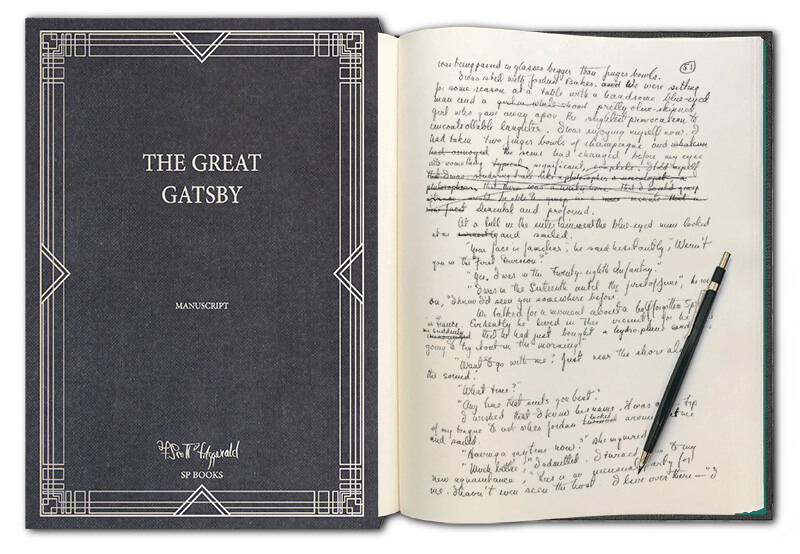
Picture credit: https://www.spbooks.com/67-the-great-gatsby-9791095457428.html
Handwriting is less restrictive
This point links to the one above about writing by hand freeing our minds and creative processes from the need to edit. I don’t write my prose by hand but I do record my frameworks and basic ideas by hand. I like to use mind maps which set out my story process. I have noticed that Michael does the same when plotting.
Again, I must emphasis that using and electronic devise to brainstorm is fraught with distractions. These are our own fault as we have our social media, email, and other notifications coming through on our devices. Every time I get an email or notification from Facebook, it pops up on my screen and my eyes automatically go to the pop up and read it.
Handwriting is part of our identity and our culture
Our handwriting is unique to us and forms a part of our identity. Even people like me whose writing is difficult for others to read, still put our personal stamp on handwritten work (my writing is difficult to read because I cannot resist adding curls and whirls all over the place; my writing is a work of art).
Writing is also an important part of our culture and our development as a species, it is the foundation of our learning and progress.
If you are interested in learning a bit more about the role of handwriting in our lives and culture, Rebecca Budd has a lovely podcast entitled The Trio on Letter Writing which discusses this topic in detail.
Quotes about writing
I think of my drawing style like handwriting: it’s a mix of whatever handwriting you’re born with, plus bits and pieces you’ve pilfered from other people around you. – Roz Chast
Poets don’t draw. They unravel their handwriting and then tie it up again, but differently. – Jean Cocteau
Somehow I started introducing writing into my drawings, and after a time, the language took over and I started getting very involved with the handwriting and then the look of the handwriting. – Patti Smith
About Robbie Cheadle

Robbie Cheadle is a children’s author and poet.
The Sir Chocolate children’s picture books, co-authored by Robbie and Michael Cheadle, are written in sweet, short rhymes which are easy for young children to follow and are illustrated with pictures of delicious cakes and cake decorations. Each book also includes simple recipes or biscuit art directions which children can make under adult supervision.
Robbie has also published books for older children which incorporate recipes that are relevant to the storylines.
Robbie writes a monthly series for https://writingtoberead.com called Growing Bookworms. This series discusses different topics relating to the benefits of reading to children.
Robbie has a blog, https://robbiesinspiration.wordpress.com/ where she shares book reviews, recipes, author interviews, and poetry.
Find Robbie Cheadle
Blog: https://www.robbiecheadle.co.za/
Blog: robbiesinspiration.wordpress.com
Twitter: BakeandWrite
Instagram: Robbie Cheadle – Instagram
Facebook: Sir Chocolate Books
_____________________________________________________________________________________________________________________
Want to be sure not to miss any of Robbie’s “Growing Bookworms” segments? Subscribe to Writing to be Read for e-mail notifications whenever new content is posted or follow WtbR on WordPress.
Share this:

Treasuring Poetry: Meet author and poet M J Mallon
Posted: May 15, 2021 Filed under: Author Profile, Book Review, Books, Interview, Poetry, Review, Treasuring Poetry | Tags: Author Interview, Book Review, M.J. Mallon, Mr. Sagittarius, Robbie Cheadle, Treasuring Poetry, Writing to be Read 60 Comments
My Treasuring Poetry guest today is talented author and poet M J Mallon. I am delighted to host Marje here and hope you enjoy her thoughts on poetry and her favourite poem.
Which of your own poems is your favourite?
This was such a difficult decision, I have at least three favourites! I narrowed it down to the robin. The robin and the dragonfly are my spirit animals and trees are also a huge inspiration. I’ve written about all of these and more in Mr. Sagittarius.

Bench,
A bird,
Red-breasted,
So, tame you rest,
Beside me robin,
Two friends on a park bench,
One human, one of nature,
I appreciate your kind time,
Until you away… exploring far,
Hinting at possibilities you go.
I wonder what you notice in your world.
And why you choose that ground to explore,
When you could have stayed here with me,
In mindful meditation.
Maybe you’ll visit me,
Christmas day, perhaps?
To bring good cheer,
Until then,
Peace to, You.
What inspired you to write this particular poem?
I’d been studying mindfulness at the sixth form college where I work. Mindfulness is the act of observing and using the full array of our senses meditatively to become more at one with ourselves. I’ve discovered that this is a fantastic practice to adhere to. It benefits an author’s creativity by making you more aware of the nuances of your surroundings. I’m fortunate in that I work near the botanical gardens in Cambridge, so I often visit and walk and observe the wonder of nature taking photographs of the trees, flowers, animal and insect visitors. Over time, I collected these photographs and wrote poems about them. These, along with various seasonal and short pieces of fiction feature in Mr. Sagittarius. It is a joyful celebration of siblings, magic, loves, nature, the seasons and the circle of our lives.
Which genre of poetry do you enjoy writing the most and why?
I love writing poetry about life in all its vibrant colours. I am often inspired by photography, (I am a keen amateur photographer – my grandfather and uncle were professional photographers,) or I use images I discover as prompts, often via Colleen Chesebro’s poetry challenge: https://wordcraftpoetry.com/
Specifically, I enjoy writing poems about nature, trees, flowers, love and Halloween! Halloween poems also feature in Mr. Sagittarius. Halloween is an autumnal activity, (and often a childhood one,) so it links well with the seasonal/circle of life, aspect of my poetry writing.
Which genre of poetry do you enjoy reading the most?
I enjoy reading short form poetry. It is so expressive and brilliant. I love how short verses of poetry convey so much detail in so few words. I enjoy haiku, and tanka, as well as poems that form a pattern on the page. I also enjoy longer forms as you will see from my choice of favourite poem.
What is your favourite poem?
I have always loved Ode To Autumn by John Keats. I can almost taste the words. They are magnificent—that first line: Season of mists and mellow fruitfulness —draws you in and makes you long to read more.
Ode To Autumn by John Keats
Season of mists and mellow fruitfulness,
Close bosom-friend of the maturing sun;
Conspiring with him how to load and bless
With fruit the vines that round the thatch-eves run;
To bend with apples the moss’d cottage-trees,
And fill all fruit with ripeness to the core;
To swell the gourd, and plump the hazel shells
With a sweet kernel; to set budding more,
And still more, later flowers for the bees,
Until they think warm days will never cease,
For Summer has o’er-brimm’d their clammy cells.
2.
Who hath not seen thee oft amid thy store?
Sometimes whoever seeks abroad may find
Thee sitting careless on a granary floor,
Thy hair soft-lifted by the winnowing wind;
Or on a half-reap’d furrow sound asleep,
Drows’d with the fume of poppies, while thy hook
Spares the next swath and all its twined flowers:
And sometimes like a gleaner thou dost keep
Steady thy laden head across a brook;
Or by a cyder-press, with patient look,
Thou watchest the last oozings hours by hours.
3.
Where are the songs of Spring? Ay, where are they?
Think not of them, thou hast thy music too,—
While barred clouds bloom the soft-dying day,
And touch the stubble-plains with rosy hue;
Then in a wailful choir the small gnats mourn
Among the river sallows, borne aloft
Or sinking as the light wind lives or dies;
And full-grown lambs loud bleat from hilly bourn;
Hedge-crickets sing; and now with treble soft
The red-breast whistles from a garden-croft;
And gathering swallows twitter in the skies.
https://allpoetry.com/Ode-To-Autumn
Mr Sagittarius by M J Mallon
About Mr Sagittarius
Twin brothers Harold and William love the magic of the natural world.
When Harold dies he leaves a simple memorial request.
Will his brother William and his sister Annette honour it?
Or, will the garden work its magic to ensure that they do.
A magical story expressed via an original compilation of poetry and prose with photographic images.
#Poetry #Prose #Photography #NaturalWorld #Trees #Magic #Spirit #Animals #CircleofLife #Humour #Halloween #Cats #Buddha
My review of Mr Sagittarius
Mr Sagittarius is a beautiful collection of poems and short stories, set in the lovely gardens of Cambridge and linked by the visits and experiences of a family of twin brothers and their younger sister.
The story starts with William visiting the weeping willow tree in the garden, a place that was special to his twin brother, Harold, who has recently passed away. William sees Harold’s spirit in a dragonfly that he chats to and finds solace in their one-sided communication.
This is a few lines from a poem about the dragonfly:
“Ancient, sweet fellow
Sacred magic bestower,
Change tumbling on fragile wings.”
When William returns home, he has an altercation with his sister, Annette. During their spat Annette reveals that she has always felt left out and overlooked by her twin brothers. This revelation leads to William and Annette becoming closer and visiting the garden together. Not long after, William passes on and Annette is left alone. She visits the garden and communicates with the spirits of both her brothers over the course of the rest of her long life.
The visits of the siblings to the garden are captured in lovely verse. This is an example I really enjoyed:
“I dream in colour
But now everything is dark
Where has the light gone?
Oh, cruel leafy canopy,
No green meadow, just blue thoughts.”
My favourite of the short stories was The Old Man of Snow and The Snow Snake. This is a story about making good choices in life and rejecting greed. I enjoyed the tale and the descriptive writing.
Mr Sagittarius is a gorgeous book full of delightfully depictive poems and short stories and decorated with striking photographs. This is a book that lovers of poetry, mystery, and wonder will love.
Purchase Mr Sagittarius: Poetry and Prose
About M J Mallon
I am a diverse author who blogs at: https://mjmallon.com. My interests include writing, poetry, photography, and alternative therapies. My favourite genres to write are: Fantasy YA, Paranormal, Ghost and Horror Stories and I love writing various forms of poetry and micro poetry – haiku and Tanka and flash fiction.
I am proud to be included in the best selling horror anthology Nightmareland which received best seller status with best-selling author Dan Alatorre at the helm.
It is one of my greatest pleasures to read and I have written over 100 reviews: https://mjmallon.com/2015/09/28/a-z-of-my-book-reviews/
About Robbie Cheadle
Robbie Cheadle is a children’s author and poet.
The Sir Chocolate children’s picture books, co-authored by Robbie and Michael Cheadle, are written in sweet, short rhymes which are easy for young children to follow and are illustrated with pictures of delicious cakes and cake decorations. Each book also includes simple recipes or biscuit art directions which children can make under adult supervision.
Robbie has also published books for older children which incorporate recipes that are relevant to the storylines.
Robbie writes a monthly series for https://writingtoberead.com called Growing Bookworms. This series discusses different topics relating to the benefits of reading to children.
Robbie has a blog, https://robbiesinspiration.wordpress.com/ where she shares book reviews, recipes, author interviews, and poetry.
Find Robbie Cheadle
Blog: https://www.robbiecheadle.co.za/
Blog: robbiesinspiration.wordpress.com
Twitter: BakeandWrite
Instagram: Robbie Cheadle – Instagram
Facebook: Sir Chocolate Books
Want to be sure not to miss any of Robbie’s “Treasuring Poetry” segments? Subscribe to Writing to be Read for e-mail notifications whenever new content is posted or follow WtbR on WordPress.
Share this:

Growing bookworms: The importance of historical fiction for kids
Posted: May 12, 2021 Filed under: Books, Children's Books, Fiction, Growing Bookworms, Historical Fiction, Reading | Tags: #Reading #Childrensfiction, Growing Bookworms, Historical Fiction, Reading, Robbie Cheadle, Writing to be Read 55 CommentsWhen I was in high school, history was an unpopular subject. It was so unpopular, in fact, that when the time came for the Grade 9’s to chose their subjects for Grade’s 10 to 12, the school paired history with typing, home economics and business economics so that the girls who chose this less academic combination were compelled to take history. This was how I ended up in a history class with mainly girls who hated the subject. I loved history and I took it through choice. My other subjects were maths, accountancy, and science. In South Africa, English and Afrikaans were compulsory subjects at the time.
I never really understood why my peers didn’t like history as it was a subject always loved. I’ve said it here before, however, that I was a very wide reader from a very young age and I read a lot of books set in the past. Among my favourite books by a South African author, were the collections of short stories by Herman Charles Bosman. This is what Wikipedia has to say about Herman Charles Bosman:
Herman Charles Bosman (5 February 1905 – 14 October 1951) is widely regarded as South Africa’s greatest short-story writer. He studied the works of Edgar Allan Poe and Mark Twain and developed a style emphasizing the use of satire. His English-language works utilize primarily Afrikaner characters and highlight the many contradictions in Afrikaner society during the first half of the twentieth century.
On reflection, I realised that I have acquired a love of history because all the books I had read allowed me to include the facts and dates I learned into the fascinating backdrop I had acquired of life at the time. I could visualise the homes, lives, and loves of the Afrikaner people I learned about during the sections on the Great Trek and the Boers wars though my reading of Charles Bosman’s works. I also read books by South African Boer War veteran, Deneys Reitz.
My learning of international history including the French Revolution, the Industrial Revolution (including the Luddite uprisings), and the Tudor period were coloured by my reading of certain books, in particular, A Tale of Two Cities by Charles Dickens, and Shirley and Jane Eyre by Charlotte Bronte. I found it easy to remember my history because I entwined it with my understanding of life at the times as presented by these great novels.
I was delighted when I discovered that history is a popular subject at the college for boys my sons both attend. Gregory chose to take history to matric (along with IT, maths, advanced maths and science which shows that its mixes well with any subject combination) and Michael looks set to follow in his footsteps.
I am bowled over by their history curriculum and the amazing why they learn about the past through source documents, cartoons, and many other interactive and interesting modes compared to my school days of rote learning. My sons are also taught history from the perspective of how historical events have influenced the present which makes this subject a lot more useful. It helps them to see how people’s actions and reactions have set the path for the future and resulted in both the good and bad in society we see today.
I believe it is vital for kids to understand history in an expansive and wide context so that they can value the freedoms and benefits their forefathers fought and die to leave as their legacy. For example, what young girl would not value her vote if she knew about the suffering and hardships of the suffragettes who paved the way for the achievement of this equality for women.
I wonder how many British children know that compulsory education for children aged 5 to 14 years was only introduced in 1918. How many American children know that compulsory education laws were only passed by 1900 and then only in 32 states, with the other states following by 1930. 1930! That’s less than 100 years ago.
Modern children are so fortunate to have an education and the opportunities for self improvement that come with it. It isn’t equal for all yet, but there are lots of people who believe passionately in educating children and who work really hard to implement change and improvements in education.
Understanding and learning about real people in a historical context makes their passions, sufferings and beliefs so much more compelling. It is difficult to hold on to prejudice if you’ve read novels like I am David by Anne Holm, The Diary of a Young Girl by Anne Frank, and Cry the Beloved Country by Alan Patton.


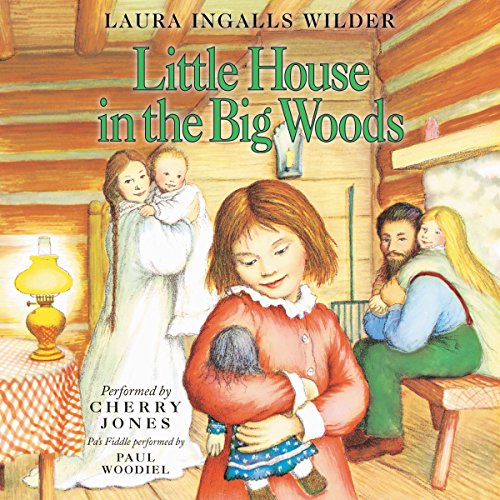
Historical books also teach children interesting information about how people survived in the past. I’ve always remembered the chapter from Little House in the Big Woods by Laura Ingalls Wilder when Pa cleaned his gun and made bullets. There is also a chapter about how Ma made butter and coloured it yellow. Little House on the Prairie has a scene when Ma is helping Pa build their new log cabin and a log falls on her foot. The difficulties and dangers of life on the frontier were illustrated; there was no help to be had for an injury or if the family fell ill.
I learned a lot about the limitations of medical knowledge in the mid to late 1800s through my reading of the What Katy Did series by Susan Coolidge. I will never forget Katy falling out of the swing or Amy contracting, and nearly dying from, Roman fever. Such scenes induce great feelings of empathy and compassion in the reader.

It is for all these compelling reasons that I wrote While the Bombs Fell, a fictionalised biography of my mom’s life as a young girl growing up in a small English town during World War II. I wanted to capture and preserve her memories of life for ordinary people living through this extraordinary time so that others, children in particular, could read it and remember how life was during that time.
What are your thoughts about historical fiction for both children and adults? Do you see value in learning about history in through a good story?
About Robbie Cheadle
Robbie Cheadle is a children’s author and poet.
The Sir Chocolate children’s picture books, co-authored by Robbie and Michael Cheadle, are written in sweet, short rhymes which are easy for young children to follow and are illustrated with pictures of delicious cakes and cake decorations. Each book also includes simple recipes or biscuit art directions which children can make under adult supervision.
Robbie has also published books for older children which incorporate recipes that are relevant to the storylines.
Robbie writes a monthly series for https://writingtoberead.com called Growing Bookworms. This series discusses different topics relating to the benefits of reading to children.
Robbie has a blog, https://robbiesinspiration.wordpress.com/ where she shares book reviews, recipes, author interviews, and poetry.
Find Robbie Cheadle
Blog: https://www.robbiecheadle.co.za/
Blog: robbiesinspiration.wordpress.com
Twitter: BakeandWrite
Instagram: Robbie Cheadle – Instagram
Facebook: Sir Chocolate Books
Want to be sure not to miss any of Robbie’s “Growing Bookworms” segments? Subscribe to Writing to be Read for e-mail notifications whenever new content is posted or follow WtbR on WordPress.
Share this:

Growing Bookworms – Digital versus print books for children
Posted: April 14, 2021 Filed under: Books, Children's Books, Literacy, Reading | Tags: Books, digital vs print, Growing Bookworms, Literacy, Reading, Robbie Cheadle, teaching reading, Wriiting to be Read 50 CommentsI have been giving some thought lately to book marketing, especially the marketing of books aimed at children. While selling more books is obviously of interest to me as a writer of children’s books, I am also interested in the most advantageous ways of imparting information to, and developing a love of learning and reading in young children. This duel interest led me to an investigation of electronic books and the pros and cons of children reading using an electronic platform like a computer or an app on a tablet.
I wanted to know, firstly, if children were interested in reading ebooks.
The answer to that first question was a resounding yes, children are definitely interested in reading ebooks. Modern children are surrounded by technology and it is becoming more and more central to their lives. Lately, not only do children use cell phones and tablets to communicate with each other, and as a source of entertainment and research for school projects, they are using it to do their school lessons and virtually visit with relatives and friends.
Since the advent of the pandemic, many children are seeing their parents working on-line at home and using Zoom to engage with their colleagues instead of face-to-face meetings, so it is hardly surprising that children are interested in ebooks. It is a natural progression.
Ebooks for children are also easily accessible, cheap, have a narrator who reads the story, and have interactive features such as animated pictures, music, sound effects, and links on the screen that connect to games or additional information about the story or pictures. I must admit, I have noticed this link feature in non-fiction books I have read recently and I also like it. I can click on the link and find out more about the source of a picture or listen to a YouTube video about a specific aspect of the book.
My second investigation looked at the pros and cons of ebooks for children.
The pros
- children learn early literacy skills from good quality ebooks that include relevant interactive features such as a dictionary, words that are highlighted when the narrator reads them, and games and pictures that help explain the story;
- children interact longer with their parents when reading an ebook together;
- children can read an ebook over and over again on their own which improves literacy and fluency;
- children can read an ebook independently which may encourage them to read more often; and
- ebooks are cheap and accessible.
The cons
- parents often feel they should reduce their children’s screen time and have a resistance to ebooks;
- parents think their children can have the book read to them by the narrator and spend less time reading to [and bonding with] their children;
- parents get distracted by the interactive features and end up focusing on them instead of the story itself;
- children learn less about the story from an ebook, in particular they do not remember the order of events as well as they do when reading a paper book; and
- the interactive features in an ebook may be distracting to the child.
My overarching takeaway from the above which is a summary of all the articles I read on this subject is that, as with paper books, children benefit the most from ebooks when they read them with a parent or caregiver who spends time taking to the child about the story. This is exactly the same benefit that a child receives from reading a paper book with a parent.
The general view is that parents either take the view that their input is not required for ebooks due to the narrator who reads the story to the child, or the parents get distracted away from the detail of the story by the interactive features and so the wrong information dominates the parent/child engagement.
In homes where the parents do not spend time reading with/to their children, it is believed that ebooks can play a bigger role in assisting children to learn to read as it provides a way of achieving the reading of a story without parental input.
I’ve always read to both my boys. I read with Gregory until he was 6 1/2 years old and wanted to read on his own and I read with Michael every day until he was 12. Some evenings I still read with Michael [his book] and we often sit and read our own books together. It is still a pleasant time and reading separate books at the same time means I don’t have to suffer through Rick Riordan books all year round.
If you are interested in finding free digital children’s books for primary students, you can find three recommended websites here: https://learningattheprimarypond.com/blog/3-websites-with-free-digital-childrens-books-for-primary-students/

I have not attempted to download any of the free ebooks from Oxford Owl but these are the book series I used to teach my sons to read. I had the paper copies.
What are your thoughts on ebooks for children? Have you tried them? Let me know in the comments.

If you have spare Easter eggs you can learn how to make a fun Easter chick here: https://www.youtube.com/watch?v=Bod4B029_xw
OR you can download the instructions here: https://robbiesinspiration.wordpress.com/how-to-make-baby-chick-using-an-easter-egg/
About Robbie Cheadle
Robbie Cheadle has published nine books for children and one poetry book. She has branched into writing for adults and young adults and, in order to clearly separate her children’s books from her adult books, is writing for older readers under the name Roberta Eaton Cheadle.
Robbie Cheadle’s Sir Chocolate children’s picture books are written in sweet, short rhymes which are easy for young children to follow and are illustrated with pictures of delicious cakes and cake decorations. Each book also includes simple recipes or biscuit art directions which children can make under adult supervision. Her books for older children also incorporate recipes that are relevant to the storylines.
Roberta Eaton Cheadle’s supernatural stories combine fabulous paranormal elements with fascinating historical facts.
Children’s picture books – available as a square book and an A5 book (co-authored with Michael Cheadle):
Sir Chocolate and the strawberry cream story and cookbook
Sir Chocolate and the baby cookie monster story and cookbook
Sir Chocolate and the sugar dough bees story and cookbook
Sir Chocolate and the Condensed Milk River story and cookbook
Sir Chocolate and the Sugar Crystal Caves story and cookbook
Sir Chocolate and the Fondant Five story and cookbook
Sir Chocolate and the Ice Cream Rainbow Fairies story and cookbook
Middle school books:
Silly Willy Goes to Cape Town (includes five fun party cake ideas)
While the Bombs Fell (co-authored with Elsie Hancy Eaton)
Poetry book:
Open a new door (co-authored with Kim Blades)
Supernatural fantasy YA novel:
Through the Nethergate
Horror Anthologies (edited by Dan Alatorre):
Spellbound
Nightmareland
Dark Visions
Paranormal Anthologies (edited by Kaye Lynne Booth):
Spirits of the West
Whispers of the Past
Murder mystery Anthology (edited by Stephen Bentley)
Death Among Us
Find Robbie Cheadle
Blog: https://bakeandwrite.co.za/
Blog: robbiesinspiration.wordpress.com
Twitter: BakeandWrite
Instagram: Robbie Cheadle – Instagram
Facebook: Sir Chocolate Books
Want to be sure not to miss any of Robbie’s “Growing Bookworms” segments? Subscribe to Writing to be Read for e-mail notifications whenever new content is posted or follow WtbR on WordPress.
Share this:

Treasuring Poetry – Meet fantasy author and poet, Diana Peach and read my review of Sunwielder: An Epic Time Travel Adventure
Posted: January 23, 2021 Filed under: Author Profile, Book Review, Books, Interview, Poetry, Review, Treasuring Poetry | Tags: Diana Peach, Poetry, Robbie Cheadle, Sunweilder: An Epic Time Travel Adventure, Treasuring Poetry, Writing to be Read 193 CommentsWelcome to the first Treasury Poetry post of 2021.
Today, I am delighted to welcome fantasy author and poet, Diana Peach, who is sharing one of her own poems and discussing poetry.
Which of your own poems is your favourite?
Thanks so much for the invitation to participate in your Treasuring Poetry series, Robbie. I’m honored. I think of myself as a writer of prose and a dabbler otherwise, but I love poetry and believe no creative effort is ever wasted.
This is a super hard question! I have poems that I think are well-crafted, poems that evoke personal feelings or memories, and poems that reflect a particular time in my life. Since “I don’t know” isn’t an acceptable answer, I’ll go with this one:
Flight of faith
When I was a child, I could fly
you and I hopped in dirt-road afternoons
faithful
and the dust-wind flung us over seas of wheat
scuffed shoes skimming the feathered awns
we whipped around the corners of the barn
in a home-sewn world of farm-hewn hands
our secret futures soared
***
In the veins of my hands
the blue brooks of time stream by
Somewhere on the way, I unlearned how to fly
and trod worn paths through autumn’s lea
snapped night’s brittle ice
shards of fractured faith
glinting in my wake
***
Today’s morning purls in plumrose
cast on a withering season’s stark debris
spangled with winter’s gilded rime
a new path of violet ice wends to the horizon
fragile, fissured, a wish yet unbroken
my secret future soars
faithful
and I wonder if I might
fly one last time
What inspired you to write this particular poem?
In my twenties, I used to have flying dreams rather frequently. They were the most vivid dreams of my life. I was truly flying. I could feel the wind on my face as if I was awake and standing outside on a breezy day. The sensory experience was exhilarating.
This poem is based on one of those dreams. In the dream, I was about 10 years old, an unremarkable child of the dusty American plains. Every day, the school bus would drop my friend and me off at the side of the dirt road, and as soon as the bus drove away, we would hop a few steps, then pick up our feet and soar over the fields, our brown shoes skimming the wheat. Despite our ordinary lives and pervasive poverty, we were extraordinary. Life was full of magic and promise, and nothing could hold us down.
Then I stopped having flying dreams and haven’t had one in nearly 35 years. This poem is about that amazing childhood belief that anything is possible, about its loss, and about the yearning to fly again.
Which genre of poetry do you enjoy writing the most and why?
I enjoy Colleen Chesebro’s weekly syllabic poetry challenges. The poetic forms provide structure, and for me, they’re like puzzles as I search for the words that conform to the syllable count, structure, prompts, and personal meaning. But my favorites among the poems I’ve written are all free form. They’re harder
for me to craft, but they feel more organic, untouched by stylistic constraints. They’re pure gut, emotion, and inspiration.
Which genre of poetry do you enjoy reading the most?
Probably free form poetry, though any kind of poetry has the potential to make me gasp at its beauty. I love vivid imagery and poignant emotion, poems that illuminate the human condition in a way that pierces my heart. I like poems that stir something personal, or that draw me in and grab hold so that when I finish reading, I feel like I’ve stepped outside myself into someone else’s experience.
Do you think your poetry compliments your other writing or do you see it as an undertaking that stands alone?
Complements, definitely!
I love poetic prose, and when I’m reading fiction, I’m prone to highlighting passages in books where the word choice, imagery, metaphors, or phrases make me swoon. Poetry emphasizes beautifully crafted language, including its sounds and rhythms. It requires a writer to capture and convey the core essence of a story. I think poetry fosters an underlying sensitivity to those aspects of writing in general, and prose benefits from the same attention.
Thanks again, Robbie, for the invite and for allowing me to share my thoughts and muse over this lovely artform. Happy Writing to all the poets out there.
Thank you, Diana, for being my Treasuring Poetry guest. I really enjoyed your poem and insights into your poetry writing.
Sunwielder: An Epic Time Travel Adventure
What Amazon says
In a land on the brink of war, Gryff Worden discovers his family slaughtered, his farm in ruin.
Mortally wounded, he stumbles upon a timekeeper, an old woman of the northern forests, one who tracks the infinite paths of each life. She offers him a sunwield, a medallion promising to return him to the pivotal choices that swayed his life’s journey. Her only condition—he must wear the bronze charm until the end.
Now his story remakes itself, casting him backward in time to moments of decision and death. His old life gone, he no longer remembers the purpose of the medallion burning his chest. As he uncovers the sunwield’s power, new choices lead him on an epic adventure through war, death, friendship, life, and love.
My review
I do not read a lot of fantasy books, but I make an exception for D. Wallace Peach as her books are extraordinary and unique.
Gryff Worden is an ordinary man who just wants to help his uncle and aunt raise horses on their farm while raising his own family. Gryff adores his wife and two children, but there is bad blood between Gryff and the son of the Earl who rules his area. The hostility is emanates from Brant Loden’s side only, but it changes the course of Gryff’s life.
Gryff’s country is attacked by an aggressive nation who want to enslave his people and he is eventually morally wounded and his family murdered by enemy soldiers. At the time of his death he is visited by an elderly prophet who offers him another chance at life if he accepts the sunwielder, a bronze medallion which allows him to go back in time and revise decisions he made thereby changing his life’s path. I thought this concept was clever and unique. I have read other books where the hero can go back in time, but this particular method and the limited number of life choices offered by the sunwielder was something quite different and fascinating.
Gryff is a wonderful character, he is a good man and tries to do the right thing in all situations but he is human and, therefore, susceptible to various human failings like anger and resentment. It was most interesting to experience his going back in time and having to try an alternative approach when his previous choice failed. As Gryff moved further along his path, his choices improved and his self control and discipline increased allowing him to make better choices earlier and without constant intervention.
There is a love story thread that runs through the book and this is intriguing as the reader doesn’t know how his relationships with his wife and with his lover are going to turn out – his destiny in this regard is unclear for most of the book.
There are a number of characters in this book and it provides great insight into the frailties of men and how arrogance, greed, and hunger for power can destroy individuals and the people around them. Good leadership is a strong theme in this book and the importance of strategy and leadership in war and battles is highlighted.
The author writes the most beautiful and powerful prose and even without the incredible story, this book would have been worth reading just to experience the skillful writing. I highly recommend this book to lovers of fantasy and those who enjoy excellent writing.
Purchase Sunwielder: An Epic Time Travel Adventure
![Sunwielder: An Epic Time Travel Adventure by [D. Wallace Peach]](https://m.media-amazon.com/images/I/51rVMDEjdaL._SY346_.jpg)
About Diana Peach
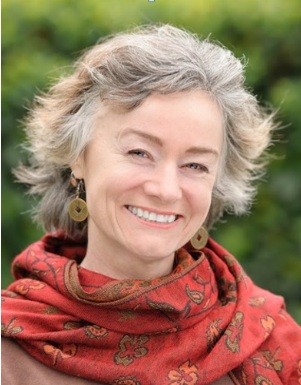
D. Wallace Peach started writing later in life after the kids were grown and a move left her with hours to fill. Years of working in business surrendered to a full-time indulgence in the imaginative world of books, and when she started writing, she was instantly hooked. Diana lives in a log cabin amongst the tall evergreens and emerald moss of Oregon’s rainforest with her husband, two dogs, bats, owls, and the occasional family of coyotes.
Contact and purchase links
Website/Blog: http://mythsofthemirror.com
Website/Books: http://dwallacepeachbooks.com
Amazon Author’s Page: https://www.amazon.com/D.-Wallace-Peach/e/B00CLKLXP8
Facebook: https://www.facebook.com/pages/Myths-of-the-Mirror/187264861398982
Twitter: @dwallacepeach
About Robbie Cheadle
Robbie Cheadle has published nine books for children and one poetry book. She has branched into writing for adults and young adults and, in order to clearly separate her children’s books from her adult books, is writing for older readers under the name Roberta Eaton Cheadle.
Robbie Cheadle’s Sir Chocolate children’s picture books are written in sweet, short rhymes which are easy for young children to follow and are illustrated with pictures of delicious cakes and cake decorations. Each book also includes simple recipes or biscuit art directions which children can make under adult supervision. Her books for older children also incorporate recipes that are relevant to the storylines.
Roberta Eaton Cheadle’s supernatural stories combine fabulous paranormal elements with fascinating historical facts.
Children’s picture books – available as a square book and an A5 book (co-authored with Michael Cheadle):
Sir Chocolate and the strawberry cream story and cookbook
Sir Chocolate and the baby cookie monster story and cookbook
Sir Chocolate and the sugar dough bees story and cookbook
Sir Chocolate and the Condensed Milk River story and cookbook
Sir Chocolate and the Sugar Crystal Caves story and cookbook
Sir Chocolate and the Fondant Five story and cookbook
Sir Chocolate and the Ice Cream Rainbow Fairies story and cookbook
Middle school books:
Silly Willy Goes to Cape Town (includes five fun party cake ideas)
While the Bombs Fell (co-authored with Elsie Hancy Eaton)
Poetry book:
Open a new door (co-authored with Kim Blades)
Supernatural fantasy YA novel:
Through the Nethergate
Horror Anthologies (edited by Dan Alatorre):
Spellbound
Nightmareland
Dark Visions
Paranormal Anthologies (edited by Kaye Lynne Booth):
Spirits of the West
Whispers of the Past
Murder mystery Anthology (edited by Stephen Bentley)
Death Among Us
Find Robbie Cheadle
Blog: https://bakeandwrite.co.za/
Blog: robbiesinspiration.wordpress.com
Twitter: BakeandWrite
Instagram: Robbie Cheadle – Instagram
Facebook: Sir Chocolate Books
Want to be sure not to miss any of Robbie’s “Treasuring Poetry” segments? Subscribe to Writing to be Read for e-mail notifications whenever new content is posted or follow WtbR on WordPress.
Share this:

Growing Bookworms – Teaching your child to count and read numbers
Posted: January 13, 2021 Filed under: Children's Books, Growing Bookworms, Literacy, Parenting, Reading | Tags: Growing Bookworms, Literacy, Numbers, Reading, Robbie Cheadle, Writing to be Read 39 Comments
The festive period has drawn to a close and children are back at school and parents back at work. Many of us are starting off the year with on-line learning and this can be quite challenging, especially for young learners.
Learning to read letters and numbers are vitally important as these form the basis of a learner’s future reading and numeracy skills.
There are lots of fun ways to incorporate teaching children to recognise numbers into daily tasks and family leisure activities.
One of the numbers activities my boys liked the best was singing counting songs such as One, Two, Buckle My Shoe or 1, 2, 3, 4, 5 Once I Caught A Fish Alive. You can download a poster which illustrates the words and read or sing them with your child. You can also clap your hands or stamp your feet as you sing to reinforce the quantities.

Alternatively, you can download a video which sings the song and displays the numbers.
Another activity my children loved was playing Snakes and Ladders. This game comes in various forms including the traditional 2D board, dice and markers and a 3D version where the snakes swallow the counters and they slide down to the end of the snake.
According to Wikepedia the object of the game of Snakes and Ladders is to navigate one’s game piece, according to die rolls, from the start (bottom square) to the finish (top square), helped by climbing ladders but hindered by falling down snakes. The game is a simple race based on sheer luck, and it is popular with young children.
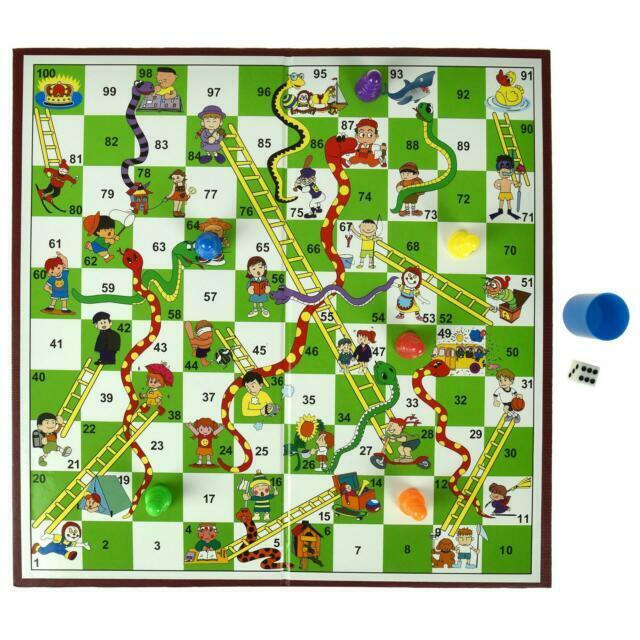
This game exposes children to the concepts of addition and subtraction. Each square on the board is numbered from 1 to 100 and each player needs to roll the dice and move their counter the number of spaces reflected on the dice. This is a wonderful way of teaching number recognition and counting, for example, if your child’s counter is on 6 and s/he rolls a 5, you can help them count 7, 8, 9, 10 and 11. You can reinforce the concept by saying if you’re on 6 and you add another 5 spaces, you will end on 11.
Some other benefits to playing board games are as follows:
They boost language skills;
The sharpen your child’s focus;
They teach teamwork;
They help to soothe anxiety; and
They teach children to be good losers.
Another great way to teach children how to count and recongise numbers are join-the-numbers pictures. These are available from simple pictures to complex ones.
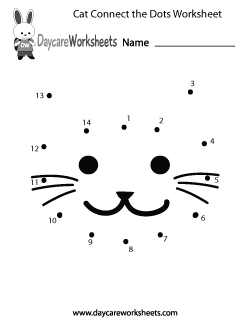
You can find more join-the-numbers worksheets here: https://www.daycareworksheets.com/preschool-connect-the-dots-worksheets/.
Have you used any of these methods to teach children to count and read numbers? Which one was their favourite method? Tell me in the comments.
About Robbie Cheadle
Robbie Cheadle has published nine books for children and one poetry book. She has branched into writing for adults and young adults and, in order to clearly separate her children’s books from her adult books, is writing for older readers under the name Roberta Eaton Cheadle.
Robbie Cheadle’s Sir Chocolate children’s picture books are written in sweet, short rhymes which are easy for young children to follow and are illustrated with pictures of delicious cakes and cake decorations. Each book also includes simple recipes or biscuit art directions which children can make under adult supervision. Her books for older children also incorporate recipes that are relevant to the storylines.
Roberta Eaton Cheadle’s supernatural stories combine fabulous paranormal elements with fascinating historical facts.
Children’s picture books – available as a square book and an A5 book (co-authored with Michael Cheadle):
Sir Chocolate and the strawberry cream story and cookbook
Sir Chocolate and the baby cookie monster story and cookbook
Sir Chocolate and the sugar dough bees story and cookbook
Sir Chocolate and the Condensed Milk River story and cookbook
Sir Chocolate and the Sugar Crystal Caves story and cookbook
Sir Chocolate and the Fondant Five story and cookbook
Sir Chocolate and the Ice Cream Rainbow Fairies story and cookbook
Middle school books:
Silly Willy Goes to Cape Town (includes five fun party cake ideas)
While the Bombs Fell (co-authored with Elsie Hancy Eaton)
Poetry book:
Open a new door (co-authored with Kim Blades)
Supernatural fantasy YA novel:
Through the Nethergate
Horror Anthologies (edited by Dan Alatorre):
Spellbound
Nightmareland
Dark Visions
Paranormal Anthologies (edited by Kaye Lynne Booth):
Spirits of the West
Whispers of the Past
Murder mystery Anthology (edited by Stephen Bentley)
Death Among Us
Find Robbie Cheadle
Blog: https://bakeandwrite.co.za/
Blog: robbiesinspiration.wordpress.com
Twitter: BakeandWrite
Instagram: Robbie Cheadle – Instagram
Facebook: Sir Chocolate Books
Want to be sure not to miss any of Robbie’s “Growing Bookworms” segments? Subscribe to Writing to be Read for e-mail notifications whenever new content is posted or follow WtbR on WordPress.
Share this:

The joy of nursery rhymes: Twinkle, twinkle little bat
Posted: November 11, 2020 Filed under: Children's Books, Growing Bookworms, Literacy, Nursery Rhymes, Reading | Tags: Growing Bookworms, Literacy, Nursery Rhymes, Reading, Robbie Cheadle, Writing to be Read 56 Comments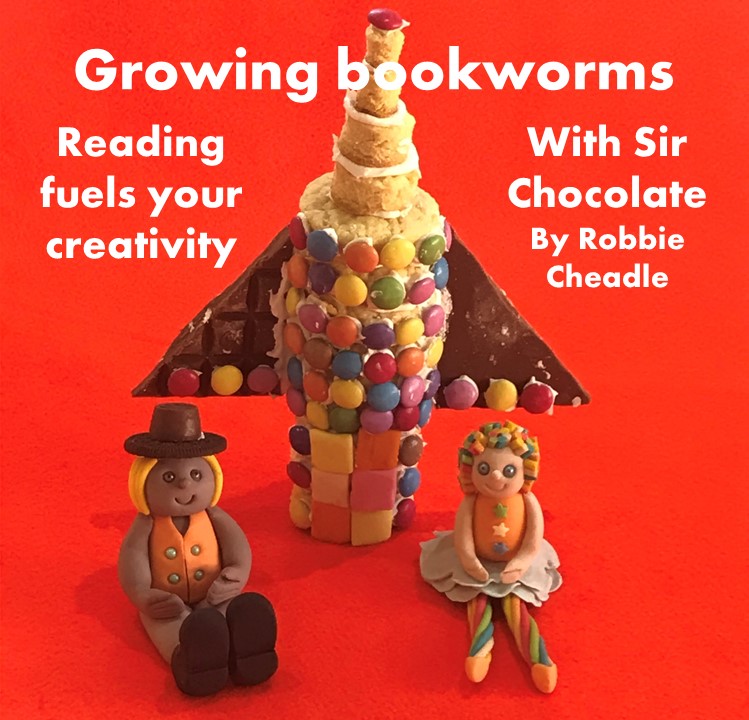
“Twinkle, twinkle, little star
How I wonder what you are
Up above the world so high
Like a diamond in the sky
Twinkle, twinkle little star
How I wonder what you are”
Do you remember the words of this nursery rhyme? It has always been one of my favourites and the first one I remember hearing as a child. There was something about it that captured my imagination. Today, the words of this nursery rhyme are imprinted on my brain and remind me of the Blue Fairy in Pinocchio, one of my favourite childhood books.
When I was 9 years old, Alice in Wonderland was my favourite book [it still is a favourite and I have a number of different copies of it]. The words of Lewis Carroll’s adaption of Twinkle twinkle little star stayed with me and is still the version I think of first.

I had difficult babies. They were both real ‘howlers’. Gregory cried so much I gave all my baby stuff away when he was three months old and the promised reprieve from the endless crying didn’t happen. It turned out he was a ‘six-monther’. Terence had to work hard to convince me to have another baby and then Michael turned out to be a howler too. His health issues were even more challenging and he was in hospital numerous times during his first two years of life.
But, I digress … back to nursery rhymes. I used to recite nursery rhymes to my kids while I carried them around. They howled and I recited. It kept both of us sane.
Both of my sons have good vocabularies and literacy skills and both are musical. Reading up on the useful benefits of nursery rhymes for children, I think all the reciting I did may have helped enhance these skills.
The five major benefits of nursery rhymes are as follows:
They help develop language and literacy skills:

The help develop phonemic awareness – children hear the words said and learn to pronounce them. A lot of nursery rhymes include unusual and funny words and phrases.

Nursery rhymes help build word memory and articulation. They are full of rhyming words and include words and groups of sounds you don’t encounter in everyday speech.

Nursery rhymes help develop creativity in children by encouraging them to imagine the scene in their heads. Just think of this one:
The Owl and the Pussy-Cat
BY EDWARD LEAR
The Owl and the Pussy-cat went to sea
In a beautiful pea-green boat,
They took some honey, and plenty of money,
Wrapped up in a five-pound note.
The Owl looked up to the stars above,
And sang to a small guitar,
“O lovely Pussy! O Pussy, my love,
What a beautiful Pussy you are,
You are,
You are!
What a beautiful Pussy you are!”
II
Pussy said to the Owl, “You elegant fowl!
How charmingly sweet you sing!
O let us be married! too long we have tarried:
But what shall we do for a ring?”
They sailed away, for a year and a day,
To the land where the Bong-Tree grows
And there in a wood a Piggy-wig stood
With a ring at the end of his nose,
His nose,
His nose,
With a ring at the end of his nose.
III
“Dear Pig, are you willing to sell for one shilling
Your ring?” Said the Piggy, “I will.”
So they took it away, and were married next day
By the Turkey who lives on the hill.
They dined on mince, and slices of quince,
Which they ate with a runcible spoon;
And hand in hand, on the edge of the sand,
They danced by the light of the moon,
The moon,
The moon,
They danced by the light of the moon.
Source: The Random House Book of Poetry for Children (1983)
Finally, nursery rhymes teach children to listen, a very important life skill.
I am finishing off this post with a video of a recital of the poem Television by Roald Dahl. It is hilarious and epitomizes my thoughts about children and the modern trend of television and video/TV games.
About Robb,ie Cheadle
Hello, my name is Robbie, short for Roberta. I am an author with seven published children’s picture books in the Sir Chocolate books series for children aged 2 to 9 years old (co-authored with my son, Michael Cheadle), one published middle grade book in the Silly Willy series and one published preteen/young adult fictionalised biography about my mother’s life as a young girl growing up in an English town in Suffolk during World War II called While the Bombs Fell (co-authored with my mother, Elsie Hancy Eaton). All of my children’s book are written under Robbie Cheadle and are published by TSL Publications.
I have recently branched into adult and young adult horror and supernatural writing and, in order to clearly differential my children’s books from my adult writing, I plan to publish these books under Roberta Eaton Cheadle. My first supernatural book published in that name, Through the Nethergate, is now available.
I have participated in a number of anthologies:
- Two short stories in Spellbound, a collection of horror stories edited by Dan Alatorre;
- Two short stories in Spirits of the West, A Wordcrafter Western Paranormal Anthology edited by Kaye Lynne Booth;
- Two short stories in #1 Amazon bestselling anthology, Dark Visions, a collection of horror stories edited by Dan Alatorre;
- Three short stories in Death Among Us, an anthology of murder mystery stories, edited by Stephen Bentley;
- Three short stories in #1 Amazon bestselling anthology, Nightmareland, a collection of horror stories edited by Dan Alatorre; and
- Two short stories in Whispers of the Past, an anthology of paranormal stories, edited by Kaye Lynne Booth.
I also have a book of poetry called Open a new door, with fellow South African poet, Kim Blades.
Find Robbie Cheadle
Blog: https://bakeandwrite.co.za/
Blog: robbiesinspiration.wordpress.com
Twitter: BakeandWrite
Instagram: Robbie Cheadle – Instagram
Facebook: Sir Chocolate Books
Want to be sure not to miss any of Robbie’s “Growing Bookworms” segments? Subscribe to Writing to be Read for e-mail notifications whenever new content is posted or follow WtbR on WordPress.
Share this:

Meet poet and author D. Avery plus review
Posted: September 26, 2020 Filed under: Book Review, Books, Interview, Poetry, Review, Treasuring Poetry | Tags: Author Interview, Book Review, D. Avery, Poetry, Robbie Cheadle, Treasuring Poetry, Writing to be Read 60 Comments
Today, I am delighted to welcome poet and author D. Avery. Ms Avery is the creator of the fun and well-known characters Kid and Pal who frequent Carrot Ranch Literary Community She also has her own blog where she shares her flash fiction, poetry and other literary endeavours. You can find her blog here: https://shiftnshake.wordpress.com/.
At first I was thrilled to be asked to participate in Treasuring Poetry with Writing to be Read and Robbie Cheadle. Then I read the questions! Too hard! Actually, I misread the questions and was flustered enough to consider who my favorite poet might be, let alone poem.
Robbie’s questions led me down many a rabbit hole, but perhaps not so many as I might have if I were under the same roof as my collection of poetry books. I’m not, so I let my mind travel and recall those shelves and what I have read lately. Often times my favorite poet or poem is simply the one in front of me, so recently I have enjoyed Conrad Aiken and Mary Oliver. But a favorite poet?
Still mistakenly contemplating a poet as opposed to a poem, and still unable to name just one, I at least realize I tend to most admire traditional Japanese poetry as well as the work of Rumi and of Hafiz. I like a short poem that makes me say, “Ah!” or even “Awe…” then “Ha!” If I could peruse my shelves I’d give my favorite examples, probably from a book called Japanese Death Poems; either that or I’d be lost in re-reading that treasure. As it is, this assignment got me re-reading Hafiz’s The Gift, translated by Daniel Ladinsky, and from that I came to see that many of Mary Oliver’s poems are in that Sufi vein, poems that, like Hafiz, are conversational yet intimate, not just with the reader, but with the subject, God. Now there’s a rabbit hole. But closer to home and in some ways more comfortable for their hominess are the poems of Robert Frost. He too writes with the wit and wisdom, often with a quiet humor, that I admire in the Sufis. Here are two lines from the New England bard:
We dance round in a ring and suppose,
But the secret sits in the middle and knows.
Robert Frost poems are accessible yet have subtleties and layers that can provide that ‘Ah ha’ that gives a poem staying power. As well as displaying an understanding of the spiritual aspects of his world Frost’s poems also reveal a keen observer’s eye for nature. There are many examples, and I never tire of reading Frost, but a favorite poem? I will not choose a favorite. But here are forty-eight syllables in eight lines, Nothing Gold Can Stay:
Nature’s first green is gold,
Her hardest hue to hold.
Her early leaf’s a flower;
But only so an hour.
Then leaf subsides to leaf.
So Eden sank to grief,
So dawn goes down to day.
Nothing gold can stay.
Some will say this poem is about impermanence and the fleeting nature of time. Leaves certainly change their hues in Frost’s New England, and he shows that he has observed this deeply, daily, for the emerging and unfolding leaves of spring and early summer cannot simply be called green, they are in fact shades of yellow and gold, and those might be preceded by cream and yellow flowers. Ah, he’s so observant. And dawn begins golden; “dawn goes down” makes one think of sunset, but it is just day, a day less sparkly than the golden dawn that begat it perhaps. Yes, time flies, but there is much implication in this poem of falling. So Eden sank to grief/ So dawn goes down to day/ Nothing gold can stay. There is nothing extraneous in this short poem; Eden sinking to grief is intentional, making this poem about humanity’s separation from nature, our fall from our golden potential when we were green and new in the world. This poem, without explicitly using seasonal words, has spring and fall entwined, so while that does show the fleeting nature of time, it is also a reminder of the seasons of our lives, and the hues we hold, the hues we live and die by. Just now in Frost’s old stomping grounds the leaves are turning back from summer greens to fall golds, and those colorful autumn leaves will fall, (for nothing gold can stay), but I wonder if that last line offers a bit of hope, the potential of knowing bright hues once more before the onset of winter.
I hope that addresses well enough the first three questions. As far as writing like any well-known poet, I choose— me! But I am not a well-known poet…
I admire many poets and many styles. I think any poet whom we admire is worth examining and, to an extent, imitating. That is what many of the poetry writing prompts do, they encourage us to try out different forms and styles of poetry, to pay attention to syllables and rhyme schemes and such. I sometimes see a form or style that is new to me and try it as a challenge and to learn something new. It’s all good, as long as you are building your own poeming muscles and not trying to write someone else’s poem. We tend to follow the recipe the first time we make a new dish. But then we get flexible and make the dish our own. In poeming too, we are aware that ours isn’t the only way to express the ingredients we find to hand, and we should want to find our own voice. In many ways free verse is the most challenging and difficult poetic form for me. How do you know when it’s done, if it’s done right, if there are no “rules”? That having been said, I am not against bending or even breaking the rules, but they have to be there in the first place for that to work.
Since I was nine years old I have occasionally been blessed by the magical balm of someone saying, “I liked your poem”. It’s a huge thing. I am not a singer or dancer or a visual artist. But sometimes I make pictures with words, and sometimes those words have a rhythm and a cadence or a tone that works, that strikes a chord. It is good to feel like a poem has performed well. And I have come to truly appreciate all the other lesser-known (not yet household names) poets that put their work out on their blogs. From you all I have learned so much and have been shown the great potential and creativity of poeming, and the assurance that poetry is alive and well.
D. Avery
My review of For the Girls by D Avery
This is the first book of poetry by D. Avery I have read and it was a wonderful experience. For the Girls really spoke to me as it is about the path of breast cancer many women walk. By reading these poems, I was able to follow this traumatic journey from diagnosis, through treatment and to remission for many, and death for a few.
The poems in For the Girls capture the concerns aroused by potential discover, the shock of a malignant diagnosis, the support offered by some of the staff at the treatment clinics and the comfort of firm friendships. The also disclose the pain of emotional upheaval being ignored and staff treating a patient with kind impatience.
Some of the verses/poems that struck me the most in this books are as follows:
“Unless.
Some of us have to get them off our chests.
And learn living without them.
Except.
Some, dear friends, couldn’t live.
With or without them.”
from The Girls
“There’s another intruder who lacks
Even the decency of mice or rats
that at least show themselves at night
To show they’ve been in the house all along,
only sometimes out of sight.
Why would you suspect your own house?
Relax, there’s nothing, or maybe only a mouse.
Why would you suspect there’s something there
Quiet as anxiety, maybe under the stairs
or up in the attic, just biding its time
A squatter in the house you blithely call “mine”?
from Intrusion
This collection of poems is freestyle and very bitter sweet. The insightfulness of the poet brought tears to my eyes and brought back memories of ladies I’ve known who’ve walked this same frightening path.
Purchase For the Girls by D Avery
About D Avery
D. Avery (196?-20??) has long been a compulsive poet. Despite a very important day job educating public school children, she is often distracted by this compulsion, as well as by life’s great questions, such as “Kayak, or bike?”. Though she has come to realize that nothing difficult is ever easy, she believes that it’s all good.
About Robbie Cheadle
Hello, my name is Robbie, short for Roberta. I am an author with six published children’s picture books in the Sir Chocolate books series for children aged 2 to 9 years old (co-authored with my son, Michael Cheadle), one published middle grade book in the Silly Willy series and one published preteen/young adult fictionalised biography about my mother’s life as a young girl growing up in an English town in Suffolk during World War II called While the Bombs Fell (co-authored with my mother, Elsie Hancy Eaton). All of my children’s book are written under Robbie Cheadle and are published by TSL Publications.
I have recently branched into adult and young adult horror and supernatural writing and, in order to clearly differential my children’s books from my adult writing, I plan to publish these books under Roberta Eaton Cheadle. My first supernatural book published in that name, Through the Nethergate, is now available.
I have participated in a number of anthologies:
- Two short stories in #1 Amazon bestselling anthology, Dark Visions, a collection of horror stories edited by Dan Alatorre;
- Three short stories in Death Among Us, an anthology of murder mystery stories, edited by Stephen Bentley;
- Three short stories in #1 Amazon bestselling anthology, Nightmareland, a collection of horror stories edited by Dan Alatorre; and
- Two short stories in Whispers of the Past, an anthology of paranormal stories, edited by Kaye Lynne Booth.
I also have a book of poetry called Open a new door, with fellow South African poet, Kim Blades.
Find Robbie Cheadle
Blog: https://www.robbiecheadle.co.za/
Blog: robbiesinspiration.wordpress.com
Twitter: BakeandWrite
Instagram: Robbie Cheadle – Instagram
Facebook: Sir Chocolate Books
Want to be sure not to miss any of Robbie’s “Treasuring Poetry” segments? Subscribe to Writing to be Read for e-mail notifications whenever new content is posted or follow WtbR on WordPress. If you found it interesting or entertaining, please share.
Share this:

Meet poet Kevin Morris and a review of his latest book, Light and Shade; serious (and not so serious) poems
Posted: July 25, 2020 Filed under: Book Review, Poetry, Treasuring Poetry | Tags: Book Review, Kevin Morris, Poet Interview, Poetry, Robbie Cheadle, Treasuring Poetry, Writing to be Read 43 CommentsToday, I am very excited to share poet, Kevin Morris’, thoughts about poetry and his favourite poem. I met Kevin a few years ago soon after I started my blog and I was immediately captivated by his interesting poetry which frequently presents new angles on current events and even some historical events. I have read and enjoyed a number of his lovely poetry books, including his latest book, Light and Shade; serious (and not so serious) poems which I have reviewed later in this post.
Over to Kevin
Choosing a favourite poem is a difficult task, as my head is full of poems, many of which are favourites of mine. However, as I have to make a choice, my favourite poem is Vitae Summa Brevis Spem Nos Vetat Incohare Longam, by Ernest Dowson, which runs thus:
“They are not long, the weeping and the laughter,
Love and desire and hate:
I think they have no portion in us after
We pass the gate.
They are not long, the days of wine and roses:
Out of a misty dream
Our path emerges for a while, then closes
Within a dream.”
Dowson’s poem deals poignantly with the brevity of life. We are here for a short time. Our lives are full of “weeping”, “laughter”, “love”, “desire” and “hate”. But all of these are but a passing show for, when we “pass the gate” (the gate signifying the entrance to the land of the dead), all are loves, joys and sorrows are at an end, and we are no more.
Whilst the poem invokes in me a feeling of sadness (it is, after all about the shortness of existence), my primary response to Dowson’s lines is one of admiration. I say admiration for he sums up admirably, in 2 short verses the brevity of life. Other writers expend pots of ink on the subject of our mortality, but Dowson gets to the heart of the matter in a mere 8 lines of poetry.
I never deliberately copy any of the well-known poets. Although, doubtless their work impacts on my writing.
Whilst Dowson’s poem has a Latin title (a language unfamiliar to many people, including me), the message and style of his poem is simple, and it’s the poem’s very simplicity which I so admire.
Thank you, Kevin, for sharing your favourite poem and your reasons for loving it. Your choice greatly interested me as the brevity of life and the inevitability of death is common topic in your own poetry.
My review of Light and Shade; serious (and not so serious) poems
What Amazon says
Life is full of light and shade. For to be human is to experience joy, beauty, love, pain and laughter. This collection reflects all facets of human experience. hence the title Light and Shade; serious (and not so serious) poems.
My review
Light and Shade; serious (and not so serious) poems is another delightful collection of poems by talented poet, Kevin Morris.
Section 1 – Love, nature and time includes poems written mainly in freestyle, that tell of these aspects of human life. Each poem has a streak of melancholy running through it which is extremely effective – a bit like biting on tinfoil – in the way it highlights the underlying certainty of death even in the midst of life. There are a few poems that hint at the trauma of the coronavirus and the related lockdown.
One particular extract that demonstrates this is from a poem called “Oh Creature of Night”:
‘Twas a strange thing
To hear.
Yet I
Felt no fear
But pondered on your incongruous cry,
And a virus, invisible to the eye.”
Section 2 – Humour
The second part of the book comprises of amusing takes on life. I personally prefer the poems with the underlying dark undertones, but these are a lovely and light relief. A large number of these poems comprise of limericks, a form of poetry that the author excels at. One of the verses that entertained me from this section of the book, also relates to Covid-19, and goes as follows:
“Sunscreen on skin
Is no sin.
The birds sing
For it is spring.
One may go outside
But woe betide
The man who offers resistance
To the concept of social distance.”
From At a Time of Social Distancing.
I highly recommend this book of poetry to all poetry lovers who enjoy unpacking meaning and delighting in subtle messages of humour and darkness.
Purchase Light and Shade; serious (and not so serious) poems
Kevin’s recently released poetry collection, Light and Shade: Serious (and Not so Serious) Poems is available from Amazon as follows:
For amazon.com customers please click here https://www.amazon.com/Light-Shade-serious-not-poems-ebook/dp/B08B4X3GVX/ (for the Kindle edition), and here https://www.amazon.com/dp/B08B37VVKV/ (for the paperback).
For amazon.co.uk customers please follow this link https://www.amazon.co.uk/Light-Shade-serious-not-poems-ebook/dp/B08B4X3GVX/ (for the Kindle edition), or click here https://www.amazon.co.uk/dp/B08B37VVKV/ (for the paperback).
About Kevin Morris
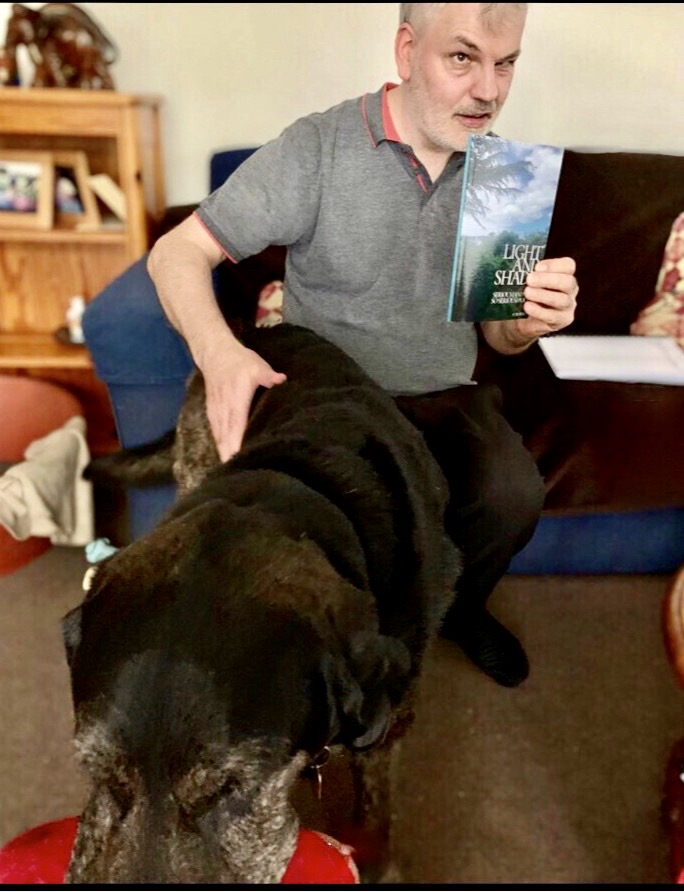
Kevin Morris was born in the city of Liverpool, United Kingdom, on 6 January 1969.
Having graduated from University College Swansea with a BA in history and politics and a MA in political theory, Kevin moved to London where he has lived and worked since 1994.
Being visually impaired, Kevin uses software called Job Access with Speech (JAWS), which converts text into speech and braille enabling him to use a Windows computer or laptop.
Contact Kevin Morris
Links:
Blog: https://kmorrispoet.com/
Twitter: https://twitter.com/drewdog2060_
About Robbie Cheadle
Hello, my name is Robbie, short for Roberta. I am an author with six published children’s picture books in the Sir Chocolate books series for children aged 2 to 9 years old (co-authored with my son, Michael Cheadle), one published middle grade book in the Silly Willy series and one published preteen/young adult fictionalised biography about my mother’s life as a young girl growing up in an English town in Suffolk during World War II called While the Bombs Fell (co-authored with my mother, Elsie Hancy Eaton). All of my children’s book are written under Robbie Cheadle and are published by TSL Publications.
I have recently branched into adult and young adult horror and supernatural writing and, in order to clearly differential my children’s books from my adult writing, I plan to publish these books under Roberta Eaton Cheadle. My first supernatural book published in that name, Through the Nethergate, is now available.
I have participated in a number of anthologies:
- Two short stories in #1 Amazon bestselling anthology, Dark Visions, a collection of horror stories edited by Dan Alatorre;
- Three short stories in Death Among Us, an anthology of murder mystery stories, edited by Stephen Bentley;
- Three short stories in #1 Amazon bestselling anthology, Nightmareland, a collection of horror stories edited by Dan Alatorre; and
- Two short stories in Whispers of the Past, an anthology of paranormal stories, edited by Kaye Lynne Booth.
I also have a book of poetry called Open a new door, with fellow South African poet, Kim Blades.
Find Robbie Cheadle
Blog: https://www.robbiecheadle.co.za/
Blog: robbiesinspiration.wordpress.com
Goodreads:
Twitter: BakeandWrite
Instagram: Robbie Cheadle – Instagram
Facebook: Sir Chocolate Books
Want to be sure not to miss any of Robbie’s “Treasuring Poetry” segments? Subscribe to Writing to be Read for e-mail notifications whenever new content is posted or follow WtbR on WordPress. If you found it interesting or entertaining, please share.
https://www.goodreads.com/author/show/6879063.K_Morrishttps://www.goodreads.com/author/show/6879063.K_Morrishttps://www.goodreads.com/author/show/6879063.K_Morris










The future of education
Posted: August 12, 2020 | Author: robbiesinspiration | Filed under: AI Technology, Commentary, Education, Growing Bookworms, Opinion, Parenting | Tags: Education, Growing Bookworms, Parenting, Robbie Cheadle, Writing to be Read | 64 CommentsIn March 2020 the world went mad. A new virus called Covid-19 started spreading rapidly among humans and by the end of that month most countries were engaged in a horrible new way of life called lock down. As with many other countries, lock-down in South Africa started with the closure of our schools.
The schools were given a minimum period of four business days to prepare for lock down and, in the case of my sons’ school, a home school programme. Fortunately, their school had seen the way the wind was blowing and had started preparing for a potential closure period earlier in the month. Even so, the teaching staff were not afforded much time to get themselves ready to go completely on-line with teaching.
On Thursday, the 18th of March my sons started on-line learning. It wasn’t badly implemented, despite the short timeline, and they had had Google classroom meetings hosted by their teachers, on-line assignments, YouTube video sessions and a lot of other help with all of their subjects.
At the end of March their school closed for the holiday and the teachers worked diligently to make improvements to the on-line programme. School reopened on the 6th of May and my boys continued with their on-line learning until the closure of the second term on Friday, 31 July. They even wrote examinations for two weeks under lock down conditions.
A few weeks ago, a good blogging friend of mine, Jim Borden, a university lecturer wrote this post https://jborden.com/2020/07/19/can-what-you-do-be-replicated-by-technology/. One of the questions he asks in this post is the replacement of teachers by Artificial Intelligence (“AI”) and on-line learning likely. A most interesting question, especially in light of the current scenario where millions of children have all been testing out this theory. So what do I think after my 11 week baptism of hell with home schooling? Does it make sense to replace teachers with AI?
My answer is a resounding NO! There are some advantages to an on-line learning programme. It would be much cheaper. There would be no need of large buildings to accommodate students and all the related furniture. There would be no need for cleaners, caterers and caretakers.
It would also be easier, I wouldn’t need to sit in traffic every day taking them to and from school.
It would also be far less time consuming as there would be no distractions in the form of socialising, team sports, individual sports, debating, chess, clubs and the numerous other things that fill up a child’s school day. It has also been proven statistically that children retain more information that they learn through on-line learning than in a classroom [personally, I’m not completely convinced about the correctness of this particular statistic].
So why then don’t I believe teaching works as well on-line as in the classroom?
I believe that all children, from the youngest to the oldest in our school system, need the human interaction with a teacher and their peers in order to stay emotionally balanced and motivated. People are social animals and they find isolation very difficult. My younger son has told me repeatedly that he misses his friends and the routine of the school day.
Even my older son, who is highly motivated and diligent has found it difficult to stay focused and disciplined during the lockdown period. The lack of routines and contact with other learners and teachers makes it feel a bit purposeless, even if it isn’t.
I also believe the children learn a lot from socialising. Working and life isn’t all about output and sitting at a computer on your own all day. It is about learning to work in teams and motivate others to deliver to deadlines. It is also about brain storming and working together to problem solve. These are all life skills that you cannot learn alone in front of your computer.
I am not going to go into the benefits of sport and extra curricular activities here, but they are numerous and the lack of these past times over the past five months has been has been very trying for children, and adults too.
Of course, there are also the other more basic issues that make on-line learning difficult. Many children lack access to the technology required for on-line learning, including a reliable internet and a computer. No everyone has these, but even if they did, it would not change my view on the relevance of teachers and teaching in a physical situation.
What do you think? Do you think teachers could be replaced by AI and on-line learning programmes? Has your view on this changed over the past few months? Let me know in the comments.
I made a Covid-19 memories cake recently which caricatured the nursery rhyme, The Old Woman Who Lived in a Shoe. I created a young mother with a washing basket full of clothing outside her shoe home. Her many children are all sitting, socially distanced, home schooling. They all have laptops and headsets.
About Robbie Cheadle
Hello, my name is Robbie, short for Roberta. I am an author with seven published children’s picture books in the Sir Chocolate books series for children aged 2 to 9 years old (co-authored with my son, Michael Cheadle), one published middle grade book in the Silly Willy series and one published preteen/young adult fictionalised biography about my mother’s life as a young girl growing up in an English town in Suffolk during World War II called While the Bombs Fell (co-authored with my mother, Elsie Hancy Eaton). All of my children’s book are written under Robbie Cheadle and are published by TSL Publications.
I have recently branched into adult and young adult horror and supernatural writing and, in order to clearly differential my children’s books from my adult writing, I plan to publish these books under Roberta Eaton Cheadle. My first supernatural book published in that name, Through the Nethergate, is now available.
I have participated in a number of anthologies:
I also have a book of poetry called Open a new door, with fellow South African poet, Kim Blades.
Find Robbie Cheadle
Blog: https://bakeandwrite.co.za/
Blog: robbiesinspiration.wordpress.com
Goodreads:
Twitter: BakeandWrite
Instagram: Robbie Cheadle – Instagram
Facebook: Sir Chocolate Books
Want to be sure not to miss any of Robbie’s “Growing Bookworms” segments? Subscribe to Writing to be Read for e-mail notifications whenever new content is posted or follow WtbR on WordPress.
Share this: