Treasuring Poetry – Meet poets, bloggers, and writers, Emily Gmitter and Zoe the Fabulous Feline, and a review #TreasuringPoetry #Poetrycommunity #review
Posted: July 19, 2023 Filed under: Book Review, Collection, Interview, Poetry, Review | Tags: Emily Gmitter, Happiness is a Warm Cat, Poetry, Robbie Cheadle, Treasuring Poetry, Writing to be Read, Zoe the Fabulous Feline 56 Comments
Today, I am delighted to welcome Emily Gmitter and her amazing writing cat, Zoe, to Treasuring Poetry. This is the first time I’ve interviewed such an interesting duo for this series and it has been a fabulous experience.
Welcome Emily and Zoe
I’d like to thank Robbie for inviting me and my co-author, Zoe the Fabulous Feline, to be guests on her lovely Treasuring Poetry blog. We’re happy to be here with her and all of you wonderful poets! Zoe says “hello” too—she’s waving her paw at the screen.
Is writing poetry easier for you compared to prose or do you do a lot of editing and revision of your poems?
While my initial writing efforts focused on poetry, and specifically, syllabic poetry, now I more often write short stories. However, poems or snippets of rhyme frequently find their way into my stories. My brain seems wired for rhyme, so if something comes to me, I don’t ignore it. But, to give you the short and direct answer to your question: I edit my prose far more than I do my poetry.
If I may elaborate, there is a distinct difference between the poet I thought I was back in the day, and the writer I hope I am today. Writing prose came much later in my life—that is, if you don’t count my very first short story, written in fourth grade, about a letter that was afraid of the dark. The story starts with a mom asking her daughter to take a letter to the mailbox. Just as the child is pulling the handle of the mailbox down and bringing the letter up to the opening, the letter starts to squirm and squeal in fear. It begs the child to not do it: “Please don’t drop me into the dark!” The child is startled, of course, but before she can say or do anything, the letter grows arms and legs and runs away. And that’s all I remember about that!
Getting back to your question … I’d add that, while I do edit my poetry, it seems most of my poems haven’t required heavy revision. I might tweak a word or two to keep the meter consistent or create an inner rhyme. Sometimes I’ve made an edit to deliberately include an alliterative phrase. But that’s about it. So I think syllabic poetry—unlike free verse—has always come easily to me. And it’s gotten easier as I’ve gotten older, or perhaps my personal bar has gotten lower. With my prose, though, it’s a far different story. The editing seems never-ending, but of course, at some point, you have to call it done.
I alluded to free verse; writing poetry in that style is not my forte, and has never been. Every once in a blue moon, something comes to me in that form, and usually it’s very short. (There is one example of that in my book, called “Soul Buddies.”) Free verse is much harder for me to write. I enjoy it, and I envy those who can create it, but it’s never come naturally to me. When I try to write it, it feels contrived. In one sense of the word, contrived is a positive thing; it’s what all writers do, right? We deliberately create a written piece; we calculate where to place an adjective, we assess whether a near-rhyme works well or at all. And on and on. So, contrived is not a dirty word. But it does have a negative sense, as well. When I find myself digging too deeply for words to convey what I wish to, the result sometimes feels forced and phony. I usually end up balling up the paper and aiming for the wastepaper basket. And that’s happened more times than I care to remember. I’ll leave free verse to those who can actually create it and spend my time enjoying the beauty of their creations.
Today I find that a poem is either there or it’s not. I most enjoy creating poetry when the words flow naturally. That feels like a gift. I write it down, and I leave it alone.
What mode (blog, books, YouTube, podcasts) do you find the most effective for sharing your poems with poetry lovers and readers?
I incorporated my poems into my newly released book and, while I’m not sure of its effectiveness over alternative modes, I really enjoyed using my poetry to mix up the flavor of the book. I also share my poetry (as well as my short stories and artwork) on social media.
Now, Zoe is more clever than I, or perhaps I should say, she’s a bit less technically challenged than I. She’s on Facebook, too, but she also posts on her The Life & Times of Zoe the Fabulous Feline blog. (A bit contrived if you ask me. To which Zoe just said, “Who’s asking you?”) Speaking of the little imp, she would like to say something. And I think I should be afraid.
Hi, Robbie, it’s me, Zoe the Fabulous Feline! I just wanted to point out something Emily neglected to tell you, which is that my poems are also in our book. Sheesh! Well, at least she gave me credit for my blog. My short stories sometimes include poetry, and I share my short stories on my social media pages. I did write one story completely in syllabic rhyme, which is in our book; it’s called “Zoe and Friends’ Strange Adventure.” It’s too long to include here,, so I’ll just summarize it for you:
A magic hat flies me and a couple of friends on a journey to different lands, one ruled by an evil dictator, and another led by a kind and compassionate old soul—the latter a land where a White Mist relays to us a message of hope and love. We return home with a new perspective.
I’m quite proud of that story-poem. (Story-poem might not be the right, or even a valid, term, but Emily would not let me say “epic poem”; she said I would sound terribly “arrogant.” I’m not even sure what that means, but it does not sound good.) About other modes for our writings: I’ve considered a podcast, but when I’d previously tried to teach Emily how to set up her own blog, that did not go well. Still, I took a chance and mentioned to her that I’d like her assistance with doing a “PodCAT” (a podcast for cats only). Well, I had to practically pick her up off the floor. So I took pity on her and did not push the idea. Anyway, I’m busy enough already. I’ll hand the baton back to Emily at this time and will be back if any other question catches my attention. Ciao for now!
Do you think poetry is still a relevant form of expressing ideas in our modern world? If yes, why?
Yes, I do, because poetry is a window into our souls. Poets write from the heart, and because people are multi-faceted creatures, and because there is so much going on around us all the time, there is no end to the food that will feed a poet’s imagination. Relevance abounds!
And then we have that other class of poets who are relevant in our modern world—the songwriter. Songwriters write lyrics that tell their own stories but also often speak to all our lives. Some artists may stick with the typical love song and/or love-gone-wrong song, and others may risk commercial success for at least occasionally penning songs that speak truth to power. In the latter category, the words of Kris Kristofferson come to mind. His diverse catalog includes every kind of song imaginable, from love songs to humor to satire, from the bittersweet of love and loss to the blessings bestowed on us by a higher power. He also writes biting, politically charged, contemporary songs; just one example of Kristofferson’s many topical tunes is an older one, called “In the News.” (A word of caution: Based on real life events, these lyrics are not easy to read.)
In the News
Read about the sorry way he done somebody’s daughter
Chained her to a heavy thing and threw her in the water
And she sank into the darkness with their baby son inside her
A little piece of truth and beauty died
Burning up the atmosphere and cutting down the trees
The billion dollar bombing of a nation on its knees
Anyone not marching to their tune they call it treason
Everyone says God is on his side
See the lightning, hear the cries
Of the wounded in a world in Holy war
Mortal thunder from the skies
Killing everything they say they’re fighting for
Broken babies, broken homes
Broken-hearted people dying everyday
How’d this happen, what went wrong
Don’t blame God, I swear to God I heard him say
Not in my name, not on my ground
I want nothing but the ending of the war
No more killing, or it’s over
And the mystery won’t matter anymore
Broken dreamers, broken rules
Broken-hearted people just like me and you
We are children of the stars
Don’t blame God, I swear to God he’s crying too
Not in my name, not on my ground
I want nothing but the ending of the war
No more killing, or it’s over
And the mystery won’t matter anymore
Read about the sorry way he done somebody’s daughter
Chained her to a heavy thing and threw her in the water
And she sank into the darkness with their baby son inside her
A little piece of truth and beauty died
~ Kris Kristofferson ~ (In the News – YouTube)
It would be hard to be any more relevant in our modern world than that.
Which of your own poems is your favorite and why?
Oh, this is a tough one! I have favorites in different categories. If we’re talking humorous, “The Spider” is my favorite. I understand some will not find the killing of insects to be a humorous topic, but I have a serious bug phobia, so perhaps I will be forgiven.
The Spider
There you were on my wall the other day,
It wasn’t easy for me, but I let you go on your way.
Soon you were out of sight, but not out of mind,
For I need to know where you are at all times.
I needn’t have worried,
Soon enough you were back.
And busily building a translucent track.
Can’t spare you again, you should’ve stayed gone.
But no, you had to come back and build a new home.
And now, Lord have mercy, I feel bad, it’s a sin,
But when it comes down to your home or mine—mine wins.
My favorite poem of poignancy is “Unjust Desserts.” And for a fun read, I would choose “Nashville-Rainbow Style,” because it tells the story of a most memorable vacation with a bunch of my musician friends. And finally I—
Helloooo, this is Zoe again. I mean, I love Emily, but she sure can go on and on sometimes. Here is a little ditty I wrote as the ending to my short story entitled “Zoe the Poet.” The publisher liked it so much, he insisted on including it in our book, and that’s why it’s my favorite.
Zoe the feline just checking in
To bring you a laugh, a tear, or a grin.
The stories I give you, they come from within,
Except when they come from without.
Please note: With that poem, I answered the question of poetry relevance, too … saying in four lines what Emily said in four paragraphs.
Why do you write poetry?
It’s a good question. You could just as well ask why do I write prose? Both art forms paint images with words, and I equate words with power. Power to evoke emotions both positive and negative, power to entertain. And that’s what poetry is all about.
I love words! And I love to have fun with them. So my love of the English language is why I write anything at all. It’s also a way to communicate with others, a way of expressing myself without censoring myself, which I tend to do in oral communications. That’s the short and sweet answer to this question. As Zoe so kindly pointed out, I can go on and on, so if this satisfies, that’s cool. But I will say a few things more for those who like to read on and on.
As previously mentioned, my first writings of so many moons ago consisted entirely of poetry. But the truth is, these days I don’t set out to write poetry. These days, my creative endeavors have centered on prose and painting instead. However, I do still dip my toes in the pools of poetry every so often. Because of my love for language, I make a concerted effort to take advantage of the various forms of writing tools, such as alliteration, which adds interest to a piece, especially when it’s subtle—when it slips easily into the ear the way an old, well-worn glove slides over one’s hand.
Some short stories and all songs are poetry. In the short story category, flash fiction comes to mind, and especially those restricted-word-count story challenges; those can be poetry of the highest order. In word-challenge stories, one must use language in a very efficient yet meaningful way. When every word has to count, the result is often a rhythmic cadence that shouts “I am poetry!” I wrote the following in response to a 79-word challenge story. I may be biased but, to my mind, it is nothing if not poetic.
Letting Go
No shame in letting go. The freedom of the fall was stronger than her sister’s hand. They were having a passionate discussion. A decade separated the sisters. Their differences, strengthened over every day of each of those years, became more apparent as the discussion threatened to explode. The younger sister stood firm against the fire of her older sister’s fears. She knew it came from love, as surely as she knew she would survive the freedom of letting go.
My early poems came from a place of typical teen-age angst, most often fairly short expressions of whatever was on my mind at the time. Looking back at some of those now… well, I won’t say I’m embarrassed, exactly; I never planned for anyone to read them. But I am, at the least, amused at having taken myself so seriously back then. This might be the first poem I ever wrote. Needless to say, Growing Old did not make it into my book!
Growing Old
My brain is numb,
My heart is cold.
I must be dead,
Or am I old?
Was I describing my youthful thoughts on senility, dementia, growing old in general? Most likely the latter—the concept of aging in general—but the former shows that I had no real sense or kind thoughts about what it meant to be old. Clearly, I was not going to age gracefully!
Many of us younger folks had some angst about our elders—you know, those folks over thirty years of age and considered part of the establishment. Everybody expressed it in their own way. One of my earlier poems relays how I envisioned our world if nuclear powers were to lose their senses. It’s too long to include in this interview (it’s in my book), but here’s a stanza that shows the basic theme of the poem:
The Future of the Child
“What shall I be, Dad, when I grow up?”
Looking toward the future, an eager young pup.
“Anything you want, Son,” you say with a smile.
And secretly pray for the future of the child.
So, that was then, when I set out to write poetry. And this is now when I don’t. “Soul Buddies” is one of those short, free-verse poems that gave birth to itself without any help from me.
Soul Buddies
I found you so easily, where I found you,
not because you are predictable,
but because you go where I go.
You are where I am.
Worlds apart in time, bound by soul.
And that is my long answer to your question, Robbie. And to anyone who has read this far, thank you!
Which poem by any other poet that you’ve read, do you relate to the most [please provide the poem or a link to the poem] and why?
So many speak to me that it’s hard to choose the one that speaks the loudest. The volume also seems to change depending on my mood at any given time. But, at the top of my list of poets are Kris Kristofferson and Gibran Khalil Gibran. You might think Kris and Khalil is a strange pairing, but when you read the lyrics written by Kris and the poems written by Khalil, you see that both write poetry that hits you in your heart. Poetry that makes you wonder how they knew your innermost feelings.
Shel Silverstein is another genius I admire. His body of work is relatable, his sense of humor is bound to give the reader a new perspective on this crazy little thing called life. A well-known author of children’s books and poetry collections, his poems appear funny and light-hearted, and they are. But most contain considerable substance, as well. I really love “Put Something In” simply because it’s a great message, and not just for children.
I relate to this one a lot, at least partly because it speaks to the artist I fancy is in there somewhere, and the child I pray is still in there somewhere.
Put Something In
Draw a crazy picture,
Write a nutty poem,
Sing a mumble-grumble song,
Whistle through your comb.
Do a loony-goony dance
‘Cross the kitchen floor,
Put something silly in the world
That ain’t been there before.
~ Shel Silverstein ~
But you asked which one poem I relate to the most. I would choose this one by Gibran Khalil Gibran, called “Do Not Love Half Lovers.” In this poem, Khalil takes two simple idioms we’ve probably all heard all our lives (Live life to the fullest and Do it well or not at all) and presents them in a poetic fashion that is brilliant. This piece is accessible and contains valuable advice, yet is so mundane that it cannot help but be universal. I feel as though he was in my head when he wrote it. Who hasn’t, at one time or another, found themselves exhibiting such negative or self-damaging behaviors? Who hasn’t, at one time or another, felt only half alive?
One might say this poem reminds them that life is too short to live it only halfway. Others might say life is too long.
Do Not Love Half Lovers
Do not love half lovers
Do not entertain half friends
Do not indulge in works of the half talented
Do not live half a life
and do not die a half death
If you choose silence, then be silent
When you speak, do so until you are finished
Do not silence yourself to say something
And do not speak to be silent
If you accept, then express it bluntly
Do not mask it
If you refuse then be clear about it
for an ambiguous refusal is but a weak acceptance
Do not accept half a solution
Do not believe half truths
Do not dream half a dream
Do not fantasize about half hopes
Half a drink will not quench your thirst
Half a meal will not satiate your hunger
Half the way will get you no where
Half an idea will bear you no results
Your other half is not the one you love
It is you in another time yet in the same space
It is you when you are not
Half a life is a life you didn’t live,
A word you have not said
A smile you postponed
A love you have not had
A friendship you did not know
To reach and not arrive
Work and not work
Attend only to be absent
What makes you a stranger to them closest to you
and they strangers to you
The half is a mere moment of inability
but you are able for you are not half a being
You are a whole that exists to live a life
not half a life
~ Gibran Khalil Gibran ~
********
Well, I think I better stop here, Robbie. Zoe and I thank you again for this opportunity to take part in such a fun feature!
Thank you, Emily and Zoe, for being such entertaining guests.
Happiness is a Warm Cat by Emily Gmitter and Zoe the Fabulous Feline

Blurb
In Happiness is a Warm Cat, author Emily Gmitter and her feline friend, Zoe, serve up a mixed genre of short stories and poems brimming with passion, love, and humor. The majority of the stories are told from the perspective of her cat, Zoe—a cool cat of perspicacity if ever there was one. Zoe’s stories will make you laugh, cry, and occasionally scratch your head in wonder, while Emily’s stories of fiction and nonfiction mingle humor with a sharp poignancy that you’ll find both heartwarming and entertaining.
My review
Happiness is a Warm Cat is a wonderfully unique book filled with experiences and adventures told through the eyes of Emily Gmitter’s fabulous cat, Zoe, as well as some beautifully written romantic and other fictional pieces and biographical stories about aspects of Emily’s life. There are also some lovely poems and several pictures of Emily’s artwork. All of the creations in this book are filled with vibrancy, colour, and passion.
The stories about Zoe and her adventures are fun filled and interesting. Zoe is typical of a cat and is filled with self importance and quite sure about her status as ‘top dog’. She does all manner of naughty things to ensure that Emily remembers her place in the family structure. Zoe is also big hearted and curious (aren’t all cats?) and likes to meet other animals, including Bella the dog and Burt the writing cat, Bella and Barre the Siamese twins, as well as spending time with her sister, Jaz. Zoe also gets to experience some pain and loss.
As a reader, I thought that experiencing daily life through the eyes of Zoe, was a wonderful way to make sense of everyday trials and tribulations and find the happiness in small things and moments.
A wonderful book for readers who appreciate experiencing the ordinary contentedness of life from a different perspective.
Purchase Happiness is a Warm Cat by Emily Gmitter and Zoe the Fabulous Feline
About Emily Gmitter
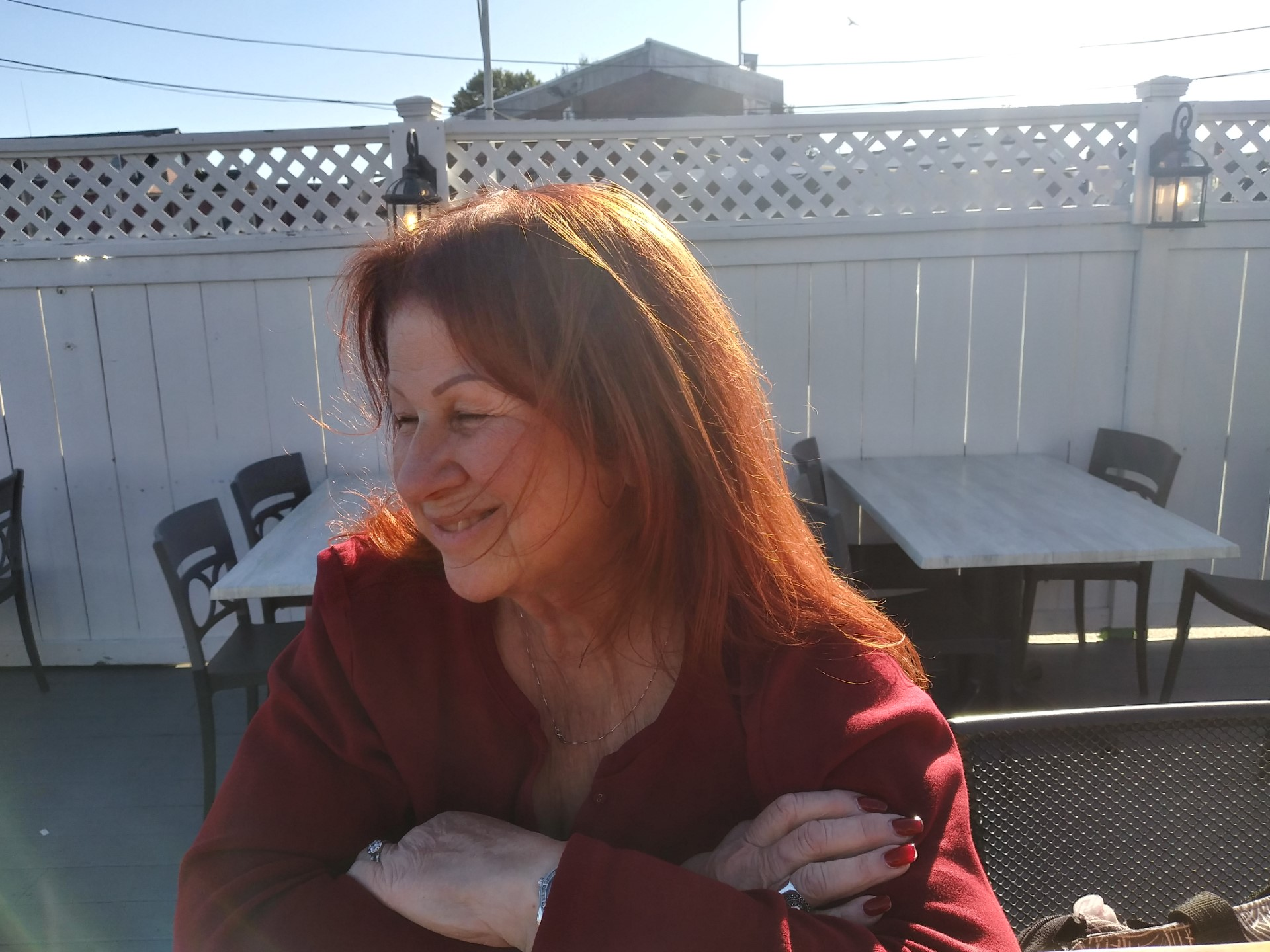
Emily lives on the North Shore of Massachusetts. She loves to spend alone-time at the beach, fun-time singing at local karaoke clubs, and the rest of her time engaged in activities with family and friends … when she’s not reading, writing, or painting.
Share this:

A Lovely Review for “Small Wonders”
Posted: June 22, 2023 Filed under: Book Review, Books, Collection, Poetry, Review | Tags: Book Review, Kaye Lynne Booth, Poetry, Poetry Collection, Small Wonders, WordCrafter Press 6 Comments
Thank you Baydreamer- Lauren Scott. ❤ ❤ ❤
Share this:

WordCrafter News: Book Release & Blog Tour, WIP Update & Anthology Cover Reveal
Posted: May 29, 2023 Filed under: Action/Adventure, Anthology, Blog Tour, Book Covers, Book Release, Books, Cover Art, Dark Fantasy, Fiction, Ghost Stories, Horror, Poetry, Science Fiction, Short Fiction, Speculative Fiction, Stories, Time travel, WordCrafter Book Blog Tours, WordCrafter News, WordCrafter Press | Tags: 2023 Short Fiction Contest, Adventure, Anthology, Book Blog Tours, Kaye Lynne Booth, Midnight Roost, New release, Poetry, romance, Small Wonders, The Rock Star & the Outlaw, Time-Travel, western adventure, WordCrafter Press 19 Comments
New Release from WordCrafter Press
I’m pleased to announce the release of my debut poetry collection, Small Wonders: Reflective Poems, which will be June 20, and is available for pre-order at the purchase link below. A lifetime of poetry, for better or worse, I’m throwing them out there for all to see.
About Small Wonders: Reflective Poems

The world is filled with amazing things, if we will just stop a moment and take notice. In this vast universe, we are but tiny individuals, filled with awe and amazement. From reflections on first love, to reflections on growing old. The poems within these pages express a lifetime of unique reflections in Small Wonders.
Purchase Link: https://books2read.com/u/b6WZ6E
The WordCrafter Small Wonders Book Blog Tour

The WordCrafter Small Wonders Book Blog Tour is scheduled for June 19 – 23.
Join us to learn more about this unique poetry collection and its author, Kaye Lynne Booth. I will be sharing here on Writing to be Read, and visiting the lovely blogs of Robbie’s Inspiration, Un dawnted, and Carla Loves to Read, with guest posts and poetry readings, an interview with DL Mullan, and reviews of my debut poetry collection. And I’ll be giving away three digital copies of Small Wonders, and all you have to do for a chance to win, is show up and comment at any of the stops. There’s one chance possible at each stop if you follow the tour.
Midnight Roost Winning Story & Cover Reveal
The 2023 WordCrafter anthology, Midnight Roost: Weird and Creepy Stories, will be scheduled for an October release. This year we did the anthology like last year’s Visions anthology, with some of the stories coming from the annual short fiction contest and others that came by invitation and were not subject to the competition. Invitational stories include tales by Mario Acevedo, Paul Kane, Chris Barili, Roberta Eaton Cheadle, Christa Planko, Julie Jones, Rebecca M. Senese, Keith J. Hoskins, Michaele Jordan, Joseph Carrabis, DL Mullan, and Patty Fletcher.
There will be some new author names added to the list from the entries that were judged: Robert Kostanczuk, Denise Aparo, Sonia Pipkin, and MJ Mallon. And now…
The Winning Story
I am pleased to announce that the winning story in the 2023 WordCrafter Short Fiction Contest is…
Drumroll please.
“Red Door House”, by Isabel Grey.
The Cover Reveal
And before I go on to the next June news item, I would also like to call your attention to our awesome new and original cover, courtesy of DL Mullan of Sonoran Dawn Studios, below. I had a cover planned for this anthology, but when Dawn offered up this one, I just couldn’t say no. I really like it, and I hope you do, too.

WIP Update: The Rock Star & The Outlaw
In June, I plan to finish up The Rock Star & The Outlaw and gear up for a Kickstarter campaign in July & August. I’ll be setting up the Kickstarter with some awesome reward teirs and creating content to fill those tiers, so you know I will be hard at work. If all goes as planned, I will be wrapping up the final edits and setting it up for a September release by the end of the month. I’m excited to able to share this western time-travel romance adventure novel with all of you, so be watching for it soon.

A time-traveler oversteps his boundaries in 1887. Things get out of hand quickly, and he is hanged, setting in motion a series of events from which there’s no turning back.
LeRoy McAllister is a reluctant outlaw running from a posse with nowhere to go except to the future.
Amaryllis Sanchez is a thrill-seeking rock star on the fast track, who killed her dealing boyfriend to save herself. Now, she’s running from the law and his drug stealing flunkies, and nowhere is safe.
LeRoy falls hard for the rock star, thinking he can save her by taking her back with him. But when they arrive in 1887, things turn crazy fast, and soon they’re running from both the outlaws and the posse, in peril once more.
They can’t go back to the future, so it looks like they’re stuck in the past. But either when, they must face forces that would either lock them up or see them dead.
________________________________________________________________
There’s still time to get your FREE digital copy of Hidden Secrets, my paaranormal mystery novella.
My Memorial Day gift to you.
Get your FREE copy here: https://books2read.com/u/38RZ2O

Want exclusive content? Join Kaye Lynne Booth & WordCrafter Press Readers’ Group for WordCrafter Press book & event news, including the awesome releases of author Kaye Lynne Booth. She won’t flood your inbox, she NEVER sells her list, and you might get a freebie occasionally. Get a free digital copy of her short story collection, Last Call and Other Short Fiction, just for joining.
Share this:

Tales from the Bird Sanctuary: Spring Inspiration
Posted: May 22, 2023 Filed under: Bird Watching, Poetry, Tales from the Bird Sanctuary, Uncategorized | Tags: Birds, Birdwatching, Poetry, Tales from the Bird Sanctuary, Writing to be Read 2 Comments
I love April. It’s National Poetry Month, which always puts me in a state of looking for and appreciating the beauty in the world around me, so I can express it in my poetry. And what better time to focus on the beauty in the world, than when things are just starting to green up, and the migrating birds are flocking in to the bird sanctuary.
“But, what does a bird sanctuary have to do with with National Poetry Month?” you might ask. After all, this is a “Tales from the Bird Sanctuary” post, where talk of poetry may not seem to fit. The truth is, since I started this blog series last year, I’ve been wondering what it was doing on a blog about books and writing. But as I spent most of April preparing and launching Poetry Treasures 3: Passions and compiling my own poetry collection, Small Wonders, and watched all the migrating birds coming in for the summer and the green of my tulips popping upm through the soil, it occured to me that Spring is the season of new beginnings, in nature and in my writing endeavors.
You Know It’s Spring…
You know that it’s Spring when new birds start appearing in pairs
You know it’s Spring whe the first Hummingbird buzzes by your head
You know it’s Spring when green pokes through brown whereever you look
You know it’s Spring when the sun warms the days, but the nights still carry a chill
You know it’s Spring when the buzz of insects fills the air once more
Bird Tales
This year, the first Hummingbird was spotted on April 4th, which was a bit early in the season, but I welcomed him, putting up the first nectar feeder of the year to accomodate my early guest.

Mid-April I had more birds than I could count. New birds migrating in filled my trees raising a cacphony of birdsong and the bird sanctuary was a very busy place.
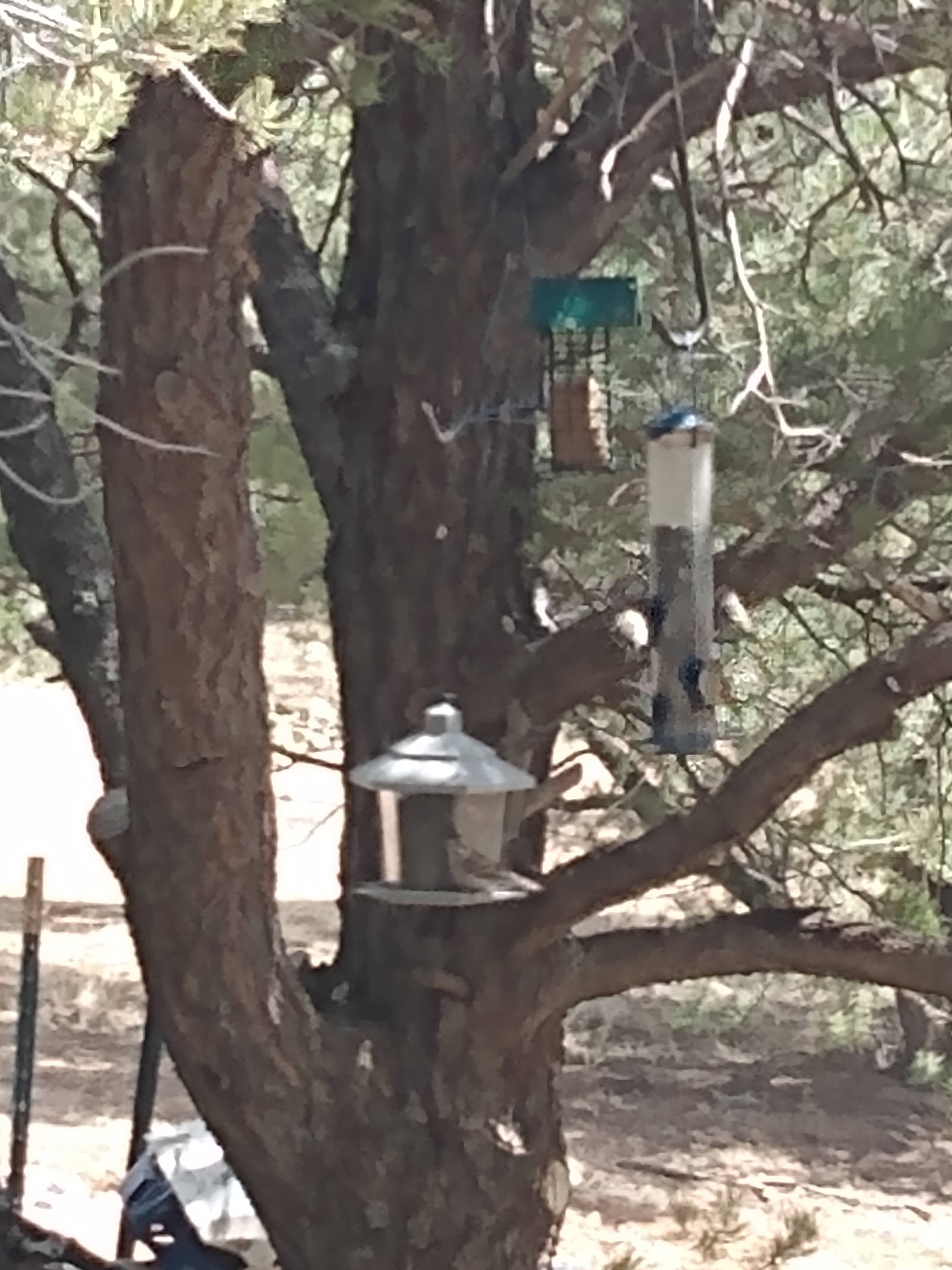

How many birds do you see? When Spring hits and the migrating birds come in, there are birds everywhere you look. The noise level can be quite surprising when you get so many birds all chattering at once. They are on the ground, too, but they all scatter when I come out and I haven’t been able to get that on film, as yet.

The first Robin is a sure sign of Spring. This may be one of last year’s youngsters, returning. I like to think it is the one that came right up to my porch and asked me for food when daddy would bring them out each morning, two years ago, but it’s more likely to be one of its youngsters. Perhaps this one will have a brood of its own this year.

Nuthatch sampling the suet. Nuthatches hang at the sanctuary all year long. I have had multiple families over the years. Last year I had pygmy nuthatches make an appearance, and I’m hoping I will see them again this year. They are smaller, with rufus colored breasts. They are darling.
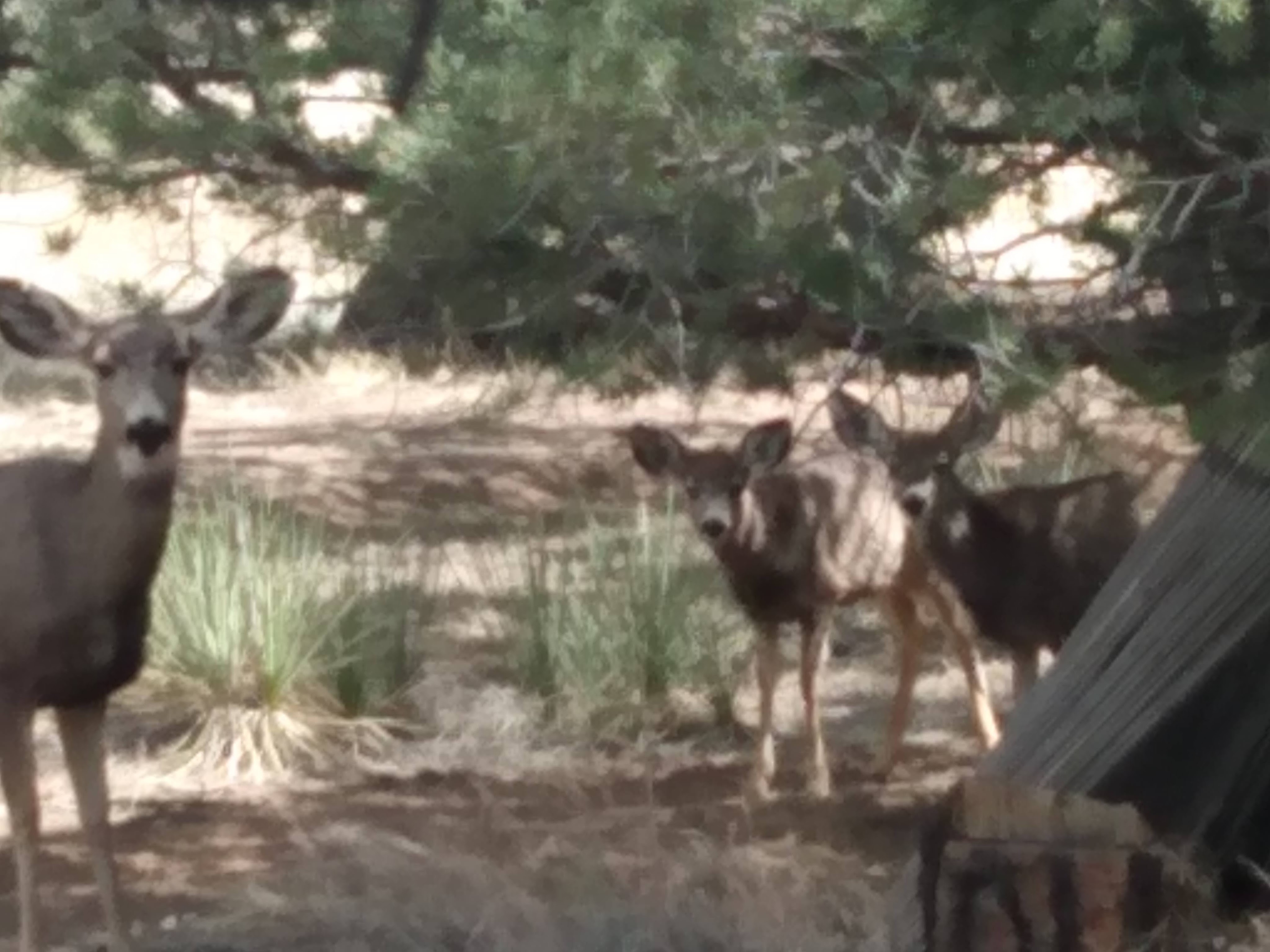
And the birds weren’t the only spring visitors I had this year. The water attracts more than just birds, and so do my little green plants poking up out of the soil. They will be a challenge in my garden all summer. I planted a new raspberry bush which I will have to keep a close eye on. For now though, they’re just after the water, so I’ll have to refill the bird baths when they go.
____________________________________________________________________
For Kaye Lynne Booth, writing is a passion. Kaye Lynne is an author with published short fiction and poetry, both online and in print, including her short story collection, Last Call and Other Short Fiction; and her paranormal mystery novella, Hidden Secrets; and book 1 of her Women in the West adventure series, Delilah. Kaye holds a dual M.F.A. degree in Creative Writing with emphasis in genre fiction and screenwriting, and an M.A. in publishing. Kaye Lynne is the founder of WordCrafter Quality Writing & Author Services and WordCrafter Press. She also maintains an authors’ blog and website, Writing to be Read, where she publishes content of interest in the literary world.
_______________________________________________________________________
Want exclusive content? Join Kaye Lynne Booth & WordCrafter Press Readers’ Group for WordCrafter Press book & event news, including the awesome releases of author Kaye Lynne Booth. She won’t flood your inbox, she NEVER sells her list, and you might get a freebie occasionally. Get a free digital copy of her short story collection, Last Call and Other Short Fiction, just for joining.
Share this:

Final Stop on the WordCrafter “Poetry Treasures 3: Passions” Book Blog Tour
Posted: April 22, 2023 Filed under: Anthology, Blog Tour, Book Promotion, Book Release, Books, Giveaways, Poetry, Poetry Readings, WordCrafter Book Blog Tours | Tags: Judy Mastrangelo, Poetrhy Readings, Poetry, Poetry Treasures 3: Passions, WordCrafter Book Blog Tours, WordCrafter Press, Yvette Prior 47 Comments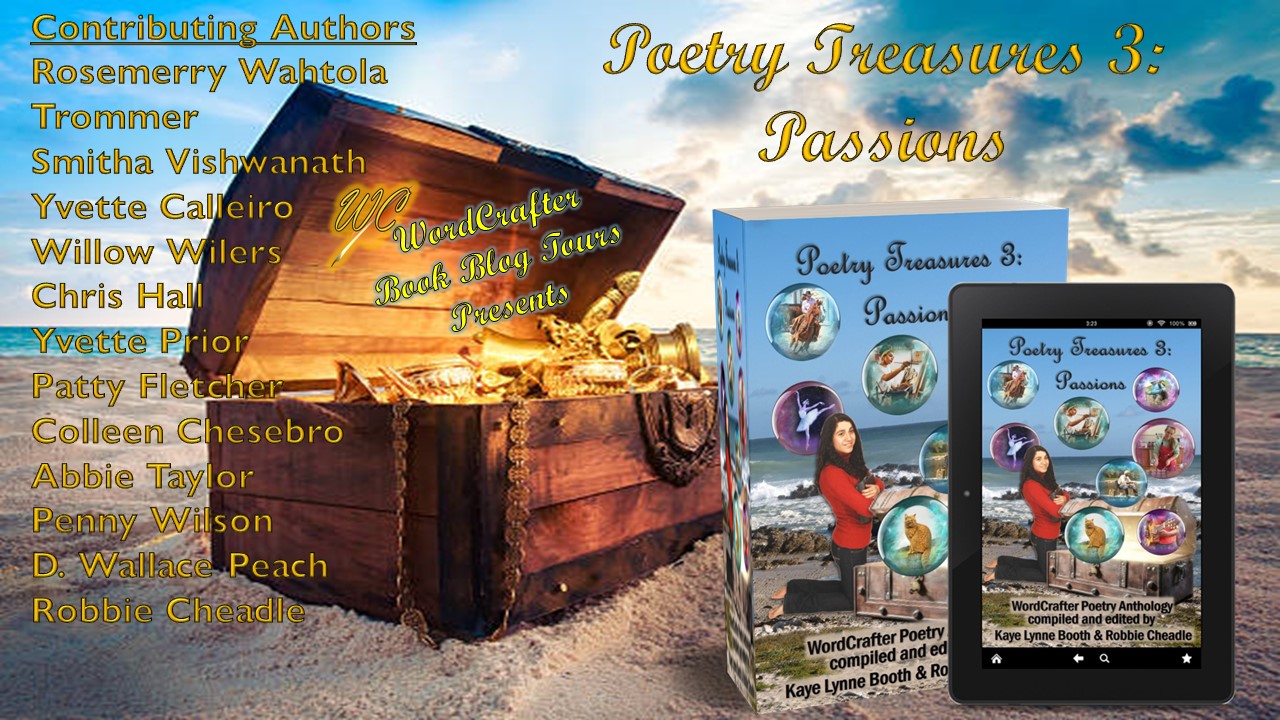
This is the final stop in the WordCrafter Poetry Treasures 3: Passions Book Blog Tour. We’ve had a fantastic tour, with opportunities to hear from almost every contributor to the anthology. Every stop featured at two poets, sharing their works, which offers a nice taste of what you can expect in the anthology.
We’re also running a great giveaway for three digital copies of Poetry Treasures 3: Passions. You can find a schedule with links to each stop at the end of this post, if you missed a stop, so be sure to visit each one and leave a comment for additional entries in the giveaway.
Giveaway
Comment and let us know you were there, and get a chance to win a copy of Poetry Treasures 3: Passions in the digital format of your choice.Follow the tour and leave your comments along the way. One entry per stop.
Today’s Stop
On this tour stop we’ll hear poetry readings by two of the contributing authors to the anthology, Poetry Treasures 3: Passions, Judy Mastrangelo and Yvette Prior.
Meet Judy Mastrangelo
Judy Mastrangelo is a talented artist and poet, who has published several illustrated children’s books and two decks of Oracle cards. I first met her when I reviewed both her book, , and her Oracle cards, and I recently reviewed her Oracle cards, as well. Her illustrations are always bright and colorful. She does absolutely amazing nature and fantasy paintings. And in Poetry Treasures 3: Passions, she demonstrates her poetic talents, which are equally amazing.
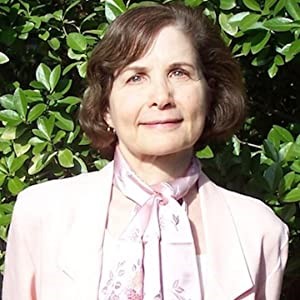
Judy Mastrangelo has written and illustrated several books, which include themes of Poetry, Fairytales, and Fairies. She follows in the tradition of “The Art of the Golden Age of Illustration”. Some of her titles include: a series of four Fairy books: “Portal to the Land of Fae” which include Flower Fairies, Fairy Tale Fairies, Secrets of the Fairies, and Mystical Fairies. Additional books include “What Do Bunnies Do All Day?”, “Enchanted Fairy Tales”, which she illustrated and adapted, “The Star”, illustrating the poem Twinkle, Twinkle Little Star, and her new fairy tale “The Magic Blanket”. Besides creating books, her artwork has been used in several Inspirational Oracle Card Decks, as well as some that she has also written herself. She licenses her artwork for many products, including Art Prints and Wall Murals. Judy has taught Creative Drama and Dance as well as Painting, to Children and Adults, and has directed her own Community Theater for all ages. As part of her work, she enjoys encouraging people to develop their own Imagination and Artistic Talents.
You can visit her at www.judymastrangelo.com
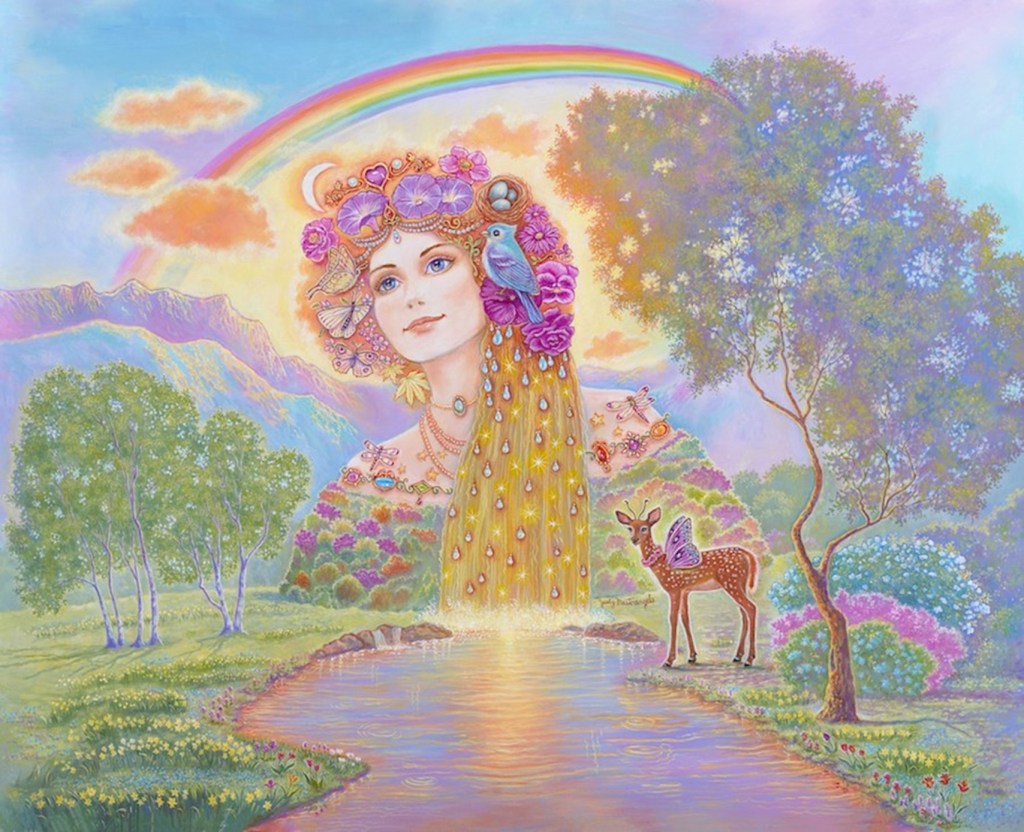
“Gaia’s Love”, by Judy Mastrangelo
Gaia’s Love
Gaia’s Love permeates throughout.
Her deep passion for every water droplet, leaf, flower,
butterfly, frog, and snail, can be seen and felt.
Breath deeply of the Air surrounding her.
She appears out of Purple Sunset, Sunrise Clouds.
She can be seen reflected in ripping waters,
rising from her earthly hills and mountains,
as graceful leaves, rainbows,
and flowers bedeck her.

Meet Yvette Prior
Yvette Prior is another poet whose work was new to me before being introduced on “Treasuring Poetry”, but I quickly saw what a talented poet she is. She took a different approach to the poetry reading than the others and got creative with it. Instead of reading a single poem, she’s reading samples of each of her poems featured in Poetry Treasures 3: Passions, and made a beautiful video to go with it.

Yvette Prior lives on the East Coast of the United States with her spouse, Chris, and together they have three adult children, two grandchildren, and no pets (after having many dogs over the years).
Yvette enjoys working with people and her varied work background includes education, social work, hospitality management, and lots of outreach. Her passion area is studying about health and wellness and after earning a Ph.D. in I-O Psychology, she poured into waiting book projects and she has not stopped writing since.
Her goal as a writer is to educate, edify, and encourage readers. Her personal blog can be found at priorhouse.wordpress.com
About Yvette & Her Poetry
My name is Yvette Prior and I am excited to be a part of the 2023 Treasuring Poetry series, which features the theme of passions for this third volume.
The four poems I submitted for this anthology were created during a very special time in my life – a time of setback in one area and then a time of joyous celebration with a marriage anniversary milestone. I think the energy – from persevering and celebrating – can be felt in each poem.
The first poem, “Dancing with Angst”, explores how setback (and life’s angst) can be embraced (danced with) to cultivate growth and humility. When we yield, it can lead to stability. “Angst is more than only woe. Even though – we are glad to see it go – it can magnify joy, changement to stir up appreciation; you cannot fully know, how dancing with angst helps growth, until you have been cut down, pounded out, unwound.”
The “Quiet Fuel of Passion” poem reminds us that humans are guided by values, which “are always screaming, beneath the scenes, often quiet, and unheard.” This poem is a call for self awareness about what you might be striving for and to make sure it is meaning laden.
The third poem, “We are a Bird, said He” unfolded after a February date night and then led to a fun part of an anniversary celebration; my husband and I celebrated our decades-long union by using metaphor and real-life examples from birds.
Lastly, the “Poetic Sleep” poem unfolded after a night of restlessness, where rhymes were churning in my mind. In the morning, all ideas were gone and this poem is meant to connect with other writers who have sometimes had the flood of ideas come – to then wake and see it all go.
I highly encourage you to get a copy of the Treasuring Poetry 3: Passions anthology, because the diverse and eloquently written poems offer enrichment and delight.
Poetry Excerpts by Yvette Prior
Tour Schedule
Mon. 4/17 – Opening Day – Readings by Rosemerry Wahtola Trommer & Smitha Vishwanath – Writing to be Read
Tues. 4/18 – Guest Post from Colleen Chesebro & Reading by Robbie Cheadle of poem by Chris Hall – Patty’s World
Wed. 4/19 – Readings by D. Wallace Peach & Abbie Taylor – The Many Showers of Blessing
Thurs. 4/20 –Reading by Willow Willers & a Guest Post by Patty Fletcher/Review – Carla Loves to Read
Fri. 4/21 – Readings by Penny Wilson & Yvette Calliero – Robbie’s Inspiration
Sat. 4/22 – Closing Post – Readings by Yvette Prior & Judy Mastrangelo – Writing to be Read
Wrap Up
That wrap things up for both this post and for the WordCrafter Poetry Treasures 3: Passions Book Blog Tour. I hope you’ve enjoyed this stop, and if you’ve missed any stops, you can drop in via the links in the schedule above. Remember, commenting at each stop earns you more entries in the giveaway. Thanks for following along and joining in on the fun. And don’t forget to pick up your copy of Poetry Treasures 3 Passions today!
About PoetryTreasures 3: Passions
Passions treasures within.
Open the cover
and you will discover
the Poetry Treasures
of guests on
Roberta Eaton Cheadle’s
2022 “Treasuring Poetry” blog series
on Writing to be Read.
Included are treasures from:
Patty Fletcher, D. Wallace Peach, Yvette Prior,
Penny Wilson, Colleen M. Chesebro, Abbie Taylor,
Yvette Calliero, , Smitha Vishwaneth,
Chris Hall, Willow Willers, Rosemerry Wahtola Trommer,
and Roberta Eaton Cheadle
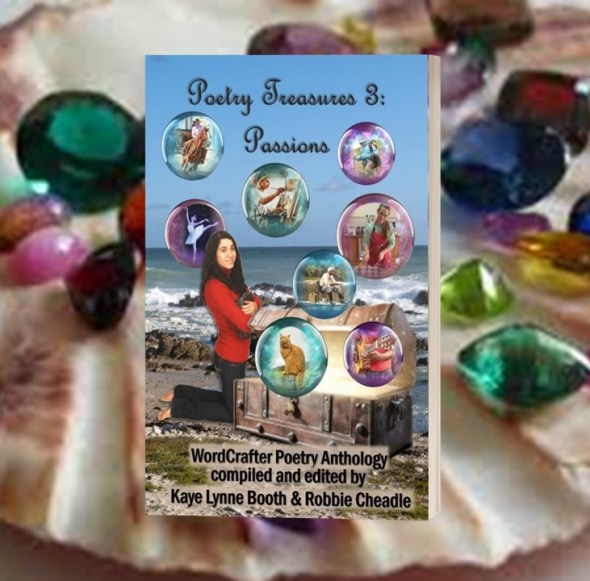
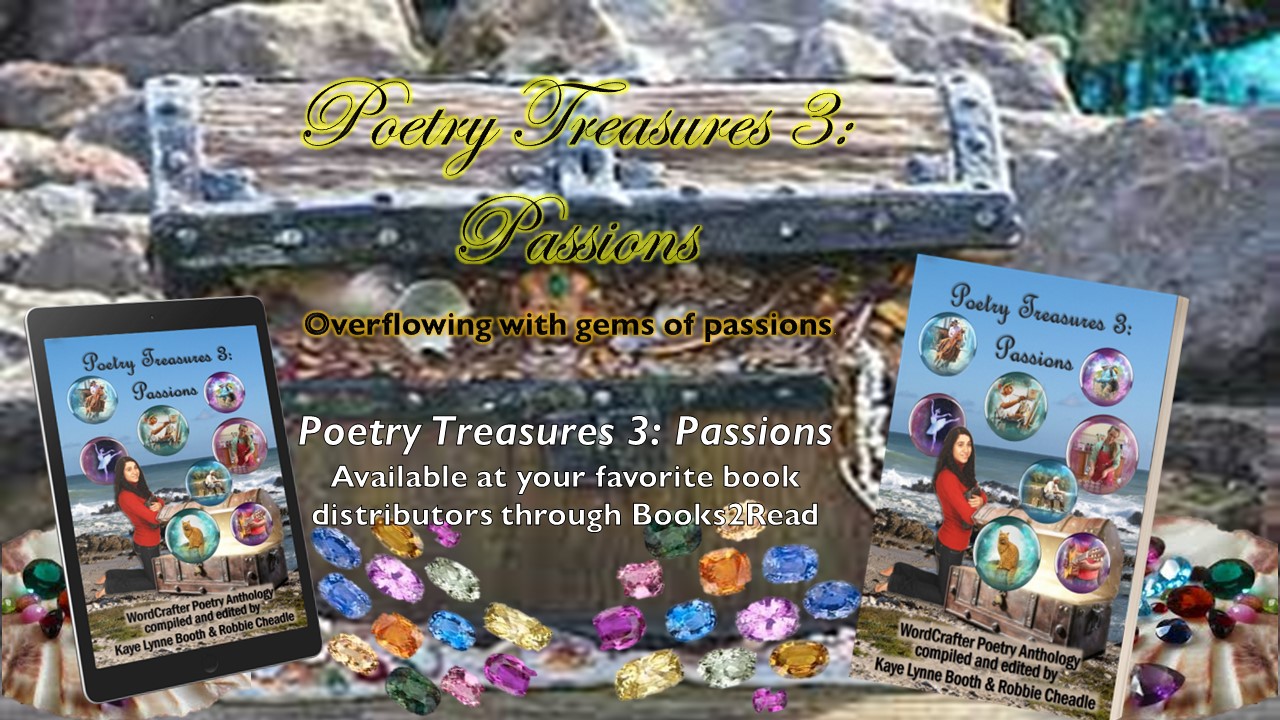
Purchase your copy of Poetry Treasures 3: Passions from your favorite book distributor through Books2Read: https://books2read.com/u/b5qnBR
___________________________________
Book your WordCrafter Book Blog Tour today!
Share this:

Treasuring Poetry – Meet author and poet, Marcia Meara, and a book review #poetry #readingcommunity #TreasuringPoetry
Posted: April 19, 2023 Filed under: Book Review, Books, Interview, Poetry, Review, Treasuring Poetry | Tags: A Boy Named Rabbit, Marcia Meara, Poetry, Robbie Cheadle, Summer Magic, Treasuring Poetry, Writing to be Read 90 Comments
Today, I am delighted to welcome poet and author, Marcia Meara, as my April Treasuring Poetry guest. Marcia is sharing some of her thoughts about poetry and poems and I am sharing my reviews of A Boy Named Rabbit: Wake-Robin Ridge Book 2 and
Why do you write poetry?
I’ve written poetry since I was 5-years old, when I filled legal tablets with page after page of verses about cowboys and horses. (As imagined by a little girl who’d seen a few movies.) I really can’t remember when I didn’t love writing, and poems were what got me started. The rhythm and musicality of poetry is what I love most, and the main reason I still write poems today.
Do you think poetry is still a relevant form of expressing ideas in our modern world? If yes, why?
I think poems are very relevant, indeed. Poetry speaks of beauty and love and hate and danger and betrayal and every other human emotion, need, or failing. Do I think it’s as popular as it once was? No. Nor does it sell as well as novels and other works of fiction. But neither of those has any bearing on the actual relevance of poetry, and the more readers we poets manage to attract, the more likely folks are to understand exactly that.
Which poem by any other poet that you’ve read do you relate to the most and why?
That’s difficult to say, since I’ve been reading poetry for 75 years or so, including most of the greatest ones from poets like Edgar Allan Poe, Emily Dickinson, William Wordsworth, Amy Lowell, Elizabeth Barrett Browning, Robert Browning, Edna St. Vincent Millay, John Keats, Alfred Lord Tennyson, Henry Wadsworth Longfellow, Percy Bysshe Shelley, Walt Whitman, Dylan Thomas, Carl Sandberg, T. S. Eliot, Sara Teasdale, Ogden Nash, and on and on. You get my drift, I’m sure. It’s very hard for me to choose a favorite, but one poem I have always loved and never tire of is Poe’s The Raven. It’s long, I know, but the rhythm is so perfect, and the painful sadness of the subject, so very, very POE.
The Raven
Edgar Allan Poe – 1809-1849
Once upon a midnight dreary, while I pondered, weak and weary,
Over many a quaint and curious volume of forgotten lore—
While I nodded, nearly napping, suddenly there came a tapping,
As of someone gently rapping, rapping at my chamber door—
“Tis some visitor,” I muttered, “tapping at my chamber door—
Only this and nothing more.”
Ah, distinctly I remember it was in the bleak December;
And each separate dying ember wrought its ghost upon the floor.
Eagerly I wished the morrow;—vainly I had sought to borrow
From my books surcease of sorrow—sorrow for the lost Lenore—
For the rare and radiant maiden whom the angels name Lenore—
Nameless here for evermore.
And the silken, sad, uncertain rustling of each purple curtain
Thrilled me—filled me with fantastic terrors never felt before;
So that now, to still the beating of my heart, I stood repeating,
“‘Tis some visitor entreating entrance at my chamber door—
Some late visitor entreating entrance at my chamber door;—
This it is and nothing more.”
Presently my soul grew stronger; hesitating then no longer,
“Sir,” said I, “or Madam, truly your forgiveness I implore;
But the fact is I was napping, and so gently you came rapping,
And so faintly you came tapping, tapping at my chamber door,
That I scarce was sure I heard you”—here I opened wide the door;—
Darkness there and nothing more.
Deep into that darkness peering, long I stood there wondering, fearing,
Doubting, dreaming dreams no mortal ever dared to dream before;
But the silence was unbroken, and the stillness gave no token,
And the only word there spoken was the whispered word, “Lenore?”
This I whispered, and an echo murmured back the word, “Lenore!”—
Merely this and nothing more.
Back into the chamber turning, all my soul within me burning,
Soon again I heard a tapping somewhat louder than before.
“Surely,” said I, “surely that is something at my window lattice;
Let me see, then, what thereat is, and this mystery explore—
Let my heart be still a moment and this mystery explore;—
‘Tis the wind and nothing more!”
Open here I flung the shutter, when, with many a flirt and flutter,
In there stepped a stately Raven of the saintly days of yore;
Not the least obeisance made he; not a minute stopped or stayed he;
But, with mien of lord or lady, perched above my chamber door—
Perched upon a bust of Pallas just above my chamber door—
Perched, and sat, and nothing more.
Then this ebony bird beguiling my sad fancy into smiling,
By the grave and stern decorum of the countenance it wore,
“Though thy crest be shorn and shaven, thou,” I said, “art sure no craven,
Ghastly grim and ancient Raven wandering from the Nightly shore—
Tell me what thy lordly name is on the Night’s Plutonian shore!”
Quoth the Raven “Nevermore.”
Much I marvelled this ungainly fowl to hear discourse so plainly,
Though its answer little meaning—little relevancy bore;
For we cannot help agreeing that no living human being
Ever yet was blest with seeing bird above his chamber door—
Bird or beast upon the sculptured bust above his chamber door,
With such name as “Nevermore.”
But the Raven, sitting lonely on the placid bust, spoke only
That one word, as if his soul in that one word he did outpour.
Nothing further then he uttered—not a feather then he fluttered—
Till I scarcely more than muttered “Other friends have flown before—
On the morrow he will leave me, as my hopes have flown before.”
Then the bird said “Nevermore.”
Startled at the stillness broken by reply so aptly spoken,
“Doubtless,” said I, “what it utters is its only stock and store
Caught from some unhappy master whom unmerciful Disaster
Followed fast and followed faster till his songs one burden bore—
Till the dirges of his Hope that melancholy burden bore
Of ‘Never—nevermore.'”
But the Raven still beguiling my sad fancy into smiling,
Straight I wheeled a cushioned seat in front of bird, and bust and door;
Then, upon the velvet sinking, I betook myself to linking
Fancy unto fancy, thinking what this ominous bird of yore—
What this grim, ungainly, ghastly, gaunt and ominous bird of yore
Meant in croaking “Nevermore.”
This I sat engaged in guessing, but no syllable expressing
To the fowl whose fiery eyes now burned into my bosom’s core;
This and more I sat divining, with my head at ease reclining
On the cushion’s velvet lining that the lamp-light gloated o’er,
But whose velvet violet lining with the lamp-light gloating o’er,
She shall press, ah, nevermore!
Then, methought, the air grew denser, perfumed from an unseen censer
Swung by Seraphim whose foot-falls tinkled on the tufted floor.
“Wretch,” I cried, “thy God hath lent thee—by these angels he hath sent thee
Respite—respite and nepenthe, from thy memories of Lenore;
Quaff, oh quaff this kind nepenthe and forget this lost Lenore!”
Quoth the Raven “Nevermore.”
“Prophet!” said I, “thing of evil!—prophet still, if bird or devil!—
Whether Tempter sent, or whether tempest tossed thee here ashore,
Desolate yet all undaunted, on this desert land enchanted—
On this home by Horror haunted—tell me truly, I implore—
Is there—is there balm in Gilead?—tell me—tell me, I implore!”
Quoth the Raven “Nevermore.”
“Prophet!” said I, “thing of evil—prophet still, if bird or devil!
By that Heaven that bends above us—by that God we both adore—
Tell this soul with sorrow laden if, within the distant Aidenn,
It shall clasp a sainted maiden whom the angels name Lenore—
Clasp a rare and radiant maiden whom the angels name Lenore.”
Quoth the Raven “Nevermore.”
“Be that word our sign in parting, bird or fiend!” I shrieked, upstarting—
“Get thee back into the tempest and the Night’s Plutonian shore!
Leave no black plume as a token of that lie thy soul hath spoken!
Leave my loneliness unbroken!—quit the bust above my door!
Take thy beak from out my heart, and take thy form from off my door!”
Quoth the Raven “Nevermore.”
And the Raven, never flitting, still is sitting, still is sitting
On the pallid bust of Pallas just above my chamber door;
And his eyes have all the seeming of a demon’s that is dreaming,
And the lamp-light o’er him streaming throws his shadow on the floor;
And my soul from out that shadow that lies floating on the floor
Shall be lifted—nevermore!
Which of your own poems is your favourite and why?
I could say whichever one I’m writing at the time, but that wouldn’t be fair. Nor likely true, either, though I do think each one is a favorite at least during the moments of creation. However, instead of going that route, I’m going to choose the poem which most depicts large portions of my own life, spent canoeing on the wild and scenic rivers and creeks of Central Florida. Fittingly, it’s called On the River, and is included in my book, Summer Magic: Poems of Life & Love.
An extract from On The River by Marcia Meara
“Crystal green flows beneath me,
Leafy arches rise above,
Dip, glide.
Dip, glide.
Slide.
Duckweed parts as I float by.
I wonder where they went,
Those ducks?
Gone overnight, it seems.
Another parting, another loss,
And I slide by,
Under all that green.
Dip, glide.
Dip, glide.
Just there, in deepest shade,
Sleeping emeralds cling.
Tree frogs rest in their
Smooth, damp skins,
Waiting for the sliver moon.
They’ll open their eyes for the silver moon.
Sleeping now,
I pass him, too.
And on I go.
Dip, glide.
Dip, glide.”
Is writing poetry easy for you compared to prose or do you do a lot of editing and revision of your poems?
Oddly enough, I seldom do much, if any, editing on my poetry. When I’m “in the zone” the words I want seem to come to me, sometimes surprising me by fitting together exactly the way I like. This is definitely not true when I’m writing prose. Then, I spend a lot of time cleaning up, tweaking, and cutting before sending it off to an editor for more of the same. With poetry, if I’m in the mood, the words seem to flow much more smoothly and easily.
What mode (blog, books, YouTube, podcasts) do you find the most effective for sharing your poems with poetry lovers and readers?
I’ve actually never done any real marketing with my work, be it poetry or prose, and that’s something I do hope to change soon. But all I did with my book of poetry was publish it on Amazon and share poems now and then on my blog, The Write Stuff. NOTE: This is NOT how I would recommend new writers get the word out, no matter what their genre or style might be!
My review of Summer Magic: Poems of Life and Love by Marcia Meara

This book comprises the most beautiful freestyle poetry by Marcia Meara. The poetry is divided into two sections, the first is about the magic of life as experienced by a ten year old boy and the second is about love.
I loved both sections of the book but the poems about the joys and experiences of a ten year old boy were particularly poignant and meaningful for me as I have two sons who were ten years old in the not that distant past.
The two poems in this section that I enjoyed the most are, firstly, The Rope Swing which depicts the freedom and joy of swinging on a hot summer day. The depiction of a young boy of ten is very accurate and brings back lovely memories for me.
My second favourite poem is entitled Moccasins and describes the lovely and understanding relationship moms have with their sons.
The Rope Swing
The first stanza goes as follows:
“Sailing up, up into
Blue summer sky,
Hot rope rough against his hands,
He shouts with joy, and lets go.
For a crystal moment,
He hangs suspended,
Frozen in time
Like a fly in amber.”
Moccasins
“His dad smiles.
Moms are like that, Mac.
Moms always know what
Their children want most.
And Moms always want
Their children to have their
Heart’s desires.”
The poem I enjoyed the most in part two of the book describes the beauty of young love and the joy of watching small children play and develop.
The Sound of Dreams Coming True
“Listen, she says,
Kissing his fingers,
As a little girl laughs,
Chasing butterflies
With her big brother.”
Purchase Summer Magic: Poems of Life and Love by Marcia Meara here: https://www.amazon.com/Summer-Magic-Poems-Life-Love-ebook/dp/B00FNBLIPC
My review of A Boy Named Rabbit: Wake-Robin Ridge Book 2 by Marcia Meara
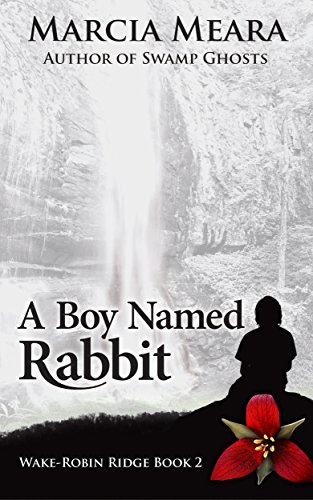
Sarah Gray and MacKenzie Cole from book 1, Wake-Robin Ridge, are now married and living in Mac’s lovely home built near the top of the mountain. Sarah is pregnant with their first child and Mac is happy and managing to keep his deep anxiety following the deaths of his ex-wife and son, Ben, under control. Mac’s emotional state is still delicate and he is desperately determined to keep his wife and their baby safe.
Ten-year old Rabbit has grown up in the mountains under the guidance and care of his grandparents who have taught him survival skills. The trios lifestyle is rough and ready with Gran living in a makeshift tent and the young boy and his grandpa generally sleeping outdoors in all weathers. At Grandpa’s insistence, the family has nothing to do with any people who are all designated as ‘bad people’ by Grandpa.
Gran has a progressive lung illness and Grandpa leaves his wife and Rabbit on their own one morning to travel into town and purchase medicine for her. He never returns. Gran continues to decline and, knowing she is dying, tells Rabbit that all people are not bad. She explains that contrary to Grandpa’s comments, there are also good people and Rabbit needs to find the good people, in particular, a man with winter blue eyes and hair like a crow’s wing. Gran dies and Rabbit is left on his own in the wilderness. With no other option, Rabbit packs up his belongings and sets off to find the man with the winter blue eyes.
Rabbit is well depicted as an old soul with a high intelligence despite his lack of book learning. His upbringing has provided him with survival tools and also the ability to assess situations and react in a clear headed and calm way. He is very endearing to the reader with his interesting way of looking at situations while still retaining the need for love and emotional immaturity of a young boy. He is very loving and giving and the reader can’t help routing for a good outcome for Rabbit.
Mac’s character continues to grow in this second book as he is faced with having to face up to his fears and deal with unexpected and unplanned events and circumstances despite his fears and anxieties. It is an intriguing journey to watch Mac struggling internally to move forward despite his anxiety and it is impossible not to be delighted by his progress and small victories.
Sarah is even more generous and loving than I remembered from book 1, and is the perfect wife to Mac. It is obvious she has a huge heart which is big enough for Mac, her unborn child, and Rabbit.
As with all lives, especially in fiction, the trio are faced with adversity and obstacles which they need to try to overcome. The storyline is engaging and entertaining and brings out the best in the various characters.
Purchase A Boy Named Rabbit here: https://www.amazon.com/Boy-Named-Rabbit-Wake-Robin-Ridge-ebook/dp/B00SQ4PID6
About Marcia Meara
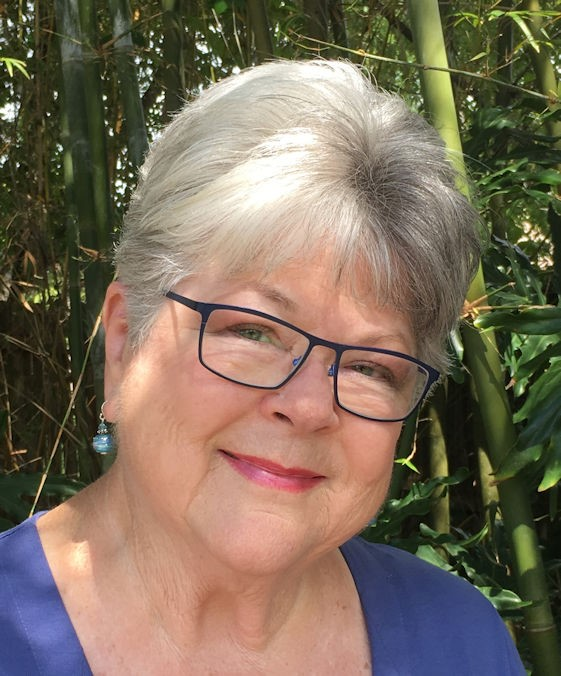
Marcia Meara lives in central Florida, just north of Orlando, with her husband of over thirty years and four big cats.
When not writing or blogging, she spends her time gardening, and enjoying the surprising amount of wildlife that manages to make a home in her suburban yard. She enjoys nature. Really, really enjoys it. All of it! Well, almost all of it, anyway. From birds, to furry critters, to her very favorites, snakes. The exception would be spiders, which she truly loathes, convinced that anything with eight hairy legs is surely up to no good. She does not, however, kill spiders anymore, since she knows they have their place in the world. Besides, her husband now handles her Arachnid Catch and Release Program, and she’s good with that.
Spiders aside, the one thing Marcia would like to tell each of her readers is that it’s never too late to make your dreams come true. If, at the age of 69, she could write and publish a book (and thus fulfill 64 years of longing to do that very thing), you can make your own dreams a reality, too. Go for it! What have you got to lose?
Purchase Marcia Meara’s books
Novels
Wake-Robin Ridge: Book 1
A Boy Named Rabbit: Wake-Robin Ridge Book 2
Harbinger: Wake-Robin Ridge Book 3
The Light: Wake-Robin Ridge Book 4
Swamp Ghosts: Riverbend Book 1
Finding Hunter: Riverbend Book 2
That Darkest Place: Riverbend Book 3
Riverbend Spinoff Novellas
The Emissary 1
The Emissary 2 – To Love Somebody
The Emissary 3 – Love Hurts
Poetry
Summer Magic: Poems of Life and Love
Reach Marcia on Social Media Here:
Blog: The Write Stuff
Facebook
Email: marciameara16[at]gmail[dot]com
About Robbie Cheadle
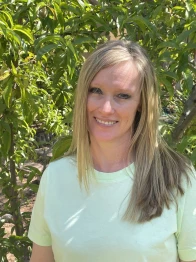
Award-winning, bestselling author, Robbie Cheadle, has published thirteen children’s book and two poetry books. Her work has also appeared in poetry and short story anthologies.
Robbie also has two novels published under the name of Roberta Eaton Cheadle and has horror, paranormal, and fantasy short stories featured in several anthologies under this name.
The ten Sir Chocolate children’s picture books, co-authored by Robbie and Michael Cheadle, are written in sweet, short rhymes which are easy for young children to follow and are illustrated with pictures of delicious cakes and cake decorations. Each book also includes simple recipes or biscuit art directions which children can make under adult supervision.
Robbie’s blog includes recipes, fondant and cake artwork, poetry, and book reviews. https://robbiesinspiration.wordpress.com/
Share this:

Welcome to the WordCrafter “Poetry Treasures 3: Passions” Book Blog Tour
Posted: April 17, 2023 Filed under: Anthology, Book Release, Books, Poetry, Poetry Readings, WordCrafter Press | Tags: Kaye Lynne Booth, Passions, Poetry, Poetry Anthology, Poetry Treasures 3: Passions, Robbie Cheadle, Rosemerry Wahtola Trommer, Smitha Vishwaneth, WordCrafter Press 90 CommentsWelcome to the WordCrafter Poetry Treasures 3: Passions Book Blog Tour! This is a very special tour, because at each stop, you will meet not one, but two of the contributing poets of the anthology. We’ve got a great tour planned with readings and inspiration posts from the authors, and book reviews. (Scroll down for the tour schedule with links, but be aware that the links won’t function until each post goes live.)Plus we have a great giveaway, so follow the tour to meet the contributing authors and additional chances to win a digital copy of Poetry Treasures 3: Passions!
Giveaway
Comment and let us know you were there, and get a chance to win a copy of Poetry Treasures 3: Passions in the digital format of your choice.Follow the tour and leave your comments along the way. One entry per stop.
About Poetry Treasures 3: Passions
Passions treasures within.
Open the cover
and you will discover
the Poetry Treasures
of guests on
Roberta Eaton Cheadle’s
2022 “Treasuring Poetry” blog series
on Writing to be Read.
Included are treasures from:
Patty Fletcher, D. Wallace Peach, Yvette Prior,
Penny Wilson, Colleen M. Chesebro, Abbie Taylor,
Yvette Calliero, Smitha Vishwaneth,
Chris Hall, Willow Willers, Rosemerry Wahtola Trommer,
and Roberta Eaton Cheadle

Purchase Poetry Treasures 3: Passions from your favorite distributor through Books2Read
Today’s Stop
On today’s stop, we have video readings from Rosemerry Wahtola Trommer and Smitha Vishwanath. Rosemerry is sharing a reading of her poem, “Twenty Years Ago, Ten Years Ago, Last Week”, and Smitha is sharing a reading of her poem, ” “. Both of these lovely poems are featured in Poetry Treasures 3: Passions.
Meet Rosemerry Wahtola Trommer
Today’s stop features a peotry reading by contributing Rosemerry Wahtola Trommer, which is a real treat. Rosemerry is a performance poet, and I was privileged to attend one of her live performances back in 2010. She was spectacular. The way she draws you into the poem and makes you feel her words is amazing. Rosemerry is a wonderful, vibrant lady, who embraces the written word as if it were a lover, caressing and shaping it into what she needs it to be. I had the pleasure of featuring an interview with her, right here on Writing to be Read. That’s why I asked Robbie to invite her to be a guest on “Treasuring Poetry”, and why I am so pleased to have her work featured in this WordCrafter anthology. It is a privilege and an honor to work with her. I hope you will enjoy this reading as much as I have.
Rosemerry Wahtola Trommer co-hosts Emerging Form (a podcast on creative process), Secret Agents of Change (a surreptitious kindness cabal) and Soul Writer’s Circle. Her poetry has appeared on A Prairie Home Companion, PBS News Hour, O Magazine, American Life in Poetry, onCarnegie Hall stage, and on river rocks she leaves around town. Her collection Hush won the Halcyon Prize. Naked for Tea was a finalist for the Able Muse Book Award. Her most recent collection is All the Honey. Her daily audio series, The Poetic Path, can be found on the Ritual app, her daily poetry practice can be read on her blog, A Hundred Falling Veils, and her book of mindfulness poetry prompts is Exploring Poetry of Presence II. One-word mantra: Adjust.

Twenty Years Ago, Ten Years Ago, Last Week
If I could go back in time
and offer advice to my younger self,
I wouldn’t.
I would let her fail all over again.
I’d let her falter. I’d let her lose.
I’d let her stumble
and struggle and bomb.
But I would lean in close
and let her know
I am deeply in love with her.
It’s so easy now to give her this,
this self-compassion in full bloom,
this thing she believed
was impossible.
Reading of “Twenty Years Ago, Ten Years Ago, Last Week”

Meet Smitha Vishwanath
I first met Smitha Viswaneth through her interview with Robbie Cheadle on the “Treasuring Poetry” blog series, right here, on Writing to be Read, so I can’t say that I know her well, but I’ve been learning a lot about her. Smitha is an award winning poet of a National Poetry Month Challenge two years in a row, and she’s been nominated poet of the month several times on Spillword. She has poetry published in several online publications, and her debut novel, Coming Home, just came out last month.

Smitha Vishwanath is your quintessential ‘bored banker’ turned writer. After a rewarding career in Banking in the Middle East where she worked for leading banks in senior positions, she quit and moved to India in July 2018 with her husband who had been transferred to the country on an international assignment. Thereon she began her writing journey.
‘Roads’ is the first book she has co-authored. Having lived and studied in different countries and different states within India and worked with different cultures, Smitha understands that ‘change’ and ‘ups and downs’ are very much a part of life. It is this experience that reflects in her poems and her writing which are filled with positivity, acceptance and willingness to change for the better.
She also writes regularly through her blog: https://lifeateacher.wordpress.com
A child called, ‘Passion’
A child called, Passion,
I met him on my walk, one day
and asked him to come home.
He replied, ‘On one condition-
only if you give me your undivided attention.’
‘How difficult could that be? aloud, I wondered,
I raised a family with children- two!’
Smiling impishly, he said ‘Not much, if you surrendered.”
I laughed at his presumptuousness
Little knowing how true to his words he’d be.
The moment, Passion, walked in through my door
He obscured the rest of the world from sight
and kept me waking into the night
He pranced around all day-tireless, and unbound.
It made me loathe the day, him, I found.
Passion was a stubborn child
demanding complete allegiance.
His appetite was unappeased,
his thirst unquenched;
he made no allowance!
A ruthless master, a sorcerer
He turned me into a willing slave.
I fulfilled his every bidding;
the years went by, I couldn’t tell
and the children flew before I knew.
But, Passion, he stayed behind.
I grew old, and he grew kind.
Passion, that stubborn child
remained wilful until the end
and refused to leave,
even though my body was hard to mend.
He nourished my body and fed my soul
And made me feel as good as whole.
Passion, that stubborn child, simply would not let go;
no doctor could understand that child’s miraculous cure.
So, if you ever cross paths with a child called, ‘Passion.’
Hold onto him with a firm hand
Even if you must endure.
Lug around for a while if you must-
but don’t ever let go.
For when all the others leave-
He will be standing by your side
For, Passion, is a stubborn child
and loyal as can be
Let nobody tell you otherwise.
Reading of “A Child Called ‘Passion'”
Wrap Up
That’s it for the first stop on the WordCrafter Poetry Treasures 3: Passions Book Blog Tour. I hope you’ve enjoyed meeting Rosemerry and Smitha and the samples of their works. As an extra added treat, you can catch an interview with Robbie Cheadle and I on the Word Craft Poetry site with Colleen Chesebro, which happens to coincide with our opening day. So, after you’ve met our two poets, Rosemerry and Smitha, you might click on the link above to pop in and check that interview about the anthology, too.
A raving five-star review of Poetry Treasures 3: Passions on Goodreads.
Raving Revue
“…It’s an eclectic collection and a fabulous way to discover new poets to read. Expect varying interpretations of poetic passions. Not all are amorous! Some are thoughtful, personal to the author, (the author’s interests, experiences and loves,) and many have deep insight into human trials and tribulations…”
M.J. Mallon
You can find the full review here: https://www.goodreads.com/book/show/128125978-poetry-treasures-3#CommunityReviews
Follow the tour to meet other contributing authors and for more chances to enter the giveaway. The links in the schedule below won’t work until each post goes live. Tomorrow we will be over at Patty’s World with Patty Fletcher with a guest post from Contributing author, Colleen Chesebro and a reading by Robbie Cheadle of contributing author, Chris Hall’s poem, ” What Will Become of Us?”, so don’t miss it. I hope to see you there.
Tour schedule 4/17 – 4/21
Monday – Opening Day – Readings by Rosemerry Wahtola Trommer & Smitha Vishwanath – Writing to be Read
Tuesday – Guest Post from Colleen Chesebro & Reading by Robbie Cheadle of poem by Chris Hall – Patty’s Worlds
Wednesday – Readings by D. Wallace Peach & Abbie Taylor – The Many Showers of Blessing
Thursday –Reading by Willow Willers & a Guest Post by Patty Fletcher/Review – Carla Loves to Read
Friday – Readings by Penny Wilson & Yvette Calliero – Robbie’s Inspiration
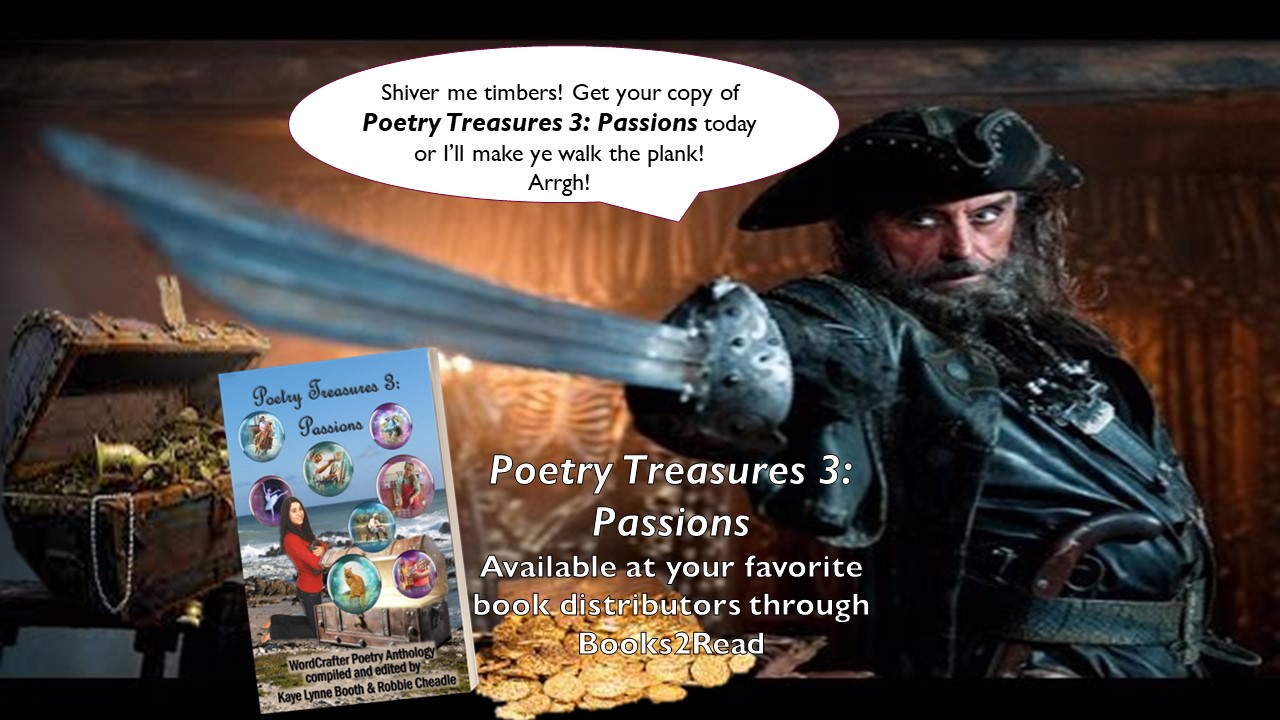
Saturday – Closing Post – Reading by Yvette Prior & Guest Post by Judy Mastrangelo – Writing to be Read
__________________________________________________
Book your WordCrafter Book Blog Tour today!
Share this:

Writer’s Corner: Revisiting Poetry – A Look Back
Posted: April 3, 2023 Filed under: Books, Collection, Poetry, Women's Fiction and Poetry, word play, WordCrafter Press, Writing | Tags: Kaye Lynne Booth, Poetry, Poetry Collection, Writer's Corner, Writing to be Read 7 Comments
It All Started with Poetry
When I first started writing, I wrote poetry. In fact, my first sale of my writing, back in 1996, was for a poem. I wrote on a manual typewriter and submitted via snail mail, (I know. I’m dating myself terribly.). My poem, “A Prayer for Guidance” was published in a small poetry magazine called Dusk & Dawn, which is no longer in publication, and I made a whole $5 from it, but boy, was I ever proud of that sale.
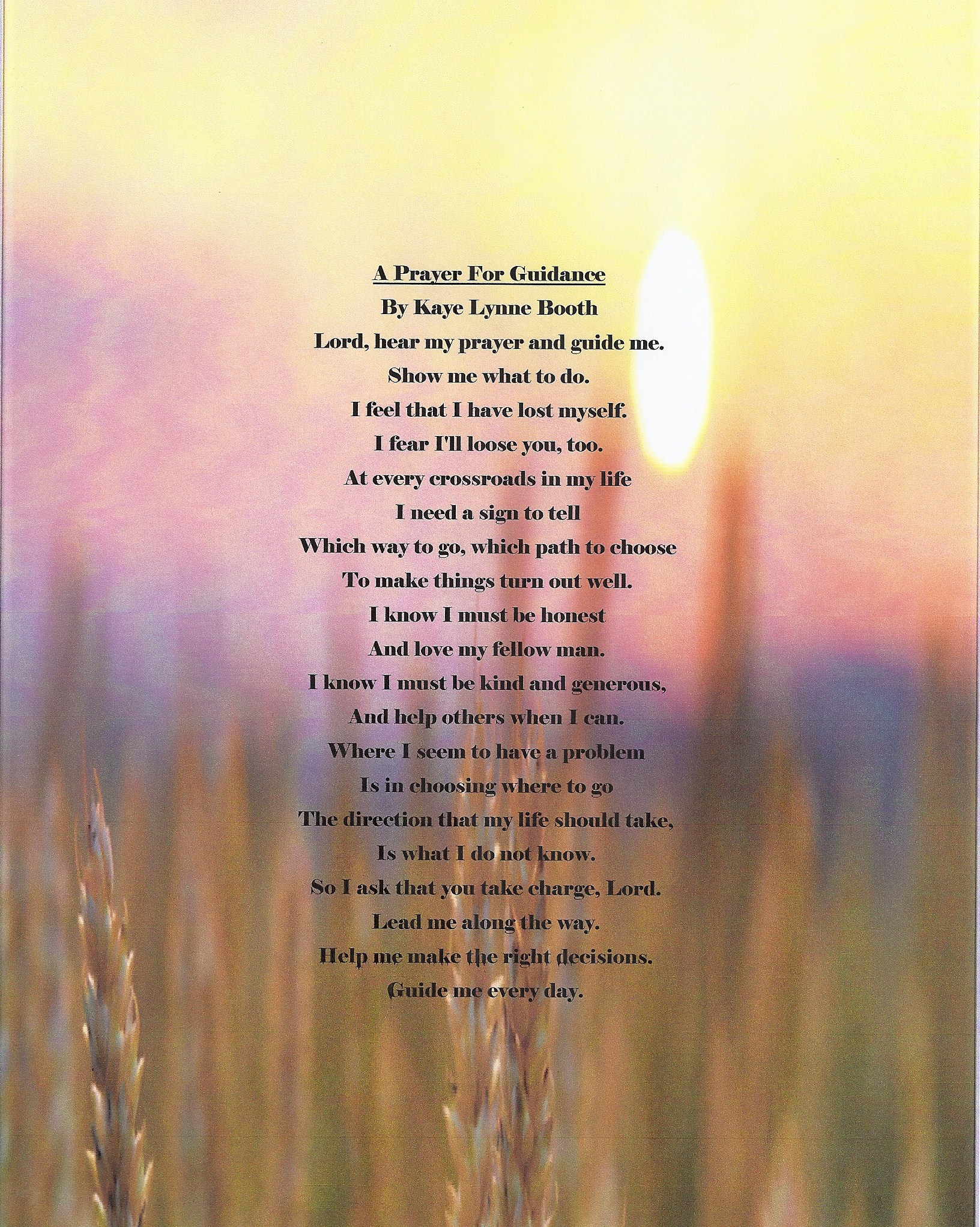
I put my poetry on backgrounds, like the one above for my very first writing event. It was a local event that a friend saw advertised in the paper and said, “You should see if you can get a table. I called and got a table at the event, then realized I had nothing to offer at my table. I hadn’t yet published a book or anything, so I printed up my poetry on backgrounds , which I sold at my table for $5 a piece, and made almost $100.
For that event, I had a poem called “Voices” about the different voices that speak in my head, and as I was searching for backgrounds, I came across a painting of the same title, that I knew was the perfect background for this poem. So I poked around on the internet until I found a way to contact the artist, Mitchell Barret, and sent him an email, requesting to use his painting as my background. I was more than surprised when I recieved a phone call from him all the way from England. You must understand that this was right at the beginning of the internet era, and I still had a land line with long distance charges, so a call from another contentent was a pretty big deal to me, and I absolutely adored his English accent, although I had to ask him to repeat himself a couple of times during the call. He gave me permission to use his painting for the writing fair, and we conversed for a while, sparking up a friendship that was one of my first internet networking experiences.

Poetry & Art
In a later contact, Mitch said he was working on a series of paintings and he would like to include some poetry with them. He sent me the sketches for the paintings, and I wrote a poem for him. “Intimacy and the Harliquin Dance”. To my knowledge only one of those paintings ever came to fruition, but he did use a portion of my poem in his painting, which he titled “Intimacy”. The painting was on display and was sold at the Keliedescope Gallery, in Battle Sea Park, London in 2010.

After Michael
When my son died in 2009, I wrote poetry almost constantly. When I wasn’t physically putting words to page, I was putting my feelings to verse in my head. I wrote enough poetry about Michael and my loss of him to fill a chapbook. It was my way of processing my grief, I think. I don’t know if any of it was really good, but I felt it to be some of the most powerful writing I’d ever done.
Most of my poetry was rhyming, and by this point, I had taking some creative writing courses, where my poetry professor informed me ryhming poetry was no longer in vogue. Because of the rhyming, sing-song style of my poetry, it was evaluated by one critic as childish. And perhaps it is a bit childish. Rhyming poetry is fun to write. I’m a big fan of Sid Shelden and Dr. Suess, after all.
When I enrolled at Western State Colorado Unversity to earn my M.F.A. in Creative Writing, my focus shifted away from poetry and I began writing fiction, which has taken up my energies ever since, but I’ve never lost my love for poetry. I still submitted poetry here and there, even getting a few published in magazines such as Colorado Life Magazine, and anthologies such as Manifest West #5: Serenity and Severity. I just wasn’t writing anything new in the poetry realm.
Renewed Interest
A couple of years ago, I came across a book by Colleen Chesebro, WordCraft Prose & Poetry: The Art of Crafting Syllabic Poetry, which delves into the art of syllabic poetry. I couldn’t read this book without dabbling with the different forms myself, reviving my love for poetry all over again. (See my “Review in Practice” of WordCraft Prose & Poetry here.) And I used my newfound poetry skills to answer a creative challenge posed on the blog of Teagan Riordan Geneviene with a Shadorma poem with an image.

Now that my M.A. in publishing is completed, I find a have more time in which to ponder the words which I place on the page, and play with poetry. For that is what poetry ultimately is – play with words. I don’t mean that it shouldn’t be taken seriously, but that creating with words, no matter the form it takes, should be fun and satisfying for the creator, and poetry offers a wider license for this than do other forms of writing. This is known over at Colleen M. Chesebro’s WordCraft Poetry blog, where every Tuesday brings a #TankaTuesday challenge involving syllabic poetry, introducing readers with all kinds of new poetic forms. And so, I’ve been revisiting poetry once again, playing with sllybic poetry and rhymes. (I still love rhyming poetry, even if it is out of fashion.)
A New Poetry Collection on the Horizon
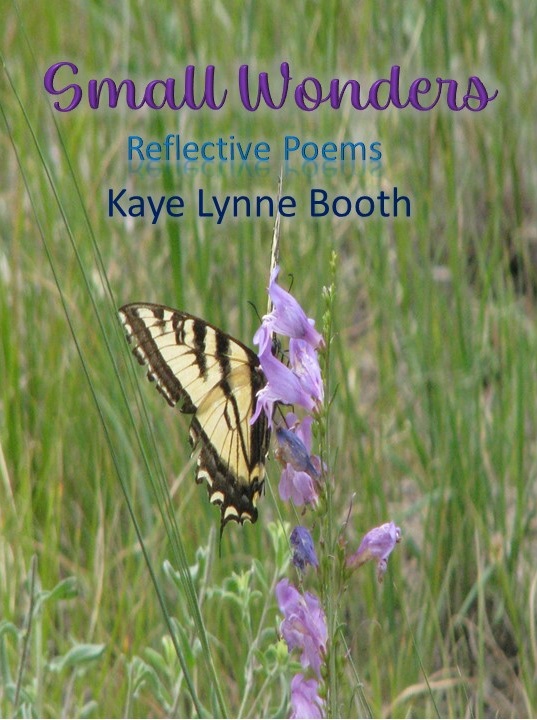
As I look through the poetry I’ve done in the past, I’m finding a plethora of poetry that needs to be shared. So, in addition to the two novels, and two anthologies which I had planned to publish through WordCrafter Press in 2023, I’m going to publish my first collection of poetry, some old, some new; some rhyming, some syllibic, and maybe even some freestyle to be included. It will take me down an old road to go through the poetry already written, and over a new road to experiment with forms of poetry both new and old, and the process of compiling the collection will be fun. Heck, it may even get me an invitation to be a guest on “Treasuring Poetry” with Robbie Cheadle.
To me, poetry is word play at its finest. What does poetry mean to you?
____________________________________________________________
Poetry Treasures 3: Passions in April
April is National Poetry Month here in the U.S., so it is fitting that the release of the annual Poetry Treasures anthology, from WordCrafter Press comes sometime in April each year. This year’s volume will be Poetry Treasures 3: Passions. It will be released on April 18, 2023, and is available now for preorder.
Preorder Link: https://books2read.com/u/b5qnBR

Passions treasures within.
Open the cover
and you will discover
the Poetry Treasures
of guests on
Roberta Eaton Cheadle’s
2022 “Treasuring Poetry” blog series
on Writing to be Read.
Included are treasures from:
Patty Fletcher, D. Wallace Peach, Yvette Prior,
Penny Wilson, Colleen M. Chesebro, Abbie Taylor,
Yvette Calliero, , Smitha Vishwaneth,
Chris Hall, Willow Willers, Rosemerry Wahtola Trommer,
and Roberta Eaton Cheadle
_______________________________________________________

For Kaye Lynne Booth, writing is a passion. Kaye Lynne is an author with published short fiction and poetry, both online and in print, including her short story collection, Last Call and Other Short Fiction; and her paranormal mystery novella, Hidden Secrets. Kaye holds a dual M.F.A. degree in Creative Writing with emphasis in genre fiction and screenwriting, and an M.A. in publishing. Kaye Lynne is the founder of WordCrafter Quality Writing & Author Services and WordCrafter Press. She also maintains an authors’ blog and website, Writing to be Read, where she publishes content of interest in the literary world.
___________________________________________________________
Want exclusive content? Join Kaye Lynne Booth & WordCrafter Press Readers’ Group for WordCrafter Press book & event news, including the awesome releases of author Kaye Lynne Booth. She won’t flood your inbox, she NEVER will sells her list, and you might get a freebie occasionally. Get a free digital copy of her short story collection, Last Call and Other Short Fiction, just for joining.
Share this:

Celebrate National Poetry Month with WordCrafter Press: New Release!
Posted: April 2, 2023 Filed under: Anthology, Book Promotion, Book Release, Books, Poetry, WordCrafter Press | Tags: Abbie Taylor, Chris Hall, Colleen Chesebro, D. Wallace Peach, Judy Mastrangelo, Kaye Lynne Booth, Patty Fletcher, Penny Wilson, Poetry, Poetry Treasures 3: Passions, Robbie Cheadle, Rosemerry Wahtola Trommer, Smitha Vishwanath, WordCrafter Press, Yvette M. Calleiro, Yvette Prior 21 CommentsPoetry Treasures 3: Passions will release on April 18 and is available for pre-order now. This exceptional collection of poets & poetry includes the works of guests from the 2022 “Treasuring Poetry” blog series, as they share their passions with us. Learn more about this anthology and help WordCrafter Press send this poetry anthology off right with a book blog tour April 17 – 21, starting right here, on Writing to be Read.
About Poetry Treasures 3: Passions
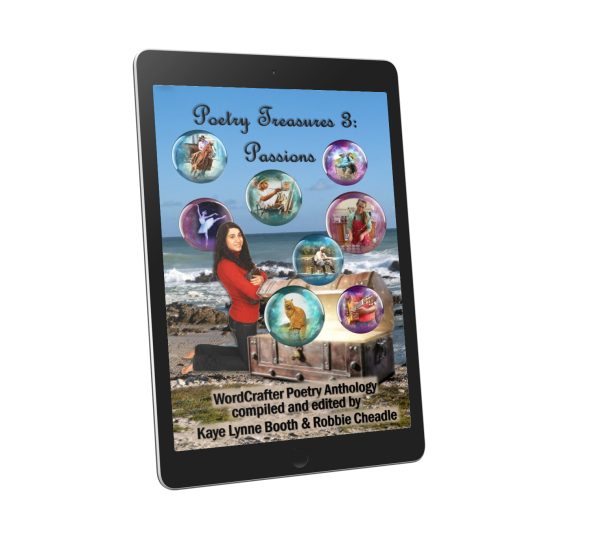
Passions treasures within.
Open the cover
and you will discover
the Poetry Treasures
of guests on
Roberta Eaton Cheadle’s
2022 “Treasuring Poetry” blog series
on Writing to be Read.
Included are treasures from:
Patty Fletcher, D. Wallace Peach, Yvette Prior,
Penny Wilson, Colleen M. Chesebro, Abbie Taylor,
Yvette Calliero, , Smitha Vishwanath,
Chris Hall, Willow Willers, Rosemerry Wahtola Trommer,
and Roberta Eaton Cheadle
Poetry Treasures 3: Passions is available for pre-order now from your favorite book distributors through Books2Read: https://books2read.com/u/b5qnBR
Share this:

WordCrafter Press Celebrates National Poetry Month
Posted: April 1, 2023 Filed under: Anthology, Book Promotion, Books, Collection, Poetry, Promotion, WordCrafter Press | Tags: Arthur Rosch, Behind Closed Doors, Feral Tenderness, National Poetry Month, Poetry, Poetry Anthology, Poetry Collection, Poetry Treasures, Poetry Treasures 2: Relationships, Robbie Cheadle, WordCrafter Press 3 Comments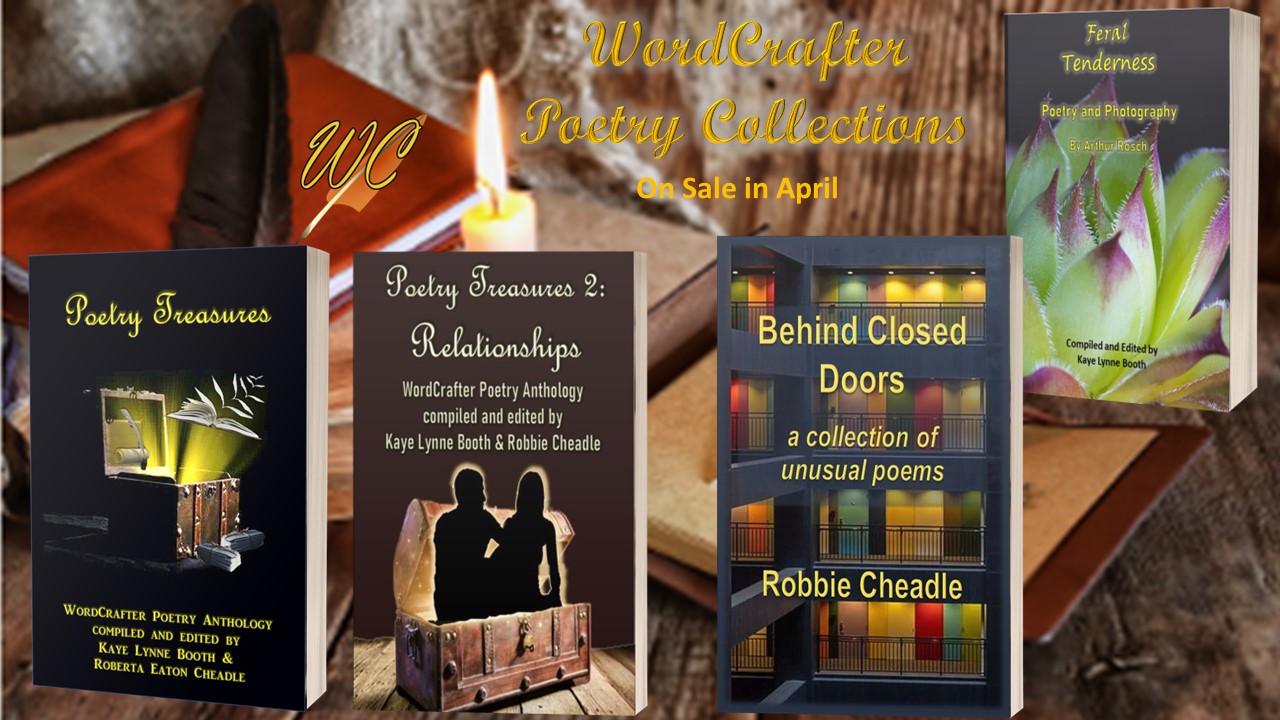
Celebrating National Poetry Month
April is National Poetry Month here in the U.S. and WordCrafter Press is celebrating the joy of the written word by putting four WordCrafter Press poetry books on sale for the whole month! You can get your copy of your favorite from your favorite book distributor.
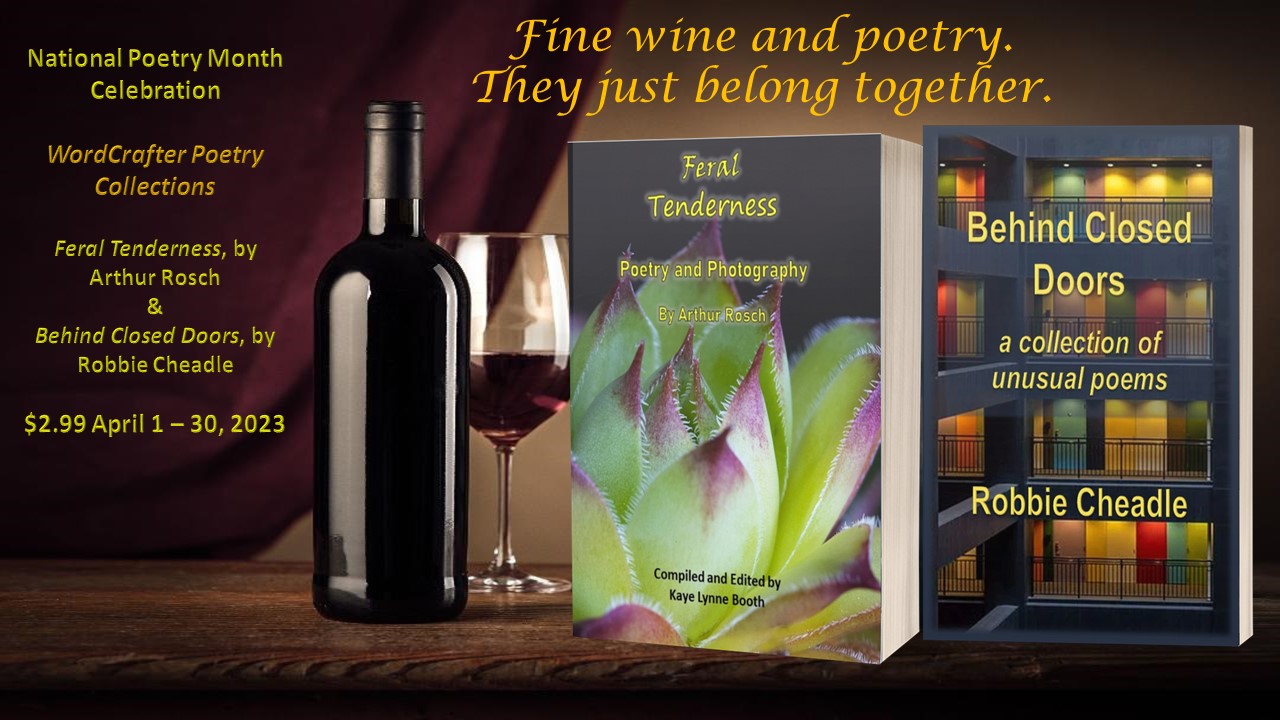
Behind Closed Doors, by Robbie Cheadle

Poetry Treasures 2: Relationships anthology


















