Treasuring Poetry – Meet writer and poet, Willow from Willowdot21
Posted: June 15, 2022 Filed under: Interview, Poetry, Treasuring Poetry | Tags: Poetry, Robbie Cheadle, Treasuring Poetry, Willow Willers, Writing to be Read 44 Comments
Today, I am delighted to feature writer and poet, Willow Willers, as my Treasuring Poetry guest. Willow blogs at willowdot21.
Which of your own stories is your favourite?
Well Robbie, my real first favourite is a trilogy I wrote about young boys who get caught up in drug running gangs and knife crime. My real ambition would be to have a chance to read this to young people at clubs and schools.
The death
The bench was hard but he could take that, it was the pain in his side and chest which filled his being, everything else was flat.
Fear gripped his mind, he was so cold inside yet a sweat was rippling down his back. His sight was blurred, was he going blind?
Slowly a long hidden memory came to the fore. His mother had taught him it long before he had changed. “Gentle Jesus meek and mild look upon me a little child.”
OH! Jesus if you are there help me now, I did not need you then but I do now. Jesus this pain is f###ing killing me, help me help me please. Slowly he slipped forward onto the floor and darkness washed over him and he knew no more.
***
“Where are you going son. No, out, will not do! Listen to me boy I am asking you. Why must you run with that pack it seems to me now there is no coming back. What has happened to you, you were such a good boy at school I had hopes that you’d go far but your just like your brother playing the fool.
No your not wicked but you are not a fool and I am telling you this, in my book you’re not cool.”
“What are you doing with that? Give it me back , don’t you threaten me son I’ll give you a smack. OH! Please will you listen to me don’t take that knife it will not set you free from the boredom in your life. It will not get you a job, it won’t make you a man what has happened to you and your world changing plan? You had vision and hunger for work as a decent and pleasant boy not as you are now , just a jerk.”
***
Clearing up quietly the priest approached the last row when something on the floor that caught the suns last glow. Red and sticky he knew what it was but he prayed to his God that it would not be true. The boy lying his arms out wide, blood flowing from his side. A thought crossed his mind but he dismissed immediately. He looked like Jesus did, you see. Arms out wide , blood from his side a cut round his forehead dripping, blood in his eyes.
He took out his mobile and took a deep breath as he dialled, ambulance, police he begged his mind running wild. The operator was telling him what to do, “Keep him warm and stem the blood is what I want you to do.” He ripped off his cassock and swaddled the lad he then noticed blood on his jeans ( the best ones he had) He cradled the boy and prayed in his ear “keep trying to stay ask now, Jesus will hear.”
It was half an hour until anyone arrived the paramedic crew gently moved the priest to one side. It was too late the boy was gone, then with their radios crackling loud, the police taped the area off, people from everywhere arriving, such a crowd.
Standing back and looking around the priest said a prayer without making a sound. “Dear God take the soul of this boy who died here today and give him some peace, and if you have time help me find words to soothe his family, at least ” Then he sat down exhausted, he was just a man even though he was called a priest.
A woman on her way home from work regretting an argument at the start of her day was wondering how to fix things and what she could say. She always said never give up, never leave a good word unsaid. Never leave things, sort them before you go to bed. Passing the church she saw her youngest boys friends , he wasn’t there perhaps they could make amends.
The Cause
He awoke with a jump. It was his brother rolling in drunk! Damn only 4am please don’t go over what’s to happen again. I know I must do this. I must prove myself.
It was all too easy a year ago when his best friend introduced him to the boys “you need to know” It had been simple things at first making old ladies jump, stealing traffic cones all laughing fit to burst.
When he was really trusted, got himself a name.Things became more serious it suddenly was a whole new game. They met the older boys, the ones with big fast cars. They all wore hoodies, bling and they all had facial scars.
It was money and messages that he had to run he was fit and had a bike.Now that is how easily it had begun. He often skipped school though not always willingly. There really was not any choice, what the big boys said, had to be.
His teachers all asked him why his work had slipped away he had a brilliant future and he had thrown it all away. He was a little worried but he shrugged his shoulders and wandered off, his teachers called him back but his friends told them to f### off.
Mum, she was desperate working on her own doing all she could to keep the house, the boys and to make them a home. The oldest she had lost him he had gone to drugs. She had tried so hard but he just robbed her blind and made her look a mug.The young one she had dreams for she had prayed to the Lord each day but now he was on the wrong track, he was slipping the same way.
He knew he had become a waster, he knew that he was bad . It was the only way to be accepted and safe but the pain in Mum’s eyes made him feel sad. So he just avoided contact and hardened to her pleas. He was knocked back the other day when she begged him to stay home down on her knees.
He tried to ask his brother who ran with an older crew but he was useless as he was trapped there too. What chance was there, his brother asked, what was there for them to do there was no work or opportunities running with lads was at least something to do. It was all about status and how hard you are , what clothes you wore , what trainers and did you have a scar.
His brother had one, on his face, from a fight with a rival gang. Okay it hurt , six days in hospital 17 stitches but he was now a big man??
Today was his chance to join the glorious crew. To take part in the big ruck was all he had to do.
Two weeks he had known about the fight , where and exactly when. It was on his mind both day and night . His thoughts were full of dread , through his blood ran pure fear it was nearly six now, the day was finally here.
Later in the kitchen when he was taking the knife , his mother caught him and shouted at him. He raised his hand to her for the first and last time in his life. Luckily she was small so he pushed her to one side as he crashed through the door and out the gate . His mother sat on the floor and cried.
***
Later he met the guys when mum had gone to work, they knew a squat they could use to complete their plan. By 4pm they were jumpy they were ready to a man.They left the squat and through the railings ran. Jumping , punching the air and making feral calls they had it now they all knew the plan, they had all the balls.
He wished he’d picked a smaller knife this one was too large . As he was changing it’s position. Into him a couple of the lads all barged. At once he felt a sharp and stinging pain as he fell to the floor, it felt worse again. His side felt wet and his forehead was cut where he had scraped along the floor..
What’s wrong man, stop messing we haven’t got the time it’s 5 o’clock now hear those church bells chime. Oh! hey you’re hurt man what did you do. You stupid f### you stabbed yourself. We have to leave you here, no good to have a burden on the crew.
His best friend helped him into the church and sat him at the back , hold on, he said, laters. then ran off to join the pack.
So he alone now, life ebbing from his side thoughts of mum, school, his brother and he cried. He asked the lord for comfort but comfort did not come. He prayed a childhood prayer from deep inside his mind. The priest found him,and he was very kind. He wrapped his chest and held him and asked him not to go . He tried to but he couldn’t stay he felt too tired, too low.
He heard the priests’ desperate call as he slipped away forget the ambulance he though and just pray for me today. The priest felt him go, but he would not lose his grip he felt he needed to guide this lost boy, some mothers pride and joy.
The Effect
Getting off the bus and heading home, she was tired her feet aching but she was determined not to moan. This was important, it had to be done she needed to put her whole being into saving her youngest son!
Pushing the front door shut behind her putting the bags down on the kitchen floor she looked into the living room but there was no one there. No television no shoot’em’up games standing in the hallway she called out both boys names.
OH! well, she put the kettle on and maybe she’d ring around she had both their mobile numbers but they did not always want to be found. The doorbell rings , damn she had only just sat down, walking toward the door the phone begins to ring.
There it is the sight every mother dreads, a policeman and a policewoman , OH! god she thinks someone must be dead.
The hospital was noisy but she didn’t hear a sound her lungs were filling up as she were about to drown. She had been waiting for an age now, would no one take her in. She was feeling really sick now and felt like things were crawling on her skin.
It was so cold in there and he only had a sheet on . God he looked so pale but she supposed that was what you would look like when all your blood was gone.
***
She woke up with the headache she had, had since that day, the shock of the police visit and what they had to say.
She knew she had to get up she knew she must today, it was the funeral and that would not go away.
Things had been different her elder boy had stayed home he seemed to want to help his mother and not leave her on her own. She dared not to hope he had changed but she was glad that he was there.
She slowly put her face on and then she brushed her hair.
His friends were at the church like they had been that day , he was not with them. Would this pain ever go away.
The priest seemed glad to see her and he offered his support, she felt close to this man who was with her boy when for his life he fought.
***
His favourite track finished and the last notes drifted away she stood up and looked at everyone and said she had something to say.
She knew that there was no work and that there was not much hope but joining gangs and using guns and knives was not the way to cope. Please listen, she pleaded you are slipping away too many lives are wasted too many die this way. Something must be done and it must be soon we are losing a generation it might be two if something is not done soon.
How many more mothers have to suffer like she.
We really need to sort this out……… her voice trailed off to silence as she repeated, how many more mothers like me?
What inspired you to write this particular poem?
I wrote this story in 2014 but with the news of yet so many gang related killings in London in fact all our towns and cities lately. There have been so many knife crimes these last years. In light of this I felt compelled to write about how easily you people regardless of their ethnic background get sucked into gang culture. I felt the need to show how far the ripples spread and how even the innocent are touched.
What are your plans for your poetry going forward?
I love my poetry and I hope to continue to write until I die. I would love to publish a book of poetry but something is holding me back. I don’t know what really.
What is your favourite poem?
My favourite poem is High Flight. by John Gillespie Magee JR.
Oh! I have slipped the surly bonds of Earth
And danced the skies on laughter-silvered wings;
Sunward I’ve climbed, and joined the tumbling mirth
of sun-split clouds, and done a hundred things
You have not dreamed of-wheeled and soared and swung
High in the sunlit silence. Hov’ring there,
I’ve chased the shouting wind along, and flung
My eager craft through footless halls of air….
Up, up the long, delirious, burning blue
I’ve topped the wind-swept heights with easy grace
Where never lark nor ever eagle flew-
And, while with silent lifting mind I’ve trod
The high untrespassed sanctity of space,
Put out my hand, and touched the face of God.
Why do you like this poem?
It always makes me cry. It’s the fact that this young man born in Shanghai, China, to an American father and a British mother, who both worked as Anglican missionaries who flew Spitfires for Great Britain during WW2. died not long after qualifying in 1941 in a routine training accident.
The beautiful words are so prophetic, I hope he got to touch the face of God.
A poem by Willow: Broken Angel
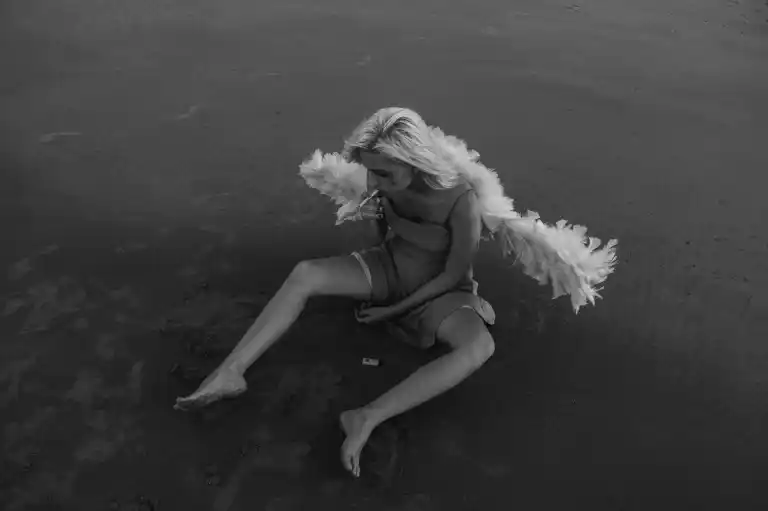
My wings are clipped my feet are tied.
I need to scream, but I can not cry.
I need to run I need to hide,
Afraid to stay , too tired to fly
Alone under a moon lit sky.
Can I run, can I hide,
Can I beat this pain inside
Will it end, will I be no more
Will I find the key to the locked door.
Broken angel that is me
No longer blessed no longer free.
Shackled, so harshly tied down
Lost to all, now bound to the ground.
Find out more about Willow here: https://willowdot21.wordpress.com/about/
About Robbie Cheadle

Robbie Cheadle is a South African children’s author and poet with 9 children’s books and 2 poetry books.
The 7 Sir Chocolate children’s picture books, co-authored by Robbie and Michael Cheadle, are written in sweet, short rhymes which are easy for young children to follow and are illustrated with pictures of delicious cakes and cake decorations. Each book also includes simple recipes or biscuit art directions which children can make under adult supervision.
Robbie has also published 2 books for older children which incorporate recipes that are relevant to the storylines.
Robbie has 2 adult novels in the paranormal historical and supernatural fantasy genres published under the name Roberta Eaton Cheadle. She also has short stories in the horror and paranormal genre and poems included in several anthologies.
Robbie writes a monthly series for https://writingtoberead.com called Growing Bookworms. This series discusses different topics relating to the benefits of reading to children.
Robbie has a blog, https://robbiesinspiration.wordpress.com/ where she shares book reviews, recipes, author interviews, and poetry.
Find Robbie Cheadle
Blog: https://www.robbiecheadle.co.za/
Blog: robbiesinspiration.wordpress.com
Twitter: BakeandWrite
Instagram: Robbie Cheadle – Instagram
Facebook: Sir Chocolate Books
______________________________________________________________________________________________
Want to be sure not to miss any of Robbie’s “Treasuring Poetry” segments? Subscribe to Writing to be Read for e-mail notifications whenever new content is posted or follow WtbR on WordPress. If you found it interesting or entertaining, please share.
Share this:

Treasuring Poetry – Meet author and poet Yvette M. Calleiro and a review
Posted: May 18, 2022 Filed under: Poetry, Treasuring Poetry | Tags: Book Review, Hyoe, Interview, Poetry, Robbie Cheadle, Treasuring Poetry, Writing to be Read, Yvette M. Calleiro 92 Comments
Today, I am delighted to introduce you to poet and author, Yvette M. Calleiro. I have read and enjoyed a few of Yvette’s lovely books and I am also a fan of her poetry.
Which of your own poems is your favourite?
This is such a difficult question because I’m quite critical of my poems, most likely because many of them come from deep within my soul and scrutinize aspects of my mind and heart which have spent a long time being hidden. One of my favorites is “The Battle Within.”
The Battle Within
I am brave.
I am strong.
I am confident.
My reflection tells me so
Every morning and every night.
I believe her
Until at some point in the day
My inner voice awakens
And slithers through the slopes of my cerebral cortex,
Seeking a soft space to enter
And inseminate her vitriol.
Her termites gnaw
At the foundation of my strength
Until it shatters into splinters
And crumbles them to dust.
She pours gasoline to fuel the fire.
The flames scorch the blanket
That tries to shield me from
The stream of searing scenarios
Of what ifs and maybes and if onlys.
Her berating mantra
Batters against my brain,
Bullying me into accepting
Her truth as mine,
But I refuse to accept her broken record.
I refuse to let her have control.
She is not me
No matter how convincing she can be.
She lives in the darkest recesses of my mind,
And I have the power to prevent her
From gaining more ground.
I breathe deeply
Once
Twice
In
Out
Inhale peace
Exhale fear
I gently shut the doors
So her access disappears
For now.
She will try again,
But I’ll be ready
For I am brave.
I am strong.
I am confident.
What inspired you to write these poems?
I developed an anxiety order about a decade ago. It took me a long time to learn to manage it, and it is something that I actively attend to every day. My anxiety manifests through negative ruminating thoughts, and for a long time, they completely drained me of my strength and energy. Through many types of therapy, I have learned to regain control of those moments. I have setbacks every now and then, but more often than not, I prevail. “The Battle Within” depicts that struggle but also reminds me of my true inner strength.
Mindfulness and meditation are huge parts of my life. They are two tools that have helped bring me peace in my anxious world. I wanted to create a poem that emulated the calmness that comes when meditating, and “Be In The Moment” is what emerged from my mind.
What are your plans for your poetry going forward?
I’ve written poetry since I was 12 years old. Back then, they were silly, rhyming poems. I have since evolved as a poet and continue to enhance my craft. For years, I only wrote free verse, but I’ve recently been learning about syllabic poetry through Colleen Chesebro’s #Tanka Tuesday challenges. Ultimately, I hope to publish a book of poems that encompass my life’s journey into poetry.
What is your favourite poem?
The Road Not Taken by Robert Frost
Two roads diverged in a yellow wood,
And sorry I could not travel both
And be one traveler, long I stood
And looked down one as far as I could
To where it bent in the undergrowth;
Then took the other, as just as fair,
And having perhaps the better claim,
Because it was grassy and wanted wear;
Though as for that the passing there
Had worn them really about the same,
And both that morning equally lay
In leaves no step had trodden black.
Oh, I kept the first for another day!
Yet knowing how way leads on to way,
I doubted if I should ever come back.
I shall be telling this with a sigh
Somewhere ages and ages hence:
Two roads diverged in a wood, and I—
I took the one less traveled by,
And that has made all the difference.
Why do you like this poem?
This poem has always resonated with me. It speaks of choices that must be made and of accepting the consequences of those choices. Making decisions has always been difficult for me. I overthink the options and wonder about the options I don’t choose. This poem reminds me to embrace my choice and move forward. I also love using the poem in my classroom with my students. The conversations are always so rich and meaningful.
My love for poetry made its way into my newest novel, HYPE. One of the characters, Gaby, uses her poems to express her deepest, darkest emotions and secrets. Here is one of her poems:
A Lit Candle
For years, I was the beautiful centerpiece,
The elegant, most prized decoration of the home.
I was bright and cheery, tall and elegant.
Everyone always stopped to admire my beauty,
To comment on how special I was.
Until one day, someone thought
It would be a great idea to light a match
And see how well I could withstand the heat.
I could smell the rancid sulfur
As the matchstick caught fire.
It was then that I discovered what true fear felt like.
The sensation of the intense heat
Violating my wick
Was too much to endure.
I screamed and crackled
As the fire invaded my wick.
I cried tears of wax
As the blaze melted my beauty away.
I wished there was some way to stop it,
To keep it from taking away
All that was pure and perfect about me.
I wanted someone,
Anyone,
To blow out the flame,
To save what was left of my beauty,
But no one could hear me.
No one was even paying attention
To my withering loveliness.
I cried and cried
Until there was no wax left to cry with,
And when all my beauty was gone,
The flame finally burned out
And I was discarded.
No longer did anyone admire me.
No longer did anyone care.
I was alone,
Abandoned,
Dead.
Thank you, Yvette, for being a lovely guest.
My review of Hype
What Amazon says

Cici’s junior year in high school is going to be the best year ever. Popular co-captain of the varsity cheerleading team, she’s dating the starting quarterback. Even her jealous co-captain’s attempts to steal her boyfriend can’t curb her enthusiasm.
When her mom moves in with her fiancé, a handsome, wealthy man, only one small detail threatens Cici’s perfect life. The school’s social pariah is about to become her stepsister, and Cici wants nothing to do with her.
Everything changes when someone Cici cares about throws her life into a tailspin, and the one person Cici couldn’t stand becomes her only ally.
Warning: This story contains scenes of sexual assault.
My review
Hype was a most interesting read for me. I grew up and attended school in South Africa and my experience was very different from the life of a school girl described in this book. I couldn’t help thinking that the strict rules I grew up with were helpful in preventing some of the prejudices towards other people, based on their appearance and behaviour, that were described in this book. We wore school uniforms, had to tie our hair back and wore no makeup. We most certainly did not demonstrate affection towards the opposite sex during school hours. It was an excellent insight into school life in America.
Cici is a popular cheerleader and her boyfriend, Ryan, is on the football team and is also popular. He is voted Homecoming King which demonstrates his place on the schoolboy social ladder. Cici is an interesting character as she is totally self absorbed and selfish in many ways, but she is devoted to her mother and wants the best for her. This love is exploited by a predator to keep her quiet when she is sexually assaulted later in the story. Despite her giddiness and obsession with maintaining her social position at school, Cici is naïve and innocent. This aspect of her character is demonstrated a few times in the book.
When Cici’s mother, a successful lawyer who works long hours, decides to marry a man she met six months previously, Cici discovers that one of the most uncool girls in the school, a Goth the students call Grub, will become her step-sister. Cici is most displeased abut this situation and doesn’t want Grub raining on her parade. Cici, however, comes to realise that bad things can happen in life and these events can shape a person and cause them to exhibit certain behaviours in self defense. Cici comes to appreciate Grub when her own life spins out of control.
This book tackles the difficult subject of schoolgirl rape and I felt those scenes were well handled and appropriate for a YA audience. The horror of the situation was conveyed without the author going into to much detail. Sub themes are not to judge someone by their appearance, and not to trust people you don’t know really well. The book also covers the type of counselling and student support that is available in the American school system which was interesting.
I enjoyed this book and it is well written and and has good flow.
Purchase Hype by Yvette M. Calleiro
Yvette M. Calleiro Amazon Author Page
About Yvette M. Calleiro

Yvette M. Calleiro is the author of the Chronicles of the Diasodz fantasy series, HYPE, and two short stories. As a heavily addicted reader of both young adult and adult novels, she spends most of her time pseudo-living in paranormal worlds with her fictional friends (and boyfriends).
When she’s living among real people, she is a middle school Reading and Language Arts teacher. She’s been sharing her love of literature with her students for over twenty years. Besides writing about the various characters that whisper (and sometimes scream) in her head, she enjoys traveling, watching movies, spending quality time with family and friends, and enjoying the beauty of the ocean.
Yvette lives in Miami, Florida, with her incredible son who has embraced her love for paranormal and adventurous stories. She also shares her space with an assortment of crazy saltwater animals in her 300-gallon tank.
About Robbie Cheadle
Robbie Cheadle is a South African children’s author and poet with 9 children’s books and 2 poetry books.
The 7 Sir Chocolate children’s picture books, co-authored by Robbie and Michael Cheadle, are written in sweet, short rhymes which are easy for young children to follow and are illustrated with pictures of delicious cakes and cake decorations. Each book also includes simple recipes or biscuit art directions which children can make under adult supervision.
Robbie has also published 2 books for older children which incorporate recipes that are relevant to the storylines.
Robbie has 2 adult novels in the paranormal historical and supernatural fantasy genres published under the name Roberta Eaton Cheadle. She also has short stories in the horror and paranormal genre and poems included in several anthologies.
Robbie writes a monthly series for https://writingtoberead.com called Growing Bookworms. This series discusses different topics relating to the benefits of reading to children.
Robbie has a blog, https://robbiesinspiration.wordpress.com/ where she shares book reviews, recipes, author interviews, and poetry.
Find Robbie Cheadle
Blog: https://www.robbiecheadle.co.za/
Blog: robbiesinspiration.wordpress.com
Twitter: BakeandWrite
Instagram: Robbie Cheadle – Instagram
Facebook: Sir Chocolate Books
______________________________________________________________________________________________
Want to be sure not to miss any of Robbie’s “Treasuring Poetry” segments? Subscribe to Writing to be Read for e-mail notifications whenever new content is posted or follow WtbR on WordPress. If you found it interesting or entertaining, please share.
Share this:

A Very Special Mother’s Day Post
Posted: May 8, 2022 Filed under: Poetry, Writing to be Read | Tags: Mother's Day, Mothers, Poetry, Tribute to Moms, Writing to be Read 6 Comments
Mothers are Special
A while back, I put out a call for poetry about why you think your mother is special. I wanted to do a special tribute to all mothers on their special day. I didn’t get the response that I had hoped for, but I did get one submission, from Robbie Cheadle, which is pretty special all on its own.
Our Mother
There she sits, small, and yet so tough
Always ready to tell us when enough is enough
Our number one fan when things go well
Always there to help us up, when down we fell
Her home cooked meals are a delightful thought
As are the important messages which, to us, she taught
The best ways to get a cake to rise
Never to tell our friends or family lies
How to eat nicely with a fork and knife
How a little kindness goes a long way in life
Amazing mom, we are blessed to have you near
As you are the person, we hold most dear
Thanks Robbie, for sending this. I can see your mother was quite special to you.
I know my mother was a special person. She was kind and considerate, and she’d offer the shirt from her back if she thought it might help another. My mom was a fixer. She hated it when there was any kind of conflict and would strive to find a way to make things right and smooth things over, a trait which I seem to have inherited.
My mom was a sucker, and people often took advantage of her. I remember when she traded away the diamond ring she had longed for all of her life because I wanted a trampoline. She didn’t have the money for the trampoline and when the trampoline owner offered to trade for the ring and my mom’s glass coffee and end tables, (which alone were worth more than the trampoline), my mother did it without a second thought. She did it because she wanted me to be happy. (I was an only child, and yes, a spoiled brat.)
Our home was a beehive of activity, with always something going on. My mom offered shelter to those in need and there was always someone coming or going. No one bothered to knock. Most folks knew that my mom’s door was always open.
My mother was a kind and loving woman, in spite of her faults. The thing she wanted most in the world was to be my best friend, and in many ways she was. I could tell her anything and know that I was still loved.
People took advantage of my mom and neglected her until her dying day. I tried to step in and stop it, but I was too late. I still miss her today and hold her memory dear.
Here I share the poetry that I wrote about my mother. I hope that you enjoy it.
Mom
I miss how your face lights up when you smile and makes you shine.
I miss having someone to turn to who trusts and believes in me.
I miss your kindness, and your generosity, your willingness to share.
I miss how you always see the glass as half- full.
I miss your energy and enthusiasm.
Most of all, I miss the way your arms enveloped me in your embrace.
I miss you, Mom.
Love you, Mom. ❤
Thank you all for reading.

________________________________________________________________
Sign up for the Kaye Lynne Booth & WordCrafter Press Newsletter for and book event news for WordCrafter Press books, including the awesome releases of author Kaye Lynne Booth. Get a free digital copy of Kaye Lynne Booth’s paranormal mystery novella, Hidden Secrets, just for subscribing.
Share this:

Wrapping Up the WordCrafter “Poetry Treasures 2: Relationships” Book Blog Tour
Posted: May 2, 2022 Filed under: Blog Tour, Book Promotion, Books, Poetry, WordCrafter Book Blog Tours | Tags: Arthur Rosch, Colleen M. Chesebro, D. Avery, Elizabeth Merry, Harmony Kent, JulesPaige, Kaye Lynne Booth, Lauren Scott, Leon Stevens, Lynda McKinney Lambert, M.J. Mallon, Miriam Hurdle, Poetry, Poetry Treasures 2: Relationships, Robbie Cheadle, WordCrafter Book Blog Tours, WordCrafter Press 25 Comments
We’ve had a great tour for Poetry Treasures 2: Relationships, but now it’s time to bring the fun to a close. To wrap things up today, we have a guest post from contributing author and poet Leon Stevens.
____________________________________________________________________________
Why do I write poetry? Maybe poetry writes me.
I like the conciseness of a poem and how it can capture a moment, thought, emotion, experience, or an observation, like a painting. With descriptive colors, thoughtful hues, rhyming shades, and new perspectives, when inspiration comes—usually when I least expect it—I just need to put it into words.
People will often say that they don’t understand poetry. I try not to hide the meaning in the words, rather I want to use the poem as a way to describe the feelings I have at that time. Life is a struggle. Poetry doesn’t have to be.
I wrote the four “ego” poems out of a need to understand why people act in ways that seemed detrimental to positive interactions. Watching people posturing, jockeying for status, and exerting pressure for personal gain, left me shaking my head and rolling my eyes.
Ego. The mention of ego can set people on the defensive. Ego drives greed, fame, and power, but it can also drive ambition, innovation, and progress.
“You have an ego.” Is it an insult, a compliment, or a fact? We associate having an ego with a negative trait because usually, it’s somebody’s ego that gets in the way of healthy relationships, sabotages the progress of others, or projects a not-so-amiable image. But, if you have a strong sense of self and abilities, an ego can help propel you forward in your personal endeavors.
I suspect that many readers can relate to at least one of the poems. We know the one who always needs to be the center of attention, the person who is always right, the one who thrives on social status, and the person who constantly seeks affirmation. Often, they are the fragile ones, and we see the positives and for those reasons, we keep them within our grasp.
-Leon Stevens
_____________________________________________________________________________
Leon Stevens is an author, composer, guitarist, songwriter, and an artist, with a Bachelor of Music and Education. He published his first book of poetry, Lines by Leon: Poems, Prose, and Pictures in January 2020, followed by a book of original classical guitar compositions, Journeys, and a short story collection of science fiction/post-apocalyptic tales called The Knot at the End of the Rope and Other Short Stories. His newest publication is the novella, The View from Here, which is a continuation of one of his short stories. He is currently working on a new collection of poetry titled, A Wonder of Words.
_____________________________________________________________________________

Get your copy today: https://books2read.com/u/3kP8aK
That wraps things up for the WordCrafter Poetry Treasures 2: Relationships Book Blog Tour. Don’t forget to leave a comment, because you have to comment on each of the eight blog stops to be entered for a chance to win a free digital copy of this wonderful poetry anthology. It doesn’t have to be a long or even particularly smart; just enough to let me know you were there. If you missed any of the stops, I will post them here and I won’t do the drawing until tomorrow, so everyone will have plenty of time to visit this last stop and any that they have missed:
Day 1: Writing to be Read: Guest post by Lauren Scott
Day 2: ShiftNShake: Guest post and three readings by Robbie Cheadle
Day 3: The Showers of Blessings: Guest post by Lynda McKinney Lambert
Day 4: Bay Dreamer Writes: Guest post by Miriam Hurdle
Day 5: Zigler’s News: Guest post by M.J. Mallon & Review by Victoria Zigler
Day 6: This is My Truth Now: James Cudney interviews Kaye Lynne Booth
Day 7: Robbie’s Inspiration: Guest post by Colleen M. Chesebro
Day 8: Brings us right back here to Writing to be Read and the wonderful guest post by Leon Stevens. Thanks for following the tour and don’t forget to get your copy of Poetry Treasures 2: Relationships. 😉 Bye for now.
____________________________________________________________
Book your WordCrafter Book Blog Tour today!
Share this:

Day 5 of the WordCrafter “Poetry Treasures 2: Relationships Book Blog Tour
Posted: April 29, 2022 Filed under: Anthology, Blog Tour, Books, Poetry, Treasuring Poetry | Tags: Arthur Rosch, Colleen M. Chesebro, D. Avery, Elizabeth Merry, Harmony Kent, Leon Stevens, Lynda McKinney Lambert, M.J. Mallon, Miriam Hurdle, Poetry, Poetry Anthology, Poetry Treasures 2: Relationships, Robbie Cheadle, WordCrafter Book Blog Tours, WordCrafter Press 9 Comments
For Day 5 of the WordCrafter Poetry Treasures 2: Relationships Book Blog Tour, we’re over at Zigler’s News with a delightful guest post from contributing author M.J. Mallon and a review of the anthology from Victoria Zigler. Join us in celebrating the release of this unique and delightful collection of poetry.
http://ziglernews.blogspot.com/2022/04/poetry-treasures-2-relationships.html
Share this:

Welcome to the WordCrafter “Poetry Treasures 2: Relationships” Book Blog Tour!
Posted: April 25, 2022 Filed under: Blog Tour, Book Promotion, Book Release, Books, Poetry, Treasuring Poetry, WordCrafter Press | Tags: Arthur Rosch, Colleen M. Chesebro, D. Avery, Elizabeth Merry, Harmony Kent, JulesPaige, Lauren Scott, Leon Stevens, Lynda McKinney Lambert, M.J. Mallon, Miriam Hurdle, Poetry, Poetry Anthology, Poetry Treasures 2: Relationships, Robbie Cheadle, Treasuring Poetry, WordCrafter Press 34 CommentsIn Celebration of National Poetry Month!
Relationships are golden and each of
Arthur Rosch, Elizabeth Merry,
D Avery, Robbie Cheadle,
Harmony Kent, Lauren Scott,
JulesPaige, Leon Stevens,
Colleen M. Chesebro, Miriam Hurdle,
M J Mallon, and Lynda McKinney Lambert
pay poetic tribute to their most intense
personal moments.
This is Day 1 of the WordCrafter Poetry Treasures 2: Relationships Book Blog Tour, and I want to tell you all, you are in for some real poetic treats this week. This wonderfully unique collection of poetry features works by Robbie Cheadle and her poetic guests from the 2021 “Treasuring Poetry” blog series right here on Writing to be Read, and it really is a treasure chest filled with poetic gems. We’ve got a fantastic eight day tour planned for you to learn more about this poetry anthology and I hope you will all join us through each tour stop.
Day 1: Opening Day here on Writing to be Read with a guest post from contributing author Lauren Scott.
Day 2: Finds us at the ShiftNShake blog with a guest post from blog series host, contributing author and editor Robbie Cheadle.
Day 3: The Showers of Blessings will host a guest post from contributing author Lynda McKinney Lambert.
Day 4: Bay Dreamer Writes will host a guest post from contributing author Miriam Hurdle.
Day 5: Zigler’s News will bring us a guest post from contributing author M.J. Mallon and a review by Victoria Zigler.
Day 6: The publisher, (that’s me), will be in the interview spotlight over at This is My Truth Now.
Day 7: Robbie’s Inspiration hosts with a guest post from contributing author Colleen M. Chesebro.
Day 8: Writing to be Read will wrap things up with a guest post from contributing author Leon Stevens.
Follow the tour and leave a comment at each stop to be entered
in a random drawing for a free digital copy of
***Poetry Treasures 2: Relationships***
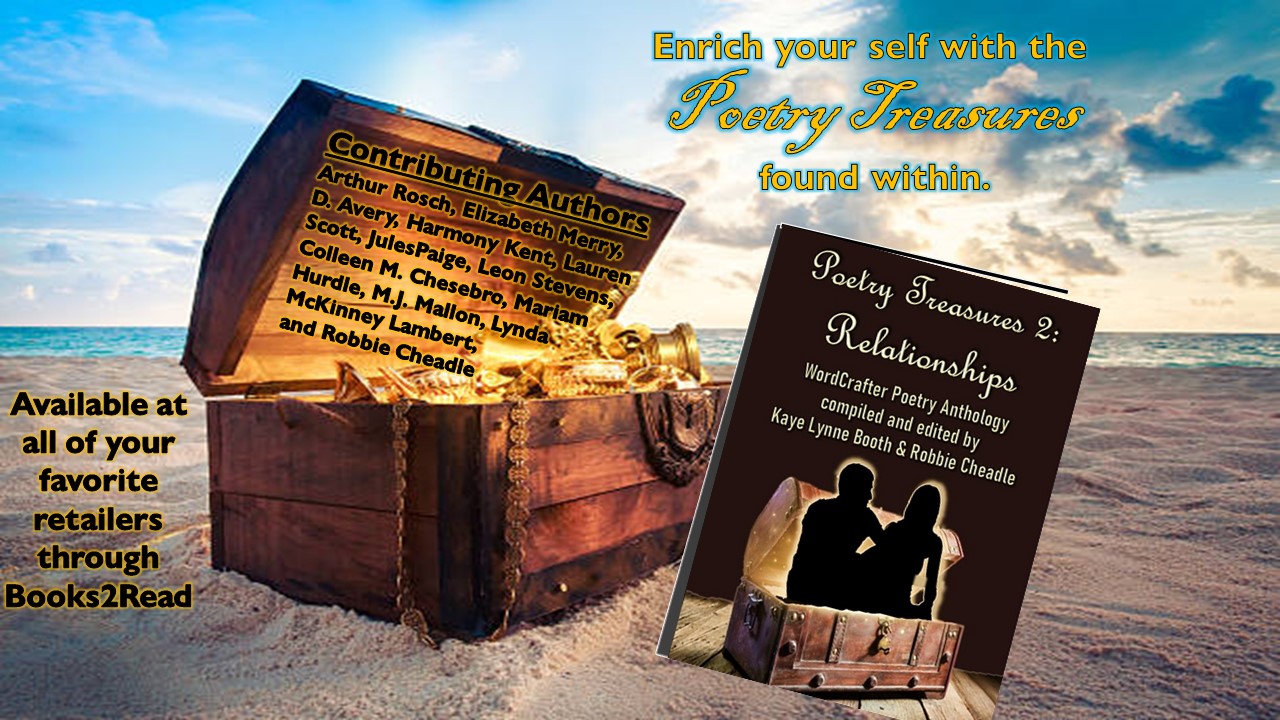
That all being said, I’m going to turn this post over to a wonderful author and poet, Lauren Scott. Enjoy the tour. Don’t forget to leave your comments for your chance at a free digital copy of this wonderful collection of poetry gems.
___________________________________________________________________________
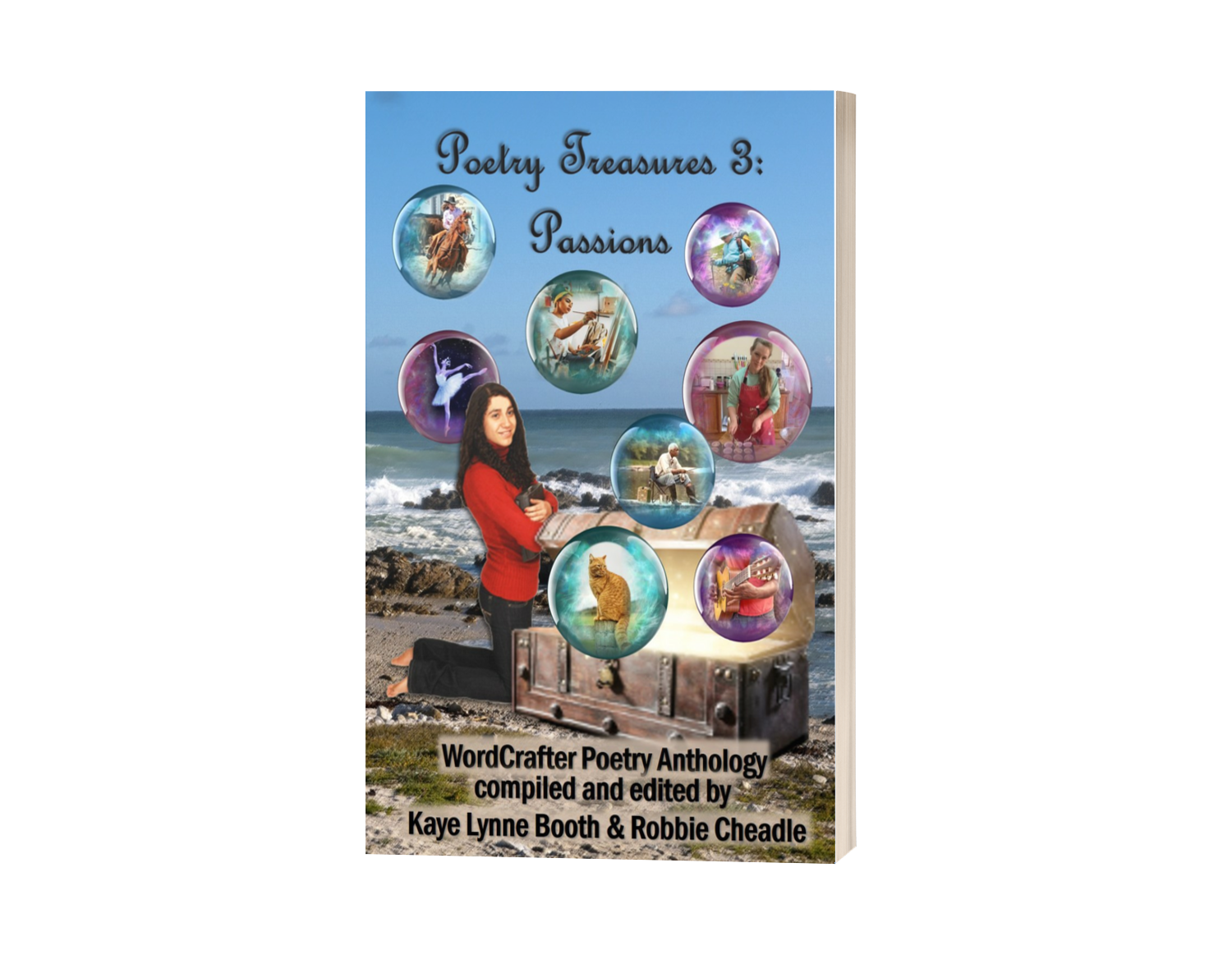
I am thrilled to announce the release of Poetry Treasures 2: Relationships, an anthology consisting of poetry from twelve authors. It is an honor to be among a group of amazing poets in this lovely collection that was compiled by Kaye Lynne Booth and Robbie Cheadle. Below is a little backstory of how Poetry Treasures 2: Relationships was born:
Kaye’s words:
In January of 2020, Robbie Cheadle introduced a new blog series on Writing to be Read called “Treasuring Poetry”, which quickly rose in popularity. Once a month, Robbie would feature one
author/poet in a formatted Q&A and review their latest book on a blog platform where favorite poems could be shared and discussed. Robbie had some wonderful guests who are both talented poets and authors, and Robbie was attracting quite a bit of blog traffic.
By the end of 2020, we had a list of 12 talented poets who we felt were gems, so in 2021 we created a poetry anthology and invited Robbie’s “Treasuring Poetry” guests from the previous year to add their own contributions. The result was the first volume of Poetry Treasures, which was well received. 2021 had an equally talented line-up of guests, so we decided to do it again.
In Poetry Treasures 2: A Treasure Chest of Relationships, we’ve found some new gems. From the “Treasuring Poetry” guests of 2021, we have contributions from some very talented poets who are treasures in and of themselves: Arthur Rosch, Elizabeth Merry, D. Avery, Harmony Kent, Lauren Scott, Jules Paige, Leon Stevens, Miriam Hurdle, M.J. Mallon, Lynda McKinney Lambert, and of course, Robbie Cheadle. But unlike the pirates of olden days, we won’t bury our treasures. We want to share them with the world. I hope that you will enjoy reading these poems as much I’ve enjoyed helping to put them altogether.
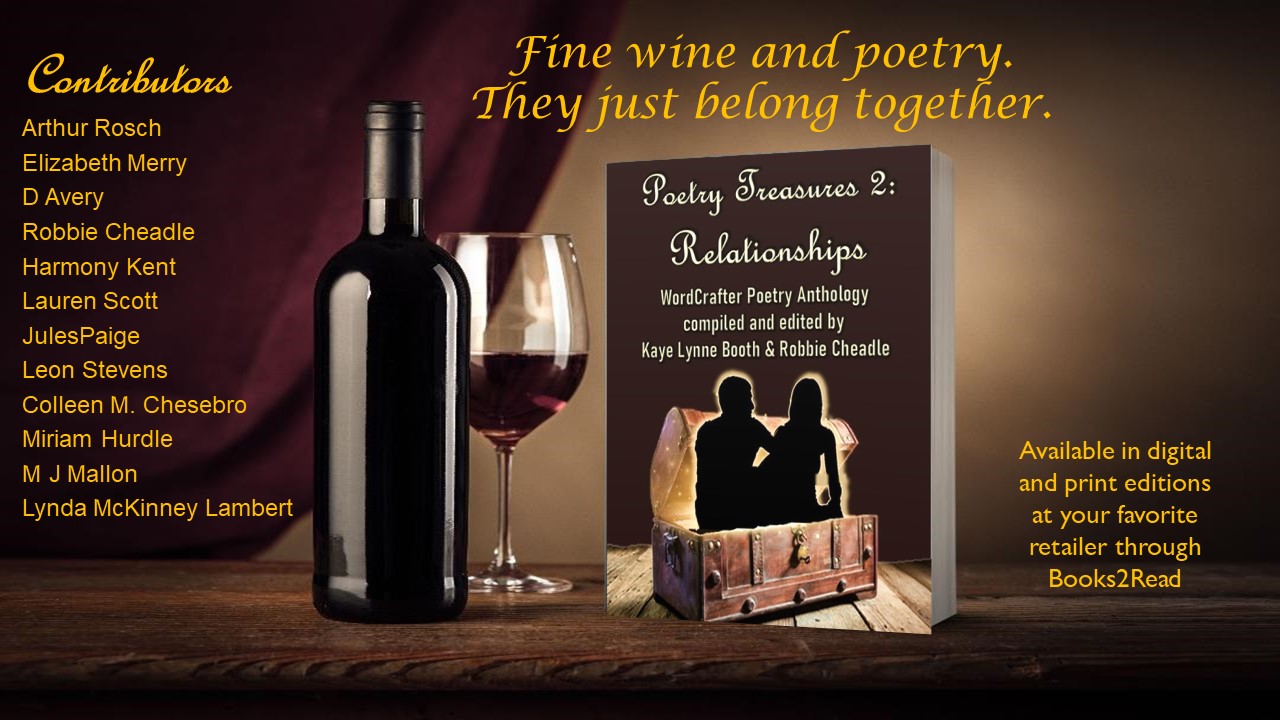
I have contributed four poems, and the first, “The Fine Points” was inspired by my 33-year marriage to my husband. He is literally my best friend. The love we have shared over the years survived tough times when life threw us curveballs out of our control, but that same love thrived in more joyful moments than I can name. From the beginning when we shared our vows, when cell phones and computers were unheard of, we delivered unconditional love to each other that harbored no expectations of us to change in any way. I can’t ask for anything more.
After a couple years of marriage, our daughter was born, then our son completed our family three years later. Fast forward many years and our children are well into their adulting years.
“2020 in Digital” speaks of the chaos that raged in 2020, but how our year was brightened by our daughter and son-in-law’s unconventional yet beautiful wedding. They had been engaged for two years, together for nine, then Covid entered into the equation. A big wedding wasn’t going to happen due to restrictions, and they didn’t want to wait. So, they chose to do the next best thing.
“Something Right” was inspired when my husband and I were close to becoming empty nesters. Our daughter who is mentioned above had been out of the house for three years. Our son was about to venture into the world, paving his own path. Exciting, joyful, yet bittersweet. They both live across the country, pursuing their dreams, and we couldn’t be prouder knowing they’re making it on their own. But there are just too many states in between us, so hopefully, we can minimize that number in the near future.
Lastly, the poem entitled, “The Roses” is about my parents who have left our physical world. They used to love working in the garden, taking special pride in their roses. We miss them so much. It’s very surreal losing both parents, the family’s foundation.
___________________________________________________________________________

If you’re a fan of poetry, I hope you’ll pick up a copy of this fabulous anthology that Kaye and Robbie worked hard in putting together. I’m sure there are poems within these pages that will resonate with you and touch your heart.
To purchase a copy:
Buy Link: https://books2read.com/u/3kP8aK
Thank you for reading!
Lauren ❤️
________________________________________________________________________________

Lauren Scott resides in California with her husband of over three decades and their lovable lab, Copper. Their adult daughter and son live on the east coast. Lauren began writing poetry as a teen, but life intercepted her university plans, so as an adult she took writing classes at the local community college. Apart from these classes, her studies of poetry originated from reading the works of many great poets. Her strong connections to family and friends provide writing inspiration, as well as her love of nature and the marvelous wild world surrounding her. Backpacking trips with her husband along the California coast and Sierra Nevada mountains have stirred thoughts to pen about love, loss, family, and the many possibilities waiting to materialize.
Lauren was published in the anthology, Indra’s Net (2017). Additionally, she has been published in Woman’s World Magazine and The San Francisco Chronicle. She has authored three books: two collections of poetry – New Day, New Dreams (2013), and Finding a Balance (2015), and her recent memoir, More than Coffee: Memories in Verse and Prose (2021).
Visit/contact Lauren:
Blog: baydreamerwrites.com
Shop: hittps://www.amazon.com/-/e/B08NCRH4MK
Email: baydreamer25@gmail.com
_________________________________________________________________________________
Book your WordCrafter Book Blog Tour today!
Share this:

The Many Faces of Poetry
Posted: April 8, 2022 Filed under: Poetry, The Many Faces of Poetry | Tags: Arthur Rosch, Poetry, The Many Faces of Poetry, Writing to be Read 13 Comments
Poetry Of The Gnu Age
After reaching enlightenment,
Milarepa’s first three steps
burned footprints
into the rocks of his shelter
so that today
pilgrims bow to these relics as holy icons.
The yogi’s steps were fired in the kiln
of his deep understanding. A thousand
years have passed and his footprints remain
sunk into the bare granite.

Piano Lessons
I have ten fingers.
The piano has…really…
twelve notes plus octaves therefrom.
I tell my fingers
each day
“land somewhere new. Somewhere
you’ve never been. If it sounds good
then lead me forward. IF it does not.
We go again.
Ten fingers. Twelve notes and octaves.
Fingers: spread yourselves newly. Knuckle middle finger
rise a bit. Good.
Now…listen. OK?
send five left fingers to the lowest octave
teach them where they belong
repeat the patterns repeat the patterns
bring the fingers back up
then throw them like dice
at the keyboard let them fly
repeat the patterns again
repeat the patterns: over time
my fingers know things, acquire sense and pitch
before my ears know
before my brain knows
my fingers know.
And, strange as it may sound, always listen to your fingers.
Let us say, hypothetically, that I go to sleep
in just a t shirt. I have two pillows under my head
and a pillow between my knees. As I get ready for bed
I sweep my blankets back and I sit on my pillows, not quite knowing
that I have just stuck my ass in my face. The knee
pillow, especially, is a real ass-face pillow but not
exclusively. No. My other pillows double duty as
butt blankies. I don’t know when or if
I put my ass in my face. No one does.
It is a concern, that’s all. A sanitary consideration.
Truth is you walk around with your ass every day,
it’s on your body
and it hasn’t given you Salmonella or ebola
yet. It’s not going to whether you sit half naked
or not. Everyone is full of shit. We know that.
When some men play around in government,
they shit like water buffalos. Who knew?
They’re all full of shit.
And they sit on their pillows a lot.
Another thing I can stop worrying about.
Ukraine
It is one thing to think
“aw fuck, not again.”
Then it’s another thing to do
nothing, from a sense of overwhelm
at the misery of the world. Many of these miseries
were created by human beings. They are capable of un-creating them but that would take a lot of work. Humans have
a streak of lazy when it comes to inquiry about themselves.
One can say “My bad”
as if that dismisses responsibility. I’ve been bad
but it’s over. That is not enough. You can’t say “My good”
but you’ve got to do “my good”,
you must keep making beautiful things in the face of ignorance.
Help other people with small daily tasks.
Use everything you’ve got
because in the face of this calamity,
it’s not going to be enough.
It’s just a motive to keep working so that,
some day,
it will be enough.
_________________________________________________________________________

Arthur Rosch is a novelist, musician, photographer and poet. His works are funny, memorable and often compelling. One reviewer said “He’s wicked and feisty, but when he gets you by the guts, he never lets go.” Listeners to his music have compared him to Frank Zappa, Tom Waits, Randy Newman or Mose Allison. These comparisons are flattering but deceptive. Rosch is a stylist, a complete original. His material ranges from sly wit to gripping political commentary.
Arthur was born in the heart of Illinois and grew up in the western suburbs of St. Louis. In his teens he discovered his creative potential while hoping to please a girl. Though she left the scene, Arthur’s creativity stayed behind. In his early twenties he moved to San Francisco and took part in the thriving arts scene. His first literary sale was to Playboy Magazine. The piece went on to receive Playboy’s “Best Story of the Year” award. Arthur also has writing credits in Exquisite Corpse, Shutterbug, eDigital, and Cat Fancy Magazine. He has written five novels, a memoir and a large collection of poetry. His autobiographical novel, Confessions Of An Honest Man won the Honorable Mention award from Writer’s Digest in 2016.
More of his work can be found at www.artrosch.com
Photos at https://500px.com/p/artsdigiphoto?view=photos
_________________________________________________________________________
Want to be sure not to miss any of Arthur’s “The Many Faces of Poetry” segments? Subscribe to Writing to be Read for e-mail notifications whenever new content is posted or follow WtbR on WordPress. If you find it interesting or just entertaining, please share.
Share this:

Book News and Such
Posted: March 28, 2022 Filed under: Book Promotion, Book Release, Books, Newsletter, WordCrafter Press | Tags: Anthologies, Books, Gilded Glass, Kaye Lynne Booth, Poetry, Poetry Treasures 2: Relationships, Short Fiction, WordCrafter Press, Writing to be Read 11 Comments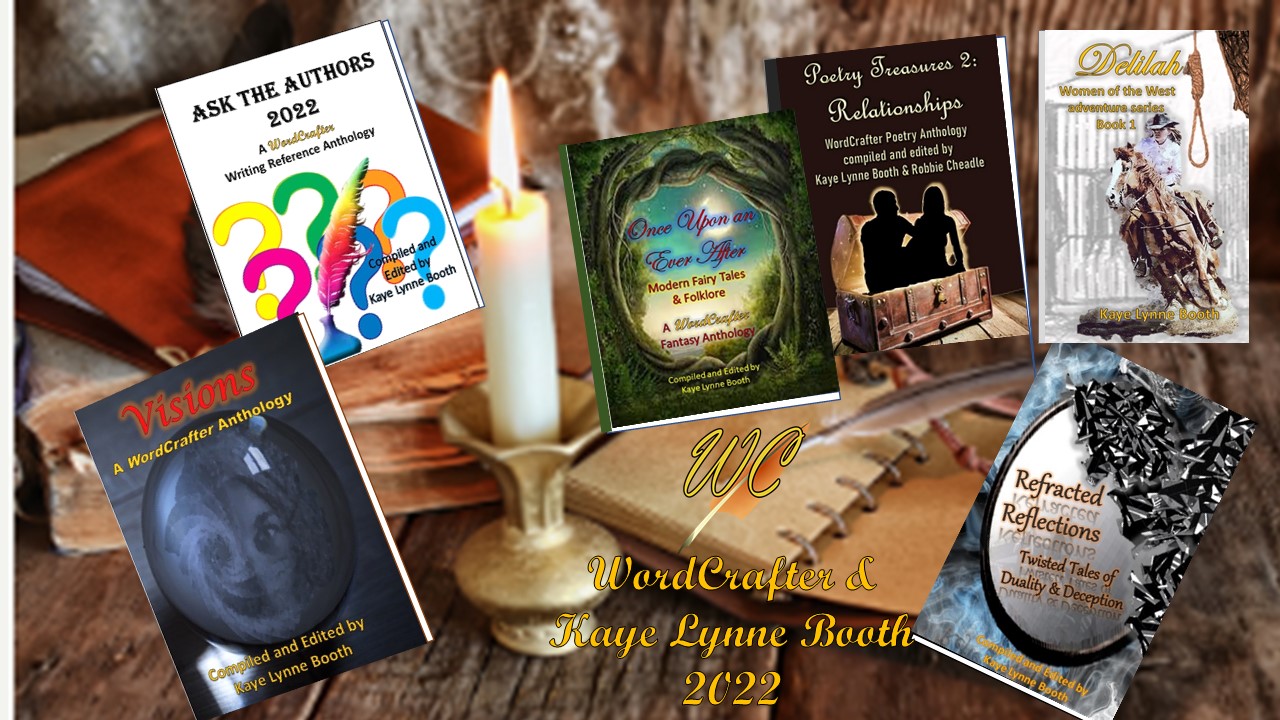
Looking for my 100 True Fans
The concept of 1,000 true fans was based on the theory of Wired editor, Kevin Kelly that a creator could make a descent living online with 1,000 truly invested fans, and it’s a concept that has been around for more than a decade. Today’s thinkers have revised that theory, and now it is believed that really, 100 true fans are all you need in this new “passion economy” which appears to be rising from within the new global internet communities, according to Aayushi Rachana, in her article “”100 True Fans” is All You Need in Passion Economy”, on Medium.com (March 11, 2021): https://medium.com/hapramp/all-you-need-to-know-about-100-true-fans-3fd72a35154f True fans are those who believe in you and want to support you in your creative endeavors; those fans who will buy everything that you write, just because you wrote it. And supposedly, we all have them – we just need to find them, or rather, we need to draw them to us.
That’s why I’ve decided to embark on a search for my own 100 true fans as I prepare to take my writing career to the full time level, but they aren’t going to just walk into my life and say, “Hi. I’m here to read everything you write, because I know how wonderful you are.” No, that’s not how it happens. True fans have to be earned; they have to be cultivated and grown from followers into fans, and a few will even mature into super fans, or true fans. But it doesn’t happen overnight, and it won’t happen on its own, and for me, it may be even more of a challenge as a multi-genre author who writes her heart instead of trying to write to market. So, I’ve developed a plan for drawing in followers, and hopefully, seducing them into fans, and then with luck it will turn into a long term relationship of super fans. Do I really have fans out there? We’ll just have to wait and see what happens.
The first step is to offer a way for my followers to become fans by learning more about me and my books through my newsletter. I haven’t been as good as I should have been about my newsletter, I admit. In fact, I let it go to the wayside for two years and only primed it with a revival issue this past month, which gave a brief overview of upcoming releases and current projects, including a reminder of the approaching deadline for the 2022 WordCrafter Short Fiction Contest (see submission guidelines here), and let my readers know that I’m still here. Newsletters also offer a way for followers to engage via email response, an opportunity for a connection to be made, which makes it more likely that they will become fans, or even superfans.
If you are reading this, then chances are good that you are at least a follower of mine. If you’d like to get to know me better or learn more about upcoming releases from myself or WordCrafter Press, you can join my newsletter and get a free digital copy of my paranormal mystery novella, Hidden Secrets, here: https://mailchi.mp/64aa2261e702/klb-wc-newsletter. Go on and subscribe. It’s free and you never know, you may even become a fan of you like what you discover in my newsletter.
Poetry Treasures 2: Relationships – Cover reveal

Above, you see the fantastic cover designed by Teagan Geneveine. I’m pleased to announce that to celebrate National Poetry Month, Poetry Treasures 2: Relationships will be scheduled for release in April. This wonderful poetry anthology features the works of guests from last year’s “Treasuring Poetry” blog series right here on Writing to be Read, hosted by Robbie Cheadle. Contributors include Arthur Rosch, Elizabeth Merry, D. Avery, M.J. Mallon, Miriam Hurdle, Colleen M. Chesebro, Lauren Scott, Harmony Kent, JulesPaige, Lynda McKinney Lambert, and Robbie Cheadle. Keep watching here, because it will be up for preorder soon.
Gilded Glass Up for Pre-order

You’ve all heard me talk about the great new anthology I am helping to put together through my publishing course at Western State Colorado University. In addition to the fabulous stories chosen from a plethora of exceptional submissions, it features stories by Sherrilyn Kenyon, Alan Dean Foster, Jonathan Maberry, Kristine Kathryn Rusch, and Michaelbrent Collings. I’m excited to tell you this amazing anthology is scheduled for release in July, but is now available for preorder and you can find it at your favorite retailer through books2read at the link below.
https://books2read.com/u/bwKZ8Y
______________________________________________________________________________
Sign up for the Kaye Lynne Booth & WordCrafter Press Newsletter for and book event news for WordCrafter Press books, including the awesome releases of author Kaye Lynne Booth. Get a free digital copy of Kaye Lynne Booth’s paranormal mystery novella, Hidden Secrets, just for subscribing.
Share this:

Treasuring Poetry: Meet poet and author Abbie Taylor
Posted: March 16, 2022 Filed under: Book Review, Books, Interview, Poetry, Review, Treasuring Poetry | Tags: Abbie Taylor, Author Interview, Book Review, How to Make a Better Musetrap, Poetry, Robbie Cheadle, The Red Dress, Treasuring Poetry, Writing to be Read 47 CommentsToday, I am delighted to introduce poet and author, Abbie Taylor, to discuss her favourite poems and poetry in general.
Which of your own poems is your favourite?
“The Bedroom” is one of those red herring poems that makes you think it’s about one thing, then turns out to be about another. It illustrates how much my late husband Bill depended on me after suffering two strokes that paralyzed his left side. It’s my favorite because even today, almost ten years after his passing, I’m amazed that I was able to meet his needs for six years after his strokes, despite my limited vision. Here’s the poem:
The Bedroom
At three in the morning,
I’m mildly aroused
by the gentle touch of his hand.
He only has one good arm and leg
but still knows how to please me.
As he strokes me,
and I breathe the scent of his sweat,
I purr with anticipation.
The mood is shattered
when he whispers, “I need to pee.”
What inspired you to write this particular poem?
Every night, after I brought Bill home from the skilled nursing facility, where he recuperated after his strokes, he woke me at least once, sometimes more than once, during the night, because he needed assistance to sit on the side of the bed and use a urinal. He was never demanding during this time. He gently woke me by rubbing my back and shoulders. Once I was fully awake, he said, I need to pee.” After he heard me read the poem during a public event, when he woke me, he would say, “What does your poem say I have to do?” Eventually, he was able to use the urinal in bed without sitting up first. So, all I had to do was get up and empty the urinal periodically, which made life a lot easier.
What are your plans for your poetry going forward?
I don’t have any definite plans. I’ve put together several collections but haven’t had much time to do anything with them. I imagine I’ll eventually publish them.
What is your favourite poem?
I’m assuming you want to know about my favorite poem by another author. Well, that would be “The Lanyard” by Billy Collins. Here it is, along with a link to a video of him reading it.
The Lanyard
BY BILLY COLLINS
The other day I was ricocheting slowly
off the blue walls of this room,
moving as if underwater from typewriter to piano,
from bookshelf to an envelope lying on the floor,
when I found myself in the L section of the dictionary
where my eyes fell upon the word lanyard.
No cookie nibbled by a French novelist
could send one into the past more suddenly—
a past where I sat at a workbench at a camp
by a deep Adirondack lake
learning how to braid long thin plastic strips
into a lanyard, a gift for my mother.
I had never seen anyone use a lanyard
or wear one, if that’s what you did with them,
but that did not keep me from crossing
strand over strand again and again
until I had made a boxy
red and white lanyard for my mother.
She gave me life and milk from her breasts,
and I gave her a lanyard.
She nursed me in many a sick room,
lifted spoons of medicine to my lips,
laid cold face-cloths on my forehead,
and then led me out into the airy light
and taught me to walk and swim,
and I, in turn, presented her with a lanyard.
Here are thousands of meals, she said,
and here is clothing and a good education.
And here is your lanyard, I replied,
which I made with a little help from a counselor.
Here is a breathing body and a beating heart,
strong legs, bones and teeth,
and two clear eyes to read the world, she whispered,
and here, I said, is the lanyard I made at camp.
And here, I wish to say to her now,
is a smaller gift—not the worn truth
that you can never repay your mother,
but the rueful admission that when she took
the two-tone lanyard from my hand,
I was as sure as a boy could be
that this useless, worthless thing I wove
out of boredom would be enough to make us even.
Why do you like this poem?
In a humorous way, it emphasizes the idea that our mothers do so much for us but we feel we don’t do enough for them.
About Abbie Taylor

Abbie Johnson Taylor is the author of three novels, two poetry collections, and a memoir. Her work has appeared in The Avocet and Magnets and Ladders. She lives in Sheridan, Wyoming, where, for six years, she cared for her totally blind late husband who was partially paralyzed by two strokes soon after they were married. Before that, she worked for fifteen years as a music therapist in nursing homes and other senior facilities. During that time, she also facilitated a support group for blind and visually impaired adults, taught Braille, and served on the advisory board to a state trust fund providing adaptive equipment to blind and visually impaired children and adults.
Contact Abbie Taylor
Website: https://www.abbiejohnsontaylor.com
Blog: https://abbiescorner.wordpress.com
Facebook: https://www.facebook.com/Abbies-Corner-of-the-World-988391584616528/
Amazon: https://www.amazon.com/Abbie-Johnson-Taylor/e/B00GDM1BWK/#nav-tophttp://
My review of The Red Dress by Abbie Taylor

The Red Dress is a lovely novel about a woman, Eve Sawyer, who has become a best selling author and has a devoted husband and three children, but who has never been able to move on from an unfortunate incident in her younger years when, in a fit of embarrassed irritation, she gave away the red dress that her mother had made for her to wear to her prom. Although Eve was goaded by her selfish roommate, Charlene, into giving her the dress, her mother has never forgiven her for this transgression and it has impacted heavily on their relationship. Her mother is now suffering from dementia and is being cared for in a home for the elderly, but she still remembers that Eve gave away this dress and holds it against Eve.
Eve wore the dress to her prom and she associated the dress with bad memories as her date had disappeared with her best friend, Adele, and she had found them in a compromising position in the back of his father’s car. Eve cuts Adele out of her life and has not contacted her in many years, even though Adele had returned to their home town to raise her son, conceived on the night of the prom.
The story starts with Eve receiving a Facebook request to connect with her old roommate, Charlene. She accepts the request, although she had doubts because she didn’t like Charlene. Before long, her daughter, Ashley, is in touch with Charlene’s daughter, Brenda, and the situation is irreversible. Eve is having her own problems with overwork and issues with her older daughter, Julie, who feels neglected as a result. Her husband is also irritated with her because he feels she favours their younger daughter and son and is harsh with Julie.
This is a story that tackles the themes of working mothers, unresolved grudges and situations from the past, raising teenage children, forgiveness, terminal illness, and death. The author does a good job of sharing Eve’s frustration at her mother and older daughter, irritation at Charlene for the trouble she has caused her, and hurt at Adele’s betrayal of their friendship.
Eve has to confront her negative emotions to resolve these lingering troublesome relationship issues from her past and move on with her future.
I enjoyed the character of Eve and found her to be realistic and relatable. Her situation vividly establishes the difficulties that can result from unsettled emotional problems from the past and juggling work and motherhood.
I enjoyed this story and would recommend it to readers of family dramas.
What Amazon says
When Eve went to her high school senior prom, she wore a red dress that her mother had made for her. That night, after dancing with the boy of her dreams, she caught him in the act with her best friend. Months later, Eve, a freshman in college, is bullied into giving the dress to her roommate. After her mother finds out, their relationship is never the same again. Twenty-five years later, Eve, a bestselling author, is happily married with three children. Although her mother suffers from dementia, she still remembers, and Eve still harbors the guilt for giving the dress away. When she receives a Facebook friend request from her old college roommate and an invitation to her twenty-five-year high school class reunion, then meets her former best friend by chance, she must confront the past in order to face the future.
Purchase The Red Dress
My review of How to Build a Better Mousetrap: Recollections and Reflections of a Family Caregiver (Poetry)

How to Build a Better Mousetrap is a memorable book of poetry which covers two distinct time periods in the author’s life.
Part 1: On Being a Family Caregiver, revolves around the poet’s role as caregiver to her husband following his having two strokes, a year apart, and becoming partially paralysed.
The second section section of the book comprises of Part 2: Recollections, Part 3: Reflections and Part 4: In the End which describes through the medium of freestyle poetry, the various states of the poet’s life from her early childhood through to her old age. There is little mention throughout the book of the author’s visual impairment, but I am aware of it as I have previously read an anthology, Understanding edited by Stevie Turner, that disclosed this information.
The poetry in this book is compelling and quite fascinating in its honesty as the poet ventures to express feelings and emotions that many people might seek to hide. It is refreshing to read expressions of helplessness and even the occasional anger and resentment towards a set of circumstances that have so drastically and unexpectedly impacted on the poet’s life. These emotions are overwhelmed by the poet’s clear devotion and love for her partner.
These verses from three different poems in this collection illustrate this internal conflict:
“In the beginning, you knew all about me
which buttons to push,
how to hook me up,
install programs, fix problems.
Now, you hesitate,
push the wrong buttons.
When I don’t give you the desired response,
you beat my keyboard, proclaim I don’t work.”
From Before and After
“I open my eyes,
gaze upon his sweet sleeping face,
long to hold, kiss him,
caress his hair, his cheek.”
from Awakening
“I’ll never tell you you’re stupid
when you forget something or don’t understand.
I’ll never tell you you’re lazy
when you sit at the kitchen table in your wheelchair
while I fix dinner, clean up.
I’ll never tell you you’re a baby
when I must do most things for you.”
from Things I’ll Never Tell You
What Amazon says
In January of 2006, Abbie Johnson Taylors husband suffered a stroke that left him paralyzed on his left side. After months of therapy in a nursing facility, he returned home in September of that year. Although he still had little use of his left arm and leg, it was hoped that through outpatient therapy, he would eventually walk again. In January of 2007, he suffered a second stroke that wasnt as severe, but it was enough to impact his recovery. In August of that year, his therapy was discontinued because he showed no progress. He has never walked since.
The first five poems tell the story of how Taylor found her husband when he suffered his first stroke, detail events in the first few months afterward, and describe Taylor and her husbands reactions. The rest of the poems in the first part were inspired by Taylors experiences while caring for her husband. Covering such topics as dressing, feeding, toileting, their relationship, and his computer, they often provide a humorous outlook. Some poems are from the husbands point of view. Poems in the next two parts cover childhood memories and other topics. The last section of poems was inspired by Taylors fifteen years of experience as a registered music therapist in a nursing home before marrying her husband.
Purchase How to Build a Better Mousetrap: Recollections and Reflections of a Family Caregiver
About Robbie Cheadle
Robbie Cheadle is a South African children’s author and poet with 9 children’s books and 2 poetry books.
The 7 Sir Chocolate children’s picture books, co-authored by Robbie and Michael Cheadle, are written in sweet, short rhymes which are easy for young children to follow and are illustrated with pictures of delicious cakes and cake decorations. Each book also includes simple recipes or biscuit art directions which children can make under adult supervision.
Robbie has also published 2 books for older children which incorporate recipes that are relevant to the storylines.
Robbie has 2 adult novels in the paranormal historical and supernatural fantasy genres published under the name Roberta Eaton Cheadle. She also has short stories in the horror and paranormal genre and poems included in several anthologies.
Robbie writes a monthly series for https://writingtoberead.com called Growing Bookworms. This series discusses different topics relating to the benefits of reading to children.
Robbie has a blog, https://robbiesinspiration.wordpress.com/ where she shares book reviews, recipes, author interviews, and poetry.
Find Robbie Cheadle
Blog: https://www.robbiecheadle.co.za/
Blog: robbiesinspiration.wordpress.com
Twitter: BakeandWrite
Instagram: Robbie Cheadle – Instagram
Facebook: Sir Chocolate Books
______________________________________________________________________________________________
Want to be sure not to miss any of Robbie’s “Treasuring Poetry” segments? Subscribe to Writing to be Read for e-mail notifications whenever new content is posted or follow WtbR on WordPress. If you found it interesting or entertaining, please share.
Share this:

Fun Poetry Challenge: Mothers Are Special People
Posted: January 24, 2022 Filed under: Poetry, Writing Challenge | Tags: Moms, Mother's Day, Mothers, Poetry, Poetry Challenge, Writing to be Read 7 Comments
This is a poem I wrote about my mom back in 2010:
Mom
I miss how your smile lights up your face and makes you shine.
I miss having someone there who trusts and believes in me.
I miss your kindness, and your generosity, your willingness to share.
I miss how you always see the glass as half- full.
I miss your energy and enthusiasm.
Most of all, I miss the way your arms envelope me in a hug.
I miss you, Mom.
Do you have a mom who is, or was, pretty special? Of course you do. We all feel our moms were, or are the best mom on the planet, right? I know my mom was. She was my best friend. She was special to me.
Moms are pretty special people. They put in countless hours to care for and comfort us. They love us unconditionally, no matter how bad we mess up. And they don’t stop caring and being our moms just because we grow up and move away. Our Moms are always there for us. Yep. Moms are pretty special.
So for this poetry challenge, I want you to write a poem, in your choice of form, telling me what makes your mom so special. You can send them to me at kayebooth@yahoo.com by March 15, to be shared in a special post in honor of Mother’s Day on May 9th, 2022.