Digital vs. Print Books
Posted: March 27, 2017 Filed under: Book Review, Books | Tags: Book Reviews, digital books, eBooks, Print Books, Publishing, Reading Leave a comment
I recently read an article by Zoe Wood in The Guardian, which states that print book sales are on the rise, and may be making a comeback. I, for one, welcomed this news with open arms. For me, there is nothing like kicking back with a good paper book in my hands. I can get comfy with my Kindle Fire, but it’s just not the same. And I don’t know that I can explain exactly why that is, but it is.
When I first began doing reviews, back in 2010, as the Southern Colorado Literature Examiner, my ARCs all came via snail mail, in print form. Now days, an author can have an ARC to you in a matter of minutes, because they all send digital copies, and everyone publishes in digital format. Some authors also put out print editions, but it’s too easy to get a digital copy to the reviewer for them to want to give away the print ones.
Since my review books are now arriving via e-mail, I adapted by first getting an e-reader app. for my computer, which wasn’t always convenient, but got me by. Then, I won a Kindle Fire in a giveaway on Author Market, (where I now offer my editing and proofreading services for very reasonable prices). With the Fire, my review reading became much easier, because the Fire is small enough that I can carry it with me, so I can pick it up and read whenever I get a free minute.
But, it’s still not a print book. I can’t help but miss the physical act of turning the pages one by one as I advance through the story, the anticipation as the pages left get thinner and thinner. For me, there is something comforting in that small act. My Fire has a feature that makes it look like a physical page is turning, trying to simulate it, so I must not be the only one who misses it. I know I get downright excited when I agree to review a book and the author asks for my street address instead of my email.
Gaby Wood talks about the differences in the way we read with the rise of digital publishing in her article in the The Telegraph. There’s no getting around it. Reading a digital book is not the same as reading a print book, and it never will be. However, we are a resilient bunch, and I have no doubt that we will adapt to the changes that are thrown our way where our reading material is concerned. Already, a new format is gaining popularity in the form of audio books. They aren’t new, but they are rising in popularity, so who’s to say they won’t be the next rising trend?
Like this post? Subscribe to Writing to be Read for e-mail notifications whenever new content is posted.
Image Credit: The Awkward Yeti. theawkwardyeti.com
Share this:

Looking Back Over 2016
Posted: December 26, 2016 Filed under: Articles, Book Review, Books, Children's Books, Commentary, Fiction, Film Review, Horror, Movies, Nonfiction, Poetry, Promotion, Publishing, Screenwriting, Self-Publishing, Steampunk, Stories, Weekly Writing Memo, Western, Writing, Writing Event, Writing Tips, Young Adult | Tags: 2016, Book Reviews, Books, Fiction, marketing, Movies, Novel, Novels, Poetry, Review, Reviews, Writing, Writing to be Read 4 Comments
This will be the last reflective post of the year. Next Monday’s post will find us in 2017. For my writing career it has been a slow take off, but I’ve seen progress. In July, I completed my Master of Fine Arts degree in creative writing. With emphasis in both genre fiction and screenwriting, and two completed novels, Delilah and Playground for the Gods Book 1: In the Beginning, two full feature film scripts and one comedy series pilot script in hand, I eagerly jumped right in to get my feet wet in either the publishing and/or screenwriting industry. I began submitting my work to agents, publishers, and competitions like crazy. I received mostly rejections, as expected, and although I still haven’t found a home for either novels or scripts, I did manage to find a home for two poems and two short stories. Not too bad. While the poems, Aspen Tree and Yucca! Yucca! Yucca!, appeared in print, (in Colorado Life (Sept.-Oct. 2016) and Manifest West Anthology #5 – Serenity and Severity, respectively), my short story, I Had to Do It was published on Zetetic: A Record of Unusual Inquiry, and my not so short, short story, Hidden Secrets was published on Across the Margin.
2016 has been a pretty good year for Writing to be Read. The revamping of the blog site was completed in March, I’ve managed post things on a fairly regular basis, we were honored with guest posts by my friend Robin Conley, and my visits and page views have risen, with almost 2000 visitors and over 2,500 page views. Looking at this, makes me feel pretty good about the blog, as a whole. Another good change is the addition of screenwriting content, which I believe has drawn a larger audience by widening the scope of the content.
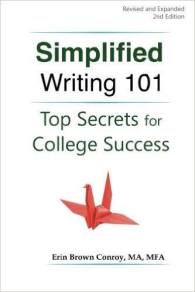 The top post of 2016 was my book review of Simplified Writing 101, by Erin Brown Conroy, which is an excellent tutorial on academic writing, including writing advice that every writing student should know. After that, the reflective post Writing Horror is Scary Business would be second in line. Other popular posts include my four part Making of a Screenplay series,( Part 1, Part 2, Part 3, and Part 4), my Tribute to My Son, and What Amazon’s New Review Policies Mean for Writing to be Read. More recently, my ten part series on publishing, Pros and Cons of Traditional vs. Independent vs. Self-Publishing gave me the opportunity to interview some awesome names in the publishing industry: self-published authors, Jeff Bowels, Tim Baker and Art Rosch; traditionally published authors Stacia Deutsch and Mark Shaw; independently published author Jordan Elizabeth; and children’s author Nancy Oswald, who has published under all three models; as well as Caleb Seeling, owner of Conundrum Press and Curiosity Quills Press – with the final installment summarizing the conclusions made from those interviews.
Many of my posts were reflections of my own writing experience. These included: Why Writing is a Labor of Love; Fear is a Writer’s Best Friend; I’ve Come A Long Way, Baby; Writing the Way That Works For You; Creating Story Equals Problem Solving; What’s A Nice Girl Like Me Doing Writing in a Genre Like This?; Acceptance or Rejection – Which Do You Prefer?; A Writer’s Life is No Bowel of Cherries; Write What You Know; Discouragement or Motivation?; What Ever Happened to Heather Hummingbird?; How You Can Help Build a Writer’s Platform; and Why Fiction is Better Than Fact.
 Sadly, I only attended two events that were reported on, on Writing to be Read in 2016 – the 2016 Ice Festival in Cripple Creek, and the 2016 Writing the Rockies Conference in Gunnison, Colorado. What can I say? I’m a starving writer. This is something I hope to improve on in 2017 by attending more events to report on. One possible addition to the 2017 list that I’m very excited to think about is the Crested Butte Film Festival. The details are not ironed out yet, but I’m keeping my fingers crossed.
Screenwriting content included this past year seemed to be popular. In addition to my Making of a Screenplay series and Writing Horror is Scary Business, Writing to be Read also featured Writing Comedy for Screen is a Risky Proposition, and a book review for Hollywood Game Plan, by Carole Kirshner, which I can’t recommend highly enough for anyone desiring to break into the screenwriting trade. Robin’s Weekly Writing Memo also included several writing tips that could be applied equally to literature or screenwriting.
Another project I’m particularly proud of is my ten part series on publishing, Pros and Cons of Traditional vs. Independent vs. Self-Publishing, which I just finished up last week. In this series I interviewed nine professionals from within the industry to get the low down on the three different publishing models. My interviews included self-published authors Jeff Bowels, Tim Baker and Art Rosch, traditionally published authors Stacia Deutsch (children’s books) and Mark Shaw (nonfiction), and independently published YA author Jordan Elizabeth. To balance things out a bit, I also interviewed children’s author Nancy Oswald, who has published with all three models, Clare Dugmore of Curiosity Quills Press and Caleb Seeling, owner and publisher at Conundrum Press.
 One of the great things about doing book reviews is that you get to read a lot of great books, in with the okay and not so great ones. In addition Simplified Writing 101, my five quill reviews in 2016 included Jordan Elizabeth’s Runners & Riders, Mark Shaw’s The Reporter Who Knew Too Much, Nancy Oswald’s Trouble Returns, Carol Riggs’ Bottled, Jeff Bowles’ Godling and Other Paint Stories, Janet Garber’s Dream Job, Art Rosch’s Confessions of an Honest Man, and Mark Todd and Kim Todd O’Connell’s Wild West Ghosts. I don’t give out five quills lightly and every one of these books are totally worthwhile reads.
 Of course, not all books get a five quill rating. Other books I reviewed that I recommended with three quills or more include three short story anthologies: Chronology, Under a Brass Moon, and Cast No Shadows; two poetry collections: Suicide Hotline Hold Music by Jessy Randall and Walks Along the Ditch by Bill Trembley; Escape From Witchwood Hollow, Cogling, Treasure Darkly, The Goat Children, and Victorian by Jordan Elizabeth; Dark Places by Linda Ladd; Chosen to Die by Lisa Jackson; Wrinkles by Mian Mohsin Zia; Full Circle by Tim Baker; The 5820 Diaries by Chris Tucker; The Road Has Eyes: An RV, a Relationship, and a Wild Ride by Art Rosch; Hollywood Game Plan by Carol Kirschner; Keepers of the Forest by James McNally; 100 Ghost Soup by , and A Shot in the Dark by K.A. Stewart. I also did two movie reviews: Dead Pool and Point Break.
I feel very fortunate to have had Robin Conley join us with her Weekly Writing Memo and her guest movie reviews. The useful writing tips in her Weekly Writing Memos covered a wide range of topics including critiquing, using feedback, ways to increase tension, Relatability or Likeability?, 3 Types of Plot, story research, what to write, making your audience care, world building, handling feedback, writing relationships, establishing tone, editing, word choice, How to Start Writing, endings, queries, Parts of a Scene, making emotional connections, the influence of setting, Building a Story, Inciting Your Story, movement and dialog, Writing Truth, time, Overcoming the Blank Page, Networking, character names, theme, set up, cliches, parentheticals in screenwriting, horror inspiration, and Learning to Write. Robin’s guest post movie reviews included Pride and Prejudice and Zombies, Batman vs. Superman, Miss Perigrin’s Home for Peculiar Children, and The Neon Demon. 
I am thankful for Robin’s valuable content and am glad that she will still be contributing Memos on a monthly, rather than a weekly basis. Although I was sad to lose her weekly content, I am happy for her as she moves forward in her own writing career and I wish her well in her writing endeavors. For those of you who looked forward to her weekly posts, you can catch more of her content on her own blog, Author the World.
2016 was a great year for Writing to be Read, even if it was kind of rough for the author behind the blog. You readers helped to make it a good year and I thank you. Now it’s time to look ahead and see what’s in store for 2017 Writing to be Read. I mentioned some of the things I hope to achieve above: more posts pertaining to the screenwriting industry, and coverage of more events throughout the year are two of the goals I have set for my blog. I also plan to add some author, and hopefully, screenwriter profiles into the mix. I had good luck with author profiles during my Examiner days, and I think they will be well received here, as well.
I also hope to bring in some guests posts by various authors or bloggers, or maybe screenwriters, just to give you all a break from listening to me all the time. I believe Robin plans to continue with Monthly Writing Memos, which will be great, too.
I look forward to all the great books that I know are coming my way in 2017, too. The first reviews you have to look forward to are a short memoir, Banker Without Portfolio by Phillip Gbormittah, a YA paranormal romance, Don’t Wake Me Up by M.E.Rhines, a Rock Star romance, Bullet by Jade C. Jamison and a short story, How Smoke Got out of the Chimneys by DeAnna Knippling.

I hope all of you will join me here in the coming year. Follow me on WordPress, or subscribe to e-mail for notifications of new posts delivered to your inbox. Have a great 2017 and HAPPY WRITING!
Share this:

Writing to be Read: Honest Book Reviews
Posted: October 1, 2012 Filed under: Book Review, Writing | Tags: Book Reviews, Southern Colorado Literature Examiner, Writing to be Read Leave a comment I recently read several articles that discussed the value of reviews in today’s market place. These articles questioned the reliability of reviews, in a time when there are people being paid to write positive reviews and the difficulty in knowing which reviews to believe in a market saturated with positive reviews. I do book reviews here, on Writing to be Read, as well as on my Southern Colorado Literature Examiner page, so as a reviewer, I looked at my own work to determine the validity of their arguments.
According to Richard Brody in his article in The New Yorker, How to be a Critic, “Critics don’t need to be nice (programmatic niceness is itself another sort of self-falsification and self-punishment, and is at least as sanctimonious as self-justifying meanness), but they do need to know where they stand.” I see an obligation of the reviewer to the readers, to portray the books reviewed as honestly as possible. I feel a certain responsibility in knowing that someone may or may not chose to read a certain book, based on my opinion of it. Readers that concur with the opinions offered in my reviews are more likely to visit my sites again. However, I think that honest, unbiased opinions may also generate repeat readers, even if they don’t agree with the opinions expressed in my reviews.
I am not one of those reviewers that is paid to write positive reviews. Five star reviews that are bought and paid for cheat the reader, setting them up to be disappointed by a book that was not all it was portrayed to be. I don’t receive monetary compensation for my reviews, although I do receive ARC copies from the authors, which in no way influence my opinions of their book. According to David Streitfeld, in his New York Times article, The Best Book Reviews Money Can Buy, part of the problem is that readers have no way to know if the review that they are reading is a paid review. In a market that is over-saturated with the rise of self-publishing and digital media, anyone can pay to have a five star review written for their book.
On the other hand, I do feel an obligation to the author, who has put his or her all into the work, to portray it in as positive a light as I can possibly shine on it and still be honest. As Brody puts it, “It takes months or years to make a film or write a book, a few hours or a few days to dash off a review…” As a reviewer, I hold in my hands the power to dash dreams with an unkind word or a negative opinion. It is a matter not to be taken lightly. Daryl Campbell explains it well in his the Millions essay, Is This Book Bad or Is It Just Me? Anatomy of Book Reviews,
“The decision to like or not like a book is where every book review
begins. This is what gives the genre its underlying suspense …
but also its frustrating sense of chaos, because no matter how
technically sound or philosophically sophisticated or beautiful
a book might be, something minor or tangential can turn off a
reviewer so much that he or she decides the book is not good.”
While in the Salon article, The Case for Positive Book Reviews, Laura Miller claims the necessity of more positive reviews,
“Everyone who has ever been disappointed by a book praised
in the press is prone to embracing the too-nice position; as a rule,
only authors worry that reviews are too mean… All too often,
people relish negative reviews with a free-floating glee that leaves
the reviewer, however justified, feeling a bit dirty afterward.”
I am compelled to be honest about my thoughts on a book, never shirking from expressing what I did not like about it, as well as what I did. Likewise, I try to relate things that I found to be likable about a book that did not appeal to me, even if they were few. Seldom have I picked up a book that I could not find something positive to say. It is a fine line that must be walked in order to achieve a balance between the positive and negative aspects, making the book review a literary work, in itself. Campbell goes as far as to claim that, “book reviewing is a genre with its own conventions, just as every murder mystery must start with a body, and every epic fantasy must feature elvish words with too many apostrophes.”
The idea of book reviews being a genre of their own lends credibility to my craft. Of course, book reviews are not the only thing I write, but I do pride myself just as much in them, as in anything else I write, and I put just as much thought and effort into them. Not only do I truly read every book that I review, I actually take notes to keep my thoughts about them in order, and I work hard to word my reviews so that are not too harsh, nor do they turn out to be gushing fountains of worthless praise.




















What’s a Reviewer to Do?
Posted: February 13, 2017 | Author: kayelynnebooth | Filed under: Book Review, Books, Commentary, Fiction, Opinion, Promotion, Self-Publishing, Writing | Tags: Book Reviews, Feedback, Honest Book Reviews | 4 CommentsI started Writing to be Read to promote my own writing and to help other authors, through writing reflections and reviews. We’re all in the same situation. Marketing and promotion are a big part of writing these days, and authors are expected to self-promote to some extent, even if they are traditionally published. The way that books are being rated now, in many places, including Amazon, by the reviews they receive. I post partial reviews on both Amazon and Goodreads for this reason, and have even taken the time to post on Smashwords and Barnes and Nobles upon request from the author.
But, what is a reviewer to do when a book she’s reviewing falls short of all expect a film, like my review of Angel Falls Texas on Friday? Every review I publish has an end note at the bottom which reads like this:
“Kaye Lynne Booth does honest book reviews on Writing to be Read in exchange for ARCs at no charge. Have a book you’d like reviewed? Contact Kaye at kayebooth(at)yahoo(dot)com.”
I don’t believe in charging for a review because I don’t believe in paying for a review. And I don’t believe in that because I don’t think you can get an honest review when it is paid for. And I do believe a review should be honest. While I amin favor of promoting other authors with my reviews, I don’t believe in hyping up a work when it is not deserved.
Too many authors get their books on the best sellers list simply by having great reviews posted by those who love the author, but don’t honestly reflect the quality of their book. It’s sad but true. (To learn more about what that best seller label really means, check out this article by Brent Underwood.)
As I shared my post for my review of Angel Falls Texas last Friday, I reacted with a sad on each one, because I hated having to publish such a negative review. It’s certainly not going to help the author sell books, which is usually my goal. In this case, to post a review to encourage sales would have made me feel dishonest to my own readers.
I do both solicited and unsolicited reviews. Those that are unsolicited are from books I purchased on my own and I use them as fill in posts when I don’t have any solicited reviews to publish. With reviews that have been solicited by the author or I have requested an ARC from the author, which don’t rate at least three quills, I usually contact the author, tell them my assessment, and offer them the chance to not have the review published. Most authors, like my author friend Chris Tucker, opt to publish the review and take their licks, but there have been a few who have requested that I hold off publication. These authors, hopefully, then go and make revisions to improve their book and then have me give it another chance. I’d rather do that than post a review that may hurt sales.
I try to be fair in my reviews. If a book is one of a genre that is not one of my favorites, I will state that in the review, being upfront about anything that may have influenced the my opinion. But honestly, as authors who are putting their work out there, we all take the chance that someone out there will not like our work, for whatever reason, and will post an unfavorable review. After all, we are only human, and we are never going to please everyone.
As a reviewer, I know I’m not going to love every book that I review. There will be times when my reviews will be less than shining, but I have to be true to myself and to you, my readers, and publish how I honestly feel. All I can do is try and be specific about what I didn’t like in the hope that the author will take it like a critique and find something useful from my feedback to help to improve their writing or the value of the product they put out.
I think the number one thing we, as writers, can do is remember what one of my Creative Writing professors, Russell Davis, said when talking about receiving critiques from our cohorts,
“Remember, it’s not about you. It’s not personal. It’s all about the writing.”
Like this post? Subscribe to Writing to be Read for e-mail notifications whenever new content is posted.
Share this: