Interview with mystery author Gerald Darnell
Posted: August 12, 2019 Filed under: Author Profile, Books, Fiction, Interview, Mystery, Writing | Tags: Author Interview, Carson Reno mysteries, Gerald Darnell, Murder Mystery, mystery, Writing to be Read 4 Comments
My guest today has made a career from a single mystery series. He must be doing something right. His Carson Reno Mystery series consists of 18 books and still going strong. He was awarded the 2016 Indie Author Crime Master “Best Thriller/Suspense/Murder Mystery Author” for book 18, Lack of Candor. Let’s find out how he’s done it. Please help me welcome mystery author Gerald W. Darnell.
Kaye: Can you tell me about your author’s journey? How did you get where you are today as a writer?
Gerald: I began writing in college, but nothing serious. After college I published a couple of articles for outdoor magazines and then joined the working world. I retired after 30 years in the computer industry and wrote my first non-fiction book (which I had been working on for about 15 of those years). It is mostly a bio about my life Don’t Wake Me Until It’s Time to Go. My Carson Reno series started after that – and 18 books later…here we are.
Kaye: What do you like to do when you’re not writing?
Gerald: Anything outdoors. I have a boat, and when I’m not riding I’ll be fishing.
Kaye: You describe what you write as “Fiction for Fun”. Can you clarify for my readers just what you mean by that?
Gerald: Sure. I use real places with semi-real characters (reflections of my friends or people I know) and tell a story that didn’t happen – but could have.

Kaye: In your Carson Reno Mystery series each book is a stand-alone mystery, yet you claim they have character continuity across novels. How do you accomplish that?
Gerald: While the core characters might grow (as my writing grows) they change very little from book to book. And each new book has enough new characters to keep any reader’s attention.
Kaye: Your latest book, Lack of Candor, received the 2016 Indie Author Crime Master award for best author in thriller/mystery/suspense category. Can you tell me a little about that book?
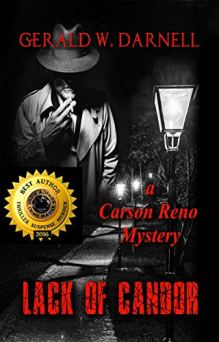 Gerald: It is set in 1962 with most of the story taking place in and around Memphis, Tennessee. A Sergeant with the Memphis Police Department is found dead only hours before his scheduled testimony before a grand jury. Was it suicide or was it murder? What was he going to testify about? A handwritten note left by the Sergeant and addressed to the District Attorney disappears. What was in the note? Was it a suicide note with information regarding his pending testimony or something else? A woman claiming to have information related to his planned testimony comes forward and seeks protection.
Carson is hired to look into the matter and provide protection to the mysterious woman, but protection from whom? The situation gets out of hand quickly, and Carson finds himself in trouble with most everybody involved. A dark cloud hangs over the truth, as he tries to determine the ‘good-guys’ from the ‘bad-guys’ from the ‘bad good – guys’.
This old fashion crime story takes Carson Reno and his crew on a complicated adventure, where it seems that no one is looking for a solution.
Kaye: What is the biggest challenge in writing mystery for you? Why?
Gerald: My time period (early 60’s) has its own challenge. Limited transportation, no cell phones, no CSI type of stuff to solve these crimes. Old black and white solutions to whatever Carson is involved in.
Kaye: What is the best part of writing mystery for you? Why?
Gerald: I’ll answer that by referring to what I tell other writers or wanna’be writers. Don’t write to get rich, but to enrich others.
Kaye: What time of day do you like to do your writing? Why?
Gerald: No particular time, but I prefer the evenings with a little ‘libation’ for inspiration.
Kaye: How do you decide on your titles? Where does this come in the writing process?
Gerald: Titles are always first and I have NO idea where they come from. My friends constantly ask the same question – wish I had a catchy answer.
Kaye: Of all of your books, which one is your personal favorite? Why?
Gerald: I have two and they are my most popular and best sellers – ‘Dead End’ and ‘Murder and More’. I like the stories and I guess my readers do too.


Kaye: Many of the events in your stories are inspired by real life events. What was the strangest or most unusual inspiration you’ve ever had for a story?
Gerald: ‘Dead End’ involves a chase scene in a rural Arkansas area where I spent many years when I was younger. The snow, the dirt roads, the mud, the outdoor part of me enjoys that.
Kaye: There are 18 Carson Reno books, one book in your Jack Sloan series: Concrete Jungle, in addition to your autobiographical book, Don’t Wake Me Until It’s Time To Go. So, is Carson Reno on the way out and Jack Sloan on the way in? Or is there more Carson in the future?
Gerald: More Carson and maybe a little more Jack. A work in progress.
Kaye: What are you working on now? What is next for Gerald W. Darnell?
Gerald: ‘The Disappearance of Robin Murat’ and it will be out before the end of this year (I hope). No spoilers, but a big part of the story takes place in New Orleans – one of my favorite cities. A great place for mystery and ‘bad-guys’.
I want to thank Gerald for chatting with me today and sharing his experiences and advice. You can learn more about Gerald Darnell and his books at the links below.
Website: www.geraldwdarnell.com/
Amazon Author page: https://www.amazon.com/gp/product/B07NQRPXMW/ref=dbs_a_def_rwt_hsch_vapi_tkin_p1_i5
Goodreads Author page: https://www.goodreads.com/author/show/4521276.Gerald_W_Darnell
Lulu.com Spotlight: http://www.lulu.com/spotlight/geralddarnell
LinkedIn: https://www.linkedin.com/in/geralddarnell
Like this post? Let me know in the comments. You can be sure not to miss any of Writing to be Read’s great content by subscribe to e-mail or following on WordPress.
Share this:

Interview with hardboiled crime fiction author Jim Nesbitt
Posted: July 8, 2019 Filed under: Books, Crime, Fiction, Hard-Boiled Crime Fiction, Writing | Tags: Author Interview, Crime Fiction, Ed Earl Burch, Hard-boiled fiction, Jim Nesbitt, The Best Lousy Choice, Writing to be Read 3 Comments
My guest today has a background in hard hitting journalism and he writes hard-boiled crime fiction in the tradition of Dashiel Hammet, and other famed crime writers. I’m pleased to be interviewing him because he represents a great literary tradition in genre. Please help me welcome, crime fiction novelist Jim Nesbitt.
Kaye: Your writing is classified as hard-boiled fiction, but you have your own style. Can you tell me a little about your style of hard-boiled fiction?
Jim: I’ve always thought of hard-boiled crime fiction as a distinctly American art form. Rooted in realism, cynicism, violence, corruption and a dark view of the American dream, it’s also a tremendously flexible genre. It’s best practitioners — from the founding fathers, Dashiell Hammett and Raymond Chandler, through Ross Macdonald, James Ellroy and the late and vastly underappreciated James Crumley — use it as a vehicle to comment on contemporary American life and politics, music, culture, the warped psychology of the hardened criminal and the suburban housewife, the tortured dance between men and women and anything else that strikes their fancy. When I decided to try my hand at fiction, I knew it would be hard-boiled crime fiction because it matches my outlook on life and my experience as a journalist as well as the freedom I saw in the books of the very best writers, not that I’m close to being in their class.
As for my style, it’s the result of years of working as a journalist who came up through the ranks at a time when long-format stories that used the narrative style and tradecraft of fiction were the rage, what I learned from reading Hammett, Chandler, Crumley, Ellroy, James Lee Burke and others and the genetics of coming from a long line of hillbilly storytellers. Every writer hopes to develop a unique voice, free from template and artifice. Few do. I write the way I talk — which is a curious mixture of film noir patter and cowboyspeak, with a little Tex-Mex thrown in. No surprise there since I spent quite a few years knocking around the West and the border between Texas and Mexico, used to own horses and am steeped in the dark movies of the 40s and 50s.
I’m also a strong believer in driving a story through snappy and hard-bitten dialogue, sharply defined characters with depth and lots of backstory and such a keen sense of place that it becomes a character unto itself. I spent a lot of time knocking around the West and the West Texas border country and my books are shot through with scenes based on what I saw out there. More than one reviewer has said my books have the soul of a classic Western, with hard-boiled and noirish trappings, and I tend to agree with them. Although they’re set in the late-80s and early 90s, they’re as much contemporary Westerns as they are hard-boiled crime novels.
Kaye: Tell me a little about your main character. Who is Ed Earl Burch?
Jim: Ed Earl’s a bit of an Everyman, a guy who has been knocked around by life. He’s a defrocked Dallas vice and homicide detective, tossed off the force for being a little too willing to beat the hell out of or shoot suspects and for being a terminal smartass who doesn’t know when to shut up. The brass also blames him for the death of his partner, which trebles the guilt he already feels.
Losing his badge robs Ed Earl of his sense of purpose and higher calling and takes away a job he’s really good at — chasing down killers. He’s a manhunter at heart, but without his badge, he retreats into a corner defined by the path from his apartment, to his ratty office and his favorite saloon, chasing down financial fugitives from the savings-and-loan bust of the mid-80s and taking on divorce cases he loathes because he’s in hock to his eyeballs.
What he isn’t is super-smart, like Sam Spade or Philip Marlowe. He’s tough and shrewd, but dogged more than brilliant. He’s no square-jawed Jack Reacher or other action hero one step removed from a comic book or graphic novel. He’s bearded, balding and has a belly. He’s got wrecked knees, a wounded liver and an empty bank account. He’s an anti-hero who sometimes forgets to live by his personal code — and a bit of a burnout.
In THE BEST LOUSY CHOICE, he starts out as an emotional wreck, plagued by nightmares from his last misadventure captured in THE LAST SECOND CHANCE, where he was almost killed by a psychotic drug lord who believed in Aztec heart sacrifice and had Ed Earl trussed up on a stone altar to carve out his heart. He’s self-medicating with bourbon and Percodan, but finds out that when he’s working, he steadies up and the old cop reflexes return. When he gets asked to look into a suspicious barn fire that killed a prominent West Texas rancher, he leaps at the chance to be a manhunter again, unburdened by the rules and laws he had to live by as a cop. He pays a terrible price both physically and emotionally to do a job he was born to do — as he does in my other books.

Kaye: You were a journalist chasing all kinds of stories. How much of your true life experiences have found their way into your stories?
Jim: I kind of tipped my hand with my answer to your first question. The scenes in my books are based on what I saw and experienced as a journalist knocking around this great country, particularly the South, the West and West Texas. Chances are, if I’m writing about it, I’ve been there. I fell in love with the stark, harsh and beautiful land of what they call the Trans-Pecos and I used that to create a keen sense of place in all my books. It’s the perfect setting for bloody tales of revenge and redemption. During my years as a journalist, I also met cops, prosecutors, crooks and a few killers so they went into the creative pot. So did my marital misadventures, my taste for bourbon, my love of great saloons and my preference for Colt 1911 semi-automatics.
Kaye: You were a journalist for a good part of your life, and now you are an author, so it seems as if writing is a way of life for you. When did you first know that you wanted to become an author?
Jim: I come from a long line of hillbilly storytellers and remember listening to the stories my uncles, aunts, parents and grandparents told about family, friends and life experiences. As a kid, I always had my nose in a book and started writing my own little stories. When I was in eighth grade, my English teacher, Mary Bailey, took my aside and told me I was a writer. She even called my dad in to tell him the same thing and to encourage me to be a writer. That impressed dad and me, although I took a long intermediate step as a journalist before trying my hand at novels. Call it an apprenticeship that lasted decades.
Kaye: What is the biggest challenge for you in writing crime fiction?
Jim: I still have a demanding day job, so finding the time to write is my biggest challenge. I’m also an older writer and don’t have quite as much energy as I did twenty or twenty-five years ago — can’t stay up until the small hours writing a novel, then turn around and put in a ten to twelve hour day at the office. Have to pace myself and carve out big blocks of time during the weekends to write Ed Earl books.
Kaye: What’s something most readers would never guess about you?
Jim: That I’m an introvert at heart and inherently shy. I’m a big guy with presence and a bit of a showboat in a crowd, but that covers up my introverted innards.
Kaye: Besides writing, what are your favorite things to do?
Jim: Taking long trips on back roads to nowhere with my wife in our 1972 Cutlass Supreme ragtop and smoking a cigar and sipping bourbon while reading a good book.
Kaye: Which author, dead or alive, would you love to have lunch with? Why?
Jim: The late, great James Crumley. I learned a lot about writing through reading his books — DANCING BEAR, BORDERSNAKES, THE WRONG CASE. He taught me to let it rip with frank descriptions of violence, sex, drugs and other forms of wretched excess. His characters, particularly Milo Milodragovitch, are deeply flawed anti-heroes, just like Ed Earl. He was also a man with a taste for deep whiskeys and red meat, so I think a liquid lunch with a porterhouse side dish would be a helluva lot of fun and would teach me a thing or two about writing.
Kaye: How do you build suspense in your stories?
Jim: I really don’t worry too much about building suspense. I think that’s a natural byproduct of driving the story at a relentless pace through dialogue, character and lots of action. I want the reader to think: How is Ed Earl gonna get out of this mess? Who is this new bad hombre and what kind of pain is he going to rain down on ol’ Ed Earl?
Kaye: You’re working on the next Ed Earl Burch novel, The Best Lousy Choice. What can you tell me about that story?
 Jim: Dallas private eye Ed Earl Burch is an emotional wreck, living on the edge of madness, hosing down the nightmares of his last case with bourbon and Percodan, dreading the next onslaught of demons that haunt his days and nights, including a one-eyed dead man who still wants to carve out his heart and eat it.
Burch is also a walking contradiction. Steady and relentless when working a case. Tormented and unbalanced when idle. He’s deeply in debt to a shyster lawyer who forces him to take the type of case he loathes — divorce work, peephole creeping to get dirt on a wayward husband.
Work with no honor. Work that reminds him of how far he’s fallen since he lost the gold shield of a Dallas homicide detective. Work in the stark, harsh badlands of West Texas, the border country where he almost got killed and his nightmares began.
What he longs for is the clarity and sense of purpose he had when he carried that gold shield and chased killers for a living. The adrenaline spike of the showdown. Smoke ‘em or cuff ‘em. Justice served — by his .45 or a judge and jury.
When a rich rancher and war hero is killed in a suspicious barn fire, the rancher’s outlaw cousin hires Burch to investigate a death the county sheriff is reluctant to touch.
Seems a lot of folks had reason for wanting the rancher dead — the local narco who has the sheriff on his payroll; some ruthless Houston developers who want the rancher’s land; maybe his own daughter. Maybe the outlaw cousin who hired Burch.
Thrilled to be a manhunter again, Burch ignores these red flags, forgetting something he once knew by heart.
Be careful what you wish for. You just might get it. And it might just get you killed.
But it’s the best lousy choice Ed Earl Burch is ever going to get.
I want to thank Jim for being my guest here and sharing with us. He has shed some light on what hard-boiled fiction is all about and obviously loves his craft. You can learn more about Jim Nesbitt and his books at the links below.
https://jimnesbittbooks.com Website
https://www.amazon.com/author/jimnesbitt Amazon author page
https://www.facebook.com/edearlburchbooks Facebook author page
https://www.goodreads.com/author/show/14971688.Jim_Nesbitt Goodreads author page
https://books.apple.com/us/book/the-best-lousy-choice/id1468993353 Apple Books E-Book
https://www.kobo.com/us/en/ebook/the-best-lousy-choice Kobo E-Book
https://www.barnesandnoble.com/w/books/1132276790?ean=2940161430828 Barnes & Noble Nook E-Book
https://spottedmule.wordpress.com/ Blog
Like this post? Let me know in the comments. You can be sure not to miss any of Writing to be Read’s great content by subscribe to e-mail or following on WordPress.
https://twitter.com/EdEarlBurch?lang=en Twitter author page
Share this:

Interview with Pulp & Crime Fiction Author Quintin Peterson
Posted: July 2, 2019 Filed under: Author Profile, Books, Crime, Fiction, Interview, Mystery, Noir, Pulp Fiction, Stories, Writing | Tags: Author Interview, Crime Fiction, Luther Kane, mystery, Norman Blalock, Pulp Fiction, Quintin Peterson, Writing to be Read 8 Comments
I have the pleasure of conversing with a pleasant guest today, whose love of life shines in his eyes and his smile, author Quintin Peterson. A talented author, whose work keeps classic craft alive in modern times. He writes pulp and crime fiction in many variations, throwing new twists on the classic styles. I can’t wait for you to meet him. So, without further adeau, let’s find out what Quintin Peterson has to share.
Kaye: Tell me about your author’s journey. When did you know you wanted to be a writer? How did you make that dream a reality?
Quintin: I began entertaining my friends and family by telling them amazing stories long before I started writing them. I obtained my first copyright when I was 13. While in high school, I was awarded a National Council of Teachers of English Writing Award, the University of Wisconsin’s Science Fiction Writing Award, and the Wisconsin Junior Academy’s Writing Achievement Award. When I was an undergraduate at the University of Wisconsin, I wrote and performed in two stage plays and received a Mary Roberts Rinehart Foundation grant for my play project, Change. I also received a National Endowment for the Arts creative writing fellowship, for playwriting.
Kaye: What is your favorite thing about writing crime fiction?
Quintin: I gave up creative writing and pursued a 30-year career in law enforcement. I rarely found justice during all the years I worked as a police officer for the Metropolitan Police Department of Washington, D.C. I suppose it is the reason why writing crime fiction is my dominant obsession: I find justice in my stories.
Kaye: You’ve had both short fiction and novel length works published? Which do you prefer writing? Why?
Quintin: It’s a toss-up, really. I like writing short stories for magazines and anthologies because of the word count limits, but I also like not being constrained by a word count limit for longer fiction.
Kaye: What is the most challenging thing for you about writing short fiction?
Quintin: The most challenging thing about writing short fiction is doing more with less. Writing short fiction for magazines and anthologies also afford me opportunities to experiment with genre-blending. For example, I’ve sold a cop/ghost story, a horror/mystery/noir thriller, science fiction/noir mysteries, and an Arthurian police story.
Kaye: What is the most challenging thing about writing novel length works?
Quintin: The most challenging thing about writing novel length fiction is avoiding the pitfall of being too wordy and doing less with more.
Kaye: Pulp fiction, maybe even more than other genres, must have well developed, larger than life characters. How do your characters develop for you?
Quintin: I create backstories for my characters so that I know them in order to make them seem real, and then pit them against each other in what I endeavor to make compelling stories.
Kaye: Which of your main characters is your favorite? Why?
Quintin: I have two favorite characters: Norman Blalock and Luther Kane, who are cousins and appear in each other’s stories. I like Blalock because people underestimate him. I like Kane because he is a man of action.
 Kaye: Your story “Broken Doll” just came out in Awesome Tales #10. That story is a part of your Private Eye Luther Kane Mystery Series. Would you tell me a little about who Luther Kane is and what makes him a great pulp hero?
Quintin: Luther Kane is a former DC police officer, as well as a former soldier and soldier of fortune who is maimed by a landmine. The loss of his legs does not prevent him from operating upon the same principles he adhered to when he was whole. He rises from his own ashes and walks again on state-of-the-art bionic legs, a miracle of modern science. At the suggestion of his physical therapist Claire Bradley, who taught him to walk again, he takes over his late father’s business, the Intrepid Detective Agency, located atop the other family business he inherited, the Last Stop Liquor Store.


Kaye: The Voynich Gambit is book two in your Norman Blalock Mystery Series and it won the Literary Titan Book Award. Tell me a little about that series. Who is Norman Blalock, and what makes him a great pulp hero?
Quintin: In these old-fashioned heist stories, Norman Blalock is a disgraced Howard University history professor who has been working as a special police officer for the Folger Shakespeare Library for decades. No one at the library knows his background and only see him as “an old black security guard.” The first Norman Blalock Mystery is Guarding Shakespeare, followed by The Voynich Gambit. The upcoming third installment is The Shakespeare Redemption. (By the way: I worked at the Folger Shakespeare Library for almost seven years, beginning the same year I retired from the police department, and penned the first two installments while I was employed there.)
Kaye: Who is your favorite villain? Why?
Quintin: Kavitha Netram, the femme fatale Norman Blalock matches wits with in both Guarding Shakespeare and The Voynich Gambit. She returns in The Shakespeare Redemption. She is smart, sexy, and ruthless.
Kaye: What are you working on now? What can readers expect in the future from Quintin Peterson?
Quintin: Right now, I am working on The Shakespeare Redemption. I will continue to write more installments of the Norman Blalock and the Private Eye Luther Kane mysteries, as well as other noir stories. I also plan to write more science fiction and horror thrillers.
Thanks for having me, Kaye. It’s been a pleasure.
I want to thank Quintin Peterson for sharing with me. It’s been enlightening for me and I hope it has for all of you readers, too. You can find out more about Quintin and his books at the links below. (Be sure to visit his Amazon page. You’ll find a large selection of books and short fiction in a wide range of variations upon the genre. Pulp and crime fiction fans may call it a gold mine. Those unfamiliar with the genre should check it out. It’s a fun genre. )
Amazon: https://www.amazon.com/Quintin-Peterson/e/B002BMCR2E?ref=sr_ntt_srch_lnk_1&qid=1561789921&sr=8-1
Facebook: https://www.facebook.com/quintin.peterson.56
Twitter: https://twitter.com/luther_kane
LinkedIn: https://www.linkedin.com/in/quintin-peterson-263b4b8/
Good Reads: https://www.goodreads.com/user/show/26191433-quintin-peterson
Like this post? Let me know in the comments. You can be sure not to miss any of Writing to be Read’s great content by subscribe to e-mail or following on WordPress.
Share this:

Chatting with the Pros: Interview with suspense thriller novelist John Nicholl
Posted: June 17, 2019 Filed under: Author Profile, Books, Chatting with the Pros, Fiction, Interview, Suspense, Thriller | Tags: Author Interview, Chatting with the Pros, John Nicholl, Suspense, The Girl In Red, Thriller, Writing to be Read 2 Comments
It’s my pleasure to have as my guest today on “Chatting with the Pros” bestselling suspense thriller author John Nicholl. His works draw from his own true life experiences as a law enforcement officer and child welfare social worker in Wales. John has written seven thrillers and every one of them has seen the bestseller list. Please help me welcome him now. Maybe we can learn some of his secrets to becoming a bestselling author.

Kaye: Would you share the story of your own publishing journey?
John: I self-published initially. When that went better than expected, I partnered with a literary agent and signed a publishing deal. Further books followed from there.
Kaye: What do you think is the single most important element in a story?
John: The hook is crucial. I try to capture the reader’s attention from the very first page.
Kaye: What time of day do you prefer to do your writing? Why?
John: I write in the morning. It’s when I’m at my most creative.
Kaye: What is the biggest challenge in writing psychological thrillers for you?
John: My books sometimes engender memories that were, perhaps, best left in the past.
Kaye: What elements of storytelling do you feel are specific to the thriller genre? Are there particular elements that are specific to psychological thrillers?
John: Psychological thrillers explore the extremes of human behaviour.
Kaye: Anonymity is described as intense and terrifying; White is the Coldest Color as violent and brutal; Portraits of the Dead as disturbing and compelling; The Girl in Red as haunting and unsettling. Where do you get ideas for your stories?
John: I began my working life as a young police officer, and subsequently trained as a social worker. I worked in child protection for about twenty years after qualifying. My writing draws heavily on those experiences.
Kaye: Thrillers are action-packed and filled with conflict and tension. What techniques do you use to keep the story moving, the readers on the edges of their seats, and the pages turning?
John: I try to keep the stories as fast paced as possible, without too much padding. Quality is more important than length!
Kaye: How do you decide the titles for your books? Where does the title come in the process for you?
John: Inspiration comes from different places. The title of White is the Coldest Colour, for example, came to me when listening to A Whiter Shade of Pale on Radio 2.
Kaye: Is there anything unique or unusual about your writing process?
John: The words come into my head as if channelled from somewhere else entirely.
Kaye: Your latest release was The Girl in Red, which came out in March. Would you like to tell me a little about this book?
John: The Girl in Red is a dark tale of domestic violence, and the extreme lengths that one woman goes to, to escape her tormentor.
Kaye: Every one of your books has been an Amazon bestseller. What’s your secret?
John: I’ve had a lot of luck. And the book blogging community has been wonderfully supportive. I’ll always be grateful for that.
Kaye: Are there any particular thriller authors that you fashioned your writing style after as you approached writing in the thriller genre?
John: I mostly read historical biography and stories of real-life experiences that are out of the ordinary· Castaway by Lucy Irvine is a particular favourite. I’ve read it three times over the years.
Kaye: What are you working on now? What’s next for John Nicholl?
John: My next thriller, The Girl in White, will be published by Bloodhound Books this year. The release date has just been bumped up to September 4. It’s the story of a secret, quasi-religious cult hidden deep in the beautiful West Wales countryside. Hopefully, readers will like it. I’ll keep my fingers crossed!
I want to thank John for joining me here and sharing with us today. You can learn more about John and his bestselling thriller novels on his website, on his Amazon Author page. or on his Goodreads Author page. Join me on the third Monday in July, when we’ll be celebrating crime fiction and my “Chatting with the Pros” author guest will be Jenifer Ruff.
You can catch the monthly segment “Chatting with the Pros” on the third Monday of every month in 2019, or you can be sure not to any of the great content on Writing to be Read by signing up by email or following on WordPress.
Share this:

Interview with International bestselling author Dan Alatorre
Posted: June 3, 2019 Filed under: Books, Fiction, Interview, Medical Thriller, Suspense, Thriller, Writing | Tags: Author Interview, Dan Alatorre, Medical Thriller, Suspense, The Gamma Sequence, Thriller, Writing to be Read 8 Comments


I”m chatting with International bestselling author, Dan Alatorre. He has written in several genres, including humor, science fiction time travel, and even children’s books. With his most recent book, The Gamma Sequence, Dan delves into the world of medical thrillers. This isn’t the first time Dan has dabbled in the thriller realm though. You can see my review of Dan’s suspense thriller, Double Blind, here: https://wp.me/pVw40-3Li. Today, he’s going to share his perspective on the thriller genre, and medical thrillers in particular.
Kaye: You are a multi-genre author, but your most recent release is a medical thriller, The Gamma Sequence, which is featured in a collection of medical thrillers, Do No Harm, that will release in July. Why have you chosen to delve into medical thrillers?
Dan: I got invited to participate in a box set with a bunch of New York Times best-selling authors and USA today bestselling selling authors, and I thought it was too good of an opportunity to pass up. It’s like being invited by a bunch of major-league baseball players to come play on the All-Star team. So I jumped at the chance. That experience was a lot of fun, but when they asked me again to participate in a medical thriller, I initially said I didn’t think I should because I wasn’t really known for that and I wasn’t an expert in that. My friend Jenifer Ruff disagreed and said that a lot of my stuff had the basic elements; I just needed to kind of paint with a different color. I looked into what readers of that genre expect from their stories, and she was right. Writing a medical thriller was a lot of fun and people really are going to enjoy The Gamma Sequence, because there are just surprises you’re just never going to anticipate. It has a great villain. It has conflicted good guys. There’s a lot to like on a lot of layers.
Kaye: How do medical thrillers differ from other types of thriller?
Dan: A typical murder mystery is: a murder happens and the detective goes about solving it. With a medical thriller, you take those basic elements and you set them in a medical scenario but often the person doing the detecting is not a cop or a detective but somebody from the sciences, or the victims are from the medical sciences, or it has a general medical background setting that is going to be part of the solution. If murder mysteries are typically painted in blue, then this is painted in purple because it’s those things with some shades of other things.
Kaye: What was the biggest challenge in writing thrillers for you?
Dan: I needed to learn what readers of the genre expect in their stories so they wouldn’t be disappointed. I needed to lay out a decent outline so I could hit the points I needed to hit, and I had an extremely short deadline. Most books like this take the author a year to write. I had this completed in about 1/4 of that time – by necessity. And it literally went almost right up to – the day I had to submit it, I was still getting some feedback from beta readers and making a few tweaks. But it’s really, really good. People are really going to enjoy it. The early reviews are tremendous.
Kaye: Can you briefly tell readers about The Gamma Sequence?
Dan: Geneticist Lanaya Kim must do what authorities haven’t—tie together the “accidental” deaths of several prominent scientists around the country to show they were actually murdered. Over the past two years, geneticists have died in what appear to be accidents, but Lanaya knows otherwise. If she tells her secrets to the authorities, she risks becoming a suspect or revealing herself to the killer and becoming an open target. Hiring private investigator Hamilton DeShear may help her expose the truth, but time is running out. The murders are happening faster, and Lanaya’s name may be next on the killer’s list. But when Lanaya and DeShear start probing, what they discover is far more horrifying than anyone could ever have imagined.
The more they look, the more they find – and the bigger the problems get. In the meantime, they’re getting shot at and having to run for their lives because people are trying to kill them!
Kaye: What elements of storytelling do you feel are specific to the thriller genre?
Dan: For me, it is a fast pace that goes from one interesting thing to the next without slowing down. Now, that sounds like any good movie or book, and that’s the challenge. You really don’t have time to slow down and get distracted but you still need red herrings and false leads and multiple suspects. So at the same time you’re hitting the accelerator, you have to be looking down the side roads, too. Here’s the key: what’s interesting? How fast can you get to it? What’s the next interesting thing? How fast can you get to that? Each chapter has to ask another question and add to the mystery while it’s answering something early from earlier. The reader can’t put it down. I’ve had people tell me they missed their stop on the train because they were so engrossed in The Gamma Sequence!
Kaye: Do you feel thrillers require a faster pace to keep the adrenaline flowing?
Dan: I think most stories should have a fast pace. Some should not but most should. Thrillers definitely should. Murder mysteries definitely should. Comedies definitely should. But you can see how romances might really benefit from taking a slow pace, and there are certain dramatic stories that definitely want to dive deep. But thrillers need to be a roller coaster ride, and The Gamma Sequence definitely is that. It has beautiful settings and a terrific villain, and a pace that keeps it moving, nonstop.
Kaye: Thrillers are action packed and filled with conflict and tension. What techniques do you use to keep the story moving, the readers on the edges of their seats, and the pages turning?
Dan: Conflict and tension. Internal dilemmas. Stuff a reader would relate to – in a good guy and a bad guy. You have to have likable characters and multi-dimensional characters. You have to have an interesting villain with a compelling reason for doing what he’s doing. I prefer if the villain does not see himself as a bad guy but sees himself as having different goals than the good guy, and their goals happen to be in conflict with each other. And a fast pace is definitely helpful.
Kaye: Are there any particular thriller authors that you fashioned your writing style after as you approached writing in the medical thriller genre?
Dan: I can’t say I styled myself after any particular author in the genre, but I have been compared very favorably to Robin Cook and Michael Crichton. A few others. That’s good company.
Kaye: You have also written, horror, murder mystery, sci-fi time travel, and humor. What are the differences in writing a thriller from the other genres you’ve written in?
Dan: The broad strokes are still the same: What’s interesting and how quickly can you get to it? So, if it’s a horror story, I get to the scary as fast as possible, but I horror you build lots of tension and suspense. In a murder mystery, you have to make it be exciting and move along quickly while really baiting the hook each and every chapter, building to the big reveal at the end. A medical thriller is very similar to that because it all keeps building until it reaches a critical mass and then you finish with a bang. So far, nobody has seen the surprise ending coming in The Gamma Sequence. I love that. I get emails: I did NOT see that coming! That’s fun.
Kaye: As you prepare to write in a genre that is new to you, what kind of pre-writing preparations do you make?
Dan: I talk to fans of the genre to find out what types of books or movies are their favorites, and what they liked about them. I try to make interesting characters including the villain. I want to have a fast pace because a good story feels like it has a fast pace, regardless. The fact is, it’s a lot of work to make a story appear effortless. And I definitely sit down with some trusted advisors to hammer out an outline that is going to fulfill the expectations of what readers of the genre have. Then I have my boundaries drawn and I go crazy and have a lot of fun inside those lines, occasionally straying a little here and there outside the lines, because you have to push the envelope, but always delivering intensity on every page. The Gamma Sequence does that.
Kaye: What is your favorite genre to write in? Why?
Dan: Comedy. It’s so much fun! Making people laugh is a lot of fun. Scaring them in a horror story is a lot of fun, too. And taking them on a roller coaster ride in a thriller is a lot of fun, too!
Kaye: What is the one thing in your writing career that is the most unusual or unique thing you’ve done so far?
Dan: Probably what’s most unusual is that I’m not afraid to try something new, and then I kick ass to make it amazing. A lot of authors develop something and stay with it, and that’s great. I do that, too – but I’m not afraid to jump over into something new.
I want to thank Dan for joining us today. You can read my review of The Gamma Sequence this Friday. You can pre-order the box set Do No Harm here: https://www.amazon.com/Do-No-Harm-Seventeen-Thrillers-ebook/dp/B07RFSSQZ4/ref=sr_1_2?keywords=Do+No+Harm&qid=1559140737&s=books&sr=1-2
Learn more about Dan Alatorre and his books at the following links:
Blog and Website: https://danalatorre.com/
Amazon Author page: https://www.amazon.com/Dan-Alatorre/e/B00EUX7HEU/ref=dp_byline_cont_ebooks_6?author-follow=B00EUX7HEU&
Share this:

Interview with western romance author Juliette Douglas
Posted: May 13, 2019 Filed under: Fiction, Historical Fiction, Interview, Western, Writing | Tags: Author Interview, Author Profile, Freckled Venom, Juliette Douglas, Western, Writing to be Read 2 Comments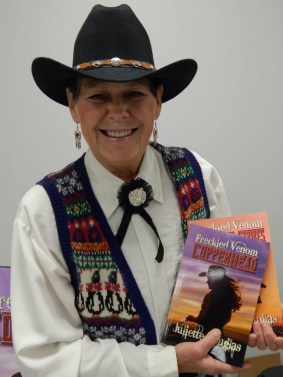
I’m pleased to be chatting today with a prolific author who has burst onto the western scene in a relatively short amount of time. Her debut novel, Freckled Venom, was a Laramie award winner, and she recently signed on with Delilah‘s publisher, Dusty Saddle Publishing. The amazing part is she manages churn out all of her many books, while still holding down a traditional job outside the home, as well. Let’s see if she has any secrets to share. Please welcome western author Juliette Douglas.
Kaye: Your website says you are a new voice in the western genre, but it seems like you have written a lot of books. How long have you been writing western?
Juliette: I was a new voice 5 years ago, as I tend to have more grit in my novels then most women western writers.
I was 1st published in 2013, but the publisher was awful so ditched them and became indie and re-issued my books with new covers and re-edited interiors in 2014. So that’s when I like to say I’ve been published.
Kaye: What did you write before westerns?
Juliette: I have never written a thing before in my life. So I guess you could say I’m a late bloomer.
Kaye: Do you think it is more difficult for a woman to author a western novel and make a success of it?
Juliette: No I don’t. When I began to promote my novels at local events, I sold more to men then women. Since then I have all ages who read my books.
I personally feel it’s easy for me to write strong female characters in an old western setting then to write a contemporary western.
I love history, so it’s a good match for me. I’ve been blessed with my success. I know I am up against many good male western writers who have been around much longer then I have, but I’m making strides.
Kaye: What’s the biggest challenge in writing westerns for you?
Juliette: Making sure the things I want to happen are in the right time frame, I use the weapons for that era etc. For example: smokeless gunpowder did not appear until the 1890s.
Kaye: Your female characters are bold and brassy in a genre where women are typically portrayed as damsels in distress needing rescued by a big strong man. How do you write your heroines in a way that makes them believable, yet allows them to remain independent?
Juliette: I try to put myself into the situation. How would I feel, behave, emotions I might hide or display. Would I be angry or decide these are the cards I was dealt and how would I go about living my life with these secrets or circumstances thrown at me. Women who carved out a future for themselves in the old west had to be some of the strongest I have ever read about and I try to portray that with my characters.
Kaye: What can you share about your Freckled Venom Series?
Juliette: It was a great experience for me as a writer. I loved how my characters took over and I was just the messenger typing out their words and feelings.
 The Freckled Venom Series is very different then most western novels out there because it has a gun toting rugged female who bounty hunts instead of the usual male filled westerns. I’ve reversed the roles you might say.
In Freckled Venom Skeletons I tried something different. I had two points of view going on. One from the children’s POV and then the adults and it worked very well.
There will be many more stories in the FV Series. This summer I will have Freckled Venom Vixen The Early Years and for Christmas, Plum Dickens of a Christmas. A reunion of sorts with all the characters brought together in this book.
Kaye: What do you consider to be the single most important element in a western?
Juliette: Good storylines & plots. Plenty of action and hair-raising adventures.
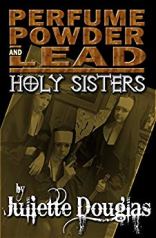 Kaye: Would you talk a little about Perfume, Powder and Lead: Holy Sisters?
Juliette: Hahaha…This was one of the most fun books I have written. The idea is so absurd that this would have happened, but a possibility in those days.
Three soiled doves are tired of that life and set out to the gold fields, but they need money to get there. They stumble across nuns killed by raiders, and the girls change their habits, so to speak and make plans to rob a bank dressed as nuns.
But there are deeper elements also allowing the reader to form a bond with these girls.
It’s raw, it’s gritty and it’s not for everyone to read.
Kaye: Are there any of your books which you’d classify as western romances?
Juliette: I have the teasing potential of romance in most of my novels and my readers seem to like that.
Kaye: One of your most recent releases, Bed of Conspiracy, sounds to me like an
historic thriller involving political conspiracy, assassination plots and cloak
and dagger action, all set during the Grant administration? Was it difficult for
you to stray outside of the western genre?
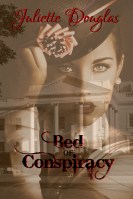 Juliette: Oh man, I had wanted to do this story for 3 years before I finally found time to write it.
Loved writing this one! Set in 1876 it wasn’t hard for me at all. I loved weaving actual events into the story. Looking at maps of Washington DC from 1876 to learn the layout of the city to include actual street names and places scattered about in the fictional story. It has ended up being one of my most popular novels and due to the high interest has spawned a series. Next one titled: Death Deals the Hand, A Ross & Sam Adventure.
Kaye: Where do you find inspiration for your stories?
Juliette: Every where. Everyday stories and situations that can be transported back in time to the old west!
Kaye: What’s the most fun about writing westerns?
Juliette: Everything!
Kaye: The first book in your Freckled Venom series was also your debut novel, Copperhead, which you won a Laramie Award. What is the Laramie Award and how does one receive it?
Juliette: The Laramie Award is the western division of the Chanticleer awards. I submitted Copperhead on a whim and won over very stiff competition.
For 2019 I will be entering Bed of Conspiracy in the Laramie Awards Adventure & Caper category. Will see what happens!
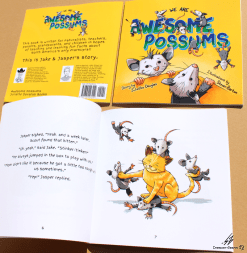
They also have a category for children’s books and I will be entering my 1st Children’s book: We Are Awesome Possums.
Kaye: Would you recommend aspiring authors attempt the western genre? Why or why not?
Juliette: You need to know the history of the old west for sure. There are still many untold stories out there to share, but it takes hard work to come up with a fresh idea with the old tales that would be marketable.
The American Old West is our history, no one else can claim it. It speaks to the hearts of men, women and children across the world. It is America’s claim.
Kaye: If you could have lunch with any author, alive or dead, who would it be? Why?
Juliette: Louie L’Amore. A fascinating man. His stories are based on a lot of his own actual experiences. It would be neat to visit and talk with him.
I want to thank Juliette for sharing with us today. It has been an absolute pleasure. You can learn more about Juliette Douglas and her work on her Facebook Author page or her Amazon Author page. I’m proud to share a publisher with Juliette. I hope you will join me next week on “Chatting with the Pros”, when my author guest will be another Dusty Saddle author, Scott Harris. I hope to see you then.
Like this post? Let me know in the comments. You can be sure not to miss any of Writing to be Read’s great content by subscribe to e-mail or following on WordPress.
Share this:

Interview with Christian western romance author Patricia PacJac Carroll
Posted: May 6, 2019 Filed under: Author Profile, Books, Christian fiction, Fiction, Historical Fiction, Historical Romance, Interview, Uncategorized, Western, Writing, Writing to be Read | Tags: Author Interview, Author Profile, Christian western romance, Christion fiction, Historical Romance, Lockets and Lace, Patricia PacJac Carroll, romance, Sandra's Journey, Sweet Romance, Western, Writing to be Read 2 Comments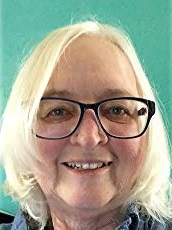
My author guest today is a prolific writer, who must publish an average of at least six books per year, in numerous romance series. Patricia PacJac Carroll writes historical and western Christian romance at a rate that I find amazing. The books on her Amazon Author page scroll in what seems like a never ending flow. In addition to her own series, which are many, on occasion, she’s invited to participate in series with a collection of other authors, as is the case with her most recent release. Let’s see what she has to share with us today.
Kaye: In what ways is writing a Christian western romance different from writing a western romance?
Patricia: For me, saying it is Christian means at least some of the characters have a Christian world view. Faith and hope in the Lord are evident in their lives. No preaching or sermons or a lot of verses, only faith as it relates to the story and the characters.
Kaye: Your latest book was recently released, Sandra’s Journey. Would you like to tell me a little about the story?
Patricia: Sandra is struggling, she’s walled herself in away from others. Her little brother’s death and the fact that a fiance left for Calfornia the year before and she only received one letter from him, have stolen her courage. She meets a corporal who is escorting the wagon train, and he challenges her to dream. Romance blossoms along the California trail where by trails end she will have to choose between the two men. A story of courage rediscovered and dreams coming alive.

Kaye: Sandra’s Journey recently came out as a part of a historical western series with a wagon train theme, which includes your book and those of several other Christian western authors. Would you like to tell me about the Lockets and Lace series?
Patricia: The Locket and Lace series is made up of several different authors. I was asked to join in 2018 and wrote Oregon Dreams for the Locket and Lace series for 2018. And then this year again for the Locket and Lace series for this year with Sandra’s Journey.
Every book has a connection to the Bavarian Jeweler in St. Joseph, Missouri. They have a locket that was made in the shop and a piece of lace. We had 9 books last year and 10 this year. They are all wonderful books
Kaye: The Lockets and Lace series books are not the only books you’ve written, by far. You have written several other series, including the Mail Order Brides and The Law Keepers series. How many books have you written? How long have you been writing?
Patricia: I have been writing seriously for thirteen years and began publishing in 2012. I have 40 books out right now and plans for many more. I have several series ~ Mail Order Brides of Hickory Stick, Montant Brides of Solomon’s Valley, and several others.
Kaye: Tell me a little about your author’s journey, if you would?
Patricia: I began writing and attending critique groups in 2006. I loved it, but my friends would call me the book of the week person because story ideas would attack me. I love the thrill of a new story and still do. Finally, I decided I better finish a book and my first book was Liberty Belle that I published in 2012.
Kaye: Your husband is instrumental in your writing, so much so that you’ve incorporated both of your initials into your author’s name – PacJac. Would you talk about how he enables you to write?
Patricia: My husband is a wonderful prince of a man who gives me the time to do what I love. He let me retire in 2006 so I could write. And now, my writing has enabled him to retire. We are a wonderful team and are enjoying our lives. I added the PacJac to my writing name because I found there were other Patricia Carroll’s out there in the writing world. It works well though because you put PacJac in Amazon and it will pop up my books.
Kaye: Your female characters of the contemporary strong and independent variety, or do they follow the traditional damsel in distress variety of heroine?
Patricia: I’d say they are a combination. While I want to be historically correct, readers live in the 21st century. I do like spunky women, but I also enjoy writing about a character who grows in courage and strength, too.
Kaye: What part of writing do you find to be the biggest challenge?
Patricia: The self-discipline. I am a seat-of-the-pants writer, and I tend to live my life the same way. I enjoy fun, family, and friends as well as writing so at times the need to balance comes into play.
Kaye: Where does your inspiration come from?
Patricia: The Lord. He gives me the stories. I am amazed at how He has made sure I understand that. One time I had the opportunity to put a Christmas story in an anthology and had a weekend to write it as it was due Monday at noon. Now, I had bragged that if you just give me a name and a place, I will come up with a story. Well, after my haughty attitude, my friends gave me a name and place and my imagination heard crickets. Nothing. Nada. No story. Now, that was a bit scary to me. A writer isn’t much without a story. So I figured I missed the anthology. But then at 5:30 Monday morning I woke up with a picture in my mind of a cowboy on a horse pulling a Christmas tree and knew I had a story. And I wrote it and turned it in before noon. You can find that story in my book Christmas in Texas. The Richest Christmas. So I will give the Lord all the credit for anything good that I do. Any mistakes are mine.
Kaye: Your books obviously are portrayed in a western landscape, based on historical times and events. What kinds of research do you find yourself doing for your books?
Patricia: Documentaries, books on the old west. I have always loved the west and westerns.
Kaye: Do you feel you draw pieces from your own life into your stories? How so?
Patricia: Yes, and I tell my friends anything may be used in a story. I know I often have my characters state “How hard can it be?” That is all me.
Kaye: What is the most fun part of writing western romance for you?
Patricia: I enjoy the characters and the things they get themselves into. Plus horses, I love horses and they have always been part of the draw to westerns for me. I also love the idea of the wide open wild country.
Kaye: What is something many of your readers wouldn’t guess about you?
Patricia: For twenty years, I owned and ran a pet store. Sea Horse Pets in Arlington, Texas. As you can guess I love animals. And people. I love to write, and my heart is that readers will enjoy my stories and be strengthened and encouraged by reading them. I enjoy making readers happy.
I want to thank Patricia for joining me today to share her thoughts with us. I don’t know about all my readers, but I am astounded by the sheer volume of her works. You can learn more about Patricia at the links below. Stop in and see if you too are not awed by the books she’s produced within the span of the past seven years.
Links
Author page on Amazon: https://www.amazon.com/Patricia-PacJac-Carroll/e/B008R9JCN2/
Facebook Author page: https://www.facebook.com/PatriciaPacJacCarrollAuthor/
Website: http://www.pacjaccarroll.com/
Newsletter sign up http://eepurl.com/bpPmbP
Like this post? Subscribe to Writing to be Read for e-mail notifications whenever new content is posted or follow WtbR on WordPress.
Share this:

Interview with romance author Chris Barili (AKA B.T. Clearwater)
Posted: April 22, 2019 Filed under: Books, Contemporary Romance, Fiction, Interview, Paranormal, romance | Tags: Author Interview, B.T. Clearwater, Chris Barili, Paranormal, Paranormal Romance, romance, Smothered, Writing to be Read 4 Comments

Today I have the pleasure of interviewing author Chris Barili, and although he’s written in other genres, and his latest release is the fantasy novel Shadow Blade, which I reviewed last month, he also writes romance under the name B.T. Clearwater. You can read my review of his paranormal romance, Smothered, here.
In January, we talked to women’s fiction author Barbara Chepaitis and western author Loretta Miles Tollefson about the fact that women authors still are encouraged to use sex neutral pen names when writing certain genres, but here we have a male author who uses one when writing romance. We’re going with talk to Chris about writing romance and why there aren’t more male romance authors today. Or are there? Let’s find out what Chris Barili has to say about it.
Kaye: You have fiction published under your own name, but when it came to Smothered, your publisher suggested you publish as B.T. Clearwater. This is the reverse of what many female authors experience when publishing in certain genres, such as western. Did you feel like there is discrimination toward male romance authors?
Chris: My publisher didn’t encourage the pseudonym, actually. That was advice from a mentor and college professor, who recommended different pen names for different genres due to perceptions in the industry that if you write one genre well, you’re limited to that genre. I also publish westerns under a different pen name, T.C. Barlow.
And while I didn’t experience discrimination toward me as a male romance writer, I did get some raised eyebrows and comments like, “You write THAT?” So I had my youngest daughter think up a pen name that used my initials, and that sounded gender neutral. She came up with B.T. Clearwater.
Kaye: Do you think it is harder for male authors to make it in the romance genre than it is for female authors? Why?
Chris: I think it’s harder because not enough men have tried, so there’s no benchmark for it, no evidence to the doubters that men can do it. Men tend to avoid it because of the stigma associated with writing “that” kind of fiction.
Kaye: What is the biggest challenge of writing romance for you?
Chris: Probably making it “juicy” enough for a modern audience. I’m an old-fashioned guy, so I like love stories, and I tend to focus on the emotional relationship rather than the sexual one. Many (not all, but many) romance readers are looking for the steamy stuff, and that just isn’t me.
Kaye: You have a family, and are involved in cycling and martial arts, yet you find time to write and attend conferences and seminars. What are your secrets for juggling writing with your home life?
Chris: Mostly, I neglect my dog. 😊 No, that’s only a little true. As with anything, finding time for writing is a matter of discipline and sacrificing things that are less important. I had to remove a video game from my computer because it was distracting me from writing. Similarly, my DVR is 90% full of programs I fully intended to watch, but can’t get to because of writing. You have to make writing THAT important. My priorities are: my family, my health, the day job, writing. Everything else comes later.
Kaye: What is your favorite genre to write in? Why?
Chris: I’m actually published in every fiction genre: fantasy, science fiction, romance, horror, western, and crime. I don’t know that I have a favorite, but I do most of my writing in the fantasy and romance genres. They’re all fun to write, and one of the things I learned during my MFA studies under Russell Davis at Western is to let the story find its genre. Don’t try to force it into one you’re comfortable writing.
Kaye: If Smothered was made into a film, who would you like to see play male and female leads?
Chris: Interestingly, when I develop a character, I often choose a model, actor, public figure, etc to roughly model their looks. In this case, I used actor James Denton as a rough look-a-like for Mike, and Annie was loosely modeled on Jeanine Garofalo. So yeah, them.
Kaye: What’s is the single most important element in a romance story?
Chris: Damage. The lead female character has to be broken somehow, and the only way she can heal herself is to be with the male lead. It’s corner, and not a great way to base a real relationship, but that’s kind of the trope of romance. She has to realize she cannot live without him.
Kaye: Where did you find the inspiration for Smothered?
Chris: Again, my MFA studies, only this time in a class with Michaela Roessner. She had us write a sex scene that gets interrupted somehow, and I had mine interrupted by the ghost of the woman’s late mother, who appears at the foot of the bed. That interested me so much that it grew into a novel, which was my MFA thesis.
Kaye: What was the most fun part of writing a romance for you?
Chris: Romance is a very formulaic genre, and the fun part, for me anyway, is finding a way to make that formula sound new. They say there are no new stories, only new ways of telling old ones, and I think that’s what I like about romance. Proving to doubters that it CAN be original and unique.
Kaye: Is there a future for B.T. Clearwater? Can readers expect to see more from this author?
Chris: Oh yeah, B.T. has a novella published in Gwyn McNamee’s Last Resort Motel series, called “Room Fifty-Eight.” That came out a few months ago, and will appear in a box set soon. And B.T.’s latest novel, Rise and Fall, needs to go off to the freelance editor soon for a work-over. I decided to take B.T. full indie, to self-publish those stories, because self-pubbed romances can do very well. Gwyn has given me some tips on how to get it right. So when Rise and Fall and the next two in that series are ready, I’ll upload them and see how they do.
Kaye: Chris Barili has a fantasy novel coming out in June, Shadow Blade, which I recently reviewed. Would you like to tell us a little bit about that one?
Chris: Shadow Blade was actually my backup thesis. Yeah, I had a backup. Outlined both, but wrote Smothered and saved Shadow Blade for after graduation due to the world-building it needed. It tells the story of Ashai Larish, an assassin for the feared Denari Lai order. The Denari Lai are a religious order that keeps their killers loyal by addicting them to the very magic that makes them so effective at killing. In Ashai’s case, he is sent to kill a king and his daughter, but falls in love with the princess, and finds himself fighting to keep her alive rather than to kill her.
Shadow Blade is being published by WordFire Press, as a “Kevin J. Anderson Presents” title, where the best-selling author highlights a new author “to watch.” It’s on a review tour now, and should come out in e-book and hard cover in May, and by the time this article airs, it will be out as part of WordFire’s “Epic Fantasy” bundle at StoryBundle.com.
I want to thank Chris for joining us and sharing today. It is interesting to learn about writing romance from a male perspective. You can learn more about Chris and all of his works on his author blog and website, his Amazon Author page, his Goodreads Author page, as well as on Facebook and Twitter. You can learn more about the works of B.T. Clearwater on Amazon, Goodreads, Simon & Schuster, and Smashwords.
Like this post? Subscribe to Writing to be Read for e-mail notifications whenever new content is posted or follow WtbR on WordPress.
Share this:

Chatting with the Pros: Interview with romance author Maya Rodale
Posted: April 15, 2019 Filed under: Author Profile, Books, Chatting with the Pros, Fiction, Historical Romance, Interview, romance, Writing | Tags: Author Interview, Chatting with the Pros, Historical Romance, Maya Rodale, romance, Writing to be Read 3 Comments
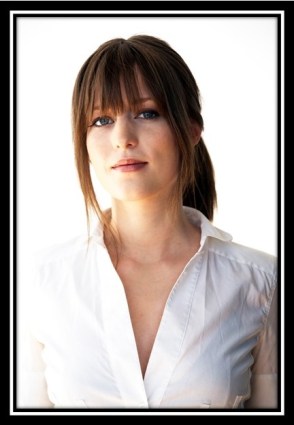
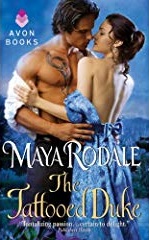
Today on “Chatting with the Pros” my guest author is a historical romance novelist, Maya Rodale. She writes strong female characters who stand up for themselves and still manage to maintain their feminity. Her books have appeared on the USA Today bestselling list and have been published in several languages. Her novel, The Wicked Wallflower won the RT Reviewer’s Choice Award for best historical hero, and What a Wallflower Wants was labeled as a romance novel for the #MeToo movement. I’m pleased to have the opportunity to chat with her today and learn her thoughts on romance, female authors and women’s place in the world.
Kaye: What are some tips for writing strong female characters in a time period when there weren’t many to be found, and making them believable?
Maya: The more I dig deeper in my research of history the more I believe that this is a myth. Women have always gotten out of the house and done great, wonderful, terrible things; but it hasn’t been recorded, or their stories haven’t been told, or (male) historians deemed it unimportant. Women have never been boring, silent bystanders to the world.
I think we’ve been (maybe deliberately) shut out of history books and as a result we don’t know the long and full history of women being active participants in the world. Start with a look at the New York Times Overlooked Obituaries, for example.
The problem isn’t that strong historical female characters aren’t accurate, the problem is that we have been made to believe they are. And in the name of “historical accuracy” we unwittingly perpetuate that in our novels.
My tip for writers: find those stories, write those stories! And then explain your research in the author’s note. And my advice for readers: check your biases and preconceived notions and let yourself get swept up in the story. You may just learn something new about history too.
 Kaye: You wrote a nonfiction book titled Dangerous Books for Girls: The Bad Reputation of Romance Novels Explained. Can you explain briefly why romance has a bad rep and it is justified?
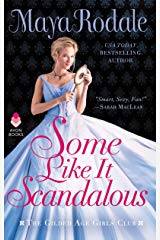 Kaye: You have a new book in your Gilded Age series coming out in June, Some Like it Scandalous. Would you like to tell us about it?
I want to thank Maya for joining me today and sharing her views with my readers. I think some may walk away with a different perspective on the romance genre. You can learn more about Maya on her very creative website: http://www.mayarodale.com/ and on her Amazon Author page, her Goodreads Author page, or on her Fantastic Fiction Author page.
Like this post? Subscribe to Writing to be Read for e-mail notifications whenever new content is posted or follow WtbR on WordPress.
Share this:

Interview with fantasy author Laurel McHargue
Posted: March 4, 2019 Filed under: Books, Dark Fantasy, Fairy Tales, Fantasy, Fiction, Interview, Writing | Tags: Adult Fairytales, Author Interview, Author Profile, Fantasy, Laurel McHargue, Writing to be Read 3 Comments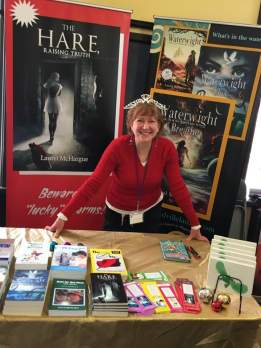
I’m talking today with fantasy author Laurel McHargue, a woman with a lot of energy. She’s written eight books including her Waterwight fantasy series and an adult fairytale, The Hare, Raising Truth, she hosts her own podcast, Alligator Preserves, is a former teacher and active community member, networks and promotes her works online, and finds time attend writing events for face to face interactions with her fans and potential new readers, as well as other authors. Even through email the positive energy radiates from this author. I could give you a lengthy fanfare on how impressed I am with this lady, but I think it’s better to let you see for yourselves. So, without further ado, please welcome Laurel Mchargue.
Kaye: Would you talk about your author’s journey? How did you come to come to be a writer?
Laurel: When I was quite young, I learned I could get attention by telling stories. As the fourth of five girls, I was low on the proverbial totem pole when it came to feeling important, so I had to be creative. I think my wild dreams helped, though eventually, my parents would roll their eyes when I’d come down in the morning with an “unbelievable” dream I’d just have to share. Who knew a dream would launch my first fantasy series? I didn’t then, but hey, I was just a kid!
Fast forward through a lifetime of unique experiences that people were curious about—I was frequently told, “You should really write about that!”—and I finally made the decision to make writing my career. I always did well in classes that required writing, and there were teachers along the way who encouraged me greatly.
I think I always knew I’d write stories someday, but until I made the commitment, it was always a “someday” kind of dream.
Kaye: What can you tell me about your YA fantasy series, Waterwight, and specifically about your Waterwight Breathe which will be released on March 15th?
Laurel: Waterwight started with a dream in which I was running away from bad guys through a dilapidated town, and I came up against a large body of water. The only way across it was to fly, and so I flew. Halfway across, however, I doubted my ability to make it to the other side and started to fall. A flying frog appeared and said, “Grab hold!” and I grasped his leg. He got me to the other side and then died in my arms. The dream had other elements I was able to use in my story as well. Anyway, I shared the dream with my author friend Carol Bellhouse (because I wasn’t living at home anymore!) and she told me I needed to write a story around it.
At the time, I’d never written fantasy, and the thought of turning a dream into a story thrilled and terrified me! Over the course of a year my story unfolded chapter by chapter, and by the time I got to the end, I wasn’t ready to leave my characters. I knew there was more for them to do, and there were questions I needed to answer. So, Waterwight Flux answers questions, develops characters, and sets up more challenges for Celeste, the orphaned protagonist.
I chose to write Waterwight Breathe, the final book, in first person present tense perspective after reading The Hunger Games. I love the immediacy of the thoughts and actions, and having the last book narrated by the protagonist seemed like the perfect way to end the series. I know it’s unconventional to have different points of view in the same series, but my life decisions have frequently been unconventional, and I have no regrets!
 Waterwight Breathe is available on March 15th, and it might be my favorite work yet. I couldn’t wait to get to the ending, the only part of the book I actually planned!
Kaye: You received three CIPA EVVY awards for the first book in the series. That’s quite an accomplishment. What is it about this book that makes it EVVY Award worthy?
Laurel: The CIPA EVVY awards are highly competitive, and each book is evaluated with a rubric—not against other submissions. The judges look at everything from cover design to editing to plot and character development. Waterwight is a fantasy adventure with mythical and mystical elements and a female protagonist; it received praise from Kirkus Reviews and many readers. I’d like to think those readers and the EVVY Awards judges felt compelled to keep reading at the end of each chapter. I had fun ending most of my chapters with cliffhangers!
The first book is also divided into three parts, so readers get to see what’s happening from different perspectives in each part. As a bonus, and because I’m a former English teacher, I added a synonym glossary and questions for discussion in the back of each book in the series. I don’t dumb down my prose for YA readers.
I used 99designs.com for my cover design and couldn’t be happier! The same artist created my covers for all three books in the series. Also, I paid a professional proofreader to ensure there weren’t any annoying typos or misspellings.
Kaye: Your novel Miss? is based on your own experience as a first-year teacher and earned the IndieReader Approved Award. Tell me about this book.
Laurel: I’m incredibly fortunate to have friends who are authors too. In 2012, one of those friends, Stephanie Spong, challenged me to do NaNoWriMo with her. I had never heard of such a beast! Well, being the competitive individual I’ve been told I am, I looked into it, and after thinking the 30-day personal challenge was ludicrous, I signed up on October 31st!
This was about six years after my first year of teaching 7th grade English in a doomed middle school. As a resigned Army Major, I honestly thought teaching 7th grade Language Arts would be a breeze. Oh…Em…Gee! I was very wrong.
Because I couldn’t believe what I was experiencing each day, at the end of the day I’d create a bullet-point list of everything that happened. I walked into NaNoWriMo with a year’s worth of those bullet points and had all the material I needed to write my first novel.
I remember telling my students, “Someday, I’m going to write a book about you all!” I said it as a humorous threat, and every class would be filled with hands going up and exclamations of, “Oh, Miss! Can I be in it?”
Although I couldn’t put all 130 students in “Miss?”, I meshed together many of them and included actual events from that year. I say it’s “loosely fictionalized” because of that, and because I added some romance and a scary situation that didn’t actually happen, but could have.
Kaye: Could you talk about your adult fairytale, The Hare, Raising Truth?
Laurel: The same friend who challenged me to NaNoWriMo challenged me to a 3-Day Novel Writing Contest! Stephanie Spong discovered the contest and really wanted to do it, so what choice did I have? (smiley face).
I sent my husband away for Labor Day Weekend (official contest dates), stocked my house with food and beverages, and set up little workout stations around the house. Stephanie came to my house ready to write for 72 hours and we agreed on rules: She could have the dining room, I had the “Red room” (that may have influenced my writing!), and no talking unless we happened to bump into one another in the kitchen.
We were very good girls!
As I enjoy challenging myself with different genres (and contests with crazy time limits), I decided to try something completely different for this contest. “I’m going to write it in 2nd person perspective,” I told Stephanie, and she warned me about the difficulty. Bonus, I thought. I also thought I’d write something light and funny.
Something happened, however, when I heard Rod Serling’s voice from The Twilight Zone in my head (in the Red room). My story turned darkly comedic quite fast, and there was nothing I could do about it . . . I had to see where it would take me.
I completed The Hare, Raising Truth—a Grimm’s Fairy Tale/Twilight Zone mashup—in about 38 hours. It’s novella length, and it was an absolute blast to write. My husband read it when he returned from his banishment and said it’s the best thing I’ve written so far, and I’ve had many people ask, “How did you get into the head of a horny teenage boy so well?”
Well…it wasn’t that difficult!
Kaye: You have a podcast called Alligator Preserves. What is that about?
Laurel: I started my podcast Alligator Preserves—which is about storytelling and the human condition—for several reasons. I wanted to be able to narrate my own books, so my husband set me up with the equipment I’d need to do that (even after I banished him that Labor Day weekend!). Also, friends had suggested that many of my blog posts should be recorded, since blog posts tend to get buried and lost once they’re posted. I wanted to be able to “tell” stories as well as write them.
When I started recording, I realized I had a great set-up for interviewing other people who’ve “done things” too, so I started asking racers and Reiki practitioners and authors and challenge seekers if they’d like to share their stories. The response was overwhelming, and now I have a hard time figuring out how to fit them all into my own schedule while still having time to do my writing.
Recently, I’ve gone to a pay-for-service model for anyone with a book or product they’d like to promote. Creating a podcast with another person is a lot of work. I value the time I spend reading and researching (prior to the interview) and editing and posting to social media (post recording). I provide all the links to the audio and video I create to my interviewee for use on their social media as well. For authors, it’s another plank to add to their author platform!
Kaye: What is the biggest challenge of writing fantasy?
Laurel: I can visualize scenes in my head so clearly, and most of them are fast-paced. The challenge is in slowing down my writing to help readers see what I’m seeing. Also, sometimes my writing is dream-like, and I have to find ways to convey that not-quite-real feeling.
That’s how multiple drafts help. I may blast through several chapters, totally believing that I’m conveying what my mind is seeing, and then I’ll have someone read them and they’ll say, “Huh? What just happened here? I don’t get it”!
My challenge is usually in adding more to a scene rather than deleting. There’s always more an author can do to make their writing sing more clearly!
Kaye: What’s the most fun part of writing for you?
Laurel: I think many authors might say that writing “The End” upon completing a project is the most fun, and I won’t lie—a happy dance always follows—but really, the fun is in the little surprises that happen along the way. It’s the unexpected character that pops into my head while I’m walking the dog or the funny thing a character will say. I’m more of a “pantser” than a “planner,” so I’m surprised all the time!
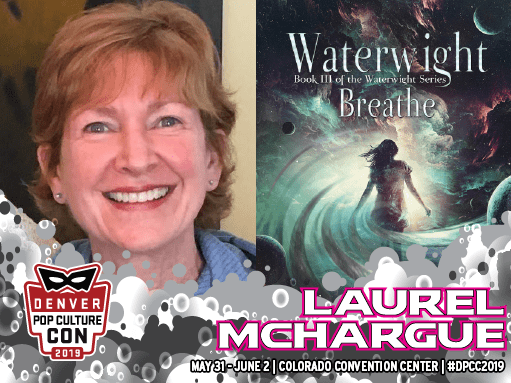
Sharing my work and having a fan say, “Wow! I loved that!” is another obvious fun part, but that’s after the writing is published. I brought my work to the 2018 Denver Comic Con and was blown away by the interaction I experienced with readers. I’ll attend the 2019 Denver Pop Culture Con (new name) this year with my completed trilogy and a new graphic novel! Now, that will be fun!
Kaye: Fantasy isn’t the only genre that you write in, and you hope to explore as many genres as possible throughout your writing career. What is your favorite genre to date?
Laurel: I’m horrible when it comes to “what’s your favorite” questions, but I’d have to say that I’m really enjoying short stories right now. I’ve entered several “flash fiction” contests with very short time limits, and being able to complete a project in a week or less exhilarates me!
I’m putting together a short story collection now. I’ve promised my Patreon patrons a new short story every month (which I narrate on my podcast Alligator Preserves) and when I’ve created enough, I’ll publish them and acknowledge my partons.
That said, many of my fans tell me they love my nonfiction blog posts. Once Waterwight Breathe is launched, my next big project will be a nonfiction piece based on my dad’s WWII letters. I hope to have a draft completed by the end of 2019!
Kaye: Where does your inspiration come from?
As Neil Gaiman said when asked where he got his ideas, “I make them up . . . out of my head.” (http://www.neilgaiman.com/Cool_Stuff/Essays/Essays_By_Neil/Where_do_you_get_your_ideas%253F). But how does inspiration get into my head? It gets there from every sensory experience throughout my days and from the Technicolor dreams I’ve had since I was a child. Someone said dreams are your brain’s way of dealing with all the things bombarding your senses during the day, and when I remember my dreams, I can often link them to something that has happened, or something that’s been “on my mind.”
Real people and creatures inspire my characters as much as imaginary ones (and who says the bizarre creatures in my dreams aren’t “real”?). Old Man Massive, the mountain spirit in my Waterwight trilogy, was inspired by an outcropping of stone on Mt. Massive that looks like an old, bearded man. Names and superpowers were inspired by real people I’ve known or met while writing the series. Zoya, my tragic octopus, was inspired by a paddleboarding experience on Twin Lakes, as was Noor, my fire-breathing dragonfly. The whole series started with a crazy dream I shared with a friend. I see and find inspiration all around me.
People have asked me where I get my imagination from, and all I can say is that it must be a gift from the universe! It’s certainly not a “thing” you can buy, and I’m not even sure it’s a “thing” you can learn. I consider myself quite fortunate that I was born with an imaginative brain.
 Kaye: What do you do when you’re not writing?
Laurel: When I’m not writing, I’m thinking about writing or I’m marketing my writing (sure wish I could clone myself for that task) or I’m reading or I’m recording a podcast episode or I’m cooking a yummy dinner or I’m brushing a pillow’s worth of hair from my German Shepherd or I’m cleaning out my sock drawer (because, where do all those socks come from?) or I’m swimming (several mornings per week, and not very fast) or I’m chatting with my friends or with one of my four sisters or I’m worrying about my sons (because I’m a mother) or I’m wondering how the day has passed so quickly. And other things, too.
Kaye: Hunting for Red Meat is a collection of memoir-style essays based on your own adventures hunting elk. When did you get the idea to make them a published collection?
Laurel: Several friends have told me how much they enjoy my blog posts, and one of them, Erin Sue Grantham (who also hunts), suggested I put them into a book. When I looked at putting them all in a book, I was overwhelmed by how many stories I had, and realized a book containing them all would be too big. So I thought about segregating them into topic areas.
After three years of hunting (and never filling a tag), I had plenty of hunting blog posts, so I decided to start there. Our oldest son, Nick, suggested it would be a “blook” a blog book, and I had fun coming up with the title.
I really thought I’d have a lot more sales by now with a title starting with “Hunt for Red…,” but alas, no. I honestly think many readers would enjoy it as it’s far more of an appreciation of the majesty of the wild outdoors than it is about hunting. I share my awe and my suffering, my adrenaline and my poetic moments.
My next “Blook” will probably be about our camping adventures.
Kaye: You have also published two books on Haiku. Do you have a special love for that poetry form? What is it that draws you to it?
Laurel: I love Haiku because—like a short story—they finish quickly. You have only seventeen syllables to play with, and it’s like completing a puzzle. Five-seven-five. That’s it.
Teaching grades 7-12 also gave me an appreciation for Haiku. When the word “poetry” comes from a teacher’s mouth, it’s generally followed by groans. Once a student learns how to count out syllables, though, and fit them into a “puzzle,” or a “math challenge,” for those more inclined toward that side of the brain, poetry suddenly becomes fun.
I was always amazed by the final products my students would create, boys as well as girls, and what fun it was to watch them tap on desktops or count on fingers while figuring out the syllabic pattern.
Haikus Can Amuse: 366 Haiku Starters “happened” after I dropped my cell phone into the ocean. Cell phones don’t like salt water. Anyway, I had a few weeks to kill before getting a new phone (I was away on vacation when it happened), and it was Leap Year, so I figured, why not come up with 366 first lines! I put that together as a gift journal for people who like filling in blanks and journaling just a little bit.
Hai CLASS ku is a spinoff of my cell-phone-debacle book, and it’s designed as a classroom workbook with a semester’s worth of haiku first lines (90) and space to draw a sketch and write a bit about inspiration. It’s also a great tool for substitute teachers.
Kaye: Which author or poet, dead or alive, would you love to have lunch with? Why?
Laurel: Dead? Steinbeck. Why? Because I love his writing. Alive? Margaret Atwood. Why? Because I love her writing. So many tremendous authors, so, so, so little life to experience them all.
I want to thank Laurel for joining me and sharing a little about experiences and her work. You can learn more about both at the links below.
SoundCloud (Alligator Preserves podcast): https://soundcloud.com/user-564361489
iTunes link: https://itunes.apple.com/us/podcast/alligator-preserves/id1337322865?mt=2
Stitcher permanent show link: http://www.stitcher.com/s?fid=165314&refid=stpr
(this link is optimized for mobile and Twitter posts)
Amazon Author page: https://www.amazon.com/Laurel-McHargue/e/B00INB9OO6
Blog link: http://leadvillelaurel.com/
Facebook: https://www.facebook.com/LeadvilleLaurel
Twitter: https://twitter.com/LeadvilleLaurel
Instagram: https://www.instagram.com/leadvillelaurel/
LinkedIn: Laurel (Bernier) McHargue
Like this post? Subscribe to Writing to be Read for e-mail notifications whenever new content is posted or follow WtbR on WordPress.