The Making of a Screenplay: The Creative Process (Part 2)
Posted: May 2, 2016 Filed under: Screenwriting, Writing | Tags: beat sheet, character bios, character triangles, creative process, logline, pitch, Screenwriting, treatment, Writing 4 Comments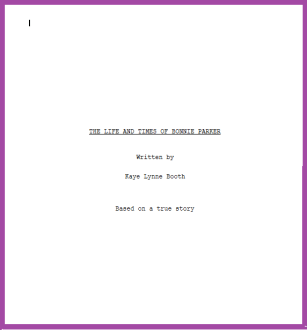
Last week in Part 1, I explored story origins, and the tools you use to shape an idea into a movie plot with a beat sheet. Now I’ll talk about tools, like the step outline, which are used to convince others to read and hopefully, buy your screenplay.
The Pitch
One big difference between screenwriting and literary writing is the way they handle the pitch. While in literary writing, they teach us to do the pitch for our story only when we’re close to having a finished product to sell to an agent or publisher, in screenwriting you write the pitch from the idea, before you ever start writing the actual script. This is because of the difference in the pitch itself, for in literature, your pitch is usually written and submitted in the form of a query, in screenwriting, you must be able to talk about your movie in a brief one line description and in expanded forms that explore more depth and detail, so writing pitches is something we practice a lot. The thing is, often after all the revisions and rewrites, the final product turns out to be something different from what you were pitching. Until I figured out how to write this movie from Bonnie’s perspective, I was just pitching the same movie everybody already knows.
It was during the time I was trying to get my pitch right that the title changed. I had been referring to The Life and Times of Bonnie and Clyde, until I finally figured out that this was really Bonnie’s story, from Bonnie’s perspective. I’d been saying it all along, claiming that was what set my story apart from all the rest, but I hadn’t been doing it. I was still looking at it from the perspective of the two of them as a couple. While I couldn’t change the real life events to fit the formula, I could show different events that gave the story a different perspective, and even a different tone, starting with the title.
In both literary writing and in screenwriting, your pitch is your calling card. It’s your key to the kingdom of either publishing, or production, and it must reach out and grab the reader’s attention and hold it, making them want to know more. They’ll see the pitch first, and it has to tempt them to continue on and read your script or manuscript, and that’s a goal that every writer understands.
The Treatment
A treatment is the outline for your script. It tells everything you want an interested buyer to know about your script. My treatment starts with my logline. A logline is a one to two sentence description of a movie or television series. As a rule, it’s 25 words or less, but it can be presented in longer paragraph form. My logline for The Life and Times of Bonnie Parker is: “The Life and Times of Bonnie Parker is the tragic story of a young woman in the depression era who falls in love with a petty criminal, and is caught up in a whirlwind of lawlessness in their struggle to survive. When theft turns to murder, they’re swept into a life on the road which can only lead to tragedy.”
Character Triangles
Character triangles are one thing that actually works in literature a well as in screenwriting. Every character in every story ever written or thought of has a want or desire which motivates them to take action and move the story forward. Likewise, every character has a fear or flaw, which stands in the way of achieving whatever it is that motivates them, and obstacle to achieving their goal, which must be overcome. And, once their flaw has been overcome, a transformation takes place and the character is changed, creating a character arc for your story. At this point we usually learn what it is that the character actually needs, which is usually something different from what the character’s want is, but it’s achievement must be acquired to achieve the completion of the character arc. The need might be a lesson learned, or self-discovery of an aspect of their personality they were unaware of, but it’s always an inner need. As a general rule, the character’s desire is usually an external want, while the need is internal. This applies to storytelling of any type. It works when applied to both literary writing and screenwriting.
My instructor and screenwriting advisor, J.S. Mayank, always has us determine the character triangles for at least two or three of the main characters before we try to write, because he believes that if you have your triangles figured out, the rest will fall into place. Triangles are an area I have a lot of difficulty with for some reason, and I usually make several shots at it before I get it right. My triangle for Bonnie looked like this:
Want: To be with Clyde
Fear/Flaw: Abandonment
Need: Self-reliance
Unfortunately, Bonnie never achieves her need.
Also included in your treatment are character bios for at least two or three of the main characters. In storytelling of any kind you must know your characters well. It’s a secret to writing well-rounded characters who readers or viewers can relate to. Characters without background, feel flat and two-dimensional. For my characters, the bios are already written, since they are true life characters, but I still had to write a sketch that tells how I see them.
Then comes the actual treatment, or outline, which tells what happens in your movie beat by beat. I like to write mine like a beat sheet, placing each scene in the beat it should be under. Some beats may have more than one scene, but with the formulaic nature of screenwriting, it’s fairly easy to label each beat once you have all the scenes laid out.
Again, there were a lot of revisions and changes in the rewrite, so my original treatment was different in many ways from how the final product turned out. Some scenes were thrown out and replaced by others, some scenes were just tossed out, and some scenes were added where I felt they were needed. The necessity of a revised treatment once the final screenplay is completed is obvious.
These are the tools of persuasion, or explanation which are used to try to sell a screenplay. Next week in Part 3, I’ll take a look at the research that goes into writing a screenplay. It’s the fun part, so don’t miss it.
Share this:

The Making of a Screenplay: The Creative Process (Part 1)
Posted: April 25, 2016 Filed under: Screenwriting, Writing | Tags: beat sheet, creative process, Screenwriting, step outline, Writing 6 Comments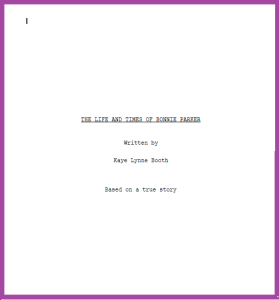
Writing for the screen is very different from literary writing, but there are also many similarities. Although my thesis project, The Life and Times of Bonnie Parker, is for the screenwriting emphasis, I obtained the first emphasis for my M.F.A. in Creative Writing in genre fiction, so I tend to make comparisons with my literary experiences naturally. Screenwriting is visual, whereas literature employs the use of all five senses. Screenwriting is also much more formulaic. Where literature tells us we must have a beginning, middle, and end, and we must throw a climax in there somewhere, screenwriting outlines all the beats and tells us approximately where each one should fall within your script. I think you get the idea. What you’re about to read is what goes into the creative process of writing a full length feature screenplay, from a literary perspective.
Story Origins
My thesis project, The Life and Times of Bonnie Parker, is based on the true life story of 1930’s bank robbers, Clyde Barrow and Bonnie Parker. It’s not an idea I brilliantly plucked from the idea tree that grows in the backyard of my mind, but rather a different version of a story that’s been told many times before. It is the result of viewing the 1967 film, Bonnie and Clyde, with Faye Dunaway and Warren Beatty, as well as numerous documentaries on the couple and their infamous crime spree. From my research, as I compared the many conflicting stories and the different portrayals of this story, it occurred to me, that really, this was a tragic love story, a contemporary Romeo and Juliet, but no one had ever shown that side of it. Their story had always been portrayed with car chases and shoot outs, glamourizing the gangster life, but to me, that wasn’t what Bonnie and Clyde were about. Hence, the idea was born to tell the story of Bonnie and Clyde from Bonnie’s perspective, the story of a young girl caught up in the circumstance of the times, willing to anything for the man she loved, including die for him.
The Beat Sheet
As I mentioned, screenwriting is very formulaic. So, where in literary writing you make an outline before you start writing your novel or book, in screenwriting, you create a beat sheet before you start. The beat sheet outlines each event which propels your story forward, and as I also mentioned each beat is supposed to occur at a certain point within the script.
Now here’s where I had a lot of difficulty, because true life events seldom conform to the formulaic sequence of a screenplay. The story of Bonnie and Clyde was no different. Because of this, and because I still thought of their story as the crime spree they embarked on between 1932 and 1934, the beat sheet I created turned out to be different in many ways from the final script. Once I began looking at things from Bonnie’s perspective, it turned into a very different movie.
Step Outline
In addition to this, a screenwriter must also be able to do a step outline, which chronicles each scene, step by step, very similar to a chapter outline for a literary work. While the beats can be noted in the step outline, this is not the same as the beat sheet.
There’s a lot more that goes into writing a screenplay, but this is how you get started. The beat sheet is a tool for your own use, while the Step Outline is a tool you use to convince a producer or director to buy your screenplay and hopefully, make a movie out of it. Next week, in Part 2 of Making a Screenplay, we’ll talk more about the tools you use to sell your screenplay.
Share this:

Weekly Writing Memo: 4 Ways to Establish Tone
Posted: April 20, 2016 Filed under: Fiction, Uncategorized, Weekly Writing Memo, Writing, Writing Tips | Tags: Creative Fiction, Fiction, Writing 1 Comment Tone is one of the basic elements within a story. It sets the mood for the audience, and gives context and meaning to the story. Every element within a story works together to set the tone, so it’s important to stay conscious of your choices when writing. If you set the wrong tone for your story, it could turn a comedic story dark, or a serious story comedic. So how do you establish tone in a way that is consistent, and useful?
- Language in Narration
The language you use to tell the story plays a huge part in setting the tone. Every word you use has a connotation to is, and if you choose the wrong word you can create conflicting tones within your story. For example, if you describe a dead body in an insulting or amusing way, then it takes a serious element and makes light of it which sets either a comedic or flippant. If you’re trying to write a serious mystery, than setting this kind of tone could be damaging to the story.
The key to figuring out what sort of language to use is to figure out who your narrator is. Are they a comedic person? Sardonic? Serious? They’re the one telling the story, so things should be described in their words. They set the tone of the story. If you want a serious story, a hardened detective story or something, then you need to tell the story from a hardened detective’s point of view and have him describe things as a hardened detective would do.
Another element to keep in mind for narration is the choice of phrases used. Part of tone is setting the time period for the story, and if you use phrases that are common slang when writing something like a period story, then you run the risk of ruining the tone. So be aware of slang and usage of idioms and such as well.
- Character’s Speech
How your characters talk helps set the tone of the story. Are they all fast talkers and quick witted like in Gilmore Girls or The West Wing? Do they make dirty jokes like Ryan Reynolds in Deadpool? The way characters talk and interact with each other creates a tone for the story and tells the audience how they should be interpreting a scene. If none of them are taking the problems of the story seriously, then the audience will see no reason to take it seriously.
- Setting
Where your story takes place can change a story completely. If you look at the show Burn Notice, it has a light and humorous tone about it which is fitting for its location being Miami. If, however, Burn Notice was set in some place like Chicago, it would become a much darker and more serious series. Chicago and Miami have very different personalities, and such distinctions would change the behaviors of the characters living there.
For your story, always be conscious of the setting and what it says about the story and the characters. Do you want a setting that complements your story, or a something you can contrast your story against? How will your character be different because of their setting? How will the plot have to be different? The important thing is to consider the setting carefully, because it doesn’t just impact the tone, but the story and characters as well.
- Antagonists, Conflicts, and Solutions
The antagonist in a story, and the conflicts the protagonist have to go up against are something else that set the tone of the story. If the antagonist is someone the audience can’t take seriously, then it’s going to give the story a comedic tone. If the problems or conflicts the protagonist comes up against are simplistic or easy to solve, then they can give the story a young adult or children’s story tone.
Think about the villain and conflicts of the story and ask yourself what they say about your story. If you’re writing a serious story, then your characters need serious problems. If you’re writing a comedic story, you can have serious problems but how they are handles has to be comedic. The tone is established through how the conflicts are handled, and the types of conflicts or antagonists, as well as through how the protagonist interacts and handles them both.
Final Notes:
Every choice you make when writing contributes to the tone of the story. Without the proper tone, a story can fall flat and not work. If you don’t believe me, look at some of your favorite stories, be them movies or books, and see how they’d be different if their tones were shifted. Would that comedy still be funny? Would the action movie still be exciting? Figure out how the things listed above are portrayed in whatever story you chose, and see how they helped set the tone for the story. The more you analyze how it’s been done before, the easier it’ll be for you to do it yourself.
Share this:

“Cogling”: A Delightful Steampunk Journey
Posted: April 17, 2016 Filed under: Book Review, Speculative Fiction, Steampunk, Young Adult 3 Comments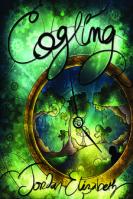
As my introduction to the steampunk genre and I must say I found Cogling, by Jordan Elizabeth a pleasing surprise. The story telling is strong, descriptions vivid, and characters who are realistic and likeable. Elizabeth has created a magical fantasy world in which readers are drawn in and easily immersed.
When Edna’s younger brother Harrison is stolen by hags and replaced with an enchanted mechanical replica, or cogling, Edna will stop at nothing to get him back. She enlists the help of a pickpocket street boy, Ike, who has knowledge of the hags and a few secrets, to aide her in her quest. Ike’s not the only one with secrets, for Edna harbors a secret of her own, one she’s afraid to admit, even to herself.
In their efforts to free Edna’s brother, they uncover a plot to annihilate the humans and the race is on to expose the hags’ evil plot to the king. When they arrive at the castle, they learn that Mother Sambucus and the other hags have infiltrated the entire Royal Court with their wretched coglings. Edna, Ike and their friends are captured once more, with no recourse except escape, in order to bring down the hags and save the kingdom.
Jordan Elizabeth is a talented New York author, whose other works include Escape from Witchwood Hallow, Treasure Darkly, Born of Treasure, several short story anthologies, and her newest novel, Goat Children.
I give Coglings Four Quills. 
Share this:

Weekly Writing Memo: 3 Keys of Writing Relationships
Posted: April 13, 2016 Filed under: Fiction, Uncategorized, Weekly Writing Memo, Writing, Writing Tips | Tags: Creative Fiction, Fiction, Writing, Writing Process 2 Comments Whether you’re writing friendships, families, couples, or even enemies, the relationship between the characters has to be established very clearly in order for the audience to understand it.In general, any time two people are in a scene of a story together, there is some kind of relationship between them, even if it is something as simple as salesman to client.
Those passing relationships are easier to establish because there’s not any history between the two people so there’s less subtext going on. All you need to show for those relationships is to establish what each character wants, and keep their actions true to their goals.
The want of each character is of course something you establish for anyone in your story, but for core characters your protagonist interacts with there is a bit more that should be shown. The three key things that need to be portrayed to make the relationship work for an audience are listed below. These are things that are especially true for when you are portraying newly established relationships such as in romantic stories, or team-up or friendship stories.
What brings the pair together?
Sometimes this element is a given, such as when the characters are family, coworkers, classmates, etc. You have to show the audience why these two characters are together for the story. We don’t need to see their entire history of how they met or anything, but we need to understand what it was that brought these two characters into each other’s lives.
In romantic stories, often times two characters are brought together initially by physical attraction. In fantasy or action stories, often times characters are brought together because of a similar goal. The key is, the audience has to understand how these two particular characters, whatever their relationship is, came to occupy the same space and form a relationship.
For example, if you have two best friends, one who is a hobo and another a CEO, and you don’t give us some indication of how they came together, the audience will not buy the story. This doesn’t mean you need to spell it out, all it means is you need to find a way to imply. In the CEO/Hobo example, you could spell it out by having the pair meet because the hobo parks outside the CEO’s office building. OR, if you want to go for a subtler and a new type of connection, maybe the CEO already knows the hobo and comes to him for advice, and the hobo says something that implies he once was a big businessman himself. That would give the audience an idea of how they could have met—when the hobo wasn’t a hobo.
The point is, the audience needs to understand how the two characters you are showing us were brought together. Did they work together? Are they family? Do they go to school together? Are they invited by a wizard to a secret meeting in the Shire? Etc. What is it that makes their worlds collide?
What keeps them together?
This is something I see often gets forgotten in stories involving friendships between odd pairs. Writers like showing us really quirky friends, but they often forget to show us why these two people who are so different are friends in the first place. People come together for a variety of reason, but the reason they end up maintaining the relationship is not always the same as the thing that brought them together.
This is important to show because even if we believe that two people were brought together because of a specific thing (like high school or work), if they don’t seem like two people that would continue spending time together than we won’t believe the relationship has lasted. There has to be something shown that is strong enough to keep these two characters maintaining contact with each other despite their differences.
For example, the hobo and the CEO. Maybe they used to work together, and that is how they met. Their lives have taken very different paths, and for a lot of audiences it’d be hard to believe that the CEO would continue to hang out with the hobo, or that the hobo for that matter would continue spending time with a big CEO who might look down on him. IF, however, you establish that the CEO comes to the hobo for advice, and that the Hobo comes to the CEO for aid now and then, then you have shown the audience what keeps the pair coming back to each other.
Whatever this element is that keeps the pair interacting, it has to be mutually beneficial/appreciated by the pair. Otherwise, the audience will be asking themselves why the characters bother with each other since they are so different. This thing is often show in stories about couples who have been together for a long time. We often see them longing for whatever the initial thing was that brought them together, and through the story we see the characters discover that while they no longer have that initial thing, they have something stronger that is the thing that has kept them together for all the years of their relationship.
What pulls them apart?
Every pair of people, when thrown together, has something that they disagree on and differ on. This can be as simple as the fact that one person is messy and the other is organized. The reason this is important to show in stories is that how people deal with conflict between friends, lovers, family, etc, can tell the audience a huge amount about the characters themselves and the type of relationship the two people have.
For example, if you have two best friends disagree about something as simple as dinner, how they go about the disagreement can tell the audience a lot. Do they get into a vicious argument that ends abruptly and then revert back to friendly banter? Does one character give in to whatever the other wants? Do they both refuse to concede?
Arguments are great at showing the dynamics between two characters. If one always concedes, they might be the peacekeeper, or the other might be domineering. If the argument is written in a way that the audience can see this pair has had it before, it can show very quickly that the pair has a long history together. The point is, you can learn just as much, if not more, by showing what characters disagree on rather than what they agree on.
This also works well to establish relationships because showing that two people are still in a relationship of some sort despite what they disagree on, can show the audience how important that relationship is for the pair. If a character is willing to ignore huge flaws in another character, then there must be something of value there. Just remember to show us why the characters ignore the flaws if they’re ones that are big enough to be relationship ending.
Share this:

Weekly Writing Memo: It’s Your Story
Posted: April 6, 2016 Filed under: Fiction, Opinion, Uncategorized, Weekly Writing Memo, Writing, Writing Tips | Tags: Creative Fiction, Fiction, Writing, Writing Process 2 CommentsIf you spend enough time writing, and receiving feedback on that writing, eventually you will run into feedback on your work that you disagree with. As I said in my piece on receiving feedback, there’s nothing wrong with that and it’s to be ex pected. So how do you deal with feedback you don’t agree with, especially when it comes from someone you respect and admire, and someone you know knows their stuff?
Do you ignore it outright? Do you argue? Do you grit your teeth and make the change because they’re an expert? What do you do?
- Treat every piece of feedback as if it were true.
This is the hardest thing to do as a writer because it involves looking at your work as if it were someone else’s, and focusing on what might be bad about it. Writing is a personal thing. We get attached to our creations, and as friend recently put it, it’s like being in a relationship. You’re so close to it that it can be hard to step back and see all that’s really wrong within it until someone else points it out. Even then, our instinct can be to defend it to the very end because it’s personal, and we’re emotionally invested in it.
If you really want to improve, however, you have to consider everything as possible in your work, even being wrong. To do this, you have to force yourself to put aside any emotional reaction the feedback may cause and focus on the question the feedback is asking. Try to think of it as being honest with yourself. If the feedback is right, then being able to accept it will let you fix it and make your writing better. If you are stubborn and insist you’re right and nothing needs to be changed without thinking about it, then you’re risking having a story that will not be as good as it could be.
So the first step when getting feedback you don’t agree with, whatever it is, is to tell yourself it is right. Even if you later decide it’s wrong, tell yourself it is right and force yourself to look at your work as if it is.
- Try to prove the feedback right.
Once you’ve forced yourself to think that the feedback is right, the next step is to try and prove it right. Look at it like looking at a scavenger hunt within your own work. If you spend at least five minutes analyzing things and trying to find elements that prove the feedback right, you may surprise yourself with what you see. Even if it seems like a stretch, force yourself to consider it.
For example, if someone says your character is flat or boring, then look at that character critically. Find all the traits you’ve shown about that character. Have you shown them, or told them? Find all the dialogue for that character. Do they say everything plainly, or do they have personality? If you covered up the name, would you know who is speaking? Look at as much about the character as you can, and see if you’ve been too subtle with your efforts, or if you’ve missed a key character element.
If by the time you’re done analyzing, you’re convinced the feedback is wrong, then maybe it is. But only settle on that after you’ve given an honest effort to try to prove it right. Is there anything you can do better or add to the story, without adding needless things, to help anyone who thinks the character is boring change their mind? If you find anything while you’re analyzing that may be what made the critic feel the way they did, then try to fix it so other readers don’t get the same reaction.
The point is, if you treat the feedback like it is right, and then analyze your story trying to prove it is right, you’ll be more likely to maybe see what the person giving feedback is talking about. If after all the analyzing you still can’t prove the feedback right, then maybe the feedback is wrong or focused on the wrong thing.
- Trust yourself.
Ultimately, people are not perfect, and every writer and reader has a different idea of how things work, and what is good or bad. The most important thing to remember is that it is your story, and while I strongly, strongly encourage considering every piece of feedback and thinking critically about each piece of advice, sometimes you have to simply thank the feedback giver for their time and ignore part of their feedback.
Breaking down a story and being able to explain exactly how it works and why is not an easy thing, and sometimes as writers we do things instinctively based on years of reading and watching and taking in stories. Sometimes, you get a piece of feedback that you know is wrong but you don’t have the tools to prove it wrong.
At this point, if you’ve given the feedback an honest chance and just don’t agree, it’s time to trust yourself. It is your story, and unless the person telling you to change it is your boss who won’t pay the bill if you don’t change it, then listen to yourself. As one of my former professors used to say, “At the end of the day your name is what’s on the page, so you get the final say.”
If you’re really concerned because the person giving the feedback is more experienced, or more knowledgeable, and you aren’t confident in ignoring the note, then your alternative is to make the change and see what happens. Try it out. Does it improve the story? Or does it ruin something you were going for? Even if you do this, however, you still have to trust yourself enough to look at the change and decide if it is improving or hindering your story.
Whatever you decide, it’s your story, so trust yourself. You are the one telling it. No one knows it better than you, and no one can make a decision for you. So think critically, try to be honest, and trust yourself. And remember, even if you go through the process of trying to prove the feedback right, and end up deciding the feedback is wrong, it is never a waste of time. Just the act of forcing yourself to analyze and think critically about your writing will help you be a better writer overall. After a while, you’ll find it far easier to analyze each piece of feedback, you’ll get faster at doing it, and you’ll be better equipped to defend your work because you’ll be used to breaking it down in a critical way.
Share this:

“Whispering Death” is an Action Packed Thriller of fair quality
Posted: April 1, 2016 Filed under: Book Review, Fiction | Tags: Action/Adventure, Book Review, Chris Tucker, Creative Fiction, Fiction, Whispering Death Leave a comment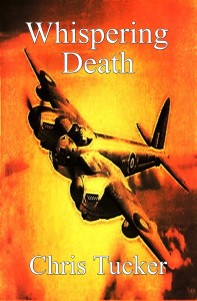
If you took the wild ride of Lost Voyage and loved it, then you’ll be happy to join in on the antics of NESA operatives, Sean Mercer and Pat Vigil, as they uncover a plot and race to stop an egotistical madman, who happens to be the kingpin of a huge pharmaceutical company, from unleashing a new drug resistant strain of TB on the world, for his own materialistic profit in Whispering Death, by California author, Chris Tucker.
While their boyish antics are entertaining, Sean Mercer and Pat Vigil are characters we’d like to know more about. For instance, how can they always be joking, even in the face of death? And how can they be so confident that they will always come out unscathed? It almost seems as if they are secret super heroes, carrying out almost super-human feats, and we just haven’t been let in on the secret.
This story has a good plot line, but execution of the story is lacking. It should be an action-packed thriller, which keeps readers on the edges of their seats and anxious to turn pages, but without continuous POV, we don’t stay with any one character long enough to feel the tension that we know should be there.
I give Whispering Death 2 Quills: 
Share this:

Weekly Writing Memo: Do’s and Don’ts of World Building
Posted: March 30, 2016 Filed under: Fiction, Uncategorized, Weekly Writing Memo, Writing, Writing Tips | Tags: Creative Fiction, Fiction, Writing, Writing Process 1 Comment World building is something I hear writers spend a lot of time anxiously freaking out about. All the tips on Where to Start a Story and How to Make Your Audience Care won’t help you get writing if you’re stuck in the preliminary stages of world building, so I thought I’d do a post on the basic do’s and don’ts of developing the world for your story.
When I talk about world building, I don’t just mean fantasy worlds or futuristic science fiction stuff. World building encompasses every story ever written, even ones based on true stories. Whenever you write you are building the world for your audience, so that those whose world view is different can “buy in” and believe the world is real. So every story involves showing the world it takes place in, the ones based on the real world just take a little less set-up because it’s easier for people to accept and figure out.
- DO establish “normal”
Every story has a baseline for what is normal in it. Establishing this just means you are saying to your audience that this is the world the story takes place in, and everything from this point forward will be based on that. To decide what needs to be established in this way, think of what is different in your world than the world we live in.
Do you have monsters that kill people? Do your characters have strong emotional/societal differences? Like in Invention of Lying where they can’t tell a lie, or in horror movies where the monster is supernatural, these things have to be established early on to orient the audience in the world of the story.
You don’t need to show us everything, but do show us what is important for understanding your plot, characters, and anything necessary for the story to work. It’s about small details, and consistency. So first decide what needs to be established, and then look for the easiest, and shortest, way to establish it, preferably in a way that helps move the story forward.
- DON’T over explain
It’s easy to get wrapped up in describing the details of a world because it can be fun to write. If you spend too much time laying out the world, however, it’ll start to feel like a history book of facts rather than a story. The key is to find a balance.
How much information does your audience need to know in order to understand the story? How much do they need in order to get a feel for the world? If you tell the audience just enough to get oriented in how the world works, without going too far past that, they will know what they need for the story and not feel like they’re bogged down by unnecessary details. Ask yourself with every detail, whether it is pertinent to the story, and how the story would be different without it.
- DO find one specific thing
The rule I use whenever I’m world building is to give one specific detail about anything that may be different from our modern world. So if I invent a new corporation, or a new style of car, I give one specific detail about it that tells the audience what this thing is, and how it fits in my world. This gives the audience something to latch onto for visualization, and something to define this “new” thing by.
As a side note, I also use this for minor characters and such in stories. I give them at least one specific detail about them that stands out, be it physical, personality, or history. It helps personalize each character, and make them their own.
- DON’T spend more time world building than writing
I’ve heard more than a few stories about writers who spend years building the world of their story. They think they need maps, and history, and every species planned out, and religions, and etc. While this kind of thing is a version of storytelling in itself, if you aren’t actually ever getting to write the story, you aren’t writing.
The key, as mentioned above, is to figure out what is important to the story and plan those things without going off on any side tangents. If you really feel you need to develop more of the world in order to deepen your story or to solidify the world for yourself, that’s fine, but set limits. Tell yourself you can plan out 3 or 4 main things that are the core of that subject (religion, politics, geography, etc), then force yourself to move on. If it’s not the core of your story, then you don’t really need more than that to get writing.
- DO remember to touch on the big things
Even though I say don’t get sidetracked by things that aren’t necessary to your story, there are several big things that should be touched upon if you are creating a new world. These things are things that are a part of every society, and even if your story works without them, it’ll be more realistic if you have some mention (even minor) of them.
The big 5, I think, are: politics, religion, culture (fashion, music, art, etc), transportation, and commerce (agriculture, industry, production, markets, etc). There are more, but these are the ones that no matter where your character is, there will always be touches of them present somewhere.
They don’t require an in depth expository segment on them, they just require the small details being integrated throughout your story wherever there is an easy opportunity for them. Your character passes people in a hall, we’ll see touches of their culture in clothes and appearance, and maybe even faith in jewelry or tattoos and such. The passing details can tell us a lot.
- DON’T compare
Don’t go the easy route and say anything that can be summed up as “unlike the world you know, this world works like this.” If you’re creating your world, our world probably doesn’t exist in it. Now, if you’re writing a character who is from “our” world and goes to another, then of course this doesn’t apply. If, however, you’re writing your completely original world, then it doesn’t make sense for your narrator to talk about a world they shouldn’t even know about.
You can use things from the known world in your world, that’s done all the time, just don’t point them out as being from our world. Your narrator is the one telling the story, so stay true to how they’d describe things. If their world doesn’t have bicycles, don’t describe something that looks like a spoked circle as being “like a bicycle wheel.” You have to stay true to the narrator.
Final Notes:
All of this kind of sums up to one major point. Do only as much planning as necessary to develop the basis of your world, and try to avoid overindulging in the development stage. A lot of the world building can happen as you work.
Personally, I develop what is necessary for the plot first, then start writing. While I write, I keep a Word document with new details I add. If I name a gadget or a city as I go, I write it on the Word document so I don’t forget what it’s named. It’s something I keep open as I write so I can reference and update it as needed. As with the post on researching, the thing to remember is that all roads should lead to writing and telling the story, so try to world build with that in mind.
Share this:

What Ever Happened to Heather Hummingbird?
Posted: March 25, 2016 Filed under: Children's Books, Stories, Writing | Tags: Children's Books, Ethan Eagle, Heather Hummingbird, Kaye Lynne Booth, Publishing, Writing 5 Comments
There are some of you who have been following my writing endeavors for some years. If you’re among that crowd, you’ll remember when I announced I had a publisher for one of the books in the My Backyard Friends series of children’s stories. I was very excited and proud to broadcast on the book’s progress at the time, but I haven’t mentioned Heather Hummingbird for quite a while now. It dawned on me the other day that there are many of you who were waiting for the release of the book. I even had a list of pre-orders in anticipation of it. You deserve an explanation as to what happened to Heather, so let me tell you what happened.
All through my limited writing career, I have done things on my own. A negative experience as an undergrad turned me away from a major in English that would have sent me down the path to becoming a writer the right way, and I got a major in Psychology, which I’ve never really found a use for instead. And when I first set out to be a writer, I failed miserably, because I couldn’t afford the submission process via snail mail, which is all there was back then. Yeah, I’m an old lady.
But the development of the Internet changed all that, opening up opportunities for writers that didn’t exist previously, and I began writing a series of children’s stories with animal and bird characters based on the creatures that visited the backyard of my Colorado mountain home on a daily basis. I met an illustrator online. She’d become a member of a social writing site, called Writer’s World, which I was administrator of. She offered me a very affordable deal to illustrate that first book, Heather Hummingbird Makes a New Friend, with beautiful handcrafted illustrations. I immediately fell in love with the cover illustration she produced, and down the road, she arranged for the publisher she worked for to offer me a contract.
Now you see why I was excited? I thought that was the best stroke of luck to ever hit me. I had a publisher fresh out of the gate. I was ecstatic. I spread the good news across all of my social networks, announcing to the world that Heather Hummingbird was coming. Little did I know, I had embarked on a nightmarish fiasco into the world of publishing.
When the publishing date the following year came and went, and nothing happened, they said it had been pushed back. And it was pushed back again and again for the next two years, each time I broadcast to my friends and readers the updated release date. But I wasn’t hearing anything from the publisher or the illustrator. She’d sent me three illustrations and the cover, but that was it. Nothing more was forthcoming, and no explanations.
If I wanted to know what was going on with my book, I had to contact them via e-mail and ask. They didn’t even tell me when the release dates were pushed back unless I wrote to inquire. In 2013, the release date passed, although all edits had been completed, my illustrator answered an inquiry, saying the date had been pushed back again and she was no longer able to illustrate by hand. She sent me a digitally illustrated cover and ask if this would be acceptable. I didn’t like this cover as much as the original, but I thought it would do, so I agreed to have her do the digital illustrations.
The next release date came and went, and when I inquired, the publisher sent back an email informing me I would be getting a different illustrator. I inquired as to the reason for this change, thinking perhaps my illustrator was no longer with the publishing house, but this was not the case. For some unknown reason they had decided to have someone else produce my illustrations, which I had already paid the original illustrator for.
At this point, I was more than slightly annoyed. I expressed my displeasure in the arrangement and the publisher got snotty and said she would release me from the contract. So, that is how it was resolved, and I’m still trying to collect my money from the original illustrator. It feels foolish to say that seven years since Heather started out on her venture, I’m stuck with two covers and three illustrated pages, none of which I can use, no illustrator and no publisher. But that’s it in a nut shell. I still don’t have a published book.
So, where is Heather now, and what lies in her future? Well, I shopped her around to a few publishers, to no avail. At Western State I was taught that you have to get back up on the horse, so after one rejection, I pulled up the manuscript and re-read it with fresh eyes, in order to revise before sending it out again. On that pass, something profound struck me. Heather Hummingbird Makes a New Friend, was not Heather’s story at all. It wasn’t Heather who learned a life lesson in this story, but rather, she was the teacher. So, I did the revisions, rewrote the synopsis, and changed the title to Ethan Eagle Makes a New Friend. After all, Ethan is the character that learns about friendship from Heather. Once that was done, I launched it into the submission process once more, so we’ll see.
There you have it. I don’t know how many are out there who even remember there was a Heather Hummingbird book, but at one time I had a whole list of pre-orders from people wanting the book. I am sorry that I wasn’t able to fill those orders, and I thank all of you for your support. If anything ever does come of Ethan and Heather, you, my readers, will be the first to know. Thanks for hanging in with me.
Share this:

Weekly Writing Memo: 3 Ways to Make Your Audience Care
Posted: March 23, 2016 Filed under: Fiction, Uncategorized, Weekly Writing Memo, Writing, Writing Tips | Tags: Creative Fiction, Fiction, Writing 2 CommentsIn last week’s memo, we answered the question “What do I write?” This week we’re going to talk about making your audience care about your story. If your audience isn’t invested in the story, if they a ren’t interested in it, then they aren’t going to want to stick with it through to the end. Lack of investment is what makes people walk out of theaters mid-screening and give up on books before they get to the end of the story.
So how do you get your audience invested? How do you make people care?
As with everything else to do with writing, there isn’t a guide to follow or a cheat sheet to guarantee your audience will care, but there are several steps you can take to give your story the best odds.
- Make your characters rounded and “real.”
It’s hard for people to get invested in characters that are flat or stereotypes. The more rounded your character, the more depth that they have, the more they will feel like real people. Without characters that are more than just a stereotype or shell to carry out the plot, it’ll be incredibly hard to get an audience invested in the story.
Even in real life it’s hard to get invested in people we don’t know, or people who are theoretical to us. We often think of people as the role they fill in our lives—the barista who makes your coffee, the cop who gave you a ticket, the taxi driver, the security guard. It isn’t until we learn something about them that is personal—a habit, their family, their hobbies, etc—that those people become something more to us than their jobs. Friends and family mean more to us because we have a wealth of experiences with them, and knowledge about them as people, that give them meaning to us. Characters in stories need to create these same feelings
Without the depth to your characters, the audience will never be able to think of them as more than functions. There are a lot of ways to create deep characters, and it’s different for every story. My past blog posts on Making Likable Characters and 5 Tips for Establishing Characters are good places to start. Essentially, it comes down to making your characters real.
Give them more backstory than what pertains to the plot. It doesn’t all have to be explained, but do hint at it and let glimmers shine through to show that there’s more going on beneath the surface. Give your characters habits, and families, and favorites/dislikes. Give them personality, and let it shine in their narration, their dialogue, and their actions. The more “real” you can make your character, the more depth you can give them, the easier it will be for people to get invested in them enough to want to stick around through the entire story.
- Create a plot that matters.
Having a character with depth is only the first part. If the character doesn’t have a conflict that is interesting, something that matters, then even if the character is well done, the story itself may not be interesting. The plot of your story has to have something major at stake for your protagonist, and the story should have different levels of plot to create more depth (Read 3 Types of Plot for more info on plot levels).
The plot of the story has to have something at stake for the protagonist that anyone in those shoes would see as life altering. This can be anything from their life being at risk to their one chance at finding true love. If you show that it is something pivotal for your protagonist, then your audience will look at it with the same mindset.
You want your audience to care about what is happening in the story, so the protagonist has to care about it and SHOW that they care. They can’t just say “well if I don’t get this job I’ll have nothing.” You have to show how not getting that job will ruin their life—show their financial situation, show their potential future without the job, show them starving and spending their last dollar. If you make the audience understand the consequences of the protagonist failing to succeed in the story, then you will make the audience understand why the conflict of the plot is so important to the protagonist. You’ll make the plot matter, and get your audience invested.
- Ask questions that your audience wants answered.
Every scene of your writing should create a question that your audience is wondering. Where is the protagonist going? Who died? Who’s the murderer? What is going to happen next? These questions are what keep your audience invested and curious to keep reading because they want the answers. The only time your audience should have all the answers, or close to, is at the end of the story, and that is only true if the story is not a series of some sort.
Every scene of your story should, at the very least, lead your audience to ask themselves “what will happen next?” If not, then the scene is not driving the story forward. Scenes that do not drive the story forward have no purpose in the story and will most likely feel boring, slow, and will often be places where the audience stops paying attention. They lose their investment in the story because they have no reason to keep reading.
You can create more “questions” in the story by making sure your scenes don’t give all the answers to the plot, by adding conflict, and by letting your characters and the plot be exposed gradually rather than in bulks of exposition.
For example, instead of doing a chunk of dialogue or exposition about who your protagonist is, let your audience figure it out as the story develops. Give them doses, enough to keep them curious about the character, but don’t spell it all out for the audience. That keeps the audience asking “who is this character?” If you can keep your audience asking questions, you’ll most likely keep them reading to find the answers.
Final Notes:
The one thing to keep in mind about all of the tips above is that they are all useful in moderation. You can tell us too much about a character, make a plot too complicated, or create too many questions for your audience. You want to give your audience enough to keep them interested and entertained, enough for them to understand the story, but not so much that they are overwhelmed, bored, or confused.
Some great popular examples of too much of something are Lost and Game of Thrones. When Lost was on, many people complained because it constantly created questions for the audience without giving enough answers. Similarly, in Game of Thrones many complain because there are too many characters and audiences had trouble getting into the story.
Now, both of those franchises are highly successful so clearly people can get past those things, but both show the dangers of too much of something. Both of those series, however, also use all of the things I listed above to keep audiences invested. They have deep characters with backstory beyond the events of the core plot that the audience sees. They keep the audience asking questions and wanting answers, and their plots have huge things at stake for the characters.
You’ll never be able to keep everyone invested all of the time, but if you strive for balance, and create deep, meaningful characters and plot, then you should be able to keep your audience invested in the story.




















