This is the time of year when I like to take a look back over the year to see what worked and what didn’t for Writing to be Read, but there are exciting changes coming as well. So let’s move forward in the logical order and talk about the old first. Let’s take a look at the past year on Writing to be Read. For me, there were several surprises and if you are following, they may surprise you, too.
I feel like we had a really great year in 2018, featuring two rounds of Ask the Authors, with two wonderful and diverse author panels sharing writing tips and advice in many aspects of writing with almost seven thousand views. Now that may not seem like a lot to some, but when you consider that it’s over three thousand more views than in 2017, that’s not too bad.
For those who don’t know Ask the Authors is a twelve week blog series, where an author panel responds to questions on the many aspects of writing. Panel members in the original series of Ask the Authors, which ran from February through April, included author and ghostwriter DeAnna Knippling, dark fantasy author Cynthia Vespia, Y.A. author Jordan Elizabeth, literary author Margareth Stewart, action novelist Tim Baker, action and speculative fiction author Chris DiBella, women’s fiction author Janet Garbor, multi-genre author Chris Barili, and Y.A. author Carol Riggs. Round 2 ran from October through mid- December with the first four authors from the previous list as returning panel members and seven new panel members, including multi-genre author Dan Alatorre, nonfiction author Mark Shaw, pulp fiction author Tom Johnson, thiller author Ashley Fontainne, romance author Amy Cecil, multi-genre author Art Rosch, and speculative fiction author R.A. Winter. I’d like to thank them all once again for taking time out to share with us here.
We also were blessed with three new Wednesday blog series with three new team members. The team member from the 2018 Wednesday line-up with the most views was Jeff Bowles with Jeff’s Pep Talk, but Jordan Elizabeth and Art Rosch brought in their fair share with Writing for a Y.A. Audience and the Many Faces of Poetry, respectively.
To my surprise, the team member with the mosts post views over 2018 was Robin Conley, who is currently not an active team member, but readers continue to seek out her writing advice in her writing Weekly and Monthly Writing Memos from 2017; the most popular was her Weekly Writing Memo: Word Choice is verything, which had the second most views of all blog posts this past year. Right up there with that is her review of Pride and Predjudice and Zombies, with over one hundred post views.
I was also surprised to learn the most viewed interview was tied between children’s author Nancy Oswald from the 2016 series Pros and Cons of Traditional vs. Independent vs. Self-Publishing and action novelist Tim Baker from the 2017 series Book Marketing; What Works. But those interviews were focused more towards information on publishing and marketing, respectively, so I don’t really count them in the same category as author interviews, because readers may view the series posts for different reasons than they would author interviews.
My author interviews provide a focus on the author, so in this category the most post views came from my interview in 2018 with screenwriter J.S. Mayank. My interview with author Alexandra Forry was next in line, and my interview with performance poet Rosemerry Wahtola Trommer recieved the third most post views.
In 2018, the top book review was Dan Alatorre’s dark fiction anthology, Dark Visions. Another surprise – the second and third most post views in the review category are both from 2016, with my review of Simplified Writing 101 by Erin Brown Conroy coming in second, and Wild West Ghosts by Mark Todd and Kym O’Connell Todd coming in third.
The other review that I feel is worthy of mention is my review of Mark Shaw’s new release, Denial of Justice. I did the review in December, so it hasn’t been available long enough to acrue a great number of views to rank in the yearly statistics, but it is a tale that deserves telling and Mark did a smash-up job of telling it. I’ve no doubt this book will be as popular or more so than the original tale, The Reporter Who Knew Too Much, because we all love mystery and intrigue, and the story of Dorothy Kilgallen is a true life tale filled with both. I am privilaged to have been allowed to review both of these books.
Along the lines of other content, again my 2016 post Why is Fact Better than Fiction recieved the most viewed, and surprisingly, a post from 2011, The Process Takes Time close on it’s heels, with my 2016 post, A Writer’s Life in No Bowl of Cherriesfollowing not far behind them. Not one of my top three posts was from this past year. My post from 2018 which recieved the most views was Join Me in My Protest Against Facebook, a rant I did about Facebook and their changing policies after I got blocked from posting in groups, including my own group, for a twenty-four hour period. I think this post was my cry in the dark from the frustration I felt as a busy author who promotes her own work and limited time. It makes me laugh to think it was my most popular post published last year.
Views outnumber visitors, so I’m thinking that the increased views of all the older posts comes from new viewers who popped in to read a newer post and decided to browse the site, which is great. If I gained some new followers due to this, I certainly won’t complain.
Overall, it was a great year and my following has steadily grown, as well as post likes and comments. I have to extend thanks to my readers, my followers, my team members and my guests on Writing to be Read for helping me make it happen. I couldn’t have made such strides without all of you.
2019 promises to be an even better year for both Writing to be Read and for me, and I’m excited to share my plans with you here. To start, this site will be getting a facelift: a new theme which will coincide with my new WordCrafter website and a new logo. The WordCrafter site will be the new home of Write it Right Editing Services and WordCrafter Copywriting, now housed here, as well as WordCrafter Press and WordCrafter Online Courses in the near future. Writing to be Read, although remaining here, will operate under the WordCrafter trademark. I was hoping to launch it tonight to start the New Year off right, but time constraints have not favored me. The launch of my WordCrafter and new image and logo for Writing to be Read will happen sometime in January. That’s the revised goal.
On Writing to be Read, look forward to some great new content beginning in January. To start the year off right I already have scheduled reviews for Freedom’s Mercy, by A.K. Lawrence and Fanya in the Underworld, by Jordan Elizabeth, and an interview with western author Loretta Miles Tollefson.
Let’s not forget the new addition to the Wednesday line-up. Starting in January, children’s author Robbie Cheadle will be joining us with her blog series, Growing Bookworms. You can learn more about Robbie and her exciting and creative new series in my introduction and welcome post last Monday.
I also have an exciting new monthly blog series planned for the third Monday of each month, called Chatting with the Pros. Starting in January, I will interview a successful professional author in a different genre, who will graciously allow me to pick their brains for tips and tidbits of writing wisdom from authors who are making it work. I can’t reveal the guest line-up yet, but it shows promise of holding some well known names. And I’m thinking about doing a writing contest, with entrants recieving an invitation for inclusion in an anthology and other cool prizes.
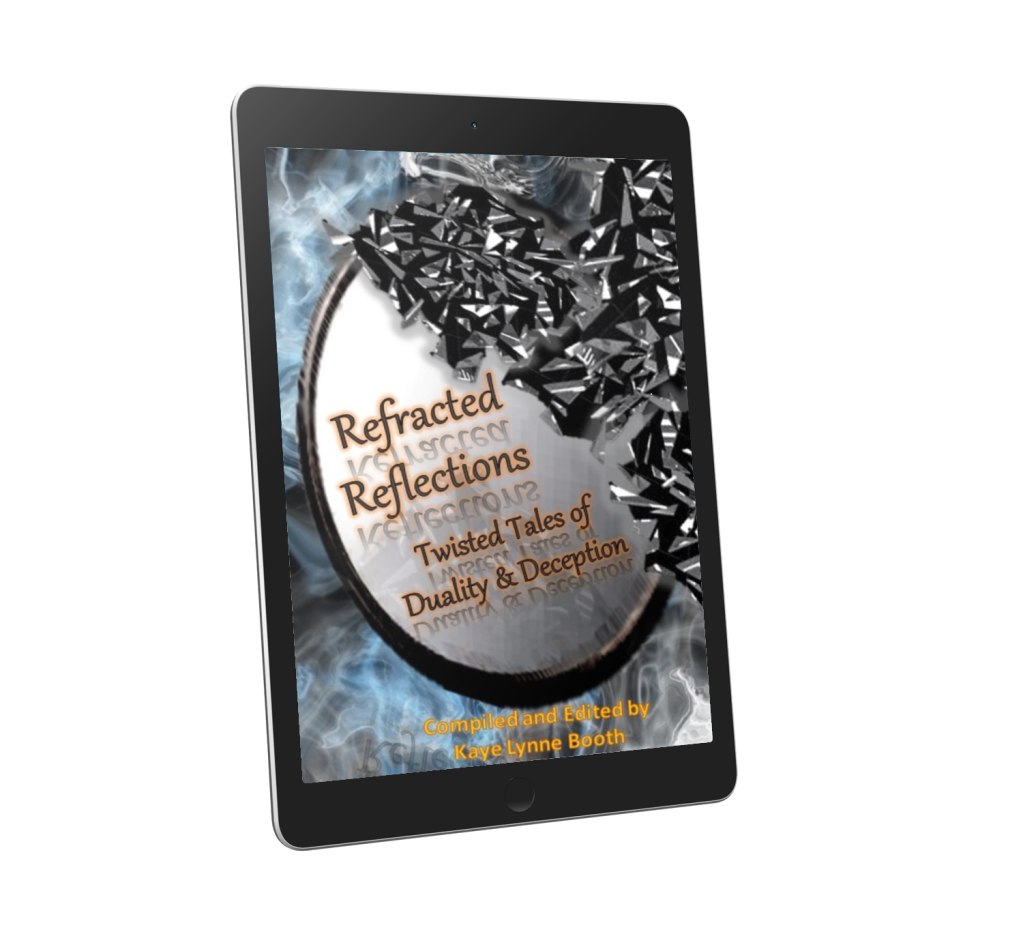
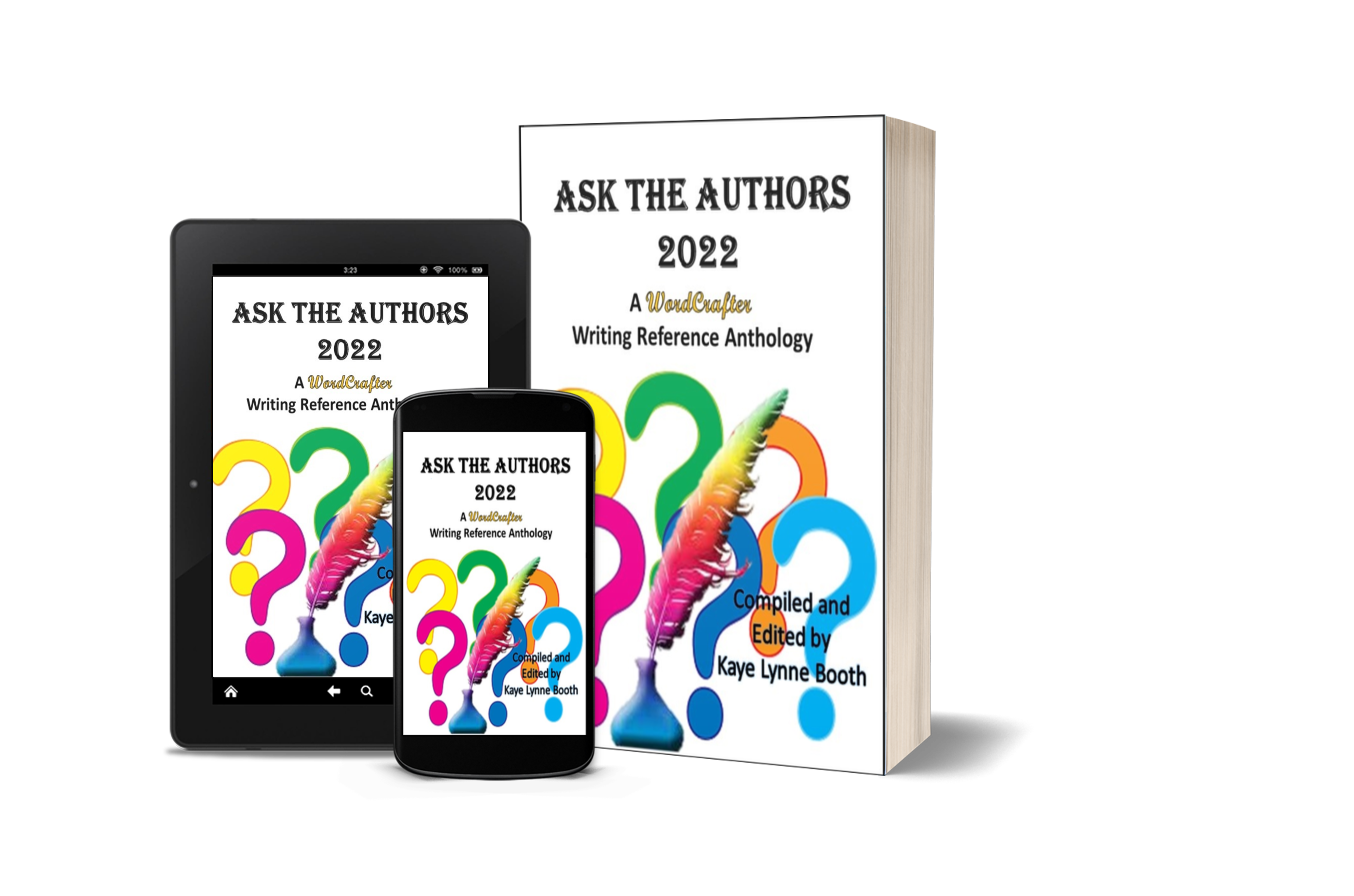
A third round of Ask the Authors is also in the making for this coming summer and I’m planning an Ask the Authors book to follow, which will include material from all three segments. I already have a cover for the book, created by D.L. Mullen of Sonoran Dawn Studios. I hope to have it out by the end of the year.
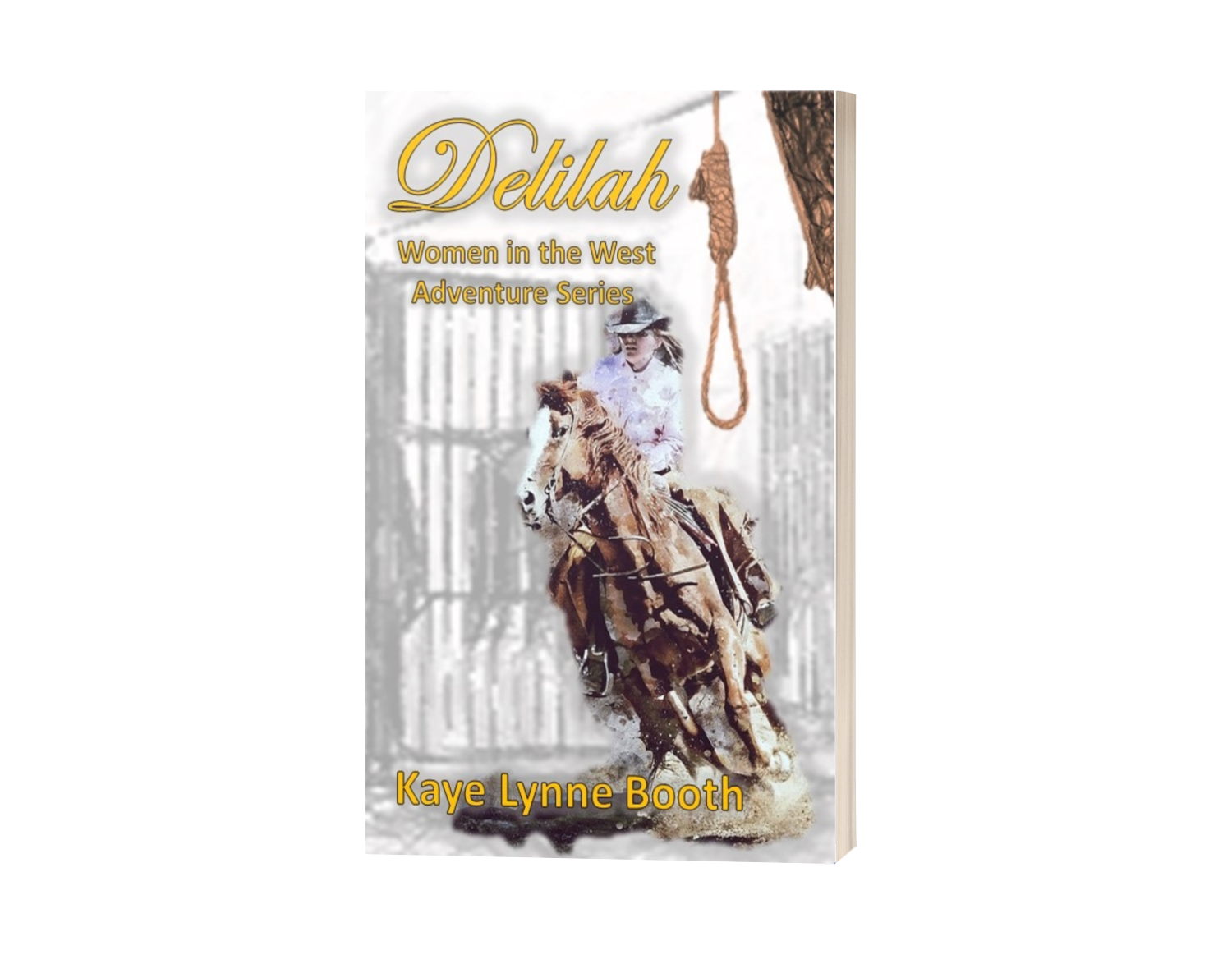
And of course, you’ll be able to get updates on my other works in progress: The Great Primordial Battle, book one of my science fantasy series, Playground for the Gods; The Homecoming, book two of my western series, Delilah; and my memoir about losing my son to teen suicide, His Name Was Michael. I hope you will all join me in the coming year.
With that, I’ll just say see you next year.
Until then, happy writing!
Don’t miss a single post in the coming year. Subscribe to Writing to be Read for e-mail notifications whenever new content is posted or follow WtbR on WordPress.
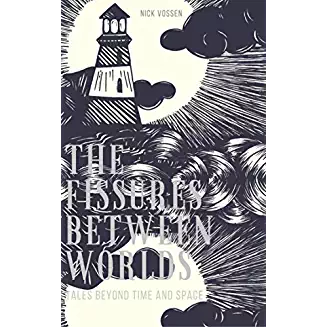
Have you ever felt like things were just a little off? That’s just how the characters in Nick Vossen’s The Fissures Between Worlds: Tales Beyond Time and Space feel on a regular basis. Fissures Between Worlds takes the reader to worlds beyond the veil of time and space where the unlikely, the improbable, even the impossible can and does occur. When the veil is breached, people get stuck in endless time loops, and creatures which can’t possibly exist wreak havoc within our own realities. Nick Vossen’s unique styles of storytelling take readers on a journey which will make you ponder the possibilities. A short fiction collection which is anything but typical. I give Fissures Between Worlds five quills.
Kaye Lynne Booth does honest book reviews on Writing to be Read in exchange for ARCs. Have a book you’d like reviewed? Contact Kaye at kayebooth(at)yahoo(dot)com.
Robbie Cheadle is a very creative mother, author and fondant artist, who thinks outside the box to find inventive solutions for life’s difficulties. I first met Robbie through Sonoran Dawn’s Dead Man’s Party Halloween book event, where I did a reading of her short horror story, The Willow Tree, via audio recording for the event. During her takeover, Robbie posted images of her delectable creations to promote her Sir Chocolate book series for children, which she wrote with her son, Michael. She uses these image of her baked creations as cover art and to illustrate the book series. I thought this was incredibly innovative, and I immediately wanted to know more about this woman, and it didn’t take long to decide that I wanted to add her to the WtbR team.
Robbie is my Christmas gift this year, as I’ve been searching for a children’s author to join the Writing to be Read team. So, starting in January, Robbie will be popping in the second Wednesday of each month with her new blog series on writing for children, Growing Bookworms. I can’t wait to see what she has to share with us, so let’s learn more about her.
Kaye: Your Sir Chocolate covers are photos of your own delectable desert creations, which is very creative. Which came first – the baking or the writing?
Robbie: I started with baking and fondant art quite a long time before we wrote the books, but pairing the two was an idea that only came later. I used to write poetry and descriptive passages as a tween and teenager. Emily of New Moon by LM Montgomery was my favourite book when I was a tween. Emily is a poetess in the book and her father is a writer. The book inspired me to write down my thoughts and feelings.
This slideshow requires JavaScript.
Kaye: Would you share the story of your own publishing journey? How did the published works of Robbie Cheadle come to be?
Robbie:I never planned to become a published author when I first started writing the Sir Chocolate stories. My son, Michael, aged 6 years old at the time was having difficulties with learning to read and write. He was diagnosed with an auditory processing problem which made these activities difficult for him. He had the loveliest story ideas about a little man made of chocolate who lived in a land where you could eat anything, even the sand, trees and houses. In order to encourage him to write, I made up rhyming verse stories using his ideas. Together we wrote them down in handmade books.
I have always enjoyed fondant art and sometimes Michael would come and sit with me and make his own version of what I was making. We started making illustrations for the books by taking photographs of our creations. My nieces and nephews enjoyed the Sir Chocolate stories, so I tried them out with my Sunday school class of children. One of my friends at the Church suggested I send the stories and pictures to a friend of hers who is a publisher in the UK. Anne liked the stories and gave us a contract for the Sir Chocolate series of books.
Kaye: You talk about fondant art. I, for one had never heard of this. Could you explain briefly what fondant art is?
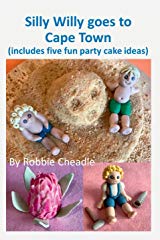
Robbie:Fondant is also called sugar dough and is an elastic type of icing, almost like modelling clay. This is the substance that cake bakers use to make figurines, flowers and other edible artworks for cakes. The items in the picture I emailed you are all made of fondant.
Kaye: You’re the co-author, along with your son Michael of the Sir Chocolate book series for young readers. How did that partnership come about?
Robbie:Between the ages of 6 and about 9 years old, Michael and I continued to make up Sir Chocolate rhyming verse stories from time to time. We would be doing something like visiting an ice cream shop and an idea would come to us. We would then chat about the idea and develop it into a story. Michael has delightful ideas like the chocolate snow and the ice-cream rainbow fairies who feature in Sir Chocolate and the Ice-cream Rainbow Fairies’ story and cookbook which will come out in 2020.
Kaye: What’s the one thing you hope your son takes away from this venture?
Robbie:I always hoped that Michael would become a proficient reader and learn to enjoy books and reading. It is not easy for a child who struggles to learn to read to develop a love of reading. I am very happy to say that this has happened. Michael now reads on his own for about 30 minutes a day. We often read together with me reading my book of the day and him reading his current story. Lately, these are all Rick Riordan books.
Kaye: What ages are the Sir Chocolate series aimed at?
Robbie:The Sir Chocolate books are aimed at young children, aged 3 to 9 years old. They are lovely for beginner readers as they are comprised of rhyming verse.
Kaye: Each book in the Sir Chocolate series features a story and a cookbook. That’s an interesting combination. Would you like to tell us a little more about why you chose to pair the two?
Robbie: Sir Chocolate is a little man made of sweets and sugar. All the characters in the books are made of edible products as well as all the houses, trees, flowers and even the rivers and the rocks. As all the illustrations are made of cake, biscuits and sweets, it seemed natural to provide the recipes to make some of the goodies in the book and make the books into a series of first cookbooks as well as a story.
Kaye: You also write supernatural and horror for adult audiences, and you had two stories published in the recently released horror anthology, Dark Visions. (See my review of Dark Visionshere.) Another interesting combination: horror and children’s stories. Is there a story behind how you ended up writing in those two genres?
Robbie:I entered a short story for children in one of Dan Alatorre’s writing competitions and it won an Honourable Mention. I really liked the critique on my story that I received from Dan so when another competition cropped up a few months later I decided to enter. The topic for that one was horror so I thought I would give it a go. That was when I wrote The Willow Tree. Dan again provided an excellent critique in respect of the story. I entered The Haunting of William into his most recent horror competition in June 2018. That was how I came to write darker stories. I discovered that I enjoyed writing this genre and now I am writing a supernatural/horror YA book. I have just exceeded 50,000 words.
Kaye: I can think of many differences in writing horror and in writing for children, but are there also ways in which they are alike?
Robbie: The Sir Chocolate stories all have a villain ranging from the trolls in Book 1 to the candy stripped Roc in book 5. All stories generally have a heroic character and a bad character so there is a common thread between the two genres. The difference is that in the Sir Chocolate books the “baddie” is generally redeemed and becomes a contributing member of Chocolate Land. In my current book, the evil characters are not redeemed.
Kaye: What is the strangest inspiration for a horror story you’ve ever had?
Robbie:I have just written a horror story about cockroaches which infest a working microwave oven and gain unnatural powers as a result of the microwaves they are subjected to. I think that is about the most unusual story I have written to date but I have only been writing for just over two years and I only started writing horror this year.
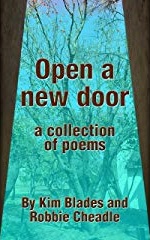
Kaye: In addition to writing children’s stories and cookbooks, and adult horror, you write poetry. And you have a poetry collection out with Kim Blades, Open a New Door. What type of poetry can we expect to find in this collection? How did that collaboration come about?
Robbie:Kim Blades and I are both South African poets. Our collection is about life in South Africa and is divided into four sections entitled God bless Africa, God bless my family and friends, God bless me and God bless corporates and work. Each section is divided into poems about the good, the bad and the ugly of our experiences in each of these areas of our lives.
Kaye:What is the most important quality in a poem for you?
Robbie: I like poems that are simply written and have a strong message. I try to write my poems along those lines. I don’t believe a lot of “highbrow” language is necessary in a poem for it to be an emotional and evocative piece of writing.
Kaye:You have another collaboration with Elsie Haney Eaton, While the Bombs Fell. It’s about life during World War II, which is quite different from the Sir Chocolate stories. What age audience is this book aimed at? Would you like to talk a little about it?
Robbie:Elsie Hancy Eaton is my mother and While the Bombs Fell is a fictionalized account of her early years growing up during WWII in a rural town in England. It features the deprivation caused by bombing and rationing and the other hardships experienced, but it also provides a lot of insight into the small pleasures people enjoyed during the war in the way of a Christmas pudding, the ingredients for which were literally saved up for most of the year, swimming in favourite spots along the river Waverney and learning to knit. The reason this account is fictionalized and not an autobiography is my mother was aged 4 to 7 years during the war and so she can’t remember all the fine details. I supplemented her memories with a lot of my own research.
Kaye:What is the biggest challenge of writing for children?
Robbie: Marketing the books. Indie authors and writers with small publishers find it more difficult to get their books into stores and in front of the eyes of children. Children generally don’t use social Medias and, therefore, we are marketing to the parents and not to the actual child. Impulse buys are fewer as a result. I try to visit schools and Sunday Schools, but my time for these events are limited due to my work requirements.
Kaye: What other activities do you find time for when you’re not baking or writing?
Robbie: I am a qualified chartered accountant with a full time job and two sons. Any recreational time I have that isn’t spent with my family is used for writing, baking and blogging. I have two blogs, one for my children’s books, light poetry, baking and fondant art called robbiespiration.wordpress.com and one for my adult writing and darker poems called robertawrites235681907.wordpress.com.
Thank you so much Robbie for chatting with me here today. It’s been a pleasure, and I’m thrilled to have you on board. I look forward to your Growing Bookworms blog series. I have no doubt that you have some interesting things to share with us.
Welcoming Robbie to the Writing to be Read team is my Christmas present this year, and adding her blog series will be a great way to start out the New Year, too. You can learn more about Robbie and her writing and art one her blogs or click on the links below:
I hope all my readers will help me welcome this creative children’s author to the Writing to be Read team and be sure to catch the first segment of her Growing Bookworms series on January 9th.
Want to be sure you don’t miss any of Robbie’s Growing Bookworms segments? Subscribe to Writing to be Read for e-mail notifications whenever new content is posted or follow WtbR on WordPress.
I was given the privelage of reading Denial of Justice, by Mark Shaw, a probe into the mystery surrounding the death of journalist and media icon Dorothy Kilgallen. Shaw’s investigation started with The Reporter Who Knew Too Much, revealing the circumstances around the mysterious death of Dorothy Kilgallen, who was investigating the death of John F. Kennedy and the possibility of a cover up by those in high places, involving the assassination of Lee Harvey Oswald and the botched trial of his killer, Jack Ruby before her untimely death.
Shaw’s in-depth investigation of Kilgallen’s death following the release of that first book raises the possibility of a full blown cover-up which explodes in Denial of Justice, presenting facts revealing evidence that Kilgallen was murdered because of the evidence of conspiricy may not have been the only one whoshe had uncovered and was preparing to publish in her upcoming Random House book, and the cover-up surrounding it denying her the justice she was entitiled to. (You can see my review of The Reporter Who Knew Too Much here.)
While Denial of Justice recaps much of the information presented in The Reporter Who Knew Too Much concerning the Dorothy Kilgallen story, it goes into much more depth, laying bare the connections between her death and her investigations into the JFK and Oswald assassinations. Shaw presents strong evidence indicating that there was, indeed, a conspiracy revolving around the JFK assassination, and that Jack Ruby was used as a patsy in it’s orchestration, taking the fall in order to protect the powerful people behind it. It was a belief Kilgallen had been a major proponent of and didn’t hesitate to proclaim publicly in her newspaper column, The Voice of Broadway. Evidence indicates that Kilgallen held the evidence which would prove her conspiracy theory and reveal the powers behind it when she died. Shaw’s in-depth investigation uncovers facts that support this belief. In fact, he reveals a mountain of evidence that indicates Dorothy Kilgallen was murdered and point an accusing finger at the likely suspect. The cover-up of Dorothy Kilgallen’s murder is an extension of a much greater conspiracy, one that reaches all the way through time into the present day.Shaw’s straight forward journalistic approach to the telling of the facts makes the story unfold with smooth finness that keeps the pages turning. You may be shocked or surprised as he reveals evidence which indicates the powers operating in 1964 beyond the public eye and the hidden agendas they carried. Not one, but two lives wasted as tools to promote their unseen goals and a reporter who came too near to the truth may be pieces to puzzle that makes up what may be the biggest conspiracy in modern history. Shaw offers evidence which indicates who may have been behind it all, and the motivations for the taking of at least four deaths as sacrifice for keeping their secrets hidden.
Those who are supposed to be the guys aren’t always so good. Mark Shaw has expertly crafted the evidence into a story that changed my view of history and made me ponder what might have been, had events unfolded differently in 1964 and Dorothy Kilgallen lived to tell all that she knew. I give Denial of Justice five quills and kudos for a story well told.
Kaye Lynne Booth does honest book reviews on Writing to be Read in exchange for ARCs. Have a book you’d like reviewed? Contact Kaye at kayebooth(at)yahoo(dot)com.
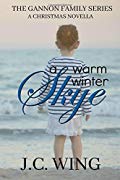
A Warm Winter Skye, by J.C. Wing is a Christmas novella in Wing’s Gannon Family series. Even if you haven’t read the previous books in the series, this story is easy to follow and you feel as if you almost know the characters. I’m not sure why it is labeled as a Christmas Novella, other than the fact that the story takes place in the months preceeding Christmas.
I had trouble as I went to write this review, because I wasn’t sure what to say. It’s a good story. The problem might be what I said about ‘almost’ knowing the characters. This could have been a novel, instead of a novella. Wing could have gone into more depth, allowing us to know more about them. Perhaps if I had read the preceeding stories in the series, I wouldn’t have been left feeling as if there should be more.
It really is a good story. One that will make readers fret over the possible outcomes and remind them of the power of love and family. The characters need to be more fully developed, and the Irish dialect is too heavy and hard to understand, but I still wanted to read to the end. I give A Warm Winter Skye three quills.
Kaye Lynne Booth does honest book reviews on Writing to be Read in exchange for ARCs. Have a book you’d like reviewed? Contact Kaye at kayebooth(at)yahoo(dot)com.
Double Blind, by Dan Alatorre is a riveting suspense thriller that will keep the pages turning. I didn’t want to put it down. I was forced to stop in the middle of a climactic scene because I couldn’t hold my eyes open any longer and my brain was muddling the words. But, I was back at it first thing the next morning because I had to find out what happened. And you will, too.
There’s a brutal serial killer on the loose, but when he strikes two members of the same family on the same night, it sends police looking for connections that don’t seem to be there, and the killer seems to always be one step ahead, and brings in Johnny Tyree, a P.I. and friend of the family right into the thick of things. When the two detectives working the case, Carly Sanderson and Sergio Martin, become the targets, it sends police reeling in yet another direction.
Dan Alatorre does a marvelous job of weaving the subplots together without revealing the surprise twist at the end in this well-crafted crime novel. I give Double Blind five quills.
Kaye Lynne Booth does honest book reviews on Writing to be Read in exchange for ARCs. Have a book you’d like reviewed? Contact Kaye at kayebooth(at)yahoo(dot)com.
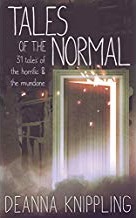
Tales of the Normal, by DeAnna Knippling is an intriguing collection of flash and micro-fiction that is anything but normal. In fact, I’ve never seen a collection of stories quite like this one. As with all short fiction, some of the stories don’t quite feel complete, but others may leave you haunted.
A flash collection gets a flash review. Tales of the Normal kept me reading and made me think. I give it four quills.
Kaye Lynne Booth does honest book reviews on Writing to be Read in exchange for ARCs. Have a book you’d like reviewed? Contact Kaye at kayebooth(at)yahoo(dot)com.
One town, two killers and the body count is rising. Artemis, by Chris Snider is the tale of how freak set of circumstances turned an ordinary scientist on the brink of death into something no longer human. With superhuman powers, including the ability to command animals, Joseph Art becomes Artemis, defender of animals and the innocent or vulnerable. The police don’t know whether they should string him up as a vigilante, or pin a medal on him. After he comes face to face with the evil clown axe murderer, the stakes are raised and the hunt becomes personal, and no one knows what will happen when the two killers confront one another a final time.
The individual storylines are skillfully woven into a single plotline and action filled climax. I give Artemis four quills.
Kaye Lynne Booth does honest book reviews on Writing to be Read in exchange for ARCs. Have a book you’d like reviewed? Contact Kaye at kayebooth(at)yahoo(dot)com.
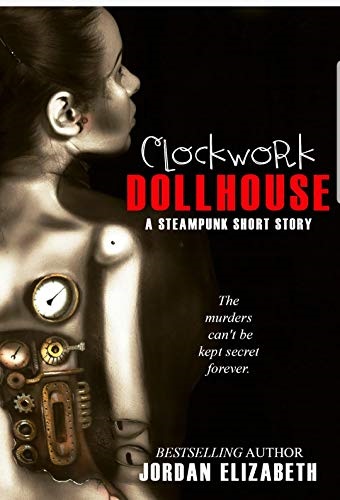
Clockwork Dollhouse, by Jordan Elizabeth is a short steampunk tale which may give readers the chills. Robert has many secrets, but Jane’s clockwork dollhouse sees and reveals things Robert would rather stay hidden. But what is really going on? Who’s winding the dollhouse after all these years and setting the stage? Is it Ainsley, his niece, the ghost of his dead sister, Jane, or is the dollhouse haunted? And can it be stopped before the truth comes out?
A brief story which captivates. Clockwork Dollhouse is a tale of murder unraveled in short fiction format. Perfect for YA audiences. I give it five quills.
Kaye Lynne Booth does honest book reviews on Writing to be Read in exchange for ARCs. Have a book you’d like reviewed? Contact Kaye at kayebooth(at)yahoo(dot)com.
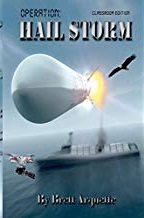
From the cover, I thought Operation Hail Storm, by Brett Arquette was going to be a military action tale, but I was a little surpised because it’s not. It’s more of a spy thriller with a touch of romance worked in. It’s got spies and lots of action and the coolest drones.
Marshall Hail is in the business of nuclear energy and stealth operations using high tech drones in this futuristic thriller. As a wealthy enterprenuar, Marshal Hail has found a way to offer cheap nuclear energy to underprivaleged countries, and it has made him even richer. He chooses to use those riches to build his own team of operatives and take out the worst of the world’s worst, but the U.S.A. is unsure if he’s a good guy hero or a bad boy vigilante and they send one of their top operatives, Kara Ramey, to gather intelligence and help them decide. But their is something in the air between Hail and Ramey that’s ensures a gradually budding romance is on the horizon whether either of them is willing to admit it.
This tale is repetitive in places, has headhopping omnipotence, and the snappy banter of many action novels which I dislike if it’s not done well. In spite of all that, it is a good story that kept the pages turning, and that’s what counts. I give Operation Hail Storm three quills.
Kaye Lynne Booth does honest book reviews on Writing to be Read in exchange for ARCs. Have a book you’d like reviewed? Contact Kaye at kayebooth(at)yahoo(dot)com.


 We also were blessed with three new Wednesday blog series with three new team members. The team member from the 2018 Wednesday line-up with the most views was Jeff Bowles with Jeff’s Pep Talk, but Jordan Elizabeth and Art Rosch brought in their fair share with Writing for a Y.A. Audience and the Many Faces of Poetry, respectively.

 2019 promises to be an even better year for both Writing to be Read and for me, and I’m excited to share my plans with you here. To start, this site will be getting a facelift: a new theme which will coincide with my new WordCrafter website and a new logo. The WordCrafter site will be the new home of Write it Right Editing Services and WordCrafter Copywriting, now housed here, as well as WordCrafter Press and WordCrafter Online Courses in the near future. Writing to be Read, although remaining here, will operate under the WordCrafter trademark. I was hoping to launch it tonight to start the New Year off right, but time constraints have not favored me. The launch of my WordCrafter and new image and logo for Writing to be Read will happen sometime in January. That’s the revised goal.
 Let’s not forget the new addition to the Wednesday line-up. Starting in January, children’s author Robbie Cheadle will be joining us with her blog series, Growing Bookworms. You can learn more about Robbie and her exciting and creative new series in my introduction and welcome post last Monday.


 Robbie:
  Kaye:
Kaye: Kaye:
Kaye: