Rethinking the “Playground for the Gods” series… again
Posted: February 6, 2017 Filed under: Books, Fantasy, Fiction, Revision, Science Fiction, Writing | Tags: book marketing, Books, marketing, Playground for the Gods, promotion, Writing 1 Comment
There are many of you out there who have been following the progress of my science fantasy series, Playground for the Gods. For those who don’t know, it’s about an alien race that comes to Earth and pose as deities, and the power struggles and conflicts that arise. It’s based on the ancient mythologies and religions, with colorful characters who get up to some hilarious antics. You can read an excerpt on my Playground for the Gods Facebook page. If you’re interested, you’ll find an update on the writing processes going into these books below.

In last month’s post, “It’s All in the Finding the Right Market“, I talked about looking at a different market for my Playground for the Gods series. Specifically, I was looking at the Young Adult and the New Adult markets. I was looking to see if perhaps these books were directed toward the right audience, or if perhaps, they might be marketed to a different audience, with revisions, of course.
After attempting said revisions on Book 1: The Great Primordial Battle, and sending it off to my alpha reader, and revising what I had for Book 2: In the Beginning, and writing some the parts of the story that were still needed, I’ve come to the conclusion that this series is not for the light of heart, or a not fully matured audience. The cuss words could be replaced easy enough, but there is just too much sex that is vital to the plot. Removing it would change the entire story.

For heavens sake, my characters are self-indulgent beings posing as goddesses and gods. Self-indulgent behaviors are what landed them on Earth in the first place, and they are what the whole plot, as well as the individual story lines of each book are hinged upon. The indulge, many in excess, in all of the vices, including sex. They are sensual, and most are promiscuous, prompting plenty of jealousy and rage, providing a lot of the conflict in the series. In other words, I decided the sex was a necessary element that the series couldn’t do without, so YA or NA would not be a good audience for this series.
So, what’s next? Well, I’m going to finish writing the first draft of Book 2, and revise Book 1 when it comes back from my Alpha reader with suggestions. But I will be doing this with the science fiction and fantasy markets in mind, the original markets I was looking at for these books.

Once the revisions are complete, I’ll send out submissions once more. Hopefully this time, I’ll get better results. (An acceptance letter would be nice.) Ideally, I’ll be doing this at the same time that Book 2 is with my Alpha reader, and I will be working on Book 3: Inanna’s Song, adding to the few chapters I already have written for it, and working up the outline for Book 4: Enki’s Folly. But, we all know how often things work out ideally, so I’ll just look at these task as goals to aim for and hope for the best.
Like this post? Subscribe to Writing to be Read for e-mail notifications whenever new content is posted.
Share this:

“Horror 101: The Way Forward” Offers Good Advice for Authors and Screenwriters
Posted: February 3, 2017 Filed under: Book Review, Books, Children's Books, Comic Hero, Dialogue, Fantasy, Fiction, Horror, marketing, Paranormal, Promotion, Publishing, Revision, Science Fiction, Screenwriting, Self-Publishing, Speculative Fiction, Stories, Writing, Writing Tips | Tags: Books, Fiction, horror, marketing, Poetry, promotion, Reviews, Stories, Story, Writing 1 Comment
This is the longest book review I have ever written. This book was so packed full of useful information for rising authors and screenwriters that I felt I needed to cover it all. If you are an upcoming horror author or screenwriter, trying to figure out how to get a foot in the door or where to start in the matter of launching your career, Horror 101: The Way Forward offers “career advice by seasoned professionals”. Different writers will find different essays useful, so I’m giving you a rundown on all the informative essays included.
Compiled by Crystal Lake Publishing, this collection of essays has something for every writer. The anthology features quotes from the masters such as Stephen King, Ray Bradbury, Isaac Asimov, J.R.R. Tolkien, Jack London, Clive Barker, H.P.Lovecraft, Edgar Allen Poe and many others. Advice from professional writers and editors covers all aspects of the horror writing business, and the business of writing, in general. From submitting your work, to marketing and promotion, to self-publishing and building your writing business, to crafting your work and the writing process.
The answers to many questions on the topic of submissions and all other aspects of writing as a business are found within its pages. Not getting positive response from your queries? First read Rejection Letters – How to Write and Respond to Them by award winning author Jason Bark, which offers an attempt to write a rejection letter that doesn’t sting, (at least, not so much). Then, flip to Seven Signs that Make Agents and Editors say “Yes!” to learn what agents and editors look for. Buttoning Up Before Dinner by horror author Gary Fry also offers advice to put you in the good graces of publishers and editors and create well-written stories.
Unsure how to submit your work? Submitting Your Work: Read the F*****g Guidelines by freelance writer and editor John Kenny offers tips for making a professional submission from an editor’s perspective. And What a Short Story Editor Does by horror, fantasy and science fiction editor Ellen Dallow explains the responsibilities of short story editor.
Looking for sound career advice? Be the Writer You Want to Be by television writer and novelist, Steven Savile recycles the best writing advice the author was ever given. The Five Laws of Arzen by award winning dark fiction author Michael A. Arzen offers hints to help you survive a writing career. How to Fail as an Artist in Ten Easy Steps: A Rough List Off the Top of My Head, by Confirmed Failure… by horror author John Palisano provides a reverse list of things you should do to be a successful writer.
Wondering if you need an agent to get your work in front of editors and publishers? Do You Need an Agent? by author Eric S. Brown is a discussion about the need, (or not), for an agent and relates the personal experience of how the author became successful without one. Also included are essays on building your writing business in Balancing Art and Commerce by author and screenwriter Taylor Grant , offering a look at various mediums one can write in and earn a living & advice in the business of writing. There are even essays offered on the lucrative business of ghostwriting, with a personal experience as a ghostwriter shared by dark fiction author Blaze McRob, and Ghostwriting: You Can’t Write it if You Can’t See It by award winning author Thomas Smith instructs on how to step into the author’s shoes and write like them.
If you are hoping to find some help muddling through the vast world of marketing and promotion, The Year After Publication by horror & thriller novelist Rena Mason offers an account of what to expect once you publish your first book and a walk through the exhaustive process of book marketing. How to be Your Own Agent, Whether You Have One or Not by horror writer, editor and publisher Joe Mynhardt offers tips for marketing your stories and yourself. Reviewing by founder of Ginger Nuts of Horror, (one of the most viewed resources in horror fiction), Jim McLeod discusses getting your book in the review pile & what the writer should do while awaiting publication of the review.
If you’ve not attended a conference or convention before, Pitch to Impress: How to Stand Out From the Convention Crowd by editor R.J. Cavender provides a guide to making a pitch that will snag agents’ and publishers’ attention. Tips for networking at conferences are offered by dark fiction author Tim Waggoner in You Better (Net)Work, and Networking at Conventions by Bram Stoker Award winning author Lucy A. Synder offers a look at the benefits conventions have to offer and a breakdown on some of the major ones for horror writers.
There is a plethora of advice offered on publishing, including a comparison of traditional publishing vs. digital publishing in Weighing Up Traditional Publishing and Ebook Publishing by award winning author Robert W. Walker; Publishing by editor and publisher Simon Marshall-Jones compares publishing in the digital arena with the way it was done in the past & how to become an independent publisher; and Glenn Rolle Toes the Line with Samhain Horror Head Hancho, Don D. Auria by Glenn Rolle with Interview that maps Auria’s rise to the top.
The arena of self-publishing is also explored in Make Your Own Dreams by horror and suspense novelist Iain Rob Wright. Besides being a plug for self-publishing’s evening of the playing table. It relates personal experience and advice for self-publishing, walking us through the self-publishing process. Self-Publishing: Thumb on the Button by author Kenneth W. Cain gives a list of things to think about before you choose to self-publish.
Also included are essays on the different mediums for horror: Poetry and Horror by Blaze McRob, and Horror for Kids: Not Child’s Play by novelist Francois Bloemhof offers guidelines for writing horror for youth. Several essays on comics and screenwriting, (one of the biggest outlets of horror today), are also included.
Horror Comics – How to Write Gory Scripts for Gruesome Artists by novelist Jasper Bark discusses the craft of writing horror comics and the relationship between writer and artist. Some Thoughts on My Meandering Within the World of Dark and Horror Art by artist Niall Parkinson offers thoughts on creating dark and horror art. So You Want to Write Comic Books… by novelist C.E.L. Welsh discusses what goes into the making of a comic book.
From Pros to Scripts by author and screenwriter Shane McKenzie talks about the many challenges of screenwriting. Writing about Films and For Film by award winning writer, editor and screenwriter Paul Kane gives the story of the author’s rise to success and tips for learning the lingo of the business. Screamplays! Writing the Horror Film by award winning author and screenwriter Lisa Morton offers the basics of screenwriting, description and dialog, and tips for getting your screenplay made into a movie. Screenplay Writing: The First Cut is the Deepest by author, director and editor Dean M. Dinkel recaps of the author’s experience at the Cannes Film Festival.
Essays on writing a digital world include Running a Webserial, or How to Lose Your Mind, One Week at a Time by Southern author Tonia Brown, providing a brief history of serials and a rundown of what goes into running one on the web; Friendship, Writing, and the Internet by Bram Stoker Award winning novelist Weston Ochse with reflections on online connections with like-minded writers, and Audiobooks: Your Words to Their Ears by horror novelist Chet Williamson discusses what it takes to create and audiobook and what to expect from the effort.
Of course, there is also plenty of advice on crafting a quality story. What is Horror? by author and novelist Graham Masterson offers general writing advice which could be applied to any genre and instructs on how to push your writing to the edge. The Journey of “Rudy Jenkins Buries His Fears” by author Richard Thomas takes us on a walk through of the writing, editing and submissions process of a story. Writing Short Fiction by horror and thriller novelist Joan De La Haye offers tips to tighten your writing and move the story forward, and discusses where to look to sell your story and how to choose where to submit. Ten Short Story Endings to Avoid by Scottish horror novelist William Meikle supplies a valuable list, if you want to avoid having readers feel cheated. From Reader to Writer: Finding Inspiration by publishing and editing consultant Emma Audsley offers advise for attacking the blank page. Writing Exercises by horror writer Ben Eads provides exercises in description and dialogue. Writer’s Block by short fiction writer and novelist Mark West discusses how to keep the creative juices flowing. Editing and revision are covered with Editing and Proofreading by author and editor Diane Parking presents good reasons not to send out a first draft, and How to Dismember Your Darlings – Editing Your Own Work by Jasper Bark gives a brief guide on how to self-edit.
A few essays outline the needs of a writer and suggestions on how to meet them. Filthy Habits – Writing and Routine by Jasper Bark offers a look at the benefits of creating a daily writing routine. A Room of One’s Own – the Lonely Path of a Writer by horror and fantasy writer V. H. Leslie discusses the need for solitude and space to write in. Writing Aloud by screenwriter and author Lawrence Santoro outlines the benefits of reading aloud as a part of the writing process.
Also included are Partners in the Fantastic: The Pros and Cons of Collaborations by novelist Michael McCarty, which looks at the views of various authors on collaborations, and Writing the Series by series author Armand Rosamilia, which explains why Rosamilia writes series.
Several essays offer advice specific to writing in the horror genre. Making Contact by award winning novelist Jack Ketchum discusses how to turn what you know into a horror show. Bitten by the Horror Bug by horror author and screenwriter Edward Lee looks at what motivates us to write horror. Reader Beware by author Siobhan McKinney explores the role fear plays in horror. Bringing the Zombie to Life by author Harry Shannon maps out four components of a good zombie story. The Horror Writers’ Association – The Genres Essential Ingredient by author and President of the Horror Writers’ Association (HWA), Rocky Wood gives a rundown on the HWA.
What’s the Matter With Splatter? by horror writer and Vice-President of the AHWA, Daniel I. Russell discusses the use of blood, gore and splatter in horror fiction or screenwriting, gives tips on how to use it to gain the desired effect, and discusses why some gore doesn’t get a second thought. Avoiding What’s Been Done to Death by British horror writer Ramsay Campbell defines good horror fiction & emphasizes originality. The (Extremely) Short Guide to Writing Horror by dark fiction author Tim Waggoner offers an introduction to writing horror, including techniques and brief definitions, and a list of good resources for horror writers. Growing Ideas by horror writer Gary McMahon offers a look into the author’s writing process. Writing Horror: 12 Tips on Making a Career of It by horror novelist Steve Rasnic Tem instructs on building your own writer’s toolbox and advice for entering the profession of writing horror. The Cheesy Trunk of Horror by international best selling author Scott Nicholson provides a look at both writer and reader perspectives on horror and dark fiction. Class: Vaginas in Horror by science fiction, urban fantasy and horror novelist Theresa Derwin offers an overview of women in the horror industry. And the afterward by Crystal Lake Publishing’s editor, Joe Mynhardt, includes his own advice for writing horror.
Horror 101: The Way Forward is based on the sound advice of seasoned professionals that is useful to horror writers in any stage of their careers. I recommend it with four quills for anyone who wants to write horror in either fiction or screenwriting.

Kaye Lynne Booth does honest book reviews on Writing to be Read in exchange for ARCs at no charge. Have a book you’d like reviewed? Contact Kaye at kayebooth(at)yahoo(dot)com.
Share this:

It’s All in Finding the Right Market
Posted: January 9, 2017 Filed under: Books, Fantasy, Fiction, marketing, Promotion, Science Fiction, Writing, Young Adult | Tags: marketing, Pitching, Playground for the Gods, promotion, Revision, Young Adult Fiction 2 Comments
My friend and cohort, author Jeff Bowles wrote a post Choosing to Become a Better Writer vs. the God Complex, where he offers advice on what to do when your novel hasn’t been picked up by a literary agent as soon as you’d hoped, as is currently the situation with his thesis novel. I had to chuckle when I read this, not because the post was meant to be funny, (it wasn’t), but because of the timeliness of the post, as I find myself in the same situation and I have been pondering what to do with my own thesis novel, Playground for the Gods: Book 1: The Great Primordial Battle.
Jeff’s advice is sound. Revise. Submit. Repeat. And he’s right in saying that to achieve success in writing, as in most things in life, you must persist in your efforts and endeavor to persevere. In fact, I’d decided on the same course of action for my novel, with a slight twist and a lot of determination. So, my first 2017 New Year’s writing resolution is to get my thesis novel published in the coming year.
Since completing my thesis novel, the first novel in my science fantasy Playground for the Gods series, I’ve submitted it to seven publishers and four literary agents. It was rejected by two agents and four publishers, and is still waiting for word on three publishing houses and two agents. I don’t hold out hope of hearing from the agents, many don’t even bother to respond unless they’re interested, but the publisher who has had my submission the longest has had my submission for six months. There may still be hope there, but I have to wonder.
I’ve been feeling a bit discouraged with these results, so I started thinking about why my novel wasn’t catching the interest of publishers or agents. e first thing I looked at were my query letters. So, the first thing I looked at were my query letters. As I said, I’ve sent out multiple queries for the first book and been rejected multiple times. I looked at all my queries to see if the problem might be in my presentation.
The query letter is an author’s introduction and it is very important. It’s the first thing an agent or publisher sees, and it determines whether they chose to get to know you and your work better. A query should look professional, and it should tell the publisher or agent about the work you want them to buy into and about the author. It raises their interests and gets them to ask for more than just the excerpt you sent with it. A request for a complete manuscript is the ultimate goal.
Some of you may know the story behind this novel, but for those who don’t I’ll relate it briefly. The summer I presented the proposal packet for my thesis novel was the worst summer of my college career. I had this great idea for a story about a species from a different planet, who come to Earth and present themselves as deities. It was to be a science fantasy novel with a strong female protagonist, Inanna. I presented my idea to my cohorts and nobody got it, (this was partly because I was trying to cram way too much into one book, but at the time it just felt to me like the idea wasn’t well received and I was crushed). So, maybe publishers and agents weren’t getting it now, the same way my cohorts and instructors didn’t get it then?
This led me to take a hard look at the audience which I thought I was writing for and the types of agents and publishers I’ve been pitching to. I’ve sent out my queries for my science fantasy novel to publishers and agents who handle both science fiction and fantasy. Something I had overlooked was that the biggest audience for science fiction and fantasy are young adult readers.Epiphany! I’ve been pitching to the wrong audience!
Because of the summer from hell, mentioned above, my thesis novel has turned into a four book science fantasy series, Playground for the Gods. Book 1: The Great Primordial Battle shows the destruction of the Atlan home planet, which explains the reason they are searching for a new home and chose Earth, and how it was almost destroyed before they could make it their home. Book 2: In the Beginning tells the story of how the Atlans made Earth their home and cohabited with humans, and how Inanna becomes the goddess of war and love, forcing her to deal with the dualities within herself. The hero’s journey that Inanna takes in my original story will now be the Book 3: Inanna’s Song. In Book 4: Enki’s Folly, Enki, (the sort-of anti-hero), tries to fix his past mistakes by traveling through time.
By the end of my courses, I had Book 1 and it’s complete submission packet, Book 2‘s chapter outline, synopsis and partial first draft, along with the outline, synopsis and a few chapters of Book 3 completed. If I could do that major transformation in less than a year’s time, I’m thinking I should be able to transform my books into a YA series with minimal revision.
Next, I took another look at the story itself, and I realized that aside from a few instances of harsh language, this book almost reads like a YA novel. Most of the characters are teens, although Atlans don’t experience time the way humans do, (what passes for a year for us is comparable to a millennia for them), and still, some are more mature than others. The series has many of the YA tropes already: a young female protagonist who is idealistic, (Inanna); a perfectly perfect Mary sue character in Inanna’s BFF, (Ki); missing, or at least distant parents (Atlan familial units are pretty messed up); plenty of half-human/half-something else characters – mermen and Minotaurs, the characters are diverse; and there’s a rebellion against the existing power structure, (in reverse).
The one thing that might prevent Playground for the Gods from becoming a successful YA science fantasy novel is the degree of sexual content, which is actually vital to the story line. We’re not talking about unnecessary sex here. We are talking about the story doesn’t work without it. Although it could be toned down some, I imagine I would have several parents who were hot, should I try to market this series as YA, even though it has a lot of the expected tropes. So, I had to look once more at audience, where I took an in-depth look at a market called New Adult.
New Adult has protagonists aged 18-24, and is aimed at audiences aged 18-30, but may appeal to readers of 30 or more. Just as some YA may appeal to adult readers, so New Adult may appeal to older readers, as well. It carries steamier sexual content, that you probably wouldn’t want your thirteen year old reading, but is perfectly acceptable for older readers. In a 2014 article on Book List Online, YA or NA?, by Michael Cart, Harliquinn Senior Editor Margo Lipschultz points out that “NA rose to popularity as a subgenre that bridged the gap between contemporary YA and contemporary romance, it’s gradually expanding… ” NA is not just a romance market any more, and I’m thinking that the steamier scenes in the PfG series could find a home there.
Another 2014 Book List feature article, What is New Adult Fiction?, by Gillian Engberg, Donna Seaman and others quotes Neil Hollands, adult services librarian at the Williamsburg (VA) Regional Library as stating,
“…librarians talking about NA are often thinking of books that appeal to “both male and female readers, in their late 20s and 30s. The books we’re looking for try to capture the feel of a generation, including integrating technology’s effects on communication and relationships, new outlooks on a range of political and social issues, and more recognition and blending of the genres that younger readers are most familiar with.”
Now that sounds like my series. While it still has some of the YA tropes and qualities, it also has more mature content and deals with social and relationship issues, the value of technology for better or for worse, and characters in the right age bracket basically, (give or take a few million years), and would appeal to an older audience of new adults.
From my very first M.F.A. class it was drilled into us the important of knowing your audience and doing the research. And I did do my research in the adult market, and now I’ve done my research in the YA market. But, after discovering that it’s a little too steamy for YA, I’ve gone back to research the NA markets, and I’m currently revising The Great Primordial Battle for an NA audience. When I’m done, I plan to promote to the NA markets with high expectations, while I get busy on Books 2 and 3.
Leave a comment to let me know if you think I’m on the right track with PfG: Book 1: The Great Primordial Battle.
You can find updates on the Playground for the Gods series on its Facebook page, here.
Like this post? Subscribe to Writing to be Read for e-mail notifications whenever new content is posted.
Share this:

“Under a Brass Moon”: A Cool Collection of Steampunk and Science Fiction Stories
Posted: October 7, 2016 Filed under: Book Review, Fiction, Science Fiction, Speculative Fiction, Steampunk, Stories | Tags: Benjamin Spurduto, Book Review, Fiction, G.Miki Hayden, James Wymore, Jessica Gunn, Jordan Elizabeth, Short Fiction, Under a Brass Moon 1 Comment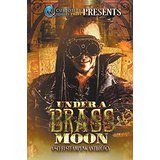
Under A Brass Moon: A Sci-Fi Steampunk Anthology is not quite as big the last anthology by Curiosity Quills Press which I reviewed, Chronology, but it is still pretty big. Unlike Chronology, which was full of pleasant surprises for me, Under a Brass Moon was just what it promised to be in the title: a collection of sci-fi and steampunk stories, and every story had elements of one or both genres.
The biggest contributor is YA author Jordan Elizabeth, who had six stories featured. Included is a Cogling short story, Upon Which Victor Viper Sat, which is a steampunk ghost story. (See my review of Cogling here.) A cursed hotel, where spirits are trapped. When Lady Rachel Waxman’s chest of paper cranes is stolen from Edna, she is determined to get them back, even if it means she must face a cursed hotel with trapped spirits and a desperate boy, willing to do anything, even murder, to regain his family’s fortune. Maiden in the Clock Tower is a stand-alone love story, along the lines of a fairy tale, with a rather sweet Happily Ever After. The other four short stories are companion stories to her Treasure Chronicles series, of which I also had the pleasure of reviewing Treasure Darkly. They Call Her Treasure is a humorous piece, sure to rouse a chuckle or two, but the other three, Treasure in the Field, Run of the Treasure and The Other Face of Treasure fell short for me, as if they weren’t finished and the promise of the premise wasn’t quite fulfilled. It’s a problem I find a lot in writing short fiction.
The second biggest contributor is James Wymore, with four stories: Sherriff Anderson’s Steam Deputies, a steampunk western shootout with steam powered deputies; Gearhead, a story of victory from apparent defeat when a captured gearhead knight tricks the Baron and steals his captured war machine; Vault, a magical steampunk story of witches and wizards and trapped spirits; and The Dark Glass, a tale of Jinda, an orphan girl, and her brother, who dream of escape from the care of the mean old butler who has been assigned with their care, but when Jinda discovers the key that leads to the treasure their father left them and escape is close at hand, the story ends. Like the Treasure Chronicle short stories of Jordan Elizabeth, mentioned above, this short story fails to deliver on the promise of the premise.
One of the problems with short stories is that it is hard to get in a full story arc with so few words. Other stories from this collection which left me feeling there should be more include Talking Metal, by W. K. Pomeroy, Fritz Finkel and the Marvelous Mechanical Thing, by award winning author Lorna Macdonald Czarnota, (We get to see why the two can’t be together, the obstacles their love faces. We get to see the grand measures taken in leiu of courtship, because it is a short story. There is a realization that she feels the same way he does, but steps to achieve the goal are only alluded to. The reader is left feeling cheated and wanting more.), Lucky Escape for Goldilocks Girl, by Irish writer Perry Mcdaid, (This protagonist had the feel of a female steampunk Robin Hood, promising to be an exciting story, but alas, it falls short of delivering on the premise.), and Queen of Cobwebs, by Jeremy Mortis, (A mechanical spider vampire tale. The protagonist is not very proactive and is rescued by outside intervention. This tale had the potential to be really good, but didn’t follow through.) Another story that didn’t quite do the trick for me were Harvester, by poet and author Amberle L. Husbands, a story about sentient plants, which lost me totally.
Under the Brass Moon also features two steampunk time travel stories: A Connecticut Yankee in Queen Victoria’s Court, by G. Miki Hayden, and Hour of Darkness, by Ashley Pasco; and two steampunk spy stories: Kung Pow Chicken for Pygmalion, by fantasy and science fiction author D.J. Butler, and The Poison We Breathe, by Christine Baker. For a steampunk ghost story, check out Calliope, by award winning author Terri Karsten, and for a great not-love story, try Henry the Tailor, by Grant Eagar. Upcoming writer Nick Lofthouse also does a passable science fiction story where the future isn’t so promising in Vacant.
My favorite stories from Under the Brass Moon include The Iron Face of God, by freelance writer and author Benjamin Spurduto, which is a pretty good steampunk mystery. It kept my interest. The story didn’t really let on to the motive for the murders, but maybe that’s okay with this one.
Also on my favorites list is Ethereal Coil, by MG/YA novelist S.A. Larsen, where nothing is as it appears, and The Women of Lastonia, by Lorna Marie Larson, which is a science fiction story that takes readers to outer space and planets far away. A Gulliver’s Travels of outer space, but this starship crew break the first rule of space travel when they rebel against the planet’s distasteful laws, which dictate they give up one of their shipmates or interfere with the evolution of the alien species.
Last but not least, my favorite story from this collection is The Balloon Thief, by New Adult author Jessica Gunn, a steampunk heist story where everyone is after the treasure and no one is who they seem. This story is well written and quite enjoyable.
Overall, the stories in this collection were entertaining, but many of them left me disappointed just due to the fact that I didn’t feel they had a full story arc and there should have ben more. Even the ones which left me wanting more, were entertaining stories, though not all were enchanting. I give Under the Brass Moon three quills.

Kaye Lynne Booth does honest book reviews on Writing to be Read, and she never charges for them. Have a book you’d like reviewed? Contact Kaye at kayebooth(at)yahoo(dot)com.
Share this:

Weekly Writing Memo: To Cliche, or not to Cliche
Posted: October 6, 2016 Filed under: Fiction, Science Fiction, Screenwriting, Screenwriting, Stories, Uncategorized, Weekly Writing Memo, Writing, Writing Tips | Tags: characters, Novel, Reviews, Stories Leave a comment A writing friend and I got in a heated discussion the other day as to whether clichés in writing can ever be a good thing. He is an adamant believer that clichés should be actively hunted down and eliminated from all dialogue, as well as most other areas of writing when possible. I, on the other hand, have a more lenient approach. I think clichés can be useful in specific circumstances, and sometimes they’re the best choice for the job. So when are clichés a good thing?
Avoiding Awkward
Sometimes if you can’t find a simple way to reword or rework a scene to avoid the cliché, then you can end up making the writing convoluted and awkward, which is worse than just using the cliché. A cliché can be invisible in the story and the audience may not even notice it, but awkward writing will interrupt the flow and stand out to an audience. It can also become obvious that you’re trying to avoid the cliché, and that can be distracting as well.
A really easy example is the phrase “that’s classified.” If you wanted to you could avoid it in a lot of ways, but there has to be a limit to how far you’ll go to avoid a cliché, and how much space you want to use to do so. If you try to avoid “that’s classified,” you could end up with something convoluted like, “I can’t tell you that because you are not qualified to access that information.” Just reading it makes me roll my eyes because it’s incredibly obvious I’m avoiding the cliché. In fact, it reads like a convoluted way of saying “that’s above your pay grade.” Which is another cliché.
The point is, avoiding the cliché in this case is turning out awkward, and it’s becoming obvious to the audience that it is what I’m doing. You don’t want your audience to stop and think about the writing when they’re enjoying the story – unless they stop to go “DAMN, that was good!” That is always acceptable! You want the audience involved, and in a situation like this it’s easier to throw in the cliché to get the message across and keep the story moving, rather than finding some roundabout way to avoid it.
Simplicity
Sometimes the decision for me to use the cliché comes down to one thing – simplicity. Sure, there are a lot of ways to word things that may let me avoid a cliché, but sometimes the cliché is the easiest, clearest way to get whatever message I want across to the audience. If I can use a cliché and it only takes 2 words instead of 20, then I better have some big motivation as to why those 20 words are needed. I’m a firm believer that every word has to count in a story, and as I said above, sometimes the cliché is just the simplest way to go. Will there be better ways to say things, probably, but does that mean you need to change your wording? No.
Cliches aren’t inherently bad. They can be overused, and they can be used at bad times, but sometimes they’re the best way to go for the sake of keeping the story moving forward. So always consider how complicated the route to avoid the cliché is. Ask yourself, if I avoid this cliché, will I slow the story down? Will it waste space on the page? Does the cliché add or take away anything from the scene? If the answers to these don’t give you a reason to take out the cliché, then I say go with the simplest method of keeping it in.
Character Culture
The biggest argument I think there is for keeping a cliché is that in some character cultures, clichés are ingrained in the system. By character cultures I mean communities like police officers, military personnel, doctors, politicians, etc. These kind of cultures that are part of large organizations have certain things that are ingrained in them.
For example, cliché language is often used by the higher ups in these organizations because clichés are something that a huge group of people will all understand in the same way. Clichés also become ingrained in these organizations because they relay on training being passed down, and the clichés carry through. For example, police officers and military personnel are more likely to use phrases that they have been trained to use. Military men use things like “need to know” because it’s an easy way for higher ups to dismiss lower level employees without actually giving them any information, and those lower level employees generally have to listen because they don’t outrank anyone.
In these sorts of settings, clichés can be used by the higher ups as a very easy way to create a separation between those of different ranks. Think of all the cliché phrases you can for military and even police personnel and think of their purpose: Need to know, that’s classified, that’s above your pay grade, etc. They all serve to protect information, and to put someone lower down in their place. In politics, there is a similar thing going on. The cliché phrases are more about delivering a message without delivering specifics. They say “I will bring change” or “I have the experience to do [blah]” and so on without every really specific what their plan is or how they are qualified.
Similarly, in medical fields clichés exist to keep information vague or to deliver a clear message without getting into specifics. In medical fields you sometimes don’t have time to lay out all the information because of the life and death situation, so abbreviated phrases are used to get a message across to everyone in the room quickly.
In general, these kids of systemized or structural cultures have clichés ingrained in them because they help create structure, they are universally understood, they deliver information and meaning without specifics as needed, and these cultures often have similar situations happen over and over again which can lead to certain sequences of events becoming cliché. The point is, you don’t need these characters to use clichés all the time, but having them in these instances is more acceptable because the clichés are part of the culture and the training almost everyone goes through in these professions, so they are almost expected by an audience.
When to Cut the Cliché?
Now clearly clichés should be cut whenever you can cut them in a way that doesn’t involve the things I’ve mentioned above, but sometimes it can be hard to decide. If there is an easy way to avoid the cliché, then always use it. If the cliché makes the scene cheesy or eye-roll worthy, then definitely cut it. If your entire plot hinges on a cliché, again, think about changing it. The important thing is that the clichés you do use don’t interrupt the flow or come off as lazy. Use them because they’re the best tool for the job (cliché!), and use them because they serve the story. Don’t use them because you’re too lazy to think of something else.
If you aren’t sure, then get a second opinion and see if your beta reader finds it distracting. Ultimately, like anything else in writing it all depends on the specific situation. Clichés exist for a reason, just use them wisely!
Share this:

Chronology is full of surprises
Posted: June 24, 2016 Filed under: Book Review, Books, Fantasy, Fiction, Horror, Science Fiction, Speculative Fiction, Steampunk, Stories | Tags: Anthology, Book Review, Books, Creative Fiction, Fantasy, Fiction, horror, Review, Speculative Fiction, Steampunk, Writing 3 Comments
I’ve just had the pleasure of reviewing a new anthology of short fiction put out by Curiosity Quills Press. When asked if I’d like to review Chronology, I had the impression that it was a steampunk anthology, which is a genre I’m newly discovering. Some of the stories in this collection do have steampunk elements, such as Wind Up Hearts, the steampunk-ish romance that is sure to break readers’ hearts, by Bram Stoker Award finalist, Stan Swanson, or Flight of the Pegasus by Dr. Darin Kennedy. There’s also That Which is Hidden, a haunted steampunk-ish werewolf romance, by Julie Frost. But, I was pleasantly surprised to find the stories in Chronology to be a diverse mixture of speculative fiction.
Some are futuristic, leaning more toward science fiction, such as the apocalyptic Afterparty by Mark Woodring, Limited Liability, a futuristic outer space story by Matthew Graybosch or Gookie Visits Her Moma by G. Miki Hayden, an alternate universe science fiction story about a space bounty hunter whose current bounty takes her back to her home planet. Many others are more in the fantasy realm, such as Draconic King, by award winning author, James Wymore, or Yours Until the Ink Dries, a true faerie tale, as a young outcast girl discovers her true identity in her drawings, by Y.A. author Jordan Elizabeth. And then there are those stories that fall into the mythical realm, such as Strange Flesh, a well-crafted story of mythical creatures by Katie Young, or Wampus Cat, a tale of Appalachian legends come true by international bestselling author Scott Nicholson.
Still, others have a horror element or two, such as The Lair, a story of a cursed treasure hunt in jungle swamps, by best-selling independent author, Tony Healey, or Lava, a spectral love story by New York Times bestselling author, Piers Anthony, or In the Clutches of the Mummy Prince, by B.C. Johnson, which was not very scary. Also I had trouble relating with the main character in Johnson’s story, who wasn’t very likeable. There is also The Comeback, the weirdest zombie romance I’ve ever heard of, told from the zombie’s POV, by techno-thriller and MG fantasy author, Tara Tyler, and Inmate #85298, a chilling death row tale, by author and screenwriter, Andy Rausch.
Of course, there are also those stories that weren’t so easy to classify, including White Chapel, which sheds new light on the story of Jack the Ripper, by author, editor and podcast co-host, Andrew Buckley, or Signs Unseen, the story of a small town race war, by J.P. Moyahan, or Bait and Witch, a troublesome witch story by speculative fiction author, J.P. Sloan. There is also The Bull, by novelist and short story writer, J.R. Rain, which turns a Minotaur into a superhero, and The Unattended Life, a reminder to stop and smell the roses by J.E. Anckorn, and an intriguing airship romance, Above the Clouds, by Richard Roberts.
Yes, it is a big book, about 530 pages, but it is definitely a good read. In addition to the stories mentioned above there are the three I enjoyed the most, which I saved to tell you about in more detail. The following stories stuck out in my mind the most, but not in any particular order.
The Room Below, by novelist Wilbert Stanton is a horror story worthy of Lovecraft, or King. This story about a stay in a mental institution that puts One Flew Over the Cuckoo’s Nest to shame. It held my attention and kept me on the edge of my seat, and had a surprising, yet satisfying ending.
The Colorado King, by Nathan Yocum is a story in which survival is the name of the game as a father and daughter travel over post-apocalyptic badlands in search of kin and refuge, bringing with it some very hard lessons. This well-crafted tale grabs readers’ attention and doesn’t let go, yet it leaves readers feeling like there should be more, probably due to the fact that it is an excerpt. I’m guessing that it is from Yocum’s novel, The Zona.
And finally, Innocent Deception, by Matthew Cox is a well-crafted story which has a surprising reveal in its final pages. The daughter of a pharmaceutical company’s CEO is kidnapped and held for ransom, but the plan falls apart when the mother doesn’t want the kid back.
Overall, I give Chronology 3 Quills. 
Kaye Lynne Booth does honest book reviews on Writing to be Read, and she never charges for them. Have a book you’d like reviewed? Contact Kaye at kayebooth(at)yahoo(dot)com.




















