The Many Faces of Poetry: My Credo
Posted: February 25, 2022 Filed under: Poetry, The Many Faces of Poetry | Tags: Arthur Rosch, The Many Faces of Poetry, Writing to be Read 4 Comments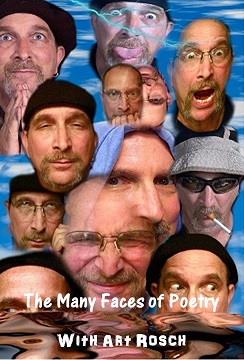
My Credo
Art Rosch
There is no truth but your own experience.
There is no method other than what you have, by trial and error,
found best enables you to survive.
There is no psychological health, because we are always deluded.
There is no physical health because we are always dying.
There is no teacher other than personal experience;
all other teachers are more like friends from whom one gleans
important information.
The quality of information one possesses translates to the quality of the life one lives.
Bad parents transmit bad information. This information has far reaching negative consequences, and one must struggle all one’s life to minimize the harm wrought by these consequences.
Consciousness is an experiment with different forms of information,
sifting through those that denigrate the self, selecting those
that optimize the self.
With the above in mind, it behooves one to act with the best judgment possible
under the circumstances, always bearing in mind that one’s compulsions, i.e.
the results of bad information, are always undermining good judgment.
It is useless to create inner tension between some mythical ideal of health
and what one actually is. Being what one is always takes precedence over
myths and ideals of competence, good judgment, wholeness, wellness
and enlightenment. Enlightenment (or the total apprehension of Truth) is possible at any moment, but the more
it becomes a goal, the more elusive it will be to attain.
___________________________________________________

Arthur Rosch is a novelist, musician, photographer and poet. His works are funny, memorable and often compelling. One reviewer said “He’s wicked and feisty, but when he gets you by the guts, he never lets go.” Listeners to his music have compared him to Frank Zappa, Tom Waits, Randy Newman or Mose Allison. These comparisons are flattering but deceptive. Rosch is a stylist, a complete original. His material ranges from sly wit to gripping political commentary.
Arthur was born in the heart of Illinois and grew up in the western suburbs of St. Louis. In his teens he discovered his creative potential while hoping to please a girl. Though she left the scene, Arthur’s creativity stayed behind. In his early twenties he moved to San Francisco and took part in the thriving arts scene. His first literary sale was to Playboy Magazine. The piece went on to receive Playboy’s “Best Story of the Year” award. Arthur also has writing credits in Exquisite Corpse, Shutterbug, eDigital, and Cat Fancy Magazine. He has written five novels, a memoir and a large collection of poetry. His autobiographical novel, Confessions Of An Honest Man won the Honorable Mention award from Writer’s Digest in 2016.
More of his work can be found at www.artrosch.com
Photos at https://500px.com/p/artsdigiphoto?view=photos
____________________________________________________________________
Want to be sure not to miss any of Arthur’s “The Many Faces of Poetry” segments? Subscribe to Writing to be Read for e-mail notifications whenever new content is posted or follow WtbR on WordPress. If you find it interesting or just entertaining, please share.
Share this:

Treasuring Poetry – Meet poet and artist, Smitha Vishwanath
Posted: February 16, 2022 Filed under: Book Review, Books, Interview, Poetry, Review, Treasuring Poetry, Writing | Tags: Author Interview, Book Review, Roads: A Journey with Verses, Robbie Cheadle, Smitha Vishwanath, Treasuring Poetry, Writing to be Read 48 Comments
Which of your own poems is your favorite?
There are quite a few poems I like – some for the flow, some for the imagery and some for the memories they bring back with them, there’s one poem that has stood the test of time. It’s a poem I penned when my girls were one and three respectively. Seventeen years later, the girls have grown – each into young ladies with a distinct personality, but it’s beautiful how the description of them in the poem still holds true. It’s special because this poem is one thing that the girls agree about.
Tender Moments
I sneak silently into the room
A quick peak I take of my budding blooms
Their breathing soft – rises and falls, a melodious rhapsody
To the soothing sound of a Spanish symphony
Their countenance silken smooth; serene
Tugs my heart, an enticing scene
Each distinctly different, yet subtly the same
Contrasting as night and day; asleep, they look- Oh! So tame
Their striking silhouette, in the mellow moonlit night
Slightly stirring, they curl; enraptured I gaze at the sight
One’s creamy-white skin peeps from the warm woollen quilt above
And the other’s little chocolaty toe pushes its way from below
One, strong and athletic; the other, dainty and petite
Poles apart in every way; a miracle I behold, a divine treat
The window slightly ajar, lets in the wintry wind
Blowing their untied tresses over their satiny skin; I lean
O’er their tender frames, and sweep the bouncy, brown curls away
And the silk-smooth strands of the other, as in deep slumber they lay
Both unique, both special, both a part of me
Peas in a Pod, they are and shall forever be
What inspired you to write this poem?
I had walked into the children’s room one night, sometime in 2008; the girls were asleep. The curtains were drawn, and the moonlight cast a soft glow on them. I looked at them and I scribbled a version of the poem in my diary. However, it was only later, in 2017, that I reworked on the poem and published it on my blog for the NaPoWriMo prompt, ‘Write a poem that explicitly incorporates alliteration,’ on 12th April.
What are your plans for your poetry going forward?
I co-authored a poetry book ‘Roads- A Journey with Verses’ which was published in 2018. My poems have been published in various journals since then, but I haven’t got to publishing a solo book as yet. I’d like to do that, but I have a lot of starting trouble, and so, it’s taken me longer than I expected, to do it. Hopefully, I can do it this year.
What is your favorite poem?
It’s difficult to choose a favorite. I have quite a few that never fail to speak to me. However, if I have to choose it will be Emily Dickinson’s ‘Hope is a thing with feathers’ (copied from the poetry foundation)
“Hope” is the thing with feathers by Emily Dickinson
“Hope” is the thing with feathers –
That perches in the soul –
And sings the tune without the words –
And never stops – at all –
And sweetest – in the Gale – is heard –
And sore must be the storm –
That could abash the little Bird
That kept so many warm –
I’ve heard it in the chillest land –
And on the strangest Sea –
Yet – never – in Extremity,
It asked a crumb – of me.
Why do you like this poem?
No matter how many times I read it I can not help being in awe of the choice of words, the simplicity and most importantly, how easily and perfectly ‘hope’ is described. Every line in the poem is a gem and anyone who has ever experienced ‘hope’ will vouch for it.
Roads: A journey with verses
![ROADS : A Journey with Verses by [Vandana Bhasin, Smitha Vishwanath]](https://m.media-amazon.com/images/I/41bPyRdgWkL._SY346_.jpg)
What Amazon says
“Roads” is a poetic rendezvous that takes the reader on a panoramic journey, making one pause, ponder and celebrate life.
The book is a light, alluring read that instantly strikes a chord and elevates one’s spirits. A trove of 60 poems, it is quilled with beads of nine virtues: Courage, Wisdom, Serenity, Love, Hope, Strength, Joy, Compassion and Gratitude. The verses encapsulate life’s ebbs and flows while prompting the reader to enjoy its simple pleasures.
“Roads” is a book that you would want to keep on your bedside, for a quiet read before retiring for the night or for the morning wisdom to seize the day. With poems revolving around emotions that each of us experiences, “Roads” very easily develops a personal connect with the reader that is defiantly refreshing.
“Roads” is a journey with verses. Take it on yours.
My review
Roads: A Journey With Verses is a beautiful book of mainly freestyle poetry written by Smitha Vishwanath and Vandana Bhasin. I have read and enjoyed a lot of poetry on Smitha’s blog in the past, but this was my first introduction to Vandana’s poetry.
I thought this was a wonderful combination of work by two talented poets and I enjoyed the different styles of writing by the two contributors. Smitha writes delicately beautiful poems in which her messages are subtly shrouded as if within a loving cocoon of words. Vandana’s writing is more strident and forthright, but I enjoyed her style equally and her strong messages for women’s rights moved me greatly.
This book is divided into sections as follows: Courage, Wisdom, Serenity; Love, Strength, Compassion and Joy, Hope, Gratitude. Each section is divided into subsections setting out an arrange of delightful poems in each subcategory. Each subsection is introduced with a short introductory verse which conveys its meaning for the poets and each poem is introduced with a paragraph setting out the the meaning and purpose of the specific poem to the writer. I really enjoyed reading about the inspiration and meaning behind each poem.
A selection of my favourite verses from this book are as follows:
From the sub-section Strength –
Believe in yourself by Vandana Bhasin
“They’ll laugh at you, and even ridicule you
They’ll even endeavor to enervate your spirits
But let the force of their dissuasion empower your faith
and the sound of their derision echo your beliefs
Believe in yourself, even when none believes in you.”
From the sub-section Compassion –
Help! She’s calling by Smitha Vishwanath
“Her eyes shone a tear, her lips quivered with
fear; down her face ran a scar, like a spear.
Her leg bruised, her hand bleeding, she felt a
shooting pain.”
From the sub-section Joy –
Tender moments by Smitha Vishwanath
“Their countenance silken smooth; serene
Tugs my heart, an enticing scene
Distinctly different, yet subtly the same –
Contrasting as night and day; asleep, they look
– Oh! So tame
Their striking silhouette, in the mellow moonlit night
Slightly stirring, they curl; enraptured, I gaze at the sight
One’s creamy-white skin peeps form the warm woolen quilt above
And the other’s little chocolaty toe pushes its way from below
One, strong and athletic; the other, dainty and petite
Pole apart in every way; a miracle I behold, a divine treat.
From the sub-section Hope –
Wings of freedom by Vandana Bhasin
“Wings of freedom are all I need
I want to live and not just breathe
I want to fly high like a bird
I want to dream big, not chase the world”
Purchase Roads: A Journey with verse
About Smitha Vishwanath

Smitha Vishwanath is your quintessential ‘bored banker’ turned writer. After a rewarding career in Banking in the Middle East where she worked for leading banks in senior positions, she quit and moved to India in July 2018 with her husband who had been transferred to the country on an International assignment. Therein began her writing journey.
‘Roads’ is the first book she has co-authored. Having lived and studied in different countries and different states within India and worked with different cultures, Smitha understands that ‘change’ and ‘ups and downs’ are very much a part of life. It is this experience that reflects in her poems and her writing which are filled with positivity, acceptance and willingness to change for the better.
She also writes regularly through her blog : https://lifeateacher.wordpress.com
Smitha’s art
Smitha is also a wonderful painter. I wrote a blog post about one of her painting that I have hanging in my bedroom here: https://robbiesinspiration.wordpress.com/2021/07/10/a-new-painting/
You can find more of Smitha’s artwork here: https://www.spacesbysmithav.com/
About Robbie Cheadle

Robbie Cheadle is a South African children’s author and poet with 9 children’s books and 2 poetry books.
The 7 Sir Chocolate children’s picture books, co-authored by Robbie and Michael Cheadle, are written in sweet, short rhymes which are easy for young children to follow and are illustrated with pictures of delicious cakes and cake decorations. Each book also includes simple recipes or biscuit art directions which children can make under adult supervision.
Robbie has also published 2 books for older children which incorporate recipes that are relevant to the storylines.
Robbie has 2 adult novels in the paranormal historical and supernatural fantasy genres published under the name Roberta Eaton Cheadle. She also has short stories in the horror and paranormal genre and poems included in several anthologies.
Robbie writes a monthly series for https://writingtoberead.com called Growing Bookworms. This series discusses different topics relating to the benefits of reading to children.
Robbie has a blog, https://robbiesinspiration.wordpress.com/ where she shares book reviews, recipes, author interviews, and poetry.
Find Robbie Cheadle
Blog: https://www.robbiecheadle.co.za/
Blog: robbiesinspiration.wordpress.com
Twitter: BakeandWrite
Instagram: Robbie Cheadle – Instagram
Facebook: Sir Chocolate Books
______________________________________________________________________________________________
Want to be sure not to miss any of Robbie’s “Treasuring Poetry” segments? Subscribe to Writing to be Read for e-mail notifications whenever new content is posted or follow WtbR on WordPress. If you found it interesting or entertaining, please share.
Share this:

Fun Poetry Challenge: Mothers Are Special People
Posted: January 24, 2022 Filed under: Poetry, Writing Challenge | Tags: Moms, Mother's Day, Mothers, Poetry, Poetry Challenge, Writing to be Read 7 Comments
This is a poem I wrote about my mom back in 2010:
Mom
I miss how your smile lights up your face and makes you shine.
I miss having someone there who trusts and believes in me.
I miss your kindness, and your generosity, your willingness to share.
I miss how you always see the glass as half- full.
I miss your energy and enthusiasm.
Most of all, I miss the way your arms envelope me in a hug.
I miss you, Mom.
Do you have a mom who is, or was, pretty special? Of course you do. We all feel our moms were, or are the best mom on the planet, right? I know my mom was. She was my best friend. She was special to me.
Moms are pretty special people. They put in countless hours to care for and comfort us. They love us unconditionally, no matter how bad we mess up. And they don’t stop caring and being our moms just because we grow up and move away. Our Moms are always there for us. Yep. Moms are pretty special.
So for this poetry challenge, I want you to write a poem, in your choice of form, telling me what makes your mom so special. You can send them to me at kayebooth@yahoo.com by March 15, to be shared in a special post in honor of Mother’s Day on May 9th, 2022.
Share this:

Treasuring Poetry 2022 – Robbie Cheadle discusses the War Poets
Posted: January 19, 2022 Filed under: Historical Fiction, Historical Inspiration, Poetry, Treasuring Poetry, Writing | Tags: Poetry, Robbie Cheadle, Siegfried Sassoon, Treasuring Poetry, Vera Brittain, Walt Page, Writing to be Read 50 CommentsThe poet I was hoping to feature today, Walt Page, has been unwell and was unable to participate. I decided that I would share a beautiful poem of Walt’s today called Sometimes When it Rains. Walt told me I was the inspiration for this poem and I love it.

Sometimes when it rains
Sometimes when it rains
she loves to go walking
snuggled inside
her warm rain jacket
Walking in the rain
is a sanctuary for her
a time when she can
create her poetry
it is her time alone
to be inspired
she loves being with her family
and she loves creating her poetry
those of us who follow her poetry
are blessed with her friendship
we know she is probably out walking
and we look forward to her new poems
~The Tennessee Poet~
©Walt Page 2020 All Rights Reserved
Walt is currently on a sabbatical from writing poetry, but he has years of wonderful poetry available to readers of his blog here: https://waltswritingsonlife.wordpress.com/
For the past 14 months, I have been deeply down a WW1 hole, reading book after book about this devastating and world-changing war.
My interest in books about WW1 is due partly to my general fascination with war and partly as research for my work in progress, The Soldier and the Radium Girl, a novel set in the USA and France from 1917 to October 1939.
My interest in war poetry was sparked by Sally Cronin from Smorgasbord Blog Magazine who shares poems by the war poets during the week leading up to Remembrance Day.
This year, Sally shared poems by two specific war poets which interested me so much, I read up about them and subsequently read one of each of their works.
Siegfried Sassoon

This is what Wikipedia says about Siegfried Sassoon:
“Siegfried Loraine Sassoon CBE MC (8 September 1886 – 1 September 1967) was an English war poet, writer, and soldier. Decorated for bravery on the Western Front, he became one of the leading poets of the First World War. His poetry both described the horrors of the trenches and satirised the patriotic pretensions of those who, in Sassoon’s view, were responsible for a jingoism-fuelled war. Sassoon became a focal point for dissent within the armed forces when he made a lone protest against the continuation of the war in his “Soldier’s Declaration” of 1917, culminating in his admission to a military psychiatric hospital; this resulted in his forming a friendship with Wilfred Owen, who was greatly influenced by him. Sassoon later won acclaim for his prose work, notably his three-volume fictionalised autobiography, collectively known as the “Sherston trilogy”.”
Siegfried Sassoon features as a main character in Regeneration by Pat Barkers. I had just finished this book when I read Sally’s post about him: https://smorgasbordinvitation.wordpress.com/2021/11/11/smorgasbord-blog-magazine-poetry-rewind-in-remembrance-the-war-poets-siegfried-loraine-sassoon-cbe-mc-by-sally-cronin/
You can read my review of Regeneration here: https://www.goodreads.com/review/show/4354087186
I elected to read The War Poems by Siegfried Sassoon available from Amazon here: https://www.amazon.com/gp/product/0571202659/

Over the past few years, I have read the odd poem by Siegfried Sassoon and found them to be very moving. These poetic encounters were usually on Poppy Day when the world commemorates both WW1 and WW2. Although I had a high level appreciation of this war and knew about trenches and a little of the horror, I had never studied WW1 or read much about it outside of these Poppy Day poems.
Over the course of the last 14 months, I have been extensively researching WW1 and have read a number of books detailing life for both the soldiers in France and for the civilian populations at home. My research has covered the British, French, South African, and American perspectives of WW1. These books, which included All Quiet on the Western Front by Erich Maria Remarque, Farewell to Arms by Ernest Hemmingway, Testament of Youth by Vera Brittain, and Regeneration by Pat Barker, really opened my eyes about the dreadful conditions in the trenches, the filth, the rats, the dead bodies, and the fear, as well as the heartbreak of losing a generation of young men. As a result of all this reading and my immersement in life during this time of worldwide conflict, my appreciation and understanding of Sassoon’s war poetry grow and I decided to read it all.
Reading this book was an excellent investment of my time and energy. Siegried Sassoon’s words are powerful and hard-hitting, striking right to the core of the war time experiences of these young men – their hopes and dreams dying around them along with their friends and leaders. This is a book that all youngers should read, after being given some context to WW1, so that this time can be remembered and timeous steps taken to prevent a re-occurrence at any future date. Remembering history and the mistakes of mankind, are best weapons against complacency.
The poem that moved me the most in this collection was The death-bed. You can listen to me reading it here:
Vera Brittain

What Wikipedia says about Vera Brittain:
“Vera Mary Brittain (29 December 1893 – 29 March 1970) was an English Voluntary Aid Detachment (VAD) nurse, writer, feminist, socialist[1] and pacifist. Her best-selling 1933 memoir Testament of Youth recounted her experiences during the First World War and the beginning of her journey towards pacifism.”
You can read more about Vera Brittain here: https://en.wikipedia.org/wiki/Vera_Brittain
I recently read Vera’s memoir Testament of Youth and posted by review to Roberta Writes here: https://robertawrites235681907.wordpress.com/2022/01/19/roberta-writes-book-review-testament-of-youth-by-vera-brittain/
In conclusion
Finally, I am sharing one of my poems about a different kind of silent war. One that can still be contained and prevented from destroying our planet through carbon emissions and overuse of plastic if we reign it in. A compromise can be reached between profits and sustainability.
The Corporate Giant
It rears upwards
into the blue sky,
a monstrosity
of reflective glass, and
shiny stainless steel
towering over
the ant-sized people
who scurry about
in its imposing shadow.
***
An emotionless giant
it is bereft of a soul,
It feeds on small businesses
corner cafes, fruit and nut shops
independent butcheries, bakeries,
confectionaries and cake shops.
Even book sellers and
small stationers
are swallowed whole
disappearing into the gaping maw
of the corporate giant.
***
It shreds and ingests
taking the sustenance it seeks
spitting out the bones
independence and individuality
creativity and the unique
mere entrails, unwanted and discarded.
***
It stamps on difference
in its pursuit of profits
imperfections and blemishes
an unacceptable blight
on a perfect track record.
***
What remains will finally
emerge as a mirror
reflecting the sameness
uniformity and consistency
it holds so dear.
***
Providing its market
with the conformity
and rigidness
that has taken over
and turned the world grey.
About Robbie Cheadle
Robbie Cheadle is a South African children’s author and poet with 9 children’s books and 2 poetry books.
The 7 Sir Chocolate children’s picture books, co-authored by Robbie and Michael Cheadle, are written in sweet, short rhymes which are easy for young children to follow and are illustrated with pictures of delicious cakes and cake decorations. Each book also includes simple recipes or biscuit art directions which children can make under adult supervision.
Robbie has also published 2 books for older children which incorporate recipes that are relevant to the storylines.
Robbie has 2 adult novels in the paranormal historical and supernatural fantasy genres published under the name Roberta Eaton Cheadle. She also has short stories in the horror and paranormal genre and poems included in several anthologies.
Robbie writes a monthly series for https://writingtoberead.com called Growing Bookworms. This series discusses different topics relating to the benefits of reading to children.
Robbie has a blog, https://robbiesinspiration.wordpress.com/ where she shares book reviews, recipes, author interviews, and poetry.
Find Robbie Cheadle
Blog: https://www.robbiecheadle.co.za/
Blog: robbiesinspiration.wordpress.com
Twitter: BakeandWrite
Instagram: Robbie Cheadle – Instagram
Facebook: Sir Chocolate Books
______________________________________________________________________________________________
Want to be sure not to miss any of Robbie’s “Treasuring Poetry” segments? Subscribe to Writing to be Read for e-mail notifications whenever new content is posted or follow WtbR on WordPress. If you found it interesting or entertaining, please share.
Share this:

Review in Practice – Word Craft: Prose & Poetry
Posted: December 31, 2021 Filed under: Book Review, Books, Poetry, Review in Practice, Teaching Writing | Tags: Book Review, Poetry, Review in Practice, Sally Cronin, Syllabic Poetry, Word Craft: Prose & Poetry, Writing to be Read 5 Comments
Word Craft: Prose & Poetry, by Colleen Chesebro is an insightful and helpful instructional book for those who wish to learn more about writing syllabic poetry and prose. The first section covers Japenese syllabic poetry forms and American syllabic poetry forms are covered in section two. The author outlines the rules and inspirations for each form, and provides plenty of examples to help you get the idea.
Hiaku has been one of my favorite forms of poetry to read since it was introduced to me in the fourth grade. However, my fourth grade teacher didn’t really explain this poetry form in a way that my fourth grade mind could really grasp, so I’ve never felt very accomplished in writing Haiku. In Word Craft, Colleen Chesebro was able to explain the art of this form of poetry in a manner which my aged mind was able to grasp, giving me a much better handle on what I’m trying to do with this form of poetry. Haiku is much more than just putting the right number of syllables in each line. Haiku is written to evoke images and emotion in a succinct way. I was surprised to learn that the syllabic rules for Haiku are not set in stone, and can be varied. Below is a Haiku which I wrote after reading the chapters on this poetry form.
Spring skies let rain pour
Wings stretch, ruffling wet feathers
small Hummingbird preens
While I know poets who write Tanka poetry, which combines poetry and prose,I’ve never understood what they were doing with these poems. Although I can’t say that I’ve mastered the Tanka, I think I do understand it better, but I will need a lot of practice before I write something in Tanka or Tanka prose poem that I feel worthy of sharing.
I also had some experience in writing Hiabun, which is a combination of poetry and prose similar to Tanka Prose Poetry, but I never really understood the purpose of this form of poetry. You would think this would be the easiest form of poetry in this book for me to write, as the inspiration can come from anything and it can be in any point-of-view and any tense that you wish to write in, but I still have a hard time grasping the how of this poetry form. Fortunately, Colleen Chesebro includes many examples of each poetry style and I have no doubt that, with patience and practice I will eventually get a handle on the Haibun.
Forms of Japanese poetry that I wasn’t familiar with in this book include Senryu, which is similar in form to a Hiaku but differs in subject matter; Haiga, which uses either Haiku or Senryu and combines three art forms, imagry, poetry and calligraphy; and Gogyohka, which is based on the Tanka, but you do not count syllables, with one phrase to a line and a line-break after each breath. I found the Renga, which is design to be written by two poets, interactively, , kind of like a poetic conversation, to be in intriguing poetry form.
This is my first attempt at a Senryu poem.
Hot tea steams
on chill summer morn
wake up call
For me, the forms of American syllabic poetry were more difficult, perhaps because they tend to be longer. In the second portion of the book, Sally Cronin includes explanation and instruction and examples for Cinquains of all types, Etherees, Nonets, and Shadormas. I made several unsuccessful attempts at the basic types of each of these poetry forms, but they are much harder than they look. My hat is off to Cronin and anyone else that can meld their syllables with seeming ease.
I took a challenge on Teagan Riordain Genevieve’s blog and for that I wrote a Shadorma poem, which I published here, on Writing to be Read. You can see my example of a Shadorma here, but I don’t know if it is any good. It really was harder than I thought it would be.
If you like syllabic poetry, either Japanese or American, and would like to try your hand at it, I highly recommend the instruction of Word Craft: Prose & Poetry, by Sally Cronin. This book introduced me to new forms, as well as delving deeper into forms I was familiar with. I give it five quills.

________________________________________________________________________________________________________
Like this post? Let me know in the comments. You can be sure not to miss any of Writing to be Read’s great content by subscribing to e-mail or following on WordPress. If you found this content helpful or entertaining, please share.
Share this:

A Challenge and a Review: Dead of Winter
Posted: December 24, 2021 Filed under: Book Review, Creativity, Epic Fantasy, Fantasy, Poetry, Reader Challenge | Tags: Book Review, Dead of Winter, Fantasy, Poetry, Reader Challenge, Teagan Riordain Geneviene, Writing to be Read 9 Comments
The Challenge
This post is a response to a challenge issued on Teagan Riordain Geneviene’s blog, where she challenges readers to create a piece of art in the medium of your choice, inspired by her book, Dead of Winter: Journey 1: Forlorn Peak.
Recently, I’ve been dabbling in Japanese and English syllabic poetry, and I knew that I wanted to create a poem for this challenge. The image and poetry above is my response to Teagan’s challenge. It is a Shadorma poem, an form of syllabic poetry which may have originated in Spain, comprised of a sestet, or six-line poem with a syllabic count of 3-5-3-3-7-5 (Word Craft: Prose & Poetry, by Colleen M. Chesebro). Although no where have I found that Shadorma can appear with images to add meaning, like the Japanese Haiga poetry, I’ve found nothing that says it can’t, so I have featured mine with the image above.
They both create a feeling like what I felt after reading Dead of Winter, so might actually serve as a different type of book review. I think the poem could easily stand alone, so maybe that’s okay.

Buy Link: https://www.amazon.com/dp/B08RBBVRGX?tag=relinks-20
My Review
Dead of Winter: Journey 1: Forlorn Peak, by Teagan Riordain Geneviene is a brief little tale that sets the stage in a world where strict control prevents the protagonist, Emlyn, from revealing her gift of seeing and communicating with the dead. In this short tale, Emlyn receives a warning of what’s to come in the rest of the series. “Winter is coming…”
__________________________________________________________________________________________________
Like this post? Let me know in the comments. You can be sure not to miss any of Writing to be Read’s great content by subscribing to e-mail or following on WordPress. If you found this content helpful or entertaining, please share.
Share this:

Inviting You to Join My Street Team!
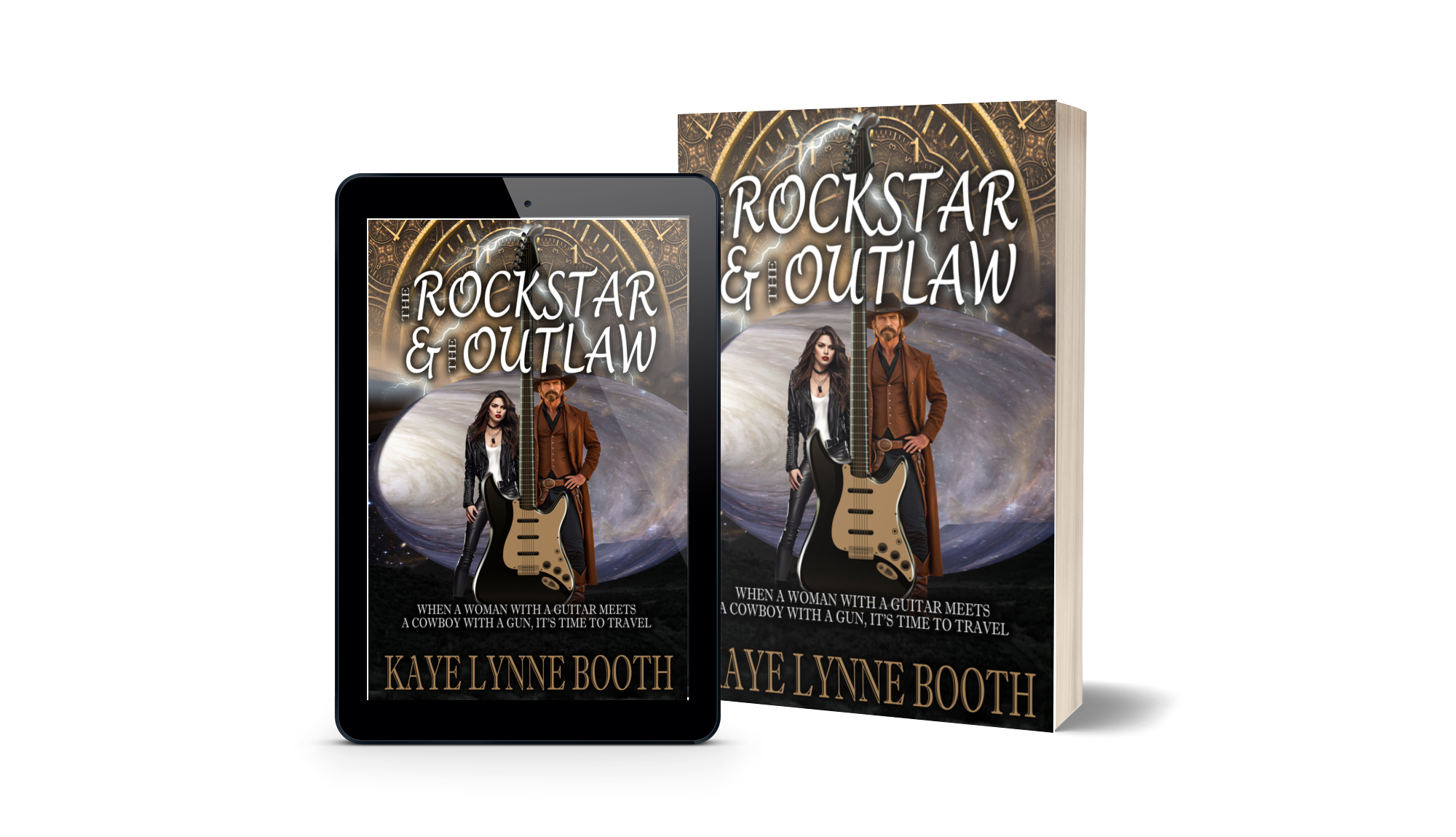
Posted: December 20, 2021 Filed under: Anthology, Book Covers, Books, Fiction, Ghost Stories, Historical Fiction, Paranormal, Poetry, Science Fantasy, Science Fiction, Short Fiction, Stories, Western, Western Paranormal, WordCrafter Press, Writing, Writing Contest, Writing Event, Writing Tips | Tags: Beta Readers, Kaye Lynne Booth, New release, Release Events, Reveiwers, Social Media Promotion, Street teams, WordCrafter Press 2 Comments
You are reading this, so chances are good that you are familiar with me and my writing, as well as WordCrafter Press and its books, because I talk about all of these things a lot. Since you are hanging out here, reading my posts and those of my wonderful blog team members, there’s also a good chance that you are interested in my work, so you will be interested in this opportunity, as well.
Being a multi-genre author creates the need to reach multiple target audiences. I write western, paranormal, science fiction, dark fantasy & vampires, and maybe even a little bit of romance. Although unpublished, I’ve even written a children’s series. That makes it more difficult to hit my target market and find readers who enjoy the kind of book I write, but I’m learning that I’m just not a write to market kind of girl. I have to write what my heart says, and it refuses to remain in a single genre.
I’ve decided to build a street team to help spread the word about new releases and release events. So, I’ve created a private Facebook group “Kaye Lynne Booth & WordCrafter Press Street Team” group, where you can help by becoming a beta reader and providing feedback prior to release, or reviewer, or just an enthusiastic fan, sharing new release and release event information on social media to help get the word out.. This is a group for those who want to help create, promote or just support me and my books, and find opportunities to free books, for an extra perk. As a member of the group, you will be privy to news regarding works-in-progress, new releases and upcoming book events, as well as early cover releases and sneak previews.
I hope that you will click on the link above and join us, as 2022 looks to be a exciting year, with between 7 and 12 new releases coming!
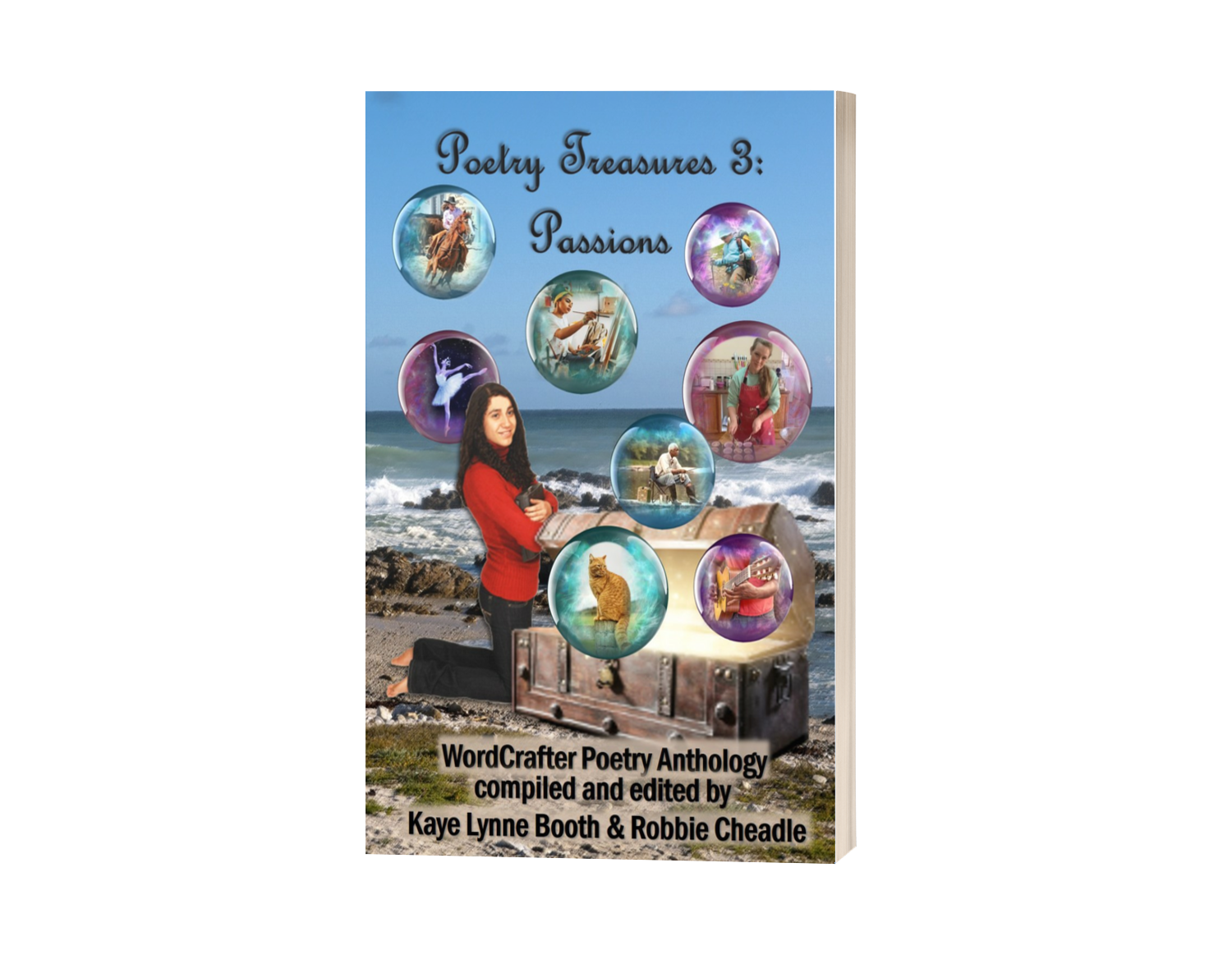
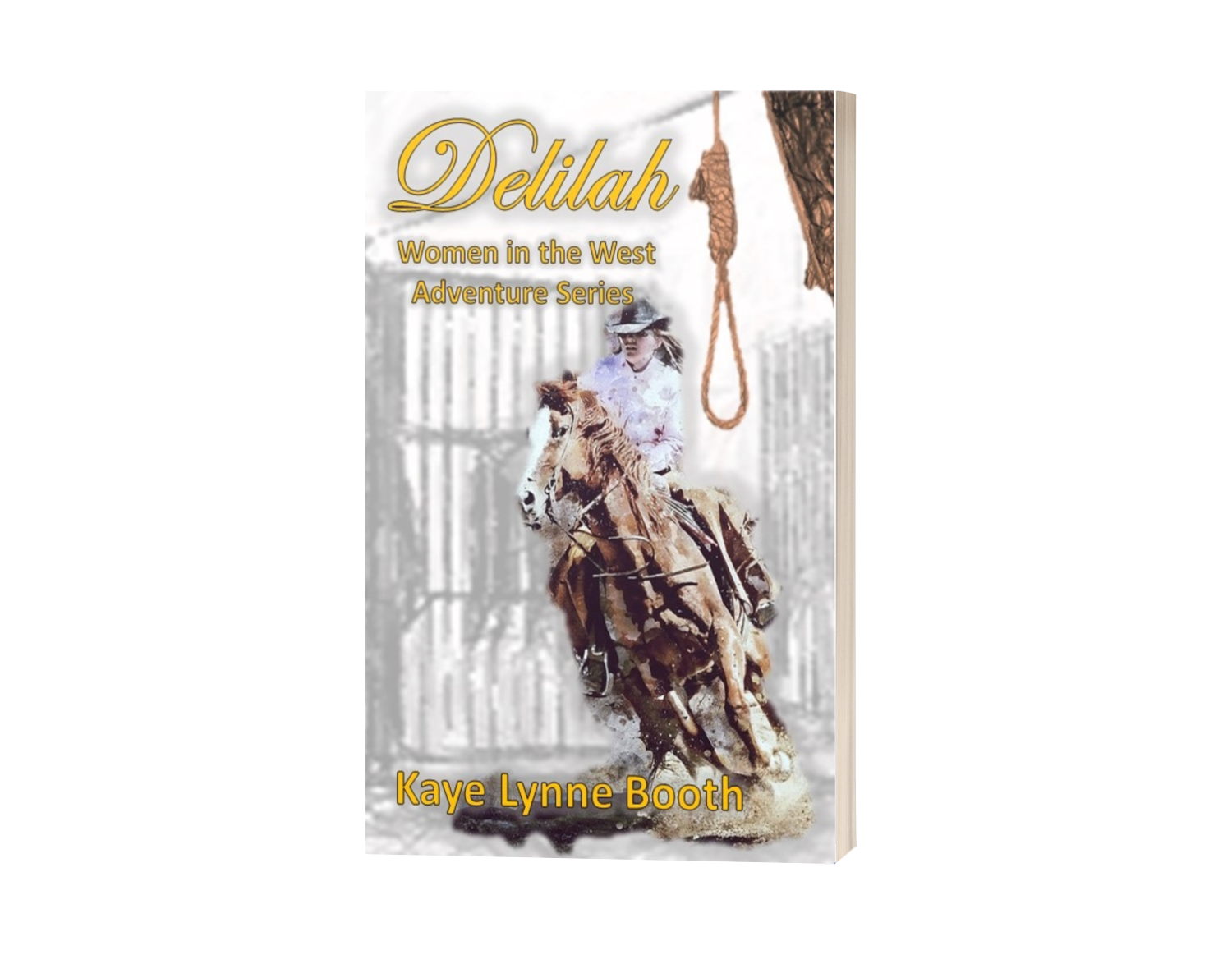
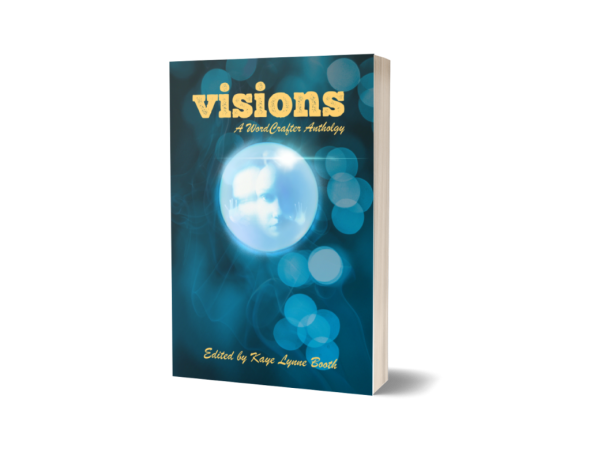
WordCrafter Press will be putting out, not just one, but three anthologies this year, including the resulting anthology from the annual short fiction contest. The call for submissions for the 2022 WordCrafter Short Fiction Contest will be posted in January, this year’s anthology will also feature the stories by invitation, which will not be included in the contest, but will be included in the Visions anthology. The other two anthologies will be by invitation only, Once Upon an Ever After, and Slivered Reflections. WordCrafter Press will also be doing a new edition of the writer’s reference, Ask the Authors and a new edition of Poetry Treasures. For my own books, I will be dropping my contract with Dusty Saddle Publishing and publishing a special edition of Delilah myself, and publishing at least the first three books of my science fantasy Playground for the Gods series, and possibly the fourth.
If you join my street team group, you’ll be privy to all the latest news about all these great releases and more! Bring your enthusiasm and help me make my writing dreams come true. And don’t forget the free books and other perks. See you there!
Share this:

Treasuring Poetry – An introduction to Word Weaving #1: A Word Craft Journal of Syllabic Verse edited and compiled by Colleen Chesebro and Jules Paige
Posted: December 18, 2021 Filed under: Anthology, Book Review, Books, Interview, Poetry, Treasuring Poetry, Writing | Tags: Anthology, Colleen Chesebro, Interview, Poetry, Robbie Cheadle, Treasuring Poetry, Word Weaving#1: A Word Craft Journal of Syllabic Verse, Writing to be Read 78 Comments
Today, I am delighted to introduce you to Word Weaving #1: A Word Craft Journal of Syllabic Verse, The Moons of Autumn, a delightful collaboration of syllabic poems by a variety of poets, edited and compiled by Colleen Chesebro and Jules Paige.
By way of background, Colleen Chesebro has run a weekly syllabic poetry challenge on her blog, Word Craft: Poetry and Prose for years. She has been a guiding light to the poetry community, sharing her knowledge about the many different forms of syllabic poetry and encouraging poets to experiment and all learn together.

What inspired you to put together a poetry anthology, is it a once off or will there be others?
My inspiration for the syllabic poetry journal came about when I realized that many of the poets who joined in my weekly challenge did not have the ways or means to publish their own books of poetry. I envisioned a yearly journal filled with creative syllabic forms. I’m not aware of another journal that presents both Japanese and American versions of syllabic poetry. This is a different concept and I think it has paid off.
Also, to note, the poet’s retained ownership of the poems submitted to the journal. All rights reverted to the respective author/artist upon publication. All we asked, was if their work was republished, we appreciated a mention that the Word Weaving Poetry Journal was the first place of publication.
While I planned this journal, I realized I wanted to host a poetry contest on wordcraftpoetry.com with paid prizes. It was logical to use the royalties from the sale of the Word Weaving Journal to pay for the prizes. As for another journal… I’ll let you know after the poetry contest in 2022. I’m aiming for the month of June for the contest on wordcraftpoetry.com. I’ll reevaluate at that time.
Which poem in the anthology touched you the most? Please provide the test of the poem and the author
This is a hard question to answer. My co-editor, Jules Paige and I first selected our favorites. We deliberated for some time over the poems… they were all so good! In the end we selected Ken Gierke’s gogyohka poem:
warmth of a pale light
found as clouds part
rewarded
while seeking the moon
on a cool autumn night
© Ken Gierke
We both felt this gogyohka best illustrated the concept of the “Moons of Autumn.” At the end of the Journal, Jules and I shared our three favorite poems by D. L. Finn, Merril D. Smith, and Ken Gierke.
If I had to go in deeper, my next favorite would be D. Wallace Peach’s tanka prose Idyll. The imagery in this poem is one of my favorites.
“Moon-spun”
November’s moon spins upon the tip of a white fir. Her fairy light whispers across the glades where alders part their leafless fingers into spindly shadows. The night glow sends the trolls trudging into the deep forest, brittle twigs crunching beneath their knobby feet. With nothing to fear, the deer lie down in a silver meadow. Old owl watches the coyotes croon to autumn’s stark beauty as they whiff the delicate scent of the coming snow.
a moon’s enchantment
befalls the northern forest
her magical light
banishes luring prowlers
inviting the night to sing
© D. Wallace Peach
What attracts you to syllabic poetry as opposed to other forms like freestyle and rhyming verse?
Syllabic poetry, especially the Japanese forms with their brevity of words, fills a special place in my heart. Not only do I like writing these forms, but I also enjoy reading what others have written. There is a simple beauty in haiku that I don’t find in other forms. Written mindfully, haiku are small poems with large meaning. It’s those a-ha moments of connection, I find the most pleasing.
For example:
summer clouds—
kayakers floating
the river
© Colleen M. Chesebro
In this haiku, I worked on imagery. The idea was to connect emotions by associating two or more images together in strange and unusual ways. It’s not as easy as it sounds. I find it is always best to look for alike or contrasting images to feature in my poem.
I targeted the “summer (my kigo) clouds” and the “kayakers floating the river,” as a summer activity. Clouds float – kayakers float, which are alike images.
A haiku should present an event in an image. It should SHOW us what happened without telling us about it or what emotion to feel. In the haiku above, what emotions do you feel?
Haiku poems share a specific event or observation. Haiku are not generalities, and we never use a simile or metaphor. Most haiku are written in seventeen onji (Japanese sounds) which equates to around twelve syllables (3, 5, 3). Most rhyming poetry doesn’t give me the same emotional impact as the simple haiku does. Although, I do enjoy creating some of the syllabic forms that use rhyme and meter.
What advice can you give people setting out on the path of writing poetry?
Poetry is about expression and creativity. Poets should write poetry daily. If you don’t practice, how can you perfect your craft? I write my poetry on my author blog at colleenchesebro.com and in a handwritten journal.
It’s best to get involved in a poetry community with poetry challenges where you can stretch your wings and try new things like we do on wordcraftpoetry.com. If you can’t find a challenge you like, start your own! Learning how to comment, critique, and write about the work of another poet is crucial to your own poetic journey.
Write more poetry! Find what forms bring you the most joy to write. Write them! Then, learn everything you can about that type of poetry.
Submit your poetry to literary journals and contests. I’ve had more poetry rejected than accepted, but that hasn’t stopped me yet.
What are your plans for Word Craft: Prose & Poetry going forward?
Wordcraftpoetry.com will continue to be a safe place to write syllabic poetry. We’re in our fifth year of the #TankaTuesday Poetry Challenge. Each week, I strive to make the challenges interesting. In 2022, we will have a few new prompts to freshen up our creativity. I will continue to feature a poet and their poem almost every week. Depending on the challenge week, the poet will choose the prompt for the next month’s challenge. It’s important to me to involve the poets in the challenges. That is what community is all about. Stay tuned. Who knows what I’ll think of next!
Thanks so much, Robbie for featuring me and the Word Weaving Journal on Treasuring Poetry.

Author biography
Colleen M. Chesebro is a Michigan Poet who loves crafting syllabic poetry, flash fiction, and creative fiction and nonfiction. She sponsors a weekly poetry challenge, called #TankaTuesday, on wordcraftpoetry.com where participants learn how to write traditional and current forms of syllabic poetry.
Along with JulesPaige, Colleen is also a co-editor of “Word Weaving, a Word Craft Journal of Syllabic Verse,” at wordweavingpoetryjournal.com. The debut issue of the journal published October 2021, with a kindle and print version of the journal.
Colleen’s syllabic poetry has appeared in various other online publications. Recently, she created the Double Ennead, a 99-syllable poetry form for the Carrot Ranch literary community at carrotranch.com. She hosts a challenge as a guest of the Saloon, every third Monday of the month.
Colleen’s poetry has poetry in various anthologies and journals including “Hedgerow-a journal of small poems,” and “Poetry Treasures,” a collection of poetry from the poet/author guests of Robbie Cheadle on the “Treasuring Poetry” blog series on “Writing to be Read” in 2020.
Colleen published “Word Craft: Prose & Poetry, The Art of Crafting Syllabic Poetry,” which illustrates how to write various syllabic poetry forms used in her Tanka Tuesday challenges; and a collection of poetry, flash fiction, and short stories called, “Fairies, Myths & Magic: A Summer Celebration,” dedicated to the Summer Solstice. She contributed a short story called “The Changeling,” in the “Ghostly Rites Anthology 2020,” published by Plaisted Publishing House.
Find Colleen Chesebro
Find Colleen at Word Craft: Prose & Poetry at wordcraftpoetry.com.
Find Colleen’s author blog at colleenchesebro.com.
Find Colleen’s pagan blog at awitchsbrew.wordpress.com
My review of Word Weaving #1: A Word Craft Journal of Syllabic Verse
This book, edited and collated by talented poets Colleen Chesebro and Jules Paige, is a delightful collection of meaningful poems by a variety of different contributors. The theme of the book is Harvest Moon and each poem gives insight into the meaning of this expression to the particular poet. Some poems are practical and some are ethereal, yet others are colourful and then there are the silvery ones, but they all share the common feature of being beautiful.
The poems in the book demonstrate as wide a variety of styles as there are contributors, with a common thread of all being syllabic. I came across a number of forms that were new to me, including senryu, haiga, and gogyohka among otehrs. There are also the more familiar syllabic forms such as haiku, tanka, haibun, tanka prose, etheree, nonet, shadorma, and cinquain.
My favourite poem in this collection is written by Kerfe Roig. I like it because it is filled with mystery and delight:
“who is this Other
come to greet me
glittering shadowed
behind and before
a changeling of light”
All the poems are gorgeous and this collection is a most worthwhile read for poetry lovers.
What Amazon says
Word Weaving is a yearly poetry journal, and for our first issue, we bring you poetry crafted from a broad mix of new and established voices across the spectrum of Japanese and American syllabic poetry forms. Enjoy this collection of poems that celebrate the Moons of Autumn.Contributing Poets:
Annette Rochelle Aben, Mona Bedi, Nancy Brady, Colleen M. Chesebro, Goutam Dutta, Bill Engleson, Elizabeth F., Andreea Finichiu, D.L. Finn, Jeff Flesch, Ken Gierke, Franci Hoffman, Thom Kerr, Sujata Khanna, Ruth Klein, Jules Paige, D. Wallace Peach, Gwen M. Plano, M. J. Mallon, R.V. Mitchell, Elaine Patricia Morris, Lisa Smith Nelson, Pat Raffington, Susmita Ramani, Kerfe Roig, Aishwarya Saby, Akhila Siva, Merril D. Smith, Willow Willers, and Cheryl Wood.
About Robbie Cheadle
Robbie Cheadle is a South African children’s author and poet with 9 children’s books and 2 poetry books.
The 7 Sir Chocolate children’s picture books, co-authored by Robbie and Michael Cheadle, are written in sweet, short rhymes which are easy for young children to follow and are illustrated with pictures of delicious cakes and cake decorations. Each book also includes simple recipes or biscuit art directions which children can make under adult supervision.
Robbie has also published 2 books for older children which incorporate recipes that are relevant to the storylines.
Robbie has 2 adult novels in the paranormal historical and supernatural fantasy genres published under the name Roberta Eaton Cheadle. She also has short stories in the horror and paranormal genre and poems included in several anthologies.
Robbie writes a monthly series for https://writingtoberead.com called Growing Bookworms. This series discusses different topics relating to the benefits of reading to children.
Robbie has a blog, https://robbiesinspiration.wordpress.com/ where she shares book reviews, recipes, author interviews, and poetry.
Find Robbie Cheadle
Blog: https://www.robbiecheadle.co.za/
Blog: robbiesinspiration.wordpress.com
Twitter: BakeandWrite
Instagram: Robbie Cheadle – Instagram
Facebook: Sir Chocolate Books
______________________________________________________________________________________________
Want to be sure not to miss any of Robbie’s “Treasuring Poetry” segments? Subscribe to Writing to be Read for e-mail notifications whenever new content is posted or follow WtbR on WordPress. If you found it interesting or entertaining, please share.
Share this:

The Many Faces of Poetry: 74
Posted: December 10, 2021 Filed under: Poetry, The Many Faces of Poetry | Tags: Arthur Rosch, Poetry, The Many Faces of Poetry, Writing to be Read 3 Comments
74
November 13, 2021
Old.
I am old.
Why is that so good?
I have a lot of experience.
That’s part of it. Experience
gives perspective. The mature mind
knows how swiftly things change,
how needless is the stress we impose
upon ourselves.
Old
means closer to death. Thoughts of death
sometimes visit. I have no problem with
death. Once, I would have raged at the prospect
of dying invisibly, and all my creations vanished. Never mind applause.
I don’t need that. It would be embarrassing.
The universe is vast and varied. My bit of it,
my earth landscape, has been just as varied and strange.
Every person is a universe; we live in a universe of universes that never end.
Old? If I could live another hundred years
I wouldn’t want to. These times are terrible. Humans
have multiplied without limit, till the earth groans. Why is it that only humans fuck up?
Whales don’t fuck up. Elephants don’t fuck up.
It must have to do with free will. Nah! It’s just stupidity.
It takes a lot of work to be smart. And even more work to be wise.
To be smart and wise, it helps to be
old. Whales and elephants: they’re old.
They’re old enough
and smart enough
to die off before the world becomes so miserable
that it’s no longer a wise place to live.
_______________________________________________________________________________________________________

Arthur Rosch is a novelist, musician, photographer and poet. His works are funny, memorable and often compelling. One reviewer said “He’s wicked and feisty, but when he gets you by the guts, he never lets go.” Listeners to his music have compared him to Frank Zappa, Tom Waits, Randy Newman or Mose Allison. These comparisons are flattering but deceptive. Rosch is a stylist, a complete original. His material ranges from sly wit to gripping political commentary.
Arthur was born in the heart of Illinois and grew up in the western suburbs of St. Louis. In his teens he discovered his creative potential while hoping to please a girl. Though she left the scene, Arthur’s creativity stayed behind. In his early twenties he moved to San Francisco and took part in the thriving arts scene. His first literary sale was to Playboy Magazine. The piece went on to receive Playboy’s “Best Story of the Year” award. Arthur also has writing credits in Exquisite Corpse, Shutterbug, eDigital, and Cat Fancy Magazine. He has written five novels, a memoir and a large collection of poetry. His autobiographical novel, Confessions Of An Honest Man won the Honorable Mention award from Writer’s Digest in 2016.
More of his work can be found at www.artrosch.com
Photos at https://500px.com/p/artsdigiphoto?view=photos
_______________________________________________________________________________________________________
Want to be sure not to miss any of Arthur’s “The Many Faces of Poetry” segments? Subscribe to Writing to be Read for e-mail notifications whenever new content is posted or follow WtbR on WordPress. If you find it interesting or just entertaining, please share.
Share this:

The Many Faces of Poetry: November Poems
Posted: November 26, 2021 Filed under: Poetry, The Many Faces of Poetry | Tags: Arthur Rosch, Poetry, The Many Faces of Poetry, Words, Writing to be Read 1 CommentVolcano
October 2021
If words can be so beautiful that they
whoosh you from your body
into a place celestial
a paradise that’s not a myth
but a living world inside which
we dwell as though we have forgotten our own
eyes and our stomachs rumble
waiting for a meal that nurtures souls
by the trillions,
by the trillions, and what we call souls or spirits
can be called ghosts or intelligences
or French fries
no telling what they’re calling them ten billion light years from here.
It’s the same damned thing
so bright that it lights the stars
as if from the eternal birthday candle
or the scattering of cinders from a cooling volcano
filling a lake bed with red light and heat light
and heat
sustenance light. That’s how beautiful
words can be.
Late Stage Capitalism
Oct 20, 2021
Is this late stage capitalism?
People watching endless commercials disguised
as content, watching hypnotized
as the reasons to stay home multiply Covid
the madhouse of freedom, that’s America
where Freedom is ridiculous
and everyone’s opinion
matters, such a big deal, (your opinion)
I can give you a break, (I can I can), I can let you
go on about nothing, walk the streets with a sign
saying nothing, late stage capitalism
manipulated and focused greed,
through the screens, on the devices
helpless to disengage (what am I doing?)
late stage
helpless to engage (I’m doing this is what I’m doing)
capitalism, schism, minimism, monism
monetism, hypnotism, religionism
late stage catechism
I’ve run out of ism, run out of my ism, don’t even say it
cuz I’m old and getting older at the same speed as
everyone else.
This is late stage capitalism.
_____________________________________________________________________________________________
Arthur Rosch is a novelist, musician, photographer and poet. His works are funny, memorable and often compelling. One reviewer said “He’s wicked and feisty, but when he gets you by the guts, he never lets go.” Listeners to his music have compared him to Frank Zappa, Tom Waits, Randy Newman or Mose Allison. These comparisons are flattering but deceptive. Rosch is a stylist, a complete original. His material ranges from sly wit to gripping political commentary.
Arthur was born in the heart of Illinois and grew up in the western suburbs of St. Louis. In his teens he discovered his creative potential while hoping to please a girl. Though she left the scene, Arthur’s creativity stayed behind. In his early twenties he moved to San Francisco and took part in the thriving arts scene. His first literary sale was to Playboy Magazine. The piece went on to receive Playboy’s “Best Story of the Year” award. Arthur also has writing credits in Exquisite Corpse, Shutterbug, eDigital, and Cat Fancy Magazine. He has written five novels, a memoir and a large collection of poetry. His autobiographical novel, Confessions Of An Honest Man won the Honorable Mention award from Writer’s Digest in 2016.
More of his work can be found at www.artrosch.com
Photos at https://500px.com/p/artsdigiphoto?view=photos
_________________________________________________________________________________________________________
Want to be sure not to miss any of Arthur’s “The Many Faces of Poetry” segments? Subscribe to Writing to be Read for e-mail notifications whenever new content is posted or follow WtbR on WordPress. If you find it interesting or just entertaining, please share.