Growing Bookworms – Tongue Twisters and a review of A Wrinkle in Time by Madeleine L’Engle
Posted: September 13, 2023 Filed under: Book Review, Books, Children's Books, Classics, Fiction, Growing Bookworms, Literacy, Nursery Rhymes, Reading, Review | Tags: A Wrinkle in Time, Growing Bookworms, Madeleine L'Engle, Robbie Cheadle, Tongue Twisters, Writing to be Read 57 Comments
The benefits of Tongue Twisters for children (and adults too)
What is a tongue twister?
A tongue twister is a sequence of words or sounds, usually of an alliterative kind, that are difficult to pronounce quickly and accurately.
An example of a tongue twister
One of the tongue twisters I grew up with is Peter Piper Picked a Peck of Pickled Pepper.
This is a video of the tongue twister:
Benefits of tongue twisters
Tongue twisters are fun and often results in lots of laughter, but they also have benefits for children.
Tongue twisters are a great way of introducing different consonant sounds to small children. They help pronunciation by teaching the brain how to form the necessary signals and organs of speech to make the required movements.
Regular recitation stimulates control of the muscles used for speech, ensuring clearer pronunciation of words with difficult syllables. Tongue twisters help children to decease instances of pauses in speech and reduce hesitation over pronunciation.
Listening to a parent or caregiver reciting tongue twisters helps to improve a child’s listening skills and comprehension of spoken English. Learning a tongue twister, promotes memorization which improves memory and cognitive skills.
Disadvantages of tongue twisters
The disadvantage of tongue twisters is that they take children a long time to master and thus a lot of patience from the teacher.
Did you learn tongue twisters as a child?
Did you teach tongue twisters to your children?
Let me know if the comments
My review of A Wrinkle in Time By Madeleine L’Engle

I was recommended this book by a friend of mine as I am unfamiliar with American children’s books and wanted to try a few.
I enjoyed this extraordinary science fantasy which involves three children with unique characteristics, a missing father, three fascinating good witches, time travel, different planets with unusual inhabitants and culminates in a battle for the preservation of creativity and difference against robotic sameness and loss of individuality represented by a disembodied brain called IT. I thought the author used an intriguing storyline and set of characters to support her central themes of rejection of difference and pressure to conform, the importance of love, not judging based on appearances, and that total understanding of everything in life is not possible.
Ultimately, I saw this as a book that celebrated individuality and uniqueness in people and reminded the reader about the importance of art, music, prose and poetry to society. The world of Camazotz, a world controlled by IT where sameness is glorified and exceptions to the accepted normal destroyed, is not portrayed in an appealing light. It is the main character, Meg Murray’s, individuality and difference that help save her father and brother and the greater world of humans from IT.
I liked the message of acceptance of difference in this book and think it will be a great read for all children. Reading about difference goes a long way towards acceptance.
About Robbie Cheadle
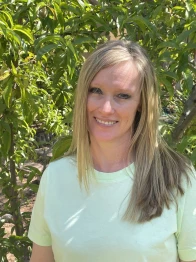
Award-winning, bestselling author, Robbie Cheadle, has published thirteen children’s book and three poetry books. Her work has also appeared in poetry and short story anthologies.
Robbie also has two novels published under the name of Roberta Eaton Cheadle and has horror, paranormal, and fantasy short stories featured in several anthologies under this name.
The ten Sir Chocolate children’s picture books, co-authored by Robbie and Michael Cheadle, are written in sweet, short rhymes which are easy for young children to follow and are illustrated with pictures of delicious cakes and cake decorations. Each book also includes simple recipes or biscuit art directions which children can make under adult supervision.
Robbie’s blog includes recipes, fondant and cake artwork, poetry, and book reviews. https://robbiesinspiration.wordpress.com/
Share this:

Growing Bookworms – Reasons why reading is good for your child or teenager’s mental health
Posted: July 12, 2023 Filed under: Books, Children's Books, Growing Bookworms, Literacy, Reading, Reading Therapy, Teaching children | Tags: Children's Books, Growing Bookworms, Mental Health, Reading Therapy, Recomendations, Robbie Chedle, Writing to be Read 58 CommentsFrom March 2020 mental health increased world-wide and those affected include children and teenagers. Post-pandemic, mental health issues continue to be prevalent among children and teenagers. Although most children and teenagers who contracted Covid-19 did not experience severe symptoms, numerous mental health problems have emerged among children and teens exposed to the COVID-19 pandemic, including anxiety, stress, depression, panic, irritation, impulsivity, physical symptoms caused by mental or emotional factors, sleep problems, rapid and extreme changes in mood, post-traumatic stress disorder (PTSD), and suicidal behavior.
Reading to your child, or your older child or teenager reading to him or herself, has the following mental health benefits:
Reduces stress
Reading is a wonderful form of escapism for everyone, including children. Following the White Rabbit down a hole, going on an adventure with Will Solvit or Percy Jackson or travelling across America in a pioneer wagon with Laura Ingalls Wilder, all help children escape their problems for a few hours. Reading also aids concentration which reduces stress and tension. According to studies, 30 minutes of reading relieves the same amount of tension as doing 30 minutes of yoga.
Improves emotional development
Reading exposes children to characters in books who may be going through a vast spectrum of experiences and emotional responses. Reading about how characters in books react to situations and the emotions those characters have and express help children and teens to normalise their own emotional responses to situations. Children and teens can feel isolated if they think their reactions and emotions are unique and not experienced by others. Reading helps reassure children that the feelings they have are experienced by others in similar situations.
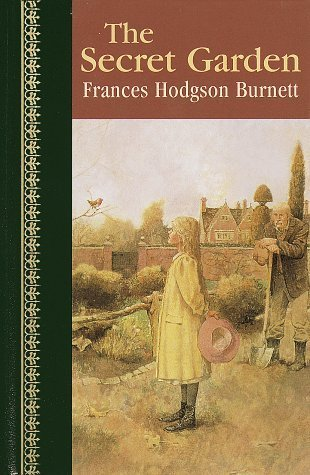
The Secret Garden by Frances Hodgson Burnett is a wonderful book to teach youngsters about inappropriate and spoiled behaviour and its consequences as well as demonstrating the worthiness of mature and considerate behaviour.
Blurb –
When orphaned Mary Lennox comes to live at her uncle’s great house on the Yorkshire Moors, she finds it full of secrets. The mansion has nearly one hundred rooms, and her uncle keeps himself locked up. And at night, she hears the sound of crying down one of the long corridors. The gardens surrounding the large property are Mary’s only escape. Then, Mary discovers a secret garden, surrounded by walls and locked with a missing key. One day, with the help of two unexpected companions, she discovers a way in. Is everything in the garden dead, or can Mary bring it back to life?
One of the most delightful and enduring classics of children’s literature, The Secret Garden has remained a firm favorite with children the world over ever since it made its first appearance. Initially published as a serial story in 1910 in The American Magazine, it was brought out in novel form in 1911.
Loneliness
This is particularly common in teenagers who feel isolated and lonely when they are caught up in a whirlwind of hormones that they don’t understand and can’t control. Teenagers want to be ‘part of the herd’ and the same as their friends and peer group. If they aren’t the same for various reasons including health issues, learning barriers or abilities, isolation can set in. Reading about other youngsters who are experiencing the same challenges or even unusual physical or intellectual achievements, helps promote self acceptance and reduce loneliness.
A good example of a book that involves peer pressure and the need to belong is Are You There God? It’s Me, Margaret.
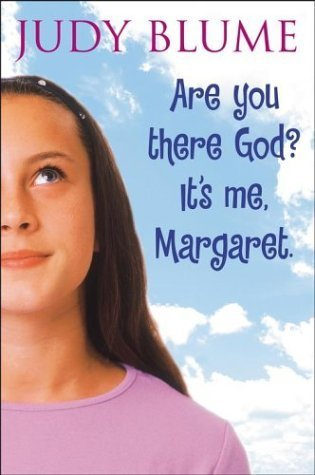
Blurb: Margaret Simon, almost twelve, likes long hair, tuna fish, the smell of rain, and things that are pink. She’s just moved from New York City to Farbook, New Jersey, and is anxious to fit in with her new friends—Nancy, Gretchen, and Janie. When they form a secret club to talk about private subjects like boys, bras, and getting their first periods, Margaret is happy to belong.
But none of them can believe Margaret doesn’t have religion, and that she isn’t going to the Y or the Jewish Community Center. What they don’t know is Margaret has her own very special relationship with God. She can talk to God about everything—family, friends, even Moose Freed, her secret crush.
Margaret is funny and real, and her thoughts and feelings are oh-so-relatable—you’ll feel like she’s talking right to you, sharing her secrets with a friend.
Reduces depression and anxiety
Reading a good book full of joy and happiness helps lift low spirits. For example, reading about the dwarves and Bilbo enjoying clotted cream and honey on freshly baked bread at the home of Beorn, is uplifting. Reading about Harry Potter and his friends defeating Voltemort and his Deatheaters is absorbing and fills the reader with courage and enthusiasm. Many books give the reader a wonderful sense of well being and satisfaction when the adversity comprising the plot is resolved.
Developing social skills
Reading helps youngsters learn how to negotiate and deal with different social situations. It teaches them about romance and the emotions of love, and also rejection and sadness when romance ends or goes wrong. Reading about other people experiencing traumatic and difficult situations helps develop empathy and facilitates the development of meaningful relationships with different people from different backgrounds, cultures and religions.
I am David by Anne Holm is a wonderful book to teach children about gaining social skills. David has to learn to socialise with Maria and her brothers after he saves her from the fire. It is difficult for David who grow up in a concentration camp and only socialised with adults held in captivity.

Blurb – David’s entire twelve-year life has been spent in a grisly prison camp in Eastern Europe. He knows nothing of the outside world. But when he is given the chance to escape, he seizes it. With his vengeful enemies hot on his heels, David struggles to cope in this strange new world, where his only resources are a compass, a few crusts of bread, his two aching feet, and some vague advice to seek refuge in Denmark. Is that enough to survive?
David’s extraordinary odyssey is dramatically chronicled in Anne Holm’s classic about the meaning of freedom and the power of hope.
Winding down
Reading is a wonderful way for children and teens to wind down before sleeping. Today’s children and teens are continuously busy and subject to an endless barrage of mental stimulation. This can make sleep elusive and lack of sleep is very bad for mental health. Reading before bed is the perfect way to wind down after a long day.
About Robbie Cheadle
Award-winning, bestselling author, Robbie Cheadle, has published thirteen children’s book and three poetry books. Her work has also appeared in poetry and short story anthologies.
Robbie also has two novels published under the name of Roberta Eaton Cheadle and has horror, paranormal, and fantasy short stories featured in several anthologies under this name.
The ten Sir Chocolate children’s picture books, co-authored by Robbie and Michael Cheadle, are written in sweet, short rhymes which are easy for young children to follow and are illustrated with pictures of delicious cakes and cake decorations. Each book also includes simple recipes or biscuit art directions which children can make under adult supervision.
Robbie’s blog includes recipes, fondant and cake artwork, poetry, and book reviews. https://robbiesinspiration.wordpress.com/
Share this:

Growing Bookworms – The benefits of cooking and baking with children
Posted: May 10, 2023 Filed under: Children's Books, Growing Bookworms, Literacy, Parenting, Teaching children | Tags: Baking, Children, cooking, Growing Bookworms, Robbie Cheadle, Teaching Life Skills, Writing to be Read 54 Comments
I wrote this post six years ago when I hadn’t been blogging for very long and didn’t have many followers. During my recent attendance at the South African Festival of Children’s Literature where I was asked to speak about cake and fondant art and its benefits to children, I thought again about all these benefits and decided to share it again for Growing Bookworms.
Most children love to spend time in the kitchen either cooking or baking. It is a fabulous bonding experience with Mom or another caregiver and they always enjoying eating the results of their hard work afterwards.
I love to bake and both my sons have travelled the cooking, baking and eating road with me. Michael, particularly, loves to cook. He prefers to make more practical things than I do such as savoury and/or sweet pancakes, French toast and even stews and curries which he sometimes makes with his Dad. I like to cook but I also enjoy making all sorts of fancy sweet treats and cakes.
I remember baking with my small boys. Gregory used to love to measure and pour the ingredients into the bowl. Funnily enough, Greg also loved to wash up. Sadly, this did not continued into his teenage years. I used to strip him down to his nappy and stand him on a few chairs lined up in front of the sink [so that he could not fall off] and set him free in front of a sink of soapy water. He used to splash around happy with a cloth washing up the bowl and wooden spoon. I kept the washing of any sharp implements and breakables for myself.
Michael, on the other hand, has never been a fan of any kind of cleaning up. He likes to measure, pour and, especially, to mix. He also likes to “lick” out the bowl. I have photographs of Michael covered from head to toe in chocolate cake mix with the bowl upside down on his head. What fabulous fun.
Other than the obvious fun and bonding factors, there are a list of other great benefits to baking with your children. I did some research on this and this is what I found:
- Maths skills: Baking helps children to learn maths concepts, in particular, measurement and simple fractions (half a cup, a quarter of a lemon). In addition, multiplication and division are involved if you half or double a recipe. Other kinds of cooking may also involve patterning (for example with salads and kebabs) and simple addition (how many people are you feeding? how many cupcakes do you need for the class?);
- Art skills: Decorating cupcakes, cutting out biscuits and making animals and people out of fondant (sugar dough). All of these activities encourage creativity and develop design abilities. An element of construction can also be involved if you are making a gingerbread house or a marshmallow tower and children learn how to fit pieces together and get a tower to stand up;

Cupcakes decorated for charity by the children of St Columba’s Presbyterian Church Sunday School – Parkview, South Africa
- Comprehension skills: Baking and cooking teaches children how to read and interpret a recipe. They learn to follow a sequence of steps and how to organise the required ingredients. Baking also teaches children techniques and vocabulary such as folding, beating, kneading and blending;
- Science skills: Contrary to popular belief, baking is a science. Children learn the scientific effects of raising agents such as yeast and baking powder. They learn about the interaction between certain substances such as salt and bicarbonate of soda, cream of tartar and milk, yeast and warm water. If they make a mistake and/or leave out an ingredient, disaster often follows which helps enforce these learning points;


Picture credit: Photographs by Robbie Cheadle. Cream of tartar, Bicarb and milk mixed together create a good raising agent for biscuits. It also froths and bubbles and makes a perfect fuel for a biscuit rocket ship to the moon.
- Life skills: Baking and cooking with your children teaches them lifelong skills. In the future, the job of feeding themselves and their future families will become theirs. Baking and cooking skills will stand them in good stead when they leave home; and
- Self-esteem: Baking and cooking helps increase children’s self-esteem as they see and taste the results of their efforts. It also teaches children to work together with someone else in a team and that hard work pays dividends in the end.
I am not an occupational therapist but I found the following additional benefits listed on an OT website for children:
- Bilateral coordination;
- Eye-hand coordination;
- Hand strengthening; and
- Spatial perception and planning skills.
These four benefits make perfect sense to me in the context of baking and cooking with children.
So, what are you waiting for, get cooking. An easy way to start is with mini pizzas. You can buy the bases ready made from most grocery stores and you can also buy the tomato paste source to spread on the bases. Grate some cheese, cut up some mushrooms, pineapple, ham and anything else that you fancy and let the kids have fun assembling their own pizzas.
About Robbie Cheadle
Award-winning, bestselling author, Robbie Cheadle, has published thirteen children’s book and three poetry books. Her work has also appeared in poetry and short story anthologies.
Robbie also has two novels published under the name of Roberta Eaton Cheadle and has horror, paranormal, and fantasy short stories featured in several anthologies under this name.
The ten Sir Chocolate children’s picture books, co-authored by Robbie and Michael Cheadle, are written in sweet, short rhymes which are easy for young children to follow and are illustrated with pictures of delicious cakes and cake decorations. Each book also includes simple recipes or biscuit art directions which children can make under adult supervision.
Robbie’s blog includes recipes, fondant and cake artwork, poetry, and book reviews. https://robbiesinspiration.wordpress.com/
Share this:

Growing Bookworms – The importance of colour when illustrating children’s books #childrensfiction #readingcommunity #growingbookworms
Posted: November 9, 2022 Filed under: Books, Children's Books, Education, Illustrations, Literacy, Parenting, Reading | Tags: Children's Books, Color, Growing Bookworms, Illustrations, Parenting, Writing to be Read 43 Comments
Many children’s picture books make use of brightly coloured cartoon style illustrations. Children are attracted to bright colors such as red, yellow, green, blue, and pink. These colors create a sense of energy and playfulness and also emanate happiness. Colour impacts on children’s moods, behaviour, and educational performance.
Part of the reason children prefer bright colours is because saturated colours are easier for young, developing eyes to see. Bright colors and contrasting colors stand out more in a child’s field of vision than feinter shades.
Colour effects the way the brain functions and can be used by illustrators to encourage pattern recognition, memory, and the ability of young readers to absorb new information.
Here are a few examples of colours and how they can be used for learning:
RED – a powerful and attention-grabbing colour, red stimulates alertness and excitement. It encourages creativity and can also increase appetite.
BLUE – provides a sense of comfort by exuding calmness, loyalty, peace, serenity, and security.
YELLOW – encourages positive feelings and improves concentration by promoting creativity, clarity, and optimism.
GREEN – symbolises nature and the natural world. Green relieves stress and provides a sense of healing. It also represents balance, growth, tranquillity, cleanliness and calmness.
ORANGE – like red, orange is an energetic colour that promotes alertness. Orange creates a sense of passion, warmth, excitement and encourages communication.
PINK – symbolises love, romance, nurture, warmth, calmness, and imagination.
It is also important for illustrators, or writers engaging an illustrator, to note that colours can also overstimulate children, instead of inspiring them, so a balance of bright and neutral colours is required for illustrations.
I illustrate my own children’s books and I try to apply these principles in my own work. This is a collage of a selection of my fondant and cake art illustrations.

My illustrations have proved popular with children so I think I am getting the colour coding right.
These are some examples of famous children’s books and illustrators:


What do you think? Do you like bright colours? Have you written a children’s book and illustrated it yourself or engaged an illustrator? Let me know in the comments.
About Robbie Cheadle

Robbie Cheadle is a South African children’s author and poet with eleven children’s books and two poetry books.
The eight Sir Chocolate children’s picture books, co-authored by Robbie and Michael Cheadle, are written in sweet, short rhymes which are easy for young children to follow and are illustrated with pictures of delicious cakes and cake decorations. Each book also includes simple recipes or biscuit art directions which children can make under adult supervision.
Robbie and Michael have also written Haunted Halloween Holiday, a delightful fantasy story for children aged 5 to 9 about Count Sugular and his family who hire a caravan to attend a Halloween party at the Haunted House in Ghost Valley. This story is beautifully illustrated with Robbie’s fondant and cake art creations.
Robbie has published two books for older children which incorporate recipes that are relevant to the storylines.
Robbie has two adult novels in the paranormal historical and supernatural fantasy genres published under the name Roberta Eaton Cheadle. She also has short stories, in the horror and paranormal genre, and poems included in several anthologies.
Robbie Cheadle contributes two monthly posts to https://writingtoberead.com, namely, Growing Bookworms, a series providing advice to caregivers on how to encourage children to read and write, and Treasuring Poetry, a series aimed at introducing poetry lovers to new poets and poetry books.
In addition, Roberta Eaton Cheadle contributes one monthly post to https://writingtoberead.com called Dark Origins: African Myths and Legends which shares information about the cultures, myths and legends of the indigenous people of southern Africa.
Robbie has a blog, https://robbiesinspiration.wordpress.com. where she shares book reviews, recipes, author interviews, and poetry.
Find Robbie Cheadle
Blog: https://www.robbiecheadle.co.za/
Blog: robbiesinspiration.wordpress.com
Twitter: BakeandWrite
YouTube: https://www.youtube.com/channel/UCVyFo_OJLPqFa9ZhHnCfHUA
Facebook: Sir Chocolate Books
______________________________________________________________________________________________
Want to be sure not to miss any of Robbie’s “Growing Bookworms” segments? Subscribe to Writing to be Read for e-mail notifications whenever new content is posted or follow WtbR on WordPress. If you found it interesting or entertaining, please share.
Share this:

Growing Bookworms – Activities to teach children critical thinking skills
Posted: October 12, 2022 Filed under: Growing Bookworms, Literacy, Parenting, Teaching children | Tags: Critical thinking, Growing Bookworms, Robbie Cheadle, Teaching children, Writing to be Read 43 CommentsWhat are critical thinking skills?
Critical thinking is the ability to analyse facts and form a judgement.
In order to develop critical thinking skills, the following characteristics need to be fostered:
- An attitude of open mindedness, respect for evidence and reasoning, and the ability to see things from different perspectives and points of view;
- The ability to make a statement or decision based on supporting evidence;
- The ability to use reasoning skills to come to a logical conclusion. In other words, the ability to infer an outcome based on the facts and arguments presented;
- The ability to analyse information to assess its truthfulness. In other words, an ability to determine what is believable based on the facts and circumstances, and what is not.
Critical thinking skills help children learn how to work independently and solve problems.
Activities for teaching children critical thinking skills
- Creating art – when you express yourself using an artform, music or drawing or painting, you show an emotion or thought without using words and this encourages critical thinking.
- Games and puzzles – these activities help children learn to formulate strategies and understand how to approach a game with a plan of action.
- Reading books – while readings books, ask the child about the activities, thoughts, and emotions of the characters in the stories. Let them volunteer how they think a character will react to a certain situation and ask them how they think the story will end. This teaches the child to consider various options and outcomes and come up with theories.
- Real problems – modern children are exposed much younger to the problems of the world such as drought, hunger, and global warming. Discuss these issues with your child and help them consider possible solutions. The ability to find solutions to problems is a great skill and also encourages positivity and a sense of control. It is encouraging to think there are potential solutions to big issues.
- Building blocks – playing with lego and building blocks helps children to sift through endless possibilities, decide on one, and implement it. If it fails, they can try again.
My blogging friend, Norah Colvin, ex-teacher and developer of Readilearn Early Childhood Teaching Resources, recently shared an excellent post called Teaching thinking in the early years with itc thinkdrive. This post offers teachers some excellent resources for teaching critical thinking skills. You can read Norah’s post here: https://www.readilearn.com.au/teaching-thinking-in-the-early-years-with-itc-thinkdrive/
About Robbie Cheadle
Robbie Cheadle is a South African children’s author and poet with eleven children’s books and two poetry books.
The eight Sir Chocolate children’s picture books, co-authored by Robbie and Michael Cheadle, are written in sweet, short rhymes which are easy for young children to follow and are illustrated with pictures of delicious cakes and cake decorations. Each book also includes simple recipes or biscuit art directions which children can make under adult supervision.
Robbie and Michael have also written Haunted Halloween Holiday, a delightful fantasy story for children aged 5 to 9 about Count Sugular and his family who hire a caravan to attend a Halloween party at the Haunted House in Ghost Valley. This story is beautifully illustrated with Robbie’s fondant and cake art creations.
Robbie has published two books for older children which incorporate recipes that are relevant to the storylines.
Robbie has two adult novels in the paranormal historical and supernatural fantasy genres published under the name Roberta Eaton Cheadle. She also has short stories, in the horror and paranormal genre, and poems included in several anthologies.
Robbie Cheadle contributes two monthly posts to https://writingtoberead.com, namely, Growing Bookworms, a series providing advice to caregivers on how to encourage children to read and write, and Treasuring Poetry, a series aimed at introducing poetry lovers to new poets and poetry books.
In addition, Roberta Eaton Cheadle contributes one monthly post to https://writingtoberead.com called Dark Origins: African Myths and Legends which shares information about the cultures, myths and legends of the indigenous people of southern Africa.
Robbie has a blog, https://robbiesinspiration.wordpress.com. where she shares book reviews, recipes, author interviews, and poetry.
Find Robbie Cheadle
Blog: https://www.robbiecheadle.co.za/
Blog: robbiesinspiration.wordpress.com
Twitter: BakeandWrite
YouTube: https://www.youtube.com/channel/UCVyFo_OJLPqFa9ZhHnCfHUA
Facebook: Sir Chocolate Books
______________________________________________________________________________________________
Want to be sure not to miss any of Robbie’s “Growing Bookworms” segments? Subscribe to Writing to be Read for e-mail notifications whenever new content is posted or follow WtbR on WordPress. If you found it interesting or entertaining, please share.
Share this:

Growing Bookworms – Interactive books for children – Part 2: Digital books
Posted: September 14, 2022 Filed under: Books, Interactive Books, Literacy, Parenting | Tags: Growing Bookworms, Interactive Books, Literacy, reading education, Robbie Cheadle, Writing to be Read 66 CommentsLast month, I discussed physical interactive books for children and their benefits. You can read this post here:
This month, I am sharing the pros and cons of digital interactive books for children.
Firstly, what is an interactive eBook?
An interactive eBook is an ebook that has elements with which the reader can directly interact. This type of ebook has a lot of touchpoints where the reader can interact with videos, audio recordings, links and other content.
I read several articles about the benefits of eBooks for children and the experts believe that reading print books to toddlers and small children results in a better reading experience for the child. Research shows that children and parents/caregivers interact more frequently with one another when they are reading a paperback book and turning pages, and the quality of their interactions are better. This translates into better language development, literacy and bonding with caregivers.
The above being said, there are benefits to eBooks. Enabling children to learn new words and improve their fine motor schools are two of the more obvious benefits. The ability to engage with the storyline and possibly make choices, teaches children to weigh up options and improves their decision making abilities.
For reluctant readers, animated sounds, actions and special effects in books makes them more interesting and helps develop an interest in books and reading.
For economically disadvantaged children or children in settings that do not allow for borrowing books from public libraries, eBooks are a cheaper option. Parents can accumulate a digital library for their children at a fraction of the cost of a physical book. eBooks are also a more environmental friendly option as they do not use as many natural resources.
Children whose parents work long or unusual hours and can’t read to their children, benefit from having stories read to them by a digital reader. eBooks also provide for parents to read to their children when they are not in the same location. Parents and children can synch their ipads or iphones so they can interact on their screen in real time while holding an audio conversation. This is beneficial for parents whose jobs involve travel.
The down side of eBooks in this context is that to many sounds, actions and special effects can distract the child from the story as they don’t focus on it, but rather on the interactive features. There is a concern among experts that many eBooks available commercially are targeted towards amusement and emphasis multimedia, colours, sounds and other interactions and do not encourage literacy and language development. Studies have concluded that multimedia elements that enhance an understanding of the text benefit children, while those that draw the child’s attention away from the story, are non-beneficial.
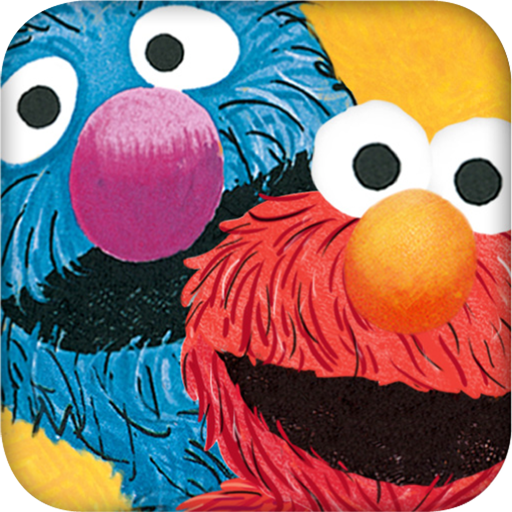
If you are interested in having a look at what is available for children in the eBook line, Amazon does stock them. Here is a link to one such book called Another Monster at the End of This Book…Starring Grover & Elmo! https://www.amazon.com/dp/B00B7S5FDG. There are a number of interesting reviews for this particular book.
What do you think about eBooks? Have you tried them? Do you think they are the future of children’s books?
About Robbie Cheadle
Robbie Cheadle is a South African children’s author and poet with eleven children’s books and two poetry books.
The eight Sir Chocolate children’s picture books, co-authored by Robbie and Michael Cheadle, are written in sweet, short rhymes which are easy for young children to follow and are illustrated with pictures of delicious cakes and cake decorations. Each book also includes simple recipes or biscuit art directions which children can make under adult supervision.
Robbie and Michael have also written Haunted Halloween Holiday, a delightful fantasy story for children aged 5 to 9 about Count Sugular and his family who hire a caravan to attend a Halloween party at the Haunted House in Ghost Valley. This story is beautifully illustrated with Robbie’s fondant and cake art creations.
Robbie has published two books for older children which incorporate recipes that are relevant to the storylines.
Robbie has two adult novels in the paranormal historical and supernatural fantasy genres published under the name Roberta Eaton Cheadle. She also has short stories, in the horror and paranormal genre, and poems included in several anthologies.
Robbie Cheadle contributes two monthly posts to https://writingtoberead.com, namely, Growing Bookworms, a series providing advice to caregivers on how to encourage children to read and write, and Treasuring Poetry, a series aimed at introducing poetry lovers to new poets and poetry books.
In addition, Roberta Eaton Cheadle contributes one monthly post to https://writingtoberead.com called Dark Origins: African Myths and Legends which shares information about the cultures, myths and legends of the indigenous people of southern Africa.
Robbie has a blog, https://robbiesinspiration.wordpress.com. where she shares book reviews, recipes, author interviews, and poetry.
Find Robbie Cheadle
Blog: https://www.robbiecheadle.co.za/
Blog: robbiesinspiration.wordpress.com
Twitter: BakeandWrite
YouTube: https://www.youtube.com/channel/UCVyFo_OJLPqFa9ZhHnCfHUA
Facebook: Sir Chocolate Books
______________________________________________________________________________________________
Want to be sure not to miss any of Robbie’s “Growing Bookworms” segments? Subscribe to Writing to be Read for e-mail notifications whenever new content is posted or follow WtbR on WordPress. If you found it interesting or entertaining, please share.
Share this:

Growing Bookworms – Are there benefits to repetitive reading?
Posted: August 11, 2021 Filed under: Books, Growing Bookworms, Literacy, Reading | Tags: Growing Bookworms, Reading, Robbie Cheadle, teaching reading, Writing to be Read 48 Comments
“As adults, we know that you might read a complex book and, if you read it again, it allows you to absorb all the different elements over time. It’s true for children too. Not only do children love having the familiarity of their favourite books but the repetition is so valuable.”
DR ELIZABETH WESTRUPP
When my boys were young, they liked to have the same book read to them over and over again. With Greg it was the Farmyard Tales about Poppy and Sam and their dog called Rusty.
Greg was about two and a half years old when he went through this repetitive reading stage. Every afternoon when I got home from work, he would ask me to read Farmyard Tales to him. It was fortunate for me as I was pregnant at the time and busy working on a big transaction; Greg’s love of these books enabled me to rest a lot more than I would have been able to if he’d wanted to play outside.
You can find out more about Poppy and Sam here:
Michael went into this book reading stage later. He was about five years old when he decided he loved The Enchanted Wood series by Enid Blyton. I read this book to him so many times I learned sections of it off by heart. Michael also loved the Famous Five series also by Enid Blyton. Thankfully, I was smart enough to get the audio books of the whole series and so I didn’t have to read these to him repetitively. He liked Five go off in a caravan the best and his listening to this story nearly drove me mad eventually.

Back to today’s question: Is repetitive reading good for children?
According to a number of child psychologists repetitive reading does have some important benefits, in particular, children take longer to encode information that older children and adults and they forget faster. Repetitive reading helps young children to remember patterns, new and unusual words, and connect key concepts in the story. In other words, repetition helps develop better comprehension.
Repetitive reading also helps children learn to see things from a different perspective and undergo a different learning experience if you add some new nuances into your reading of the same story. It also helps make reading a story for the 20th time more fun.
Two other benefits of repetitive reading are as follows:
1. Children develop language fluency through repetition. It also helps them to learn sequencing and understanding the two concepts of timing and placing in a story;
2. Repetitive reading also helps develop confidence when a child knows the story and is able to remember what happens next. It also enables the child to re-tell the story to peers or a younger sibling.
Some books that are fun to read over and over again to children are the Dr Seuss books. I always find those books a lot of fun to read, even though I have read them many times, including to my own younger siblings.
I’m going to end off with a great quote from Dr Seuss:
“The more that you read, the more things you will know. The more that you learn, the more places you’ll go.” ― Dr. Seuss, I Can Read With My Eyes Shut!
About Robbie Cheadle

Robbie Cheadle is a South African children’s author and poet with 9 children’s books and 2 poetry books.
The 7 Sir Chocolate children’s picture books, co-authored by Robbie and Michael Cheadle, are written in sweet, short rhymes which are easy for young children to follow and are illustrated with pictures of delicious cakes and cake decorations. Each book also includes simple recipes or biscuit art directions which children can make under adult supervision.
Robbie has also published 2 books for older children which incorporate recipes that are relevant to the storylines.
Robbie has 2 adult novels in the paranormal historical and supernatural fantasy genres published under the name Roberta Eaton Cheadle. She also has short stories in the horror and paranormal genre and poems included in several anthologies.
Robbie writes a monthly series for https://writingtoberead.com called Growing Bookworms. This series discusses different topics relating to the benefits of reading to children.
Robbie has a blog, https://robbiesinspiration.wordpress.com/ where she shares book reviews, recipes, author interviews, and poetry.
Find Robbie Cheadle
Blog: https://www.robbiecheadle.co.za/
Blog: robbiesinspiration.wordpress.com
Twitter: BakeandWrite
Instagram: Robbie Cheadle – Instagram
Facebook: Sir Chocolate Books
_____________________________________________________________________________________________________________________
Want to be sure not to miss any of Robbie’s “Growing Bookworms” segments? Subscribe to Writing to be Read for e-mail notifications whenever new content is posted or follow WtbR on WordPress.
Share this:

Growing Bookworms: Handwriting skills for children, Part 2
Posted: July 14, 2021 Filed under: Education, Growing Bookworms, Literacy, Reading, Teaching Writing, Writing, Writing Tips | Tags: Growing Bookworms, Handwriting, Robbie Cheadle, Teaching Writing, Writing to be Read 61 Comments
Last month, I discussed the reasons why handwriting is still important for both children and adults. You can read that post here: https://writingtoberead.com/2021/06/09/raising-bookworms-handwriting-skills-for-children-part-1/
Today, I am going to focus on strategies to improve handwriting.
The age of the child determines the best strategies for improving handwriting.
For a beginner writer in the early grades, the following strategies are useful to help children practice their handwriting and gain confidence with writing:
Make handwriting fun
There are a few ways you can make practicing handwriting more fun. You can give your child a fun or special pencil to use to practice writing. A stripped one or a pencil covered in flowers or cars. You can also play simple games that involve writing like hangman, word puzzles and anagrams.
I started writing the Sir Chocolate series of books with Michael to help him improve his handwriting. He used to write out the stories as we made them up. He tried very hard to write nicely in these little books we created.
Develop fine motor skills
Developing your child’s fine motor skills by drawing and painting, playing with play dough, cutting, threading, sand play, lego and building blocks are all great ways of encouraging children to manipulate small objects.


Correct pencil grip
Make sure your child is holding the pencil in a pincer grip and also using both hands to control the paper.
Here is a fun video song to help children with the correct pencil grip:
The correct equipment
Some children struggle to hold a regular pencil and do better with a shorter, smaller, or kid-sized pencil. Give your child an eraser so that s/he is confident and not afraid of making mistakes.
Use writing everywhere
You can practice handwriting in lots of fun places. You can write in the sand on the beach or on a foggy window or mirror. You can write in chalk on the driveway and you can even write on fondant with an edible ink pen.
About Robbie Cheadle
Robbie Cheadle is a South African children’s author and poet with 9 children’s books and 1 poetry book.
The 7 Sir Chocolate children’s picture books, co-authored by Robbie and Michael Cheadle, are written in sweet, short rhymes which are easy for young children to follow and are illustrated with pictures of delicious cakes and cake decorations. Each book also includes simple recipes or biscuit art directions which children can make under adult supervision.
Robbie has also published 2 books for older children which incorporate recipes that are relevant to the storylines.
Robbie has 2 adult novels in the paranormal historical and supernatural fantasy genres published under the name Roberta Eaton Cheadle. She also has short stories in the horror and paranormal genre and poems included in several anthologies.
Robbie writes a monthly series for https://writingtoberead.com called Growing Bookworms. This series discusses different topics relating to the benefits of reading to children.
Robbie has a blog, https://robbiesinspiration.wordpress.com/ where she shares book reviews, recipes, author interviews, and poetry.
Find Robbie Cheadle
Blog: https://www.robbiecheadle.co.za/
Blog: robbiesinspiration.wordpress.com
Twitter: BakeandWrite
Instagram: Robbie Cheadle – Instagram
Facebook: Sir Chocolate Books
_____________________________________________________________________________________________________________________
Want to be sure not to miss any of Robbie’s “Growing Bookworms” segments? Subscribe to Writing to be Read for e-mail notifications whenever new content is posted or follow WtbR on WordPress.
Share this:

Growing Bookworms – Digital versus print books for children
Posted: April 14, 2021 Filed under: Books, Children's Books, Literacy, Reading | Tags: Books, digital vs print, Growing Bookworms, Literacy, Reading, Robbie Cheadle, teaching reading, Wriiting to be Read 50 CommentsI have been giving some thought lately to book marketing, especially the marketing of books aimed at children. While selling more books is obviously of interest to me as a writer of children’s books, I am also interested in the most advantageous ways of imparting information to, and developing a love of learning and reading in young children. This duel interest led me to an investigation of electronic books and the pros and cons of children reading using an electronic platform like a computer or an app on a tablet.
I wanted to know, firstly, if children were interested in reading ebooks.
The answer to that first question was a resounding yes, children are definitely interested in reading ebooks. Modern children are surrounded by technology and it is becoming more and more central to their lives. Lately, not only do children use cell phones and tablets to communicate with each other, and as a source of entertainment and research for school projects, they are using it to do their school lessons and virtually visit with relatives and friends.
Since the advent of the pandemic, many children are seeing their parents working on-line at home and using Zoom to engage with their colleagues instead of face-to-face meetings, so it is hardly surprising that children are interested in ebooks. It is a natural progression.
Ebooks for children are also easily accessible, cheap, have a narrator who reads the story, and have interactive features such as animated pictures, music, sound effects, and links on the screen that connect to games or additional information about the story or pictures. I must admit, I have noticed this link feature in non-fiction books I have read recently and I also like it. I can click on the link and find out more about the source of a picture or listen to a YouTube video about a specific aspect of the book.
My second investigation looked at the pros and cons of ebooks for children.
The pros
- children learn early literacy skills from good quality ebooks that include relevant interactive features such as a dictionary, words that are highlighted when the narrator reads them, and games and pictures that help explain the story;
- children interact longer with their parents when reading an ebook together;
- children can read an ebook over and over again on their own which improves literacy and fluency;
- children can read an ebook independently which may encourage them to read more often; and
- ebooks are cheap and accessible.
The cons
- parents often feel they should reduce their children’s screen time and have a resistance to ebooks;
- parents think their children can have the book read to them by the narrator and spend less time reading to [and bonding with] their children;
- parents get distracted by the interactive features and end up focusing on them instead of the story itself;
- children learn less about the story from an ebook, in particular they do not remember the order of events as well as they do when reading a paper book; and
- the interactive features in an ebook may be distracting to the child.
My overarching takeaway from the above which is a summary of all the articles I read on this subject is that, as with paper books, children benefit the most from ebooks when they read them with a parent or caregiver who spends time taking to the child about the story. This is exactly the same benefit that a child receives from reading a paper book with a parent.
The general view is that parents either take the view that their input is not required for ebooks due to the narrator who reads the story to the child, or the parents get distracted away from the detail of the story by the interactive features and so the wrong information dominates the parent/child engagement.
In homes where the parents do not spend time reading with/to their children, it is believed that ebooks can play a bigger role in assisting children to learn to read as it provides a way of achieving the reading of a story without parental input.
I’ve always read to both my boys. I read with Gregory until he was 6 1/2 years old and wanted to read on his own and I read with Michael every day until he was 12. Some evenings I still read with Michael [his book] and we often sit and read our own books together. It is still a pleasant time and reading separate books at the same time means I don’t have to suffer through Rick Riordan books all year round.
If you are interested in finding free digital children’s books for primary students, you can find three recommended websites here: https://learningattheprimarypond.com/blog/3-websites-with-free-digital-childrens-books-for-primary-students/

I have not attempted to download any of the free ebooks from Oxford Owl but these are the book series I used to teach my sons to read. I had the paper copies.
What are your thoughts on ebooks for children? Have you tried them? Let me know in the comments.

If you have spare Easter eggs you can learn how to make a fun Easter chick here: https://www.youtube.com/watch?v=Bod4B029_xw
OR you can download the instructions here: https://robbiesinspiration.wordpress.com/how-to-make-baby-chick-using-an-easter-egg/
About Robbie Cheadle
Robbie Cheadle has published nine books for children and one poetry book. She has branched into writing for adults and young adults and, in order to clearly separate her children’s books from her adult books, is writing for older readers under the name Roberta Eaton Cheadle.
Robbie Cheadle’s Sir Chocolate children’s picture books are written in sweet, short rhymes which are easy for young children to follow and are illustrated with pictures of delicious cakes and cake decorations. Each book also includes simple recipes or biscuit art directions which children can make under adult supervision. Her books for older children also incorporate recipes that are relevant to the storylines.
Roberta Eaton Cheadle’s supernatural stories combine fabulous paranormal elements with fascinating historical facts.
Children’s picture books – available as a square book and an A5 book (co-authored with Michael Cheadle):
Sir Chocolate and the strawberry cream story and cookbook
Sir Chocolate and the baby cookie monster story and cookbook
Sir Chocolate and the sugar dough bees story and cookbook
Sir Chocolate and the Condensed Milk River story and cookbook
Sir Chocolate and the Sugar Crystal Caves story and cookbook
Sir Chocolate and the Fondant Five story and cookbook
Sir Chocolate and the Ice Cream Rainbow Fairies story and cookbook
Middle school books:
Silly Willy Goes to Cape Town (includes five fun party cake ideas)
While the Bombs Fell (co-authored with Elsie Hancy Eaton)
Poetry book:
Open a new door (co-authored with Kim Blades)
Supernatural fantasy YA novel:
Through the Nethergate
Horror Anthologies (edited by Dan Alatorre):
Spellbound
Nightmareland
Dark Visions
Paranormal Anthologies (edited by Kaye Lynne Booth):
Spirits of the West
Whispers of the Past
Murder mystery Anthology (edited by Stephen Bentley)
Death Among Us
Find Robbie Cheadle
Blog: https://bakeandwrite.co.za/
Blog: robbiesinspiration.wordpress.com
Twitter: BakeandWrite
Instagram: Robbie Cheadle – Instagram
Facebook: Sir Chocolate Books
Want to be sure not to miss any of Robbie’s “Growing Bookworms” segments? Subscribe to Writing to be Read for e-mail notifications whenever new content is posted or follow WtbR on WordPress.
Share this:

Growing Bookworms – “Why must I read when the world is electronic and I prefer computer games to books?”
Posted: March 10, 2021 Filed under: Growing Bookworms, Literacy, Reading, Story Telling Methods, Visual Media | Tags: Graphic Novels, Growing Bookworms, Literacy, Reading, reading education, Video Games, Visual Media, Writing to be Read 85 Comments
Children need to learn to read and write. This is an undebatable fact. Well, it’s undebatable from a parents point of view, it is very debatable from a teenagers point of view. I have had a number of conversations with children, including my younger son, about the necessity of reading.
“Why do I need to read when I can watch a movie?”
“Why must I read when the world is electronic and I prefer computer games to books?”
The simple answer, is that despite our moving to a more visual and electronic platform, everything in our modern lives is still underpinned by the written word. It is merely it’s shape and form that has changed.
Every movie and most television shows are based on screenplays which are written by writers, or even groups of writers. Many movies and television series are adapted from books. If there were no books, our choices of visual media would be much more limited. Screenplays would be written, but without creativity and a knowledge of writing, a screenplay could not exist. In my experience, the range of creative writing and English literacy skills our children learn is far more expansive than what I learned at school. Their curriculum now includes visual literacy and film study as well as the traditional grammar, poetry, comprehension and creative writing I studied. These are changes that accommodate our changing times.
As for computer games, I soon realised that the computer games my children play are not the Pacman or Donkey Kong style games from my childhood, but are sophisticated stories with themes and plots. My sons have learned all about Greek and Norse mythology from computer games, as well as how to plan a war or battle with supply lines and build an entire society form a little creature that whistles to a race that can fly to the moon. When they were younger, they learned about farming. They planted crops, water and feed them and eventually harvested them.
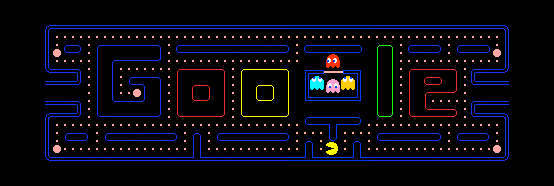
The knowledge and skills they have gained from computer games are not inferior or worthless. The games of strategy have taught them useful survival and planning techniques. The most interesting thing for me about their games is that they require reading. There are pop up notifications continuously as the game progresses. The characters also speak and interact and their thoughts and plans are often set out in words exactly like subtitles. I have also discovered that my children Google information about their games and look up how to do things. This also requires reading.
I point this out to them. If you couldn’t read, you wouldn’t be able to play this game. If people didn’t write, there would be no script for the game you are playing. Because our lives are more visual now does not mean that these skills are not longer necessary. There are vital to engage in this virtual world. In this context, my sons understand the importance of reading. I have linked it to their world.
We no longer write letters, but we spend all day long on email. Writing an email requires good communication skills or you will not achieve the desired outcome.
We no longer draft lengthily reports but precise power point presentations with succinct bullet points. If you have prepared such presentations you will know that their preparation requires more thought and careful word choice than the long and wordy documents we produced in the past. Preparing a good presentation requires an ability to summarise and pick pertinent points out of a larger feedback document.
Even those of us who work mainly with figures – the number crunches of the world – have to be able to write and communicate effectively. A complex spreadsheet and lines of figures must be reduced to a written interpretive document and then to a concise bulleted presentation. They are meaningless without interpretation and communication to others.
As a parent of two teenage boys I have learned to put my personal prejudices [or literary snobbery] aside when it comes to learning to read. There is nothing wrong with graphic novels. In fact, a lot of our adult humour and political sarcasm is shared through cartoons and memes. This makes visual literacy essential – Ha! The teachers are right after all.
I have decided that if my sons see little benefit to reading Around the World in 80 Days by Jules Verne or The Time Machine by H.G. Wells and prefer to read five volumes of the Minecraft Combat Handbook, that is actually okay.
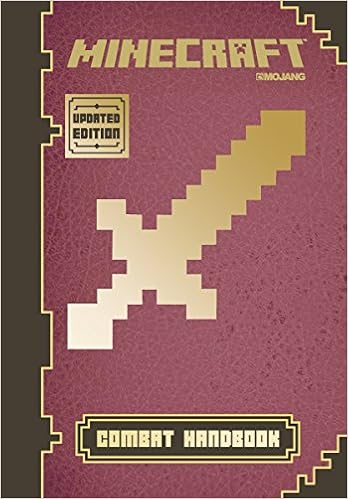
And having achieved this peace of mind, I even celebrated it with a cake!

About Robbie Cheadle
Robbie Cheadle has published nine books for children and one poetry book. She has branched into writing for adults and young adults and, in order to clearly separate her children’s books from her adult books, is writing for older readers under the name Roberta Eaton Cheadle.
Robbie Cheadle’s Sir Chocolate children’s picture books are written in sweet, short rhymes which are easy for young children to follow and are illustrated with pictures of delicious cakes and cake decorations. Each book also includes simple recipes or biscuit art directions which children can make under adult supervision. Her books for older children also incorporate recipes that are relevant to the storylines.
Roberta Eaton Cheadle’s supernatural stories combine fabulous paranormal elements with fascinating historical facts.
Children’s picture books – available as a square book and an A5 book (co-authored with Michael Cheadle):
Sir Chocolate and the strawberry cream story and cookbook
Sir Chocolate and the baby cookie monster story and cookbook
Sir Chocolate and the sugar dough bees story and cookbook
Sir Chocolate and the Condensed Milk River story and cookbook
Sir Chocolate and the Sugar Crystal Caves story and cookbook
Sir Chocolate and the Fondant Five story and cookbook
Sir Chocolate and the Ice Cream Rainbow Fairies story and cookbook
Middle school books:
Silly Willy Goes to Cape Town (includes five fun party cake ideas)
While the Bombs Fell (co-authored with Elsie Hancy Eaton)
Poetry book:
Open a new door (co-authored with Kim Blades)
Supernatural fantasy YA novel:
Through the Nethergate
Horror Anthologies (edited by Dan Alatorre):
Spellbound
Nightmareland
Dark Visions
Paranormal Anthologies (edited by Kaye Lynne Booth):
Spirits of the West
Whispers of the Past
Murder mystery Anthology (edited by Stephen Bentley)
Death Among Us
Find Robbie Cheadle
Blog: https://bakeandwrite.co.za/
Blog: robbiesinspiration.wordpress.com
Twitter: BakeandWrite
Instagram: Robbie Cheadle – Instagram
Facebook: Sir Chocolate Books
____________________________________________________________________________________________________________
Want to be sure not to miss any of Robbie’s “Growing Bookworms” segments? Subscribe to Writing to be Read for e-mail notifications whenever new content is posted or follow WtbR on WordPress. If you found it interesting or entertaining, please share.