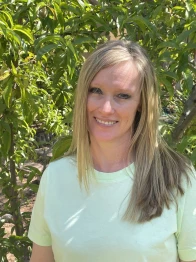
Today my guest is author Sylva Fea, whose debut book is a short fiction collection, rather than a novel. She got her start writing for children and has published several children’s books. Let me introduce her, and then we’ll go on to the interview, followed by my review of her short story collection, No Fairytale.
About Sylva Fae
Sylva Fae is a married mum of three from Lancashire, England. She grew up in a rambling old farmhouse with an artistic family and an adopted bunch of dysfunctional animals. Her earliest memories are of bedtime stories snuggled up close to Mum to see the pictures. It was a magical time, those last special moments before dozing off to sleep would feed dreams of faraway lands and mystical beings. She spent twenty plus years teaching literacy to adults with learning difficulties and disabilities but now lives in Cheshire, juggling being a mum, writing children’s stories and keeping up with the crazy antics of their naughty rabbits.
Sylva and her family own a small woodland and escape there at every possible opportunity. Adventures in their own enchanted woodland, hunting for fairies and stomping in puddles, originally inspired Sylva to write stories for her girls. Whether it’s sat at the campfire in her own woods, or pottering around the beautiful local countryside, Sylva now finds her story inspiration being out in nature.
Sylva published her first children’s book Rainbow Monsters, in 2017. She has since published seventeen other children’s picture books, two chapter books, four illustrated anthologies, and has several short stories published in other anthologies. Three of her books have won Best in Category for children’s books at the Chanticleer International Book Awards and she’s seven won Reader’s Choice Awards. In addition to writing her own, Sylva has ghost written several books, and is an editor and writer for Mom’s Favorite Reads magazine and Connections eMagazine.
Kaye: I just released the first three books in my own children’s series, so I want to ask you to talk about being a children’s author briefly. How did being a children’s author come about for you? How did you handle illustrations? What were the challenges in writing for children?
Sylva: I started making up stories to entertain my children when we went on walks in our woods. Hunting for pixies and faeries hiding in the trees turned a boring walk into a woodland adventure, and it kept my girls amused. Later on, my middle daughter asked if I would write the stories down so she could read them herself, and then she demanded pictures to go with the stories. I obliged, of course, but I never intended to publish anything – these were just to entertain my children, and fun for me to create.
Sometime later, I joined Twitter (X) and my first follower was the amazing author, Lesley Hayes. She asked me to write a short story for her blog. I was daunted by the prospect, but gave it a go. Lesley convinced me to keep writing, she encouraged and supported me and gave me the confidence to publish my first children’s book. I discovered how much I loved writing stories and haven’t stopped since.
Kaye: You started your writing career with children’s books and then, moved on to short fiction for adults. How did that transition happen?
Sylva: Lesley Hayes encouraged me to join a group for indie authors (I now admin it) so I could learn from the more experienced authors. The group was putting together an anthology (You’re Not Alone) in aid of Macmillan Cancer Support, an although it wasn’t my genre, I wanted to get involved. I enjoyed the challenge of writing a short story, and submitted more stories to our group’s anthologies. A couple of years later, I joined up with some author friends to run an online magazine, Mom’s Favorite Reads, which ran a monthly flash fiction challenge. This gave me the opportunity to write flash stories – another new challenge to master! I now help author, Melanie P Smith with Connections eMagazine, and contribute 1000-word stories for the picture prompt challenge. The transition from children’s stories to adult shorts was quite easy because the word counts are similar and my brain is programmed to tell a whole story in a few words.
Kaye1; I’m curious. Why did you choose to use a pen name? And how did you choose the name to use?
Sylva: When my children were little, I wanted to safeguard them from the world of social media, and so set up accounts under a pseudonym, Sylva Fae. This meant I could have a public account and keep my real name account for just family and friends. My youngest daughter’s name is Sylva – I love the name – and it means ‘of the woodlands’. Fae is a term to cover all kinds of faerie folk, so Sylva Fae simply means woodland faerie. I like names with meanings, and this fit with how I started out, telling faerie stories to my girls in the woods.
Kaye: You’re just now releasing your first short fiction collection, No Fairytale. Tell us about these stories. Do they have a common theme? What inspirations can you share with us?
Sylva: The stories are very random, both in subject, and in length. They range from 200-word flash fiction stories, to 8k words. There are a few familiar themes that appear; I often use my woods as a setting, and characters are based on people I know. I guess the common theme is me, because every story contains a little of my real-life experiences.
Kaye: You are a wife and mother, and you write, too. Do you have any advice for juggling family and writing life?
Sylva: All of my stories are planned in my head before they ever make it onto paper. I play around with ideas, and think through how the characters would react to different scenarios, while I do mundane tasks, like washing up and vacuuming. A boring chore becomes an opportunity to plan a story. I tend to work out dialogue while walking, so walking to and from school to pick up my girls also becomes a multitasking opportunity. I try to give myself a little time to write each day. Some days I get the chance to work on my laptop for a few hours, but on other days, I grab five minutes here and there, typing on my phone. Writing every day keeps me sane, but family comes first, so multitasking is the only way I can do this.
Kaye: Some of your books have won awards. Can you talk about the award-winning books? Which award do you feel is the most prestigious?
Sylva: My books have won sixteen awards over the years. It’s hard to pick the most prestigious, so I’ll pick my favourite. My very first book, Rainbow Monsters won in the children’s story category in the Chanticleer International Book Awards. Winning this award gave me a huge amount of confidence to become a children’s author.
Kaye: You also write for Connections emagazine. Would you tell my readers a little about that? What type of content do they print? And what type of writing do you do for them?
Sylva: Connections is primarily a magazine for people who love to read books. It features author interviews, new book releases, short stories and poems, but it also contains general interest articles and interviews. As I mentioned before, I write short stories for the magazine, but I also contribute articles, interviews and source general interest content. The magazine is always free to download, so feel free to check it out: https://melaniepsmith.com/emagazine/
Kaye: Do you plan to stick with short fiction? Or do you envision a novel in your future? Do you already have future works planned out?
Sylva: Now my children have grown up, I keep meaning to leave the children’s genre and write for adults, but I still have a ridiculous number of works in progress that I want to finish before I leave picture books for good. I have a YA story ready for publishing, and two adult novels on the go. The new challenge of writing a full-length novel is a little daunting but I keep telling myself, to just take one chapter at a time, and each chapter is just the same as writing a short story. We shall see…
Kaye: Please tell my readers how they can find you online, if they’d like to learn more about you and your books. (Include links here.)
Sylva: You can find me on most social media by searching for Sylva Fae, but I am stuck in my ways, and mainly use Facebook for connecting with readers.
This multi-genre collection of 36 tales is comprised of 18 short stories and 18 flash fiction stories. From crime in a quaint village to woodland horror. Go on a time-travelling mystery, or imagine the horror of encountering a real earworm. Discover magic and mayhem, mystery and adventure, and delight in tales of karma and vengeance. No Fairytale is an eclectic assortment of stories to entertain a wide audience.
My Review
I proofread a copy of No Fairytale, thus discovering both book and author. What follows is my honest review. All opinions stated here are my own.
No Fairytale is a collection of short stories by author Sylva Fae. Tales of magic and mystery with a hint of life lessons mixed in. With more than thirty short and flash fiction stories, this collection is a worthy read. Too many stories to review individually, but I’ll offer up here my favorites.
“The Magic Box of Apples” – A tale about the magic of kindness. This one touched my heart. Granny Apple has a magic box that is always filled with what she needs. But is it really magic? Peter Aspen learns the secret as this short tale unfolds.
“Hollin Hey” – I’m a bird lover, so it is only natural that I would fall in love with this story about an animal sanctuary and a recued crow. The touching ending makes it all worth it.
“No Fairytale” – The book’s namesake story is one of cheating and revenge. No Fairytale indeed! When this girl says it’s over, she means it.
“The Witch in the Woods” – A short ditty about a self-perpetrated deception. But this witch has good reason and good intention.
“Dwelling in the Shadows” – I love this story because of the somber tone and poetic language that could make one believe they have stepped into a fairytale. The story of a secret pact told so eloquently I had to read on to the end.
The collection, as a whole, is delightful; a mixture of short and flash fiction which has a little something for everyone. The characters in these stories are easy to relate to because we’ve all been there. Sylva Fae takes the ordinary and finds the magic in it. I give No Fairytale five quills.
Today, I am delighted to welcome talented poet and author, Elizabeth Gauffreau, as my Treasuring Poetry guest.
What is your favourite style of poetry to read i.e. haiku, ballad, epic, freestyle, etc?
My favorite style of poetry to read is free verse, although recently I’ve become quite taken with the duplex and the pantoum. I also enjoy reading persona poems, such as T.S. Eliot’s “The Love Song of J. Alfred Prufrock,” which has been a long-time favorite of mine. In addition, I enjoy narrative poems such as George Franklin’s Angel of Sorrow poems. (Travels of the Angel of Sorrow and What the Angel Saw, What the Saint Refused)
What is your favourite poem in your favourite style to read?
Because I’ve been reading more poetry collections in the past several years than I ever have before, it’s hard to pick just one favorite poem. I’m going to go with Patricia Smith’s “Now He’s an Etching.”
The poem is written in iambic pentameter, which is definitely not my favorite poetry form. However, Smith uses it so skillfully, I didn’t even notice the meter until someone pointed it out to me.
I strongly encourage readers to listen to Smith read the poem herself to get the full experience of it. https://poets.org/poem/now-hes-etching (Click on the blue speaker icon on the right side of the screen.)
Now He’s an Etching
of the sluggish, coolly vengeful way
a southern body falters. Muscles whine
with toiling, browning teeth go tilt and splay,
then tremulous and gone. The serpentine
and slapdash landscape of his mouth is maze
for blue until the heart—so sparsely blessed,
lethargic in its fatty cloak—OKs
that surge of Tallahatchie through his chest,
and Lordy, hear that awful moan unlatch?
Behind the mic, he’s drowning in that great
migration uniform of sharkskin patched
with prayer and dust. His cramped feet palpitate
in alligator kickers, needle-toed,
so tight he feels the thudding blood, so tight
they make it way too easy to unload
his woe. The drunken drummer misses right
on time, the speakers sputter static, but
our bluesman gravels anyhow—The moon
won’t even rise for me tonight / now what’s
a brokedown man gon’ do? That wretched croon
delights the urban wanderers, intent
on loving on this perfect underwhelm
of Negro, jinxed and catastrophic, bent
into his hurting halves. Inside the realm
of pain as pageant, woozy revelers raise
their plastic cups of fizz and watered rye
to toast the warbler of decay, whose dazed
and dwindling lyric craves its moonlit sky.
“Now He’s an Etching” made such an impression on me that I actually sent a “fan girl” message to Patricia Smith (to which she responded graciously with “thank you”). Then I wrote a puente in response to her poem. (I’ve sent it out to literary magazines in hopes of getting it published.)
I would be remiss if I didn’t include Smith’s commentary on her poem:
About this Poem
“I mourn the elders. I mourn the black bluesmen and women who could only move sanely through their hours with the help of heartbreak. I miss their stout southern stature, bodies resolute with a recollected woe. I ache for the gut gravel of lyric, the knowledge that my crooner is truly suffering, and that she or he has decided to allow us to suffer too. But many of the elders still with us have become millennial playthings, one of the many ‘woke’ things to sample and add to the cultural resume. Hopefully, this poem springs from that space.”
—Patricia Smith
Your new poetry book, Simple Pleasures, comprises of haiku. Is that your favourite form of poetry? Why?
No, it isn’t. My go-to is free verse. In this instance, though, haiku was the best form to convey the experiences I wanted to share with readers.
What is your favourite of your poems in Simple Pleasures?
I’m going to go with this one because it was inspired by the Green Mountains of Vermont, which is where my heart is.
back in the valley
peeling fence to lean on
Green Mountains steadfast
Tell us a bit about Simple Pleasures. What inspired the book? How did you choose the title and cover?
My husband and I were on a scenic drive to escape the awful mess the world is in, and a haiku just popped into my head. So I wrote it down (fiddled with it, of course) and took a picture of the scene which inspired it. My husband and I had fun going on the hunt for the wild haiku together, so we kept at it for a year, until I had enough poems and photographs for a collection and had covered all four seasons. Now that the book is finished, I miss those hunts!
The title Simple Pleasures refers to the simple pleasures of life, which never fail to restore my equilibrium in difficult times. The subtitle, Haiku from the Place Just Right, refers to the Shaker hymn “Simple Gifts,” which was part of my childhood, probably from church camp. Simple pleasures and simple gifts are synonymous to me, so the title and the subtitle seemed just right!
As far as the cover went, I wanted something that would show up clearly in an online thumbnail, which is why I went with a saturated color for the background. The branch of flowering crabapple spoke to me as having a haiku feel to it in its simplicity.
My review of Simple Pleasures: Haiku from the Place Just Right
Picture caption: Cover of Simple Pleasures featuring a spray of pink blossoms against a dark blue background
Simple Pleasures is a collection of delightful haiku written about a variety of different places that have moved the poet to write due to their beauty, family connection, or historical meaning. Each poem is accompanied by a gorgeous colour photograph (I read the ebook). As a South African, I found this book to be a wonderful visual and literary tour of Vermont, New Hampshire, and Maine.
One of my favourite poems in the collection is as follows: “grey heavens, grey sea goldenrod out of context lighthouse bears witness”
This short collection of 53 poems will fill your heart with joy.
Picture caption: Elizabeth Gauffreau author photograph
Elizabeth Gauffreau writes fiction and poetry with a strong connection to family and place. Her work has been widely published in literary magazines, as well as several themed anthologies. Her short story “Henrietta’s Saving Grace” was awarded the 2022 Ben Nyberg prize for fiction by Choeofpleirn Press.
Liz has published a novel, TELLING SONNY: THE STORY OF A GIRL WHO LOVED THE VAUDEVILLE SHOW, and a collection of photopoetry, GRIEF SONGS: POEMS OF LOVE & REMEMBRANCE. Her latest release is also photopoetry: SIMPLE PLEASURES:HAIKU FROM THE PLACE JUST RIGHT. She is currently working on a novel, THE WEIGHT OF SNOW AND REGRET, based on the closing of the last poor farm in Vermont in 1968.
Liz’s professional background is in nontraditional higher education, including academic advising, classroom and online teaching, curriculum development, and program administration. She received the Granite State College Distinguished Faculty Award for Excellence in Teaching in 2018.
Liz lives in Nottingham, New Hampshire with her husband.
About Robbie Cheadle
South African author and illustrator, Robbie Cheadle, has written and illustrated sixteen children’s books, illustrated a further three children’s books, and written and illustrated three poetry books. Her work has also appeared in poetry and short story anthologies.
Robbie also has two novels and a collection of short stories published under the name of Roberta Eaton Cheadle and has horror, paranormal, and fantasy short stories featured in several anthologies under this name.
You can find Robbie Cheadle’s artwork, fondant and cake artwork, and all her books on her website here: https://www.robbiecheadle.co.za/
_____________________________________________
Want to be sure not to miss any of Robbie’s “Treasuring Poetry” segments? Subscribe to Writing to be Read for e-mail notifications whenever new content is posted or follow WtbR on WordPress. If you found it interesting or entertaining, please share.
_______________________________________________
This segment of “Treasuring Poetry” is sponsored by WordCrafter Press and the Poetry Treasures series.
Drop by Undawnted for Day 7 of the WordCrafter My Backyard Friends Book Blog Tour, where you can meet Charlie Chickadee in a mini-interview with DL Mullan, some fun facts about Chickadees, and a review of Charlie Chickadee Gets a New Home. Join us as we wind down the send off for this wonderful kid’s series, written by Kaye Lynne Booth and illustrated by Robbie Cheadle.
Join us on Undawnted for day 3 of the WordCrafter My Backyard Friends Book Blog Tour where DL Mullan interviews Heather Hummingbird and offers a review of Heather Hummingbird Makes a New Friend. Come join in the fun as we send off all three of the wonderful books in the My Backyard Friends Kid’s Book Series.
This month, I am delighted to introduced talented author and poet, Gwen M. Plano, as my Treasuring Poetry guest.
What is your favourite style of poetry to read, i.e. haiku, ballad, epic, freestyle, etc?
I enjoy all forms of poetry. If a poem gives me pause by how it transforms the ordinary into the extraordinary, or if it illuminates a mystery, then I’m captivated. Pablo Neruda and Maya Angelou are two of my favorites, and they both write freestyle. But I also love syllabic poetry. Matsuo Basho’s The Old Pond is breathtaking:
An old silent pond
A frog jumps into the pond
Splash! Silence again.
What is your favourite poem in your favourite style to read?
In the 1980s, I discovered T.S. Eliot and his Four Quartets. Written in freestyle, the lengthy poems address the deep questions of life. I’ve probably read the poems a dozen times. The last quartet, Little Gidding, is my favorite. It’s too long to include in this post, but Section IV offers a glimpse of Eliot’s spiritual depth:
The dove descending breaks the air
With flame of incandescent terror
Of which the tongues declare
The one discharge from sin and error.
The only hope, or else despair
Lies in the choice of pyre or pyre—
To be redeemed from fire by fire.
Who then devised the torment? Love.
Love is the unfamiliar Name
Behind the hands that wove
The intolerable shirt of flame
Which human power cannot remove.
We only live, only suspire
Consumed by either fire or fire.
What is your favourite style of poetry to write? Why?
When I write spontaneously and from my heart, the poetry is freestyle. I don’t think about the structure of the poem; rather, I’m focused on the story it tells. If I were to choose a favorite style, it would be freestyle.
Every week, though, I participate in poet Colleen Chesebro’s syllabic poetry prompts. I’ve learned tremendously through her example and instruction. Importantly, I’ve come to love syllabic poetry.
What is your favourite of your own poems in your favourite style?
I’ve two poems that I particularly like, and I can’t decide which one is my favorite. One reflects on grief, and the other focuses on writers. Both are written in freestyle, and the first includes rhyme.
The Old Pier
Picture caption: The Old Pier by Gwen M. Plano
The Old Pier
Remember when we danced in the moonlight? I was your princess, and you were my knight. Remember the star you said was mine alone? Brilliant and pulsing, it was our secret cosmic stone.
Now I hold your ashes and not your embrace, and I weep with every memory trace. I walk the old pier and hope I will see you standing there, waiting for me.
But ashes to ashes is as day is to night a harsh, inevitable part of life’s hike. My tears are lost in the water below. Maybe they’ll find you if I can just let go.
The Author
Picture caption: The author by Gwen M. Plano
The Author
I search for you,
writer unknown,
each page a port of departure.
Through hurdles, fears, and
the dreams you disclose,
I wander.
A word laid bare,
a phrase that lingers,
a plot that captures or awakens,
your footsteps stealth on paper trails,
the scent of you,
I savor.
The web you spin,
entraps and cradles,
while entangled characters wrestle.
Through the give and take of life and love,
the glimpses of you,
I follow.
At last, I see,
my muse, my tease,
behind the hes and shes you’ve crafted,
a warrior or tender lover – the storyteller,
YOU, now revealed, I honor.
Tell us a bit about your fiction writing and your latest book, The Soul Whisperers Decision. What is the book about? What inspired the book?
Picture caption: the cover of The Soul Whisperer’s Decision by Gwen M. Plano
Much like my poetry, writing fiction is a journey. I write when something gnaws at my soul. It often begins with scenes and questions, and just as often, I don’t know where the story will take me. I am both the writer and the reader.
The Soul Whisperer’s Decision begins with a tragedy. A father loses his little children in a car accident that almost kills his wife as well. The young man is a veteran, and he is pulled back into his struggle with Post-Traumatic Stress Disorder. The story follows this veteran through the pain of loss to the eventual rediscovery of hope.
What inspired this story? For a decade, I worked with Marines and soldiers from all service branches, returning from Iraq and Afghanistan. I was an administrator at a college located near military bases. I soon discovered that most of those who were boots-on-the-ground suffered from PTSD in addition to physical injuries. By choice, my work shifted to serving those who had served all of us.
Over the years, I’ve heard people scoff at PTSD as though it is a sign of weakness. These individuals never served and have no idea what these brave men and women experienced. In my novel and my WIP, I attempt to illuminate that experience.
The Soul Whisperer’s Decision also includes a nurse who has a Near Death Experience. Her choice of remaining in the heavenly realm or returning to her life shapes the story’s direction. Since the 1980s, I’ve studied NDEs and have spoken with some who have medically died. It is an experience that is personal and close to my heart.
My review of The Soul Whisperer’s Decision
This beautifully written and emotional book is ultimately about making choices when life presents us with devastating obstacles on our path. For various reasons, this topic is close to my heart and I related heavily to the main character, Sarah, who, following a devastating car accident, needed to make the ultimate decision about whether to fight for life or let go. To make this decision harder, Sarah lost both her small children in the accident. I have watched loved ones making this choice and the decision to live is a hard one when months of rehabilitation and pain lie ahead.
While Sarah is fighting for her life in hospital, her husband, Jack, a Vietnam veteran, faces mental collapse when his post traumatic stress disorder rears its ugly head. Jack is devastated by the loss of his little ones and flawed by the uncertainty as to his wife’s recovery. Jack must also make a choice about whether to face the pain and try to rebuild his life or whether to end his suffering.
The sensitive and yet realistic manner in which the author deals with the trauma and the emotional and mental reactions of her two central characters demonstrates a deep understanding of people and the human condition. This relatively short novel will have you examining your own life and considering how you would react in the same circumstances. There is a lot of subtle guidance woven throughout this book and it is essentially, a very uplifting read. I strongly recommend this excellent book.
Gwen M. Plano, aka Gwendolyn M. Plano, grew up in Southern California and spent most of her professional life in higher education. She taught and served as an administrator in colleges in Japan, New York, Connecticut, and California. Gwen’s academic background is in theology and counseling. Recently retired, she now lives in the high desert of Arizona, where she writes, gardens, and travels with her husband.
Gwen’s first book is an acclaimed memoir, Letting Go into Perfect Love. Her second book, The Contract between heaven and earth, is a thriller fiction novel, co-authored by John W. Howell. It has received multiple awards and is an Amazon Best Seller. The Choice, the unexpected heroes is the sequel to The Contract. It is also a thriller, involving the attempt of an unfriendly nation to take over the world. The third book in the series, The Culmination, a new beginning is an action-packed military thriller that spans the globe and involves multiple Heads of State and the threat of World War III. Only love can change the fate of humanity.
When Gwen is not writing, she’s often in the beautiful Red Rocks of Sedona, where she finds inspiration.
About Robbie Cheadle
South African author and illustrator, Robbie Cheadle, has written and illustrated sixteen children’s books, illustrated a further three children’s books, and written and illustrated three poetry books. Her work has also appeared in poetry and short story anthologies.
Robbie also has two novels and a collection of short stories published under the name of Roberta Eaton Cheadle and has horror, paranormal, and fantasy short stories featured in several anthologies under this name.
You can find Robbie Cheadle’s artwork, fondant and cake artwork, and all her books on her website here: https://www.robbiecheadle.co.za/
_____________________________________________
Want to be sure not to miss any of Robbie’s “Treasuring Poetry” segments? Subscribe to Writing to be Read for e-mail notifications whenever new content is posted or follow WtbR on WordPress. If you found it interesting or entertaining, please share.
_______________________________________________
This segment of “Treasuring Poetry” is sponsored by WordCrafter Press and the Poetry Treasures series.
My guest this month on “Chatting with the Pros” is New York Times bestselling author, Jonathan Maberry. Not only is he a five-time Bram Stoker Award winner, and comic book writer, his vampire apocalypse series, V-Wars, became a Netflix original series. Like last month’s guest, Jonathan Maberry is a prolific writer in multiple genres, including horror, science fiction, fantasy, suspense, thriller, and action. He is a board member for the Horror Writer’s Association, and president of the International Association of Media Tie-in Writers, as well as the editor of the rebirth of the iconic Weird Tales Magazine.
I had the pleasure of working with Jonathan briefly when he participated in the 2020 WordCrafter Stay in Place Virtual Writing Conference, where I learned that he is a prettty stand-up guy. Since he is the editor of Weird Tales Magazine, I also had the privelage of working with him on Weird Tales: Best of the Early Years 1926-27and editing his story for the Gilded Glass anthology as an intern at Wordfire Press through Western State Colorado University came with a big case of imposter syndrome on my part. Who was I to be editing the work of this award-winning, bestselling author? But he was great to work with in the capacity of both author and co-editor, and it is a pleasure to have him as my guest today.
Interview with Jonathan Maberry
KAYE BOOTH: You are an award-winning author, including the Bram Stoker Award for horror, the Scribe Award for media tie-ins, the Inkpot Award from the San Diego Comic Con, and numerous accolades for children’s and teen books. In fact, in 2016 you had an award named after you and were the first recipient at the Canyon Crest academy Writer’s Conference, which was the first teen writer’s conference in the U.S. Can you tell us about the Jonathan Maberry Aspiring Teens Award, the conference and why you were chosen for the honor?
JONATHAN MABERRY: That award came as a shock to me. I had been teaching for a few years at the wonderful Canyon Crest Academy Writers Conference and have been a strong supporter of the event. Before that I taught the Experimental Writing for Teens program back in Doylestown, Pennsylvania…and several students from that group went on to make professional sales in novels, short stories, and nonfiction. I’ve always liked working with our younger creatives –it’s my way of selfishly insuring I’ll always have great books to read. When the conference decided to name the award after me because of my work as an author of Young Adult and Middle Grade fiction, my work in comics for Marvel, and other things, I was so surprised. It’s a deep honor to help present the award each year, and there are many, many folks out there who deserve it. We must all work together to help guide and teach the next generation of creatives.
KAYE BOOTH: You also have several comics and graphic novels. How does your writing process differ for these types of books?
JONATHAN MABERRY: I’m primarily a novelist. I think in long, complex stories. However, a different skill set is needed for comics. Novels are solo ventures, however, and comic books are created by a team. The writer pitches the story and presents an outline to the editor. Editors in comics are a lot more hands-on than in other mediums –more like a movie director. Once the editor approves the comic going to script, he then picks the art team. This could be a penciler and inker –two types of artists; or it could be an artist who does both. Then the colorist and letterer are picked. The writer decides how many panels will be on each page and provides art direction. The artist sends back rough pencil sketches to show how the art direction would translate into visual storytelling. The editor, artist, and writer discuss this, make adjustments, and then the artist typically sends pages as they’re completed. There’s multiple pairs of eyes on this every step of the way. The colorist enters the picture around this point, often long before the entire thing is drawn. Colors matter, and I’ve learned from experience that the colorist is much like the lighting person in film –those colors suggest mood and tone. The last player is the letterer, and he has to make sure the dialogue and any narrative have room in each panel. This often requires that the writer do a pass to slim down the dialogue so as not to block the art, just as it’s important for the writer to consider which images best accompany dialogue–mor art can show with little or no dialogue; dialogue-heavy panels should not require complex art. Then there’s multiple passes where everyone tries to find any graphic or textual errors. It’s a fun process, but time-consuming. And it’s key for a writer to keep the ego in check. This is a team, not a solo thing, and every player brings experience, insight, and skill. A wise writer allows them to participate in the process of telling the story in what is predominately a visual medium. Comics are fun, though. And the collaborative process can really be fun and enriching.
KAYE BOOTH: Do you do the illustrations?
JONATHAN MABERRY: Although I am an artist, I don’t do my own comic book art. I’m not on that level of art skill, and besides, the artist choice is complex. The editor often suggests multiple possible artists, and discusses with the writer whether any given style suits the story. Once chosen, it’s useful for the writer to check out that artist’s previous work and then adjust his writing style to be harmonious with it. Being an artist myself helps with this process.
KAYE BOOTH: Some of your work has been turned into film, including V Wars, and Rot & Ruin. How does one break into this arena? Do you have to know somebody who knows somebody, or are the tricks that can help you in breaking into the trade?
JONATHAN MABERRY: When I stepped into the fiction world I knew no one in Hollywood. I’ve made a lot of friends through events like San Diego Comic-Con and other pop culture things where I’m on panels with other writers, comic book people, and folks from Hollywood. Many of my works have been optioned –and an option is when a producer “leases” a work for a specified period of time in the hopes he/she can put together a package (often a showrunner/head writer, maybe a director, maybe an actor, etc) that will be appealing to a studio. Mostly it’s freelance producers who option works.
My first optioned work was Patient Zero, my fourth novel. It was optioned by Michael De Luca for SONY, which took it to ABC, and it nearly made it to TV. At that time, the network exec decided to go instead with a remake of Charlie’s Angels. And that sort of thing happens to all writers. Later, when I wrote the V-Wars books and comics for IDW Publishing, they had created a media division, and it was IDW who shopped the project around and eventually found a home on Netflix. Alas, the show launched at the beginning of Covid, so even though it was a hit (#1 in 120 global markets), they canceled it. And, that’s Hollywood, too. I had nothing to do with that process.
However, because of my increased visibility due to V-Wars, I began getting invitations to send lists of my IPs to producers. IP = Intellectual Property (novel, short story, comic, etc). And sometimes a studio exec will invite me to L.A. for a face-to-face. During those meetings –which are openly fishing expeditions—I would chat about my works and which I feel would make for a good movie or TV show. One example was when Carl Rogers, the Vice-president of Alcon Entertainment invited me up for a sit-down. We chatted for a couple of hours, and afterward they optioned my teen post-apocalyptic zombie novels, Rot & Ruin for film development, and we are currently at the second draft of the script. More recently my Joe Ledger novels have been optioned for television. In both cases I’ll be an executive producer if we go from development into actual production. As an EP, I’ll have extensive creative input.
I also have a book-to-film agent, Dana Spector of CAA, and she is actively pitching my works to producers.
KAYE BOOTH: These days it seems like traditional publishing is faltering, or at least taking a back seat in many authors’ minds as they opt to take control of their own careers and publish independently. As someone who has been in the business for a while now, what do you see as the future for the publishing industry?
JONATHAN MABERRY: I disagree that traditional publishing is faltering. What’s changed is that indie publishing has matured thanks to the many advantages of digital sales (eBooks and downloadable audiobooks) and lower costs because of print-on-demand. Crowdfunding like Kickstarter, BackerKit and other utilities have allowed indie authors to finance well-edited and beautifully-designed books. Social media also gives indie writers a length of reach they never had before. Traditional publishing is actually learning from indie publishing, but the size of their companies makes it a bit harder to pivot in the direction of innovation. It is happening though.
I’ve been publishing for a long time. I began in the pre-Internet typewriter days when I was writing nonfiction magazine feature articles and nonfiction books (college textbooks and mass market). I saw the gradual changes as publishing evolved with the times. Since breaking into fiction in 2006, we had economic downturns that did a lot of damage to publishing corporations, as well as the rise of digital tech. I live quite comfortably off of my income as a traditionally-published author. Part of that is having a smart literary agent –Sara Crowe of Sara Crowe Literary—who has helped guide my career and with whom I’ve sold 60 novels, sixteen short story collections, 26 anthologies (as editor), ten nonfiction books, 28 runs of comics, and a board game in 18 years. So, no, I don’t think traditional publishing is in trouble. What’s key, though, is the writer also changing with the times. When new technology comes along that looks like it’s going to stick around long enough to matter, it’s part of my job to investigate, understand, and implement it in ways that support my career.
KAYE BOOTH: Many of the stories you write are really scary, weird, and creepy stuff. Where do the ideas for these stories come from?
JONATHAN MABERRY: Writing genre fiction does not involve giving a handful of characters a pleasant day. We write about crisis in its many forms. It doesn’t matter if it’s a zombie apocalypse or a fragile romance or Curious George misplacing his keeper’s yellow hat. There is a crisis at the heart of all drama.
For me, I like it darker because it allows me to write about people finding their way through –and hopefully out of—that darkness. I grew up dirt-poor and in a very violent household. My father was a terrible person, an abuser, and a racist. However my grandmother was amazing. She was basically Luna Lovegood as an old lady –she believed in everything that made up what she called ‘the larger world’, including ghosts, ESP, vampires, sprites, angels, faeries, werewolves, crisis apparitions, and all the rest. So, I was exposed to various kinds of ‘darkness’ as a kid. One very negative and one in which I found a great deal of comfort. My grandmother taught me not only about the folklore, myths and beliefs regarding the supernatural, but encouraged me to read anthropology, sociology, philosophy, and science in order to separate what is not part of the larger world and allow for what might be.
Funny, but a lot of folks ask why I write about monsters. I tell them that I don’t –I write about people who fight monsters, and that is a significant difference. In order to tell a story about rising above adversity, where one or more people confronting apparently impossible odds and an overwhelming threat, you have to make that threat real and the challenge steep. That way, the story is really about them finding courage, cultivating optimism, working together, becoming empowered, and taking agency over their own lives and destiny.
KAYE BOOTH: What are some tips you can offer to rising authors for making things scary or suspenseful?
JONATHAN MABERRY: There are a few ways to make a scary story really stand out. First, there’s the research. Folklore, mythology, and cultural beliefs offer thousands of scary elements, including older and much stranger versions of vampires, ghosts, demons, werewolves, etc. So, instead of doing a rinse-and-repeat thing with the standard Hollywood or publishing-world versions of these monsters (which, by the way, are largely extrapolations of story elements created by writers and not from any actual folklore), read deeply and build stories on less well-known and therefore less-predictable monsters. For example, nowhere in folklore is a vampire afraid of a cross or killed by sunlight. Nowhere in folklore is a vampire unable to enter a house unless invited. The sunlight and cross thing comes from Bram Stoker’s Dracula; and the sunlight was introduced as a convenient plot device in the 1922 silent horror film, Nosferatu.
Second, writers should start by taking a close look at what scares them. Them, specifically. When writing from one’s own fears, the connection to the emotions is right there, and if the writer is brave enough, then the confessional elements are truer and not watered down.
Then, write about what the characters in any given scene are feeling, maybe eavesdrop on their thoughts. Let the suspense of a threat not yet fully understood play a larger role than the reveal of the creature itself. Anticipation is so important to good horror storytelling. Once the monster is revealed, the story often morphs from suspenseful horror to terror-action. Not the same thing at all.
KAYE BOOTH: What do you think is the biggest misconception aspiring authors have about publishing that first book?
JONATHAN MABERRY: Oh, they think that first book is going to flip the switch and change their lives. Most people have no idea how small advances are for newbies, especially since the last couple of economic downturns. Also, they forget to put some of that money aside for taxes. They assume that their book will land in every single bookstore, and that doesn’t even happen for the top tier. They assume their published work will be on bookstores indefinitely. They expect the publisher to do the lion’s share of advertising. They believe they’ll be sent on a book tour. And they think that a published book is going to guarantee sell the next one pitched.
There are a lot of misconceptions. Dispelling these, and helping to set more realistic expectations and to learn how to be a more effective player in one’s own career path is one of the reasons I began the Writers Coffeehouse over 20 years ago. These are free 3-hour monthly networking events, typically hosted by indie bookstores, hosted and facilitated by actively published writers. The purpose is to help other writers to make good career decisions, learn the way publishing works, maybe find an agent, write better queries, learn social media strategies, and generally understand both the craft of writing and the business of publishing. I’ve been running the San Diego chapter at Mysterious Galaxy Bookstore in San Diego (https://www.mystgalaxy.com) for the last eleven years. We also have a Facebook page on which writers can ask questions, share information, brag about career milestones, and be part of a mutually-inclusive and supportive community. )www.facebook.com/groups/TheWritersCoffeehouse/). Ours is held from noon to 3pm on the first Sunday of every month. I host it, but when I’m not available it’s hosted by either Peter Clines, Scott Sigler, or Henry Herz –all successful writers.
KAYE BOOTH: Is there one book you have wanted to write, but haven’t written yet. If so, what is it and why not?
JONATHAN MABERRY: Oh, I have a bunch of dream projects, and I hope to get around to them at some point. One is a literary novel, Fruitwood Manor, about a retired soldier who buys an old hotel and turns it into a writers colony.
About Jonathan Maberry
JONATHAN MABERRY is a New York Times bestselling author, 5-time Bram Stoker Award-winner, 4-time Scribe Award winner, Inkpot Award winner, anthology editor, writing teacher, and comic book writer. His vampire apocalypse book series, V-WARS, was a Netflix original series starring Ian Somerhalder. He writes in multiple genres including suspense, thriller, horror, science fiction, epic fantasy, and action; and he writes for adults, teens and middle grade.
His works include the Joe Ledger thrillers, Kagen the Damned, Ink, Glimpse, the Rot & Ruin series, the Dead of Night series, The Wolfman, X-Files Origins: Devil’s Advocate, The Sleepers War (with Weston Ochse), NecroTek, Mars One, and many others. Several of his works are in development for film and TV. He is the editor of high-profile anthologies including Weird Tales: 100 Years of Weird, The X-Files, Aliens: Bug Hunt, Out of Tune, Don’t Turn out the Lights: A Tribute to Scary Stories to Tell in the Dark, Baker Street Irregulars, Nights of the Living Dead, and others. His comics include Black Panther: DoomWar, The Punisher: Naked Kills, Bad Blood and many others. His Rot & Ruin young adult novel was adapted into the #1 horror comic on Webtoon and is being developed for film by Alcon Entertainment. He the president of the International Association of Media Tie-in Writers, and the editor of Weird Tales Magazine. He lives in San Diego, California.
I received an ARC copy of Mystic: The Monk Addison Case Files, by Jonathan Mayberry from Wordfire Press in exchange for an honest review. All opinions are my own.
The unique character of Monk Addison is a literary Dexter, but with more valid motivation and a lot less planning. Monk lives in Pine Deep, a small town where weird occurrances are commonplace and villainous human monsters seem to be in abundance, so those few who know Monk’s story take it in stride. Monk is a bounty hunter who sees the dead murder victims, and avenges them, sealing a bond with each one to him with a blood-ink tattoo of their face on his skin. Once the tattoo and bond are complete, he lives their final moments through the victims eyes, be coming them and reliving their pain, their emotions, in the hope of gleening of glimpse of their killers face or other clues to the identity. Then, he seeks out the one or ones responsible and ends them before they can do the same to someone else.
Mystic is a collection of well-crafted short stories and poetry which relate his experiences with that other kind of case. Not the usual skip-trace, but the ones in which it’s too late for the client, and the goal is to save future would-be victims from suffering the same fate. I have to give kudos on the cover. It is unique, sums up the character and the story premise visually and is one that won’t soon be forgotten.
This short fiction collection is packed full of surprises. I never knew what to expect as I rooted for this antihero character and his friends. I give Mystic five quills.
About Mystic: The Monk Addison Case Files
Gerald “Monk” Addison used to be a soldier. Sometimes he’s a bounty hunter. Mostly, he’s a killer of killers.
His body is covered with the faces of victims of serial killers, human traffickers, and other monsters. Their blood is mixed with holy water and then inked onto his skin, allowing him to relive their deaths. To feel what they felt, and to see what they saw. The faces of the killers.
And then Monk goes hunting.
He is forever haunted by the ghosts who hire him. A madman mystic. A man driven to darkness and acts of shocking violence. Monk is a good man on a dark and dangerous road in search of personal redemption. In search of red justice.
Mystic collects the Monk Addison case files, pitting him against the most dangerous kinds of human monsters. These are stories of a complex and driven hunter of men. They are tales of a mystic hunting the nightmare streets and back alleys.
ic is set for release on December 3rd, 2024. You can purchase many books by Jonathan Maberry from his WordFire Press author page.
_________________
This segment of “Chatting with the Pros” is sponsored by The D.I.Y. Author and WordCrafter Press.
An author involves not only writing, but often, the publishing and marketing of the book.
In this writer’s reference guide, multi-genre author and independent publisher, Kaye Lynne Booth shares her knowledge and experiences and the tools, books, references and sites to help you learn the business of being an author.
Today I’m chatting with author Julie Jones about her author journey thus far, as she releases her debut novel, Blood Follows Blood: The Legend of Ginny Sutton. I’ve worked with Julie in the past, and she has stories in both the Visions and MidnightRoost anthologies from WordCrafter Press, so I know she is a top notch writer who knows how to craft a good story. She is a promising new author and I welcome her here today.
When she asked if I’d like to review her first novel, I was happy to oblige and to invite her to be the first guest on this new blog series, where I’ll be interviewing new authors and reviewing their books. I’m pleased to have her as my guest for this first segment.
So let’s learn a little more about Julie, and then we’ll get into the interview.
About the Author
Julie Jones is an award-winning writer from northeast Oklahoma and author of the Legend of Ginny Sutton, a weird western series debuting in June 2024 with the first book titled Blood Follows Blood.In May 2020, she won the Best Horror Story award from the Oklahoma Writers Federation for Camelot, a chilling ghost story set in the once-impressive and now demolished Camelot Hotel in Tulsa, OK. Julie’s short stories can be found in anthologies published by WordCrafter Press and WordFire Press, as well as her own collection Chain Reaction available on Amazon.
Interview
Hi Julie. I am thrilled to have you as my guest today. Thank you for agreeing to chat with me.
Please tell us a little bit about yourself and your author journey to this point.
I’ve been fascinated with reading and storytelling as long as I can remember. I wrote poems and stories as a child and loved thinking up my own Weird Al-style parodies of favorite songs. In high school I was an accomplished student journalist and did well in creative writing and English classes throughout my education. Once my kids reached the age they no longer needed me quite as much, I wondered if I still had any chops. I found a short-term creative writing class at my local technology center and loved it so much I attended two more times. The third class resulted in a long-term writing group, and we published three books together. I learned a lot from that talented group and that’s where I met my editor, Aarika Copeland. In 2020 I entered the Oklahoma Writers Federation short story contest and won the horror category. The honor gave me a fresh boost and I decided to pursue writing even more seriously. Since then, I’ve attended the Superstars Writing Seminar in Colorado Springs three times and had several short stories published. Now I’ve got a novel series of my own!
You’ created a strong female protagonist who is believable and relatable. How wàs the character of Ginny developed?
In early 2022 I stumbled across an open anthology call for weird western stories. The description tickled my fancy and some brainstorming birthed Ginny Sutton. The story was ultimately rejected, but Ginny wouldn’t let me alone. She insisted on spinning yarns about her dead brother-in-law and sharing her heartbreaking backstory. I recognized the spark of true inspiration and began writing down all of Ginny’s adventures. Along the way I tried to put not only my best, but also the broken parts of myself into the story. Some readers will identify most with Ginny’s brokenness and flaws, while some will identify with her strength and determination. Both are valid. Ginny is me, and my mother, and my best friends, and every strong, capable woman I’ve ever known. By the way, the original short story is now chapter four of Blood Follows Blood.
You’ve written a kind of genre mash-up. I love that. Did you chose the genre or did the story dictate it? Why weird western?
It makes more sense to me now than it did when I decided to do it, as odd as that sounds. At the time it just struck me as a lot of fun, so I bought popular books in the genre and read them, then read their reviews. The insights were valuable, but the main thing I figured out was that I needed to do it my way. That meant throwing everything I love into the pot, stirring it all together, and hopefully serving a delicious, satisfying story to my reader. Setting it in the old West made perfect sense once I considered that all my favorite stories, books, songs, and movies feature characters who are self-reliant, personally responsible, capable, mostly moral, and believe in justice. The West encapsulates all those ideals, and to me it made sense to take the quintessential American mythos and marry it with everything that has shaped me as a person.
In your bio, you claim that your fiction is on the weird and creepy side. With your stories in two WordCrafter anthologies, I can verify the truth in that. You’re an average Jane, or maybe an average Julie, but you write all these strange stories. Where do your story ideas come from?
On paper I’m more boring than drying paint but I’ve always loved the weird and macabre, the fantastical and futuristic. I grew up in a town of less than 1,500 people before the internet existed, so books were my escape. I don’t know how many of my classmates spent their summers on the Ringworld with Louis Wu and His Motley Crew or fled Emond’s Field with the Dragon Reborn, but I did. I suppose slice-of-life stories or standard fiction doesn’t appeal to me as much because I live in those worlds already. Take me somewhere impossible to ride along with incredible people doing amazing things. That’s what I want to read.
This tale begins with the story already in motion. Instead of giving us background or introducing the character, you just slam us right into an action scene, then fill us in on the rest as the story unfolds with little exposition, works for this story quite well. But I have to ask, how did you decide that that was where your story needed to begin?
I once received the advice, “In late, out early.” Meaning, don’t bore the reader with things like Ginny walking across the high desert lugging her saddlebags and worrying about water. Start with the inciting action and backfill, then end the story when it’s over, not five pages of exposition later. That piece of advice dovetailed nicely with my journalism training where I first learned the importance of snappy introductory sentences and paragraphs that hook the reader. I decided to lean into the classic pulp novel feel with this series and structure each chapter like its own episode. I wasn’t sure if it would work at first, but feedback has been positive. There’s a lot of action and Ginny endures quite a bit, so I wanted to give readers plenty of points along the way where they could break from the story if they wanted or binge if it was just too compelling to stop. But each chapter purposely has my twist on the classic pulp episodic feel.
What was the best part of writing this Blood Follows Blood? Why?
Discovering the story along the way and brainstorming creative ways to connect the events was by far my favorite part. I also crammed so many hidden easter eggs into this book (and its sequels) that I’ve now forgotten them all. Some are obscure and only other fans of that particular thing will recognize it, and some are just for me that nobody knows, but they were all fun to include. I love every weird thing in this book, and figuring out how to connect it all together was one of the most enjoyable things I’ve ever done.
What was the most difficult part of the book to write? Why?
Editing was tough, and I have to give recognition to Aarika here. I tend to write blunt-force style and things like emotional cues and sensory details run sparse. She did a lot to highlight where I needed to add those things and challenged my thinking on some of Ginny’s desires and motivations. At one point I realized time and distances weren’t working out and had to fix that, but because everything in this book is so interconnected, it was a job to make sure I caught all the ripples downstream of every change.
What is the best piece of writing advice you’ve ever been given?
This is tough because I’ve been honored to meet and visit with many incredible authors. I wish I could remember who told me “In late, out early” but I don’t. The very best thing a writer can do is finish the story. All the other advice that’s given to authors can be addressed once the first draft is done, but if someone is new to the craft, just finish the story. And one more thing, why is the most important question you can ask yourself about your story and your characters. Why was Ginny out in the high desert? Why did Jim’s corpse walk into her camp? Why does she hate him so much? Stories are built on this word.
It’s been a pleasure to have you as my guest today. Please tell readers where they can find out more about you and about Blood Follows Blood: The Legend of Ginny Sutton.
Thanks so much for your time! I’d love for everyone to follow me on Facebook and/or Instagram, and over on my website is a signup form for my monthly newsletter. Readers will want to definitely check it out, as subscribers get early news, chances at secret giveaways, and every newsletter ends with a picture of my dog!
How many times does a woman have to kill the same outlaw?
Broken and alone, Ginny Sutton roams the West. After hunting down and killing Jim Puckett—her former brother-in-law and notorious leader of the Mad Dogs gang—Ginny believes justice has finally been served. Until he walks into camp hellbent on claiming her soul.Plunged into a waking nightmare of possessed posses, thirsty vampires, stubborn corpses, and every other manner of supernatural evil her enemies can raise against her, Ginny is forced to embrace one universal truth:
HOPE IS NOT A STRATEGY
All she wants is peace. But the fates have other plans for her, and more than ever her survival depends on grit, wit, and an open heart.Will Ginny survive her bloody path to absolution?
Saddle up for a wild ride into the weird west where the myths are real and body count matters!
My Review
Blood Follows Blood: The Legend of Ginny, by Julie Jones is a captivating weird western that will keep you thinking, “What else could possibly happen?” And, “How much can one girl take?”
This story has so much nonstop action that it makes the reader tired, but Ginny Sutton takes it all in stride. I guess when you live in a world where nothing stays dead, battling supernatural beings wouldn’t make you bat an eye, and deals with the devil would come as no surprise.
For five long years Ginny Sutton had been is a woman haunted by her past and out for revenge, chasing Jim Puckett half-way over the mountains and back. When she finally decided to give it up and go back home to Oklahoma, she caught up with him and chased him some more, hunting him down like the mangey dog he was. But now, Jim won’t stay dead, and the devil’s got a price on her head.
I was impressed with the craftsmanship of this debut novel. Jones has done her research, setting the perfect tone for the tale, with a strong female protagonist I couldn’t help but like.
A delightfully dark, weird western tale that you won’t want to put down. “Bravo!” to Miss Jones. I give BloodFollows Blood five quills.
______________________
If you are an author releasing a debut novel, and you’d like to be a guest on “Chatting with New Blood”, please drop me a line at kayebooth@yahoo.com.
______________________
This segment of “Chatting with New Blood” is sponsored by The D.I.Y. Author and WordCrafter Press.
Being an author involves not only writing, but often, the publishing and marketing of the book.
In this writer’s reference guide, multi-genre author and independent publisher, Kaye Lynne Booth shares her knowledge and experiences and the tools, books, references and sites to help you learn the business of being an author.
Today, I am delighted to welcome talented poet and author, Michelle Ayon Navajas, as my June Treasuring Poetry guest. Michelle is also the editor of Hotel by Masticadores. Welcome Michelle!
What is your favourite style of poetry to read i.e. haiku, ballad, epic, freestyle, etc?
I love to read freestyle and ballad.
What is your favourite poem in your favourite style to read?
I love to repeatedly read Annabel Lee. Though technically, it’s not a ballad, but I trust that Edgar Allan Poe referred to it as one, because like a ballad, the poem uses repetition of words and phrases purposely to create its mournful effect.
Annabel Lee by Edgar Allan Poe
It was many and many a year ago,
In a kingdom by the sea,
That a maiden there lived whom you may know
By the name of Annabel Lee;
And this maiden she lived with no other thought
Than to love and be loved by me.
I was a child and she was a child,
In this kingdom by the sea,
But we loved with a love that was more than love—
I and my Annabel Lee—
With a love that the wingèd seraphs of Heaven
Coveted her and me.
And this was the reason that, long ago,
In this kingdom by the sea,
A wind blew out of a cloud, chilling
My beautiful Annabel Lee;
So that her highborn kinsmen came
And bore her away from me,
To shut her up in a sepulchre
In this kingdom by the sea.
The angels, not half so happy in Heaven,
Went envying her and me—
Yes!—that was the reason (as all men know,
In this kingdom by the sea)
That the wind came out of the cloud by night,
Chilling and killing my Annabel Lee.
But our love it was stronger by far than the love
Of those who were older than we—
Of many far wiser than we—
And neither the angels in Heaven above
Nor the demons down under the sea
Can ever dissever my soul from the soul
Of the beautiful Annabel Lee;
For the moon never beams, without bringing me dreams
Of the beautiful Annabel Lee;
And the stars never rise, but I feel the bright eyes
Of the beautiful Annabel Lee;
And so, all the night-tide, I lie down by the side
Of my darling—my darling—my life and my bride,
In her sepulchre there by the sea—
In her tomb by the sounding sea.
What is your favourite style of poetry to write? Why?
I love freestyle and ballad poetry because they offer a unique freedom of expression and emotion. Freestyle allows for spontaneous creativity, while ballads provide a structured yet melodious form to convey deep feelings and stories. Both forms can be deeply personal and evocative, resonating with the human experience in different ways.
What is your favourite of your own poems in your favourite style?
“What If Snowflakes Don’t Fall In Winter?”
What if snowflakes don’t fall in winter? and fresh buds don’t bloom in spring? or summer doesn’t need sunshine?
nor leaves don’t fall in autumn?
Will you remember how we used to be?
the love we shared gently like snowflakes falling smoothly in winter out of thin air unannounced, unnoticed unspoken yet blissful
the dreams we dream, hopes we hope like spring awakening the earth bringing heaps of sunshine after the cold, gloomy winter
the laughter we gave out like sunshine on a summer day rhyming along as the birds singing passionately hot, vibrant, and crisp
the memories we created like leaves falling flawlessly in the autumn breeze, with cooling temperatures and darkening nights
What if snowflakes don’t fall in winter? and fresh buds don’t bloom in spring? or summer doesn’t need sunshine? nor leaves don’t fall in autumn?
Will you still love me tenderly?
How do you promote your poetry and your poetry books?
Promoting my poetry books involved a mix of traditional and modern strategies:
Social Media: I utilized platforms like Instagram, Twitter, and Facebook to share snippets, and behind-the-scenes insights, and engage with my audience.
Book Readings/Events: I join readings at local bookstores, libraries, or cafes. I also join virtual events which can also reach a wider audience.
Collaborations: I partner with other poets, artists, or influencers for cross-promotion.
Press Releases: I send out press releases to local newspapers, literary magazines, and online platforms.
Book Reviews: I solicit reviews from book bloggers, literary magazines, and online reviewers.
Online Presence: I maintain a blog where readers can learn more about me and my work.
Book Signings: I join book signings at bookstores, festivals, or community events.
Book Trailers: I create short videos or trailers featuring excerpts from my book.
Email Marketing: I build an email list and send newsletters with updates, exclusive content, and offers.
But remember, consistency and engagement are key to building a loyal readership.
Hotel by Masticadores
Michelle is the editor of Hotel by Masticadores “Hotel of Broken Hearts”.
Hotel was born from a conversation within the masticadores Editors. Barbara Leonhard (USA), Miriam Costa (Brazil) and j re crivello (Barcelona-Spain), understand that all of us, at some point in life, would like to write a letter to: an ex-love, or a deceased relative, or remember that landscape or house that sheltered us in a stage of our life.
For this reason, we have created Hotel, an ephemeral tool that we put at the service of readers and writers. The only rule is a maximum of 600 words (in Word) and that the texts and images be accepted by the Editorial Board. That being said, Hotel will appear in Spanish and English.
You can send your collaborations to fleminglabwork@gmail.com
Hotel also publishes poetry and book reviews.
My review of Locker by Michelle
Picture caption: Book cover of Locker by Michelle Ayon Navajas featuring a red school locker against a red background.
What Amazon says
We can close our eyes to reality and pretend things didn’t happen the way they happened. Fiction is the closest to escaping what’s true and painful. This collection of over fifty poetic flash fiction stories will push the boundaries of our reality. It will make us discern things for ourselves and will lead us to understand our true nature better.
Each is a stand-alone story you can read anytime, anywhere, without the need to finish the entire book. But, as soon as you flip to the last page, you will realize there is more to these poetic flash fiction stories than simply a collection of poetic tales.
My review of Locker
Locker is a deeply emotional and heartfelt collection of flash fiction. Each piece revolves around the central themes of love and secrecy. The title, Locker, refers to a school locker where students store their personal items. These comprise of a mixture of practical, everyday items and also their personal secrets. Love notes, drawings, and books are all articles that are stored in lockers.
Each piece of flash fiction draws on this concept of opening our own ‘mental’ lockers and looking through the memories stored there. Some are wonderful, bright flashes of happy joy in our lives, and others are sad or traumatic. All mould us into the people we are and are vital components of our life paths.
As with our own memories, some of these stories are wonderfully uplifting: the moment when we fall in love and everything in our world is perfect. Others cover losses of love interests, miscarriages, and even situations where love changes to abuse.
The author is a talented and well known poet and the writing style of her short stories is lyrical and poetic. The language is a treat for lovers of the written word and evokes intense feelings.
I highly recommend this beautiful and intense book to all lovers of character driven stories.
Picture caption: Poet and author photograph of Michelle Ayon Navajas
Michelle Ayon Navajas (born June 23, 1976) is a Filipino poet, writer, and educator. She is a Best-Selling international Poet known for her books reaching the #1 spot within days of their release. Her 8th poetry book, “I Am In Itself Poetry In The Dark,” went straight to the top of both the best-sellers list and new releases on Amazon on short notice. Her 7th poetry book, “It Ain’t Winning If Without You,” went straight to the best-sellers list on Amazon in less than 24 hours of release by pre-orders alone and eventually became the number Poetry Book on Amazon India on its actual release day, soon after the book rose to the best- sellers list as well in all other Amazon Markets worldwide.
Currently, Michelle holds the title of having 4 books published in a row to have made it to Amazon’s Best-Sellers List (“I Will Love You Forever, Too,” “After Rain Skies, 2nd Edition,” “It Ain’t Winning If Without You,” and “I Am In Itself Poetry In The Dark”) and 3 books on Amazon’s #1Hot New Releases/New Releases (“I Will Love You Forever, Too,” “It Ain’t Winning If Without You,” and “I Am In Itself Poetry In The Dark”.)
Her poetry appeared in several international literary magazines and anthologies such as Spillwords NYC, MasticadoresUsa, and MasticadoresIndia. Her poems “Holding Hands” was voted as Spillwords Publication of the Month for November 2021 and “Love Happens” was voted as Spillwords Publication of the Month for December 2022.
She is also part of the award-winning ensemble of authors in two Poetry Anthologies, that are both Amazon Best-Sellers: Hidden In Childhood and Wounds I Healed.
Graduated with a Master of Education majoring in English in the Philippines (University of San Agustin, Iloilo City). Michelle was a former college professor, teaching literature, speech & oral communication, creative writing, drama, and theatre arts. She is also a graduate of Mass Communications major in Journalism (Centro Escolar University, Manila).
Michelle is active in her writing profession and works as a freelance creative writer.
Want to be sure not to miss any of Robbie’s “Treasuring Poetry” segments? Subscribe to Writing to be Read for e-mail notifications whenever new content is posted or follow WtbR on WordPress. If you found it interesting or entertaining, please share.
Welcome to the revival of “Chatting with the Pros”, where I’ll be interviewing seasoned authors and experts in the publishing industry to learn what works for them and why. Learn from the experts and industry professionals as we explore the ins and outs of the publishing industry and gather tips and tools to add to our writer’s toolboxes to help make us all better writers.
Today I am pleased to introduce my guest for this first segment, international and national best seller, Kevin J. Anderson. I had the privilege of studying under him at Western State Colorado University, and besides being a successful author in the traditional publishing arena, he runs his own independent publishing house, Wordfire Press, and teaches the business of book publishing at Western. I pleased to welcome him here today because of all that, but there another reason which is maybe even more important. Kevin J. Anderson is a genuinely nice guy who enjoys down to earth things like hiking in the Colorado wilderness, as he dictates his next story, and he always makes time for fellow authors. Even with his extremely busy schedule making appearances at conferences and in person events, preparing for the upcoming movie release of Persephone, and teaching graduate courses, he didn’t hesitate to grant me this interview.
His generosity with his time and willingness to share with my readers is much appreciated, and you all are probably excited about it, too. So, I’ll just give you his bio real quick, and then we’ll get on with the interview.
About Author Kevin J. Anderson
I have written more than 175 books, including 59 national or international bestsellers. I have over 24 million books in print worldwide in thirty languages. I’ve been nominated for the Nebula Award, Hugo Award, Bram Stoker Award, Shamus Award, and Silver Falchion Award, and I’ve won the SFX Readers’ Choice Award, Golden Duck Award, Scribe Award, and New York Times Notable Book; in 2012 at San Diego Comic Con I received the Faust Grand Master Award for Lifetime Achievement.I have written numerous bestselling and critically acclaimed novels in the Dune universe with Brian Herbert, as well as Star Wars and X-Files novels. In my original work, I am best known for my Saga of Seven Suns series, the Terra Incognita trilogy, the Dan Shamble, Zombie PI series, and Clockwork Angels and Clockwork Lives with Neil Peart. Along with my wife Rebecca Moesta, I am also the publisher of WordFire Press. Find out more about me at wordfire.com, where you can sign up for my newsletter and get some free fiction.
Interview
You started out as a traditionally published author, back when that was the only way to do it. Now you have your own independent publishing company, Wordfire Press, where you publish your own books as well as the books of others. What prompted you to make the switch to independent publishing?
The publishing world changed in so many ways. As you say, there used to be only one main career path for an author, and many parts of it were out of the author’s control. But remarkable tools and opportunities became available around 2010 or so—an author with skills and persistence could now create their own books (covers, typesetting, interior design) and make ebooks and print books that were comparable to what trad publishers were doing…and that happened at the same time traditional publishing hit some real rough patches, with major houses consolidating down to only five big publishers (where there used to be a dozen or more), advances dropping, Borders book chain going bankrupt.
I had a lot of my own backlist titles that were out of print and readers wanted them, but no trad publisher wanted to reissue them. Many of my author friends were in the same situation. So I decided to do it myself.
You are always willing to help your fellow authors when you can. In fact, you share your expertise with aspiring authors and publishers on a daily basis as the head of the publishing program for Western State Colorado University, where I got my M.A. in publishing. I learned so much from you there, and you can’t share it all in one interview, so tell me, what is the most important piece of advice that you hope every one of your students comes away with?
That there are plenty of possibilities out there for an aspiring author or publisher—more so now than ever before. If you put in the work and learn what you’re doing, you CAN get your book published and available for sale worldwide. Whether or not it’s successful depends on a lot of factors, many of which are out of your control—but a lot of them ARE things you can control. Big publishers are very slow to adapt to changing market circumstances, but you can be nimble and respond to what readers want. Be a speedboat instead of an oil tanker.
You are one of the most prolific writers that I know of. You do things a little differently from many authors, in that you dictate your stories and have a team of folks who work with you to be sure the publication of each book goes smoothly. So, what is your best piece of advice for authors wishing to increase their productivity?
Ha, well I could plug my book Million Dollar Productivity, which distills a lecture/workshop I have given hundreds of times. There are many different tips and techniques to find more time to write and to squeeze more writing out of the time you have. A lot of it is prioritizing your work—consider it your job, and put in a day of work. I am a lot more productive by writing with dictation—I go out on a walk or a hike and I tell my story aloud, which (to me) is a lot faster and more inspirational than sitting in an office and pounding on a keyboard.
And I think the real key is that I truly love to write.
Within the past couple of years, you’ve begun to sell books direct through Kickstarter. Could you tell my readers why you did that and how it is working out for you?
That was a surprise to me, and not something I thought I was interested in doing. I had seen other authors run Kickstarters to raise money for pet projects they wanted to do. Then I had a series I loved—Dan Shamble, Zombie P.I. The first four novels were published by a trad publisher, not very successfully. Humorous horror was not my “brand” of big epic SF, but I just had so much fun writing them. I published a story collection at my own WordFire Press, and eventually got the rights back to the novels and reissued them at WordFire. Finally I wrote the next novel in the series and published it myself. They did OK, but nothing comparable to the big books I was doing with trad publishers, so I had kind of given up on the series.
But fans kept asking for more, and a friend of mine suggest I run a Kickstarter for the next novel in the series. That way the fans could put their own money down and prove they were interested. If not enough people supported it, I wouldn’t do it. Wow, did they want it! The Kickstarter earned three times as much money as the trad publisher was paying. It showed me the real power of a dedicated fan base. I’ve run five total now, all of them very successful, and I save them for very special projects I want to do.
Any advice for someone considering running a Kickstarter campaign?
Know what you’re doing, do something unique—and have as big a platform as you can. Your supporters will come from the pool of people who like your writing, like your subject matter, and believe that you will deliver. And don’t underestimate how much WORK it is, not only to build the campaign, but to run it and promote it successfully, and then the real fun of having to produce the book (and all the goodies) that you promised.
What do you think is the biggest misconception aspiring authors have about publishing that first book?
That they will instantly get rich and famous. Most first novels don’t do very well at all, but the next one maybe does a little better, and then the next one. It’s a long haul.
You write mostly science fiction and fantasy. You’ve written Star Wars books, and X-Files, and of course the Dune books with Brian Herbert. Persephone is coming out as a motion picture soon, or maybe it has already. You’ve written the Dan Shamble, Zombie P.I. books and The Dragon Business books, which are a mixture of dark humor and fantasy or speculative fiction. Your story take place in fantastical imaginary worlds which are always fun to read. Where do your ideas come from?
Mostly from reading a lot, watching a lot of movies and shows, and having a goofy imagination. I’m a big fan of the various genres and I love living in them.
As someone who has been in the business for a while now, what do you see as the future for the publishing industry?
I think it’s very bright and vibrant. I was just at a convention last weekend that had an entire dealers’ room set aside solely for authors who had published their own books and were there to meet new readers and promote their work. The “democratization” of publishing is amazing and writers have a direct line to connecting with their readers, rather than going through a lot of intermediary steps. IF you’re willing to do the work.
A current hot topic in the writing and publishing worlds is the use of generative AI in writing and imagery, and even AI narration for audiobooks. Where do you stand on the use of AI?
I like AI as a *tool* for streamlining some of the more tedious parts of writing. Effectively a really smart spellchecker. And writers are stupid if they refuse to use a spellchecker. I use an AI routine to swiftly and cleanly transcribe my dictation, and it works great. It doesn’t rewrite anything, doesn’t “improve” what I wrote…just alleviates the grunt work.
But I’m not OK with using AI as a crutch to write your book for you. That’s what your brain is for.
Is there one book you have wanted to write, but haven’t written yet. If so, what is it and why not?
In college I minored in Russian History, and I was captivated by Russian/Ukrainian history and folklore. I always wanted to write my Russian equivalent of SHOGUN, and I have the great story in my head, but the sheer amount of work and research it would entail just makes it impossible for me. I don’t know that I’ll ever get around to it.
___________________________________
Thank you so much for sharing with us, Kevin. You’ve been a wondereful guest. I know you are a fountain of writing and publishing information, and we can only cover so much in this brief interview. In addition to being one of the most prolific authors I know of, you are also one of the busiest, but you always answer emails promptly and were gracious enough to join us here today.
Kevin loves readers as much as he does his fellow authors. If you’re a science fiction or fantasy fan, then you are both. You can learn more about Kevin on the WordFire Presswebsite, or better yet, sign up for his Newsletter, where he shares lots of photos of conferences and cats, and there is occasionally a free book.
Join us next month on “Chatting with the Pros”, when my guest will be author and publishing industry expert, Mark Leslie Lefebvre.
________________________________________
This segment of “Chatting with the Pros” is sponsored by The D.I.Y. Author and WordCrafter Press.
n author involves not only writing, but often, the publishing and marketing of the book.
In this writer’s reference guide, multi-genre author and independent publisher, Kaye Lynne Booth shares her knowledge and experiences and the tools, books, references and sites to help you learn the business of being an author.
I’m so excited to tell you about the new things happening on Writing to be Read, starting this month. We’ve got a new way to build revenue for the blog and promotion opportrunities for you, as well as two new blog series on Saturdays. Read on to learn more.
Sponsor page is now live
I’m happy to be able to tell you that the new sponsor page on Writing to be Read is now live . Now you can be a WtbR sponsor and get your books or services promoted right here on this blog each month. Sponsors must be book, writing, or publishing releated. That’s the only rule. By becoming a WtbR sponsor, you not only help to support this blog and my author business, but you take advantage of affordable marketing opportunities that help you to reach a wider audience with your books and services.
Here’s how it works. You can choose from a single time promotion or a weekly ad for a sponsorship of three months or annualy. The new page has all the pricing and other details. All sponsors will also be listed on the sponsor page, as well. You can be a WtbR sponsor and sponsor your favorite WtbR blog series for as little as $5 a month. If you are interested in being a sponsor, I encourage you to contact me at KLBWordCrafter@gmail.com prior to submitting payment found there. Let’s chat to find the sponsorship plan that will work best for you.
If you’ve been following this blog for a few years, you may remember this blog series, although it has been a couple of years since I ran a segment. It’s not a new blog series as much as a revived blog series where I interview seasoned professionals to gain insights into the worlds of writing and publishing. We’re starting out right, with national and international bestselling author Kevin J. Anderson as my guest for the first segment. He’ll share insights into the publishing industry, talk about what works for him, and offer advice on increasing your writing productivity.
“Chatting with New Blood”
This series is a companion series to the “Chatting with the Pros” series, where I will be interviewing new authors and chatting about their author journey and their debut novels. For this series, my first guest with be author Julie Jones, and we’ll be chatting about her weird western novel, Blood Follows Blood.
Will I see you there?
I hope I have piqued your interest in the upcoming changes. Watch for the two new blog series on Saturdays and be sure to visit the sponsor page to become a member of the WtbR sponsors. Your support is always appreciated.
_______________________________________________
For Kaye Lynne Booth, writing is a passion. Kaye Lynne is an author with published short fiction and poetry, both online and in print, including her short story collection, Last Call and Other Short Fiction; and her paranormal mystery novella, Hidden Secrets; Books 1 & 2 of her Women in the West adventure series, Delilah and Sarah, and her Time-Travel Adventure novel, The Rock Star & The Outlaw. Kaye holds a dual M.F.A. degree in Creative Writing with emphasis in genre fiction and screenwriting, and an M.A. in publishing. Kaye Lynne is the founder of WordCrafter Quality Writing & Author Services and WordCrafter Press. She also maintains an authors’ blog and website, Writing to be Read, where she publishes content of interest in the literary world.
This post is sponsored by The D.I.Y. Author and WordCrafter Press
Being an author today is more than just writing the book. Authors in this digital age have more opportunities than ever before. Whether you pursue independent or traditional publishing models, or a combination of the two, being an author involves not only writing, but often, the publishing and marketing of the book.
In this writer’s reference guide, multi-genre author and independent publisher, Kaye Lynne Booth shares her knowledge and experiences and the tools, books, references and sites to help you learn the business of being an author.