Movie Review of Glass (2019)
Posted: February 15, 2019 Filed under: Comic Hero, Film Review, Movie Review, Movies, Uncategorized 1 Comment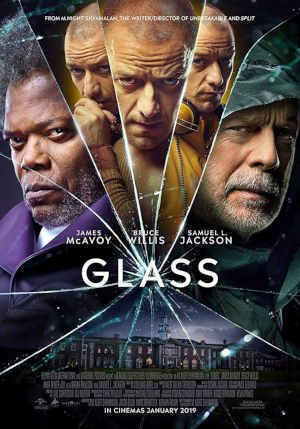
About as unbreakable as a piece of ill-tempered… well, you know.
Glass (2019) – Not Much Super, Not Much Hero
by Jeff Bowles
During the closing moments of Glass, I couldn’t help but think director M. Night Shyamalan had squandered the opportunity to build something both timely and unique. In the age of the Marvel Cinematic Universe, in which dozens of bigger-than-life characters exist concurrently and pop into each other’s movies like those annoying neighbors from down the street (you know the ones), it’s not unusual to expect some pretty big stuff from the superhero genre. And after all, Shyamalan began laying the groundwork for this trilogy of his long before The Avengers or The Guardians of the Galaxy had ever graced the silver screen, so it’s safe to say he had the market cornered on expanded comic book universes.
Shyamalan teased an unexpected and suitably epic showdown in the end credits scene of 2016’s Split, and while that movie was the best flick he’d made in years, the director who finally seemed to be getting his groove back has… well, lost his groove again. Glass is a lopsided mess, a film in search of a reason to exist. The only thing that saves it from complete mediocrity is the strength of its performances, chief among these being James McAvoy’s continually stunning, though in no ways realistic, portrayal of a man with so many personalities his personalities have personalities have personalities.
Really, McAvoy is an exceptional actor, one of the best of his generation, so casting him in a role like this takes a certain level of calculated genius. In his latest turn as mental patient Kevin Wendell Crumb—also known as Patricia, also known as Hedwig, also known as Barry, also known as The Beast, etc.—the Scottish-born actor gets to strut his stuff in some pretty bombastic ways. Scenery-chewing has never seemed so dignified, though. Shyamalan is clearly as in love with Kevin as audiences have become. He garners most of the film’s run time, which begs the question, why not just make a Split 2?
Glass of course acts as the capstone to a three-part story that began in the year 2000 with Unbreakable, the follow-up to Shyamalan’s debut masterwork, The Sixth Sense. Bruce Willis made for a pretty inert “superhero” all the way back in Y2K, and not much has changed. David Dunn still spends most of his time brooding and behaving like a working-class Bruce Wayne—a Bruce Springsteen Wayne, if you will—minus the car, the cave, and the Born to Run.
After a brutal encounter with Crumb, who’s been extraordinarily busy kidnapping and murdering young women since we saw him… kidnapping and murdering young women in a different movie, Dunn finds himself taken psychiatric prisoner and locked up in a dank, hopeless mental health facility somewhere in Philadelphia (no Philly Eagles jokes, please). Imagine his surprise to learn his arch nemesis has suffered the same fate, the eponymous Mr. Glass, played by Samuel L. Jackson.
Willis mostly seems bored with his role here, but he’s seemed bored in the majority of the movies he’s made in the last fifteen years. Jackson, however, clearly enjoys the opportunity to dust off an old fan-favorite and add another franchise notch to his belt. Mr. Glass spends too much time on the sidelines in this, his own movie, but once things really start cooking, he’s just as nerdy and evil as ever. Glass makes for an excellent counterpoint to Crumb, and in a surprisingly subtle performance, Jackon proves he’s still good for more than an eyepatch and the odd credit card commercial.
Back when Shyamalan released Unbreakable, good comic book movies were a rarity. Rarer still, mainstream acceptance and veneration for what is America’s oldest visual storytelling medium. Everyone likes comics these days, it seems, but in Glass, an overreliance on played-out comic-isms comes off as cheap, laborious, and self-conscious. Even the dastardly lady who’s thrown these colorful weirdos together, Dr. Ellie Staple (Sarah Paulson), can’t tell if she should balk at the notion of real-life superheroes or wipe them all off the face of the earth.
The movie sports a larger supporting cast culled from the other entries in the series, including Mr. Glass’ mother and Dunn’s still slightly unhinged son, but none of them are served particularly well, and in fact, the heroic Casey from Split (played by Anya Taylor-Joy) suffers a puzzling reversal of character that all but nullifies her prior life and death victories.
In truth, Glass struggles to find a beat, content for the most part in giving us context and backstory for everything we’ve already seen. Plot development is kept to a minimum, the classic Shyamalan botched twist ending is still classically botched, and the big final showdown concludes in such a disappointing and franchise-killing fashion, I had to ask myself why the entire exercise was even necessary. In my opinion, it wasn’t. M. Night Shyamalan is not a director’s director by any means, but even he knows obfuscation and bad timing are the deaths of tension.
Mr. Glass himself believes comics are a secret history of the world. And I suppose they are in a way. As a popular media artform, comic books have a long history of extraneous filler material. It’s just too bad Shyamalan capped off his grand trilogy with a story destined for the bargain bin.
Check out Jeff Bowles Central on YouTube – Short Stories – Video Games – Music – Entertainment – So Much More!
Share this:

Artemis: From Vigilanty Diety to Superhero
Posted: November 23, 2018 Filed under: Book Review, Books, Comic Hero, Fiction, Horror, Speculative Fiction, Super Hero, Uncategorized | Tags: Artemis, Book Review, Chris Snider, Dark Fantasy, horror, Mythology, Speculative Fiction, Superhero, Writing to be Read 2 Comments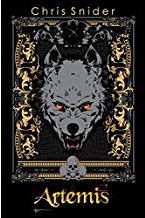
One town, two killers and the body count is rising. Artemis, by Chris Snider is the tale of how freak set of circumstances turned an ordinary scientist on the brink of death into something no longer human. With superhuman powers, including the ability to command animals, Joseph Art becomes Artemis, defender of animals and the innocent or vulnerable. The police don’t know whether they should string him up as a vigilante, or pin a medal on him. After he comes face to face with the evil clown axe murderer, the stakes are raised and the hunt becomes personal, and no one knows what will happen when the two killers confront one another a final time.
The individual storylines are skillfully woven into a single plotline and action filled climax. I give Artemis four quills.

Kaye Lynne Booth does honest book reviews on Writing to be Read in exchange for ARCs. Have a book you’d like reviewed? Contact Kaye at kayebooth(at)yahoo(dot)com.
Share this:

Jeff’s God Complex
Posted: May 31, 2017 Filed under: Action/Adventure, Comic Hero, God Complex, Movies, Opinion | Tags: Comic Book Heroes, Feminism, God Complex, Movies, Super Heroes, Wonder Woman 1 Comment
Wonder Woman vs. The God Complex
by Jeff Bowles
Here in the United States, we’re just a couple of days away from the release of the first big-screen adaptation of Wonder Woman, the legendary DC Comics character who’s been trading punches with bad guys since 1941. Early reviews of the film have been overwhelmingly positive, and I couldn’t be more excited to see it for myself.
Wonder Woman is one of my favorite comic book characters of all time. She’s strong, noble, and much like Superman or Captain America, she always seems to do the right thing. Diana Prince, otherwise known as Diana of Themyscira, is a Greek goddess who abandons the only world she’s ever known in order to fight for meek, flawed human beings. The island of Themyscira is home to the proud Amazons, a group of startlingly gifted women who’ll stab your eyes out just for looking at them the wrong way.
Actually, that’s beside the point. They are warriors, fierce battle-hardened females who’ve rarely glimpsed men and the world they’ve brought to the brink of destruction. DC Comics has done an amazing job curating and expanding upon the adventures of Diana Prince and her supporting cast of characters in the last fifteen years or so. Issue after issue of the comic has dealt with divinity, family and politics, and of course, myriad hot-button topics that have in some small way pushed the boundaries of what typical comic fans expect to see.
The upcoming film looks to do the same, though to what degree remains to be seen. As a character, Wonder Woman was created by a male psychologist who was inspired by early feminists. The guy was way ahead of his time, and over the intervening decades, Diana of Themyscira has been portrayed all kinds of ways. For instance, in the 1970s she was both a television sensation and a hard-hitting exploitation-style street vigilante, minus the tiara and bracelets. Comic book characters rarely stray far from their roots long, however, and elements such as her Lasso of Truth, her invisible jet, and her long-time on-again, off-again love interest, Steve Trevor, have come and gone.
I find it difficult to speak about the impact Wonder Woman has had on young girls and women across the globe, not just because I’m a man, but because it seems like far too large a topic. I think she’s been good for people over the years, and I hope this film delivers the kind of role model kids need nowadays. She’s important to me because growing up on comics meant a steady diet of homogeneous male heroes, and though I don’t consider myself overly political, it always gave me a pleasant feeling digging into that latest issue of Wonder Woman and reading about a damsel who was not in distress, who could handle her own, and who could in fact put the likes of Batman to shame.
Some people out there, I take it, don’t feel the same way. In the news just this morning, some theaters across the country are choosing to run a small number of female-only screenings of the film the day it comes out, distributing advertisements that make clear boys are not allowed. I think this is kind of cool, but right-wing commenters have already made some hay.
Modern America is fraught anyway. If you’re not fuming about the man in the White House, you’re screaming at the other side for their assault on your guy. Very rarely anymore can we have civil conversations about simple things like movies and comic book characters, not without the whole thing devolving into an ideological ant-scatter.
It’s important to point out Wonder Woman is in the minority as far as these things go. Nobody was creating strong female characters back in the 1940s. It just wasn’t done. I read Wonder Woman comics as a kid not because I was interested in feminism but because she was so strong, so very essential to the DC Comics mythos. Every comic fan knows the holy trinity of DC characters: Superman, Wonder Woman, and Batman. Lose any of the three, and the books DC puts out every month just aren’t the same.
And of course, comic book movies in general are big business these days. Love them or hate them—and indeed, many people hate them—they’re a mainstay of cinemas and will be for some time to come. Though early word seems good, the naysayers will quickly poke holes in Wonder Woman’s cultural legend just because they can. Yeah, she’s a strong female character, but she still solves all her problems with her fists. And anyway, the male-driven conglomeration that is Warner Bros. will most likely try to pitch her in a way that doesn’t scare off men and young boys, the latter of which buy DC action figures and other tie-in merchandise by the bucket-full.
Such is the state of discourse in the modern world. Everything is an issue worthy of argument, even a symbol of strength and femininity who’s been around the better part of a century. I can’t say what Wonder Woman means to you. Maybe she means nothing at all, and when you go to the theater this weekend, you’ll be pleasantly surprised by her story. I hope that’s the case, because Wonder Woman has had a place in my heart for a very long time.
If, like me, you do have positive memories of her, perhaps it will be a treat to see Diana depicted in big-budget terms, regardless of whether the end product is actually any good or not. If Wonder Woman is more to you than some silly cultural icon, and if you feel like she’s never been more relevant than she is today, by all means go check the flick out for yourself.
I eschew politics when I can. I also have no children of my own. But if I had a daughter, and she was old enough to see an action film like this, I’d proudly take her down to the multiplex. Maybe afterward, I could turn the excursion into a conversation about standing up for what you believe in no matter what the cost. That’s who Wonder Woman is to me. She doesn’t know discrimination or inequality because she comes from a place where everyone is treated with respect and dignity. She stands up for the little guy, especially when that little guy is actually a girl.
I hate the need some people feel to turn her into a controversial figure. Is her story more than simple entertainment? Yes, I think it is. All the Wonder Woman comics I’ve read over the years are all the proof I need. Yes, she is a strong female who kicks butt and takes names, and yes, whether they want to admit it or not, this makes many people feel uncomfortable or even angry. But if you ask me, the politics is a cover. Wonder Woman is not and never will be just for girls. I love Wonder Woman, and I’m man enough to admit it.
There are so many ways to celebrate the world as men have made it. Is it too much to ask to celebrate the world of women? Even just for an afternoon?
Interested in my writing? Check out my latest short story collection, Fear and Loathing in Las Cruces — https://www.amazon.com/Fear-Loathing-Las-Cruces-Stories-ebook/dp/B06XH2774F
Twitter: @JeffBowlesLives
Facebook: http://www.facebook.com/jeffryanbowles
YouTube’s Jeff Bowles Central: https://www.youtube.com/channel/UC6uMxedp3VxxUCS4zn3ulgQ
Amazon Author Page: https://www.amazon.com/Jeff-Bowles/e/B01L7GXCU0/ref=sr_ntt_srch_lnk_1?qid=14794534940
Share this:

“Horror 101: The Way Forward” Offers Good Advice for Authors and Screenwriters
Posted: February 3, 2017 Filed under: Book Review, Books, Children's Books, Comic Hero, Dialogue, Fantasy, Fiction, Horror, marketing, Paranormal, Promotion, Publishing, Revision, Science Fiction, Screenwriting, Self-Publishing, Speculative Fiction, Stories, Writing, Writing Tips | Tags: Books, Fiction, horror, marketing, Poetry, promotion, Reviews, Stories, Story, Writing 1 Comment
This is the longest book review I have ever written. This book was so packed full of useful information for rising authors and screenwriters that I felt I needed to cover it all. If you are an upcoming horror author or screenwriter, trying to figure out how to get a foot in the door or where to start in the matter of launching your career, Horror 101: The Way Forward offers “career advice by seasoned professionals”. Different writers will find different essays useful, so I’m giving you a rundown on all the informative essays included.
Compiled by Crystal Lake Publishing, this collection of essays has something for every writer. The anthology features quotes from the masters such as Stephen King, Ray Bradbury, Isaac Asimov, J.R.R. Tolkien, Jack London, Clive Barker, H.P.Lovecraft, Edgar Allen Poe and many others. Advice from professional writers and editors covers all aspects of the horror writing business, and the business of writing, in general. From submitting your work, to marketing and promotion, to self-publishing and building your writing business, to crafting your work and the writing process.
The answers to many questions on the topic of submissions and all other aspects of writing as a business are found within its pages. Not getting positive response from your queries? First read Rejection Letters – How to Write and Respond to Them by award winning author Jason Bark, which offers an attempt to write a rejection letter that doesn’t sting, (at least, not so much). Then, flip to Seven Signs that Make Agents and Editors say “Yes!” to learn what agents and editors look for. Buttoning Up Before Dinner by horror author Gary Fry also offers advice to put you in the good graces of publishers and editors and create well-written stories.
Unsure how to submit your work? Submitting Your Work: Read the F*****g Guidelines by freelance writer and editor John Kenny offers tips for making a professional submission from an editor’s perspective. And What a Short Story Editor Does by horror, fantasy and science fiction editor Ellen Dallow explains the responsibilities of short story editor.
Looking for sound career advice? Be the Writer You Want to Be by television writer and novelist, Steven Savile recycles the best writing advice the author was ever given. The Five Laws of Arzen by award winning dark fiction author Michael A. Arzen offers hints to help you survive a writing career. How to Fail as an Artist in Ten Easy Steps: A Rough List Off the Top of My Head, by Confirmed Failure… by horror author John Palisano provides a reverse list of things you should do to be a successful writer.
Wondering if you need an agent to get your work in front of editors and publishers? Do You Need an Agent? by author Eric S. Brown is a discussion about the need, (or not), for an agent and relates the personal experience of how the author became successful without one. Also included are essays on building your writing business in Balancing Art and Commerce by author and screenwriter Taylor Grant , offering a look at various mediums one can write in and earn a living & advice in the business of writing. There are even essays offered on the lucrative business of ghostwriting, with a personal experience as a ghostwriter shared by dark fiction author Blaze McRob, and Ghostwriting: You Can’t Write it if You Can’t See It by award winning author Thomas Smith instructs on how to step into the author’s shoes and write like them.
If you are hoping to find some help muddling through the vast world of marketing and promotion, The Year After Publication by horror & thriller novelist Rena Mason offers an account of what to expect once you publish your first book and a walk through the exhaustive process of book marketing. How to be Your Own Agent, Whether You Have One or Not by horror writer, editor and publisher Joe Mynhardt offers tips for marketing your stories and yourself. Reviewing by founder of Ginger Nuts of Horror, (one of the most viewed resources in horror fiction), Jim McLeod discusses getting your book in the review pile & what the writer should do while awaiting publication of the review.
If you’ve not attended a conference or convention before, Pitch to Impress: How to Stand Out From the Convention Crowd by editor R.J. Cavender provides a guide to making a pitch that will snag agents’ and publishers’ attention. Tips for networking at conferences are offered by dark fiction author Tim Waggoner in You Better (Net)Work, and Networking at Conventions by Bram Stoker Award winning author Lucy A. Synder offers a look at the benefits conventions have to offer and a breakdown on some of the major ones for horror writers.
There is a plethora of advice offered on publishing, including a comparison of traditional publishing vs. digital publishing in Weighing Up Traditional Publishing and Ebook Publishing by award winning author Robert W. Walker; Publishing by editor and publisher Simon Marshall-Jones compares publishing in the digital arena with the way it was done in the past & how to become an independent publisher; and Glenn Rolle Toes the Line with Samhain Horror Head Hancho, Don D. Auria by Glenn Rolle with Interview that maps Auria’s rise to the top.
The arena of self-publishing is also explored in Make Your Own Dreams by horror and suspense novelist Iain Rob Wright. Besides being a plug for self-publishing’s evening of the playing table. It relates personal experience and advice for self-publishing, walking us through the self-publishing process. Self-Publishing: Thumb on the Button by author Kenneth W. Cain gives a list of things to think about before you choose to self-publish.
Also included are essays on the different mediums for horror: Poetry and Horror by Blaze McRob, and Horror for Kids: Not Child’s Play by novelist Francois Bloemhof offers guidelines for writing horror for youth. Several essays on comics and screenwriting, (one of the biggest outlets of horror today), are also included.
Horror Comics – How to Write Gory Scripts for Gruesome Artists by novelist Jasper Bark discusses the craft of writing horror comics and the relationship between writer and artist. Some Thoughts on My Meandering Within the World of Dark and Horror Art by artist Niall Parkinson offers thoughts on creating dark and horror art. So You Want to Write Comic Books… by novelist C.E.L. Welsh discusses what goes into the making of a comic book.
From Pros to Scripts by author and screenwriter Shane McKenzie talks about the many challenges of screenwriting. Writing about Films and For Film by award winning writer, editor and screenwriter Paul Kane gives the story of the author’s rise to success and tips for learning the lingo of the business. Screamplays! Writing the Horror Film by award winning author and screenwriter Lisa Morton offers the basics of screenwriting, description and dialog, and tips for getting your screenplay made into a movie. Screenplay Writing: The First Cut is the Deepest by author, director and editor Dean M. Dinkel recaps of the author’s experience at the Cannes Film Festival.
Essays on writing a digital world include Running a Webserial, or How to Lose Your Mind, One Week at a Time by Southern author Tonia Brown, providing a brief history of serials and a rundown of what goes into running one on the web; Friendship, Writing, and the Internet by Bram Stoker Award winning novelist Weston Ochse with reflections on online connections with like-minded writers, and Audiobooks: Your Words to Their Ears by horror novelist Chet Williamson discusses what it takes to create and audiobook and what to expect from the effort.
Of course, there is also plenty of advice on crafting a quality story. What is Horror? by author and novelist Graham Masterson offers general writing advice which could be applied to any genre and instructs on how to push your writing to the edge. The Journey of “Rudy Jenkins Buries His Fears” by author Richard Thomas takes us on a walk through of the writing, editing and submissions process of a story. Writing Short Fiction by horror and thriller novelist Joan De La Haye offers tips to tighten your writing and move the story forward, and discusses where to look to sell your story and how to choose where to submit. Ten Short Story Endings to Avoid by Scottish horror novelist William Meikle supplies a valuable list, if you want to avoid having readers feel cheated. From Reader to Writer: Finding Inspiration by publishing and editing consultant Emma Audsley offers advise for attacking the blank page. Writing Exercises by horror writer Ben Eads provides exercises in description and dialogue. Writer’s Block by short fiction writer and novelist Mark West discusses how to keep the creative juices flowing. Editing and revision are covered with Editing and Proofreading by author and editor Diane Parking presents good reasons not to send out a first draft, and How to Dismember Your Darlings – Editing Your Own Work by Jasper Bark gives a brief guide on how to self-edit.
A few essays outline the needs of a writer and suggestions on how to meet them. Filthy Habits – Writing and Routine by Jasper Bark offers a look at the benefits of creating a daily writing routine. A Room of One’s Own – the Lonely Path of a Writer by horror and fantasy writer V. H. Leslie discusses the need for solitude and space to write in. Writing Aloud by screenwriter and author Lawrence Santoro outlines the benefits of reading aloud as a part of the writing process.
Also included are Partners in the Fantastic: The Pros and Cons of Collaborations by novelist Michael McCarty, which looks at the views of various authors on collaborations, and Writing the Series by series author Armand Rosamilia, which explains why Rosamilia writes series.
Several essays offer advice specific to writing in the horror genre. Making Contact by award winning novelist Jack Ketchum discusses how to turn what you know into a horror show. Bitten by the Horror Bug by horror author and screenwriter Edward Lee looks at what motivates us to write horror. Reader Beware by author Siobhan McKinney explores the role fear plays in horror. Bringing the Zombie to Life by author Harry Shannon maps out four components of a good zombie story. The Horror Writers’ Association – The Genres Essential Ingredient by author and President of the Horror Writers’ Association (HWA), Rocky Wood gives a rundown on the HWA.
What’s the Matter With Splatter? by horror writer and Vice-President of the AHWA, Daniel I. Russell discusses the use of blood, gore and splatter in horror fiction or screenwriting, gives tips on how to use it to gain the desired effect, and discusses why some gore doesn’t get a second thought. Avoiding What’s Been Done to Death by British horror writer Ramsay Campbell defines good horror fiction & emphasizes originality. The (Extremely) Short Guide to Writing Horror by dark fiction author Tim Waggoner offers an introduction to writing horror, including techniques and brief definitions, and a list of good resources for horror writers. Growing Ideas by horror writer Gary McMahon offers a look into the author’s writing process. Writing Horror: 12 Tips on Making a Career of It by horror novelist Steve Rasnic Tem instructs on building your own writer’s toolbox and advice for entering the profession of writing horror. The Cheesy Trunk of Horror by international best selling author Scott Nicholson provides a look at both writer and reader perspectives on horror and dark fiction. Class: Vaginas in Horror by science fiction, urban fantasy and horror novelist Theresa Derwin offers an overview of women in the horror industry. And the afterward by Crystal Lake Publishing’s editor, Joe Mynhardt, includes his own advice for writing horror.
Horror 101: The Way Forward is based on the sound advice of seasoned professionals that is useful to horror writers in any stage of their careers. I recommend it with four quills for anyone who wants to write horror in either fiction or screenwriting.

Kaye Lynne Booth does honest book reviews on Writing to be Read in exchange for ARCs at no charge. Have a book you’d like reviewed? Contact Kaye at kayebooth(at)yahoo(dot)com.
Share this:

Monthly Writing Memo: 5 types of Heroes
Posted: December 22, 2016 Filed under: Comic Hero, Screenwriting, Screenwriting, Super Hero, Uncategorized, Weekly Writing Memo, Writing | Tags: Action, characters, Novels, Stories, Writing 3 CommentsWelcome to the first Monthly Writing Memo! So for my own blog, Author the World, I’ve been thinking about doing a post about villains. As those of you who have been following know, I’ve been studying horror as I work on my horror film script. During this process, I’ve been wondering about the different types of villains, which in turn made me wonder about the different types of heroes in stories. So for this Month’s Writing Memo, I thought I’d do a post about heroes, and then later this week my post on villains will be up on Author the World.
In general, I think all heroes can really be broken down into a few main types, and every hero in a story usually falls into one of them. The way I’ve divided them up is by what motivates them rather than what they specifically do, or how they go about being a hero.
- The Savior –
The Savior is someone who actively tries to be a hero. They want to help people and save the day, so they seek out ways they can do this. The most obvious example of this is many superhero stories where characters like Superman or Spiderman actively seek out those in danger to help them. These characters do it solely because they want to help people and be a hero. Some want recognition, some want the satisfaction of saving people, but either way the thing that drives them is the need to be the hero. It’s a compulsion almost, and when they don’t just help when they see someone in danger, they actively seek the danger (and the victims) out.
- The Soldier –
The Soldier is similar to the Savior in that they feel the desire to help people, but the soldier does it out of a sense of duty and honor. That’s not to say they don’t have other motivations as well, but this character type is driven by the sense that it is their responsibility to help people, and they must take action. I think if you look at the movie “Die Hard” you’ll see John McClane fits into this character type. Yeah, he’s in the wrong place at the wrong time, but he is also a police officer and when he sees the problem he feels it is his duty to take action. Many of these character types are those military or police type characters, or have other positions that are focused on helping people in some way. Some other example jobs that a character can have to fit this role include teacher, doctor, or even counselor/therapist.
The goal of this character is to do their “job” and help people because they think it is their responsibility and duty. Maybe it can cross over into the Savior role of feeling driven to help people, but the slight distinction is where the Savior would say “I helped because they were in trouble,” the Soldier would say “I helped because it was my job/responsibility to help.”
- The Mercenary –
The Mercenary Hero doesn’t necessarily have to be getting paid, though some form of payment is generally the motivation for them to be the hero. They are a hero because they get something out of it. An example of this is are characters like Nicholas Cage’s character in National Treasure. That is a personal mission for him and he doesn’t do it for anyone else, he does it for largely selfish reasons—he desperately wants the truth and the excitement of discovering the treasure.
The Mercenary is driven by what he/she personally gets out of being the hero. They can be paid to do the job, they can be on a personal mission of love or vengeance or profit, but whatever it is they are being the hero because it serves them, not because they want to serve the people they are saving.
- The Reluctant Hero –
The Reluctant Hero is one of my favorite types of heroes to write because they don’t try to be perfect, and often try to extricate themselves from the drama, but they morally feel the urge to help when they see a situation. Unlike the Savior they won’t seek out the conflict, and unlike the Mercenary they don’t want anything for themselves, but similarly to the Soldier they feel a sense of duty.
The Reluctant Hero is someone who doesn’t want to be a hero, and they aren’t doing it because it’s their job like the Soldier. They are a person who just happens to be in the wrong place at the right time, and they morally can’t bring themselves to turn away from those in need. If asked why they helped, they would respond “I couldn’t turn my back on it, and it was the right thing to do.” They don’t feel like it’s their duty, they just feel like they were the only one there at the time who could do it, so they did.
I think the one thing that is often interesting about the Reluctant Hero is that, if someone else was around who could successfully do the saving, the Reluctant Hero would let them, but often they are put in situations where either they have to try, or all is lost.
- The Anti-Hero –
The final type of hero isn’t quite a hero at all – the Anti-Hero. The Anti-Hero is not someone who is trying to help anyone, and they’re most often not a good person. There are slight varying definitions of this, but in my opinion, the Anti-Hero is a character who ultimately has their own larger goal, but they do kind, heroic things along the way in pursuit of their goal. I think this falls into a lot of gangster characters who do wonderful things for the “little people” but who aren’t really good characters at all, and whose larger goals are really something quite unhero-like.
Another version of the Anti-Hero is someone who does dark, violent things in order to achieve something good. This kind of character is like Batman at times (The Dark Knight is the obvious example). Batman kills and commits crimes in order to make Gotham a better place, going from loved hero to wanted criminal.
Either way, the main thing about the Anti-hero is that they don’t follow the same rules as the normal hero, and that they will often commit villain-like acts in the pursuit of their goal. These sorts of acts will stand in stark contrast with the heroic elements, and it will make the audience question whether the character is hero or villain.
Final Notes:
I’m sure there are some more minor variations of heroes, but in general, I think most heroes in stories can be divided up into one of the five categories above. If you aren’t sure about which your character is, ask yourself what motivates them to be a hero? What motivates them to commit heroic acts? If you have that answer, you should be able to pinpoint what type of hero they are.
For my blog post on the various types of villains, stop by Author the World on Friday. Until next month, happy writing!




















