A Published Author At Last – Now It’s In My Readers’ Hands
Posted: April 24, 2017 Filed under: Book Review, Books, Fiction, marketing, Promotion, Publishing, Western, Writing | Tags: Books, Colorado, Delilah, Fiction, Kaye Lynne Booth, marketing, Novels, promotion, Review, Reviews, Western, Writing 2 Comments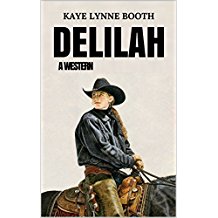
The exciting news this week is, Delilah is now available in digital format! It’s something I’ve been waiting for for quite a while, so of course, I am ecstatic. But, something many aspiring authors may not realize is that publication isn’t the end of the road. No, it’s actually just the beginning of a new chapter in the book of writing, this one titled Sell that Book.
For those of you who aren’t familiar with my road to publication, I started Delilah back in 2012, when I entered the M.F.A. in Creative Writing program at Western State Colorado University. The assignment given by my instructor, Russell Davis, was to write an excerpt in a genre outside our comfort zone. I was assigned to write in western genre, and low and behold, I found not only am I good at it, but I like writing western. Four years later, that small excerpt, grew into a 60,000 word western novel which I’ve been trying to find a publisher for over the past year.
You see, writing the book, while a great accomplishment unto itself, is only half the battle. It doesn’t do any good to write a story, if no one ever reads it. In order for that to happen, the book must be published, and while I could self-publish, (I had considered it), I held out hope of finding a publisher, and in the end my persistence paid off.
So, now that I got Delilah published, with the help of Dusty Saddles Publishing, I must get the word out through marketing and promotion. I must get people to read, and maybe more important, write reviews.
Reviews are where it’s at these days. According to Amazon, reviews are how you get your book promoted, and I just read somewhere that Amazon has recently increased the number of reviews needed for them to promote your book, from thirty-five to fifty or one hundred.
The question is, where do I get reviews from? Although I do honest reviews here, on Writing to be Read, I don’t know many other bloggers who do. So, it comes down to appealing to you, my readers, to buy Delilah, read it and then go onto Amazon and Goodreads, (Delilah will be listed there soon -another thing I still need to do), and leave a review.
If you are willing to go to the trouble of doing all that, I thank you, but I also ask that you leave a review that is honest. While I would love you to leave a review which sings Delilah’s praises, I want it only if it is heartfelt. If you see problems with my story, I need to know what they are, in order to improve my writing of future books, so I am asking for honest criticism, if you are kind enough to leave a review at all.
In the end, it’s up to you, the reader, how successful Delilah, or any book, will be. So, buy the books you want to read, (which I hope includes my debut novel), and be kind. Leave an honest review.
Kaye Lynne Booth does honest book reviews on Writing to be Read in exchange for ARCs at no charge. Have a book you’d like reviewed? Contact Kaye at kayebooth(at)yahoo(dot)com.
Like this post? Subscribe to Writing to be Read for e-mail notifications whenever new content is posted.
Share this:

Interview with author DeAnna Knippling
Posted: April 17, 2017 Filed under: Author Profile, Books, Fantasy, Fiction, Horror, Publishing, Science Fiction, Self-Publishing, Speculative Fiction, Writing | Tags: Author, DeAnna Knippling, Interview, Profile, Publishing, Self-Publishing, Writing 1 Comment
This week, I’m interviewing Colorado freelance writer, editor, author and book designer, DeAnna Knippling. I first met DeAnna through the Pike’s Peak Writers when I was still serving as the Southern Colorado Literature Examiner. What struck me about her was her enthusiasm and willingness to help where ever she can. She treats her writing as a business and goes at it with a high degree of professionalism, yet she is personable and willing to share what she’s learned from her own writing experiences.
DeAnna Knippling writes science fiction, fantasy, horror, crime, and mystery for adults under her own name; adventurous and weird fiction for middle-grade (8-12 year old) kids under the pseudonym De Kenyon; and various thriller and suspense fiction for her ghostwriting clients under various and non-disclosable names. Her latest book, Alice’s Adventures in Underland: The Queen of Stilled Hearts, combines two of her favorite topics–zombies and Lewis Carroll. It’s the story of a tame zombie who told a little girl named Alice a story that got them both in more trouble than they could handle. Her short fiction has appeared in Black Static, Penumbra, Crossed Genres, Three-Lobed Burning Eye, and more.
Kaye: You created Wonderland Press to get your books out there. What all is involved in creating a press for your work and what are the advantages of doing so? I mean, why would an author do this rather than just throwing their book out on Amazon or Smashwords?
DeAnna: This isn’t one of the fun answers. It’s stupid easy to make a “press.” It involves no special equipment. You look online, make sure nobody else has one of that name in your state, register a business name with your state or county (look up, “How to register a business name in [name of state]”), and Bob’s your uncle. You might want to get more complex with an LLC or something–but I recommend leaving that for later, unless you already have experience doing that. I am, of course not a lawyer and can’t give legal advice. When you want to start looking at an LLC or corporation, I believe, is when you start having to worry about taxes and tax brackets.
DeAnna: Just keep working. Everybody’s in a hurry to succeed. Success! Millions! Riches! Fame! But, in the end, it comes back to the basics. Did you read? Did you write? Did you learn something? Did you talk to other people in the writing community?
Like this post? Subscribe to Writing to be Read for e-mail notifications whenever new content is posted.
Share this:

“Fear and Loathing in Las Cruces”: A short fiction collection that’s full of surprises
Posted: April 14, 2017 Filed under: Book Review, Books, Fiction, Horror, romance, Speculative Fiction, Stories, Western | Tags: Book Review, Fear and Loathing in Las Cruces, Jeff Bowles, Short Fiction, Short Story Collection Leave a comment
This week I’m pleased to review Fear and Loathing in Las Cruces – the latest collection of short fiction by my friend and colleague, Jeff Bowles. Since I know Jeff personally, I do admit to a certain amount of bias, but only because I truly admire the way this man crafts a story, so I went at this reading with a certain amount of anticipation. With Jeff, I never really know what to expect, but I always expect to be pleasantly surprised.
And, I was not disappointed. The stories found in this collection are original and unique, and the artwork is awesome.
The first story, Will of the West, has a good western flavor with a surprise ending. I truly enjoyed the vivid imagery of the lightning dance is Blue Dancing With Yellow, and Jeff’s story telling voice in Tumbleweeds and Little Girls nails the young girl’s POV. Four Heads, Two Hearts is a unique romance with its own unusual set of obstacles and a very interesting solution. The Fall and Rise of Max Ziggy is a reincarnation story of the feline kind.
Two of the stories deal with the topic of mid-life crisis, a topic that the author seems too young to know a lot about, but when you read these stories, us old foggies may find, or at least I did, that his interpretations are pretty spot on. Mid-Life Crisis: The Video Game defines the age of technology in a way the older generations can relate to, right down to the frustrations of dealing with voice activated responders which never seem to get our answers right. And, Jack Hammer’s Online Identity Crisis provides an online view of the mid-life crisis of a hit man that is sure to make you chuckle.
The collection also offers two ghost stories: Falcon Highway is a good, old fashioned ghost story running along the lines of an urban legend. And, Deadman’s Hand is a ghostly tale of being ‘spirited’ away.
All of the stories contained in Fear and Loathing in Las Cruces are well crafted and quite entertaining, and they all contain unexpected elements that Jeff Bowles makes to work in short story form. Each and every one carries the uniqueness that is Jeff Bowles style, making for an overall enjoyable read. I give it five quills.

Kaye Lynne Booth does honest book reviews on Writing to be Read in exchange for ARCs at no charge. Have a book you’d like reviewed? Contact Kaye at kayebooth(at)yahoo(dot)com.
Share this:

How Do You Measure Success?
Posted: April 10, 2017 Filed under: Books, Fiction, Publishing, Western, Writing | Tags: Books, Delilah, Dusty Saddles, Kaye Lynne Booth, Publishing, Success, Western 13 Comments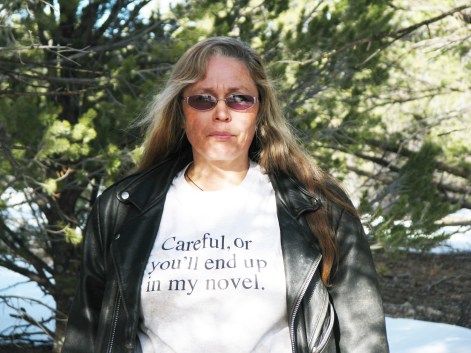
There are many measures of success, especially in writing. Readers may look at whether or not an author has made any of the best seller lists. Authors may look at the number of books published, or number of sales, or even positive reviews. For rising authors, who are trying to get a foot in the door, like me, finding a publisher willing to publish even one of your books may be all that is required to consider yourself a successful. That’s where I’m at right now, as I just signed a contract for my western novel Delilah. But the point is, that success is subjective and there are many different levels involved.
You can see what I mean. My little contract for Delilah wouldn’t be a big deal for someone like Stephen King or Anne Rice, who sell books faster than they can write them, but for little old me, it’s a very big deal, even though it isn’t with one of the big five major publishers and there is no advance that comes with it. Although those things would be nice, signing with my small independent publisher, Dusty Saddles, makes me feel plenty successful.
What’s great too, is that it doesn’t end there, because of those different levels I was talking about. Sure, I feel successful now, with book contract in hand. But, I also have a feeling of success when I check my blog stats and discover that my readers are increasing. I feel it every time one of my poems, or short stories is published. I felt it when I earned my M.F.A. in Creative Writing. I’ve no doubt I’ll feel it again if Delilah starts selling copies and I find people are reading it, or when the next book contract comes along, or if I sell a screenplay.
Success is what we, as writers, all strive for, although your definition of success may be just finishing the book. That was my definition while I was earning my M.F.A. in Creative Writing, but after completing two novels, working on both simultaneously, I know I can finish a book, so I’ve moved on to the next challenge. Selling the book, and now it looks like I have achieved that success, as well.
But we have to be careful not to want that success so bad that we allow ourselves to be taken. There are a lot of scammers out there, who will try to steal your book right out from under you. Although I was excited about being offered a contract, I didn’t just jump into heart first, but used my head and went over it with a magnifying glass, being on the look out for all the fine print. I questioned different clauses and negotiated on any that didn’t serve my best interests, until the publisher and I came to an agreement that was fair and served both our interests. Although having a knowledgeable attorney or agent look over all contracts is always recommended, as a striving artist, I had no access to that type of professionals, but I did have someone knowledgeable in the business look it over. He confirmed that I was reading it correctly and helped my identify a couple of problems with it. Fortunately, none of them were deal breakers and the publisher was willing to be flexible.
Now, I’m ready to embark on a new publishing adventure and looking forward to in anticipation. Signing the contract holds a certain level of success for me, but the next level of success may be just over the hill, so I must press forward. My readers can help by buying the book, because the ultimate goal for me is for people to read what I write, (and the money from the book sales will be nice, too). Of course, I’ll keep you updated as to when it will be out. After all, I strive to create Writing to be Read.
How do you measure your success?
Want to know more about Delilah? Visit my Delilah Facebook Page
Like this post? Subscribe to Writing to be Read for e-mail notifications whenever new content is posted.
Share this:

“Bailin'”: A Comedic Crime Romance Indeed
Posted: April 7, 2017 Filed under: Action/Adventure, Book Review, Books, romance Leave a comment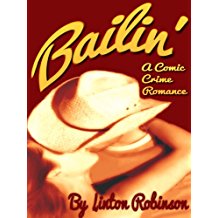
Bailin’ breaks every writing rule there is, but somehow, Linton Robinson makes it work. Labeled a “Comedic Crime Romance” on the cover, this book is a fast paced crime story, filled with a cast of bungling criminals, who somehow always manage to come out ahead, in spite of the precarious situations they end up in.
Bunny and Cole are a daring crime duo looking for the one big heist that will set them up for life. The two pull several heists, but never seem to come away with any money. Bogart and Flathead, two bikers, who try to make a business out of transporting certain things across the border, and who fail repeatedly as smugglers. Add in an embezzling treasurer, who gets caught and jumps bail, a determined bounty hunter, and a sadistic hit man, and you’ve got the proper ingredients for comedic antics as all of their paths cross.
I read it twice, the second time, aloud. It is filled with big words, lots of adverbs and adjectives, alliteration and empurpled prose, but the story line is so much fun, all of that can be forgiven. In fact, Robinson’s style helps to set the tone in this comedic caper and make the whole thing work.
I really enjoyed this read. I give Bailin’ four quills.
Kaye Lynne Booth does honest book reviews on Writing to be Read in exchange for ARCs at no charge. Have a book you’d like reviewed? Contact Kaye at kayebooth(at)yahoo(dot)com.
Share this:

“The Clockwork Alice”: A Literary Work in the Tradition of Lewis Carroll
Posted: March 31, 2017 Filed under: Book Review, Books, Fantasy, Steampunk | Tags: Book Review, Books, DeAnna Knippling, Reviews, The Clockwork Alice, Wonderland, Writing to be Read Leave a comment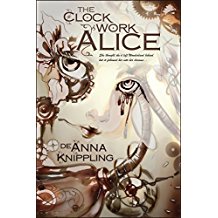
The Clockwork Alice, by DeAnna Knippling, introduces Alice, all grown up, and takes readers on a return trip to Wonderland, where all is not as it should be, or maybe it never was. Knippling does a smashing job of picking up the tone of the original Wonderland stories, making this a fantasy tale which will delight readers of all ages.
Many of our favorite characters make appearances, including the Red Queen, the White Rabbit, the March Hare, and the Cheshire Cat, to name a few. Alice discovers that all of Wonderland is actually made of clockwork mechanisms, including a Clockwork Alice, who looks just like the girl who she once was. But all is not as it should be in Wonderland, or maybe it never was, but it’s up to Alice, or one of the Alice’s, to stop the great unwinding, and set things back in order. Alice may uncover and foil the evil plot to destroy Wonderland, or perhaps she will destroy it all instead, because this trip to Wonderland is just as confusing, or maybe even more so, than the first.
The Clockwork Alice is a well-written, skillfully crafted story that is just plain fun to read. I give it five quills.

Kaye Lynne Booth does honest book reviews on Writing to be Read in exchange for ARCs at no charge. Have a book you’d like reviewed? Contact Kaye at kayebooth(at)yahoo(dot)com.
Share this:

Digital vs. Print Books
Posted: March 27, 2017 Filed under: Book Review, Books | Tags: Book Reviews, digital books, eBooks, Print Books, Publishing, Reading Leave a comment
I recently read an article by Zoe Wood in The Guardian, which states that print book sales are on the rise, and may be making a comeback. I, for one, welcomed this news with open arms. For me, there is nothing like kicking back with a good paper book in my hands. I can get comfy with my Kindle Fire, but it’s just not the same. And I don’t know that I can explain exactly why that is, but it is.
When I first began doing reviews, back in 2010, as the Southern Colorado Literature Examiner, my ARCs all came via snail mail, in print form. Now days, an author can have an ARC to you in a matter of minutes, because they all send digital copies, and everyone publishes in digital format. Some authors also put out print editions, but it’s too easy to get a digital copy to the reviewer for them to want to give away the print ones.
Since my review books are now arriving via e-mail, I adapted by first getting an e-reader app. for my computer, which wasn’t always convenient, but got me by. Then, I won a Kindle Fire in a giveaway on Author Market, (where I now offer my editing and proofreading services for very reasonable prices). With the Fire, my review reading became much easier, because the Fire is small enough that I can carry it with me, so I can pick it up and read whenever I get a free minute.
But, it’s still not a print book. I can’t help but miss the physical act of turning the pages one by one as I advance through the story, the anticipation as the pages left get thinner and thinner. For me, there is something comforting in that small act. My Fire has a feature that makes it look like a physical page is turning, trying to simulate it, so I must not be the only one who misses it. I know I get downright excited when I agree to review a book and the author asks for my street address instead of my email.
Gaby Wood talks about the differences in the way we read with the rise of digital publishing in her article in the The Telegraph. There’s no getting around it. Reading a digital book is not the same as reading a print book, and it never will be. However, we are a resilient bunch, and I have no doubt that we will adapt to the changes that are thrown our way where our reading material is concerned. Already, a new format is gaining popularity in the form of audio books. They aren’t new, but they are rising in popularity, so who’s to say they won’t be the next rising trend?
Like this post? Subscribe to Writing to be Read for e-mail notifications whenever new content is posted.
Image Credit: The Awkward Yeti. theawkwardyeti.com
Share this:

“White Dragon’s Chosen”: a Fun Read
Posted: March 24, 2017 Filed under: Book Review, Books, Children's Books, Fantasy, Fiction Leave a comment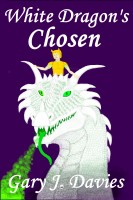
White Dragon’s Chosen, by Gary J. Davies is a children’s fantasy that takes readers to a world where dragons and elves and trolls and fairies exist, and magic abounds. They travel between our world and their own world of Narma through portals, and two kids, George and Mary, are the champions who lead the battle to save both worlds, together with their dragon counterparts.
When you are dragon’s chosen, you share thoughts and have the same abilities that they do. How cool is that? When Harry’s uncle dies, Harry discovers that he is special. He’s the White Dragon’s Chosen, and his next door neighbor, Mary is the Chosen of the Dragon Jewel. But he also learns that there is a bad evil about that threatens to destroy both Earth and Narma, and it’s up to he and Mary, with their dragons, to save both worlds. It’s a tale every kid will enjoy.
For me though, I found a few problems, the least of which, was the numerous typos and missed words. As far as the crafting of the story goes, there was a lot of telling, rather than showing, which may have related to my inability to suspend disbelief on this one. Davies failed to put me in the scene and convince me that this could be possible, at least in his world.
Although White Dragon’s Chosen had a few glitches as far as craft goes, I’ve no doubt kids will love it. It’s a cute little fantasy, that I give three quills.

Kaye Lynne Booth does honest book reviews on Writing to be Read in exchange for ARCs at no charge. Have a book you’d like reviewed? Contact Kaye at kayebooth(at)yahoo(dot)com.
Share this:

Update on “Playground for the Gods” Series
Posted: March 20, 2017 Filed under: Books, Fantasy, Fiction, Science Fiction, Speculative Fiction, Writing | Tags: Kaye Lynne Booth, Novel, Playground for the Gods, Writing, Writing Process 2 Comments
While Book 1: The Great Primordial Battle is spending time with my alpha reader, I’ve been busy working on Book 2: In the Beginning. Now I know it seems strange name for a second book, but for this series, it’s actually quite fitting.
You see, Book 1 covers the time just before and after the Atlans arrival on Earth in prehistoric times, which result in a great battle between the Atlans and the monstrous creatures created by the angry Tiamat, Oldest of Old Ones. It is the story of how the Atlans came to be on Earth.
Book 2, on the other hand, takes place during Earth’s earliest civilizations. It explores Biblical times and even before, as well as visiting ancient Egypt and Minoan cultures. It looks at the beginning of time, hence the title, In the Beginning.
That said, I’ve finished the first draft for Book 2, and started on revisions. I guess maybe my writing process is a little weird. At Western, while earning my M.F.A. in Creative Writing, we talked a lot about our writing processes, and while everyone’s processes were different, I never found anyone whose process was like mine.
My first drafts are pretty rough, consisting mostly of the basic plotline. The basics of what happens in each chapter, so the way the story moves forward can be seen. Once, I have that down, I can go back and revise, adding description and action that helps the story move in each chapter, sharpening the image, hopefully, for readers. That’s where I am in the revision process now.
Before I send it off to my alpha readers, I’ll do another run through to check for repetition, spelling, grammar and punctuation errors, and eliminate unnecessary words. This is the pass that tightens up my writing to make it the best it can be before going to the alpha readers have a go at it.
Once I have it back with their comments, I may do up to three or four more passes, before I feel it’s ready to submit to publishers or agents. If all goes well, I will get Book 1 back from my alpha reader, which in this case may be a beta reader since I made revisions to the completed work after sending it out without raising any interest, about the time I have the final draft of Book 2 ready to send out for her scrutiny.
I think the main problem, possibly with both books right now, is a lack of emotion from my characters, which could result in a lack of emotional investment from readers. Identifying it as such is good, because if readers don’t care about the characters, they won’t continue reading. The challenge will be finding a way to fix it, so my readers will keep turning the pages. Fortunately, I found some great ideas for showing my characters’ emotions in a post titled Emotion vs. Feeling by David Cobett on Writer Unboxed.
The story is there. Now I just need to breathe life into it. That’s what writers do.
Like this post? Subscribe to Writing to be Read for e-mail notifications whenever new content is posted.
Share this:

“Tangled Web” May Be Just the Beginning
Posted: March 17, 2017 Filed under: Book Review, Books, Erotica, Fiction, romance | Tags: Book Review, Books, Erotica, Jade C. Jamison, Reviews, Rock Star Romance, romance, Tangled Web Leave a comment
Tangled Web is the first book in a new rock star romance series by Jade C. Jamison. I picked up this book because I was so impressed with another book I reviewed by the same author, Bullet, and this book did have the same power to draw me into the story. However, this story is much shorter and left me feeling like there should be more.
*****************************Spoiler Below*******************************
Two old friends discover that they each had hidden feelings for the other. In Tangled Web, we watch as this discovery emerges, but the story ends as they realize their feelings for one another. While it is the moment the story has been leading up to, it feels more like a climax than an ending. It is the moment when everything changes, but I felt short changed because the reader isn’t allowed the opportunity to learn the outcome of the grand event. We don’t get to see the “Happily Ever After”. I guess it is assumed, but it would be more satisfying to see it unfold.
The story is good, the erotic scenes tastefully written, and I quite enjoyed this read. Tangled Web has the potential to be a really good romance, but it left me wanting more. I give it three quills.

Kaye Lynne Booth does honest book reviews on Writing to be Read in exchange for ARCs at no charge. Have a book you’d like reviewed? Contact Kaye at kayebooth(at)yahoo(dot)com.



















