Treasuring Poetry – Meet the poet, Merril D Smith, and a book review #poetry #poetrycommunity #bookreview
Posted: October 18, 2023 Filed under: Book Review, Books, Interview, Poetry, Review, Treasuring Poetry | Tags: Book Review, Merril D. Smith, Poet Interview, Poetry, River Ghosts, Robbie Cheadle, Treasuring Poetry, Writing to be Read 65 Comments
Today, I am delighted to welcome talented poet, Merril D Smith as my October Treasuring Poetry guest. Merril has recently launched River Ghosts, a beautiful book of poetry which I have reviewed below.
Tell me a bit about your poetry collection, River Ghosts. What inspired the poetry in this book? Does it have a particular theme?
I had submitted a chapbook to Nightingale & Sparrow Press, which was longlisted, but ultimately not chosen for publication. The editor gave me some positive feedback, and I decided I would submit a full-length manuscript the following year. Of course, I did not expect a pandemic, nor that my mom would die from it in April 2020 during the first wave and lockdown. By that time, she was in a nursing home, and we were not allowed to be with her. I compiled River Ghosts in the months after her death with some already written poems—some published—and some new poems.
I walk by the Delaware River nearly every morning. Sometimes I go to a nearby park, which is also a historic battle site. The battle took place during the American Revolution, and there is an eighteenth-century house there. Recently, they’ve found more remains of soldiers—Hessians who fought for the British. If ghosts exist, I think they are at rivers, which carry so much history, and because of the battle and soldiers killed, I imagine them here.
So, the collection’s title comes from my musings about rivers and ghosts, including the ghosts of memory. However, I don’t think River Ghosts is all about sadness and grief by any means! I also want to mention that my older child, Jay Smith, designed the cover art, and the book is dedicated to my mother’s memory.
Do you do a lot of editing of your poetry or does the poem manifest itself fully formed?
That really depends. I nearly always do some editing, even for poems written for prompts. Sometimes, I go back to poems though, and I revise them. Then again, I’ve had some poems published that I pretty much wrote and sent off.
What do you find to be the most effective way of sharing your poetry with fellow poetry lovers?
I don’t know about effective. I suppose more people read my poetry on my blog, especially in response to a prompt, than anywhere else. I’ve also shared poems on Twitter /X for Top Tweet Tuesday (run by Black Bough Poetry), and I’ve read at some online open mics.
Do you think poetry is still a relevant form of expressing ideas in our modern world? If yes, why?
I think it’s relevant. I think I’ve read there’s been an upsurge in poetry, both reading and writing. Perhaps that’s because of social media and Covid lockdowns. I think most people enjoy poetry, especially if it’s read. For example, so many people were energized by Amanda Gorman’s reading of her poem, “The Hill We Climb,” at the inauguration of President Joe Biden in 2021. She is the youngest poet to have read a poem at a US presidential inauguration, and she is also an activist.
Which of your own poems is your favorite and why?
I don’t have a favorite anything—book, movie, song, or poem– it depends on my mood. But I will share one of my favorites from River Ghosts. “Moon Landing” was originally published by Black Bough Poetry.
Moon Landing
On that warm July night,
my father watched moonstruck
as Neil Armstrong took his giant leap.
I remained firmly earthbound,
watching our new puppies in the TV screen light,
their small black and white bodies tumbling,
stepping hesitantly into their futures.
Now—ensorcelled by moon-glow—
I plummet back, landing my time-rocket
on the rocky surface of memory.
Which poem by any other poet that you’ve read, do you relate to the most and why?
Again, I can’t say there is any poem that I relate to the most. I like many different types of poetry.
I think this is the poem I wish I had written. You will see in a way it’s connected to the poem of mine that I shared. “My God, It’s Full of Stars” is by Tracy K. Smith, who was US Poet Laureate, and who won a Pulitzer Prize for her collection Life on Mars.
My God, It’s Full of Stars by Tracy K. Smith
We like to think of it as parallel to what we know,
Only bigger. One man against the authorities.
Or one man against a city of zombies. One man
Who is not, in fact, a man, sent to understand
The caravan of men now chasing him like red ants
Let loose down the pants of America. Man on the run.
Man with a ship to catch, a payload to drop,
This message going out to all of space. . . . Though
Maybe it’s more like life below the sea: silent,
Buoyant, bizarrely benign. Relics
Of an outmoded design. Some like to imagine
A cosmic mother watching through a spray of stars,
Mouthing yes, yes as we toddle toward the light,
Biting her lip if we teeter at some ledge. Longing
To sweep us to her breast, she hopes for the best
While the father storms through adjacent rooms
Ranting with the force of Kingdom Come,
Not caring anymore what might snap us in its jaw.
Sometimes, what I see is a library in a rural community.
All the tall shelves in the big open room. And the pencils
In a cup at Circulation, gnawed on by the entire population.
The books have lived here all along, belonging
For weeks at a time to one or another in the brief sequence
Of family names, speaking (at night mostly) to a face,
A pair of eyes. The most remarkable lies.
2.
Charlton Heston is waiting to be let in. He asked once politely.
A second time with force from the diaphragm. The third time,
He did it like Moses: arms raised high, face an apocryphal white.
Shirt crisp, suit trim, he stoops a little coming in,
Then grows tall. He scans the room. He stands until I gesture,
Then he sits. Birds commence their evening chatter. Someone fires
Charcoals out below. He’ll take a whiskey if I have it. Water if I don’t.
I ask him to start from the beginning, but he goes only halfway back.
That was the future once, he says. Before the world went upside down.
Hero, survivor, God’s right hand man, I know he sees the blank
Surface of the moon where I see a language built from brick and bone.
He sits straight in his seat, takes a long, slow high-thespian breath,
Then lets it go. For all I know, I was the last true man on this earth. And:
May I smoke? The voices outside soften. Planes jet past heading off or back.
Someone cries that she does not want to go to bed. Footsteps overhead.
A fountain in the neighbor’s yard babbles to itself, and the night air
Lifts the sound indoors. It was another time, he says, picking up again.
We were pioneers. Will you fight to stay alive here, riding the earth
Toward God-knows-where? I think of Atlantis buried under ice, gone
One day from sight, the shore from which it rose now glacial and stark.
Our eyes adjust to the dark.
Continue reading here: https://www.poetryfoundation.org/poems/55519/my-god-its-full-of-stars
Here is the last part of the poem with a reading by Tracy K. Smith:
My review of River Ghosts

River Ghosts is the perfect name for this beautiful collection, which gives the reader glimpses into the poet’s life in the present, shadowed by memories, and coloured by traditions and behaviours passed down by her parents, and the ancestors that came before them. It is, in essence, an insight into the factors that make the poet who she is, and that have shaped her thoughts, ideas, and actions.
I found the ideas of loss contained in this book, interwoven with the concepts of long-lasting memories and loved ones living on through us, their offspring, compelling and delightful. For me, it made the overwhelming thought of the losses that must come, more bearable. Love, and the family traditions and behaviours we continue to honour, and pass down to our own children and grandchildren, bind us strongly to those who came before and to those who will come after. I love that idea.
A few examples of beautiful stanzas and/or lines:
“a tiny glove in the street,
the small hand grows colder
now unclasped from a larger one.”
From Observe, And Again
Above and about, dreams soar –
I pluck one from a thousand –
of red petals crushed beneath rocks
after a storm, like blood drops growing, glowing”
From Almost, and Never
“Once some brilliant star breathed time
in the after-wake of explosion and danced across a universe
exploring eternity”
From And If Always Lives
This poetry collection is a wonderful investment of time and mental energy.
River Ghosts Amazon US purchase link: https://www.amazon.com/gp/product/B09WZ8F9XJ
About Merril D. Smith

Merril D. Smith is a poet living in southern New Jersey. Her work has been published in poetry journals and anthologies, including Black Bough Poetry, Acropolis, Anti-Heroin Chic, The Storms, Fevers of the Mind, Humana Obscura, and Nightingale and Sparrow. She holds a Ph.D. in American history from Temple University in Philadelphia and is the author/editor of numerous books on gender, sexuality, and history. Her full-length poetry collection, River Ghosts (Nightingale & Sparrow Press) was Black Bough Poetry’s December 2022 Book of the Month.
Twitter: @merril_mds
Instagram: mdsmithnj
Blog: merrildsmith.org
US Amazon Link for River Ghosts: https://www.amazon.com/River-Ghosts-Merril-D-Smith/dp/B09WZ8F9XJ
UK Link: https://www.amazon.co.uk/River-Ghosts-Merril-Smith-ebook/dp/B09XKLDG6Q
Share this:

Growing Bookworms – Great Halloween reads for children #Halloween #GrowingBookworms
Posted: October 11, 2023 Filed under: Children's Books, Growing Bookworms, Reading, Teaching children | Tags: Children's Books, Children's Stories, Growing Bookworms, Halloween, Writing to be Read 67 Comments
I didn’t grow up with Halloween. In fact, I learned about the Halloween festival much later in my life through social media and books.
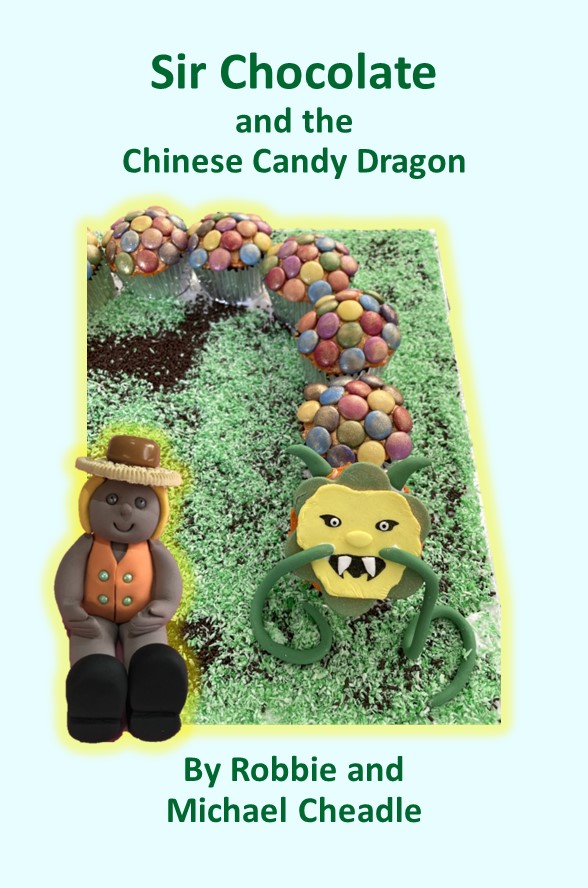
Looking back on my childhood reading though, I always had a fascination with all things creepy and chilling. Below I’ve discussed two of my favourite childhood books about witches, monsters, and other fantasy and mythological creatures, as well as Michael and my latest Sir Chocolate book: Sir Chocolate and the Chinese Candy Dragon.
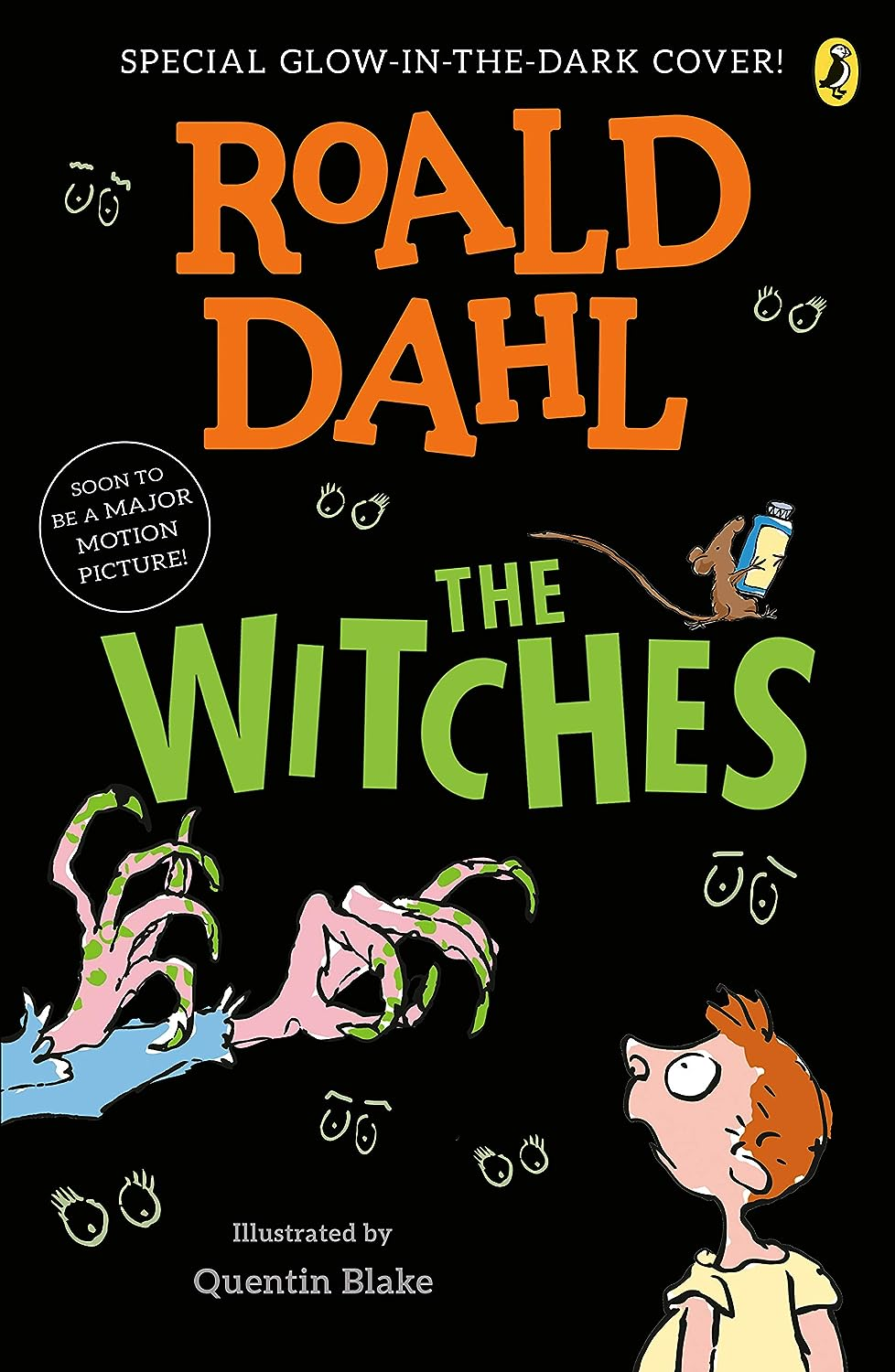
The Witches by Roald Dahl
Blurb
This is not a fairy-tale. This is about real witches. Real witches don’t ride around on broomsticks. They don’t even wear black cloaks and hats. They are vile, cunning, detestable creatures who disguise themselves as nice, ordinary ladies. So how can you tell when you’re face to face with one? Well, if you don’t know yet you’d better find out quickly-because there’s nothing a witch loathes quite as much as children and she’ll wield all kinds of terrifying powers to get rid of them.
My thoughts
I loved The Witches. The main characters of the book are a grandmother and her young grandson. Grandma comes from Norway and has had several experiences with real witches disguised as lovely and kind ladies. There are lots of way of identifying ‘real’ witches and Grandma passes this wisdom on to her young grandson. The story is told from the perspective of the unnamed grandson.
Following an illness, Grandma and her grandson book a holiday in a hotel near the sea. Grandma needs fresh ocean air to convalesce. When the pair arrive, a conference of the “Royal Society for the Prevention of Cruelty to Children” is in progress. The grandson manages to get himself trapped behind a screen in the ball room where the conference is being held. It doesn’t take long before the lovely attendees of the conference are revealed to be witches. The Grand High Witch has come up with a plan to rid the world of its children and she is sharing this plan with all the witches of England.
It is up to Grandma and her grandson to stop the witches and save the children of England from a ghastly fate.
Grandma was such a wonderful character, full of creepy stories and antsy comments. I really enjoyed her, and this is one of my favourite Roald Dahl books.
You can purchase The Witches by Roald Dahl here: https://www.amazon.com/Witches-Roald-Dahl-ebook/dp/B00INIYHJQ
Which Witch by Iva Ibbotson

Blurb
Arriman the Awful, feared Wizard of the North, has decided to marry. But his wife must be a witch of the darkest powers…
A sorcery competition is held to discover which witch is the most potent and fiendish, and glamorous Madame Olympia conjures up a thousand plague-bearing rats! Belladonna, the white witch, desperately wants to be a wicked enchantress, but her magic produces flowers instead of snakes. How can she become more devilish than all the other witches?
My thoughts
Iva Ibbotson has many entertaining children’s books that feature witches, monsters, and other fantasy creatures. This one was the first of her books I read, and I never forgot it. When I had my own children, I searched for this book and purchased it to read to them.
Arriman the Awful, a dark and powerful wizard, lives in Darkington Hall. Arriman has become bored with his dark magic and decides to choose a wife from his hometown of Todcaster. He is aware of a prophecy that he will be replaced by a wizard with much greater powers than his own and believes this great dark wizard must be his son. Arriman doesn’t have any children and isn’t married so he decides to remediate this situation as quickly as possible.
Arriman decides to choose his wife through the holding of a contest between the seven witches of Todcaster: (Mabel Wrack, Ethel Feedbag, Mother Bloodworth, Nancy Shouter, Nora Shouter, Madame Olympia, and Belladonna). The witch who performs the darkest magical act will become his wife.
All the witches are black witches except for one: Belladonna. She is a white witch and is not able to perform acts of dark magic. Belladonna is, however, in love with Arriman the Awful and wants to win the contest.
Shortly before the contest, Belladonna meets an orphan boy named Terence Mugg. Belladonna is able to perform a really dark act of magic to rescue Terence from the dreadful and unking matron of the orphanage. The pair believe that Terence’s pet worm, Rover, is a powerful familiar and has enabled Belladonna to perform this black magic.
Belladonna and Terence, with the help of Rover, come up with a plan to ensure Belladonna wins the contest.
However, the best laid plans often go astray and this one is no exception.
You can purchase Which Witch by Eva Ibbotson here: https://www.amazon.com/Which-Witch-Eva-Ibbotson-ebook/dp/B003GGST7Q
Sir Chocolate and the Chinese Candy Dragon
How this book came to be published
Sir Chocolate and the Chinese Candy Dragon is the third book in Michael and my new “Sir Chocolate High days and Holidays” book series.
We decided to self-publish this new series which celebrates various Christian holidays and other international celebration days like Valentine and Halloween.
The source of these stories is mainly promotions for the Sir Chocolate book series that we have written over the last seven years since the first Sir Chocolate book, Sir Chocolate and the strawberry cream berries story and cookbook was published.
Our intention with this series is to share a fun, rhyming verse themed story and to include some fun activities (mainly baking and food art but there are some other activities included) that parents or caregivers can make with their children in line with the holiday or theme that is the focus of the book.
Sir Chocolate and the Chinese Candy Dragon is a Halloween themed book and includes three fabulous themed baking activities that children can make under parental guidance.
This book includes five fun limericks for children. This is one example:

Blurb
The Chinese Candy Dragon has taken all of Sir Chocolate and Lady Sweet’s Halloween treats. Will he return the stolen goodies and mend his relationship with the villagers?
Includes three fun Halloween activities for children.
Book trailer
About Robbie Cheadle
Award-winning, bestselling author, Robbie Cheadle, has published fourteen children’s book and two poetry books. Her work has also appeared in poetry and short story anthologies.
Robbie also has two novels published under the name of Roberta Eaton Cheadle and has horror, paranormal, and fantasy short stories featured in several anthologies under this name.
The eleven Sir Chocolate children’s picture books, co-authored by Robbie and Michael Cheadle, are written in sweet, short rhymes which are easy for young children to follow and are illustrated with pictures of delicious cakes and cake decorations. Each book also includes simple recipes or biscuit art directions which children can make under adult supervision.
Robbie’s blog includes recipes, fondant and cake artwork, poetry, and book reviews. https://robbiesinspiration.wordpress.com/
Share this:

Treasuring Poetry: Meet poet, Selma Martin, and a review of her poetry book, In The Shadow of Rainbows: A Collection of Songs of Presence
Posted: September 20, 2023 Filed under: Book Review, Books, Collection, Interview, Poetry, Review, Treasuring Poetry | Tags: Book Review, Books, In The Shadow of Rainbows, Interview, Poetry, Robbie Cheadle, Selma Martin, Writing to be Read 70 CommentsToday I am delighted to introduce poet, Selma Martin, who has just published a beautiful book of poetry entitled In The Shadow of Rainbows.
Selma has started her interview with a quote and a truly lovely commentary about my book, Lion Scream. I have included it because it is so kind of Selma to have written it, and I appreciate her comments and review a great deal, but please remember that this post is about Selma and her poetry and gorgeous book.
Poems are made by fools like me
But without support, I’ve nowise to be
Robbie, you’ve no idea how much my enthusiasm level has risen just at the thought of being here with you for this interview. I’m truly honored. And I wish to begin by telling you that I respect you all the more after completing your lovely poetry collection, Lion Scream which I read from start to finish several times. What a lovely book you blessed the world with, Robbie. May we all continue to find grace and compassion in books that enlighten our optimistic approach to everything our world is experiencing at the moment. As someone once wrote, the solutions are there when the problems are recognized. I think that collectively we’ve come to recognize that we have a big problem. So it’s my sincere hope that in this lifetime we figure out where we should put our collective efforts. Your book provides a venue to initiate constructive markers of where we need to start. And together work to narrow the gap between our two realities. Yes, there are two realities:
- Objective reality – “the world out there.” The world of your senses
- Subjective reality – “the world in here.” The world of our minds; the world of emotions and feelings–composed of thoughts, opinions and judgments, and emotions.
I stand by what I wrote on Amazon: Your book is a must-read!
Now onto the questions that I’m ever so happy to respond to:
You have recently released your first poetry collection, In the Shadow of Rainbows. What inspired the poetry in this book? Does it have a particular theme?
SELMA: Inspiration waits for us at every corner, and one is always hoping that it will pat us on the shoulder and remain with us for the duration of the journey. For me, it got a nudge after I completed my 60th trip around the sun. Nothing is more inspiring than realizing that I have lived more life than I have left to live. This is the truth. And the only gauge I went by with my collection was to amass sixty poems. Well, I wrote more than sixty, thinking that a few wouldn’t make the cut but my editor, Ingrid Wilson of Experiments in Fiction allowed me a little more than sixty; sixty-four resulted. I am grateful.
As I mentioned in the book, I set sail without a strict theme but kept the faith that one would appear. That of shadows was so strong that at one point I fancied naming the collection Shadows, Whispers, and Echoes. But then, as I mention in the book, an old memory of finding rainbows on my eyelashes acted as my rudder and so there you have it: In The Shadow of Rainbows. I think the title fits the theme so well. Deep bow to my editor. Deep bow to my cover photographer.

Do you do a lot of editing of your poetry or does the poem manifest itself fully formed?
SELMA: Oh my, let me quote from a haiku from Tachibana Genjiro(1665-1718): I write, erase write, erase again, and then a poppy blooms.
It’s a lot of writing, deleting, and rewriting indeed. And even after my poppy blooms I still find incidents where I wish to start over. So, yes, I do lots of editing; and no, so far no poem has ever manifested itself fully formed for me.
What do you find to be the most effective way of sharing your poetry with fellow poetry lovers?
SELMA: Writing and sharing my work here on WordPress is the only way I know and feel comfortable sharing my work with other poetry lovers. I’m fully aware that there are other online magazines where I can share my work, but for some reason, I hold back from going the distance because sometimes I don’t feel deserving enough. Or perhaps it is that I need to feel a connection to my readers like I’ve begun to feel with my readers here on WordPress?
Also, there is the issue of time and timing. I never want to overdo it; I think we need variety, and so I refrain from posting even on my website at times.
At the moment, I’ve created a beautiful respectful relationship with the Editor of Masticadores USA, Barbara Leonhard, and so I sometimes submit my work there. I’m so grateful that Barbara helps me to reach other audiences and I’m working hard to jump on the bandwagon the next time someone calls for submissions to an anthology that fits my writing.
Do you think poetry is still a relevant form of expressing ideas in our modern world? If yes, why?
Poetry is not new–we know this. It’s the oldest, or at least one of the oldest forms of intimate expressions we humans have had. In today’s fast-paced society, the extraordinary value of the word hasn’t diminished. (Take that, emojis) and we humans will never be irreverent to this art form. Poetry will always rank high in relevance as long as there exist people like you and me. Me think so.
Which of your own poems is your favorite and why?
Oh, no no no. I don’t have a favorite; I like them all, really I do! But I will share one and honestly hope you find it to your taste.
Slice of Life
Flanked between two wanings, I live you,
planting the light hours with loving acts,
for you, for us, for our ménage,
and when I meet the dusk, filled,
ready for our mingling at the table,
where we swap slices of lived moments
of the same day, hearts swell replete.
I chose one of the shortest poems in the collection to share with you. It’s strategically placed as the penultimate poem in the book, and I’m happy to elucidate on this poetry form that touched me.
In its true form, it’s a Kwansaba poem, an African-American verse form of praise: a praise poem that celebrates family. The Kwansaba (Swahili kwan -first fruit/saba -principle) was created in 1995 by Eugene B. Redmond, East St. Louis Poet Laureate and professor of English at Southern Illinois University-East St. Louis. The form was developed in honor of the celebration of Kwanzaa. The poetic form adopts the number 7 from Kwanzaa’s Nguzo Saba (7 principles) as well as embraces its roots in the South African tradition of the Praise Poem.
The 7 principles of Kwanzaa are unity, self-determination, collective work and responsibility, cooperative economics, purpose, creativity, and faith. Each day of the celebration focuses on one of the principles. Isn’t this just such a beautiful principle? I think it is, as all the principles take off at unity which starts at the family level.
I wrote it originally for a dVerse prompt in December 2021–then, I abbreviated some words to meet the exact count of sevens but changed it a bit for clarity to include in the book. It’s about family, and I hope you like it.
Which poem by any other poet that you’ve read, do you relate to the most and why?
SELMA: Oh, you got me on this question again, Robbie. There are so many poems to choose from. And I relate to them when I read them. Indeed it’s like asking which is your favorite color today or your favorite sunset… but I will share one of the poems I like. As to why this poem, I dare say it’s because I love it when we enter this season. Also, I adore the poet’s style and the vernacular he uses in this gorgeous poem. I found it on Poetry Foundation to share here with you. Take a look:
When the Frost is on the Punkin
BY JAMES WHITCOMB RILEY (1849–1916) When the frost is on the punkin and the fodder’s in the shock,
And you hear the kyouck and gobble of the struttin’ turkey-cock,
And the clackin’ of the guineys, and the cluckin’ of the hens,
And the rooster’s hallylooyer as he tiptoes on the fence;
O, it’s then’s the times a feller is a-feelin’ at his best,
With the risin’ sun to greet him from a night of peaceful rest,
As he leaves the house, bareheaded, and goes out to feed the stock,
When the frost is on the punkin and the fodder’s in the shock.
They’s something kindo’ harty-like about the atmusfere
When the heat of summer’s over and the coolin’ fall is here—
Of course we miss the flowers, and the blossums on the trees,
And the mumble of the hummin’-birds and buzzin’ of the bees;
But the air’s so appetizin’; and the landscape through the haze
Of a crisp and sunny morning of the airly autumn days
Is a pictur’ that no painter has the colorin’ to mock—
When the frost is on the punkin and the fodder’s in the shock.
The husky, rusty russel of the tossels of the corn,
And the raspin’ of the tangled leaves, as golden as the morn;
The stubble in the furries—kindo’ lonesome-like, but still
A-preachin’ sermuns to us of the barns they growed to fill;
The strawstack in the medder, and the reaper in the shed;
The hosses in theyr stalls below—the clover over-head!—
O, it sets my hart a-clickin’ like the tickin’ of a clock,
When the frost is on the punkin and the fodder’s in the shock!
Then your apples all is gethered, and the ones a feller keeps
Is poured around the celler-floor in red and yeller heaps;
And your cider-makin’ ’s over, and your wimmern-folks is through
With their mince and apple-butter, and theyr souse and saussage, too! …
I don’t know how to tell it—but ef sich a thing could be
As the Angels wantin’ boardin’, and they’d call around on me—
I’d want to ’commodate ’em—all the whole-indurin’ flock—
When the frost is on the punkin and the fodder’s in the shock!
***
I love love love this poem. Golly, Robbie, I hope you liked it too.
My review of In The Shadow of Rainbows by Selma Martin
A most enjoyable collection of poems that seeks to find the upliftment, or silver lining, in the ordinary and everyday experiences of people, including the poet herself. The poems acknowledge human failings and short comings but attempt (successfully I thought) to put them into perspective and find the happiness and joy in life despite the imperfections humans, as a species, tend to exhibit when faced with challenges and dealing with experiences, both good and bad.
A few short quotations from some of my favourite poems in the collection are as follows:
“perfect specimens
of imperfection
you and I” from Give Back
“When death comes
I want to be led into eternity
curious, full of joy” from When Death Comes
“One fine day, I recognized the smell of summer,
the languid air of the somnolent noon,
so I rose and walked away from the wheelchair
hands outstretched, to the hollycocks there.” from Angel August
All of us experience ups and downs in life. Anything that can help us find perspective thereby gaining understanding and solace, is worth embracing. This book does that and is an inspired and inspiring read.
About Selma Martin

Selma Martin is a retired English teacher with 20 years of teaching children ESL. She believes in people’s goodness and in finding balance in simple living. She lives in Japan with her husband of thirty-three years. In 2018, Selma participated in a networking course whose final lesson was to publish a story on Amazon. After many failed attempts, she completed the course and self-published her short story, Wanted: Husband/Handyman, in 2019. Later, collaborating with peers from that course, she published Wanted: Husband/Handyman in an anthology, Once Upon A Story: A Short Fiction Anthology. Selma has published stories on Medium for many years, in MasticadoresUSA, The Poetorium At Starlight, Short Fiction Break, and Spillwords. After her first NaPoWriMo 2021, Selma writes poetry on her website, selmamartin.com, and in July 2023, published a debut poetry collection on Amazon.
You can find Selma, selmawrites, on Twitter, Instagram, and Facebook. But if you wish to engage and create a meaningful interaction with Selma: add value, nurture trust, and share engaging content from the ordinary perspective of someone navigating life in today’s fast-paced culture, you may join her once-a-month pen pal newsletter.
Other ways of contacting Selma
EMAIL: selma@selmamartin . com OR selmagogowrites@gmail .
INSTAGRAM: https://www.instagram.com/selmawrites/
TWITTER/X: https://twitter.com/SelmaWrites
About Robbie Cheadle
Award-winning, bestselling author, Robbie Cheadle, has published thirteen children’s book and three poetry books. Her work has also appeared in poetry and short story anthologies.
Robbie also has two novels published under the name of Roberta Eaton Cheadle and has horror, paranormal, and fantasy short stories featured in several anthologies under this name.
The ten Sir Chocolate children’s picture books, co-authored by Robbie and Michael Cheadle, are written in sweet, short rhymes which are easy for young children to follow and are illustrated with pictures of delicious cakes and cake decorations. Each book also includes simple recipes or biscuit art directions which children can make under adult supervision.
Robbie’s blog includes recipes, fondant and cake artwork, poetry, and book reviews. https://robbiesinspiration.wordpress.com/
Share this:

Growing Bookworms – Tongue Twisters and a review of A Wrinkle in Time by Madeleine L’Engle
Posted: September 13, 2023 Filed under: Book Review, Books, Children's Books, Classics, Fiction, Growing Bookworms, Literacy, Nursery Rhymes, Reading, Review | Tags: A Wrinkle in Time, Growing Bookworms, Madeleine L'Engle, Robbie Cheadle, Tongue Twisters, Writing to be Read 57 Comments
The benefits of Tongue Twisters for children (and adults too)
What is a tongue twister?
A tongue twister is a sequence of words or sounds, usually of an alliterative kind, that are difficult to pronounce quickly and accurately.
An example of a tongue twister
One of the tongue twisters I grew up with is Peter Piper Picked a Peck of Pickled Pepper.
This is a video of the tongue twister:
Benefits of tongue twisters
Tongue twisters are fun and often results in lots of laughter, but they also have benefits for children.
Tongue twisters are a great way of introducing different consonant sounds to small children. They help pronunciation by teaching the brain how to form the necessary signals and organs of speech to make the required movements.
Regular recitation stimulates control of the muscles used for speech, ensuring clearer pronunciation of words with difficult syllables. Tongue twisters help children to decease instances of pauses in speech and reduce hesitation over pronunciation.
Listening to a parent or caregiver reciting tongue twisters helps to improve a child’s listening skills and comprehension of spoken English. Learning a tongue twister, promotes memorization which improves memory and cognitive skills.
Disadvantages of tongue twisters
The disadvantage of tongue twisters is that they take children a long time to master and thus a lot of patience from the teacher.
Did you learn tongue twisters as a child?
Did you teach tongue twisters to your children?
Let me know if the comments
My review of A Wrinkle in Time By Madeleine L’Engle

I was recommended this book by a friend of mine as I am unfamiliar with American children’s books and wanted to try a few.
I enjoyed this extraordinary science fantasy which involves three children with unique characteristics, a missing father, three fascinating good witches, time travel, different planets with unusual inhabitants and culminates in a battle for the preservation of creativity and difference against robotic sameness and loss of individuality represented by a disembodied brain called IT. I thought the author used an intriguing storyline and set of characters to support her central themes of rejection of difference and pressure to conform, the importance of love, not judging based on appearances, and that total understanding of everything in life is not possible.
Ultimately, I saw this as a book that celebrated individuality and uniqueness in people and reminded the reader about the importance of art, music, prose and poetry to society. The world of Camazotz, a world controlled by IT where sameness is glorified and exceptions to the accepted normal destroyed, is not portrayed in an appealing light. It is the main character, Meg Murray’s, individuality and difference that help save her father and brother and the greater world of humans from IT.
I liked the message of acceptance of difference in this book and think it will be a great read for all children. Reading about difference goes a long way towards acceptance.
About Robbie Cheadle
Award-winning, bestselling author, Robbie Cheadle, has published thirteen children’s book and three poetry books. Her work has also appeared in poetry and short story anthologies.
Robbie also has two novels published under the name of Roberta Eaton Cheadle and has horror, paranormal, and fantasy short stories featured in several anthologies under this name.
The ten Sir Chocolate children’s picture books, co-authored by Robbie and Michael Cheadle, are written in sweet, short rhymes which are easy for young children to follow and are illustrated with pictures of delicious cakes and cake decorations. Each book also includes simple recipes or biscuit art directions which children can make under adult supervision.
Robbie’s blog includes recipes, fondant and cake artwork, poetry, and book reviews. https://robbiesinspiration.wordpress.com/
Share this:

Treasuring Poetry – Meet poet and author, Kaye Lynne Booth, and a review #TreasuringPoetry #poetry #bookreview
Posted: August 16, 2023 Filed under: Uncategorized 78 CommentsI am very excited to be featuring Kaye Lynne Booth for my August Treasuring Poetry post. I have been working with Kaye Lynne for a number of years now and I have short stories in all of her anthologies. Kayne Lynne and I also co-edit the annual Poetry Treasures anthologies.
Small Wonders is Kaye’s first book of poetry and I am pleased to include my review of this delightful collection here today.
I know that your poetry collection, Small Wonders, includes poetry from throughout your writing career. Do you think your poetry writing has changed much over this period?
My poetry has been a series of experiments. I like to play with words and styles. I have written syllabic poetry, limericks, acrostic poems, shape poems that form visual images on the page, and more.
Do you do a lot of editing of your poetry or does the poem manifest itself fully formed?
It depends on the poem. Intimacy & the Harlequin Dance was written when I was on a fifteen minutes break at work, but they usually don’t come quite that easy. Aspen Tree is minimalist poem and I worked several days on it to get the words just right.
You have been sharing some of your poetry as YouTube videos? Do you find this a effective way of sharing poetry with poetry lovers?
I have done several readings of poems from Small Wonders. We started doing readings of both poetry and fiction because they work well for the blog tours. Many contributing authors have been quite enthusiastic about it. But the ones for my poetry collection are the first I’ve done for a solo project.
Do you think poetry is still a relevant form of expressing ideas in our modern world? If yes, why?
I do. I think poetry is a wonderful form of expression, and I think it helps to process emotions to try and put them into just the right words.
Which of your own poems is your favorite?
Mist chills morning air
Frosty dew coats stem and blade
Sun’s warmth awakens
This is a reading by Kaye Lynne Booth of Aspen Tree which features in Small Wonders:
Which poem by any other poet that you’ve read, do you relate to the most and why?
I’ve always felt a connection with Emily Dickinson, because she wrote about everyday things and made them seem interesting. It wasn’t that she saw the world through different eyes, but that she paid such close attention to the details of what she did see that she could describe it in a manner that others could relate to. That’s what poetry is about. Attention to detail.
“I Could Not Stop For Death“, by Emily Dickenson is one of my favorites because it speaks of the inevitability of death and being too busy with life to stop for it. Dickenson spent most of her life as a recluse and her poetry takes note of the most ordinary things, calling attention to them in extraordinary ways.
Because I could not stop for Death –
He kindly stopped for me –
The Carriage held but just Ourselves –
And Immortality.
We slowly drove – He knew no haste
And I had put away
My labor and my leisure too,
For His Civility –
We passed the School, where Children strove
At Recess – in the Ring –
We passed the Fields of Gazing Grain –
We passed the Setting Sun –
Or rather – He passed Us –
The Dews drew quivering and Chill –
For only Gossamer, my Gown –
My Tippet – only Tulle –
We paused before a House that seemed
A Swelling of the Ground –
The Roof was scarcely visible –
The Cornice – in the Ground –
Since then – ’tis Centuries – and yet
Feels shorter than the Day
I first surmised the Horses’ Heads
Were toward Eternity –
My review of Small Wonders by Kaye Lynne Booth
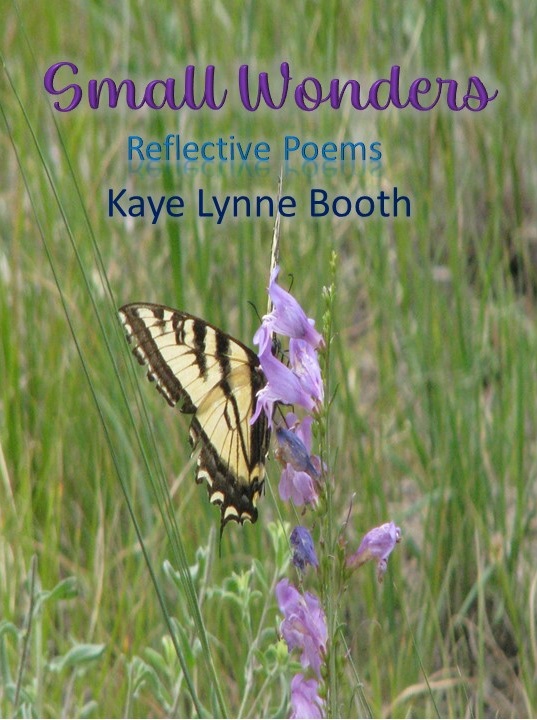
The poems featured in this collection have been written over Kaye Lynne’s life and share a wide spectrum of memories, some full of fun, for example My ‘Vette, some are achingly beautiful, Sun and Shade immediately sprang to mind, and some, like A Single Heartbeat are poignantly sad. All are worthwhile and inform the reader about the human condition whether delight in nature, agonising over trauma and grief, or throwing care to the wind and ‘riding the wave of life.’
Kaye Lynne’s poetry style is straight forward and simple, my favourite type of poetry, and is very relatable to all of us who have walked life’s path, experiencing its ups and downs. A few of the poems are printed on lovely background artworks which embellish their meaning and purpose.
Purchase Small Wonders: https://www.amazon.com/Small-Wonders-Kaye-Lynne-Booth-ebook/dp/B0C8MQD599
About Kaye Lynne Booth

For Kaye Lynne Booth, writing is her passion. It is a very strange time indeed when Kaye Lynne does not have at least three WIPs, in addition to her other writings, teaching and other life activities. Kaye Lynne lives, works and plays in the beautiful mountains of Colorado.
Visit her author’s blog and website, “Writing to be Read” to learn more about Kaye Lynne Booth and her writing. https://kayelynnebooth.wordpress.com/
About Robbie Cheadle
Award-winning, bestselling author, Robbie Cheadle, has published thirteen children’s book and three poetry books. Her work has also appeared in poetry and short story anthologies.
Robbie also has two novels published under the name of Roberta Eaton Cheadle and has horror, paranormal, and fantasy short stories featured in several anthologies under this name.
The ten Sir Chocolate children’s picture books, co-authored by Robbie and Michael Cheadle, are written in sweet, short rhymes which are easy for young children to follow and are illustrated with pictures of delicious cakes and cake decorations. Each book also includes simple recipes or biscuit art directions which children can make under adult supervision.
Robbie’s blog includes recipes, fondant and cake artwork, poetry, and book reviews. https://robbiesinspiration.wordpress.com/
Share this:

Growing Bookworms – Meet prolific children’s book author and poet, Victoria Zigler, and two reviews #bookreviews #GrowingBookworms #childrensfiction
Posted: August 9, 2023 Filed under: Uncategorized 61 CommentsI am delighted to introduce prolific children’s book author and poet, Victoria Zigler, as my August Growing Bookworms featured children’s book author.
You write picture books for younger children and books for older children too. How do you ensure that your language and writing style are suitable for the target age group?
I suppose, in a way, I don’t.
The thing is, I’m a pantser to the extreme. I write the stories, and only then assess – based on the way they turn out, the language style I ended up using, etc – which age group they’d be most suitable for. So, to be honest, I often don’t know who my intended audience is until I’m done writing the story.
The only exception would be if I’m writing another book for a series, in which case I’ll obviously want to make sure the whole series is suitable for the same general age group. In that case, I would make sure I stick to the same kind of writing style and language as was used in the earlier book, or books.
Many of your children’s books involve animals. Do you have a specific motivation for writing about animals for a child audience?
For one thing, I’m a big fan of animals. I love animals of almost any kind, grew up in an area surrounded by fields full of cows and mountains covered in sheep, and have owned a variety of pets: birds, cats, chinchillas, degus, dogs, fish, gerbils, guinea pigs, hamsters, rabbits, rats, and a tortoise. It’s no secret that I prefer the animals’ company to that of humans as a general rule, so I’ve had plenty of opportunity to observe their behaviour.
For another thing, many of the stories I enjoyed in childhood featured animals, from the mischievous Peter Rabbit and all the other creatures in Beatrix Potters tales, to the troublesome toad and faithful mole in Kenneth Graham’s Wind In The Willows, and we can’t forget Aslan the lion from C S Lewis’ Chronicles Of Narnia, or all those classic fairy tales like Aesope’s Fables and The Three Little Pigs, just to name a few. So, given how many happy hours I spent in those animal-filled worlds, I want to pass that joy on to a new generation.
Do you include characteristics of real people and pets/animals in your stories?
Yes, I do. Sometimes intentionally, and sometimes I’m sure I do it unconsciously too.
I do it with pets especially, since several of my books – most notably my Kero’s World and Degu Days Duo books – feature my own pets, since each is a semi-fictionalized story of a time in our lives (sometimes combining more than one experience in one story to make it more eventful) as told from the point of view of the pet in question.
But I have done it from the point of view of people too. For example, in my Toby’s Tales series, which are a series of books based on some of the challenges I faced myself when adjusting to losing the last of my sight. Toby himself is based on a combination of my brother, Carl, who is also blind, and myself. Toby’s older brother, Jake, is based on our older brother, Wayne. And their little sister, Emma, is based on a combination of myself and my honorary niece of the same name who happened to be around the same age I wanted to make the fictional Emma at the time of writing the series.
How do you get your ideas for your stories?
The short answer is: which ones?
The thing is, it varies. Some are based on real life experiences, like how my book How To Trust Your Human is based on my attempts at regaining the trust of one of our degus, Joshua (refered to as Buddy in the story) when he became nervous and suspicious of us after we lost all three of his brothers, and Snowlilie’s Brother is based on observing our Westie, Lilie, as she adjusted to having a new little brother in the form of our Cavapoo, Logan.
What do you like best about writing for children?
Mostly it’s just fun: I love being able to play with my own imagination and creativity while potentially encouraging theirs. Plus, I do like the fact my books may potentially help to encourage a new generation of readers.
Books for children are harder to market than books for adults. How do you go about marketing your books and what works best for you?
I’m the wrong person to ask about marketing.
I tried seeking marketing opportunities at first, but I ultimately felt like it just took time away from the parts I enjoyed, so now I take interview opportunities when they come up, whether on blogs or podcasts, I’ll accept invitations to do guest posts, and if the opportunity to drop hints about me writing and publishing books happens to come up I’ll usually give it a mention. But that’s all I do; I don’t really put the effort I probably should in to marketing, because I don’t like doing it, and – though I’d obviously love my books to reach as many people as possible – have no desire to be rich and famous.
I write because I have poems and stories inside of me that need to get out. I publish them because I feel art in all its forms should be shared. And as long as anyone who does actually stumble across my books enjoys them, that’s good enough for me.
My review of Jelena by Victoria Zigler
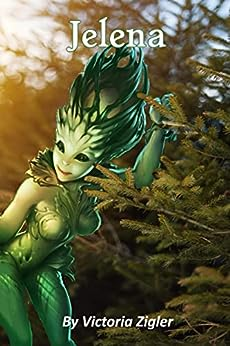
Jelena is a delightful and poignant story about a tree dryad whose bond to her Frazer Fir tree is broken when a family of humans select it for their Christmas tree. The author’s beautiful writing shows Jelena’s pain and loss when she is left without her tree which she knows is dying as it’s been cut.
Interesting parallels are drawn between the pleasure of the human family who are delighted with their choice of tree and Jelena’s loss as the fir’s tree dryad. The humans are not bad, they are just ignorant of the implications of their actions.
The story is engaging and has a happy ending. Reading it to or with children will provide plenty of opportunities to discuss the impact of human activities on the natural world and ways of minimizing negative repercussions.
urchase Jelena by Victoria Zigler: https://www.amazon.com/Audible-Jelena/dp/B0BVDR7GL5
My review of Thistle The Fairy Trickster by Victoria Zigler
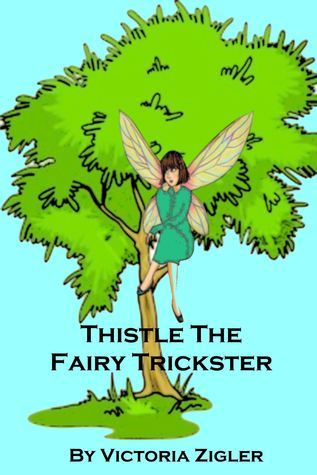
Thistle The Fairy Trickster is a delightful retelling of the story of The Boy Who Cried Wolf, Thistle is a fairy tasked with watching an area of the river where local children come to swim and play. Thistle’s job is to ensure that any children playing in her area are safe and to intervene and provide assistance if something goes wrong. Most of the time, Thistle’s job is boring and she has no-one to talk to or play with. Thistle decides to play some tricks on her fairy friends and that gets her into trouble.
This story is fun way of teaching small children about inappropriate and misleading tricks.
Purchase Thistle The Fairy Trickster here: https://www.amazon.com/Thistle-Fairy-Trickster-Victoria-Zigler-ebook/dp/B07L3FP5Q8
About Victoria Zigler
Victoria Zigler is a blind vegan poet and children’s author. Born and raised in the shadow of the Black Mountains of Wales, UK, she moved away from Wales three times: once to spend six months living in Alberta, Canada, the other times to spend a few years living near Hastings on the South-East coast of England, UK, each time returning to Wales. Now she lives in Wales again, along with a West Highland White Terrier named Lilie, a Cavapoo named Logan, a Hermann’s Tortoise named Artemis, and her Canadian husband, Kelly.
Despite spending far too much time in hospital, and eventually losing her sight to Congenital Glaucoma, Victoria – or Tori, if you prefer – has been writing since she knew how, with no plans to stop any time soon. She has a long list of publications to her name, including several poetry collections, a whole load of children’s stories, a story in the sci-fi and fantasy anthology Wyrd Worlds II, three poems in the Poetry Treasures anthology, and a poem in the Stand Together charity anthology. Plus, Tori’s Hermann’s Tortoise, Artemis, was featured in both the Magnificent Pets Coloring Book For Children and the Magnificent Pets Mandala Coloring Book For Adults.
Vegan due to both a love for animals and dairy allergy, as well as an Eclectic Pagan, Tori describes herself as a combination of Hermione Granger and Luna Lovegood from the Harry Potter books: Hermione’s thirst for knowledge and love of books, combined with Luna’s wandering mind and alternative way of looking at the world. She has a wide variety of interests, designed to exercise both the creative and logical sides of her brain, which she dabbles in at random depending on what she feels like doing at any given time, and is most likely to be found playing with her petkids, involved in calls with the ACB Community, curled up somewhere with a cup of tea and a book, working on some kind of craft project, or trying to keep one step ahead of those pesky typo fairies while writing her own books.
Links
Website: http://www.zigler.co.uk
Blog: https://ziglernews.blogspot.co.uk
Goodreads: https://www.goodreads.com/toriz
Facebook author page: https://www.facebook.com/pages/Victoria-Zigler/424999294215717
Twitter: https://www.twitter.com/victoriazigler
YouTube: https://www.youtube.com/channel/UCakYxH7BNyc2Lxr1g1nbP9w
Find Tori’s books on…
Smashwords: https://www.smashwords.com/profile/view/toriz
Amazon: https://www.amazon.co.uk/Victoria-Zigler/e/B00BHS9DQ6/
…Along with a variety of other retailers, such as Audible, iTunes, Kobo, and Barnes & Noble.
About Robbie Cheadle
Award-winning, bestselling author, Robbie Cheadle, has published thirteen children’s book and three poetry books. Her work has also appeared in poetry and short story anthologies.
Robbie also has two novels published under the name of Roberta Eaton Cheadle and has horror, paranormal, and fantasy short stories featured in several anthologies under this name.
The ten Sir Chocolate children’s picture books, co-authored by Robbie and Michael Cheadle, are written in sweet, short rhymes which are easy for young children to follow and are illustrated with pictures of delicious cakes and cake decorations. Each book also includes simple recipes or biscuit art directions which children can make under adult supervision.
Robbie’s blog includes recipes, fondant and cake artwork, poetry, and book reviews. https://robbiesinspiration.wordpress.com/
Share this:

Treasuring Poetry – Meet poets, bloggers, and writers, Emily Gmitter and Zoe the Fabulous Feline, and a review #TreasuringPoetry #Poetrycommunity #review
Posted: July 19, 2023 Filed under: Book Review, Collection, Interview, Poetry, Review | Tags: Emily Gmitter, Happiness is a Warm Cat, Poetry, Robbie Cheadle, Treasuring Poetry, Writing to be Read, Zoe the Fabulous Feline 56 CommentsToday, I am delighted to welcome Emily Gmitter and her amazing writing cat, Zoe, to Treasuring Poetry. This is the first time I’ve interviewed such an interesting duo for this series and it has been a fabulous experience.
Welcome Emily and Zoe
I’d like to thank Robbie for inviting me and my co-author, Zoe the Fabulous Feline, to be guests on her lovely Treasuring Poetry blog. We’re happy to be here with her and all of you wonderful poets! Zoe says “hello” too—she’s waving her paw at the screen.
Is writing poetry easier for you compared to prose or do you do a lot of editing and revision of your poems?
While my initial writing efforts focused on poetry, and specifically, syllabic poetry, now I more often write short stories. However, poems or snippets of rhyme frequently find their way into my stories. My brain seems wired for rhyme, so if something comes to me, I don’t ignore it. But, to give you the short and direct answer to your question: I edit my prose far more than I do my poetry.
If I may elaborate, there is a distinct difference between the poet I thought I was back in the day, and the writer I hope I am today. Writing prose came much later in my life—that is, if you don’t count my very first short story, written in fourth grade, about a letter that was afraid of the dark. The story starts with a mom asking her daughter to take a letter to the mailbox. Just as the child is pulling the handle of the mailbox down and bringing the letter up to the opening, the letter starts to squirm and squeal in fear. It begs the child to not do it: “Please don’t drop me into the dark!” The child is startled, of course, but before she can say or do anything, the letter grows arms and legs and runs away. And that’s all I remember about that!
Getting back to your question … I’d add that, while I do edit my poetry, it seems most of my poems haven’t required heavy revision. I might tweak a word or two to keep the meter consistent or create an inner rhyme. Sometimes I’ve made an edit to deliberately include an alliterative phrase. But that’s about it. So I think syllabic poetry—unlike free verse—has always come easily to me. And it’s gotten easier as I’ve gotten older, or perhaps my personal bar has gotten lower. With my prose, though, it’s a far different story. The editing seems never-ending, but of course, at some point, you have to call it done.
I alluded to free verse; writing poetry in that style is not my forte, and has never been. Every once in a blue moon, something comes to me in that form, and usually it’s very short. (There is one example of that in my book, called “Soul Buddies.”) Free verse is much harder for me to write. I enjoy it, and I envy those who can create it, but it’s never come naturally to me. When I try to write it, it feels contrived. In one sense of the word, contrived is a positive thing; it’s what all writers do, right? We deliberately create a written piece; we calculate where to place an adjective, we assess whether a near-rhyme works well or at all. And on and on. So, contrived is not a dirty word. But it does have a negative sense, as well. When I find myself digging too deeply for words to convey what I wish to, the result sometimes feels forced and phony. I usually end up balling up the paper and aiming for the wastepaper basket. And that’s happened more times than I care to remember. I’ll leave free verse to those who can actually create it and spend my time enjoying the beauty of their creations.
Today I find that a poem is either there or it’s not. I most enjoy creating poetry when the words flow naturally. That feels like a gift. I write it down, and I leave it alone.
What mode (blog, books, YouTube, podcasts) do you find the most effective for sharing your poems with poetry lovers and readers?
I incorporated my poems into my newly released book and, while I’m not sure of its effectiveness over alternative modes, I really enjoyed using my poetry to mix up the flavor of the book. I also share my poetry (as well as my short stories and artwork) on social media.
Now, Zoe is more clever than I, or perhaps I should say, she’s a bit less technically challenged than I. She’s on Facebook, too, but she also posts on her The Life & Times of Zoe the Fabulous Feline blog. (A bit contrived if you ask me. To which Zoe just said, “Who’s asking you?”) Speaking of the little imp, she would like to say something. And I think I should be afraid.
Hi, Robbie, it’s me, Zoe the Fabulous Feline! I just wanted to point out something Emily neglected to tell you, which is that my poems are also in our book. Sheesh! Well, at least she gave me credit for my blog. My short stories sometimes include poetry, and I share my short stories on my social media pages. I did write one story completely in syllabic rhyme, which is in our book; it’s called “Zoe and Friends’ Strange Adventure.” It’s too long to include here,, so I’ll just summarize it for you:
A magic hat flies me and a couple of friends on a journey to different lands, one ruled by an evil dictator, and another led by a kind and compassionate old soul—the latter a land where a White Mist relays to us a message of hope and love. We return home with a new perspective.
I’m quite proud of that story-poem. (Story-poem might not be the right, or even a valid, term, but Emily would not let me say “epic poem”; she said I would sound terribly “arrogant.” I’m not even sure what that means, but it does not sound good.) About other modes for our writings: I’ve considered a podcast, but when I’d previously tried to teach Emily how to set up her own blog, that did not go well. Still, I took a chance and mentioned to her that I’d like her assistance with doing a “PodCAT” (a podcast for cats only). Well, I had to practically pick her up off the floor. So I took pity on her and did not push the idea. Anyway, I’m busy enough already. I’ll hand the baton back to Emily at this time and will be back if any other question catches my attention. Ciao for now!
Do you think poetry is still a relevant form of expressing ideas in our modern world? If yes, why?
Yes, I do, because poetry is a window into our souls. Poets write from the heart, and because people are multi-faceted creatures, and because there is so much going on around us all the time, there is no end to the food that will feed a poet’s imagination. Relevance abounds!
And then we have that other class of poets who are relevant in our modern world—the songwriter. Songwriters write lyrics that tell their own stories but also often speak to all our lives. Some artists may stick with the typical love song and/or love-gone-wrong song, and others may risk commercial success for at least occasionally penning songs that speak truth to power. In the latter category, the words of Kris Kristofferson come to mind. His diverse catalog includes every kind of song imaginable, from love songs to humor to satire, from the bittersweet of love and loss to the blessings bestowed on us by a higher power. He also writes biting, politically charged, contemporary songs; just one example of Kristofferson’s many topical tunes is an older one, called “In the News.” (A word of caution: Based on real life events, these lyrics are not easy to read.)
In the News
Read about the sorry way he done somebody’s daughter
Chained her to a heavy thing and threw her in the water
And she sank into the darkness with their baby son inside her
A little piece of truth and beauty died
Burning up the atmosphere and cutting down the trees
The billion dollar bombing of a nation on its knees
Anyone not marching to their tune they call it treason
Everyone says God is on his side
See the lightning, hear the cries
Of the wounded in a world in Holy war
Mortal thunder from the skies
Killing everything they say they’re fighting for
Broken babies, broken homes
Broken-hearted people dying everyday
How’d this happen, what went wrong
Don’t blame God, I swear to God I heard him say
Not in my name, not on my ground
I want nothing but the ending of the war
No more killing, or it’s over
And the mystery won’t matter anymore
Broken dreamers, broken rules
Broken-hearted people just like me and you
We are children of the stars
Don’t blame God, I swear to God he’s crying too
Not in my name, not on my ground
I want nothing but the ending of the war
No more killing, or it’s over
And the mystery won’t matter anymore
Read about the sorry way he done somebody’s daughter
Chained her to a heavy thing and threw her in the water
And she sank into the darkness with their baby son inside her
A little piece of truth and beauty died
~ Kris Kristofferson ~ (In the News – YouTube)
It would be hard to be any more relevant in our modern world than that.
Which of your own poems is your favorite and why?
Oh, this is a tough one! I have favorites in different categories. If we’re talking humorous, “The Spider” is my favorite. I understand some will not find the killing of insects to be a humorous topic, but I have a serious bug phobia, so perhaps I will be forgiven.
The Spider
There you were on my wall the other day,
It wasn’t easy for me, but I let you go on your way.
Soon you were out of sight, but not out of mind,
For I need to know where you are at all times.
I needn’t have worried,
Soon enough you were back.
And busily building a translucent track.
Can’t spare you again, you should’ve stayed gone.
But no, you had to come back and build a new home.
And now, Lord have mercy, I feel bad, it’s a sin,
But when it comes down to your home or mine—mine wins.
My favorite poem of poignancy is “Unjust Desserts.” And for a fun read, I would choose “Nashville-Rainbow Style,” because it tells the story of a most memorable vacation with a bunch of my musician friends. And finally I—
Helloooo, this is Zoe again. I mean, I love Emily, but she sure can go on and on sometimes. Here is a little ditty I wrote as the ending to my short story entitled “Zoe the Poet.” The publisher liked it so much, he insisted on including it in our book, and that’s why it’s my favorite.
Zoe the feline just checking in
To bring you a laugh, a tear, or a grin.
The stories I give you, they come from within,
Except when they come from without.
Please note: With that poem, I answered the question of poetry relevance, too … saying in four lines what Emily said in four paragraphs.
Why do you write poetry?
It’s a good question. You could just as well ask why do I write prose? Both art forms paint images with words, and I equate words with power. Power to evoke emotions both positive and negative, power to entertain. And that’s what poetry is all about.
I love words! And I love to have fun with them. So my love of the English language is why I write anything at all. It’s also a way to communicate with others, a way of expressing myself without censoring myself, which I tend to do in oral communications. That’s the short and sweet answer to this question. As Zoe so kindly pointed out, I can go on and on, so if this satisfies, that’s cool. But I will say a few things more for those who like to read on and on.
As previously mentioned, my first writings of so many moons ago consisted entirely of poetry. But the truth is, these days I don’t set out to write poetry. These days, my creative endeavors have centered on prose and painting instead. However, I do still dip my toes in the pools of poetry every so often. Because of my love for language, I make a concerted effort to take advantage of the various forms of writing tools, such as alliteration, which adds interest to a piece, especially when it’s subtle—when it slips easily into the ear the way an old, well-worn glove slides over one’s hand.
Some short stories and all songs are poetry. In the short story category, flash fiction comes to mind, and especially those restricted-word-count story challenges; those can be poetry of the highest order. In word-challenge stories, one must use language in a very efficient yet meaningful way. When every word has to count, the result is often a rhythmic cadence that shouts “I am poetry!” I wrote the following in response to a 79-word challenge story. I may be biased but, to my mind, it is nothing if not poetic.
Letting Go
No shame in letting go. The freedom of the fall was stronger than her sister’s hand. They were having a passionate discussion. A decade separated the sisters. Their differences, strengthened over every day of each of those years, became more apparent as the discussion threatened to explode. The younger sister stood firm against the fire of her older sister’s fears. She knew it came from love, as surely as she knew she would survive the freedom of letting go.
My early poems came from a place of typical teen-age angst, most often fairly short expressions of whatever was on my mind at the time. Looking back at some of those now… well, I won’t say I’m embarrassed, exactly; I never planned for anyone to read them. But I am, at the least, amused at having taken myself so seriously back then. This might be the first poem I ever wrote. Needless to say, Growing Old did not make it into my book!
Growing Old
My brain is numb,
My heart is cold.
I must be dead,
Or am I old?
Was I describing my youthful thoughts on senility, dementia, growing old in general? Most likely the latter—the concept of aging in general—but the former shows that I had no real sense or kind thoughts about what it meant to be old. Clearly, I was not going to age gracefully!
Many of us younger folks had some angst about our elders—you know, those folks over thirty years of age and considered part of the establishment. Everybody expressed it in their own way. One of my earlier poems relays how I envisioned our world if nuclear powers were to lose their senses. It’s too long to include in this interview (it’s in my book), but here’s a stanza that shows the basic theme of the poem:
The Future of the Child
“What shall I be, Dad, when I grow up?”
Looking toward the future, an eager young pup.
“Anything you want, Son,” you say with a smile.
And secretly pray for the future of the child.
So, that was then, when I set out to write poetry. And this is now when I don’t. “Soul Buddies” is one of those short, free-verse poems that gave birth to itself without any help from me.
Soul Buddies
I found you so easily, where I found you,
not because you are predictable,
but because you go where I go.
You are where I am.
Worlds apart in time, bound by soul.
And that is my long answer to your question, Robbie. And to anyone who has read this far, thank you!
Which poem by any other poet that you’ve read, do you relate to the most [please provide the poem or a link to the poem] and why?
So many speak to me that it’s hard to choose the one that speaks the loudest. The volume also seems to change depending on my mood at any given time. But, at the top of my list of poets are Kris Kristofferson and Gibran Khalil Gibran. You might think Kris and Khalil is a strange pairing, but when you read the lyrics written by Kris and the poems written by Khalil, you see that both write poetry that hits you in your heart. Poetry that makes you wonder how they knew your innermost feelings.
Shel Silverstein is another genius I admire. His body of work is relatable, his sense of humor is bound to give the reader a new perspective on this crazy little thing called life. A well-known author of children’s books and poetry collections, his poems appear funny and light-hearted, and they are. But most contain considerable substance, as well. I really love “Put Something In” simply because it’s a great message, and not just for children.
I relate to this one a lot, at least partly because it speaks to the artist I fancy is in there somewhere, and the child I pray is still in there somewhere.
Put Something In
Draw a crazy picture,
Write a nutty poem,
Sing a mumble-grumble song,
Whistle through your comb.
Do a loony-goony dance
‘Cross the kitchen floor,
Put something silly in the world
That ain’t been there before.
~ Shel Silverstein ~
But you asked which one poem I relate to the most. I would choose this one by Gibran Khalil Gibran, called “Do Not Love Half Lovers.” In this poem, Khalil takes two simple idioms we’ve probably all heard all our lives (Live life to the fullest and Do it well or not at all) and presents them in a poetic fashion that is brilliant. This piece is accessible and contains valuable advice, yet is so mundane that it cannot help but be universal. I feel as though he was in my head when he wrote it. Who hasn’t, at one time or another, found themselves exhibiting such negative or self-damaging behaviors? Who hasn’t, at one time or another, felt only half alive?
One might say this poem reminds them that life is too short to live it only halfway. Others might say life is too long.
Do Not Love Half Lovers
Do not love half lovers
Do not entertain half friends
Do not indulge in works of the half talented
Do not live half a life
and do not die a half death
If you choose silence, then be silent
When you speak, do so until you are finished
Do not silence yourself to say something
And do not speak to be silent
If you accept, then express it bluntly
Do not mask it
If you refuse then be clear about it
for an ambiguous refusal is but a weak acceptance
Do not accept half a solution
Do not believe half truths
Do not dream half a dream
Do not fantasize about half hopes
Half a drink will not quench your thirst
Half a meal will not satiate your hunger
Half the way will get you no where
Half an idea will bear you no results
Your other half is not the one you love
It is you in another time yet in the same space
It is you when you are not
Half a life is a life you didn’t live,
A word you have not said
A smile you postponed
A love you have not had
A friendship you did not know
To reach and not arrive
Work and not work
Attend only to be absent
What makes you a stranger to them closest to you
and they strangers to you
The half is a mere moment of inability
but you are able for you are not half a being
You are a whole that exists to live a life
not half a life
~ Gibran Khalil Gibran ~
********
Well, I think I better stop here, Robbie. Zoe and I thank you again for this opportunity to take part in such a fun feature!
Thank you, Emily and Zoe, for being such entertaining guests.
Happiness is a Warm Cat by Emily Gmitter and Zoe the Fabulous Feline

Blurb
In Happiness is a Warm Cat, author Emily Gmitter and her feline friend, Zoe, serve up a mixed genre of short stories and poems brimming with passion, love, and humor. The majority of the stories are told from the perspective of her cat, Zoe—a cool cat of perspicacity if ever there was one. Zoe’s stories will make you laugh, cry, and occasionally scratch your head in wonder, while Emily’s stories of fiction and nonfiction mingle humor with a sharp poignancy that you’ll find both heartwarming and entertaining.
My review
Happiness is a Warm Cat is a wonderfully unique book filled with experiences and adventures told through the eyes of Emily Gmitter’s fabulous cat, Zoe, as well as some beautifully written romantic and other fictional pieces and biographical stories about aspects of Emily’s life. There are also some lovely poems and several pictures of Emily’s artwork. All of the creations in this book are filled with vibrancy, colour, and passion.
The stories about Zoe and her adventures are fun filled and interesting. Zoe is typical of a cat and is filled with self importance and quite sure about her status as ‘top dog’. She does all manner of naughty things to ensure that Emily remembers her place in the family structure. Zoe is also big hearted and curious (aren’t all cats?) and likes to meet other animals, including Bella the dog and Burt the writing cat, Bella and Barre the Siamese twins, as well as spending time with her sister, Jaz. Zoe also gets to experience some pain and loss.
As a reader, I thought that experiencing daily life through the eyes of Zoe, was a wonderful way to make sense of everyday trials and tribulations and find the happiness in small things and moments.
A wonderful book for readers who appreciate experiencing the ordinary contentedness of life from a different perspective.
Purchase Happiness is a Warm Cat by Emily Gmitter and Zoe the Fabulous Feline
About Emily Gmitter
Emily lives on the North Shore of Massachusetts. She loves to spend alone-time at the beach, fun-time singing at local karaoke clubs, and the rest of her time engaged in activities with family and friends … when she’s not reading, writing, or painting.
Share this:

Growing Bookworms – Reasons why reading is good for your child or teenager’s mental health
Posted: July 12, 2023 Filed under: Books, Children's Books, Growing Bookworms, Literacy, Reading, Reading Therapy, Teaching children | Tags: Children's Books, Growing Bookworms, Mental Health, Reading Therapy, Recomendations, Robbie Chedle, Writing to be Read 58 CommentsFrom March 2020 mental health increased world-wide and those affected include children and teenagers. Post-pandemic, mental health issues continue to be prevalent among children and teenagers. Although most children and teenagers who contracted Covid-19 did not experience severe symptoms, numerous mental health problems have emerged among children and teens exposed to the COVID-19 pandemic, including anxiety, stress, depression, panic, irritation, impulsivity, physical symptoms caused by mental or emotional factors, sleep problems, rapid and extreme changes in mood, post-traumatic stress disorder (PTSD), and suicidal behavior.
Reading to your child, or your older child or teenager reading to him or herself, has the following mental health benefits:
Reduces stress
Reading is a wonderful form of escapism for everyone, including children. Following the White Rabbit down a hole, going on an adventure with Will Solvit or Percy Jackson or travelling across America in a pioneer wagon with Laura Ingalls Wilder, all help children escape their problems for a few hours. Reading also aids concentration which reduces stress and tension. According to studies, 30 minutes of reading relieves the same amount of tension as doing 30 minutes of yoga.
Improves emotional development
Reading exposes children to characters in books who may be going through a vast spectrum of experiences and emotional responses. Reading about how characters in books react to situations and the emotions those characters have and express help children and teens to normalise their own emotional responses to situations. Children and teens can feel isolated if they think their reactions and emotions are unique and not experienced by others. Reading helps reassure children that the feelings they have are experienced by others in similar situations.
The Secret Garden by Frances Hodgson Burnett is a wonderful book to teach youngsters about inappropriate and spoiled behaviour and its consequences as well as demonstrating the worthiness of mature and considerate behaviour.
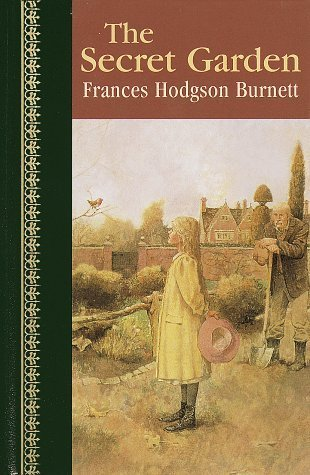
Blurb –
When orphaned Mary Lennox comes to live at her uncle’s great house on the Yorkshire Moors, she finds it full of secrets. The mansion has nearly one hundred rooms, and her uncle keeps himself locked up. And at night, she hears the sound of crying down one of the long corridors. The gardens surrounding the large property are Mary’s only escape. Then, Mary discovers a secret garden, surrounded by walls and locked with a missing key. One day, with the help of two unexpected companions, she discovers a way in. Is everything in the garden dead, or can Mary bring it back to life?
One of the most delightful and enduring classics of children’s literature, The Secret Garden has remained a firm favorite with children the world over ever since it made its first appearance. Initially published as a serial story in 1910 in The American Magazine, it was brought out in novel form in 1911.
Loneliness
This is particularly common in teenagers who feel isolated and lonely when they are caught up in a whirlwind of hormones that they don’t understand and can’t control. Teenagers want to be ‘part of the herd’ and the same as their friends and peer group. If they aren’t the same for various reasons including health issues, learning barriers or abilities, isolation can set in. Reading about other youngsters who are experiencing the same challenges or even unusual physical or intellectual achievements, helps promote self acceptance and reduce loneliness.
A good example of a book that involves peer pressure and the need to belong is Are You There God? It’s Me, Margaret.
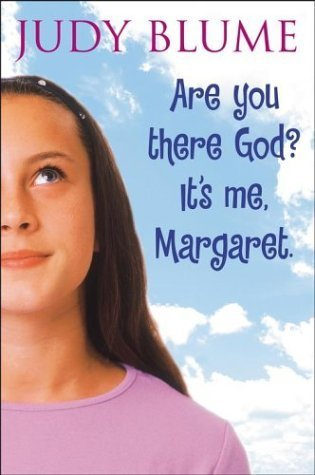
Blurb: Margaret Simon, almost twelve, likes long hair, tuna fish, the smell of rain, and things that are pink. She’s just moved from New York City to Farbook, New Jersey, and is anxious to fit in with her new friends—Nancy, Gretchen, and Janie. When they form a secret club to talk about private subjects like boys, bras, and getting their first periods, Margaret is happy to belong.
But none of them can believe Margaret doesn’t have religion, and that she isn’t going to the Y or the Jewish Community Center. What they don’t know is Margaret has her own very special relationship with God. She can talk to God about everything—family, friends, even Moose Freed, her secret crush.
Margaret is funny and real, and her thoughts and feelings are oh-so-relatable—you’ll feel like she’s talking right to you, sharing her secrets with a friend.
Reduces depression and anxiety
Reading a good book full of joy and happiness helps lift low spirits. For example, reading about the dwarves and Bilbo enjoying clotted cream and honey on freshly baked bread at the home of Beorn, is uplifting. Reading about Harry Potter and his friends defeating Voltemort and his Deatheaters is absorbing and fills the reader with courage and enthusiasm. Many books give the reader a wonderful sense of well being and satisfaction when the adversity comprising the plot is resolved.
Developing social skills
Reading helps youngsters learn how to negotiate and deal with different social situations. It teaches them about romance and the emotions of love, and also rejection and sadness when romance ends or goes wrong. Reading about other people experiencing traumatic and difficult situations helps develop empathy and facilitates the development of meaningful relationships with different people from different backgrounds, cultures and religions.
I am David by Anne Holm is a wonderful book to teach children about gaining social skills. David has to learn to socialise with Maria and her brothers after he saves her from the fire. It is difficult for David who grow up in a concentration camp and only socialised with adults held in captivity.

Blurb – David’s entire twelve-year life has been spent in a grisly prison camp in Eastern Europe. He knows nothing of the outside world. But when he is given the chance to escape, he seizes it. With his vengeful enemies hot on his heels, David struggles to cope in this strange new world, where his only resources are a compass, a few crusts of bread, his two aching feet, and some vague advice to seek refuge in Denmark. Is that enough to survive?
David’s extraordinary odyssey is dramatically chronicled in Anne Holm’s classic about the meaning of freedom and the power of hope.
Winding down
Reading is a wonderful way for children and teens to wind down before sleeping. Today’s children and teens are continuously busy and subject to an endless barrage of mental stimulation. This can make sleep elusive and lack of sleep is very bad for mental health. Reading before bed is the perfect way to wind down after a long day.
About Robbie Cheadle
Award-winning, bestselling author, Robbie Cheadle, has published thirteen children’s book and three poetry books. Her work has also appeared in poetry and short story anthologies.
Robbie also has two novels published under the name of Roberta Eaton Cheadle and has horror, paranormal, and fantasy short stories featured in several anthologies under this name.
The ten Sir Chocolate children’s picture books, co-authored by Robbie and Michael Cheadle, are written in sweet, short rhymes which are easy for young children to follow and are illustrated with pictures of delicious cakes and cake decorations. Each book also includes simple recipes or biscuit art directions which children can make under adult supervision.
Robbie’s blog includes recipes, fondant and cake artwork, poetry, and book reviews. https://robbiesinspiration.wordpress.com/
Share this:

Treasuring Poetry – Meet poet and author, D.L. Finn and a book review #TreasuringPoetry #bookreview #poetry
Posted: June 21, 2023 Filed under: Blog Tour, Book Release, Book Review, Books, Collection, Interview, Poetry, Treasuring Poetry | Tags: D.L. Finn, Just Her Poetry, Robbie Cheadle, Treasuring Poetry, Writing to be Read 93 Comments
My June Treasuring Poetry guest is the talented poet and author, D.L. Finn. Welcome Denise.
Why do you write poetry?
I write poetry for many reasons but the most important one is that I can describe what I’m seeing or feeling in ways I am unable to when I speak. Poetry also expresses or records the world as I see it or want it to be. I can use poetry to convey the pure awe of nature, share my thoughts, or vent frustrations. Writing poetry is not only a wonderful vehicle to communicate my emotions but I like that my perspective can be interpreted differently by the readers.
Do you think poetry is still a relevant form of expressing ideas in our modern world? If yes, why?
I do think poetry is still relevant. It is a beautiful art form that allows us to glimpse the world in new ways like any good painting would but through words.
Which poem by any other poet that you’ve read, do you relate to the most and why?
The first poem that captured me was A Road Less Traveled. I have the poem framed on my wall so I can enjoy it every day and appreciate that it can have a more layered meaning, and interpretations.
The Road Not Taken
BY ROBERT FROST
https://www.poetryfoundation.org/poems/44272/the-road-not-taken
Two roads diverged in a yellow wood,
And sorry I could not travel both
And be one traveler, long I stood
And looked down one as far as I could
To where it bent in the undergrowth;
Then took the other, as just as fair,
And having perhaps the better claim,
Because it was grassy and wanted wear;
Though as for that the passing there
Had worn them really about the same,
And both that morning equally lay
In leaves no step had trodden black.
Oh, I kept the first for another day!
Yet knowing how way leads on to way,
I doubted if I should ever come back.
I shall be telling this with a sigh
Somewhere ages and ages hence:
Two roads diverged in a wood, and I—
I took the one less traveled by,
And that has made all the difference.
Which of your own poems is your favourite and why?
I have two from when I first started writing poetry. So, these poems have a special place in my heart.
The Bearded Old Man
The bearded old man
Walks across the quiet desert,
His hooded white robe
Protecting and sheltering him
From the burning sky.
His feet are silent against the sand.
He walks day and night,
Going to a place that he knows exists.
He beckons strangers to join him
As he keeps walking toward…
That place he calls home.
Fingers of the Sea
The weightless world of the beach engulfs me
As the long, extended fingers of the sea
Gently
Stroke me—welcome me,
Enticing with its salty breath,
Satisfying my deep, hidden hunger.
Slowly
The fingers curl back
An invitation,
Beckoning toward the heart of the sea.
Beneath my gaze on the cold, wet world
Its subjects are sent out to tempt,
Screeching and scurrying
Above and below me,
All in a frenzied orchestrated rhythm.
The sea’s haunting song
Urgently
Seduces my soul.
All of my resistance floats away
Like the curling waves,
As I blissfully clutch
The fingers of the sea.
Is writing poetry easy for you compared to prose or do you do a lot of editing and revision of your poems?
Poetry does seem to come easily to me. I will usually write the poem by hand and then later put it on the computer. Editing comes later when I use the poem for my blog, a challenge, or a book. Each poem is different but when it feels and sounds right to me—it’s done. It is a different process for free verse over symbolic. In free verse I let the words flow naturally, while in symbolic poetry I need to make my words fit a pattern. I do enjoy writing both types of poetry and challenge myself to pen poetry in many different places. This includes the back of a Harley, underwater, or on a crowded plane. In writing prose, I need a quiet space and an idea to get me writing so it’s very different process from poetry.
What mode (blog, books, YouTube, podcasts) do you find the most effective for sharing your poems with poetry lovers and readers?
I share my poetry on my blogs, newsletters, and challenges. I also have a book, Just Her Poetry, and working on another one right now. I least like to read my poetry but will still do it.
My review of Just Her Poetry Seasons of a Soul (Poetry)

This book, packed with exquisite poems, is divided into two main sections, namely, Just her poetry about nature and the author’s experiences investigating sites of natural beauty from her seat behind the driver of a Harley and Seasons of a soul which includes a variety of passionate and evocative poems about the author’s emotional state during various experiences and circumstances she has faced during her life.
I was attracted particularly to the second section of poems and was captivated by the author’s depictions and descriptions of the states and stages of life. I selection of my favourite lines are as follows:
“I am alone
Yet the voices from my past sit with me.
They can haunt me – or comfort me.”
From Now
“It’s time to let go of the things I’ve collected.
Leaving room for my heart to shine through my smile.
Then my peace will be complete within my soul.”
From Simply Gone
And this extract from my favourite poem:
“I’m figuring out why I keep repeating the same issue over and over,
Like walking by a shoe in the middle of the room, tripping over it daily,
But not moving it or even taking another route so I don’t fall over that shoe.
Then it became guilt for me, always been there, while I kept tripping on it.”
From The Shoe.
This particular poem really spoke to me and I could relate to it completely. That, for me an avid reader of poetry, is a rare and wonderful thing.
Purchase link: https://www.amazon.com/gp/product/B07NVZ7FPF
My review of In the Tree’s Shadow (short story collection)

In the tree’s shadow is an entertaining collection of horror, paranormal and sci-fi short stories that is well worth reading. The stories all revolve around themes of self worth, love and relationships and use dark twists and turns to demonstrate the strength of love and its ability to overcome impossible seeming odds. The stories are of different lengths with some being quite long and detailed and others being 99-word flash fiction.
My favourite story was the first in the book called ‘End of the road’. The main character’s dismal life was well described and the reach of her grandmother’s love from beyond the grave was welcome and heart warming.
‘The Playdate’ and ‘A Man on the pier’ were both unexpectedly dark with most interesting twists that gave me quite a shock.
Another tale that I found particularly pleasing was ‘The Dolphin’. It was not dark, rather heart warming and unique.
All the stories are well written and the characters are nicely drawn.
Purchase Link: https://www.amazon.com/Trees-Shadow-collection-stories-nightmares-ebook/dp/B0BWL7LX9K
About D.L. Finn

D.L. Finn is an independent California local who encourages everyone to embrace their inner child. She was born and raised in the foggy Bay Area, but in 1990 relocated with her husband, kids, dogs, and cats to the Sierra foothills in Nevada City, CA. She immersed herself in reading all types of books, but especially loved romance, horror, and fantasy. She always treasured creating her own reality on paper. Finally, being surrounded by towering pines, oaks, and cedars, her creativity was nurtured until it bloomed. Her creations vary from children’s books, young adult fantasy, and adult paranormal romance to an autobiography with poetry. She continues on her adventures with an open invitation for her readers to join her.
About Robbie Cheadle
Award-winning, bestselling author, Robbie Cheadle, has published thirteen children’s book and two poetry books. Her work has also appeared in poetry and short story anthologies.
Robbie also has two novels published under the name of Roberta Eaton Cheadle and has horror, paranormal, and fantasy short stories featured in several anthologies under this name.
The ten Sir Chocolate children’s picture books, co-authored by Robbie and Michael Cheadle, are written in sweet, short rhymes which are easy for young children to follow and are illustrated with pictures of delicious cakes and cake decorations. Each book also includes simple recipes or biscuit art directions which children can make under adult supervision.
Robbie’s blog includes recipes, fondant and cake artwork, poetry, and book reviews. https://robbiesinspiration.wordpress.com/
Share this:

Growing Bookworms – Meet children’s fiction and adult fiction and non-fiction author, Toni Pike and a review #growingbookworms #childrensfiction #bookreview
Posted: June 14, 2023 Filed under: Book Promotion, Book Review, Books, Children's Books, Fiction, Mystery, Review, Thriller | Tags: Author Interview, Book Review, Children's Books, Cody Brody and the Step Mother From Outer Space, Growing Bookworms, Robbie Cheadle, The MAgus Covenant, Toni Pike, Writing to be Read 61 Comments
Today, I am delighted to introduce children’s and adult fiction author, Toni Pike. Toni is a prolific writer with at least two non-fiction books, six adult thrillers, one women’s fiction, and two children’s books, all available from Amazon. Today, we are focusing the discussion on Toni’s two children’s books in the Brody Cody series. I’ve read both and they are wonderful for middle school children.
I love your books about Brody Cody as they are filled with excellent, age-appropriate humour without resulting in facetious child characters which is a pitfall with many modern children’s books. Is there any particular children’s book author whom you admire and consider to be a role model for your writing?
Thank you so much for your lovely comments, Robbie – I’m delighted that you liked my characters. That means so much to me, coming from such a wonderful writer.
Roald Dahl is my favourite children’s author – his irreverent stories and characters are so wickedly delightful, and his plots are so beautifully constructed. I find children love this irreverence, and I was horrified to read recently that his stories were to be “sanitised” for the modern world. I think young readers could only benefit from enjoying his classic stories.
One of my other favourite role models is Judy Blume – I love the characters and familiar situations in “Tales of a Fourth Grade Nothing.”
Is Brody Cody entirely fictitious or are some of his characteristics based on real life models?
I always say that they are entirely a figment of my imagination – but quite a few aspects of Brody’s character are drawn from various real-life situations. In particular, I drew on memories of my own children and their friends, and also some snippets and ideas from children I taught at school. Having said that, nothing would be recognisable. I also drew on my own experience of childhood – even though that was a very long time ago! Two examples were Brody’s reluctance to get involved with extra-curricular activities, and also his insecurities, things Brody and I have in common.
How do you go about ensuring the language and flow of ideas in your children’s books are appropriate for the target age group?
Whether it’s for adults or children, I always try to write fast-moving stories that are plot-driven to keep the reader turning the page. That style seems suit me best, and it’s one of the reasons I like writing thrillers. To keep the language age-appropriate, I tried to think of how my children spoke when they were that age. I also made sure I used simple words and sentences, and always attempted to add humour. The setting was Australia, which of course is my home, so I knew the local idioms. I didn’t worry too much about the latest slang expressions – I tried to avoid that.
The theme of your first book, Brody Cody and the Stepmother from Outer Space, is very relevant in our modern age of frequent broken families and remarriages. Was there anything specific that compelled you to write this type of story? What were your aims with this book?
I wanted to write about a little boy who had lost his mother, because that immediately created sympathy for the character. I wanted it to be both scary and funny, but to have a very positive message about children and parents. I know there are a lot of blended families these days, so I hoped it would strike a chord but also be something all children could enjoy.
What are your goals for the Brody Cody series? Can we expect another book in this series soon?
I have a list of ideas for future Brody Cody stories, and want to add to the current two-book series. However, I also love writing books for adults, and I’m currently working on another thriller – which is still at a very early stage. I feel torn between the two, and don’t want to disappoint my grown-up readers who’ve followed me for a few years now. So, for the moment, I think my adult writing is winning.
Books for children are harder to market than books for adults. How do you go about marketing your books and what works best for you?
Attracting readers for the series has been far more difficult than I anticipated – much more so than for adult books. Of course, that’s only my experience and other writers may not find that. I was thrilled with the response from those who did read them, and many of the reviews were wonderful. But I would prefer to find a wider audience.
I use the same techniques for marketing that I used for my other books The first essential is to have some reviews – and I send out advance copies for that. I enrol my books in Kindle Unlimited, and have both the ebooks and paperbacks on Amazon. I find reads on Kindle Unlimited account for a fair proportion of my royalty income. Occasional free days, especially for the first book in the series, helps to boost subsequent sales of all books in the series and also helps to get some reviews. I also use Amazon sponsored ads, targeting similar books and authors. I do, however, keep a tight rein on my budget for that.
The best marketing tool of all, though, is a supportive writing community. I’ve become good friends over the last few years with other writers like yourself from all over the world, and supporting and sharing each other’s writing and blog posts is a great way to spread the word. Your Growing Bookworms series about children’s writing is a great inspiration for children’s writers, and a great learning tool for parents.
My review of Brody Cody and the Stepmother from outer space
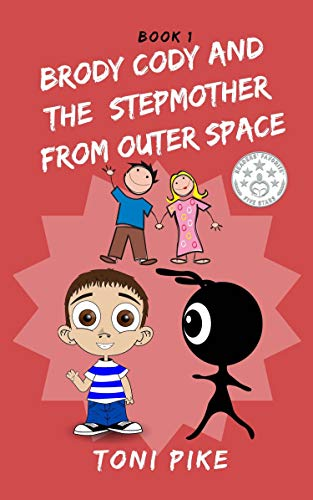
This book is a hilarious and fun read for young readers aged 7 to 13 years old. It is quite reminiscent, with its quirky and slightly dark humour, of Roald Dahl’s books, in particular, it reminded me a bit of James and the Giant Peach where James’ parents are eaten by a rampaging rhinoceros.
Cody, the young hero if this book, is raised by his relaxed and nonchalant father after his mother is mowed down unexpectedly by a runaway bus. Cody is spared because he flies out of his pram and across into the hands of the police constable who catches him like a baseball.
Cody is a happy boy who lives with no rules and little parental intervention. His father works from home in the afternoons, and is not given to checking on Cody’s homework or making sure it is done. They have an interesting diet too that comprises of sweet and sickly cereal in the morning and some fabulously unhealthy father created meals in the evenings.
Cody is happy and doesn’t believe he needs a mother like other children have. He has freedom and he is happy living with his father.
One day, Cody’s father needs to go away to an out-of-town conference. Cody cannot go with him and is sent to his friend’s home for this period. Cody’s friend has a mother and she sets about trying to mend Cody’s lackadaisical ways. Just before Cody is due to go home, he gets a quick call from his father telling him he has met and married a woman he met at the conference.
Cody is horrified and returns home quite determined to reject this new mother, but things don’t go quite according to plan. Cody discovers things about his new mother than lead him to believe she is an alien.
This really is a rollicking good story and young children will love it.
My review of The Magnus Covenant
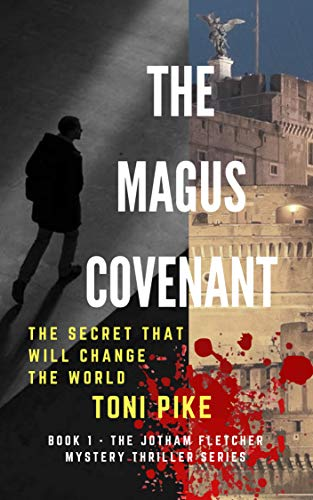
The Magnus Covenant is an exciting thriller that starts of with an unusual and strange murder. From there the excitement and pace just keep increasing, keeping you on the edge of your seat.
Jotham Fletcher and his girlfriend, Antonella Pavoni, a lecturer at the University of Rome, arrive at a famous Catholic Church where Jotham is expecting to deliver a lecture about Simon Magnus just in time to view the body of an elderly man in a black cape who may have committed suicide. As an expert on Simon Magnus, a cult leader from the time of Jesus, who thought he should be the head of the church and who was believed to have been a magician, Jotham mentions to the police the similarities between the deaths of Simon Magnus and this old man. Unfortunately, Jotham’s comments and interventions make him a prime suspect for murder.
Jotham does give his lecture and is the recipient of an extraordinary question from a journalist who subsequently disappears. He is also the recipient of antagonistic comments from a young Catholic brother who is also a member of the audience.
Shortly after the delivery of the lecture, Jotham is kidnapped and becomes embroiled in a complicated intrigue involving the members of the Simon Magnus cult, which has been in existence for 2,000 years, a brotherhood of extreme Catholics and a wealthy individual who may be the cause of all the agitation through the discovery and restoration of an ancient document. Jotham quickly realises that he can’t trust anyone he knows or meets and that his life is in danger.
Jotham is a great character. He has suffered personal loss through the deaths of his wife and child and is struggling with his faith. He’d thrown himself into researching Simon Magnus as a distraction from his loss and emotional turmoil. The deception of many people around him comes as a complete surprise to Jotham and he gets himself into a mess. He is able to pull himself together, discover his survival instincts and set about unravelling the intrigue all around him.
I thought the plot of this book was clever and interesting and the action kept me interested throughout.
About Toni Pike
Toni Pike is a multi-genre author who enjoys writing page-turning fiction for adults, hilarious books for children, and non-fiction. She also loves travelling and being with family and friends. She lives in Australia and firmly believes that coffee and long walks are an essential part of any day.
Do you like books that you can’t stop reading? Pike is the author of LINDA’S MIDLIFE CRISIS, DESOLATION BLUFF, DEAD DRY HEART and The Jotham Fletcher Mystery Thriller Series: THE MAGUS COVENANT, THE ROCK OF MAGUS, THE MAGUS EPIPHANY and HOLY SPEAR OF MAGUS.
The Brody Cody Series is for children aged 6-9: BRODY CODY AND THE STEPMOTHER FROM OUTER SPACE and BRODY CODY AND THE HAUNTED VACATION HOUSE.
She’s also the author of two non-fiction books. THE ONE WAY DIET is a no-nonsense guide to losing weight. HAPPY TRAVELS 101 is a short book of travel tips with advice for anyone who wants to travel overseas.
To find out more, her website is tonipike.com.
About Robbie Cheadle
Award-winning, bestselling author, Robbie Cheadle, has published thirteen children’s book and three poetry books. Her work has also appeared in poetry and short story anthologies.
Robbie also has two novels published under the name of Roberta Eaton Cheadle and has horror, paranormal, and fantasy short stories featured in several anthologies under this name.
The ten Sir Chocolate children’s picture books, co-authored by Robbie and Michael Cheadle, are written in sweet, short rhymes which are easy for young children to follow and are illustrated with pictures of delicious cakes and cake decorations. Each book also includes simple recipes or biscuit art directions which children can make under adult supervision.
Robbie’s blog includes recipes, fondant and cake artwork, poetry, and book reviews. https://robbiesinspiration.wordpress.com/