Treasuring Poetry – Meet prolific poet, Ivor Steven, and a review #poetry #poetrycommunity #TreasuringPoetry
Posted: April 17, 2024 Filed under: Book Review, Books, Collection, Interview, Poetry, Review, Treasuring Poetry | Tags: Book Reveiw, Ivor Steven, Poetry, Robbie Cheadle, Treasuring Poetry, Until Eyes Hear Sound, Writing to be Read 59 Comments
My April Treasuring Poetry guest is talented and prolific poet, Ivor Steven. Please enjoy his thoughts about poetry and some of his favourite poems.
What is your favourite style of poetry to read?
Oh, there are so many styles of poetry that I like. In my personal library I have poetry books by Leonard Cohen, William B Yeats, Walt Whitman, Emily Dickinson, John Keats, Henry Lawson, Banjo Paterson, and Rupi Kaur, and of course numerous other local poets. My selections are of a range of styles and very eclectic, however, my favourite poetry style is rhythmical freestyle poems.
What is your favourite poem in your favourite style to read?
Since I was a teenager, I have been an avid follower of Leonard Cohen’s writings, and he has had a huge influence on the way I draft my poems. One of my favourite poems of his is “Avalanche”.
“Avalanche“
Well, I stepped into an avalanche,
it covered up my soul;
when I am not this hunchback that you see,
I sleep beneath the golden hill.
You who wish to conquer pain,
you must learn, learn to serve me well.
You strike my side by accident
as you go down for your gold.
The cripple here that you clothe, and feed
is neither starved nor cold;
he does not ask for your company,
not at the centre, the centre of the world.
When I am on a pedestal,
you did not raise me there.
Your laws do not compel me
to kneel grotesque and bare.
I myself am the pedestal
for this ugly hump at which you stare.
You who wish to conquer pain,
you must learn what makes me kind;
the crumbs of love that you offer me,
they’re the crumbs I’ve left behind.
Your pain is no credential here,
it’s just the shadow, shadow of my wound.
I have begun to long for you,
I who have no greed;
I have begun to ask for you,
I who have no need.
You say you’ve gone away from me,
but I can feel you when you breathe.
Do not dress in those rags for me,
I know you are not poor;
you don’t love me quite so fiercely now
when you know that you are not sure,
it is your turn, beloved,
it is your flesh that I wear.
What is your favourite style of poetry to write? Why?
I must say I like writing Haiku, Tanka, musettes, and other forms of short poems. However, I only started writing poetry after I had suffered a semiserious stroke in 2000. During my rehab, the speech therapist encouraged me to write rhyming words to help regain my cognitive abilities. I developed a knack for rhyming words and from there my writing knowledge gradually expanded. With my restricted thought process, the rhythmical Freestyle Poems were an uncomplicated style for me to follow and I kept improving on my newfound journey into the world of poetry.
What is your favourite of your own poems in your favourite style?
Oh gosh, I have written nearly two thousand poems over the past twenty years, my favourite one is from my first book “Tullawalla”, I wrote the poem in Philadelphia while visiting my cousins in 2019. The trip to America was only two months after my 2nd and 3rd strokes, and the journey was truly a “dream come true”.
Dreams of The Heart
I cannot walk the continents
Like the intrepid Marco Polo
But my feet have felt the sands of time
Pass between my toes
I have not sailed the high seas
Like the courageous Christopher Columbus
But my body has bathed
In an ocean full of kind hearts I am yet to fly in space
Like the brave Neil Armstrong
But I have reached for the stars
And touched my soul’s dreams
How do you promote your poetry and poetry books?
I promote my poetry and books via my WordPress website, and social media sites: Instagram. Facebook. Thread, and a new website Medium. Also, I am an appointed writer for the online Coffee House Writers magazine (America), and they allow me to promote my Books on their members chat-site. I am a member the Geelong Writers Inc, who have Monthly social gatherings where I can sell my books. I frequent several local cafes, at which I am allowed to display and sell my books. I regularly attend local Arts Markets and I have had Book Stalls at nearby book festivals, the most recent being the prestigious Clunes Booktown Festival.
>> Clunes Booktown Festival – For the love of story
You can find out more about Ivor Steven on his blog here: https://ivorplumberpoet.press/about/
My review of Until Eyes Hear Sound

Available from Lulu.com here: https://www.lulu.com/search?contributor=Ivor+Steven&adult_audience_rating=00
and Jaymah Press here: https://www.jaymahpress.com.au/product-page/until-eyes-hear-sound
Until Eyes Hear Sound is a wonderful collection full of impactful poems about numerous important issues humanity faces as a collective, as well as the beauty of our natural world.
The book is divided up into ten chapters as follows: Little Creatures and Birds; Planet Earth, Nature and Existence; The New World? The Same Universe; Observations – “Until Eyes Hear Sound”; War! Without Peace?; Memories and Rhymes; Poetry in Slow Motion; Humour, Fantasy, Faeries, and Weird; and Short Poems, Haiku, Senryu, Tanka, and Others. Each section shares a smaller collection of poems that highlight the best and worst of that category. The poems are written in a mixture of freestyle and rhyming verse and are easy to read and vivid in their description.
The following are a few lines from some of the poems I related to the most in the collection:
“Raw rain is tumbling across town
Mother Nature’s roaring sound
Amplifies her tears slapping the ground
As her dark clouds wrinkle into a frown”
from She Knows
“Behind every mask there is a weathered face
Behind every face old lines survive in place
Behind every place memories live with grace”
from My World, My Thoughts
“arriving
via the cemetery gate
holding her flowers
hands quivering
heart quickens …
“leaving
via the cemetery path
renewing goodbyes
crying silently
breathing slowly”
from Arriving and Leaving, Visiting Her. This was my favourite poem in the collection.
A beautiful collection.
About Robbie Cheadle
Award-winning, bestselling author, Robbie Cheadle, has published fourteen children’s books and three poetry books. Her work also features in several poetry and short story anthologies.
Robbie also has two novels published under the name of Roberta Eaton Cheadle and has horror, paranormal, and fantasy short stories featured in several anthologies under this name.
The eleven Sir Chocolate children’s picture books, co-authored by Robbie and Michael Cheadle, are written in sweet, short rhymes which are easy for young children to follow and are illustrated with pictures of delicious cakes and cake decorations. Each book also includes simple recipes or biscuit art directions which children can make under adult supervision.
Robbie and Michael Cheadle have recently launched a new series of children’s books called Southern African Safari Adventures. The first book, Neema the Misfit Giraffe is now available from Amazon.
Robbie’s blog includes recipes, fondant and cake artwork, poetry, and book reviews. https://robbiesinspiration.wordpress.com/
Share this:

Growing Bookworms – Age groups for children’s books: Early Readers #GrowingBookworms #childrensfiction
Posted: April 10, 2024 Filed under: Books, Children's Books, Fiction, Growing Bookworms, Interactive Books | Tags: Children's Books, Growing Bookworms, Robbie Cheadle, Writing to be Read 47 Comments
Encouraging children to read is very important. Reading helps children build language skills, learn about the larger world and also, develop empathy and emotional awareness. Parents reading to their children is one of the greatest gifts you can give.
In order to ensure the children are fully engaged in the book and story, it is important to read age appropriate books. If a story is to complex for a child, he/she will not fully engage and will lose interest. If the book is to easy for the child, he/she will not learn anything new and there will be no progression.
This is a summary of the different age groups for children’s books:
Books for toddlers
These books are aimed at children up to approximately 3 years old. They are printed on hard cardboard for durability and usually contain interesting pictures with accompanying words and/or phrases.
Early picture books
The age group for these books is 2 to 5 years old. These books are driven by colourful illustrations and often teach a life lesson about friendship, empathy, and kindness. They help teach children the social skills they need for school. The text is simple but stimulating.
Picture books
Picture books are aimed at children aged between 5 and 8 years old. These books contain a full story, sometimes told in rhyming verse, and contained beautiful pictures and illustrations to maintain interest and aid reading. These books are usually between 600 to 1,000 words in length and often include educational material.
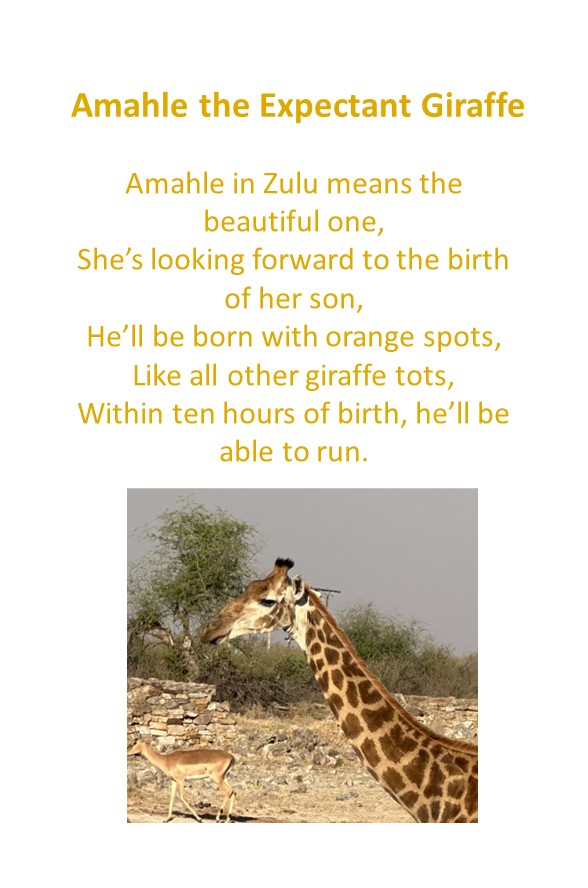
This is the target market for most of my children’s books which are interactive and also include recipes (Sir Chocolate books), activities for children (Sir Chocolate Highdays and Holidays books series) and wildlife facts, photographs and wildlife videos (Southern African Safari Adventures Books).

First chapter books and graphic novels
These books are aimed at children who have learned to read on their own. They are usually between 3,000 and 5,000 words in length and contain a more complex story line. While these books still contain illustrations, there is more text than pictures in the book. The storylines often still adhere to the concepts of acceptance, friendship, and sharing. These books can also expand into more complex areas such as nature conservation and exploration.
Michael and my book, Haunted Halloween Holiday, fits into this category. This story’s primary messaging is around acceptance and diversity. The family unit around which the story revolves comprises of Count Sugular, a vampire, Witch Honey, their baby, Baby Howler, who is a banshee, and Skelly, Count Sugular’s brother who is a skeleton.
I created a short YT video story called Haunted Halloween Safari which uses some of the characters from Haunted Halloween Holiday and gives an idea of writing and creative level of this type of book.
About Robbie Cheadle
Award-winning, bestselling author, Robbie Cheadle, has published fifteen children’s book and three poetry books. Her work has also appeared in poetry and short story anthologies.
Robbie also has two novels published under the name of Roberta Eaton Cheadle and has horror, paranormal, and fantasy short stories featured in several anthologies under this name.
The eleven Sir Chocolate children’s picture books, co-authored by Robbie and Michael Cheadle, are written in sweet, short rhymes which are easy for young children to follow and are illustrated with pictures of delicious cakes and cake decorations. Each book also includes simple recipes or biscuit art directions which children can make under adult supervision.
Robbie and Michael’s new Southern African Safari Adventures series is aimed at teaching young children about Southern African wildlife in a fun and entertaining way. Each book contains a rhyming verse story about a particular animal, as well as illustrations by Robbie Cheadle, photographs and links to video footage about that animal.
Robbie’s blog includes recipes, fondant and cake artwork, poetry, and book reviews. https://robbiesinspiration.wordpress.com/
_____________________________________________
Want to be sure not to miss any of Robbie’s “Growing Bookworms” segments? Subscribe to Writing to be Read for e-mail notifications whenever new content is posted or follow WtbR on WordPress. If you found it interesting or entertaining, please share.
Share this:

Treasuring Poetry – Meet poet and novelist, Jude Itakali, and a review
Posted: March 20, 2024 Filed under: Uncategorized 44 CommentsWelcome to fabulous poet and novelist, Jude Itakali. As a fellow African, Jude is from Uganda, I always feel we have a lot in common and that our love of this continent, its wildlife, and its people, shows through in our writing. Welcome Jude.
What is your favourite style of poetry to read?
It’s so difficult to choose. I love different forms for different reasons and employ them depending on the purpose.
However, if I had to choose one, I’d go with “haibun”. The transition from vivid verbiage and concise prose, to a juxtaposed haiku which most often provides the ‘wow’ moment, really hits the spot for me. So yeah, haibun it is.
What is your favourite poem in your favourite style to read?
It’s near impossible to pick a favourite as I read poetry in a cocktail of forms and never really remember which haibun or sonnet was my favourite. But I’ll include two haibuns that I read recently that really got me:
Susan B. Auld
Directed by reception I wait. But not in the same room where I once sat with other pregnant women, where we spoke soft conversations, smiled in recognition, crocheted pastel blankets, read parenting magazines, made lists of things to buy, to do. There is no baby now
winter rain
an empty nest
beneath the tree
Margaret Domaus
His fingers – are what I can’t stop conjuring. Long and slender nails trim and clean, a baker’s hands lightly dusted with flour.
snowbound
the underground pulse
of hot springs
What is your favourite style of poetry to write? Why?
Another tough choice. Ask me on a different day and I’ll likely have a different answer. But Afro now, I’ll go with ‘etheree’. I love its descending/ascending order of syllables depending on whether to write a reverse etheree or not. This is because writing in this form enables me to expand my musing upon a single word or simple thought, or else to comprehend complex musings and reduce them to a particular word or single thought.
What is your favourite of your own poems in your favourite style?
My favourite amongst the haibun I’ve written is the most difficult question I have to answer here. It’s impossible to choose amongst my babies. I write all of them with so much emotion. Because of this, I’ll simply pick the most recent haibun from my blog. It’s a little bit longer than a single paragraph and haiku, so I’ll include the link instead:
How do you promote your poetry and poetry books?
Not very well I’m afraid. Promotion is a work in progress. For now, I write for my blog, twitter, and do creative reels on my Instagram. I’m still trying to figure out the self-promotion thing, so any help is absolutely welcome.
Thank you so much for listening to me mumbling.
My review of Jude’s latest book, Dark Butterflies: Poetry and short stories of mental health
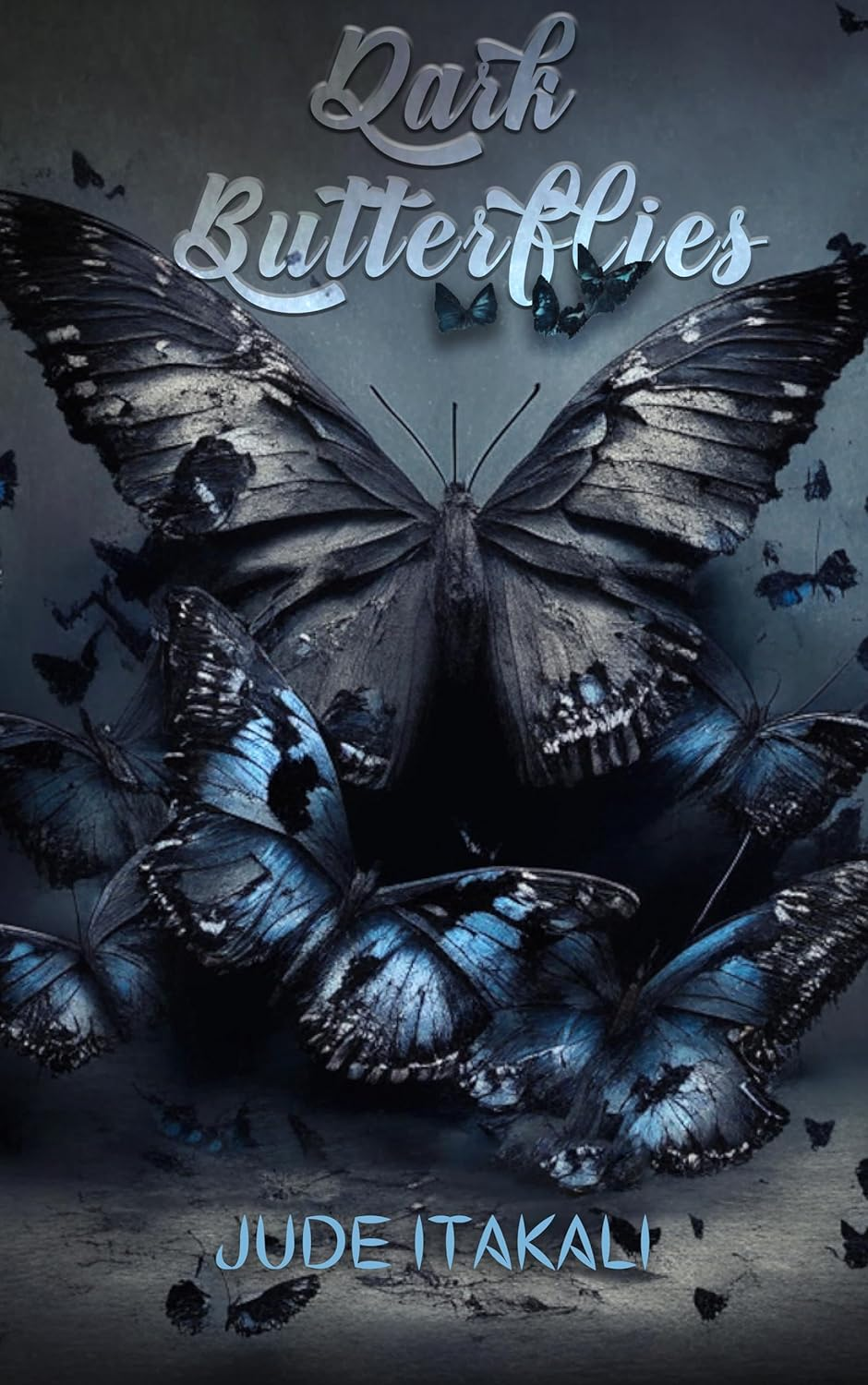
Dark Butterflies is a deep and compelling exploration of the darker side of life. Itakali uses poems and short stories to expose the mental health issues that lie hidden under the shiny surface of societies. Some of the poems and short prose pieces interspersed with syllabic poetry, are told from two or even multiple points of view and experiences, which I really liked. One of my favourite prose pieces is A Tale of Two Beauties which is truly heart warming.
A few of the themes explored in this book, with a relevant quote, are as follows:
Child abuse – ‘You carry the mark of a black kiss,
A bruise etched into your every wish’ from Child fleeing light
Loss of hope – ‘All wonder diminishes in their reflection
The light that once sparked is gone’ from Unseen
Split personalities – ‘By day she is Anne
By night she is Liz’ from Split
Drug abuse – ‘Syringe on the cracked floor
Pills to numb the stench of failure’ from Dark themes we do not see
Loneliness – ‘In the dark hour before dawn, I scale the precipice
Of loneliness. If only for a glimpse of a dream.’
Each of the harrowing mental illnesses or seemingly inescapable circumstances, is handled with compassion and understanding by the poet.
This is a beautiful collection that opens the reader’s eyes to the places in life where the shadows have ownership and trauma is the dwellers daily companion.
You can purchase Dark Butterflies from Amazon US here: https://www.amazon.com/Dark-Butterflies-Poetry-stories-mental-ebook/dp/B0CJ54YLST
Jude also has another poetry book and two novels in the Realms of the Mist series. You can find all of Jude’s books here: https://www.amazon.com/stores/Jude-Itakali/author/B093BJSYTB
About Jude Itakali

Jude Itakali is a poet, writer and fiction author from the suburbs of Kampala, Uganda.
Itakali never liked sharing his books as a child. That has changed, especially since he started writing his own.
A lifelong obsession with ‘the good story’ evoked his personal phrase, “Reality is all around us, but fantasy is a part of us.” Egged on by a conniving appetite to consume works across genres, Itakali crafts the compelling themes and rounded characters in his books.
When not ‘life-ing’ or pursuing infrequent exercise routines, you can find Itakali writing fiction in a small cubicle, or under a tree, furnishing his website, Tales told different, with life epiphanies, ponderous prose, and poetry.
About Robbie Cheadle
Award-winning, bestselling author, Robbie Cheadle, has published fourteen children’s books and three poetry books. Her work also features in several poetry and short story anthologies.
Robbie also has two novels published under the name of Roberta Eaton Cheadle and has horror, paranormal, and fantasy short stories featured in several anthologies under this name.
The eleven Sir Chocolate children’s picture books, co-authored by Robbie and Michael Cheadle, are written in sweet, short rhymes which are easy for young children to follow and are illustrated with pictures of delicious cakes and cake decorations. Each book also includes simple recipes or biscuit art directions which children can make under adult supervision.
Robbie and Michael Cheadle have recently launched a new series of children’s books called Southern African Safari Adventures. The first book, Neema the Misfit Giraffe is now available from Amazon.
Robbie’s blog includes recipes, fondant and cake artwork, poetry, and book reviews. https://robbiesinspiration.wordpress.com/
Share this:

Growing Bookworms – Fun creations using fondant and Easter eggs #fondantart #Easter
Posted: March 13, 2024 Filed under: craft, Creative Projects, Growing Bookworms, Parenting, Teaching children | Tags: Easter Decorations, Fondant Art, Growing Bookworms, Robbie Cheadle, Writing to be Read 43 CommentsThis month, I thought I would share a few ideas for making fun Easter creations using Easter eggs and fondant. Children love making things and modelling fondant is similar to modelling play dough.
I used candy coated hens eggs to make my creations but you can use any hens eggs sized Easter egg.
Step-by-step: How to make an Easter chick from fondant and an Easter egg


If you don’t have cutters, you can just cut the shapes freehand.


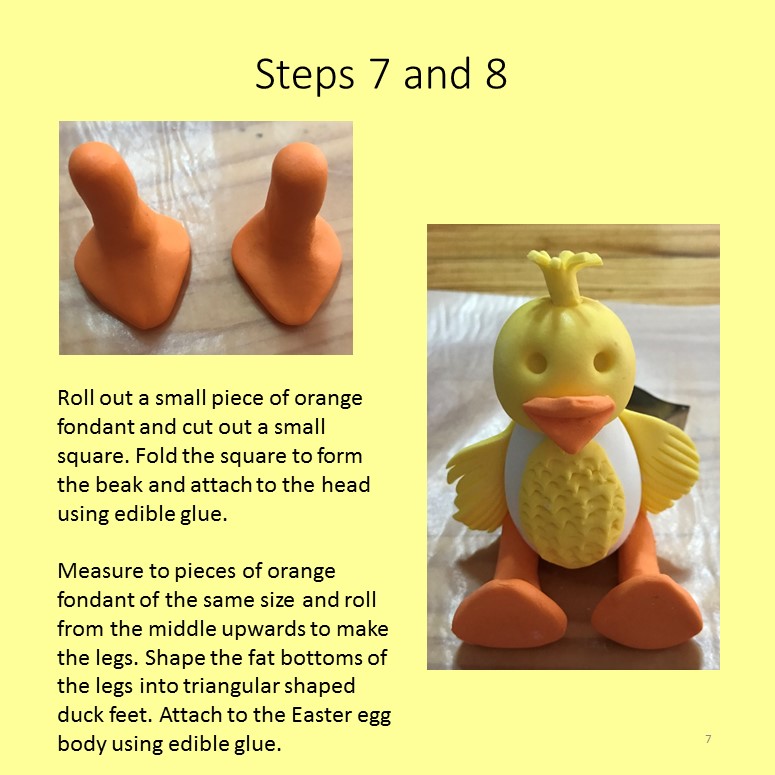


You can download a free PDF with these instructions here: https://robbiesinspiration.files.wordpress.com/2024/03/easter-chick.pdf
Step-by-step: How to make panda bear from fondant and an Easter egg


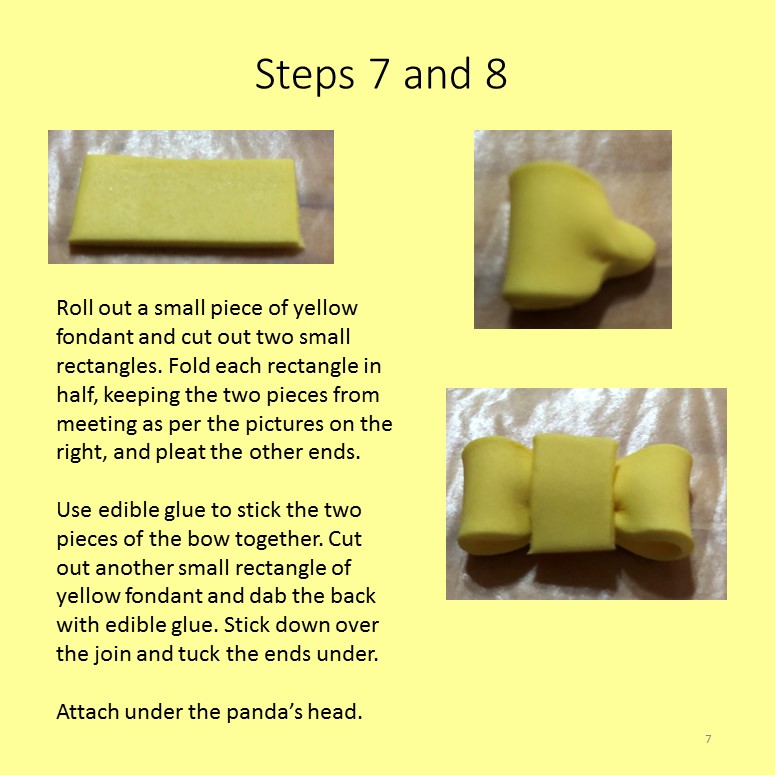

You can download a free PDF with these instructions here:
https://robbiesinspiration.files.wordpress.com/2024/03/panda-bear.pdf
Some other fondant and Easter egg idea – a dinosaur and a pig.


About Robbie Cheadle
Award-winning, bestselling author, Robbie Cheadle, has published fifteen children’s book and two poetry books. Her work has also appeared in poetry and short story anthologies.
Robbie also has two novels published under the name of Roberta Eaton Cheadle and has horror, paranormal, and fantasy short stories featured in several anthologies under this name.
The eleven Sir Chocolate children’s picture books, co-authored by Robbie and Michael Cheadle, are written in sweet, short rhymes which are easy for young children to follow and are illustrated with pictures of delicious cakes and cake decorations. Each book also includes simple recipes or biscuit art directions which children can make under adult supervision.
Robbie and Michael’s new Southern African Safari Adventures series is aimed at teaching young children about Southern African wildlife in a fun and entertaining way. Each book contains a rhyming verse story about a particular animal, as well as illustrations by Robbie Cheadle, photographs and links to video footage about that animal.
Robbie’s blog includes recipes, fondant and cake artwork, poetry, and book reviews. https://robbiesinspiration.wordpress.com/
Share this:

Treasuring Poetry – Poet and editor of MasticadoresUSA, Barbara Harris Leonhard, talks about poetry and a review #poetrycommunity #bookreview
Posted: February 21, 2024 Filed under: Books, Collection, Poetry, Treasuring Poetry | Tags: Barbara Harris Leonhard, Memoir, Poetry, Robbie Cheadle, Three-Penny Memories, Treasuring Poetry, Writing to be Read 23 CommentsA huge welcome to Barbara Harris Leonard, editor of MasticardoresUSA, and talented poet, to Treasuring Poetry.
What is your favourite style of poetry to read i.e. haiku, ballad, epic, freestyle, etc?
I’ve studied different poetic forms but generally read freestyle poetry, especially Anne Sexton, Sylvia Plath, Elizabeth Bishop, and so many more. I also enjoy the more formal classic poetry and other modern poets like Frost, Sandburg, and others. A favorite poet of mine is Emily Dickinson. I’ve written poems in the manner of Dickinson. Overall, however, the majority of poems I have read and written have been free verse.
What is your favourite poem in your favourite style to read?
The first poem that comes to mind is Elizabeth Bishop’s poem “The Fish”. Here it is from poets.org. The description is exquisite, and the story is powerful. She catches a prize fish, admires him, and finds that the fish has been caught five prior times. After examining his wounds—the old hooks and broken fish-lines scabbed over in his mouth—she releases the fish. The imagery throughout the poem is stunning. The old fish is embattled and exhausted, not even resisting the catch. He represents something ancient and universal. He is more than a fish; he is history (“beard of wisdom”) and war as she describes his “weaponlike” lower lip and cutting gills. “The Fish” is a poem written with the skill I strive to have as a poet.
1911 –1979
I caught a tremendous fish
and held him beside the boat
half out of water, with my hook
fast in a corner of his mouth.
He didn’t fight.
He hadn’t fought at all.
He hung a grunting weight,
battered and venerable
and homely. Here and there
his brown skin hung in strips
like ancient wallpaper,
and its pattern of darker brown
was like wallpaper:
shapes like full-blown roses
stained and lost through age.
He was speckled with barnacles,
fine rosettes of lime,
and infested
with tiny white sea-lice,
and underneath two or three
rags of green weed hung down.
While his gills were breathing in
the terrible oxygen
—the frightening gills,
fresh and crisp with blood,
that can cut so badly—
I thought of the coarse white flesh
packed in like feathers,
the big bones and the little bones,
the dramatic reds and blacks
of his shiny entrails,
and the pink swim-bladder
like a big peony.
I looked into his eyes
which were far larger than mine
but shallower, and yellowed,
the irises backed and packed
with tarnished tinfoil
seen through the lenses
of old scratched isinglass.
They shifted a little, but not
to return my stare.
—It was more like the tipping
of an object toward the light.
I admired his sullen face,
the mechanism of his jaw,
and then I saw
that from his lower lip
—if you could call it a lip—
grim, wet, and weaponlike,
hung five old pieces of fish-line,
or four and a wire leader
with the swivel still attached,
with all their five big hooks
grown firmly in his mouth.
A green line, frayed at the end
where he broke it, two heavier lines,
and a fine black thread
still crimped from the strain and snap
when it broke and he got away.
Like medals with their ribbons
frayed and wavering,
a five-haired beard of wisdom
trailing from his aching jaw.
I stared and stared
and victory filled up
the little rented boat,
from the pool of bilge
where oil had spread a rainbow
around the rusted engine
to the bailer rusted orange,
the sun-cracked thwarts,
the oarlocks on their strings,
the gunnels—until everything
was rainbow, rainbow, rainbow!
And I let the fish go.
Copyright © 2011 by Elizabeth Bishop. Reprinted from Poems with the permission of Farrar, Straus and Giroux.
What is your favourite style of poetry to write? Why?
I like free style poetry, mainly narrative and persona poems. Sometimes poetic forms feel restrictive because mastering the form becomes more important than the message of the poem. However, I feel practicing with forms enables a poet to mature in many ways. As I’m writing free style, I use many poetic devices, such as alliteration, slant rhyme, assonance, meter, and others. With free style, for me, some challenges include where to place the line breaks and group the imagery into stanzas. How the poem is organized can affect the meaning. I like the potential for ambiguity in free verse poems.
In “The Fish”, the last three lines are ambiguous. What does “rainbow” refer to? Epiphany? Was the fish a Rainbow trout? Maybe both interpretations apply. But the em dash is important. It interrupts the description of the fish to state an insight “—until everything”. The line break allows the reader to recall everything that was just said and speculate on more things. The repetition of “rainbow” three times insists there is insight. Pay attention. Rainbows are multi-colored, much like the fish. Rainbows presents diversity, inclusivity, and friendship. It’s no wonder she freed the fish.
the gunnels—until everything
was rainbow, rainbow, rainbow!
And I let the fish go.
Formal poetry can also have ambiguity and surprise. It’s just that I feel I have more freedom to play with the lines and stanzas in free verse poems.
What is your favourite of your own poems in your favourite style?
In my book Three-Penny Memories: A Poetic Memoir, my poems are free style. I have several favorites, but “Marie Kondo Cleans My Purse at Starbucks” received recognition from Spillwords Press. It won Publication of the Month in Jan/Feb 2022. In this poem, I am carrying the grief from Mom’s decline due to Alzheimer’s and her death. I am burdened by the memories. Marie Kondo, who is famous for her books on how to declutter your house, offers to help clean my purse (let go of that which no longer serves me). As this poem is about healing from loss, it is in the last section of my book, “Echo”.
Marie Kondo Cleans My Purse at Starbucks
Konmari sees me at Starbucks,
my purse spilling over at the counter.
“May I help?”
She gathers me up
like I’m antique lace
washed too many times.
Before she begins, she whispers,
“Hello, the House,
I am safe. May I enter?”
She pokes through my purse,
pulling out the deck of cards
Mom once carried in her own purse.
A heavy bag of Mom’s pennies
to redeem for cash.
Her checkbook.
The messy old calendar
that listed her appointments
alongside my own.
The quilt she made me,
now falling apart. A cookbook
compiled in her own hand.
Konmari extracts other artifacts,
laying them gently on lined up tables.
People gather. My eyes bleed.
The extra-large pair of panties
Mom made me wear to Sunday school.
The wash, still not done.
A half-used bottle of Diethylstilbestrol,
she was prescribed to prevent spotting
when I was in vitro.
The tricycle she rode
around town at age three
because her mother never watched her.
My cancer scares, scattered
on the bottom of the purse
like cookie crumbs.
The scabs inflicted
by her compression stockings
I failed to wash one last time.
The clump of tissue
I miscarried, swaddled
in an inner pocket.
Her hysterectomy scar.
My hysterectomy scar.
Entwined on a spool.
My t-shaped uterus,
clenching a half-used packet
of Puffs Plus.
A dogeared photo of Mom.
A mirror reflecting
who I want to be.
Konmari has me
hold each item
one last time, saying,
“Thank you, tiny soul,
for sharing your life. I am
grateful.”
She teaches me
how to fold joy
three times.
How to throw out
what I can
no longer carry.
One strategy I appreciate about poetry, whether is is formal or free style, is the use of metaphor. In Bishops’s poem “The Fish”, the fish represents our history and ancient wisdom. Like the fish, we have all fought off death physically or spiritually. We are warriors who build muscle and bear wounds from our life battles. The fish holds our stories, and Bishop is masterful as she extends the metaphor to a universal level.
In my poem, I used the purse as a metaphor of my soul. In the book, Mom’s purse appears in several poems because her purse held her memories: her driver’s license (identity), her checkbook (finances), her comb (beauty), photos (family) and so on. Because I had to become Mom’s brain and hold her business along with mine, the purse took on significance as a brain, or a place to hold her life alongside my own. Grief work, for me, was a process of emptying the purse of all the attachments that no longer served me. And who could help declutter better than Marie Kondo? And revealing your wounds can be embarrassing, so why not do that at Starbucks? This choice gives a dream-like quality to the poem. It is surreal to carry your mother’s tricycle in your purse! Imagine all the nightmares of suddenly appearing naked on the first day of school or other important places. All my baggage is laid out on tables for everyone to see as though viewing a dead body. It’s no wonder “my eyes bleed”.
How do you promote your poetry and poetry books?
Connections sell books, so I’ve increased my online presence (Twitter/X, Mastodon, Linked-in, Instagram, Facebook, Threads, etc). I advertise my publications on social media. My position as Editor for MasticadoresUSA enables me to promote writers and get exposure. I also do interviews and readings online as well as readings, author showcases, and open mics in my hometown, Columbia, Missouri, and now other places in Missouri. I’ve gifted books to libraries. This past summer, 2023, Three-Penny Memories: A Poetic Memoir was chosen among other books for the summer reading program at our local library. My book sells on Amazon and is distributed everywhere, but I have also put it in independent bookstores in my hometown and in St. Louis, Missouri. I continue to publish poems mainly. I’ve started an account on Medium and am republishing poems there when the copyrights revert back to me. I sponsor Zoom poetry meetups and Zoom poetry critique sessions for the Columbia Writers Guild, a Chapter of the Missouri Writers Guild (https://ccmwg.org/ ) and The Garden of Neuro Institute (https://gardenofneuro.com/). I’ve developed relationships with other poets and have reviewed their books. I publish the reviews on MasticadoresUSA, my blog extraordinarysunshineweaver.blog, and Medium.
Thank you, Barbara, for being a wonderful guest.
My review of Three-Penny Memories: A Poetic Memoir by Barbara Harris Leonhard
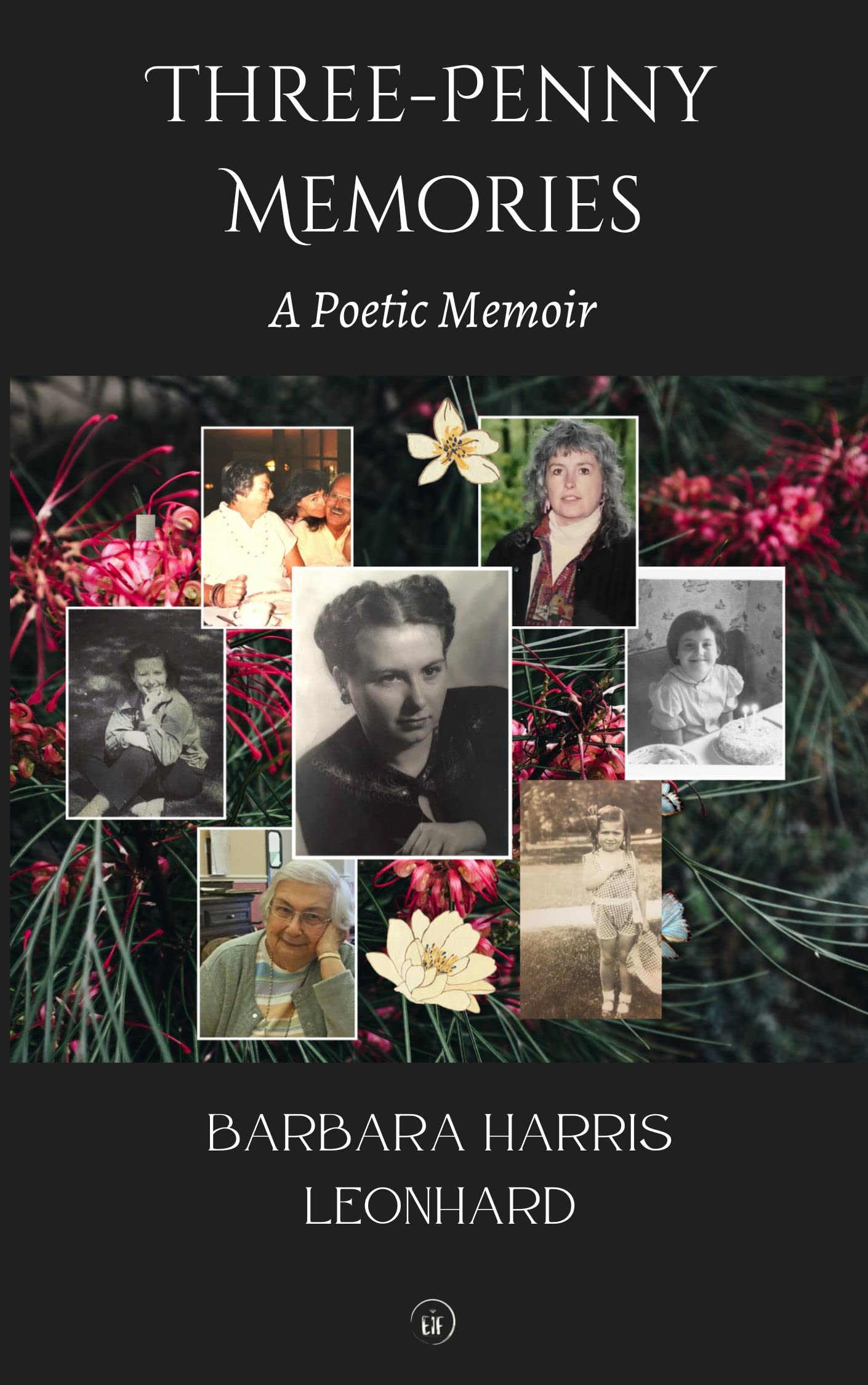
This collection of poems is a deep dive into the love between a mother and daughter. The collection takes the reader on a journey of the poet’s life and the development of the relationship with her mother. She covers her own life threatening illness and the subsequent incapacity and recovery process, as well as her later discovery of the poet’s inability to carry a child to term due to her mother’s ingestion of Diethylstilbestrol (DES) during her own pregnancy. How ironic that the poet’s mother took this drug to ensure the health of her own pregnancy and it resulted in childlessness for her own daughter. Life is full of bitter irony.
Throughout all the trials and tribulations of her life, the poet’s love for her mother burns like a flame, as does her mother’s love for her. And then came Alzheimer’s, the destroyer. The part of the book and the poet’s internal conflict and wrestle with her own feelings was close to my heart. Dementia and Alzheimer’s change people, turns them into someone you don’t know. Someone who doesn’t know you, someone who endlessly demands, complains, and makes bitter comments. In between, there are moments of normalcy and during those times, love returns in a rush, along with accompanying guilt for the conflicting emotions of the bad times.
This book captures the ebb and flow of human love and emotion exactly. It does not examine it, rather it describes and defines it.
A few stanzas from poems that stood out for me:
“One day says – out of nowhere –
shattering words out of her scattered mind
“You’re still childless? Don’t know why!
I dropped seven!”
From Mom’s DES Baby: The Hardest Pill to Swallow
“Mom, flat and detached
My fear. That she’s gone.
Now for good.”
From Fool’s Gold
“How will she manage
the mysterious passage?
This woman with no memories,
no way to find the path,
recall a friend, her mother,
recognise the welcoming
Angel of Death?”
From Departing from Gate 3
The collection is incredibly revealing and emotional, and exceptional read.
Purchase Three-Penny Memories: A Poetic Memoir by Barbara Harris Leonhard from Amazon US here: https://www.amazon.com/gp/product/B0BH99FS2T
About Barbara Harris Leonhard
I’m a retired Instructor of English as a Second Language. Although I have been writing since I was age 8, after retiring in 2017, I have had more time to devote to writing. My WordPress site is extraordinarysunshineweaver.blog. My work appears in online and print literary magazines, journals, and anthologies, and my poetry has won awards and recognition. My debut poetry collection, Three-Penny Memories: A Poetic Memoir (EIF (Experiments in Fiction, 2022), which is about my relationship with my mother, who suffered from Alzheimer’s, achieved best-seller status on Amazon. Also, on Spillwords, I was voted Author of the Month of October 2021, nominated Author of the Year for 2021, and recognized as a Spillwords Socialite of the Year in 2021. I enjoy bringing writers together and have been sponsoring open mics on Zoom. I live in the Midwest of the United States with my husband, Dierik, and our cat, Jasper. Dierik and I enjoy long drives to the wetlands to count the deer.
You can find out more about poet, Barbara Harris Leonhard, on her blog here: https://extraordinarysunshineweaver.blog/about/
About Robbie Cheadle
Award-winning, bestselling author, Robbie Cheadle, has published fourteen children’s books and two poetry books. Her work also features in several poetry and short story anthologies.
Robbie also has two novels published under the name of Roberta Eaton Cheadle and has horror, paranormal, and fantasy short stories featured in several anthologies under this name.
The eleven Sir Chocolate children’s picture books, co-authored by Robbie and Michael Cheadle, are written in sweet, short rhymes which are easy for young children to follow and are illustrated with pictures of delicious cakes and cake decorations. Each book also includes simple recipes or biscuit art directions which children can make under adult supervision.
Robbie and Michael Cheadle have recently launched a new series of children’s books called Southern African Safari Adventures. The first book, Neema the Misfit Giraffe is now available from Amazon.
Robbie’s blog includes recipes, fondant and cake artwork, poetry, and book reviews. https://robbiesinspiration.wordpress.com/
Share this:

Growing Bookworms – Meet prolific children’s book author, Janice Spina, and a review #GrowingBookworms #readingcommunity #childrensfiction
Posted: February 14, 2024 Filed under: Book Review, Books, Children's Books, Growing Bookworms, Interview, Review | Tags: Children's Books, Growing Bookworms, Janice Spina, Robbie Cheadle, The Case of the Sad Mischievous Ghost, Writing to be Read 50 CommentsMy featured guest for this month’s Growing Bookworms post is prolific children’s book author, Janice Spina. Janice also writes for adults as J.E. Spina. This is an overview of Janice’s books:
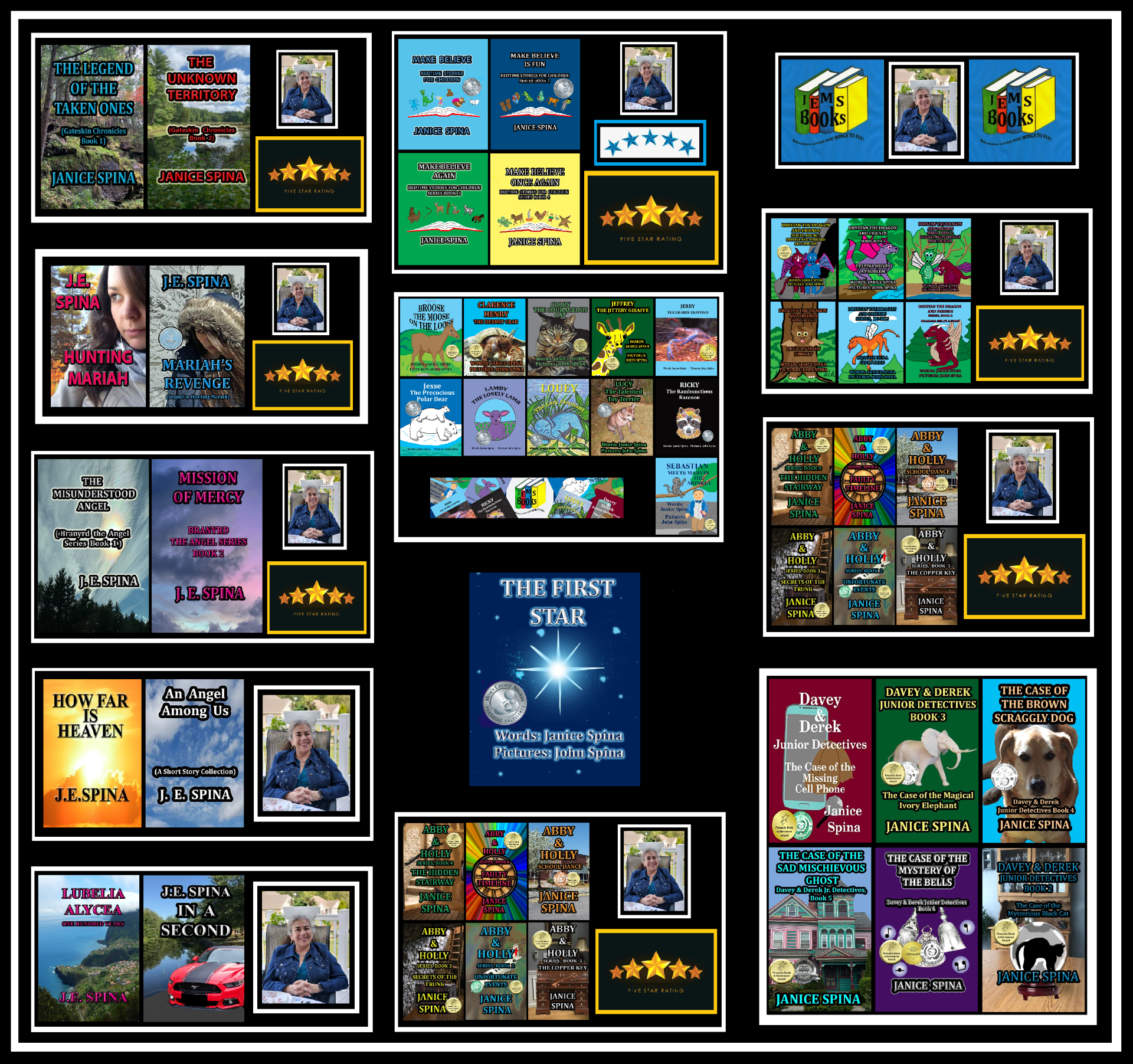
Welcome Janice!
Tell us a bit about your books and your history of writing for children
I have always love writing poetry since a young child. When I wrote my first book, Louey the Lazy Elephant,I had to put it into rhyme. I find that children love rhyming; it keeps them interested if there is a cadence to the story.
I have 22 children’s books at present. Most of them are in rhyme and all of them carry important life lessons and family values. I first began writing for children but branched out later on into MG/PT/YA and novels for 18+. I have books about animals, dragons, and even short stories in a series of six stories per book for children ages 5-8 called Bedtime Stories for Children Series. Some of my stories in this series are based on experiences while others are purely from my overwrought imagination.
A number of your children’s books feature animals and creatures. Are these stories based on personal experience with these creatures?
Many of my children’s books are dedicated to individuals or based on imaginary animals or real-life pets that I have had in the past such as: Jerry the Crabby Crayfish – a pet blue crayfish, Lamby the Lonely Lamb – dedicated to my granddaughter and her stuffed lamby, Jesse the Precocious Polar Bear – dedicated to a little boy I met while vacationing in Aruba, Sebastian Meets Marvin the Monkey – dedicated to my youngest grandson and his stuffed monkey, Colby the Courageous Cat – dedicated to my daughter’s cat, Jeffrey the Jittery Giraffe – dedicated to a little boy who was nervous about loud noises, Clarence Henry the Hermit Crab – a pet hermit crab we once had, Lucy the Talented Toy Terrier – my first dog, The First Star – dedicated to my two children when they were young. I hope to continue to create stories to delight and entertain children for uyears to come along with my husband’s help creating the beautiful illustrations and covers.
The illustrations in your picture books are lovely. Your husband helps you with your illustrations. How much input do you put into the illustration process?
My husband, John, does do the illustrations and covers for all of my children’s books. He also creates the covers for all the other books I publish. Thank God for him! I would be lost without him.
I had to convince him to do this many years ago beginning in 2013. He told me that he wasn’t an illustrator but would give it a try after I told him how much it would cost to hire someone who was an illustrator. John has a quirky sense of humor. I do give him plenty of input about each illustration and cover, much to his chagrin. We don’t always agree on each one and therefore there are many revisions. But I am always pleased with what he creates as the finished product and give him an ample number of kudos online when I present his work.
What do you like best about writing for children?
I love writing for children. What I like best is to see children reading and enjoying my books or anyone’s books. The joy in their faces when they read or are read to is priceless. Reading is so important at an early age and not only for children but also for adults.
I love to hear from parents that their children loved one of my books and look forward to reading more. That is why I write. Receiving positive feedback in reviews is another way to make authors happy and give them an early Christmas gift.
Children – preschool to grade 3 are like sponges soaking up all kinds of things. My goal is to create entertaining and good, clean stories that are educational and full of important life lessons and family values that will stay with them for a lifetime. I hope my stories will enhance their reading experience, increase their reading levels, help to encourage them to become lovers of reading, and create readers and thinkers of tomorrow.
I also write for middle-graders, preteens, and young adults. This age group is a difficult group to entice into reading. They are always absorbed into the newest technology such as X-Box and video games, etc. I create stories in series for this age-group that have plenty of magic, mystery, suspense, wizards, ghosts, and time travel. It is a tough job but I will continue to do all I can to encourage this age-group to read.
What is your favourite children’s book or series for children?
Of all my 22 young children’s books my favorite is still, Louey the Lazy Elephant. This was the first book John illustrated. I love the crayon drawings that he created and how sweet and innocent he made Louey look. It is one of my most popular books alongside Jerry the Crabby Crayfish.
My favorite MG/PT book is Davey & Derek Junior Detectives Series Books 1-6. I had such fun creating the twins and their twin-telepathy, adventures, magic, mystery, ghosts and even time travel. Kids enjoy this series but so do adults.
I was requested by a few readers to offer a series for girls after Davey and Derek were so popular. That is why I wrote Abby & Holly Series Books 1-6. These books are enjoyed by both girls and boys.
There are more stories in my head waiting to be written down, so stay tune for many more to come for all ages.
Thank you so much, Robbie, for inviting me as a guest. I thoroughly enjoyed answering your questions and sharing a little bit about myself and my books with you and your readers.
Thank you, Janice, for being a delightful guest.

My review of The Case of the Sad Mischievous Ghost (Davey & Derrick Jr. Detectives Book 5) by Janice Spina

This is the fifth book in the Davey and Derek Junior Detective Series. Davey and Derek, who are warlocks under the tutelage of their aunt, a witch, have already solved four mysterious cases and they have gained a reputation as detectives. Abby and her cousin, Holly, seek them out at school. The two girls believe the house they have recently moved into, called the Sheridan House after its previous owner, is haunted by a ghost. They have experienced some strange happenings. Davey and Derek agree to investigate and see if they can discover the source of the strange happenings and visitations.
With some advice from their Aunt Gigi, the pair set out to determine the cause of the girls’ anxiety. They embark on an intriguing adventure including cold spots, ghostly forms, and secret tunnels.
This book was reminiscent for me of the Secret Seven adventures series by Enid Blyton which I read as a young girl. It is full of the same energy and excitement as Enid Blyton’s books, but the Davey and Derek Junior Detective Series incorporates a taste of magic and the supernatural which appeals to modern children. This series also tackles topical issues faced by 21st century youngsters. The language is appropriate for the target audience and will keep young readers engaged and interested.
I enjoyed the subtle demonstrations of respect and family values incorporated throughout this book, which send an excellent message to young readers. An enjoyable book with an interesting storyline.
You can purchase The Case of the Sad Mischievous Ghost (Davey & Derrick Jr. Detectives Book 5) from Amazon US here: https://www.amazon.com/Mischievous-Ghost-Davey-Junior-Detectives-ebook/product-reviews/B072QBJ7LC
About Janice Spina

Janice Spina is a multi-award-winning author with 45 books of which there are 22 children’s books,12 MG/PT books and two books in a YA series with four more coming over the next few years, seven novels and a short story collection for 18+ written under J.E. Spina. She is also a copy editor, blogger, book reviewer and supporter of fellow authors. Her husband, John, is her illustrator and cover creator. Watch for more books to come over the next few years.
Jance has received the following awards for her books:
10 Mom’s Choice Awards – Silver Medals, 5 Readers’ Favorite Book Awards – Silver Medal, Bronze Medal, Honorable Mention and Finalist, 21 Pinnacle Book Achievement Awards, 1 AUTHORSDB – Cover Contest, 2 Book Excellence Award Finalists, 2 Top Shelf Awards – First Place & Runner up, one Maincrest Media Award
Her logo is Jemsbooks – books for all ages! Her motto is – Reading Gives You Wings to Fly! Come soar with Jemsbooks! Happy reading!
Janice loves to hear from readers and appreciates and happily welcomes reviews.
Find Janice Spina
About Robbie Cheadle
Award-winning, bestselling author, Robbie Cheadle, has published fifteen children’s book and two poetry books. Her work has also appeared in poetry and short story anthologies.
Robbie also has two novels published under the name of Roberta Eaton Cheadle and has horror, paranormal, and fantasy short stories featured in several anthologies under this name.
The eleven Sir Chocolate children’s picture books, co-authored by Robbie and Michael Cheadle, are written in sweet, short rhymes which are easy for young children to follow and are illustrated with pictures of delicious cakes and cake decorations. Each book also includes simple recipes or biscuit art directions which children can make under adult supervision.
Robbie and Michael’s new Southern African Safari Adventures series is aimed at teaching young children about Southern African wildlife in a fun and entertaining way. Each book contains a rhyming verse story about a particular animal, as well as illustrations by Robbie Cheadle, photographs and links to video footage about that animal.
Robbie’s blog includes recipes, fondant and cake artwork, poetry, and book reviews. https://robbiesinspiration.wordpress.com/
Share this:

Treasuring Poetry, 2024: Introducing the poetry of DL Mullan and a review #poetry #poetrycommunity #TreasuringPoetry
Posted: January 17, 2024 Filed under: Uncategorized 54 CommentsToday, I am pleased to introduce the poetry of poet and author, DL Mullan, as well as my review of her poetry collection, The Descent.
Over to DL Mullan
Thank you for this opportunity to discuss poetry with your audience. I am grateful to share my love of the creative arts with fellow enthusiasts.
Poetry is a part of the writing craft that is an art and science with a touch of mysticism. It is much more than words on a page. It’s a feeling, a moment… a place engaged inside of our hearts and souls that cannot be duplicated on film or in prose. The science of meter and rhyme meet the art of turning a phrase or metaphor into a memory.
Still verses express an economy of words, which speaks volumes in the empty spaces. Poetry is about reading the content, but also extracting a personal meaning. Sometimes the poet gives the reader the context, and at other times, the reader grasps a connection with the words beyond the initial texture of the composition.
To illustrate, Transcendence, from my Impetus chapbook, is one of those poems that becomes both context and connection:
Transcendence by DL Mullan
I have this little place in me
that will always be alone.
No matter the circumstances
-the outside world,
or anything given to me-
it will forever be there.
It’s that part of me you can never touch.
Never be healed. Never feel redeemed.
A place so isolated from the rest of my life,
it keeps me hungry, destitute-
it’s a fragment that lacks belief.
Don’t try to heal me, or know this place;
this longing need keeps silent.
Without this solitary eclipse that creeps into my life,
I could never find any kind of peace.
This curse cuts me deep.
Penetrates my soul.
Reveals me. Liberates me.
The one place that keeps me from being whole
-is the one place you cannot reach.
Without this lone embrace,
my life, your love would be meaningless.
A poet has to be many ideas to many people: the fire bearer of unrivaled passion; the vocabulary of a priest, lover, and devil’s advocate; the heart of a broken soul; the perseverance of an honorable warrior; the spirit of a wise sorcerer.
People enjoy poetry, because the poet expresses what they wish to hear or say. Words reach through the ages. Consoles us. Enlightens us. Reminds us of our own vulnerabilities.
The Good Morrow by John Donne
I wonder, by my troth, what thou and I
Did, till we loved? Were we not weaned till then?
But sucked on country pleasures, childishly?
Or snorted we in the Seven Sleepers’ den?
’Twas so; but this, all pleasures fancies be.
If ever any beauty I did see,
Which I desired, and got, ’twas but a dream of thee.
And now good-morrow to our waking souls,
Which watch not one another out of fear;
For love, all love of other sights controls,
And makes one little room an everywhere.
Let sea-discoverers to new worlds have gone,
Let maps to other, worlds on worlds have shown,
Let us possess one world, each hath one, and is one.
My face in thine eye, thine in mine appears,
And true plain hearts do in the faces rest;
Where can we find two better hemispheres,
Without sharp north, without declining west?
Whatever dies, was not mixed equally;
If our two loves be one, or, thou and I
Love so alike, that none do slacken, none can die.
And makes one little room an everywhere… a poet conjures such repleteness and amplifies our innate impulses, if we only have the courage to be as one with another. Do you have the courage to live forever because of love?
This poem by John Donne, The Good Morrow, began my journey into the magical realm of writing poetry. Some may believe that Edgar Allan Poe was the genesis, but the classics generated the progression toward his writings. The Descent: a darker breed of poetry is my genre inspired chapbook. Upon Reading Edgar Allan Poe is in homage to him.
Poetry seemed daunting to write at first. In adolescence, I would rewrite song lyrics for friends. It was easy to complete someone else’s rhythm and rhyme, while my original creations remained in prose. In college is where I met John Donne, and other poets throughout the ages.
In this concise form of narration, I enjoy telling stories. I have embarked on writing short thematic chapbooks as well as publishing long form poems. Effloresce: Earth Changes is my Arizona inspired chapbook, which is under expansion. Eclipse: Cloaked by Totality is a compilation of poetry about how humanity views solar and lunar eclipses from science to legend. My Long Form Poetry like Galactic Ride, Undisclosed, and The Rain take the reader on a journey beyond the norm. This past summer I published a lyrical prose short story piece called The Jonah Collector, based on seafaring lore.
To pick a favorite poem that I have written is difficult. Each poem is my favorite in its own way. I write poems which speak a universal truth. When a poem hovers at that level of mysticism, what isn’t there to love? Either lyrical stanzas or descriptive verses, every poem holds a special place within me.
Here are a few examples:
The Flower Within by DL Mullan
Hear not the silence in the new fallen snow
embankments high of drifted wonder hide
all that winter buries underneath its surface
and cocoons itself in an invisible whisper
when temperatures rise, sounds of rustling begin
from the depths of a volitional quietus
small lives will break beyond their shells
as they ascend toward the sunlit heavens
and discover how to unleash their power
by finding the flower within.
Weather by DL Mullan
Bending.
Resisting.
Opaque patterns web across the aging twilight.
Reflection meets citrine, ruby, sapphire–
Shapes stretch.
Reaching.
Touching.
The placid breeze spreads unevenly. Cumulus formations emerge.
Imagination awakens.
Building.
Sweeping.
Luminous wings expand. Gracious angel, show the world your glory.
Magnificence reigns.
Collapsing.
Fading.
Overcast merges with night. Dreams condense. The rain soaked wind roars.
The future of my lyrical rhymes is to write poetry that matters. A poet should have an authentic voice that reaches across philosophical lines. In addition to topic-based chapbooks, I create my own forms of poetry, including cinquains. I experiment with structure and form, as well as rhyme. I am interested in the challenge of creating something new and unsaid.
I would like to leave readers with a poem that combines art and science with that hint of mysticism:
Asymptote by DL Mullan
The line observed.
Its angles transparent,
Like the fanciful dream of a sliding geometry.
It’s the hint of curve that plagues me
of a slender and willful architecture.
It’s the acute optics that pitch me downward
into a maze of unrevealed canvas
unearthed and unexplained
and spreading into the heart of oblivion.
Thank you, DL Mullan, for this lovely discussion.
The Descent: a darker breed of poetry by DL Mullan
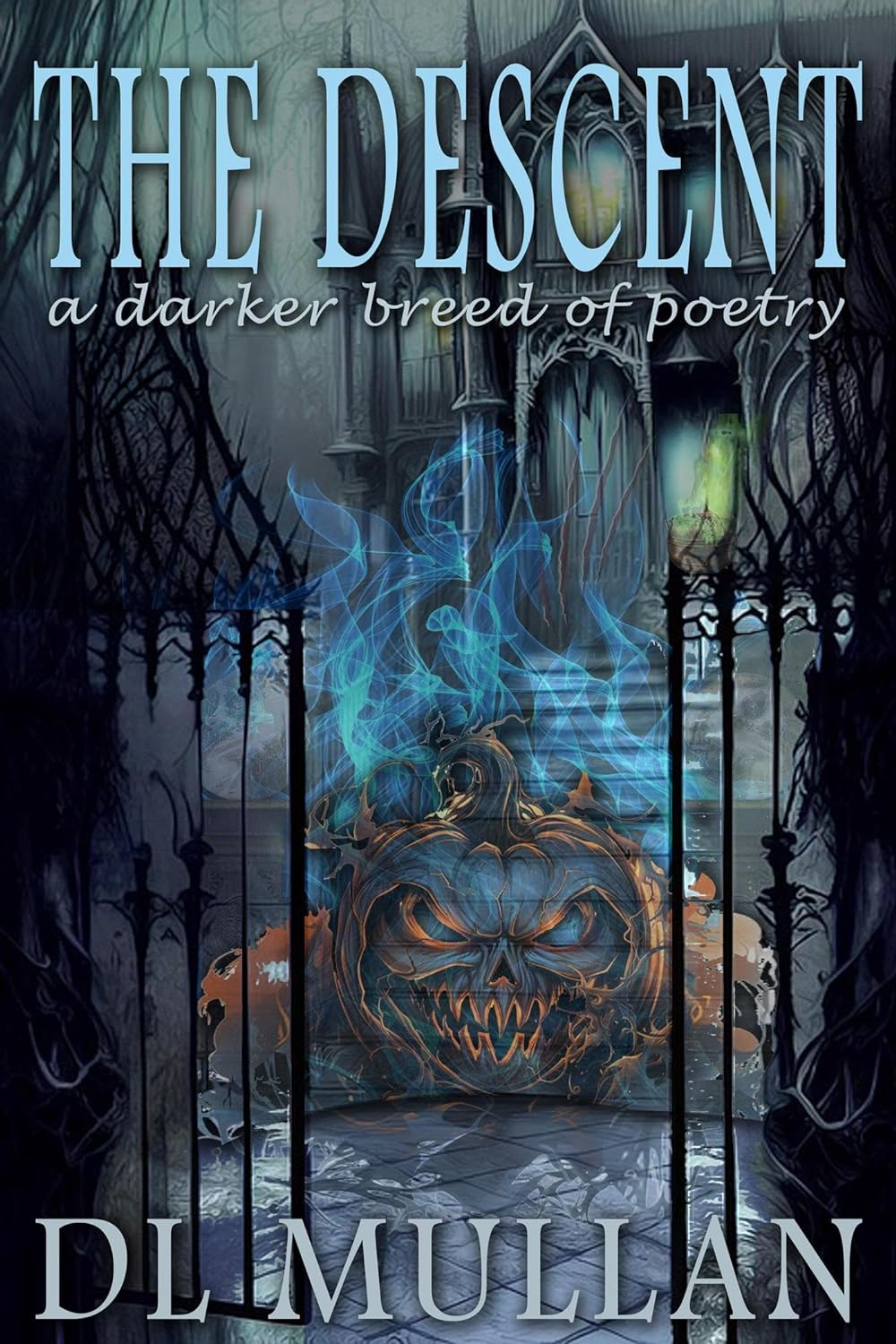
What Amazon says
This chapbook houses “a darker breed of poetry,” from paranormal research topics to metaphysical literary iterations. There is a poem for everyone who is curious about genre-inspired poetry. DL Mullan’s readers praise her work as easy to read, understand… and satisfying:
“The poem [Breathe] is as scrumptious and sensual as it is dark and deep.”
“This is a first for me. I have never read genre poetry before. I love it. Hugely imaginative and utterly unique…”
“As if Poe came right off the page. This homage is literally perfect.”
“The language and flow here is superb, the description detailed. This also has an air of mystery, almost Halloween-ish.”
“‘Until once again, night revisits his kingdom and he is resurrected.’ You know your subject. Are you reminiscing about an owl, or our immortal souls?”
“Both the language (the word choices) and the rich imagery here is exquisite! You have blended sound, description, meaning- all, in a way that shows precise crafting.”
“A lot of thought has gone into this very interesting poem, which made me think, which is what poetry should be all about, 5-star poem
My review
This collection of mysterious and slightly chilling poetry revolves around the topic of death in all it permutations: the process of dying, what it feels like to die or be dead, grievers and grieving, the afterlife, and spirits and the spirit world.
A most intriguing poem about reading Edgar Allan Poe and the influence of his works on the poet, kicks off this collection. As a fellow member of the Poe admiration club, I really enjoyed this poem and identified with the poet’s thoughts and reactions to all his magnificent poems. This is a short quote from ‘Upon Reading Edgar Allan Poe’:
“A peculiar doorway opens inside of me.
Listen to the music playing, hear the voice, of beautiful Lenore.
Sing to me a violent ballad of love.”
Another interesting introductory poem, is entitled ‘Death Replies to Emily Dickinson’, an extraordinary response to Emily Dickinson’s poem ‘Because I Could Not Stop for Death’. This inspirational poem is the perfect introduction to the poems that lie ahead in this collection. For me, this stanza sums up the collection:
“Instead, come. Join the procession into the unchartered
where rarely seen a setting sun and gloom is discarded.”
I really enjoyed this unusual collection of dark poetry. It is certainly unique and inspired. A few of my favourite poems from this book, with short quotes, are as follows:
The Rocking Chair:
“Dusty chair rocks. He used to sit there: in the corner looking out the window.”
Spirit Box (My favourite of all the poems):
“Four different voices sung through the waves.
Each expressing their own distinct individuality.”
Alone with My Thoughts:
“Death can be harsh. Death can be amusing.
Your perspective is needed to see that death is a rite of passage
that all of us will be using.”
If you enjoy Poe and like to experience different perspectives on poetry, this book will enthrall you.
Amazon US purchase link: https://www.amazon.com/gp/product/B0CKWKCNZ3
About DL Mullan

DL Mullan has been writing award-level poetry for thirty years. Recently, she has showcased her literary talents by self-publishing several collections of her poetry. She also writes novels, designs apparel, and creates digital art. Ms. Mullan‘s creative writing is available in digital and print collections, from academia to commercial anthologies.
As an independent publisher, she produces her own book cover designs and video presentations, as well as maintains her own websites. She is an award-winning digital artist and poet.
Join her Undawntable Newsletter for everything Undawnted. Be sure to enroll in her Substack writing program, RhymeScribe, which focuses on the form and function of poetry. Become a YouTube subscriber for her Poetry Slam updates.
http://www.undawnted.com/p/poetry.html http://www.undawnted.com/p/long-form-poetry.html
About Robbie Cheadle
Award-winning, bestselling author, Robbie Cheadle, has published fourteen children’s books and two poetry books. Her work also features in several poetry and short story anthologies.
Robbie also has two novels published under the name of Roberta Eaton Cheadle and has horror, paranormal, and fantasy short stories featured in several anthologies under this name.
The eleven Sir Chocolate children’s picture books, co-authored by Robbie and Michael Cheadle, are written in sweet, short rhymes which are easy for young children to follow and are illustrated with pictures of delicious cakes and cake decorations. Each book also includes simple recipes or biscuit art directions which children can make under adult supervision.
Robbie and Michael Cheadle have recently launched a new series of children’s books called Southern African Safari Adventures. The first book, Neema the Misfit Giraffe is now available from Amazon.
Robbie’s blog includes recipes, fondant and cake artwork, poetry, and book reviews. https://robbiesinspiration.wordpress.com/
You can find example of Robbie Cheadle’s artwork in her art gallery here: https://www.robbiecheadle.co.za/art-gallery/
Share this:

Growing Bookworms – The importance of character names in children’s fiction #GrowingBookworms #childrensfiction
Posted: January 10, 2024 Filed under: Children's Books, Fiction, Growing Bookworms | Tags: Character Names, characters, Enid Blyton, Growing Bookworms, Names, Robbie Cheadle, The Land of Far Beyond, Writing to be Read 57 CommentsThe name of a child is important to him/her as well as to their community.
From an individual point of view, a child’s name plays an important role in the advertisement and maintenance his/her self identity. The first word most children learn to write is their name. Some children and adults chose to be known by a nickname and others prefer to use their full name.
From a parental perspective, the name they chose is often symbolic of their hopes and dreams for that child. Some families practice namesaking or the naming of a child after the father or grandfather. The practice of namesaking is much more common in male children than in female children. Namesaking can be positive for a child, but it can also result in high expectations being placed on the child if the person after whom they are named is a high performer. Namesaking often happens in wealthy families and royalty and comes with an expectation for the child to live up to the accomplishments of the previous generation/s. John Jacob Astor IV and his son, John Jacob Astor VI, come to mind when I think of failures to live up to an inherited moniker.
From a community point of view, names often have religious or cultural significance. In these circumstances, the name of a child can impact the way in which they are accepted by, and integrate into, a community. Names also have meanings which can be important. I remember smiling when meeting a heavily pregnant lady with the name of Chastity.
Based on the above, it is obvious that the name of a character / characters in a children’s book are important. The names will immediately tell the child a lot about the character and the child will also make assumptions based on the names, as follows:
- the religion of the character/s – does the character have a Biblical name or a Hebrew name or a Muslim name?
- the ethnic background of the character – does the character have an Irish, Spanish, English, American, or Japanese name? In South Africa, there are 11 official languages and each group of language speakers has its own traditional names. For example, popular Afrikaans names are Pieter, Willem, Hans, and Mariska and popular Zulu names are Amahle, Bongani, Lindiwe, and Dumisani.
- does the character use a nickname or their full name? I have always been called Robbie although my full name is Roberta. Both my sons chose to use their full names of Gregory and Michael.
- a name can also tell you about a character’s employment or social position. For example, a lot of native African people who work in service industries chose to either use European names instead of their traditional names or they use a short form that is easier for customers to say and remember.
English author, Enid Blyton, made great use of names in her children’s books. You can always tell what type of character you are dealing with from their names. You can also usually get a good idea about the genre and type of story from her naming conventions, as follows:
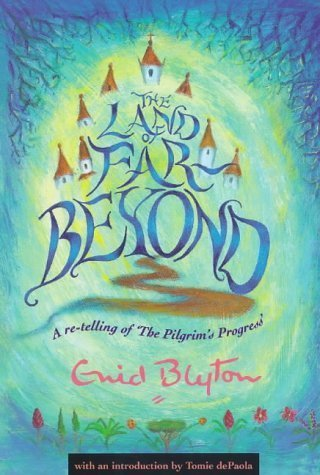
The Land of Far-Beyond is a Christian allegory and tells the story of a boy named Peter and his two sisters, Anna and Patience, who travel from the City of Turmoil to the City of Happiness in the Land of Far-Beyond. The three children carry the heavy burdens of their bad deeds on their backs. With them are two other children, Lily and John, and five adults—Mr Scornful, Mr Fearful, Dick Cowardly, Gracie Grumble and Sarah Simple.
The Enchanted Wood series of three books tells of the adventures of three children who live near the Enchanted Wood. One day they discover a great tree that reaches right up into the clouds called the Faraway Tree. The children climb the Faraway Tree and discover that it is inhabited by magical people, including Moon-Face, Silky, The Saucepan Man, Dame Washalot, Mr. Watzisname, and the Angry Pixie, whose houses are built in holes in the great trunk.
I have tried to make good use of names in my children’s book series. Sir Chocolate and Lady Sweet were intended to clearly indicate that the books are fantasy and are about sweet treats. All the illustrations are made from cake and fondant art and the books all include recipes.
Neema the Misfit Giraffe was intended to make it obvious that the book has an African setting. The name, Neema, means grace in Swahili. Neema’s companion, Amhale, has a Zulu name which means the beautiful one.

What are your thoughts on names in children’s fiction? Do you think they are important? Let me know in the comments.
About Robbie Cheadle
Award-winning, bestselling author, Robbie Cheadle, has published fifteen children’s book and two poetry books. Her work has also appeared in poetry and short story anthologies.
Robbie also has two novels published under the name of Roberta Eaton Cheadle and has horror, paranormal, and fantasy short stories featured in several anthologies under this name.
The eleven Sir Chocolate children’s picture books, co-authored by Robbie and Michael Cheadle, are written in sweet, short rhymes which are easy for young children to follow and are illustrated with pictures of delicious cakes and cake decorations. Each book also includes simple recipes or biscuit art directions which children can make under adult supervision.
Robbie and Michael’s new Southern African Safari Adventures series is aimed at teaching young children about Southern African wildlife in a fun and entertaining way. Each book contains a rhyming verse story about a particular animal, as well as illustrations by Robbie Cheadle, photographs and links to video footage about that animal.
Robbie’s blog includes recipes, fondant and cake artwork, poetry, and book reviews. https://robbiesinspiration.wordpress.com/
Share this:

Treasuring Poetry – Thinking of cancer sufferers and survivors at Christmas, as well as those who have passed #cancerpoetry #bookreview #TreasuringPoetry
Posted: December 20, 2023 Filed under: Uncategorized 51 Comments
I like to keep this final Treasuring Poetry post for the year as a tribute to wonderful blogger, poet, and author, Sue Vincent, who passed on the 29th of March 2021. This year, I am adding blogger and writer, Mary Smith, who passed on Christmas Day 2021. Both Sue and Mary died of lung cancer, and were a huge loss to the blogging community which still remembers their community spirit, talent, and generosity.
This post is also a celebrating my mother, Elsie Hancy Eaton, a breast cancer survivor who has been in remission for nearly 7 years, and talented author and poet, Freya Pickard, who is a bowel cancer survivor.
Sue Vincent
Sue Vincent’s wonderful blog: Sue Vincent’s Daily Echo is still available here: https://www.youtube.com/watch?v=GeXvcrOUl5I. You will find all her books listed there.
This is my reading of one of Sue’s poems which features in Poetry Treasures published by WordCrafter Press:
Mary Smith
I had the good fortune to meet Mary Smith in Dumfries during my family’s tour of Scotland in 2019. This is the post I wrote about our tour of Dumfries, with Mary as our marvelous guide, and my review of her book, Secret Dumfries:
Freya Pickard
Freya Pickard is a talented poet and fantasy author.
You can find Freya on her blogs here: https://dragonscaleclippings.wordpress.com/ and here: https://purehaiku.wordpress.com/
My review of Vampirical Verse by Freya Pickard
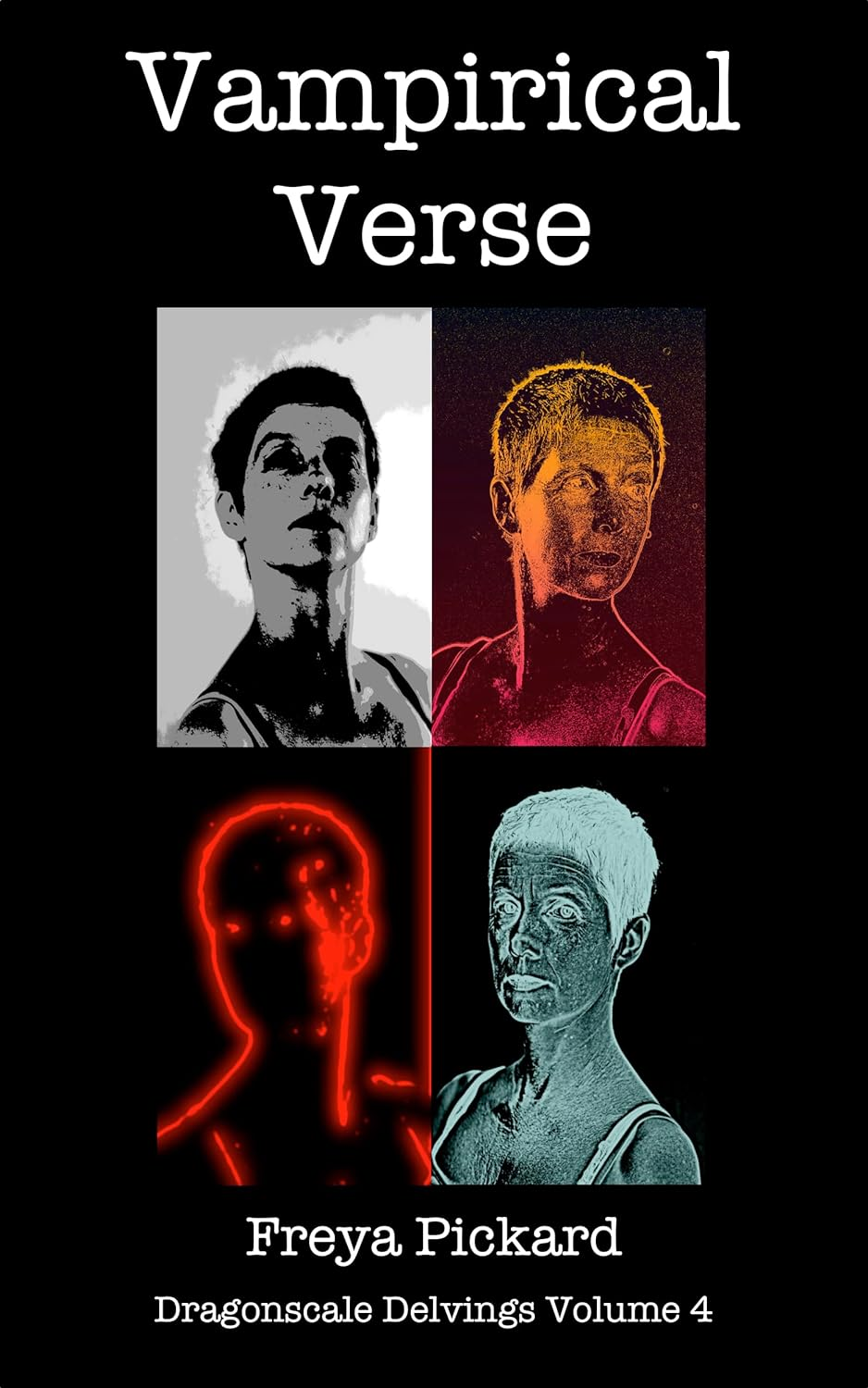
What Amazon says
This book is for the broken, the damaged and scarred.
This book is for the walking dead who have learnt to live as best they can with hollow hearts and gaping wounds.
“They (the poems) are straight from the heart, soul and gut. They are never trite, never overblown but wonderfully, articulate and rich in imagery.” S Moore
Broken people get through the experience of brokenness and then have to adapt to living with it and its effects on the other side.
To deny we are broken is wrong. To try and forget the horror is wrong. Who we are today has been forged out of the trauma we have been though. Our lives now take a different, somewhat darker turn.
Vampirical Verse reflects the emotional, mental and spiritual fallout from cancer. These poems are an attempt by Freya Pickard to express the inexpressible.
Warning – the poetry in this volume contains themes of death, suicide, cancer and sexual acts which some readers may find upsetting.
My review
“This book is for the walking dead who have learnt to live as best they can with hollow hearts and gaping wounds.”
The author says her brokenness comes from nearly dying of bowel cancer, having open surgery to remove the tumour, a uterine fibroid, and her womb. She then had six months of chemotherapy.
I have had several first hand experiences of the emotional, mental, and physical devastation caused by chronic illness, and dreaded disease. It impacts on the patient and on everyone around them. My own experiences include nursing family members through breast cancer, a pulmonary embolism, a venous sinus thrombosis, and chronic and on-going illnesses suffered by both of my two sons. My younger son is a ‘medical mystery’ or a ‘medical miracle’ depending on your viewpoint.
People react differently to chronic illness and near death experiences, but no-one escapes unscathed. The poems in this book are the author’s expressions of the fear, anger, and stoic numbness which accompany different stages of treatment and survival. Experiencing these poems will change you, as the disease itself changed the author. They will teach you compassion, appreciation, understanding, and gratitude.
A few of the stanzas in this book that resonated with me the longest.
From: The Dead
“the dead feel –
I am not in stasis as you believe
I fluctuate between despair and hope
empty days, lonely nights”
From Camouflaged
“if you blink
you’ll catch a glimpse
and wish you’d not;
I am the thought
you didn’t want to think”
and a haiku
“on this side of death
shadows remain long, gaunt, thin
light never expands”
If you know someone who is, or has, suffered chronic illness or dreaded disease, these poems will give insight into their world. I encourage lovers of poetry to read this book and allow yourself to change and grow.
You can purchase Vampirical Verse from Amazon US here: https://www.amazon.com/Vampirical-Verse-Dragonscale-Delvings-Book-ebook/dp/B0CH4Q8KD8
This is a performance of Wake up and smell the corpses by Freya Pickard:
Elsie Hancy Eaton
My mum was diagnosed with breast cancer in 2014. She had 19 months of treatment including chemotherapy and herceptin.

Mum is my co-author for While the Bombs Fell. This is the most successful of my books and has 64 reviews on Goodreads. You can purchase a copy here: https://tslbooks.uk/product/while-the-bombs-fell-robbie-cheadle-and-elsie-hancy-eaton/
While the Bombs Fell is my mother’s story, growing up in Suffolk, UK during World War 2.
Wishing all my blogging friends a very Merry Christmas and all the very best for 2024.
About Robbie Cheadle
Award-winning, bestselling author, Robbie Cheadle, has published fourteen children’s books and two poetry books. Her work also features in several poetry and short story anthologies.
Robbie also has two novels published under the name of Roberta Eaton Cheadle and has horror, paranormal, and fantasy short stories featured in several anthologies under this name.
The eleven Sir Chocolate children’s picture books, co-authored by Robbie and Michael Cheadle, are written in sweet, short rhymes which are easy for young children to follow and are illustrated with pictures of delicious cakes and cake decorations. Each book also includes simple recipes or biscuit art directions which children can make under adult supervision.
Robbie and Michael Cheadle have recently launched a new series of children’s books called Southern African Safari Adventures. The first book, Neema the Misfit Giraffe is now available from Amazon.
Robbie’s blog includes recipes, fondant and cake artwork, poetry, and book reviews. https://robbiesinspiration.wordpress.com/
You can find example of Robbie Cheadle’s artwork in her art gallery here: https://www.robbiecheadle.co.za/art-gallery/
Share this:

Growing Bookworms – Guest post with children’s author, poet, and memoirist, Miriam Hurdle #GrowingBookworms #childrensfiction #readingcommunity
Posted: December 13, 2023 Filed under: Uncategorized 138 Comments
Today, I am delighted to welcome children’s author, poet, and memoirist, Miriam Hurdle, as my final Growing Bookworms guest for 2023.
Miriam is a diverse author with a poetry book, memoir about her cancer journey, and a delightful children’s book called Tina Lost in a Crowd. Welcome, Miriam.
What is your history of writing for children?
I was the Director of the Children’s Department in a literacy organization in Hong Kong. My job was writing for a children’s magazine and promoting literature in elementary schools.
After I came to the U.S., I always wanted to write children’s stories again. In 2006, I took an online writing course at the Institute of Children’s Literature https://www.instituteforwriters.com for a year. An instructor corresponded with me to provide feedback and suggestions on my assignments and revisions. The Institute also provided marketing tools and an annual catalog of 800 magazines accepting submissions. The goal of the course was to have my essays published.
The Institute suggested that children’s literature writers observe the children. If the writers were not teachers or adults with young children at home, they could volunteer at organizations such as libraries or Boy/Girl Scouts to get first-hand experience to understand their behaviors and language.
At the time of taking the writing course, even though I was a school district administrator, my interaction with the elementary school students was still fresh in my mind.
There were many fun memories of activities with my daughter, Mercy. I combined one story about Mercy, my understanding of the children’s behaviors, and my writing skills to write my first assignment entitled “Tina Goes to Hollywood Bowl.”
I kept the stories written during this course in a computer folder for many years. Early in the year 2020, during the lockdown, I revised the Tina story to prepare for publication.
Your book, Tina Lost in a Crowd, involves lost children. Was it based on a personal experience of some kind?
The story of Tina Lost in a Crowd is partly based on fact. When my daughter Mercy was eight years old, my sister Yolanda, her husband Patrick, and their son Enoch, who was Mercy’s age, came from Hong Kong to visit us. We took them on tours in northern and southern California. One activity was going to a concert at the Hollywood Bowl in Los Angeles. I drove the five of us to Rowland Heights Regional Park, then we took the Park & Ride bus to the Hollywood Bowl.
The sky was dark with bright stars when the concert started. Mercy and Enoch swayed side to side when they listened to Tchaikovsky’s Swan Lake and smiled at each other. During the intermission, Patrick left his seat to buy some popcorn. Mercy and Enoch wanted to use the restroom. Yolanda and I urged them to catch up with Patrick.
Later, when Patrick came back without them, I panicked. Imagine losing 8-year-old kids in a crowd of 18,000 people. How would I find them? Yolanda and Patrick stayed in their seats while I followed the descending steps between the sections of seats to where I thought they could have gone.
I found them standing against a wall! It was such a relief, but I was curious about what made them stand there. “Were you scared?” I asked them.
“Not too scared,” Mercy said, “I learned from the Girl Scouts that if I get lost, I should stay at one spot to wait for the adults to find me.”
This was one of my fondest memories. I asked Mercy, “Should I write a story about this experience?” She answered me with no hesitance, “Of course!”
The story became Tina Lost in a Crowd.
The illustrations in your book are outstanding. How did you go about choosing an illustrator for your story? Did you have much input into the illustration process?
I’m a member of the Society of Children’s Book Writers and Illustrators (SCBWI). On one blog post, it featured an illustrator and her work. I liked the style of her artwork, so I contacted her and got an idea of how much she would charge for the number of pages in my book and how long it would take to complete the job. She charged more than my budgeted amount.
Some blogging friends recommended some websites with illustration services, and I checked them out. Some illustrators charged by hours. They didn’t have a portfolio with sample artwork, so I couldn’t tell if I liked their style. I preferred using services charged for the job not by hours.
Another recommendation from a blogger was Fiverr. I decided to search for an illustrator on Fiverr.com. https://www.fiverr.com The “gigs” provide their bio, sample work, and prices. Some would provide limited, and some unlimited revisions.
I do watercolor painting and wish to illustrate my book, but I don’t do portrait painting. There are thousands of gigs out there, and it would take forever to scroll through all the pages to find one. I entered watercolor as the criteria for the children’s illustration and got 660 services. It took me six months to find one I liked. I paid for one sample page. It was the style I liked so I ordered the rest as part of my entire book.
After I accepted the sample page, I sent the story summary and the description of each page to her. She then sent me a few sketches at a time. I gave her my feedback and suggestions. She revised them and sent them to me. Sometimes I respected her creativity and approved it. But if they didn’t correspond with my story, I asked for further revisions until they were done to my satisfaction. It was a pleasant experience working with Victoria Skakandi.
What do you like best about writing for children?
I was an elementary school teacher for 15 years before becoming a school district administrator. I loved teaching small children. They love to learn and are receptive to new ideas. I started by teaching kindergarten and eventually taught first to fourth grade before doing administration. I had lists of students’ first 100, 200, and 1000 words, etc. So, I had a good idea of their vocabulary level. Some immigrant students might not have the same vocabulary levels but they were expected to understand the subjects of studies. Teachers would have to use teaching materials with high content with low vocabulary to teach these students.
From my teaching experience, I love to use grade-level-appropriate words to write stories that boost their creativity, stimulate their imagination, build their confidence, encourage self-confidence, or for them to read for fun.
What is your favorite children’s book or series for children?
When I was a kid, I loved to read Aesop’s Fables. When I read them to my students, they would shout with me at the end of the fable “The moral of the lesson is…” My granddaughter, Autumn, loved The Magic School Bus series. Between my daughter and I, we accumulated a good collection of different subjects. She loved to look at the illustrations and followed the school bus transforming into a submarine, an airplane, and other transportation. One subject of the Magic School Bus was dinosaurs. After introducing the names of the dinosaurs, it created some fun names with illustrations, such as “bananasaurs,” and “sockosaurs.” We laughed and made up our own funny dinosaur names.
My review of Tina Lost in a Crowd
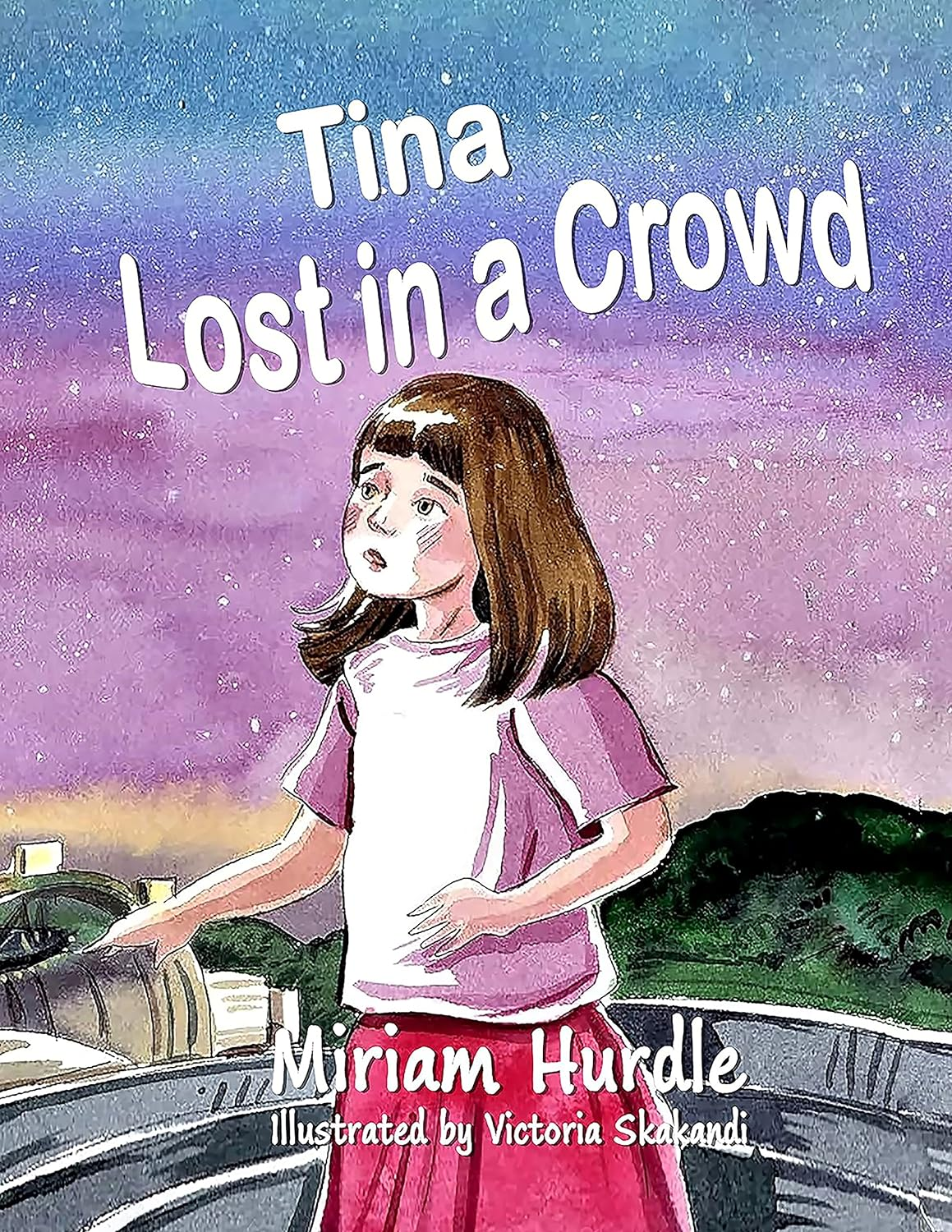
What Amazon says
Tina invited her friend Erica to attend a popular Tchaikovsky’s Spectacular concert on a summer evening with her parents. During the intermission, her dad left the seat to buy some snacks. Tina and Erica followed him wanting to use the restroom. The shoving crowd pushed them away, and they lost sight of him. It would be impossible to fight through the 18,000 people to find him or go back to Tina’s mom.
This story tells about what happened to Tina and Erica after they got lost. Children can adapt to learning from different situations they may observe or encounter. Adults could have discussions with the children about the situations to help them develop problem-solving skills.
My review
Tina Lost in a Crowd is a charming book for children about two young school friends who attend a busy concert with Tina’s parents and get lost on their way to the restroom.
I enjoyed the character of Tina, a lovely and friendly girl who demonstrated politeness and respect towards both her teacher and her parents as well as consideration towards her friend. She has sufficient presence of mind not to panic in the scary situation of being lost in a big crowd.
The depiction of Tina’s family life and her mother’s interest in her and eagerness to plan some fun family outings for the summer vacation are heart warming and lovely to see in a children’s book. I liked the fact that Tina’s mother made a picnic for her family and Tina’s friend, Erica, to enjoy at the concert with good, wholesome food.
The illustrations in this book are a real treat and every page is a visual delight. I would recommend this book to parents and caregivers who like books that encourage good family values and level headedness by children in difficult situations.
Purchase Tina Lost in a Crowd from Amazon US here: https://www.amazon.com/Tina-Lost-Crowd-Miriam-Hurdle-ebook/dp/B095TWG9VS
About Miriam Hurdle
Miriam Hurdle is a member of the Society of Children’s Book Writers and Illustrators (SCBWI). She published four children’s books at twenty-six years old. Her poetry collection received the Solo “Medalist Winner” for the New Apple Summer eBook Award and achieved bestseller status on Amazon.
Miriam writes poetry, short stories, memoir, and children’s books. She earned a Doctor of Education from the University of La Verne in California. After two years of rehabilitation counseling, fifteen years of public-school teaching and ten years in school district administration, she retired and enjoys life with her husband in southern California, and the visits to her daughter, son-in-law, and granddaughters in Oregon. When not writing, she engages in blogging, gardening, photography, and traveling.
Learn more about Miriam at:
https://theshowersofblessings.com
https://www.goodreads.com/author/edit/17252131.Miriam_Hurdle
About Robbie Cheadle
Award-winning, bestselling author, Robbie Cheadle, has published fifteen children’s book and two poetry books. Her work has also appeared in poetry and short story anthologies.
Robbie also has two novels published under the name of Roberta Eaton Cheadle and has horror, paranormal, and fantasy short stories featured in several anthologies under this name.
The eleven Sir Chocolate children’s picture books, co-authored by Robbie and Michael Cheadle, are written in sweet, short rhymes which are easy for young children to follow and are illustrated with pictures of delicious cakes and cake decorations. Each book also includes simple recipes or biscuit art directions which children can make under adult supervision.
Robbie and Michael’s new Southern African Safari Adventures series is aimed at teaching young children about Southern African wildlife in a fun and entertaining way. Each book contains a rhyming verse story about a particular animal, as well as illustrations by Robbie Cheadle, photographs and links to video footage about that animal.
Robbie’s blog includes recipes, fondant and cake artwork, poetry, and book reviews. https://robbiesinspiration.wordpress.com/




















