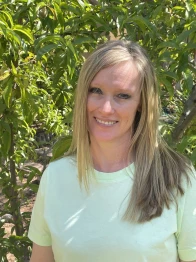
Today, I am delighted to introduce poet, Maggie Watson. Maggie writes incredibly compelling poetry which you can find on her blog here: Ephemeral Encounters
Over to Maggie
Robbie, thank you so much for inviting me to be your guest on Treasuring Poetry. I loved your questions, and I hope everyone finds my answers, at the very least, a little interesting.
My favourite style of poetry to read is haiku.
Haiku poems are easy on the eye, yet they can evoke strong emotions in a few words. If a poem is too long, I lose interest halfway through unless it grabs me in the first couple of lines.
My favourite haiku is “A Poppy Blooms” by Katsushika Hokusai
I write, erase, rewrite
Erase again, and then
A poppy blooms.
The writer here uses the imagery of spring to describe his writing process.
I would use winter, as I sometimes find the whole writing process frustrating, especially when I am blocked, staring at a blank piece of paper (a barren landscape in winter).
My favourite style of writing poetry is freestyle. I am ashamed to say that I have not tried any other style. I did attempt a few haiku a while back, but not consistently. As I write, it comes from my heart and soul and usually reflects my mood or thoughts at that moment. I hope no one shoots me down in flames for saying this, but poetry should be as free as a bird set free, not confined or restricted to parameters.
My favourite poem written by me is one of the first I ever wrote in 2020, one of the better ones, I hasten to add. The Mask is also in my new Collection, Pieces of Me and is related to the subject matter.
She puts it on before she goes outside,
just in case anyone should see inside.
The darkness, the hurt, the years ripped and scarred with dirt.
No one knows.
No one cares.
They only see the Mask she wears.
She tries but can’t forget all the angry words and threats buried deep within and the pain that never seems to dim.
So she smiles, wears the Mask, and hopes that no one ever asks.
I had originally planned to call this collection Bouquets of Barbed Wire, however, it was a little too close to the title of a television programme that I remember my parents watching, so I decided against it.
Pieces of Me is another poem from another Collection, “In the Shadow of my Pen: A Collection of Poetry and Prose.
Not long after joining WordPress, David from A Skeptics Kaddish reblogged it. I then decided to write two other parts, all three are in the new Collection. The new collection is my story in poems about my abusive relationship. The main form of abuse was gaslighting, which is a gradual erosion of your spirit, piece by piece. By sharing my story, I hope to inspire others to do the same.
Thank you again Robbie for giving me this space.
It’s my pleasure, Maggie. Thank you for being a wonderful guest.
My review of Pieces of Me, A collection of poems by Maggie Watson
Picture caption: Cover of Pieces of Me by Maggie Watson
Pieces of Me is a collection of powerful poems written by a survivor of domestic abuse. The abuse the poet suffered was not physical or sexual, but rather mental. The kind that slowly and insidiously destroys your spirit.
The collection is divided into parts reflecting the various stages of the poet’s abuse from the early days of her marriage until she found the determination and courage to exit her destructive relationship.
Red light spells danger: These poems are about the warning signs that the poet was to young and inexperienced to understand. It is awful to think of a young person being lured into such a terrible set of circumstances like a fly into a spider web.
“I was blind. I did not see it. Too young, too naive. Red light spells danger, but I ignored the colour of your aura.” An extract from Red Lights Spell Danger
When I think back over my own youth, I sigh with relief that I never fell victim to such a man’s charms. It could have happened so easily as we are gullible and innocent when we are young.
Eggshells is the next section and eloquently describes living with a bully and gas lighter.
“A soul in pain, cute with a blade, the wound then stitched together with words unkind Spirit erased, replaced with doubts and fears. Thoughts of unworthiness grow among the stitches sown Drip, drip, they slowly infiltrate the mind.” Extract from Soul in Pain
I am becoming is an uplifting section where the poet describes her escape from the vicious clutches of her abuser and path towards reclaiming her life.
“Never be a lamb to their slaughter don’t let them watch you bleed It is they who are weak as they plant their seeds in your womb for the pleasure that they seek.”
A collection of strongly worded and evocative poems that make you walk the poet’s path hand-in-hand with her. With compassion comes understanding.
Did you know you can sponsor your favorite blog series or even a single post with an advertisement for your book? Stop by the WtbR Sponsor Page and let me advertise your book, or you can make a donation to Writing to be Read for as little as a cup of coffee, If you’d like to show your support for this author and WordCrafter Press.
___________________________
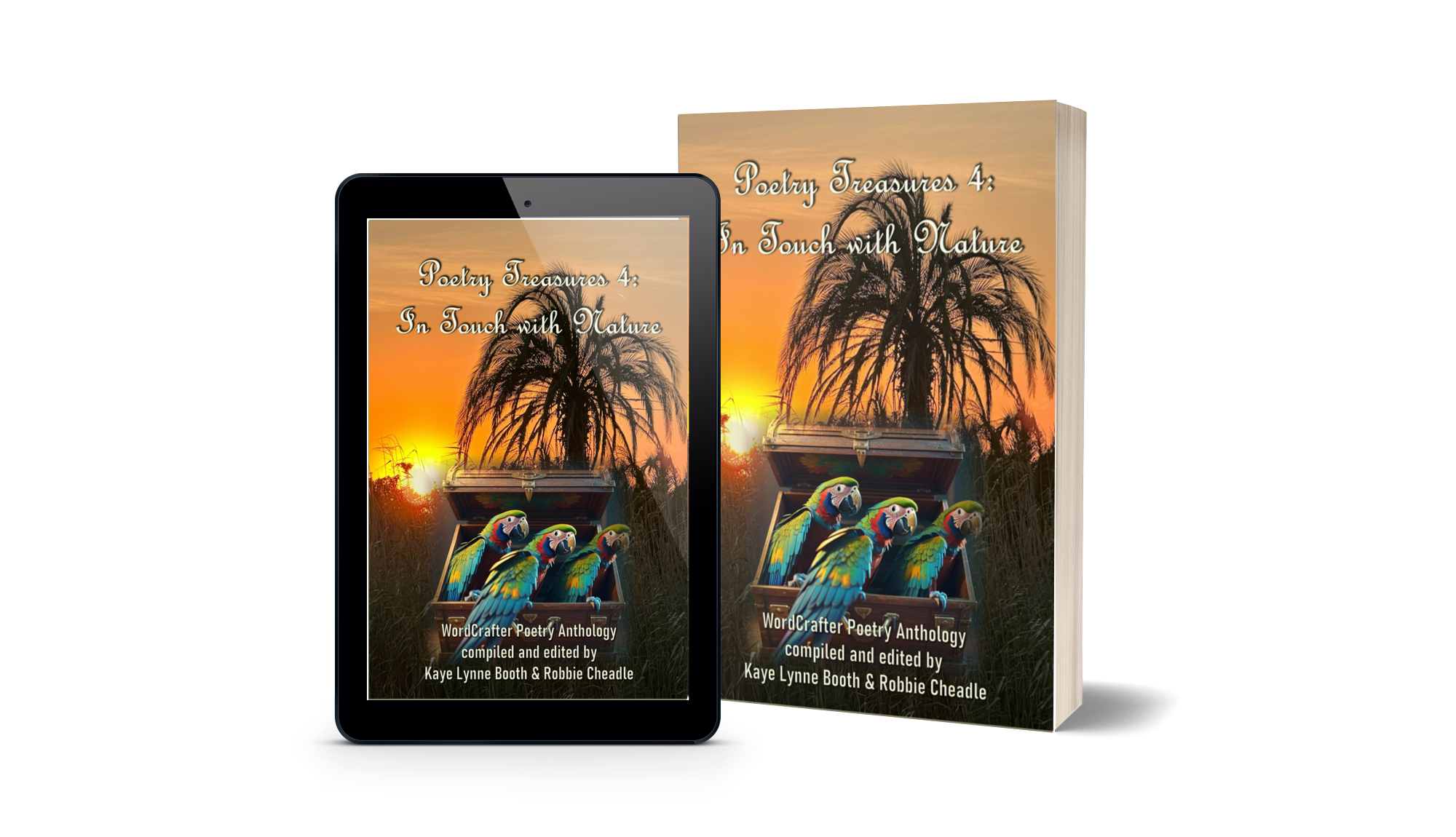
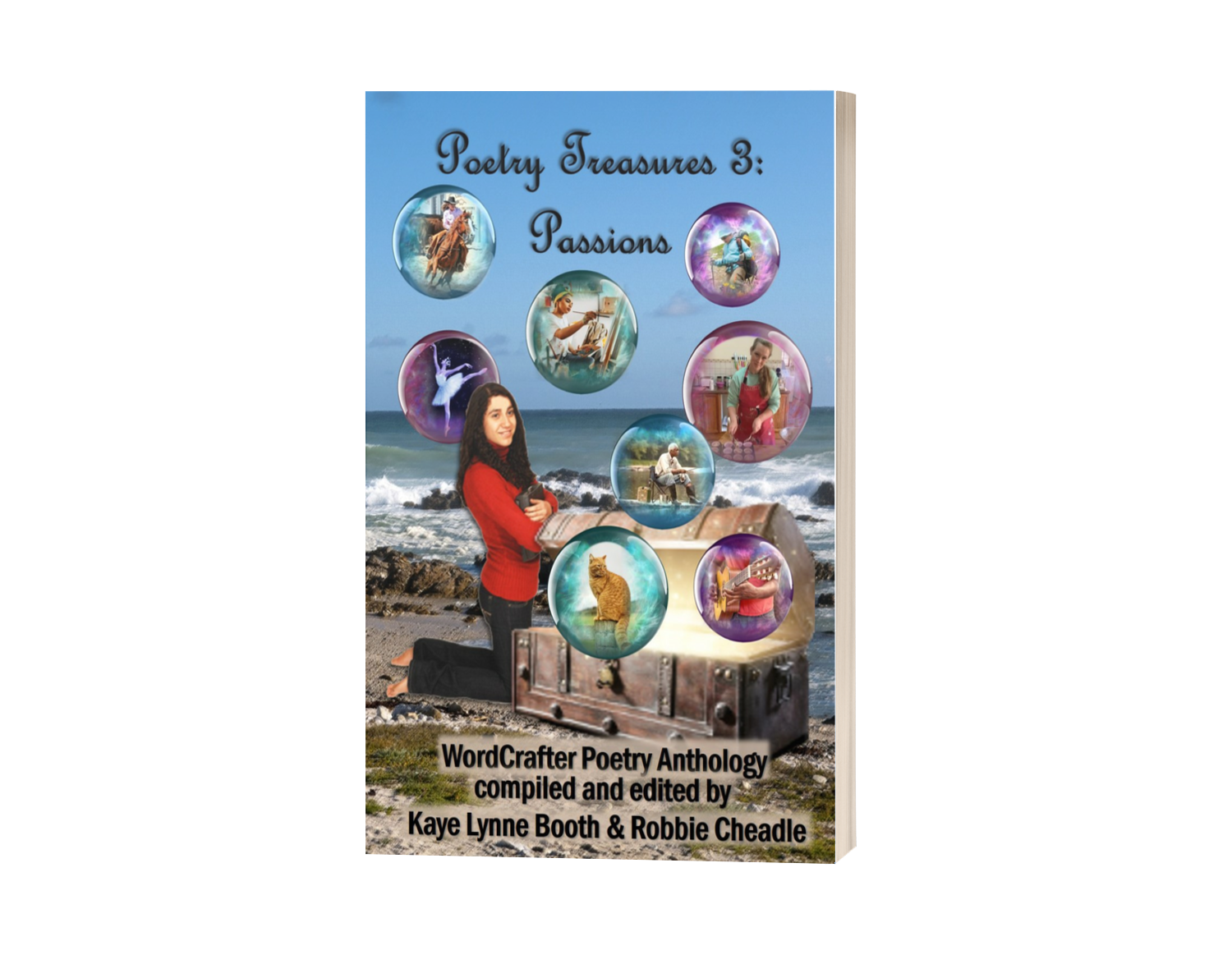
This segment of “Treasuring Poetry” is sponsored by WordCrafter Press and the Poetry Treasures series.
Are you noticing the book choices are themed? They are, to the extent possible, and next month is Christmas. I’ve got a treat in mind for you …
To Wake the Giant: A Novel of Pearl Harbor by Jeff Shaara
Picture caption: Cover of To Wake the Giant: A Novel of Pearl Habor featuring a ship in the harbour sinking and the ocean full of oil.
I have read a few of Jeff Shaara’s books and they have all be entertaining, informative, and well researched. My historical knowledge of both WW1 and WW2 is much greater as it relates to events in Europe and from a British, Dutch, French, and Polish perspective. I have been making a point of learning more about WW2 from an American perspective and this book did not disappoint. It provided copious detail about the events leading up to the Japanese attack on Pearl Harbour and the USA’s entrance into a war they fought on two fronts, in an interesting and relatable way.
The author tells his story through the eyes of three main characters, two of whom are real historical people and one who appears based on a real person but whose life would have been more fictionalised for purposes of this book. These main characters are as follows:
Cordell Hull is President Franklin D. Roosevelt’s Secretary of State and the real historical figure who tried to negotiate for continued peace with the Japanese through Ambassador Admiral Kichisaburo Nomura and Special Envoy, Saburo Kurusu. He failed and the Japanese launched their attack on Pearl Harbour on Sunday, 7 December 1941, marking the USA’s terrible and spectacular entrance into WW2. Cordell tells the story from the US government’s point of view and perspective.
Admiral Isoroku Yamamoto is the force behind the attack on Pearl Harbour. A real historical figure, he understood that war was inevitable and planned for an early victory and delay tactic for an American response by destroying the United States Pacific Fleet at Pearl Harbour in a preventive strike. Yamamoto believed that aviation was the way forward and opposed the building of the battleships, Yamoto and Mushashi, proposing investment in a strong Japanese arial force instead. Yamamoto tells the story from the Japanese perspective.
Seaman Tommy Biggs is an ordinary nineteen-year-old from a small town in Florida. Having finished school, he is faced with no job opportunities as a result of the Depression. When his best friend decides to join the Navy, Tommy is convinced to sign up too. Tommy has aspirations to work in the military hospital service and, after successfully completing boot camp, manages to get assigned to the USS Arizona as a hospital apprentice.
Seaman Biggs’ role in this book is the one that interested me the most as he represented the ordinary seaman. The reader learns about his life on the USS Arizona and the abuse he suffers at the hands of the military system which allowed senior personnel to bully junior staff. Through his eyes, I experienced daily life aboard the ship which was repetitive and boring, and off short time in the town. Most of the seamen spent their time ashore drinking cheap booze and making use of prostitutes. The boredom of the life on board ship, eroded alertness and interest and, in my opinion, helped set the stage for an attack that was such a complete and utter surprise.
This book is fascinating and shares details of the historical event in a heart rending and personable way. The descriptions of the event of the day were a shock to me, I didn’t know about the terrible fires and the oil the water that burned and horribly maimed many of the seamen. Having read this book, I understood the mindset of the American people and how the events that followed came to unfold the way they did.
If you are interested in books about and like to learn and expand your knowledge in a fascinating and compelling way, this book is for you.
Quotes from To Wake the Giant: A Novel of Pearl Harbor
“We believed we knew everything they were thinking. Those Magic intercepts made us feel invulnerable. No, a better word is cocky. Their diplomats are chatting back and forth with Tokyo about the weather or color of their new Cadillacs while their military put a plan together to kick us in the teeth. We thought we knew everything. We didn’t. -President Franklin Delano Roosevelt”
“All I propose is an attack that will paralyze the Americans, for perhaps six months. This attack is not about victory, about winning a war…It is about delaying them, keeping them back, damaging their military might and pride. -Admiral Isoroku Yamamoto”
“How were we taken so by surprise? Everything we have gone through at the State Department, for most of the past year has pointed unmistakably to Japanese aggression, to their deceitfulness, duplicity, and backdoor actions. We knew exactly what they were doing in Southeast Asia in the Netherlands East Indies in China. We had access to their diplomatic communications we have outstanding people in our intelligence offices, both army and navy. How could this have happened? -Former US Secretary of State, Cordell Hull”
THIS IS A SMASHING BOOK. IF YOU HAVEN’T READ IT, YOU REALLY MUST!
And now, on to the recipe. I made three dishes for this post and I loved them all. I decided to share the crabcakes recipe today and will keep the others for another post.
Robbie’s version of American Crabcakes
Picture caption: American crabcakes
Ingredients
2 large eggs
90 ml mayonnaise
2 Tbspns (30 ml) onions grated
120 ml lemon juice
10 ml dried tarragon
2 teaspoons red pepper flakes
500 grams uncooked crab meat
30 ml melted butter
1 1/2 cups (750 ml) crushed melba toast slices (you can use any plain savoury biscuit)
Method
Mix the eggs, mayonnaise, onions, lemon juice, tarragon and pepper flakes together in a mixing bowl. In a frying pan on a medium heat, cook the crabmeat in the butter. Add the crabmeat to the egg mixture and combine. Add the crushed melba toast and ensure everything is properly mixed together. I always use my hands.
Shape the mixture into cakes and fry in a little olive oil until nicely browned. We enjoyed the crabcakes with rice and Greek lemon roasted vegetables.
Picture caption: Plated crabcake
About Robbie Cheadle
South African author and illustrator, Robbie Cheadle, has written and illustrated seventeen children’s books, illustrated a further three children’s books, and written and illustrated three poetry books. Her work has also appeared in poetry and short story anthologies.
Robbie also has two novels and a collection of short stories published under the name of Roberta Eaton Cheadle and has horror, paranormal, and fantasy short stories featured in several anthologies under this name.
You can find Robbie Cheadle’s artwork, fondant and cake artwork, and all her books on her website here: https://www.robbiecheadle.co.za/
________________________________________
Want to be sure not to miss any of Robbie’s “Read and Cook” segments? Subscribe to Writing to be Read for e-mail notifications whenever new content is posted or follow WtbR on WordPress. If you found it interesting or entertaining, please share.
_________________________________________
This segment of “Read and Cook” with Robbie Cheadle is sponsored by The Women in the West Adventure Series and WordCrafter Press.
Today, I am delighted to welcome talented poet, Dawn Pisturino, as my October Treasuring Poetry guest. Dawn has a Halloween collection of micro poems which I’ve reviewed below.
What is your favourite style of poetry to read i.e. haiku, ballad, epic, freestyle, etc?
I like any style of poetry to read, but my favorite is the sonnet. William Shakespeare and Elizabeth Barrett Browning excelled in this art form that elevates the mind and captures the soul.
What is your favourite poem in your favourite style to read?
My favorite sonnet is the classic love poem by Elizabeth Barrett Browning from her collection, Sonnets from the Portuguese. “Portuguese” was Robert Browning’s pet name for his wife. Her sonnets are so expertly written and articulate such deep love and passion! They are delightful to read and reflect the nature of true romantic love between two people—the abiding love that most people dream about but rarely find.
Sonnet XLIII
How do I love thee? Let me count the ways.
I love thee to the depth and breadth and height
My soul can reach, when feeling out of sight
For the ends of Being and ideal Grace.
I love thee to the level of everyday’s
Most quiet need, by sun and candle-light.
I love thee freely, as men strive for Right;
I love thee purely, as they turn from Praise.
I love thee with the passion put to use
In my old griefs, and with my childhood’s faith.
I love thee with a love I seemed to lose
With my lost saints, – I love thee with the breath,
Smiles, tears, of all my life! – and, if God choose, 2
I shall but love thee better after death.
What is your favourite style of poetry to write? Why?
It’s easier to write in free verse and let the words and emotions flow. Writing in a tight form, like a sonnet or haiku, requires discipline, creativity, and a more extensive vocabulary.
What is your favourite of your own poems?
“Ariel’s Song” is my favorite poem because it was written for my daughter when she was quite small. It reflects our life when we lived in the San Francisco Bay Area.
Ariel’s Song
Ariel sings a lusty song
Of ships upon the sea,
And ere the night is very long,
Her spell is cast on me.
She spins a web of intrigue,
She tells a tale of woe;
And when the sun is waxing big,
I do not want to go, –
No, I do not want to go.
But she folds her wings together
And whispers my release;
For her stories last forever
And her songs will never cease.
Then, she rises from the window,
Winging high into the light,
And I’m left alone in shadow
As she disappears from sight.
Tell us a bit about your latest collection of haiku, Haiku for the Midnight Hour. What inspired you to write this collection? Is Halloween a favourite celebration of yours?
Halloween is one of my favorite holidays. I have fond childhood memories of picking fresh pumpkins from the garden, buying cider from the local apple stand, bobbing for apples at my best friend’s house, and going trick-or-treating with my little brother. Early in the year, I thought about writing a dark haiku collection and decided to finish it in time for Halloween. It was a fun project. I wrote twisted, dark limericks for Underneath the Juniper Tree that were quite popular with readers of all ages. I thought it would be fun to do the same with haiku. Purists may not like non-traditional haiku about monsters, aliens, demons, voodoo gods, and other dark themes, but I’m hoping it will be an interesting introduction to haiku for adults, teens, and young adults.
My review of Haiku for the Midnight Hour
Picture caption: Cover of Haiku for the Midnight Hour featuring a raven in a graveyard perched on a human skull
This is an entertaining collection of micro poems that revolve around the themes of Halloween and ghostly happenings. The micro poems are collected under common themes with headings, for example, Wee Folk and Crystal Balls.
While most of the micro poems deal with the paranormal, there are several that deal with Family and dark events in the home. On such example is Aunt Jane, as follows:
“aunt jane – locked away in the attic for years – rocks back and forth in chains”
The poems are clever and darkly humorous. Two of my favourites are as follows:
Jack and the Giant “jack climbed the beanstalk with curious intention a giant backlash”
Purgatory “purgatory and punishment clean souls tarnished by sinful doings”
If you enjoy clever and dark theme micro poems, this is the book for you.
Picture caption: Author photograph of Dawn Pisturino from Amazon.com
Dawn Pisturino is a retired nurse in Arizona whose international publishing credits include poems, short stories, and articles. Her first poetry book, Ariel’s Song: Published Poems, 1987 – 2023, debuted with five-star reviews. Her short chapbook, Lunar Gazing Haiku, became a #1 Amazon New Release in six categories. Her newest release, Haiku for the Midnight Hour, achieved #1 Amazon New Release status in three categories. She is a member of Mystery Writers of America, PEN America, and the Arizona Authors Association.
South African author and illustrator, Robbie Cheadle, has written and illustrated sixteen children’s books, illustrated a further three children’s books, and written and illustrated three poetry books. Her work has also appeared in poetry and short story anthologies.
Robbie also has two novels and a collection of short stories published under the name of Roberta Eaton Cheadle and has horror, paranormal, and fantasy short stories featured in several anthologies under this name.
You can find Robbie Cheadle’s artwork, fondant and cake artwork, and all her books on her website here: https://www.robbiecheadle.co.za/
________________________________________
Want to be sure not to miss any of Robbie’s “Treasuring Poetry” segments? Subscribe to Writing to be Read for e-mail notifications whenever new content is posted or follow WtbR on WordPress. If you found it interesting or entertaining, please share.
______________________________________
This segment of “Treasuring Poetry” is sponsored by WordCrafter Press and the Poetry Treasures series.
This book is a fascinatingly different take on the traditional vampire story. Louis, a vampire, decides to share the story of his life’s journey as a vampire with a young journalist. The journalist is scared of Louis but is so interested in the story, he remains to hear it all.
Louis story begins in 1791 when he is the owner of a plantation, Pointe du Lac, outside of New Orleans. Louis is grieving the death of his younger brother for which he feels responsible. While deranged with grief, Louis meets a vampire named Lestat and falls under his charismatic spell. In a state of semi-entrancement, Louis allows himself to be turned into a vampire by Lestat who is searching for a companion in his immortality. After his conversion, Lestat pushes himself into Louis life, moving into the manor house and living a life of luxury at Louis expense. Lestat happily feeds on and kills humans, but Louis cannot bring himself to adopt the ways of the vampire. Louis exists by drinking the blood of animals. He resents Lestat and his vampirical ways disgust Louis.
The plantation employees eventually work out that the pair are vampires and attack the manor house, intending to kill them. The two men escape but the planation is burned to the ground. With the help of a woman whom Louis is passionately in love with, the vampires escape to New Orleans. Before Louis leaves, the woman tells him she believes him to be evil and a devil. These words wound Louis deeply and in New Orlans he attempts to give in to his vampire nature. He feeds on a five year old girl, Claudia, but he doesn’t kill her. Lestat finds out about Claudia and decides to turn her into a vampire, despite her young age, to bond Louis to him. He knows that Louis will take responsibility for their young charge.
The trio life in relative peace for many years but Claudia becomes very frustrated as she matures into a woman trapped in a child’s body. She develops a hatred for Lestat and kills him. Knowing the murder of one of their own is against the vampire law, Louis flees to Europe with Claudia in order to protect her. In Europe, the pair seek other vampires and try to build a new life.
Louis is a tragic and conflicted character. He was unhappy as a human and he remains unhappy subsequent to his conversion into a vampire. He is completely morally conflicted and cannot bring himself to feed on and kill humans for many years. Feeding for vampires is described as being almost sexual in its intense joy and Louis is completely miserable as a result of his self denial. He is also resentful towards Lestat who trapped him into the immortal life he despises. Louis is intelligent and learned, but he is intensely lonely. He wants to find a community of similar minded vampires to live with. Unfortunately, all the other vampires he meets are animalistic and driven by blood lust and a desire to live the high life. Louis becomes embittered and lonelier as the years pass by. I finished the book feeling incredibly sorry for Louis and even having some feelings of pity for Lestat.
Interview with a Vampire is well written and an interesting examination of themes of loyalty, the nature of evil, immortality and its meaning, and the link between violence and death and eroticism and desire. The settings are all dark and gothic and fit well with the themes of the book and its horror genre.
I recommend this book as an excellent Halloween read for readers who enjoy books with strong characterisations and dark, gothic settings.
“Evil is a point of view. We are immortal. And what we have before us are the rich feasts that conscience cannot appreciate and mortal men cannot know without regret. God kills, and so shall we; indiscriminately He takes the richest and the poorest, and so shall we; for no creatures under God are as we are, none so like Him as ourselves, dark angels not confined to the stinking limits of hell but wandering His earth and all its kingdoms.”
“It was as if the empty nights were made for thinking of him. And sometimes I found myself so vividly aware of him it was as if he had only just left the room and the ring of his voice were still there. And somehow, there was a disturbing comfort in that, and, despite myself, I’d envision his face.”
“It was as if this night were only one of thousands of nights, world without end, night curving into night to make a great arching line of which I couldn’t see the end, a night in which I roamed alone under cold, mindless stars.”
New Orleans Gumbo with a South African flavour
I’ve paired Interview with a Vampire with New Orleans Gumbo which I gave a South African flavour.
Ingredients
Olive oil for cooking
1 x brown onion, diced
8 x spring onions, sliced
2 x medium eggplants (bringal or aubergine), diced
1 x large pepper, diced. I used a yellow one
150 grams dried sausage, I used South African Chili droewors
30 ml (2 tablespoons) Cajun seasoning
15 ml (1 tablespoon) garlic flakes
1 kg deboned and skinless chicken breasts cut into quarters
500 grams peeled prawns
For the sauce:
250 grams butter
500 ml cake flour
1 litre chicken stock
1 litre milk
Extra:
10 grams chopped fresh parsley
Method
Heat olive oil in a wok or large frying pan. Fry onion, spring onion and celery until golden. Add the eggplant and green pepper and fry for a further 5 minutes. Eggplant should be turning golden. Add the dried sausage, Cajun seasoning, and the garlic flakes. Fry until cooked through and then set aside.
Picture caption: Vegetable and spice mix
Add the chicken stock stirring continuously and then add the milk slowly. Stir until all lumps are gone and the liquid is smooth. Continue to stir until the mixture thickens into a sauce. The sauce is ready at the point when bubble start forming on the surface. Add the chicken and the vegetables and turn down to a simmer.
In a large saucepan, cook the chicken is a little olive oil until about 2/3rds cooked. Remove from pot and set aside. Melt the butter in the saucepan. Add the flour and mix to form a thick paste, allow to cook for a few minutes (this is called a rue).
Picture caption: My rue cooking
In a separate frying pan, cook the prawns in a little butter until pink all over. Add the prawns to the chicken mixture. Your gumbo is now ready to serve with rice.
Picture caption: My New Orleans Gumbo with a South African flair
My short video of the finished product:
________________________________________
This post is sponsored by the Midnight Dark Fiction Anthology Series and WordCrafter Press.
Today, I am delighted to welcome David from The Skeptic’s Kaddish blog and mastermind of the W3 poetry prompts as my September Treasuring Poetry guest.
What is your favourite style of poetry to read?
This is a tough question because I enjoy reading a wide range of poetry. However, I find myself most often moved by elegantly crafted free verse. When free verse is written in a way that feels truly poetic and draws me in, I’m deeply impressed. This isn’t always the case with free verse; anyone can break a series of words into lines, but not everyone can do so in a way that captivates.
What is your favourite poem in your favourite style to read?
These are fantastic questions, Robbie! Do most people actually have an answer for this one? It’s difficult to choose!
If I may, I’d like to share a poem I deeply enjoy, although I wouldn’t call it my absolute favorite. Honestly, I’m not sure I have a single favorite poem.
‘The Performers’
by Robert Hayden
Easily, almost matter-of-factly they step,
two minor Wallendas, with pail and squeegee along
the wintery ledge, hook their harness to the wall
and leaning back into a seven-story angle of space
begin washing the office windows. I
am up there too until straps break
and iron paper apple of iron I fall
through plate glass wind onto stalagmites below.
***
But I am safely at my desk again by the time
the hairline walkers, high-edge
balancers end their center-ring routine
and crawl inside. A rough day, I remark,
for such a risky business. Many thanks.
Thank you, sir, one of the men replies.
***
What I love most about this poem is how Hayden imagines himself as one of the window washers and then returns from his reverie in the second stanza. I find it incredibly relatable—both the relationship between the office worker and the cleaners, and the act of daydreaming. I also admire how Hayden captures the interaction between himself and the workers, imbuing them with both respect and dignity.
What is your favourite style of poetry to write? Why?
I’ve experimented with many different forms of poetry, but over the past few years, I’ve gravitated towards the sijo. Two reasons stand out:
First, I prefer writing shorter verses. I’m wary of longer poems because each additional word risks derailing my intent. Second, while the Korean sijo is technically a syllabic form, it also offers flexibility since the syllable count is ranged, not fixed.
What is your favourite of your own poems?
Oy vey!
My nine-year-old daughter often asks me what my favorite food or book is, and she gets frustrated when I tell her I like different things in different ways. That’s exactly how I feel about my own poems!
Given today’s political climate, I’ll share one that resonates with how I’ve been feeling recently. It’s a garland shadorma, a form created by Sylvia Cognac on WordPress. It consists of seven shadorma stanzas, with each of the first six stanzas borrowing one line from the final verse. Here it is:
Ancient homeland, or: Each hoary stone
it’s the flag, I know. that’s okay. I prefer to remain true to my identity despite the haters.
I know them. they’d prefer that I surrender my people’s claim to our ancient homeland to assuage their guilt.
our roots here predate all others… reject it if you will, but the truth speaks for itself through each hoary stone.
some fancy us colonizers, wish we’d leave… ‘see?’ they’d gloat, ‘their connection to this land was not authentic.’
our prayers for home never ceased. so, no. no- I won’t be another Jew who forsakes his forebears’ story.
our foes have convinced themselves that we can be scared away, but we’ve had just One Land in Jewish history.
it’s the flag- they’d prefer that I reject it; ‘see?’ they’d gloat, ‘another Jew who forsakes Jewish history.’
Tell us a bit about the posts you wrote after your father’s death. What inspired you to write them? What do they mean to you?
Looking back, as much as I dislike clichés, I realize I had no choice but to write those posts.
From the outset, I knew I would recite the Kaddish daily for my father after his unexpected death. No one else in my family was able or willing to take on that responsibility. Yet, after a few weeks, I began to feel that I was simply going through the motions. It felt empty, especially considering that I was performing a ritual in honor of a man who had no respect for rote religious practice.
It’s been over five years since I wrote the final post in that series, where I grappled with this very question. Everything I wrote back then remains true, but now I see that the act of writing those posts was also the beginning of my coming to terms with the truth about my faith. It marked the start of my acceptance that I don’t believe in a traditional concept of God, nor in the inherently enduring relevance of religious doctrine and ritual.
Although I finished the Kaddish series that year, I’ve never stopped contemplating its philosophical implications. They continue to challenge me daily. I once thought that returning to synagogue to recite the Kaddish would bring me closer to my religious community. Instead, it distanced me further because I didn’t simply perform the ritual—I transformed it into a journey of deep self-reflection.
This process ultimately led me to start writing poetry. Revisiting my love of creative writing—something I hadn’t engaged in since high school—reconnected me to my own critically thinking inner voice, a voice I hadn’t fully acknowledged before… And that’s the voice that now flows through my poetry.
My Kaddish Year
David has written a fascinating memoir in the form of 51 blog posts about his year of mourning following the passing of his father. This year is called Kaddish or The Mourner’s Kaddish in Judaism and involves saying a hymn of praises about God for your deceased parent. I know a bit about the Jewish faith because one of my good friends is Jewish. I have attended hair cutting ceremonies and bar mitsvahs as well as some other celebrations. I have not experienced anything to do with the passing of a family member so the Kaddish was new to me.
I am still busy reading David’s thought provoking posts about this period of his life but what I have read to date is very interesting. It has opened my eyes and understanding to a lot of Jewish traditions and religious rituals that I had no idea about and which I think are very worthwhile. The concept of worshipping for a whole year after the passing of a parent in the company of other community members who are experiencing exactly the same grief and anguish seems like a very helpful and supportive idea to me. My experience of death has been a lot of support for the griever up until the funeral and then very little. The griever is left along to manage as best he/she can at the worst time which is after the funeral is over and the permanency of the new circumstances sink in.
David’s post are not limited to the Kaddish, they expand into a lot of thought about life, death, religion, individuality in worship and believes and many other topics. It is worth reading and considering. Follow the link below to read the 51 post comprising David’s My Kaddish Year.
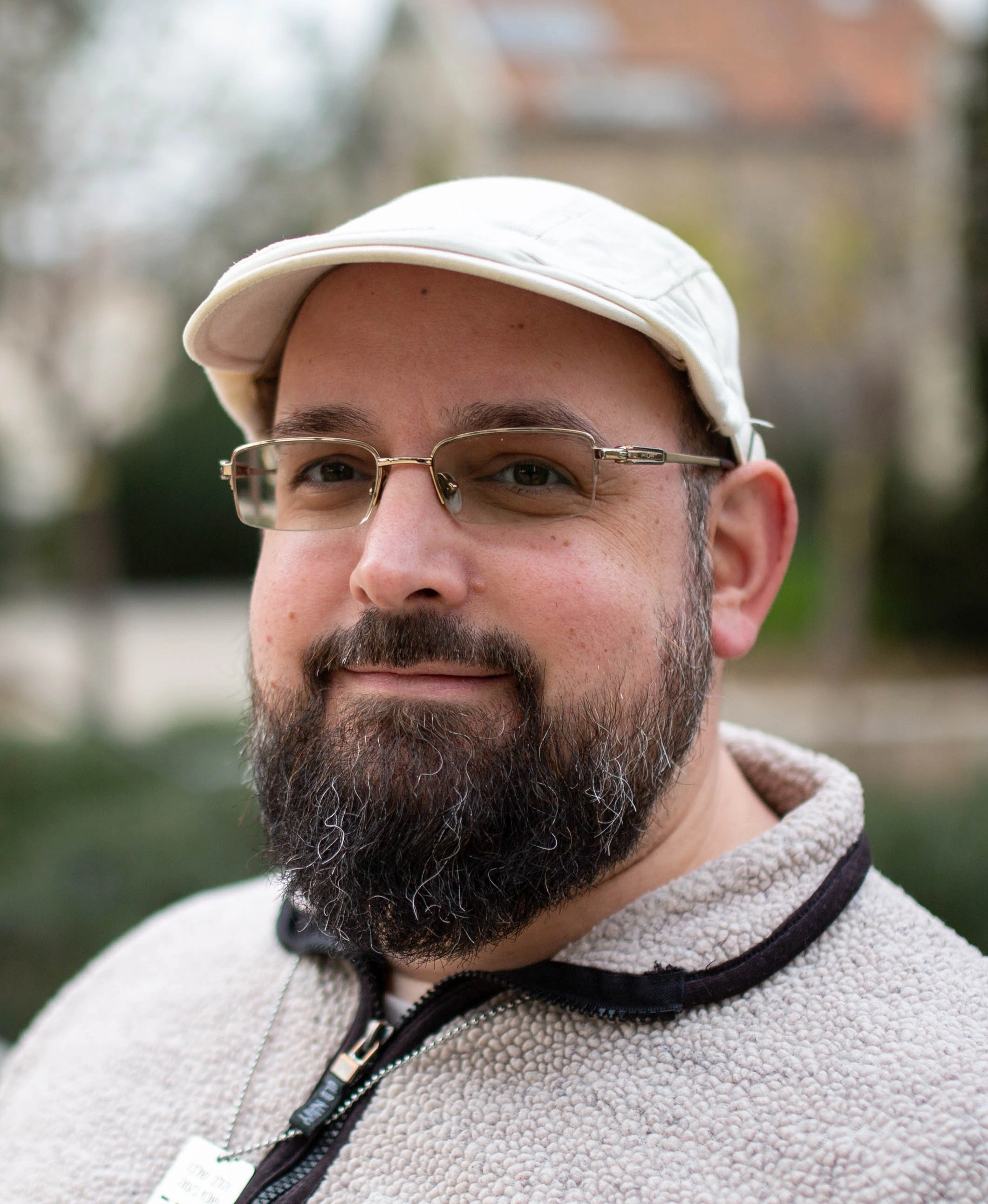
Picture caption: Author photograph of David Bogomolny
David Bogomolny was born in Jerusalem to parents who made Aliyah from the USSR in the mid-70’s. He grew up in America and returned to Israel as an adult. He works as a grant writer for the Jewish Agency for Israel. He and his wife and daughter live in Jerusalem.
He began writing the ‘Skeptic’s Kaddish for the Atheist’ in Jerusalem, Israel, 30 days after burying his father in South Brunswick, New Jersey, USA. His series was originally published on the Times of Israel blogs.
South African author and illustrator, Robbie Cheadle, has written and illustrated sixteen children’s books, illustrated a further three children’s books, and written and illustrated three poetry books. Her work has also appeared in poetry and short story anthologies.
Robbie also has two novels and a collection of short stories published under the name of Roberta Eaton Cheadle and has horror, paranormal, and fantasy short stories featured in several anthologies under this name.
You can find Robbie Cheadle’s artwork, fondant and cake artwork, and all her books on her website here: https://www.robbiecheadle.co.za/
________________________________________
Want to be sure not to miss any of Robbie’s “Treasuring Poetry” segments? Subscribe to Writing to be Read for e-mail notifications whenever new content is posted or follow WtbR on WordPress. If you found it interesting or entertaining, please share.
______________________________________
This segment of “Treasuring Poetry” is sponsored by WordCrafter Press and the Poetry Treasures series.
I have been publishing this series for many years and during that time my own two boys have grown up into young men. I am no longer involved in the world of children learning how to read and write and so I have decided it is time for me to down tools in this space.
I would like to leave you with two poems about my journey raising my two boys to young adults.
This first poem, which appears in Sir Chocolate and the Condensed Milk River story and cookbook, is about Michael.
It’s a boy!
A new arrival brings so much joy
Especially if it’s a little boy
He’ll have a loud and lusty wail
He’ll let you know that he is male
So beware,
A disturbance has started!
He’ll want to be just like his Dad
He’ll drive his mom and sister mad
He’ll keep insects in his room in jars
He’ll build a spaceship to the stars
So beware,
An adventure has started!
He’ll vanish at a sign of work
He’ll quickly learn his share to shirk
At homework time he’ll run away
Much to mom and dad’s dismay
So beware,
An endurance test has started!
In the end he’ll turn out right
You’ll be proud, he’ll be so bright
He’ll make you laugh, and then you’ll cry
When out he moves with a cherry goodbye
So beware,
A life journey has started!
Picture caption: Fondant pair of boys dressed in the South African national soccer team outfits
The next poem is about my older son, Gregory.
Words for my son
Words flow fluidly from my mind to pen, they come very easily to me
So why is it when I speak to you, I just cannot seem to make you see
That I love you, my most special boy, I am your number one fan
It is a joyous journey to watch you becoming an extraordinary man
You have an amazing mind, you’re like an adult when we engage
It makes it hard to understand the teenage turmoil that within you must rage
You make us smile when you sit laughing at some amusing situation in a book
Although I can get really cross when you give me your uncooperative look
My own teenage years are a fairly distant memory, but I do remember
The emotional highs and lows, like the violent thunderstorms of December
An adventurous and exploratory time in your life, bursting with so much possibility
To take advantage, you need to control body and mind and take responsibility
You are exceptionally empathetic and kind, you always give to others
I take delight when I see you treating everyone as your sisters and brothers
New Series
From October, I am delighted to introduce my new series Read and Cook with Robbie Cheadle. This is the banner for this new series:
The new series will involve pairing a recipe, either a dinner meal or a baked item, with a book.
I think it will be good fun.
Thank you to all the readers who have followed Growing Bookworms over the years. I have loved our conversations.
_____________________________________
This segment of “Growing Bookworms” is sponsored by the My Backyard Friends Kid’s Book Series and WordCrafter Press.
The My Backyard Friends kid’s book series is inspired by the birds and animals that visit the author Kaye Lynne Booth’s mountain home. Beautiful illustrations by children’s author, poet, and illustrator, Robbie Cheadle, bring the unique voices of the animal characters to life.
Today, I am delighted to welcome talented poet and author, Elizabeth Gauffreau, as my Treasuring Poetry guest.
What is your favourite style of poetry to read i.e. haiku, ballad, epic, freestyle, etc?
My favorite style of poetry to read is free verse, although recently I’ve become quite taken with the duplex and the pantoum. I also enjoy reading persona poems, such as T.S. Eliot’s “The Love Song of J. Alfred Prufrock,” which has been a long-time favorite of mine. In addition, I enjoy narrative poems such as George Franklin’s Angel of Sorrow poems. (Travels of the Angel of Sorrow and What the Angel Saw, What the Saint Refused)
What is your favourite poem in your favourite style to read?
Because I’ve been reading more poetry collections in the past several years than I ever have before, it’s hard to pick just one favorite poem. I’m going to go with Patricia Smith’s “Now He’s an Etching.”
The poem is written in iambic pentameter, which is definitely not my favorite poetry form. However, Smith uses it so skillfully, I didn’t even notice the meter until someone pointed it out to me.
I strongly encourage readers to listen to Smith read the poem herself to get the full experience of it. https://poets.org/poem/now-hes-etching (Click on the blue speaker icon on the right side of the screen.)
Now He’s an Etching
of the sluggish, coolly vengeful way
a southern body falters. Muscles whine
with toiling, browning teeth go tilt and splay,
then tremulous and gone. The serpentine
and slapdash landscape of his mouth is maze
for blue until the heart—so sparsely blessed,
lethargic in its fatty cloak—OKs
that surge of Tallahatchie through his chest,
and Lordy, hear that awful moan unlatch?
Behind the mic, he’s drowning in that great
migration uniform of sharkskin patched
with prayer and dust. His cramped feet palpitate
in alligator kickers, needle-toed,
so tight he feels the thudding blood, so tight
they make it way too easy to unload
his woe. The drunken drummer misses right
on time, the speakers sputter static, but
our bluesman gravels anyhow—The moon
won’t even rise for me tonight / now what’s
a brokedown man gon’ do? That wretched croon
delights the urban wanderers, intent
on loving on this perfect underwhelm
of Negro, jinxed and catastrophic, bent
into his hurting halves. Inside the realm
of pain as pageant, woozy revelers raise
their plastic cups of fizz and watered rye
to toast the warbler of decay, whose dazed
and dwindling lyric craves its moonlit sky.
“Now He’s an Etching” made such an impression on me that I actually sent a “fan girl” message to Patricia Smith (to which she responded graciously with “thank you”). Then I wrote a puente in response to her poem. (I’ve sent it out to literary magazines in hopes of getting it published.)
I would be remiss if I didn’t include Smith’s commentary on her poem:
About this Poem
“I mourn the elders. I mourn the black bluesmen and women who could only move sanely through their hours with the help of heartbreak. I miss their stout southern stature, bodies resolute with a recollected woe. I ache for the gut gravel of lyric, the knowledge that my crooner is truly suffering, and that she or he has decided to allow us to suffer too. But many of the elders still with us have become millennial playthings, one of the many ‘woke’ things to sample and add to the cultural resume. Hopefully, this poem springs from that space.”
—Patricia Smith
Your new poetry book, Simple Pleasures, comprises of haiku. Is that your favourite form of poetry? Why?
No, it isn’t. My go-to is free verse. In this instance, though, haiku was the best form to convey the experiences I wanted to share with readers.
What is your favourite of your poems in Simple Pleasures?
I’m going to go with this one because it was inspired by the Green Mountains of Vermont, which is where my heart is.
back in the valley
peeling fence to lean on
Green Mountains steadfast
Tell us a bit about Simple Pleasures. What inspired the book? How did you choose the title and cover?
My husband and I were on a scenic drive to escape the awful mess the world is in, and a haiku just popped into my head. So I wrote it down (fiddled with it, of course) and took a picture of the scene which inspired it. My husband and I had fun going on the hunt for the wild haiku together, so we kept at it for a year, until I had enough poems and photographs for a collection and had covered all four seasons. Now that the book is finished, I miss those hunts!
The title Simple Pleasures refers to the simple pleasures of life, which never fail to restore my equilibrium in difficult times. The subtitle, Haiku from the Place Just Right, refers to the Shaker hymn “Simple Gifts,” which was part of my childhood, probably from church camp. Simple pleasures and simple gifts are synonymous to me, so the title and the subtitle seemed just right!
As far as the cover went, I wanted something that would show up clearly in an online thumbnail, which is why I went with a saturated color for the background. The branch of flowering crabapple spoke to me as having a haiku feel to it in its simplicity.
My review of Simple Pleasures: Haiku from the Place Just Right
Picture caption: Cover of Simple Pleasures featuring a spray of pink blossoms against a dark blue background
Simple Pleasures is a collection of delightful haiku written about a variety of different places that have moved the poet to write due to their beauty, family connection, or historical meaning. Each poem is accompanied by a gorgeous colour photograph (I read the ebook). As a South African, I found this book to be a wonderful visual and literary tour of Vermont, New Hampshire, and Maine.
One of my favourite poems in the collection is as follows: “grey heavens, grey sea goldenrod out of context lighthouse bears witness”
This short collection of 53 poems will fill your heart with joy.
Picture caption: Elizabeth Gauffreau author photograph
Elizabeth Gauffreau writes fiction and poetry with a strong connection to family and place. Her work has been widely published in literary magazines, as well as several themed anthologies. Her short story “Henrietta’s Saving Grace” was awarded the 2022 Ben Nyberg prize for fiction by Choeofpleirn Press.
Liz has published a novel, TELLING SONNY: THE STORY OF A GIRL WHO LOVED THE VAUDEVILLE SHOW, and a collection of photopoetry, GRIEF SONGS: POEMS OF LOVE & REMEMBRANCE. Her latest release is also photopoetry: SIMPLE PLEASURES:HAIKU FROM THE PLACE JUST RIGHT. She is currently working on a novel, THE WEIGHT OF SNOW AND REGRET, based on the closing of the last poor farm in Vermont in 1968.
Liz’s professional background is in nontraditional higher education, including academic advising, classroom and online teaching, curriculum development, and program administration. She received the Granite State College Distinguished Faculty Award for Excellence in Teaching in 2018.
Liz lives in Nottingham, New Hampshire with her husband.
About Robbie Cheadle
South African author and illustrator, Robbie Cheadle, has written and illustrated sixteen children’s books, illustrated a further three children’s books, and written and illustrated three poetry books. Her work has also appeared in poetry and short story anthologies.
Robbie also has two novels and a collection of short stories published under the name of Roberta Eaton Cheadle and has horror, paranormal, and fantasy short stories featured in several anthologies under this name.
You can find Robbie Cheadle’s artwork, fondant and cake artwork, and all her books on her website here: https://www.robbiecheadle.co.za/
_____________________________________________
Want to be sure not to miss any of Robbie’s “Treasuring Poetry” segments? Subscribe to Writing to be Read for e-mail notifications whenever new content is posted or follow WtbR on WordPress. If you found it interesting or entertaining, please share.
_______________________________________________
This segment of “Treasuring Poetry” is sponsored by WordCrafter Press and the Poetry Treasures series.
Young adult fiction, abbreviated as YA, is fiction aimed at a reading audience aged between thirteen and eighteen years old.
YA fiction is intended to bridge the gap between middle-grade fiction and adult fiction. It is more emotionally and thematically advanced than middle-grade fiction.
Characteristics of young adult fiction?
The characters are young adults in the same age group as the target audience;
The language and writing style are designed to be relatable to the target audience;
Common themes explored in YA novels are personal identity, self-discovery, and the transition to adulthood. Friendship, substance abuse, alcoholism, and sexuality are frequent sub-themes;
YA novels often present dilemmas relating to the themes and sub-themes that face young adults; and
YA novels are generally fast paced, emotional, and end on an optimistic note.
A list of fantastic YA books
I have read all of the following YA books and recommend them highly:
The Hate U Give by Angie Thomas
The Hunger Games by Suzanne Collins
The Lightening Thief by Rick Riordan
The Book Thief by markus Zusak
The Princess Diaries by Meg Cabot
Holes by Louis Sachar
The Giver by Lois Lowry
Are You There God? It’s Me, Margaret. By Judy Blume
A Wizard of Earthsea by Ursula K. Le Guin
To Kill a Mockingbird by Harper Lee
Lord of the Flies by William Golding
The Catcher in the Rye by J.D. Salinger
Anne Frank: The Diary of a Young Girl by Anne Frank
Anne of Green Gables by L.M. Montgomery
Little Women by Louisa May Alcott
A few excellent quotes from YA books
“His voice rose under the black smoke before the burning wreckage of the island; and infected by that emotion, the other little boys began to shake and sob too. And in the middle of them, with filthy body, matted hair, and unwiped nose, Ralph wept for the end of innocence, the darkness of mans heart, and the fall through the air of the true, wise friend called Piggy.” ― William Golding, Lord of the Flies
“It’s really a wonder that I haven’t dropped all my ideals, because they seem so absurd and impossible to carry out. Yet I keep them, because in spite of everything, I still believe that people are really good at heart.” ― Anne Frank, The Diary of a Young Girl
“I wanted you to see what real courage is, instead of getting the idea that courage is a man with a gun in his hand. It’s when you know you’re licked before you begin, but you begin anyway and see it through no matter what.” ― Harper Lee, To Kill a Mockingbird
I have written a YA novel, Through the Nethergate. It is intended to make young people think about technology, politics, extremism, and the potential threats they pose to peace and cohesiveness in our world. Of course, things have deteriorated significantly in the world since I published this book in 2018, so its messages still ring frighteningly true.
About Robbie Cheadle
Award-winning, bestselling author, Robbie Cheadle, has published fifteen children’s book and three poetry books. Her work has also appeared in poetry and short story anthologies.
Robbie also has two novels published under the name of Roberta Eaton Cheadle and has horror, paranormal, and fantasy short stories featured in several anthologies under this name.
The eleven Sir Chocolate children’s picture books, co-authored by Robbie and Michael Cheadle, are written in sweet, short rhymes which are easy for young children to follow and are illustrated with pictures of delicious cakes and cake decorations. Each book also includes simple recipes or biscuit art directions which children can make under adult supervision.
Robbie and Michael’s new Southern African Safari Adventures series is aimed at teaching young children about Southern African wildlife in a fun and entertaining way. Each book contains a rhyming verse story about a particular animal, as well as illustrations by Robbie Cheadle, photographs and links to video footage about that animal.
Want to be sure not to miss any of Robbie’s “Growing Bookworms” segments? Subscribe to Writing to be Read for e-mail notifications whenever new content is posted or follow WtbR on WordPress. If you found it interesting or entertaining, please share.
________________________________________________
This segment of “Growing Bookworms” is sponsored by the My Backyard Friends Kid’s Book Series and WordCrafter Press.
The My Backyard Friends kid’s book series is inspired by the birds and animals that visit the author Kaye Lynne Booth’s mountain home. Beautiful illustrations by children’s author, poet, and illustrator, Robbie Cheadle, bring the unique voices of the animal characters to life.
This month, I am delighted to introduced talented author and poet, Gwen M. Plano, as my Treasuring Poetry guest.
What is your favourite style of poetry to read, i.e. haiku, ballad, epic, freestyle, etc?
I enjoy all forms of poetry. If a poem gives me pause by how it transforms the ordinary into the extraordinary, or if it illuminates a mystery, then I’m captivated. Pablo Neruda and Maya Angelou are two of my favorites, and they both write freestyle. But I also love syllabic poetry. Matsuo Basho’s The Old Pond is breathtaking:
An old silent pond
A frog jumps into the pond
Splash! Silence again.
What is your favourite poem in your favourite style to read?
In the 1980s, I discovered T.S. Eliot and his Four Quartets. Written in freestyle, the lengthy poems address the deep questions of life. I’ve probably read the poems a dozen times. The last quartet, Little Gidding, is my favorite. It’s too long to include in this post, but Section IV offers a glimpse of Eliot’s spiritual depth:
The dove descending breaks the air
With flame of incandescent terror
Of which the tongues declare
The one discharge from sin and error.
The only hope, or else despair
Lies in the choice of pyre or pyre—
To be redeemed from fire by fire.
Who then devised the torment? Love.
Love is the unfamiliar Name
Behind the hands that wove
The intolerable shirt of flame
Which human power cannot remove.
We only live, only suspire
Consumed by either fire or fire.
What is your favourite style of poetry to write? Why?
When I write spontaneously and from my heart, the poetry is freestyle. I don’t think about the structure of the poem; rather, I’m focused on the story it tells. If I were to choose a favorite style, it would be freestyle.
Every week, though, I participate in poet Colleen Chesebro’s syllabic poetry prompts. I’ve learned tremendously through her example and instruction. Importantly, I’ve come to love syllabic poetry.
What is your favourite of your own poems in your favourite style?
I’ve two poems that I particularly like, and I can’t decide which one is my favorite. One reflects on grief, and the other focuses on writers. Both are written in freestyle, and the first includes rhyme.
The Old Pier
Picture caption: The Old Pier by Gwen M. Plano
The Old Pier
Remember when we danced in the moonlight? I was your princess, and you were my knight. Remember the star you said was mine alone? Brilliant and pulsing, it was our secret cosmic stone.
Now I hold your ashes and not your embrace, and I weep with every memory trace. I walk the old pier and hope I will see you standing there, waiting for me.
But ashes to ashes is as day is to night a harsh, inevitable part of life’s hike. My tears are lost in the water below. Maybe they’ll find you if I can just let go.
The Author
Picture caption: The author by Gwen M. Plano
The Author
I search for you,
writer unknown,
each page a port of departure.
Through hurdles, fears, and
the dreams you disclose,
I wander.
A word laid bare,
a phrase that lingers,
a plot that captures or awakens,
your footsteps stealth on paper trails,
the scent of you,
I savor.
The web you spin,
entraps and cradles,
while entangled characters wrestle.
Through the give and take of life and love,
the glimpses of you,
I follow.
At last, I see,
my muse, my tease,
behind the hes and shes you’ve crafted,
a warrior or tender lover – the storyteller,
YOU, now revealed, I honor.
Tell us a bit about your fiction writing and your latest book, The Soul Whisperers Decision. What is the book about? What inspired the book?
Picture caption: the cover of The Soul Whisperer’s Decision by Gwen M. Plano
Much like my poetry, writing fiction is a journey. I write when something gnaws at my soul. It often begins with scenes and questions, and just as often, I don’t know where the story will take me. I am both the writer and the reader.
The Soul Whisperer’s Decision begins with a tragedy. A father loses his little children in a car accident that almost kills his wife as well. The young man is a veteran, and he is pulled back into his struggle with Post-Traumatic Stress Disorder. The story follows this veteran through the pain of loss to the eventual rediscovery of hope.
What inspired this story? For a decade, I worked with Marines and soldiers from all service branches, returning from Iraq and Afghanistan. I was an administrator at a college located near military bases. I soon discovered that most of those who were boots-on-the-ground suffered from PTSD in addition to physical injuries. By choice, my work shifted to serving those who had served all of us.
Over the years, I’ve heard people scoff at PTSD as though it is a sign of weakness. These individuals never served and have no idea what these brave men and women experienced. In my novel and my WIP, I attempt to illuminate that experience.
The Soul Whisperer’s Decision also includes a nurse who has a Near Death Experience. Her choice of remaining in the heavenly realm or returning to her life shapes the story’s direction. Since the 1980s, I’ve studied NDEs and have spoken with some who have medically died. It is an experience that is personal and close to my heart.
My review of The Soul Whisperer’s Decision
This beautifully written and emotional book is ultimately about making choices when life presents us with devastating obstacles on our path. For various reasons, this topic is close to my heart and I related heavily to the main character, Sarah, who, following a devastating car accident, needed to make the ultimate decision about whether to fight for life or let go. To make this decision harder, Sarah lost both her small children in the accident. I have watched loved ones making this choice and the decision to live is a hard one when months of rehabilitation and pain lie ahead.
While Sarah is fighting for her life in hospital, her husband, Jack, a Vietnam veteran, faces mental collapse when his post traumatic stress disorder rears its ugly head. Jack is devastated by the loss of his little ones and flawed by the uncertainty as to his wife’s recovery. Jack must also make a choice about whether to face the pain and try to rebuild his life or whether to end his suffering.
The sensitive and yet realistic manner in which the author deals with the trauma and the emotional and mental reactions of her two central characters demonstrates a deep understanding of people and the human condition. This relatively short novel will have you examining your own life and considering how you would react in the same circumstances. There is a lot of subtle guidance woven throughout this book and it is essentially, a very uplifting read. I strongly recommend this excellent book.
Gwen M. Plano, aka Gwendolyn M. Plano, grew up in Southern California and spent most of her professional life in higher education. She taught and served as an administrator in colleges in Japan, New York, Connecticut, and California. Gwen’s academic background is in theology and counseling. Recently retired, she now lives in the high desert of Arizona, where she writes, gardens, and travels with her husband.
Gwen’s first book is an acclaimed memoir, Letting Go into Perfect Love. Her second book, The Contract between heaven and earth, is a thriller fiction novel, co-authored by John W. Howell. It has received multiple awards and is an Amazon Best Seller. The Choice, the unexpected heroes is the sequel to The Contract. It is also a thriller, involving the attempt of an unfriendly nation to take over the world. The third book in the series, The Culmination, a new beginning is an action-packed military thriller that spans the globe and involves multiple Heads of State and the threat of World War III. Only love can change the fate of humanity.
When Gwen is not writing, she’s often in the beautiful Red Rocks of Sedona, where she finds inspiration.
About Robbie Cheadle
South African author and illustrator, Robbie Cheadle, has written and illustrated sixteen children’s books, illustrated a further three children’s books, and written and illustrated three poetry books. Her work has also appeared in poetry and short story anthologies.
Robbie also has two novels and a collection of short stories published under the name of Roberta Eaton Cheadle and has horror, paranormal, and fantasy short stories featured in several anthologies under this name.
You can find Robbie Cheadle’s artwork, fondant and cake artwork, and all her books on her website here: https://www.robbiecheadle.co.za/
_____________________________________________
Want to be sure not to miss any of Robbie’s “Treasuring Poetry” segments? Subscribe to Writing to be Read for e-mail notifications whenever new content is posted or follow WtbR on WordPress. If you found it interesting or entertaining, please share.
_______________________________________________
This segment of “Treasuring Poetry” is sponsored by WordCrafter Press and the Poetry Treasures series.
I have always loved reading. I started reading at the age of four years old and have never stopped. I consume books like dinners. When I was a little girl, I used to read books from the library. I didn’t own many books myself. I loved books with bold and bright illustrations and I always think of Richard Scarry’s books first.
Picture caption: Image from Richard Scarry’s website: https://www.richardscarry.com/. If you don’t know this wonderful author and illustrator, do go over and acquaint yourself with him.
Richard Scarry used personification for the animals in his books. They all walk and talk like humans and they wear clothes. They are delightful, but they are not representative of the world of nature and the reality of nature. When I was little, I knew about animals. I was exposed to them and I knew that milk came from cows, eggs came from chickens, and other things about meat that I’ve always tried not to think about to much. As I grew older, I read other books that included the personification of animals. One of my favourite books in this genre is Wind in the Willows by Kenneth Grahame.
Last year, when I discovered an aptitude for drawing and painting, I thought I would turn my hand to creating pictures of the animals and birds I love so much. I have now created several animal pictures which you can see on my art page here:
In June 2023, Kaye Lynne asked me if I would like to illustrate her My Backyard Friends books. I thought about it and decided to give it a go, even though I hadn’t ever tried to do drawn/painted illustrations before. I was busy at the time with creating the illustrations and story for my latest children’s book, Neema the Misfit Giraffe.
Before embarking on illustrating books for children, I reflected for some time on what the best type of illustration would be for modern children. Children who grow up in cities now don’t have much interaction with animals. They don’t know that milk comes from cows and eggs come from chickens. I decided it was necessary for them to see the reality of the animal world and not a fantasy, personified versions. Especially given the Sixth Mass Extinction our planet is currently facing with the endangerment of many of our animal species world wide. If believed it was better for children to be exposed to wildlife in a true and natural way. I hoped it would help to stimulate interest and passion for our animals. Afterall, our children are the next generation and will have to carry the torch for the salvation of what is left of the animal kingdom.
It is for these reasons that my drawings and paintings of wildlife and birds in my own children’s books and in Kaye Lynne’s children’s books are based off real photographs and are not personified or animated in any way. I am happy with how the illustrations have worked out and I hope that they will make a small difference towards saving our limited supply of remaining animals and birds.
Picture image: my watercolour painting of Becky the Beaver from Timothy Turtle Discovers Jelly Beans by Kaye Lynne Booth.
About Robbie Cheadle
Award-winning, bestselling author, Robbie Cheadle, has published fifteen children’s book and three poetry books. Her work has also appeared in poetry and short story anthologies.
Robbie also has two novels published under the name of Roberta Eaton Cheadle and has horror, paranormal, and fantasy short stories featured in several anthologies under this name.
The eleven Sir Chocolate children’s picture books, co-authored by Robbie and Michael Cheadle, are written in sweet, short rhymes which are easy for young children to follow and are illustrated with pictures of delicious cakes and cake decorations. Each book also includes simple recipes or biscuit art directions which children can make under adult supervision.
Robbie and Michael’s new Southern African Safari Adventures series is aimed at teaching young children about Southern African wildlife in a fun and entertaining way. Each book contains a rhyming verse story about a particular animal, as well as illustrations by Robbie Cheadle, photographs and links to video footage about that animal.
Want to be sure not to miss any of Robbie’s “Growing Bookworms” segments? Subscribe to Writing to be Read for e-mail notifications whenever new content is posted or follow WtbR on WordPress. If you found it interesting or entertaining, please share.
________________________________________________
This segment of “Growing Bookworms” is sponsored by the My Backyard Friends Kid’s Book Series and WordCrafter Press.
The My Backyard Friends kid’s book series is inspired by the birds and animals that visit the author Kaye Lynne Booth’s mountain home. Beautiful illustrations by children’s author, poet, and illustrator, Robbie Cheadle, bring the unique voices of the animal characters to life.