How to Become a Published Author: Idea to Publication by Mark Shaw is filled with information useful to authors in all stages of the publishing process. Although it’s aimed at aspiring authors trying to break into publishing, as a published author with an M.F.A., it gave me ideas and techniques to consider, as well. Shaw deals with the publication of fiction and poetry, as well as nonfiction. He touches on self-publishing as well as getting a foot in the door with traditional publishers, and offers a wealth of good reference materials.
Mark Shaw is a best selling nonfiction author, yet unschooled in the craft. He made his way into the traditional publishing world through the oldest method known to authors: good writing. And he practices what he preaches. Every book I’ve ever read by Mark Shaw has been well written, drawing readers in as his stories unravel in masterfully crafted ways which keep readers entranced to the end and make them think long after putting the book down. How to Become a Published Author is no exception, with the valuable information contained within presented in a clear and concise format that is easy to reference.
In this book Shaw walks us through the process for getting your books published, step-by-step. Sharing from his own experiences in traversing the pathways to publishing, using his own books and books of others as examples to illustrate his message, providing useful reference materials and links. This book covers practicle steps to becoming published from outlining in the pre-writing stage, all the way through to query letters and book proposals for those who aspire to be traditionally published. It offers marketing tips and advice useful to all authors, since promotion is a role which now falls on the shoulders of authors in many cases of both traditionally and independently published authors.
Much of Shaw’s advise could have come straight out of my M.F.A. in Creative Writing program, but he also offered suggestions for nonfiction publishing that wasn’t emphasized, or wasn’t offered through my program. It was helpful in getting me focused as I prepare to write memoir.
In How to Become a Published Author, Mark Shaw speaks from experience, delivering well founded advice on how to get your book published for authors in every stage of their writing careers. I give it five quills.
Kaye Lynne Booth does honest book reviews on Writing to be Read in exchange for ARCs. Have a book you’d like reviewed? Contact Kaye at kayebooth(at)yahoo(dot)com.
I love a good ghost story or paranormal tale, and that’s just what I’m looking for for the first Wordcrafter short fiction contest. If you write paranormal short fiction, submit your best story for a chance for it to be included in a paranormal anthology. Flash fiction is accepted as long as it is a complete story, with beginning, middle and end. In addition to publication, the winner will recieve a $25 Amazon gift card.
Guidelines:
Submit paranormal, speculative fiction, or horror. I want to read your story!
Stories should be less than 10,000 words and have a paranormal element. They don’t have to be scary, but it helps.
Submit stories in a word doc, double spaced with legible 12 pt font, in standard manuscript format.
Submit stories to kayebooth@yahoo.com with Submission: [Your Title] in the subject line. You will recieve instructions to submit your $5 entry fee with confirmation of reciept.
If you recieve an invitation for the anthology, you will also be asked to submit a short author bio and photo.
No simultaneous submissions. You should recieve a reply within 45 – 60 days.
Multiple submissions are accepted with appropriate entry fee for each individual story.
I’m excited about this contest and the resulting anthology, and I hope you are, too. I can’t wait to read your stories. I’m hoping to release the anthology around Halloween through WordCrafter Press, so get your submissions in by April 30th. I’m searching for a title for this anthology, so if you have a paranormal title that’s killer, leave a comment below and give me your suggestions.
Like this post? Subscribe to Writing to be Read for e-mail notifications whenever new content is posted or follow WtbR on WordPress.
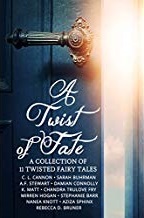
A Twist of Fate: A Collection of 11 Twisted Fairy Tales is a delightful collection of short fiction which plays off of the fairy tales of yore to create a collection of charming fairy tales, in both traditional and contemporary styles, that entertains and enthralls. Filled with works from a plethora of talent, this collection may change the way we look at fairy tales.
All of these stories were quite enjoyable, but I’ll just give you some highlights of my favorites. Did you ever wonder about the role the peas played in The Princess and the Pea? Nanea Knott shares her ideas about this in The Princess Tests. K. Matt claims that Rampage is a twist on Rapunzel, but I’d venture to say she borrowed a bit from Medusa as I read this monstrosly hairy tale. Peter, Peter, by Chandra Truelove Fry presents a very twisted take on Peter, Peter Pumpkin Eater that will deter even the strongest hearts from eating pumpkin ever again. Damian Connolly does a smashing job of taking Sleeping Beauty into the Indian jungles in The Lost City, and you’ll be surprised by what happens when the princess is awakened.
Fiction Atlas Press could have done a better job with proofreading, as I found typos throughout, ingbut overall I found found this collection of twisted tales to be quite engaging. I give A Twist of Fate five quills.
Kaye Lynne Booth does honest book reviews on Writing to be Read in exchange for ARCs. Have a book you’d like reviewed? Contact Kaye at kayebooth(at)yahoo(dot)com.
In January, Writing to be Read is celebrating women’s fiction and female authors. You may have caught my Interview with Loretta Miles Tollefson two weeks ago, or my post about the history of female authorship last week. In continuation of this monthly theme, I’m pleased to welcome a woman who authors science fiction and women’s fiction as my first guest for this new monthly series, Chatting with the Pros. Barabara Chepaitis is a traditionally published author of both science fiction and women’s fiction, and she’s very familiar with the issues that surround being a woman author in today’s publishing industry. Let’s see what she has to say.
Kaye: What defines women’s fiction? Is it the subject matter, female protagonists, or the manner in which women are portrayed?
Barbara: In my experience, women’s fiction is defined by the publisher, who wants to have a specific place to put a book in a bookstore. For me, the difference between my science fiction and my ‘women’s fiction’ was what name they used. When I write science fiction, they want me to use my initials to hide that I’m a girl. When I write women’s fiction, they want to use my name, to prove I’m a girl.
Since I’ve never written a novel that doesn’t have a female protagonist, it’s clear to me that this isn’t the defining aspect. Other than that, I think the definition is kind of the way Dr. Who describes time – wibbly wobbly.
Kaye: What draws you to women’s fiction?
Barbara: I don’t know that I am drawn to women’s fiction. I’m a feminist, for sure, but I never set out to write any particular genre. I just get an idea for a character and story, then tell it. If they happen to be female, that’s because I’ve known some fascinating women, with very complex lives.
Kaye: Do you think it is tougher female authors today, or has digital and self-publishing evened the playing field for women in the publishing industry?
Barbara: It’s always been more difficult for women, in every field of endeavor we have in our culture. There’s so many many ways to block women. First, you can just not hire (or publish, or pay) them. Second, you can let them do the work, but not acknowledge the work they’ve done, attributing it to others. Only time will tell if digital and independent publishing will change that kind of move. Being cynical, I guess that women will have to continue to fight for their place. But that’s just me, being cynical.
Kaye: Romance usually has female protags. Why is it not considered as women’s fiction?
Barbara: The quick answer – because the narrative arc primarily follows a trajectory of romance. I know that when I’ve written material that has a strong romance (as in The Amber) but has something else as it’s narrative arc (coming of age, self-discovery, overcoming demons, etc.) then it isn’t seen as romance. For instance, there’s some pretty strong romantic properties to the whole Jaguar series, but she’s primarily dealing with criminals and crime.
Kaye: What makes a good story?
Barbara: The answer to that varies pretty wildly, depending on who you ask. For my husband, a good story is often one of a hero who makes the ultimate sacrifice for a cause. He loves Spartacus, Saving Private Ryan, and so on. For me, a story of a hero who overcomes incredible obstacles to reach a goal that serves others, or creates a new understanding of life, is always entrancing. I’m guessing that for romance readers, the tale of finding true love is what winds their clocks. So the question to ask, really, is what makes a good story for you?
Kaye: Your Fear series has a futuristic setting, an action adventure storyline and a strong female protagonist, Jaguar Addams. It’s really women’s genre fiction. What genre or genres do you put it in?
Barbara: I wrote the Fear series as a detective/mystery series. It just happened to be set in the future. When I was seeking a publisher, there was no such thing as ‘cross-genre’, and the mystery/detective market wanted nothing to do with it. Thus it landed in science fiction, which was more open, and they called it cyberpunk suspense – which made me wonder if I had to do something different with my hair, you know?
You can say Jaguar is ‘women’s fiction’ in that it has a powerful female protagonist and is written by a woman, but there’s plenty of men hanging around as well, and they all have their own obstacles to overcome, sacrifices to make, stuff to learn. Most of my work crosses literary lines in some way. I’m bitextual, and trangenre, I guess. And proud of it.
Kaye: Would you like to tell us a little about the series?
Barbara: Jaguar Addams and Alex Dzarny work on Prison Planetoid 3, which was established after a time of massive domestic violence known as The Killing Times. Now the worst criminals are sent to the Planetoid Prisons, where they’re run through programs that make them face the fears which drove their horrid crimes, based on the theory that all crime grows out of fear. Jaguar and Alex are both practitioners of the Empathic arts, and have some maxxed out psi capacities, which they use in their work.
Jaguar and Alex are alike in their dedication to the job, but they approach it differently. Jaguar runs with scissors, and colors way outside the lines. If Alex runs with scissors, he points them down. Both characters have close and complicated friendships with others who work on the Planetoids, and Jaguar has a ‘family’ in a Native American community in the Southwest. She’s an offshoot of a Mayan nation by heritage.
Each book is its own case, as in a detective series, but there is a larger arc along the way, which deals with Jaguar’s need to develop trust in intimacy, and Alex’s need to get a little more wild.
Kaye: Would you talk a little about the books that are published under Barbara Chepaitis, the ones that annnounce that you’re a girl and would probably most be classified as ‘women’s fiction’?
Barbara: I’ve got 3 under the ‘Barbara’ name:
Feeding Christine: “It was the season of Miracles in Teresa’s kitchen, and while none of the women particularly believed in miracles, neither did they think they’d be needing one. They were wrong.”
TERESA DI ROSA, owner of the thriving catering business Bread and Roses, makes the feeding of bodies and souls her life work. Now, with her niece CHRISTINE and her friends DELIA and AMBERLIN, she’s gearing up for the big event of the year – the annual Christmas open house. But as the party gets organized, her life is spinning out of control.
Her divorce is barely final, her son is spending Christmas with his father, and Christine seems to be losing her grip on sanity as she grieves the death of her mother, Teresa’s sister. The radical steps Teresa takes to rescue Christine shock everyone, but with her friends, Teresa feeds Christine a healthy dose of courage, wisdom and love.
These Dreams: Cricket Thompson’s routine life of husband, home, and family becomes a land of nightmare when an act of random violence leaves her daughter critically wounded. The crisis destroys her family, exposes her illusions and defies her belief in dreams. She seeks solace at the bird sanctuary where she volunteers, and learns that healing is a miracle of choice rather than chance.
Something Unpredictable: Just FYI – SOMETHING UNPREDICTABLE is based on a house that me and my husband actually tried to buy. There really is a circus house.
Delilah is 31, has no career to speak of, and is living at home with her hippie parents, and hanging on to a boyfriend who likes to photograph her naked in tubs of blue jello. Clearly, Delilah needs a plan.
Her sister is living the perfect life with the perfect husband, her father continues to make money off the stock market, and her mother continues to spend it on the latest social cause. Delilah would love to save the world as well if only it weren’t such an overwhelming task. She longs for inspiration. But she’s about to encounter some things she never predicted – a long-lost grandmother, Carla, who used to tame tigers with the circus; a 260 year old house with septic problems; an ex-fiancee; and a man named Jack – all of which will change her life forever.
Kaye: Food plays a central role in much of your women’s fiction. In fact, you might consider it a core theme for your books. Can you explain why this is, and why it’s important?
Barbara: Mmm. Foood. I’m a real foodie, and love to cook and play with my food. Perhaps because my mother’s family is Italian, I also understood from an early age that food is a language all its own, something we consume to learn about the land and its people and our relationship to all that. To me, cooking is similar to writing, and eating and reading are the way we enrich ourselves, body and soul.
Kaye: Why does symbolism play such a big role in your work?
Barbara: Symbolism? Actually, none of it is symbolism. It’s all experience and reflection on experience. If I write about a family violin that’s been lost and must be found, it’s because I know that music connects us across time with our ancestry. If I write about food, it’s because food speaks to us all the time.
Kaye: Children of the Land (Songs of the Mothers Book 1): This title screams women’s fantasy. I imagine a fantasy world laden with legends of yore. Would you like to tell me a little about this book?
Barbara: Children of the Land is actually the last novel in a series that I wrote which attempted to move across genres through each novel. It started with Children of the Gods, historical fiction with a contemporary twist, retelling the ancient history of the Haudonosaunee. Next was a near future novel titled Children of the World, which featured the descendants of the first novel as they approached the historical moment when biological immortality became possible. After that was Children of the Land, where the next round of descendants dealt with the political and world ramifications of that possibility in a fantasy novel.
When I talked to publishers about the series, they looked at me with something akin to terror. I swear their hair stood on end. It’s really the ultimate in transgenre, and couldn’t be handled by this market. Ultimately, I decided to go ahead with Children of the Land, which is indeed a fantasy novel, and worry about the others later. I have to say it was one of my favorite writing experiences ever. It really appealed to my love of language, and my love of the Heroine’s journey. It also allowed me to play with a lot of gods and goddesses from a variety of cultures, because part of the idea is that it’s time for them to return, and establish a closer relationship with humans, who are indeed the children of the land.
Here’s the synopsis:
Lord Aroc rules all, giving the gift of immortality only to his citizens. The balance between City and village has been preserved for a long age, but a change is at hand, signaled by the dancing of the Northern Lights. Now, a young woman’s choice to plant a small seed will determine world dominion, and the return of the gods.
That woman is Vareka, a Citizen working for Lord Aroc as Watcher for the villagers of Eryahsa. Such villagers live apart from the City, and are ultimately absorbed to feed the City’s energy. As heavy solar flares disrupt the City’s technology, the northern lights cause villagers to recall ancient stories of the Dreamers – spirit beings who would someday return. Then, an old man in Eryahsa tells Vareka she is inheritor of a task only she, daughter of a Dreamer and a Human, can complete.
She bears a locket handed down from mother to daughter for ages uncounted, and the seed it holds must be planted if the Dream is to continue.
She must choose her path, with no guarantee of success. Either she will take her friends on a perilous journey to find the place and time of planting, or she will accept Aroc’s rule, allowing him to remake the world, in his own image.
Kaye: Your fiction features strong female characters, and their strengths give them power. Where do you draw your characters from?
Barbara: For me, characters make themselves known in a very visceral way, speaking up inside me to tell me it’s time to tell their stories. Jaguar popped up when I was on the highway, and I had to pull over and make notes. I can still see her, sitting on the arm of her couch, in her apartment with its skulls and hanging herbs. She was smoking a cigarette, swinging her leg back and forth, and she said, “What you’ll do next is write me.”
Characters and their world, how they arise, where they come from, is a bit of a mystery to me, but I have noted that the best thing I can do is maintain an attitude of openness to their arrival. In fact, an attitude of openness in general. A kind of “Okay. I’m ready. Whaddya got?”
I’m sure that this attitude is assisted by the fact that I grew up with a horde of powerful and complicated women, but I can’t say that any one of them has become a particular character. Perhaps it’s just the flavor of their lives that gets put in the mix.
Kaye: So, would you say your stories are character driven?
Barbara: Yes, my stories are character driven. Characters, with all their complexities and eccentricities, create plot. They have something to say, and are blocked from saying it. Or they have something to hide and it’s revealed. Or they have something to BE, and are meeting obstacles in being that. Characters – human and animal – are at the heart of all plots, the heart of all interest, the heart of our hearts.
Kaye: They say the pen is mightier than the sword. What causes have you used your status as a writer to champion?
Barbara: I once helped a Navy SEAL and Army Ranger rescue a war-wounded eagle from Afghanistan, and that came about only because I’m a writer. I’ve also used my writing in any way I can to promote environmental causes. In fact, I’d love to do more of that.
You can get the full story on the war-wounded eagle in her book, Saving Eagle Mitch: One Good Deed in a Wicked World. Thank you for sharing with us today Barbara. You can learn more about Barbara Chepaitis and her works at the following links:
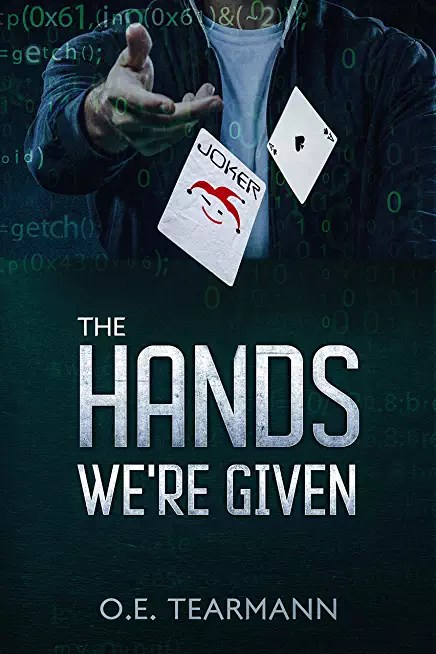
I’m not generally a reader of LBGT literature and I must admit that recognizing that this story had a romantic story thread had me a little apprehensive, but I have to say that The Hands We’re Given by O.E. Tearmann handles this very delicate and sensitive subject matter quite tastefully. In a futuristic world where the corporations have taken control and divided the U.S. into sectors, Aiden and Kevin’s romance is a refreshing change from the day to day stresses of fighting for the resistance forces, but they each have secrets that could stand in the way of their happiness and their very existance.
The Wildcards are resistance team made up of members who refuse to conform to the norm and all of them come with their own emotional baggage, but they are the best there is, or at least they were. Lately their successful operaations have faltered and their disciplinary issues have been on the rise. When Aiden is assigned to take the Wildcards for his first command, but will he be able to pull the group together and get them back up to their potential?
I haven’t read a lot of LBGT stories, so this was a new world for me. Be warned that there are explicit sexual content in this book. But once I got past that, I discovered a dystopian story with well-developed characters who I could invest in and all the elements of a good romance, with the LBGT elements handled with sensitive and good taste. I give The Hands We’re Given four quills.
Kaye Lynne Booth does honest book reviews on Writing to be Read in exchange for ARCs. Have a book you’d like reviewed? Contact Kaye at kayebooth(at)yahoo(dot)com.
You may be aware of some of the changes planned for Writing to be Read for 2019, such as the new look and my newest team member, Robbie Cheadle. If you missed it, you can learn more in my post Writing to be Read: 2018 full of surprises – 2019 promises more.One such change that wasn’t really mentioned was that my posts will coincide with a monthly theme. In January, to kick off the new year right, we’ll be celebrating women authors and women’s fiction.
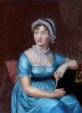
Jane Austen
There have always been female authors, although in the early days they were rare. Jane’s Austen’s Sense and Sensibility was published in 1811 under the pen name of “A Lady”. Her name never appeared on any of her books during her lifetime.
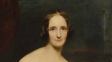
Mary Shelley
Mary Shelley wrote Frankenstein in 1816, when she was eighteen years old, inspired by a gloomy night of telling ghost stories in a mansion in the Swiss Alps.
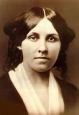
Louisa May Alcott
Louisa May Alcott used the pen name A.M. Bernard, and she only wrote Little Women under pressure from her publisher and her father.
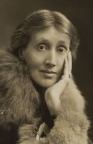
Virginia Woolf
The twentieth century brought us the feminist writings of Virginia Woolf and Margaret Atwood, the modernist short fiction of Katherine Mansfield, and the African-American literature of Toni Morrison, although originally not recieved well. Women authors today are easier to find and generally accepted, but do they still face many of the same stigmas their predecessors did?
That is one question this month’s Monday posts will be exploring. See last Monday’s interview with western author Loretta Miles Tollefson for a view of a female author of the western genre. Next Monday, be sure to catch the first segment of my new monthly blog series, Chatting with the Pros, where I will be interviewing science fiction and women’s fiction author Barbara Chepaitis for some insight into her views on women’s fiction and female authors in today’s publishing industry. I do hope you will join us Monday’s in January on Writing to be Read.
Like this post? Subscribe to Writing to be Read for e-mail notifications whenever new content is posted or follow WtbR on WordPress.
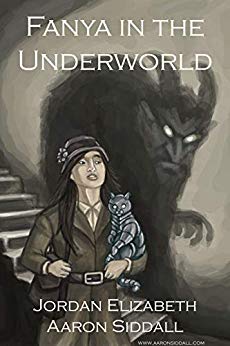
Fanya in the Underworld, by Jordan Elizabeth, is a delightful futuristic steampunkish adventure with spirits instead of steam. Filled with unusual creatures and mechanical devices from beyond the depths of imagination, this story is filled with surprises. Illustrations by Aaron Siddall help bring Elizabeth’s fascinating mechanisms to life, creating a unique journey into the imagination.
Fanya lives in an Alaska with spirits and unusual mechanical companions and servants all around her. She never gives either much thought until her father dies and the Council allows her inheritance to go to her step-mother, leaving she and her sister, Luetkea, to live in poverty. Fanya fights to get back what is rightfully hers and finds that there are things going on in the world around her of which she is unaware, which go beyond the Council to a mytsterious man named Finley. The deeper she digs into the situation, the more she learns about who she really is, and the harder Finley pushes to stop her from learning the truth. When Finley abducts her sister, Fanya will stop at nothing to get her back and take her rightful place in the scheme of things.
Gripping from the first pages, Fanya in the Underworld is a hero’s journey about growing up and discovery. Aimed at Y.A. readers, it’s entertaining for all ages. I give it five quills.
Kaye Lynne Booth does honest book reviews on Writing to be Read in exchange for ARCs. Have a book you’d like reviewed? Contact Kaye at kayebooth(at)yahoo(dot)com.
After writing an excerpt of Delilah for an assignment in grad school, I remember thinking, ‘this could be a book’. But I also remember thinking that a western by a female author probably wouldn’t sell. Women weren’t supposed to write westerns. After all, the western frontier was for rugged men. I knew there were women in the west, but I guessed that they weren’t protagonist material. Then, I wrote and published Delilah anyway. It was a story that wanted to be told. My character, Delilah spoke to me and the writing of the tale was too important for me to let the idea that it might not be a best seller stand in the way.
In the meantime, I was happy to learn that there are other female western authors out there. I’m pleased to have one as my guest today. Her books are set in the historical New Mexico landscape based on factual historical people and places. Western fiction author Loretta Miles Tollefson will share her thoughts on the matter of gender in the western genre and other aspects of writing and her books.
Please welcome Loretta Miles Tollefson.
Kaye: Would you share the story of your own publishing journey?
Loretta: When I was fifteen I won a writing contest in a Sunday School paper and that triggered a deep desire to continue to see my words in print. I published a couple more pieces in that same paper, then branched into short stories and poetry in my 20s and 30s. I had a few things published and received a co-publication offer for a novel. Unfortunately, I didn’t have the financial resources to follow up on that. I continued to write and had some poetry published in my 40s and early 50s. I self-published a couple novels in my mid-50s and then The Pain and the Sorrow was published by Sunstone Press in 2017. I was frustrated by the lack of opportunities to advertise a novel that had been traditionally published and went back to the self-pub route with Not Just Any Man.
Kaye: When did you know you wanted to be an author?
Loretta: I was 15 but, because I come from a very practical family, I chose to take the pragmatic approach of going into newspaper and magazine work instead of stepping into the uncertain waters of fiction. Eventually, I became a Special Projects Manager for a regional planning organization here in New Mexico, a job which utilized both my writing and research skills. I didn’t realize my dream of writing full time until I retired about five years ago.
Kaye: What is the most enjoyable part of writing westerns for you?
Loretta: For me, the most enjoyable part of writing is finding ways to bring the historical details, my characters’ personalities, and the storyline itself together. It’s like weaving a tapestry. And then there’s always the sudden inspiration that seems to come out of nowhere, when my characters seem to be telling me what they want to say. Although I, as the author, always have control, I’m sometimes surprised at where the story takes me.
Kaye: What is the biggest challenge of writing western fiction for you?
Loretta: I think my biggest challenge in writing historical fiction set in the West is feeling like I need to double check all the details. Even though I grew up on a small farm and we had horses and cows and chickens and hung the clothes on a line and pretty much all the rest of it, there’s a great deal I don’t remember or took for granted at the time. And, of course, I didn’t actually live in the early 1800s. I have to be careful not to assume certain ways of doing things or specific pieces of equipment were common back then. I’m always concerned that I’ll slip into an anachronism.
Kaye: You follow the old adage “write what you know”, setting your books in areas where you have lived and are familiar with, yet you must envision those settings in another time period. It seems perhaps your own setting acts as inspiration for your stories?
Loretta: It does. Very much so. I’ve lived in New Mexico almost thirty years and was fortunate enough to travel all over the state in connection with my job. Then, after I retired, we moved to Eagle Nest, New Mexico, on the northern end of the Moreno Valley. We lived there five years and that experience really brought together my love of history and my desire to write full time. There’s so much history here in New Mexico that I don’t think I will ever run out of ideas. We recently moved to Santa Fe, New Mexico, and that will continue to inspire me and to provide me with great resources for my research.
Kaye: Your novel, Not Just Any Man, was recently released. Would you like to tell us a little about that book?
Loretta:Not Just Any Man is about a black mountain man in 1820s New Mexico named Gerald Locke, Jr. It’s an adventure story, as Gerald traps in Northern New Mexico and then joins a fur trapping expedition across the Arizona desert and up the Colorado River. The group includes Enoch Jones, the only mountain man in the West who seems to have an issue with Gerald’s skin color. Jones has a few other issues as well, and the conflict between the two men is a crucial plot element.
But this isn’t just an adventure story. Gerald has met a young woman in Taos who seems far above his station in life and he can’t stop thinking about her. Even if he can survive the Sangre de Cristo mountains, the Mohave Indians, and the arid rim of the Grand Canyon, as well as Enoch Jones, can Gerald prove to himself and the girl he loves that he is, after all, not just any man?
Kaye: Do you think western readers are more receptive to male protagonists?
Loretta: There certainly are a lot of male protagonists in the western genre. I think this is because the traditional Western initially reflected the cultural assumption that only men played an active role in events in the West. As we broaden our understanding of the historical West, both before and after the United States was the primary actor there, we’re realizing just how often women played critical roles on the frontier. Life was harsh. Any family that was going to survive needed everyone in it to be fully engaged. Women had to take on roles they hadn’t necessarily played before. If anything, I believe their experiences on the frontier helped to begin breaking down the barriers that we’re still disassembling today. As we do that, I suspect Western readers will become more and more receptive to all kinds of protagonists.
Kaye: You have wonderful covers with beautiful landscapes that cry out ‘western’! Where do you get your covers?
Loretta: Well, thank you! I’m glad you like them. I worry about my covers. Other than The Pain in the Sorrow, I’ve designed them all myself and created most of them using a combination of Publisher and Gimp. The pundits’ advice is to have someone else do them, but I tend to have very specific ideas about what I want, and I haven’t yet discovered anyone who can quite catch my vision.
Loretta: The Pain and the Sorrow was strongly inspired by New Mexico history. Its characters actually existed and the primary incidents in the story are based on historical artifacts.
The plot of Not Just Any Man is also strongly situated in actual events. While the protagonist and villain are both fictional, most of the mountain men in the novel, are based on actual people—Old Bill Williams, Milton Sublette, Ewing Young, etc.—and much of the story line is based on their first-hand accounts.
Kaye: The Pain and the Sorrow has historical basis, as do all your books as I understand it. And it’s obvious that you strive to make your details as accurate as possible. Do you weave the history into your stories or is it the New Mexico history that inspires the stories?
Kaye: The Pain and the Sorrow is based in New Mexico history and a historical figure of legend, but the story about your female protagonist. Not all of your novels have female protagonists though. Was the female protagonist easier to write since you have a natural female perspective?
Loretta: The Pain and the Sorrow was a very difficult story to tell because of the abuse my teenage protagonist suffers at the hands (and other body parts) of her husband. I think that writing Gregoria’s story may have been more difficult for me precisely because I am female. My emotions were very raw during the entire process. I might have found it easier to tell Gregoria’s story if I didn’t have a “natural female perspective” and felt less connection with her.
Kaye: Do you think it’s more difficult for a female to make it in the western genre than it is for male authors?
Loretta: I think it’s difficult for any author to break into any genre today, regardless of their gender. However, it seems to me that more women are writing Western-style stories and getting them published than has been true in the past. For example, of the fourteen authors showcased in Five Star Publishing’s recent The Trading Post and other stories, four or five are women. In early December 2018, the twenty top-sellers in Amazon’s Western category included at least two women. There may have been more, publishing under a male pseudonym. We’ll really know that women have made it in western fiction when no one finds it necessary to use a male, or male-sounding, pen name when they do so.
Kaye: My publisher slapped Delilah into the romance category, listing it as a frontier romance. While there is a romantic element to the story, I didn’t make it the major focus of the story. I guess they thought it was more marketable as a romance, and I do think that because my protagonist is female, the book might have a stronger appeal to a female audience. Do you think western readers are more receptive to stories with a male protagonist?
Loretta: That’s hilarious. I really liked Delilah and I enjoyed the romance element in it, but classifying it as a frontier romance seems to me to diminish its marketing potential. I never search for frontier romance. As a result, I would have missed Delilah entirely if that’s the only place it could be found. I feel strongly that the current way the market is being sliced into finer and finer categories does us all — readers and writers alike — a disservice because it makes it more difficult to find the well-written, well-conceived books like Delilah that transcend easy categorization.
Kaye: Do you feel that it is harder for women authors to be taken seriously in the western genre?
Loretta: To a certain extent, this may be true. After all, as I mentioned above, some women authors of Westerns apparently feel that it’s necessary to use pseudonyms to obscure their gender. But I think that as we persist, this will become less and less of an issue.
Kaye: You are also a poet and you have out several poetry books. Would you talk a little about what inspires your poetry?
Loretta: My poetry is very personal, especially But Still My Child, which contains the poems I wrote after a miscarriage over thirty years ago. The poems I wrote during that time and afterwards helped me process that grief and I hope publishing them will support others in that same process.
My other volumes of poetry were the result of an attempt to blend my interest in poetry with my love of story. For historical stories, now that I think of it. The poems in But Then Moses Was There and Mary At The Cross try to get inside the heads of Biblical characters to express what living their experiences might have felt like.
Kaye: You’ve also written other non-western novels. What other genres do you write in?
Loretta: I’ve written an urban fiction about coming of age/homelessness in 1980s Seattle and a chick lit novel about a New Mexico couple who wins the lottery. I’m not working in either of those genres now. I’m focusing my energies exclusively on historical fiction set in Old New Mexico.
That focus on historical fiction has also resulted in two short story collections set in New Mexico: Valley of the Eagles and Old One Eye Pete. Valley is a collection of micro-fiction. The stories are all 500 words or less. Old One Eye Pete contains longer pieces, with stories featuring the mountain man Old One Eye Pete acting as the narrative thread.
Kaye: What is the working title of your next book?
Loretta: It’s called Not My Father’s House. It’s a sequel to Not Just Any Man and (spoiler alert!) focuses on Suzanna’s struggle to adapt to living high in New Mexico’s Sangre de Cristo mountains. I’ve just finished the second draft, so it should be out by the middle of 2019.
Kaye: Besides writing, what are your favorite things to do?
Loretta: I research material for my upcoming books — or at least I tell myself it’s for my upcoming books. Hah! And I read fiction: historical, mystery, suspense, Westerns, and pretty much anything else that looks interesting to me at the moment. I review most of everything that I read, unless it has 100 reviews or more. I would love to review more historical fiction set in 1800s New Mexico and Southern Colorado, since Southern Colorado was part of New Mexico at one time.
Kaye: Would you tell us a little about your blog? What will readers find there if they visit?
Loretta: My blog is at http://www.LorettaMilesTollefson.com. About once a week, I post a short piece about a historical event or a flash fiction story set in Old New Mexico, which I define as anything prior to statehood in 1912. The site also includes news about, and links to, my books.
Kaye: Which author or poet, dead or alive, would you love to have lunch with?
Loretta: I have so many favorites. This is a hard question to answer. I think right now, given the work I’m doing, the person I would most like to have lunch with would be Paulette Jiles. I really enjoyed her News Of The World and the way she brought actual events to life in that book.
Kaye: What do you like to do when you’re not writing?
Loretta: I read and explore the region with my husband. Ultimately, it’s all research.
Kaye: Is there anything unique or unusual about your writing process?
Loretta: My writing process consists of writing the first draft, letting it sit a month, revising, letting it sit a month or so, then revising again until I feel it’s really ready. This process seems to be becoming more unusual in today’s fast-paced writing environment.
Kaye: How much non-writing work, (research, marketing & promotion, illustrations & book covers, etc…), do you do yourself for your books?
Loretta: At the moment, I’m doing all my own research, marketing, promotion, book covers, and so forth. I’m stretching myself pretty thin with all these different activities, but doing it all gives me a lot of control. I may have to start farming some of the non-writing work out as I move along in my journey.
Kaye: If your book was made into a film, who would you like to play the lead?
Loretta: To tell you the truth, I watch so little television and so few movies these days, that I’m not sure who would be the best actor to play Gerald or Susanna in a movie based on Not Just Any Man or Gregoria or Charles Kennedy in The Pain And The Sorrow. I’d love some input from your readers on this question.
Kaye: I can and will reach out to readers for input on who should play your leads were your story made film, but now you have to answer another question: Since many of my readers may not have read your books, can you tell us what characteristics these characters would have so they can better imagine who would be a good fit?
Loretta: Hmmm, Characteristics:
Gerald: square forehead, gray eyes. Half black/half Irish. Late 20s.
Suzanna: slim, tall for a woman (about Gerald’s height). long black hair, dark brown eyes. Half anglo (WASP), a quarter french, a quarter Navajo. About 16.
Alright readers. Here’s your chance be heard. Who do you think would be good for the roles of Gerald and Suzanna? Please comment with your suggestions. Loretta and I would both love to hear the possibilities.
Kaye: What advice do you have for aspiring authors?
Loretta: In a nutshell: read, revise, revise again.
If you plan to write fiction, read fiction. Especially classic fiction: Hemingway, Steinbeck, Austen, Dickens, and so forth. Also, read contemporary fiction, and not just books in your genre. Some of my favorite authors right now are Louise Penny and Donna Leon. They teach me pacing and character development. I’m especially fascinated by the way their protagonists develop over the course of the series. Everything’s research, even the books you don’t like. And don’t be afraid to express your opinions and trust your instincts. It’s okay to not like a book even if everyone else is saying how wonderful it is.
Most of all, revise! As Anton Chekhov said, “rewrite everything five times.” Well, maybe not that many, but you see what I mean. I would add “but not immediately” to that advice. Take the time to let your work rest, and then go back and look at it again. When you start changing sentences back to the way you had them in a previous version, that’s when you should stop. But not until then.
Revise it, let it rest, then revise it again. There’s a popular saying that “Perfection is the enemy of done.” I am uncomfortable with that statement. While no work is going to be absolutely perfect, rushing to publication is the enemy of quality work. Try to get your story as well-written as possible. Producing quality work is what will keep your readers coming back for more.
I want to thank Loretta for joining us today and sharing a glimpse into the world of western writing from a female author’s perspective. I have admired her work since I reviewed The Pain and the Sorrow last May, and it’s a thrill to have the privelage of interviewing her. It’s a real treat to hear from another female author in the world of western fiction.
Like this post? Subscribe to Writing to be Read for e-mail notifications whenever new content is posted or follow WtbR on WordPress.
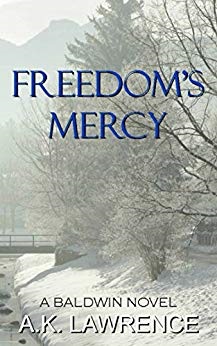
A.K. Lawrence’s Baldwin series, the setting is almost a character, but it’s the colorful characters that make up Baldwin that make each story work so well, and Book 3, Freedom’s Mercy is no exception. As I picked up this novel, it was as if I were among old friends. Although I reviewed the second book, Freedom’s Song back in April, it could easily be read as a stand alone novel, without being lost by backstory you don’t have.
Nancy and Hunter’s romance began in book 1 and is still going strong. Colby and Nancy, who overcame danger and near disaster to come together in book 2 are more in love than ever. Amelie returns to Baldwin intending to write the final chapter on her romance gone very bad decades before, but Riley claims to have changed. When he requests to meet with her it could be the rekindling of thier romance, or it could be that Riley has more sinister motives. Throughout it all, the town is enthralled by Hunter’s dwarfs, which are mysteriously moving about Baldwin telling their own tales to add an element of mystery and more than a few chuckles.
Freedom’s Mercy not one, not two, but three romances which develop and bloom as the plot filled with suspense unravels to reveal the truth. Once you pick it up, you won’t want to put it down. I give it five quills.
Kaye Lynne Booth does honest book reviews on Writing to be Read in exchange for ARCs. Have a book you’d like reviewed? Contact Kaye at kayebooth(at)yahoo(dot)com.
This is the time of year when I like to take a look back over the year to see what worked and what didn’t for Writing to be Read, but there are exciting changes coming as well. So let’s move forward in the logical order and talk about the old first. Let’s take a look at the past year on Writing to be Read. For me, there were several surprises and if you are following, they may surprise you, too.
I feel like we had a really great year in 2018, featuring two rounds of Ask the Authors, with two wonderful and diverse author panels sharing writing tips and advice in many aspects of writing with almost seven thousand views. Now that may not seem like a lot to some, but when you consider that it’s over three thousand more views than in 2017, that’s not too bad.
For those who don’t know Ask the Authors is a twelve week blog series, where an author panel responds to questions on the many aspects of writing. Panel members in the original series of Ask the Authors, which ran from February through April, included author and ghostwriter DeAnna Knippling, dark fantasy author Cynthia Vespia, Y.A. author Jordan Elizabeth, literary author Margareth Stewart, action novelist Tim Baker, action and speculative fiction author Chris DiBella, women’s fiction author Janet Garbor, multi-genre author Chris Barili, and Y.A. author Carol Riggs. Round 2 ran from October through mid- December with the first four authors from the previous list as returning panel members and seven new panel members, including multi-genre author Dan Alatorre, nonfiction author Mark Shaw, pulp fiction author Tom Johnson, thiller author Ashley Fontainne, romance author Amy Cecil, multi-genre author Art Rosch, and speculative fiction author R.A. Winter. I’d like to thank them all once again for taking time out to share with us here.
We also were blessed with three new Wednesday blog series with three new team members. The team member from the 2018 Wednesday line-up with the most views was Jeff Bowles with Jeff’s Pep Talk, but Jordan Elizabeth and Art Rosch brought in their fair share with Writing for a Y.A. Audience and the Many Faces of Poetry, respectively.
To my surprise, the team member with the mosts post views over 2018 was Robin Conley, who is currently not an active team member, but readers continue to seek out her writing advice in her writing Weekly and Monthly Writing Memos from 2017; the most popular was her Weekly Writing Memo: Word Choice is verything, which had the second most views of all blog posts this past year. Right up there with that is her review of Pride and Predjudice and Zombies, with over one hundred post views.
I was also surprised to learn the most viewed interview was tied between children’s author Nancy Oswald from the 2016 series Pros and Cons of Traditional vs. Independent vs. Self-Publishing and action novelist Tim Baker from the 2017 series Book Marketing; What Works. But those interviews were focused more towards information on publishing and marketing, respectively, so I don’t really count them in the same category as author interviews, because readers may view the series posts for different reasons than they would author interviews.
My author interviews provide a focus on the author, so in this category the most post views came from my interview in 2018 with screenwriter J.S. Mayank. My interview with author Alexandra Forry was next in line, and my interview with performance poet Rosemerry Wahtola Trommer recieved the third most post views.
In 2018, the top book review was Dan Alatorre’s dark fiction anthology, Dark Visions. Another surprise – the second and third most post views in the review category are both from 2016, with my review of Simplified Writing 101 by Erin Brown Conroy coming in second, and Wild West Ghosts by Mark Todd and Kym O’Connell Todd coming in third.
The other review that I feel is worthy of mention is my review of Mark Shaw’s new release, Denial of Justice. I did the review in December, so it hasn’t been available long enough to acrue a great number of views to rank in the yearly statistics, but it is a tale that deserves telling and Mark did a smash-up job of telling it. I’ve no doubt this book will be as popular or more so than the original tale, The Reporter Who Knew Too Much, because we all love mystery and intrigue, and the story of Dorothy Kilgallen is a true life tale filled with both. I am privilaged to have been allowed to review both of these books.
Along the lines of other content, again my 2016 post Why is Fact Better than Fiction recieved the most viewed, and surprisingly, a post from 2011, The Process Takes Time close on it’s heels, with my 2016 post, A Writer’s Life in No Bowl of Cherriesfollowing not far behind them. Not one of my top three posts was from this past year. My post from 2018 which recieved the most views was Join Me in My Protest Against Facebook, a rant I did about Facebook and their changing policies after I got blocked from posting in groups, including my own group, for a twenty-four hour period. I think this post was my cry in the dark from the frustration I felt as a busy author who promotes her own work and limited time. It makes me laugh to think it was my most popular post published last year.
Views outnumber visitors, so I’m thinking that the increased views of all the older posts comes from new viewers who popped in to read a newer post and decided to browse the site, which is great. If I gained some new followers due to this, I certainly won’t complain.
Overall, it was a great year and my following has steadily grown, as well as post likes and comments. I have to extend thanks to my readers, my followers, my team members and my guests on Writing to be Read for helping me make it happen. I couldn’t have made such strides without all of you.
2019 promises to be an even better year for both Writing to be Read and for me, and I’m excited to share my plans with you here. To start, this site will be getting a facelift: a new theme which will coincide with my new WordCrafter website and a new logo. The WordCrafter site will be the new home of Write it Right Editing Services and WordCrafter Copywriting, now housed here, as well as WordCrafter Press and WordCrafter Online Courses in the near future. Writing to be Read, although remaining here, will operate under the WordCrafter trademark. I was hoping to launch it tonight to start the New Year off right, but time constraints have not favored me. The launch of my WordCrafter and new image and logo for Writing to be Read will happen sometime in January. That’s the revised goal.
On Writing to be Read, look forward to some great new content beginning in January. To start the year off right I already have scheduled reviews for Freedom’s Mercy, by A.K. Lawrence and Fanya in the Underworld, by Jordan Elizabeth, and an interview with western author Loretta Miles Tollefson.
Let’s not forget the new addition to the Wednesday line-up. Starting in January, children’s author Robbie Cheadle will be joining us with her blog series, Growing Bookworms. You can learn more about Robbie and her exciting and creative new series in my introduction and welcome post last Monday.
I also have an exciting new monthly blog series planned for the third Monday of each month, called Chatting with the Pros. Starting in January, I will interview a successful professional author in a different genre, who will graciously allow me to pick their brains for tips and tidbits of writing wisdom from authors who are making it work. I can’t reveal the guest line-up yet, but it shows promise of holding some well known names. And I’m thinking about doing a writing contest, with entrants recieving an invitation for inclusion in an anthology and other cool prizes.
A third round of Ask the Authors is also in the making for this coming summer and I’m planning an Ask the Authors book to follow, which will include material from all three segments. I already have a cover for the book, created by D.L. Mullen of Sonoran Dawn Studios. I hope to have it out by the end of the year.
And of course, you’ll be able to get updates on my other works in progress: The Great Primordial Battle, book one of my science fantasy series, Playground for the Gods; The Homecoming, book two of my western series, Delilah; and my memoir about losing my son to teen suicide, His Name Was Michael. I hope you will all join me in the coming year.
With that, I’ll just say see you next year.
Until then, happy writing!
Don’t miss a single post in the coming year. Subscribe to Writing to be Read for e-mail notifications whenever new content is posted or follow WtbR on WordPress.



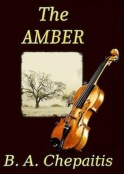 Barbara: The quick answer – because the narrative arc primarily follows a trajectory of romance. I know that when I’ve written material that has a strong romance (as in The Amber) but has something else as it’s narrative arc (coming of age, self-discovery, overcoming demons, etc.) then it isn’t seen as romance. For instance, there’s some pretty strong romantic properties to the whole Jaguar series, but she’s primarily dealing with criminals and crime.
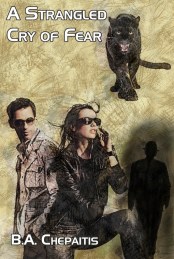 Barbara: I wrote the Fear series as a detective/mystery series. It just happened to be set in the future. When I was seeking a publisher, there was no such thing as ‘cross-genre’, and the mystery/detective market wanted nothing to do with it. Thus it landed in science fiction, which was more open, and they called it cyberpunk suspense – which made me wonder if I had to do something different with my hair, you know?
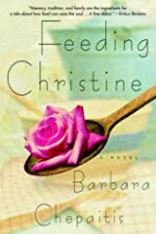 TERESA DI ROSA, owner of the thriving catering business Bread and Roses, makes the feeding of bodies and souls her life work. Now, with her niece CHRISTINE and her friends DELIA and AMBERLIN, she’s gearing up for the big event of the year – the annual Christmas open house. But as the party gets organized, her life is spinning out of control.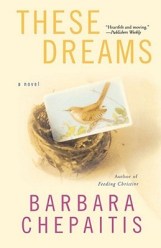
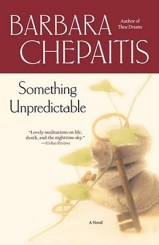 Delilah is 31, has no career to speak of, and is living at home with her hippie parents, and hanging on to a boyfriend who likes to photograph her naked in tubs of blue jello. Clearly, Delilah needs a plan.
 Barbara: Children of the Land is actually the last novel in a series that I wrote which attempted to move across genres through each novel. It started with Children of the Gods, historical fiction with a contemporary twist, retelling the ancient history of the Haudonosaunee. Next was a near future novel titled Children of the World, which featured the descendants of the first novel as they approached the historical moment when biological immortality became possible. After that was Children of the Land, where the next round of descendants dealt with the political and world ramifications of that possibility in a fantasy novel.






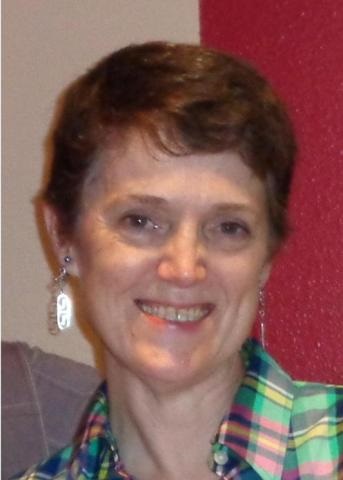
 Loretta: Not Just Any Man is about a black mountain man in 1820s New Mexico named Gerald Locke, Jr. It’s an adventure story, as Gerald traps in Northern New Mexico and then joins a fur trapping expedition across the Arizona desert and up the Colorado River. The group includes Enoch Jones, the only mountain man in the West who seems to have an issue with Gerald’s skin color. Jones has a few other issues as well, and the conflict between the two men is a crucial plot element.
 Kaye: The Pain and the Sorrow is based in New Mexico history and a historical figure of legend, but the story about your female protagonist. Not all of your novels have female protagonists though. Was the female protagonist easier to write since you have a natural female perspective?



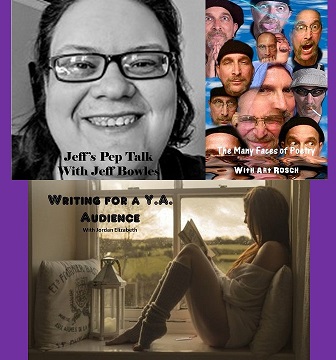 We also were blessed with three new Wednesday blog series with three new team members. The team member from the 2018 Wednesday line-up with the most views was Jeff Bowles with Jeff’s Pep Talk, but Jordan Elizabeth and Art Rosch brought in their fair share with Writing for a Y.A. Audience and the Many Faces of Poetry, respectively.

 2019 promises to be an even better year for both Writing to be Read and for me, and I’m excited to share my plans with you here. To start, this site will be getting a facelift: a new theme which will coincide with my new WordCrafter website and a new logo. The WordCrafter site will be the new home of Write it Right Editing Services and WordCrafter Copywriting, now housed here, as well as WordCrafter Press and WordCrafter Online Courses in the near future. Writing to be Read, although remaining here, will operate under the WordCrafter trademark. I was hoping to launch it tonight to start the New Year off right, but time constraints have not favored me. The launch of my WordCrafter and new image and logo for Writing to be Read will happen sometime in January. That’s the revised goal.
 Let’s not forget the new addition to the Wednesday line-up. Starting in January, children’s author Robbie Cheadle will be joining us with her blog series, Growing Bookworms. You can learn more about Robbie and her exciting and creative new series in my introduction and welcome post last Monday.