Seeking Out Children’s & Young Adult Fiction in November
Posted: December 2, 2019 Filed under: Books, Children's Books, Fantasy, Fiction, Science Fiction, Writing, Writing for a YA Audience, Writing to be Read, Young Adult | Tags: Children's Stories, controversial topics, Illustrations, Writing to be Read, Young Adult Fiction Leave a comment
In November we’ve been seeking out children’s and young adult fiction on Writing to be Read. There are a few differences in writing for our younger readers from writing for adults. As authors, we are in a position to shape young minds, and that’s a big responsibility.
Fiction for adults relies on our words to paint a visual image for the reader, but stories for beginning readers rely heavily on illustrations to enhance our words for youngsters. Authors who have the ability to illustrate their own books may be at an advantage, because illustrations can be a sizable expense for authors like myself, who do not possess such abilities. (Long time Writing to be Read followers may be aware that I once tried to have the first book in the My Backyard Friends series published, but a halt was put on the project after a five year publication process, when the arrangement for illustrations fell through. So, I speak of this added obstacle for children’s authors first hand.)
My interview with author and artist Judy Mastrangelo talks about her Portal to the Land of Fae series and her other works, and shares several of the author’s bright and colorful illustrations. I found her work to be delightful in both text and illustrations in my review of Flower Fairies, and I’ve no doubt that her stories are enjoyed by both young and old.
Young adult authors are faced with a different dilemma, because the audience they write for still have the curiosity of children, but they are beginning to deal with adult issues in their lives, although they are not yet adults either. Controversial topics must be handled with sensitivity and finesse, because the Y.A. critics can be relentless, as is illustrated in this NY Times article about Y.A. author Amélie Wen Zhao.
On Writing to be Read, we looked at how Y.A. fantasy and science fiction author Carol Riggs deals with issues that might be frightening for adolescents in her Junction 2020 series on “Chatting with the Pros“, and saw how Jordan Elizabeth handles a dark fantasy story which deals with the controversial and often taboo topics of teen suicide, cutting, and depression in my review of Tabitha’s Death. Jordan also talks about the inspiration behind her fantasy novel, The Goat Children, which deals with the issue of Alzhiemer’s disease, on “Writing for a Y.A. Audience“.
Also in November, Robbie Cheadle also looked at the pros and cons of classic vs. contemporary children’s fiction on “Growing Bookworms“, and Jeff Bowles took a look at Disney’s new video streaming service, Disney+, on “Jeff’s Movie Reviews“, where we can find all the great tales of the Disney classics. What a great way to introduce our children to them, (or just re-watch them ourselves to indulge our own inner children).
In addition, we said goodbye to a great author, who was known and loved in the online writing communities in my “Tribute to Tom Johnson“. Tom was originally a pulp and science fiction author, but in recent years, he’s been writing children’s stories for the Wire Dog story collections. He will be greatly missed.
November has been a great month and we’ve explored a lot of children’s and young adult fiction. I hope you’ve enjoyed yourself as much as I have. There is no theme for December, as I’m taking this time to breathe before the next round. I’ll be updating you about the changes that will be coming for 2020 on Writing to be Read, reviewing a couple of books which didn’t fit under this year’s themes, and throwing in a few surprises. I do hope you’ll all drop by and check it out.
Share this:

“Mind Fields”: Hitler’s Afterlife
Posted: November 30, 2019 Filed under: Dark Fantasy, Humor, Mind Fields | Tags: Afterlife, Art Rosch, Hitler, Humor, Irony, Mind Fields, Passover Seder, Writing to be Read 1 Comment
Arthur Rosch Copyright 2019
A Guest At The Eternal Passover Seder
“Avraham, give our guest some more gefilte fish.” Mother Rachel spoke in Yiddish and gestured towards the man seated at the place of honor on the long holiday table.
Evidently the man couldn’t speak. His eyes bulged from his head, his arms went this way and that. Some hidden force seemed to glue him to his chair so that he could not even rise.
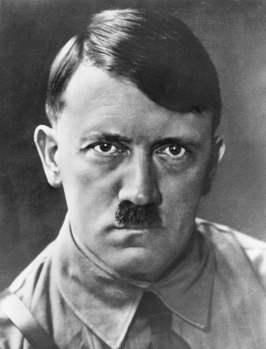
“He looks funny,” Avraham, eldest son, tried to conceal a giggle. The man was indeed a comical figure. His little mustache, his hair combed over his forehead, these were unusual accoutrements at the Eternal Seder. In the Spirit World the Eternal Seder was just that, an unending celebration of Passover. It occupied an archetypal place in the Cosmic Order.
“Why is he doing that?” asked Sipporah, younger daughter. The guest was thrusting his right arm out, almost straight, but bending and sagging from the fatigue of eons of attempting this salute.
“It’s supposed to mean Victory,” Zeyda Moishe said skeptically.
“I think he is perhaps deluded,” Baba Zifnah decided. “Don’t let him spoil the Seder.”
“There is always a guest at Seder,” said Cousin Frankl. “They are not always so unpleasant.”
The candles glistened, filling the chamber with soft light. More light, soft but differently colored, emanated from the spacious double windows.
“It is our tradition to welcome everyone, from all the Worlds and Spheres,” Mother Rachel declared. “Even the Hell Worlds.”
“Do you think he’s from one of those?” little Micah interjected with excitement. His eyes gleamed with ghoulish fascination.
“It is not ours to judge.” Zeydah Moishe said. “Sins are put aside during Passover. That is the whole point. The Angel Of Darkness passes over our house.”
There was a sound entering the chamber, a sound as of a colossal wagon loaded with tons of lead. It groaned with a sound so deep that most of it was felt rather than heard. Shadows covered the windows. The light was attenuated. Little Gavril, the toddler cousin, rose with curiosity to look out.
“Don’t!” commanded Mother Rachel. “Sit down! Our Guest’s crimes are rolling past our house. Praise God they don’t stop here.”
The grinding sound continued as if forever. Sledges pulled by immense demon-steeds yanked them forward a bit at a time. At last peace was restored. The Guest seemed to sag. It was possible to see a hint of remorse in his countenance. Then he straightened and attempted his rigid arm-salute.
“I thought for a moment that he might regret his crimes,” said Sipporah.
“For a moment, perhaps.” Zeyda Moishe replied. “But look: he is again celebrating his imaginary victory.”
“Too bad.” Baba Zifnah commented quietly.
“Without regret, without an accounting,” said Zeyha Moishe, “Crimes cannot be forgiven. It will take this one some time. Perhaps twenty eons, perhaps a thousand. Regret and remorse will come to him, but not for a very long time. Let us say a special prayer for his soul.”
Those at the Seder, all but the one who glared impotently, bowed their heads and began the traditional benediction. “Baruch Atah,” they intoned, “Blessed Be You.”
Share this:

‘Tis the Season to be Thankful
Posted: November 28, 2019 Filed under: Books, Writing | Tags: Delilah, Gratitude, Kaye Lynne Booth, Nightmareland, Thankfulness, Whispers of the Past, WordCrafter, Writing to be Read 6 Comments
This is the time of year when we count our blessings and give thanks for the people and things that enhance our lives. There are many things for which I am thankful for, which I’d like to share with you here.
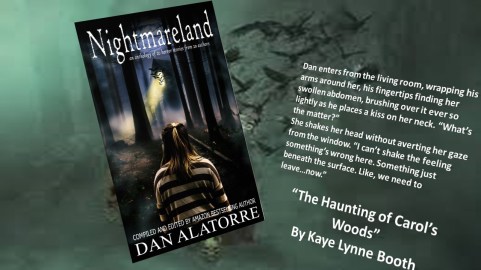 My flash fiction story, “The Haunting of Carol’s Woods” came out in Dan Alatorre’s horror anthology, Nightmareland. This anthology is book three in Dan’s The Box Under the Bed series and it is a #1 bestseller! This book is a must for horror fans with 23 stories from 14 different authors, and I am thankful to be one of them.
 Another short story, “The Woman in the Water” appears in the first ever WordCrafter paranormal anthology, Whispers of the Past. This anthology includes eight paranormal stories from six seasoned authors, including the winning story from the 2019 WordCrafter Paranormal Short Fiction Contest, “A Peaceful Life I’ve Never Known”, by Jeff Bowles. I am thankful for WordCrafter‘s success in publishing its first book, and I’m looking forward to next year’s short fiction contest. I’ll be announcing the theme and guidelines for the 2020 contest next month, so watch for it.
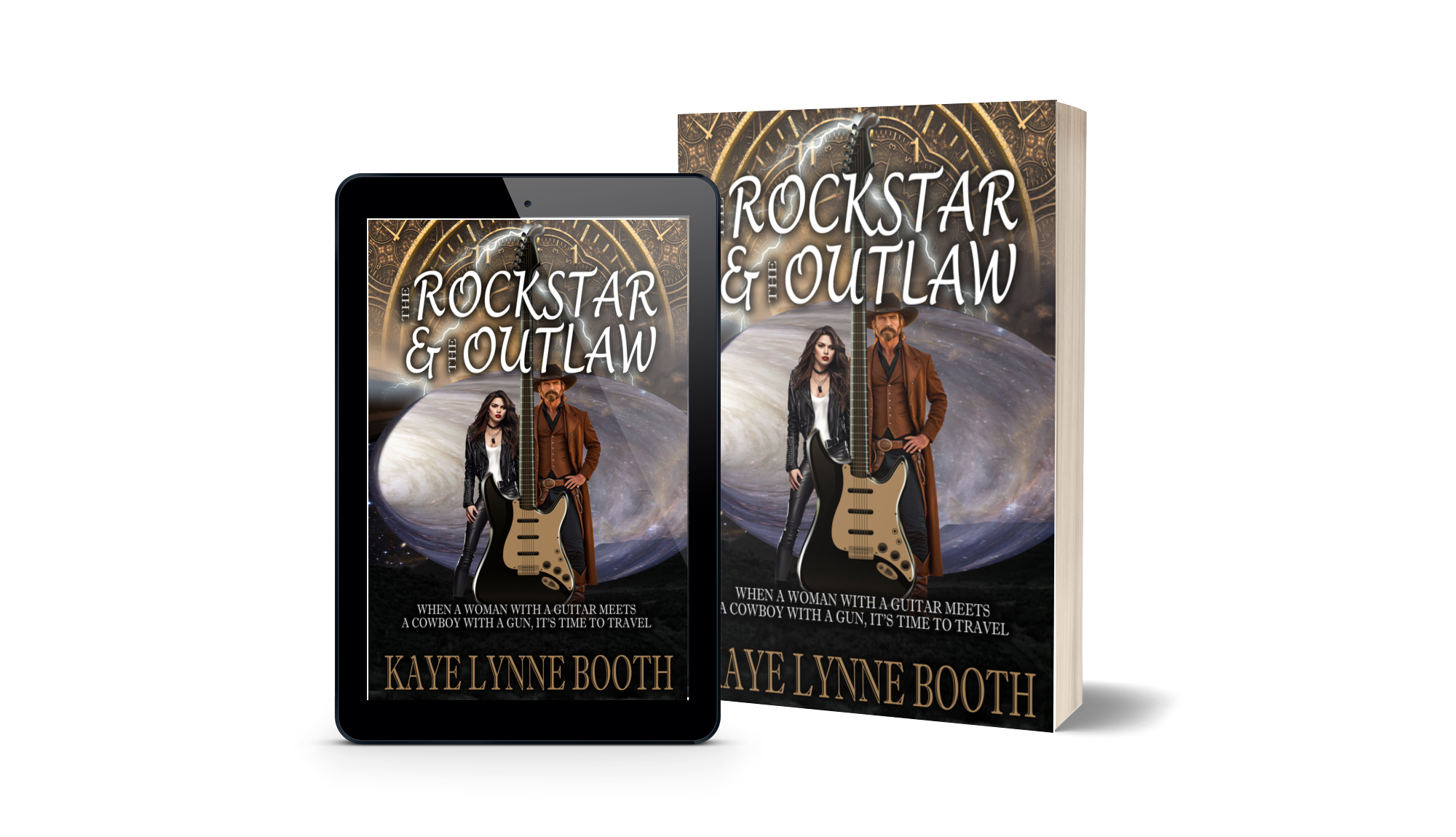
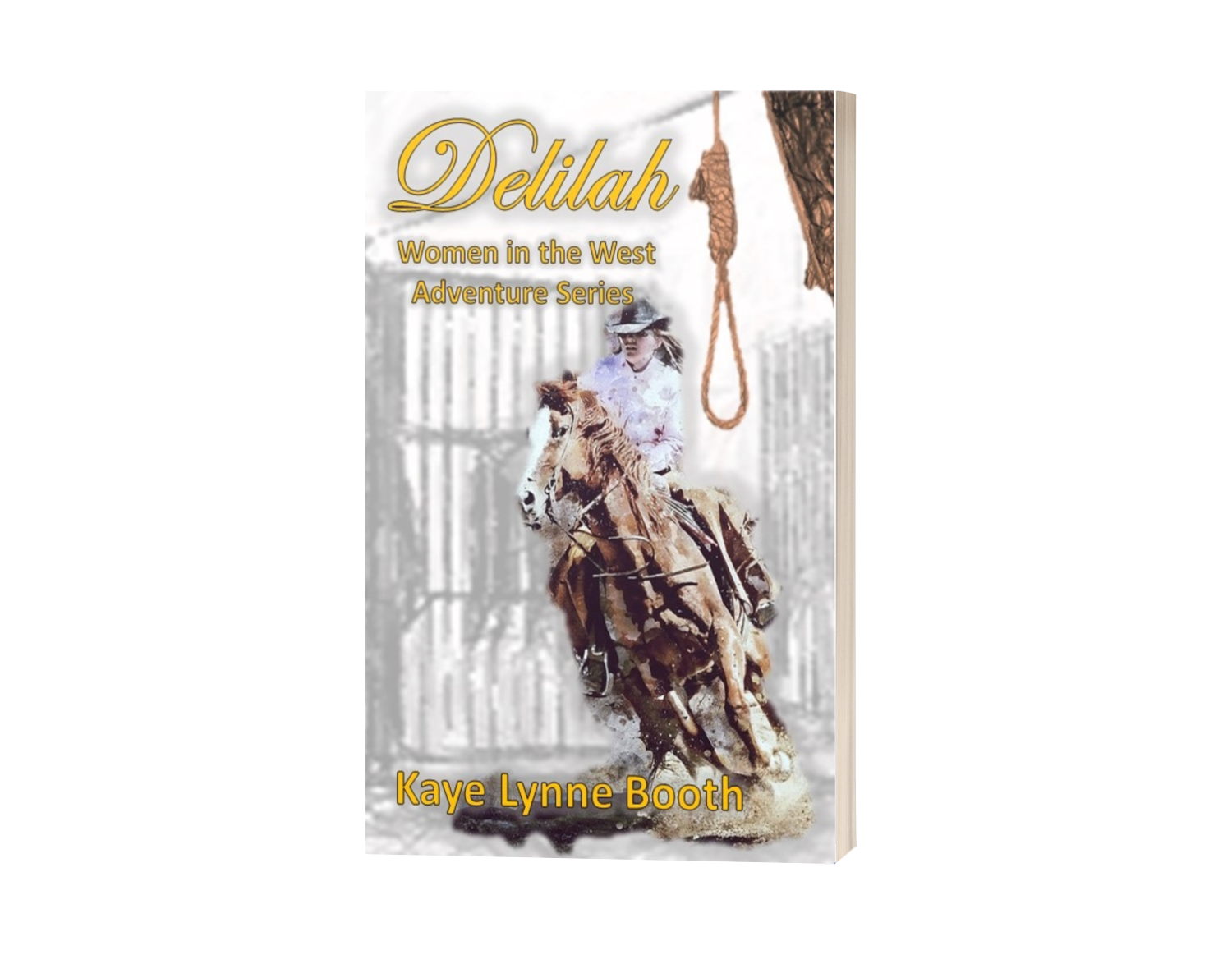
 Dusty Saddle Publishing has graciously offered to republish a re-edited edition of Delilah with new front and back matter, including recommendations from noted western authors. I’m told that the re-release date is January 13th, so about that I’m both thankful and excited.

Of course, there is the launching of WordCrafter Quality Writing & Author Services to be thankful for, as well. It’s off to a slow start, but honestly, with all the life events and obligations that have been keeping me busy lately, perhaps that is a good thing. You may be aware that I lost two lifetime canine companions this past summer, and now, the unexpected death of a loved brother-in-law. These events have knocked me off course more than once, but I have no doubt that WordCrafter will take off at full speed in 2020. Drop by and check out WordCrafter Quality Writing & Author Services to see what WordCrafter can do for you.
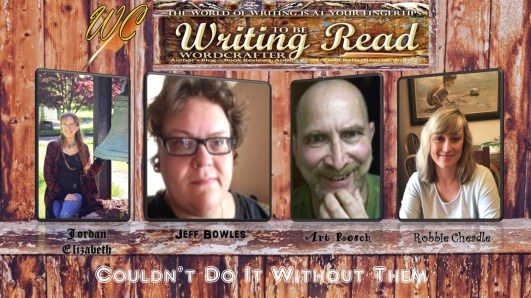 I am extremely thankful for the Writing to be Read team members and the contributions that they make to WtbR, and all the Writing to be Read authors who have so graciously shared with my readers this past year. (The “Chatting with the Pros” series has been quite successful and in October we even had two segments. My “CwtP” author guests included women’s fiction author Barbara Chapaitis, non-fiction author Mark Shaw, western author Scott Harris, thriller author John Nicholl, crime fiction author Jenifer Ruff, mystery author Gilly Macmillan, Christian fiction author Angela Hunt, horror and dark fiction authors Paul Kane and Jeffrey J. Mariott, and young adult author Carol Riggs. (There were at least as many authors who offered supporting interviews, too.) And one more thing which I am thankful for is you, my readers. Without you all, and all of those mentioned or alluded to above, Writing to be Read wouldn’t be what it is today. So, my gratitude goes out to all of you.
It’s been a pretty great year and I am indeed thankful. Now you know some of the things that I am thankful for as this holiday season comes round. So, now I invite you to share what you are thankful for in the comments.

Like this post? Let me know in the comments. You can be sure not to miss any of Writing to be Read’s great content by subscribe to e-mail or following on WordPress. If you found it helpful, please share.
Share this:

The Many Faces of Poetry: Where Does Poetry Come From?
Posted: November 27, 2019 Filed under: Literary, Mystery, Poetry, The Many Faces of Poetry, Writing, Writing Inspiration | Tags: Art Rosch, history of poetry, origins, Poetry, The Many Faces of Poetry, Writing to be Read 1 Comment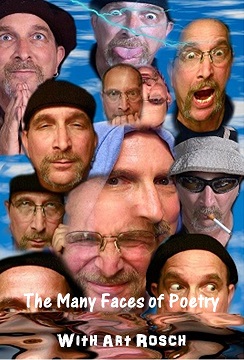
Where Does Poetry Come From?
I keep inquiring into the nature of poetry: where does it come from? It’s a question that opens a lot of introspection into the nature of literature itself. Poetry is the ultimate ancestor of literature. There was the spoken word, the saga, told around fires surrounded by rapt listeners. Poetry came from the telling of heroic stories. Beowulf, the Eddas, the Greek epics, the Chaldean cycles. We’ve come a long way from the spoken word, the recitals that spawned the invention of text itself. People cared enough about the preservation of their cultural history that they made the effort to write it down. Ancient stories survived the eons, so that we still have them, we still can read The Odyssey or learn about the trials of Gilgamesh. In truth these long recitals are almost unbearable in the real world but they are like artifacts in museums. We have them. We can reach into their labyrinths and return with answers to questions that we must always ask. Why are we here? What are we doing?
Poetry is the literary equivalent of cave drawing. Mankind, many thousands of years ago, felt the impulse to make an artistic statement, whether it be for a ritual gathering of game animals or to praise the gods for their benevolence. We are still, when we write poetry, drawing on cave walls. We are traveling backward in time to re-enact the original creative impulse. What came first, I wonder? Did poetic recitation pre-date the drawing on cave walls. Or did they come at the same time? I wonder what anthropologist will research that question and tell us about the history of art. All of this speculation is to invoke the origin of Art itself. Poetry has changed with the human race. We are not the same people who told and re-told The Odyssey. We are modern people with a modern poetry, a poetry that has become more free as we re-invent the structures of literature.
We must ask another important question, one that I will address in a later essay. What does poetry do? We must break this down into two parts. What does it do for the poet? What does it do for its audience?
The poet writes to express his or her state of being. It may be emotional, intellectual or both. A poet, however, usually needs fire to lure an audience, so poetry begins in the emotions, where the fire lives. There are three things that literature needs to provide in order to attract an audience: information, inspiration, and entertainment. Who will listen to poetry if it’s not entertaining? Many are the yawns I’ve seen at poetry readings, glances at the wristwatch, restless fidgeting. Entertain us, poet! Or go home, get off the stage.
I’m rushed this month. We’re moving into a house, a beautiful house!
A Midwesterner by birth, Arthur Rosch migrated to the West Coast just in time to be a hippie but discovered that he was more connected to the Beatnik generation. He harkened back to an Old School world of jazz, poetry, painting and photography. In the Eighties he received Playboy Magazine’s Best Short Story Award for a comic view of a planet where there are six genders. The timing was not good. His life was falling apart as he struggled with addiction and depression. He experienced the reality of the streets for more than a decade. Putting himself back together was the defining experience of his life. It wasn’t easy. It did, however, nurture his literary soul. He has a passion for astronomy, photography, history, psychology and the weird puzzle of human experience. He is currently a certified Seniors Peer Counselor in Sonoma County, California. Come visit his blogs and photo sites. www.artrosch.com and http://bit.ly/2uyxZbv.
Want to be sure not to miss any of Art’s The Many Faces of Poetry segments? Subscribe to Writing to be Read for e-mail notifications whenever new content is posted or follow WtbR on WordPress. If you find it interesting, please share.
Share this:

Interview with children’s author & illustrator Judy Mastrangelo
Posted: November 25, 2019 Filed under: Author Profile, Books, Children's Books, Cover Art, Fairy Tales, Fantasy, Fiction, Illustrations, Interview, Writing | Tags: Author Interview, Children's Books, Fantasy, Illustrations, Inspiration, Judy Mastrangelo, Portal to the Land of Fae, Writing to be Read 4 Comments
My guest today is an author and talented illustrator of children’s fantasy books. She seems a bit shy, but I was able to coax a few answers out of her, regarding writing for children and creating beautiful illustrations. Because, after all, at least half of writing for children is creating visual images, so an author who can do their own illustrations comes into the game a step ahead. Please help me welcome author and illustrator Judy Mastrangelo.
Kaye: When did you know you wanted to be an author?
Judy: I’ve always enjoyed writing, ever since I was very young.
Kaye: Would you share the story of your own publishing journey?
Judy: As a child I would write little stories from my imagination, or about my everyday experiences.
Coming from a fine art background, I’ve always loved the wonderful artists of the “Golden Age of Illustration”, who illustrated books from about 1850 to 1925. I like to think that I continue along this line in my own small way. I enjoy writing stories that I illustrate, and also love illustrating classical stories in the public domain.
Many of my paintings have been licensed for various markets, such as art prints, wall murals, greeting cards, jigsaw puzzles, oracle cards etc. I have written and illustrated several published books. And I have both illustrated and written the text to a new inspirational Oracle Card Deck which will be on the market next year, published by “RED FEATHER MIND BODY SPIRIT”, a division of Schiffer Publishing.
You can see and hear podcasts about my artwork on Youtube.
These include some radio interviews, plus several teaching podcasts about the steps I take in the creation of my Art. To learn more about my Art and products, you can visit: www.judymastrangelo.com
Kaye: What’s something most readers would never guess about you?
Judy: I am a “movie buff” and enjoy many genres of film.
Kaye: What is the biggest challenge of writing for children?
Judy: I try not to “talk down to children”. Just having fun at writing is what I enjoy doing, and making my stories come from my heart, expressing how I feel. My books are really intended to be appreciated by all ages ~ the young and the young at heart. I attempt to appeal to the “Child in all of us”, and to rekindle the wonderful feelings we have all experienced in our youth, of the awe and beauty of the world around us. As we grow older, life seems to become more mundane, with all the everyday things we have to do in order to survive. The realm of art certainly plays an extremely important part in everyone’s lives, so that we may feel uplifted and inspired to higher worlds.
Kaye: What is the one thing you hope to teach children?
Judy: I like to impart the wonder and beauty of the world around us; sensitivity to nature and to all living beings, including animals, plants, and trees, as well as humankind are excellent lessons to understand. I feel that developing creativity as an art form, and one’s imagination, are very important aspects of life. Many people seem to place imaginative painting and literature more in a children’s category, although I’m sure you’ll agree that the genre of fantasy art is appreciated by all ages.
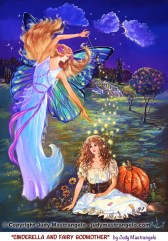 Many adults also enjoy themes, such as fairy tales, and other types of fantasy. I’m sure no one will dispute the fact that great authors such as William Shakespeare, Hans Christian Andersen, Robert Louis Stevenson, James Barry, etc. wrote memorable outstanding fantasy stories. And that’s why I feel that my writing and paintings can also appeal to any age person.
One just has to “let go” of their preconceived notions that fantasy, fairies, fairy tales, etc. are just for the young. It will keep us all “Young at Heart” if we believe in the magical power of art to unleash our imaginations.
Kaye: Your books are illustrated in bright, vibrant colors. What medium do you work with?
Judy: Acrylic paint on canvas is my medium of choice.


Kaye: What is the most challenging thing about illustrating your own books?
Judy: The art of illustration is very dear to my heart, something I have been developing my entire life. It is a labor of love for me, and I paint because I enjoy doing it so much. I usually paint slowly, because I am somewhat of a perfectionist, and as a result my paintings aren’t created very quickly. This can sometimes present a problem. But I do enjoy illustrating my own books that I also design. Many of my books I have written myself, and others have stories or poems that are in the public domain which I illustrate. It’s all great fun to illustrate, and I relish every moment I spend doing my paintings!
Kaye: What is the most important quality in a children’s story for you?
Judy: Delight, imagination, and fun.
Kaye: What’s the best piece of advice you were ever given?
Judy: Be true to my heart, be myself, and enjoy the process of creating.
Kaye: Flower Fairies is focused on the characters. What comes first in your mind, the character, or the story?
Judy: I’m a very visual person, and often I first get images in my mind of a painting that I would like to create. Often this “germ” of an idea or image leads to a story, or a series of paintings. So I would say that the story as a whole comes first.
Kaye: As a children’s writer, what kind of research do you find yourself doing for your stories?
Judy: I often research period costumes for my characters to wear, and I also consider other art forms which portray the ideas I wish to develop in my stories. I love all forms of great art, and often music, drama, dance and other literature is a great inspiration to me, as well as great painting of course. So I immerse myself in art that I love, as part of my research for a specific project. It brings me great joy to do this.
Kaye: Tell me a little about your Portal to the Land of Fae series?
Judy: The world of nature spirits has always been fascinating to me. I love the realm of fantasy. And the tiny folk, such as fairies and elves are of particular interest. For many years I’ve done paintings of these lovable spirits, and have enjoyed writing about each painting I create. I love writing poems to go with my artwork, and have enjoyed describing my feelings about the fairy world. The idea of making a series of books incorporating these works was an intriguing one for me, and four categories developed from them:
 FLOWER FAIRIES: This book tells about the precious Elves and Fairies who live amongst the Flowers, such as: the graceful ROSE FAIRY, and the comical little SWEET PEA ELVES. I often depict Flower Fairies to appear as graceful ballet dancers. In this genre of art, I have been inspired by the Flower Fairy paintings of British artists Cicely Mary Barker and Margaret Tarrant.
 In my SECRETS OF THE FAIRIES, I portray the secret life of elves and fairies that I imagine to exist in amazing places. There are many delightful things that i depict these creatures doing. They often enjoy frolicking and playing in a garden. These secrets tell of the hidden world of elves and fairies, little known to mortals. I’ve also written and illustrated depictions of the four seasons with the fairies, and their beautiful romantic lives.
FAIRY TALE FAIRIES, various forms of fantasy have always been the closest to my heart. They include fairy tales and myths.
The world of fairies has often inspired the arts of other great literature. Some excerpts from classical literature for this FAIRY TALE FAIRIES book are included in this volume. You will see some of my illustrations from Hans Christian Anderson’s Thumbelina, Cinderella by Charles Perrault, Peter Pan by James Barrie, and many others. Sometimes authors and painters depict elves and fairies in a darker way, but I prefer to focus on depicting the lighter, more cheerful and spiritual side of the fairy realm.
 MYSTICAL FAIRIES: In this volume, I want to share my feelings of Spirituality and Goodness, Love for Life and Nature, and the Healing power of Art. I feel that Elves and Fairies, are beautiful, Magical, and Spiritual Beings which can inspire and uplift one to higher realms. I often depict them as radiant beings, which glow with an inner light, with radiating and sparkling auras, glow like spiritual Angels.
Kaye: Your Come Play with Me series includes bonus features. Would you like to tell us about the series and bonus features?
Judy: My Come Play With Me book series is designed to give readers high quality illustrated storybooks in full color. They also include some delightful interactive bonus pages. These books include fun filled things, such as How to Draw pages, coloring pages and recipes, etc.
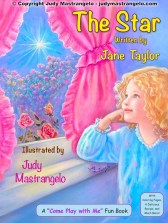 My first book in this series, THE STAR, illustrates the entire famous TWINKLE TWINKLE LITTLE STAR poem, written by Jane Taylor. I’ve interpreted this beloved poem, as a fanciful, Dream-like adventure. I’ve included a delicious bedtime snack recipe, some “how to draw” pages, a creative writing section, coloring pages, and some decorative gifts to cut out, etc. An Audiobook of my book THE STAR is also available, where people can listen to this song being beautifully sung. If the kindle ebook, or paperback versions of my book THE STAR are purchased also, along with the audio book, people can sing along with the audiobook as they read it interactively.
Two other books in this series have a Bunny theme: The first one, entitled WHAT DO BUNNIES DO ALL DAY? is my original story of a little Bunny’s first adventure. Some interactive pages include Mama Bunny’s recipe, coloring pages, creative writing and drama ideas, and decorations to cut out from the book. An audiobook of this story will be available soon, to be listened to interactively along with reading this book in kindle or paperback.


The second Bunny book in this series, LEARN TO DRAW BUNNY AND HIS FRIENDS, is a companion book to my book WHAT DO BUNNIES DO ALL DAY? In it I show easy to do, attractive, and fun ways to learn to draw little Bunny’s animal and flower friends that he meets in the book about his first adventure.


Some of the animals I show how to draw are rabbits, frogs, butterflies and turtles. Then daffodils, daisies, and buttercups are several of the flowers I describe drawing, all in three easy steps. It’s a delightful interactive book, which also includes special pages for people to draw their own pictures, with small border decorations for inspiration.
Kaye: Which character is your favorite? Why?
Judy: One of my favorite characters is Little Bunny in my book WHAT DO BUNNIES DO ALL DAY? He is a sweet innocent little rabbit who is delighted and excited at the opportunity of investigating the big world all by himself for the first time. I’ve modeled this little animal on our own dear little Netherlands Dwarf pet rabbit, who is very loved by my husband and me. He gives us both a lot of Love in return. Knowing this adorable Little Bunny intimately was a great inspiration to writing and illustrating my story.
Kaye: Where does your inspiration come from?
Judy: My inspiration comes from many things: my love for nature, for instance. When I am in a flower garden, I imagine delightful Flower Elves and Fairies living there. I visualize them wearing costumes made of leaves and flowers, acorn caps, etc. I collect things such as leaves, pine cones, berries, ribbons, and scarves, to give me ideas for their fanciful clothing.
I take photos of beautiful places that I visit, to give me ideas of backgrounds for my paintings. Great art of the past and present is always an inspiration to me, such as: wonderful films, great literature, beautiful music, ballet dancing, and beautiful paintings. They always kindle my enthusiasm.
Kaye: Is there anything unique or unusual about your creative process?
Judy: I have developed a method I call “Mind Painting”. This is my own personal way of capturing ideas and images for my paintings and writing, which develop in my mind. This is a procedure used by many creative authors, composers, painters, poets, choreographers, etc. throughout the ages. I just close my eyes and “visions” appear in my head. I do this during the day, or at night before going to sleep. These images often develop into stories which evolve into my books. It’s a delightful process.
Kaye: What is your greatest achievement to date in the literary world?
Judy: Reading and hearing the wonderful and appreciative compliments from people who have read my books, and who have seen my illustrative paintings, has always been very encouraging to me. I receive these compliments from all kinds of people, worldwide, and of all ages. I feel that these wonderful responses have been the greatest achievements in my literary and artistic world.
I want to thank Judy Mastrangelo for sharing with us here today, both her wisdom and her fabulous illustrations and book covers. You can learn more about Judy and her children’s books on her website or on her Goodreads Author or Amazon Author pages.
Like this post? Let me know in the comments. You can be sure not to miss any of Writing to be Read’s great content by subscribe to e-mail or following on WordPress. If you found it helpful, please share.
Share this:

Jeff’s Movie Reviews – Disney’s New Streaming Platform, Disney+
Posted: November 22, 2019 Filed under: Jeff's Movie Reviews, Movie Review, Movies, Opinion, Writing | Tags: Disney+, Jeff Bowles, Jeff's Movie Reviews, Streaming Services, Writing to be Read 1 Comment
Get Some Mouse In Your House
by Jeff Bowles
In the future, all forms of video entertainment will be called “Disneys”. I’m sure of it. Saw it in an old sci-fi movie once, and with the release of the brand-new video streaming platform Disney+, the House of Mouse is one step closer to future dystopian entertainment dominance.
Disney+ puts together an admirable and alluring package. But only if you’re a Disney fan. More or less, that’s the dividing line of the whole experience. Featuring many of the best films, shorts, and television series the company has ever produced or co-produced, the platform attempts to appeal to a wide swath of the general video-viewing population, which is to say, anyone who grew up with Disney. Which is more or less everyone living on the planet today.
Ubiquity serves the company well, of course, but it seems Disney isn’t taking anything for granted. For a startup streaming service, Disney+ offers an impressive cross-section of an almost century-long legacy of family-friendly entertainment. Boot it up for the first time, and you’ll find stuff going all the way back to 1928. Steamboat Willie, Snow White and Seven Dwarves, Old Yeller, Pete’s Dragon, Tron, The Little Mermaid, it’s all there. And if you happen to be an adult of the nerdy persuasion, the platform also leverages Disney’s recent acquisitions of Marvel, Lucasfilm, and to a lesser extent, 20th Century Fox. Right on the home screen, a set of helpful studio icons cuts out the middle man and gets you right to the saber swinging and web-slinging. They even have their own animations. Look! The Marvel icon plays that verbose movie intro we love so much! Hurrah!
Perhaps most amazingly of all, the price point is a good deal lower than other competing streaming services. For seven bucks, you get all this and more. It should give Netflix, Apple, and Amazon a run for their money, though Disney owns Hulu now, which I guess means they get to keep all their commercial-interrupted, cut-for-television Avengers movies. Hurrah?

Evidently, Disney+ is a big hit already. Not two weeks after launch and Disney has declared 10 million initial subscribers. Disney stocks have gone through the roof, and every major media outlet seems to have reported on it. It’s good news for a company that’s had plenty of ups and downs in recent decades. And it’s good for the consumer, too. Sure, the dream of non-segmented television services may be dead, but the golden age of digital entertainment surges on. Disney, in all its varied manifestations, has a lot to do with the direction Hollywood has taken in this regard.
Only thing is, some people don’t like Disney very much, and their reasons for not doing so are valid. Even in light of its impressive legacy, the entertainment giant has taken a beating now and then for cultural insensitivity, outdated gender politics, racial stereotyping, and if you’re a storyteller of any kind (like most people here on Writing to Be Read), pretty dull and repetitive cookie-cutter narratives.
There are some elements of the initial lineup—particularly a few of the older films—that stand out as uniquely offensive by modern standards. Even something seemingly innocuous like 1953’s Peter Pan contains elements that are, put simply, shockingly racist. Disney has added a short disclaimer to certain movies that suggests they understand their own culpability in this, but the disclaimer’s bare language may not go far enough for some. Unfortunately for Disney, it’s hard to embrace the beloved past without acknowledging there may be skeletons in the closet.
But it can’t be all bad, right? The good outweighs the bad? Right? Right? Ah, for Goofy’s sake, what about all the Marvel and Star Wars! And all the Lion King and the Aladdin and the Pirates of the Caribbean and the Fantasia and the… and the…
See how quickly that escalates?
Interestingly enough, Disney has really thrown themselves a little consumer party here. Some of the heaviest hitters in Disney+’s lineup are in full 4K HDR resolution, which is kind of mind-blowing considering Netflix charges more than twice as much for the same feature. To go back to Star Wars and Marvel for a moment, every single film in both catalogues is in ultra high definition. If you were to buy 4K blu-rays of the same movies, they’d run you thirty bucks a pop. Here’s another little secret. The original Star Wars trilogy has been covertly remastered and released on Disney+ before fans are even able to purchase it on disc. That’s a huge deal if you love the series… and if you can afford a 4K TV.
This serves to illustrate the odd dichotomy that defines Disney+. At the same time cheap and built for people with at least a little money, simultaneously as warmhearted and as calculated as anything else they’ve ever made. The basic user interface is fine, colorful and user-friendly, with additional improvements forthcoming. Designed by the same people who built the Netflix interface, it bears many commonalities to the much older platform, including the constant inability to find what you need at the exact moment you need it.
Would it kill you to stop recommending me The Mandalorian? I’m already watching it for cripes sake! He’s a more enthusiastic version of Boba Fett with a Force-using green infant as a sidekick. #BabyYoda – you’ll know what I mean when you see him.
BOTTOM LINE
If you’re a fan of Disney and all the many properties they own or co-produce, I do believe you won’t be disappointed in the service. It houses, after all, a pretty large assortment of movies and shows that are easy to digest and generally satisfying. And to tell you the truth, it’s way too cheap for what it offers. Look for them to jack up the price at some point, I’m sure, but for now it’s kind of a no-brainer. If you’re into this sort of thing.
Jeff’s Movie reviews gives Disney+ an 8 out of 10. Now where are my Mickey ears? Who’s got two thumbs and hasn’t seen Fantasia 2000 in exactly nineteen years? This guy!

Check out Jeff Bowles Central on YouTube – Movies – Video Games – Music – So Much More!
You can keep up on what Jeff’s been watching and catch all of his great movie reviews the third Friday of each month on Writing to be Read. Subscribe to email or follow on WordPress today.
Share this:

“Writing for a Y.A. Audience”: Are they real?
Posted: November 20, 2019 Filed under: Books, Fantasy, Fiction, Speculative Fiction, Writing, Young Adult | Tags: Fantasy, Goat Children, Inspiration, Jordan Elizabeth, Writing for a YA Audience, Writing to be Read, Young Adult Fiction 4 Comments
SPOILERS AHEAD
I was at a book signing in October. A woman came up to my booth and asked for a quick synopsis of each story. I was happy to oblige, and when I got to GOAT CHILDREN, the woman teared up.

I wrote GOAT CHILDREN based on my experiences taking care of my grandmother when she suffered from dementia. This woman’s mother was diagnosed with dementia. She went on to share a few examples, and I could identify with all of them.
The woman bought the book for her daughter, who feels alone while helping her grandmother. The other kids in high school don’t understand.
I went through the same thing when I was in college and high school. My grandmother was “weird”. I was a “freak” for trying to take care of her. She was “scary”. Okay, the unpredictable moods were scary, but she was still my grandmother. Fear goes hand-in-hand with dementia.
After the woman bought the book and moved onto the next book at the fair, my mind kept returning to GOAT CHILDREN. It was one of my first books published and one very dear to my heart. Now come the spoilers…
The Goat Children are a mythical warrior class who the fictional grandmother, Oma, believe to be true. The main character, Keziah, can’t figure out if they are real or not. The story provides glimpses into the truth behind the female warriors.
My grandmother believed in little people living in her fireplace and dancing in her basement. When we asked her if she was scared of them, she said no, they comforted her. The Goat Children comfort Oma too.

Photo by Craig Adderley on Pexels.com
At the end of the story, the grandmother and Keziah both leave Earth to live with the Goat Children. They are together and strong, and immersed in a world of magic both of them longed for. I decided to make the Goat Children real because I always wanted the little people to be real too, taking care of my grandmother, keeping her safe.
Jordan Elizabeth currently lives in the house her grandmother lived in. She’s still looking for the little people in the fireplace. You can connect with Jordan via her website, JordanElizabethBooks.com.
Want to be sure not to miss any of Jordan’s Writing for a YA Audience segments? Subscribe to Writing to be Read for e-mail notifications whenever new content is posted or follow WtbR on WordPress. If you found it useful, please share.
Share this:

Chatting with the Pros: Interview with Y.A. author Carol Riggs
Posted: November 18, 2019 Filed under: Books, Chatting with the Pros, Fantasy, Interview, Science Fiction, Writing, Young Adult | Tags: Carol Riggs, Chatting with the Pros, Fantasy, Science Fiction, Writing to be Read, YA, Young Adult, Young Adult Fiction 1 Comment
My “Chatting with the Pros” author guest today writes young adult fiction in the fantasy and science fiction genres. Her debut science fiction novel, The Body Institute, is currently being developed into a television series by NBC, which I think, is pretty cool. I met her when I reviewed Bottled three years ago. Since then, I’ve reviewed her science fiction novel, The Lying Planet, and she was a member of the author panel for the first round of the “Ask the Author” blog series in 2018, right here on Writing to be Read. Let’s find out what she has to share. Please help me welcome author Carol Riggs.

Kaye: Please begin by telling us briefly about your author’s journey?
Carol: I began writing in the 1990s, took a 10-year break, and started up again in 2009. I met my agent at an SCBWI retreat and signed with her in 2011 for my 2015 debut, THE BODY INSTITUTE. Since then, I’ve published 7 more books.
Kaye: Why do you choose to write for young adults? Why science fiction and fantasy?
Carol: I enjoy writing about teens as they experience the road to individual growth and becoming an adult—navigating independence, romance, tests of courage, etc. Sci-fi and fantasy appeal to me because I love making things up. Speculative genres give me the most room to be creative and use my imagination.
Kaye: What is your biggest challenge in writing for a young audience?
Carol: Keeping in touch with how a young person thinks and talks, sounding like a teen. My editor at Entangled Teen nails me on that, and makes me rewrite things that don’t sound authentic.
Kaye: Is there anything unique or unusual about your writing process?
Carol: Nothing too unusual. I don’t listen to music or other distractions. I draft novels moderately quickly (3-5 months), and I write 1 or 2 books a year. I also keep my novels “clean,” with no profanity, gory violence, or sexual scenes. I prefer to make up my own slang and swear words, which don’t become outdated like modern teen lingo/slang/cussin’.
 Kaye: NBC is developing your science fiction novel, The Body Institute, into a television series. That must be exciting. Tell us a little about the story.
Carol: THE BODY INSTITUTE is a dystopian sci-fi novel where the main character gets a job losing weight for other people—by having her mind downloaded into their bodies. It’s set in the near future where society is ultra health conscious. The TV series is using the book as a jump-off point rather than being a direct replica of the novel, which is okay with me. It’ll be fun to see where their creative minds take it.
Kaye: How much say do you have in the development process of the television series? Are you involved at all?
Carol: I don’t have any say at all, but that honestly doesn’t bother me. I’d rather spend my time developing new novels! Readers have the book if they want to explore what I’ve developed; the TV show will be a different experience entirely.
Kaye: Do you have a date yet for the series premier for The Body Institute to air?
Carol: As of yet, I don’t; the filming of the pilot show hasn’t begun yet. I’ll announce on my newsletter, Facebook, and Twitter (@CRiggsAuthor) as soon as I find out any developing news.

Kaye: Most of the books in your Junction 2020 series have scary sounding titles: The Portal, Nightmare Realization, Vanishing Fears, Silent Scream, and Future Terrors. Is this fantasy series scary?
Carol: Some people consider these books “horror,” but it sort of depends on your tolerances. If you can’t stand spiders, for instance, don’t read THE PORTAL. Nothing is hyper-bloody in the series, though…no slasher-type nightmares or anything overly gory. I chose each characters’ fears to manifest in a way that would lead them to personal growth, a challenge to overcome rather than sheer horrible nightmares.
Kaye: How do you approach scary subject matter when writing for young adults?
Carol: I try to keep it emotional but real to each character, and I don’t make things gory. Depending on the teen, that could be totally un-scary, or it could be very unsettling. I try to hit somewhere in the middle, for the average reader.
Kaye: Are there certain subject matters that you wouldn’t tackle for a young adult audience? Why?
Carol: I don’t write sex scenes, gory violence, or profanity. I think there’s plenty of that going around nowadays in society (books, movies, etc.), and not having those things in my novels jives with my personal morals and my feelings about what I would want to (or not) read in a novel. I wouldn’t write about demons or the occult, either—too creepy and real.
 Kaye: My favorite book of yours is Bottled, which I reviewed a few years ago. It is a fun and entertaining fantasy story. What was your inspiration?
Carol: Long ago, I used to watch “I Dream of Jeannie.” While BOTTLED isn’t that similar in plot to the show, I was inspired by the fun, magical atmosphere of the TV series. It’s my tribute to the show.
 Kaye: I also reviewed The Lying Planet. Tell us a little about this science fiction story.
Carol: I was lying in bed one night years ago, and heard a noise in the living room (it was probably the refrigerator). That became the germ seed for TLP, a teen boy on the planet Liberty who one night hears a noise in the living room and gets up to investigate…and then wishes he hadn’t. He uncovers an evil that rocks his world in the worst way possible. I’ve found that teen guys really seem to like this novel. It has lots of danger, adventure, and a degree of creepiness.
Kaye: The other thing I loved about Bottled was the fantastic cover. And the vibrant colors used for Lying Planet cover and those used in the covers your Junction 2020 series are eye catching, as well. The colors are wonderful and the designs fit what the stories are about. Do you design your own cover art or hire it out?
Carol: I’ve been incredibly lucky to get awesome covers for my traditionally published books. The JUNCTION 2020 series covers I developed myself in Photoshop, with the tips and suggestions of a writer friend who is also a graphic artist. I have a BA in Studio Arts, so I think that helps me have a bit of an eye for what looks good.
Kaye: What do you enjoy doing when not writing?
Carol: Walking, reading, working jigsaw puzzles, watching sci-fi and fantasy movies, going to the beach, and listening to all kinds of music.
Kaye: Writing organizations can be of great value to writers of all genres. You’ve been a member of Society of Children’s Book Writers and Illustrators for many years. Would you talk a little about the organization and how you have benefited through membership?
Carol: Back in the 1990s when I first joined the Society of Children’s Book Writers and Illustrators (SCBWI), it was super helpful. Submissions were sent to editors at publishing houses by postal mail rather than email (talk about slow!). There wasn’t the wealth of information on the internet that there is now, so the SCBWI was invaluable for honing one’s work to make it ready for editor eyeballs. I learned a lot.
When I returned to writing in 2009, an agent was almost mandatory to submit your work, and the SCBWI retreat I went to offered manuscript critiques for a fee. I actually met my agent-to-be during one of those brief, one-on-one meetings. SCBWI conferences are also great places to network with other writers, learn about the craft of writing, meet industry professionals, and talk about books all day. Some regions offer scholarships to attend if finances are tight.
Kaye: What is your best piece of advice for aspiring authors of young adult fiction?
Carol: If you love it, never give up. THE BODY INSTITUTE was the 13th book I wrote, after 350+ rejections and 11 years of writing and trying to become published. Surround yourselves with supportive writer friends to share the ups and downs. Keep learning your craft, persevere, and enjoy the journey!
Kaye: What can your readers look forward to in the future? What’s next for Carol Riggs?
Carol: A deal has just been signed for THE BODY INSTITUTE for an audiobook version, which is cool. I’m also working on a sequel to the novel, called SPARES. Ideas are springing into my head for a fresh YA novel, and I’m excited to begin imagining a whole new world for readers to explore.
I want to thank Carol for sharing here and answering all of my many questions. And thanks to all of you readers for joining us. You can find out more about Carol Riggs and her young adult science fiction and fantasy books on her website, her Amazon Author page, or her Goodreads Author page.
Next month, there will not be a “Chatting with the Pros” segment. In December we’re wrapping up 2019 and giving you a rundown of what’s in store for 2020. I plan to run this blog series again next year, so check back after the New Year for the first 2020 segment in January. I hope to see you all then.
You can catch the monthly segment “Chatting with the Pros” on the third Monday of every month in 2020, or you can be sure not to any of the great content on Writing to be Read by signing up by email or following on WordPress. Please share content you find interesting or useful.
Share this:

Contemporary versus classic books for children
Posted: November 13, 2019 Filed under: Books, Children's Books, Classics, Reading | Tags: Children's Books, Classic Children's Literature, Contemporary Children's Literature, Growing Bookworms, Robbie Cheadle, Writing to be Read 43 Comments
I have read a lot of children’s books. Some I read to myself as a girl and others I read to my sons, nephews and nieces and the children who attended our local Sunday school, over the past sixteen years. Many of the books I have read over the past six teen years are contemporary fiction which is defined as a fictional book (events, settings, characters etc. described are not real) set in contemporary times (modern times).
A few examples of popular contemporary fiction book series for children I can think of are Horrid Henry written by Francesca Simon and illustrated by Tony Ross, Winnie the Witch written by Valerie Thomas and illustrated by Korky Paul and the Percy Jackson, Kane Chronicles and Heroes of Olympus series written by Rick Riordan. All of these books share the common characteristic that they are set in our modern world and the main characters have access to television, email, cell phones and the internet.


Two common traits I have noticed with contemporary fiction books for children are that these books tend to be far more plot driven than classic children’s books and that there is often, but not always, a theme of disregard and even disrespect for authority figures.
The books I have mentioned above are the ones that I think deal with this growing concept of disrespect towards authority figures by youthful characters in books in an acceptable manner. Horrid Henry, for example, is a naughty pre-teen boy. His brother is his complete anti-thesis and many of the stories revolve around the tension and conflict between the two boys. In these stories, however, the parents always come out on top and Henry is always disciplined and made to toe the line.
Books that are more plot driven can be more appropriate for modern children than classic books which focus more on characterisation such as Little Women by Louise May Alcott and What Katy Did. Our children are used to the fast pace of television and computer games so if we want a book of compete with these other choices, it needs to keep their attention. Modern children also have shorter concentration spans due to modern electronic devices and do not want to read long flowery descriptions. I think the same can be said for many modern adult readers too. Short stories and novellas have become more popular due to time constraints and more available choices when it comes to relaxation. Many modern readers do not want to trawl through the lengthily descriptions included in books like Great Expectations by Charles Dickens and The Scarlet Letter by Nathaniel Hawthorne.
Given everything I have said above, are classic books worthwhile for modern children, or even books written post World War II like Enid Blyton’s books?
Let us look at the definition of a classic book: “The classic that keeps on being read is the book whose situations and themes remain relevant over time—that miracle of interpretive openness that makes us feel as though certain stories, poems, and plays are written with us in mind.”
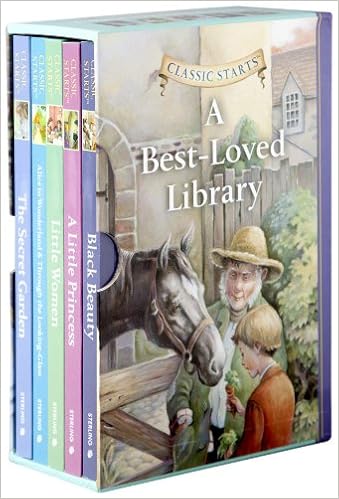
I group classic books in my mind into fairy tales and other classic books. Fairy tales spark the imagination and this is an important aspect of children’s development. In addition, fairy tales help children confront and overcome their fears, which are featured in these enduring stories and also, provide a lot of social messages about how to behave in order to achieve a good life outcome. Fairy tales also introduce children to the idea that life has pitfalls and things don’t always go the way you hope and want them to. They teach children to be resilient and enduring.
Classic books feature humans experiencing life and all it has to offer. The often contain thought-provoking socio-ethical situations such as I am David, which depicts the life of a boy on the run from a concentration camp. Classic books introduce children to history in an interesting and understandable way such as the Little House series of books which depict the pioneer life of Laura Ingalls Wilder and her family. As with fairy tales, classic books contain messages the teach children about perseverance to overcome injustice such as the Count of Monte Cristo. Classic books are also a challenge which stimulate the mind, which can only be a good thing.
What are your thoughts and experiences with contemporary and classic books for children?
About Robbie Cheadle

Hello, my name is Robbie, short for Roberta. I am an author with six published children’s picture books in the Sir Chocolate books series for children aged 2 to 9 years old (co-authored with my son, Michael Cheadle), one published middle grade book in the Silly Willy series and one published preteen/young adult fictionalised biography about my mother’s life as a young girl growing up in an English town in Suffolk during World War II called While the Bombs Fell (co-authored with my mother, Elsie Hancy Eaton). All of my children’s book are written under Robbie Cheadle and are published by TSL Publications.
I have recently branched into adult and young adult horror and supernatural writing and, in order to clearly differential my children’s books from my adult writing, I plan to publish these books under Roberta Eaton Cheadle. My first supernatural book published in that name, Through the Nethergate, is now available.
I have participated in a number of anthologies:
- Two short stories in #1 Amazon bestselling anthology, Dark Visions, a collection of horror stories edited by Dan Alatorre;
- Three short stories in Death Among Us, an anthology of murder mystery stories, edited by Stephen Bentley;
- Three short stories in #1 Amazon bestselling anthology, Nightmareland, a collection of horror stories edited by Dan Alatorre; and
- Two short stories in Whispers of the Past, an anthology of paranormal stories, edited by Kaye Lynne Booth.
I also have a book of poetry called Open a new door, with fellow South African poet, Kim Blades.
Find Robbie Cheadle
Blog: https://www.robbiecheadle.co.za/
Blog: robbiesinspiration.wordpress.com
Goodreads: Robbie Cheadle – Goodreads
Twitter: BakeandWrite
Instagram: Robbie Cheadle – Instagram
Facebook: Sir Chocolate Books
Want to be sure not to miss any of Robbie’s “Growing Bookworms” segments? Subscribe to Writing to be Read for e-mail notifications whenever new content is posted or follow WtbR on WordPress.
Share this:

A Farewell Tribute to Tom Johnson
Posted: November 11, 2019 Filed under: Author Profile, Books, Children's Books, Crime, Fiction, Interview, Nonfiction, Pulp Fiction, Super Hero, Uncategorized, Writing | Tags: Children's Stories, Children's Writing, Crime Fiction, Farewell Tribute, Pulp Fiction, Science Fiction, Super Heroes, Tom Johnson, Writing to be Read 27 Comments
Last week, we lost a dear friend of mine and a member of the Writing to be Read author family, Tom Johnson. Tom was a multi-genre writer for most of his life, mostly pulp fiction in the traditions of the classics, but in recent years, he dedicated himself to children’s fiction, with the intentions of creating stories for today’s children which reflect old fashioned values and morals in the traditions of the stories his mother read to him as a child. Tom took part in Round 2 of my “Ask the Authors” blog series, (which will become a published book by WordCrafter Press soon), and I interviewed Tom about his children’s stories back in 2018. He had some great things to say about writing for children that may be relevant here, since the Writing to be Read theme for November is young adult and children’s fiction. With that in mind, I’m reprinting that interview in part here, (you can read the full interview here), as we remember our friend and fellow author. Tom may be gone, but his wisdom lives on. This is what writing for children meant to him.


Kaye: Although in the past, you’ve written and published many different genres, you are currently writing only children’s stories. So, let’s talk about that. Tell me a little about your stories.
Tom: My children stories are about 1k and meant as bedtime tales, and to be read in classroom or library settings. They are short stories with little morals to teach children something about life.
Kaye: Are they a series or stand alone?
Tom: They are a series, and published in anthologies about once a year. There have been four anthologies so far. I was invited to participate beginning in volume #3. The anthology is called Wire Dog Storybook. Here is the background. True story. A young girl, Ellen Walters, asked her father, David Walters, if she could have a dog, and he said, “No.” So she found an old wire hanger and shaped it to resemble a dog, and called it wire dog. David Walters was fascinated by her ingenuity and created the Wire Dog storybooks. So the stories usually feature Ellen and Wire Dog, but always Wire Dog. Five of my stories have been published so far, and I’ve written three more for the 2018 yearbook when it comes out at the end of the year.
Kaye: What age group are they aimed at?
Tom: I feel that we should begin reading to our children by age one. With that in mind, my stories are aimed at the age group of 1 to 5. However, older children will enjoy the stories, as do adults.
Kaye: What differences do you see between writing for children and writing adult fiction?
Tom: Adult fiction usually means, “no holds barred”, while writing children stories you want to stay away from violence, horror, and adult themes. Keep in mind, young children absorb what they hear quickly, and some themes could have an adverse effect on young minds. When writing for children we must keep this in mind.
Kaye: What appeals to you about writing for children?
Tom: Do you remember the old radio show for kids, Let’s Pretend ? It produced shows for children that acted out fairy tales and light adventures – nothing as harsh as today’s cartoons that are aimed at our youth. Well, I have the chance to import my love for adventure in tales easily understood by young people; children who some day may also experience that same love to pass on to their children. Stories that give our children a moral to live by, not “It’s clobbering time!” Or Pow! Bang! Boom! It’s something my mother did for me when I was little, and now I have the same opportunity, and I’m not going to pass it up.
Kaye: You have wanted to write for children since you were little and your mother used to read to you.
Tom: Oh, yes. I hope that mothers are still reading to their children. They learn at such a young age, and we’re missing an opportunity if we fail them when they’re young. They will never forget what they learn as children, it’s when their minds are growing and grasping at everything. I think one of the first words they learn is, “Why?”
Kaye: What were your favorite children’s stories?
Tom: Really, I would have to look them up in the book of fairy tales on my shelf. There were so many she read to me. Knights saving young damsels come to mind. I remember one particular fairy tale where the princess was on a glass mountain, and the young knight had to save her. She watched each day as a knight riding brown horse attempts to scale the glass mountain, then a knight on a white horse, and so on, until the final day when a knight riding a great steed scales the mountain, and we find out that he was the knight on the brown horse, the white horse, etc. It wasn’t the color of the horse, but the persistence of the knight that finally achieved the goal.
Kaye: In what ways do the stories you write emulate those favorites from your childhood?
Tom: Like the fairy tale I mentioned above, my stories will also have a similar moral – it’s not the color of the horse, or the knight’s armor, but his persistence that wins the hand of the princess. Do the right thing, for the right reason. Persevere. If you don’t succeed today, try and try again.
The stories that we hear and read in childhood often stick with us into our later years. Even though Tom wrote other fiction through the years, as he grew older, it was the stories that his mother read to him as a child that inspired him. That’s what writing children’s fiction is all about.

Tom’s other works included pulp, crime and science fiction stories right up there with the best, and many may be familiar with his promotions for them on Facebook. His covers seem to reach out and grab your attention. He published over eighty books during the span of his career. In that previous interview, Tom claimed that Alien Skies was born from his most unusual inspiration and the Guns of the Black Ghost was written as a homage to Walter Gibson’s The Shadow radio drama. You can read my review of Pangaea: Eden’s Planet here.

Writing was a big part of Tom’s life. It was important to him. But, Tom was more than just a talented and dedicated writer. He was also a loved life partner to his lovely wife Ginger. She was supportive of his writing, and I believe she edited some, or perhaps all of his work. With Ginger at his side, Tom lived a life doing what he loved – bringing his characters to life.
Tom, farewell. You will live on through the plethora of books and stories you’ve left us with, but you will still be greatly missed.
Are you a Tom Johnson fan? If so, feel free to leave a few words in the comments telling us what Tom meant to you, or share a memory, or just tell me which of his books is your favorite. Thank you all for joining me in saying good-bye.