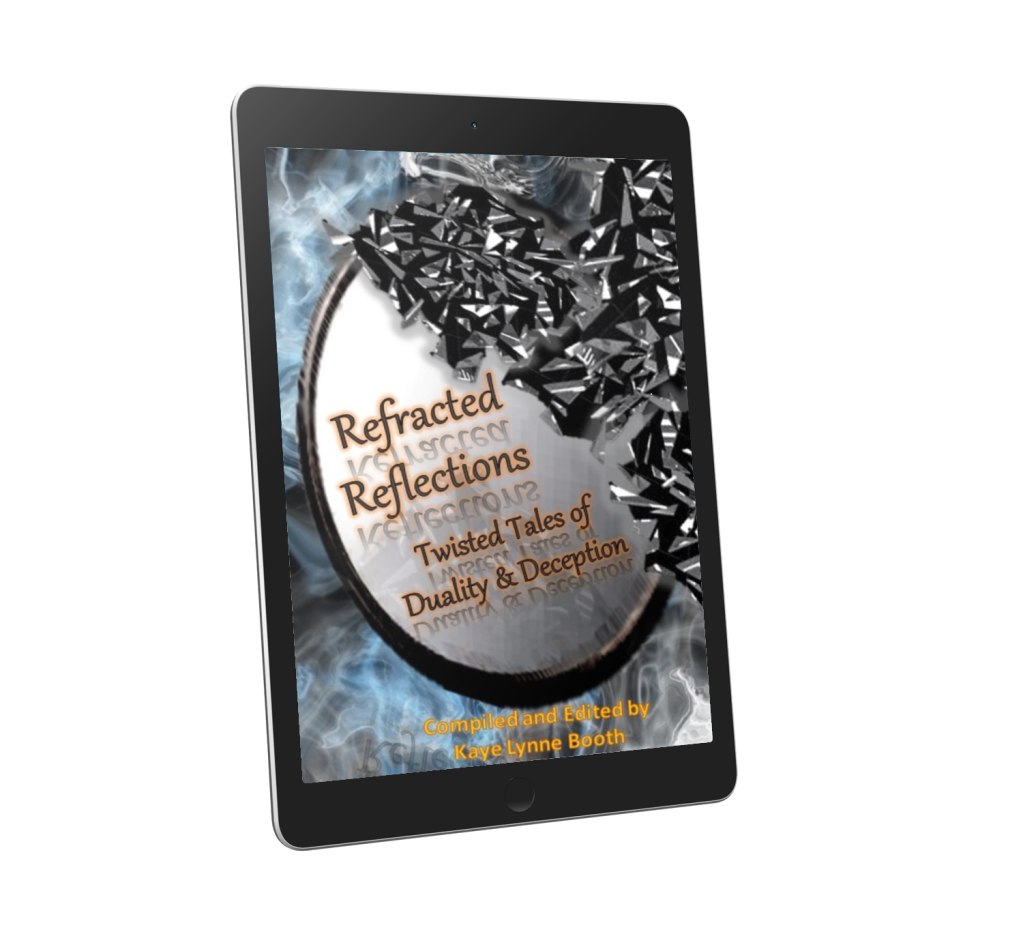
Volume 3 of the Midnight Dark Fiction Anthology Series is now available for pre-order.
To be released October 28th, 2025.
14 authors bring you 16 dark tales that explore your deepest fears. These are the stories which nightmares are made of. Tales of monsters, mayhem, and madness which will make you shiver in the dark. Read them while you burn the Midnight Oil… if you dare.
Contributing authors include Mario Acevedo, Joseph Carrabis, Jon Shannon, Rebecca M. Senesse, DL Mullan, Zack Ellafy, Christa Planko, C.R. Johansson, Kaye Lynne Booth, Robert White, Roberta Eaton Cheadle, Chris Barili, Paul Kane, and author of the winning story in the 2025 WordCrafter Short Fiction Contest, Denise Aparo.
We had a great tour for the release of Curses: Chronicles of Darkness last week, with readings from Joseph Carrabis of both his stories “It’s a Man’s World” & “Grafton’s Ghost-Child”, a video from Molly Ertel about the inspiration of her story, “Clover’s Mirror Box”, and guest posts from Paul Kane on “The Weeping Man”, Robert White on “The Longspeth Curse”, Denise Aparo on “Mohawk Monster: The Curse of the Herkimer Diamond”, and me on both of my stories, “The Death Clock” & “Caverna Del Oro (Cave of Gold)”. And, of course, there was a giveaway for all of those visitors who commented and supported the tour, the anthology, and all of the contributing authors for one of five digital copies of Curses. So, without further ado,
(Drumroll please…)
And the winners are:
Teagan Genevieve
Meelosmom
Author Jan Sikes
Liz Gaufreau
D. Wallace Peach
Tour Schedule
In case you missed out on all the fun, you can visit each stop through the links in the schedule below. I hope you’ll take the time to stop in and check it out.
Day 1
Stop 1 – Writing to be Read – About the Curses Anthology & Meet Kaye Lynne Booth and Denise Aparo
In addition, each of our contributing authors are being featured on the Joseph Carrabis blog through the 8th of October. You can access all of those posts through the links below, but please note that the links will not work until the post has gone live.
When tragedy took everything from Violet, she left home and never looked back. Until now. Her mother’s funeral.
Violet hopes she can settle her mother’s affairs and quietly return to the life she built after that day. Until she sees him. Skeeter Johnson. The boy who shot her in the face.
In a moment, her past returns to haunt her. A past she thought she left behind. A past, she comes to discover, full of her mother’s secrets.
I received a free digital copy of Her Mother’s Secrets from the WMG Books newsletter. All opinions stated here are my own.
This short story, Her Mother’s Secrets, by best selling author Kristine Kathryn Rusch, is a mystery of the mind. When Violet inherits her mother’s house, she inherits her mother’s secrets, as well. But those secrets may be the key to the missing parts of Violet’s life, the parts she lost during and after the ‘incident’ that changed her life forever.
Her Mother’s Secrets is a different type of mystery that delves into the tricks one’s mind can play. A delightful tale which can be read in a single sitting. I give it five quills.
________________
Kaye Lynne Booth does honest book reviews on Writing to be Read in exchange for ARCs. Have a book you’d like reviewed? You can request a review on the Book Review tab above.
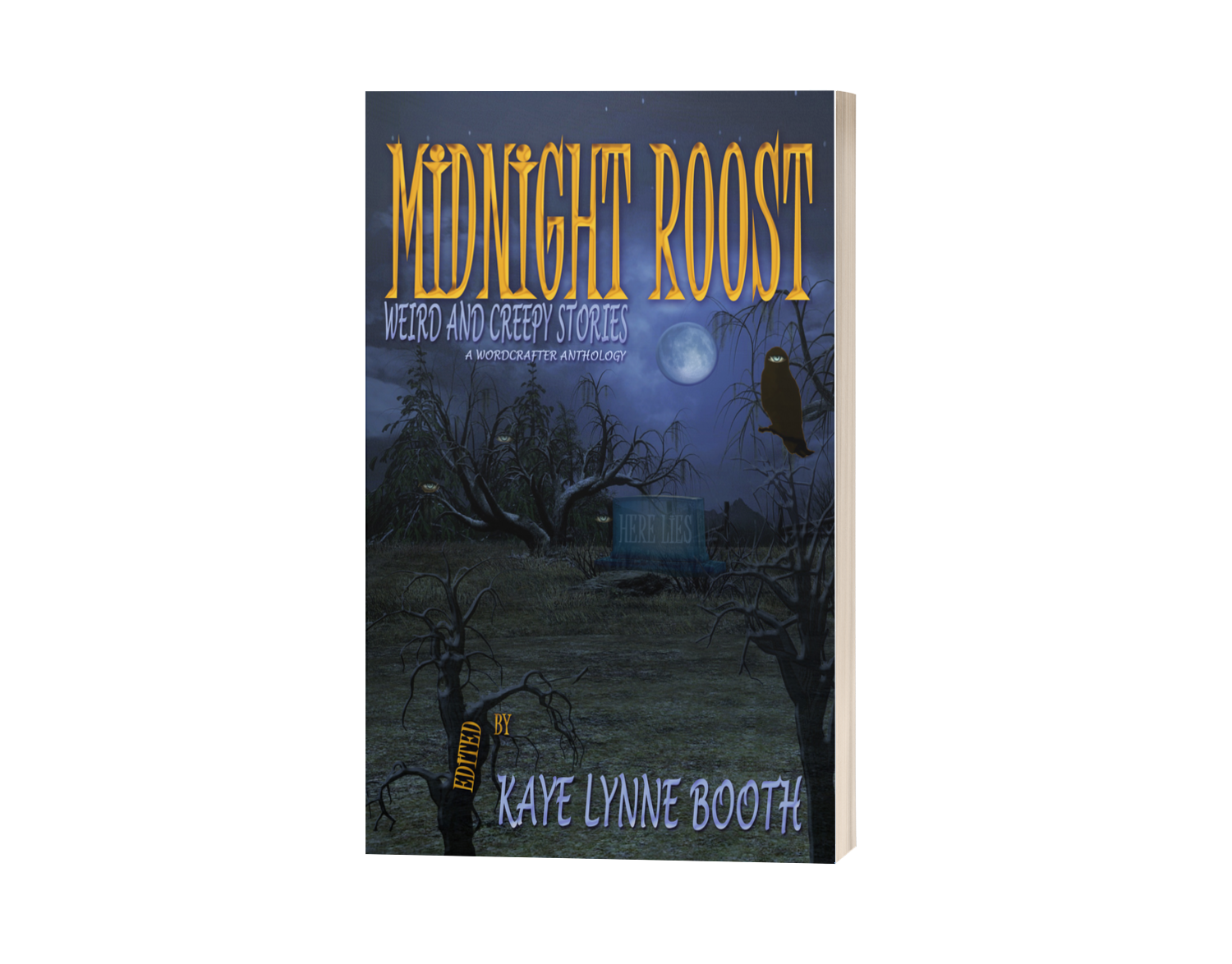
WordCrafter Press runs an annual short fiction contest and publishes a resulting anthology. It began back in 2019, with a short fiction contest which resulted in the Whispers of the Past paranormal anthology. That anthology ended up with nine stories, by seven different authors for a total of 107 pages. Last year’s (2023) dark fiction anthology, Midnight Roost: Weird and Creepy Stories, was a combination of contest entries and submissions by invitation, included twenty-three stories, by twenty different authors for a total of 403 pages. So, the annual anthology has grown in both scope and quality over the years.
To date, WordCrafter Press has a paranormal and a multi-genre (fantasy, science fiction, paranormal,and horror) anthology trilogy, (which is made up of both contest entries and submissions by invitation), and I’m currently building a dark fiction triology, as well.
This year’s dark fiction anthology, Midnight Gardens, will be spectacular as Book 2 of the WordCrafter Midnight Anthology Series, partnering up with last year’s Midnight Roost.
Midnight Roost: https://books2read.com/MidnightRoostMidnight Garden: Coming in October 2024Books 1 & 2 of the WordCrafter Midnight Dark Fiction Anthology Trilogy
Writing short fiction is different than writing novel length works in many ways. Although short stories still require most of the same story elements as longer tales do, writers of short fiction must deal with them in a condensed format. There is no room for wasted or unnecessary words.
Likenesses with Short and Long Fiction
Like longer fiction, many of the story elements are still required to make a good story. Both formats need:
A good hook to draw the reader into the story: For longer fiction, this can be accomplished in the first few paragraphs, or maybe even the first page, but for short fiction, it must be accomplished quickly, within the first paragraph, or even with the first sentence.
An inciting incident: The inciting incident occurs at the beginning of the story and usually involves the main character making a choice which propells him into the tale and gets things moving. This is usually what makes the reader care about the character and what will happen next, making them keep reading.
Well developed and interesting characters: With short fiction, this can be tricky because you don’t have a lot of time in which to build character. I make my short fiction characters dynamic and colorful to make them stand out from the page and bring them to life for my readers quickly. No matter the length of the work, the author should always know way more about the character than they will ever use in the story. A character which is alive in the author’s mind first and foremost, making it easier to bring them to life for the reader. (I discuss several methods of character development in my “Writer’s Corner” post from September 2023, “Developing Characters with Depth”.)
Meaningful dialog: In short fiction, every word must count, so there is no room for everyday chit-chat. Every piece of dialog must serve a purpose. It is possible to let the reader see every nuance of your characters through the dialog consisting of both outer and inner dialog, as well as subtext, or unspoken body language, which can be used to emphasize or contradict spoken dialog. (I talk more about the use of subtext in my April 2024 “Writer’s Corner” post, “Visceral Character Portrayal”.)
Descriptive details: Use one or more senses to describe the setting and set the scene for readers, allowing them to experience the setting or location through the character’s eyes, ears, nose, mouth and skin.
Conflict and tension: Conflict can be either internal or external, or ideally, both, but it must force the character to make a choice and take action. Tension is created by events which involve opposing forces within the character (internal), between the character and opposing characters or forces beyond the character’s control (external). Obstacles are often placed in the way of resolving the conflict, making it even harder and increasing the tension even more.
A satisfying resolution: All conflicts should be resolved at the end of the story in a manner that will satisfy readers and not leave them feeling cheated. This can happen in any number of ways, but the conflicts that we’ve spent the last few pages building up to must be resolved in a manner that is logical and believable for the reader. Things don’t have to be all fixed, but we at least need an inkling that things have changed and are now headed in the right direction.
Differences with Short and Long Fiction
The right point of view and tense for the story: Many longer tales are told in the third person, past tense, which serves them well. Because we want to move through a short story rather quickly, we may need the story to move along at a faster clip. Often, this can be accomplished in short fiction by using a first person, present tense, giving the tale an intensified sense of immediacy, making short fiction better suited to this approach than for longer fiction.
Quick build up to climax or turning point in the story: This is what the reader has been waiting for, the climatic moment that will change everything from this point out. It could be an epiphany where the character realizes what must be done, or maybe he knew it all along and this is the moment when he decides to do it, but it should bring about some sort of resolution. In short fiction, you don’t have the luxury of a slow build, making it necessary to ratchet up the tension quickly and get to this point directly.
Descriptive dialog tags: For longer fiction, I was taught to stick to basic dialog tags, such as “said”, “asked”, “replied”, and maybe, “cried”, and then, use descriptors to illustrate the mood and tone, and raise emotion in and connect with readers. However, I have found that more descriptive dialog tags such as “smirked”, or “bellowed” are quite acceptable and even preferable for setting the scene with a minimal amount of words. I’m also beginning to see the value in leaving out the dialog tags all together where it is clear who the speaker is, to help keep the word count down by cutting out unnecessary words.
My Tips for Writing Short Fiction
Begin close to the end. The beginning of the story illustrates what was and the ending illustrates how things have changed or at least, the direction in which they are now headed. A trick used in screenwriting is to mirror the ending at the beginning, and then go back in time to show how we got to that point. So the first and last scenes act like bookends to your story. By mirroring your first and last paragraphs, this technique can also work well with short fiction, where there is limited space in which to tell your tale.
Each character should get their own paragraph containing dialog and subtext to show how the dialog is being delivered and making it clear to readers who is saying and doing what. When you switch characters, you switch to a new paragraph, (but not to a new point of view).
Include enough setting description to let readers get a visual image in their minds, but only include those details that will add to the story or help progress the plot, moving the story forward.
Choose a single point of view and stick with it. In short fiction, there isn’t enough room to develop multiple characters, so put us into one character’s head and leave us there.
From an editor’s perspective, (one who reads through and edits a lot of short fiction), please format your manuscript in standard manuscript format, with title and author name centered at the top of page, in a legible 12 pt. font, double spaced. And most importantly, follow submission guidelines!
Advantages of Anthologies
So, why do I go to all the trouble of reading through all these submissions, compiling and editing, formatting and publishing all these anthologies?
I’ll tell you. It takes a lot less time to write a short story than it does a novel, so publishing two or more per year allows me to get my name out there on more books each year. And it’s mutually beneficial to all contributors, as they are able to claim the book for their own author pages, so they are getting more books out there, too. It’s a win-win.
Plus, if all the contributors help with promotion, broadcasting to their readers about the book, you get the results of a much wider reach with your marketing, which means we sell more books. WordCrafter antholgies pay out with a royalty split, so the more books we sell, the more we all make. Again, win-win.
If you’d like to get a story into a WordCrafter anthology, watch for the call for submissions for next year’s contest in October, after the release of Midnight Garden on October 8. I’m putting it out early this year, (I usually do it right at the beginning of each year), and may be changing the submission deadline, so even if you have submitted to past contests, be sure to keep an eye out for the call. I will also be announcing the title for next year’ s anthology and cover reveal. (For now, I can tell you that it will be the third volume in the Midnight Anthology Trilogy, so it will be more dark fiction).
About Kaye Lynne Booth
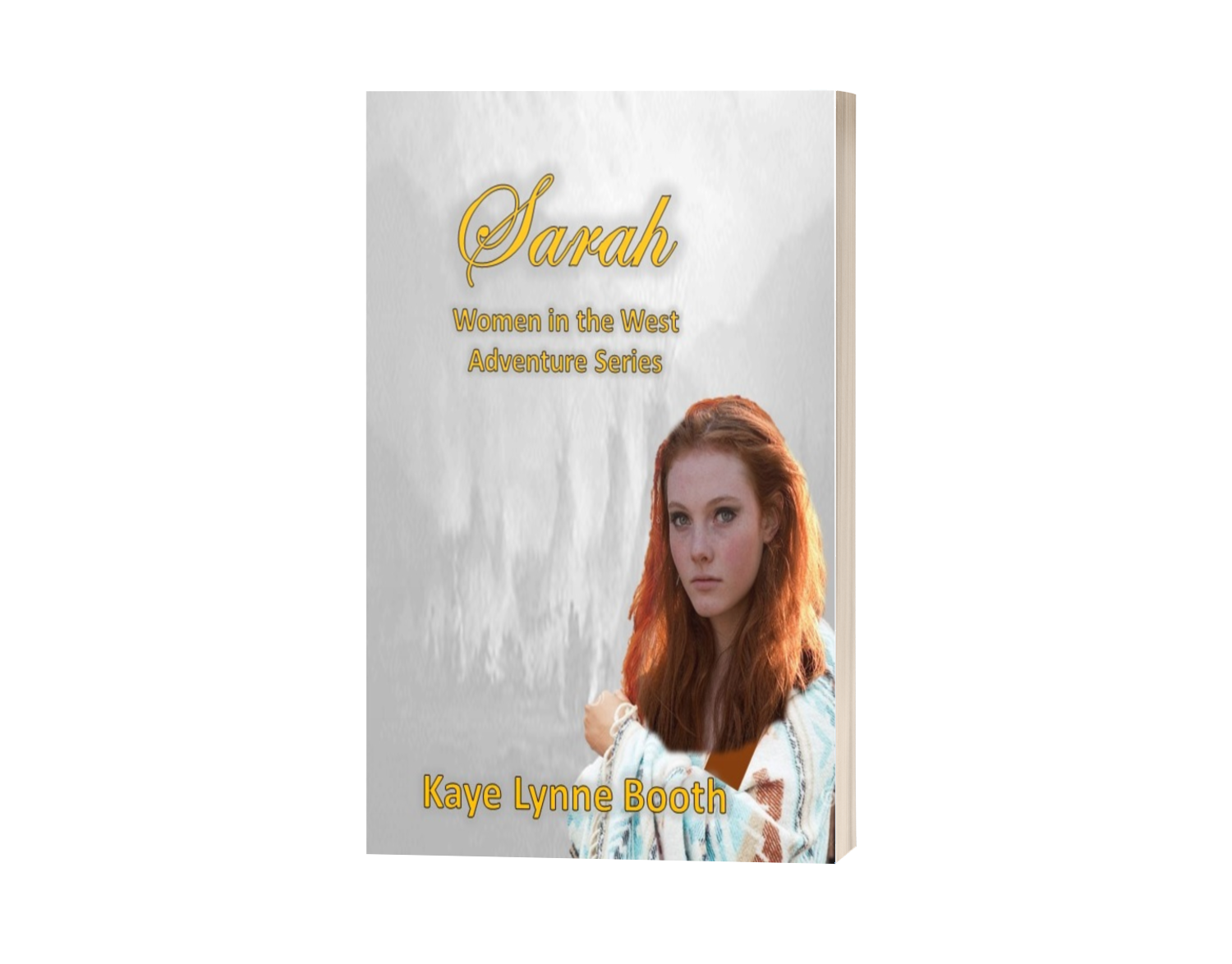
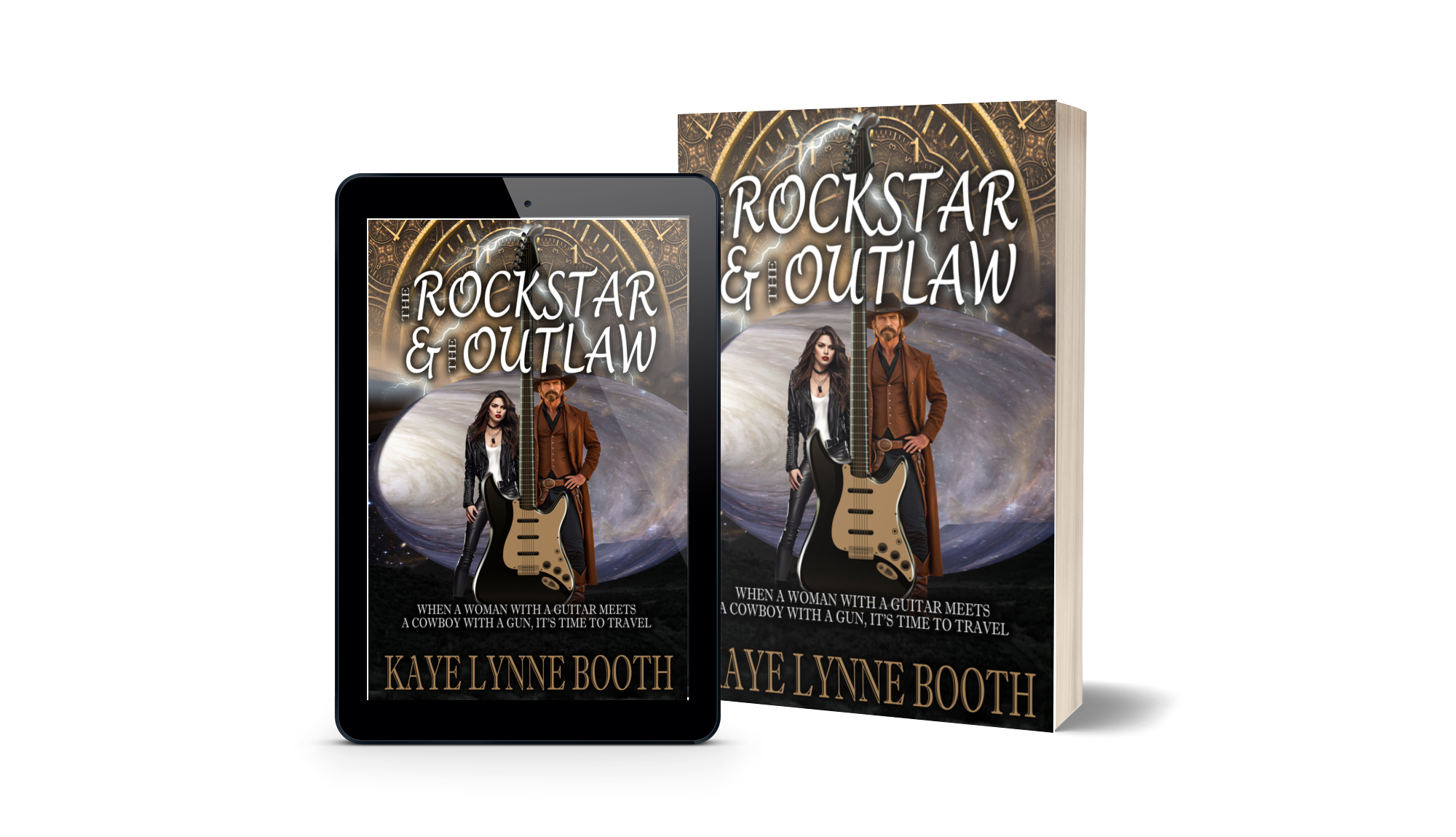
For Kaye Lynne Booth, writing is a passion. Kaye Lynne is an author with published short fiction and poetry, both online and in print, including her short story collection, Last Call and Other Short Fiction; and her paranormal mystery novella, Hidden Secrets; Books 1 & 2 of her Women in the West adventure series, Delilah and Sarah, and her Time-Travel Adventure novel, The Rock Star & The Outlaw. Kaye holds a dual M.F.A. degree in Creative Writing with emphasis in genre fiction and screenwriting, and an M.A. in publishing. Kaye Lynne is the founder of WordCrafter Quality Writing & Author Services and WordCrafter Press. She also maintains an authors’ blog and website, Writing to be Read, where she publishes content of interest in the literary world.
________________________________
Want to be sure not to miss any of Kaye’s “Writer’s Corner” segments? Subscribe to Writing to be Read for e-mail notifications whenever new content is posted or follow WtbR on WordPress. If you find it useful, interesting, or just entertaining, please share.
________________________________
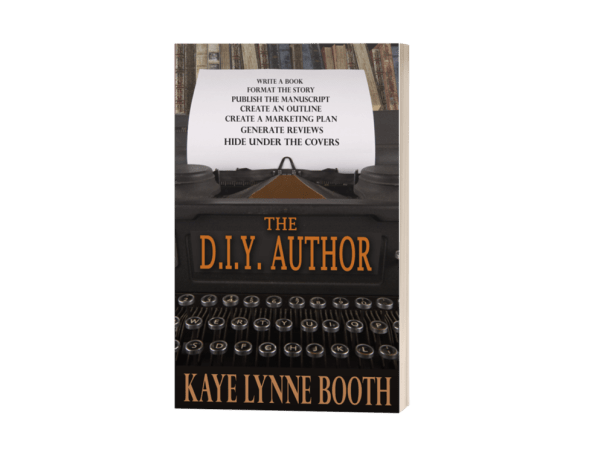
This post is sponsored by The D.I.Y. Author and WordCrafter Press.
Being an author today is more than just writing the book. Authors in this digital age have more opportunities than ever before. Whether you pursue independent or traditional publishing models, or a combination of the two, being an author involves not only writing, but often, the publishing and marketing of the book.
In this writer’s reference guide, multi-genre author and independent publisher, Kaye Lynne Booth shares her knowledge and experiences and the tools, books, references and sites to help you learn the business of being an author.
July’s challenge did not recieve any entries, so I’m thinking maybe last month’s challenge was too specific. I decided to use a more general prompt, like the one from June, in hopes of getting at least a few submissions.
There is nothing to vote on this month, but I’d like to hear from you if you think this idea could be fun and would like to participate at some point in the future. I need to know if there is enough interest to continue this blog series.
This Month’s Prompt
Monsters of Legend
Your story must contain a legendary monster. So, pull out your shapeshifters, blood suckers, walking dead, gargoyles, goblins and ghoulies, wraiths, dragons and trolls. It can be dark. It can be funny. It can be a monster romance. Whatever the genre, there must be a monster of legend at the heart of it.
The Rules
Remember, your story can be any genre, so you can get creative. Publish the results on your blog and send the link to me by the last day of the month. Be sure to label them with #WtbRStoryChallenge. Or, if you don’t have a blog, you can send the results directly to me at kayebooth@yahoo.com, and I will publish them or the links back to your blog the following month along with the writing prompt for the next month.
Stick to the rules and after 30 minutes of writing stop. I’ll be writing right along with you. I know the prompt ahead of time, but I won’t begin writing until it has posted. Be sure to have your entry to me by the last day of the month, so I can share them all for readers to vote on.
Another good thing about this not being a live event is you will have the opportunity to edit for grammar, spelling, and punctuation before submitting, and I do want it to be the best you’ve got, of course.
This is the second month for this story challenge and the going is slow. We were all supposed to vote on last months submissions, but I only had one, so there is not much to vote on. I will publish the submission here, along with the beginning of my own. It’s not really voting, but I would like to hear your thoughts on the stories posted. Would you read more if were offered? What works for you? What doesn’t?
I’d also like to hear from you if you think this idea could be fun and would like to participate at some point in the future. I need to know if there is enough interest to continue this blog series.
This Month’s Prompt
A woman walks into a bar, that isn’t a bar, and it changes her life forever.
Remember, your story can be any genre, so you can get creative. Publish the results on your blog and send the link to me by the last day of the month. Be sure to label them with #WtbRStoryChallenge. Or, if you don’t have a blog, you can send the results directly to me at kayebooth@yahoo.com, and I will publish them or the links back to your blog the following month along with the writing prompt for the next month.
Stick to the rules and after 30 minutes of writing stop. I’ll be writing right along with you. I know the prompt ahead of time, but I won’t begin writing until it has posted. Be sure to have your entry to me by the last day of the month, so I can share them all for readers to vote on.
Another good thing about this not being a live event is you will have the opportunity to edit for grammar, spelling, and punctuation before submitting, and I do want it to be the best you’ve got, of course.
June Submissions
Prompt: Write a story based on a local or popular legend.
_________________________________
Thanks to Sylva Fae for submitting this month, so I have something to post besides my own story.
The Wizard of Alderley Edge
by Sylva Fae
“What’s up with you, Paul? You’ve been moping around since you got here, and you haven’t even drunk your tea.”
“I’m skint, Granddad. Molly’s nagging me to book a holiday, I’ve just bought a new car and I’ve still got my student loan to pay off.”
“Pah! You youngsters don’t know how privileged you are. I thought you were getting paid well at that fancy new job of yours – you can’t be skint.”
“How would you know, Granddad? You’ve always been rich…”
“Not always, Paul. When I was a young man, I struggled to even put food on the table.”
“Seriously? You live in the biggest house in Macclesfield? Come on, Granddad, what’s the family secret to getting obscenely rich?” Paul laughed; his grandparents were one of the richest families around, owning several businesses and properties.
“You wouldn’t believe me if I told you,” Granddad replied.
“Go on, try me. Seriously, I’ll take any advice you can give me.”
“It’s not that sort of story but if you want to know, it all started with a legend…”
“A legend? Seriously, Granddad?”
“Do you wanna hear this story, or what?” Granddad grumbled.
Paul nodded, and settled back to drink his tea.
“This is the legend of the sleeping king, and not just any old king, King Arthur, no less. Several places claim to be the final resting place of King Arthur and his loyal knights, but I know he lies somewhere beneath the rocks of Alderley Edge.” Granddad took a moment to sip his tea, then continued.
“A long time ago, a farmer set off along the Ridge Road, taking his white mare to market, in Macclesfield town. He frequently made the journey through the woods and knew every twisty path, rock face and shortcut. As he approached Thieves Hole, the mare stopped in the centre of the crossroads and refused to budge. The farmer, wary of local superstitions of this being the crossing into the Otherworld, urged his mare on, but was suddenly startled by an old man appearing between the trees. A long emerald cloak covered all but his wizened face and long grey beard, and he leaned heavily on a twisted staff, as he slowly made his way down the bank to the farmer.
“Where are you going with that mare?” the old man shouted after him. “I would like to buy it.”
The farmer looked at the old man and pondered, it would save him a walk if he sold the mare here, but he’d likely get a better price at the market. “Thank you, Sir, but I’ll try my luck in the market. I need to get the best price possible.”
“Heed my warning! Nobody in town will buy your mare. I will be waiting here for your return.” The old man slammed his staff down onto the rock, as if marking the spot they would meet.
The farmer finally reached the market, but wherever he went, although people admired the mare, nobody was interested in buying her. She was a fine mare too, worth far more than he was willing to take for her. Strangely, everyone he approached turned away, with the same disinterested dismissal when he tried to sell her. Perplexed, and with the old man’s warning still rumbling round his mind, he set off back across the Edge to home, leading the white mare.
_________________________________
This is my submission, and will also be my second story for the by invitation only anthology, Tales From the Hanging Tree, which will be released in September.
The Legend of Cottonwood Hallow
by Kaye Lynne Booth
[1865]
Running Fox is walking along the tree line near the riverbank, searching for the [plants] White Cloud needed to initiate him as a brave in the ceremony tonight. He hears yelling at the stage stop up ahead, but he pays it no mind. Today is an important day for him and he doesn’t have time to worry about what the white man’s troubles are. Little Dove will be there tonight, watching as he becomes a man. She is the prettiest girl he has ever known, and he plans to mate with her when he is old enough to take a squaw. He kneels down to pluck up some [plants] from the muddy bank of the river, but quickly looks up at the sound of horse’s hooves approaching fast.
“Ho, there!” a big burly man in a leather coat exclaims as he dismounts from his horse, pointing a rifle right at him. “You there, Indian! What are you doing?”
Running Fox looks up at him wide eyed. He does not speak the white man’s tongue and cannot understand his words, but he understands the rifle pointed his way. His heart beats like a war drum in his chest as three other men come riding up from behind the man with the rifle, and spread out, blocking his escape from all directions. “No, tsapea,” (Let go!) he cries as the big burly man steps forward, grabbing by the arm and jerking him to his feet.
“This the one, Charlie?” the white man asks.
A small, mousy man wearing a striped shirt and spectacles comes up behind him and squints, examining Running Fox’s features. “Well, I don’t know,” the little man says, speaking barely above a whisper. “It was an Indian, but they all sort of look alike.”
“Is this the one who robbed the stage stop, Charlie?” the big man says, shaking the arm of Running Fox to emphasize his words.
The young boy tries to pull away, repeating the words, “Tsapea!”. But the man tightens his grip, holding him hard enough to hurt.
A little man wearing a white apron and visor partially covering his balding head stutters, stumbling over his words. “Well now, uh, Zeek, I’m not sure. Th-the fella who did the robbing s-s-seemed older,” the little man says, wiping sweat from his brow. “I mean, uh, this f-f-feller seems a mite young to be r-robbing anybody. I mean… he’s just a k-kid, really.”
“One Injun’s as good as another, I say,” says a gray-haired man sporting a beard and mustache. He flashes a toothless smile and smacks his lips together as Running Fox continues to struggle, trying to pull away from the meaty grip of the big man. “Ain’t a damn one of ‘em worth a sow’s ear, if you ask me?”
“Nobody did, old man,” says the burly man, still holding the rifle in his other hand. “Was the fella did the robbin’ even an Injun, Charlie?”
“Well, now… It was d-dark, you know? I… uh… I didn’t get a very g-good look. C-c-could have been, b-but I a-ain’t too sure. S-s-seemed bigger, b-but I w-was s-scared. He had a g-g-gun on me and all. I… uh… I guess it c-c-could b-be hi—”
“Oh, fer Christ sakes, Charlie,” says another man, stepping out from the shadow of the big cottonwood tree before the man called Zeek can reply.
Running Fox can’t make out his features in the afternoon son, dappled by the shadow of the tree, but he can see the glint in his eye, and it wasn’t friendly.
The man holds a piece of rope in one hand, which he holds up in front of him as he says, “You better be sure. You wouldn’t want us to hang the wrong man, would you? You’re in charge of the stage stop. If this ain’t him, I guess you’re the one to take the responsibility. Ain’t that right, boys?”
The others mumble to the affirmative, some nodding their heads as Running Fox renewed his struggles against the grip of the gruff, burly man at the sight. “Tsapea!” he said, pulling his arm away with all his might. He doesn’t understand all the men say, but he understands the meaning of that rope. His heart races and a sweat breaks out on his forehead, running down his face. He doesn’t know the why of it, but he’s pretty sure that these men intend to hang him. “Tsapea! Tsapea!”
The burly man tightens his grip and jerks back on his arm. “Settle down now,” he says. “You think you can get away?” Then he turns his attention back to Charlie, but he doesn’t loosen his grip. “Well, Charlie? We need to know. This him, or not? I can’t hold onto this ‘un forever. He’s a wildcat.”
Charlie stares at Running Fox with frightened eyes. Then, he gives a nod of his head and casts his eyes to the ground. “Y-yes. I r-reckon th-that’s him,” he says softly.
“What’s that, Charlie?” says the man with the rope. “Speak up so we can hear.”
“Th-that’s him,” Charlie says, louder this time, but without looking up.
“All right then,” the dark man says, throwing a rope over the lowest branch of the big tree. “Let’s get this done. I haven’t had any lunch yet.”
The grey-haired old man leads a horse toward him, parting the circle of men. The noose slides down over his head. The burly man lets go of him momentarily, but places both hands around Running Fox’s waist and hoists him up into the saddle, as if he were a small child.
Everything is happening too fast. Running Fox doesn’t it even have time to protest. His heart races faster in his chest than it ever has before, faster even than when he’s run for long distances. His breathing quickens as the panic rises within him. They are going to hang him, and he doesn’t even know why. Little Dove will not see him become a brave, because he will never be one. Tears squeeze from the corner of his eyes at this thought, even though he tries to fight them back. He will never see his mother again, will never make his father proud. It isn’t fair. eHis life I just beginning. Running Fox is determined to never leave this spot until he has revenge. Nothing good will ever come from this place. Just before they slap the horse’s rump, sending it charging out from under him, he issues a vow that binds his soul to the cottonwood with his last breath. “Nitea ianna.” (Curse this place).
I’ve been meeting and greeting within author communities for sixteen years. First, as the Southern Colorado Literature Examiner for six years, and then, right here, on Writing to be Read . The payoff for these wasn’t in money, but in the opportunities they offered. I’ve met so many authors and was introduced to the writing world through those two things. And then, while working for my M.F.A., I met even more authors; traditionally published authors who were making a living from their writing, and I learned from them. When I went back to get my masters in publishing, I was privilaged to study under a true master, international and national bestselling author, Kevin J. Anderson and through the masters program and KJA, I met several industry experts, including Jonathan Maberry and Mark Leslie Lefebvre, and I learned from even more who were gracious enough to speak to my cohort, either in person or on Zoom. I’ve also met authors through various WordCrafter projects, such as the two virtual writing conferences which WordCrafter hosted in 2020 and 2021; great people who answered the call when I put it out, and ran workshops and sat on discussion panels and helped me to make those two events happen.
Tribes
And I have to say, there’s something special about authors. They seem to gravitate toward these tightnit communities where you can be a member due to only a shared love of craft. Most call themselves author communities, KJA calls them his tribe. I like that. It has a feeling of kinship to it. By giving me instruction in the publishing industry, he welcomed me into his tribe, and by being a part of my blog team, or collaborating with me on an anthology or other projects, or even by participating in discussions and being a regular visitor and name I recognized, you are welcomed into my tribe.
Authors aren’t the only people who do this kind of thing. It’s human nature for people to gravitate toward others who are like minded. There are Corvette clubs and antique car clubs, bridge clubs, and fan clubs for people who enjoy the same musical artists. But the thing is, none of the people in those clubs really know each other and they aren’t likely to go out of their way to lend a hand to someone else when the only thing they have in common is a love for one particular thing. But authors do. Authors are the most generous group of people, willing to share their knowledge with one antoher, willing to donate their time and energies to projects, willing to lift one antoher up. It is amazing to me.
Networking
In Hollywood, it is said that it is all about who you know, but this is true in a sense, for writing and publishing. Networking with fellow authors can open doors that would otherwise be closed to us. Through other authors we learn of opportunities that we might not be aware of otherwise, and we meet people who are like minded, who may endorse your book, or perhaps review it. We meet folks who are interested in the craft of writing, just like we are, and many are willing to trade off services, which can make outsourcing that would be quite costly, suddenly become something that is in reach.
Collaborations
I’ve met many authors through collaborations. The virtual writing conferences mentioned above is only one type of collaboration. There are many others. I also mentioned anthologies. I 💜 anthologies. Wordcrafter Press puts out one poetry anthology, and at least one short fiction anthology per year. These are collaborations of from six to twenty different authors per book.
The great thing about anthologies is, you have a bunch of different authors who each have their own following and the potential to broadcast and promote to that following, allowing you to reach a much wider audience of potential readers, and therefore purchasers of your book. The same works for other collaborative projects, too. I have capitalized on this for the virtual writing conferences which WordCrafter Press hosted, as well.
Paying it Forward
The philosophy of paying it forward is predominate through the author communities that I find myself a part of . KJA is one of the busiest people I know, yet he didn’t balk at all when I invited him to be my first guest as I revive the “Chatting with the Pros” blog series, and he was willing to take the time to do an author interview with me. That segment will be coming up later this month.
This is only one example of the good-heartedness found in memebers of the author community. I’ve been granted review and interview requests, blurbs or endorsements of my books, and booked speakers and workshop presenters with authors willing to donate their time. And all I had to do was ask.
I have done this by doing book reviews for authors I know who haven’t requested it, by editing all anthology submissions whether I invite them to be in the anthology or not, by doing a proofread or beta read at no charge for certain authors who have requested them, by donating my time to judge the Spur awards, and by reblogging or reposting the promos and reviews of my fellow authors.
Authors are generally good people. And just as I am proud to be a member of KJA’s tribe, I’m equally as proud to call each one of you as memebers of mine.
_________________________________
About Kaye Lynne Booth
For Kaye Lynne Booth, writing is a passion. Kaye Lynne is an author with published short fiction and poetry, both online and in print, including her short story collection, Last Call and Other Short Fiction; and her paranormal mystery novella, Hidden Secrets; Books 1 & 2 of her Women in the West adventure series, Delilah and Sarah, and her Time-Travel Adventure novel, The Rock Star & The Outlaw. Kaye holds a dual M.F.A. degree in Creative Writing with emphasis in genre fiction and screenwriting, and an M.A. in publishing. Kaye Lynne is the founder of WordCrafter Quality Writing & Author Services and WordCrafter Press. She also maintains an authors’ blog and website, Writing to be Read, where she publishes content of interest in the literary world.
____________________
This post is sponsored by The D.I.Y. Author and WordCrafter Press.
Being an author today is more than just writing the book. Authors in this digital age have more opportunities than ever before. Whether you pursue independent or traditional publishing models, or a combination of the two, being an author involves not only writing, but often, the publishing and marketing of the book.
In this writer’s reference guide, multi-genre author and independent publisher, Kaye Lynne Booth shares her knowledge and experiences and the tools, books, references and sites to help you learn the business of being an author.
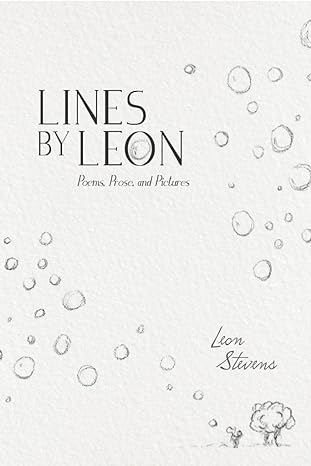
Lines by Leon is an eclectic mix of poetry, prose, and short stories that address the subjects of loss, struggle, human behavior, and environment in both humorous and thought-provoking ways. The author invites his readers to laugh, think, cry, and meditate on the wide variety of topics. Scattered throughout the book are sketches of various subjects, many that relate to the poems and stories they illustrate; others speak for themselves.
Lines by Leon, by Leon Stevens is an entertaining collection of creativity that showcases the authors talents in prose, poetr and drawing. The poems are lighthearted and positive, although I did feel a bit of sadness when reading “The Sock”. The drawings are well done, the sketches are amusing, and all offer the reader something to think about in a new or unique way.
It’s brief, but entertaining. One can’t help but smile. I give Lines by Leon four quills.
____________________________________________
About The Inyan Beacon
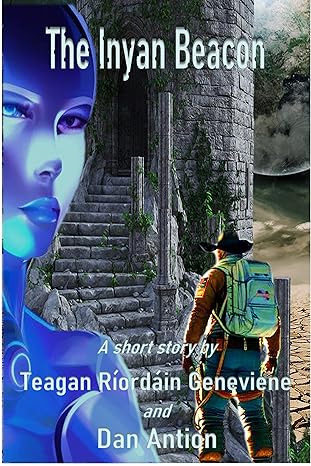
Part science fiction, part spaghetti Western, part speculative fiction, The Inyan Beacon is a short story set in the distant future. Earth’s moon, now called Maka, after a failed terraforming attempt, is the site of a lone stone tower. Tatanka (Tank) Cody, descendant of Buffalo Bill Cody, and his synth companion, Compass are determined to get inside the tower. Although they might not find what Tank is so sure will be there.
The Inyan Beacon, by Teagan Riordan Geneviene and Dan Antion, is a brief tale that feels like a small piece in a much bigger puzzle. Teagan jumps right into the story, but it takes a moment for the reader to orient. Once there, it is easy to emmerse oneself into the story, but before you know it the tale has come to its conclusion. I think I would have preferred to know what they were looking for a bit sooner to give me a better sense of purpose for the characters. I applaud Geneviene and Antion for providing this story with a beginning middle and end, making it a complete story; something many shorts fail to do.
It caught my interest, but was too short. I wasn’t ready to stop, and would have been willing to follow the characters through to the next adventure. I guess I wanted more. I give The Inyan Beacon four quills.
____________________________________________
Kaye Lynne Booth does honest book reviews on Writing to be Read in exchange for ARCs. Have a book you’d like reviewed? You can request a review here.
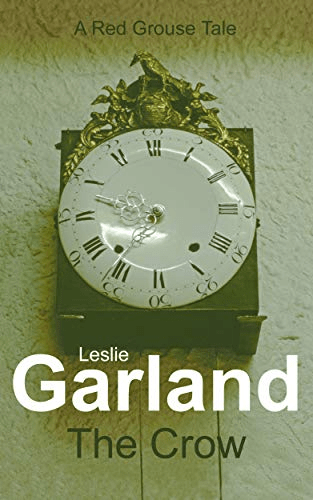
Told in The Red Grouse Inn, this poignant, adult, speculative, spiritual and philosophical tale will intrigue, entertain and keep you guessing in equal measure. As a child, David, is taken to a hospice by his mother where he finds himself listening to an increasingly mad tale told by a dying and embittered old Irish priest. But why do the old priest’s recollections of the school days and subsequent rise of a local councillor become so increasingly bizarre and bitter? The universal appeal of this enjoyable, entertaining and intriguing short story, with its beautiful and atmospheric imagery, surreal and paranormal concepts of angels, ghosts and devils, will have you turning the pages and ready to read the next one.
The Crow, by Leslie Garland offers an eerie feeling as you read the story of a young boy saddled with the task of visiting an old priest who is kind of creepy. As the priest unfolds his strange tale, one that might be better to spare young children from, one can’t help but feel a little of the creepiness rub off on you. Told in the spirit of those who used to sit around telling stories for entertainment, this tale has a classic feel to it, which immediately draws the reader in and holds them captive until the last page is turned.
Short, but captivating. The cover could use a new design, as it would not prompt me to go buy the book and tells me nothing about the content of the story, But the title, The Crow, has the power to grab you and make you want to read it. I give it four quills.
_______________________
Kaye Lynne Booth does honest book reviews on Writing to be Read in exchange for ARCs. Have a book you’d like reviewed? You can request a review here.