I am very excited to welcome talented artist, poet, and author, Dave Williams to “Treasuring Poetry”. Dave is discussing his thoughts on poetry and I’ve reviewed his unique poetry book Gasp! Poetry!
What is your favourite style of poetry to read i.e. haiku, ballad, epic, freestyle, etc?
Freestyle. I like playful poetry, and poetry that causes me to think of stuff in different ways than my status quo. Also, I’m a big fan of short poetry about nature. Doesn’t have to be haiku. Poems that focus on one aspect of nature, be that a particular animal or plant or season. This kind of poetry is like a seed for me to meditate over that aspect of nature.
What is your favourite poem in your favourite style to read?
My favorite poem by another writer is “maggie and milly and molly and may” by E. E. Cummings. I love it because it’s lively and frisky and profound. And because it reminds me of growing up near the Atlantic Ocean. And because one of my daughters is named Molly (with a capital M, not lowercase like in the poem — although she’s welcome to be creative with the capitalization of her name if she likes).
What is your favourite style of poetry to write? Why?
I enjoy writing freestyle the most. Limericks and haiku can be fun to write by following their rules. But I typically go with freestyle because I don’t have to worry about rhymes or syllables or meter.
What is your favourite of your own poems?
A tough question, Robbie! One poem of mine doesn’t jump out as a favorite. I looked through Gasp! Poetry! to find one to include here. I chuckled over several poems, but the poem that clicks with me right now isn’t aimed at humor. Rather, it feels hopeful:
Chickadee
Seeing an eagle,
the chickadee
aspired to greatness:
soaring high in the
Great Blue
Yet he could not
transform into that epic bird
In her son’s sullenness,
mama chickadee asked
the elders to offer wisdom
They told him
there’s a quiet dignity
in being a chickadee
and that
warmed his heart.
Your poetry collection Gasp! Poetry! has a most unusual name and blurb. Please tell us a bit about this book, what the poems are about, and what your intentions were will the collection.
The cover tries to warn people who have no interest in poetry. The title and cover illustration pretend what such a person’s reaction might be to a poetry book. They might throw up their hands and shriek, “Gasp! Poetry!” Then they’d run for the safety of a Non-Poetry Zone. Where, after catching their breath, they might tell other people how close they got to a poetry book and how terrifying it was. The cover uses drama for humor (hopefully).
Some poems in the book aim for silliness, while others are serious. The topics are assorted. One short poem is about a monkey taking a bath. One long poem is about how Scheherazade told a thousand tales to avoid being murdered. If you’ve followed my blog for a while, chances are good that you’ve read poems from this collection.
My intention was to package a bunch of poems on my blog, and ones that haven’t been published there yet. I hoped to entertain readers who like playfulness and absurdity in poems.
You write both novels and poetry. Which do you prefer?
Novels. Even when short, they’re more immersive than poems — which are like sketches to me (since I don’t write epic poems). I enjoy pondering possible plot paths of novels, as well as possible backgrounds of characters. It’s akin to reading a book and being immersed in the story. But with novel writing, the story can unfurl in various, potential directions. Joy is in exploring and shaping the story. So is frustration. But it’s worth the frustration when the book is finished.
My review of Gasp! Poetry!
Picture caption: Cover of Gasp! Poetry! featuring a hand drawn circle man with his arms thrown upwards in anguish.
The amusing title of this poetry collection by Dave Williams is indicative of the nature of the poetry. All of the poems are clever, slightly dark, and poke fun at humans and humanity in general. In other words, these poems are brilliant and hugely entertaining.
Is a Poem about Grains of Sand on a Beach Too Pretentious? “I wondered that question, lying on a floral beach towel, a speck in a crowd of swimsuited people – all of us were lumps of cookie dough glazed with sunscreen and coconut oil baking in this oven.” The short extract above is a great example of Dave dark humour in relation to human behaviours and his engaging descriptions.
Valor is a great example of the poet’s quick and clever mind and attitudes towards adversity: “”You’re not sharp enough?” “Get some sides!”
Yells were hurled from the crowd of octagons at the little circle. “You look ridiculous!”
The circle puffed up with valor, said “I am what I am,” refused to conform, then rolled defiantly towards home.”
This was my favourite poem in the book. I really enjoyed the personification of shapes and it reminded me of Flatland by Edward Abbott Abbott.
There is some wonderful life wisdom encased in these freestyle poems. A short extract from Ocean Inside which captivated my mind: “Meanwhile I work against the urge to liquefy myself and pour myself into the container others have sculpted for me”
Having gone through my own teenage years and watched three sisters and two sons go through theirs, I am acutely aware of how very real this pack mentality is with young people. Sometimes, people never manage to escape its grip and find their own path in life.
If you enjoy dark humour, excellent poetry, and life truths, you will love this engaging and entertaining collection.
Picture caption: Author photograph of Dave Williams
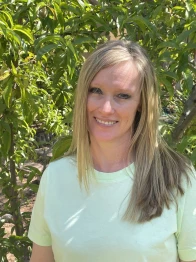
Surely many people are named “Dave Williams” and this particular Dave is a redheaded one who enjoys writing speculative fiction, drawing, and reading. He lives in Maryland with his wonderful wife, two inspirational daughters, and two cats (a lazy one and a playful one).
South African author and illustrator, Robbie Cheadle, has written and illustrated sixteen children’s books, illustrated a further three children’s books, and written and illustrated three poetry books. Her work has also appeared in poetry and short story anthologies.
Robbie also has two novels and a collection of short stories published under the name of Roberta Eaton Cheadle and has horror, paranormal, and fantasy short stories featured in several anthologies under this name.
You can find Robbie Cheadle’s artwork, fondant and cake artwork, and all her books on her website here: https://www.robbiecheadle.co.za/
________________________
Did you know you can sponsor your favorite blog series or even a single post with an advertisement for your book? Stop by the WtbR Sponsor Page and let me advertise your book, or you can make a donation to Writing to be Read for as little as a cup of coffee, If you’d like to show your support for this author and WordCrafter Press.
__________________________
This segment of “Treasuring Poetry” is sponsored by WordCrafter Press and the Poetry Treasures series.
Picture caption: The cover of A Town like Alice. It’s very uninspiring and shows a dirt track.
This was my favourite classic book read of 2024. A delightful romance initially set in Malaysia during World War II and then moving between post-war London and Australia, Jean Paget’s story of strength, endurance, and leadership made for an amazingly uplifting read.
The novel commences with the main character, Jean Paget, a secretary in a leather goods factory, receiving notification from a solicitor, Noel Strachan, that she has inherited a large sum of money from an uncle she never knew. Noel is the trustee of the funds until Jean can inherit at the age of 35 years old (this age was set by the uncle who believed that women were incompetent fools who couldn’t be trusted with money until they had a family and life experience). Strachan acts as Jean’s financial advisor and, over time, a good friend. His part of the story is all the more interesting because of the secret love he develops for Jean. Noel is the narrator of the story.
Jean announces to Noel that her first priority is to build a well in a village in Malaysia and this introduces her poignant backstory as a prisoner of war in Malaysia during WW2. This part of the story is based on a real survival story which makes it all the more fascinating. Jean was working in Malaysia when the Japanese invaded and she was taken prisoner along with a large group of other European women and children. The Japanese authorities doesn’t know what to do with the group so they end up walking from one village to another for months. The lack of good food, exposure of the elements and hardship results in the deaths of a large number of the group. Jean meets an Australian soldier, Joe Harman, who is also a prisoner of war and is driving a lorry for the Japanese invaders. He tries to help the women and ultimately steals five chickens from a local Japanese commander. He is eventually caught and beaten, crucified and left to die by the Japanese soldiers. Jean believes that Jo Harman is dead. Soon after, the women’s Japanese guard dies and they take shelter in a Malaysian village for the rest of the war. Jean wishes to build a well in this village as a gesture of gratitude to the villagers who saved the lives of the remaining women and children by taking them in. During the construction of the well, Jean discovers by accident that Joe survived and returned to Australia. She decides to go in search of him in Australia and this sets the stage for the rest of the story and the romance. Joe had mentioned the town of Alice Springs during their short time as friends, and this is where Jean heads.
The writing is completely engaging and the characters of both Jean and Joe are well developed and admirable. As a reader, I become completely involved in both their stories and was rooting for their romance and success as individuals and a couple. Jean is portrayed as a strong willed survivor with a strong sense of compassion and responsibility. She is a remarkable leader and an excellent role model for young women.
Joe is portrayed as being recklessly brave and this results in his undoing. He is a very determined and strong willed person, however, an these characteristics result in his miraculous survival.
I read this book because I am interested in learning more about the war in the Pacific and the Japanese involvement in World War II. I have read several books on this topic and A Town Like Alice is the one that stands out the most in my memory. I highly recommend this book to lovers of romance and war literature.
8 chicken thighs and 8 chicken drumsticks, on the bone with skin
160 ml olive oil
1 Tbspn garlic flakes
1 heaped Tbspn dried oregano
5 ml dried thyme
1 tin peaches and the juice
24 caperberries
24 green olives, pits removed and cut in half
2 bay leaves
1 Tbspn chicken stock (powder)
Ground black pepper to taste
1 1/2 cups (375 ml) white wine
Method
Heat the over to 180 C. Line the bottom and sides of a oven baking dish with silver foil. Lay the chicken skin up on the bottom on the dish. In a separate bowl, mix the oil, wine, herbs and caperberries. Pour the tinned peaches over the chicken. Add the wine mixture. Lastly, place the olives over the chicken. Cover the dish with tin foil.
Bake in the oven for 45 minutes. Turn the oven to grill. Remove the tin foil and grill the chicken until nicely browned. Do not let the peaches burn. About 15 – 20 minutes.
Enjoy with rice.
Picture caption: My peach chicken served with rice.
About Robbie Cheadle
South African author and illustrator, Robbie Cheadle, has written and illustrated seventeen children’s books, illustrated a further three children’s books, and written and illustrated three poetry books. Her work has also appeared in poetry and short story anthologies.
Robbie also has two novels and a collection of short stories published under the name of Roberta Eaton Cheadle and has horror, paranormal, and fantasy short stories featured in several anthologies under this name.
You can find Robbie Cheadle’s artwork, fondant and cake artwork, and all her books on her website here: https://www.robbiecheadle.co.za/
_______________________________________
Did you know you can sponsor your favorite blog series or even a single post with an advertisement for your book? Stop by the WtbR Sponsor Page and let me advertise your book, or you can make a donation to Writing to be Read for as little as a cup of coffee, If you’d like to show your support for this author and WordCrafter Press.
_______________________________________
This post is sponsored by the My Backyard Friends Kid’s Book Series and WordCrafter Press.
The My Backyard Friends kid’s book series is inspired by the birds and animals that visit the author Kaye Lynne Booth’s mountain home. Beautiful illustrations by children’s author, poet, and illustrator, Robbie Cheadle, bring the unique voices of the animal characters to life.
For my final In Touch With Nature post of 2024, which happens to fall on Christmas Day, I am taking you 17 hours of flying time away from South Africa to Nagano in Japan (yes, the same place where the 1998 Olympic Winter Games were held).
Nagano is a very beautiful place and it is home to the Japanese Macaque or snow monkeys.
According to Wikipedia, snow monkeys are a terrestrial Old World monkey (primates in the family Cercopithecidae) species that is native to Japan. They live in areas where snow covers the ground for a significant part of the year. Snow monkeys are the only species of monkeys found in Japan and they are one of the big reasons I wanted to go to Japan when the opportunity arose (TC was offered a lead reviewer position in Tokyo for two weeks and I was expensive luggage – haha!).
We visited a wild snow monkey park in Jigokudani Yaen-koen (altitude 850 metres), located in the Valley of Yokoyu River in the northern part of Nagano. This is the only place in the world where monkeys bathe in hot springs.
These are pictures of Jigokudani Yaen-koen:
Snow monkeys have brownish grey fur, pink to red faces, and short, stumpy tails. The males weigh about 11.3 kg (25 lb) and the females weigh about 8.4 kg (19 lb). They generally move on all fours.
Snow monkeys are omnivorous and eat a variety of foods including approximately 213 species of plants, insects, bark, and soil. During the winters with heavy snowfall, the monkeys rely heavily on bark (the same as elephants during the Southern African winter which is quite interesting).
These are some of my photographs of the snow monkeys in the thermal spring:
Gallery photo caption: These are all snow monkey pictures I took with my iphone.
These are a few of the pictures I took with my camera. They are better, I think.
If you are interested in using any of my snow monkey or Mount Fuji photographs, they are available for free download from Unsplash here: https://unsplash.com/@r_cheadle
Two YouTube shorts of the snow monkeys:
Kaye and I wish you happy holidays and if you celebrate Christmas, may it be very merry.
A few pictures of the tree lights in Japan.
Picture caption: Tokyo tree lights street scene (I really like this picture)Picture caption: Tokyo tree lights street scene
About Roberta Eaton Cheadle
Roberta Eaton Cheadle, is a South African writer and poet specialising in historical, paranormal, and horror novels and short stories. She is an avid reader in these genres and her writing has been influenced by famous authors including Bram Stoker, Edgar Allan Poe, Amor Towles, Stephen Crane, Enrich Maria Remarque, George Orwell, Stephen King, and Colleen McCullough.
Roberta has two published novels and a collection of short stories and has horror, paranormal, and fantasy short stories included in several anthologies. She is also a contributor to the Ask the Authors 2022 (WordCrafter Writing Reference series).
Roberta is also the author and illustrator of sixteen children’s books, illustrator to a further three children’s books, and the author and illustrator of three poetry books published under the name of Robbie Cheadle, and has poems and short stories featured in several anthologies under this name.
Roberta’s blog features discussions about classic books, book reviews, poetry, and photography. https://roberta-writes.com/.
Like this post? Are you a fan of this blog series? Did you know you can sponsor your favorite blog series or even a single post with an advertisement for your book? Stop by the WtbR Sponsor Page and let me advertise your book, or you can make a donation to Writing to be Read for as little as a cup of coffee, If you’d like to show your support for this author and WordCrafter Press.
__________________________________________
This segment of “In Touch with Nature” is sponsored by the Midnight Anthology Series and WordCrafter Press.
Midnight Roost: Weird and Creepy Stories: 20 authors bring your nightmares to life in 23 stories of ghosts, paranormal phenomenon and the horror from the dark crevasses of their minds. Stories of stalkers, both human and supernatural, possession and occult rituals, alien visitations of the strange kind, and ghostly tales that will give you goosebumps. These are the tales that will make you fear the dark. Read them at the Midnight Roost… if you dare. https://www.amazon.com/Midnight-Roost-Kaye-Lynne-Booth-ebook/dp/B0CL6FPLVJ
Midnight Garden: Where Dark Tales Grow: 17 authors bring you 21 magnificent dark tales. Stories of magic, monsters and mayhem. Tales of murder and madness which will make your skin crawl. These are the tales that explore your darkest fears. Read them in the Midnight Garden… if you dare. https://www.amazon.com/Midnight-Garden-Where-Tales-Anthology-ebook/dp/B0DJNDQJD3
The theme for this collection, “Into the Light,” was influenced by how a young sunflower bud always faces the sun. This sun tracking is called heliotropism.
It is believed that sunflowers participate in heliotropism because they possess an internal clock similar to humans. This internal clock enables the plant to maximize its growth and absorb optimal energy.
The buds are heliotropic until the end of the bud stage. Upon reaching maturity, the sunflower ceases to follow the sun.
The combination of sunflowers as an emblem, and “Into the Light” as a theme is intended to throw shards of brightness out into the world. By actively seeking out happiness and sharing love and light, we can make this planet a better place for all its people and creatures.
golden sunflowers
watch Apollo’s chariot
move across the sky
from dawn’s first light to sunset
forever seeking the light
by Colleen M. Chesebro
Picture caption: Cover of Sunflower Tanka featuring a sunflower turned towards the sun on a pale pink background. Shards of light spill across the cover.
Blurb
Sunflower Tanka, edited by Robbie Cheadle & Colleen M. Chesebro, is an annual anthology of contemporary tanka, tanka prose, & experimental tanka from a broad mix of new and established poetic voices from across the world.
Our theme, “Into the Light,” draws inspiration from the way a young sunflower bud constantly turns to face the sun. Poets delved into the realms of death, love, and the natural world, capturing their human experiences in the timeless form of syllabic poetry.
Contributors to the first edition of the Sunflower Tanka: Suzanne Brace, Yvette Calleiro, Kay Castenada, Luanne Castle, Robbie Cheadle, Colleen M. Chesebro, E.A. Colquitt, Melissa Davilio, Destiny, Tamiko Dooley, Lisa Fox, Cindy Georgakas, Chris Hall, Franci Hoffman, Marsha Ingrao, Jude Itakali, JulesPaige, Kenneth, MJ Mallon, Brenda Marie, Selma Martin, Michelle Ayon Navajas, Lisa Nelson, D. Wallace Peach, Freya Pickard, Dawn Pisturino, Gwen M. Plano, Jennifer Russo, Aishwarya Saby, Reena Saxena, Merril D. Smith, Nicole Smith, Ivor Steven, Ben Tonkin, Trilce Marsh Vazquez, Cheryl Wood.
A few examples of the poetry in this book
All the poems in this book are gorgeous, so I have just randomly selected three pieces to share here:
echoes of despair
hushed as tears fail haunted eyes
silence expresses
a quiet faiths’ grip on hope
firm through darkened horizons
Tanka By Destiny
***
ash and dust reclaim
from flames of passion or shame
born this, raised as that
do butterflies from cocoons
ditch all that was, for petals?
Extract from Intertwined Essence (garland tanka) by Jude Itakali
***
within the forest there’s a glen where children play under a white light where mystical faeries flit around, happy and free
Tanka by Ivor Steven
Jacaranda Blue
As a photographer and painter, I am always trying to capture light in my work. This series of three photographs of my painting, Jacaranda Blue, was intended to demonstrate how this painting captures light in different ways.
This painting is dedicated to my amazingly artistic blogging friend, Resa McConaghy, who recently shared a most extraordinary series of articles about The Painted House. You can find the last article, with links to all the rest, here: https://graffitiluxandmurals.com/2024/11/24/exterior/. In addition to her amazing photography, Resa creates the most incredible art gowns out of recycled materials. Click on Resa’s name to discover more about her gowns.
This is a short extract from my poem Jacaranda Blue, a rensaku, inspired by this painting and included in Sunflower Tanka:
dressed for a spring ball
frocks of filmy organza
Jacaranda blue
delicate forms gently swaying in softly flowing fabric
Sunflower Tanka Video
Did you know you can sponsor your favorite blog series or even a single post with an advertisement for your book? Stop by the WtbR Sponsor Page and let me advertise your book, or you can make a donation to Writing to be Read for as little as a cup of coffee, If you’d like to show your support for this author and WordCrafter Press.
About Robbie Cheadle
South African author and illustrator, Robbie Cheadle, has written and illustrated sixteen children’s books, illustrated a further three children’s books, and written and illustrated three poetry books. Her work has also appeared in poetry and short story anthologies.
Robbie also has two novels and a collection of short stories published under the name of Roberta Eaton Cheadle and has horror, paranormal, and fantasy short stories featured in several anthologies under this name.
You can find Robbie Cheadle’s artwork, fondant and cake artwork, and all her books on her website here: https://www.robbiecheadle.co.za/
___________________________
This segment of “Treasuring Poetry” is sponsored by WordCrafter Press and the Poetry Treasures series.
Letters to Father Christmas is Tolkien at his absolute best. A series of letters written to his own children and featuring Father Christmas as a very real and relatable person who experiences lots of setbacks, both small and large. Set over an extended period, the letters also run through World War II and explains how the war and its deprivations impact on the folk at the North Pole. Although WWII is a long time past, this messaging of resilience and making the best of things is still relevant in our modern time of uncertainty and warfare.
Father Christmas relies on his number one helper, Polar Bear, to help him in his work. As time passes and more and more children are born, Father Christmas also gets help from the elves. His elven secretary also starts assisting him with his letter writing. Polar Bear is a delightful character, full of fun and very naughty, he is always getting into trouble and creating mishaps. Father Christmas has to move house after Polar Bear tries to rescue his hat from blowing away in a wind and falls through the room and into the family room.
Father Christmas also faces adversity in the form of the hostile goblins who keep attacking his home every couple of hundred years. The goblins are mean and treacherous creatures and the folk at the North Pole have to call upon the red dwarves for assistances from their attack. An interesting way of explaining war and its meaning to young children.
A delightful book for children and adults and one I highly recommend.
“if you remember him, is still fast asleep, and quite thin after so much fasting. He will soon cure that. I shall tickle his ribs and wake him up soon; and then he will eat several months’ breakfast all in one). More love, your loving Father Christmas There is audio content at this location that is not currently supported for your device. The caption for this content is displayed below. Christmas Eve 1934”
“I hope you will like the little things I have sent you. You seem to be most interested in Railways just now, so I am sending you mostly things of that sort. I send as much love as ever, in fact more. We have both, the old Polar Bear and I, enjoyed having so many nice letters from you and your pets. If you think we have not read them you are wrong; but if you find that not many of the things you asked for have come, and not perhaps quite as many as sometimes, remember that this Christmas all over the world there are a terrible number of poor and starving people. I (and also my Green Brother) have had to do some collecting of food and clothes, and toys too, for the children whose fathers and mothers and friends cannot give them anything, sometimes not even dinner. I know yours won’t forget you. So, my dears, I hope you will be happy this Christmas and not quarrel, and will have some good games with your Railway all together. Don’t forget old Father Christmas, when you light your tree.”
Christmas cake recipe
Picture caption: this year’s Christmas cakes are decorated with wreaths made from Lindt chocolate balls. I rather like them.
Ingredients for Christmas cake
250 grams currants
240 grams sultana
200 grams mixed berries
240 grams raisins
120 grams mixed peel
180 grams chopped cherries
300 grams plain white cake flour
pinch salt
2.5 ml mixed spice
2.5 ml cinnamon
300 grams softened butter
300 grams sticky brown sugar
30 ml lemon zest
6 eggs, lightly beaten
45 ml brandy
Method for Christmas cake
Preheat the oven to 140 degrees Celsius. Double line the cake tin with thick baking paper.
Beat the sugar and butter in an electric mixer. Add the lemon zest. Add the eggs, beating in one at a time.
In a separate bowl mix the dried fruit, spices, salt cherries and flour. Add the egg mixture and mix well. Lastly, pour in the brandy and combine.
Scoop the mixture into the baking tin and level with the back of a spoon. Wrap a layer of tin foil around the base of the baking tin and place in the oven. Bake for +- 3 hours.
Last year’s Christmas cakes had a roses theme:
________________________________________
About Robbie Cheadle
South African author and illustrator, Robbie Cheadle, has written and illustrated seventeen children’s books, illustrated a further three children’s books, and written and illustrated three poetry books. Her work has also appeared in poetry and short story anthologies.
Robbie also has two novels and a collection of short stories published under the name of Roberta Eaton Cheadle and has horror, paranormal, and fantasy short stories featured in several anthologies under this name.
You can find Robbie Cheadle’s artwork, fondant and cake artwork, and all her books on her website here: https://www.robbiecheadle.co.za/
_______________________________________
Did you know you can sponsor your favorite blog series or even a single post with an advertisement for your book? Stop by the WtbR Sponsor Page and let me advertise your book, or you can make a donation to Writing to be Read for as little as a cup of coffee, If you’d like to show your support for this author and WordCrafter Press.
_______________________________________
This post is sponsored by the My Backyard Friends Kid’s Book Series and WordCrafter Press.
The My Backyard Friends kid’s book series is inspired by the birds and animals that visit the author Kaye Lynne Booth’s mountain home. Beautiful illustrations by children’s author, poet, and illustrator, Robbie Cheadle, bring the unique voices of the animal characters to life.
I crossed the 10,000 word mark on November 5, well ahead of schedule. What a great feeling. And I only missed making the daily word count goal once. Unfortunately, life got in my way, as it usually does. This time, it was a huge snowstorm that dumped about 42″ of snow on my front steps. The snow made even the daily chores more difficult, and then there was all that snow to shovel! But even with moving all that snow I managed to make the word count on most days. That is until it all caught up with me and at the end of the day, I was so tired I couldn’t think straight, and then, my word count started to fall.
I have managed to at least write something to log into the updates daily, and I’m sitting at around 34,500 words to date. That means I just have a little over 15,000 words to reach my goal and six days to do it in. I think I can do it. What do you think? Wish me luck. 😉
2024 Novel Writing Story Bundle
There’s still time to get in on the 2024 Novel Writing Story Bundle, but grab it while you can. It only runs through the end of November. After December 1st, it will no longer be available.
This year’s Writing Tools StoryBundle, curated by bestselling author and publisher Kevin J. Anderson, is another treasure chest of vital handbooks covering aspects of the writer’s craft, business, and way of life. We have thirteen titles on a range of subjects, plus a 12-month subscription to Indie Author Magazine, your best source to stay up-to-date on the industry.
On writing craft, there’s The Illustrated Super Secrets of Writing, Vol. 1—Wulf Moon’s award-winning system on how to write stories and does so with creativity, fun, and humor. Tara Grace Ericson presents Romance Character Tropes—far more than your average trope list; this is an encyclopedia packed with info to help you use and leverage each trope successfully.
Freelance editor Joshua Essoe teaches about Mood and Atmosphere in his series of special-edition writing guides, each examining the most-common issues he encounters from writers he works with. Word by Word by award-winning author Kerrie Flanagan, shows you how to unlock your creativity and transform your writing. This is an essential guide for writers that offers inspiration, genre-specific strategies, and practical tips.
Jana S. Brown gives you Steps to Self-Editing. You’ve finished your novel! Now learn the self-editing steps to smooth off the rough edges and really make it shine!
And in the new revised edition of On Being a Dictator: Revised Edition, by Kevin J. Anderson, Martin Shoemaker, and Greg Vose—available exclusively in this StoryBundle,—you’ll learn how to use dictation to increase your productivity. One of the foundational books on a popular writing method, On Being a Dictator will help you think outside the box and up your game in the fast-paced ever-changing world of publishing.
Now, on to the writing business. Dollar by Dollarby Kerrie Flanagan is a comprehensive guide packed with proven strategies to help writers boost book sales, increase income from writing, and succeed in both traditional and self-publishing. Mark Leslie’s Author’s Guide to Branding for Success shows you how to make your Author Brand into one of your best long-term Intellectual Property assets!
Matty Dalrymple and Michael La Ronn provide guidance and inspiration to share your message with the world from the stage in Page to Platform: How to Succeed as an Author Speaker.
AndBooking the Librariesby Jessica Brawner is tailored for authors, speakers, storytellers, musicians, puppeteers, and all living-wage entertainers. This guide is your key to unlocking fresh markets, cultivating a dedicated fanbase, and revolutionizing your livelihood.
And finally, on the writing life, these titles will help you stay inspired and remain strong as a creative.
The D.I.Y. Authorby Kaye Lynne Booth shows you the ropes in the business of being an author.
Wit and Wisdom by Craig Martelle—exclusive first release in this StoryBundle—is chock full of quips and snippets to help authors stay focused on the right things to accelerate their business.
AndFalling to Fly by Todd Fahnestock is a deeply personal exploration into the creative process and the publishing industry. This is truly the book to read before you give up on your writing dreams.
In addition in this StoryBundle, you will receive full year’s subscription toIndie Author Magazine, your go-to resource for news, tips, and advice on self-publishing. Stay up-to-date on the latest trends in the industry.
A note on the designated charity for this StoryBundle, the Neil Peart Brain Cancer Research Fund from Cedars Sinai. In 2020 we lost Neil Peart, legendary drummer and lyricist for the rock band Rush, to glioblastoma. He was my mentor, friend, and collaborator on numerous books, and his loss affected me deeply. Neil’s friends and colleagues and fans worldwide have contributed to this glioblastoma research fund in Neil’s name, and we are proud to add our efforts on this Writing Tools StoryBundle as well. – Kevin J. Anderson
* * *
For StoryBundle, you decide what price you want to pay. For $5 (or more, if you’re feeling generous), you’ll get the basic bundle of four books in .epub format—WORLDWIDE.
Romance Character Tropes by Tara Grace Ericson and Jessica Barber
Dollar by Dollar by Kerrie Flanagan
Essoe’s Guides to Writing: Mood and Atmosphere by Joshua Essoe
Booking the Library by Jessica Brawner
If you pay at least the bonus price of just $20, you get all four of the regular books, plus 9 more books, for a total of 13 (with 5 StoryBundle Exclusives), plus a year’s subscription to Indie Author Magazine!
Super Secrets: Illustrated by Wulf Moon
Falling to Fly by Todd Fahnestock
From Page to Platform: How to Succeed as an Author Speaker by Matty Dalrymple and Michael La Ronn
A Writer’s Guide to Branding for Success by Mark Leslie Lefebvre (StoryBundle Exclusive)
On Being a Dictator by Kevin J. Anderson (StoryBundle Exclusive)
Word by Word by Kerrie Flanagan
The D.I.Y. Author by Kaye Lynne Booth
Steps to Self-Editing by Jana S. Brown
Wit and Wisdom by Craig Martelle (StoryBundle Exclusive)
Indie Author Magazine: One Year Subscription by Indie Author Magazine
This bundle is available only for a limited time via http://www.storybundle.com. It allows easy reading on computers, smartphones, and tablets as well as Kindle and other ereaders via file transfer, email, and other methods. You get a DRM-free .epub for all books!
It’s also super easy to give the gift of reading with StoryBundle, thanks to our gift cards – which allow you to send someone a code that they can redeem for any future StoryBundle bundle – and timed delivery, which allows you to control exactly when your recipient will get the gift of StoryBundle.
I’m planning to currate a few Story Bundles of my own next year. I’m looking for authors with books in the women’s fiction, dark fiction, science fiction/fantasy, or paranormal genres. I already have a few authors interested from the paranormal genre. So, if you have a book in the above mentioned genres, I want to hear from you.Mention it in the comments or drop me a line at KLBWordCrafter@gmail.com and let’s see if your book would be a good fit.
2025 WordCrafter Press Releases
With NaNoWriMo, I’ve got a good start on the second book in my Time-Travel Adventure Series, and I’ll be working hard to complete it throughout the months of December and January, with a hopeful March release. Of course, Book 3 in the Women in the West Adventure Series, Marta is also planned for release in 2025, and a short fiction collection of my own, titled “Little Ditties” to be released in time for Christmas.
With the creation of the Midnight Anthology Series, next year’s anthology is set to be dark fiction again, for volume 3, Midnight Oil. (I recently had a great story idea for this anthology. It’s very dark and scary, and I’m excited to see if I can meet the challenge of writing in a speculative fiction genre I’ve never attempted to write in before.) Submissions will be open in January and the call will post at the beginning of the year.
2025 Writing to be Read
Also, I believe Robbie may already be working on the next volume of Poetry Treasures, with a theme of Simple Pleasures. Guests on this past year’s “Treasuring Poetry” series should be getting their invites soon, if they haven’t already. I look forward to bringing forth another volume of this wonderful series of poetry books.
On Writing to be Read, plan to see more of Robbie’s new blog series, “Read and Cook with Robbie Cheadle”, which received a good reception so far this year. Catch “Read and Cook” on the second Wednesday of every month. I plan to continue my “Chatting with the Pros” and “Chatting with New Blood” series on the second and forth Saturdays, as well, and of course first or second Monday will see a “Writer’s Corner” post. Monday’s will also see segments of “Review in Practice” and my latest movie review series, “Everyone is a Critic”. And you can catch Robbie’s “Treasuring Poetry on the third Wednesday, and “In Touch with Nature” on the fourth Wednesday, as always. Art Rosch’s monthly “Mind Fields will also appear wherever I can fit them in, as he doesn’t have a set day right now.
I’m also hoping to get some new sponsors in the coming year. Did you know you can sponsor your favorite blog series or even a single post with an advertisement for your book? Stop by the WtbR Sponsor Page and let me advertise your book, or you can make a donation to Writing to be Read for as little as a cup of coffee, If you’d like to show your support for this author and WordCrafter Press. Please consider sponsoring a blog series, or even a single post and help me to keep Writing to be Read up and running.
_____________________________________
About Kaye Lynne Booth
For Kaye Lynne Booth, writing is a passion. Kaye Lynne is an author with published short fiction and poetry, both online and in print, including her short story collection, Last Call and Other Short Fiction; and her paranormal mystery novella, Hidden Secrets; Books 1 & 2 of her Women in the West adventure series, Delilah and Sarah, and her Time-Travel Adventure novel, The Rock Star & The Outlaw, as well as her poetry collection, Small Wonders and The D.I.Y. Author writing resource. Kaye holds a dual M.F.A. degree in Creative Writing with emphasis in genre fiction and screenwriting, and an M.A. in publishing. Kaye Lynne is the founder of WordCrafter Quality Writing & Author Services and WordCrafter Press. She also maintains an authors’ blog and website, Writing to be Read, where she publishes content of interest in the literary world.
___________________________________
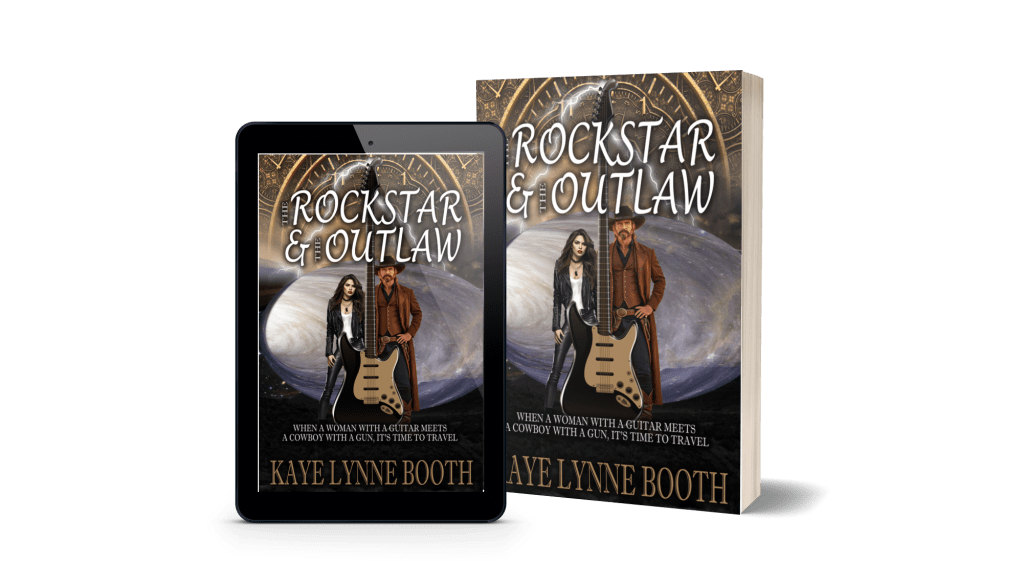
This post is sponsored by The Rock Star & The Outlaw and WordCrafter Press.
A time-traveler oversteps his boundaries in 1887. Things get out of hand quickly, and he is hanged, setting in motion a series of events from which there’s no turning back.
In 1887, LeRoy McAllister is a reluctant outlaw running from a posse with nowhere to go except to the future.
In 2025, Amaryllis Sanchez is a thrill-seeking rock star on the fast track, who killed her dealing boyfriend to save herself. Now, she’s running from the law and his drug stealing flunkies, and nowhere is safe.
LeRoy falls hard for the rock star, thinking he can save her by taking her back with him. But when they arrive in 1887, things turn crazy fast, and soon they’re running from both the outlaws and the posse, in peril once more.
They can’t go back to the future, so it looks like they’re stuck in the past. But either when, they must face forces that would either lock them up or see them dead.
Today, I am delighted to introduce poet, Maggie Watson. Maggie writes incredibly compelling poetry which you can find on her blog here: Ephemeral Encounters
Over to Maggie
Robbie, thank you so much for inviting me to be your guest on Treasuring Poetry. I loved your questions, and I hope everyone finds my answers, at the very least, a little interesting.
My favourite style of poetry to read is haiku.
Haiku poems are easy on the eye, yet they can evoke strong emotions in a few words. If a poem is too long, I lose interest halfway through unless it grabs me in the first couple of lines.
My favourite haiku is “A Poppy Blooms” by Katsushika Hokusai
I write, erase, rewrite
Erase again, and then
A poppy blooms.
The writer here uses the imagery of spring to describe his writing process.
I would use winter, as I sometimes find the whole writing process frustrating, especially when I am blocked, staring at a blank piece of paper (a barren landscape in winter).
My favourite style of writing poetry is freestyle. I am ashamed to say that I have not tried any other style. I did attempt a few haiku a while back, but not consistently. As I write, it comes from my heart and soul and usually reflects my mood or thoughts at that moment. I hope no one shoots me down in flames for saying this, but poetry should be as free as a bird set free, not confined or restricted to parameters.
My favourite poem written by me is one of the first I ever wrote in 2020, one of the better ones, I hasten to add. The Mask is also in my new Collection, Pieces of Me and is related to the subject matter.
She puts it on before she goes outside,
just in case anyone should see inside.
The darkness, the hurt, the years ripped and scarred with dirt.
No one knows.
No one cares.
They only see the Mask she wears.
She tries but can’t forget all the angry words and threats buried deep within and the pain that never seems to dim.
So she smiles, wears the Mask, and hopes that no one ever asks.
I had originally planned to call this collection Bouquets of Barbed Wire, however, it was a little too close to the title of a television programme that I remember my parents watching, so I decided against it.
Pieces of Me is another poem from another Collection, “In the Shadow of my Pen: A Collection of Poetry and Prose.
Not long after joining WordPress, David from A Skeptics Kaddish reblogged it. I then decided to write two other parts, all three are in the new Collection. The new collection is my story in poems about my abusive relationship. The main form of abuse was gaslighting, which is a gradual erosion of your spirit, piece by piece. By sharing my story, I hope to inspire others to do the same.
Thank you again Robbie for giving me this space.
It’s my pleasure, Maggie. Thank you for being a wonderful guest.
My review of Pieces of Me, A collection of poems by Maggie Watson
Picture caption: Cover of Pieces of Me by Maggie Watson
Pieces of Me is a collection of powerful poems written by a survivor of domestic abuse. The abuse the poet suffered was not physical or sexual, but rather mental. The kind that slowly and insidiously destroys your spirit.
The collection is divided into parts reflecting the various stages of the poet’s abuse from the early days of her marriage until she found the determination and courage to exit her destructive relationship.
Red light spells danger: These poems are about the warning signs that the poet was to young and inexperienced to understand. It is awful to think of a young person being lured into such a terrible set of circumstances like a fly into a spider web.
“I was blind. I did not see it. Too young, too naive. Red light spells danger, but I ignored the colour of your aura.” An extract from Red Lights Spell Danger
When I think back over my own youth, I sigh with relief that I never fell victim to such a man’s charms. It could have happened so easily as we are gullible and innocent when we are young.
Eggshells is the next section and eloquently describes living with a bully and gas lighter.
“A soul in pain, cute with a blade, the wound then stitched together with words unkind Spirit erased, replaced with doubts and fears. Thoughts of unworthiness grow among the stitches sown Drip, drip, they slowly infiltrate the mind.” Extract from Soul in Pain
I am becoming is an uplifting section where the poet describes her escape from the vicious clutches of her abuser and path towards reclaiming her life.
“Never be a lamb to their slaughter don’t let them watch you bleed It is they who are weak as they plant their seeds in your womb for the pleasure that they seek.”
A collection of strongly worded and evocative poems that make you walk the poet’s path hand-in-hand with her. With compassion comes understanding.
Did you know you can sponsor your favorite blog series or even a single post with an advertisement for your book? Stop by the WtbR Sponsor Page and let me advertise your book, or you can make a donation to Writing to be Read for as little as a cup of coffee, If you’d like to show your support for this author and WordCrafter Press.
___________________________
This segment of “Treasuring Poetry” is sponsored by WordCrafter Press and the Poetry Treasures series.
Are you noticing the book choices are themed? They are, to the extent possible, and next month is Christmas. I’ve got a treat in mind for you …
To Wake the Giant: A Novel of Pearl Harbor by Jeff Shaara
Picture caption: Cover of To Wake the Giant: A Novel of Pearl Habor featuring a ship in the harbour sinking and the ocean full of oil.
I have read a few of Jeff Shaara’s books and they have all be entertaining, informative, and well researched. My historical knowledge of both WW1 and WW2 is much greater as it relates to events in Europe and from a British, Dutch, French, and Polish perspective. I have been making a point of learning more about WW2 from an American perspective and this book did not disappoint. It provided copious detail about the events leading up to the Japanese attack on Pearl Harbour and the USA’s entrance into a war they fought on two fronts, in an interesting and relatable way.
The author tells his story through the eyes of three main characters, two of whom are real historical people and one who appears based on a real person but whose life would have been more fictionalised for purposes of this book. These main characters are as follows:
Cordell Hull is President Franklin D. Roosevelt’s Secretary of State and the real historical figure who tried to negotiate for continued peace with the Japanese through Ambassador Admiral Kichisaburo Nomura and Special Envoy, Saburo Kurusu. He failed and the Japanese launched their attack on Pearl Harbour on Sunday, 7 December 1941, marking the USA’s terrible and spectacular entrance into WW2. Cordell tells the story from the US government’s point of view and perspective.
Admiral Isoroku Yamamoto is the force behind the attack on Pearl Harbour. A real historical figure, he understood that war was inevitable and planned for an early victory and delay tactic for an American response by destroying the United States Pacific Fleet at Pearl Harbour in a preventive strike. Yamamoto believed that aviation was the way forward and opposed the building of the battleships, Yamoto and Mushashi, proposing investment in a strong Japanese arial force instead. Yamamoto tells the story from the Japanese perspective.
Seaman Tommy Biggs is an ordinary nineteen-year-old from a small town in Florida. Having finished school, he is faced with no job opportunities as a result of the Depression. When his best friend decides to join the Navy, Tommy is convinced to sign up too. Tommy has aspirations to work in the military hospital service and, after successfully completing boot camp, manages to get assigned to the USS Arizona as a hospital apprentice.
Seaman Biggs’ role in this book is the one that interested me the most as he represented the ordinary seaman. The reader learns about his life on the USS Arizona and the abuse he suffers at the hands of the military system which allowed senior personnel to bully junior staff. Through his eyes, I experienced daily life aboard the ship which was repetitive and boring, and off short time in the town. Most of the seamen spent their time ashore drinking cheap booze and making use of prostitutes. The boredom of the life on board ship, eroded alertness and interest and, in my opinion, helped set the stage for an attack that was such a complete and utter surprise.
This book is fascinating and shares details of the historical event in a heart rending and personable way. The descriptions of the event of the day were a shock to me, I didn’t know about the terrible fires and the oil the water that burned and horribly maimed many of the seamen. Having read this book, I understood the mindset of the American people and how the events that followed came to unfold the way they did.
If you are interested in books about and like to learn and expand your knowledge in a fascinating and compelling way, this book is for you.
Quotes from To Wake the Giant: A Novel of Pearl Harbor
“We believed we knew everything they were thinking. Those Magic intercepts made us feel invulnerable. No, a better word is cocky. Their diplomats are chatting back and forth with Tokyo about the weather or color of their new Cadillacs while their military put a plan together to kick us in the teeth. We thought we knew everything. We didn’t. -President Franklin Delano Roosevelt”
“All I propose is an attack that will paralyze the Americans, for perhaps six months. This attack is not about victory, about winning a war…It is about delaying them, keeping them back, damaging their military might and pride. -Admiral Isoroku Yamamoto”
“How were we taken so by surprise? Everything we have gone through at the State Department, for most of the past year has pointed unmistakably to Japanese aggression, to their deceitfulness, duplicity, and backdoor actions. We knew exactly what they were doing in Southeast Asia in the Netherlands East Indies in China. We had access to their diplomatic communications we have outstanding people in our intelligence offices, both army and navy. How could this have happened? -Former US Secretary of State, Cordell Hull”
THIS IS A SMASHING BOOK. IF YOU HAVEN’T READ IT, YOU REALLY MUST!
And now, on to the recipe. I made three dishes for this post and I loved them all. I decided to share the crabcakes recipe today and will keep the others for another post.
Robbie’s version of American Crabcakes
Picture caption: American crabcakes
Ingredients
2 large eggs
90 ml mayonnaise
2 Tbspns (30 ml) onions grated
120 ml lemon juice
10 ml dried tarragon
2 teaspoons red pepper flakes
500 grams uncooked crab meat
30 ml melted butter
1 1/2 cups (750 ml) crushed melba toast slices (you can use any plain savoury biscuit)
Method
Mix the eggs, mayonnaise, onions, lemon juice, tarragon and pepper flakes together in a mixing bowl. In a frying pan on a medium heat, cook the crabmeat in the butter. Add the crabmeat to the egg mixture and combine. Add the crushed melba toast and ensure everything is properly mixed together. I always use my hands.
Shape the mixture into cakes and fry in a little olive oil until nicely browned. We enjoyed the crabcakes with rice and Greek lemon roasted vegetables.
Picture caption: Plated crabcake
About Robbie Cheadle
South African author and illustrator, Robbie Cheadle, has written and illustrated seventeen children’s books, illustrated a further three children’s books, and written and illustrated three poetry books. Her work has also appeared in poetry and short story anthologies.
Robbie also has two novels and a collection of short stories published under the name of Roberta Eaton Cheadle and has horror, paranormal, and fantasy short stories featured in several anthologies under this name.
You can find Robbie Cheadle’s artwork, fondant and cake artwork, and all her books on her website here: https://www.robbiecheadle.co.za/
________________________________________
Want to be sure not to miss any of Robbie’s “Read and Cook” segments? Subscribe to Writing to be Read for e-mail notifications whenever new content is posted or follow WtbR on WordPress. If you found it interesting or entertaining, please share.
_________________________________________
This segment of “Read and Cook” with Robbie Cheadle is sponsored by The Women in the West Adventure Series and WordCrafter Press.
Today, I am delighted to welcome talented poet, Dawn Pisturino, as my October Treasuring Poetry guest. Dawn has a Halloween collection of micro poems which I’ve reviewed below.
What is your favourite style of poetry to read i.e. haiku, ballad, epic, freestyle, etc?
I like any style of poetry to read, but my favorite is the sonnet. William Shakespeare and Elizabeth Barrett Browning excelled in this art form that elevates the mind and captures the soul.
What is your favourite poem in your favourite style to read?
My favorite sonnet is the classic love poem by Elizabeth Barrett Browning from her collection, Sonnets from the Portuguese. “Portuguese” was Robert Browning’s pet name for his wife. Her sonnets are so expertly written and articulate such deep love and passion! They are delightful to read and reflect the nature of true romantic love between two people—the abiding love that most people dream about but rarely find.
Sonnet XLIII
How do I love thee? Let me count the ways.
I love thee to the depth and breadth and height
My soul can reach, when feeling out of sight
For the ends of Being and ideal Grace.
I love thee to the level of everyday’s
Most quiet need, by sun and candle-light.
I love thee freely, as men strive for Right;
I love thee purely, as they turn from Praise.
I love thee with the passion put to use
In my old griefs, and with my childhood’s faith.
I love thee with a love I seemed to lose
With my lost saints, – I love thee with the breath,
Smiles, tears, of all my life! – and, if God choose, 2
I shall but love thee better after death.
What is your favourite style of poetry to write? Why?
It’s easier to write in free verse and let the words and emotions flow. Writing in a tight form, like a sonnet or haiku, requires discipline, creativity, and a more extensive vocabulary.
What is your favourite of your own poems?
“Ariel’s Song” is my favorite poem because it was written for my daughter when she was quite small. It reflects our life when we lived in the San Francisco Bay Area.
Ariel’s Song
Ariel sings a lusty song
Of ships upon the sea,
And ere the night is very long,
Her spell is cast on me.
She spins a web of intrigue,
She tells a tale of woe;
And when the sun is waxing big,
I do not want to go, –
No, I do not want to go.
But she folds her wings together
And whispers my release;
For her stories last forever
And her songs will never cease.
Then, she rises from the window,
Winging high into the light,
And I’m left alone in shadow
As she disappears from sight.
Tell us a bit about your latest collection of haiku, Haiku for the Midnight Hour. What inspired you to write this collection? Is Halloween a favourite celebration of yours?
Halloween is one of my favorite holidays. I have fond childhood memories of picking fresh pumpkins from the garden, buying cider from the local apple stand, bobbing for apples at my best friend’s house, and going trick-or-treating with my little brother. Early in the year, I thought about writing a dark haiku collection and decided to finish it in time for Halloween. It was a fun project. I wrote twisted, dark limericks for Underneath the Juniper Tree that were quite popular with readers of all ages. I thought it would be fun to do the same with haiku. Purists may not like non-traditional haiku about monsters, aliens, demons, voodoo gods, and other dark themes, but I’m hoping it will be an interesting introduction to haiku for adults, teens, and young adults.
My review of Haiku for the Midnight Hour
Picture caption: Cover of Haiku for the Midnight Hour featuring a raven in a graveyard perched on a human skull
This is an entertaining collection of micro poems that revolve around the themes of Halloween and ghostly happenings. The micro poems are collected under common themes with headings, for example, Wee Folk and Crystal Balls.
While most of the micro poems deal with the paranormal, there are several that deal with Family and dark events in the home. On such example is Aunt Jane, as follows:
“aunt jane – locked away in the attic for years – rocks back and forth in chains”
The poems are clever and darkly humorous. Two of my favourites are as follows:
Jack and the Giant “jack climbed the beanstalk with curious intention a giant backlash”
Purgatory “purgatory and punishment clean souls tarnished by sinful doings”
If you enjoy clever and dark theme micro poems, this is the book for you.
Picture caption: Author photograph of Dawn Pisturino from Amazon.com
Dawn Pisturino is a retired nurse in Arizona whose international publishing credits include poems, short stories, and articles. Her first poetry book, Ariel’s Song: Published Poems, 1987 – 2023, debuted with five-star reviews. Her short chapbook, Lunar Gazing Haiku, became a #1 Amazon New Release in six categories. Her newest release, Haiku for the Midnight Hour, achieved #1 Amazon New Release status in three categories. She is a member of Mystery Writers of America, PEN America, and the Arizona Authors Association.
South African author and illustrator, Robbie Cheadle, has written and illustrated sixteen children’s books, illustrated a further three children’s books, and written and illustrated three poetry books. Her work has also appeared in poetry and short story anthologies.
Robbie also has two novels and a collection of short stories published under the name of Roberta Eaton Cheadle and has horror, paranormal, and fantasy short stories featured in several anthologies under this name.
You can find Robbie Cheadle’s artwork, fondant and cake artwork, and all her books on her website here: https://www.robbiecheadle.co.za/
________________________________________
Want to be sure not to miss any of Robbie’s “Treasuring Poetry” segments? Subscribe to Writing to be Read for e-mail notifications whenever new content is posted or follow WtbR on WordPress. If you found it interesting or entertaining, please share.
______________________________________
This segment of “Treasuring Poetry” is sponsored by WordCrafter Press and the Poetry Treasures series.
Today, I am delighted to welcome David from The Skeptic’s Kaddish blog and mastermind of the W3 poetry prompts as my September Treasuring Poetry guest.
What is your favourite style of poetry to read?
This is a tough question because I enjoy reading a wide range of poetry. However, I find myself most often moved by elegantly crafted free verse. When free verse is written in a way that feels truly poetic and draws me in, I’m deeply impressed. This isn’t always the case with free verse; anyone can break a series of words into lines, but not everyone can do so in a way that captivates.
What is your favourite poem in your favourite style to read?
These are fantastic questions, Robbie! Do most people actually have an answer for this one? It’s difficult to choose!
If I may, I’d like to share a poem I deeply enjoy, although I wouldn’t call it my absolute favorite. Honestly, I’m not sure I have a single favorite poem.
‘The Performers’
by Robert Hayden
Easily, almost matter-of-factly they step,
two minor Wallendas, with pail and squeegee along
the wintery ledge, hook their harness to the wall
and leaning back into a seven-story angle of space
begin washing the office windows. I
am up there too until straps break
and iron paper apple of iron I fall
through plate glass wind onto stalagmites below.
***
But I am safely at my desk again by the time
the hairline walkers, high-edge
balancers end their center-ring routine
and crawl inside. A rough day, I remark,
for such a risky business. Many thanks.
Thank you, sir, one of the men replies.
***
What I love most about this poem is how Hayden imagines himself as one of the window washers and then returns from his reverie in the second stanza. I find it incredibly relatable—both the relationship between the office worker and the cleaners, and the act of daydreaming. I also admire how Hayden captures the interaction between himself and the workers, imbuing them with both respect and dignity.
What is your favourite style of poetry to write? Why?
I’ve experimented with many different forms of poetry, but over the past few years, I’ve gravitated towards the sijo. Two reasons stand out:
First, I prefer writing shorter verses. I’m wary of longer poems because each additional word risks derailing my intent. Second, while the Korean sijo is technically a syllabic form, it also offers flexibility since the syllable count is ranged, not fixed.
What is your favourite of your own poems?
Oy vey!
My nine-year-old daughter often asks me what my favorite food or book is, and she gets frustrated when I tell her I like different things in different ways. That’s exactly how I feel about my own poems!
Given today’s political climate, I’ll share one that resonates with how I’ve been feeling recently. It’s a garland shadorma, a form created by Sylvia Cognac on WordPress. It consists of seven shadorma stanzas, with each of the first six stanzas borrowing one line from the final verse. Here it is:
Ancient homeland, or: Each hoary stone
it’s the flag, I know. that’s okay. I prefer to remain true to my identity despite the haters.
I know them. they’d prefer that I surrender my people’s claim to our ancient homeland to assuage their guilt.
our roots here predate all others… reject it if you will, but the truth speaks for itself through each hoary stone.
some fancy us colonizers, wish we’d leave… ‘see?’ they’d gloat, ‘their connection to this land was not authentic.’
our prayers for home never ceased. so, no. no- I won’t be another Jew who forsakes his forebears’ story.
our foes have convinced themselves that we can be scared away, but we’ve had just One Land in Jewish history.
it’s the flag- they’d prefer that I reject it; ‘see?’ they’d gloat, ‘another Jew who forsakes Jewish history.’
Tell us a bit about the posts you wrote after your father’s death. What inspired you to write them? What do they mean to you?
Looking back, as much as I dislike clichés, I realize I had no choice but to write those posts.
From the outset, I knew I would recite the Kaddish daily for my father after his unexpected death. No one else in my family was able or willing to take on that responsibility. Yet, after a few weeks, I began to feel that I was simply going through the motions. It felt empty, especially considering that I was performing a ritual in honor of a man who had no respect for rote religious practice.
It’s been over five years since I wrote the final post in that series, where I grappled with this very question. Everything I wrote back then remains true, but now I see that the act of writing those posts was also the beginning of my coming to terms with the truth about my faith. It marked the start of my acceptance that I don’t believe in a traditional concept of God, nor in the inherently enduring relevance of religious doctrine and ritual.
Although I finished the Kaddish series that year, I’ve never stopped contemplating its philosophical implications. They continue to challenge me daily. I once thought that returning to synagogue to recite the Kaddish would bring me closer to my religious community. Instead, it distanced me further because I didn’t simply perform the ritual—I transformed it into a journey of deep self-reflection.
This process ultimately led me to start writing poetry. Revisiting my love of creative writing—something I hadn’t engaged in since high school—reconnected me to my own critically thinking inner voice, a voice I hadn’t fully acknowledged before… And that’s the voice that now flows through my poetry.
My Kaddish Year
David has written a fascinating memoir in the form of 51 blog posts about his year of mourning following the passing of his father. This year is called Kaddish or The Mourner’s Kaddish in Judaism and involves saying a hymn of praises about God for your deceased parent. I know a bit about the Jewish faith because one of my good friends is Jewish. I have attended hair cutting ceremonies and bar mitsvahs as well as some other celebrations. I have not experienced anything to do with the passing of a family member so the Kaddish was new to me.
I am still busy reading David’s thought provoking posts about this period of his life but what I have read to date is very interesting. It has opened my eyes and understanding to a lot of Jewish traditions and religious rituals that I had no idea about and which I think are very worthwhile. The concept of worshipping for a whole year after the passing of a parent in the company of other community members who are experiencing exactly the same grief and anguish seems like a very helpful and supportive idea to me. My experience of death has been a lot of support for the griever up until the funeral and then very little. The griever is left along to manage as best he/she can at the worst time which is after the funeral is over and the permanency of the new circumstances sink in.
David’s post are not limited to the Kaddish, they expand into a lot of thought about life, death, religion, individuality in worship and believes and many other topics. It is worth reading and considering. Follow the link below to read the 51 post comprising David’s My Kaddish Year.
Picture caption: Author photograph of David Bogomolny
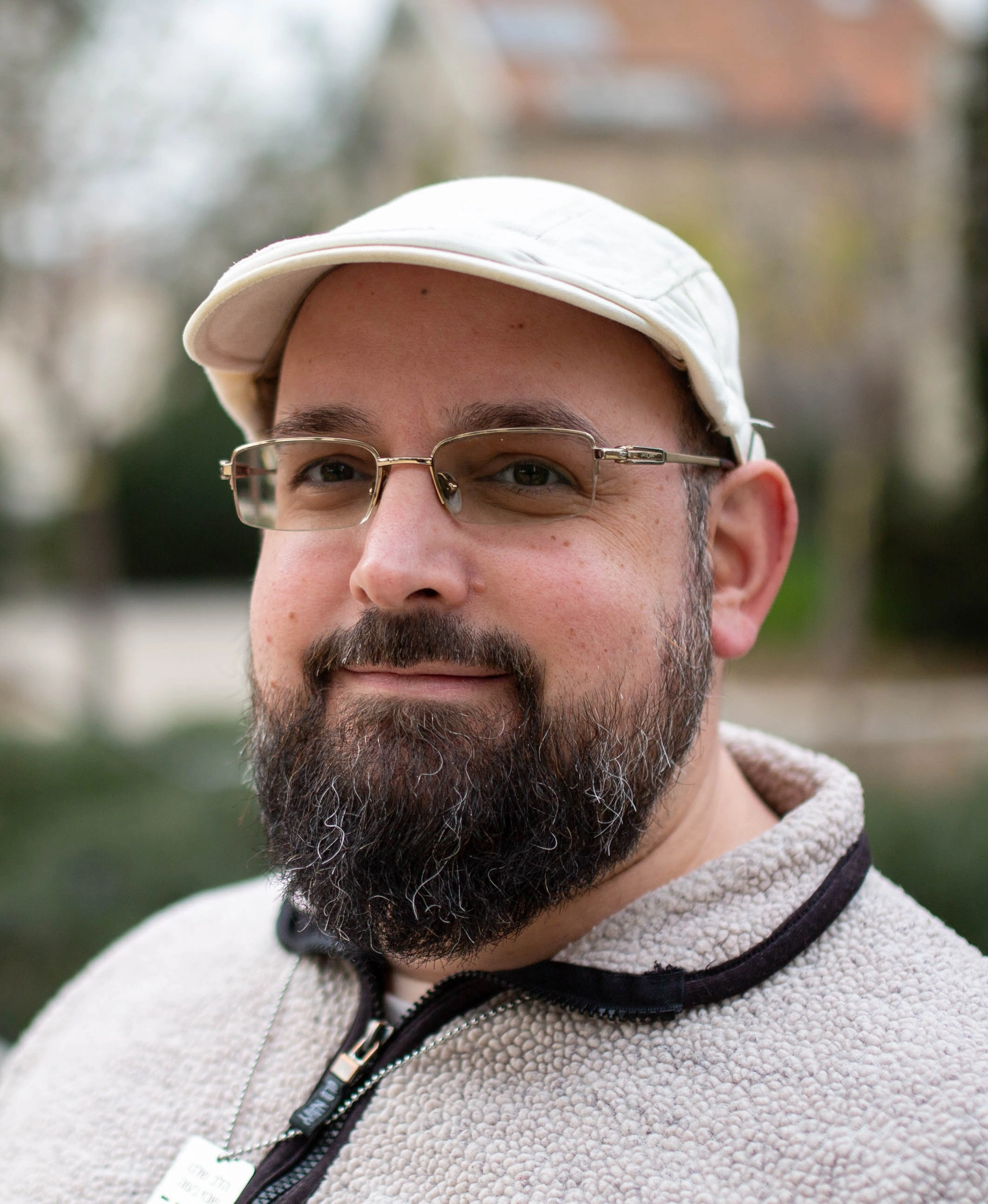
David Bogomolny was born in Jerusalem to parents who made Aliyah from the USSR in the mid-70’s. He grew up in America and returned to Israel as an adult. He works as a grant writer for the Jewish Agency for Israel. He and his wife and daughter live in Jerusalem.
He began writing the ‘Skeptic’s Kaddish for the Atheist’ in Jerusalem, Israel, 30 days after burying his father in South Brunswick, New Jersey, USA. His series was originally published on the Times of Israel blogs.
South African author and illustrator, Robbie Cheadle, has written and illustrated sixteen children’s books, illustrated a further three children’s books, and written and illustrated three poetry books. Her work has also appeared in poetry and short story anthologies.
Robbie also has two novels and a collection of short stories published under the name of Roberta Eaton Cheadle and has horror, paranormal, and fantasy short stories featured in several anthologies under this name.
You can find Robbie Cheadle’s artwork, fondant and cake artwork, and all her books on her website here: https://www.robbiecheadle.co.za/
________________________________________
Want to be sure not to miss any of Robbie’s “Treasuring Poetry” segments? Subscribe to Writing to be Read for e-mail notifications whenever new content is posted or follow WtbR on WordPress. If you found it interesting or entertaining, please share.
______________________________________
This segment of “Treasuring Poetry” is sponsored by WordCrafter Press and the Poetry Treasures series.