Weekly Writing Memo: Overcoming the Blank Page
Posted: August 17, 2016 Filed under: Books, Fiction, Publishing, Stories, Uncategorized, Weekly Writing Memo, Writing | Tags: Creative Fiction, creative process, Fiction, Screenwriting, Writing, writing advice, Writing Process 1 Comment Sometimes when it comes to writing, the hardest thing to overcome is the simplest. One such example of this is to overcome the intimidation of a blank page and to simply get started. Those first moments when you sit down in front of the page and tell yourself you’re going to write can be huge, and overwhelming. All sorts of thoughts can pass through your head that make putting the first words down on the page near impossible. Am I good enough? Do I have anything to say? How do I do this? Will anyone want to read it? Etc. These kinds of thoughts can stop your writing in its tracks before you even begin. Knowing how to overcome the blank page can be vital, and while there isn’t a method that works for everyone, there are several things that I find work well.
Free Write First
One of the easiest ways I find to get into writing is to simply allow myself to free write for a while. Even if I have a specific story idea in mind, I will sometimes think of my character or my setting and just write whatever comes to mind. It doesn’t always flow in a pretty way, or even make sense, but it does allow me to explore the characters or setting without restrictions and it gets me writing. Once I start putting words on the page, focusing them becomes easier. I also find that just getting started on the act of writing makes some of the tension around writing dissipate. So however you do it, get started by freewriting and getting words on the page. Even if you have to start by writing about your day or something, see where the freewriting takes you. Once you no longer have a blank page, it’s easier to focus on creating something cohesive that you can turn into a story.
Copy Someone Else
This is a method that has been around for a while, and was even used in the movie Finding Forrester. When you are just getting started writing and struggling, try grabbing a random book and copying down the first paragraph of it. As you are writing, let your mind wander, and when you’re comfortable, stop copying and start making it your own. Sometimes using someone else’s work to get you started writing can help you transition into your own work. Just remember to go back once you finish and to change the beginning so it is no longer copying the original author’s work. The key to this is that it gets words on the page, and in making what you write your own.
Make A Rough Outline
When I have a specific story idea in mind, but am struggling to get started, I find that writing down 3-5 bullet points of where I want the immediate section of story I’m working on to go helps. Usually I will do this when I start each chapter. I grab a piece of paper and jot down the 3-5 key moments of the chapter that form the arc of it, then when I write I have “goals” to write toward. It’s just enough outlining to keep the story focused while I’m writing, but not so much that people who hate outlining will feel like they’ve over planned anything.
It works for me because I prefer abbreviated outlines, and it allows me to discover how the characters get from one big moment to the next as I write. So take a few moments to create a small arc for what you want to write, and then let yourself write to those points. It’ll help you visualize what you’re planning to write, and it’ll give you points in the story to write toward. Just try not to make your bullet points too broad, or you can end up feeling lost as to where to start again.
Try a Different Medium
One of the last things I try when I’m struggling to write is to switch mediums. Sometimes I find that I just can’t write a certain story at the computer, and instead I end up writing with a notepad and pen. It seems silly, but just switching mediums like that can actually help get you started. Sometimes I think the notepad works better than the computer when I’m struggling because the notepad feels less permanent and professional. I’m just jotting down ideas! Not writing for real! Which isn’t true at all, but it feels that way. So allow yourself to try a different medium and see if it changes anything. At the very least, switching to something like a notepad where you can do things by hand can allow you to doodle and jot ideas to brainstorm while you are working on getting to the real writing. Which can be just as productive.
Final Notes:
The final thing to remember if you are stuck on the white page is that you don’t have to start by writing right away. If writing simply isn’t working, trying outlining or researching or brainstorming for your story. If you do those things, you’ll still be working on your story in some way, and maybe it’ll help you feel more confident so you can get started. Just remember, at some point you have to stop doing these things and get to the writing, so don’t procrastinate too long!
Share this:

Weekly Writing Memo: A Matter of Time
Posted: August 10, 2016 Filed under: Fiction, Screenwriting, Uncategorized, Weekly Writing Memo, Writing, Writing Tips | Tags: Fiction, Writing, Writing Process 1 Comment Something that almost every story deals with is the passing of time. It’s natural, and to be expected. What every writer needs to focus on is how to show the passing of time, and when to skip time in a story. These two things can be a huge pitfall in a story. If you tell too much of the story and don’t skip time when you need to, then the story can feel sluggish and boring. If you skip too much time the audience can feel like they’re missing things, and you can take away from the tension of the action. There’s a careful balance to time in every story, so the key is finding it for yours.
When to Skip Time
In general, you should skip time when nothing is happening in the story. Any time you have huge chunks of time passing with no conflict going on, you need to get the story moving and skip ahead if possible. There should always be some form of conflict going on in your story, so whenever it’s lacking you’ve either missed a plotline, started in the wrong place, or need to find a way to skip ahead. Look at this time period and see what happens in it that you absolutely need to show your reader, then find a way to show it elsewhere or to compress it down.
Sometimes you can also skip time when you are telling a story in a nonlinear way. Some stories work better if you can jump ahead and then go back to a flashback or something, so look at your conflict and see if it is best told linearly, or if skipping around in time can help you create more tension within the story. You want to maximize the tension and conflict, so if you can do this by telling the story in a new way, then you should try.
How to Skip Time
There are endless stories to use as reference for skipping time (Time Traveler’s Wife; Looper; Lord of the Rings). One of the key things to remember when skipping time is that you need to find a way to show that time has passed. In films, this is usually done with visual elements such as scenery changes, characters aging, seasons changing, etc. In fiction, this can be shown through some of those elements as well, but you can also use words that help show this. Mention the time passing, or use cueing phrases that help guide the reader (Ex – Months later; Kiera was 16 when she finally returned to the village…). Whatever you do, always find a way to show the time change unless you have a reason not to.
Sometimes in stories the writer will skip time by using a montage to show the key moments that happen during the transition, ending with the characters at the point in time where the story continues. Other times, the writer will just skip ahead and start the story at the point in the future where they want it to be. The method to use depends on what happens during the time skip. If something vital happens, then try to find a way to show it either in a flashback later, or before skipping time. As long as there is a key story element, then it needs to be shown. So figure out what matters to the story, and where the conflict is, and you’ll know which elements to show and which to skip.
Final Notes
Obviously there are a lot of moments in a story where exciting action isn’t happening that are still important, so don’t think that you need to skip all these. Those moments can still have character development and conflict. Internal conflict is just as important as external conflict, so make sure you aren’t skipping all that. If you find yourself skipping a lot of time in your story, it might also be time to look at if you’re starting in the right place. If you start your story later, can you still show all the information that you’re skipping over in some way? Usually the answer is yes. Whatever you decide, just remember that you can always ask for a second opinion if needed. Overall, just remember to consider the conflict, the character development, and how your story will change if you skip time. If you do those three things, you should be able to figure out what you need to do.
Share this:

“Keepers of the Forest” Plot Draws Readers In
Posted: August 5, 2016 Filed under: Book Review, Books, Fiction, Uncategorized | Tags: Book Review, Books, Creative Fiction, Fiction, James McNally, Keepers of the Forest 3 Comments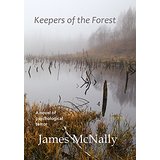
Keepers of the Forest, by James McNally has a good plot and interesting characters. When Chris is chosen by Crispus Attuck Brown to be the Chosen One, a summer spent with Scott and Chris’ aunt and uncle takes an unexpected turn, and Chris’ swim instructor, Brian is the only who realizes something is amiss. Brian must find a way to save the two brothers and foil Brown’s evil plot to destroy the world.
Brian is a young man who is afraid of commitment and perhaps drinks a little too much. He befriends a young boy, Chris, who is a sweet kid that falls into unfortunate circumstance and becomes the victim of an evil plot. Other players on the good guy’s team are Chris’s older brother, Scott, an angry teen who works through his own issues and story arc, and Brian’s bartender friend, Nancy who has her stuff together and acts as support for Brian as he works through his personal issues and becomes the hero. One of the most colorful characters unfortunately, has only a supporting role and isn’t really involved in any of the action. Nancy’s aunt, Leah, the balding swim instructor with cancer is a strong character, and I would have liked to see more of her.
The villain, Crispus Attuck Brown is an interesting chap, who believes he can bring about the second coming of the Dryad, and he’s gathering the Keepers of the Forest to that end. I think if we’d seen more of how bad he is sooner, it would’ve helped us to fear him more. At his side is an ex-hooker named Sherry, who is a misguided pawn in Brown’s game until she removes the blinders and realizes what is really going on around her. The big guy, Mason, is the muscle for the operation. He is feared because of his size, but is shown to have a soft heart. The crew is rounded out by two gay ex-cons, Ted and Vincent, who are cold blooded killers, who kill because they like it and almost seem more to be feared than Brown.
I had a couple of problems with Keepers of the Forest. First, McNally does a bit of head hopping, which makes it confusing to the reader as to whose P.O.V. we are in at times. And second, the characters all have such clear insight into their own motivations that they can self-analyze and express exactly what they are feeling and their motivations verbally. There isn’t a lot of subtext, and real people just don’t do that.
***************************SPOILER ALERT********************************
The other thing that just didn’t sit quite right with me, was the fact that the good guys save the day, but they are lead to the solution by Sherry, after she comes to the realization that her beliefs in Brown are faulty. Brian becomes a passive protagonist, in a way, because although he has a part in saving the boys, the rescue is led by a member of the opposing side, turned defector and he just does what he is told. For me, all the characters have the potential to be really great characters, but most of them fall short of what they could be.
I give Keepers of the Forest three quills. 
Share this:

Weekly Writing Memo: Writing Truth
Posted: August 3, 2016 Filed under: Screenwriting, Uncategorized, Weekly Writing Memo, Writing, Writing Tips | Tags: Books, Fiction, Screenwriting, Writing, Writing Process Leave a comment One of the things that is distinct about great writing is that it delivers a truth. This doesn’t mean the narrator or characters have to tell the truth, but it does mean that the writing has to be true to the story. Even if your characters or narrators are liars, their actions and their words have to be true to who they are. There are three main ways stories tell the truth:
Truth of Story
For a story to read realistic, it has to stay true to itself unless the writer has a very big reason to write it another way. However the events of your story happen, they have to be the true way they would happen and not forced for the writer’s preference. For example, in the Harry Potter novels, people had to die whether JK Rowling liked it or not. If she let everyone survive through all of the conflict within the novels she would be lying to her audience for the sake of a happy ending. In wars, people die, and without that death the story is a lie.
Whatever type of story you are writing, you have to stay true to the type of story. People die, couples break up, families are torn apart, and bad things happen. You can’t protect your characters and your audience by lying to them. If you do, the story will lose its depth and worth, and the audience will know it.
Truth of Character
Characters in stories have to stay true to who they are. If they behave out of character for the sake of progressing the plot, then the character will often lose the audience. The audience is not dumb and they know when the writer is manipulating a character for the sake of the plot. You can’t force your characters to go where you want them to. Every action has to be justified by your characters motivations. By staying true to your characters, you are strengthening your plot and your story, and your audience will buy into your story more.
Big Truths
Finally, every story has a big truth to it. In Harry Potter the truth was that people die, good has to make sacrifices to defeat evil, and that evil can be an alluring force that turns good people bad. I’m sure there are others, but these are some of the big truths and themes that the Harry Potter stories bring out in their telling. So what are your story’s truths? What is your story saying about the world? Whatever it is, make sure it is truth and not wishful thinking or a fairytale unless you are doing it deliberately.
A lot of children’s stories will have morals that aren’t always true, such as “good always triumphs.” These kinds of stories when given to adult audiences don’t work as well because adults generally know that they aren’t true for how the world works. By telling the truth about the world to your audience, you are creating a story with more depth. Of course, what is true for some is not true for all, but write the truth the best you can.
The purpose of all this is to say that you can’t lie to your audience. Your audience is buying into your story, and if you lie to them they will know and they will almost always be disappointed. You can have characters and narrators that lie, but you the writer cannot lie. Whatever you do, do it with purpose, and with truth, and if you do that, your story will be the better for it.
Robin Conley offers great writing advice most Wednesdays on Writing to be Read. If you just can’t wait until next week to find out more, you can pop into her blog, Author the World, for more tips, or a weekly writing prompt.
Share this:

Know Your Writing Process
Posted: August 1, 2016 Filed under: Books, Writing | Tags: Delilah, Fiction, Playground for the Gods, Writing, Writing Process Leave a comment
There is no one writing process that’s right. Writers all use different methods to get to the same point – a finished manuscript of a publishable quality. Some writers binge write. I had a professor who writes this way. She locks herself in a room and puts out a do not disturb sign, then writes until she’s given birth to the story. She claims she doesn’t stop to eat, sleep or shower, and when she comes out of the room, she may seem a little crazy, but with full manuscript in hand.
In one of my Facebook groups, members invite one another to join in writing sprints, where they start writing and keep going non-stop for a designated amount of time. The duration that I have seen is mostly about twenty minutes, but this varies depending on which member extends the invitation. This is kind of a nifty way to write, using the encouragement of others to keep you on track writing, but it’s not for me. I work on multiple projects concurrently and I can’t wait for a group sprint, or limit myself by one. As a graduate student, I had a professor who liked to give us timed free-writes, which was okay except that if I wasn’t finished when the time ran out, I didn’t want to stop. I wanted to finish expressing my complete thought or idea. Once I’m on a roll, I want to keep going. I can sprint when I have to, but I think I’m more of a long distance writer.
 In another of my Facebook groups, I saw a post where a writer outlined his very structured writing process. In his outline, he showed how he wrote chapters one through five and then sent them off to his alpha readers, then rewrote those chapters using their feedback before proceeding forward. My comment to him was that even though I liked his structured approach, I just can’t write that way.
Once I start writing, I listen to my characters, and keep writing until the story is told. I’m not as emphatic as my professor, I do take life breaks, but even then, the story is swimming around in my head while I tend to other tasks which life deems necessary. That’s what I mean when I say I’m a long distance writer. Once the idea takes hold, I jump in and just keep going until I’ve expended all of my creative energy. And I write fast. I once wrote the first draft for a thirty thousand word romance story in nine days. It wasn’t perfect. It was a first draft. But the story was all there, waiting for revisions.
But there are drawbacks to this method. Only when the first draft is complete, do I send it off to alpha readers. After receiving their feedback I revise the story, sometimes in its entirety. With Delilah, once I got the initial feedback from my alpha readers, I utilized said feedback to do revisions.
On the next read-through I decided that there just wasn’t enough at stake to make readers care whether Delilah would be successful in her quest. So, I went back and wrote in a teen girl, Sarah, and placed her in Delilah’s care at the beginning of the story. Then I rewrote the scenes that came after that, because everything changed once Sarah was in the picture, and we’re talking major revisions. But they added to Delilah’s quest for revenge, a quest to save Sarah, which raised the stakes, hopefully causing readers to want Delilah to succeed.
I’m also one of those writers who, despite all the warnings from my professors about editing as you write, does it anyway. I correct my typos and misspellings as I go, so after the first few chapters, where the story is set in motion, most of the revisions necessary were mostly minor tweaks, but they were required throughout the story. It necessitated going over it with my editor’s eye and reading it aloud.
Once the second draft was complete, I did a read-through before sending it off for feedback once more. About half-way through, I came to a part where the story was dragging for me. Now when your own writing drags for you, that’s not a good thing. Something needed to happen to keep my readers, (and myself), awake and interested. So, I rewrote the scene and had Delilah run into one of the outlaws she is seeking, resulting in a shoot-out that kills off a character that had previously had a big role later in the story. It solved the boredom problem for that scene, but required a rewrite of the rest of the story, because things could no longer go down that way I had originally written it.
 You can see the drawback to my writing process. Waiting until the first draft is finished can entail some major rewrites. Sending it off for feedback a small chunk at a time, and then revising bit by bit seems like it might be a better process to practice, but I can’t get my mind to shut down once the story starts flowing. It’s all got to come out. That’s just how I do it.
Delilah is an example of my normal writing process. I took that first excerpt and wrote. I’m not a plotter. I get an idea in my head and let the words fly to the page. But in my M.F.A. program, they tried to turn me into a plotter. For my thesis novel, Playground for the Gods: The Great Primordial Battle, I was required to make an outline before I started writing. In truth, I needed to take that approach with my thesis, because my original science fantasy idea is broad enough to encompass four novels, and in fact, my thesis turned into the first novel with plans for three other novels to follow. My original idea will become the third novel in the series. I needed two books worth of backstory to tell my tale. But that much information, that much plot, that much story needs to be outlined. You can’t just blunder along blindly writing whatever comes into your head, because what you write at this point must fit in, not only with this story, but with the other three in the series. There are a lot of writers, and many of my M.F.A. cohorts, who prefer to outline and plot before writing.
With my thesis novel, I did send chunks off for feedback instead of waiting for the whole story. There was just too much story to fill in and I needed to know it was all there and flowed smoothly. It’s a good thing I did, too, because I am still waiting on the feedback from my thesis advisor. Quite frankly, I’ve been considering pulling this one back out and doing some revising, even now.
 I know how my writing process works, but it’s not the only way, or maybe even the best way. It’s a way that works for me.
What is your writing process? Are you a sprinter? A long distance writer? A procrastinator, who puts the writing off until right before deadline and then crams to get it done? A plotter, who outlines and plots the whole story before ever putting down the first word?
Like this post? Subscribe to Writing to be Read for e-mail notifications whenever new content is posted.
Share this:

2016 Write the Rockies Conference Growing with Success
Posted: July 26, 2016 Filed under: Writing | Tags: Alan Wertes, Broughton Coburn, Creative Fiction, Fiction, J.D. Payne, J.S. Mayank, James Gunn, Michael Brody, Poetry, Publishing, Rebecca McEwen, Review, Robin Wayne Bailey, Russell Davis, Screenwriting, Western State Colorado University, Writing, Writing Conference, Writing the Rockies Confernce, Writing to be Read 1 Comment

When I attended my first Writing the Rockies Conference at Western State Colorado University, back in 2012, it was a three day event, with panels and workshops on genre fiction, screenwriting, and poetry. It had a couple of publishing workshops, too, but the poetry symposium was a major event. You could sign up for critiques and pitch sessions with small presses and agents, and they served delicious sack lunches made by Western State’s great kitchen staff. Every year since, the conference has gotten bigger, including more and more great events for authors, poets, screenwriters and publishers future.
The 2016 Writing the Rockies Conference has continued in that growth trend. Director of Western State’s M.F.A. in Creative Writing program and head organizer of the conference, David J. Rothman tells us that Writing the Rockies is now the most diverse of all college hosted writing conferences, boasting writing workshops, keynotes and panels, 3-day intensive workshops and critical seminars in five individual concentrations: genre fiction, screenwriting, creative nonfiction, publishing, in addition to their wonderful poetry symposium. It is now five day event, which takes advantage of inspirational surroundings of the beautiful Gunnison Valley, with one whole day for group hikes in the beautiful area surrounding near-by Crested Butte. Gone are the sack lunches of the past, but the food is still good, with Western’s kitchen staff providing both breakfast and lunch for conference attendees.
The conference is so packed full of wonderful writing events and opportunities that no one can do them all. Aspiring writers must pick and choose those events that will be most beneficial to them. I had the pleasure of attending events in all five concentrations, creating a well-rounded educational experience, from which I learned a lot.
I started off with the genre fiction panel, which featured three former presidents of the Science Fiction & Fantasy Writers of America – authors James Gunn, Robin Wayne Bailey and Russell Davis gave a grand overview of the history of SFWA and the science fiction genre. I was also privileged to attend the screenwriting panel, featuring screenwriters for both feature films and television – J.D. Payne, Alan Wartes and J.S. Mayank, where we discussed how to take notes on your screenplay or series, who to take notes from, and ways to politely disregard notes that are detrimental to the structure of your script.
Unfortunately, I was unable to attend Conference Keynote, by George Sibley, or the Poetry Keynote, by Julie Kane on Wednesday evening. If they were anywhere near the quality and usefulness of the four Keynotes I did hear, then I have truly missed out.

Fulcrum Press Editor Rebecca McEwen
Publishing Keynote Speaker
The Publishing Keynote was given by Fulcrum Press editor, Rebecca McEwen, who talked about the value of small presses and when you might want to consider submitting press that is not among the big five. According to McEwen, there are currently 30 small independent publishers in Colorado.

Author Robin Wayne Bailey
Genre Fiction Keynote Speaker
The Creative Nonfiction Keynote was delivered by author Broughton Coburn, who has created story from many of the events in his extraordinary life and turned them into bestselling books. His touching story of bringing an elderly Indian woman to America with him, brought smiles to all faces in the audience. He talked about finding common threads in your true-life story which can then be used to tie things together as you put the story on the page.
Author Broughton Coburn
Creative Nonfiction Keynote Speaker
Author Robin Wayne Bailey, gave an inspiring Genre Fiction Keynote on the importance of life experience in writing, and how moving writing can be, coming near to tears himself as he spoke of times past as he recounted parts of his own personal history for emphasis. And, there were chuckles from the audience throughout screenwriter J.D. Payne’s Screenwriting Keynote on the journey to becoming a screenwriter, ways to handle the criticism and rejection that are so very prominent in the Industry, and how to take notes, another big part of writing for television or film.

Screenwriter J.D. Payne
Screenwriting Keynote Speaker
I attended a genre fiction workshop and two screenwriting workshops, since these are my major concentrations. The first screenwriting workshop, led by screenwriter, Mary Beth Fielder, was on the transformational arc that every story and every major character needs to have. She talked about looking at the subtext to indicate what’s really going on in each scene, and how to use basic human needs to determine what your characters goals are.
The second screenwriting workshop, on creating conflict, was led by screenwriter J.S. Mayank, pointing out that in story we do the opposite of what we do in real life. In real life, we tend to avoid conflict, while in story we invite it. To provide examples of scenes with well-crafted conflict, video clips from several different movies were shown, some that made us laugh, others that made us want to cry.
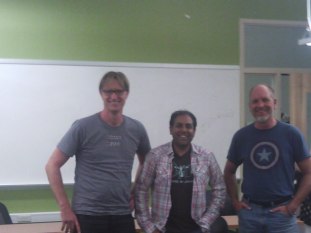
J.D. Payne, J. S. Mayank, and Alan Wartse
Screenwriting Panel at the
2016 Writing the Rockies Conference
The genre fiction workshop, on creating complex female characters, led by women’s fiction author Candace Nadon. She talked about the female stereotypes used in creating female characters, and ways to recognize and avoid them in your writing. Most of her advice for creating strong female characters, was in the form of what not to do, proving that there is a fine line to balance strength and feminity.
Screenwriter and co-organizer of the Crested Butte Film Festival, Michael Body was both educational and entertaining in his screening lecture. He used actual clips submitted to the festival for consideration. Two of the clips were humorous, but the other one was just plain bad, illustrating well the many reasons films do, or don’t get into film festivals. The bad one was so bad that the audience elected not to finish watching it.

Screenwriter Michael Brody
Co-Founder of The Crested Butte Film Festival
Along with everything else, the talent featured at the Writing the Rockies Conference also grows each year. In addition to the genre fiction and screenwriting names above, this year’s poetry symposium featured were renowned poets and critics, such as A.M. Juster, Jan Schreiber, John Talbot, Bruce Bennett, Christopher Norris, Emily Grosholz, Thomas Cable, Paul Edwards, Natalie Gerber, Niles Ritter, Frederick Turner, Richard Wakefield, and Robert Maranto.
Of the thirty publishers in Colorado today, at least seven were represented at the 2016 Writing the Rockies Conference: Conundrum Press Publisher, Caleb Seeling; Fulcrum Press editor, Rebecca McEwen; Slant News editor, Kyle Harvey; Dave Trendler, of VeloPress; Fred Ramey of Unbridled Books; Lithic Press Publisher, Danny Rosen; and Senior Acquisitions Editor of NavPress, David Zimmerman.
Creative Nonfiction is a new concentration which was added this year, featuring award-winning author, Kase Johnstun; essayist, Kelsey Bennett; and nature writer, Alissa Johnson. Genre fiction authors not mentioned above included Clay Reynolds; children’s author, Stacia Deutsch; and speculative fiction author, Michaela Roessner.
The 2016 Writing the Rockies Conference appeared to be a great success. It holds many opportunities for aspiring writers, and 2017 promises to have e1ven more, becoming larger and more prestigious than ever before. I anticipate 2017 conference attendees will have quite a treat in store.
Like this post? Subscribe to Writing to be Read for e-mail notifications whenever new content is posted.
Share this:

Weekly Writing Memo: Setting Writing Prompt
Posted: July 21, 2016 Filed under: Fiction, Screenwriting, Uncategorized, Weekly Writing Memo, Writing, Writing Tips | Tags: Creative Fiction, creative process, Fiction, Screenwriting, Writing, Writing Process 1 Comment[Sorry for the delay this week, there was a glitch in posting yesterday.]
 I’m off in Gunnison, Colorado this week for a writing conference at my old graduate school, Western State Colorado University. For me, a writing conference is a chance to talk writing and get inspired, so I thought I’d post a writing prompt this week to spread some of the inspiration.
Since I’m in a place that is known for its beautiful scenic views, I thought I’d go with a writing prompt that is all about starting with setting to find your story. Try to use the prompt to help visualize the setting, and see where it takes you for creating a story.
A Tree Grows in the Desert
A tree grows alone in the desert. What kind of tree is it? What does it look like?
Describe every detail you can think of. What do those details tell us about the tree?
How does it grow there?
Who discovers it? Someone has to come across it and be our narrator. So who? Why are they in the desert? How did they find the tree?
Who are they?
What does the tree mean to them? Do they interact with the tree somehow?
Is this all a dream?
Or a vision?
A miracle?
A mirage?
Don’t just have this character be at the tree, give them a reason, a purpose. Why are they there? Why is the tree there? How do the tree and the character impact each other? Where do they go once they part?
This prompt is about character and setting, since they are the two core parts of the prompt. It’s also about using mysterious elements to help draw the plot out. If there is a mystery element to be investigated, and a character to investigate it, then there is a plot in there somewhere. So explore the tree, develop the character who interacts with the tree, and see where the story takes you.
Next week I’ll be back with my usual post, but for now, happy writing! If you want to play with this prompt, you can try to set it in other unusual places if you want (the ocean, a grocery store, etc). The key is, that the tree is somewhere unusual, and the story comes from someone interacting and exploring the tree and why it is there. So explore, have fun, and get writing!
Robin Conley offers great writing advice most Wednesdays on Writing to be Read. If you just can’t wait until next week to find out more, you can pop into her blog, Author the World, for more tips, or a weekly writing prompt.
Share this:

Weekly Writing Memo: Building a Story
Posted: June 29, 2016 Filed under: Fiction, Screenwriting, Stories, Uncategorized, Weekly Writing Memo, Writing, Writing Tips | Tags: Creative Fiction, Fiction, Writing, writing advice, Writing Process Leave a comment Stories are essentially a million little pieces intertwined in such a way that they relay a picture from the writer’s head into the mind of the reader. Specifically, every scene, and every story, is made up of a series of arcs (character arcs, plot arcs, genre arcs, etc) that combine to tell the story on various levels. In order for the arcs to work, they have to be carefully constructed and woven together so that they support each other and so the story forms a cohesive whole.
One of the most important parts of building a story is the construction. Each of the various arcs within the story have to start and end at the correct place, and have to be balanced with the other elements. If any arc or element is out of place, the entire story can falter or fail completely. There are dozens or more elements and arcs within a story to consider, but the main arcs I’m going to focus on are character, plot, and genre. These three are generally the core of every story, and if they’re right, the other elements are more likely to be right.
Character
The general rule in any story is that every character has to have an arc of their own, not just in the story as a whole, but in every single scene of the story. At the start of every scene, each character present should have two or more goals. The first goal is their overarching goal, and the second is their immediate goal. For example, in a scene where a man wants to get his daughter an ice cream, his first goal could be a larger goal that carries on throughout the story of trying to make his daughter happy, while his second goal is one that is the focus of the scene such as simply trying to buy an ice cream cone.
These goals are what drive each scene forward, and are what drive the character’s every action. A goal can change in the middle of the scene, but no matter what a character has to have a goal. The character arcs in every scene are generally caused by how they succeed or fail at achieving their goal. In the ice cream example, the character’s arc could be something like:
On the scene level: the character starts out hopeful that he will be able to buy the ice cream, he hits a peak in line when he is about to achieve his goal, but then when he gets to the front and finds out that they are out of the ice cream his daughter wants his hope disappears and he is in a much worse position than he started.
On the story level, this would be a minor arc in his larger development. This would be the arc where the father goes from trying to find his daughter’s happiness in material things to maybe looking deeper to find something more that can truly make her happy. The scene won’t resolve the problem, but it would be the first step of the father solving the problem and help him head toward the path where he will find the solution.
As shown above, by looking at and understanding the goals you can find the character’s arc of emotional and mental development in every scene, and in the story as a whole.
Plot
Each goal itself should be a part of the plot, and should have some form of arc as well. Some goals, like the larger story goals, will be made up of a bunch of mini-arcs, while the minor goals will just have a minor arc of their own. The goals make up the plot because they are what drive the action and create conflict within the story. They’re what the character wants and is constantly stopped from getting one way or another.
For each goal, there should be an arc of how it develops and changes throughout each scene and the story. Goals in general will be made up of some mix of the basic format of: conception of goal, plan to achieve the goal, enacting the plan, and failure or success. The outcome either leads to a new goal, or a new plan to achieve the new goal. Each arc of the plot can lead to new plots and goals depending on whether the character is successful or not, and whether the success/failure of the goal leads to new problems or new goals.
For example, in the ice cream story, the dad doesn’t get the ice cream so it leads to a new goal and new problem for the plot. He either has to find somewhere else to get the ice cream his daughter desperately wants, or he has to find a new way to make her happy.
Genre
Many people don’t consider that there are genre arcs within stories, but in there are almost always some form of genre arcs that happen in genre stories. For example, most romance stories involve some form of meeting of the potential couple, a period of interactions between the couple culminating in some form of acknowledgement of feelings, the breaking point where they are thrown apart, and then the reunion. This varies, of course, depending on the different types of romance stories, but being aware of the genre arc and knowing how to use them can help you create a certain flow within your story that readers find natural. It can also help you make sure your plots are working well for the genre you are using.
Even if you don’t go with a typical genre arc for your story, you should consider how the genre evolves throughout your story. For example, in horror there should be a general increase in the horror as the story develops, culminating in the final climactic moment toward the end of your story. If you don’t have an arc of the horror elements as well as the character and plot elements, then the horror part of your story could fall flat. So always consider the genre you are writing in, and think of how that influences your plot and character.
Whatever you are writing, there are many levels of story you are telling and each element should really have an arc of its own, even if it’s a minor one. Some arcs may not be super important or even that interesting, but it’s how they fit in with the other larger and more important elements that matter. Each element should be supporting the larger story as a whole. If you find a part of your story that isn’t doing its part to support the story, remove it. You’re building something where every part needs to do its job, so make every element count.
Robin Conley offers great writing advice most Wednesdays on Writing to be Read. If you just can’t wait until next week to find out more, you can pop into her blog, Author the World, for more tips, or a weekly writing prompt.
Share this:

Acceptance or Rejection – Which do You Prefer?
Posted: June 27, 2016 Filed under: Commentary, Fiction, Opinion, Promotion, Publishing, Western, Writing | Tags: Acceptance, Creative Fiction, Fiction, Flash Fiction, I Had to Do It, Kaye Lynne Booth, Rejection, Western, Writing 1 Comment
 Back in May, I wrote a post about dealing with the rejection by a publisher of Delilah. My response to the rejection was to submit my novel elsewhere and keep hoping it will get picked up. More recently, I did a post on hybrid publishers, as I explored the concept after I had a hybrid publisher request my full manuscript. Unfortunately, they passed on Delilah, too. It is out to yet another publisher now.
I could go into another post about rejections. Lord knows, I’ve gotten plenty. But I’ve always been one to see the glass half-full side, rather than half-empty, focusing on the positive side to everything, so I think I’d rather talk today about acceptances. I don’t think anyone will disagree when I say acceptances are much better than rejections. You don’t have to be a writer to figure that one out.
You don’t get them as often as rejections, but they’re a lot more satisfying. But there’s a reason I want to write a post on acceptances. If you follow me on Facebook, or Twitter, or Google+, you may have seen my very recent post announcing that my flash fiction western story, I Had to Do It, has been picked up by Zetetic: A Record of Unusual Inquiry.
It’s true this isn’t a big paying publication. I’m certainly not going to get rich from this one little 850 word story. Flash fiction never pays a lot. There’s simply not enough words to make the pennies add up to much, even with higher paying publications. But, I was still elated when I received the acceptance, because my story found a home and people will now read it, and because it is still one more publishing credit for me. I can’t explain the rushing feeling of excitement and pride that small note from the editors brought me. I think most of all, it was thrilling to know that someone else really liked my writing. It was a affirmation of my own belief that my writing really is pretty good.
That probably sounds silly to those who have not yet received an acceptance. (Never fear. It will come.) But we writers are an odd lot, and we are filled with fears and self-doubt. Filled with it. Most of the time we can keep these elements of our inner beings at bay by simply pecking away at the keyboard or filling up sheets of notebook paper, but every once in a while we let our guards down and that’s when they strike. The fear and self-doubt simmer in us, just down below the surface, until they see an opportunity, a weakness, and then they reach up and grab a handful of us and don’t let go.
I think just about every writer worries that the only person in the whole world that really thinks their writing is good is themselves. Friends and family don’t count because they may be saying they like it so as not to hurt your feelings. When you receive an acceptance, any acceptance, it tells you other people do like your writing, and motivates you to get busy writing more.
It’s a good feeling. One I think every writer needs to experience. It can’t happen unless you submit relentlessly and write, write, write. That’s my advice. Write your heart out and then submit like crazy, and never, ever give up. The notes that say, “yes”, make it worth surviving all the ones that said, “no”. So what are you waiting for? Get writing!
Like this post? Subscribe to Writing to be Read for e-mail notifications whenever new content is posted.




















Creating Story Equals Problem Solving
Posted: August 8, 2016 | Author: kayelynnebooth | Filed under: Commentary, Opinion, Writing | Tags: Creative Fiction, Fiction, Writing, writing advice | 1 CommentWriters are problem solvers. That’s what we do. Solve problems. It doesn’t matter whether you’re fleshing out a plotline for your latest novel or working up a beat sheet for a screenplay, our job is to figure out how to avoid or circumvent any obstacles that prevent your characters from reaching their goals. Of course, we also create some of the obstacles on purpose, because that is another thing that we do. We put our main characters through hell.
But, that’s not all. I’m also talking about things like faulty logic, which makes it impossible for your characters to do something you need them to do in the story, or things that don’t make sense or pull the reader out of the story, or when there’s too big of a stretch, too much disbelief to be suspended. These are the hurdles we, as writers, must overcome to not just tell the story, but to tell the story well.
Problem solving. That’s what creating story comes down to, and it’s our job, as story creators, to shape the story to make sense, have plausibility and flow smoothly. It’s our job to think through plot lines and make the story work by our clever crafting of words. It’s our job to make sure each character completes their personal story arc, and ensure that the main story arc flows through to the desired conclusion. It’s our job to help the main characters face their fears, overcome their fatal flaws and conquer any obstacles we throw at them along the way. And, it’s our job to be sure the story is believable and makes sense.
Does a story have to have eloquent language? No, although some do. Does it have to have a happy ending? Only if it is a romance. Does it have to make us laugh? If it’s a comedy, but humor is allowed in almost every genre.
There are things a story does have to have. Every story does have to have a beginning, middle and end. At least the main story arc and those of your main characters must be completed, moving the story along and showing character growth and transformation.
A story does have to have a certain logic to it, and it has to have characters who are relatable enough to make your audience care. There are ways to do both, and so much more, if you know how to write a well-crafted story. Robin Conley has made some great suggestions on how to make your audience care in her Weekly Writing Memo, each Wednesday, (or Thursday), here on Writing to be Read.
So, the next time you’re applying for a writing gig, be sure to put down problem solver as one of your many impressive skills. You won’t be lying. Creating Story = Problem Solving.
Share this: