“The Affected”: A Tale of Horror
Posted: August 17, 2018 Filed under: Book Review, Books, Dark Fantasy, Fiction, Horror, Speculative Fiction, Suspense | Tags: Book Review, Demons, horror, James McNally, The Affected Leave a comment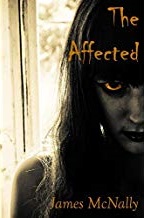
There’s nothing like a good horror story. The Affected, by James McNally is a tale of horror straight from the pits of hell. This story is not for the feint of heart due to the heineous acts contained within.
Random town’s people are vanishing, or being murdered, but whatever is going on, there won’t be any town left if someone doesn’t figure it out and put a stop to it, and soon. And then there is the strange man in white who has been appearing to some residents and seems to be stalking them, there one moment and gone the next. The mystery unravel, but can this demonical surge be stopped before there is no one left?
Although I found a few logic flaws throughout, the story is so well plotted, overlooking them came easy. A plot worthy of the classic horror tales. I give The Affected four quills.

Kaye Lynne Booth does honest book reviews on Writing to be Read in exchange for ARCs. Have a book you’d like reviewed? Contact Kaye at kayebooth(at)yahoo(dot)com.
Share this:

Writing for a YA Audience: CLICK YOUR CONVERSE HEELS TOGETHER
Posted: August 15, 2018 Filed under: Books, Stories, Writing, Writing for a YA Audience, Young Adult | Tags: Converse Sneakers, Details, Writing, Writing for a YA Audience, Young Adult Fiction Leave a comment
When I write contemporary young adult stories, I draw on my own experiences growing up. A huge part of my childhood involved wearing Converse sneakers. Okay, you’re probably thinking that’s a sad childhood, but bear with me. I was always obsessed with shoes. I liked the old-fashioned ankle-boot style. I liked the shiny Mary Janes. I hated regular sneakers. They weren’t cute enough. I endured sneakers only for gym class.
In Junior High, I started seeing the other children wearing Converse sneakers. They came in all sorts of patterns and colors, and they went over your ankle. They were unique, and even though almost everyone had a pair, everyone had a DIFFERENT pair. Some kids even wore mismatched sneakers or used fancy laces. I went home to tell my grandmother I just had to have my own Converse sneakers. (If you aren’t familiar with Converse sneakers, you have got to check out their incredible selection.)
She took me to the coolest sneaker store in the mall (I don’t remember the name of this wicked awesome store) and got me…a pair of knock-offs. They were black and came below my ankle. I fell in love with them because they had a side-pocket. I wore those sneakers until they fell apart.
In the meantime, my grandmother and I went to the nearby outlet mall. We would go once or twice a year. At their shoe store, I saw a beautiful array of colorful Converse sneakers. She bought be an official, high-top pair. They were black with white pinstripes. I wore them so much they started to fall apart…so now I don’t wear them much to preserve their life.
After that, I got a pair each time we went to the outlet mall. I even got a pair that reached up to my thighs! I now have twelve pairs altogether in my collection. Converse is still my favorite brand of sneaker.
Why am I talking to you about my Converse obsession? Well, Converse sneakers were a huge part of my childhood, from shopping for them to wearing them almost every day. I loved wearing them to gym class with fishnet stockings. I always write about my young adults wearing Converse because that’s what I wore. I didn’t realize how prevalent the brand featured in my writing until an editor called it to my attention. I went back through my writing and almost every girl character has a pair at one point in their individual stories!
If you were writing about shoes, what shoes would you mention? What shoes are most important in your life?

Photo by Pixabay on Pexels.com
Jordan Elizabeth is a young adult fantasy author. Her latest book, a post-apocalyptic novella entitled ROTHAM RACE, released July 14th fron CHBB. If you’re wondering if it features Converse sneakers, you will have to read it to find out.
You can connect with Jordan via her website, JordanElizabethBooks.com.
Share this:

Interview with poet Rosemerry Wahtola Trommer
Posted: August 13, 2018 Filed under: Books, Interview, Poetry, Writing, Writing to be Read | Tags: Naked for Tea, Poetry, Rosemerry Wahtola Trommer, Writing 7 Comments
Today I have the privelege of interviewing a fabulous poet, Rosemerry Wahtola Trommer. As well as writing poetry, she also does performance poetry and is fondly called Word Woman. Once you see her perform, there is no question as to why. Rosemerry is vibrant and energetic and enthusiastic about her poetry, and about life, and this shines through in her work. She was Western Slope Poet Laureate here in Colorado from 2015-2017, she leads poetry and in 2016, she gave a fabulous TED Talk in Paonia, Colorado, The Art of Changing Metaphores, which is definitely worth watching if you wish to see how we can use metaphores to help shape our thinking, our lives and even the world around us. Please help me welcome this wonderful Word Woman to Writing to be Read.
Kaye: When did you know you wanted to be an poet?
Rosemerry: I have a very strong memory of sitting on the floor in my fifth grade classroom in a reading corner, and finding a poem by Walter de la Mare in a magazine. It was about a snowflake, and it began, “Before I melt, come look at me, this lovely icy filigree.” I memorized it, only 12 lines, and fell totally in love with the sounds of the poem. I had no idea what it meant, I just knew it thrilled me, the way the sounds chimed with each other. I felt it in my whole body. I don’t know that’s so much when I knew I wanted to be a poet, but it is when the love affair began.
Kaye: What is the biggest challenge of being a poet?
Rosemerry: Hmmm. Perhaps it is knowing that I have so much farther to go in my craft—that I am not yet writing the poems I feel I am here to write. Still so many layers of me to peel away, still so much to explore. And no way to get there except to write and write and practice and practice and read and read …
Kaye: Would you talk a bit about your personal poetic process?
Rosemerry: Since 2006 I have written a poem a day, and that daily practice is a huge part of my process. It makes it so that writing a poem isn’t just something that happens when I am sitting in front of a page, it’s something that is happening all day long. It completely changes the way I am in the world—how I pay attention, how I meet the moment. I’ll add that I am an avid reader of poems and read many every day—I am always trying to expand my poem horizons, see what a poem can do in other’s hands, and teach myself based on what other poets have done successfully.
Kaye: As a poet, you sculpt your words to form an image in the minds of those who are listening or reading your work. So, in a way, you are an artist and words are your medium. Are you creative in other ways, as well?
Rosemerry: It wouldn’t be painting (though I enjoy collaborating with artists!) But I do sing with a women’s acapella group, Heartbeat. We’ve been together since 1994, and I love pushing myself musically with them. And in the kitchen, I like to be creative with cooking and baking. And perhaps I am a creative parent? In fact, my son tells me he wishes I were more normal. And perhaps this is a good place to mention that I am currently finishing the first season of a podcast on creative process called “Emerging Form,” which I am doing with science writer Christie Aschwanden.
Kaye: How did you become attached to the handle of Word Woman? Is there a story behind that?
Rosemerry: About twenty years ago I was trying to come up with a business name that would accommodate all my language interests. At the time, I was an editor for a newspaper, freelancing for magazines, writing and teaching poems and performing a lot. Plus, my Master’s Degree is in English Language and Linguistics. I am obsessed with words, always have been. It just seemed to fit! It kind of cracks me up that it sounds like a super hero. The words themselves are the heroes. Poems have literally saved my life.
Kaye: Your book, Naked for Tea recently came out and was a finalist for the Able Muse Book Awards. Would you like to tell us a little about that?
Rosemerry: Such a thrill! I was sooooooo hoping to be published by Able Muse. I love their poetry books. The day that I found out that they were going to publish it, even so it wasn’t the winner, I was in the Telluride Library. When the text came through, I started jumping up and down, and was soon surrounded by a host of cheering and exuberant librarians! The library is a great place to find out about a book contract!
Kaye: Naked for Tea is an interesting title. How do you decide the titles for your books?
Rosemerry: Usually the titles come from lines in poems, and that’s the case here, too. The title poem is actually named, That’s Right. The first line is, “I showed up naked for tea.” And it’s the perfect poem to represent the book in that I feel that the whole collection is about the art of showing up as vulnerably, as authentically as possible. I joke that the poems are all about failure, and they are—about finding the beauty in our brokenness, our mistakes.
 Kaye : Naked for Tea also has a very interesting cover. How did you come up with it? If you don’t mind me asking, did you serve as the model?
Rosemerry: It’s not me! The publisher, Alex Pepple, had no idea the stir it would cause, because it certainly does look as if it’s my naked spine and long brown hair. The name of the photo he used is Back Story, which tickles me—perfect for a book of poems. I am happy with the metaphorical suggestion of showing up naked.
Kaye: Would you talk a little about performance poetry and how you got into that?
Rosemerry: When I moved to Telluride in 1994, I was lucky to fall in almost immediately with Art Goodtimes, one of the finest performers of poetry in Colorado. He awed me. So physical. So playful. So powerful. Before that I had NO performance poetry skills. What luck to find myself in close proximity to a master—and one who was willing to give me honest, gentle feedback, too.
Kaye: Performance Poetry is really a physical medium, yet when you perform, your movements appear as if they were a natural part of your speech. Your movements flow smooth and graceful. Does it ever feel as if you are doing a dance with your poetry? Have you ever tried adding music to your poetry performances?
Rosemerry: I naturally talk with my hands and body, which, I think, is lucky for poetry performance, though I don’t doubt that the performance enhances it. There are small pieces in a few poems which I have intentionally choreographed, but for the most part, I just let my body do what it does. I have found, though, that it often will move the same way for the same poem, and that these repeated gestures are very helpful for memorization—it’s as if the poem gets in the body which helps it to lodge in the mind.
As for music, yes! I love adding music! Of course I sing myself sometimes—to enter a poem or within a poem—but to have someone else accompany me is one of my greatest pleasures! I perform frequently with my good friend Kyra Kopestonski, a cellist. She and I have so much fun playing around and finding ways for the music and the poem to speak to each other. It’s especially great for very short poems because those are very hard to perform successfully without musical interludes. But it’s especially great for all poems! And I’ve been lucky enough to collaborate with many different musicians—guitar, flute, bass, drums, even a whole band. I would love to be like Laurie Anderson and have my own band!
Kaye: What is the strangest inspiration for a poem you’ve ever had?
Rosemerry: Ha! I’ve written some mighty weird poems. Picking up a grave digger hitchhiker, perhaps? Black widow egg sacs? Wearing a tail?
Kaye: What is the single most important quality in a poem for you?
Rosemerry: Authenticity.
Kaye: What’s the best piece of advice you were ever given?
Rosemerry: From David Lee, past poet laureate of Utah and a very fine poet and performer: Surround yourself by poets better than you are.
Kaye: What is the one thing in your writing career that is the most unusual or unique thing you’ve done so far?
 Rosemerry: Tough to say … but here’s the first thing that comes to mind. Once I participated as a guest artist for the Art & Architecture Weekend in Telluride. The Ah Haa School assembled a team to support me. We used three-line poems (I have thousands) and they painted them on the walls, they made garlands with poems, I had a cream dress covered in poems, white gogo boots covered in poems … and then I stood in the middle of the decorated room at a table with a bowl full of words and the participants came in and either picked a word or gave me one of their own, and then, after a brief conversation with them about why they chose the word, I wrote them a personal three-line poem on the spot—87 in six hours. I felt so in the zone, the day whizzed by. It was absolutely magical. People wept, hugged me, kissed me, laughed. It was an incredible interaction. And then I was given the juried artist award for the whole event, icing on the cake!
Kaye: Imagine a future where you no longer write poetry. What would you do?
Rosemerry: I can’t imagine it. Really. I think if I were deserted and alone on a desert island, I might still write poems in the sand. But if I try really really hard to not be me and think of what else I would do, um, drive race cars. But I would never do that.
Kaye: It seems like poetry really is ‘in your blood’. Can you give me an example of how poetry flows out into the other areas of your life?

Rosemerry: Well, it does feel like an integral part of me. And I guess it does leak out! I have a little game with myself to see how poems might make their ways into the hands of people who think they don’t like poems. Part of that is doing readings. Part of that is leading collaborative workshops with other teachers, pairing poetry with meditation or painting or healing from grief. Part of that is writing short poems on river rocks and leaving them all over town (in stairwells, public bathrooms, on street corners, etc). Like a poetry easter bunny, any given day of the year. I’ve left many hundreds of rocks out there, and they are always picked up! But I would say that more than poetry flows out, it flows in. I feel as if I am always finding poems, other people’s poems and poems waiting to be written. That’s such a thrill!
Kaye: What’s the most fun part of writing a poem for you? What’s the least fun part?
Rosemerry: Most fun: The blank before the poem arrives. All that potential! And then the thrill of the seed of the idea showing up. That AND when the ending shows up and you know, “Yes, yes, that’s it.”
Least fun: realizing that I have already used the words blossom, sometimes, moon, shine and invitation a million times and I need to come up with another word.
Kaye: Which poet, dead or alive, would you love to have lunch with?
Rosemerry: Only one?? And I think you mean besides the poets I presently hang out with. Hmm. Gerard Manley Hopkins. I think it would be awkward, but to be that close to greatness?? I would be happy to sit there in awkward silence as we ate our boiled potatoes.
Kaye: What advice do you have for aspiring poets?
Rosemerry: Surround yourself with other poets. Though the act of writing is solitary, as Ammons would say, you “sit alone picking away at your own liver,” the art of it and the communion of it is in community. Most of my best friends are poets—they inspire me, chide me, keep me in line, offer me a life line.
And of course, read. Read. Read smart—with a pen in your hand, taking notes on what you love and why. Read for pleasure.
And last, memorize, or, better yet, learn poems, as we say, by heart.


I want to thank Rosemerry for sharing with us today on Writing to be Read. Her energy and enthusiasm seems to be contagious for me. I hope it is for all of you aspiring poets out there, too. You can learn more about Rosemerry Wahtola Trommer and the amazing things that she’s done on her Word Woman website, where you’ll find calendar, book sales, writing prompts and more. Her poetry books are avaiable on Amazon and you can visit her Author Page , too. You can also find her daily poems here. Please take the time to like the post or leave a comment to show your support for Rosemerry and/or Writing to be Read.
Like this post? Subscribe to Writing to be Read for e-mail notifications whenever new content is posted or follow WtbR on WordPress.
If you are an author, poet or screenwriter and you’d like to be interviewed on Writing to be Read, drop Kaye an email at kayebooth(at)yahoo(dot)com with “Interview Request” in the subject line.
Share this:

Songs of Earth: A Teller’s Tale
Posted: August 10, 2018 Filed under: Book Review, Books, Fiction, Post-Apocalyptic, Science Fiction, World Building | Tags: Book Review, Eugene W. Cundiff, Post-Apocalyptic, Science Fiction, Songs of the Earth Leave a comment
The title is Songs of Earth: A Teller’s Tale, and the author, Eugene W. Cundiff is a story teller in following with the best of the tradition. A well-crafted science fiction post-apocalyptic story, with excellent world building, this book keeps the pages turning. Cundiff captures the imagination and doesn’t let go. I didn’t want to put it down.
Songs of Earth is a tale of an abandoned civilization, left by the Mongers, those who came before them, to fend for themselves in a harsh environment as best they could. On Luna, Elisheva is a Teller’s apprentice until the terraforming technology that enables their existence quits and she is sent with a group of Miners, a Marshall and an Engineer, on a journey into the wastelands, from which no one ever returns, to attempt repairs. In thier quest to save thier people, they uncover the secrets the Mongers never intended them to discover and travel much farther than any of them ever imagined they would have to repair the damaged machinery. And they solve the mystery of what happened to those who went into the wasteland before them, including Elisheva’s brother, but they aren’t the answers Elisheva had hoped to find.
Songs of Earth follows story telling traditions in exquisite form. I give it five quills.

Kaye Lynne Booth does honest book reviews on Writing to be Read in exchange for ARCs. Have a book you’d like reviewed? Contact Kaye at kayebooth(at)yahoo(dot)com.
Share this:

Interview with Screenwriter JS Mayank
Posted: August 6, 2018 Filed under: Interview, Movies, Screenwriting, Screenwriting, Writing | Tags: Director, Film making, Films, Hollywood, JS Mayank, Movies, Producer, Screenwriting 1 Comment
It’s my pleasure today to be able to interview JS Mayank, who is not only a screenwriter, but also a director and producer of films in the wild and crazy world of Hollywood. Originally from England, Mayank has been in the screenwriting world for more than a decade and seems to thrive in the world of film making. He currently has four films to his credit, and his short film SOMEDAY just premiered in New York last month. Please help me welcome him as he shares some of his thoughts and screenwriting and film making experiences with us today.
Kaye: When did you know you wanted to be a screenwriter?
JS: I knew I wanted to be a writer when I was two and a half. I would draw pictures and then get my parents, grandparents, or any other grown up to write it down– dictating corresponding stories to go along with the drawings. So I’ve always been a storyteller. But for screenwriting specifically, I remember I was in highschool (in India), when I came across the screenplay for THE SIXTH SENSE. It was the first script I had ever seen, and I read it before seeing the movie. When I finally watched the film, I was astounded by how closely it mimicked what I had read on the page. That was a moment of epiphany for me, and I fell in love with the medium.
Kaye: Would you briefly share the story of your own screenwriting journey? How did you go from writing your first screenplay to becoming not only a screenwriter, but a director and producer as well?
JS: Wow. That’s quite the sprawling canvas. I suppose the short version is – I always loved movies and TV. I was obsessed with Hollywood filmmaking in particular. After my undergraduate degree in Economics, I decided to take a year to work with a not-for-profit organization in India, where my boss was making documentaries for the UN, WHO, UNESCO etc. That’s where I fell in love with the form. From there, I came to the US, did a Masters in Communication at Wake Forest University (NC) – finishing the two year course in one year, and taking the second year to just watch movies. I saw over 1500 films in one year. It was the most intense education ever. After that, I got into the MFA program for Directing and production at Loyola Marymount University (CA), and moved to LA. That’s where I trained in the actual craft of directing and producing.
Kaye: What is the working title of your next movie?
JS: The Dead Wives Club – it’s a British dramedy.
Kaye: Which screenwriter, dead or alive, would you love to have lunch with?
JS: A few years ago, I would have said Damon Lindelof (the creator of LOST/THE LEFTOVERS), but he’s now my mentor, and I can already do that. I think I’d like to go with someone who’s not alive. Probably my favorite female screenwriter – Nora Ephron!
Kaye: What is the biggest challenge of being a screenwriter?
JS: I suppose it’s the same as the challenges of trying to make a living as any other kind of writer. Self doubt. Procrastination. Crippling self doubt. Lack of certainty. No job security. Did I mention debilitating self doubt?
Kaye: What’s the most fun part of writing a screenplay? What’s the least fun part?
JS: To me, breaking the story – creating the world, characters, scenarios – that initial spark of the idea is the biggest rush ever! Pure creativity. I suppose, rewriting is the least fun – though absolutely one of the most important parts of the process.
Kaye: What is the most important quality in a screenplay for you?
JS: Voice. A writer’s unique expression. The way they see the world. Quentin Tarantino is totally different from Nancy Meyers, who’s completely separate from Diablo Cody, who’s miles apart from Donald Glover.
Kaye: As a screenwriter, what kind of research do you find yourself doing for your stories?
JS: When I’m writing a script, I immerse myself into every aspect of that world. There’s a TV project I’m developing that I’ve been researching for almost 10 years. Others, I’ll talk to experts, read books, watch documentaries… whatever it takes. I love learning, so research is actually one of my favorite aspects of the job. Sometimes I feel like I enjoy research more than writing… But that’s probably just because I’m procrastinating.
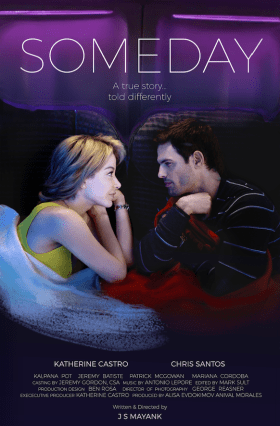
Kaye: Your movie SOMEDAY had its US premiere at the Dominican Film Festival in NY (DFFNY) on July 29th, and won best short there. Would you like to tell us a little about that movie?
JS: SOMEDAY started as a collaboration between an actress friend of mine (Katherine Castro), who said something interesting happened to her, and that it’d make a great movie. Usually when someone says that, it’s really not all that fascinating, but I’ve been a huge fan of hers, and so gave her the benefit of the doubt. When I heard the story, I absolutely knew it was a film. She had an encounter on a plane with someone who was very famous, and she had no idea. They simply conversed the entire way, and had an immense connection. I knew there was a story in there I wanted to tell. So I wrote it, sent her the script, and wished her the best with the project. A day later, she called me saying she loved it, and wanted me to direct it as well. It was a dream collaboration from start to finish.
SOMEDAY: Written & Directed by J S Mayank
Two strangers meet on a 14 hour non-stop flight from Sydney to Los Angeles. Adam is a world-famous composer, but Melody doesn’t recognize her flight companion. Along the way, they laugh, flirt and pour their hearts out… a connection made more beautiful precisely because of its fleeting nature.
Here’s a trailer for it: https://vimeo.com/268517195
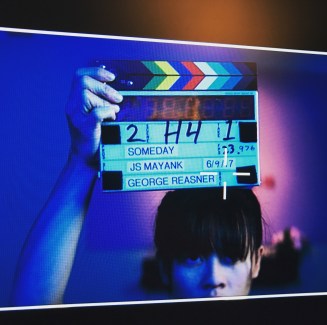
Kaye: You are both a screenwriter and the director for Someday. Is there a secret to balancing the dual roles?
JS: Realizing that the script is just a blueprint. A template. A roadmap. Once I’m the director, I have to have a singular overarching vision for the movie, but also realize that I have a great team around me – cinematographer, production designer, costumer, VFX supervisor, editor, composer… and of course, my actors. Each of these collaborators bring their own expertise, ideas and opinions, and sometimes that demands alterations to the screenplay. My job as the director is to ensure each change is for the better.


Kaye: What’s it like to sit in a theater and watch the premier for a movie that you have created?
JS: Nerve-wracking, panic inducing, and absolutely one of the greatest feelings in the world. Seeing an audience reacting to your work is beyond words.
Kaye: What’s the best piece of advice you were ever given?
JS: Two pieces. First, from Bruce Cohen (producer of American Beauty, Big Fish):
“Always lead with your best foot forward. It’s good to be humble in your personal life. But for work, have a healthy sense of ego in what you do (as long as you have the goods to back it up).”
Second, from my mentor, Damon Lindelof (LOST, The Leftovers):
“Keep doing the work. It will save you every time.”
Kaye: What advice do you have for aspiring screenwriters?
JS: Write every day. Write what you’re passionate about. And don’t take no for an answer. Also, be kind (but that’s just general life advice).
Kaye: What is the one thing in your screenwriting career that is the most unusual or unique thing you’ve done so far?
JS: It’s a new project, and something that will probably take my career to the next level, but unfortunately, I can’t talk about it. I’m under an NDA. Keep a look-out for something in September, though.
Thank you JS. You’ve definitely piqued our interest. I know I can’t wait. I want to thank you for joining us here today on Writing to be Read. It’s been a pleasure to chat with you. You certainly offered some insight into the world of film making.
Like this post? Subscribe to Writing to be Read for e-mail notifications whenever new content is posted or follow WtbR on WordPress.
Share this:

“Love Me Tender”: A Romance of Convenience
Posted: August 3, 2018 Filed under: Book Review, Books, Fiction, romance | Tags: Book Review, Elvis, Love Me Tender, Mimi Barbour, romance Leave a comment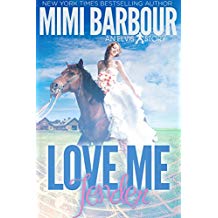
What a great idea to title and theme your romances so each matches an Elvis song. I picked up this book because of the title, so I guess it works. Love Me Tender, By Mimi Barbour, is a true romance, although the circumsatances unfold and solutions resolve a little too conveniently. Girl meets boy, falls in love, but numerous obstacles keep them apart until the story unfolds and they have an epiphany that they must be together and they live happily ever after.
Love Me Tender is a touching and compelling story of what happens when two very different worlds collide. Anne comes from France to stay on a Texas ranch, owned by Rose and her husband, where she falls for the rancher’s son, Clint. They have one night together, which he was too drunk to remember, but Anne comes away with a precious keepsake of that night, her son, Max. After eight years, Rose is dying and she asks Anne to return to help her granddaughter adjust to the eventual loss. But, Anne isn’t the only one with a secret and Clint’s ex-wife is back in town. Can Anne break through the hardened shell that Clint has surrounded himself with?
This romance has all the right elements, but conflict seems to be resolved too easily. I give Love Me Tender three quills.

Share this:

Jeff’s Pep Talk: Learning to Let Go
Posted: August 1, 2018 Filed under: Inspirational, Pep Talk, Writing | Tags: Inspiration, Jeff's Pep Talk, Motivation, Writing Leave a comment
Learning to Let Go
By Jeff Bowles
The first Wednesday of every month, science fiction and horror writer Jeff Bowles offers advice to new and aspiring authors. Nobody ever said this writing thing would be easy. This is your pep talk.
To tell you the truth, I never wanted to be a writer. So many authors–successful and unsuccessful alike–seem to have been aware of a certain literary calling from an early age. Stephen King began telling stories as a kid and never stopped. One of my personal favorites, Frank Herbert, creator of the Dune series, told his parents when he was little, “I want to be a author.” Adorably so, I’m sure, even if in basic syntactic error.
I had precious few moments like that. At the age of eight, I began an ambitious Star Wars fan fiction novel in which Luke Skywalker was forced to confront an evil dark Jedi clone of his poor dead Uncle Owen. I never got off the fourth page. When I was a teenager, I wrote about seven chapters of a complex space opera. But even though I showed clear aptitude, the process was long and boring, and I had better things to do, like playing music with my friends and spending hours on the couch in front of my PlayStation.
I didn’t decide to devote myself to writing until I hit my mid-twenties, by which time the life of a coffee-house-playing singer/songwriter had lost its appeal. Nobody listened to me when I performed. They were too intent on their dark roasts and shallow hipster conversations. I reasoned that even if I someday made it as a musician, I’d have to spend all my time on the road touring, and I’d just gotten engaged to a wonderful woman and had future plans to start a family with her. It made sense at that time to go after a new dream, and I’d always liked telling stories, even if I’d never demonstrated the necessary discipline to actually finish them.
Like so many young hopefuls, I was convinced literary success and stardom would be just around the corner. Ehem, they were not. What can I say? If you’ve been at this thing for any length of time, you know well the real hard work comes in the form of keeping your head down, applying butt to chair, and pounding out thousands of unsuccessful words before a single one catches the eye of an editor or an agent. Maybe you’re just starting out, in which case you might be wondering what the long-term odds of your success are.
Sad to say, but instant recognition is pretty rare. I know some very talented but also very lucky writers who hit it big their first time out. Ultimately, their jobs and their lives haven’t been made any easier. Sometimes the work is actually harder for them, because big success comes with big pressure. Each morning, they still have to make that basic choice: to write, or not to write. And that isn’t easy. Nothing about this job is. Anyone who tells you otherwise … actually, I seriously doubt someone with experience will tell you otherwise.
If you’re like me, your first stabs at storytelling were bad. Like really, really bad. I wrote at least thirty short stories before I snagged a single decent pub credit. I had a couple things working against me, and so did you. First off, I had to learn to write. And I don’t mean in the general sense; writing a blog post like this and writing a fully realized novel are two incredibly different beasts. That probably goes without saying, too.
Secondly, most of us have to build a name for ourselves slowly and over time. Many of your favorite authors didn’t get anywhere near success until they’d generated an incredible amount of published content (that’s published content; the unpublished stuff doesn’t count). The difficulty curve inherent to all this is enough to derail the majority of us. Everybody wants to write a book at some point in their life, but actually finishing one, submitting it through the proper channels, and receiving scads of rejection letters … well, may I just say, fresh meat, welcome to the great literary meat grinder.
At this point you may be asking, “What gives, Jeff? I thought you were going to give us a pep talk. This is more like trash talk.” Well, yeah, I guess it is. But it does no good to approach creative writing as a profession with anything less than a level head. You’ve got to know the odds. Or at least, I feel you should know the odds. The truth is–and this may seem counterintuitive–recognizing your likelihood of failure is just as important as having your writing dream in the first place.
I’m a dreamer by nature. Most creative types are. When I close my eyes at night, I’m just as likely to see book signings and red carpet movie premieres as blank white pages with blinking, unfulfilled cursors … taunting me, taunting me … the horror, the horror. Just because I recognized a long time ago instant success would never be mine doesn’t mean I no longer do what I can when I can to get there. Actually, and this is the important part, the slow and steady nature of my career thus far has allowed me to let go my prodigious and unproductive white-knuckle grip, helping me at last to relinquish just enough control so I could, say, have a life outside of my stories.
That’s kind of the point. Failure teaches us more than success. Failure hurts, no doubt about it, but it also heals. Failure is not a four-letter word. Count ‘em, seven letters, not even close. Nor is it some cosmic slight. Don’t be afraid to fail. In the grand scheme of things, there’s no difference between the careers of a thirty-year vet who hit the mark right out of the gate and a thirty-year vet who had to slowly build an audience with each successive work. In other words, it isn’t the destination, it’s the journey.
Here is your pep talk in four simple words: learn to let go. Seriously, that’s it. Let go of your need for recognition, for validation. Let go the desire for royalty checks the size of the annual Defense Department budget. Letting go doesn’t mean giving up. Far from it, in fact. Some very big writers love to spoil it for newbies. Gleefully, they hand out advice like, “If you can quit, you should,” implying of course this job sucks so bad you shouldn’t even bother.
I’m not that guy. I like to build people up. Learning to let go of your expectations, your insecurities and personal timetables, it’s actually a cure-all for life. The day-to-day of a writer really can be challenging. There are just so many lows, sometimes more than there are highs. You’ll have days you want to give up. Heck, you may have entire years or decades you don’t write a single word. So I find it’s better for the mind and the soul to consider writing a lifelong journey rather than a pass/fail vocation. Do you know what happens when you let go? You actually start enjoying what you do. Some time-tested philosophies think of this as living in the now, embracing the flow of life, or choosing to let the stream carry you rather than fighting its currents. It’s a healthy attitude to cultivate, especially when you’re in a creative industry that hands out disappointment like local discount car wash flyers.
Don’t give up. Don’t do it. And don’t let anyone, including yourself, tell you that you should. If you find you’re getting frustrated with your progress, take a break. That old chestnut, writers write, applies only to very unhappy people and very well-adjusted robots. Writers are just average folks, and like every other warm body on this planet, you need a life that’s fulfilling on more than one level. You know what you can do instead of pounding out words until you tear your hair out? Fall in love. Go see a movie. Have kids. Start a stamp collection. When you let go of the desperation, the incessant need to be somebody, you can be anybody, and that, my friends, is freedom itself.
You know who you are. You know you love to write. If you didn’t, you wouldn’t be here on this blog. So why not trust yourself? Trust life. Tell a story for the joy of it. One moment, one second, one word at a time. If you worry too much about the future, the next rejection, the next failure, if you obsess over the past and all the ugly moments still living there, you’re doomed to forever hate right now.
It’s okay to admit you’re no superstar. At least not yet. Trust me, it won’t hinder your ability to create awesome stuff. I’ve met some big name talent. Many of them feel imprisoned by their careers. The grass is always greener, right? So while you’re busy fuming with jealousy over their magnificent sales figures, they’re busy resenting you for what they perceive as your complete and total freedom. The joy of writing is in discovering what’s just around the corner. Imagine if a new entry in your favorite book series telegraphed its epic ending on page one. Wouldn’t that be disappointing? Life, like any story worth reading, works best when you don’t know what comes next.
So don’t try to predict the future. Live free, focus on today. And that’s your pep talk for the month, folks. Read ‘em and weep! Just don’t weep too hard.
Check out Jeff Bowles Central on YouTube – Video Games – Music – Entertainment – Fun!
Share this:

Writing the Rockies through the years
Posted: July 30, 2018 Filed under: Books, Writing, Writing Event | Tags: 2018 Writing the Rockies Conference, Creative Nonfiction, Creative Writing, Genre Fiction, Poetry, Publishing, Screenwriting, Western State Colorado University, Writing Events Leave a comment
Every event we take part in touches us in some way, helping to shape us into who we are. Our experiences change us, sometimes in small ways, and sometimes in more drastic ways. We live, we learn, we transform, and always there is movement and growth. Certainly, the 2018 Writing the Rockies Conference was one such inspirational event, although there were so many offerings, it would be impossible for me to touch on them all. The offerings which I did get to attend were very informative and inspirational.
 During the welcome reception, the program director, Dr. David Rothman, talked about what it is that makes the Writing the Rockies Conference stand out among other writing conferences. Certainly, the fact that it leans heavily toward the academic aspects of writing should be counted toward the top of the list. Not that the writings explored are all academic in nature, but the intention is to educate us in how to tap our inner creativity and allow it to flow out onto the page. And every year that I have attended the conference, like everything else in life, it changes and grows.

The Writing the Rockies Conference has expanded considerably since I first attended in 2012, and has even grown some since I last attended in 2016.In addition to the great panels and single day workshops, and their outstanding poetry symposium, which are offered every year, the 2018 line-up included an opera performance and workshop, three-day intensive workshops and seminars in all five concentrations, (creative nonfiction, genre fiction, poetry, screenwriting and publishing), which are available for an additional fee. And as usual, there were opportunities to sign up for pitch sessions and manuscript critiques, and social events such as Coffee with the Pros, where you have the chance to chat with professionals from the industry, both student and professional readings, as well as open mic events and a full day’s schedule of nature hikes in the Gunnison Valley, (one more thing which makes this Conference unique). While attending, there were also opportunities to attend a special presentation of Comedy is Hard by Mike Reiss and a one man play, Multitudes: An Evening with Walt Whitman by Kim Nuzzo, both public performances which coincided with Conference dates.
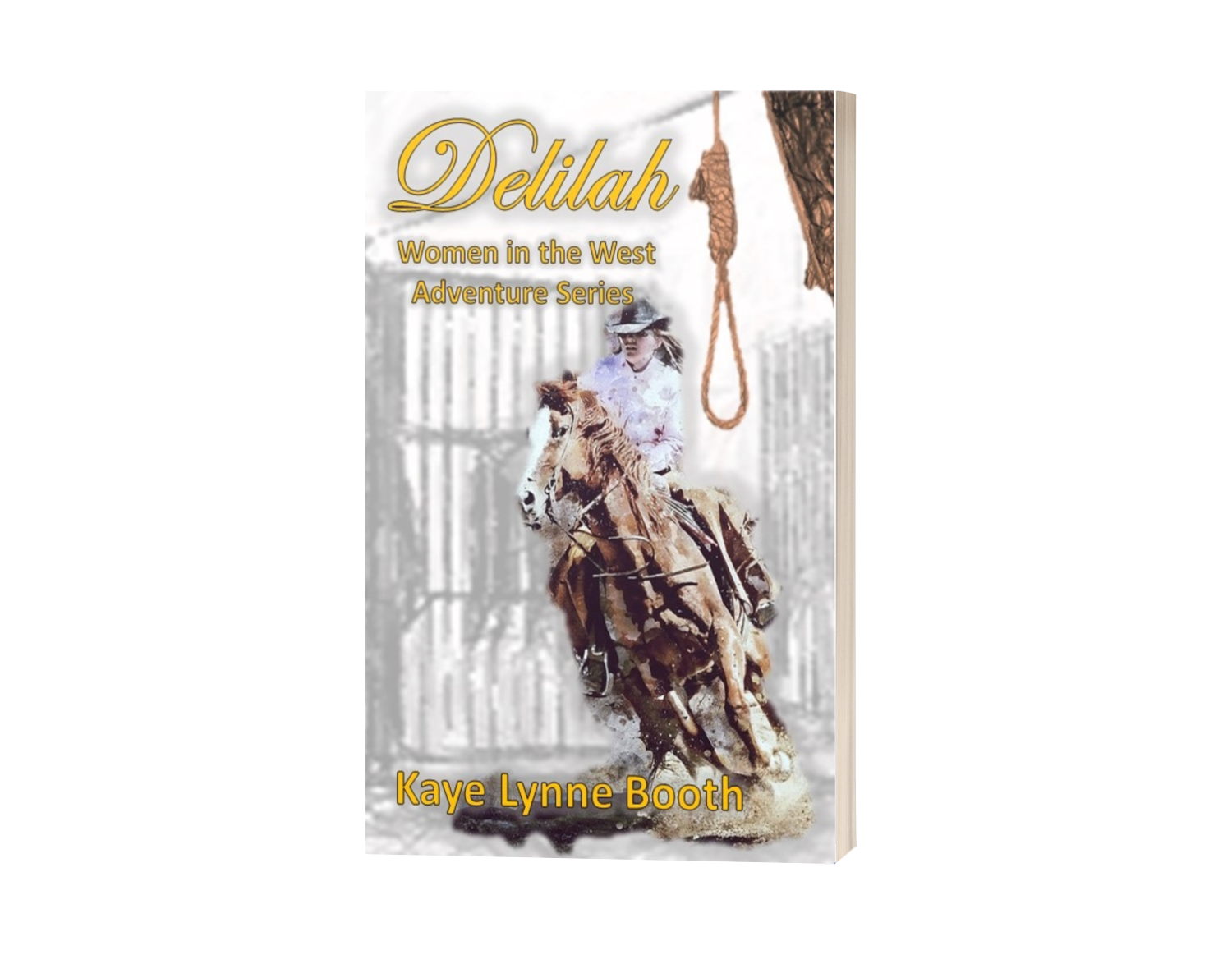
 In his Keynote, author, poet and educator, Mark Todd discussed Writing From the Edge of Nowhere, and why so many writers sprout from Colorado or are drawn to Colorado as a backdrop. Certainly, the breath taking scenery attracts the attention of writers and many have tried to capture the beauty of the Colorado landscape with their words. There are some who haven’t done a bad job of it. As a native Colorado author who made historic Colorado my setting in Delilah, I can tell you that the love for the landscape draws you and for westerns, the landscape plays a big part.
The publishing panel, moderated by Kevin J. Anderson, who has been traditionally published for many years and has founded his own WordFire Press with his wife Rebecca, was enlightening for me. As I’d been wondering if my own publisher was being fair with me. I learned what you should be able to expect from a small press publisher, and found that although perhaps my communication with my own publisher could be better, they are probably giving me a pretty fair deal in today’s market. Their panel also made me reconsider my own plans for publishing The Great Primordial Battle, which is book 1 of my Playground for the Gods science fantasy series. It’s been sitting on the virtual shelf after many rejections, and I was planning to self-publish it when it comes back from my beta reader, but now I’m thinking perhaps I should give traditional publishing one more shot before I go that route.

I had the honor of sitting on the alumni panel for Western’s Graduate Program for Creative Writing, which offered the chance for panel members to toot their own horns about their individual successes and tout praises for the M.F.A. in Creative Writing program. On the panel with me were my fellow alumni, Chris Barili, Susan Spear and moderator, Steve Visel.
Although I did not purchase a meal card, I heard high praise for the conference cuisine, well worth the additional charge. The welcome dinner and ceremonies, featured delectable appetizers, a main course of stuffed peppers or mushroom chicken and all the accompaniments, and mouth-watering fruit pies for desert. All was well prepared and attractively presented by Western State Colorado College.
The one thing I was disappointed with was that I didn’t get to do the book signing I had anticipated due to scheduling conflicts. But at Writing the Rockies they are always looking for ways to improve their program, so I can always hope that next year things will be scheduled better. Over all it was a great conference and I look forward to watching it grow and develop in the future.
Share this:

“Zomnibus: Two Zombie Detective Novels in One Book
Posted: July 27, 2018 Filed under: Book Review, Books, Crime, Dark Fantasy, Fiction, Humor, Post-Apocalyptic, Speculative Fiction | Tags: Book Review, Comedy, Crime novel, Detective stories, Humor, Kevin J. Anderson, Speculative Fiction, Zomnibus 6 Comments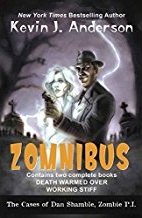
In Zomnibus, by New York Times best selling author, Kevin J. Anderson each case is a short tale in the unlife of a zombie detective. In the world following the Big Uneasy and the return from death en mas, vampires may be victims, ghosts can be discriminated against, zombie’s might be graffitti artists and ogres serve as security guards. Together with his human business partner and his ghost of a girlfriend, Dan Shamble detective agency solves cases for both living and unnatural clients.
These zombie detective tales are carefully crafted to keep your attention and tickle your funny bone. Anderson’s light tone and corny humor guarantee the Dan Shamble, Zombie P.I. tales will evoke at least a few chuckles. I give Zomnibus five quills.

Kaye Lynne Booth does honest book reviews on Writing to be Read in exchange for ARCs. Have a book you’d like reviewed? Contact Kaye at kayebooth(at)yahoo(dot)com.
Share this:

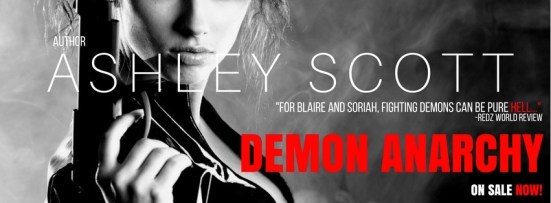
Interview with author Ashley Scott
Posted: July 23, 2018 Filed under: Action/Adventure, Author Profile, Books, Dark Fantasy, Fiction, Interview, Speculative Fiction, Thriller | Tags: Action, Ashley Scott, Author Interview, Dark Fantasy, Demon Anarchy, Speculative Fiction, Thriller Leave a comment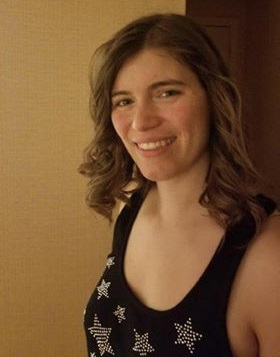
I always love to do interviews with new authors, because they get so excited. The first interview I ever did, with Dan Alatore, I was riding on the top of the world. For me, it signified that this was it and I was really a published author. Today we have an up and coming author with us, Ashley Scott, whose debute novel is a dark fantasy action thriller, Demon Anarchy. She’s here today to tell us about her book and a little about herself, as well.
Kaye: Would you share the story of your own publishing journey?
Ashley: My publishing story began with a manuscript of course. Once completed, my beta readers tore it apart piece by piece. I had to make changes before daring to pass it along to my editor, who also helped strengthen my story, Demon Anarchy, before deciding where to publish. Should I publish through a house or self publish through a website? After doing some research I decided to self publish through Amazon with assistance of a few friends who have done this process before. I love how simple it was however my next goal is to publish a book through a publishing house.
Kaye: Are you a plotter or a pantser? Why?
Ashley: I guess you could say a little bit of both. If I plot out my story chapter by chapter (I’ve tried this method before and it took me weeks, I finally accomplished beginning to end and threw all my notes out because I grew bored of the story). This proved to me I required some mystery involved in plotting my stories. So now I write very minimal notes and type what comes to mind. I believe some plotting is good to keep the flow of your story and to keep your readers interested.
Kaye: What is the one thing in your writing career that is the most unusual or unique thing you’ve done so far?
Ashley: Um….how about try ‘too hard’? If that’s a thing? I used to get up in the early hours of dawn to type a page or two before going to college or going to work. I also used to trial so many different methods of plotting and note taking it drove me insane! So I settled for what currently works and blocked out a reasonable amount of time during the day to type.
Kaye: Would you like to talk a little about your blog or website?
Ashley: Currently, I don’t have a blog. I only have a website where you can find a buy link to my book Demon Anarchy along with my contact information and monthly author interviews I post to help authors succeed at reaching out to their audiences.
Kaye: What was the most fun interview you’ve ever done? Why?
Ashley: I’ve only completed a few author interviews so far, I think all of them are fun to do in a way.
Kaye: Would you like to tell us a little about Demon Anarchy?
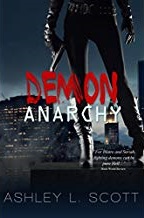
Ashley: Would I ever! It’s not only a page flipper flooded with action including explosive weaponry, but also combined with entrancing romantic encounters and a twisted plot line. It opens to New York City, the big apple, where the reader discovers demons lurching in the shadows of the city living off the blood of humans. Only agents know of their existence, the rest are left blind to the war about to appear within the allies and streets.
Time isn’t on their side when the agents discover the leader of the demons appear and wreak havoc among the city by rallying the numbers, creating Demon Anarchy.
Kaye: If Demon Anarchy was made into a film, who would you like to play the lead?
Ashley: I keep jumping between two main characters. Alice, an agent trained to kill demons, and Damien a half demon who feels trapped between the human the demon world. Damien would be my first choice, Mr. Bad Apple and won’t take a no for an answer, however Alice whose stubborn and strong willed personality takes a close second. I would cast Milla Jovovich as Alice, and Christian Bale as Damien.
Kaye: It seems that you travel quite a bit. Have any of the places you’ve traveled ended up in your books? Which ones?
Ashley: I love to travel, which is why I’ve traveled different parts of the world with my husband. Yes, I’ve traveled to New York City which is the setting for my story Demon Anarchy as portrayed with descriptions of alleyways during rainy nights and the busy crowded streets filled with people during the day. I always thought the big apple would be the perfect location for demons lurking in the shadows.
Kaye: What is the strangest inspiration for a story you’ve ever had?
Ashley: Not sure….there has been so many random moments where all I have to do is listen to the right music or see something that sparks my imagination and my thoughts go wild.
Kaye: What can you tell us about what’s in store for your readers? Any WIPs you’d like talk about?
Ashley: I’m currently 22 weeks pregnant and am due in November, so my writing has slowed down a bit. But I’m still hammering away at the first book of a trilogy consisting of young women who revolutionize their kingdom in the early 1800’s. The book I’m currently typing is about a young woman who fights against the world of men to become the first female professor in her kingdom by entering the king’s challenge, a challenge of the mind proven to pluck out the smartest individual in Cirus whose worthy enough to tutor the future heir to the throne. However within time the plot could change a little depending on my mood/interest, but this is the strongest plot I’m currently focusing a lot of my time and effort on.
Kaye: Describe yourself in three words.
Ashley: Friendly. Gregarious. Social.
Kaye: Your introduction on your Facebook page says, “Multi-tasking is my talent”. Besides writing, what are your other talents?
Ashley: Playing tennis, editing manuscripts, and developing exercise programs for the elderly.
Like this post? Subscribe to Writing to be Read for e-mail notifications whenever new content is posted or follow WtbR on WordPress.
If you’re an author and you’d like to be interviewed on Writing to be Read, email Kaye at kayebooth(at)yahoo(dot)com and put Interview Request in the subject line.