Writing for a YA Audience: Family History Packs a Punch
Posted: July 17, 2019 Filed under: Fiction, Historical Inspiration, Writing for a YA Audience, Young Adult Leave a comment
I’m obsessed with history. While some people find history depressing, I find it all fascinating, even the parts about serfs and the plague. Those were times that came before us. Those people built up the world we live in today. My ancestors made me who I am through the passing of genetics.
I’d never done much research into my family tree. I knew that my dad’s grandparents came from Poland. My mom’s paternal grandparents came from England and Germany. Her maternal grandparents were English and German too, and one ancestor fought in the Revolutionary War. My maternal grandmother always wanted to join the Daughters of the American Revolution, but couldn’t present the legal documents to prove it.
Years ago, people started talking about Ancestry. I didn’t have the funds to join the website, but it encouraged me to do some digging on my own. Oh, the things I found! Websites brought me to other websites, and I eventually did wind up on Ancestry. Everything I found fascinated me, even at 2am when I was still glued to the computer screen.

Not only did my maternal grandmother’s ancestors fight in the Revolutionary War, but they also were the original Dutch settlers. I got a friend hooked on finding out about her family tree, and we discovered she also descended from the first Dutch settlers – the same Dutch settlers who were in my family tree! We officially dubbed ourselves the Bradt Cousins thanks to our Bradt ancestors.
The more I looked, the more I discovered. An ancestor of mine was even English royalty!
For a while, I considered writing young adult novels based on their lives. I even started one about my grandmother, but it felt wrong. I knew my grandmother, but I didn’t know them. I didn’t want to write something that wouldn’t reflect their thoughts and feelings. Instead, I took their names and put them into my books.
Honora is Honoria in ESCAPE FROM WITCHWOOD HOLLOW.
My grandmother’s maiden name of Clark belongs to Clark in TREASURE DARKLY.
Charity is Charity in PATH TO OLD TALBOT.
Keziah is Keziah in GOAT CHILDREN.
Edna Hammer is Edna in COGLING.
Aeltye is Aeltye in VICTORIAN.
The list goes on. Maybe someday I will do my best to write about their lives, but for now, I hope they feel honored to have their names featured in books.
Jordan Elizabeth is a young adult fantasy author. She may or may not be staring at a supposedly haunted house trying to see faces in the windows. You can connect with Jordan – and point her in the direction of some paranormal activity – via her website, JordanElizabethBooks.com.
Want to be sure not to miss any of Jordan’s Writing for a YA Audience segments? Subscribe to Writing to be Read for e-mail notifications whenever new content is posted or follow WtbR on WordPress.
Share this:

Chatting with the Pros: Interview with bestselling author Jenifer Ruff
Posted: July 15, 2019 Filed under: Author Profile, Books, Chatting with the Pros, Crime, Fiction, Interview, Thriller, Writing | Tags: Chatting with the Pros, Crime Fiction, Jenifer Ruff, Only Wrong Once, psychological thrilers, The Numbers Killer, Writing to be Read 3 Comments
My guest today on “Chatting with the Pros” is bestselling author Jenifer Ruff. She’s booked as a psychological thiller author, but much of her works falls under the genre of crime fiction, as well. She has a knack for keeping the action moving and throwing in surprise twists, which is always great in crime fiction stories. I’m excited to find out what she has to share, so please join me in welcoming her to Writing to be Read.

Kaye: What elements of storytelling do you feel are specific to the crime fiction genre?
Jenifer: A well-developed and slightly flawed but likable antagonist. An interesting protagonist with clear and shocking or complex motives. A suspenseful, intricate plot with unexpected twists that involves a crime or series of crimes.
Kaye: What is the biggest challenge in writing crime fiction for you?
Jenifer: The most enjoyable parts are creating the plot, the twists, the characters, and the crimes. The hardest part for me is having the patience to go back and edit and rewrite again and again until the writing is the best I can make it.
Kaye: Are there any particular crime fiction authors that you fashioned your writing style after?
Jenifer: There are too many (way too many!) excellent authors and excellent novels out there for me to pick one in particular. I learn a little from all of them. I try and read as much of everything as I can—bestsellers in literature for the two book clubs I’m in, and indie authors in the thriller genre for me. I love it when the book I’m reading sparks new ideas, but that can happen no matter what genre or what author. I do know that when I read literature, I get inspired to create all sorts of similes and metaphors and my editor usually nixes almost all of them.
Kaye: You have also written thrillers, horror and YA suspense. What are the differences in writing crime fiction from the other genres you’ve written in?
Jenifer: All my novel are dark and twisty psychological suspense thrillers with disturbed characters readers often can’t help but like. Each book involves crimes, mostly murders. Each has a different contemporary topic—terrorism, sex trafficking, social media, for examples. I think I’ve been consistent with that character-driven style no matter the story or the genre. They’re more similar than they are different, but each emphasizes certain genre elements slightly more than others.
Kaye: What kind of research do you find yourself doing for crime fiction?
Jenifer: With my Brooke Walton series, I did a lot of research about psychopaths, PTSD, and working in a Medical Examiner’s office. For Only Wrong Once, I researched ISIS, particularly their recruiting techniques, and bio-terrorism. I was a little worried about setting off alarms on the internet because of the type of research I was doing for that one. Pretty Little Girls, the book I’m finishing now, involved research and attending lectures on sex trafficking. I’ve interviewed FBI agents and had a few beta read my books to make sure I wasn’t too far off on anything.
Kaye: You write in several genres. Which genre is your favorite one to write in? Why?
Jenifer: Psychological suspense. I enjoy getting into the heads of my very flawed characters and figuring out how they might react, respond… thinking up actions that would be outrageous for me or any “normal” person, but perfectly normal for them.
Kaye: Besides writing, what are your favorite things to do?
Jenifer: Hike with my dogs and exercise classes – Barre, Pilates, Zumba, athletic conditioning – anything where I’m moving and sweating. If I get on a bike or elliptical it’s because I’m really into whatever book I’m reading and I want to be able to exercise and keep reading.
Kaye: Your most recent crime fiction novel is The Numbers Killer, which I reviewed last Friday. What other novels have you written that would fit into the crime fiction genre?
Jenifer: Only Wrong Once, the Brooke Walton series: Everett, Rothaker, and The Intern. And my newest, coming out soon—Pretty Little Girls.
 Kaye: Can you tell us a little about The Numbers Killer?
Jenifer: It’s the first in a new series about FBI Agent and heiress, Victoria Heslin. The series will appeal to fans of A.J. Finn, Thomas Harris, James Patterson, Jeffrey Deaver and Karin Slaughter. Most of my early readers have said they couldn’t put it down, which is exactly what I hope to hear.
When a key witness in an organized crime trial turns up dead in his kitchen with liar and the number two scrawled on his forehead, the FBI assumes the murder was a hit to silence him. Then the calls start coming in—more victims with similar markings and no connection to the mob.
As agents Victoria Heslin and Dante Rivera struggle to catch a break in the case, they receive a series of cryptic, personal messages from the killer, complicating the investigation. Something disturbing and frightening is underway, and anyone might be next, including the agents, unless they uncover the common denominator.
Kaye: The old adage is, ‘write what you know’. Obviously, you haven’t lived through the horrendous events featured in your crime fiction stories. In what ways do you draw off of your own experiences when writing crime fiction?
Jenifer: I write about things that might fascinate me – the abnormal and the unexpected. I really admire determined people, but when someone is determined and also misguided, things can get very interesting. I’ve created characters like that in most of my novels.
Kaye: What is the strangest inspiration for a story you’ve ever had?
 Jenifer: The idea for Only Wrong Once was inspired by a secure laboratory at my graduate school that held research samples of the most deadly diseases on the planet – small pox, bubonic plague, and Ebola, to list just a few. And also from a quote by National Security Adviser Condoleezza Rice in 2004. She said: “And let’s remember that those charged with protecting us from attack have to be right 100 percent of the time. To inflict devastation on a massive scale, the terrorists only have to succeed once. And we know that they are trying every day.” Her powerful, frightening words inspired the book title and the theme for Only Wrong Once.
Kaye: Is there anything unique or unusual about your writing process?
Jenifer: I don’t think there’s anything unusual about it. I sit down in front of my computer for as long as I can, as many days per week as I can. Even though I write most days, I still consider that time a luxury. I write in my house and I can’t get any writing done if I have housework to do, I’m too distracted by awareness of what needs to be cleaned. So cleaning and chores first, then I can write.
Kaye: If The Numbers Killer was made into a film, who would you like to play the lead?
Jenifer: I’d love for Blake Lively to be Agent Victoria Heslin.
Kaye: What’s next for Jenifer Ruff? Can readers look forward to more crime fiction from you? What are you working on now?
 Jenifer: The second in the Victoria Heslin series, Pretty Little Girls, is almost finished and will be published in the fall. I’m waiting on beta readers now, and next it will go out to ARC readers. In Pretty Little Girls, Agent Heslin is called to Charlotte, NC to consult on a kidnapping case, but what she discovers ends up being much, much worse. Right now, I’m busy working through ideas for the third novel in the series.
I want to thank Jenifer for joining me today and offering a glimpse into her writing process here. I reviewed her book Only Wrong Once last month when we were looking at thrillers. You can see that review here. You can find out more about Jenifer Ruff and her books at the following links:
Website: http://jenruff.com/index.html
Amazon Author Page: https://www.amazon.com/Jenifer-Ruff/e/B00NFZQOLQ?ref=sr_ntt_srch_lnk_1&qid=1563137616&sr=1-1
Share this:

The Numbers Killer: A Crime Thriller that keeps readers guessing
Posted: July 12, 2019 Filed under: Book Review, Books, Fiction, Mystery, Thriller, Uncategorized | Tags: Book Review, Jenifer Ruff, mystery, psychologicl thrillers, Suspence, The Numbers Killer, Writing to be Read 5 Comments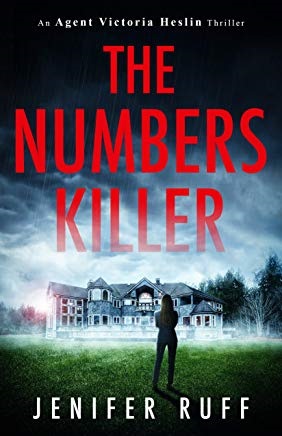
Things aren’t always what they seem, and The Numbers Killer, by Jenifer Ruff is no exception. In this psycholigical thriller mystery, people are are turning up dead and Agent Victoria Roslin is a tough police investigator who must race to catch a killer. The stakes are raised even higher and the clock runs faster when it turns personal and Victoria is targeted. It seems the killer has her number. Can she solve the mystery of how the victims are connected. Can she catch the killer, or will she become the nest victim of the Numbers Killer?
The Numbers Killer is a well-crafted mystery that keeps readers guessing. There’s nothing cozy about this mystery. Ruff keeps the action moving and throws in plenty of surprise twists right down to the last pages. I give it five quills.

Kaye Lynne Booth does honest book reviews on Writing to be Read in exchange for ARCs. Have a book you’d like reviewed? Contact Kaye at kayebooth(at)yahoo(dot)com.
Share this:

The benefits of listening to audio books
Posted: July 10, 2019 Filed under: Audio Books, Books, Children's Books, Fiction, Growing Bookworms, Reading | Tags: Audio Books, Children's Stories, Growing Bookworms, Reading, Robbie Cheadle, Writing to be Read 33 Comments
I love listening to audio books. There is no better way, in my experience, to appreciate a good book than listening to it being read aloud by a skilled reader. I listen to approximately four audio books in a six week period, many of which are classic books.
My love of listening to stories started when I was a little girl, although audio books were few and far between then. I remember listening repeatedly to a cassette with four stories about a family’s adventures in the wild west of America which I was given as a birthday present. My father also bought me a couple of LP’s, including Disney’s Alice in Wonderland and Sleeping Beauty, and I listened to these often.
During our music appreciation lessons at school, our teacher played us the audio books of Peter and the Wolf, a symphonic fairy tale for children, which comprises of a narrator telling a story while an orchestra illustrates it. The intention of this composition is to introduce children to the individual instruments of the orchestra and it did its job well for me, as listening to this story is one of my remembered highlights of my childhood and I have never forgotten the names of the various instruments and the sounds they made. If you are interested in listening to this brilliant story, you can find it here:
I also remember listening to the Sparky books at school. This series comprises of Sparky’s magic piano, Sparky’s magic echo, Sparky’s magic baton and Sparky and the talking train. The magic of these stories is still readily available to me if I sit and conjure up my memories of listening to them as a child. The audio versions of these stories made a huge impact on me as I don’t remember any story that I read myself as vividly.
When my boys were small I searched for, and purchased, all of the Sparky stories and Peter and the wolf as audio books for them. We used to listen to them in the car when we traveled, together with an array of nursery rhyme CD’s. My boys grew to love music and both of them learned to play instruments. Michael still plays the drums and intends to learn the guitar as well.
Audio books are a wonderful way of teaching children to appreciate literature and also grammar. They enable children to learn and understand complex language above their own reading levels and illustrate the benefits in story telling of punctuation, enunciation and emphasis.
Audio books make literature more accessible to children who struggle with reading, giving them an opportunity to enjoy the text without struggle to decipher difficult text. It teaches children new words and phrases, thereby expanding their vocabularies. In addition, in a modern world of shortening concentration spans in children due to television and computer games, audio books teach children to sit and listen.
I used audio books extensively as a tool to help Michael learn to enjoy books and develop a love of reading. When Michael was four years old, I discovered Naxos Audio Books and I bought a significant number of these for Michael. We listened to non-fiction books, including Famous Heroes of the American West, The Vikings and Great Scientists and Their Discoveries, fairy tales, including Grimms’ Fairy Tales and fiction, including The Adventures of Tom Sawyer, New Treasure Seekers, The Phoenix and the Carpet, Five Children and It, The Children of the New Forest and The Coral Island. Amazingly, Michael loved The Children of the New Forest and The Coral Island and listened to them repeatedly during his bouts of illness.
I received Michael’s school report for the first half of the year recently and the teacher remarked on his excellent vocabulary and above average comprehension skills. I attribute his strength in these areas to all the audio books we listened to and all the reading aloud I did to him and his brother.
Did your children listen to audio books? If yes, did you experience these benefits? Let me know in the comments.
About Robbie Cheadle

Hello, my name is Robbie, short for Roberta. I am an author with six published children’s picture books in the Sir Chocolate books series for children aged 2 to 9 years old (co-authored with my son, Michael Cheadle), one published middle grade book in the Silly Willy series and one published preteen/young adult fictionalised biography about my mother’s life as a young girl growing up in an English town in Suffolk during World War II called While the Bombs Fell (co-authored with my mother, Elsie Hancy Eaton). All of my children’s book are written under Robbie Cheadle and are published by TSL Publications.
I have recently branched into adult horror and supernatural writing and, in order to clearly differential my children’s books from my adult writing, I plan to publish these books under Roberta Eaton Cheadle. I have two short stories in the horror/supernatural genre included in Dark Visions, a collection of 34 short stories by 27 different authors and edited by award winning author, Dan Alatorre and three short stories included in Death Among Us, an anthology of murder mystery stories edited by award winning author, Stephen Bentley. These short stories are published under Robbie Cheadle.
I have recently published a book of poetry called Open a new door, with fellow South African poet, Kim Blades.
Find Robbie Cheadle
Blog: https://bakeandwrite.co.za/
Blog: robbiesinspiration.wordpress.com
Goodreads: Robbie Cheadle – Goodreads
Twitter: BakeandWrite
Instagram: Robbie Cheadle – Instagram
Facebook: Sir Chocolate Books
Want to be sure not to miss any of Robbie’s Growing Bookworms segments? Subscribe to Writing to be Read for e-mail notifications whenever new content is posted or follow WtbR on WordPress.
Share this:

Interview with hardboiled crime fiction author Jim Nesbitt
Posted: July 8, 2019 Filed under: Books, Crime, Fiction, Hard-Boiled Crime Fiction, Writing | Tags: Author Interview, Crime Fiction, Ed Earl Burch, Hard-boiled fiction, Jim Nesbitt, The Best Lousy Choice, Writing to be Read 3 Comments
My guest today has a background in hard hitting journalism and he writes hard-boiled crime fiction in the tradition of Dashiel Hammet, and other famed crime writers. I’m pleased to be interviewing him because he represents a great literary tradition in genre. Please help me welcome, crime fiction novelist Jim Nesbitt.
Kaye: Your writing is classified as hard-boiled fiction, but you have your own style. Can you tell me a little about your style of hard-boiled fiction?
Jim: I’ve always thought of hard-boiled crime fiction as a distinctly American art form. Rooted in realism, cynicism, violence, corruption and a dark view of the American dream, it’s also a tremendously flexible genre. It’s best practitioners — from the founding fathers, Dashiell Hammett and Raymond Chandler, through Ross Macdonald, James Ellroy and the late and vastly underappreciated James Crumley — use it as a vehicle to comment on contemporary American life and politics, music, culture, the warped psychology of the hardened criminal and the suburban housewife, the tortured dance between men and women and anything else that strikes their fancy. When I decided to try my hand at fiction, I knew it would be hard-boiled crime fiction because it matches my outlook on life and my experience as a journalist as well as the freedom I saw in the books of the very best writers, not that I’m close to being in their class.
As for my style, it’s the result of years of working as a journalist who came up through the ranks at a time when long-format stories that used the narrative style and tradecraft of fiction were the rage, what I learned from reading Hammett, Chandler, Crumley, Ellroy, James Lee Burke and others and the genetics of coming from a long line of hillbilly storytellers. Every writer hopes to develop a unique voice, free from template and artifice. Few do. I write the way I talk — which is a curious mixture of film noir patter and cowboyspeak, with a little Tex-Mex thrown in. No surprise there since I spent quite a few years knocking around the West and the border between Texas and Mexico, used to own horses and am steeped in the dark movies of the 40s and 50s.
I’m also a strong believer in driving a story through snappy and hard-bitten dialogue, sharply defined characters with depth and lots of backstory and such a keen sense of place that it becomes a character unto itself. I spent a lot of time knocking around the West and the West Texas border country and my books are shot through with scenes based on what I saw out there. More than one reviewer has said my books have the soul of a classic Western, with hard-boiled and noirish trappings, and I tend to agree with them. Although they’re set in the late-80s and early 90s, they’re as much contemporary Westerns as they are hard-boiled crime novels.
Kaye: Tell me a little about your main character. Who is Ed Earl Burch?
Jim: Ed Earl’s a bit of an Everyman, a guy who has been knocked around by life. He’s a defrocked Dallas vice and homicide detective, tossed off the force for being a little too willing to beat the hell out of or shoot suspects and for being a terminal smartass who doesn’t know when to shut up. The brass also blames him for the death of his partner, which trebles the guilt he already feels.
Losing his badge robs Ed Earl of his sense of purpose and higher calling and takes away a job he’s really good at — chasing down killers. He’s a manhunter at heart, but without his badge, he retreats into a corner defined by the path from his apartment, to his ratty office and his favorite saloon, chasing down financial fugitives from the savings-and-loan bust of the mid-80s and taking on divorce cases he loathes because he’s in hock to his eyeballs.
What he isn’t is super-smart, like Sam Spade or Philip Marlowe. He’s tough and shrewd, but dogged more than brilliant. He’s no square-jawed Jack Reacher or other action hero one step removed from a comic book or graphic novel. He’s bearded, balding and has a belly. He’s got wrecked knees, a wounded liver and an empty bank account. He’s an anti-hero who sometimes forgets to live by his personal code — and a bit of a burnout.
In THE BEST LOUSY CHOICE, he starts out as an emotional wreck, plagued by nightmares from his last misadventure captured in THE LAST SECOND CHANCE, where he was almost killed by a psychotic drug lord who believed in Aztec heart sacrifice and had Ed Earl trussed up on a stone altar to carve out his heart. He’s self-medicating with bourbon and Percodan, but finds out that when he’s working, he steadies up and the old cop reflexes return. When he gets asked to look into a suspicious barn fire that killed a prominent West Texas rancher, he leaps at the chance to be a manhunter again, unburdened by the rules and laws he had to live by as a cop. He pays a terrible price both physically and emotionally to do a job he was born to do — as he does in my other books.

Kaye: You were a journalist chasing all kinds of stories. How much of your true life experiences have found their way into your stories?
Jim: I kind of tipped my hand with my answer to your first question. The scenes in my books are based on what I saw and experienced as a journalist knocking around this great country, particularly the South, the West and West Texas. Chances are, if I’m writing about it, I’ve been there. I fell in love with the stark, harsh and beautiful land of what they call the Trans-Pecos and I used that to create a keen sense of place in all my books. It’s the perfect setting for bloody tales of revenge and redemption. During my years as a journalist, I also met cops, prosecutors, crooks and a few killers so they went into the creative pot. So did my marital misadventures, my taste for bourbon, my love of great saloons and my preference for Colt 1911 semi-automatics.
Kaye: You were a journalist for a good part of your life, and now you are an author, so it seems as if writing is a way of life for you. When did you first know that you wanted to become an author?
Jim: I come from a long line of hillbilly storytellers and remember listening to the stories my uncles, aunts, parents and grandparents told about family, friends and life experiences. As a kid, I always had my nose in a book and started writing my own little stories. When I was in eighth grade, my English teacher, Mary Bailey, took my aside and told me I was a writer. She even called my dad in to tell him the same thing and to encourage me to be a writer. That impressed dad and me, although I took a long intermediate step as a journalist before trying my hand at novels. Call it an apprenticeship that lasted decades.
Kaye: What is the biggest challenge for you in writing crime fiction?
Jim: I still have a demanding day job, so finding the time to write is my biggest challenge. I’m also an older writer and don’t have quite as much energy as I did twenty or twenty-five years ago — can’t stay up until the small hours writing a novel, then turn around and put in a ten to twelve hour day at the office. Have to pace myself and carve out big blocks of time during the weekends to write Ed Earl books.
Kaye: What’s something most readers would never guess about you?
Jim: That I’m an introvert at heart and inherently shy. I’m a big guy with presence and a bit of a showboat in a crowd, but that covers up my introverted innards.
Kaye: Besides writing, what are your favorite things to do?
Jim: Taking long trips on back roads to nowhere with my wife in our 1972 Cutlass Supreme ragtop and smoking a cigar and sipping bourbon while reading a good book.
Kaye: Which author, dead or alive, would you love to have lunch with? Why?
Jim: The late, great James Crumley. I learned a lot about writing through reading his books — DANCING BEAR, BORDERSNAKES, THE WRONG CASE. He taught me to let it rip with frank descriptions of violence, sex, drugs and other forms of wretched excess. His characters, particularly Milo Milodragovitch, are deeply flawed anti-heroes, just like Ed Earl. He was also a man with a taste for deep whiskeys and red meat, so I think a liquid lunch with a porterhouse side dish would be a helluva lot of fun and would teach me a thing or two about writing.
Kaye: How do you build suspense in your stories?
Jim: I really don’t worry too much about building suspense. I think that’s a natural byproduct of driving the story at a relentless pace through dialogue, character and lots of action. I want the reader to think: How is Ed Earl gonna get out of this mess? Who is this new bad hombre and what kind of pain is he going to rain down on ol’ Ed Earl?
Kaye: You’re working on the next Ed Earl Burch novel, The Best Lousy Choice. What can you tell me about that story?
 Jim: Dallas private eye Ed Earl Burch is an emotional wreck, living on the edge of madness, hosing down the nightmares of his last case with bourbon and Percodan, dreading the next onslaught of demons that haunt his days and nights, including a one-eyed dead man who still wants to carve out his heart and eat it.
Burch is also a walking contradiction. Steady and relentless when working a case. Tormented and unbalanced when idle. He’s deeply in debt to a shyster lawyer who forces him to take the type of case he loathes — divorce work, peephole creeping to get dirt on a wayward husband.
Work with no honor. Work that reminds him of how far he’s fallen since he lost the gold shield of a Dallas homicide detective. Work in the stark, harsh badlands of West Texas, the border country where he almost got killed and his nightmares began.
What he longs for is the clarity and sense of purpose he had when he carried that gold shield and chased killers for a living. The adrenaline spike of the showdown. Smoke ‘em or cuff ‘em. Justice served — by his .45 or a judge and jury.
When a rich rancher and war hero is killed in a suspicious barn fire, the rancher’s outlaw cousin hires Burch to investigate a death the county sheriff is reluctant to touch.
Seems a lot of folks had reason for wanting the rancher dead — the local narco who has the sheriff on his payroll; some ruthless Houston developers who want the rancher’s land; maybe his own daughter. Maybe the outlaw cousin who hired Burch.
Thrilled to be a manhunter again, Burch ignores these red flags, forgetting something he once knew by heart.
Be careful what you wish for. You just might get it. And it might just get you killed.
But it’s the best lousy choice Ed Earl Burch is ever going to get.
I want to thank Jim for being my guest here and sharing with us. He has shed some light on what hard-boiled fiction is all about and obviously loves his craft. You can learn more about Jim Nesbitt and his books at the links below.
https://jimnesbittbooks.com Website
https://www.amazon.com/author/jimnesbitt Amazon author page
https://www.facebook.com/edearlburchbooks Facebook author page
https://www.goodreads.com/author/show/14971688.Jim_Nesbitt Goodreads author page
https://books.apple.com/us/book/the-best-lousy-choice/id1468993353 Apple Books E-Book
https://www.kobo.com/us/en/ebook/the-best-lousy-choice Kobo E-Book
https://www.barnesandnoble.com/w/books/1132276790?ean=2940161430828 Barnes & Noble Nook E-Book
https://spottedmule.wordpress.com/ Blog
Like this post? Let me know in the comments. You can be sure not to miss any of Writing to be Read’s great content by subscribe to e-mail or following on WordPress.
https://twitter.com/EdEarlBurch?lang=en Twitter author page
Share this:

“Rose City”: Noir crime fiction at its finest
Posted: July 5, 2019 Filed under: Book Review, Books, Crime, Fiction, Noir | Tags: Book Review, Michael Poole, Noir, Noir crime fiction, Rose City, Writing to be Read 2 Comments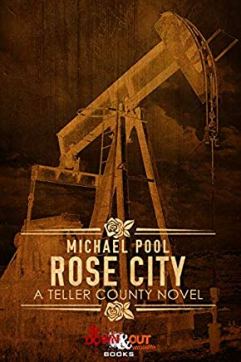
Rose City, by Michael Pool takes readers on a stroll down the darker side of small town social structures in a journey well deserving of noir acclaim. This skillfully crafted story will keep the pages turning, as the greed and corruption of Teller County unnfolds before the readers eyes. Rose City is everything a noir novel should be. It wouldn’t surprise me to hear the name Michael Poole in noir circles more and more often once the word gets out about his superb noir style and talent.
Cole Quick escaped Teller County once and he thought it was for good. Now he’s returning, following the death of his father, and is quickly reminded of all the reasons he fled this place. When he learns of the gruesome death of his childhood friend, Jimmy, it begins to look like things haven’t really changed much at all. But, there’s more going on in Teller County than what it appears on the surface. Cole takes a walk in the underbelly of Teller County’s drug trade, and finds himself in the middle of Teller County’s social elite. There are dark things happening, corruption, power and greed are behind the heineous events that occurred in Cole’s absence, events that may include Jimmy’s murder and more. The harder he’s pushed, the more determined Cole becomes to expose those running the show in Teller County for who and what they are, and thwart their corrupt game of greed and power… or die trying.
Cole Quick is a perfectly flawed noir hero, and Rose City is a perfectly dark noir tale. I give it five quills.

Kaye Lynne Booth does honest book reviews on Writing to be Read in exchange for ARCs. Have a book you’d like reviewed? Contact Kaye at kayebooth(at)yahoo(dot)com.
Share this:

Interview with Pulp & Crime Fiction Author Quintin Peterson
Posted: July 2, 2019 Filed under: Author Profile, Books, Crime, Fiction, Interview, Mystery, Noir, Pulp Fiction, Stories, Writing | Tags: Author Interview, Crime Fiction, Luther Kane, mystery, Norman Blalock, Pulp Fiction, Quintin Peterson, Writing to be Read 8 Comments
I have the pleasure of conversing with a pleasant guest today, whose love of life shines in his eyes and his smile, author Quintin Peterson. A talented author, whose work keeps classic craft alive in modern times. He writes pulp and crime fiction in many variations, throwing new twists on the classic styles. I can’t wait for you to meet him. So, without further adeau, let’s find out what Quintin Peterson has to share.
Kaye: Tell me about your author’s journey. When did you know you wanted to be a writer? How did you make that dream a reality?
Quintin: I began entertaining my friends and family by telling them amazing stories long before I started writing them. I obtained my first copyright when I was 13. While in high school, I was awarded a National Council of Teachers of English Writing Award, the University of Wisconsin’s Science Fiction Writing Award, and the Wisconsin Junior Academy’s Writing Achievement Award. When I was an undergraduate at the University of Wisconsin, I wrote and performed in two stage plays and received a Mary Roberts Rinehart Foundation grant for my play project, Change. I also received a National Endowment for the Arts creative writing fellowship, for playwriting.
Kaye: What is your favorite thing about writing crime fiction?
Quintin: I gave up creative writing and pursued a 30-year career in law enforcement. I rarely found justice during all the years I worked as a police officer for the Metropolitan Police Department of Washington, D.C. I suppose it is the reason why writing crime fiction is my dominant obsession: I find justice in my stories.
Kaye: You’ve had both short fiction and novel length works published? Which do you prefer writing? Why?
Quintin: It’s a toss-up, really. I like writing short stories for magazines and anthologies because of the word count limits, but I also like not being constrained by a word count limit for longer fiction.
Kaye: What is the most challenging thing for you about writing short fiction?
Quintin: The most challenging thing about writing short fiction is doing more with less. Writing short fiction for magazines and anthologies also afford me opportunities to experiment with genre-blending. For example, I’ve sold a cop/ghost story, a horror/mystery/noir thriller, science fiction/noir mysteries, and an Arthurian police story.
Kaye: What is the most challenging thing about writing novel length works?
Quintin: The most challenging thing about writing novel length fiction is avoiding the pitfall of being too wordy and doing less with more.
Kaye: Pulp fiction, maybe even more than other genres, must have well developed, larger than life characters. How do your characters develop for you?
Quintin: I create backstories for my characters so that I know them in order to make them seem real, and then pit them against each other in what I endeavor to make compelling stories.
Kaye: Which of your main characters is your favorite? Why?
Quintin: I have two favorite characters: Norman Blalock and Luther Kane, who are cousins and appear in each other’s stories. I like Blalock because people underestimate him. I like Kane because he is a man of action.
 Kaye: Your story “Broken Doll” just came out in Awesome Tales #10. That story is a part of your Private Eye Luther Kane Mystery Series. Would you tell me a little about who Luther Kane is and what makes him a great pulp hero?
Quintin: Luther Kane is a former DC police officer, as well as a former soldier and soldier of fortune who is maimed by a landmine. The loss of his legs does not prevent him from operating upon the same principles he adhered to when he was whole. He rises from his own ashes and walks again on state-of-the-art bionic legs, a miracle of modern science. At the suggestion of his physical therapist Claire Bradley, who taught him to walk again, he takes over his late father’s business, the Intrepid Detective Agency, located atop the other family business he inherited, the Last Stop Liquor Store.


Kaye: The Voynich Gambit is book two in your Norman Blalock Mystery Series and it won the Literary Titan Book Award. Tell me a little about that series. Who is Norman Blalock, and what makes him a great pulp hero?
Quintin: In these old-fashioned heist stories, Norman Blalock is a disgraced Howard University history professor who has been working as a special police officer for the Folger Shakespeare Library for decades. No one at the library knows his background and only see him as “an old black security guard.” The first Norman Blalock Mystery is Guarding Shakespeare, followed by The Voynich Gambit. The upcoming third installment is The Shakespeare Redemption. (By the way: I worked at the Folger Shakespeare Library for almost seven years, beginning the same year I retired from the police department, and penned the first two installments while I was employed there.)
Kaye: Who is your favorite villain? Why?
Quintin: Kavitha Netram, the femme fatale Norman Blalock matches wits with in both Guarding Shakespeare and The Voynich Gambit. She returns in The Shakespeare Redemption. She is smart, sexy, and ruthless.
Kaye: What are you working on now? What can readers expect in the future from Quintin Peterson?
Quintin: Right now, I am working on The Shakespeare Redemption. I will continue to write more installments of the Norman Blalock and the Private Eye Luther Kane mysteries, as well as other noir stories. I also plan to write more science fiction and horror thrillers.
Thanks for having me, Kaye. It’s been a pleasure.
I want to thank Quintin Peterson for sharing with me. It’s been enlightening for me and I hope it has for all of you readers, too. You can find out more about Quintin and his books at the links below. (Be sure to visit his Amazon page. You’ll find a large selection of books and short fiction in a wide range of variations upon the genre. Pulp and crime fiction fans may call it a gold mine. Those unfamiliar with the genre should check it out. It’s a fun genre. )
Amazon: https://www.amazon.com/Quintin-Peterson/e/B002BMCR2E?ref=sr_ntt_srch_lnk_1&qid=1561789921&sr=8-1
Facebook: https://www.facebook.com/quintin.peterson.56
Twitter: https://twitter.com/luther_kane
LinkedIn: https://www.linkedin.com/in/quintin-peterson-263b4b8/
Good Reads: https://www.goodreads.com/user/show/26191433-quintin-peterson
Like this post? Let me know in the comments. You can be sure not to miss any of Writing to be Read’s great content by subscribe to e-mail or following on WordPress.
Share this:

So You Think You Can Dance: Breaking New Ground
Posted: June 29, 2019 Filed under: Art's Visual Media Reviews, Opinion, Television review | Tags: Art's Visual Media Reviews, So You Think You Can Dance, Television review, TV, Writing to be Read Leave a comment
“What’s wrong with kids today?”
This lament has been uttered by every generation since Adam and Eve discovered they were pregnant a second time.
So….what IS wrong with kids these days?
They feel as if they have no future. The last few extant generations simply don’t. Futures come in handy when you feel as though the world will be unrecognizable before you’ve grown up. As a child of The Mushroom Cloud I know what that feels like, that amputation of the future. It made me really angry. My friends and I were more likely to commit petty crimes and indulge in drugs. Without a future, why bother? Why work hard in school? Why cultivate disciplines, interests, social connections? The oceans are rising and will drown your block or your whole neighborhood. The coolest animals will be extinct. No elephants, no polar bears. What kind of future is that?

Then I discovered a TV show called “So You Think You Can Dance”. You can knock me over with what these kids are doing! Their bodies must be INCREDIBLY strong and flexible. These kids are doing the impossible! Has the human race mutated? Do we have extra joints, super-human muscle memory? Who ARE these people?
They’re just kids. Their secret is that they found a passion, something that interested them so much that they said “fuck it” to the absence of the future and decided to live for this thing called Dance. It was better than being a thug. Thugs are mean, WAY mean and being mean doesn’t feel very good. Not as good as practicing B-moves, Krumping, flapping, sapping, tapping, robot-twitching, water-waving, learning your body’s capabilities and stretching them further, further, further!
This is IT! Sometimes it’s called ART. Don’t be embarrassed by the word ART. It’s cool to do ART. It’s okay. Even if it’s gay it doesn’t matter. Nobody cares about gay any more. You can be gay, you can change from man to woman or woman to man, nobody cares! If you want to know where it is, where the cutting edge in creativity can be found these days you can see it on “So You Think You Can Dance”. The judges aren’t scary. They aren’t there to cut you down. They want to show you The Future. Word up, Bro. There IS a future. Nobody can stop it. It takes some work. Everything good takes work. Making a future is hard work. It’s not like it used to be, when the Future was going to happen no matter what. Now it takes a little faith and a lot of work, but it’s there: you… DO…Have…A…Future. Do you want it to kick you in the nuts or do you want to dance with it?
When has anyone given a shit about choreoraphy? Are you kidding? Corey-who? Shazam! Choreographers are the composers of Dance. They arrange the time-space-music continuum in which Dance exists. On the TV show they are not only given credit, they are like stars! Now I know the work of Tice Diorio, Mia Michaels, Sonya Tayeh, “Nappytab”, Stacey Tookey and Travis Wall. Choreographers come from the elder population of dancers. They still dance but they are the keepers of the flame, the mentors of the seventeen through twenty two year old dancers who are living the dreams.
I’m not sure there is any more difficult art form than what is now appearing as Dance. It’s not enough to specialize. You can’t be a ballroom dancer, a hip-hopper or a Broadway hoofer. One of the messages of So You Think You Can Dance is that you must be trained in ALL the dance styles. Choreographers wont’ hire you if you don’t know all the styles of dance. Choreographers are the Gate Keepers, the bosses, the ones who hire dancers. Get tight with the choreographers who work at SYTYCD and you will be employed for years to come. In time, you will become a choreographer.
The most amazing thing about the dance numbers on this show is their purity. We’re not seeing arrangements for pop superstars. We’re not seeing choreography for Taylor Swift or Michael Jackson (RIP). These dance routines are created for the television audience. For US! Sometimes magic happens on that stage. Those of you who watch the show know what I mean. In more than a decade this show has lifted the art of Dance so that each season is more amazing than the last. The mutations continue. Evolution is visible year to year. Dancers get more flexible, their muscle memories become more detailed, malleable, imprintable. This happens in front of our eyes. Sure, it’s a TV contest show aimed at a teenage demographic. That’s how things work. Consider the difference between the egregious karaoke of American Idol and the drama and high art of So You Think You Can Dance. Big difference, yeah?
Big big difference.
A Midwesterner by birth, Arthur Rosch migrated to the West Coast just in time to be a hippie but discovered that he was more connected to the Beatnik generation. He harkened back to an Old School world of jazz, poetry, painting and photography. In the Eighties he received Playboy Magazine’s Best Short Story Award for a comic view of a planet where there are six genders. The timing was not good. His life was falling apart as he struggled with addiction and depression. He experienced the reality of the streets for more than a decade. Putting himself back together was the defining experience of his life. It wasn’t easy. It did, however, nurture his literary soul. He has a passion for astronomy, photography, history, psychology and the weird puzzle of human experience. He is currently a certified Seniors Peer Counselor in Sonoma County, California. Come visit his blogs and photo sites. www.artrosch.com and http://bit.ly/2uyxZbv.
Want to be sure not to miss any of Art’s Visual Media Reviews? Subscribe to Writing to be Read for e-mail notifications whenever new content is posted or follow WtbR on WordPress.
Share this:

Modern Poetry: Confusion
Posted: June 26, 2019 Filed under: Poetry, The Many Faces of Poetry | Tags: Art Rosch, modern poetry, Poetry, Slam Poetry, The Many Faces of Poetry, Writing to be Read 3 Comments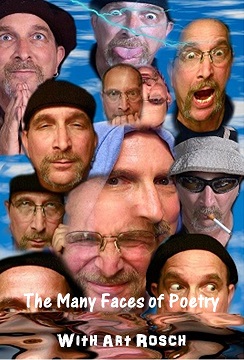
Modern poetry presents us with many problems. Like: the problem of understanding it. There are no rules to poetry, not any more, not for a century at least. I subscribe to some literary magazines on the internet. I get most of my poetry from The Rumpus and Across The Margin. These literary mags function as curators and critics. Who is there to tell us when something is good in poetry? Are there reviews of poetry? Sure there are! Does anyone read them? I do, out of curiosity. Just as I read poetry that’s being reviewed, out of curiosity and because they are appearing in magazines that I trust. Their very appearance is a critical acclaim. It’s in Rumpus, so it must be good. Etc.

It really gets down to taste and patience. Poetry is “OUT” in pop culture. It takes too long, requires too much commitment. I haven’t encountered a contemporary poet who inspires me to be a fan, to glue myself to his or her output with enthusiasm.
Other than myself. I’m a big fan of myself. A BIG fan.
When we were in high school we had Poetry Gods. We had e.e.cummings, Lawrence Ferlinghetti, T.S. Eliot, okay, yes, Allen Ginsberg. We had a Movement, we had the Beats and then Hippies. Am I out of touch? Let me know, will you?
Still, poetry thrives. It’s a bigger world, with more people, more poets.
Then there’s SLAM POETRY! The high culture equivalent of hip hop. I don’t know anything about SLAM POETRY except that it’s great fun, the audience is fully involved, the passions are up front, IT’S ALIVE IT’S ALIVE! Go to Youtube and search out Slam poetry and there you have it. The world of performance speech, it has no rules but one: tell a story, suck in the audience. If you don’t you will experience a gloomy traumatic humiliation that you’ll never want to repeat unless you combine the attributes of martyr with poet (not a bad combo, really) and you’re in it for the long haul, you’re there to perfect your art no matter what the price.
Youtube threw up a slam poet named Jesse Parent. The poem he spoke was called “To The Boys Who Will One Day Date My Daughter”. Then, boom! I was off on a delightful two hour marathon of enjoying slam poetry and the only reason it resolved at two hours was because my butt hurt from sitting so long in my malignant chair.
Guess what? The world has changed. I’m old enough to enjoy the backward/shrinking/reverse view of looking through the wrong end of a telescope. e.e. cummings? Allen Ginsberg? Are they hip-hoppers? What do they do?
“You’ve never heard ‘Howl’?”
“Is that a song?”
“No. Probably the most famous poem of modern times.”
“What? Like ‘Niggas In Paris’?”
“Niggas in…uhhhh, I don’t….”
“Daddy! Kanye and Jay-Z.”
I’m already confused. This began as an essay about poetry. “Well, Kanye’s pretty much destroyed himself, and Jay-Z, okay, I can handle Jay-Z, gotta give him some respect.”
“Listen, I’ll make a deal with you. I’ll listen to ‘Howl’ if you’ll listen to ‘Niggas in Paris.”
“Deal. But…let me warn you. Ginsberg wasn’t much of an orator…”
(Ginsberg reads: I saw the best minds of my generation destroyed by madness etc etc). He sounds as if he’s been drinking Robitussin for two weeks and just took a snort of cocaine to get through the reading. After listening to Jesse Parent for half an hour the desultory delivery of Ginsburg is pathetic. I listen to the words of the poem. I know it’s a classic. I like it. I’m ambivalent about it. It sounds old fashioned. But maybe that’s just poor Allen’s delivery.
Yes. The world has changed.
A Midwesterner by birth, Arthur Rosch migrated to the West Coast just in time to be a hippie but discovered that he was more connected to the Beatnik generation. He harkened back to an Old School world of jazz, poetry, painting and photography. In the Eighties he received Playboy Magazine’s Best Short Story Award for a comic view of a planet where there are six genders. The timing was not good. His life was falling apart as he struggled with addiction and depression. He experienced the reality of the streets for more than a decade. Putting himself back together was the defining experience of his life. It wasn’t easy. It did, however, nurture his literary soul. He has a passion for astronomy, photography, history, psychology and the weird puzzle of human experience. He is currently a certified Seniors Peer Counselor in Sonoma County, California. Come visit his blogs and photo sites. www.artrosch.com and http://bit.ly/2uyxZbv.
Want to be sure not to miss any of Art’s The Many Faces of Poetry segments? Subscribe to Writing to be Read for e-mail notifications whenever new content is posted or follow WtbR on WordPress.
Share this:

June: Seeking thrills and chills with thrillers
Posted: June 24, 2019 Filed under: Fiction, Thriller, Writing | Tags: Dan Alatorre, John Nicholl, Medical Thriller, psychological thrilers, Thrillers, Writing to be Read Leave a comment
This month’s genre theme is thrillers, and it has been exciting exploring the many facets of this widely encompassing genre. Some of the great thriller writers include James Patterson, Dean Koontz, Jonathan Kellerman, Stephen White, Patricia Cornwell, J.A. Jance, Stephen King and John Grisham. Thriller authors seem to have a knack for keeping readers on the edge of their seats, chewing their nails down to the quick, and fighting off sleep to finish reading the last few pages. Many great thriller novels become thriller movies, such as The Firm, Night Train to Munich, Odd Thomas, The Girl on the Train, The Andromeda Strain, The Foreigner, The Pelican Brief, The Silence of the Lambs, and Die Hard to name just a few. Thrillers make the adrenalin flow and the heart pump with anticipation. In a broad sense, a thriller is an adventure or mystery novel, (or movie), that feeds on suspense to get readers’ adrenelin pumping and keep them turning pages, because they have to learn what… happens… next.
Within this context, there are many subgenres of thriller, including spy novels, political thrillers, psychological thrillers. My review books this month, The Gamma Sequence, by Dan Alatorre and Only Wrong Once, by Jenifer Ruff are both medical thrillers, but they are two very different stories. My interviews this month are with International bestselling novelist Dan Alatorre and my “Chatting with the Pros” author guest is psychological thriller author John Nicholl. The subgenres are many, and sometimes the lines are blurred between thrillers and horror novels, or thrillers and mysteries, or thrillers and crime fiction, but as master thriller author James Patterson said in his book Thrillers: Stories to Keep You Up All Night (2016),
“But what gives the variety of thrillers a common ground is the intensity of emotions they create, particularly those of apprehension and exhilaration, of excitement and breathlessness, all designed to generate that all-important thrill. By definition, if a thriller doesn’t thrill, it’s not doing its job.”
Yes, it’s the excitement we feel when we read a good thriller, the sudden rush of adrenaline when catastrophy strikes and it seems there is no way out for the hero(es), or the anticipation that makes us jump in our seat when the villian attacks even though we saw it coming, these are the feelings that keep thriller readers coming back for more. Good thrillers are usually fast paced to keep the action moving and keep the adrenaline pumping from the first page to the last, throwing in twists and turns, and maybe a series of ups and downs, that keep readers on the edges of their seats and never quite give them a chance to rest until that last page is turned.
Like this post? Let me know in the comments. You can be sure not to miss any of Writing to be Read’s great content by subscribe to e-mail or following on WordPress.




















