Book Review: “Dying Time”
Posted: February 21, 2025 Filed under: Book Review, Books, Fiction, Review, Speculative Fiction, Supernatural, weird western 2 Comments
About Dying Time
How many Agents of Death does it take to save the world?
If it’s Ginny Sutton, just one.
After barely surviving her confrontation with the Sinful Six, Ginny spends the winter hiding out, adjusting to her new job as an Agent, and honing the powerful gifts bestowed by the station.
Spring brings her to Dodge City where she finds her new boss Death waiting with an urgent assignment spurred by a foretelling of his brother War. The Vampire Council has an agenda for world domination that includes turning Ginny into one of their kind to harness her Agent powers for their evil plans. Worse yet, they’re targeting other beings of power and magic for the same purpose: to turn them and use their gifts to create a vicious army of super vampires. Ginny must become the hunter before ending up as prey, or the entire world will descend into darkness.
The vampire threat is personal, but bigger than one woman’s life. Ginny’s only hope is to abandon working alone and recruit a team—steadfast friends both old and new, along with her trusty mount Horse—to defeat the Council before their dark forces are unleashed upon humanity. It will take luck, skill, and determination to win the day, but as Ginny learned long before becoming an Agent:
HOPE IS NOT A STRATEGY.

From the author of Blood Follows Blood comes the second book in this supernatural western series where legends walk among us, and the line between hunter and prey is never clear.
Purchase Link: https://www.amazon.com/Dying-Time-Legend-Ginny-Sutton-ebook/dp/B0DVSM2VKJ
My Review of Dying Time
I requested a digital copy of Dying Time, by Julie Jones in exchange for an honest review. All opinions stated here are my own.
Dying Time is book 2 of The Legend of Ginny Sutton series, by author Julie Jones. Last year, I enjoyed the first book in this series so much that I had to ask to review the second as soon as I learned she was writing it. You can see my review of the first book and interview with the author in this segment of “Chatting with New Blood”. Ms. Jones did not disappoint.
In book 1, Ginny Sutton was called upon to be an agent of Death. In Dying Time, Death calls upon her once again, this time to rid the west of a vampire army which threatens to destroy all humanity and other creatures, both natural and supernatural, in their path. Bestowed with supernatural powers of her own, Ginny is commissioned to enlist some of her friends, which were introduced in the first book and are just as likable in this tale. Poker Alice, her Native American friend, Maggie, and Sheriff Ed Hayes join forces with Ginny to rid the west of a terrible evil which could mean the end of humanity.
You never know what will happen next in this world where supernatural beings walk the American western frontier, but Ginny Sutton is ready to face whatever life, or Death, throws her way. I give Dying Time five quills.
____________________________
Kaye Lynne Booth does honest book reviews on Writing to be Read in exchange for ARCs. Have a book you’d like reviewed? You can request a review on the Book Review tab above.
Share this:

Chatting with the Pros: Bobby Nash
Posted: December 14, 2024 Filed under: Book Review, Books, Chatting with the Pros, Interview, Review, weird western | Tags: BobbyNash, Book Review, Chatting with the Pros, Dante's Reconing, Dante's Showdown, Dante's Tenth, Interview, Kaye Lynne Booth, The Tales of Dante Series, Writing to be Read 7 Comments
I’m pleased to have award winning author Bobby Nash as my guest today on “Chatting with the Pros”. Bobby writes both novels and short fiction, graphic novels and comic books, and has even written screenplays and worked on the movie sets.
About Bobby Nash
An award-winning author, Bobby Nash writes novels, comic books, short stories, novellas, graphic novels, and the occasional screenplay for a variety of publishers. He is a member of the International Association of Media Tie-in Writers and International Thriller Writers. On occasion, Bobby appears in movies and TV shows, usually standing behind your favorite actor and sometimes they let him act. Recently, he was seen in Creepshow, Joe Stryker, Doom Patrol, The Outsider, Ozark, Lodge 49, Slutty Teenage Bounty Hunters, and more. He also draws from time to time.
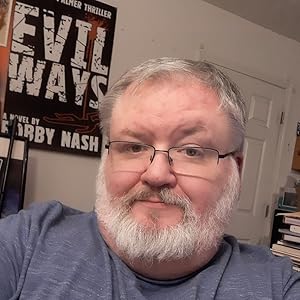
He was named Best Author in the 2013 Pulp Ark Awards. Rick Ruby, a character co-created by Bobby and author Sean Taylor also snagged a Pulp Ark Award for Best New Pulp Character of 2013. Bobby has also been nominated for the 2014 New Pulp Awards and Pulp Factory Awards for his work. Bobby’s novel, Alexandra Holzer’s Ghost Gal: The Wild Hunt won a Paranormal Literary Award in the 2015 Paranormal Awards. The Bobby Nash penned episode of Starship Farragut “Conspiracy of Innocence” won the Silver Award in the 2015 DC Film Festival. Bobby’s story in The Ruby Files Vol. 2 “Takedown” was named Best Short Story in the 2018 Pulp Factory Awards, one of five nominations for The Ruby Files Vol. 2 (created by Bobby Nash & Sean Taylor). Bobby’s digest novel, Snow Drive was nominated for Best Novel in the 2018 Pulp Factory Awards. Bobby was part of Moonstone’s Yours Truly, Johnny Dollar, which won a 2020 Pulp Factory Award for Best Pulp Anthology. Bobby’s novel, Nightveil: Crisis at the Crossroads of Infinity was also named Best Pulp Novel in the 2020 Pulp Factory Awards. In 2020, The Sangria Summit Society awarded the New Pulp Fiction Award to Bobby Nash for his work on Snow Falls and the Snow series.
For more information on Bobby Nash please visit him at http://www.bobbynash.com, http://www.ben-books.com, and across social media.
Interview
Kaye: You’ve been in the writing and publishing business a long time. What is your take on how the publishing industry has changed, and what adaptions have you had to make?
Bobby: There are certainly many more options for getting stories to readers now than when I started back in the pre-internet, pre-self-publishing model we have today. When I was getting started, you wrote a query, synopsis, and three chapters, printed them out, put them in a self-addressed stamped envelope, and mailed them to a publisher in the hopes you might hear back, or at the very least receive a form letter. Self-publishing wasn’t as well regarded as it is today so that wasn’t really an option. No internet limited your reach back then. Things are more open today, but that also means there are more books out there as well, so you have to work even harder to make your book stand out in a crowded field.
Today, being a writer means you’re running a small business. Marketing, promotion, publicist, travel/event planner, etc. That’s all on the writer, whether self-published or traditional.
I had to teach myself how to promote. I had to learn how to handle book production, pre-press, cover design, how to write a press release, things like that. I learned how to speak in public, to do panels and interviews, live podcasts, stage performances, and the like. As an author, you’re not just trying to sell books. You’re selling an experience. You’re part of that experience so you’re selling yourself as well. Branding is important to building an author brand. It is a bit time-consuming, but is important to my career as an author. Writing is just a small part of my job.
Kaye: According to your bio, you’ve written “novels, comic books, short stories, novellas, graphic novels, audio dramas, and the occasional screenplay”. Which form of writing would you say you enjoy most? Why?
Bobby: Not sure if ‘enjoy most’ is the best way to describe it. Each works different creative muscles so they’re not always easily compared. With prose, it’s all me so I see it all as I’m doing it. With comics, audio, and screenplays, I do my part, it goes away, then later comes back to me to do more, then goes away, and on and on until it’s finished. I’m part of a team there so I’m in and out at various stages of the process. Each has its enjoyable parts and the parts I like less. Just the nature of the beast, I suppose. I love them all. I will say that comic books were my first love. All of this desire to create, to tell stories, was born in the pages of comic books.
Kaye: Which type of writing presents the most challenge for you? Why?
Bobby: Novels require more time. As they are all me, I’m responsible for everything in them. That means I have to describe things in detail without it coming across as dull or as an info-dump. I’m painting the picture for the audience with words only. With scripts, most of what I write is direction for the artist or actors. They then interpret those details, adding another layer to the story. In a novel, if we walk into a character’s living room, I describe it so the reader can ‘see’ it. In a comic, I tell the artist it’s a living room. I will say that there are certain things that need to be there if important, but I leave it to the artist to design the living room. It’s a very different mindset. When I write for the artist, it’s not to entertain them, but to let them know what’s going on. The artists and actors aren’t my audience. They’re my partners.
Writing characters that are not mine also presents its own challenges. Doing work-for-hire on publisher-owned titles or media tie-ins means making sure I write the characters correctly. Research and study come in handy there. The characters have to stay in character. If not, the reader will notice something’s not right.
Kaye: You’ve done some work with graphic novels and comic books. How does the writing in these mediums differ from fiction?
Bobby: Comics are collaborative. The artist has input into the storytelling. We’re a creative team. When I write a script, as I mentioned earlier, most of what I write in the script is direction, so the artist knows what I’m thinking in regard to the panel. I also tell them what dialogue I’m planning, though this may change after I see the art. The artist then takes this information and creates the page with art and making that art flow and tell the story. Here’s an example of a script panel.
Panel 1. Bobby sat at the desk in his office, writing. Books and comics are stacked everywhere. Controlled chaos. He’s typing on a laptop, a soda and several action figures on his desk. He appears stumped. His hair is uncombed. Glasses slid down his nose. Deep in thought about his current story.
Caption: MEANWHILE, THE WRITER SITS TUCKED AWAY IN HIS OFFICE, UNAWARE OF THE DANGER HEADED HIS WAY.
WHY CAN’T I MAKE THIS PAGE WORK?
SFX (in the distance): BOOM!
SFX is sound effects. Something like that. The artist would then figure out the best way to draw this panel. It never comes back to me the way I pictured it in my head, which is fine. It almost always comes back better than I imagined. Seeing the art come in is one of the big joys of writing comics. It always makes me smile.
Kaye: How does one get into writing comic books or graphic novels? Is there a secret society one must break into? What’s the secret handshake?
Bobby: This is a harder question to answer than you might think. There’s an old joke that says that anyone who manages to break into comics is expected to brick up that entrance and close it off. Ha! Ha! Getting to work for larger, established comic book publishers is tough. Really tough. Most do not take submissions. Those that do want you to turn in a finished project, story, art, letters, colors, ready to print. Today, you basically have to be a comic book creator to get hired by publishers that create comics.
That said, we live in an age where you can put out your own comics yourself. Self-publishing, comic ebooks, and webstrips are all wonderful ways to show the world your work. If your goal is to work for Marvel, DC, Dark Horse, etc., then showing the editors there your published work is the only way to show these publishers what you can do. If they like what they see, then they may reach out to you about possibly pitching something to them.
If you want to create comics, then create comics. That’s step one.
From there, you keep trying, keep creating, and hope you capture someone’s attention if doing work-for-hire comics is for you. There are smaller publishers that will hire creators to create comics. I write comics on a work-for-hire basis, but it took a long time to get into those publishers. Once they know you and your work, and if they like working with you, it’s easier to get additional comic book opportunities.
Kaye: Do you do your own illustrations for these books?
Bobby: Heavens, no. I leave that to the professionals who are so much better at it than I. I can draw. I doodle. I sketch. I can give the artist a sketch if I have a specific idea on how I would like to see a scene so he or she can see what I was thinking, but otherwise, I leave that to the artists. They’re so much better at it than me.
My dream as a kid was to be a comic book artist. I started writing so I would have stories to draw. Turns out, I was better at writing comics than drawing them. Eventually, I focused on the writing and eventually was hired to write a comic. I never looked back.
Kaye: You are a member of the International Association of Media Tie-Ins. Can you give a brief explanation of what a media tie-in is and tell us a little about how you got into that arena?
Bobby: Media tie-ins are stories based on characters that originated in other mediums. Novels, comics, short stories, etc. based on television shows or movies are media tie-ins. Star Trek, Star Wars, MCU, etc. These characters are usually licensed from the owner of the property and creators are hired by the publisher, often with approval from the rights holder. Stories are also approved by the rights holders as well. Media tie-ins generally come with a lot of rules, a lengthy list of the type of stories you can and cannot do. The owners of Zorro, for example, are there to protect Zorro. They won’t allow you to write a story that hurts the character. One of the biggest misconceptions I hear about media tie-ins are that many readers assume this is fanfiction. It’s not. With fanfic, you basically write what you want with no oversight. With tie-ins, there is oversight. There are rules. The challenge we, as writers, face is how to tell the best story we can within those parameters, which is not really that big a challenge. You just have to know what you can and cannot pitch. Don’t kill any main characters, cut off their arms, get them married or have children, things like that. Big changes to the characters will come from the owners. I’m just borrowing the character and returning it the way I received it.
I like to describe media tie-in writing like an episode of Star Trek. The original series usually opened with the Enterprise flying through space. Everyone is on the bridge, happy, maybe laughing. Then, trouble happens. The crew has to deal with, then solve a problem. At the end of the episode, the Enterprise flying through space. Everyone is on the bridge, happy, maybe laughing. Media tie-in writing generally happens like that. I can bend the characters, but not break them.
My media tie-in journey started with a local access morning kids television series called Roger Rocket. He was an astronaut musician who had puppets on the spaceship with him and they played music videos for kids. I met him at a comic shop and he hired me to write a comic for his show. Though, very little of my work survived him deciding to rewrite it himself, that was my first tie-in experience. Years later, Moonstone invited me to write a Green Hornet short story. From there, I was lucky to be invited to write other characters like Zorro, Kolchak: The Night Stalker, The Lone Ranger, Night Beat, Yours Truly, Johnny Dollar, Box 13, Remo Williams, At The Earth’s Core, and a number of properties owned by various authors and publishers. It’s fun to play in someone else’s sandbox from time to time.
Kaye: How does one get into media tie-ins? Do you go knocking or do they find you? What advice would you give to someone trying to break in to media tie-ins? Is there a secret handshake for that one?
Bobby: Much like comics, they tend to find you. Unlike anthologies or company-owned characters, getting hired for media tie-ins means you have to be approved by the editor and publisher then approved by the owners of the media tie-in property. I was once tapped by an editor for a media tie-in project only to be told no by the owners of the property because they wanted a more well-known writer. That’s their choice, of course. It stung, though.
Usually, media tie-ins are not open calls. The publisher reaches out and invites writers they know to be part of it. There’s a method to writing tie-ins. You have to understand what kind of stories you can tell or not. Because I now have experience, I know what stories not to pitch because they will probably never be greenlit. As I mentioned previously, media tie-in writing is not fanfiction. That’s very important to remember. Writing tie-ins comes with a lot more rules, a lot more do’s and don’ts than other types of writing. You have to write a story that fits the brand you’re writing. The characters have to act and sound right. They have to be in character. Your story should fit seamlessly into the world of the media project that you’re writing.
As with comics, get work out there. Write your own characters and get them out there as your resume, as your writing samples. That will be what tells the publishers if your style fits their licensed characters. Once publishers get to know you, they may invite you to be part of their media tie-in projects.
As with everything in publishing, a lot of it boils down to timing and luck.
Kaye: Your work has won or been considered for many awards over the years. Which of these would you say you are the most proud of, and why?
Bobby: The first one is always special. There are also those that happen without you even knowing. I won best author in the Pulp Ark Awards, which was a huge surprise. Winning the Sangria Summit Society’s Pulp Fiction Award was also a nice surprise. I had no idea I was in the running for either. Awards are nice. It’s a bit of an ego boost. You feel like you’re doing something right, but also that others have noticed. Awards aren’t why I write, but it is a great feeling when it happens.
Kaye: Which do you enjoy writing most, heroes or villains? Why?
Bobby: Villains get the best lines. They get to do the coolest stuff. Villains are fun to write.
Kaye: Every author has those stories which are near and dear to their heart, those that are just special for whatever reason. Which of your works would you say falls into that sweet spot for you? Why?
Bobby: My go to answer for this question is usually Evil Ways. Evil Ways was my first published novel, and the book that launched this career of mine. It wasn’t always fun or easy. My original publisher turned out to be horrible, but I had a book in hand as a resume that allowed me to reach out to other publishers and show them my work. I picked up some writing gigs that kept me working until my contract ran out and I got the rights to Evil Ways back. Then, I published it myself, which was my first foray into self-publishing. So, yeah, I owe a lot to Evil Ways.
Kaye: You have a Patreon, where you market your books. Can you tell us a little about that? How effective do you find Patreon to be compared to other venues for selling your books?
Bobby: Patreon is nice. I have a small following. I post a writing blog there, keeping everyone up do date on work. I also have an ebook club ($5 and up tiers) where most of my ebooks exist. I also run serialized novels and novellas there, posting chapters every week-ish (sometimes I fall behind). Patrons are part beta readers that way. This allows me to be more productive and gets at least two additional novellas out a year more than I would otherwise. Good motivation.
I like Patreon. I don’t really sell many books through there though. My patrons tend to be readers who were probably already getting the books who are there to support me. That support means a lot to me.
Kaye: Which book marketing strategies do you find to be most effective?
Bobby: My most impactful way to sell books is at in-person events. Getting out to conventions, conferences, libraries, bookstores, and other events where I can meet people, talk up the books, just get to know readers. Outside of that, I use social media, I do interviews like this one, go on podcasts and virtual panels, write and send out press releases to news outlets, create and send out a free monthly newsletter (you can sign up at https://www.subscribepage.com/NashNews), and other opportunities as they present themselves to talk about writing and my books. There are many marketing methods out there. Not all of them work the same for every book. A promotion method that works for Evil Ways, for example, might not work for Dante’s Reckoning. You have to be willing to try new promotional paths to see what works and what doesn’t.

Kaye: Your most recent work seems to be your Dante novels. Would you like to talk a little about that series?
Bobby: The Dante books are fun. I wrote a short story for Valhalla Books’ The Devil’s Due prose anthology. The theme was that all deals come with a price. I wrote a story set in the old west, a mining town called Dante. There, a deal had been made years before with an other-dimensional being. It was time to pay up, but there were those in the town who wanted to keep the final settlement from happening. It was a fun little horror/western story. The publisher later came to me and asked what happened next. I told him I didn’t know. I just wrote a short story. I hadn’t planned any further than that. He said, this is a series. So, I got busy writing. Book 3, Dante’s Reckoning just released this Halloween. I am working on book 4, Dante’s Rebirth for 2025. I love it when things work out this way. I’m glad the publisher saw something in the concept that made him want to keep it going.
Kaye: Where can readers who would like to learn more about you and your works find you?
Bobby: I’m all over social media. There’s links at my website, which is www.bobbynash.com. This is the main hub of all things me. Ha! Ha! There are links to everywhere you can find me on the site. My indie press, BEN Books is at www.ben-books.com. These are the titles I publish myself. Please visit me and say hello.
About the A Tale of Dante Series
Welcome to Dante!
Dante, Arizona is not your average mining town.
Many dreamers have come to this barren speck of desert to strike it rich. Gold, silver, and other valuable minerals are there for the taking if you’re brave enough to pay the price, this wealth, power, and influence. Dante turned peasants into millionaires overnight.
Some suggest that these men sold their souls for the find of a lifetime. Did Dante’s founders make a deal with the devil? If so, what was it? More importantly, what will it cost the town? Nothing happens for free. Every deal has its price and there are still deals to be made.
This brings new blood to town as well as old blood. When a young reporter’s assistant becomes enamored of the daughter of a new arrival, he learns the terrifying truth behind the town. A deal was made.
And payday is coming.

Dante’s long nightmare begins here with the short story that started it all and two new tales from Dante. From the pages of The Devil’s Due comes Dante’s Tenth by award-winning author Bobby Nash.
My Review of the A Tale of Dante Series
I remember reviewing my first weird western, before I was even aware that there was such a genre, back in 2020, a book in the western genre with dragons, trolls, dwarves, and other beings from the fantasy domain. Since that time, I’ve read and review several more weird westerns and I’ve grown quite fond of the genre. Naturally, when I saw that Bobby Nash had a weird western series, I offered to review the whole series for this segment of “Chatting with the Pros”. And I’m glad that I did. One never knows what will happen next in the A Tale of Dante series, where vampires lurk in the shadows and werewolves roam the desert landscape surrounding Dante, Arizona. By hiding in plain sight, they manuvuere behind the scenes and interact with the unmidful miners and townfolk.
The town sits central in the hub of a great evil, where deals were struck long ago and now, a debt has become due. At times it is hard to tell the good guys from the bad, but make no mistake that there will be a reckoning. These stories can be read as stand alones, but I recommend reading Dante’s Showdown before Dante’s Reckoning, as the later takes place after the former. Dante’s Tenth is a collection of three short Dante stories which offer insight into three of the characters readers meet in the other two books.
The protagonists are likeable, and the villians deplorable, and lines are drawn between good and evil, if a little blurred at times. Vampires and werewolves abound in the old west town of Dante, and even the good guys carry guns. Bobby Nash brings us a vampiric priest and an army of the undead, a couple of gunfighters and a newspaper reporter who takes her job seriously to champion on the side of goodness and stop the final reckoning from taking place.
An excellent weird western series, I give the Tales of Dante series five quills.

__________________________________
This segment of “Chatting with the Pros” is sponsored by WordCrafter Quality Writing & Author Services.

Whether it’s editing, publishing, or promotion that you need, WordCrafter Quality Writing & Author Services can help at a price you can afford.
Stop by and see what we have to offer today: https://writingtoberead.com/readings-for-writers/wordcrafter-quality-writing-author-services/
Share this:

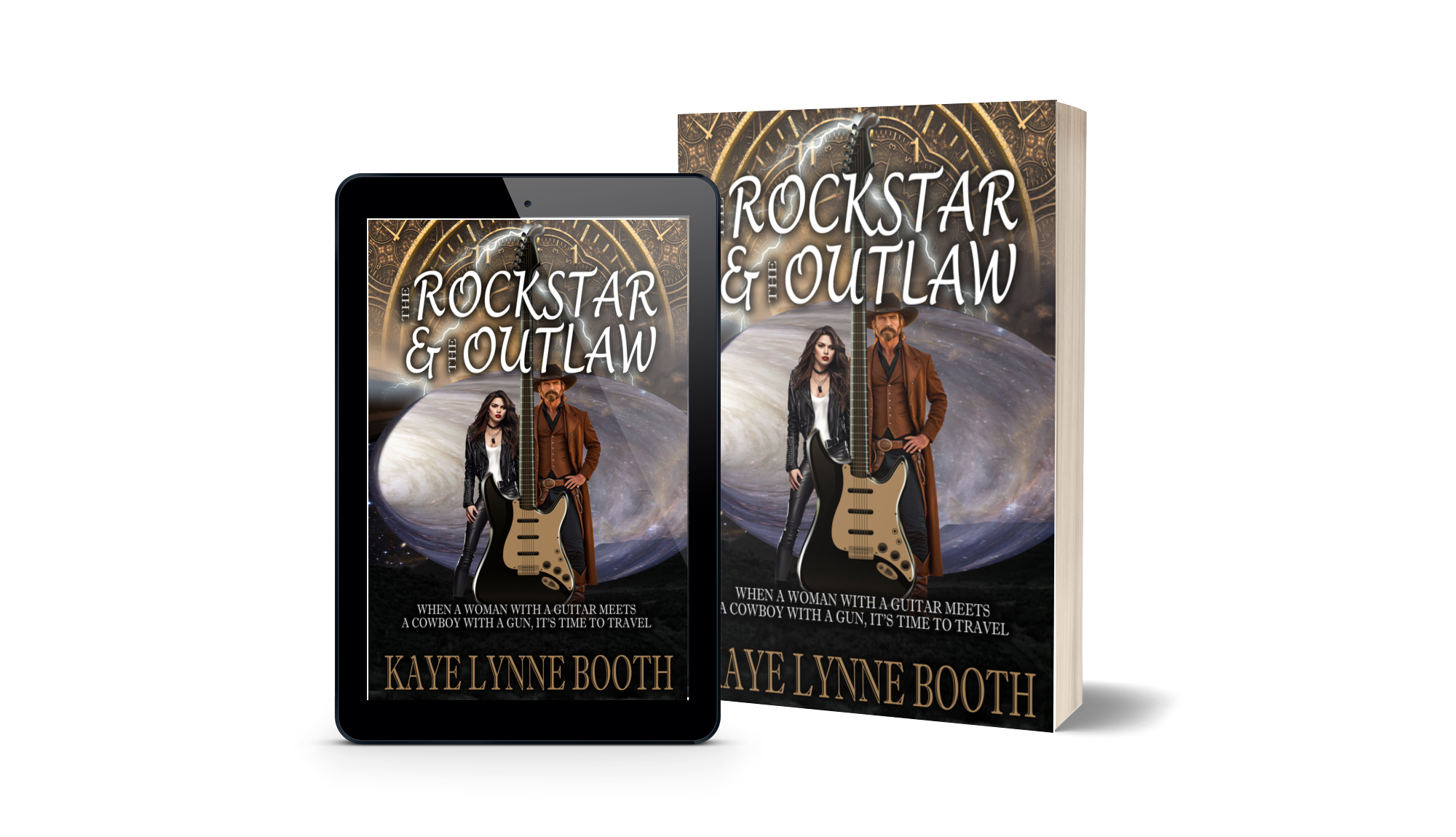
See the Fireworks with “The Rock Star & The Outlaw”
Posted: July 3, 2024 Filed under: Book Sales, Books, Fiction, Science Fiction, Time travel, Western, WordCrafter Press | Tags: Book Sale, Kaye Lynne Booth, The Rock Star & the Outlaw, WordCrafter Press 1 Comment
On Sale for $4.99 – One Day Only – July 4th, 2024
Purchase Link: https://books2read.com/RockStarOutlaw
About The Rock Star & The Outlaw

A time-traveler oversteps his boundaries in 1887. Things get out of hand quickly, and he is hanged, setting in motion a series of events from which there’s no turning back.
LeRoy McAllister is a reluctant outlaw running from a posse with nowhere to go except to the future.
In 2025, Amaryllis Sanchez is a thrill-seeking rock star on the fast track, who killed her dealing boyfriend to save herself. Now, she’s running from the law and his drug stealing flunkies, and nowhere is safe.
LeRoy falls hard for the rock star, thinking he can save her by taking her back with him. But when they arrive in 1887, things turn crazy fast, and soon they’re running from both the outlaws and the posse, in peril once more.
They can’t go back to the future, so it looks like they’re stuck in the past. But either when, they must face forces that would either lock them up or see them dead.
Get Your Copy at the Discounted Price While You Can!

This post is sponsored by WordCrafter Press.
Share this:

A great review for “Sarah”
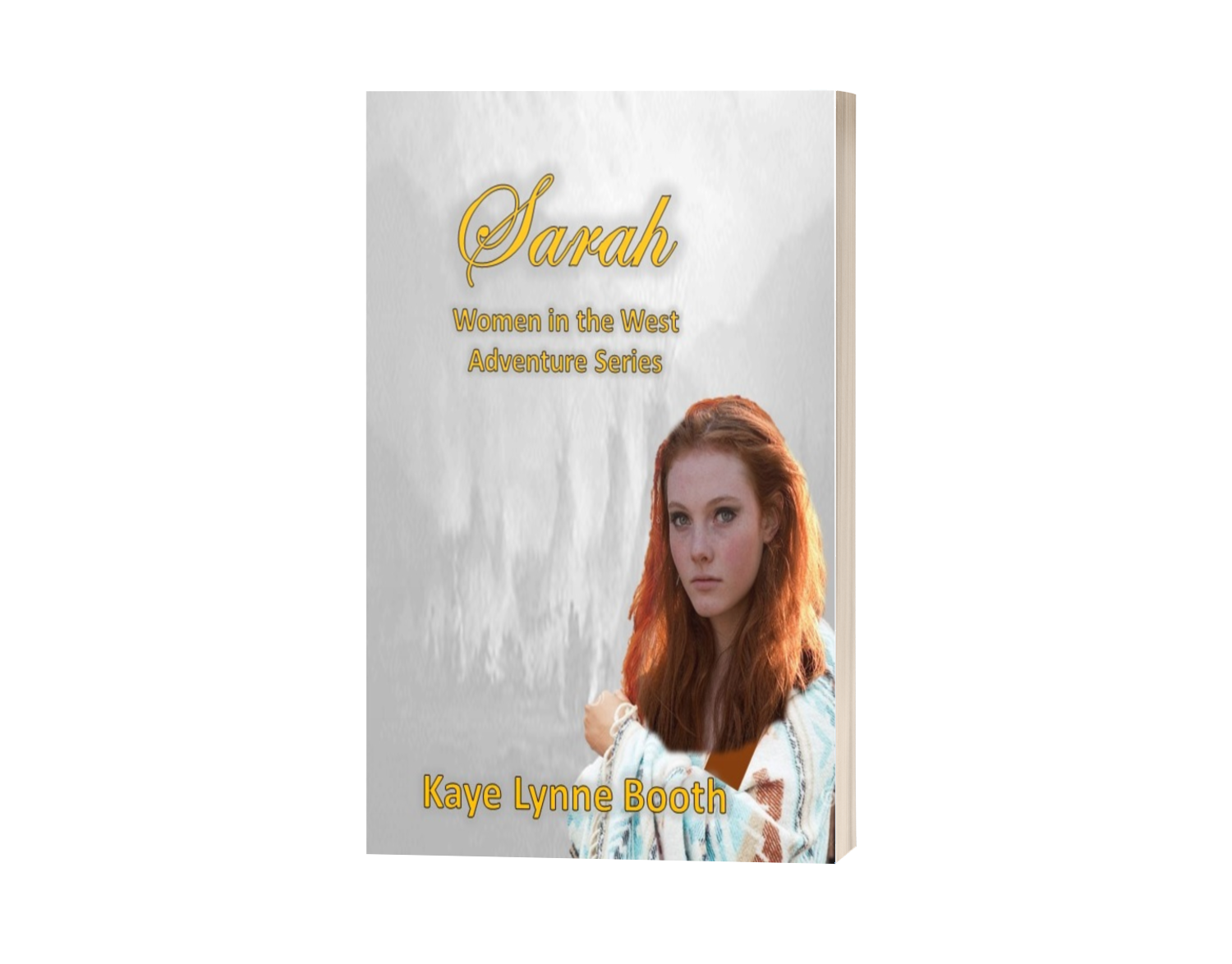
Posted: July 2, 2024 Filed under: Book Review, Books, Fiction, Historical Fiction, Review, Western, Women in History, Women's Fiction, WordCrafter Press | Tags: Book Review, Historical Fiction, Leonberger, Sarah, Western, Women in the West, Women's Fiction, WordCrafter Press 6 CommentsDrop by Thomas Wikman’s Leonberger blog site to catch his smashing review of Sarah: Book 2 in the Women in the West Adventure Series (WordCrafter Press, 2023). I’m particularly excited about this review, as it eases my nervous anticipation about how my strong female protagonists would be received by male readers with this western historical women’s fiction series. I hope you’ll check it out. 🙂

Share this:

Writer’s Corner: Word Choices
Posted: July 1, 2024 Filed under: AI Technology, Books, Character Development, Dialogue, Fiction, Setting, The Human Condition, Time travel, Voice, Western, WordCrafter Press | Tags: AI Technology, Dialogue, Editing, Speech, Voice, Word Choices, Writer's Corner, Writing to be Read 17 Comments
I don’t need MS Word to tell me that my language might be offensive. That’s me. I use offensive language, usually on purpose, for effect because I want to be offensive, or just because it is what my character would say. Of course, I’m not writing for a YA or younger audience. I would want curse words to be pointed out and questioned, if that were the case.
I cuss. Most of the people I know cuss. Even religious folk have been known to issue a curse or two. If I feel the reaction to a situation would be an issued expletive, then my character will issue it. That doesn’t mean that all my characters are potty mouths, but when a curse is in order, they throw it out there, and I believe it is appropriate in certain situations, and also more realistic.
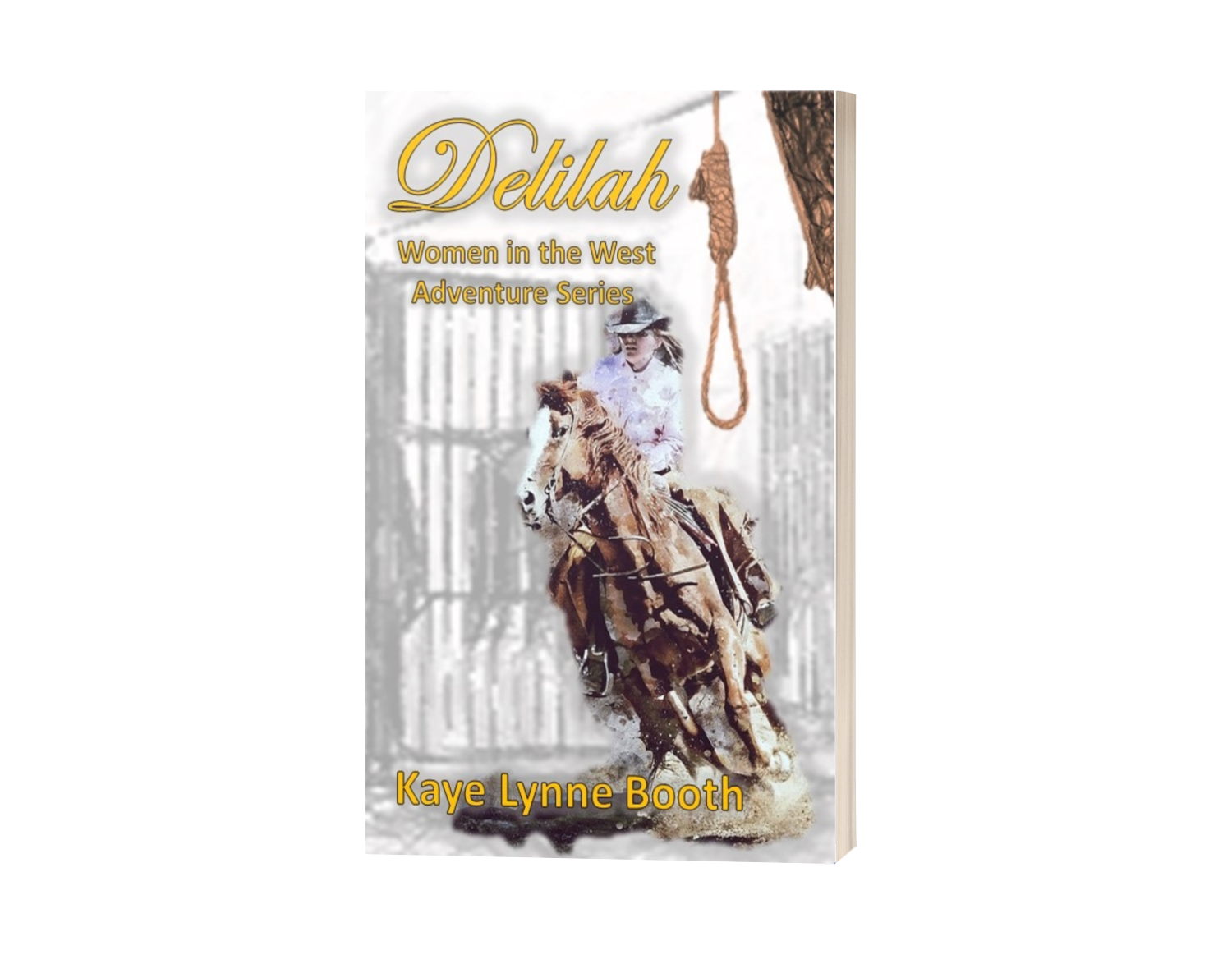
Even if my protagonist isn’t a curser, like Delilah, who uses expletives such as dagnabbit, the people around her do, so my books do contain some cursing. I don’t feel like a story set on the western frontier, would be true to the period or the frontier culture.
Likewise, the modern day Las Vegas culture in the music circles involves drugs, sex, and rock-and-roll, so naturally my character, Amaryllis, in The Rock Star & The Outlaw is involved in all of that and more, and her language often isn’t ladylike. Even so, I try not to let her get carried away with the curse words. And Sarah deals with the issues of prejudice and sexism, and the language in the story reflects the prejudices of the times, whether the AI editor in MS Word likes it or not.
But my villains often have mouths so dirty even their own mothers wouldn’t kiss them. Respect for women or lack thereof is often indicated in the way a man refers to women. If a character lacks respect for women, which many male villians do, then their language when referring to them may be less than flattering. After all, the way a character speaks is one of the things readers use to clue them in to what a character is like, and then decide if they are a character they should like, or not.
Another speech trait which I use often is the improper use of the English language. In the old west, many people were not educated and used words such as ‘ain’t’ or they cut off the ‘g’ in ‘ing’ words. In Delilah, one of things she strived for was to speak more properly after meeting the Mormon woman, Marta, who was a natural born school teacher and corrected Delilah’s speech automatically out of habit. Many of the less savory characters in the Women in the West adventure series, clue readers into their ignorance by the way they speak. I reckon that’s what I do it fer. These are purposeful misspellin’s that drive my AI spell-check crazy.
Many of my western characters are representitive of the many immigrants who made the U.S. into the melting pot that it is known to be. They speak in different dialects to differentiate them from other characters, which gives them colorful speech that is recogizable without adding dialog tags. In Sarah, Lillian Alura Bennett is one such character, who happens to be an Irish madam at a bordello in Glenwood Springs. And in The Rock Star & The Outlaw, the Mexican dialect of Juan Montoya leaves no question when he is speaking.
In Delilah, I had the opposite problem as the character of Dancing Falcon was a young Indian boy, who had been taught to speak English at the Indian agency with a strict teacher, so his speech is almost too proper, which made his speech sound very formal in places. One of the comments from a beta reader was that no one talks like that, so I went back when revising and added in a place where he talks about his time on the reservation and his schooling experience, to explain why he spoke that way to readers. The point being that a characters speech should reveal something about them, as well as making them identifiable.
It was really fun to create the characters in the My Backyard Friends kid’s book series, which is based on the birds and animals which visit my yard in the Colorado mountains. Katy Cat is a bit of a diva, kind of stuck up, and thinks she’s better than everyone else. She’s willing to help out Timothy Turtle as long as it doesn’t inconvenience her too much. I relayed this information in the way she swishes her tail, (body language), and in the way she talks with a bit of attitude. Heather Hummingbird has a lot of energy, so she talks really fast and rarely perches for more than a few seconds at a time. Charlie Chickadee is a young bird on his own for the first time, so I made him a bit niave. The things he says reveals this more than the way that he says it.
Other reasons an author might make the character’s or even the narrator’s voice a bit quirky is because it is the author’s voice coming through. (You know the voice English teachers are telling you to find? Yep. That one.) To an extent, this is true for me. My own speech is usually rather blunt and to the point, and so are my characters’. I don’t use a lot of colorful purple prose, instead calling it like I see it. Many of my protagonists are the same way. Delilah says what’s on her mind and she doesn’t beat around the bush. Sarah, too, tends to speak before she considers the way her words will be taken.
AI editors don’t understand this, and so variants in speech are often marked as needing correction, when in fact, they are purposeful. This is why, just running through your story with an AI editor is never enough. But there are times when human editors don’t get it either. Kevin J. Anderson tells a story about submitting a book to a traditional publisher who turned it over to a novice editor who corrected all the little quirks that revealed his voice and marked his manuscript up until it looked like nothing but red scribbles. That’s when you know that an editor isn’t a good match for you. Kevin politely refused to work with that editor and they assigned him another one. That’s why it’s important to have an editor that gets you and your voice, and understands the nuances of your character’s dialog.
Finding the right editor isn’t always easy, especially if funds are tight. Many editors will offer a free edit of the first ten pages, or even the first chapter so you can fell them out and find out if they are right for you and your story. I wouldn’t go with any editor who doesn’t offer this, and of course, I offer it through Write it Right Quality Editing Services. Any editor worth their salt will understand that they must be able to differentiate between mistakes and purposful word choices.
___________________________________________
About Kaye Lynne Booth

For Kaye Lynne Booth, writing is a passion. Kaye Lynne is an author with published short fiction and poetry, both online and in print, including her short story collection, Last Call and Other Short Fiction; and her paranormal mystery novella, Hidden Secrets; Books 1 & 2 of her Women in the West adventure series, Delilah and Sarah, and her Time-Travel Adventure novel, The Rock Star & The Outlaw. Kaye holds a dual M.F.A. degree in Creative Writing with emphasis in genre fiction and screenwriting, and an M.A. in publishing. Kaye Lynne is the founder of WordCrafter Quality Writing & Author Services and WordCrafter Press. She also maintains an authors’ blog and website, Writing to be Read, where she publishes content of interest in the literary world.
____________________
This segment of “Writer’s Corner” is sponsored by The D.I.Y. Author and WordCrafter Press.
Being an author today is more than just writing the book. Authors in this digital age have more opportunities than ever before. Whether you pursue independent or traditional publishing models, or a combination of the two, being an author involves not only writing, but often, the publishing and marketing of the book.
In this writer’s reference guide, multi-genre author and independent publisher, Kaye Lynne Booth shares her knowledge and experiences and the tools, books, references and sites to help you learn the business of being an author.
Topics Include:
Becoming Prolific
Writing Tools
Outlining
Making Quality a Priority
Publishing Models & Trends
Marketing Your Book
Book Covers & Blurbs
Book Events—In Person & Virtual
And more…

Pre-Order your copy today: https://books2read.com/The-DIY-Author
Share this:

Chatting with New Blood: Author Julie Jones
Posted: June 22, 2024 Filed under: Book Release, Book Review, Books, Chatting with New Blood, Debut novel, Fiction, Interview, weird western, Western Paranormal, Writing | Tags: Blood Follows Blood, Book Reveiw, Chatting with New Blood, Ginny Sutton, Julie Jones, Kaye Lynne Booth, weird western, Writing to be Read 7 Comments
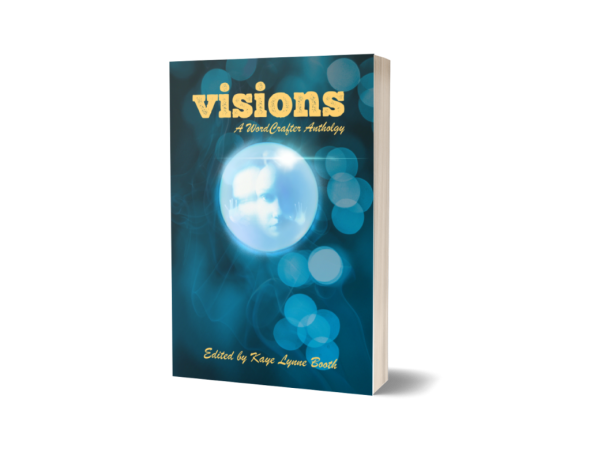
Today I’m chatting with author Julie Jones about her author journey thus far, as she releases her debut novel, Blood Follows Blood: The Legend of Ginny Sutton. I’ve worked with Julie in the past, and she has stories in both the Visions and Midnight Roost anthologies from WordCrafter Press, so I know she is a top notch writer who knows how to craft a good story. She is a promising new author and I welcome her here today.
When she asked if I’d like to review her first novel, I was happy to oblige and to invite her to be the first guest on this new blog series, where I’ll be interviewing new authors and reviewing their books. I’m pleased to have her as my guest for this first segment.
So let’s learn a little more about Julie, and then we’ll get into the interview.

About the Author
Julie Jones is an award-winning writer from northeast Oklahoma and author of the Legend of Ginny Sutton, a weird western series debuting in June 2024 with the first book titled Blood Follows Blood.In May 2020, she won the Best Horror Story award from the Oklahoma Writers Federation for Camelot, a chilling ghost story set in the once-impressive and now demolished Camelot Hotel in Tulsa, OK. Julie’s short stories can be found in anthologies published by WordCrafter Press and WordFire Press, as well as her own collection Chain Reaction available on Amazon.
Interview
Hi Julie. I am thrilled to have you as my guest today. Thank you for agreeing to chat with me.
Please tell us a little bit about yourself and your author journey to this point.
I’ve been fascinated with reading and storytelling as long as I can remember. I wrote poems and stories as a child and loved thinking up my own Weird Al-style parodies of favorite songs. In high school I was an accomplished student journalist and did well in creative writing and English classes throughout my education. Once my kids reached the age they no longer needed me quite as much, I wondered if I still had any chops. I found a short-term creative writing class at my local technology center and loved it so much I attended two more times. The third class resulted in a long-term writing group, and we published three books together. I learned a lot from that talented group and that’s where I met my editor, Aarika Copeland. In 2020 I entered the Oklahoma Writers Federation short story contest and won the horror category. The honor gave me a fresh boost and I decided to pursue writing even more seriously. Since then, I’ve attended the Superstars Writing Seminar in Colorado Springs three times and had several short stories published. Now I’ve got a novel series of my own!
You’ created a strong female protagonist who is believable and relatable. How wàs the character of Ginny developed?
In early 2022 I stumbled across an open anthology call for weird western stories. The description tickled my fancy and some brainstorming birthed Ginny Sutton. The story was ultimately rejected, but Ginny wouldn’t let me alone. She insisted on spinning yarns about her dead brother-in-law and sharing her heartbreaking backstory. I recognized the spark of true inspiration and began writing down all of Ginny’s adventures. Along the way I tried to put not only my best, but also the broken parts of myself into the story. Some readers will identify most with Ginny’s brokenness and flaws, while some will identify with her strength and determination. Both are valid. Ginny is me, and my mother, and my best friends, and every strong, capable woman I’ve ever known. By the way, the original short story is now chapter four of Blood Follows Blood.
You’ve written a kind of genre mash-up. I love that. Did you chose the genre or did the story dictate it? Why weird western?
It makes more sense to me now than it did when I decided to do it, as odd as that sounds. At the time it just struck me as a lot of fun, so I bought popular books in the genre and read them, then read their reviews. The insights were valuable, but the main thing I figured out was that I needed to do it my way. That meant throwing everything I love into the pot, stirring it all together, and hopefully serving a delicious, satisfying story to my reader. Setting it in the old West made perfect sense once I considered that all my favorite stories, books, songs, and movies feature characters who are self-reliant, personally responsible, capable, mostly moral, and believe in justice. The West encapsulates all those ideals, and to me it made sense to take the quintessential American mythos and marry it with everything that has shaped me as a person.
In your bio, you claim that your fiction is on the weird and creepy side. With your stories in two WordCrafter anthologies, I can verify the truth in that. You’re an average Jane, or maybe an average Julie, but you write all these strange stories. Where do your story ideas come from?
On paper I’m more boring than drying paint but I’ve always loved the weird and macabre, the fantastical and futuristic. I grew up in a town of less than 1,500 people before the internet existed, so books were my escape. I don’t know how many of my classmates spent their summers on the Ringworld with Louis Wu and His Motley Crew or fled Emond’s Field with the Dragon Reborn, but I did. I suppose slice-of-life stories or standard fiction doesn’t appeal to me as much because I live in those worlds already. Take me somewhere impossible to ride along with incredible people doing amazing things. That’s what I want to read.
This tale begins with the story already in motion. Instead of giving us background or introducing the character, you just slam us right into an action scene, then fill us in on the rest as the story unfolds with little exposition, works for this story quite well. But I have to ask, how did you decide that that was where your story needed to begin?
I once received the advice, “In late, out early.” Meaning, don’t bore the reader with things like Ginny walking across the high desert lugging her saddlebags and worrying about water. Start with the inciting action and backfill, then end the story when it’s over, not five pages of exposition later. That piece of advice dovetailed nicely with my journalism training where I first learned the importance of snappy introductory sentences and paragraphs that hook the reader. I decided to lean into the classic pulp novel feel with this series and structure each chapter like its own episode. I wasn’t sure if it would work at first, but feedback has been positive. There’s a lot of action and Ginny endures quite a bit, so I wanted to give readers plenty of points along the way where they could break from the story if they wanted or binge if it was just too compelling to stop. But each chapter purposely has my twist on the classic pulp episodic feel.
What was the best part of writing this Blood Follows Blood? Why?
Discovering the story along the way and brainstorming creative ways to connect the events was by far my favorite part. I also crammed so many hidden easter eggs into this book (and its sequels) that I’ve now forgotten them all. Some are obscure and only other fans of that particular thing will recognize it, and some are just for me that nobody knows, but they were all fun to include. I love every weird thing in this book, and figuring out how to connect it all together was one of the most enjoyable things I’ve ever done.
What was the most difficult part of the book to write? Why?
Editing was tough, and I have to give recognition to Aarika here. I tend to write blunt-force style and things like emotional cues and sensory details run sparse. She did a lot to highlight where I needed to add those things and challenged my thinking on some of Ginny’s desires and motivations. At one point I realized time and distances weren’t working out and had to fix that, but because everything in this book is so interconnected, it was a job to make sure I caught all the ripples downstream of every change.
What is the best piece of writing advice you’ve ever been given?
This is tough because I’ve been honored to meet and visit with many incredible authors. I wish I could remember who told me “In late, out early” but I don’t. The very best thing a writer can do is finish the story. All the other advice that’s given to authors can be addressed once the first draft is done, but if someone is new to the craft, just finish the story. And one more thing, why is the most important question you can ask yourself about your story and your characters. Why was Ginny out in the high desert? Why did Jim’s corpse walk into her camp? Why does she hate him so much? Stories are built on this word.
It’s been a pleasure to have you as my guest today. Please tell readers where they can find out more about you and about Blood Follows Blood: The Legend of Ginny Sutton.
Thanks so much for your time! I’d love for everyone to follow me on Facebook and/or Instagram, and over on my website is a signup form for my monthly newsletter. Readers will want to definitely check it out, as subscribers get early news, chances at secret giveaways, and every newsletter ends with a picture of my dog!
https://www.facebook.com/JulieJonesWriter/
https://www.instagram.com/jjoneswriter
About Blood Follows Blood

How many times does a woman have to kill the same outlaw?
Broken and alone, Ginny Sutton roams the West. After hunting down and killing Jim Puckett—her former brother-in-law and notorious leader of the Mad Dogs gang—Ginny believes justice has finally been served. Until he walks into camp hellbent on claiming her soul.Plunged into a waking nightmare of possessed posses, thirsty vampires, stubborn corpses, and every other manner of supernatural evil her enemies can raise against her, Ginny is forced to embrace one universal truth:
HOPE IS NOT A STRATEGY
All she wants is peace. But the fates have other plans for her, and more than ever her survival depends on grit, wit, and an open heart.Will Ginny survive her bloody path to absolution?
Saddle up for a wild ride into the weird west where the myths are real and body count matters!
My Review
Blood Follows Blood: The Legend of Ginny, by Julie Jones is a captivating weird western that will keep you thinking, “What else could possibly happen?” And, “How much can one girl take?”
This story has so much nonstop action that it makes the reader tired, but Ginny Sutton takes it all in stride. I guess when you live in a world where nothing stays dead, battling supernatural beings wouldn’t make you bat an eye, and deals with the devil would come as no surprise.
For five long years Ginny Sutton had been is a woman haunted by her past and out for revenge, chasing Jim Puckett half-way over the mountains and back. When she finally decided to give it up and go back home to Oklahoma, she caught up with him and chased him some more, hunting him down like the mangey dog he was. But now, Jim won’t stay dead, and the devil’s got a price on her head.
I was impressed with the craftsmanship of this debut novel. Jones has done her research, setting the perfect tone for the tale, with a strong female protagonist I couldn’t help but like.
A delightfully dark, weird western tale that you won’t want to put down. “Bravo!” to Miss Jones. I give Blood Follows Blood five quills.
______________________
If you are an author releasing a debut novel, and you’d like to be a guest on “Chatting with New Blood”, please drop me a line at kayebooth@yahoo.com.
______________________
This segment of “Chatting with New Blood” is sponsored by The D.I.Y. Author and WordCrafter Press.
Being an author involves not only writing, but often, the publishing and marketing of the book.
In this writer’s reference guide, multi-genre author and independent publisher, Kaye Lynne Booth shares her knowledge and experiences and the tools, books, references and sites to help you learn the business of being an author.
Topics Include:
Becoming Prolific
Writing Tools
Outlining
Making Quality a Priority
Publishing Models & Trends
Marketing Your Book
Book Covers & Blurbs
Book Events—In Person & Virtual
And more…
Get your copy today: https://books2read.com/The-DIY-Author
Share this:

Winners of the Wordcrafter “Sarah” Book Blog Tour Giveaway & a Reminder
Posted: May 12, 2024 Filed under: Blog Tour, Books, Fiction, Giveaways, Historical Fiction, Historical Inspiration, Western, Women in History, Women's Fiction, WordCrafter Book Blog Tours, WordCrafter Press | Tags: Giveaway, Historical Fiction, Historical Inspiration, Kaye Lynne Booth, Sarah, Western, Women in the West, Women's Fiction, WordCrafter Book Blog Tours 9 Comments
We had a great tour for Sarah: Book 2 of the Women in the West Adventure Series, although I would have liked to see a bigger turnout. I enjoyed sharing about myself and about the research and inspiration behind the book with all of you, and I may have made new friends along the way. Thanks to everyone who participated for helping me launch this wonderful book.
The Winners Are…
Each comment on the tour earned an entry in the tour giveaway and a chance to receive a free digital copy of Sarah. So without futher ado…
Drumroll Please.
The winners of the WordCrafter Sarah Book Blog Tour are…
- Author Jan Sikes
- Priscilla Bettis
- Thomastigwikman
Congratulations to the winners!
Please contact me at kayebooth@yahoo.com to receive your free digital copy of Sarah.
Reminder
Today is the last day for tour participants to get a signed print copy of Sarah: Book 2 of the Women in the West Adventure Series. This is an exclusive offer for the tour – my way of saying thanks for your support. Tomorrow it will no longer be available, so get ’em while you can!
__________________________________
Book your WordCrafter Book Blog Tour today!
Share this:

Book Review: The Texian Prisoners
Posted: May 10, 2024 Filed under: Book Review, Books, Fiction, Historical Fiction, Review, Western | Tags: Book Review, Historic Fiction, Loretta Miles Tollefson, The Texian Prisoners, Western, Writing to be Read Leave a comment
About the Book

They called themselves “Texians.”
In Fall 1841, a band of roughly 300 men straggled out of the Staked Plains into New Mexico. They had intended to claim everything east of the Rio Grande for Texas. Instead, they were captured and sent south to El Paso del Norte, then on to Mexico City. The largest group of prisoners, which included journalist George Wilkins Kendall, was escorted to El Paso by Captain Damasio Salazar. Five prisoners died on that trek. Kendall would later write a book describing the experience, a book which accused Salazar of food deprivation, mutilation, and murder, and fed the glowing coals that would become the Mexican-American War.
But what really happened on the way to El Paso? The Texian Prisoners tells the story through the eyes of Kendall’s friend George Van Ness, a lawyer burdened with the ability to see his enemy’s point of view, and asks us to consider the possibility that Kendall’s report was not unbiased.
A historically accurate retelling of Larry McMurtry’s Dead Man’s Walk, this fictional memoir will make you question everything you thought you knew about Texas, New Mexico, and the boundary between them.
Purchase Link: https://www.amazon.com/Texian-Prisoners-Biographical-Novel-Mexico-ebook/dp/B0CQ9TYK9L/
My Review
I received a digital copy of The Texian Prisoners from author Loretta Miles Tollefson in exchange for an honest review. I am a fan of Tollefson’s historical western fiction and have reviewed several of her books:
I always learn much I did not know from Tolleffson’s well researched books, and The Texian Prisoners did not disappoint. I knew very little about this time period in Old New Mexico, which takes place prior to and was a precursor to the Mexican American war. It was a violent time and so many lost their lives in the struggle for independence, this story tells of the men who declared the independence of Texas, demanding recognition of both the United States and Mexico, and were subsequently captured by the Mexican militia and marched across the brutal landscape under harsh conditons to Mexico City to await the judgement of Santa Anna.
This story is well-crafted and well-written, making me feel the discomforts the Texian prisoners were subjected to as if I were marching along the trek with them. Tollefson has an uncanny ability to get into her historical character’s heads and bring it to the page. The story is told from the point-of-view of McCaferty, the only Spanish speaking prisoner, who was used as interpreter, and who was in a position to speak up for his fellow prisoners. Tollefson has done her homework, combing through diaries and documents to bring this true life journey to the page, offering the viewpoints of the prisoners as well as a peek into the the motivation behind the actions of the Mexican leaders. Such a journey would undoubtedly change the lives of those who endured it, prisoners and captors alike.
An enthralling story that will keep you reading to the end and may teach you a thing or two about this country’s history. I give The Texian Prisoners five quills.
____________________________________
Kaye Lynne Booth does honest book reviews on Writing to be Read in exchange for ARCs. Have a book you’d like reviewed? You can request a review on the Book Review tab above.
Share this:

Day 4 of the WordCrafter “Sarah” Book Blog Tour
Posted: May 9, 2024 Filed under: Blog Tour, Book Promotion, Book Release, Books, Fiction, Giveaways, Historical Fiction, Western, Women in History, Women's Fiction, WordCrafter Book Blog Tours, WordCrafter Press 16 CommentsIt’s Day 4 of the WordCrafter Sarah Book Blog Tour and I’m pleased to welcome you all back to Writing to be Read for my post on ‘Modern Medicine’ & Women’s Suffrage in the American West, and how they played a part in the book. But first, I have something special to offer today. A special thank you for dropping in and following the tour, not available anywhere else. The offer is only available through Sunday and then the PayPal button will be gone, so get your copy now.
‘Modern Medicine’ & Women’s Suffrage in the American West
As Hair of Fire, Sarah had been the acolyte of the Ute Medicine Woman. She earns her keep in Glenwood Springs by using these healing skills, which are gladly accepted by the women of the community, who are tired of being but not so well received by most of the men. They rejected her primitive heathen ways in favor of methods of ‘modern medicine’ practiced by the overpriced and overrated doctor. When I looked at what these “modern” practices consisted of, I had to wonder if the primitive methods were much more inferior.
Female Hysteria

Many of the values in the west had been handed down from the Victorian era, and women were expected to don any number of binding and uncomfortable undergarments to appear prim and proper. Respectable women and soiled doves of the higher classes were forced to wear tight-laced corsets, layers of petticoats and bustles – the former, by their husbands, and the later by their employers. It was house rules at the Old Homestead House brothel in Cripple Creek, Colorado, that ladies weren’t allowed into the parlor and entertainment areas of the house without proper corseted attire.
Corsets were binding, especially when crossed-laced and pulled tight to give the women the hourglass figure that was the trend at the time, cutting off breath, and sometimes even fracturing ribs. Most homes and brothels were furnished with at least one fainting couch, as light-headedness and fainting were common experiences for women of the day.
Men of the day attributed fainting spells and any other female behaviors they didn’t deem appropriate to female hysteria, one of the most common diagnosed illnesses for women through the 18th and 19th centuries. Fainting, headaches, backaches, anxiety, depression, infertility, and even a fondness of writing might be attributed to the ‘disorder’ of female hysteria.
There were a variety of treatments which might be prescribed for this malady, which didn’t seem to affect persons of the male gender, but was specific to the fairer sex, including rest and isolation, dietary changes, ‘hysteric hypnosis’, hydrotherapy, pelvic massage, and ‘vibratory massage’.
- The ‘rest cures’ often involved lying immobilized for extended periods of time, isolating the afflicted away from societal view indefinitely.
- The use of ‘hysteric hypnosis’ involved women being placed under hypnosis in search of past traumas as the root of the affliction.
- Cold showers, warm baths, and localized water sprays were utilized in hydrotherapy to reduce nervousness and anxiety, and restore equilibrium.
- ‘Vibratory Massage’ and Pelvic massage were the most common treatments prescribed for the treatment of hysteria. They involved manual or mechanical manipulation of the female pelvic regions, the goal being to relax the subject and release tension. Treatments were performed by male doctors on female patients, so it is not surprising that these were the most commonly prescribed. Perhaps the women probably weren’t complaining about these treatments. They may have been quite pleasant to undergo. But, when their symptoms didn’t seem to decrease with repeated treatments, you would think the men might have had second thoughts.
The Women’s Suffrage Movement

In 1887, the women’s suffrage movement was a ripple which would eventually become a huge wave across the nation, earning women the right to vote and giving them voices that demanded to be heard over time. Most women in the American West at this time were wives and mothers, or lived in their parents’ or relatives’ homes, although there were some, like my characters Lillian and her girls, or Big Nose Kate, who found themselves alone in the world after husbands or parents passed on, or chose to strike out on their own, independent of a man. With few options to make a living, many of these women were prostitutes or madams.
In the story of Sarah, it doesn’t take long for a young girl used to living among the Utes, where the women wore comfortable clothing to necessitate free movement to carry out the day-to-day tasks of tribal living to put ideas in the heads of the women of Glenwood Springs and stir them into action. To find out what happens though, you’ve got to read the book. 😉
References
“Treating Hysteria in the 19th Century: Methods and Controversies”. 19th Century Events and Developments. https://19thcentury.us/hysteria-treatment-19th-century/
“The Classification of Hysteria and Related Disorders: Historical and Phenomenal Considerations”. The National Library of Medicine. https://www.ncbi.nlm.nih.gov/pmc/articles/PMC4695775/
Baloh, Robert W. 1 December 2020. “The Golden Age of Histeria”. Spring Link. https://link.springer.com/chapter/10.1007/978-3-030-59181-6_3
“Overview: Medicine 1800-1899”. Encyclopedia.com. https://www.encyclopedia.com/science/encyclopedias-almanacs-transcripts-and-maps/overview-medicine-1800-1899 Cohut, Maria PhD. 13 October 2020. “The Controversy of ‘Female Hysteria’”. Medical News Today. https://www.medicalnewstoday.com/articles/the-controversy-of-female-hysteria
______________________________________________
About the Book
Sarah is a young girl trying to make a place for herself in the world.
Sarah is not the young girl stolen away from Delilah anymore. Now she is Hair of Fire, mate of Three Hawks, even as she blossoms into a young woman and tries to make a place for herself among the Ute tribe.

When she is stolen away from the life she’s made, she struggles to survive in the heart of the Rocky Mountains. A streak of stubbornness and determination take this tough, feisty heroine up against wild beasts of the forest and the rugged mountain landscape to Glenwood Springs, Colorado, where she receives a less than welcoming reception by some.
Will this young woman find her way back to the Ute tribe, which she’s come to think of as family, or will she discover a place among the colorful inhabitants of the Colorado hot springs and mining town?
Follow along on her journey to learn who she truly is and where she belongs in this rough, and often hostile frontier.
If you like strong and capable female protagonists, you’ll love Sarah.
Purchase Link: https://books2read.com/Sarah-Women-in-the-West
About the Author
For Kaye Lynne Booth, writing is a passion. Kaye Lynne is an author with published short fiction and poetry, both online and in print, including her short story collection, Last Call and Other Short Fiction; and her paranormal mystery novella, Hidden Secrets; Books 1 & 2 of her Women in the West adventure series, Delilah and Sarah, and her Time-Travel Adventure novel, The Rock Star & The Outlaw. Kaye holds a dual M.F.A. degree in Creative Writing with emphasis in genre fiction and screenwriting, and an M.A. in publishing. Kaye Lynne is the founder of WordCrafter Quality Writing & Author Services and WordCrafter Press. She also maintains an authors’ blog and website, Writing to be Read, where she publishes content of interest in the literary world.

_______________________________________________
That wraps up today’s stop on the WordCrafter Sarah Book Blog Tour. I hope that you enjoyed learning about American frontier life in the 1880s. Join us tomorrow over on Patty’s Worlds, where Patty interviews me and reviews the book.
Don’t forget to leave a comment for an entry in the giveaway and a chance to win a free digital copy of Sarah. You can comment and enter at each stop. If you missed a stop, you can access them all from the links in the Schedule below.
Schedule
Mon. May 6 – “The Soiled Doves of the American West” – Writing to be Read
Tues. May 7 – “Utes in Glenwood Springs & the Legend of Chapita” – Roberta Writes
Wed. May 8 – Interview & Reading – Book Places
Thurs. May 9 – “‘Modern Medicine’ in the American West” – Writing to be Read
Fri. May 10 – Interview & Review – Patty’s Worlds
_______________________________________
Book your WordCrafter Book Blog Tour today!
Share this:

Day 3 of the WordCrafter “Sarah” Book Blog Tour
Posted: May 8, 2024 Filed under: Audio Excerpt, Author Interview, Blog Tour, Book Promotion, Book Release, Books, Fiction, Giveaways, Historical Fiction, Historical Inspiration, Interview, Western, Women in History, Women's Fiction, WordCrafter Book Blog Tours, WordCrafter Press | Tags: Audio Reading, Author Interview, Excerpt, Historical Fiction, Kaye Lynne Booth, Sarah, Western, Women in the West, Women's Fiction, WordCrafter Book Blog Tours Leave a commentPlease join us over at Book Places for Day 3 of the WordCrafter Sarah Book Blog Tour, where host Kay Castenada interviews me, the author, Kaye Lynne Booth, and my reading of an excerpt from the book. Remember to comment for entry in the giveaway and you could get a free digital copy of the book. I hope to see you there.