“Lucky Sevens” offers a rare look at Las Vegas life
Posted: August 7, 2014 Filed under: Book Review, Mystery, Writing | Tags: Cynthia Vespia, Las Vegas, Lucky Sevens, Murder Mystery 1 Comment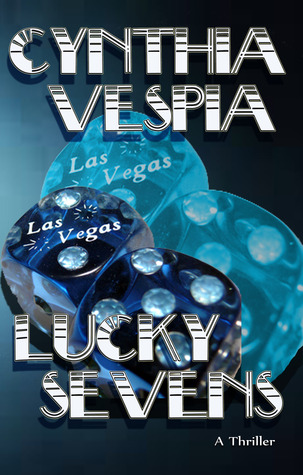
“Lucky Sevens” by Cynthia Vespia
As head of security for the recreated Saints and Sinners, it’s Luca “Lucky” Luchazi’s job to keep the brass and the clients alive when a series of mysterious accidents befall the casino, starting with the death of his friend and mentor, Charles Vega, the previous owner of Lucky Sevens. But Luca isn’t feeling so lucky anymore. The casino has changed hands, changed its name and changed everything, the woman he loves won’t speak to him, and if things don’t change, he’ll be out of a job, or maybe out of his life.
Many of us have visited Vegas and seen Sin City with the cast of neon to dazzle our view. Lucky Sevens, by Cynthia Vespia, tells the story from the inside view, the angle few of us ever see. It’s the story of those that make keep the cogs moving any way they can and try not to get caught up in the machinery. When it was Lucky Sevens, run by his friend and mentor, Charles Vega, it seemed like a pretty good place to be. Now, he’s not so sure. The new boss is connected and has big corporate money behind him, the mysterious deaths that have occurred in the hotel lately all seem to be connected and black magic seems to be in the air. It’s up to Lucky to uncover what is really going on, but the question is whether he can do it before his luck runs out.
Lucky Sevens is an entertaining read that offers a different perspective on the Vegas scene, showing that it isn’t all bright lights and cash flow. Everyone wants to come out with the winning hand, even behind the scenes where the stakes may be higher than anyone realizes. Take a walk through the Vegas underworld with Lucky Luchazi, but tread carefully. You never know who’s lurking around the next corner, who can be trusted or who’s going to come out on top.
Share this:

“Unfinished Business” by Tim Baker an entertaining read
Posted: September 25, 2013 Filed under: Book Review, Fiction, Uncategorized | Tags: Books, Fiction, Tim Baker, Unfinished Business 2 Comments
“Unfinished Business” by Tim Baker
No one is ever ready to die because we never know when our time is up. Some, who die of a terminal illness, may know that death is approaching and have time to put their affairs in order, but death strikes most unprepared and they leave this life with unfinished business hanging… well, unfinished. Unfinished Business by Tim Baker is a creative and original story that explores the possibilities how the universe may balance the scales and take care of those things that have been left unfinished by departed souls. This delightfully entertaining story will tickle your funny bone and keep you guessing.
When Meg Seabury loses her friend and mentor, Lita, she inherits an unexpected gift, although at times she wonders if it isn’t a curse. Suddenly, Meg is able to see the final thoughts of those who cross the threshold of the funeral home where she works, and she soon learns that it is up to her to finish what they didn’t have the chance to take care of. Her new abilities lead her on a strange roller-coaster ride to places she would never go and compels her to do things she would never do in her old “normal” life. Not all that’s left undone are positive events. Meg finds she doesn’t have a choice but to carry through, restoring the balance of the universe, even if it leads her into dangerous situations or could land her in jail.
Unfinished Business is now added to the list of novels by Tim Baker recommended by this reviewer, which also includes Water Hazard, No Good Deed, Pump It Up, Backseat to Justice and Living the Dream. All Tim’s books are available at www.blindoggbooks.com.
Share this:

“Chasing the Trickster” can be rather tricky
Posted: November 20, 2012 Filed under: Book Review, Full Moon Bites | Tags: April Grey, Book Review, Chasing the Trickster, Full Moon Bites 1 Comment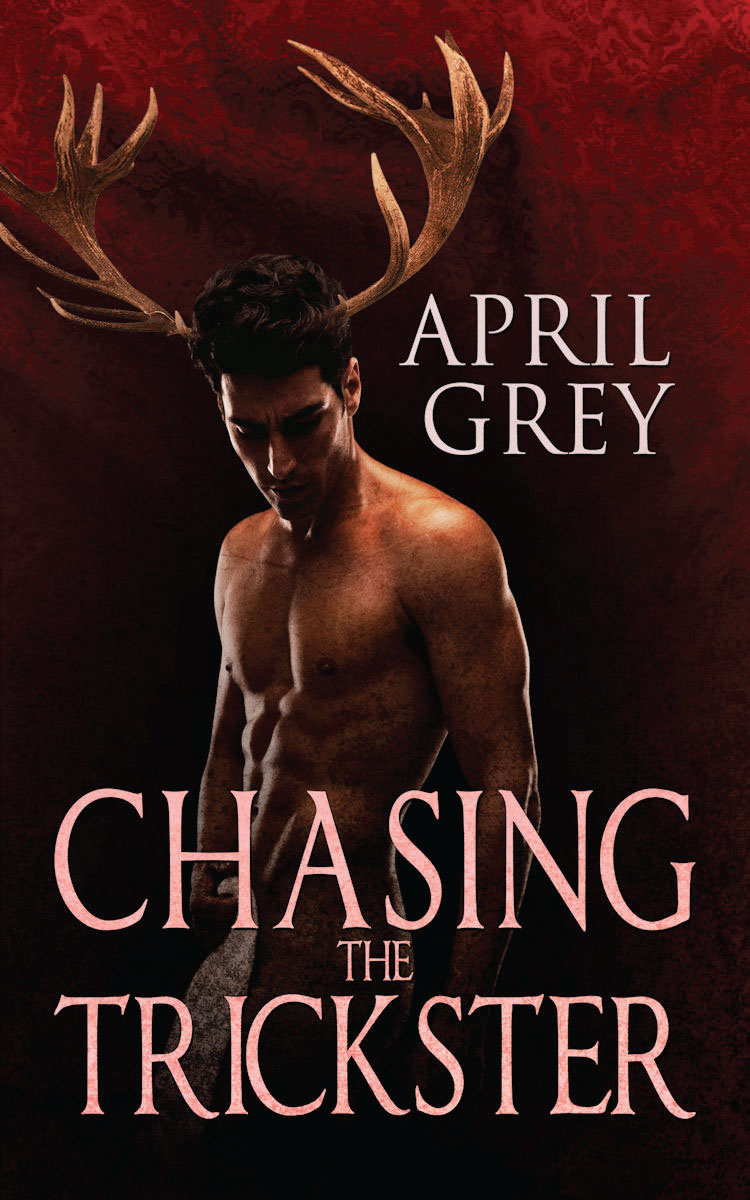 In April Grey’s Chasing the Trickster, nothing is as it seems. This book brings old world Celtic archetypes into a modern day world with surprising and sometimes confusing results. Two women are one, and one man is actually two, or at least one man and a fertility god. The more that is explained the less that makes sense as the story switches back and forth from past to present until the two finally intertwine to knit together all the pieces of two stories into the one that they were all along. But, that doesn’t end it, because the end is a new beginning and we have to go back to the beginning to understand the end.
Although alternating perspective from first to third person is a bit disconcerting, Grey’s main characters are larger than life and her supporting characters are interesting and colorful. Nina, a gifted photographer whose spirit visions show up in her photographs; Pascal, who shares his physical body with an ancient fertility god; Linda, who has lost everything that is dear to her – they are all chasing the Trickster without knowing it, and the chase won’t end until he catches them. Through Grey’s clearly drawn settings the chase takes readers on a journey from the city streets of New York, New York to the arid deserts of Santa Fe, New Mexico. The Trickster is mischievous and doesn’t care who gets hurt carrying out his will. Is it possible for each of them to find a happy ending at the end of the chase? Only when past and present meet will the answers be discovered.
Share this:

Bone Wires is full of chills and thrills
Posted: October 5, 2012 Filed under: Book Review, Fiction, Full Moon Bites | Tags: Bone Wires, Book Review, Dark fiction, Michael Shean, mystery, sci-fi Leave a comment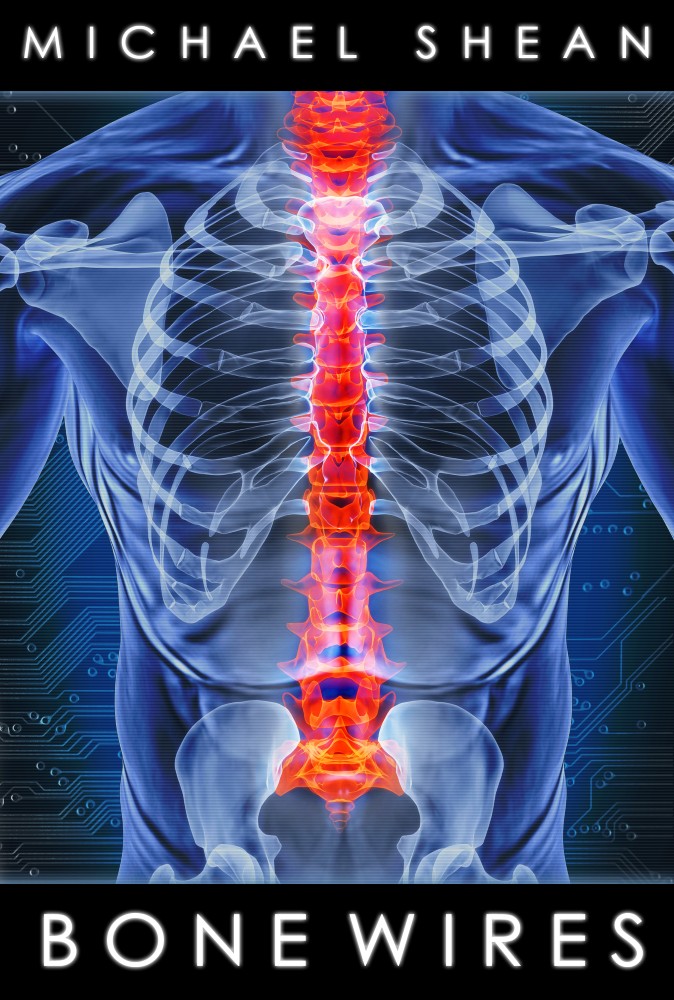 In Bone Wires, Michael Shean creates a techno-world of the future, where cars are equipped with autodrive, dance floors are suspended from the ceiling, and soft drinks have self-chilling mechanism. Shean grabs your attention immediately, and pulls readers into the high-tech world of 2076, where police departments belong to the private sector, making concerns of profits and losses, and public relations often take priority over justice.
Detective Dan Gray wants it all: the promotion, the money, the prestige, the girl and he knows how to play the game to get it. Suddenly, it appears that he has just gotten all of it, at what price?
His new girlfriend, Angie, is connected to a case involving some grissly murders, that is supposed to be closed, but just doesn’t want to stay that way; the same case that propelled him into his new promotion.
He has a hunch things aren’t what they seem, but he doesn’t know who to trust. Everyone seems to have their own agenda: a vice cop that wants to use his girlfriend as a snitch, a coroner and an officer from the evidence room that want to fry the vice cop, a fellow homicide cop that is suddenly looking out for his best interests, a police agency that’s more concerned about profit margins than it is about people and seems content to sweep his case under the rug, and a girlfriend who may have something to hide. Finding the truth may threaten his job and his girl.
Shean has good, clear character development and a main plot, with enough sub-plotting to create tension and keep readers interest. The pacing keeps readers moving right along. Although there are a few typos, the story carries its weight well enough that the distraction caused is minor, if at all. The descriptive language is at times exquisite, as in the following example, found on page 201, (Kindle version):
“By the time he piled himself into the car, he was barely able
to focus. And so he didn’t try. Instead he sat there, sprawled
in the driver’s seat, staring out at the empty street for what felt
like hours as his thoughts warred with one another. Finally out
of the mental carnage came the victor, a sharp thought, a thought
that glowed and smoked as if it were a blade pulled out of a torturer’s
coals.”
Shean has shown himself to be a talented writer, with Bone Wires. A must read for those who enjoy science fiction, mystery, and dark fiction. There is even a bit of the romance element thrown in. Bone Wires is available at Amazon (Kindle), Amazon (print), Barnes & Noble, and Books A Million.
Share this:

Writing to be Read: Honest Book Reviews
Posted: October 1, 2012 Filed under: Book Review, Writing | Tags: Book Reviews, Southern Colorado Literature Examiner, Writing to be Read Leave a comment I recently read several articles that discussed the value of reviews in today’s market place. These articles questioned the reliability of reviews, in a time when there are people being paid to write positive reviews and the difficulty in knowing which reviews to believe in a market saturated with positive reviews. I do book reviews here, on Writing to be Read, as well as on my Southern Colorado Literature Examiner page, so as a reviewer, I looked at my own work to determine the validity of their arguments.
According to Richard Brody in his article in The New Yorker, How to be a Critic, “Critics don’t need to be nice (programmatic niceness is itself another sort of self-falsification and self-punishment, and is at least as sanctimonious as self-justifying meanness), but they do need to know where they stand.” I see an obligation of the reviewer to the readers, to portray the books reviewed as honestly as possible. I feel a certain responsibility in knowing that someone may or may not chose to read a certain book, based on my opinion of it. Readers that concur with the opinions offered in my reviews are more likely to visit my sites again. However, I think that honest, unbiased opinions may also generate repeat readers, even if they don’t agree with the opinions expressed in my reviews.
I am not one of those reviewers that is paid to write positive reviews. Five star reviews that are bought and paid for cheat the reader, setting them up to be disappointed by a book that was not all it was portrayed to be. I don’t receive monetary compensation for my reviews, although I do receive ARC copies from the authors, which in no way influence my opinions of their book. According to David Streitfeld, in his New York Times article, The Best Book Reviews Money Can Buy, part of the problem is that readers have no way to know if the review that they are reading is a paid review. In a market that is over-saturated with the rise of self-publishing and digital media, anyone can pay to have a five star review written for their book.
On the other hand, I do feel an obligation to the author, who has put his or her all into the work, to portray it in as positive a light as I can possibly shine on it and still be honest. As Brody puts it, “It takes months or years to make a film or write a book, a few hours or a few days to dash off a review…” As a reviewer, I hold in my hands the power to dash dreams with an unkind word or a negative opinion. It is a matter not to be taken lightly. Daryl Campbell explains it well in his the Millions essay, Is This Book Bad or Is It Just Me? Anatomy of Book Reviews,
“The decision to like or not like a book is where every book review
begins. This is what gives the genre its underlying suspense …
but also its frustrating sense of chaos, because no matter how
technically sound or philosophically sophisticated or beautiful
a book might be, something minor or tangential can turn off a
reviewer so much that he or she decides the book is not good.”
While in the Salon article, The Case for Positive Book Reviews, Laura Miller claims the necessity of more positive reviews,
“Everyone who has ever been disappointed by a book praised
in the press is prone to embracing the too-nice position; as a rule,
only authors worry that reviews are too mean… All too often,
people relish negative reviews with a free-floating glee that leaves
the reviewer, however justified, feeling a bit dirty afterward.”
I am compelled to be honest about my thoughts on a book, never shirking from expressing what I did not like about it, as well as what I did. Likewise, I try to relate things that I found to be likable about a book that did not appeal to me, even if they were few. Seldom have I picked up a book that I could not find something positive to say. It is a fine line that must be walked in order to achieve a balance between the positive and negative aspects, making the book review a literary work, in itself. Campbell goes as far as to claim that, “book reviewing is a genre with its own conventions, just as every murder mystery must start with a body, and every epic fantasy must feature elvish words with too many apostrophes.”
The idea of book reviews being a genre of their own lends credibility to my craft. Of course, book reviews are not the only thing I write, but I do pride myself just as much in them, as in anything else I write, and I put just as much thought and effort into them. Not only do I truly read every book that I review, I actually take notes to keep my thoughts about them in order, and I work hard to word my reviews so that are not too harsh, nor do they turn out to be gushing fountains of worthless praise.
Share this:

“Kavachi’s Rise”: a very different vision of the vampyre
Posted: September 29, 2012 Filed under: Book Review, Full Moon Bites, Horror | Tags: horror, Mike Kearby, The Devouring: Kavachi's Rise, vampyres 2 Comments Title: Kavachi’s Rise
Series: The Devouring #1
Author: Mike Kearby
Genre: Damnation Books
Publisher: Horror, Thriller
Paperback/Ebook
Words: 56,000
Damnation Books * B&N * Amazon
The hunt is on and Thomas Morehart and his sister, Kara are in a race against time to revert to the forms of their primordial species – vicious predators that have the ability to shape shift into human form and live among us. They survive off of human blood and are called vampyre, although they are not counted among the undead. The government is discontinuing the covert operation that rescued them from extermination in Nazi Germany and has sheltered and protected them for years. Now, those of their kind have been targeted for extermination once more, and the only thing that can save them is to rediscover the predators that they once were.
In The Devouring: Kavachi’s Rise, by Mike Kearby, presents a novel interpretation of the vampyre legends offer something to ponder. Even though they could have been developed more, Kearby cleverly turns characters that might be viewed as evil monsters, into protagonists that can be empathized with. The plot for Kavachi’s Rise successfully takes readers on a journey into a world where monsters dwell among us and are controlled by our own government. The only question now is, will the vampyre become predator or prey?
Share this:

“The Demon Is In the Details”
Posted: May 14, 2012 Filed under: Book Review | Tags: Book Review, Harris Channing, Paranormal Romance, The Demon is in the Details Leave a comment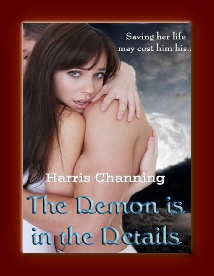 The Demon is in the Details, by Harris Channing, is a fast-moving paranormal romance. As part of The Immortal Protector series, Zane has been charged with the task of killing demons of all forms and protecting Stella, even at the cost of his own existence. A story of horrific childhood haunts Stella, but when she returns to scene of her years of abuse to face her fears, she discovers that she’s been blocking out many of the memories. Her abusive aunt wasn’t just crazy, but truly evil, bargaining with her niece’s soul to secure her own power and a promise of immortality. Now her aunt may be reaching from beyond the grave to finish what she started and calling up a hoard of demons to aid her in her quest. Together, Zane and Stella battle the demons of hell with lethal ferocity, but they aren’t strong enough to fight the draw of the love growing between them. When her therapist, who she believes she is in love with, shows up, things get really complicated. He learns that her memories were not a part of a psychosis and now his own life and soul are on the line, dependent on Stella and Zane’s triumph over an evil that is very real. The Demon is in the Details may not be your typical romance, but the supernatural action will keep the pages turning until the very end.
Share this:

Bond Girl is an Unsuspected View of life on Wall Street
Posted: April 11, 2012 Filed under: Book Review | Tags: Bond Girl, Book Review, Erin Duffy Leave a comment Bond Girl, the debut novel by Erin Duffy, is fresh and entertaining, offering readers a female take on the inner workings of the Wall Street scene. Since she was a young girl, Alex had known that she wanted to work on “the Street”, like her father. She knew that it wouldn’t be easy as a woman in the male dominated world of high finance, but she never dreamed that she would be sitting on a folding chair with no desk of her own, filling lunch orders, and buying $1000 wheels of cheese. Just when things begin to look up for her, 2008 rolls around and she watches her company turn topsy-turvey, trying to stay on top of a dying market. Alex is determined not to let them break her. She has always played the game her way, even when her male counterparts tried to make her play it theirs, but can she hold on without going down like the markets that are her job to anticipate? Alex Garrett is a bold and sassy heroine that you can’t help but like; a financier that follows her heart. Warm, funny and really quite an enjoyable read.
Share this:

“The Green Lamp” sheds a light of a different color
Posted: April 1, 2012 Filed under: Book Review | Tags: Book Review, Humor, Mishka Zakharin, Parody, Plays, Poetry, Russian, The Green Lamp 1 Comment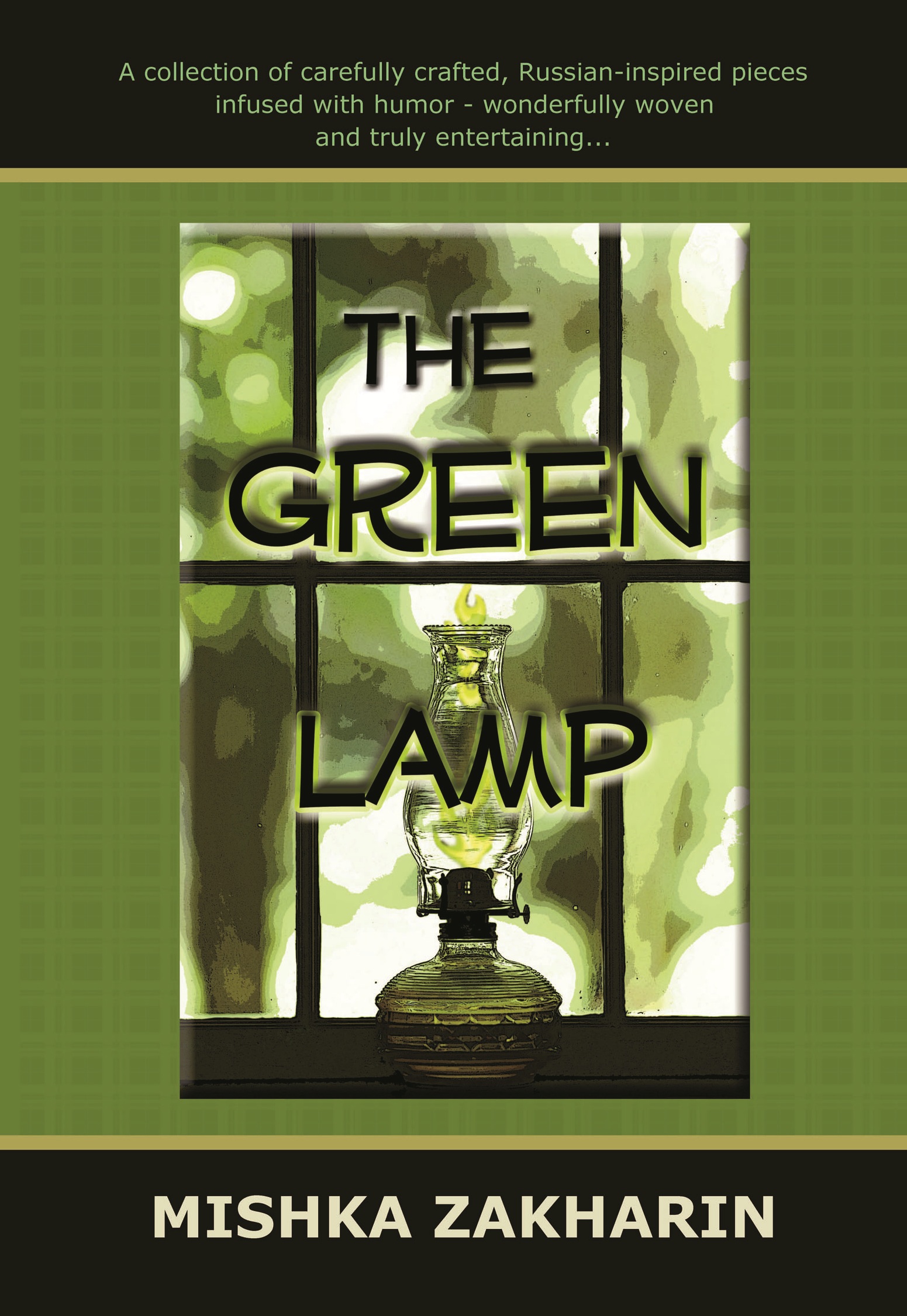 The Russian flavor in Mishka Zakharin’s The Green Lamp makes this collection of short stories, parodies, poetry and plays delightfully different. The poetic plays are true tragic comedies, (or comic tragedies), reminiscent of the work of Samuel Beckett and other Dada playwrights from the era of the Theatre of the Absurd. In fact, much of Zakharin’s humor has a hint of the surreal, with just a pinch of slapstick thrown in for good measure. Fans of Crime & Punishment and Anna Karina will find it impossible not to chuckle, as one reads Zakharin’s parodies of these classic Russian tales. His poetry, too, is oddly fascinating, although I never have understood Zakharin’s apparent preoccupation with spleens, which presents itself in the poetry here, as well as in his previous book of poetry, From The Spleen of Fiery Dragons. The Green Lamp (not to be confused with The Green Lantern), may be purchased on Amazon or on Mishka’s website. I recommend that you get your copy of this unique collection today.







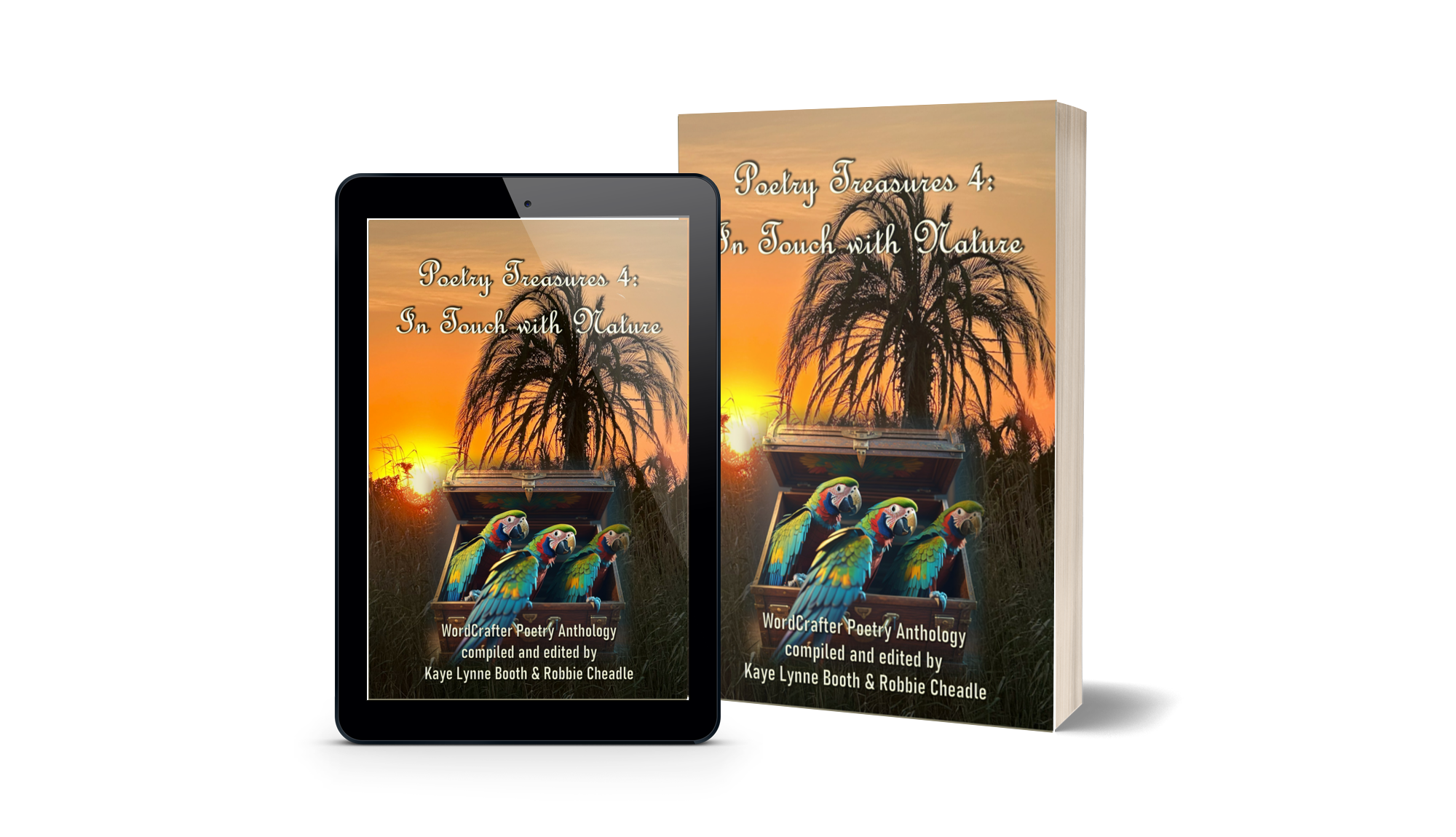






Writing to be Read expands its horizons
Posted: September 20, 2012 | Author: kayelynnebooth | Filed under: Book Review, Commentary, Promotion, Writing | 2 CommentsTo begin, I have accepted three tours, so Writing to be Read fans can look forward to reviews of The Devouring: Kavachis Rise, by Mike Kearby, (September 29), Bone Wires, by Michael Shean, (October 5), Chasing the Trickster, by April Grey, (November 18). I think this new direction for Writing to be Read will be a good fit. What matters most is that my readers like it, so I hope you will all stop by on the tour dates and check it out. Please leave comments to let me know what you think of the FMB format on Writing to be Read.
Share this: