“Chatting with the Pros”: Interview with bestselling horror author Jeffrey J. Mariotte
Posted: October 21, 2019 Filed under: Author Profile, Books, Dark Fantasy, Fiction, Horror, Interview, Paranormal, Thriller, Writing | Tags: Chatting with the Pros, Cold Black Hearts, Dark fiction, horror, Jeffrey J. Mariotte, Writing to be Read 3 Comments
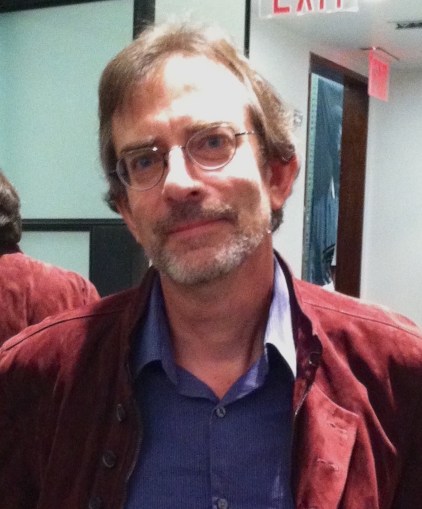
My author guest today on “Chatting with the Pros” may just have books in his blood. Before he was an author he managed a bookstore. He’s gone on to work in both marketing and publishing, and become a bestselling, multiple award-winning author with leanings toward dark fiction. He’s got great insight into writing on the dark side which he’s willing to share with us today, so let’s welcome Jeffrey J. Mariotte now.
Kaye: When did you know you wanted to be an author?
Jeff: I started writing stories when I was very young, probably 7 or 8. They were terrible, of course, and utterly derivative, mostly of the Hardy Boys novels that were my primary reading material at the time. I kept at it all through school, and by the time I got to college I knew I wanted to make my money writing something–I just didn’t know precisely what. I went in as an advertising major and did some copywriting, but graduated with a degree in Radio/TV/Film, a minor in English, a literary award, and a published article. Three years later, I got a job at a bookstore, and eventually became a manager (and later, opened a store of my own). It was while managing a store that I met a lot of authors and publishing professionals and found out the realities of publishing, and sold my first short story. So I guess the short answer to the question is: always, and the long answer is: I always wanted to write, but I didn’t know I could do it professionally until much, much later.
Kaye: What draws you to dark fiction? Why not romance, or mystery, or western?
Jeff: The truth is, I have written in two of those genres, and others besides. I’ve written both mysteries and westerns (along with science fiction, fantasy, straight fiction, and more), and intend to continue. In fact, the next couple of books I’m planning are both westerns. But yes, I am drawn to the dark side, and often when I work in those other genres I bring in elements of horror or dark suspense. I’ve never really analyzed it, but I suppose it’s a combination of a longstanding interest in horror and the supernatural, and an awareness of the darker, more unpleasant aspects of human nature.
 Kaye: Cold Black Hearts is one of several recent releases through Wordfire Press. With more than 70 novels under your belt, what lead you to join the Wordfire family?
Jeff: I’ve known Kevin J. Anderson and Rebecca Moesta for what seems like forever–this goes back to meeting authors through my bookstore work. They’re two of the greatest people on the planet. They’re supremely talented, super nice, and scrupulously honest. When I saw the books they were putting out, I knew I wanted to be part of their line, and to work with friends rather than strangers.
Kaye: My review of Cold Black Hearts posted this month, but for those who didn’t catch it, would you like to tell me a little about it?
Jeff: It’s a supernatural thriller about a police detective who loses her hearing in an explosion, but gains something else in its place–a heightened sense of empathy. That quickly becomes a burden in a crowded metropolitan area, where people’s emotions press in on her from every side. When she’s offered a job in a remote part of New Mexico, working to free an accused killer from prison, she takes it. But it turns out that she’s just stepped from the frying pan into the fire, because there are strange, spooky things going on.
Kaye: You don’t advertise your books as horror, but as dark thrillers. In your mind, what is the distinction?
 Jeff: Actually, that’s WordFire‘s tag, not mine. I think of Cold Black Hearts and some of my other books as supernatural thrillers, because they combine traditional thriller elements–law enforcement, espionage, etc.–with supernatural elements. The first book of mine they published, Empty Rooms, was a straight, non-supernatural mystery/thriller, and it was very dark indeed, so I guess the phrase came from that.
Kaye: You also write comic books and graphic novels, short fiction and nonfiction. Which is your favorite type of writing? Why?
Jeff: The novel is my favorite, because it gives me more room to tell a complete story–to really dig into the characters’ psyches and explore their worlds. I love it all; I’ve even recently done some very short, 3-page comics for HyperEpics.com, which is a blast. But if I had to only pick one, it’d be novels.
Kaye: Which author, dead or alive, would you love to have lunch with? Why?
Jeff: As a bookseller for decades, and someone who’s worked in publishing–in addition to 20 years as a professional novelist–I’ve been lucky enough to meet and spend time with most of my favorite authors. I’ve visited with Ray Bradbury, Harlan Ellison, David Morrell, Clive Barker, Don Winslow, and James Lee Burke (among others) at their homes, hung out with Wallace Stegner, Stephen King, Sue Grafton, Joe R. Lansdale, and Neil Gaiman, had meals with Robert B. Parker, James Ellroy, Jonathan Maberry, and Joan D. Vinge… Plus, every day I get to have a meal with my favorite author, Marsheila Rockwell (who is, coincidentally, also my wife and frequent writing partner, and a magnificent fiction writer and poet on her own). My point is, while it’s cool to have lunch with an author, it’s not exactly something I haven’t had a chance to do.
That said, I’d love to have a meal with the recently departed William Goldman, who’s a longtime favorite for his novels and his screenplays, and who’s the author I’ve most wanted to meet, but never had a chance to. He’s done it all, and exceedingly well, and I wish I could have benefited from his insights in person.
Kaye: What’s the most fun part of writing a novel? What’s the least fun part?
Jeff: The most fun part is finishing it, and seeing it become a real-live book. The rest of it is hard work. The research, the working out of the plot, the discovery of who the characters are, the actual chore of sitting down and turning out page after page after page… it’s a grind. Not to say that it’s not fun, but it’s work, too. The least fun part is probably when, in the editing/revising process, I realize that I have to cut lines or scenes that I really loved writing.
Kaye: What is the one thing in your writing career that is the most unusual or unique thing you’ve done so far?
Jeff: There’ve been several, but if I have to pick one, I guess it’d be that time I went to the set of CSI: Miami to hand-deliver copies of the first-ever CSI: Miami graphic novel (which I wrote) to cast members, all while being filmed for Access Hollywood. Which promptly cut me out of all the footage–but they showed the book, and that’s what counts!
Kaye: Which of your books would you most like to see turned into a film? Who would you like to play the lead?
Jeff: There are several I think would be great for film or TV, but for the purposes of this interview, let’s say Cold Black Hearts, with Jessica Chastain.
Kaye: Imagine a future where you no longer write. What would you do?
Jeff: Catch up on reading and TV shows, I guess. Bake more. But also, since 1980, every dollar I’ve made has come from the business of writing/editing/publishing/ book selling/ etc. — from the written word, and the process of getting it out of the brain and into a reader’s hands. So if I wasn’t writing, I’m sure I’d still be doing something in that realm.

Kaye: What’s in the future for Jeffrey J. Mariotte? What should readers look forward to?
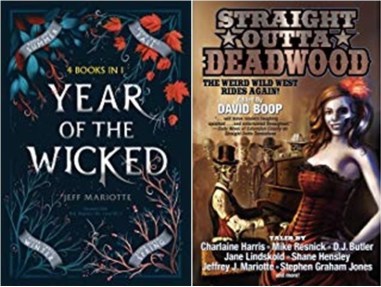 Jeff:The newest release is to be a weird western short story in an anthology called Straight Outta Deadwood, published on October 1. The book is edited by David Boop and has stories by a bunch of pals, including Charlaine Harris, Steve Rasnic Tem, Shane Lacy Hensley, and the wonderful Marsheila Rockwell, so everyone who likes westerns with a side of spooky should check it out. After that, there are some comics projects in the works. Novel-wise, I have a thriller on submission, and I’m working on a new book (or will be back to it, as soon as I get this sent off)! So stay tuned.
Like this post? Let me know in the comments. You can be sure not to miss any of Writing to be Read’s great content by subscribe to e-mail or following on WordPress.
Share this:

Interview with horror author Roberta Eaton Cheadle
Posted: October 14, 2019 Filed under: Author Profile, Books, Dark Fantasy, Fiction, Horror, Interview, Stories, Writing | Tags: Author Interview, Author Profile, Nightmareland, Robbie Cheadle, Roberta Eaton Cheadle, Through the Nethergate, Whispers of the Past, Writing to be Read 62 Comments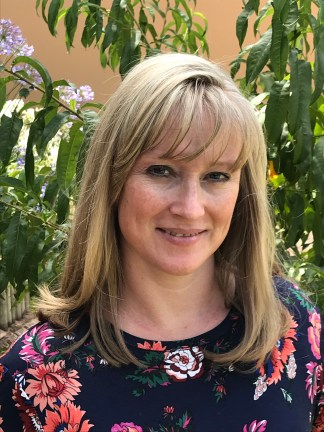
Today my guest is an author who I’ve gotten to know well, because she is a member of the Writing to be Read team, where she writes a monthly blog segment on children’s literature that’s proven to be very popular, “Growing Bookworms”. By day she walks in the world of fondant and children’s fiction, but when darkness falls she transforms into an emerging horror author. But this author doesn’t just emerge, she explodes onto the scene with this month’s release of her first novel length horror tale, Through the Nethergate. In addition, this month she also has a short story appearing in Dan Alatorre’s Nightmarland anthology, and another coming out in the WordCrafter paranormal anthology, Whispers of the Past. I’m really excited to be able to interview her about her experiences with horror, so please help me welcome author Roberta Eaton Cheadle.
Kaye: You started out writing children’s stories with your son, but you’ve recently leaped into the horror realm, which is kind of at the opposite extreme of the spectrum. Was that a hard transition for you?
Roberta: It wasn’t a hard transition for me at all. I have always loved supernatural, horror and dark psychological thrillers so I think this genre comes naturally to me. More recently I have been reading and re-reading a lot of dystopian fiction such as Fahrenheit 451 by Ray Bradbury and The Long Walk by Richard Bachman (aka Stephen King).
I can remember reading my Mom’s copy of Stephen King’s The Shining behind the couch in the lounge when I was ten years old. After that book, I worked my way through the rest of her Stephen King collection and several other adult horror books too.
Kaye: Can you name one thing you have to think about when writing horror that you might not ever think about when writing for children, (or any other genre, maybe)?
Roberta: When writing from the point of view of the victim, I need to imagine their fear and describe this in a way that brings out the same emotion in the reader. When writing from the point of view of the party who sees a ghost or discovers a body, I need to imagine their shock and horror at what they are seeing. To describe the tumultuous feelings that would bubble up inside them at seeing something truly frightening or gruesome.
I would never attempt to scare children or invoke feelings of fear and anxiety in them. My Sir Chocolate books series is my attempt to draw children into a happy and safe world of complete fantasy where good always wins and any less likable characters are drawn into the circle of friendship and become part of the team.
Kaye: When making the move into adult fiction, why did you choose to write horror? What draws you to the genre?
Roberta: As mentioned above, I have always liked supernatural horror. I was drawn to it from a young age even though it scared me half to death when I read both The Shining and Salem’s Lot by Stephen King.
I have also always gravitated towards psychologically disturbing books that make me think such as Roald Dahl’s short stories for adults. I have never forgotten Lamb to the Slaughter about a pregnant woman who kills her husband after discovering he is having an affair. She saved her own skin, and that of her unborn baby, by making the murder weapon disappear in the most innovative way imaginable.
The idea of writing about ghosts came to me while I was writing While the Bombs Fell, a fictional biography about my mom’s life, growing up in the small English town of Bungay, Suffok, during WWII. My extensive research while writing this book led me to discover the history of one of the oldest inns in the town which is purported to be haunted by over twenty ghosts. The little bit of information that is available about each of these ghosts intrigued me, and I decided to write a selection of short stories, each featuring the circumstances leading up to, and the death of, a specific ghost.
As I went along with Through the Nethergate, Margaret injected herself into this story and it took on a whole new direction with her having the power to reincarnate the ghosts.
Kaye: What is the biggest challenge for you in writing horror?
Roberta: I think like many other new writers, my biggest developmental area has been learning to show instead of tell in my stories. I believe I have improved a huge amount in this area. As I came from a non-fiction writing background, I have also had to learn to write more descriptively and really reach into myself and find the whirlpool of emotion my characters are feeling in any given circumstance. These emotions must be shown and not told which takes me back to my first point.
Kaye: Your latest release is a work of horror, Through the Nethergate. Where did your inspiration for this story come from?
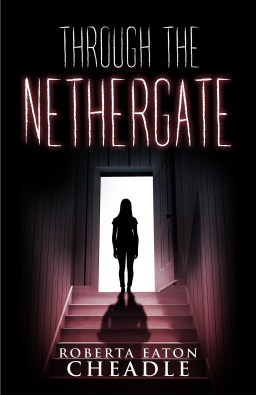 Roberta: As mentioned above, my original idea was to write a selection of short stories, each featuring the death of one ghost.
As I went along the idea for Margaret with her power to reincarnate ghosts and experience their deaths and pain came along. Margaret has recently lost her parents which gives her heightened sensitivity to the world around her.
At the same time, the idea of having one ghostly master to rule over the others popped into my head and this evolved into the ghostly black dog, or Black Shuck, which is an ancient myth in Suffolk and its surrounds. Legend in Bungay has it that Hugh Bigod, a most evil descendant of the original Normandy invaders and the man who erected Bungay Castle during the 12th century, still haunts the castle in the form of the black dog. The inn around which Through the Nethergate is centred, shares a wall in its cellar with Bungay Castle.
There are four other descendants of the Bigod family who are also alleged to haunt the town in their ghostly carriage drawn by fire breathing horses.
Initially, the reader will believe that Hugh Bigod is the villain of the book, but this is not the case. There is a far greater evil force at work who covets Margaret’s power and who makes Hugh Bigod look quite pathetic and ridiculous in his small attempts at evil.
Kaye: Can you tell me a little about Through the Nethergate?
Roberta: Through the Nethergate is intended to demonstrate to the reader how evil has always existed in our world and how evil forces manipulate human inventions and greed for power and wealth to their own ends. Evil has always existed, and it always will, but there is the counterbalancing force of goodness and the kindness and empathy that exists in an equal number of people. This is a book about faith and my belief that goodness and faith always prevail.
Kaye: If Through the Nethergate were made into a film, who do you see playing the lead as Margaret? Who do you see playing your villain, Hugh Bigod?
This is a tough question for me as I don’t watch movies or television. I will have to base it on my previous experience of movies.
I would choose Drew Barrymore to play Margaret in a similar manner to her portrayal of Charlie (Charlene) in the movie version of Firestarter by Stephen King. She would need to be a few years older, however, as Margaret is sixteen in my book. The mixture of innocence, toughness and a strong will to survive are the qualities in Charlie’s character portrayal that underpin my selection.
For Hugh Bigod I would choose Richard Chamberlain in a mixture of his portrayals of Father Ralph de Bricassart in The Thorn Birds and Captain John Blackthorne in Shogun. In both series he portrays someone who is able to separate himself from the anguish of the people around him and ruthlessly pursue his own ends and survival.
Kaye: The setting for Through the Nethergate is an ancient inn with quite the history. How much historical research went into it?
Roberta: I do a massive amount of research for my books with partial or total historical settings.
Each ghostly character in Through the Nethergate came from a different historical era and I had to do meticulous research into what people wore, drank and ate during those particular time periods, as well as how they traveled and the political agendas and attitudes towards servants, masters, females and religious figures that prevailed at the time of their stories and deaths.
For example, Katharine is a reluctant Benedictine nun who comes from a wealthy background and is forced into Bungay Priory during the 14th century. She is in love with William and conspires to escape her dreary life by running away with him. James Wilson was a Benedictine monk who was the cellarer at Glastonbury Abbey during the 15th century when Richard Whiting, the last Abbot of Glastonbury Abbey, presided. James originates from Bungay where his father was the local blacksmith. Peggy and her husband and child are survivors of the great fire that destroyed much of Bungay in the 17th century. The book also includes other historical figures such as John Collins, the famous Chartist from Birmingham, Countess Elizabeth Báthory de Ecsed, a Hungarian Countess and one of Europe’s most prolific serial killers, as well as Tom Hardy, a highwayman who rode with the infamous Dick Turpin and Amelia Dyer, Britain’s most famous female serial killer.
When featuring real people, I must research their stories in as much detail as possible to ensure I get the facts correct. I usually check between five and ten sources, depending on the amount of information available.
Kaye: You also do a lot of short dark fiction, and have stories included in several dark anthologies. In fact, you have two stories “Last of the Lavendar” and “Missed Signs” coming out this month in the WordCrafter paranormal anthology, Whispers of the Past, and “The Siren Witch”, “A Death Without Honour” and “The Path to Atonement” are featured in Dan Alatorre’s Nightmareland horror anthology, also released this month. Do you prefer writing short dark fiction or novel length horror? Why?


Roberta: I like writing both kinds of story.
Short stories are fun to write, but they are restrictive because of their length of 1 500 to 3 000 words. It can be tough to get all the necessary background and detail into a short story in a clear and concise way. I had to cut quite a lot out of “A Death Without Honour” to get the length and sharpness right. Dan Alatorre was great at helping me with that. Sometimes I struggle to get the ending wound up in a concise and exciting way with short stories, as I did with “Last of the Lavendar”, the ending of which you helped me improve greatly. I like writing for anthologies because I learn so much. I also get a lot of guidance from the experienced editors and also from reading the stories included in the anthologies by other authors. They really are a wonderful learning and growing experience for me.
I have written two novellas now, While the Bombs Fell, and my recently completed A Ghost and his Gold which is about the Second Anglo Boer War fought between the “Boers” [farmers] and the British Empire in the early 19th century. I love the length of novellas because it allows for more detail and depth than a short story, but is still fairly short and concise. I think that modern readers prefer shorter stories due to their busy lifestyles.
Through the Nethergate is my first full length novel and I enjoyed writing it and “seeing” how my imagination could take off and extend to a much longer story.
I am currently 40 000 words into a dystopian novel which will be part of a trilogy about a future world dealing with drastic climate change and the fourth industrial revolution. Trilogies are popular and this idea came along so I thought I would jump right in. I love to experiment and learn about new things.
Kaye: What is your biggest fear? What scares you?
Roberta: Real life scares me. The prospect of climate change wreaking devastation on our planet, overpopulation, poverty and criminality which are changing the way society operates as well as the Fourth Industrial Revolution which will forever change the nature of the working world, these things scare me far more than “monsters under my bed.”
Dystopian novels like 1984 by George Orwell and The Long Walk by Richard Bachman (aka Stephen King) really disturb me, but I can’t help reading them. It is better to be informed than not. Even H.G. Wells gives great insights into the nature of society and how it could evolve in his books The Time Machine and War of the Worlds, which are really frightening.
Kaye: What is the scariest story that you’ve ever read and why do you think it is the scariest?
Roberta: I think 1894 by George Orwell is the scariest dystopian novel I have read. Living in the world he describes is so awful I think people would be better off dead.
The Shining is the scariest supernatural horror book I have ever read. The ghosts in the Overlook Hotel that become visible and can harm Danny and his family are most frightening. The invasion of his father’s mind in order to bend him to the will of the evil in the hotel was terrifying. Stephen King has a way of describing things in such a visual way, you feel as if you are living them with the character in the book.
Kaye: What is the scariest story that you’ve ever written?
Roberta: My short story about Amelia Dyer called “Justice is Served” in the murder mystery anthology, Death Among Us, is quite scary as it is based on a real serial killer who murdered babies.
From a purely fiction point of view, I think “The Path to Atonement” in the forthcoming Nightmareland anthology is quite eerie and chilling. “Missed Signs” from the forthcoming Whispers of the Past is frightening because it is within the realms of probability.
Kaye: What methods do you use to create suspense and make a story scary?
Roberta: I use a slow build up to the deaths as a tool to create suspense as well as a lot of visual descriptions and emotional language. Dialogue and onomatopoeia are good ways of conveying literary “sound effects” and tension in a story.
Kaye: Who is your favorite villain or monster from a horror story or film? Why?
Roberta: My favourite villain is Dracula. I loved his sly intelligence and sneaky ways of manipulating his victims and also the heroes of the book.
Kaye: Is there more dark fiction in store for the future readers of Roberta Eaton Cheadle? What are you working on now?
Roberta: I have recently finished the first draft of A Ghost and his Gold and sent that off to my developmental editor. I am hoping to have it available on Amazon in March/April 2020.
I am also working on book 1 of my dystopian trilogy about a world where drastic measures are required to address climate change and the unemployment caused by the Fourth Industrial Revolution. The first book is called Russian Roulette Anyone? And will probably be available in October 2020. I also hope to participate in more anthologies next year as I really enjoy those.
I want to thank Roberta for sharing with us today. I too have been a fan of dark fiction since a young age, and at one time delved into all works Stephen King. I read The Shining while babysitting one night when I was 15. I was totally immersed in the story and couldn’t put the book down, but I had to call and wake up my mother to talk to me about three a.m. because the story scared me silly. I finished the book before the sun came up though. Although I grew up reading the masters like Stephen King, Dean Koontz, Anne Rice, John Saul, and Peter Straub, doing so set a high bar for the writing of horror.
Roberta gets cudos though for having the nerve to do what I’ve not found the courage to do, the nerve to immerse herself in a world of fear and terror in order to write a novel of dark fiction. You can learn more about Roberta and her books by visiting her on her Amazon Author page or on her Facebook page. You can also learn about her children’s books and her creativity with fondant at Robbie’s Inspirations. And don’t forget to catch her “Growing Bookworms” blog segment on the second Wednesday of every month right here on Writing to be Read.
Kaye Lynne Booth does honest book reviews on Writing to be Read in exchange for ARCs. Have a book you’d like reviewed? Contact Kaye at kayebooth(at)yahoo(dot)com.
Share this:

“Chatting with the Pros”: Interview with bestselling Christian fiction author Angela Hunt
Posted: September 16, 2019 Filed under: Author Profile, Books, Chatting with the Pros, Christian fiction, Fiction, Interview, Writing | Tags: Angela Hunt, Author Interview, Chatting with the Pros, Christian fiction, Writing to be Read 5 Comments
My “Chatting with the Pros” author guest today is both versatile and prolific in her writing endeavors, writing in contemporary and historical fiction sub-genres, as well as young adult and children’s fiction and non-fiction. Though fiction, her historical novels tell the tales that could have been, revealing the women from the shadows of history. But no matter the sub-genre they all have the elements of Christian fiction. She is the bestselling author of over 180 books and winner of the 2000 Christy Award for futuristic fiction. Please help me welcome Christian fiction author Angela Hunt.

 Kaye:
Kaye:  Kaye:
Kaye: 

 Kaye:
Kaye: Share this:

Interview with Christian Romance author Davalynn Spencer
Posted: September 2, 2019 Filed under: Author Profile, Books, Christian fiction, Fiction, Historical Fiction, Interview, romance, Western | Tags: Author Interview, Christian fiction, Davalynn Spencer, Mail Order Misfire, romance, Thanksgiving Books and Blessings, Western, western romance, Writing to be Read 5 Comments
September’s theme on Writing to be Read is Christian fiction. To start things off today, it’s my pleasure to interview western Christian romance author Davalynn Spencer. Her writing career came as a journalist covering the rodeo circuit, after marrying a man who made a living as a rodeo bullfighter and following the rodeo circuit became a way of life for her. Her son has followed in his father’s foot steps, so she has two guys out in the arena facing off with the bulls, and she has become an award winning author with seventeen published books. She is also one of the authors with a book in the newly released Thanksgiving Books and Blessings collection. Be sure to catch my review of her contribution, Mail Order Misfire on Friday. But for now, let’s welcome her and find out what the writing world is like from her unique point of view.
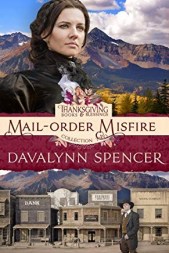 Kaye: Your book Mail-Order Misfire is a part of the Thanksgiving Books & Blessings collection. What can you tell me about that book?
Davalynn’s son in the arena
Blog: https://davalynnspencer.com/subscribe/
Website: https://www.davalynnspencer.com
Facebook: https://www.facebook.com/AuthorDavalynnSpencer
BookBub https://www.bookbub.com/profile/davalynn-spencer
Twitter: https://twitter.com/davalynnspencer
Goodreads: https://www.goodreads.com/author/show/5051432.Davalynn_Spencer
Pinterest: https://pinterest.com/davalynnspencer/boards/
Amazon Author: https://amazon.com/author/davalynnspencer
CAN: http://christianauthorsnetwork.com/davalynn-spencer/
Instagram: https://www.instagram.com/davalynnspencer/
Like this post? Let me know in the comments. You can be sure not to miss any of Writing to be Read’s great content by subscribe to e-mail or following on WordPress.
Share this:

Chatting with the Pros: Interview with bestselling mystery author Gilly Macmillon
Posted: August 19, 2019 Filed under: Author Profile, Books, Chatting with the Pros, Fiction, Interview, Mystery, Suspense, Writing | Tags: Author Interview, Chatting with the Pros, Gilly Macmillan, mystery, Suspense, Writing to be Read 2 Comments
My “Chatting with the Pros” author guest this month is a New York Times bestselling mystery author with books translated in over twenty languages. Her success as a writer may have come as a surprise, but I’ll let her tell you about that. She currently has five published mystery/suspense novels, and is working on the sixth, I believe. Let’s see what she has to say on the writing of mysteries. Please help me welcome UK author Gilly Macmillan.

© Céline Nieszawer/Leextra
Kaye: Can you tell me about your author’s journey? How did you get to where you are today?
Gilly: I started to write when I was over 40 and I challenged myself to do 1000 words a day until I had finished an entire book. I faithfully recorded my word count each day until it was done. I polished the first three chapters and send them to a few agents. Two rejections followed swiftly, one agent didn’t reply but the fourth one I sent it to was interested enough to offer me representation. She and I worked on the book together for a year before she submitted it to publishers, and we were lucky enough to sell it very rapidly and in over 20 territories! The rest has followed from there. I write a book a year and try to keep things fresh, compelling and thrilling for myself and my readers.
Kaye: When did you know that you wanted to be an author?
Gilly: For many years I didn’t have a burning desire to write, I think because I was busy doing other things and life got in the way, but once my youngest son started school full time I wanted to see if I could challenge myself to write a novel. The idea sort of came out of the blue but perhaps it wasn’t that surprising because at that point I had been an obsessive reader for 35 years. I had a small window of opportunity before having to get a proper job, so I took it.
Kaye: Why do you write mystery? Why not romance, or western, or horror?
Gilly: I read very widely, but mystery books have always been a favorite, so I write what I would like to read.
Kaye: What element do you think is the most important in a mystery story? Why?
Gilly: That it creates an impulse in the reader to turn pages. This can come from great characters, a thrilling set up, tons of action or an intriguing plot, but it must be there.
Kaye: What is one thing your readers would never guess about you?
Gilly: I have no idea! I’m a fairly straightforward person so there’s probably not much they couldn’t guess.
Kaye: (So, there’s no mystery to the mystery author? Hmmm.) What is the biggest challenge in writing mystery for you? Why?
Gilly: Plot. I don’t plan ahead when I write and creating a well-paced, complex and intriguing plot is always my biggest challenge, especially as I like to keep things within the realms of believability.
Kaye: What is the most fun part of writing mystery? Why?
Gilly: I love creating new characters and devising a challenging scenario for them. It intrigues me to explore how ‘regular’ people might behave if placed in extreme situations and pushed to their limits.
Kaye: Your most recent release is The Nanny. What can you tell me about it?
 Gilly: When her beloved nanny, Hannah, left without a trace in the summer of 1988, seven-year-old Jocelyn Holt was devastated. Haunted by the loss, Jo grew up bitter and distant, and eventually left her parents and Lake Hall, their faded aristocratic home, behind.
Thirty years later, Jo returns to the house and is forced to confront her troubled relationship with her mother. But when human remains are accidentally uncovered in a lake on the estate, Jo begins to question everything she thought she knew.
Then an unexpected visitor knocks on the door and Jo’s world is destroyed again. Desperate to piece together the gaping holes in her memory, Jo must uncover who her nanny really was, why she left, and if she can trust her own mother…
Kaye: What is your biggest accomplishment to date in your writing career?
Gilly: Making bestsellers lists! It’s a dream come true!!
Kaye: Of all of your books, which one is your favorite? Why?
 Gilly: I love them all for different reasons, but I think my favorite is my debut, What She Knew, because that was the book that launched my career and I put a lot of heart into it.
Kaye: How do you keep tension and suspense in your stories, so that readers will keep the pages turning?
Gilly: I work hard to come up with characters that I hope will be relatable and intriguing and then place them in a compelling situation, which subsequently evolves in a threatening, challenging or terrifying way. At the end of every day of work, I ask myself: will this turn pages? If the answer is ‘no’, I start over and do it again until I’m happy that both tension and suspense are maximised.
Kaye: Is there a common theme running through your books?
Gilly: I like to take a person or people who are in a relatable situation and make something very dramatic or difficult happen to them. A mother with a missing child, for example, or a teenager who has made a fatal mistake in her past which threatens to derail the new life her mother has carefully reconstructed for her, or perhaps a little girl whose nanny disappeared overnight without trace or explanation and reappears thirty years later in very mysterious circumstances. I love to explore dynamics within families, especially the parent child bond.
Kaye: What are you working on now? What is next for Gilly Macmillan?
Gilly: I’m working on a novel that feels like a journey into psychological horror. The main character is a female crime writer. That’s about all I can say for now!
I want to thank Gilly for sharing her craft today. I think it is fascinating that she can plot as she writes. When I try and do that, I find myself exploring avenues that lead to dead ends and have to backtrack a lot. You can learn more about Gilly Macmillan and her books on her website and Amazon Author page.
You can catch the monthly segment “Chatting with the Pros” on the third Monday of every month in 2019, or you can be sure not to any of the great content on Writing to be Read by signing up by email or following on WordPress.
Share this:

Interview with mystery author Gerald Darnell
Posted: August 12, 2019 Filed under: Author Profile, Books, Fiction, Interview, Mystery, Writing | Tags: Author Interview, Carson Reno mysteries, Gerald Darnell, Murder Mystery, mystery, Writing to be Read 4 Comments
My guest today has made a career from a single mystery series. He must be doing something right. His Carson Reno Mystery series consists of 18 books and still going strong. He was awarded the 2016 Indie Author Crime Master “Best Thriller/Suspense/Murder Mystery Author” for book 18, Lack of Candor. Let’s find out how he’s done it. Please help me welcome mystery author Gerald W. Darnell.
Kaye: Can you tell me about your author’s journey? How did you get where you are today as a writer?
Gerald: I began writing in college, but nothing serious. After college I published a couple of articles for outdoor magazines and then joined the working world. I retired after 30 years in the computer industry and wrote my first non-fiction book (which I had been working on for about 15 of those years). It is mostly a bio about my life Don’t Wake Me Until It’s Time to Go. My Carson Reno series started after that – and 18 books later…here we are.
Kaye: What do you like to do when you’re not writing?
Gerald: Anything outdoors. I have a boat, and when I’m not riding I’ll be fishing.
Kaye: You describe what you write as “Fiction for Fun”. Can you clarify for my readers just what you mean by that?
Gerald: Sure. I use real places with semi-real characters (reflections of my friends or people I know) and tell a story that didn’t happen – but could have.

Kaye: In your Carson Reno Mystery series each book is a stand-alone mystery, yet you claim they have character continuity across novels. How do you accomplish that?
Gerald: While the core characters might grow (as my writing grows) they change very little from book to book. And each new book has enough new characters to keep any reader’s attention.
Kaye: Your latest book, Lack of Candor, received the 2016 Indie Author Crime Master award for best author in thriller/mystery/suspense category. Can you tell me a little about that book?
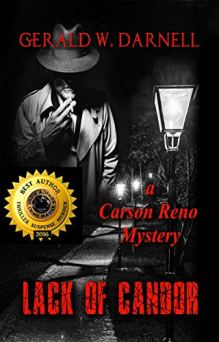 Gerald: It is set in 1962 with most of the story taking place in and around Memphis, Tennessee. A Sergeant with the Memphis Police Department is found dead only hours before his scheduled testimony before a grand jury. Was it suicide or was it murder? What was he going to testify about? A handwritten note left by the Sergeant and addressed to the District Attorney disappears. What was in the note? Was it a suicide note with information regarding his pending testimony or something else? A woman claiming to have information related to his planned testimony comes forward and seeks protection.
Carson is hired to look into the matter and provide protection to the mysterious woman, but protection from whom? The situation gets out of hand quickly, and Carson finds himself in trouble with most everybody involved. A dark cloud hangs over the truth, as he tries to determine the ‘good-guys’ from the ‘bad-guys’ from the ‘bad good – guys’.
This old fashion crime story takes Carson Reno and his crew on a complicated adventure, where it seems that no one is looking for a solution.
Kaye: What is the biggest challenge in writing mystery for you? Why?
Gerald: My time period (early 60’s) has its own challenge. Limited transportation, no cell phones, no CSI type of stuff to solve these crimes. Old black and white solutions to whatever Carson is involved in.
Kaye: What is the best part of writing mystery for you? Why?
Gerald: I’ll answer that by referring to what I tell other writers or wanna’be writers. Don’t write to get rich, but to enrich others.
Kaye: What time of day do you like to do your writing? Why?
Gerald: No particular time, but I prefer the evenings with a little ‘libation’ for inspiration.
Kaye: How do you decide on your titles? Where does this come in the writing process?
Gerald: Titles are always first and I have NO idea where they come from. My friends constantly ask the same question – wish I had a catchy answer.
Kaye: Of all of your books, which one is your personal favorite? Why?
Gerald: I have two and they are my most popular and best sellers – ‘Dead End’ and ‘Murder and More’. I like the stories and I guess my readers do too.


Kaye: Many of the events in your stories are inspired by real life events. What was the strangest or most unusual inspiration you’ve ever had for a story?
Gerald: ‘Dead End’ involves a chase scene in a rural Arkansas area where I spent many years when I was younger. The snow, the dirt roads, the mud, the outdoor part of me enjoys that.
Kaye: There are 18 Carson Reno books, one book in your Jack Sloan series: Concrete Jungle, in addition to your autobiographical book, Don’t Wake Me Until It’s Time To Go. So, is Carson Reno on the way out and Jack Sloan on the way in? Or is there more Carson in the future?
Gerald: More Carson and maybe a little more Jack. A work in progress.
Kaye: What are you working on now? What is next for Gerald W. Darnell?
Gerald: ‘The Disappearance of Robin Murat’ and it will be out before the end of this year (I hope). No spoilers, but a big part of the story takes place in New Orleans – one of my favorite cities. A great place for mystery and ‘bad-guys’.
I want to thank Gerald for chatting with me today and sharing his experiences and advice. You can learn more about Gerald Darnell and his books at the links below.
Website: www.geraldwdarnell.com/
Amazon Author page: https://www.amazon.com/gp/product/B07NQRPXMW/ref=dbs_a_def_rwt_hsch_vapi_tkin_p1_i5
Goodreads Author page: https://www.goodreads.com/author/show/4521276.Gerald_W_Darnell
Lulu.com Spotlight: http://www.lulu.com/spotlight/geralddarnell
LinkedIn: https://www.linkedin.com/in/geralddarnell
Like this post? Let me know in the comments. You can be sure not to miss any of Writing to be Read’s great content by subscribe to e-mail or following on WordPress.
Share this:

Interview with noir author Michael Pool
Posted: July 29, 2019 Filed under: Author Profile, Books, Crime, Fiction, Hard-Boiled Crime Fiction, Interview, Noir, Writing | Tags: Crime Fiction, Michael Pool, Noir, Noir crime fiction, Rose City, Texas Two Step, Writing to be Read 4 Comments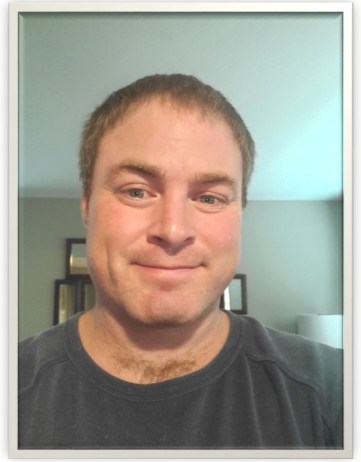
My guest today is a talented author, whom I happen to know personally. He was a part of my M.F.A. cohort at Western State Colorado University, and I had the privilege of , being present for his reading from his thesis novel, which was released this past year and fit in with this month’s Crime Fiction genre theme for review, Rose City. A P.I. by day, it’s no surprise that he writes crime fiction. What was a surprise to me was his talent for writing noir with true craftsmanship, which is why I invited him to join me here. Please help me welcome noir author, Michael Pool.
Kaye: Would you share briefly your writer’s journey? How did you get to where you are today?
Michael: A lot of writing, haha. I’ve been writing fiction since my very early twenties, however, I did take about 5 years in my late twenties where I barely wrote at all. In my 30’s I finally decided to take it more serious and began focusing on building a career through longer works. Prior to that, I’d mostly written short fiction. Though I still enjoy short stories, these days I mostly write novels, with a recent focus on detective fiction.
Kaye: Noir fiction takes a look at the darker side of human behaviors and generally features corruption and loose, (or lack of), morals. Why is it your chosen genre?
Michael: Well, I guess first I would say that it’s not my chosen genre. These days I definitely gravitate toward detective novels.
It’s a sub-genre that I have written in quite a lot, however. I would put Texas Two-Step as more of a pure crime novel, although it fits the Elmore Leonard vision of noir to a large degree. Rose City is a Southern Gothic Mystery.
However, I am attracted to noir stories because I like seeing the world through the eyes of an anti-hero. No matter the criminal, they are always the star of their own movie, and always see themselves as the justified “good guy.” What noir does really well is show that there is enough dirt to go around, and thus it turns notions of good and evil on their heads, leaving the reader with the distinct understanding that there are no good and bad people, only good and bad choices.
All of us are always teetering on the edge of destroying ourselves through our shortcomings and noir is all about that process, making it entertaining, if horrifying, to read.
Kaye: What is the biggest challenge in writing noir for you?
Michael: I’m not sure I see it as challenging. I’ve always been a fan of the underdog, and I consider the down and out to be my people in so many ways. I love capturing the world from the view of men and women with their backs against the wall, many of whom have just enough ruthlessness in them to cause catastrophic damage in the pursuit of (often) vein goals which are not necessarily good for them.
Kaye: What is the most fun about writing noir?
Michael: I always joke that I’m a bit of a dark and stormy person, so I like that noir’s tone allows lots of room for that darkness and allows for a lot of intense, violent, complicated conflicts to arise in the narrative.
Kaye: Rose City was your thesis project in your M.F.A. program, but it is also the companion novel to Texas Two-Step. Can you tell me a little about both books and explain how they are related?
Michael: Both books are set in the fictional East Texas locale, Teller County. They are related only by their setting and a shared villain in common. Without giving too much away, there is a villain who skates on consequences in Texas Two-Step that may finally get his in Rose City.
Interestingly, Rose City was written first, as a graduate school thesis. For whatever reason, Texas Two-Step was published first. They can be read in any order.
 Texas Two-Step is a “One last crime” story involving a couple of jam-band obsessed Denver pot growers who, after getting pushed out of the market by legal marijuana, have one last big crop to sell, and turn to an old but reckless associate down in Texas to move the harvest. They soon find themselves tangled up with real, violent criminals in a cat-and-mouse game where everyone involved has an agenda, and a rogue Texas Ranger is on their trail, desperate to nail their associate. It’s a multiple point-of-view book with lots of humor and a satisfying climax.
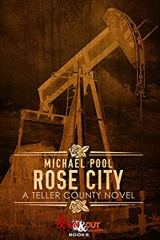 Rose City is a “prodical son returns” story where the protagonist, Cole Quick, has left Teller County 14 years earlier after being robbed of a stash of fronted cocaine, taking with him his local debutante girlfriend, whose family all but disowned her as a result. The book picks up 6 months after her untimely death from breast cancer. Cole returns to Teller County for his estranged, abusive father’s funeral, and soon finds himself caught up in his old debt, as well as tasked with proving an old friends death was murder, rather than a vicious murder-suicide. To get back out of town alive, he has to take on the entire crooked town’s structure and bring it down to rubble.
Rose City was the first full novel I had ever written. And, honestly, it was a mess for a long time. Five years of good edits have turned it into a really great novel. It’s emotional, suspenseful, and moves forward at a non-stop pace. It deals with themes of racism, classism, corruption, abuse, and self-destruction in a way that is compassionate but takes a hard eye to the reality these kinds of problems crop up in.
Kaye: In Rose City, Cole Quick has a dark past that he thought he left behind. But a trip back to his home town finds him down and out, and vulnerable. There’s a lot more going on than he is aware of in his old stomping grounds, and almost without realizing what’s happening, he’s swept up into it, and it becomes a matter of survival for him to discover what really happened to his best friend, Jimmy. Are noir protagonists all average guys who get swept up by circumstance and have to fight their way out?
Michael: I don’t think noir protagonists are all average guys. In fact a whole bunch of them are anything but, they’re self-destructive fringe characters living by their own moral codes, and bound for trouble of their own making.
But all of my characters tend to be average men and women caught in extraordinary scenarios. I’m not much for thrillers with superhuman protagonists, and my writing tends to put a lot of focus on everyday people and their relationships, with the understanding that crime and total destruction are always in the peripheral of our lives, whether we believe it or not. I use crime as a lens to explore the human condition, because it’s an integral part of the human experience. We live in societies with rules, both good and arbitrary, and we all find ourselves running up against those in some ways. But some men and women won’t just accept things the way they are, and that to me is the kind of person who will make a good protagonist.
Kaye: You are the founder and editor-in-chief of Crime Syndicate Magazine. Can you tell me about that? What was your motivation to start it? What can readers find there? What are your goals for it in the future?
Michael: I put Crime Syndicate down about a year ago, just didn’t have time for it anymore. Crime Syndicate did focus a lot on short noir fiction, and there are some incredibly good stories in the three issues I put out. I’m happy to have had the experience, but I’m a writer at heart, not an editor.
Kaye: Noir characters are always flawed in some way. How flawed should a noir character be?
Michael: The important thing is not how flawed, it’s more that their flaw be something that will drive them to make decisions that are not necessarily good for them, and in fact the best noir characters have a flaw that is in direct opposition to their needs, causing a sense of inner conflict that will drive the story to a dark ending.
Kaye: If you could have lunch with any noir author, alive or dead, who would it be? Why?
Michael: I suppose a Dashiel Hammett or Ross MacDonald. Neither are really “noir” authors. I’d put them both more as hardboiled detective writers. But both have been major influences on my writing. I work as a private investigator, and in Hammett I get a very clear sense that he knows the work (which makes sense, because he was a Pinkerton at one time). With McDonald, I love the way he uses the detective as a lens to look at family dynamics and the effects changing social issues and dynamics have on families. It’s something I naturally do in my own writing, and I’d love to pick his brain about process.
Kaye: You are a Jiu-jitsu instructor. Are any of your characters skilled in martial arts?
Michael: Not really, for some reason! I am working on a modern pulp P.I. series (I’m calling it Gonzo P.I. as a style), and that character, Rick Malone, does have some jiu-jitsu experience, which he puts to good use from time to time. But in a lot of ways Rick is also a broken man and an outcast, so he’s still very far from the superhuman or hyper-capable protagonists I was talking about earlier. I love jiu-jitsu, and of course it does show up from time to time in my action scenes!
Kaye: In addition to book length works, you also write short fiction. Your works have been included in several anthologies. Which do you prefer? Why?
Michael: As I mentioned, I mostly write novels now. I prefer them because there is a market for them, haha. No, honestly, I agree with readers on why they prefer novels, and particularly series. When you fall in love with a protagonist you want to spend more time with that protagonist as a reader, and as a writer, I feel the same way. It can be hard to spend a year at a time on the same project, but the end result is more satisfying and makes it much further out into the universe.
Kaye: What parts of you, do your readers get to see in your characters?
Michael: Compassionate but conflicted and flawed characters in my books all have a big piece of me in them. I’m highly emotional, and have had plenty of dark experiences in my personal life. Those experiences crop up in less-than-direct ways in my writing, but anytime you reach an emotional moment in one of my books, you’re definitely interacting with the deepest parts of me as a writer and human being. To me that is a vital part of why I write in the first place.
Kaye: Your books feature intricate storylines that are well thought out. What’s your writing process like? How do you create your plots?
Michael: I’m an outliner these days. I stray from the outline often, but I mark out plot beats in advance as much as possible, and adjust them as I go. I literally keep a beat sheet for each book to make sure I’m staying on pace and on task. I find structure to be freeing rather than limiting. To understand why story structure is so vital you have to understand why humans began to tell stories in the first place, then you can see why structure evolved the way it did, and use that information to create the ever-elusive “uniquely familiar” plot lines that resonate with readers.
Kaye: What is your greatest writing accomplishment to date?
Michael: That’s a tough one! I feel like my greatest accomplishment is just getting to where I am. I feel poised to break through to a larger audience with this next project, finally, but more than that, I feel like I’ve finally become a skilled, adept long-form fiction writer.
Kaye: What are you working on now? What’s next for Michael Pool?
Michael: Right now I’ve just finished the first book in a new P.I. series, Throwing Off Sparks, and am at work on book two, tilted Daughters of the Republic. Both feature my obsessive female East Texas P.I., “Rowdy” Riley Reeves. Riley’s origin story, “Weathering the Storm,” is slated for release as part of The Eyes of Texas anthology on 10/21/2019. Within a paragraph of starting that story I knew she would become a series character, and I’m REALLY excited to share this new series with the world, I think it brings something totally new to detective fiction.
I’m also working on a pulp P.I. novel I mentioned earlier, also the first in a series, called Catfish Quarum. It is set in Colorado and features down-and-out drug-addled P.I. Rick Malone. A second book in that series is currently in the outline stage, titled One Way Out. I have big hopes for this series, it allows me to be goofy and serious all in the same breath, and to really capture a lot of uniquely Colorado social issues and characteristics. Look for it over the next couple years. I wish that were faster, but publishing is its own complicated process, unfortunately.
I want to thank Michael for sharing with us today. I think he has helped to define noir and differentiate it from the other sub-genres of crime fiction. If you’d like to learn more about Michael or his books, you can visit his author site, or his Amazon author page.
Like this post? Let me know in the comments. You can be sure not to miss any of Writing to be Read’s great content by subscribe to e-mail or following on WordPress.
Share this:

Chatting with the Pros: Interview with bestselling author Jenifer Ruff
Posted: July 15, 2019 Filed under: Author Profile, Books, Chatting with the Pros, Crime, Fiction, Interview, Thriller, Writing | Tags: Chatting with the Pros, Crime Fiction, Jenifer Ruff, Only Wrong Once, psychological thrilers, The Numbers Killer, Writing to be Read 3 Comments
My guest today on “Chatting with the Pros” is bestselling author Jenifer Ruff. She’s booked as a psychological thiller author, but much of her works falls under the genre of crime fiction, as well. She has a knack for keeping the action moving and throwing in surprise twists, which is always great in crime fiction stories. I’m excited to find out what she has to share, so please join me in welcoming her to Writing to be Read.

Kaye: What elements of storytelling do you feel are specific to the crime fiction genre?
Jenifer: A well-developed and slightly flawed but likable antagonist. An interesting protagonist with clear and shocking or complex motives. A suspenseful, intricate plot with unexpected twists that involves a crime or series of crimes.
Kaye: What is the biggest challenge in writing crime fiction for you?
Jenifer: The most enjoyable parts are creating the plot, the twists, the characters, and the crimes. The hardest part for me is having the patience to go back and edit and rewrite again and again until the writing is the best I can make it.
Kaye: Are there any particular crime fiction authors that you fashioned your writing style after?
Jenifer: There are too many (way too many!) excellent authors and excellent novels out there for me to pick one in particular. I learn a little from all of them. I try and read as much of everything as I can—bestsellers in literature for the two book clubs I’m in, and indie authors in the thriller genre for me. I love it when the book I’m reading sparks new ideas, but that can happen no matter what genre or what author. I do know that when I read literature, I get inspired to create all sorts of similes and metaphors and my editor usually nixes almost all of them.
Kaye: You have also written thrillers, horror and YA suspense. What are the differences in writing crime fiction from the other genres you’ve written in?
Jenifer: All my novel are dark and twisty psychological suspense thrillers with disturbed characters readers often can’t help but like. Each book involves crimes, mostly murders. Each has a different contemporary topic—terrorism, sex trafficking, social media, for examples. I think I’ve been consistent with that character-driven style no matter the story or the genre. They’re more similar than they are different, but each emphasizes certain genre elements slightly more than others.
Kaye: What kind of research do you find yourself doing for crime fiction?
Jenifer: With my Brooke Walton series, I did a lot of research about psychopaths, PTSD, and working in a Medical Examiner’s office. For Only Wrong Once, I researched ISIS, particularly their recruiting techniques, and bio-terrorism. I was a little worried about setting off alarms on the internet because of the type of research I was doing for that one. Pretty Little Girls, the book I’m finishing now, involved research and attending lectures on sex trafficking. I’ve interviewed FBI agents and had a few beta read my books to make sure I wasn’t too far off on anything.
Kaye: You write in several genres. Which genre is your favorite one to write in? Why?
Jenifer: Psychological suspense. I enjoy getting into the heads of my very flawed characters and figuring out how they might react, respond… thinking up actions that would be outrageous for me or any “normal” person, but perfectly normal for them.
Kaye: Besides writing, what are your favorite things to do?
Jenifer: Hike with my dogs and exercise classes – Barre, Pilates, Zumba, athletic conditioning – anything where I’m moving and sweating. If I get on a bike or elliptical it’s because I’m really into whatever book I’m reading and I want to be able to exercise and keep reading.
Kaye: Your most recent crime fiction novel is The Numbers Killer, which I reviewed last Friday. What other novels have you written that would fit into the crime fiction genre?
Jenifer: Only Wrong Once, the Brooke Walton series: Everett, Rothaker, and The Intern. And my newest, coming out soon—Pretty Little Girls.
 Kaye: Can you tell us a little about The Numbers Killer?
Jenifer: It’s the first in a new series about FBI Agent and heiress, Victoria Heslin. The series will appeal to fans of A.J. Finn, Thomas Harris, James Patterson, Jeffrey Deaver and Karin Slaughter. Most of my early readers have said they couldn’t put it down, which is exactly what I hope to hear.
When a key witness in an organized crime trial turns up dead in his kitchen with liar and the number two scrawled on his forehead, the FBI assumes the murder was a hit to silence him. Then the calls start coming in—more victims with similar markings and no connection to the mob.
As agents Victoria Heslin and Dante Rivera struggle to catch a break in the case, they receive a series of cryptic, personal messages from the killer, complicating the investigation. Something disturbing and frightening is underway, and anyone might be next, including the agents, unless they uncover the common denominator.
Kaye: The old adage is, ‘write what you know’. Obviously, you haven’t lived through the horrendous events featured in your crime fiction stories. In what ways do you draw off of your own experiences when writing crime fiction?
Jenifer: I write about things that might fascinate me – the abnormal and the unexpected. I really admire determined people, but when someone is determined and also misguided, things can get very interesting. I’ve created characters like that in most of my novels.
Kaye: What is the strangest inspiration for a story you’ve ever had?
 Jenifer: The idea for Only Wrong Once was inspired by a secure laboratory at my graduate school that held research samples of the most deadly diseases on the planet – small pox, bubonic plague, and Ebola, to list just a few. And also from a quote by National Security Adviser Condoleezza Rice in 2004. She said: “And let’s remember that those charged with protecting us from attack have to be right 100 percent of the time. To inflict devastation on a massive scale, the terrorists only have to succeed once. And we know that they are trying every day.” Her powerful, frightening words inspired the book title and the theme for Only Wrong Once.
Kaye: Is there anything unique or unusual about your writing process?
Jenifer: I don’t think there’s anything unusual about it. I sit down in front of my computer for as long as I can, as many days per week as I can. Even though I write most days, I still consider that time a luxury. I write in my house and I can’t get any writing done if I have housework to do, I’m too distracted by awareness of what needs to be cleaned. So cleaning and chores first, then I can write.
Kaye: If The Numbers Killer was made into a film, who would you like to play the lead?
Jenifer: I’d love for Blake Lively to be Agent Victoria Heslin.
Kaye: What’s next for Jenifer Ruff? Can readers look forward to more crime fiction from you? What are you working on now?
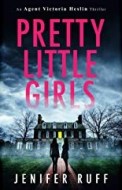 Jenifer: The second in the Victoria Heslin series, Pretty Little Girls, is almost finished and will be published in the fall. I’m waiting on beta readers now, and next it will go out to ARC readers. In Pretty Little Girls, Agent Heslin is called to Charlotte, NC to consult on a kidnapping case, but what she discovers ends up being much, much worse. Right now, I’m busy working through ideas for the third novel in the series.
I want to thank Jenifer for joining me today and offering a glimpse into her writing process here. I reviewed her book Only Wrong Once last month when we were looking at thrillers. You can see that review here. You can find out more about Jenifer Ruff and her books at the following links:
Website: http://jenruff.com/index.html
Amazon Author Page: https://www.amazon.com/Jenifer-Ruff/e/B00NFZQOLQ?ref=sr_ntt_srch_lnk_1&qid=1563137616&sr=1-1
Share this:

Interview with Pulp & Crime Fiction Author Quintin Peterson
Posted: July 2, 2019 Filed under: Author Profile, Books, Crime, Fiction, Interview, Mystery, Noir, Pulp Fiction, Stories, Writing | Tags: Author Interview, Crime Fiction, Luther Kane, mystery, Norman Blalock, Pulp Fiction, Quintin Peterson, Writing to be Read 8 Comments
I have the pleasure of conversing with a pleasant guest today, whose love of life shines in his eyes and his smile, author Quintin Peterson. A talented author, whose work keeps classic craft alive in modern times. He writes pulp and crime fiction in many variations, throwing new twists on the classic styles. I can’t wait for you to meet him. So, without further adeau, let’s find out what Quintin Peterson has to share.
Kaye: Tell me about your author’s journey. When did you know you wanted to be a writer? How did you make that dream a reality?
Quintin: I began entertaining my friends and family by telling them amazing stories long before I started writing them. I obtained my first copyright when I was 13. While in high school, I was awarded a National Council of Teachers of English Writing Award, the University of Wisconsin’s Science Fiction Writing Award, and the Wisconsin Junior Academy’s Writing Achievement Award. When I was an undergraduate at the University of Wisconsin, I wrote and performed in two stage plays and received a Mary Roberts Rinehart Foundation grant for my play project, Change. I also received a National Endowment for the Arts creative writing fellowship, for playwriting.
Kaye: What is your favorite thing about writing crime fiction?
Quintin: I gave up creative writing and pursued a 30-year career in law enforcement. I rarely found justice during all the years I worked as a police officer for the Metropolitan Police Department of Washington, D.C. I suppose it is the reason why writing crime fiction is my dominant obsession: I find justice in my stories.
Kaye: You’ve had both short fiction and novel length works published? Which do you prefer writing? Why?
Quintin: It’s a toss-up, really. I like writing short stories for magazines and anthologies because of the word count limits, but I also like not being constrained by a word count limit for longer fiction.
Kaye: What is the most challenging thing for you about writing short fiction?
Quintin: The most challenging thing about writing short fiction is doing more with less. Writing short fiction for magazines and anthologies also afford me opportunities to experiment with genre-blending. For example, I’ve sold a cop/ghost story, a horror/mystery/noir thriller, science fiction/noir mysteries, and an Arthurian police story.
Kaye: What is the most challenging thing about writing novel length works?
Quintin: The most challenging thing about writing novel length fiction is avoiding the pitfall of being too wordy and doing less with more.
Kaye: Pulp fiction, maybe even more than other genres, must have well developed, larger than life characters. How do your characters develop for you?
Quintin: I create backstories for my characters so that I know them in order to make them seem real, and then pit them against each other in what I endeavor to make compelling stories.
Kaye: Which of your main characters is your favorite? Why?
Quintin: I have two favorite characters: Norman Blalock and Luther Kane, who are cousins and appear in each other’s stories. I like Blalock because people underestimate him. I like Kane because he is a man of action.
 Kaye: Your story “Broken Doll” just came out in Awesome Tales #10. That story is a part of your Private Eye Luther Kane Mystery Series. Would you tell me a little about who Luther Kane is and what makes him a great pulp hero?
Quintin: Luther Kane is a former DC police officer, as well as a former soldier and soldier of fortune who is maimed by a landmine. The loss of his legs does not prevent him from operating upon the same principles he adhered to when he was whole. He rises from his own ashes and walks again on state-of-the-art bionic legs, a miracle of modern science. At the suggestion of his physical therapist Claire Bradley, who taught him to walk again, he takes over his late father’s business, the Intrepid Detective Agency, located atop the other family business he inherited, the Last Stop Liquor Store.


Kaye: The Voynich Gambit is book two in your Norman Blalock Mystery Series and it won the Literary Titan Book Award. Tell me a little about that series. Who is Norman Blalock, and what makes him a great pulp hero?
Quintin: In these old-fashioned heist stories, Norman Blalock is a disgraced Howard University history professor who has been working as a special police officer for the Folger Shakespeare Library for decades. No one at the library knows his background and only see him as “an old black security guard.” The first Norman Blalock Mystery is Guarding Shakespeare, followed by The Voynich Gambit. The upcoming third installment is The Shakespeare Redemption. (By the way: I worked at the Folger Shakespeare Library for almost seven years, beginning the same year I retired from the police department, and penned the first two installments while I was employed there.)
Kaye: Who is your favorite villain? Why?
Quintin: Kavitha Netram, the femme fatale Norman Blalock matches wits with in both Guarding Shakespeare and The Voynich Gambit. She returns in The Shakespeare Redemption. She is smart, sexy, and ruthless.
Kaye: What are you working on now? What can readers expect in the future from Quintin Peterson?
Quintin: Right now, I am working on The Shakespeare Redemption. I will continue to write more installments of the Norman Blalock and the Private Eye Luther Kane mysteries, as well as other noir stories. I also plan to write more science fiction and horror thrillers.
Thanks for having me, Kaye. It’s been a pleasure.
I want to thank Quintin Peterson for sharing with me. It’s been enlightening for me and I hope it has for all of you readers, too. You can find out more about Quintin and his books at the links below. (Be sure to visit his Amazon page. You’ll find a large selection of books and short fiction in a wide range of variations upon the genre. Pulp and crime fiction fans may call it a gold mine. Those unfamiliar with the genre should check it out. It’s a fun genre. )
Amazon: https://www.amazon.com/Quintin-Peterson/e/B002BMCR2E?ref=sr_ntt_srch_lnk_1&qid=1561789921&sr=8-1
Facebook: https://www.facebook.com/quintin.peterson.56
Twitter: https://twitter.com/luther_kane
LinkedIn: https://www.linkedin.com/in/quintin-peterson-263b4b8/
Good Reads: https://www.goodreads.com/user/show/26191433-quintin-peterson
Like this post? Let me know in the comments. You can be sure not to miss any of Writing to be Read’s great content by subscribe to e-mail or following on WordPress.
Share this:

Chatting with the Pros: Interview with suspense thriller novelist John Nicholl
Posted: June 17, 2019 Filed under: Author Profile, Books, Chatting with the Pros, Fiction, Interview, Suspense, Thriller | Tags: Author Interview, Chatting with the Pros, John Nicholl, Suspense, The Girl In Red, Thriller, Writing to be Read 2 Comments
It’s my pleasure to have as my guest today on “Chatting with the Pros” bestselling suspense thriller author John Nicholl. His works draw from his own true life experiences as a law enforcement officer and child welfare social worker in Wales. John has written seven thrillers and every one of them has seen the bestseller list. Please help me welcome him now. Maybe we can learn some of his secrets to becoming a bestselling author.

Kaye: Would you share the story of your own publishing journey?
John: I self-published initially. When that went better than expected, I partnered with a literary agent and signed a publishing deal. Further books followed from there.
Kaye: What do you think is the single most important element in a story?
John: The hook is crucial. I try to capture the reader’s attention from the very first page.
Kaye: What time of day do you prefer to do your writing? Why?
John: I write in the morning. It’s when I’m at my most creative.
Kaye: What is the biggest challenge in writing psychological thrillers for you?
John: My books sometimes engender memories that were, perhaps, best left in the past.
Kaye: What elements of storytelling do you feel are specific to the thriller genre? Are there particular elements that are specific to psychological thrillers?
John: Psychological thrillers explore the extremes of human behaviour.
Kaye: Anonymity is described as intense and terrifying; White is the Coldest Color as violent and brutal; Portraits of the Dead as disturbing and compelling; The Girl in Red as haunting and unsettling. Where do you get ideas for your stories?
John: I began my working life as a young police officer, and subsequently trained as a social worker. I worked in child protection for about twenty years after qualifying. My writing draws heavily on those experiences.
Kaye: Thrillers are action-packed and filled with conflict and tension. What techniques do you use to keep the story moving, the readers on the edges of their seats, and the pages turning?
John: I try to keep the stories as fast paced as possible, without too much padding. Quality is more important than length!
Kaye: How do you decide the titles for your books? Where does the title come in the process for you?
John: Inspiration comes from different places. The title of White is the Coldest Colour, for example, came to me when listening to A Whiter Shade of Pale on Radio 2.
Kaye: Is there anything unique or unusual about your writing process?
John: The words come into my head as if channelled from somewhere else entirely.
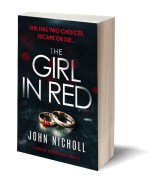
Kaye: Your latest release was The Girl in Red, which came out in March. Would you like to tell me a little about this book?
John: The Girl in Red is a dark tale of domestic violence, and the extreme lengths that one woman goes to, to escape her tormentor.
Kaye: Every one of your books has been an Amazon bestseller. What’s your secret?
John: I’ve had a lot of luck. And the book blogging community has been wonderfully supportive. I’ll always be grateful for that.
Kaye: Are there any particular thriller authors that you fashioned your writing style after as you approached writing in the thriller genre?
John: I mostly read historical biography and stories of real-life experiences that are out of the ordinary· Castaway by Lucy Irvine is a particular favourite. I’ve read it three times over the years.
Kaye: What are you working on now? What’s next for John Nicholl?
John: My next thriller, The Girl in White, will be published by Bloodhound Books this year. The release date has just been bumped up to September 4. It’s the story of a secret, quasi-religious cult hidden deep in the beautiful West Wales countryside. Hopefully, readers will like it. I’ll keep my fingers crossed!
I want to thank John for joining me here and sharing with us today. You can learn more about John and his bestselling thriller novels on his website, on his Amazon Author page. or on his Goodreads Author page. Join me on the third Monday in July, when we’ll be celebrating crime fiction and my “Chatting with the Pros” author guest will be Jenifer Ruff.
You can catch the monthly segment “Chatting with the Pros” on the third Monday of every month in 2019, or you can be sure not to any of the great content on Writing to be Read by signing up by email or following on WordPress.




















