Jeff’s Movie Reviews – Avengers: Endgame
Posted: May 17, 2019 Filed under: Uncategorized Leave a comment
Earth’s Mightiest
by Jeff Bowles
For more on Avengers: Engame, make sure to check out my full video review.
A wonderful thing happened to me as I watched Avengers: Endgame in the theater. At some point I realized that the worries and concerns that have been plaguing me in recent months are really just a steppingstone to something better, an invitation to move onward and upward in life. It happened around about the same time the core Avengers we met way back in 2012 tried to convince Robert Downey Jr.’s Iron Man to repair the past. “Well crap,” I said to myself, “if their mistakes are universe-ending, maybe mine aren’t as bad as I thought.”
And that’s the thing about this fourth Avengers movie, the capstone to the first eleven years of the mighty Marvel Cinematic Universe. Both understated and bold, the film urges us to reexamine our past choices. Some people stay stagnant and bemoan what they can’t change, while others look ahead and try to envision a better future.
Or maybe I just really love comic books, and a big, wonderful superhero flick like this awakens something serious and startling in me. Individual mileage may vary, of course, but truth be told, I’ve never seen a motion picture quite like this, and neither have you.
Avengers: Endgame is the second part of a two-part epic, which itself is the penultimate chapter of a series that’s twenty-two stories deep. That’s right, in order to gain a full appreciation for the trials and triumphs of Earth’s mightiest heroes, we need to go back to the very beginning, to the moment Tony Stark first slipped into his Iron Man suit. Readers of Marvel comic books were never astonished at how well this little project pulled together in the end, but audiences unfamiliar with a working shared universe might find themselves surprised by the complex tapestry eleven years of movies can weave.
Thanos the Mad Titan wiped out half of all sentient life in the universe with the snap of his fingers in last year’s Avengers: Infinity War, and now our heroes feel the need to, well, do some avenging. When it becomes clear it’s too late to fix Thano’s bold solution to universal overpopulation, the Avengers scatter and make individually vein efforts to move on with their lives. Captain America runs a support group for survivors of the infamous snap, Black Widow runs clandestine operations to protect what’s left of the world, Iron Man has settled into an existence of perfect domesticity, and Thor … well, don’t let me ruin for you how he’s ended up.
When Scott Lang, Ant-Man (Paul Rudd), unexpectedly pops his little shrinky-growy head out of the aptly named Quantum Realm, it slowly dawns on everyone it may be possible to return the universe to its former state after all, the lives of all those who turned to ash included. The movie focuses on the original six heroes we’ve come to love, which is a wise choice. Avengers: Infinity War sure was a beast of a movie, but it was also bloated with characters. The result here is a tighter, more focused narrative, one that dispenses with unnecessary story arcs in lieu of a clear and present runway to adventure, mind-bending time trickery, and a whole hell of a lot of interpersonal drama.

That’s the thing that’s so surprising about Endgame. Whereas most superhero movies overwhelm audiences with big fights and tons of CGI, this film invests in characters and the changes that have worked their way into every aspect of their personalities. Which isn’t to say big fights aren’t present, but the truth is this is a much more personal film than you might expect. As usual, it’s a long shot to save the world, but really, the adventure is secondary to the people.
Storytelling like this is often brooding and overly serious, but really, a good sense of humor turns out to be the name of the game. It’s not all beat-downs and overwhelming anxiety. These characters care about each other, and it shows. Past comic book movies like The Dark Knight have grappled with similar apocalyptic themes, but the first time The Hulk opens his mouth in Endgame, you’ll quickly realize superheroes rarely work best in their darkest, most imposing manifestations. Filmakers Joe and Anthony Russo and their very capable screenwriting team take some magnanimous risks with the humor, off-the-cuff and casual as much of it seems. It’s all worth it. The sense of good-cheer offsets nicely with moments of world-ending weight.
Additionally, a large section of Avengers: Endgame is devoted to reexploring some of the greatest moments from MCU history. It’s funny to think about nostalgia in a series that’s only a decade old, but for audiences who’re fully invested in the story thus far, it really is a beautiful opportunity to look back. So many great moments in Endgame were earned years ago, and while some movie reviewers and quasi-fans have gotten it into their heads this is the last big hurrah, by the time the credits roll, it’s clear we haven’t seen anything yet.
In movie biz terms, it was always a question how long some of these actors would stick around, but Marvel Studios is playing with eighty years of published continuity. Marvel, the little comics company that could, has been finding new ways to explore and reinvent itself on a weekly basis for longer than most people today have been alive, which means no, Virginia, the MCU will not be running out of ideas any time soon. If you keep showing up to the theater, they’ll keep pumping these movies out, and as I write this review, Avengers: Endgame has already become one of the highest grossing films of all time.
Speaking of writing reviews, it’s tough to describe Endgame without spoiling it completely. Suffice it to say, this three-hour epic will leave audiences breathless and hungry for more. It’s a huge, big-hearted film saturated by personal stakes. Or is that a personal movie containing universal stakes? I can’t imagine a more fitting entertainment milestone. Surely, the quality won’t always live up to the hype, but until such a time Marvel jumps the shark like Fonzie, box-office supremacy shouldn’t be an issue.
The next movie in the MCU arrives in early July. Spider-Man: Far From Home has already promised to explore the fallout from Endgame, and that’s really what Marvel is best at. Each time we come out for one of these flicks, we get more context and more invention. Say what you will about silly superhero movies, but don’t be surprised if in twenty years the film industry is still dominated by capes, masks, and tights. Until then, I’ve only got three words for you: make mine Marvel.
Avengers: Endgame gets a perfect 10 out of 10.
Ka-pow!
Check out Jeff Bowles Central on YouTube – Movies – Video Games – Music – Short Stories – So Much More!
You can keep up on what Jeff’s been watching and catch all of his great movie reviews the third Friday of each month. Subscribe to email or follow on WordPress toda
Share this:

Finding the right books to interest your child in reading
Posted: May 8, 2019 Filed under: Uncategorized 34 Comments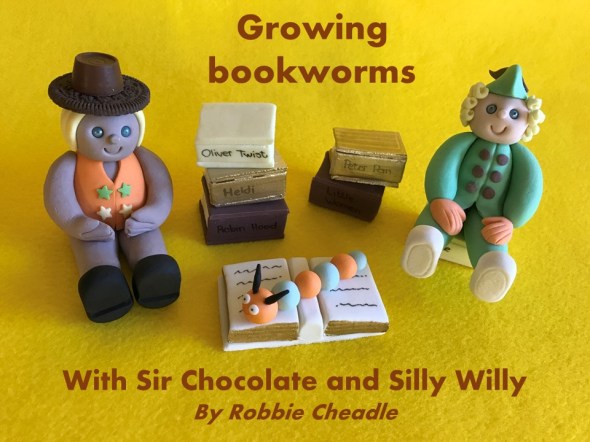
In the few weeks since my last post, two of the bloggers I follow have written a post about children’s books that influenced their lives and the choices they made during their early adulthoods.
These posts set me to thinking about which books, of the enormous number I read as a young girl, had the most impact on me and my life. This thought then led me to thinking about why I love books and reading so much and why it was so important to me that my own boys discover the joys of the written word. From these various thought patterns emerged the realisation that I understood fairly early on in motherhood that, if I wanted my boys to love reading as much as I did, I had to identify what sorts of books would appeal to them enough to draw them away from all the competing attractions in our modern world.
When I was a girl, we only had television for one hour a day and the children’s programs were only in English on alternate nights. There were no ipods, ipads or iphones with all their graphic presentations of battles, adventures, space and fantasy worlds to distract me from reading. Books were the main source of entertainment for me other than socialising in the street with other neighbourhood children. My dad was strict and we could only go out to play with other children between 9 A.M and 12 P.M. and then again between 2 P.M. and 5 P.M. That left plenty of time for me to read. This is not the case for my children. In order to get them to read, the book has to appeal to them enough for them to set their electronic devices aside for a period to read.
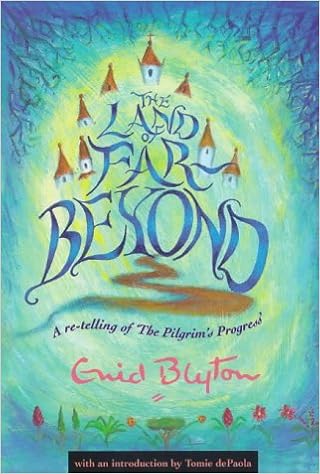
Looking back, I realise that I loved fantasy books. I was a huge fan of Enid Blyton. Not her adventure books or girly school books but her books about fairies, brownies, pixies and all the other fantasy folk who existed in her Folk of the Faraway Tree, Mr Pink-Whistle, The Wishing Chair and other similar book series. My favourite of Enid Blyton‘s stand alone books was, and still is, The Land of Far Beyond.
When my oldest son, Greg, was born, I started to read to him straight away. When he was 15-months old he would sit and listen to me read two or three pages of one or other of the Folk of the Faraway Tree books. As he grew older, I read our way through all my old favourites including Noddy and friends, Paddington Bear, Rupert Bear and, one of my all time favourites, Mary Poppins by P.L. Travers. Mary Poppins is fantasy at its best with the children visiting a world inside a painting, watching a circus comprising of acts by the planets, stars, sun and moon, visiting people and lands at each point of the compass and entering a garden they built in the park, inhabited by people made of clay and mud. It soon became evident that young Greg’s taste in books was similar to mine. While I was pregnant with Michael, I used to read to Greg (aged 2 1/2 at the time) for up to three hours a day. Greg turned into a fantasy reader and has, on his own, read his way through all the Chronicles of Narnia books by C.S. Lewis, The Hobbit by J.R.R. Tolkien, The Indian in the Cupboard books by Lynne Reid Banks, The Borrows collection by Mary Norton (Did you know that Mary Norton also wrote The Magic Bed Knob and Bonfires and Broomsticks which were turned into the Disney movie Bedknobs and Broomsticks?) and then on to the Harry Potter series by J.K. Rowling and now Lord of the Rings and all of Tolkien‘s other books. Recently, Game of Thrones by George R. R. Martin and Wheel of Time by Robert Jordan have swelled the ranks of Greg’s book collection which comprises of approximately five hundred books.
It was so easy to interest Greg in reading that I thought it would be the same with Michael. Little did I know that Michael would follow a different reading path to Greg and it would be much harder to interest him in reading due to his nature and learning barriers. Michael did like having Enid Blyton read to him but he would not read it aloud. I could not get him interested in reading fantasy books, or any of my other favourite books either, to me or alone. This was a problem. There had to be books out there that would tickle his reading fancy. We tried modern books, Horrid Henry by Francesca Simon and Diary of a Wimpy Kid by Jeff Kinney, as well as many others. Michael would listen and enjoy me reading them to him but he would not read them himself.
One day, an interesting thought occurred to me. Maybe Michael, a small boy who loved building with lego and doing science experiments with me, would like non-fiction books. I bought him the entire Mickey wonders why collection. What a hit. Michael loved them. After I had read a few of the articles, he would happily have a go at reading a few pages of one just to keep on learning and reading more. We read our way through all of these books and then moved on to all sorts of other non-fiction children’s books including all the horrible history and horrible science books. I enjoyed reading Michael’s choices too as I also learned from them. When we visited the UK when Michael was 9 we acquired books about Jack the Ripper, the black plague and the great fire of London. I have used each of these books to gain an understanding of these murders and events for use in stories I have written.

Michael’s audio comprehension has always been much higher than his reading level. I discovered that his enjoyment of non-fiction extended to audio books too. Over the past few years we have listed to audio books about the vikings, the greatest scientists of all time, great inventors and many others.
I have two nephews and two older nieces. I have applied my theory that you just need to find the right books to interest a child in reading to them too. Ben and Ryan also enjoy non-fiction books. Books about science fiction and boys on adventures like the Astrosaurs collection by Steve Cole, Humphrey the hamster books by Betty G. Birney and the Will Solvit books by Zed Storm also proved very popular with the boys.
The girls tastes are different. They enjoy Winne the Witch by Valarie Thomas and they loved the illustrations by Korky Paul. The Little Miss and the Little Men collections by Roger Hargreaves were popular with them. I also discovered that all of the young children loved Dr Seuss and rhyming text was interesting and captivating for their young minds.
If you have a reluctant reader, it may be that you have not found their golden reading lever. Most people have one if you can only find it. If fantasy isn’t popular, try something else.
The more that you read, the more things you will know. The more that you learn, the more places you’ll go. Dr. Seuss
About Robbie Cheadle

Hello, my name is Robbie, short for Roberta. I am an author with five published children’s picture books in the Sir Chocolate books series for children aged 2 to 9 years old (co-authored with my son, Michael Cheadle), one published middle grade book in the Silly Willy series and one published preteen/young adult fictionalised biography about my mother’s life as a young girl growing up in an English town in Suffolk during World War II called While the Bombs Fell (co-authored with my mother, Elsie Hancy Eaton). All of my children’s book are written under Robbie Cheadle and are published by TSL Publications.
I have recently branched into adult horror and supernatural writing and, in order to clearly differential my children’s books from my adult writing, I plan to publish these books under Roberta Eaton Cheadle. I have two short stories in the horror/supernatural genre included in Dark Visions, a collection of 34 short stories by 27 different authors and edited by award winning author, Dan Alatorre. These short stories are published under Robbie Cheadle.
I have recently published a book of poetry called Open a new door, with fellow South African poet, Kim Blades.
Find Robbie Cheadle
Blog: https://bakeandwrite.co.za/
Blog: robbiesinspiration.wordpress.com
Goodreads: Robbie Cheadle – Goodreads
Twitter: BakeandWrite
Instagram: Robbie Cheadle – Instagram
Facebook: Sir Chocolate Books
Want to be sure not to miss any of Robbie’s Growing Bookworms segments? Subscribe to Writing to be Read for e-mail notifications whenever new content is posted or follow WtbR on WordPress.
Share this:

Interview with Christian western romance author Patricia PacJac Carroll
Posted: May 6, 2019 Filed under: Author Profile, Books, Christian fiction, Fiction, Historical Fiction, Historical Romance, Interview, Uncategorized, Western, Writing, Writing to be Read | Tags: Author Interview, Author Profile, Christian western romance, Christion fiction, Historical Romance, Lockets and Lace, Patricia PacJac Carroll, romance, Sandra's Journey, Sweet Romance, Western, Writing to be Read 2 Comments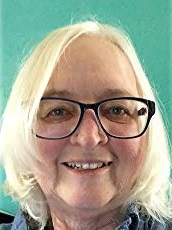
My author guest today is a prolific writer, who must publish an average of at least six books per year, in numerous romance series. Patricia PacJac Carroll writes historical and western Christian romance at a rate that I find amazing. The books on her Amazon Author page scroll in what seems like a never ending flow. In addition to her own series, which are many, on occasion, she’s invited to participate in series with a collection of other authors, as is the case with her most recent release. Let’s see what she has to share with us today.
Kaye: In what ways is writing a Christian western romance different from writing a western romance?
Patricia: For me, saying it is Christian means at least some of the characters have a Christian world view. Faith and hope in the Lord are evident in their lives. No preaching or sermons or a lot of verses, only faith as it relates to the story and the characters.
Kaye: Your latest book was recently released, Sandra’s Journey. Would you like to tell me a little about the story?
Patricia: Sandra is struggling, she’s walled herself in away from others. Her little brother’s death and the fact that a fiance left for Calfornia the year before and she only received one letter from him, have stolen her courage. She meets a corporal who is escorting the wagon train, and he challenges her to dream. Romance blossoms along the California trail where by trails end she will have to choose between the two men. A story of courage rediscovered and dreams coming alive.

Kaye: Sandra’s Journey recently came out as a part of a historical western series with a wagon train theme, which includes your book and those of several other Christian western authors. Would you like to tell me about the Lockets and Lace series?
Patricia: The Locket and Lace series is made up of several different authors. I was asked to join in 2018 and wrote Oregon Dreams for the Locket and Lace series for 2018. And then this year again for the Locket and Lace series for this year with Sandra’s Journey.
Every book has a connection to the Bavarian Jeweler in St. Joseph, Missouri. They have a locket that was made in the shop and a piece of lace. We had 9 books last year and 10 this year. They are all wonderful books
Kaye: The Lockets and Lace series books are not the only books you’ve written, by far. You have written several other series, including the Mail Order Brides and The Law Keepers series. How many books have you written? How long have you been writing?
Patricia: I have been writing seriously for thirteen years and began publishing in 2012. I have 40 books out right now and plans for many more. I have several series ~ Mail Order Brides of Hickory Stick, Montant Brides of Solomon’s Valley, and several others.
Kaye: Tell me a little about your author’s journey, if you would?
Patricia: I began writing and attending critique groups in 2006. I loved it, but my friends would call me the book of the week person because story ideas would attack me. I love the thrill of a new story and still do. Finally, I decided I better finish a book and my first book was Liberty Belle that I published in 2012.
Kaye: Your husband is instrumental in your writing, so much so that you’ve incorporated both of your initials into your author’s name – PacJac. Would you talk about how he enables you to write?
Patricia: My husband is a wonderful prince of a man who gives me the time to do what I love. He let me retire in 2006 so I could write. And now, my writing has enabled him to retire. We are a wonderful team and are enjoying our lives. I added the PacJac to my writing name because I found there were other Patricia Carroll’s out there in the writing world. It works well though because you put PacJac in Amazon and it will pop up my books.
Kaye: Your female characters of the contemporary strong and independent variety, or do they follow the traditional damsel in distress variety of heroine?
Patricia: I’d say they are a combination. While I want to be historically correct, readers live in the 21st century. I do like spunky women, but I also enjoy writing about a character who grows in courage and strength, too.
Kaye: What part of writing do you find to be the biggest challenge?
Patricia: The self-discipline. I am a seat-of-the-pants writer, and I tend to live my life the same way. I enjoy fun, family, and friends as well as writing so at times the need to balance comes into play.
Kaye: Where does your inspiration come from?
Patricia: The Lord. He gives me the stories. I am amazed at how He has made sure I understand that. One time I had the opportunity to put a Christmas story in an anthology and had a weekend to write it as it was due Monday at noon. Now, I had bragged that if you just give me a name and a place, I will come up with a story. Well, after my haughty attitude, my friends gave me a name and place and my imagination heard crickets. Nothing. Nada. No story. Now, that was a bit scary to me. A writer isn’t much without a story. So I figured I missed the anthology. But then at 5:30 Monday morning I woke up with a picture in my mind of a cowboy on a horse pulling a Christmas tree and knew I had a story. And I wrote it and turned it in before noon. You can find that story in my book Christmas in Texas. The Richest Christmas. So I will give the Lord all the credit for anything good that I do. Any mistakes are mine.
Kaye: Your books obviously are portrayed in a western landscape, based on historical times and events. What kinds of research do you find yourself doing for your books?
Patricia: Documentaries, books on the old west. I have always loved the west and westerns.
Kaye: Do you feel you draw pieces from your own life into your stories? How so?
Patricia: Yes, and I tell my friends anything may be used in a story. I know I often have my characters state “How hard can it be?” That is all me.
Kaye: What is the most fun part of writing western romance for you?
Patricia: I enjoy the characters and the things they get themselves into. Plus horses, I love horses and they have always been part of the draw to westerns for me. I also love the idea of the wide open wild country.
Kaye: What is something many of your readers wouldn’t guess about you?
Patricia: For twenty years, I owned and ran a pet store. Sea Horse Pets in Arlington, Texas. As you can guess I love animals. And people. I love to write, and my heart is that readers will enjoy my stories and be strengthened and encouraged by reading them. I enjoy making readers happy.
I want to thank Patricia for joining me today to share her thoughts with us. I don’t know about all my readers, but I am astounded by the sheer volume of her works. You can learn more about Patricia at the links below. Stop in and see if you too are not awed by the books she’s produced within the span of the past seven years.
Links
Author page on Amazon: https://www.amazon.com/Patricia-PacJac-Carroll/e/B008R9JCN2/
Facebook Author page: https://www.facebook.com/PatriciaPacJacCarrollAuthor/
Website: http://www.pacjaccarroll.com/
Newsletter sign up http://eepurl.com/bpPmbP
Like this post? Subscribe to Writing to be Read for e-mail notifications whenever new content is posted or follow WtbR on WordPress.
Share this:

Movie Review of Glass (2019)
Posted: February 15, 2019 Filed under: Comic Hero, Film Review, Movie Review, Movies, Uncategorized 1 Comment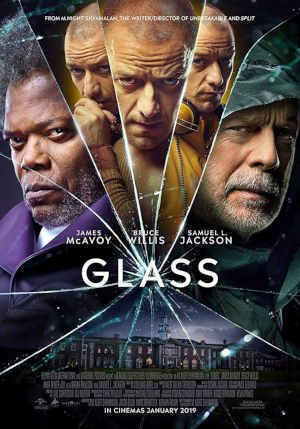
About as unbreakable as a piece of ill-tempered… well, you know.
Glass (2019) – Not Much Super, Not Much Hero
by Jeff Bowles
During the closing moments of Glass, I couldn’t help but think director M. Night Shyamalan had squandered the opportunity to build something both timely and unique. In the age of the Marvel Cinematic Universe, in which dozens of bigger-than-life characters exist concurrently and pop into each other’s movies like those annoying neighbors from down the street (you know the ones), it’s not unusual to expect some pretty big stuff from the superhero genre. And after all, Shyamalan began laying the groundwork for this trilogy of his long before The Avengers or The Guardians of the Galaxy had ever graced the silver screen, so it’s safe to say he had the market cornered on expanded comic book universes.
Shyamalan teased an unexpected and suitably epic showdown in the end credits scene of 2016’s Split, and while that movie was the best flick he’d made in years, the director who finally seemed to be getting his groove back has… well, lost his groove again. Glass is a lopsided mess, a film in search of a reason to exist. The only thing that saves it from complete mediocrity is the strength of its performances, chief among these being James McAvoy’s continually stunning, though in no ways realistic, portrayal of a man with so many personalities his personalities have personalities have personalities.
Really, McAvoy is an exceptional actor, one of the best of his generation, so casting him in a role like this takes a certain level of calculated genius. In his latest turn as mental patient Kevin Wendell Crumb—also known as Patricia, also known as Hedwig, also known as Barry, also known as The Beast, etc.—the Scottish-born actor gets to strut his stuff in some pretty bombastic ways. Scenery-chewing has never seemed so dignified, though. Shyamalan is clearly as in love with Kevin as audiences have become. He garners most of the film’s run time, which begs the question, why not just make a Split 2?
Glass of course acts as the capstone to a three-part story that began in the year 2000 with Unbreakable, the follow-up to Shyamalan’s debut masterwork, The Sixth Sense. Bruce Willis made for a pretty inert “superhero” all the way back in Y2K, and not much has changed. David Dunn still spends most of his time brooding and behaving like a working-class Bruce Wayne—a Bruce Springsteen Wayne, if you will—minus the car, the cave, and the Born to Run.
After a brutal encounter with Crumb, who’s been extraordinarily busy kidnapping and murdering young women since we saw him… kidnapping and murdering young women in a different movie, Dunn finds himself taken psychiatric prisoner and locked up in a dank, hopeless mental health facility somewhere in Philadelphia (no Philly Eagles jokes, please). Imagine his surprise to learn his arch nemesis has suffered the same fate, the eponymous Mr. Glass, played by Samuel L. Jackson.
Willis mostly seems bored with his role here, but he’s seemed bored in the majority of the movies he’s made in the last fifteen years. Jackson, however, clearly enjoys the opportunity to dust off an old fan-favorite and add another franchise notch to his belt. Mr. Glass spends too much time on the sidelines in this, his own movie, but once things really start cooking, he’s just as nerdy and evil as ever. Glass makes for an excellent counterpoint to Crumb, and in a surprisingly subtle performance, Jackon proves he’s still good for more than an eyepatch and the odd credit card commercial.
Back when Shyamalan released Unbreakable, good comic book movies were a rarity. Rarer still, mainstream acceptance and veneration for what is America’s oldest visual storytelling medium. Everyone likes comics these days, it seems, but in Glass, an overreliance on played-out comic-isms comes off as cheap, laborious, and self-conscious. Even the dastardly lady who’s thrown these colorful weirdos together, Dr. Ellie Staple (Sarah Paulson), can’t tell if she should balk at the notion of real-life superheroes or wipe them all off the face of the earth.
The movie sports a larger supporting cast culled from the other entries in the series, including Mr. Glass’ mother and Dunn’s still slightly unhinged son, but none of them are served particularly well, and in fact, the heroic Casey from Split (played by Anya Taylor-Joy) suffers a puzzling reversal of character that all but nullifies her prior life and death victories.
In truth, Glass struggles to find a beat, content for the most part in giving us context and backstory for everything we’ve already seen. Plot development is kept to a minimum, the classic Shyamalan botched twist ending is still classically botched, and the big final showdown concludes in such a disappointing and franchise-killing fashion, I had to ask myself why the entire exercise was even necessary. In my opinion, it wasn’t. M. Night Shyamalan is not a director’s director by any means, but even he knows obfuscation and bad timing are the deaths of tension.
Mr. Glass himself believes comics are a secret history of the world. And I suppose they are in a way. As a popular media artform, comic books have a long history of extraneous filler material. It’s just too bad Shyamalan capped off his grand trilogy with a story destined for the bargain bin.
Check out Jeff Bowles Central on YouTube – Short Stories – Video Games – Music – Entertainment – So Much More!
Share this:

Interview with nature author Susan J. Tweit
Posted: February 4, 2019 Filed under: Author Profile, Books, Interview, Memoir, Nature writing, Nonfiction, Teaching Writing, Uncategorized, Writing | Tags: Author Interview, Connections, Memoir, Nature Guides, Nature writing, Susan J. Tweit, Travel Books, Writing to be Read 6 Comments
My guest today is an author, nature lover and plant ecologist. Her books include memoirs, beautifully illustrated travel books, nature guides, and even children’s books, but they all have strong ties with nature. Her books reveal connections with nature and life that have not been pondered or may have been overlooked in our everyday lives. Her books have won the ForeWord Book of the Year, the Colorado Book Award, and she is a five time recipient of Colorado Author’s League Award. With a background in science and plant ecology, she expertly weaves her natural environment into her writings, illustrating how all things interact and connect. Let me introduce creative nonfiction author, Susan J. Tweit.
Kaye: You are a female author who champions the natural environment. Do you identify most as a feminist, a naturalist or an environmentalist?
Susan: All of the above. I grew up in a family of naturalists and scientists; restoring everyday nature is my way of leaving the world a better place. And I work in two fields where women are still second-class citizens in so many ways: science and writing. So am a feminist just be participating in those fields as a woman.
Kaye: On your website you claim that you taught yourself to write after you realized that you enjoyed the stories told by the data more than you did doing the research. How does one teach oneself to write?
Susan: I don’t know how other people teach themselves to write creatively, but for me, as a scientist trained to eschew personal opinions and emotions, and to be extremely parsimonious with descriptive adverbs and adjectives, I found my writing voice in reading the works of writers whose works I admire. I read Ann Zwinger and Terry Tempest Williams, Barry Lopez and Kim Stafford, Brenda Peterson and Linda Hogan, Leslie Marmon Silko and Denise Chávez, Robert Pyle and Gary Paul Nabhan, Sharman Apt Russell and Barbara Kingsolver, and so many others.
As I read, I thought about the mechanics of how each writer told their stories (whether fiction or essays), how they introduced subjects and characters, where they got personal and where they stepped back, how they described landscape and culture, how they used words and language… I tried out techniques and styles until I found my own voice, which has continued to evolve through twelve books and hundreds of essays, articles, and columns for newspapers and magazines.
Kaye: Connections are a common theme in many of your works. Can you talk a little about those?
Susan: As a plant ecologist, I am fascinated by the relationships and interrelationships that form community, whether the human community, or what I call “the community of the land,” the interwoven communities of species—from tiny microbes to gigantic redwood trees—that make life on Earth possible. Who loves who, who eats who, who sleeps with or pollinates who, who can’t stand who… All of those relationships weave the fabric of Life with a capital L. Without them we would not exist, and we have so much to learn about the connections that are vital to this planet. I just collaborated with science illustrator Samantha Peters on “Natural Partners,” a feature for WILDFLOWER Magazine on plants and the animals they rely on. It’s up on the internet here: https://www.wildflower.org/magazine/fauna/natural-partners (The print version took the cover of the magazine, and it’s really gorgeous!)
Kaye: Writing seems to be a way of life for you, and your love for nature is woven into almost everything you do. You have a background as a plant biologist and most of your books offer a perspective on nature and the environment, and you call your books love letters “to the earth and its living web of lives”. If you could convey one message to your readers, what would it be?
Susan: Get outside and get to know nature nearby. Learn even a handful of your neighbors in the world of plants and animals and you’ll never be bored. Nature is vital to our health and wellbeing—it’s the best antidote to stress I know of, the closest source of inspiration and renewal, and it doesn’t require a prescription or training. And it’s free!
Kaye: Besides writing and ecological restoration projects, what are your favorite things to do?
Susan: I’m an outdoors person, so I love taking long walks in the arroyo near my home, hiking with friends, and setting out on long road trips to see this amazing continent. At home, I tend a small garden of native wildflowers and other plants chosen to provide habitat for songbirds and pollinators, cook elaborate dinners for family and friends, and read. I’m an omnivorous reader, which leads into your next questions…
Kaye: You’ve written three memoirs about your life experiences. What makes an experience worthy to become a memoir?
Susan: Memoir is a way of distilling what our own lives and experiences have to offer others. What makes an experience worthy of memoir is partly whether we can find a way of telling the story that is compelling to others (that is, to a wider audience than our close friends and family!). It might be that we lived through a critical part of history, or our personal journey is exceptional in some way, or simply that we figure out how to relate our very ordinary story in a way that offers some universal wisdom about being human. Both of my published memoirs—Walking Nature Home; and Barren, Wild, and Worthless: Living in the Chihuahuan Desert—taught me about how to tell a story, how show the way we grow and change over time, and how to pick and choose telling detail. Each one presented different challenges, and the memoir I am working on now is challenging me in new ways. Telling my personal story may be my greatest learning experience as a writer!


Kaye: Would you tell us about your Write & Retreat Workshops?
Susan: They are an immersion in writing, in learning place and story, and in the inner work that is the source of our creativity. Each one includes hands-on writing and workshop time, as well as time to retreat and nurture our inner selves. Each one is set in some extraordinary place chosen to inspire us, with time spend exploring that place. I don’t have any W&R workshops planned this year, but next year I may offer one set near Yellowstone National Park, that place of wildness and wonders.
Kaye: You are a member of Story Circle Network, Women Writing the Westand Colorado Author’s League. How are these organizations beneficial to you as a writer?
Susan: I am also a member of Wyoming Writers. Belonging to at least one professional writing organization is critical to writing: they offer education, resources, and, most importantly. community. Writing is an inherently solitary activity: pulling words from deep within, honing them into stories, and then offering the work of our hearts to the world is perilous. Finding a community of fellow sufferers… uh, writers, is essential to maintaining our sanity, growing in the craft, and getting published.
Kaye: What is the one thing in your writing career that is the most unusual or unique thing you’ve done so far?
Susan: Besides leaving behind a paycheck, benefits, and job security to chase words and stories? Hmm… It’s hard to choose just one. Kayaking with sea turtles in the Sea of Cortez off Baja California? Learning about how to blow up dams to restore a river and its salmon run? Dancing with a Native American community to celebrate the return of those salmon? Watching a grizzly bear mom teach her twin cubs how to dig and eat spring-beauty bulbs in a meadow in Yellowstone National Park? Walking alone through some of the wildest country in the Lower 48 states, carrying all I needed on my back to listen to myself? Tending my husband and the love of my life through his death from brain cancer and then figuring out how to write how to survive loss? Seeing monarch butterflies return to a restored patch of urban nature? I’ve been fortunate to experience miracles and wonders all along the way.
Kaye: What are you working on now? What can readers expect in the future from Susan J. Tweit?
Susan: I’m working on The Climate Victory Garden, a book about how gardens can help grow The Green New Deal and slow climate change. It’s another chapter in my life-long quest to leave this world in better shape than I found it by restoring nature nearby and our connection to the green and living world.
Many thanks to Susan for sharing with us today. You can learn more about Susan J.Tweit and her work by visiting the following links:
Amazon Author page: https://www.amazon.com/Susan-J.-Tweit/e/B000AQ53RY/ref=sr_ntt_srch_lnk_1?qid=1547778739&sr=1-1
Website: http://susanjtweit.com/
Join us next Monday, when I’ll begin a new bi-monthly blog series, “His Name Was Michael”, which will chronicle the stages of writing a memoir as I work through them for my own memoir of the same name, telling the story of my son’s death and my own grief process. This first post will talk about the prewriting stage for memoir.
Like this post? Subscribe to Writing to be Read for e-mail notifications whenever new content is posted or follow WtbR on WordPress.
Share this:

Jeff’s Pep Talk: Permission to Quit Granted – Alternative Means of Expression: Part II
Posted: January 2, 2019 Filed under: Inspirational, Pep Talk, Uncategorized, Writing Process 2 Comments
Permission to Quit Granted – Alternative Means of Expression: Part II
By Jeff Bowles
The first Wednesday of every month, science fiction and horror writer Jeff Bowles offers advice to new and aspiring authors. Nobody ever said this writing thing would be easy. This is your pep talk.
A couple months ago, I talked about YouTube and alternative ways writers can express themselves in order to clear out writer’s block or perhaps simply gain perspective on career or creative issues. I consider the writer’s life a long-haul experience. Very often, we go through bursts of creativity and sheer writing bliss, only to end up in a long, slow burn of doldrums and low output. The first five to ten years of any writing career are all about figuring out our voices, our skill-levels, our likes and dislikes, and most importantly of all, our individual thresholds for, let’s say, soul-crushing rejection. After that, ultimate longevity is kind of a crap shoot, right? Well, sort of.
The workhorse model for professional writing doesn’t suit everyone. You may not believe me on that, but trust me, pragmatic holistics matter. Yes, in general it’s best to stay productive and avoid periods of low output, but it’s also a bare bones fact people seek and find inspiration in their own unique ways. For instance, it’s not uncommon for some very successful authors to disappear from the literary scene for years or even decades at a time, only to return in incredible, blinding flashes of brilliance. What do they get up to during those so-called creative droughts? Mostly, on an internal level, they live and experience a few more things until they feel they have something new to say.
If you’re the kind of writer who must hit the brakes every now and then, and by the way, I count myself among you, it may come as a surprise that there doesn’t exist a whole lot of information and support for your way of doing things. The workhorses of the world would have you believe you’re failing if you don’t put down your 2,000 words every single day. But you aren’t. Trust me on this. You’re still doing the job. Even quitters are doing the job. You’re smelling the roses, paying the mortgage, getting married, divorced, remarried, having kids, whatever it is. In essence, you’re telling the story so you can, you know, tell some more stories.
Quitting is a misnomer anyway. I’m not sure good writers ever actually quit. We say we want to, go through the motions, but sooner or later, the bug bites us again. Shamefully, we may disappear into our little domiciles and caverns and pine away for all the stories we never got to tell. But this attitude is borrowed, I can assure you, from a culture that sees reflection and seclusion as things slightly lower than sin.
Just quiz yourself for a moment. The last time you got yourself into a writing funk, wasn’t it because you had something bigger to do? You had to work on your insecurities or your fear of success, or maybe your great aunt died and left you a billion coupons for that buffet place she loved so much but that only serves your favorite brisket on Sundays. An unlikely scenario, sure, but you get the point. Writing doesn’t occur in a vacuum. As much as we may dislike the idea, every word we lay down reflects who we are, who we’ve been, what we believe and value, and the places we yearn to go.
It all depends on your purpose as a storyteller. Does anyone really have a purpose in this world? Yes, I believe we do, though you may feel free to disagree. As an avatar of the workhorse archetype (Family: workhardimus, Genus: unflappabilititus), your purpose may be to write whatever, however, whenever, and for as much money and prestige as possible. A worthy fate if there ever was one. If, by way of alternate example, your countenance and mean represent the BIG IDEA archetype (Family: trickleinspirationmaximus, Genus: deletekeywornout), you may make a habit of cooking a single manuscript for fifteen years before realizing it was good enough to show people eight years ago.
Is there a wrong or right answer here? I don’t think so. Is one of these writers lazier than the other? Arguably, but I don’t think dedication is the ultimate watch word. We’re looking at the sum rather than the parts here, and that makes all the difference.
Art, like life, is a product of time and gestation, and some ideas simply can’t be rolled out in the span of a few months or a few years. Let’s say all you want to write about is a clan of trolls that need to hatch a plan to infiltrate the King’s armory (why not? Substitute a diatribe for or against the Trump Administration, if you like). Every one of your writer friends tells you to plug away until the damned thing is finished, but instinct screams at you to put the story away because you don’t fully understand family dynamics during wartime, social patterns in relation to ground-dwelling malcontents, or the trials and tribulations of Diet Coke-swilling Presidents. I’m telling you to follow the instinct.
The relative complexity of the story you want to tell and your ability to execute it depend entirely on where you’re at as a person and a creator. An eighteen-year-old could write her magnum opus as easily as a fifty-year-old, it’s just the soul of one finds itself prepared many years prior to the soul of the other. So prep your soul a little. Here’s my recommendation if you’ve tried the 24/7, 365 model and found it wanting: live a little between projects. Forget what you’re working on right now, shelve it; yes, I’m giving you permission to quit. Here’s a real test of mettle. Can you forget all about your big dream? Can you go back to being a regular civilian non-writing-combatant? Knowing in the back of your mind when you return to work at some distant point in the future, you’ll be changed, the world will have changed, you’ll have packed on a few years, losses, wins, regrets, and that your stories will thank you for it?
Sometimes alternative means of expression require us to express nothing at all. To me, making something from nothing is a lot like breathing. The inhale, the brink, and then at last, the release and relief of a nice grateful exhale. Take in oxygen like a prize fighter or a Buddhist monk. Breathe until your belly fills with all the desire and longing you can stand, and then let it rightfully explode. Awaken to the possibility of laziness. I mean that. Sit on your butt and watch The Price is Right, or go to work every day and pretend to care about earning a living. In one hundred years you will be dead. Sorry if that’s a bit of a spoiler. Now did you write two books or forty? Would you rather have written fifty? No doubt, but tell me, was it your role to do so? Were you driven to do it? And can you really call that life of yours a waste because you lived how you were compelled to live?
To be blunt, don’t live by other people’s standards. Just in general, don’t do it. If you’ve got the drive and the nerve to chase your star, chase it as hard as you can. But if survival and struggle are all you know and you’re damn tired of it, understand there’s nothing to be gained by producing a mountain of crap for your name to sit atop as you relax into a neat pile of old bones. Individuality is far more central to our world than most people have the ability to recognize. One-size-fits-all only works in plumbing fixtures and baseball caps. Don’t knock yourself out with this story or even the next. Put it down if you need to. Put it down. Put it down. Put it down.
Then go for a walk and pick up a winning lottery ticket, meet the love of your life, or get an autograph from the leader of the free world that sends you reeling back through space and time to meet the man who invented Diet Coke. Stranger things have happened. I’m sure of it. Until next time, everyone.
Check out Jeff Bowles Central on YouTube – Video Games – Music – Entertainment – So Much More!
Want to be sure not to miss any of Jeff’s Pep Talk segments? Subscribe to Writing to be Read for e-mail notifications whenever new content is posted or follow WtbR on WordPress.
Share this:

The Many Faces of Poetry: Two Important Poets
Posted: December 26, 2018 Filed under: Poetry, The Many Faces of Poetry, Uncategorized, Writing | Tags: Art Rosch, Poetry, The Many Faces of Poetry, Writing to be Read 1 Comment
I did most of my poetry reading between the ages of sixteen and twenty one. I was in love with a girl who loved poetry. Otherwise, for the next several decades I neglected poetry. It was an occasional pleasure. Lately, however, I have been rediscovering poetry. If you want to read today’s poets head for the online magazine “Across The Margin” (acrossthemargin.com). ATM publishes living poets and prose writers. I am, fortunately, online buds with the editors Michael Fisher and Chris Thompson. As curators of such a venue, they are brilliant. They bring together some of the best writers of our times. While I’m throwing out resources, I must also mention the uber-poetry web empire PoemHunters.com
As an adolescent I was drawn to the work of Federico Garcia Lorca and Rainer Maria Rilke. Their influence yet remains with me. They occupy special seats in the Poets’ Pantheon. Lorca, who was mired in the political confusion surrounding the Spanish Civil War, was assassinated in 1936. He is now a Spanish national treasure. Extensive searches for his grave have failed to find his remains. He was thirty eight when he drew his final breath. No one knows who murdered him. The Fascists blame the Communists and the communists blame the Fascists. Hey, it was Spain in the thirties.
Here is one of his poems. As a Spaniard and member of what was called “The Generation Of ’27”, he was inspired and surrounded by surrealists.
in the sky there is nobody asleep. Nobody, nobody.
Nobody is asleep.
The creatures of the moon sniff and prowl about their cabins.
The living iguanas will come and bite the men who do not dream,
and the man who rushes out with his spirit broken will meet on the
street corner
the unbelievable alligator quiet beneath the tender protest of the
stars.
Nobody is asleep on earth. Nobody, nobody.
Nobody is asleep.
In a graveyard far off there is a corpse
who has moaned for three years
because of a dry countryside on his knee;
and that boy they buried this morning cried so much
it was necessary to call out the dogs to keep him quiet.
Life is not a dream. Careful! Careful! Careful!
We fall down the stairs in order to eat the moist earth
or we climb to the knife edge of the snow with the voices of the dead
dahlias.
But forgetfulness does not exist, dreams do not exist;
flesh exists. Kisses tie our mouths
in a thicket of new veins,
and whoever his pain pains will feel that pain forever
and whoever is afraid of death will carry it on his shoulders.
One day
the horses will live in the saloons
and the enraged ants
will throw themselves on the yellow skies that take refuge in the
eyes of cows.
Another day
we will watch the preserved butterflies rise from the dead
and still walking through a country of gray sponges and silent boats
we will watch our ring flash and roses spring from our tongue.
Careful! Be careful! Be careful!
The men who still have marks of the claw and the thunderstorm,
and that boy who cries because he has never heard of the invention
of the bridge,
or that dead man who possesses now only his head and a shoe,
we must carry them to the wall where the iguanas and the snakes
are waiting,
where the bear’s teeth are waiting,
where the mummified hand of the boy is waiting,
and the hair of the camel stands on end with a violent blue shudder.
Nobody is sleeping in the sky. Nobody, nobody.
Nobody is sleeping.
If someone does close his eyes,
a whip, boys, a whip!
Let there be a landscape of open eyes
and bitter wounds on fire.
No one is sleeping in this world. No one, no one.
I have said it before.
No one is sleeping.
But if someone grows too much moss on his temples during the
night,
open the stage trapdoors so he can see in the moonlight
the lying goblets, and the poison, and the skull of the theaters.
Rainer Maria Rilke was born into a middle class family in 1875. The family was highly dysfunctional, as are the families of 99 percent of every artist in Earth’s history. Rilke had the good sense to hang out with the most illustrious artists of any age. He was, for a while, Auguste Rodin’s secretary. He lived the life of a poet during the height of the Romantic era. His life was no piece of cake. He was drafted into the Austro/Hungarian Army at the outbreak of World War One. It took two years for his influential friends to free him from possible slaughter in the trenches. He did, however, have such friends. He wrote in a variety of media, including some four hundred poems.
This is Rilke.
At The Brink Of Night
My room and this distance,
awake upon the darkening land,
are one. I am a string
stretched across deep
surging resonance.
Things are violin bodies
full of murmuring darkness,
where women’s weeping dreams,
where the rancor of whole generations
stirs in its sleep . . .
I should release
my silver vibrations: then
everything below me will live,
and whatever strays into things
will seek the light
that falls without end from my dancing tone
into the old abysses
around which heaven swells
through narrow
imploring
rifts.
A Midwesterner by birth, Arthur Rosch migrated to the West Coast just in time to be a hippie but discovered that he was more connected to the Beatnik generation. He harkened back to an Old School world of jazz, poetry, painting and photography. In the Eighties he received Playboy Magazine’s Best Short Story Award for a comic view of a planet where there are six genders. The timing was not good. His life was falling apart as he struggled with addiction and depression. He experienced the reality of the streets for more than a decade. Putting himself back together was the defining experience of his life. It wasn’t easy. It did, however, nurture his literary soul. He has a passion for astronomy, photography, history, psychology and the weird puzzle of human experience. He is currently a certified Seniors Peer Counselor in Sonoma County, California. Come visit his blogs and photo sites. www.artrosch.com and http://bit.ly/2uyxZbv.
Want to be sure not to miss any of Art’s The Many Faces of Poetry segments? Subscribe to Writing to be Read for e-mail notifications whenever new content is posted or follow WtbR on WordPress.
Share this:

The Poetry Of Youth
Posted: November 28, 2018 Filed under: Poetry, Uncategorized | Tags: Charles Bukowski, eecummings, highschool, Poetry, youth 3 Comments
I wrote in an earlier piece that my first motivation for writing poetry was to please a girlfriend. What is more apt, more romantically human, than writing and reciting poetry?
I was fifteen and completely smitten. My amour and I belonged to a group of friends who fancied ourselves as Beatniks, avant garde, fringe elements. Oh, how daring, these suburban kids flirting with dangerous radicals and writers! We weren’t political. We were curious and flying as close to the flame of modern art as we dared.
Our god was e.e. cummings. A close second was Charles Bukowski. Cummings was the defiant rebel and iconoclast. Bukowski was just plain foul, profane and we loved his flouting of middle class lifestyles. The two poets could not be more different. In the classroom we studied T.S.Eliot. We studied Robert Frost. Whee!
Then cummings came along and we were swept up in his lyricism and humor.
since feeling is first
who pays any attention
to the syntax of things
will never wholly kiss you;
wholly to be a fool
while Spring is in the world
my blood approves
and kisses are a better fate
than wisdom
lady i swear by all flowers. Don’t cry
—the best gesture of my brain is less than
your eyelids’ flutter which says
we are for each other: then
laugh, leaning back in my arms
for life’s not a paragraph
and death i think is no parenthesis
e.e. cummings
This is one of his classics, one of his best known poems. In it he exhorts us to pure experience, to FEEL life, not to think about it. That appeals and will always appeal to the young. Bukowski is a different matter.
the flesh covers the bone
and they put a mind
in there and
sometimes a soul,
and the women break
vases against the walls
and the men drink too
much
and nobody finds the
one
but keep
looking
crawling in and out
of beds.
flesh covers
the bone and the
flesh searches
for more than
flesh.
there’s no chance
at all:
we are all trapped
by a singular
fate.
nobody ever finds
the one.
the city dumps fill
the junkyards fill
the madhouses fill
the hospitals fill
the graveyards fill
nothing else
fills.
Charles Bukowski
Bukowski was more the nihilist, far more transgressive of social norms. He didn’t give a shit! By the way, if you haven’t seen the movie “Barfly”, do so. It is based on the life of Bukowski. It’s a hoot.
I don’t know many high school kids these days, so I have no insight towards their poetic tastes. They have hip-hop. They have the internet. I have no doubt that kids today are as adventurous, rebellious and weird as they have always been. It would be a good research project.
As always with these essays I close with a poem of my own. I’ll keep it brief. It has nothing to do with the subject.
Magical Dancers
Between my pillow and the back of my head
Magical Dancers
in the space where the stubble of my balding scalp
meets the soft fabric of my cotton dream ship
Magical Dancers.
Shall I wake and know this to be a dream?
Dancers dressed in furs and leather
wearing antlers and tusks
tracing circles and hopping
from one leg to the other
drums and rattles, sticks with bells shaking
Magical Dancers in a dream
but my eyes are open, my mind lucid.
This is no longer a dream.. Are these dancers merely
the fleas left behind by the cat as he warmed my pillow?
Surely not! Surely not! But if they are, then I salute you,
fleas, for taking on strange identities
in a world where nothing is quite real
where fleas are shamans, ancient survivors
magicians of blood and skin.
If I turn on my side, what will I see? Fleas vanishing into the cat’s fur
or shamans celebrating the oncoming wave of another dream?
Arthur Rosch
A Midwesterner by birth, Arthur Rosch migrated to the West Coast just in time to be a hippie but discovered that he was more connected to the Beatnik generation. He harkened back to an Old School world of jazz, poetry, painting and photography. In the Eighties he received Playboy Magazine’s Best Short Story Award for a comic view of a planet where there are six genders. The timing was not good. His life was falling apart as he struggled with addiction and depression. He experienced the reality of the streets for more than a decade. Putting himself back together was the defining experience of his life. It wasn’t easy. It did, however, nurture his literary soul. He has a passion for astronomy, photography, history, psychology and the weird puzzle of human experience. He is currently a certified Seniors Peer Counselor in Sonoma County, California. Come visit his blogs and photo sites. Photos in these columns are by Arthur Rosch.
Want to be sure not to miss any of Art’s The Many Faces of Poetry segments? Subscribe to Writing to be Read for e-mail notifications whenever new content is posted or follow WtbR on WordPress.
Share this:

Artemis: From Vigilanty Diety to Superhero
Posted: November 23, 2018 Filed under: Book Review, Books, Comic Hero, Fiction, Horror, Speculative Fiction, Super Hero, Uncategorized | Tags: Artemis, Book Review, Chris Snider, Dark Fantasy, horror, Mythology, Speculative Fiction, Superhero, Writing to be Read 2 Comments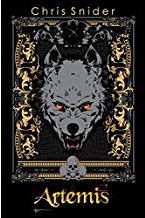
One town, two killers and the body count is rising. Artemis, by Chris Snider is the tale of how freak set of circumstances turned an ordinary scientist on the brink of death into something no longer human. With superhuman powers, including the ability to command animals, Joseph Art becomes Artemis, defender of animals and the innocent or vulnerable. The police don’t know whether they should string him up as a vigilante, or pin a medal on him. After he comes face to face with the evil clown axe murderer, the stakes are raised and the hunt becomes personal, and no one knows what will happen when the two killers confront one another a final time.
The individual storylines are skillfully woven into a single plotline and action filled climax. I give Artemis four quills.

Kaye Lynne Booth does honest book reviews on Writing to be Read in exchange for ARCs. Have a book you’d like reviewed? Contact Kaye at kayebooth(at)yahoo(dot)com.
Share this:

‘Twas The Night Before Christmas
Posted: December 25, 2017 Filed under: Poetry, Uncategorized | Tags: 'Twas the Night Before Christmas, Christmas Leave a comment
‘Twas the night before Christmas and all through the garage
Not a creature was stirring, not even the Dodge.
The spark plugs were nestled all snug in their beds
While visions of sparks danced through their heads.
The inner tubes were hung by the chimney with care
In hopes that Saint Nicholas would fill them with air.
Mama in her kerchief and I, in my cap
Had just settled down for a long winter’s nap.
When out on the lawn there arose such a clatter
I sprang from my bunk and missed the ladder.
Ran to the window, threw open the sash,
Leaned out too far and fell in the trash.
I stood and brushed off all the new fallen snow
And greeted St. Nick with a hearty “Ho! Ho!”
He was dressed all in fur, for it was a cold night
It must have been freezing on the sliegh while in flight.
A bundle of goodies flung over his back
He looked like a peddler as he opened the sack.
His eyes twinkled through goggles, his dimples so merry.
Then, he took off his cap, but my, he was hairy.
His hair flowed over his shoulders, so white
He reached into his sack and pulled out a flash light.
Then to my surprise, what he pulled out of his bag
Was a 345 Hemi, ready to drag.
Then he pulled out some headers that looked really sweet
And to top it all off, a set of big meats.
He pulled out a tire iron, a hammer and wrench
Before I could grasp it, he pulled out a tool bench.
When all the tools were layed out in a nice, neat row,
He turned with a wave and said, “Ho! Ho! Ho!”
He sprang to his sleigh, to his team gave a whistle,
And away they all flew like the down of a thistle.
But I heard him exclaim as he drove out of sight,
Merry Christmas to all, may you win tonight!
By Greg and Kaye Booth