Jeff’s Movie Reviews – Wonder Woman 1984
Posted: January 8, 2021 Filed under: Action/Adventure, Comic books, Comic Hero, Jeff's Movie Reviews, Movie Review, Movies, Review, Super Hero, Super Villains | Tags: Comic Book Heros, DC Comics, Jeff Bowles, Jeff's Movie Reviews, Wonder Woman, Wonder Woman 1984, Writing to be Read 2 Comments
A Little Less Wonderful
by Jeff Bowles
When the first Wonder Woman film hit theaters three years ago, it was met with substantial fanfare. The Greek goddess superheroine is more than just a cultural phenomenon, she’s a feminist icon, a symbol of strength and nobility for millions of people all over the world. Her first major foray onto the big screen meant more to some people than anything else DC Comics has ever produced, so yeah, its sequel has quite a bit to live up to.
Wonder Woman 1984 is, if nothing else, an interesting product of its time, 2020, a year in which it was supposed to have been released in theaters in July. Coronavirus forced Warner Bros. to push the film until December, and the studio chose to do so by mixing a theatrical release with a special limited release on the home video streaming platform, HBO Max. So you can watch this movie right now at home for a small membership fee, kind of a remarkable thing in the history of cinema. New movies always used to be, you know, out at the movies. But now, who knows?
Subsequently, the flick has been met with much less fanfare than its predecessor enjoyed. Wonder Woman 1984 has been a success of sorts, but it’s doubtful to make much of an impact beyond that. The reasons for this aren’t merely limited to its precarious release schedule. The story makes some choices that keep it from being quite as wonderful as it deserves to be.

For one, Wonder Woman 1984 revolves around a somewhat ridiculous McGuffin that allows for wishes to come true. This is a comic book movie, of course, which I have to admit I’m a huge fan of, even when they’re loud and dumb. But it’s almost as if the entirety of the plot was constructed on a simple and somewhat lazy notion to resurrect one key dead character. That would be Chris Pine’s Steve Trevor, Wonder Woman’s traditional love interest. The movie works best when the two share screen time. Their chemistry is relatable and infectious, so it’s no surprise writer/director Patty Jenkins wanted to pull him back into the fold.
Also returning is Gal Gadot as the titular hero, and she’s still great. More comfortable this time around, perhaps, but then, she’s played the character a total of four times now. SNL alum Kristen Wiig joins the cast as a relatable if slightly goofy foil/villain whose wish to be just like Wonder Woman goes wrong in all the right ways. The Mandalorian’s Pedro Pascal plays Maxwell Lord, a DC bad guy who first appeared in a 1987 Justice League comic and who has now been given the 1984 self-help guru treatment. Pascal gives the guy a lot of juice. A lot of juice. Perhaps its best not to say too much more about it than that.
One of the problems with the movie is that it doesn’t seem to feel the need to indulge in 80s-themed nostalgia in any major way, not like other recent shows and movies set in the decade have done. Odd, considering they wanted me to know the year it takes place months and months before it ever came out. Oh, there’s some paltry lip service to the year 1984 scattered here and there. An early action set-piece takes place in a mall, for instance. But again, no 80s tunes or anything? No Simple Minds? No New Coke references? What gives, dudes?
Wonder Woman 1984 comes together all right in the end, but really, it’s just another example of a DC Comics adaptation that’s barely handled well enough to justify its own existence. I’m a pretty big comics fan when it comes down to it. Gosh, it’s getting harder and harder to compete in that space. They’ve already announced Wonder Woman 3. Let’s hope Patty Jenkins and Warner Bros. bring a bit more punch to the superhero party next time.
Jeff’s Movie Reviews gives Wonder Woman 1984 a Six out of Ten.
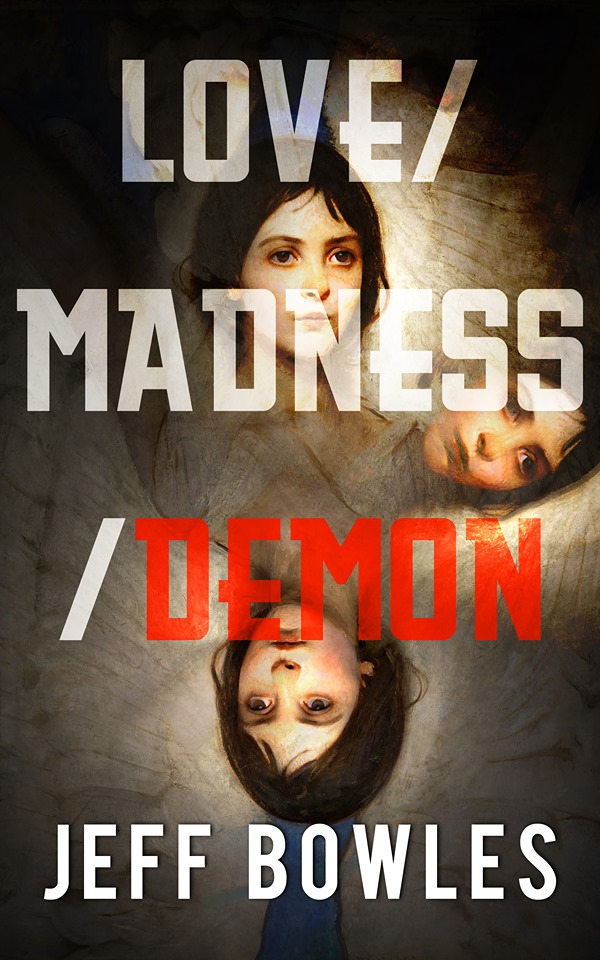
Jeff Bowles is a science fiction and horror writer from the mountains of Colorado. The best of his outrageous and imaginative work can be found in God’s Body: Book One – The Fall, Godling and Other Paint Stories, Fear and Loathing in Las Cruces, and Brave New Multiverse. He has published work in magazines and anthologies like PodCastle, Tales from the Canyons of the Damned, the Threepenny Review, and Dark Moon Digest. Jeff earned his Master of Fine Arts degree in creative writing at Western State Colorado University. He currently lives in the high-altitude Pikes Peak region, where he dreams strange dreams and spends far too much time under the stars. Jeff’s new novel, Love/Madness/Demon, is available on Amazon now!
Check out Jeff Bowles Central on YouTube – Movies – Video Games – Music – So Much More!
Want to be sure not to miss any of Jeff’s Movie Reviews? Subscribe to Writing to be Read for e-mail notifications whenever new content is posted or follow WtbR on WordPress
Share this:

“The Wolf Leader”: An origins story of sorts
Posted: January 4, 2021 Filed under: Book Review, Books, Classics, Fiction, Review, Speculative Fiction | Tags: Alexandre Duma, Book Review, The Wolf Leader, werewolves, Writing to be Read Leave a comment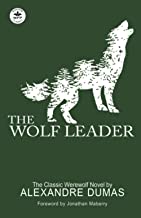
The classics were written in another era and literature was viewed differently than it is in modern times. The language, although often lavish and eloquent, can also be pretentious and difficult to decifer. There are some sixteenth century words that are just plain confuddling to my twentieth century brain. Over the past year, I’ve tried a few times to read the classic authors. After all, their works survive them over centuries, and set the historical standards of contemporary literature. But I couldn’t get through The Call of Cthulhu by H. P. Lovecraft due to all the pretentious purple prose, and although I finished the first story in The Mysteries of Edgar Allen Poe, I had to put it down or risk dying from sheer boredom. While clearly a predecessor to murder mystries which came later, such as Sherlock Holmes, I found Poe’s style too dry to be considered entertaining.
With The Wolf Leader, by Alexandre Dumas, I did not find this to be the case. In spite of a few words which required defining, I had no trouble following the flow of the Dumas’ story. Alfred Allison did a fine job of translating this classic novel and Jonathon Maberry does the literary world a service by bringing it back into print. Dumas’ style is more along the lines of a Don Quixote, silly but entertaining type of story, than the borishness of Poe’s Detective Dupin, or presumptious fluff and verbage of LoveCraft’s Chtulhu Mythos.
The Wolf Leader is a Faust meets The Wolfman story. Contempory werewolves have grown well beyond what Dumas envisioned, but in his work, one can see the origins from which they sprang. Thibauld is a peasant shoemaker, angry at the injustices he feels he has suffered under the hands of French burgious land owners, who makes a deal with the devil, or in this case, the black wolf, to have all of his wishes granted, for the price of one hair per wish. Each time he wishes for something, one hair on his head turns fiery red, and his wishes seldom turn out as he intended. Instead of being rich and loved, as he had desired… well, you can see where this is headed.
The reason we can foresee what’s to come in the tale described above is that we are familiar with the story of Faust, so we might read it and think it a bit tropish with the ‘deal with the devil’ thing. There are no silver bullets or full moons in this tale, but Thibauld does eventually take the form of the black wolf and there is a lot of howling, so it may even be the first werewolf story ever penned, as Jonathon Maberry points out in his introduction. As such, it could could be the trope setter for an entire genre.
How many quills do I give to a classic work of literature? I’m not sure I’m qualified to rate this work which has survived the centuries. The very fact that is has survived speaks volumes more than any opinion I could ever give.
________________________________________________________________________________________________________
Like this post? Let me know in the comments. You can be sure not to miss any of Writing to be Read’s great content by subscribe to e-mail or following on WordPress. If you found this content helpful or entertaining, please share.
Share this:

My favourite Christmas poem and a review of Pass the Turkey by Sue Vincent
Posted: December 26, 2020 Filed under: Book Review, Books, Poetry, Review, Treasuring Poetry | Tags: Book Review, Christmas, Christmas Poetry, Dr. Suess, Pass the Turkey, Poetry, Sue Vincent, Treasuring Poetry, Writing to be Read 61 Comments
This is my final Treasuring Poetry post for 2020 and I am sharing my favourite Christmas poem, an extract from How the Grinch Stole Christmas by Dr Seuss. I love this piece of his lovely Christmas story because it really illustrates what Christmas is all about. I love how the Grinch was unable to stop Christmas from coming because Christmas is in our hearts and souls and its not about the gifts, the food, the Christmas tree or even our families. It is about us, as individuals, and our own personal relationships, beliefs, and aspirations.
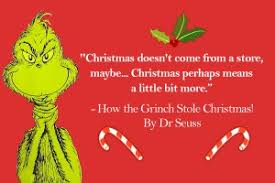
…So he paused. And the Grinch put his hand to his ear.
And he did hear a sound rising over the snow.
It started in low. Then it started to grow.
But the sound wasn’t sad! Why, this sound sounded merry!
It couldn’t be so! But it WAS merry! VERY!
He stared down at Whoville! The Grinch popped his eyes!
Then he shook! What he saw was a shocking surprise!
Every Who down in Whoville, the tall and the small,
Was singing! Without any presents at all!
He HADN’T stopped Christmas from coming! IT CAME!
Somehow or other, it came just the same!
And the Grinch, with his grinch-feet ice-cold in the snow,
Stood puzzling and puzzling: “How could it be so?”
“It came with out ribbons! It came without tags!”
“It came without packages, boxes or bags!”
And he puzzled three hours, till his puzzler was sore.
Then the Grinch thought of something he hadn’t before!
“Maybe Christmas,” he thought, “doesn’t come from a store.”
“Maybe Christmas…perhaps…means a little bit more!”…
Ani, the small dog, and her two legs, Sue Vincent, know all about Christmas and making the best of it. Ani, with the help of Sue, has written a number of lovely rhyming poetry books, one of which is Pass the Turkey: The Small Dog’s Christmas. This is one of my favourite poems from this book:
Pondering
Dear Santa, I’m a little dog who doesn’t do religion.
I’d rather chase a tennis ball or terrorise a pigeon
Than argue over who is wrong or maybe who is right…
It seems a silly way to me to get into a fight.
I know the Christmas story, ’cause she told me long ago,
About Joseph and Mary when they had nowhere to go,
And that’s the bit that got to me, ’cause someone found a place,
Although they slept with beasts and not with others of their race.
According to the tale we’re told, they slept beneath a star
And shepherds brought their lambs to see and kings came from afar.
They gathered where the Baby lay, beside the ox and ass,
While angels sang above, they knelt in wonder on the grass.
Now, that’s a lovely story that the world will celebrate…
And then go back to living in their prejudice and hate.
They look askance at strangers if they wear a different skin…
I wonder if the Babe returned, if they would let Him in?
You know, I have to wonder, if there’s any point at all,
In putting presents on the tree or trimming up the hall
Unless they feel the Christmas spirit bringing love and peace
And know that it is in their hearts hostilities must cease.
I know, I’m just a small dog and my voice will not be heard,
I’m only good for cuddles and to chase a ball or bird.
But maybe when you visit you could tell them while they sleep
And give them just a bit of your compassion they could keep.
It would be nice to think it could be Christmas every day
(Without the preparations and the bills they have to pay)
But being gentle with each other, giving Love a place
Within their hearts and in the smiles they’d wear upon their face.
Much love,
Ani
You can read more about the small dog here: https://thesmalldogs.blog/
My review of Pass the Turkey: The Small Dog’s Christmas
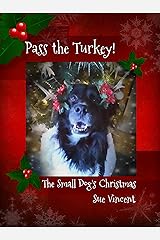
Pass the Turkey: The Small Dog’s Christmas is a delightful book full of Christmas cheer. Ani, the small dog, is reflecting on Christmas’ past, present and future through a combination of letters to Santa and poems. The perplexities of ‘fake’ Santas, the ‘theft’ of a favourite sofa, and gifts of tennis balls and a chicken flavoured biscuit, all require Ani’s consideration. Her naughty secrets are also revealed such as the time she ate all the left over turkey and salmon and fell through the ice in the pond [it was shallow]. The indignities of baths and having to wear reindeer antlers are also shared.
Join Ani and her two legs, Sue Vincent, for a glorious romp through advent and Christmas Day.
A few of my favourite verses:
“I’ve tried to help with household chores,
I’ve laundered all my balls,
I’ve chased the pigeons form the shed
And spiders from the walls.” from Request
“She’s like a puppy when it snows
We just go out to play…
And if she wraps up warm enough
We might stay out all day.” from Wishing for the White Stuff
“The windows are all closed at night
The keyhole seems to small
To wriggle through with turkey
And a brand new tennis ball.” from Chimneys.
You can purchase Pass the Turkey: The Small Dog’s Christmas here:
About Sue Vincent
Sue Vincent is a Yorkshire born writer currently living in the south of England, largely due to an unfortunate incident with a map, a pin and a blindfold. Raised in a spiritually eclectic family she has always had an unorthodox view on life, particularly the inner life, which is often reflected in her writing, poetry and paintings.
She maintains a popular blog, https://scvincent.com and is currently owned by Ani, the inimitable Small Dog, who also writes.
Sue lived in France for several years, sharing a Bohemian lifestyle and writing songs before returning to England where the youngest of her two sons was born. She began writing and teaching online several years ago, and was invited to collaborate with Dr G. Michael Vasey on their book, “The Mystical Hexagram: The Seven Inner Stars of Power”.
Since then she has published a number of books, beginning with “Swords of Destiny”, a magical tale set in the ancient landscape of Yorkshire. Her retelling of the Egyptian myths, “The Osiriad”, came shortly afterwards along with her collaboration with Stuart France. Together they have written the Triad of Albion, the Doomsday trilogy and the first books in the Lands of Exiles series.
These books tell a true adventure in a fictional manner. They are at once a journey into the ancient and sacred landscape of Albion and the story of a growing and rather oddball friendship.
The Triad of Albion was followed by the Doomsday trilogy and France and Vincent are now working on the three books in the Lands of Exile series, where the adventures of Don and Wen stray down the paths of fiction.
They have also published a number of graphic works together exploring folklore and legend, as well as writing independently. https://franceandvincent.com/
Sue, along with Steve Tanham and Stuart France, is a Director of the Silent Eye School of Consciousness, an international modern Mystery School that seeks to allow its students to find the inherent magic in living and being. https://thesilenteye.co.uk
About Robbie Cheadle

Robbie Cheadle has published nine books for children and one poetry book. She has branched into writing for adults and young adults and, in order to clearly separate her children’s books from her adult books, is writing for older readers under the name Roberta Eaton Cheadle.
Robbie Cheadle’s Sir Chocolate children’s picture books are written in sweet, short rhymes which are easy for young children to follow and are illustrated with pictures of delicious cakes and cake decorations. Each book also includes simple recipes or biscuit art directions which children can make under adult supervision. Her books for older children also incorporate recipes that are relevant to the storylines.
Roberta Eaton Cheadle’s supernatural stories combine fabulous paranormal elements with fascinating historical facts.
Children’s picture books – available as a square book and an A5 book (co-authored with Michael Cheadle):
Sir Chocolate and the strawberry cream story and cookbook
Sir Chocolate and the baby cookie monster story and cookbook
Sir Chocolate and the sugar dough bees story and cookbook
Sir Chocolate and the Condensed Milk River story and cookbook
Sir Chocolate and the Sugar Crystal Caves story and cookbook
Sir Chocolate and the Fondant Five story and cookbook
Sir Chocolate and the Ice Cream Rainbow Fairies story and cookbook
Middle school books:
Silly Willy Goes to Cape Town (includes five fun party cake ideas)
While the Bombs Fell (co-authored with Elsie Hancy Eaton)
Poetry book:
Open a new door (co-authored with Kim Blades)
Supernatural fantasy YA novel:
Through the Nethergate
Horror Anthologies (edited by Dan Alatorre):
Spellbound
Nightmareland
Dark Visions
Paranormal Anthologies (edited by Kaye Lynne Booth):
Spirits of the West
Whispers of the Past
Murder mystery Anthology (edited by Stephen Bentley)
Death Among Us
Find Robbie Cheadle
Blog: https://www.robbiecheadle.co.za/
Blog: robbiesinspiration.wordpress.com
Twitter: BakeandWrite
Instagram: Robbie Cheadle – Instagram
Facebook: Sir Chocolate Books
Want to be sure not to miss any of Robbie’s “Treasuring Poetry” segments? Subscribe to Writing to be Read for e-mail notifications whenever new content is posted or follow WtbR on WordPress. If you found it interesting or entertaining, please share.
Share this:

“Hold Your Fire”: An anthology of creative sparks
Posted: December 4, 2020 Filed under: Book Review, Books, Fairy Tales, Fantasy, Fiction, Mystery, Review, Science Fiction, Stories | Tags: Anthology, Book Review, Hold Your Fire, Lisa Mangum, Short Fiction, Short Stories, Writing to be Read 3 Comments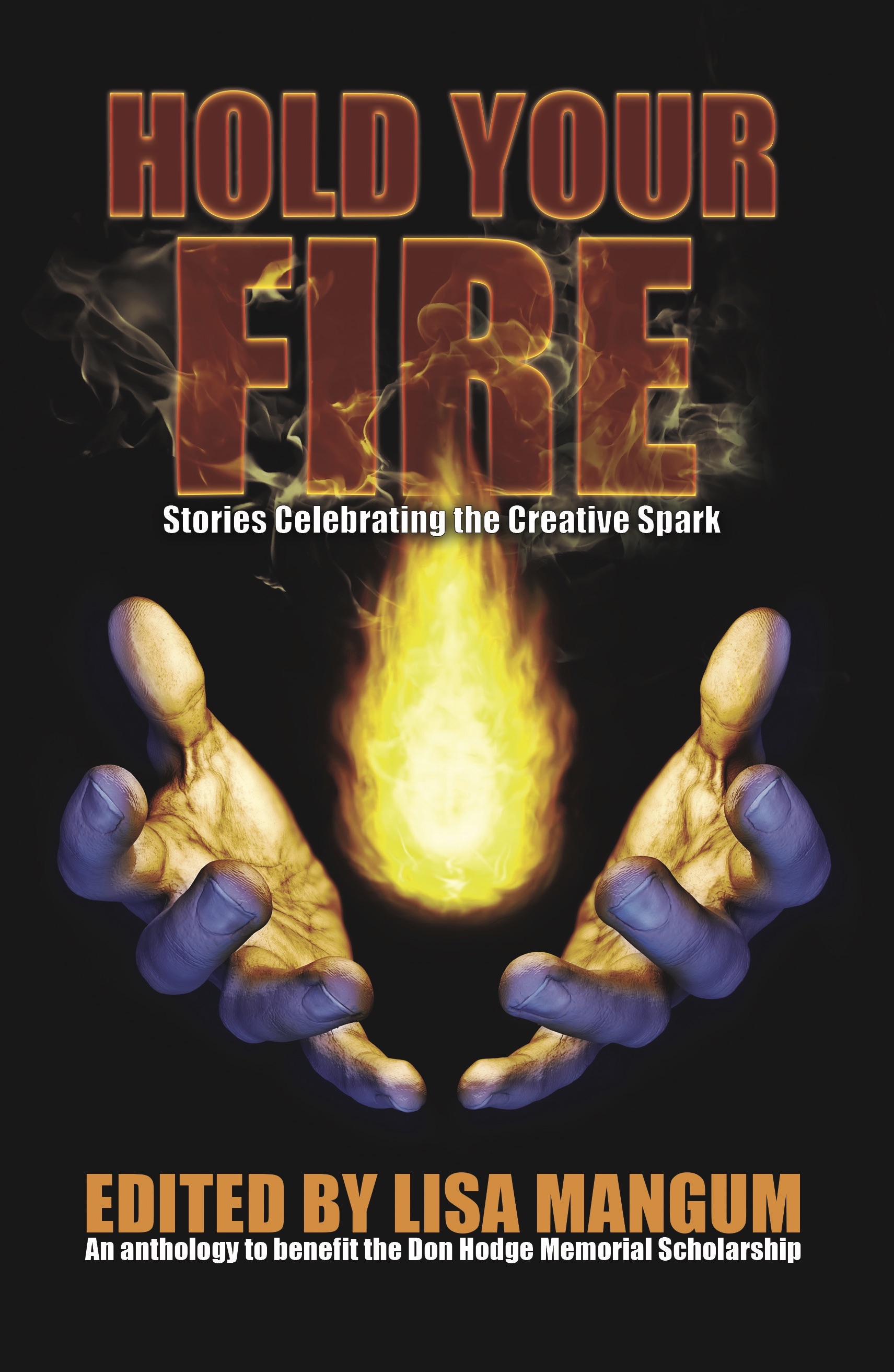
As with other WordFire Press anthologies I’ve read which were edited by Lisa Mangum, Hold Your Fire is an exceptional collection of stories, written by an all star cast of authors, that kept this reader turning pages in anticipation from one story to the next. Each of these stories were so enjoyable that it is difficult to pick favorites to be included in this review. They are all unique and delightful sparks of the creative imagination.
Hold Your Fire includes unique, thought provoking stories which you will find nowhere else. “Splendid Mirage: The Seeker’s Tale”, by Kevin J. Anderson and Neil Peart tells a tale of a never ending quest and the one who carries it’s great burden. “The Fire Sermon”, by Mary Pletsch had me pondering the fine line between a blessing and a curse, when the characters that inhabit this story show their true inner sparks. In “The White Feather”, by Shannon Fox, it takes a touch from beyond the veil to pull Jae from her grief over the death of her friend and re-spark her creativity. Venture into the fairytale land of Kat Kellermeyer “The Last Waking Princess” or endulge in a tale of mentorship and friendship gone awry, with “Bow Drill”, by Jace Killan. Other contributing authors include: Brian Corley, Kristen Bickerstaff, C.J. Erick, Wayland Smith, Alicia Kay, October K. Santerelli, Tanya Hales, Raphyel M. Jordan, Mike Jack Stoumbos, Kitty Sarkozy, Melissa Koons, and M. Elizabeth Ticknor and Rebecca E. Treasure.
Hold Your Fire has stories in a wide variety of themes and genres, so your sure to find something that will spark your fancy. All are well crafted and quite entertaining. I give it five quills.

Kaye Lynne Booth does honest book reviews on Writing to be Read in exchange for ARCs. Have a book you’d like reviewed? Contact Kaye at kayebooth(at)yahoo(dot)com.
Share this:

“Clay House”: A Middle Grade Paranormal Horror Novel
Posted: November 27, 2020 Filed under: Book Review, Books, Fiction, Horror, Middle Grade, Review | Tags: BookReview, Clay House, Ghosts, horror, Jordan Elizabeth, Middle Grade Fiction, Writing to be Read 2 Comments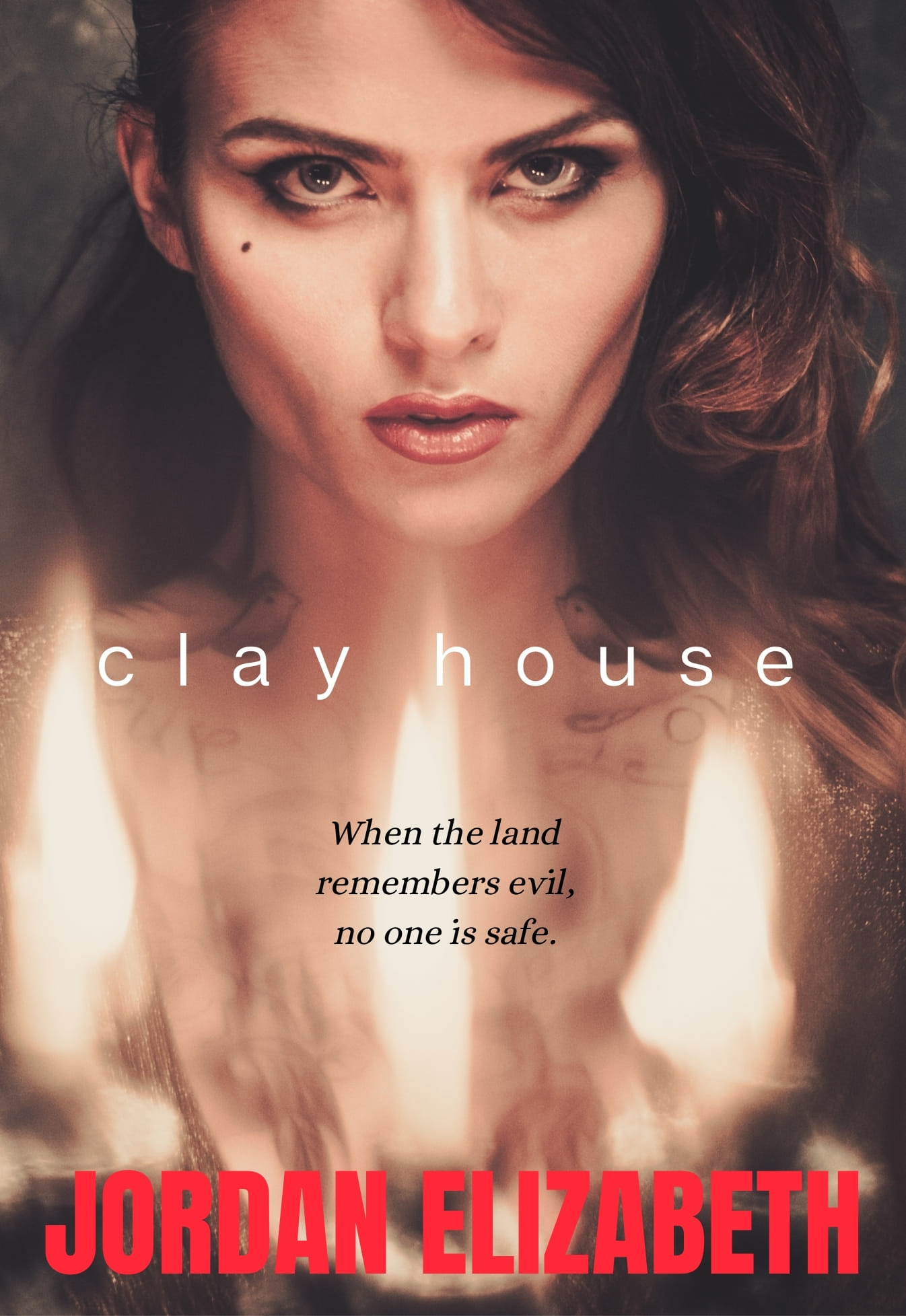
Sometimes evil dwells in the land itself, and it can burrow deep, laying dormant for a long time. But it always awakens eventually.
Moving to a new home is never easy, especially when you have to deal with a not so nice step-father, and the house is old and spooky. The town is quick to fill her in on the mysterious stories about her house, and when she finds a cemetary in her new back yard and her little brother Mark starts behaving oddly, Tatiana begins to get scared. The increasing cruelness of her step-father, leads her to uncover another kind of secret. Now all she has to do is figure out what to do with what she knows.
The bonus story, “Olney”, which is included with Clay House, is equally well-written with a similar theme, providing extra reader value for your book buck.
With two brave young heroines and two spine chilling ghosts, resulting in two well-crafted stories filled with twists and turns to keep readers guessing, I give Clay House five quills.

Kaye Lynne Booth does honest book reviews on Writing to be Read in exchange for ARCs. Have a book you’d like reviewed? Contact Kaye at kayebooth(at)yahoo(dot)com.
Share this:

Jeff’s Movie Reviews – The Queen’s Gambit
Posted: November 13, 2020 Filed under: Jeff's Movie Reviews, Movies, Opinion, Review | Tags: Chess, Jeff's Movie Reviews, The Queen's Gambit, Writing to be Read 2 CommentsSeduction by Chess
by Jeff Bowles
Chess is not typically known for excitement or suspense. The game of kings has certainly been portrayed any number of ways by Hollywood throughout the years, but Netflix’s new limited series The Queen’s Gambit makes it look passionate, dangerous, and well, sexy.
Maybe it’s the stylish 60s themes, fashions, and music. Or perhaps the magic of this series is in the writing, which is sharp, compelling, and just a little bit wild. So too is the basic look of the show. Each and every chess match (and there are quite a few scattered across seven hour-long episodes) has a different feel, a different level of intensity. And make no mistake, The Queen’s Gambit is all about intensity. To finish a single match is to look into the hungry and carnal eyes of your opponent and ask for another round. And here I thought chess was boring.
No two ways about it, Beth Harmon (played by the wonderful Anya Taylor-Joy) is a child prodigy. After a terrible car accident kills her mother, she’s sent to an orphanage and there befriends a lowly janitor who lives in a veritable dungeon of a basement. The janitor, by the way, happens to be a chess wizard himself. After some brief instruction and the early rumblings of blind obsession, Beth beats him, his chess club (all at once in a series of simultaneous matches) and then begins to play on the larger American circuit. She becomes an overnight sensation, her face on magazine covers, her name known to anyone interested in the game. But the fire in her belly is unquenchable. She’s a marvel and a ticking time-bomb. We know she will explode. The only question is when.

We are talking about the 1960s here, and at that time chess and master chess players were honored and respected worldwide. Beth’s basement-dwelling mentor warns her genius often comes at a price. Her personal demons take the forms of addiction, mental illness, and compulsion. Every single night is an opportunity for her to practice and read and imagine (or perhaps hallucinate) whole matches upside down on the ceiling above her bed. She pops a few of her favorite pills, which are never specifically named, maybe has a drink or two, and then she lies down and watches as the shadowy game unfolds above her.
The Queen’s Gambit is based on a novel by Walter Tevis, who passed away in 1984. It’s a shame he didn’t live to see the adaptation, because Netflix has done his book justice. There’s real emotion and drama here. Beth Harmon is a fascinating character, and though she’s entirely fictional, she and her world are so fully realized you might mistake her for an actual public figure. The show drips with passion and lust. It’s incredibly sexy at times. Imagine making chess sexy.
How rare is it to find someone who burns for something, anything, as much as Beth burns for chess? Mastering the game, explosive, sometimes cold, almost always calculated, but there’s a beating heart inside her, a need for appreciation, recognition, for someone to love and understand her. Even those closest to her see her as an enigma. So incredibly young, stunningly beautiful, dressed in the most Chic fashions of the time. A genius, absolutely. But always at a distance, just beyond everyone’s reach, right where she likes it.
Drug addiction adds an interesting element to The Queen’s Gambit. Self-destruction, it seems, can be as seductive as a tender kiss. Even if the acting weren’t top notch across the board (and it is), the fascination, drama, and blind ambition emanating from Tevis’ narrative is stunning. If you were as determined to become the greatest chess master of all time, you might develop a drug problem, too. Then again, maybe you wouldn’t. Beth Harmon comes from tragedy, and it follows her wherever she goes. Adopted by a married couple whose relationship was on the rocks to begin with, she learns from a very early age the only way to get by in this world is to commit to personal freedom and absolute autonomy. She drinks, she pops pills, but the ultimate question of what it all costs comes down to this: if genius and madness go hand-in-hand, when does the ride stop? Where must the line be drawn?
We’re never really sure Beth Harmon receives the answers to these questions. The Queen’s Gambit is an unexpectedly charming, gripping, and seductive limited series all fans of excellent storytelling need to stream immediately.
Jeff’s Movie Reviews gives it a Nine out of Ten.
I think that’s checkmate, everyone.
Jeff Bowles is a science fiction and horror writer from the mountains of Colorado. The best of his outrageous and imaginative work can be found in God’s Body: Book One – The Fall, Godling and Other Paint Stories, Fear and Loathing in Las Cruces, and Brave New Multiverse. He has published work in magazines and anthologies like PodCastle, Tales from the Canyons of the Damned, the Threepenny Review, and Dark Moon Digest. Jeff earned his Master of Fine Arts degree in creative writing at Western State Colorado University. He currently lives in the high-altitude Pikes Peak region, where he dreams strange dreams and spends far too much time under the stars. Jeff’s new novel, Love/Madness/Demon, is available on Amazon now!
Check out Jeff Bowles Central on YouTube – Movies – Video Games – Music – So Much More!
Want to be sure not to miss any of Jeff’s Movie Reviews? Subscribe to Writing to be Read for e-mail notifications whenever new content is posted or follow WtbR on WordPress
Share this:

“Terminal Sequence”: A medical thriller conspiracy of truly evil proportions
Posted: October 30, 2020 Filed under: Book Review, Books, Fiction, Medical Thriller, Review | Tags: Book Review, Conspiracy, Dan Alatorre, Medical Thriller, Terminal Sequence, Writing to be Read 3 Comments
I reviewed the first in this series, The Gamma Sequence, when it came out, so when a chance to review the third book, Terminal Sequence, I jumped at the chance. With this series, Dan Alatorre has created a horrifying conspiracy where, Hauser, one maniacle mind, holding genetic power over human life in his hand, tries to play God. Of course, he created a team of protagonists to combat this evil genius.
In Terminal Sequence, our heroes develop a computer virus with the ability to launch a terminal sequence into Hauser’s network and bring his operations to a halt. But injecting the sequence into the network is a challenge, and with Hauser’s operatives knocking off the good guys right and left, we also have to ask if there will be anyone left to do it. And if any of the team members do survive, can they accomplish the task before Hauser has a chance to complete his evil plan? They may succeed with some help from surprising allies, but you’ll have to read the book to find out.
Thrilling action from start to finish, Terminal Sequence, is one that you won’t want to put down. I give it five quills.
Kaye Lynne Booth does honest book reviews on Writing to be Read in exchange for ARCs. Have a book you’d like reviewed? Contact Kaye at kayebooth(at)yahoo(dot)com.
Share this:

“Fool’s Gold Rush”: Old friends, action, humor – what more could a reader want?
Posted: October 23, 2020 Filed under: Action/Adventure, Book Review, Books, Fiction, Humor, Review | Tags: Action, Book Review, Fool's Gold Rush, Humor, Tim Baker, Writing to be Read 2 Comments
Reading Tim Baker’s Fool’s Gold Rush was like a reunion with old friends. As in all of Baker’s books, Ike is the anti-hero the reader can’t help but like, and Brewski plays the role of the loyal sidekick. Already, the reader is guarenteed a great action adventure. And Fool’s Gold Rush delivers.
With a plot that takes more twists and turns than a winding mountain road, this tale will keep readers turning pages. While trying to help his sister get away from her abusive husband, Lee gets caught up in a scam to raise money for her hospital bills and pay off the gambling debt he owes to Ralph Denobian. When Ike and Brewski come to collect, they decide to lend a hand and end up in the middle of a kidnapping and a plot to steal Ike’s gold from the museum. When the kidnapper finds out about the gold, the deal changes and he wants to exchange the gold for Lee’s sister and her autistic son, Ronny, but when the thieves get away with the gold, making the exchange may not be possible. Ike knows nothing comes easy, and with every setback he bares down and regroups until he finds a way to make things work out in his favor.
Like all of Baker’s books, Fool’s Gold Rush is well-crafted and filled with plot twists, unique characters, and lots of surprises. I give Fool’s Gold Rush five quills.
Other books I’ve reviewed by Tim Baker include: Eyewitness Blues, Unfinished Business, Pump It Up, Living the Dream, Doomed to Repeat, Blood in the Water, 24 Minutes, Full Circle, No Good Deed, Backseat to Justice, and Water Hazard. (Yep, I’m a long time fan.)
Kaye Lynne Booth does honest book reviews on Writing to be Read in exchange for ARCs. Have a book you’d like reviewed? Contact Kaye at kayebooth(at)yahoo(dot)com.
Share this:

Meet poet and author D. Avery plus review
Posted: September 26, 2020 Filed under: Book Review, Books, Interview, Poetry, Review, Treasuring Poetry | Tags: Author Interview, Book Review, D. Avery, Poetry, Robbie Cheadle, Treasuring Poetry, Writing to be Read 60 Comments
Today, I am delighted to welcome poet and author D. Avery. Ms Avery is the creator of the fun and well-known characters Kid and Pal who frequent Carrot Ranch Literary Community She also has her own blog where she shares her flash fiction, poetry and other literary endeavours. You can find her blog here: https://shiftnshake.wordpress.com/.
At first I was thrilled to be asked to participate in Treasuring Poetry with Writing to be Read and Robbie Cheadle. Then I read the questions! Too hard! Actually, I misread the questions and was flustered enough to consider who my favorite poet might be, let alone poem.
Robbie’s questions led me down many a rabbit hole, but perhaps not so many as I might have if I were under the same roof as my collection of poetry books. I’m not, so I let my mind travel and recall those shelves and what I have read lately. Often times my favorite poet or poem is simply the one in front of me, so recently I have enjoyed Conrad Aiken and Mary Oliver. But a favorite poet?
Still mistakenly contemplating a poet as opposed to a poem, and still unable to name just one, I at least realize I tend to most admire traditional Japanese poetry as well as the work of Rumi and of Hafiz. I like a short poem that makes me say, “Ah!” or even “Awe…” then “Ha!” If I could peruse my shelves I’d give my favorite examples, probably from a book called Japanese Death Poems; either that or I’d be lost in re-reading that treasure. As it is, this assignment got me re-reading Hafiz’s The Gift, translated by Daniel Ladinsky, and from that I came to see that many of Mary Oliver’s poems are in that Sufi vein, poems that, like Hafiz, are conversational yet intimate, not just with the reader, but with the subject, God. Now there’s a rabbit hole. But closer to home and in some ways more comfortable for their hominess are the poems of Robert Frost. He too writes with the wit and wisdom, often with a quiet humor, that I admire in the Sufis. Here are two lines from the New England bard:
We dance round in a ring and suppose,
But the secret sits in the middle and knows.
Robert Frost poems are accessible yet have subtleties and layers that can provide that ‘Ah ha’ that gives a poem staying power. As well as displaying an understanding of the spiritual aspects of his world Frost’s poems also reveal a keen observer’s eye for nature. There are many examples, and I never tire of reading Frost, but a favorite poem? I will not choose a favorite. But here are forty-eight syllables in eight lines, Nothing Gold Can Stay:
Nature’s first green is gold,
Her hardest hue to hold.
Her early leaf’s a flower;
But only so an hour.
Then leaf subsides to leaf.
So Eden sank to grief,
So dawn goes down to day.
Nothing gold can stay.
Some will say this poem is about impermanence and the fleeting nature of time. Leaves certainly change their hues in Frost’s New England, and he shows that he has observed this deeply, daily, for the emerging and unfolding leaves of spring and early summer cannot simply be called green, they are in fact shades of yellow and gold, and those might be preceded by cream and yellow flowers. Ah, he’s so observant. And dawn begins golden; “dawn goes down” makes one think of sunset, but it is just day, a day less sparkly than the golden dawn that begat it perhaps. Yes, time flies, but there is much implication in this poem of falling. So Eden sank to grief/ So dawn goes down to day/ Nothing gold can stay. There is nothing extraneous in this short poem; Eden sinking to grief is intentional, making this poem about humanity’s separation from nature, our fall from our golden potential when we were green and new in the world. This poem, without explicitly using seasonal words, has spring and fall entwined, so while that does show the fleeting nature of time, it is also a reminder of the seasons of our lives, and the hues we hold, the hues we live and die by. Just now in Frost’s old stomping grounds the leaves are turning back from summer greens to fall golds, and those colorful autumn leaves will fall, (for nothing gold can stay), but I wonder if that last line offers a bit of hope, the potential of knowing bright hues once more before the onset of winter.
I hope that addresses well enough the first three questions. As far as writing like any well-known poet, I choose— me! But I am not a well-known poet…
I admire many poets and many styles. I think any poet whom we admire is worth examining and, to an extent, imitating. That is what many of the poetry writing prompts do, they encourage us to try out different forms and styles of poetry, to pay attention to syllables and rhyme schemes and such. I sometimes see a form or style that is new to me and try it as a challenge and to learn something new. It’s all good, as long as you are building your own poeming muscles and not trying to write someone else’s poem. We tend to follow the recipe the first time we make a new dish. But then we get flexible and make the dish our own. In poeming too, we are aware that ours isn’t the only way to express the ingredients we find to hand, and we should want to find our own voice. In many ways free verse is the most challenging and difficult poetic form for me. How do you know when it’s done, if it’s done right, if there are no “rules”? That having been said, I am not against bending or even breaking the rules, but they have to be there in the first place for that to work.
Since I was nine years old I have occasionally been blessed by the magical balm of someone saying, “I liked your poem”. It’s a huge thing. I am not a singer or dancer or a visual artist. But sometimes I make pictures with words, and sometimes those words have a rhythm and a cadence or a tone that works, that strikes a chord. It is good to feel like a poem has performed well. And I have come to truly appreciate all the other lesser-known (not yet household names) poets that put their work out on their blogs. From you all I have learned so much and have been shown the great potential and creativity of poeming, and the assurance that poetry is alive and well.
D. Avery
My review of For the Girls by D Avery
This is the first book of poetry by D. Avery I have read and it was a wonderful experience. For the Girls really spoke to me as it is about the path of breast cancer many women walk. By reading these poems, I was able to follow this traumatic journey from diagnosis, through treatment and to remission for many, and death for a few.
The poems in For the Girls capture the concerns aroused by potential discover, the shock of a malignant diagnosis, the support offered by some of the staff at the treatment clinics and the comfort of firm friendships. The also disclose the pain of emotional upheaval being ignored and staff treating a patient with kind impatience.
Some of the verses/poems that struck me the most in this books are as follows:
“Unless.
Some of us have to get them off our chests.
And learn living without them.
Except.
Some, dear friends, couldn’t live.
With or without them.”
from The Girls
“There’s another intruder who lacks
Even the decency of mice or rats
that at least show themselves at night
To show they’ve been in the house all along,
only sometimes out of sight.
Why would you suspect your own house?
Relax, there’s nothing, or maybe only a mouse.
Why would you suspect there’s something there
Quiet as anxiety, maybe under the stairs
or up in the attic, just biding its time
A squatter in the house you blithely call “mine”?
from Intrusion
This collection of poems is freestyle and very bitter sweet. The insightfulness of the poet brought tears to my eyes and brought back memories of ladies I’ve known who’ve walked this same frightening path.
Purchase For the Girls by D Avery
About D Avery
D. Avery (196?-20??) has long been a compulsive poet. Despite a very important day job educating public school children, she is often distracted by this compulsion, as well as by life’s great questions, such as “Kayak, or bike?”. Though she has come to realize that nothing difficult is ever easy, she believes that it’s all good.
About Robbie Cheadle
Hello, my name is Robbie, short for Roberta. I am an author with six published children’s picture books in the Sir Chocolate books series for children aged 2 to 9 years old (co-authored with my son, Michael Cheadle), one published middle grade book in the Silly Willy series and one published preteen/young adult fictionalised biography about my mother’s life as a young girl growing up in an English town in Suffolk during World War II called While the Bombs Fell (co-authored with my mother, Elsie Hancy Eaton). All of my children’s book are written under Robbie Cheadle and are published by TSL Publications.
I have recently branched into adult and young adult horror and supernatural writing and, in order to clearly differential my children’s books from my adult writing, I plan to publish these books under Roberta Eaton Cheadle. My first supernatural book published in that name, Through the Nethergate, is now available.
I have participated in a number of anthologies:
- Two short stories in #1 Amazon bestselling anthology, Dark Visions, a collection of horror stories edited by Dan Alatorre;
- Three short stories in Death Among Us, an anthology of murder mystery stories, edited by Stephen Bentley;
- Three short stories in #1 Amazon bestselling anthology, Nightmareland, a collection of horror stories edited by Dan Alatorre; and
- Two short stories in Whispers of the Past, an anthology of paranormal stories, edited by Kaye Lynne Booth.
I also have a book of poetry called Open a new door, with fellow South African poet, Kim Blades.
Find Robbie Cheadle
Blog: https://www.robbiecheadle.co.za/
Blog: robbiesinspiration.wordpress.com
Twitter: BakeandWrite
Instagram: Robbie Cheadle – Instagram
Facebook: Sir Chocolate Books
Want to be sure not to miss any of Robbie’s “Treasuring Poetry” segments? Subscribe to Writing to be Read for e-mail notifications whenever new content is posted or follow WtbR on WordPress. If you found it interesting or entertaining, please share.
Share this:

Art’s Visual Media(/Life) Reviews: My Life With Jazz
Posted: September 25, 2020 Filed under: Art's Visual Media Reviews, Opinion, Review | Tags: Art's Visual Media Reviews, Count Basie, Jazz Music, John Coltrane, Louis Armstrong, Review, Writing to be Read 2 Comments
Jazz has been one of the great loves of my life. I know, I get it. Jazz is not popular music. Jazz appeals to musicians and people with unusual tastes. It can’t be forced on anyone. It’s pointless (as I learned painfully) to throw it into the mix at a party. It’s a good way to get thrown out of a party.
It’s possible that you know nothing about Jazz. You might have seen films like “Bird” or “Round Midnight”. In spite of its relative obscurity, Jazz has nonetheless crept into our Pop Culture like the ink from a cephalopod. That is…an octopus or a squid.
Jazz has been for me a lifelong experience. I first heard Louis Armstrong when I was twelve. I was in the sixth grade! I had joined the Capitol Records Club, and ticked Jazz as my favorite category. I don’t know why. I had been listening to classical music, especially that of Richard Wagner, and I was getting a bit bored. Thank you, Capitol Records Club, for sending me this LP in the mail. I eagerly withdrew the vinyl record from its sleeve and put it on my blue and white Zenith Portable Stereo Record Player. This rig was built like a suitcase. There were snap-locks on each side and those opened up to become speakers that deployed to the left and the right. For a kid in the early sixties it wasn’t a bad place to start with regard to sound systems. The MacIntosh and Dynaco amps and pre-amps were cool as hell, but I could wait. In a couple of years I would be all over amps and pre-amps until my basement began to look like a used electronics warehouse.
I put on the Louis Armstrong record and held my breath. The music began with a blare of brass. At first it sounded like some kind of Asiatic music, it was alien and incomprehensible. I heard charging rhythm and thickets of notes. My confusion lasted about half a minute. Then, as if someone had rotated my brain, I started to hear that shining trumpet of Satchmo and it started making sense. I’d been playing trumpet in the school band since I was in the fifth grade. Okay, that’s only a year. I hated practicing and did as little work as possible. I was a Natural and I could coast on my good ear. I could play a little bit.

The next album I acquired was recorded by Count Basie And His Orchestra. The album cover was a photo of a mushroom cloud, all scarlet shades and orange flame. It was called, of course, Count Basie Explodes! I put that on the record player. I oh so carefully lowered the tone arm with its precious cartridge transducer until the needle hit and the speakers went “hissssssss” for a second or two before the wildest most confusing outburst of twenty two instruments raged forth and I thought, “Aww shit. Asiatic music only bigger.” Again, it took a little while for the music to come around and reach my precocious ears.
The mail man drives down the street in his little cart. He’s bringing another record from Capitol Records Club. Miles Davis’ “Birth Of The Cool”. This is one of the most important jazz records ever recorded. Miles had organized a curious group, an eight piece band otherwise known as an octet.
I didn’t have many friends in the fifth and sixth grades. I had Jay, who was a fellow musician and jazz fan. His mother was a jazz fan. This was in suburban St. Louis in 1962. It was rare but it happened.
My mom, on the other hand, wasn’t gonna support this shit at all! If I had to play the goddam trumpet, she often screamed; at least I would play respectable music like Mantovani or Andy Williams.
No mom. No. Not happening. I’m going my merry way and you can screw yourself.
My bedroom was at the far end of the house. I had some distance. Some. I could play what I wanted while my mom popped Seconal and slept away her life.
By this time I’m fourteen and I’ve moved into Charlie Parker, Cannonball Adderly and…ultimately…John Coltrane. If there is a magnificent Ganesh-Guru Hindu Monster Elephant Deity of Jazz Music it is John Coltrane. He was doing the impossible. His ideas were so deep and complex that they became equal to the founding of a neo-Buddhist philosophy. A School. A dynastic lineage of Consciousness.

Coltrane became my teacher. He became thousands of musicians’ teacher and remains so to this day. Get on Youtube and join the session. It’s alive and well. The young musicians, the ones who are serious, want to study and learn. And music’s everywhere. It’s in the air. Then it’s gone. That’s what Eric Dolphy, one of the unsung monsters of Jazz, said at the end of one of his precious recordings. Both Trane and Dolphy passed in the sixties. They were young. We don’t really know what happened. How did these magnificent musicians leave the scene so suddenly? It was shocking and it knocked me off my feet. I had yet to understand how dangerous was the jazz life, how stressful it was to make a living play Jazz.
Fortunately, we were left with other dynamic musicians. We had Charles Mingus and his epochal release of the album “The Black Saint And The Sinner Lady.” This is some of the most sensual music ever recorded. It outrages church goers, it shocks listeners who aren’t prepared for music so graphic as to be well….erotic.
I developed new Jazz heroes. Ornette Coleman was sawing his way through musical tradition and his ideas caused fights on the Lower East Side. Imagine that: ideological fistfights over varying philosophies of Jazz. Strange but true. Jackie McLean kept the tonal orthodoxy but added intensity and adventure. I was pushing sixteen at this time and my world was filled with all this musical color, all these vibrant creative characters who courted addiction and death to get through the pressures of the jazz life.
By the age of sixteen I had acquired a set of drums and my instrumental voyages took on the nature of a student: a dedicated student of a peculiar art form. That was my jazz. That was my passion and I was about to leave home in the summer of ’65. I was determined to meet the by-now world famous Ornette Coleman. And so I did…but that’s another story. It’s in another book.

You can find a fictionalized story which mirrors many of Art’s young life in Confessions of an Honest Man: https://www.amazon.com/Confessions-Honest-Man-Arthur-Rosch-ebook/dp/B01C3J0NK2/ref=sr_1_1?dchild=1&keywords=Confessions+of+an+Honest+Man&qid=1601086887&s=digital-text&sr=1-1
A Midwesterner by birth, Arthur Rosch migrated to the West Coast just in time to be a hippie but discovered that he was more connected to the Beatnik generation. He harkened back to an Old School world of jazz, poetry, painting and photography. In the Eighties he received Playboy Magazine’s Best Short Story Award for a comic view of a planet where there are six genders. The timing was not good. His life was falling apart as he struggled with addiction and depression. He experienced the reality of the streets for more than a decade. Putting himself back together was the defining experience of his life. It wasn’t easy. It did, however, nurture his literary soul. He has a passion for astronomy, photography, history, psychology and the weird puzzle of human experience. He is currently a certified Seniors Peer Counselor in Sonoma County, California. Come visit his blogs and photo sites. www.artrosch.com and http://bit.ly/2uyxZbv.
Want to be sure not to miss any of “Art’s Visual Media Reviews” segments? Subscribe to Writing to be Read for e-mail notifications whenever new content is posted or follow WtbR on WordPress. If you find it interesting or just entertaining, please share.hn