You don’t choose who you love, it just happens. Follow young Abbie Raymond as she traverses concentric rings of tragedy, hope and healing.
It’s Day 3 of the WordCrafter Hope for the Tarnished Book Blog Tour. Today, I’m pleased to bring you an interview with author Ann Chiappetta. Hope for the Tarnished is her debut novel and I get the feeling that she’s mighty proud of it, as she should be. This touching young adult novel sees a small girl grow into a young woman, in spite of the adversities life throws her way, and she is left with hope for a brighter future.
Let’s Meet Ann Chiappetta
Ann is an artist and often refers to her love of words as a natural compensation after losing her vision in 1993. Once a designer of acrylic displays and furniture, Ann trained her creative senses to flow over from the visual to the literary arts. Years later, she has become a poet and author, honing her talent in various mediums, including web content for nonprofits, regular bylines for online literary publications, poetry, anthologies and guest editing in online literary journals.
Ann possesses a master of science in Marriage and family therapy from Iona College and an undergraduate degree from the College of New Rochelle, both located in Westchester County, New York. A guide dog handler and advocate, Ann volunteers her time representing people with visual impairments and guide dog users on various National, State and local boards of directors. A consultant and guest presenter, Ann visits schools promoting awareness and equality for people with disabilities. She is the 2015 recipient of the WDOM Spirit of Independence award and the 2019 GDUI Lieberg-Metz award for excellence in writing.
Interview
Kaye: When did you know you wanted to be an author?
Ann: When I was a kid I would read a book and if it was a really good book, I would think about how they did it. My love of books grew with me and in seventh grade, after writing my first poem, the teacher said I could now call myself a poet. It was just a matter of time and education after that. I was always drawing, singing, dancing, imagining – it was a matter of creative discipline and eventually my talent emerged as I practiced.
Kaye: Is there anything unique or unusual about your writing process?
Annie: I do have one part of my creative process few authors utilize and that is text-to-speech technology on my computer because I am blind. I actually listen to the words as I type. I think it helps me craft stories and poems that also sound good when read aloud. I also tend to write down the bones, then return to the idea later after it has cooked a bit in the creative oven. I also use my dreams to write scenes and shorter pieces of fiction and poetry.
Kaye: What time of day do you prefer to do your writing? Why?
Annie: I like to write in the morning and sometimes catch an hour’s worth of editing work in the afternoons. I rarely write at night, that’s for reading, family and TV. I do record notes when I am out and need to recall something like overhearing a conversation or a feeling about something I’ve heard or explored. I will listen to the recording and then write a piece. The recording brings me back to the moment and strengthens the piece.
Kaye: Would you share the story of your own publishing journey?
Annie: I’ve been published for years in journals and even once in Reader’s Digest. Poetry was first, followed by nonfiction articles and a few bylines. I didn’t consider a book until 2015. My first book, Upwelling: Poems, was published in 2016. My Mom was my biggest fan and supporter of my talent and was a poet herself but did not let us read her work. After she died of cancer in 2015, I wanted to honor her memory and belief in me by finding a way to self-publish my poems. I had almost given up, losing faith that despite being blind and unable to use desktop publishing software because of my disability, I stumbled across DLD Books after reading another blind writer’s memoir. I emailed the address and Leonore Dvorkin wrote me back and the rest is self-publishing history. I dedicated my book to my Mom, Mary, and have since dedicated each book to her. Interestingly, as we went through her belongings, we found a poetry journal and I have some of her writing.
Kaye: What do you like to do when you’re not writing?
Annie: I read and listen to audio books with my husband. We like to cook and watch baseball and football together. I listen to music, from classical to pop tracks. Our adult daughter lives nearby and helps us out all the time. I record my poems and perform them for others. I volunteer my time in blindness organizations in my county as well as Nationally. I sit on local, State and National boards of directors representing artists who are blind, guide dogs as well as writers with disabilities. We have two dogs and three cats that keep us busy.
Kaye: Your new book is Hope for the Tarnished, a sweet Y.A. about a young girl who overcomes some very difficult life obstacles. What’s the most fun part of writing this novel? What’s the least fun part?
Annie: The most fun part about writing Hope for the Tarnished was developing the relationship between Abbie and Augie. I wanted their attraction to grow as they matured. The hardest part of the story was finding the right set of circumstances to separate them and then keep them apart. There was also times when writing the traumatic scenes were difficult and I needed breaks because I got all weepy or verklempt.
Kaye: Your book, Hope for the Tarnished, recently came out. Would you like to tell us a little about that?
Annie: It is my first novel and I was apprehensive about sending out into the world. The novel was released in March 2022, a great month and not just because it is my birthday month, 😉 It is my first hard cover book and also the first book to also be offered through the Library of Congress catalog. My sister, Cheryll, provided the book cover photo, which is the third cover she helped design. Marketing a book is the tough part and doesn’t always feel successful, especially in terms of sales. I tell myself it is the readers who make it better, the ones who take the time to tell me what they thought of the book, how it effected them and even the criticism is important to me, it helps me want to become a better writer. It’s hard to hear the negative feedback but in the end, good and bad helps me push ahead and want to achieve more.
Kaye: How did you decide on this title?
Annie: My editor, Leonore Dvorkin helped me by researching variations of the title. I picked Hope for the Tarnished mostly because it encapsulated the overall arch of the book and it didn’t generate an over-used title.
Kaye: What kind of research do you find yourself doing for this story?
Annie: I researched the book title to make sure it wasn’t over-used. I brought in my knowledge of boating but did have to research the cars and other vehicles being used in the late 1970s and early 1980s. I also had to research the clothing styles. I was very happy when I was able to weave in the 1977 premiere of Star Wars, 😊 That movie was a key component of what generated my love of science fiction and fantasy.
Kaye: What’s the hardest part of the story for you to write: beginning, middle or end?
Annie: The middle, what I refer to as the doldrums. I often get stuck even after the outline is completed. Sometimes I stay awake at night thinking, “what comes next?”.
Kaye: How much of the story do you know before the actual writing begins?
Annie: I know the main idea, sketch the outline, make brief plot notes, maybe even a brief character sketch or two is done prior to the first chapter. I used to be a writer of discovery and now I am an outliner and planner. I’ve found outlining or developing a short synopsis crafts the story better and helps me avoid over-writing scenes. I’d much rather add to something than remove it, though a novel ends up shifting in both directions as it is written and edited.
Kaye: What do you think is the single most important element in a story?
Annie: Characters. If I don’t develop an emotional response for them, I don’t feel even the best theme or plot will help me through the story — both as a reader and author of a story.
Kaye: Have you created any of your characters based on people who you know in real life?
Annie: Who hasn’t? 😊 Seriously, though, my characters are most often composites of people I’ve known or characters I’ve admired from other books or stories. I do like to develop characters with realism and imagination.
Kaye: What is something your readers would never guess about you?
Annie: I love to go fast, used to race street cars in California. I’ve ridden horses in Lake Tahoe, Nevada and love riding motorcycles.
Kaye: What time of day do you prefer to do your writing? Why?
Annie: I am a morning writer. I like to awaken and listen to the sounds around me, find the flavor of the day and let my mind determine what to work on. Sometimes it is a poem or a deeper discussion over email about a project, at other times it is prepping a script to record. Though I like the quiet of night, I am often too tired to write. I am not the kind of person to write in a coffee shop, I’d be the person in the corner of the library with the laptop instead.
I like to write early in the day when my mind is most agile. Sometimes I edit and finish tasks like a blog post or something simple but keep the creative work for the mornings.
Kaye: How much do you read? What do you like to read?
Annie: I am eclectic when it comes to answering this question. Genres include science fiction and fantasy, some horror and suspense, memoir, nonfiction, literary fiction collections and short stories and crossovers. I also listen to poetry selections but I am picky about the poets I read. I get through about fifty books a year, give or take.
Some of my favorite authors are Rudyard Kipling, Cormac McCarthy, Stephen King, Nora Roberts, Brandon Sanderson, Larry Correa, Michael Connelly, John Irving, Kahlil Gibran, and I have read dozens of the books based on the Star Wars universe. I love to read poets Billy Collins, Joan Myles, Mary Oliver, Joy Harjo, Wallace Stevens, Langston Hughes, Wordsworth, William Blake, and many others.
Kaye: Which author, dead or alive, would you love to have lunch with?
Annie: Anne McCaffrey, author of the science fiction Dragon riders of Pern series.
Kaye: What is the one thing you hope to teach your children?
Annie: My kids are adults now. They both grew up while I progressed through my vision loss journey. I know this has helped them develop a high level of compassion for others and people with disabilities. I also know it was hard for my kids to cope with a Mom who is blind. We had tough moments and we got through it. Whenever I hear my daughter helped a neighbor or a Mom comment on how she helped someone, my heart is happy. I say to them that the world is a kind place if you believe it and be part of the kindness.
Kaye: What’s your favorite social media site for promotion? Why?
Annie: Face Book is my social media site of choice because it is robust and fairly easy to navigate.?
Kaye: What’s the best piece of advice you were ever given?
Annie: In order to be a good writer, you need to be a better reader and keep reading — as much as possible and in as many genres and styles as possible — and this and practice will hopefully help you become a great writer.
If you are only joining us now for the first time, and would like to learn more about Ann or her novel, you can follow the rest of the tour and check out the posts from the first two blog stops on the tour:
Today, I am delighted to feature writer and poet, Willow Willers, as my Treasuring Poetry guest. Willow blogs at willowdot21.
Which of your own stories is your favourite?
Well Robbie, my real first favourite is a trilogy I wrote about young boys who get caught up in drug running gangs and knife crime. My real ambition would be to have a chance to read this to young people at clubs and schools.
The death
The bench was hard but he could take that, it was the pain in his side and chest which filled his being, everything else was flat.
Fear gripped his mind, he was so cold inside yet a sweat was rippling down his back. His sight was blurred, was he going blind?
Slowly a long hidden memory came to the fore. His mother had taught him it long before he had changed. “Gentle Jesus meek and mild look upon me a little child.”
OH! Jesus if you are there help me now, I did not need you then but I do now. Jesus this pain is f###ing killing me, help me help me please. Slowly he slipped forward onto the floor and darkness washed over him and he knew no more. *** “Where are you going son. No, out, will not do! Listen to me boy I am asking you. Why must you run with that pack it seems to me now there is no coming back. What has happened to you, you were such a good boy at school I had hopes that you’d go far but your just like your brother playing the fool.
No your not wicked but you are not a fool and I am telling you this, in my book you’re not cool.”
“What are you doing with that? Give it me back , don’t you threaten me son I’ll give you a smack. OH! Please will you listen to me don’t take that knife it will not set you free from the boredom in your life. It will not get you a job, it won’t make you a man what has happened to you and your world changing plan? You had vision and hunger for work as a decent and pleasant boy not as you are now , just a jerk.” *** Clearing up quietly the priest approached the last row when something on the floor that caught the suns last glow. Red and sticky he knew what it was but he prayed to his God that it would not be true. The boy lying his arms out wide, blood flowing from his side. A thought crossed his mind but he dismissed immediately. He looked like Jesus did, you see. Arms out wide , blood from his side a cut round his forehead dripping, blood in his eyes.
He took out his mobile and took a deep breath as he dialled, ambulance, police he begged his mind running wild. The operator was telling him what to do, “Keep him warm and stem the blood is what I want you to do.” He ripped off his cassock and swaddled the lad he then noticed blood on his jeans ( the best ones he had) He cradled the boy and prayed in his ear “keep trying to stay ask now, Jesus will hear.”
It was half an hour until anyone arrived the paramedic crew gently moved the priest to one side. It was too late the boy was gone, then with their radios crackling loud, the police taped the area off, people from everywhere arriving, such a crowd.
Standing back and looking around the priest said a prayer without making a sound. “Dear God take the soul of this boy who died here today and give him some peace, and if you have time help me find words to soothe his family, at least ” Then he sat down exhausted, he was just a man even though he was called a priest.
A woman on her way home from work regretting an argument at the start of her day was wondering how to fix things and what she could say. She always said never give up, never leave a good word unsaid. Never leave things, sort them before you go to bed. Passing the church she saw her youngest boys friends , he wasn’t there perhaps they could make amends.
The Cause He awoke with a jump. It was his brother rolling in drunk! Damn only 4am please don’t go over what’s to happen again. I know I must do this. I must prove myself.
It was all too easy a year ago when his best friend introduced him to the boys “you need to know” It had been simple things at first making old ladies jump, stealing traffic cones all laughing fit to burst.
When he was really trusted, got himself a name.Things became more serious it suddenly was a whole new game. They met the older boys, the ones with big fast cars. They all wore hoodies, bling and they all had facial scars.
It was money and messages that he had to run he was fit and had a bike.Now that is how easily it had begun. He often skipped school though not always willingly. There really was not any choice, what the big boys said, had to be.
His teachers all asked him why his work had slipped away he had a brilliant future and he had thrown it all away. He was a little worried but he shrugged his shoulders and wandered off, his teachers called him back but his friends told them to f### off.
Mum, she was desperate working on her own doing all she could to keep the house, the boys and to make them a home. The oldest she had lost him he had gone to drugs. She had tried so hard but he just robbed her blind and made her look a mug.The young one she had dreams for she had prayed to the Lord each day but now he was on the wrong track, he was slipping the same way.
He knew he had become a waster, he knew that he was bad . It was the only way to be accepted and safe but the pain in Mum’s eyes made him feel sad. So he just avoided contact and hardened to her pleas. He was knocked back the other day when she begged him to stay home down on her knees.
He tried to ask his brother who ran with an older crew but he was useless as he was trapped there too. What chance was there, his brother asked, what was there for them to do there was no work or opportunities running with lads was at least something to do. It was all about status and how hard you are , what clothes you wore , what trainers and did you have a scar.
His brother had one, on his face, from a fight with a rival gang. Okay it hurt , six days in hospital 17 stitches but he was now a big man??
Today was his chance to join the glorious crew. To take part in the big ruck was all he had to do.
Two weeks he had known about the fight , where and exactly when. It was on his mind both day and night . His thoughts were full of dread , through his blood ran pure fear it was nearly six now, the day was finally here.
Later in the kitchen when he was taking the knife , his mother caught him and shouted at him. He raised his hand to her for the first and last time in his life. Luckily she was small so he pushed her to one side as he crashed through the door and out the gate . His mother sat on the floor and cried. *** Later he met the guys when mum had gone to work, they knew a squat they could use to complete their plan. By 4pm they were jumpy they were ready to a man.They left the squat and through the railings ran. Jumping , punching the air and making feral calls they had it now they all knew the plan, they had all the balls.
He wished he’d picked a smaller knife this one was too large . As he was changing it’s position. Into him a couple of the lads all barged. At once he felt a sharp and stinging pain as he fell to the floor, it felt worse again. His side felt wet and his forehead was cut where he had scraped along the floor..
What’s wrong man, stop messing we haven’t got the time it’s 5 o’clock now hear those church bells chime. Oh! hey you’re hurt man what did you do. You stupid f### you stabbed yourself. We have to leave you here, no good to have a burden on the crew.
His best friend helped him into the church and sat him at the back , hold on, he said, laters. then ran off to join the pack.
So he alone now, life ebbing from his side thoughts of mum, school, his brother and he cried. He asked the lord for comfort but comfort did not come. He prayed a childhood prayer from deep inside his mind. The priest found him,and he was very kind. He wrapped his chest and held him and asked him not to go . He tried to but he couldn’t stay he felt too tired, too low.
He heard the priests’ desperate call as he slipped away forget the ambulance he though and just pray for me today. The priest felt him go, but he would not lose his grip he felt he needed to guide this lost boy, some mothers pride and joy. The Effect Getting off the bus and heading home, she was tired her feet aching but she was determined not to moan. This was important, it had to be done she needed to put her whole being into saving her youngest son!
Pushing the front door shut behind her putting the bags down on the kitchen floor she looked into the living room but there was no one there. No television no shoot’em’up games standing in the hallway she called out both boys names.
OH! well, she put the kettle on and maybe she’d ring around she had both their mobile numbers but they did not always want to be found. The doorbell rings , damn she had only just sat down, walking toward the door the phone begins to ring.
There it is the sight every mother dreads, a policeman and a policewoman , OH! god she thinks someone must be dead.
The hospital was noisy but she didn’t hear a sound her lungs were filling up as she were about to drown. She had been waiting for an age now, would no one take her in. She was feeling really sick now and felt like things were crawling on her skin.
It was so cold in there and he only had a sheet on . God he looked so pale but she supposed that was what you would look like when all your blood was gone. *** She woke up with the headache she had, had since that day, the shock of the police visit and what they had to say.
She knew she had to get up she knew she must today, it was the funeral and that would not go away.
Things had been different her elder boy had stayed home he seemed to want to help his mother and not leave her on her own. She dared not to hope he had changed but she was glad that he was there.
She slowly put her face on and then she brushed her hair.
His friends were at the church like they had been that day , he was not with them. Would this pain ever go away.
The priest seemed glad to see her and he offered his support, she felt close to this man who was with her boy when for his life he fought. *** His favourite track finished and the last notes drifted away she stood up and looked at everyone and said she had something to say.
She knew that there was no work and that there was not much hope but joining gangs and using guns and knives was not the way to cope. Please listen, she pleaded you are slipping away too many lives are wasted too many die this way. Something must be done and it must be soon we are losing a generation it might be two if something is not done soon.
How many more mothers have to suffer like she.
We really need to sort this out……… her voice trailed off to silence as she repeated, how many more mothers like me?
What inspired you to write this particular poem?
I wrote this story in 2014 but with the news of yet so many gang related killings in London in fact all our towns and cities lately. There have been so many knife crimes these last years. In light of this I felt compelled to write about how easily you people regardless of their ethnic background get sucked into gang culture. I felt the need to show how far the ripples spread and how even the innocent are touched.
What are your plans for your poetry going forward?
I love my poetry and I hope to continue to write until I die. I would love to publish a book of poetry but something is holding me back. I don’t know what really.
What is your favourite poem?
My favourite poem is High Flight. by John Gillespie Magee JR.
Oh! I have slipped the surly bonds of Earth And danced the skies on laughter-silvered wings; Sunward I’ve climbed, and joined the tumbling mirth of sun-split clouds, and done a hundred things You have not dreamed of-wheeled and soared and swung High in the sunlit silence. Hov’ring there, I’ve chased the shouting wind along, and flung My eager craft through footless halls of air…. Up, up the long, delirious, burning blue I’ve topped the wind-swept heights with easy grace Where never lark nor ever eagle flew- And, while with silent lifting mind I’ve trod The high untrespassed sanctity of space, Put out my hand, and touched the face of God.
Why do you like this poem?
It always makes me cry. It’s the fact that this young man born in Shanghai, China, to an American father and a British mother, who both worked as Anglican missionaries who flew Spitfires for Great Britain during WW2. died not long after qualifying in 1941 in a routine training accident.
The beautiful words are so prophetic, I hope he got to touch the face of God.
A poem by Willow: Broken Angel
My wings are clipped my feet are tied. I need to scream, but I can not cry. I need to run I need to hide, Afraid to stay , too tired to fly Alone under a moon lit sky. Can I run, can I hide, Can I beat this pain inside Will it end, will I be no more Will I find the key to the locked door. Broken angel that is me No longer blessed no longer free. Shackled, so harshly tied down Lost to all, now bound to the ground.
Robbie Cheadle is a South African children’s author and poet with 9 children’s books and 2 poetry books.
The 7 Sir Chocolate children’s picture books, co-authored by Robbie and Michael Cheadle, are written in sweet, short rhymes which are easy for young children to follow and are illustrated with pictures of delicious cakes and cake decorations. Each book also includes simple recipes or biscuit art directions which children can make under adult supervision.
Robbie has also published 2 books for older children which incorporate recipes that are relevant to the storylines.
Robbie has 2 adult novels in the paranormal historical and supernatural fantasy genres published under the name Roberta Eaton Cheadle. She also has short stories in the horror and paranormal genre and poems included in several anthologies.
Robbie writes a monthly series for https://writingtoberead.com called Growing Bookworms. This series discusses different topics relating to the benefits of reading to children.
Want to be sure not to miss any of Robbie’s “Treasuring Poetry” segments? Subscribe to Writing to be Read for e-mail notifications whenever new content is posted or follow WtbR on WordPress. If you found it interesting or entertaining, please share.
Welcome back to the “Ask the Authors 2022” blog series, where we celebrate the release of this unique writing reference anthology and share some of the wonderful content featured. In each segment of this Saturday series, you’ll meet one of the contributing authors, and share in a section of the Q & A from the book. This week’s contributing author is Nancy Oswald, who shares a delightful accounting of her own publishing journey in the book, “From Slush Pile to Slushy”, and the Q & A topic is setting the tone for your story.
If you missed any of the previous segments, you can catch them here:
Segment 1: Introductions for Kaye Lynne Booth & Kevin Killiany/Writing Life Q & A session
Segment 2: Introduction for Bobby Nash/Pre-writing Rituals Q & A session
Segment 3: Introduction for Roberta Eaton Cheadle/Plot & Storyline Q & A session
Segment 4:Introduction for Paul Kane/Character Development Q & A session.
Segment 5:Mario Acevedo & Action, Pacing, and Dialog
And for today’s post:
Meet Nancy Oswald
Nancy Oswald loves researching and writing historical fiction books for young readers. She has, however, written in a variety of genres including personal interest pieces, children’s plays, poetry, educational research, biography, and nonfiction articles. Oswald spent her growing up years in Denver but has lived as an adult in rural Colorado and the outback of British Columbia where she taught in a one and a two-room school. She taught for 20 years in rural Colorado and is now retired. Nancy’s books have won the Spur Award, CIPA Evvy Award, Willa Literary Award, Will Rogers Award, Colorado Author’s League Writing Award, and have had multiple finalist recognitions. Nancy currently lives with her husband and their dogs, cats, cows, chickens, and one nearly human donkey who makes mischief at home and on the pages of the Ruby and Maude Adventures.
And now for the Q & A
Tone: Voice, Person, Tense & POV
Which POV do you prefer: First, second, third limited or third omniscient? Why?
Mario Acevedo: Most of my stories are first POV because I tend to write using the structure of a mystery, meaning the protagonist has to sleuth out the truth at the same pace as the reader.
Paul Kane: I tend to write a lot of my fiction in the third person, simply because you can move between places or characters and tell a more well-rounded story that way. You might be with one character in one chapter, then across town with a completely different character in the next. It allows for a certain amount of flexibility. But I also do like first person POV for certain stories. It works well for psychological tales, for example, or if you’re telling a story through letters or diary extracts. I’ve just written a story that way, actually, but it was because I wanted it to be solely through the eyes of my main character who’s being help captive. It creates a more claustrophobic feel. I also write about my PI Jackie Trent – from the novelette The Scarred – in the first person, because it fits in with that tradition of the noir-ish detective investigating a crime. As with a lot of this advice, which way you choose depends on the kind of story you’re telling and what you want to gain from it.
Chris Barili: I enjoy both first- and third-person. First person is more intimate and allows the reader access to more of the character’s inner self, but third person is safer, easier to write, and more accepted. My story “Outcast” has both.
Bobby Nash: Third omniscient. I like to bounce between characters and scenes, have different POVs in different chapters. It works for me.
Robbie Cheadle: My two current work-in-progress novels are written in a mixture of the third limited and first, depending on the style of the chapter. Both novels make use of journals, letters, and other methods of correspondence and these parts lend themselves to first. The rest of the story is told in third limited because it is my preferred point of view. It’s similar to first, but more interesting.
Jeff Bowles: When I was first learning to write and tell stories, I’d often experiment and try all sorts of things, including creative POV choices. Sometimes they worked, sometimes not. Now that I’ve been doing this a while, I tend to stick with a pretty standard third-person past perspective, mostly because all that trickery can be an impediment for readers. The project I’m working on currently has three first-person narrators, so I guess I’m still playing around with form here and there. If it serves the story, I’ll do it. To be perfectly truthful, however, my favorite POV type will always be first person. I like the idea that a character can narrate a story in their own voice, with all those idiosyncrasies I love to toss in. I like it when characters speak to me. It may be the single most enjoyable thing about writing fiction.
Nancy Oswald: Have used both first and third- and first-person present tense for one of my books. Third is my preference for the age group I write for. As a reader I prefer third, also. I think “I” books can sometimes have a tendency to go overboard and sound too much like me, me, me….
Kevin Killiany: First is often my first choice, but I’m equally comfortable with close or limited third. First is good for getting inside the person’s head to explore motivation and perception. First is almost always an unreliable narrator, and their misinterpretations, omissions, and projections can reveal volumes. Limited third can be almost as revealing as first—sometimes more so because it provides opportunity to reveal a character as others see them. Omniscient is too far removed for my liking—it’s a landscape when a portrait would better serve. I have never been comfortable writing in the second person, the only practical application I can imagine for it would be a “choose your own adventure” puzzle story that presents the reader with choices.
Have you ever done a rewrite of a story using a different POV? Did it improve your story? Why or why not?
Paul Kane: Once or twice, but usually I’ve worked all that out before I even start writing as mentioned in the previous answer. What I have done quite a few times is write something in the past tense which needs to be in the present, to give it more immediacy. The killings in The Gemini Factor – which are being seen by Jack as they happen – had to be told in the present tense for instance. He’s being ‘shown’ the murders, so it made sense for them to be depicted that way, slipping from past to present tense to give that effect.
Chris Barili: Yes, and fortunately my very good editor caught all the areas I screwed it up.
Bobby Nash: Sometimes I will go back and try a different POV. Sometimes, a different POV helps.
Nancy Oswald: Yes, I started one book in third and it wasn’t working. As soon as I switched to first person, it clicked. (First example above is the one where I switched.) This is all it took for the book to become more immediate for me.
How do you determine what POV to use?
Paul Kane: Whether it’s first person or third, it’s usually the person who’s central to that story or chapter whose POV we’re in. So, you work out who that is before starting… No point telling a chapter from the point of view of a waiter in a restaurant who might be leaving the scene before everything kicks off, or you’ll miss the action.
Chris Barili: I take an initial stab at a certain POV based on how close I think the reader should be to the main character and change it if it doesn’t sound right.
Bobby Nash: As with so much of what I do, it’s a gut feeling.
Robbie Cheadle:A Ghost and His Gold was written from the point of view of three of the main characters: Michelle, a modern young woman; Pieter, the spirit of a Boer; and Robert, the spirit of a British soldier. Each of these three characters told sections of the story from their points of view. Each section was presented as a chapter or series of chapters. I have learned not to ‘head hop’ and to keep different points of view together in this manner.
Do you prefer to use single or multiple POVs in a story? Why?
Paul Kane: Again, it depends on what you want to show. In The Family Lie, the most recent PL Kane thriller, I was only really going to tell the story through the eyes of Mitch Prescott, but my editor suggested I tell a parallel tale of what was happening to his sister, Bella, at the same time. Then you could dovetail the two together for the finale… And she was absolutely right. Not only did it stop the story from getting dull, it allowed me to write from a male and female POV, alternating between them as I went. I found the whole thing really satisfying and from the feedback I’ve got readers really enjoyed reading about what Bella was going through; a few even preferred her to Mitch, so I might make her the focus of a story of her own at some point down the line.
Chris Barili: Depends on the story. More complex books with more complicated plots and large worlds usually require multiple POV characters.
Bobby Nash: Multiple all the way. I want to follow more than one character. Multiple POVs allow me to do that and get insight into more than one character.
Robbie Cheadle: I prefer to use more than one point of view as I think it makes the story more varied and interesting. I like each main character to have their own chapters which progress parts of the story.
Nancy Oswald: For my age group, always single. As an adult reader, it has to be done well, or you risk losing the reader with too much switching or poor transitions.
Kevin Killiany: It depends on the needs of the story. Certainly if there are major subplots each would require its own POV.
When employing multiple POVs does each character get equal page time?
Paul Kane: Bella and Mitch more or less did in The Family Lie, though perhaps Mitch got slightly more as he was closer to the mystery than she was. But again, it depends. You might want to just drop in on a character to shake things up, if you’ve been with another one for a while and things are getting stale. Every now and again in Her Last Secret I’d have a chapter from the wife Julie’s perspective, or the policeman Mathew Newcomb, although for the majority of that novel we’re in the head of Jake: the bereaved father. It was just to make sure things weren’t getting too same-y, but also give us a taster of what some of the other characters were going through during the course of the tale.
Chris Barili: Nope. Only as much as they need to tell their story.
Bobby Nash: I play it by ear. I mean, obviously, the main character is the main character so that character can’t be sidelined too long. I just play it by ear to best serve the story.
Robbie Cheadle: The different characters don’t necessarily get the same page time. It depends on how the story goes, how long each character lives, and whether that character becomes a ghost.
Kevin Killiany: No. Each character gets the time and space they need to tell their story—so far that has never resulted in every story being the same size.
Do you switch POVs within a chapter or do you wait for the chapter break? How do you indicate to readers that a POV switch has occurred?
Paul Kane: I tend to do it chapter by chapter, unless I’m trying to make a point. In Her Husband’s Grave I have a chapter that’s mainly told from psychologist Robyn Adams’ perspective where she’s interviewing someone and isn’t quite sure whether they’re good or bad. Then, right at the very end, we switch to that person’s POV and are left with absolutely no doubt about their intentions. I did this on purpose to give the reader a bit more information than Robyn has, which creates suspense and tension. But, mostly, I do it chapter by chapter because there’s no confusion that way.
Chris Barili: If I switch at a point other than a chapter break, I show that break with asterisks.
Bobby Nash: I use a chapter break.
Robbie Cheadle: Initially, I used section breaks within a chapter for different points of view. Now I use chapters for different points of view and section breaks for changes in setting or time.
Kevin Killiany:The Dirt and Stars novels are epistolary; each chapter is an entry from a different character’s personal account—they almost always see the same events differently or focus on different details. Mara has been instructed to keep a journal of her time on Earth; Beth keeps a diary; Jael is making a meticulous record of her efforts to break the Space Service color barrier; Fatima, who has a social communication disorder, records personal interactions to review with her therapist; Lije, confident he will accomplish much in business or politics, is keeping cross-referenced notes to facilitate writing his memoirs; and Thom, a denizen of Brahe Station who will be introduced in volume 4, is another diarist. When I shift POV in a short story, I simply insert a blank line and make sure the first sentence after tells the reader exactly where we are. (Some publishers insert centered asterisks or plus signs in the blank line.
Do you prefer to write in past or present tense? Why?
Mario Acevedo: I prefer to write in the past tense since that is more familiar to the reader.
Chris Barili: Past. Present tense is difficult to maintain for longer works, and hard to read no matter what.
Bobby Nash: Past tense. Every publisher I’ve worked for has requested it so it’s just what I’ve always done.
Robbie Cheadle: I like to write in present tense, but usually write in past tense because readers favour it. Some readers won’t read books written in present tense.
Kevin Killiany: Past. That’s how we tell stories—have told them since stories were first recorded. Present tense story telling is a recent affectation that makes structural sense only in second person stories, wherein the character is speaking directly to the reader or to a second, unvoiced character.
___________________
That’s all for this week. Be sure to drop in next Saturday, when we’ll have an introduction for contributing author Chris Barili, who contributed an essay on character development, “Character Blueprint”, & a Q & A on setting & world building.
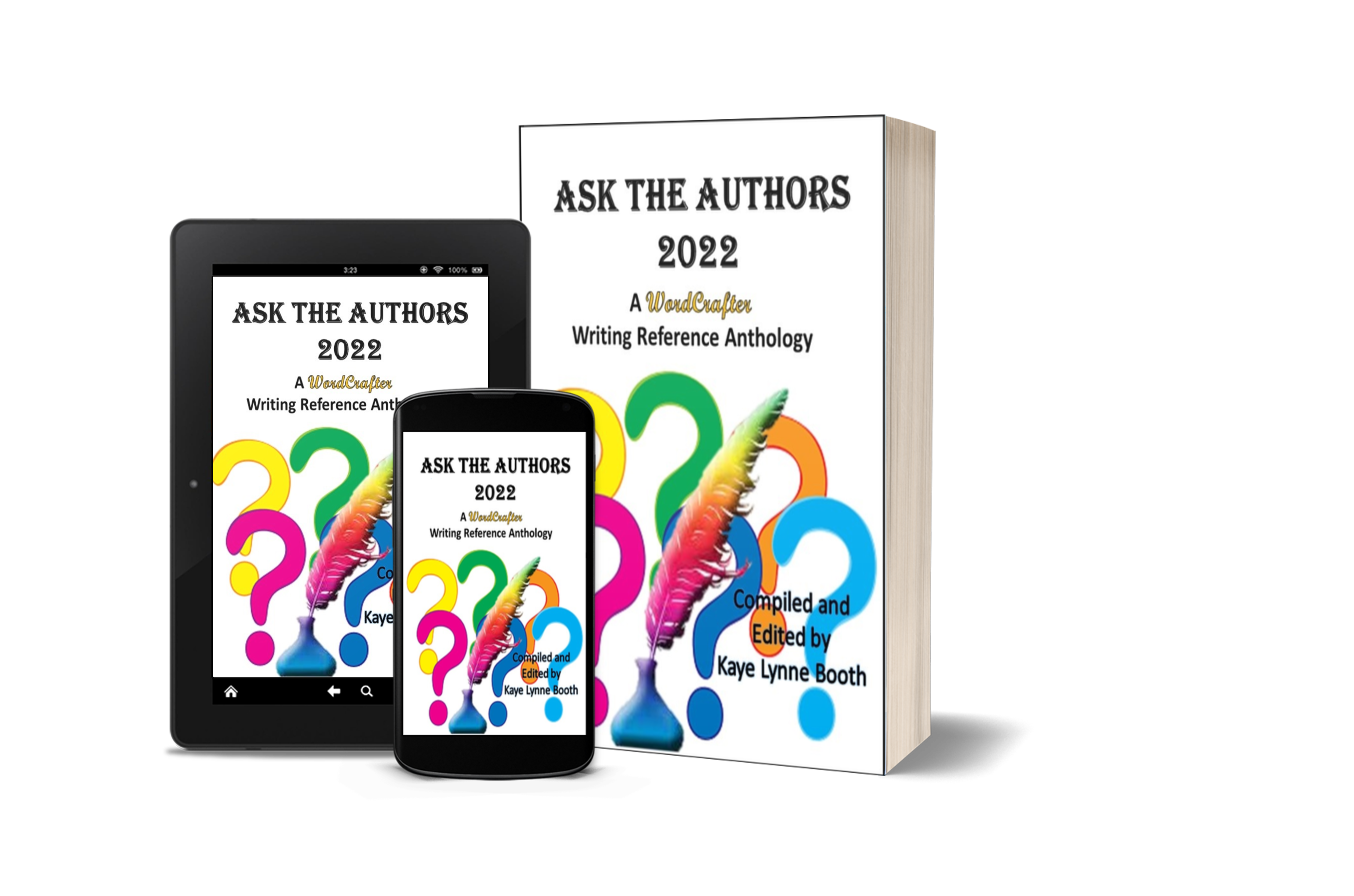
Ask the Authors 2022
“Ask the Authors is an up-to-date and broad-based compendium of advice from today’s working writers, to help you with understanding your own writing career. Great information!”
—Kevin J. Anderson, New York Times bestselling author of Spine of the Dragon
You can delve into the wisdom of all ten contributing authors in Ask the Authors 2022. It’s the writing reference no author should be without. Get your copy at your favorite book distributor at our special send-off price, for the duration of the blog series, through the Books2Read UBL: https://books2read.com/u/3LnK8e
_____________________
Join Kaye Lynne Booth & WordCrafter Press Readers’ Group for WordCrafter Press book & event news, including the awesome releases of author Kaye Lynne Booth. Get a free digital copy of her short story collection, Last Call and Other Short Fiction, as a sampling of her works just for joining.
Hello again, and welcome to segment 5 of the “Ask the Authors” blog series. This Saturday series features introductions to each contributing author and excerpts from the Q & As featured in the newly released Ask the Authors 2022 writing reference anthology.
If you missed any of the earlier segments, you can find them here:
Segment 1: Introductions for Kaye Lynne Booth & Kevin Killiany/Writing Life Q & A session
Segment 2: Introduction for Bobby Nash/Pre-Writing Rituals Q & A session
Segment 3: Introduction for Roberta Eaton Cheadle/Plot & Storyline Q & A session
Segment 4: Introduction for Paul Kane/Character Development Q & A session
This week’s segment features an introduction to contributing author Mario Acevedo and a Q & A on action, pacing, and dialog.
Meet Mario Acevedo
Mario Acevedo is a national bestselling author of speculative fiction and has won an International Latino Book Award and a Colorado Book Award. His work has appeared in numerous anthologies to include A Fistful of Dinosaurs, Straight Outta Deadwood, and Blood Business. For 2020, he has short fiction in the forthcoming anthologies, Psi-Wars and It Came From The Multiplex, and a Western novel, Luther, Wyoming. Mario serves on the faculty of the Regis University Mile-High MFA program and Lighthouse Writers Workshops. Mario has also been a presenter and panel member for both the 2020 Stay in Place Virtual Writing Conference, and the 2021 New Beginnings Virtual Writing Conference.
And now, on to the Q & A.
Action, Pacing & Dialog
Do you have any tips for writing action scenes/fight scenes/car chases, where blow by blow descriptions could get tedious?
Mario Acevedo: Summarize. Only share the high points and include internalizations. Also add details that are often overlooked like nausea, panic, pain, exhaustion.
Paul Kane: I grew up watching a lot of action movies and TV shows, the ’70s and ’80s were a golden age for action as far as I’m concerned. So, a lot of that went in without me having to do much. I used to recreate certain action scenes with my toys, or I might race off up the garden with mates to pretend fight. When I wrote the Hooded Man books, I had to have a lot of action in there, so I got very good at not making things boring – there are only so many ways to describe a punch, for example. But the key I found was to visualize the scenes, even play them out – just like I did when I was a kid – so that they become, again, more believable. I was delighted when one of my battle scenes for Broken Arrow was compared favourably to those in The Lord of the Rings movies, especially Helm’s Deep; that’s one of my all-time favourite battles on film, so I did a little happy dance that day. The way to tackle any fight or action scene, whether it’s huge like the ones I’m talking about here, or just one-on-one, is to break it down into its component parts. Ask yourself what you need or want to show. Then do your research, watch a lot of fight sequences, or action scenes, mix and match the moves that are being made. If your character is a master of martial arts, study it. I had a character called Tanek, for example, who was skilled in the Israeli hand-to-hand combat of Krav Maga, so I went out and researched that. Jennifer Garner actually studied that for Alias, so I watched some fight sequences from the show. They used a very particular form of combat for the Batman fight scenes in the Nolan movies called the Keysi Fighting Method, which favours forearms and elbows, so it’s worth trying to find something that’s not been done before perhaps. Or not done very much. Finally, give your fight and action scenes a sense of character, make them like a dance or a ballet. They need to have rhythm, flow, so your reader can easily picture what’s happening. Too much going on at once is a big no-no, because you’ll lose them. Same goes for very dry descriptions of a fight: now this happens, now this, then this… Try and find a way to make your descriptions interesting, maybe comparing them to something, like two animals barging into each other or what have you.
Chris Barili: Know what you’re talking about. It seems obvious, but may writers take it for granted, and end up writing nonsense that loses the reader. For example, I have studied the martial arts most of my life, and I hold a second-degree blackbelt in Karate. Thus, I know that someone trained primarily in Judo or Jiujitsu will be a grappler by preference, while a Karate stylist will be a stand-up striker who looks to avoid going to the ground.
Bobby Nash: It can be difficult to keep fight scenes fresh. I learn the choreography, walk out the fights, play around with different ways to describe the action. How is the character feeling/responding to the action? I wrote a car chase once and showed it from the POV of a passenger in the car instead of the driver. As he’s holding on for his life, we get a sense of the danger that way as opposed to only descriptions of what the car is doing.
Robbie Cheadle: I am writing my second novel involving war which includes fighting scenes. I intersperse the fighting with dialogue, humorous comments, scenes of eating, drinking, and entertainment, and the receipt of letters from family and friends.
You cannot maintain tension at high levels for too long or it becomes monotonous and over-done. In real life, people relieve tension by singing, and making jokes, and talking and I follow this practice in my writing.
Nancy Oswald: Elmore Leonard: “I try to leave out the scenes readers skip.” Ralph Fletcher: “Write small and use slo mo. The more tension you want to create, the more important the details. In general focus on one detail well rather than all the details which can wash out a scene.”
How do you handle scenes where there is a lot going on, like battlefields or fights in busy settings?
Paul Kane: As I say, break it down into smaller chunks. Show the scale of what’s happening by all means, like an establishing shot in a movie, then focus in on certain specific fights and details. These will usually be with your main characters if it’s a big battle – so I would zoom in on a fight Robert, my Robin Hood, might be having with someone. Then cut to maybe Jack, who is my Little John, and see how he’s getting on. You have to give everyone who’s a main character a turn in the sun, plus give the reader memorable moments – like Robert taking down the Apache attack helicopter with a bolas.
Chris Barili: This is a tough one. I have found that choreographing the whole thing on a sketched-out map of the physical surroundings can help, and if that’s not enough, having some friends act out the scene can help you identify errors, misjudgments, and so on.
Bobby Nash: I try to make sure all of the necessary information is relayed. If you have a lot of characters, you have to try and balance who has dialogue or stuff to do so that they don’t disappear from the scene. POV helps here too.
Robbie Cheadle: I keep my sentences fairly short during battle scenes, and I use a lot of dialogue to break up the action.
How do you keep action flowing smoothly within a scene?
Mario Acevedo: Keep the scene and story question in mind so that the action strengthens the plot.
Paul Kane: Just keep it tight, moving from one bit of action to the next. Even in a small fight, if you have a character get punched or kicked, it’s enough to say it just winds them or takes them down – you don’t have to go into lots of detail about how it feels, whether they’re recovering, what’s going through their minds as they’re fighting. Keep it rattling along at a good pace. Sounds stupid, because it’s a fight, but make it punchy.
The use of weaponry is a good way of handing readers little details that help them visualize what’s going on. Everyone knows what a knife or rifle or handgun looks like. Of course, it depends very much on what kind of fiction you’re writing. A lot of my Hooded Man stuff was military based, because of the nature of armies fighting each other, so readers who enjoy that kind of thing like you to include the names of weapons, specifics relating to what they can do. Does a certain gun jam more often than others? Which are best for close combat as opposed to distance? I once wrote a story about an assassin called Mr D, who had to tear through lots of guards to get to his target. That started off with long-range sniper rifles, and ended up with hand-to-hand fighting as he got closer to the building his mark was in.
It’s also fun to write about weaponry that’s totally out of context, for example plates and pans in a kitchen that can be used to fight with. In my novel Lunar, Nick Skinner raids old castles and museums to get swords, shields and axes to fight the monstrous Loons. Similarly, The Storm was set in an old castle so weapons like that were no-brainers, but I do have my main character – who’s there as a workman – fight off a huge crustacean with a mini-digger. It was just what was around and big enough to tackle the oversized beast, but it worked a treat.
Chris Barili: Keep it short. A ten-page car chase will lose a reader like a prologue.
Bobby Nash: When writing action, I use shorter sentences, short, choppy dialogue, sometimes interrupted dialogue. That reads faster so the reader reads the action scenes faster, highlighting the fast-paced nature of the scene. During an action scene is no time for deep thoughts or anything extraneous. Keep it simple and keep it moving.
Do you consult experts to ensure your action is true to life? How do stories benefit from getting those little details right?
Paul Kane: If you know someone who’s been in the military, or police, or someone who teaches self-defense then definitely use them. Use any friends for anything which requires specialist knowledge. This might be something as everyday as fingerprinting or gathering DNA at a crime scene, say, or if you know a scientist it could be as big as how the universe works. But you don’t necessarily have to go to experts like that these days if you don’t know any, because information is freely available on the net and in books – especially writers’ handbooks. At the same time, talking to experts sometimes throws up interesting scenarios and might take a story in a direction it wouldn’t otherwise have gone.
Bobby Nash: Research can help, sure. Whatever you writer, whether it’s a real-world fight or two super-powered characters battling, you have to write it as though it’s real. If you believe it, the reader will believe it.
Robbie Cheadle: I read a lot of non-fiction to gain knowledge about the subjects of my historical novels. To get a good feel for the era, I read works of fiction set during that time. Fiction reading gives me insight into how people lived, socialized, travelled, and dressed during the period in which my novel is set.
Nancy Oswald: I’m a nut for accurate historical detail, even if it plays a minute part in the story.
Pacing
How can dialog help pace your story?
Mario Acevedo: Dialog is a great way to advance the plot by having the characters reveal crucial information or to help build a character. Dialog is more active and interesting then authorial narration.
Paul Kane: I think that’s where the planning comes into it, once more. If you have a chapter breakdown you can see where the novel needs tightening up. Is there too much exposition in a certain chapter, not enough? Too much action all in one go, or not enough for long periods? Are you hooking your reader at the end of your chapters, making them want to go on and read more in the next chapter? Even if you’re only writing a short story, if you jot down the structure of it in a few sentences you can usually work out where you’re going in terms of pace. Compare whatever you’re doing to other novels or short stories, see how they’re paced. If you want to write, then you have to read as well – like Stephen King says in On Writing. There really is no other way to learn how to do this. Similarly, if you’re scripting TV or film, then go away and watch how they’re paced. Or a comic or audio: read comics, listen to audio dramas and make notes. It really is the only way to learn your craft, whether it be characters, setting/description or pacing.
Robbie Cheadle: Dialogue speeds the pace of a story up, so I use more dialogue for tense, fast paced scenes.
What methods do you employ to control and maintain the pacing in your story?
Mario Acevedo: Know when to show and tell. Show is “reveal,” during which you draw out the narrative in a way that pulls the reader into the story. Tell is “exposition,” which you need to keep the reader oriented in between reveals.
Paul Kane: Try and stick to the plotting and planning you’ve done, even if it’s in broad strokes. That doesn’t mean your story can’t go off on a tangent if something occurs to you, but go back to the outlines that you’ve done at that point and rewrite those, see where the new development might take you. Predict and project, then go back to the writing of the tale. In my opinion that’s really the only way to keep a rein on the thing and make it go where you want it to go.
Robbie Cheadle: I break my story down into manageable pieces for each character. In my current work-in-progress, I am alternating chapters between Jake at the Western Front during WW1, and Kate in Orange, New Jersey.
In slower sections I use longer sentences and more detail and description to slow the pace down.
I also use introspection to develop my characters and control pace.
How do you find the right balance between action and dialog?
Paul Kane: For me personally, that’s something which just comes with practice. The more you write, the better at judging this you’ll be, until you’ll be doing it by instinct almost without thinking. If you drive, remember what it was like when you first started, trying to keep it all in your head? And once you’ve been on the road a while, a lot of that becomes like second nature to you, doesn’t it? Or it should do at any rate. It’s the same thing with writing really, you develop these skills over time – so that you can tell when something needs balancing out with a bit of dialogue, or a bit of action. It’s all just about putting in the work, honing your skills.
Nancy Oswald: Try to do them both at the same time by using appropriate action-filled tags.
Dialog
How do you write dialog that sounds natural and realistic?
Mario Acevedo: Listen to the way people speak, then write a tightened version. People tend to repeat themselves. Catalog unique ways in how people express themselves. Also, keep in mind the character’s agenda when using dialog.
Paul Kane: The trick is to get the balance right between it sounding naturalistic and conveying information. Most dialogue should be moving the story along or serving the story, otherwise what’s it doing in the piece at all? In real life we all have conversations that are just random or serve no purpose, or we get distracted and break off from a conversation to talk about something else. You can’t do that in your fiction, because people will get bored. Or they’ll think you’re not in control of your own writing, which would be true at that point. I get criticized a lot for not finishing sentences in dialogue, but what I’m trying to do is leave readers in a bit of suspense, whilst at the same time making it a bit more realistic. Human beings very often leave sentences unfinished, if they’re interrupted or just shocked. I don’t do it all the time, and like I say some people find it jarring, but it is one way of creating naturalistic dialogue if you have a reason for it. Another way is to just let the dialogue flow, batting it backwards and forwards, but don’t forget to keep reminding the reader who’s speaking with a ‘Mike said’ or whatever, every now and again. Or have a bit of action, like Mike scratching his head or getting up and walking across the room to break things up if you’ve had several lines of dialogue. I always find arguments quite easy to write, because the flow of them comes across as very believable, and you can include lots of relevant information. For me, it’s quite easy to imagine a couple of people having an argument, because it happens a lot in our everyday lives; lots of people have opposing viewpoints, so it’s fun to try and get both sides of that across.
Chris Barili: Listen to people talk and write dialogue that way as much as possible. Do NOT write dialogue in grammatically correct sentences…we don’t speak in MLA format, either.
Bobby Nash: A trick I learned is to read the dialogue out loud. That will tell you if it works or not.
Robbie Cheadle: I read all my stories aloud to myself, and to anyone else who’ll listen. Reading my writing aloud helps me to spot errors and clumsy unnatural dialogue.
Kevin Killiany: I read it aloud. (Yes, I do character voices.)
Do you use dialog tags? Basic or varied?
Mario Acevedo: I vary them and use action tags as often as possible. Remember that in interpersonal communication, half of what we communicate is non-verbal so include those clues: tone, pauses, eye movement, facial expressions, gestures, changes in posture to emphasize what is being said.
Paul Kane: I tend to stick with the basics, unless you’re trying to say something specific. For example, ‘he spat’ shows how shocked or mad that person is by something that’s been said. I tend to steer clear of things like ‘he pontificated’ or anything complicated like that, as it throws you right out of the story. But good old-fashioned ‘he said’ ‘she said’ works just fine. It’s amazing how your eye glosses over this when you read. Try it for yourself, read a page from a book, then go back and re-read it looking for those tags – and I guarantee you won’t have spotted half of them.
Bobby Nash: Yes. I used ‘said’ most of the time, but if I need to add a punch to a line, I may use a different tag.
Robbie Cheadle: When I use dialogue tags, I generally stick to ‘said’. I don’t always use a dialogue tag, sometimes I prefer to use an action by the speaker to indicate who is talking.
Nancy Oswald: Both or not at all. Let the actions act as your dialogue tags.
Kevin Killiany: I stick to basics, with some variations. Many times I leave them out. Example:
Pilar realized her watch had stopped.
“Jerry? What time is it?”
“Four. Uh, four oh eight.”
“Which?”
“Four oh eight. Nine, now.”
You know who’s saying what and you get an idea of Jerry’s personality with no tags.
Any pet peeves with dialog?
Mario Acevedo: Info dumps and a character not saying the obvious in response to what’s going on.
Paul Kane: Not really, just if the conversation isn’t going anywhere or serving any kind of purpose. Having two characters discuss what they’ve had for lunch, for example. Unless that lunch caused food poisoning that results in something significant happening in the plot, then what’s the reason for including it?
Chris Barili: No robot-speak unless the character is actually a robot, and usually not even then.
Bobby Nash: Noting specific. I try not to be cliché.
Kevin Killiany: People speaking grammatically correct written English with every pronoun unnecessarily identified. Normal conversation—even in formal situations—is usually made up of sentence fragments because spoken English assumes all members of the conversation understand what’s being discussed.
Would you share a brief excerpt from one of your best dialog scenes?
I asked this question and got some wonderful responses, but most of them are too lengthy to include here, so I guess if you want to view them, you’ll have to buy the book.
_____________________
That wraps up this week’s segment of the “Ask the Authors 2022” blog series. Be sure to drop by next Saturday, when we’ll introduce Nancy Oswald and bring you a Q & A on tone and all that entails.
Ask the Authors 2022
And don’t forget to grab your copy of the Ask the Authors writing reference anthology, at the special 3.99 price for the duration of this blog series, from your favorite book distributor through the Books2Read UBL: https://books2read.com/u/3LnK8e
________________________
Join Kaye Lynne Booth & WordCrafter Press Readers’ Group for WordCrafter Press book & event news, including the awesome releases of author Kaye Lynne Booth. Get a free digital copy of her short story collection, Last Call and Other Short Fiction, as a sampling of her works just for joining.
Welcome to Segment 4 of the “Ask the Authors 2022” blog series, where we’re offering up a little taste of what you’ll find in this hot new writing reference of the same name. Ask the Authors 2022 features writing tips and advice on craft, publishing, and book marketing from ten talented authors and industry experts.
In case you missed some of the previous segments:
Segment 1: Introductions for Kaye Lynne Booth & Kevin Killiany – Writing Life Q & A session
Segment 2: Introduction for Bobby Nash – Pre-writing Rituals Q & A session
Segment 3: Introduction for Roberta Eaton Cheadle – Plot/Storyline Q & A session
This week we meet bestselling horror author Paul Kane, who shares his love of the horror genre in his essay, “Writing Monsters”, and bring you a Q & A session on character development.
Meet Paul Kane
Paul Kane is the award-winning, bestselling author and editor of over a hundred books, both fiction and nonfiction. Some consider him to be a master of the macabe. He has been a guest at numerous writing events and conferences, and he was the keynote speaker at the 2021 WordCrafter New Beginnings Virtual Writing Conference.
A former British Fantasy Society Special Publications Editor, he is currently serving as co-chair for the UK chapter of The Horror Writers Association. His work has been optioned and adapted for the big and small screen. His audio work includes full cast drama adaptations, he has also contributed to the Warhammer 40k universe for Games Workshop and writes thrillers for HQ/HarperCollins as PL Kane. Paul lives in Derbyshire, UK, with his wife Marie O’Regan and his family.
Find out more at his site www.shadow-writer.co.uk which has featured Guest Writers such as Stephen King, Neil Gaiman, Charlaine Harris, Robert Kirkman, Dean Koontz and Guillermo del Toro.
And now, on to the Q & A.
Character Development
Nancy Oswald: This whole section was hard for me because I’ve never been good at planning a character. Lists aren’t helpful to me. What is helpful is to put your main character into the middle of their world and write from there. I usually have an ending or a direction in mind before I start writing, but there have been times when the character determines the story and not the other way around.
Do your characters ever surprise you?
Mario Acevedo: I never thought I’d be a writer who said that my characters have taken over the story, but it has happened. Big surprise, it was female characters. I’d have in mind a script for them, which they would rip to pieces and tear off on their own.
Paul Kane: Oh, all the time! If you’ve made them ‘real’ then they’ll suddenly do something that you don’t expect. That is to say, it’ll momentarily surprise you and then you’ll say: ah, of course that’s how they’d react because of… whatever it is you’ve seeded in their past. It’s really your subconscious putting things like that in, things you’ve set up and forgotten about, then when a character does something unexpected it’s only that you’ve forgotten how apt it was in the first place.
Chris Barili: Yes, all the time. If a character is predictable to me, it will be the same to a reader. So, I let them surprise me in whatever way they seem to need. Those surprises don’t always make the story, though.
Bobby Nash: All the time and I love it. In one story, a character let me know that I had the villain wrong. This character was the villain, not the one I had planned to be the villain. The kicker is that the story worked so much better once I realized that this character was indeed the villain.
Robbie Cheadle: No, my characters follow a pre-determined path decided by me upfront.
Kevin Killiany: Not exactly. I’m the only person living in my head—my characters only look like they have free will. That being said, the longer you work with a project, the more time your subconscious has to compost or ferment or percolate the ideas you’re building with—and that can lead to unexpected discoveries that give texture and dimension to the character. Sometimes my characters evolve over the course of writing and rewriting to the point that they person they’ve become wouldn’t do what the story required. Usually that’s an indication there’s something wrong with the story, not the character.
What makes a character interesting?
Paul Kane: I think it goes back to believability once again, which most things do. They have to be well-rounded, living and breathing people. If I get it right, the characters feel real to me. When I talk about them and what they go through, I talk about them as if they exist. You have to think that way in order for other people to believe them and believe in them. A lot of that means knowing your characters inside out, how they’d react to certain situations – in particular the ones you put them in. Would your character run away from a monster or just get stuck in, have a go, even if it meant dying to save others? That kind of thing. A lot of writers think giving characters quirks makes them interesting, but if there’s no reason for that to be there it just stands out. If you give your character gardening as a hobby, unless he’s fighting a giant plant then it’s not really something that should crop up in your story. The character of Alex Webber in Before was a lecturer, so that meant he was interested in making sure the next generation were educated and could make well-informed decisions. So when the future of the world is threatened, of course he’s going to fight against that; it’s just something rooted in his DNA. Those are the kinds of things that make characters interesting, not whether they sleep on the left or the right in bed.
Chris Barili: They have to be flawed. No one wants to read about perfect people with perfect lives and no conflict whatsoever. It is our characters’ flaws that make them realistic, and that set up most of the conflict in the story. After that, it is the act of exaggerating the characters, making them larger than life. Again, no one wants to read about normal people with normal lives. They want heroes and villains who are large and in charge. Would Dirty Harry have worked if he were a normal cop carrying a .38 special? No, because being a six-foot-four rogue cop with a .44 magnum in gleaming silver makes him stand out.
Bobby Nash: I don’t know. Interesting is like art or porn, I can’t describe it, but I know it when I see it. I need to have something to connect to with a character. Once I have that connection, I understand the character.
Robbie Cheadle: My characters all must overcome a lot of adversity in their circumstances. I believe that the growth in the characters as they play the cards which they are dealt by life makes them interesting.
Jeff Bowles: I think I have an answer to that question: idiosyncrasies, idiosyncrasies, idiosyncrasies. The thing about real people is that we all have our strange little quirks that make us who we are. And these are behaviors and beliefs it’s taken us a whole lifetime to accrue. It pays to think of your characters as being a little odd under the surface. The problem with a lot of storytelling out there is that too many authors figure their characters exist to serve the story. They don’t, it’s the other way around completely. Let your characters speak for themselves. Let the breath a little, see where they really want to go next. Don’t push them into situations that don’t serve their full expression. Let them tell you who they really are.
How do you make a character likeable?
Paul Kane: Sometimes you don’t. Sometimes you shouldn’t. I get reviews sometimes that say ‘the characters weren’t very nice’, but then look at some of the things they’ve been through. My psychologist Dr Robyn Adams went through a trauma at the hands of a serial killer, so is addicted to pain killers and drinks too much, leaps straight in with guys too often – because of something else revealed towards the end of Her Husband’s Grave. But you know what, she’s doing the best she can. Her flaws make her human, like all of us, and they make the moments of bravery stand out all the more. I think if you’re always trying to make your characters likable, you’re missing the point of making them believable. Not everyone’s nice all the time, there are grey areas – and that’s totally where your characters should be operating.
Chris Barili: You don’t have to make them likeable, just relatable. Thomas Covenant in White Gold Wielder (Stephan R. Donaldson) is not a likeable character at first, just a relatable one. He almost loses that with a deplorable act early in the book, bit manages to make it through, at least for most readers. I do know some who could not handle it and left the series behind.
Bobby Nash: I start with a likeable person as their base and build the character up from there.
Kevin Killiany: I never consider likeability. I try to make my characters as real as possible—which means complex, with parts some folk will like and parts some folk can’t stand.
How do you make your characters feel real?
Chris Barili: What are their fears and flaws? Read my article, “Character Blueprints” (Ask the Authors 2022) for the tools I use to do this.
Bobby Nash: As I mentioned above, I get to know the characters. Once that happens, they become real people to me. They have their own quirks, foibles, fears, flaws, strengths, and weaknesses. Just like real people.
How do you create a villain readers can love to hate?
Mario Acevedo: Readers must have empathy with all of your characters and understand why they do what they do. Their motivations must be consistent and compelling. One of my best villains was a female mad scientist who at first you cheered until you found out what she was up to.
Paul Kane: I don’t think there’s any magic formula, but the key thing with villains is again that they aren’t just cardboard cutouts. They can’t just be evil for evil’s sake, there needs to be reasons for what they’re doing. My bad guy for the Hooded Man books, De Falaise – essentially my version of the Sheriff of Nottingham – was motivated by the fact that he’d been kept down before the A-B Virus hit. He was a small bad guy in a big pond. The apocalypse gave him the freedom to create a kingdom of his own, so that was his motivation – and Robert, my Robin Hood, stood in his way. You got the impression with some Hood stories in the past that they just hated each other because one was bad, and one was good. In my books, just as Robert has his failings as a leader – for starters, he doesn’t want to be a leader and would much rather hide out in Sherwood waiting to die – so too does De Falaise have his good points, like his loyalty to companions like Tanek, his second in command. I mean, he is evil when you get right down to it, because some of the things he does are reprehensible, but there still needs to be some good in there. Having said all that, the most fun I’ve had writing a bad guy was The Infinity in Before. He’s a version of the Devil, essentially, and likes to meddle in human history. Writing lines for him, simply because he was a stereotypical big bad, was wonderful. It allowed me to put myself in the head of someone who has very few redeeming qualities, if any at all.
Chris Barili: I find that a couple of things can pull a reader into a love-hate relationship. First, a sense of humor. Even if it’s macabre or inappropriate, the ability to make us laugh endears even a harsh villain to us. You can also give that villain a good side by having him or her save a puppy or show some other admirable trait. Intellect combined with arrogance are a nice set of offsetting traits. But most of all, make them flawed like the hero. If they are invincible and pure evil, no one will want to read their stories. Take The Governor on the AMC series The Walking Dead. We find out early on that this otherwise despicable villain lost his whole family to the walkers and thus has them all locked up in his home as he hopes for a cure.
Bobby Nash: Same way as with a likeable character. I get to know them and understand why they do what they do. No villain thinks of themselves as the villain. Most villains believe what they are doing is right or justified. Very rarely is anyone evil just for the sake of being evil. Let the readers see the multiple facets of your heroes and villains.
Robbie Cheadle: Characters that do sadistic and unkind things are easy to make readers dislike. However, my characters all have redeeming features so the reader will end up conflicted, even when the character is behaving at his/her worst.
Do you ever create characters based on people who you’ve actually known?
Paul Kane: I think by necessity characters are mish-mashes of people you’ve known and other characters from books, film or TV shows, plus bits of yourself sometimes. I’ve never based a character wholesale on someone, as that way lies being sued, but I include certain traits from people I’ve known or still know. I was brought up with a lot of strong women around me, so I write a lot of tales with strong female protagonists. RED, my horror reworking of Little Red Riding Hood, is an obvious example of that. Rachael Daniels is someone who fights the wolf rather than running away from it, isn’t frightened to go up against a challenge. Her love-life might be a car crash, but she’s someone you want around when there’s trouble for sure.
Chris Barili: I will plead the fifth on this question, and all writers should, whether they have done this or not. Admitting that you have sets you up for legal action by others.
Bobby Nash: Oh, sure. I have many characters where the basis is a real person that I then built on top of to create a new character.
Robbie Cheadle: Yes, some of my characters are modelled off people I know. Grandfather Baker in Through the Nethergate has a lot of my father’s personality and characteristics. Michelle Cleveland in A Ghost and His Gold has some of my personality and characteristics, but she is more forgiving and generous towards her partner than I would be in the same circumstances.
Some of my characters are model on several people I have come across in a similar situation. For example, Tom Cleveland in A Ghost and His Gold is based on a combination of men in senior positions I have worked with in my own life.
Kevin Killiany: Every character is a composite of people I’ve known. Let’s face it, the only way to research people is to hang out with them a while. I never drop a whole person into a story—it’ll be A’s speech pattern, B’s fascination with baseball, C’s gestures, etc. Of course, those are just the starting points. As I know my character better everything will change, evolve.
Do any of your characters share traits with you?
Paul Kane: You can’t help but put bits of yourself in stories. I’ve talked about Alex Webber from Before being a lecturer, which I was for a while at college, so I could write about him with a degree of confidence and make sure it was authentic. I’ve always been scared of the dark and nighttime, which comes across in a lot of my stories. The little boy at the beginning in Of Darkness and Light – recently reprinted in the collection Darkness and Shadows – is very much based on me as a kid. Staring out into the darkness at bedtime and imagining all kinds of things lurking inside. But I think the writing also helps with tackling your fears, and in that particular story I could make the ‘creature’ in the darkness someone who was actually watching over the character of Lee Masterton, someone who would protect him from harm. He just didn’t know it at the time.
Chris Barili: All of them, of course. We cannot create characters without at least a little dash of ourselves in them.
Bobby Nash: Absolutely. There’s a little something of me in all of them. Some, more than others.
Robbie Cheadle: As mentioned above, Michelle is similar to me in some ways, but very different in others. She is a better me.
Kevin Killiany: Never the main character. But if there’s a plucky sidekick who alternates puns with sardonic commentary, that’ll be me.
What methods do you use to introduce readers to your characters?
Mario Acevedo: One of the techniques that F Scott Fitzgerald used to masterful effect was that he introduced his major characters in terms of their personality rather than merely describing their looks. I keep that in mind as I write my stories.
Paul Kane: I think it helps to show them doing something that defines them, so perhaps through their job. Most detectives are introduced through a crime scene for instance, and then we learn how good they are and what it means to them to be a cop. I introduced my main character Mitch Prescott – who at the start of The Family Lie is a PC – via a riot scene. He’s tried to tell the powers that be that there will be trouble at a demonstration, but they’ve totally ignored him, and of course – surprise, surprise – a riot breaks out in which one of his closest friends is injured. It forces Mitch to question what he’s doing on the Force, which leads to his dismissal when he confronts a senior officer about what happened, which in turn makes it easier for him to just go off and investigate what occurred with his father’s death in his hometown of Green Acres. But just from this one chapter, you realise he’s a man of integrity, a man who’s loyal to his friends, and a man who doesn’t like it when people don’t listen to his warnings – so you set up conflict for later when he reaches Green Acres and he’s being blocked at every turn.
How do you motivate your characters?
Paul Kane: I think that’s the same thing as what motivates us as people. We look after our friends and family, because we love them, and are sometimes motivated to do things we might not otherwise do because they’re in trouble. What motivates characters is the same as what motivates people in real life, because, remember, we’re trying to make those characters real. So, the father of murder Jordan Radcliffe – Jake – is motivated to find out who the killer is, not only because he loved his daughter, but also because he feels like he failed her. Failed her in life as a father, so he doesn’t want to fail her now in death. That’s a powerful motivating factor for any character. In my short novel The Storm, out through PS Publishing, the main protagonist Keegan is all about keeping the woman that he loves safe, even if it means battling giant monsters to do so. Love’s a big motivation for anything, I find, just like in real life. So are things like revenge or jealousy, the usual big ones.
Chris Barili: They are self-motivated by the situation into which I drop them. Usually, it is the will to survive that motivates them, but it can also be love, hate, rage, longing, and more.
Bobby Nash: How do I stop them? I usually have trouble keeping up with them.
Robbie Cheadle: My ghostly characters are motivated by the chance of redemption and moving on from their existence as spirits.
My physical characters are motivated by compassion and empathy for others and a desire to assist the spirits achieve the redemption they seek.
What kind of adversaries and obstacles do you create for your characters and what purpose do they serve?
Paul Kane: It depends very much on what the story is. Creating adversaries tends to go very much hand-in-hand with creating heroes. Myself and my wife Marie O’Regan – a terrific writer herself – do a workshop on this subject, and that’s one of the key elements. The hero or heroes dictate the villain or villains. Both are probably striving for something but pulling in opposite directions. In Arcana our protagonists are just trying to get freedom for magic-users, whereas the M-Forcers are trying to stop them, hunt them down and either kill them or put them in prison. Both have aims, but they’re the exact opposite of each other. The obstacles they face are very much dependent on the story you’re telling. It could be a man vs nature tale, in which your heroes are just trying to stay alive, so the setting would dictate what happens there. If it’s a shark, then you need to be at sea, if it’s snow then you need to be in the Arctic or Ant-Arctic, or you set it at a time of year when it’s snowing… My short story ‘White Shadows’, for example, is about a girl battling living snow in the middle of winter.
Chris Barili: Since most of the opposition to my characters comes from the antagonist, I always try to think, as I close a scene, “what could the villain do that would completely thrown the main character for a loop?”
Bobby Nash: Stories would be boring if there was nothing for the main character to overcome. Whatever the obstacle is, a villain, a test not studied for, a traffic jam, or whatever, gives the character(s) something to overcome or solve. Hopefully, your character comes out stronger on the other side of the obstacle.
What methods do you use to introduce readers to your characters?
Bobby Nash: We meet the characters in story. I let different characters be out POV in different chapters so we can understand them.
How do you give each character a distinctive voice?
Paul Kane: I think that just comes down to their personality really, who they are and what they do. How they respond to things, whether it’s trouble or something nice, will dictate their voice. So it’s all to do with character creation, and that believability factor again. If they respond in an authentic way, that will give them their voice. If you’ve created a strong female character, for example, they’re not likely to take a man bossing them around lightly. Indeed, they might even knock them out, depending on whether they’re a violent sort or not, or whether the provocation was bad. It’s things like that which give your characters a distinctive voice.
Chris Barili: This seems to come naturally for me. And I think that come from listening. I did twenty years in the military and traveled all over the world. So, I have had the chance to listen to many different conversations in many different cultures, and all of that goes into giving a character their own voice.
Bobby Nash: Once I get to know the character, they tell me what their voice is and that’s what I write. It all comes down to creating a fully formed character.
How do you feel about killing off your darlings?
Mario Acevedo: I am ruthless. There’s a vacant lot in my neighborhood where I’ve left my darlings rotting in shallow graves.
Paul Kane: Do you mean editing, like killing off your words? Or killing off characters? I love editing, chopping bits and refining, making scenes better. That’s the part of writing I like most, apart from being finished and having written. Killing off characters you love is hard, but all part and parcel of being a good writer. If it serves the story, no matter how you feel about the character, then you need to just get on with it. I always knew that I’d kill off Jack in The Gemini Factor, even before I started, which was difficult because I really liked him. He became like a friend. It gave the ended weight though, gave it an impact that would not have been there if I hadn’t just bit the bullet.
Chris Barili: When it becomes necessary to the story, I have no problem doing so. Sometimes, they get in the way. Other times their story line needs its own story because it is taking over. Other times, the main character has learned to depend on them too much.
Bobby Nash: I do it all the time, so I guess I’m okay with it. Ha! Ha!
Robbie Cheadle: I was advised to kill off a few of my darlings in Through the Nethergate by my developmental editor. It was a little hard to let those scenes go but it was the right thing to do. Listening to good advice is the best thing a writer can do.
What methods do you use to evoke emotion in your readers?
Mario Acevedo: Writing fiction gives you the wonderful opportunity to present what characters are thinking or feeling, either through internalizations or visceral reactions. I use these inner experiences to ground the reader in what the character is feeling and what is important in the story.
Paul Kane: There are all sorts of ways to do that, from killing off people readers have grown to love – as mentioned before – to putting them through the wringer, or even having them fall in love. If you’ve done your job properly, a reader will feel the emotions characters are going through. So when a character hates or loves something, or someone, a reader will feel that too. I once wrote a story about two ghosts falling in love called ‘Kindred Spirits’. The girl ghost has only just died, so she doesn’t know what she is, and the guy ghost is trying to help her because he’s been dead for some time. Hopefully a reader feels the sadness at the start that he feels, being alone where nobody can see or touch him, then the joy at finding someone else he can talk to and touch, even hug. To be able to cover the range of emotions like that in a short space of time isn’t easy, but it’s incredibly rewarding when it works.
Bobby Nash: It’s all in the characters and setting the mood. The emotion comes out of the performance of the character.
Kevin Killiany: Honesty
Which of your own characters was the most fun for you to write? Why?
Paul Kane: I enjoyed writing the character of Nick Skinner in Lunar, because he’s just your average guy in a bizarre situation, having to think on his feet and react to all these weird things that are happening to him. That was fun. And The Infinity, the bad guy in Before, as I’ve said. It was fun to write someone so evil that he’s verging on pantomime level, but that’s just how he is. There’s a scene where someone tells him to stop stirring, and he replies with: ‘I f**king enjoy stirring!’ Because he does. That’s what he’s all about. It was fun creating and writing him, especially writing his lines. The criticism I got the most about that book was The Infinity wasn’t in it enough, so you know you’ve done something right at that point. I’m toying with bringing him back in a short story or two, because you could go back in time and show him at any point – he’s been there at all the major turning points in history. It might be fun to do that…
Chris Barili: I really enjoy writing Frank Butcher, and most of his posse members. They’re some of the most complete characters I have built, and each has their own voice, their own flaws, and their own motivations. And each has a weird past that helps flesh out their personality, so writing the is easy.
Bobby Nash: That’s like asking me to pick a favorite child or parent. They all have their fun moments for different reasons. I love writing Archer Snow, the surly, but funny grandfather in the Snow series. Tom Myers is also fun to write.
Robbie Cheadle: I have enjoyed all my characters. During the writing process they all become very real and important. Once the book is published, they are quickly replaced by different characters, which is why I haven’t attempted a sequel.
Kevin Killiany: Cadet Fatima Kielani. [I jotted her last name down several years ago when I was watching a news report on Syrian Kurds fighting ISIS—it was on the screen briefly. I assumed it was Kurdish (and have a major supporting character in Life on Dirt identify it as such) but I was wrong. I’ve since learned it’s most common in the United Arab Emirates (with about half as many in Jordan) and is also found in both Austria and Benin, but no one knows its origin.] [It is not the Hawai’ian girls’ name Keilani.] Fatima is a seventeen-year-old Spacer, first generation, born and raised on Tombaugh Station, who volunteers for an experimental program on Earth, even though (or perhaps because) she’s terrified of the place. My background is special education and mental health services, and I gave Fatima a condition that has fascinated me since before it had a name: Social Communication Disorder (Pragmatic Communication Disorder in the UK). In many ways it resembles the Autism Disorder Spectrum, but is in no way related. People with SCD are blind to social norms and nonverbal cues, and must work their way through everyday interactions. I also, because I am cruel and unusual, gave her a rare dissociative disorder: she has trouble recognizing, or feeling, her own emotions. I have attached an entry from Fatima’s journal to illustrate both how she sees the world and how she interacts with others.
Which of your antagonists is your favorite? Why?
Chris Barili: So far, it’s a tie between Annie’s ghost of a mother in Smothered, and John Wesley Hardin in the Hell’s Bucher-based short story “Witch’s Kiss.” The first because I got to make her up and have her interrupt an intimate scene between her daughter and a man. The second because I researched him thoroughly and felt like I knew him well enough to write a story where this very real gunfighter did some very fictional things, and I feel like I did so without compromising his character.
Bobby Nash: The Controller in Suicide Bomb was a lot of fun to write.
Robbie Cheadle: I enjoyed Lucifer in Through the Nethergate. He was a young, good looking man with an interesting plan to manipulate modern trends and technology to invoke a third world war. I also enjoyed the hell he created.
____________________________
That’s all for this week on the “Ask the Authors 2022” blog series . Thanks for joining us. Drop by next Saturday, when the “Ask the Authors 2022” blog series introduces award winning multi-genre author, Mario Acevedo and offers a Q & A on Action, Pacing & Dialog.
Ask the Authors 2022
Don’t forget to get your copy of Ask the Authors 2022 from your favorite book distributor at the special price of 3.99 for the duration of this blog series, through the Books2Read UBL: https://books2read.com/u/3LnK8e
______________________
Join Kaye Lynne Booth & WordCrafter Press Readers’ Group for WordCrafter Press book & event news, including the awesome releases of author Kaye Lynne Booth. Get a free digital copy of her short story collection, Last Call and Other Short Fiction, as a sampling of her works just for joining.
Welcome back to the “Ask the Authors 2022” Saturday blog series.
If you missed them, you can catch the first two segments here:
Segment 1 – Introductions for Kaye Lynne Booth & Kevin Killany/Writing Life Q & A
Segment 2: Introduction for Bobby Nash/Pre-Writing Rituals Q & A
This is the third segment for this series and today I’m going to introduce you to contributing author, Roberta Eaton Cheadle, who shares her essay about her own publishing journey in the book, and bring you a Q & A on plot, or storyline, from the WordCrafter writing reference anthology, Ask the Authors 2022.
Meet Roberta Eaton Cheadle
Roberta Eaton Cheadle is a writer of young adult and adult fiction in the supernatural fantasy, historical horror, and historical supernatural genres. Under the name Robbie Cheadle, she is a South African children’s author, publishing the Sir Chocolate series with her son, Michael, and a poet with 2 published poetry books.
To date, Roberta has published two novels, Through the Nethergate, and A Ghost and His Gold, along with several short stories in various anthologies including Whispers of the Past, Spirits of the West, and Where Spirits Linger, all edited and compiled by Kaye Lynne Booth, and Dark Visions, Nightmareland, Spellbound, Wings & Fire, and Shadowland, all compiled by Dan Alatorre.
Robbie is also a member of the Writing to be Read blogging team and co-editor of Poetry Treasures (2021) and Poetry Treasures 2: Relationships (2022), two poetry anthologies with contributing authors who were guests from her “Treasuring Poetry” blog series. When she is not writing, Robbie enjoys working in the garden and creating fondant and cake artworks to be featured in her children’s books.
And now for the Q & A.
Plot/Storyline
How do you feel about prologues? Love them or hate them? Why?
Mario Acevedo: I’m not a fan of prologues and as I see them as superfluous to the story. If you must include a prologue, then call it Chapter One to make sure readers like me won’t flip past it.
Paul Kane: I have no strong feelings about them either way. Sometimes I’ve used them, other times I’ve gone straight into Chapter One. I know some writers who say if you can avoid Prologues then do it and just start with the first chapter, but I think if it serves a purpose then there’s a place for one. I tend to include them in the thrillers, because it’s always an event that kicks things off – so for example in Her Last Secret, it’s the death of Jordan Radcliffe, in Her Husband’s Grave it’s the discovery of a body on Golden Sands beach, and in The Family Lie it’s a couple of campers who see a man on fire in the woods. I then split the narrative into parts, and in Chapter One I tend to introduce the main protagonist, so it might be the person who’ll be doing the investigating; someone whose eyes we’ll be seeing most of the events in the book through.
Chris Barili: I normally skip prologues in the books I read, especially if they’re more than two pages long, so naturally, I try to avoid them in my own writing. I tend to be of the mind that if it’s important enough to be in the story, I can be “Chapter One” or background info sprinkled throughout the story.
Bobby Nash: Prologues have their uses. I don’t think they need to be used in every story and I certainly don’t use them as an info dump. Sometimes, they work well.
Robbie Cheadle: I have no strong feelings about prologues. If the story requires one, then it should be there, if not, it can be omitted. I have not as yet included a prologue in one of my books.
Nancy Oswald: Not too fond of them. I think it’s better to jump right into the story.
Kevin Killiany: Prologues are essentially exposition—they explain the conditions or situation that make the story itself possible and necessary. Sometimes they contain information vital to the climax or outcome of the story that the writer could not figure out how to insert into the narrative itself. Like any tool they are not good or bad in and of themselves. I have, rarely, used prologues as placeholders in rough drafts; repositories to hold essential information until I work out how to work the really important bits into the narrative. Only one of my short stories ever went to press with both a prologue and epilog: “Simple Farmer”, Total Warfare, FanPro, 2006, a tie-in story for the Classic BattleTech RPG. They contained information long-time players knew, but new and less minutia-oriented readers would need to understand the story’s significance to the game.
What is the most difficult part of the story to write: beginning, middle or end?
Mario Acevedo: For me, the entire book is a challenge. I tell new writers not to sweat a perfect beginning because it’s often not till you write the ending do you figure what the beginning needs to say. The middle is called “the swamp” for good reason and the key here is to keep in mind the story question as you introduce plot twists.
Paul Kane: This changes, depending on at which point in the story or book you ask me. It’s hard to make a start on a project, because you’ve just got the blank page in front of you. But then it’s just as hard the next day to come to it and see another blank page… I tend to flag about halfway through and wonder what the hell I’m doing or wish I’d never even started it. The end is definitely the best part, if you’ve panned it well and can bring the book in for a good landing. There’s no more satisfying feeling in the world than having written the book. I always joke that I hate writing – which for a writer probably isn’t great – but I do love having written. Having a first draft that I can then tinker with. That’s my favourite part of the process if I’m honest, apart from getting the idea in the first place and developing that. But even at an early stage, you’ve got the whole mountain of a book to write ahead of you, which can be quite daunting.
Bobby Nash: I don’t know if I would call it more difficult to write, but the middle is usually where I start getting bogged down. Knowing when to transition from the middle to the end can be tricky.
Robbie Cheadle: It is all the same for me. I have the outline in my head, and I write in that direction. I do not find any parts more difficult, and I am for consistency and fluidity throughout my stories.
Jeff Bowles: For me, a short story or novel isn’t complete until I’ve managed to synthesize a decent tie-up ending. It can be tough to do, especially if you aren’t using a road map or outline of some sort, which I often do just to see where the story takes me. Sometimes I do a lot of preplanning, and that can certainly help, but even then, things in the plot can and do change, which means a good ending can still be hard to stick. Beginnings carry all the burden of proof, the reason someone will or won’t want to read your work, but even they depend on where a narrative ultimately ends up. As the saying goes, the seeds of an ending are always found in its beginning.
Nancy Oswald: Each book is different.
What are the elements of a good plot?
Paul Kane: That it hangs together well and is pacy. That there are no flabby bits which are unnecessary. Every bit of your story should be relevant and serve a purpose; if you could take certain bits out and still have the same plot, then they weren’t necessary in the first place. That it moves along well from beginning to the middle, to the end, and leaves a reader satisfied; and by that I mean content that they haven’t just wasted a chunk of their lives reading it. It’s why I always plan, so I can see the shape of the plot and work out what sections need to stay, which can be salvaged, and which need to be jettisoned.
Bobby Nash: I tell stories that I hope are coherent, make sense, and are entertaining. If that happens and the characters work, I’m happy.
What is the best hook you’ve ever written? Why?
Paul Kane: Ooh, that’s a hard one. Do you mean at the beginning of a story to make the reader go on? I’d say probably The Family Lie – and reviewers have mentioned this a lot! It’s the whole thing of showing those campers hearing something in the woods, looking out and seeing a guy on fire among the trees. I mean, what on earth’s going on there? If it doesn’t make you want to read on and find out then I’ve really not done my job properly. Up there with that is probably the start of Servants of Hell. That purposely mirrors the puzzle box scene with Frank from The Hellbound Heart, where he’s trying to solve the Lament Configuration and summon the Cenobites. I have a very similar scene, but right at the end you discover it’s Sherlock Holmes solving the puzzle just as the Cenobites show up. We then go back and find out how he ended up in that situation, but man what a hook! I was the one on fire the day I wrote that.
Chris Barili: Probably the opening to Guilty, the prequel to my Hell’s Butcher series. It opens with the main character face down in a saloon, dead from a gunshot wound. His first interaction is with a bartender who is half-rhinoceros.
Bobby Nash: I love this opening to Snow Falls.
“Abraham Snow knew he was about to die–
–and the thought of it pissed him off to no end.”
What kind of stakes do you set for your characters?
Paul Kane: Usually quite high stakes. Even if it’s something that’s high stakes for them alone, something that means a great deal to them, but might not to anyone else. You have to give characters motivation, nudge them to do things they might not otherwise do, and the only way to achieve that is by making it a high stakes gamble for them. They might lose their marriage, kids, or even their life. It makes a reader keep on turning the pages to find out how they’ll get on. In Lunar, the stakes really couldn’t be any higher for my protagonist Nick Skinner: he needs to find out why the world became stuck at a certain point in time; what the white-eyed Loons are roaming about, killing people; and he needs to find out where the love of his life Dawn is. Track her down and save her. Hopefully you go along with him for the ride to find out how he gets on.
Chris Barili: Again, that depends on the story and the genre. The stakes in a romance are a broken heart or happiness, while that in a horror story might actually be losing their heart.
Bobby Nash: Every story is different, but the stakes have to impact the character on some personal level. If the character doesn’t feel anything or there’s no stakes for them, the reader has no reason to get invested.
Robbie Cheadle:Through the Nethergate and A Ghost and His Gold were both about ghosts which have become trapped in between the physical world here on earth, and the afterlife. The reasons for this happening are different in both books, but the ghosts searching for redemption, so they can move on to the next level of existence is a common thread. The Soldier and the Radium Girl is different and is about a young couple’s quest for justice.
Do you write in subplots purposefully or do they develop organically for you?
Paul Kane: I work all those out beforehand, when I do my planning. That’s when subplots will occur to me and develop organically at the ideas level when I’m figuring it all out. As I mentioned, that doesn’t mean it’s all set in stone, there is always scope to change things if it makes the story better, but it allows you to figure out what main plots and subplots you’re going to need before you even start writing.
Chris Barili: Both. I plan some, and others pop up during the course of telling the story. If your characters are realistic enough, and you know them well enough you won’t be able to avoid the latter happening at least a little in your story.
Bobby Nash: A little of both. In writing series like Snow or Sheriff Myers, I know plot points for future books so I set up things that will pay off later. There are times, however, where I’ll decide something later and go back to set up the subplots and discover they are already there. Sometimes, my characters are smarter than I am.
Robbie Cheadle: Subplots do develop organically for me and are often a result of the interesting additional information I discover through my research as I go along.
Nancy Oswald: Develop organically.
Kevin Killiany: Subplots are always purposeful. In fact I always write complex or substantive subplots as individual stories in first/rough draft. Jigsawing the parts together—trimming, expanding, and polishing as needed—is part of the editorial process.
How do you assure that all subplots are resolved at the end of the story?
Mario Acevedo: I don’t because I like messy endings. The main story question is resolved, but usually involves a compromise by the protagonist. Unresolved subplots are good places to hitch up a sequel.
Paul Kane: Well, they might not be – but that would be something you leave dangling on purpose. For example, and this is a spoiler, at the end of The Gemini Factor we find out that one of the main characters Deborah is pregnant with twins. This was part of the subplot of her falling in love with Jack, a twin himself, who ends up getting killed. So we don’t really see the resolution of what she does about having his kids… unless I do a sequel, which actually I’m intending to do at some point. So leaving things open-ended sometimes can shoot off into yet another story. Pulling on a story thread that you’ve left dangling.
Chris Barili: Well, first off, some are not resolved because I want them to continue into the next book. For those that wrap up in the current book, I create a plot line, usually color-coded, in my beat sheet for that subplot so I don’t forget it.
Bobby Nash: Keep good notes. There was one time I realized that I had forgotten to resolve a plot point and so I started planning how to resolve it and the characters showed me which way to go. It turned out far better than my original idea. That’s why I trust my characters to get me where I need to go.
Robbie Cheadle: I engage the services of a developmental editor to read my stories carefully and help me tidy up lose threads, tighten the storyline, and produce the best story possible. I am also fortunate enough to have two Beta readers who read my work chapter-by-chapter and help me resolve issues and lose threads or contradictions as I go along.
Kevin Killiany: Sometimes they aren’t. Sometimes they’re hooks for the next story.
What methods do you use to add tension and conflict to your story?
Mario Acevedo: Make sure the characters, even those on the same side, have competing agendas.
Paul Kane: Well, I use suspense to ramp up the tension. And if you want to know how that works, just go away and watch a bunch of Hitchcock movies because he was the master. Show the bomb and the ticking clock under the table, but have the characters oblivious to it. That’s suspense, folks! As for conflict, you have to have characters with different points of view, just like in real life. Where do all the arguments come from in your own life? People who disagree with you on a certain course of action or about beliefs. Just look at something like The X-Files, which I watched from start to finish again recently. Mulder’s the believer, Scully’s the sceptic, and we watched the arguments – as well as sexual tension – between them for many years. Opposing viewpoints, yet when the chips were down they worked for the common good; the perfect combination. In my novel Arcana, which is set in an alternate universe, I had a young M-Forcer whose job it is to police magic users, unwittingly fall in love with a member of a group of magic users he’s chasing. Then you ask the question: what now? Will he turn his back on what he believes for love? Or bring her in? Or is there more to what’s going on in the first place than they know? It makes for tension, conflict and… if you’ll pardon the pun, given the novel in question, sparks.
Bobby Nash: Character moments are good for this. There are also tricks you can do on the writing side. Short, choppy sentences speed up the action. Long paragraphs slow it down. That sort of thing.
Robbie Cheadle: It depends on the book in question. With my current novel, there is a lot of irony because a lot of readers will be familiar with the story of the radium girls. War stories include their own tension due to the conflict situations that are innate in the history. I make use of flawed characters so that they do things that create conflict situations through their own poorly thought-out actions and their strong ideas and views about other characters and the situations they are in due to external circumstances.
Nancy Oswald: If I’m bored the reader will be too, so I try to pay attention to that and analyze where the story gets slow (or not).
Kevin Killiany: Mostly I just add tension and conflict. You should always keep in mind that every character is the hero of their own story—every character has a reason for what they’re doing. Begin with characters you care about (Not the reader, you; fake it ≠ make it.) and give them compelling reasons for their actions. When the actions and the underlying reasons for those actions of two people you care about run contrary to each other, the conflict generates the tension.
That wraps up the “Ask the Authors 2022” blog series for today. I thank you for joining us and hope you found some of this useful. Next Saturday will bring you an introduction to contributing author, Paul Kane and a Q & A on Character Development. See you then.
Ask the Authors 2022
And don’t forget to grab your copy of Ask the Authors 2022 from your favorite book distributor at the special price of 3.99 for the duration of this blog series, through the Books2Read UBL here: https://books2read.com/u/3LnK8e
Join Kaye Lynne Booth & WordCrafter Press Readers’ Group for WordCrafter Press book & event news, including the awesome releases of author Kaye Lynne Booth. Get a free digital copy of her short story collection, Last Call and Other Short Fiction, as a sampling of her works just for joining.
Today, I am delighted to introduce poet and author, Abbie Taylor, to discuss her favourite poems and poetry in general.
Which of your own poems is your favourite?
“The Bedroom” is one of those red herring poems that makes you think it’s about one thing, then turns out to be about another. It illustrates how much my late husband Bill depended on me after suffering two strokes that paralyzed his left side. It’s my favorite because even today, almost ten years after his passing, I’m amazed that I was able to meet his needs for six years after his strokes, despite my limited vision. Here’s the poem:
The Bedroom
At three in the morning,
I’m mildly aroused
by the gentle touch of his hand.
He only has one good arm and leg
but still knows how to please me.
As he strokes me,
and I breathe the scent of his sweat,
I purr with anticipation.
The mood is shattered
when he whispers, “I need to pee.”
What inspired you to write this particular poem?
Every night, after I brought Bill home from the skilled nursing facility, where he recuperated after his strokes, he woke me at least once, sometimes more than once, during the night, because he needed assistance to sit on the side of the bed and use a urinal. He was never demanding during this time. He gently woke me by rubbing my back and shoulders. Once I was fully awake, he said, I need to pee.” After he heard me read the poem during a public event, when he woke me, he would say, “What does your poem say I have to do?” Eventually, he was able to use the urinal in bed without sitting up first. So, all I had to do was get up and empty the urinal periodically, which made life a lot easier.
What are your plans for your poetry going forward?
I don’t have any definite plans. I’ve put together several collections but haven’t had much time to do anything with them. I imagine I’ll eventually publish them.
What is your favourite poem?
I’m assuming you want to know about my favorite poem by another author. Well, that would be “The Lanyard” by Billy Collins. Here it is, along with a link to a video of him reading it.
The Lanyard
BY BILLY COLLINS
The other day I was ricocheting slowly
off the blue walls of this room,
moving as if underwater from typewriter to piano,
from bookshelf to an envelope lying on the floor,
when I found myself in the L section of the dictionary
where my eyes fell upon the word lanyard.
No cookie nibbled by a French novelist
could send one into the past more suddenly—
a past where I sat at a workbench at a camp
by a deep Adirondack lake
learning how to braid long thin plastic strips
into a lanyard, a gift for my mother.
I had never seen anyone use a lanyard
or wear one, if that’s what you did with them,
but that did not keep me from crossing
strand over strand again and again
until I had made a boxy
red and white lanyard for my mother.
She gave me life and milk from her breasts,
and I gave her a lanyard.
She nursed me in many a sick room,
lifted spoons of medicine to my lips,
laid cold face-cloths on my forehead,
and then led me out into the airy light
and taught me to walk and swim,
and I, in turn, presented her with a lanyard.
Here are thousands of meals, she said,
and here is clothing and a good education.
And here is your lanyard, I replied,
which I made with a little help from a counselor.
Here is a breathing body and a beating heart,
strong legs, bones and teeth,
and two clear eyes to read the world, she whispered,
and here, I said, is the lanyard I made at camp.
And here, I wish to say to her now,
is a smaller gift—not the worn truth
that you can never repay your mother,
but the rueful admission that when she took
the two-tone lanyard from my hand,
I was as sure as a boy could be
that this useless, worthless thing I wove
out of boredom would be enough to make us even.
Why do you like this poem?
In a humorous way, it emphasizes the idea that our mothers do so much for us but we feel we don’t do enough for them.
About Abbie Taylor
Abbie Johnson Taylor is the author of three novels, two poetry collections, and a memoir. Her work has appeared in The Avocet and Magnets and Ladders. She lives in Sheridan, Wyoming, where, for six years, she cared for her totally blind late husband who was partially paralyzed by two strokes soon after they were married. Before that, she worked for fifteen years as a music therapist in nursing homes and other senior facilities. During that time, she also facilitated a support group for blind and visually impaired adults, taught Braille, and served on the advisory board to a state trust fund providing adaptive equipment to blind and visually impaired children and adults.
The Red Dress is a lovely novel about a woman, Eve Sawyer, who has become a best selling author and has a devoted husband and three children, but who has never been able to move on from an unfortunate incident in her younger years when, in a fit of embarrassed irritation, she gave away the red dress that her mother had made for her to wear to her prom. Although Eve was goaded by her selfish roommate, Charlene, into giving her the dress, her mother has never forgiven her for this transgression and it has impacted heavily on their relationship. Her mother is now suffering from dementia and is being cared for in a home for the elderly, but she still remembers that Eve gave away this dress and holds it against Eve.
Eve wore the dress to her prom and she associated the dress with bad memories as her date had disappeared with her best friend, Adele, and she had found them in a compromising position in the back of his father’s car. Eve cuts Adele out of her life and has not contacted her in many years, even though Adele had returned to their home town to raise her son, conceived on the night of the prom.
The story starts with Eve receiving a Facebook request to connect with her old roommate, Charlene. She accepts the request, although she had doubts because she didn’t like Charlene. Before long, her daughter, Ashley, is in touch with Charlene’s daughter, Brenda, and the situation is irreversible. Eve is having her own problems with overwork and issues with her older daughter, Julie, who feels neglected as a result. Her husband is also irritated with her because he feels she favours their younger daughter and son and is harsh with Julie.
This is a story that tackles the themes of working mothers, unresolved grudges and situations from the past, raising teenage children, forgiveness, terminal illness, and death. The author does a good job of sharing Eve’s frustration at her mother and older daughter, irritation at Charlene for the trouble she has caused her, and hurt at Adele’s betrayal of their friendship.
Eve has to confront her negative emotions to resolve these lingering troublesome relationship issues from her past and move on with her future.
I enjoyed the character of Eve and found her to be realistic and relatable. Her situation vividly establishes the difficulties that can result from unsettled emotional problems from the past and juggling work and motherhood.
I enjoyed this story and would recommend it to readers of family dramas.
What Amazon says
When Eve went to her high school senior prom, she wore a red dress that her mother had made for her. That night, after dancing with the boy of her dreams, she caught him in the act with her best friend. Months later, Eve, a freshman in college, is bullied into giving the dress to her roommate. After her mother finds out, their relationship is never the same again. Twenty-five years later, Eve, a bestselling author, is happily married with three children. Although her mother suffers from dementia, she still remembers, and Eve still harbors the guilt for giving the dress away. When she receives a Facebook friend request from her old college roommate and an invitation to her twenty-five-year high school class reunion, then meets her former best friend by chance, she must confront the past in order to face the future.
My review of How to Build a Better Mousetrap: Recollections and Reflections of a Family Caregiver (Poetry)
How to Build a Better Mousetrap is a memorable book of poetry which covers two distinct time periods in the author’s life.
Part 1: On Being a Family Caregiver, revolves around the poet’s role as caregiver to her husband following his having two strokes, a year apart, and becoming partially paralysed.
The second section section of the book comprises of Part 2: Recollections, Part 3: Reflections and Part 4: In the End which describes through the medium of freestyle poetry, the various states of the poet’s life from her early childhood through to her old age. There is little mention throughout the book of the author’s visual impairment, but I am aware of it as I have previously read an anthology, Understanding edited by Stevie Turner, that disclosed this information.
The poetry in this book is compelling and quite fascinating in its honesty as the poet ventures to express feelings and emotions that many people might seek to hide. It is refreshing to read expressions of helplessness and even the occasional anger and resentment towards a set of circumstances that have so drastically and unexpectedly impacted on the poet’s life. These emotions are overwhelmed by the poet’s clear devotion and love for her partner.
These verses from three different poems in this collection illustrate this internal conflict:
“In the beginning, you knew all about me which buttons to push, how to hook me up, install programs, fix problems.
Now, you hesitate, push the wrong buttons. When I don’t give you the desired response, you beat my keyboard, proclaim I don’t work.” From Before and After
“I open my eyes, gaze upon his sweet sleeping face, long to hold, kiss him, caress his hair, his cheek.” from Awakening
“I’ll never tell you you’re stupid when you forget something or don’t understand. I’ll never tell you you’re lazy when you sit at the kitchen table in your wheelchair while I fix dinner, clean up. I’ll never tell you you’re a baby when I must do most things for you.” from Things I’ll Never Tell You
What Amazon says
In January of 2006, Abbie Johnson Taylors husband suffered a stroke that left him paralyzed on his left side. After months of therapy in a nursing facility, he returned home in September of that year. Although he still had little use of his left arm and leg, it was hoped that through outpatient therapy, he would eventually walk again. In January of 2007, he suffered a second stroke that wasnt as severe, but it was enough to impact his recovery. In August of that year, his therapy was discontinued because he showed no progress. He has never walked since.
The first five poems tell the story of how Taylor found her husband when he suffered his first stroke, detail events in the first few months afterward, and describe Taylor and her husbands reactions. The rest of the poems in the first part were inspired by Taylors experiences while caring for her husband. Covering such topics as dressing, feeding, toileting, their relationship, and his computer, they often provide a humorous outlook. Some poems are from the husbands point of view. Poems in the next two parts cover childhood memories and other topics. The last section of poems was inspired by Taylors fifteen years of experience as a registered music therapist in a nursing home before marrying her husband.
Purchase How to Build a Better Mousetrap: Recollections and Reflections of a Family Caregiver
Robbie Cheadle is a South African children’s author and poet with 9 children’s books and 2 poetry books.
The 7 Sir Chocolate children’s picture books, co-authored by Robbie and Michael Cheadle, are written in sweet, short rhymes which are easy for young children to follow and are illustrated with pictures of delicious cakes and cake decorations. Each book also includes simple recipes or biscuit art directions which children can make under adult supervision.
Robbie has also published 2 books for older children which incorporate recipes that are relevant to the storylines.
Robbie has 2 adult novels in the paranormal historical and supernatural fantasy genres published under the name Roberta Eaton Cheadle. She also has short stories in the horror and paranormal genre and poems included in several anthologies.
Robbie writes a monthly series for https://writingtoberead.com called Growing Bookworms. This series discusses different topics relating to the benefits of reading to children.
Want to be sure not to miss any of Robbie’s “Treasuring Poetry” segments? Subscribe to Writing to be Read for e-mail notifications whenever new content is posted or follow WtbR on WordPress. If you found it interesting or entertaining, please share.
There are quite a few poems I like – some for the flow, some for the imagery and some for the memories they bring back with them, there’s one poem that has stood the test of time. It’s a poem I penned when my girls were one and three respectively. Seventeen years later, the girls have grown – each into young ladies with a distinct personality, but it’s beautiful how the description of them in the poem still holds true. It’s special because this poem is one thing that the girls agree about.
Tender Moments
I sneak silently into the room A quick peak I take of my budding blooms Their breathing soft – rises and falls, a melodious rhapsody To the soothing sound of a Spanish symphony
Their countenance silken smooth; serene Tugs my heart, an enticing scene Each distinctly different, yet subtly the same Contrasting as night and day; asleep, they look- Oh! So tame
Their striking silhouette, in the mellow moonlit night Slightly stirring, they curl; enraptured I gaze at the sight One’s creamy-white skin peeps from the warm woollen quilt above And the other’s little chocolaty toe pushes its way from below
One, strong and athletic; the other, dainty and petite Poles apart in every way; a miracle I behold, a divine treat
The window slightly ajar, lets in the wintry wind Blowing their untied tresses over their satiny skin; I lean
O’er their tender frames, and sweep the bouncy, brown curls away And the silk-smooth strands of the other, as in deep slumber they lay
Both unique, both special, both a part of me Peas in a Pod, they are and shall forever be
What inspired you to write this poem?
I had walked into the children’s room one night, sometime in 2008; the girls were asleep. The curtains were drawn, and the moonlight cast a soft glow on them. I looked at them and I scribbled a version of the poem in my diary. However, it was only later, in 2017, that I reworked on the poem and published it on my blog for the NaPoWriMo prompt, ‘Write a poem that explicitly incorporates alliteration,’ on 12th April.
What are your plans for your poetry going forward?
I co-authored a poetry book ‘Roads- A Journey with Verses’ which was published in 2018. My poems have been published in various journals since then, but I haven’t got to publishing a solo book as yet. I’d like to do that, but I have a lot of starting trouble, and so, it’s taken me longer than I expected, to do it. Hopefully, I can do it this year.
What is your favorite poem?
It’s difficult to choose a favorite. I have quite a few that never fail to speak to me. However, if I have to choose it will be Emily Dickinson’s ‘Hope is a thing with feathers’ (copied from the poetry foundation)
“Hope” is the thing with feathers by Emily Dickinson
“Hope” is the thing with feathers –
That perches in the soul –
And sings the tune without the words –
And never stops – at all –
And sweetest – in the Gale – is heard –
And sore must be the storm –
That could abash the little Bird
That kept so many warm –
I’ve heard it in the chillest land –
And on the strangest Sea –
Yet – never – in Extremity,
It asked a crumb – of me.
Why do you like this poem?
No matter how many times I read it I can not help being in awe of the choice of words, the simplicity and most importantly, how easily and perfectly ‘hope’ is described. Every line in the poem is a gem and anyone who has ever experienced ‘hope’ will vouch for it.
Roads: A journey with verses
What Amazon says
“Roads” is a poetic rendezvous that takes the reader on a panoramic journey, making one pause, ponder and celebrate life.
The book is a light, alluring read that instantly strikes a chord and elevates one’s spirits. A trove of 60 poems, it is quilled with beads of nine virtues: Courage, Wisdom, Serenity, Love, Hope, Strength, Joy, Compassion and Gratitude. The verses encapsulate life’s ebbs and flows while prompting the reader to enjoy its simple pleasures.
“Roads” is a book that you would want to keep on your bedside, for a quiet read before retiring for the night or for the morning wisdom to seize the day. With poems revolving around emotions that each of us experiences, “Roads” very easily develops a personal connect with the reader that is defiantly refreshing.
“Roads” is a journey with verses. Take it on yours.
My review
Roads: A Journey With Verses is a beautiful book of mainly freestyle poetry written by Smitha Vishwanath and Vandana Bhasin. I have read and enjoyed a lot of poetry on Smitha’s blog in the past, but this was my first introduction to Vandana’s poetry.
I thought this was a wonderful combination of work by two talented poets and I enjoyed the different styles of writing by the two contributors. Smitha writes delicately beautiful poems in which her messages are subtly shrouded as if within a loving cocoon of words. Vandana’s writing is more strident and forthright, but I enjoyed her style equally and her strong messages for women’s rights moved me greatly.
This book is divided into sections as follows: Courage, Wisdom, Serenity; Love, Strength, Compassion and Joy, Hope, Gratitude. Each section is divided into subsections setting out an arrange of delightful poems in each subcategory. Each subsection is introduced with a short introductory verse which conveys its meaning for the poets and each poem is introduced with a paragraph setting out the the meaning and purpose of the specific poem to the writer. I really enjoyed reading about the inspiration and meaning behind each poem.
A selection of my favourite verses from this book are as follows:
From the sub-section Strength –
Believe in yourself by Vandana Bhasin
“They’ll laugh at you, and even ridicule you
They’ll even endeavor to enervate your spirits
But let the force of their dissuasion empower your faith
and the sound of their derision echo your beliefs
Believe in yourself, even when none believes in you.”
From the sub-section Compassion –
Help! She’s calling by Smitha Vishwanath
“Her eyes shone a tear, her lips quivered with
fear; down her face ran a scar, like a spear.
Her leg bruised, her hand bleeding, she felt a
shooting pain.”
From the sub-section Joy –
Tender moments by Smitha Vishwanath
“Their countenance silken smooth; serene
Tugs my heart, an enticing scene
Distinctly different, yet subtly the same –
Contrasting as night and day; asleep, they look
– Oh! So tame
Their striking silhouette, in the mellow moonlit night
Slightly stirring, they curl; enraptured, I gaze at the sight
One’s creamy-white skin peeps form the warm woolen quilt above
And the other’s little chocolaty toe pushes its way from below
One, strong and athletic; the other, dainty and petite
Pole apart in every way; a miracle I behold, a divine treat.
Smitha Vishwanath is your quintessential ‘bored banker’ turned writer. After a rewarding career in Banking in the Middle East where she worked for leading banks in senior positions, she quit and moved to India in July 2018 with her husband who had been transferred to the country on an International assignment. Therein began her writing journey.
‘Roads’ is the first book she has co-authored. Having lived and studied in different countries and different states within India and worked with different cultures, Smitha understands that ‘change’ and ‘ups and downs’ are very much a part of life. It is this experience that reflects in her poems and her writing which are filled with positivity, acceptance and willingness to change for the better.
Robbie Cheadle is a South African children’s author and poet with 9 children’s books and 2 poetry books.
The 7 Sir Chocolate children’s picture books, co-authored by Robbie and Michael Cheadle, are written in sweet, short rhymes which are easy for young children to follow and are illustrated with pictures of delicious cakes and cake decorations. Each book also includes simple recipes or biscuit art directions which children can make under adult supervision.
Robbie has also published 2 books for older children which incorporate recipes that are relevant to the storylines.
Robbie has 2 adult novels in the paranormal historical and supernatural fantasy genres published under the name Roberta Eaton Cheadle. She also has short stories in the horror and paranormal genre and poems included in several anthologies.
Robbie writes a monthly series for https://writingtoberead.com called Growing Bookworms. This series discusses different topics relating to the benefits of reading to children.
Want to be sure not to miss any of Robbie’s “Treasuring Poetry” segments? Subscribe to Writing to be Read for e-mail notifications whenever new content is posted or follow WtbR on WordPress. If you found it interesting or entertaining, please share.
By way of background, Colleen Chesebro has run a weekly syllabic poetry challenge on her blog, Word Craft: Poetry and Prose for years. She has been a guiding light to the poetry community, sharing her knowledge about the many different forms of syllabic poetry and encouraging poets to experiment and all learn together.
What inspired you to put together a poetry anthology, is it a once off or will there be others?
My inspiration for the syllabic poetry journal came about when I realized that many of the poets who joined in my weekly challenge did not have the ways or means to publish their own books of poetry. I envisioned a yearly journal filled with creative syllabic forms. I’m not aware of another journal that presents both Japanese and American versions of syllabic poetry. This is a different concept and I think it has paid off.
Also, to note, the poet’s retained ownership of the poems submitted to the journal. All rights reverted to the respective author/artist upon publication. All we asked, was if their work was republished, we appreciated a mention that the Word Weaving Poetry Journal was the first place of publication.
While I planned this journal, I realized I wanted to host a poetry contest on wordcraftpoetry.com with paid prizes. It was logical to use the royalties from the sale of the Word Weaving Journal to pay for the prizes. As for another journal… I’ll let you know after the poetry contest in 2022. I’m aiming for the month of June for the contest on wordcraftpoetry.com. I’ll reevaluate at that time.
Which poem in the anthology touched you the most? Please provide the test of the poem and the author
This is a hard question to answer. My co-editor, Jules Paige and I first selected our favorites. We deliberated for some time over the poems… they were all so good! In the end we selected Ken Gierke’s gogyohka poem:
We both felt this gogyohka best illustrated the concept of the “Moons of Autumn.” At the end of the Journal, Jules and I shared our three favorite poems by D. L. Finn, Merril D. Smith, and Ken Gierke.
If I had to go in deeper, my next favorite would be D. Wallace Peach’s tanka prose Idyll. The imagery in this poem is one of my favorites.
“Moon-spun”
November’s moon spins upon the tip of a white fir. Her fairy light whispers across the glades where alders part their leafless fingers into spindly shadows. The night glow sends the trolls trudging into the deep forest, brittle twigs crunching beneath their knobby feet. With nothing to fear, the deer lie down in a silver meadow. Old owl watches the coyotes croon to autumn’s stark beauty as they whiff the delicate scent of the coming snow.
What attracts you to syllabic poetry as opposed to other forms like freestyle and rhyming verse?
Syllabic poetry, especially the Japanese forms with their brevity of words, fills a special place in my heart. Not only do I like writing these forms, but I also enjoy reading what others have written. There is a simple beauty in haiku that I don’t find in other forms. Written mindfully, haiku are small poems with large meaning. It’s those a-ha moments of connection, I find the most pleasing.
In this haiku, I worked on imagery. The idea was to connect emotions by associating two or more images together in strange and unusual ways. It’s not as easy as it sounds. I find it is always best to look for alike or contrasting images to feature in my poem.
I targeted the “summer (my kigo) clouds” and the “kayakers floating the river,” as a summer activity. Clouds float – kayakers float, which are alike images.
A haiku should present an event in an image. It should SHOW us what happened without telling us about it or what emotion to feel. In the haiku above, what emotions do you feel?
Haiku poems share a specific event or observation. Haiku are not generalities, and we never use a simile or metaphor. Most haiku are written in seventeen onji (Japanese sounds) which equates to around twelve syllables (3, 5, 3). Most rhyming poetry doesn’t give me the same emotional impact as the simple haiku does. Although, I do enjoy creating some of the syllabic forms that use rhyme and meter.
What advice can you give people setting out on the path of writing poetry?
Poetry is about expression and creativity. Poets should write poetry daily. If you don’t practice, how can you perfect your craft? I write my poetry on my author blog at colleenchesebro.com and in a handwritten journal.
It’s best to get involved in a poetry community with poetry challenges where you can stretch your wings and try new things like we do on wordcraftpoetry.com. If you can’t find a challenge you like, start your own! Learning how to comment, critique, and write about the work of another poet is crucial to your own poetic journey.
Write more poetry! Find what forms bring you the most joy to write. Write them! Then, learn everything you can about that type of poetry.
Submit your poetry to literary journals and contests. I’ve had more poetry rejected than accepted, but that hasn’t stopped me yet.
What are your plans for Word Craft: Prose & Poetry going forward?
Wordcraftpoetry.com will continue to be a safe place to write syllabic poetry. We’re in our fifth year of the #TankaTuesday Poetry Challenge. Each week, I strive to make the challenges interesting. In 2022, we will have a few new prompts to freshen up our creativity. I will continue to feature a poet and their poem almost every week. Depending on the challenge week, the poet will choose the prompt for the next month’s challenge. It’s important to me to involve the poets in the challenges. That is what community is all about. Stay tuned. Who knows what I’ll think of next!
Thanks so much, Robbie for featuring me and the Word Weaving Journal on Treasuring Poetry.
Colleen M. Chesebro
Author biography
Colleen M. Chesebro is a Michigan Poet who loves crafting syllabic poetry, flash fiction, and creative fiction and nonfiction. She sponsors a weekly poetry challenge, called #TankaTuesday, on wordcraftpoetry.com where participants learn how to write traditional and current forms of syllabic poetry.
Along with JulesPaige, Colleen is also a co-editor of “Word Weaving, a Word Craft Journal of Syllabic Verse,” at wordweavingpoetryjournal.com. The debut issue of the journal published October 2021, with a kindle and print version of the journal.
Colleen’s syllabic poetry has appeared in various other online publications. Recently, she created the Double Ennead, a 99-syllable poetry form for the Carrot Ranch literary community at carrotranch.com. She hosts a challenge as a guest of the Saloon, every third Monday of the month.
Colleen’s poetry has poetry in various anthologies and journals including “Hedgerow-a journal of small poems,” and “Poetry Treasures,” a collection of poetry from the poet/author guests of Robbie Cheadle on the “Treasuring Poetry” blog series on “Writing to be Read” in 2020.
Colleen published “Word Craft: Prose & Poetry, The Art of Crafting Syllabic Poetry,” which illustrates how to write various syllabic poetry forms used in her Tanka Tuesday challenges; and a collection of poetry, flash fiction, and short stories called, “Fairies, Myths & Magic: A Summer Celebration,” dedicated to the Summer Solstice. She contributed a short story called “The Changeling,” in the “Ghostly Rites Anthology 2020,” published by Plaisted Publishing House.
This book, edited and collated by talented poets Colleen Chesebro and Jules Paige, is a delightful collection of meaningful poems by a variety of different contributors. The theme of the book is Harvest Moon and each poem gives insight into the meaning of this expression to the particular poet. Some poems are practical and some are ethereal, yet others are colourful and then there are the silvery ones, but they all share the common feature of being beautiful.
The poems in the book demonstrate as wide a variety of styles as there are contributors, with a common thread of all being syllabic. I came across a number of forms that were new to me, including senryu, haiga, and gogyohka among otehrs. There are also the more familiar syllabic forms such as haiku, tanka, haibun, tanka prose, etheree, nonet, shadorma, and cinquain.
My favourite poem in this collection is written by Kerfe Roig. I like it because it is filled with mystery and delight: “who is this Other come to greet me glittering shadowed behind and before a changeling of light”
All the poems are gorgeous and this collection is a most worthwhile read for poetry lovers.
What Amazon says
Word Weaving is a yearly poetry journal, and for our first issue, we bring you poetry crafted from a broad mix of new and established voices across the spectrum of Japanese and American syllabic poetry forms. Enjoy this collection of poems that celebrate the Moons of Autumn.Contributing Poets:
Robbie Cheadle is a South African children’s author and poet with 9 children’s books and 2 poetry books.
The 7 Sir Chocolate children’s picture books, co-authored by Robbie and Michael Cheadle, are written in sweet, short rhymes which are easy for young children to follow and are illustrated with pictures of delicious cakes and cake decorations. Each book also includes simple recipes or biscuit art directions which children can make under adult supervision.
Robbie has also published 2 books for older children which incorporate recipes that are relevant to the storylines.
Robbie has 2 adult novels in the paranormal historical and supernatural fantasy genres published under the name Roberta Eaton Cheadle. She also has short stories in the horror and paranormal genre and poems included in several anthologies.
Robbie writes a monthly series for https://writingtoberead.com called Growing Bookworms. This series discusses different topics relating to the benefits of reading to children.
Want to be sure not to miss any of Robbie’s “Treasuring Poetry” segments? Subscribe to Writing to be Read for e-mail notifications whenever new content is posted or follow WtbR on WordPress. If you found it interesting or entertaining, please share.
Welcome to Day #4 of the WordCrafter Lingering Spirit Whispers Book Blog Tour, where we’re celebrating the release of the Lingering Spirit Whispers paranormal anthology set. This unique paranormal set combines three paranormal anthologies into a single set for ghosties galore, and you can get your copy here.
Lingering Spirit Whispers
Today we’re over at Un dawnted, where D.L. Mullen interviews contributing author, Roberta Eaton Cheadle, the only author beside myself to contribute stories to all three anthologies.
Roberta Eaton Cheadle is writer of young adult and adult fiction in the supernatural fantasy, historical horror, and historical supernatural genres.To date, Roberta has published two novels, Through the Nethergate and A Ghost and His Gold, and several short stories in various anthologies including Whispers of the Past and Spirits of the West, and Where Spirits Linger edited and compiled by Kaye Lynne Booth, and Spellbound, compiled by Dan Alatorre.Roberta has a historical supernatural novel set during the Second Anglo Boer War in South Africa coming out in early 2021.When she is not writing, Roberta enjoys working in the garden and creating fondant and cake artworks.
Her stories of chilling encounters, “The Last of the Lavender” and “Missed Signs”, were featured in Whispers of the Past.
Cheadle also has two stories of paranormal encounters on treks through the South African bush are featured in Spirits of the West – “The Thirstyland Journey” and “The Ghost in the Mound”.
And her tale of the completion of business left unfinished, “Listen to Instructions” is featured in Where Spirits Linger.

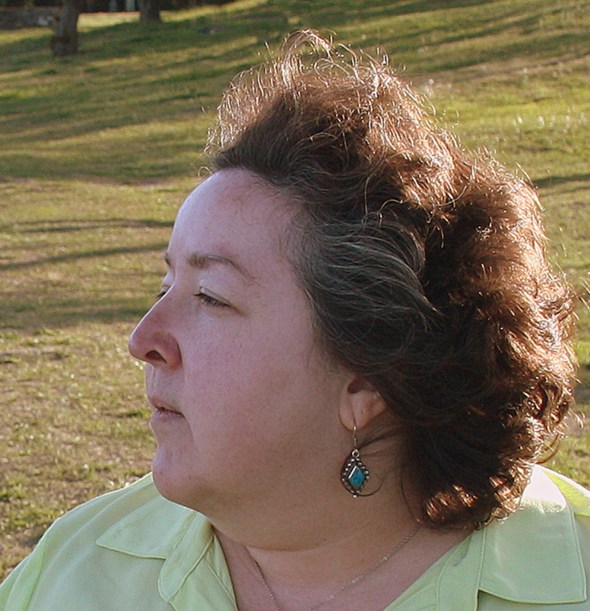
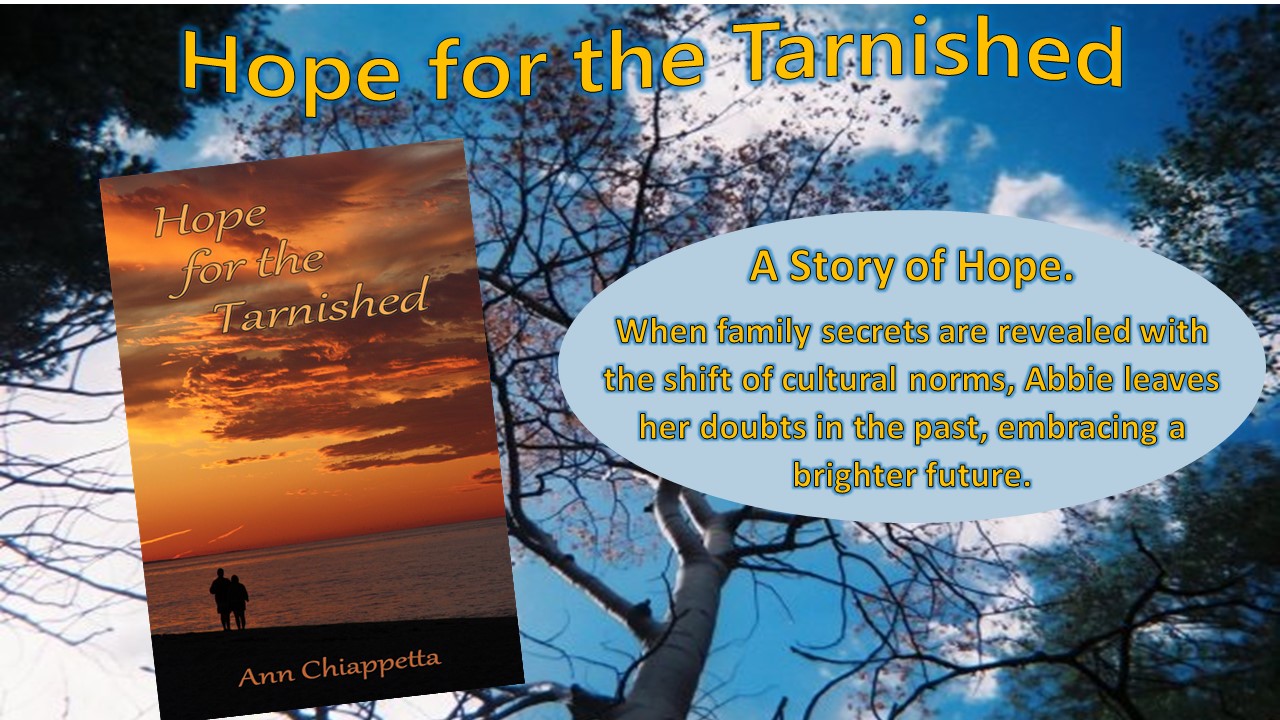




![ROADS : A Journey with Verses by [Vandana Bhasin, Smitha Vishwanath]](https://m.media-amazon.com/images/I/41bPyRdgWkL._SY346_.jpg)