Journeying into the Worlds of Fantasy in April
Posted: April 6, 2020 Filed under: Books, Dark Fantasy, Fairy Tales, Fantasy, Magical Realism, Writing | Tags: Dark Fantasy, Fantasy, High Fantasy, low fantasy, Space Fantasy, sword and sorcery, Urban fantasy, western fantasy, Writing to be Read Leave a comment
In April, Writing to be Read celebrates fantasy. That area of literature and visual media where fantastical elements become possible, and maybe even expected. Fantasy is as old as the fables and fairytales which birthed it centuries ago. In fantasy, anything is possible, and readers journey to worlds beyond their own imaginations, allowing effective escapes from reality, which is why it is such a popular genre.
Although in fantasy, anything may be possible, each story world must have its own set of rules which should never be broken. And it’s the author’s job to be sure those rules are clear for readers and ensure that they are never breached. To ensure this, authors go to great lengths, drawing up elaborate story bibles and creating maps of their worlds in order to keep everything straight.
There are many subgenres of fantasy, including dark fantasy, which carries readers into evil realms; high or epic fantasy, which ventures into magical worlds on the hero’s journey; low fantasy, which magical elements mingle in the real world; magical realism, which takes place in worlds similar to ours, but where magical elements are common place; urban fantasy, where legends come to life; sword and sorcery, with sword weilding heroes who thrive on gallentry; space fantasy, which takes place in the imaginative worlds in the far reaches of the universe; western fantasy, where magical or supernatural elements invade the landscapes of the old west; fantand superhero fiction, where protagonists use supernatural powers to manipulate the elements of the real world.
The hero’s journey originated with fantasy, and that is where writing instructors turn to provide examples of the way that journey progresses for their students. Bilbo Baggins’ hero’s journey in The Hobbit is exemplary, but it is only a prelude to the ultimate hero’s journey Frodo embarks upon in The Lord of the Rings trilogy. J.R.R. Tolkien paved the way for fantasy writers right up to those of present day.
Stick with me this month for a great line-up of fantasy reviews and interviews with authors of the fantasy genre. My “Chatting with the Pros” author guest is L. Deni Colter, and my supporting interview is with J.B. Garner. I’ll also be reviewing the X Marks the Spot anthology, edited by Lisa Mangum; Severed Wings, by Steven Elliot Altman; and Indomitable, by J.B.Garner. I do interviews on Mondays and reviews on Fridays, so drop in and find out what is happening on the fantasy scene.
Like this post? Let me know in the comments. You can be sure not to miss any of Writing to be Read’s great content by subscribe to e-mail or following on WordPress. If you found this content helpful or entertaining, please share.
Share this:

“Severed Wings”: A Mythological Urban Fantasy
Posted: April 3, 2020 Filed under: Book Review, Books, Dark Fantasy, Fantasy, Fiction, Urban fantasy | Tags: Angels and Demons, Book Review, Fantasy, Severed Wings, Steven-Elliot Altman, Urban fantasy, Writing to be Read 2 Comments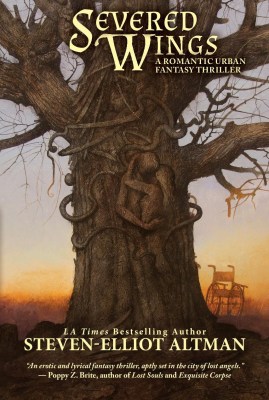
Severed Wings, by Steven-Elliot Altman is an urban fantasy of romance and new beginnings, where creatures of myth live and miracles happen. Skillfully crafted to weave together past and present to create a captivating storyline that kept me guessing.
When an accident leaves Brandon in a wheelchair and unable to persue his acting career, he thinks his life is over. He walks away from everything and everyone connected with his past life, searching for something or someone to give meaning to his life again. What he finds is a couple living across the hall who behave a little oddly. When he uncovers the secret which they carry, he doesn’t know if it’s his curse or his salvation, as he suddenly finds himself with supernatural abilities, in a battle for his life, and those of his friends, with a creature of myth and legend.
Severed Wings will make you believe in angels and demons and everything in between, at least until you turn the last page. I give it five quills.

Severed Wings will be available June 3, 2020
Kaye Lynne Booth does honest book reviews on Writing to be Read in exchange for ARCs. Have a book you’d like reviewed? Contact Kaye at kayebooth(at)yahoo(dot)com.
Share this:

Seeking Out Children’s & Young Adult Fiction in November
Posted: December 2, 2019 Filed under: Books, Children's Books, Fantasy, Fiction, Science Fiction, Writing, Writing for a YA Audience, Writing to be Read, Young Adult | Tags: Children's Stories, controversial topics, Illustrations, Writing to be Read, Young Adult Fiction Leave a comment
In November we’ve been seeking out children’s and young adult fiction on Writing to be Read. There are a few differences in writing for our younger readers from writing for adults. As authors, we are in a position to shape young minds, and that’s a big responsibility.
Fiction for adults relies on our words to paint a visual image for the reader, but stories for beginning readers rely heavily on illustrations to enhance our words for youngsters. Authors who have the ability to illustrate their own books may be at an advantage, because illustrations can be a sizable expense for authors like myself, who do not possess such abilities. (Long time Writing to be Read followers may be aware that I once tried to have the first book in the My Backyard Friends series published, but a halt was put on the project after a five year publication process, when the arrangement for illustrations fell through. So, I speak of this added obstacle for children’s authors first hand.)
My interview with author and artist Judy Mastrangelo talks about her Portal to the Land of Fae series and her other works, and shares several of the author’s bright and colorful illustrations. I found her work to be delightful in both text and illustrations in my review of Flower Fairies, and I’ve no doubt that her stories are enjoyed by both young and old.
Young adult authors are faced with a different dilemma, because the audience they write for still have the curiosity of children, but they are beginning to deal with adult issues in their lives, although they are not yet adults either. Controversial topics must be handled with sensitivity and finesse, because the Y.A. critics can be relentless, as is illustrated in this NY Times article about Y.A. author Amélie Wen Zhao.
On Writing to be Read, we looked at how Y.A. fantasy and science fiction author Carol Riggs deals with issues that might be frightening for adolescents in her Junction 2020 series on “Chatting with the Pros“, and saw how Jordan Elizabeth handles a dark fantasy story which deals with the controversial and often taboo topics of teen suicide, cutting, and depression in my review of Tabitha’s Death. Jordan also talks about the inspiration behind her fantasy novel, The Goat Children, which deals with the issue of Alzhiemer’s disease, on “Writing for a Y.A. Audience“.
Also in November, Robbie Cheadle also looked at the pros and cons of classic vs. contemporary children’s fiction on “Growing Bookworms“, and Jeff Bowles took a look at Disney’s new video streaming service, Disney+, on “Jeff’s Movie Reviews“, where we can find all the great tales of the Disney classics. What a great way to introduce our children to them, (or just re-watch them ourselves to indulge our own inner children).
In addition, we said goodbye to a great author, who was known and loved in the online writing communities in my “Tribute to Tom Johnson“. Tom was originally a pulp and science fiction author, but in recent years, he’s been writing children’s stories for the Wire Dog story collections. He will be greatly missed.
November has been a great month and we’ve explored a lot of children’s and young adult fiction. I hope you’ve enjoyed yourself as much as I have. There is no theme for December, as I’m taking this time to breathe before the next round. I’ll be updating you about the changes that will be coming for 2020 on Writing to be Read, reviewing a couple of books which didn’t fit under this year’s themes, and throwing in a few surprises. I do hope you’ll all drop by and check it out.
Share this:

Interview with children’s author & illustrator Judy Mastrangelo
Posted: November 25, 2019 Filed under: Author Profile, Books, Children's Books, Cover Art, Fairy Tales, Fantasy, Fiction, Illustrations, Interview, Writing | Tags: Author Interview, Children's Books, Fantasy, Illustrations, Inspiration, Judy Mastrangelo, Portal to the Land of Fae, Writing to be Read 4 Comments
My guest today is an author and talented illustrator of children’s fantasy books. She seems a bit shy, but I was able to coax a few answers out of her, regarding writing for children and creating beautiful illustrations. Because, after all, at least half of writing for children is creating visual images, so an author who can do their own illustrations comes into the game a step ahead. Please help me welcome author and illustrator Judy Mastrangelo.
Kaye: When did you know you wanted to be an author?
Judy: I’ve always enjoyed writing, ever since I was very young.
Kaye: Would you share the story of your own publishing journey?
Judy: As a child I would write little stories from my imagination, or about my everyday experiences.
Coming from a fine art background, I’ve always loved the wonderful artists of the “Golden Age of Illustration”, who illustrated books from about 1850 to 1925. I like to think that I continue along this line in my own small way. I enjoy writing stories that I illustrate, and also love illustrating classical stories in the public domain.
Many of my paintings have been licensed for various markets, such as art prints, wall murals, greeting cards, jigsaw puzzles, oracle cards etc. I have written and illustrated several published books. And I have both illustrated and written the text to a new inspirational Oracle Card Deck which will be on the market next year, published by “RED FEATHER MIND BODY SPIRIT”, a division of Schiffer Publishing.
You can see and hear podcasts about my artwork on Youtube.
These include some radio interviews, plus several teaching podcasts about the steps I take in the creation of my Art. To learn more about my Art and products, you can visit: www.judymastrangelo.com
Kaye: What’s something most readers would never guess about you?
Judy: I am a “movie buff” and enjoy many genres of film.
Kaye: What is the biggest challenge of writing for children?
Judy: I try not to “talk down to children”. Just having fun at writing is what I enjoy doing, and making my stories come from my heart, expressing how I feel. My books are really intended to be appreciated by all ages ~ the young and the young at heart. I attempt to appeal to the “Child in all of us”, and to rekindle the wonderful feelings we have all experienced in our youth, of the awe and beauty of the world around us. As we grow older, life seems to become more mundane, with all the everyday things we have to do in order to survive. The realm of art certainly plays an extremely important part in everyone’s lives, so that we may feel uplifted and inspired to higher worlds.
Kaye: What is the one thing you hope to teach children?
Judy: I like to impart the wonder and beauty of the world around us; sensitivity to nature and to all living beings, including animals, plants, and trees, as well as humankind are excellent lessons to understand. I feel that developing creativity as an art form, and one’s imagination, are very important aspects of life. Many people seem to place imaginative painting and literature more in a children’s category, although I’m sure you’ll agree that the genre of fantasy art is appreciated by all ages.
 Many adults also enjoy themes, such as fairy tales, and other types of fantasy. I’m sure no one will dispute the fact that great authors such as William Shakespeare, Hans Christian Andersen, Robert Louis Stevenson, James Barry, etc. wrote memorable outstanding fantasy stories. And that’s why I feel that my writing and paintings can also appeal to any age person.
One just has to “let go” of their preconceived notions that fantasy, fairies, fairy tales, etc. are just for the young. It will keep us all “Young at Heart” if we believe in the magical power of art to unleash our imaginations.
Kaye: Your books are illustrated in bright, vibrant colors. What medium do you work with?
Judy: Acrylic paint on canvas is my medium of choice.


Kaye: What is the most challenging thing about illustrating your own books?
Judy: The art of illustration is very dear to my heart, something I have been developing my entire life. It is a labor of love for me, and I paint because I enjoy doing it so much. I usually paint slowly, because I am somewhat of a perfectionist, and as a result my paintings aren’t created very quickly. This can sometimes present a problem. But I do enjoy illustrating my own books that I also design. Many of my books I have written myself, and others have stories or poems that are in the public domain which I illustrate. It’s all great fun to illustrate, and I relish every moment I spend doing my paintings!
Kaye: What is the most important quality in a children’s story for you?
Judy: Delight, imagination, and fun.
Kaye: What’s the best piece of advice you were ever given?
Judy: Be true to my heart, be myself, and enjoy the process of creating.
Kaye: Flower Fairies is focused on the characters. What comes first in your mind, the character, or the story?
Judy: I’m a very visual person, and often I first get images in my mind of a painting that I would like to create. Often this “germ” of an idea or image leads to a story, or a series of paintings. So I would say that the story as a whole comes first.
Kaye: As a children’s writer, what kind of research do you find yourself doing for your stories?
Judy: I often research period costumes for my characters to wear, and I also consider other art forms which portray the ideas I wish to develop in my stories. I love all forms of great art, and often music, drama, dance and other literature is a great inspiration to me, as well as great painting of course. So I immerse myself in art that I love, as part of my research for a specific project. It brings me great joy to do this.
Kaye: Tell me a little about your Portal to the Land of Fae series?
Judy: The world of nature spirits has always been fascinating to me. I love the realm of fantasy. And the tiny folk, such as fairies and elves are of particular interest. For many years I’ve done paintings of these lovable spirits, and have enjoyed writing about each painting I create. I love writing poems to go with my artwork, and have enjoyed describing my feelings about the fairy world. The idea of making a series of books incorporating these works was an intriguing one for me, and four categories developed from them:
 FLOWER FAIRIES: This book tells about the precious Elves and Fairies who live amongst the Flowers, such as: the graceful ROSE FAIRY, and the comical little SWEET PEA ELVES. I often depict Flower Fairies to appear as graceful ballet dancers. In this genre of art, I have been inspired by the Flower Fairy paintings of British artists Cicely Mary Barker and Margaret Tarrant.
 In my SECRETS OF THE FAIRIES, I portray the secret life of elves and fairies that I imagine to exist in amazing places. There are many delightful things that i depict these creatures doing. They often enjoy frolicking and playing in a garden. These secrets tell of the hidden world of elves and fairies, little known to mortals. I’ve also written and illustrated depictions of the four seasons with the fairies, and their beautiful romantic lives.
FAIRY TALE FAIRIES, various forms of fantasy have always been the closest to my heart. They include fairy tales and myths.
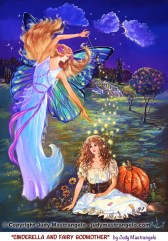
The world of fairies has often inspired the arts of other great literature. Some excerpts from classical literature for this FAIRY TALE FAIRIES book are included in this volume. You will see some of my illustrations from Hans Christian Anderson’s Thumbelina, Cinderella by Charles Perrault, Peter Pan by James Barrie, and many others. Sometimes authors and painters depict elves and fairies in a darker way, but I prefer to focus on depicting the lighter, more cheerful and spiritual side of the fairy realm.
 MYSTICAL FAIRIES: In this volume, I want to share my feelings of Spirituality and Goodness, Love for Life and Nature, and the Healing power of Art. I feel that Elves and Fairies, are beautiful, Magical, and Spiritual Beings which can inspire and uplift one to higher realms. I often depict them as radiant beings, which glow with an inner light, with radiating and sparkling auras, glow like spiritual Angels.
Kaye: Your Come Play with Me series includes bonus features. Would you like to tell us about the series and bonus features?
Judy: My Come Play With Me book series is designed to give readers high quality illustrated storybooks in full color. They also include some delightful interactive bonus pages. These books include fun filled things, such as How to Draw pages, coloring pages and recipes, etc.
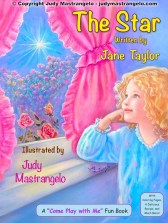 My first book in this series, THE STAR, illustrates the entire famous TWINKLE TWINKLE LITTLE STAR poem, written by Jane Taylor. I’ve interpreted this beloved poem, as a fanciful, Dream-like adventure. I’ve included a delicious bedtime snack recipe, some “how to draw” pages, a creative writing section, coloring pages, and some decorative gifts to cut out, etc. An Audiobook of my book THE STAR is also available, where people can listen to this song being beautifully sung. If the kindle ebook, or paperback versions of my book THE STAR are purchased also, along with the audio book, people can sing along with the audiobook as they read it interactively.
Two other books in this series have a Bunny theme: The first one, entitled WHAT DO BUNNIES DO ALL DAY? is my original story of a little Bunny’s first adventure. Some interactive pages include Mama Bunny’s recipe, coloring pages, creative writing and drama ideas, and decorations to cut out from the book. An audiobook of this story will be available soon, to be listened to interactively along with reading this book in kindle or paperback.


The second Bunny book in this series, LEARN TO DRAW BUNNY AND HIS FRIENDS, is a companion book to my book WHAT DO BUNNIES DO ALL DAY? In it I show easy to do, attractive, and fun ways to learn to draw little Bunny’s animal and flower friends that he meets in the book about his first adventure.


Some of the animals I show how to draw are rabbits, frogs, butterflies and turtles. Then daffodils, daisies, and buttercups are several of the flowers I describe drawing, all in three easy steps. It’s a delightful interactive book, which also includes special pages for people to draw their own pictures, with small border decorations for inspiration.
Kaye: Which character is your favorite? Why?
Judy: One of my favorite characters is Little Bunny in my book WHAT DO BUNNIES DO ALL DAY? He is a sweet innocent little rabbit who is delighted and excited at the opportunity of investigating the big world all by himself for the first time. I’ve modeled this little animal on our own dear little Netherlands Dwarf pet rabbit, who is very loved by my husband and me. He gives us both a lot of Love in return. Knowing this adorable Little Bunny intimately was a great inspiration to writing and illustrating my story.
Kaye: Where does your inspiration come from?
Judy: My inspiration comes from many things: my love for nature, for instance. When I am in a flower garden, I imagine delightful Flower Elves and Fairies living there. I visualize them wearing costumes made of leaves and flowers, acorn caps, etc. I collect things such as leaves, pine cones, berries, ribbons, and scarves, to give me ideas for their fanciful clothing.
I take photos of beautiful places that I visit, to give me ideas of backgrounds for my paintings. Great art of the past and present is always an inspiration to me, such as: wonderful films, great literature, beautiful music, ballet dancing, and beautiful paintings. They always kindle my enthusiasm.
Kaye: Is there anything unique or unusual about your creative process?
Judy: I have developed a method I call “Mind Painting”. This is my own personal way of capturing ideas and images for my paintings and writing, which develop in my mind. This is a procedure used by many creative authors, composers, painters, poets, choreographers, etc. throughout the ages. I just close my eyes and “visions” appear in my head. I do this during the day, or at night before going to sleep. These images often develop into stories which evolve into my books. It’s a delightful process.
Kaye: What is your greatest achievement to date in the literary world?
Judy: Reading and hearing the wonderful and appreciative compliments from people who have read my books, and who have seen my illustrative paintings, has always been very encouraging to me. I receive these compliments from all kinds of people, worldwide, and of all ages. I feel that these wonderful responses have been the greatest achievements in my literary and artistic world.
I want to thank Judy Mastrangelo for sharing with us here today, both her wisdom and her fabulous illustrations and book covers. You can learn more about Judy and her children’s books on her website or on her Goodreads Author or Amazon Author pages.
Like this post? Let me know in the comments. You can be sure not to miss any of Writing to be Read’s great content by subscribe to e-mail or following on WordPress. If you found it helpful, please share.
Share this:

“Writing for a Y.A. Audience”: Are they real?
Posted: November 20, 2019 Filed under: Books, Fantasy, Fiction, Speculative Fiction, Writing, Young Adult | Tags: Fantasy, Goat Children, Inspiration, Jordan Elizabeth, Writing for a YA Audience, Writing to be Read, Young Adult Fiction 4 Comments
SPOILERS AHEAD
I was at a book signing in October. A woman came up to my booth and asked for a quick synopsis of each story. I was happy to oblige, and when I got to GOAT CHILDREN, the woman teared up.

I wrote GOAT CHILDREN based on my experiences taking care of my grandmother when she suffered from dementia. This woman’s mother was diagnosed with dementia. She went on to share a few examples, and I could identify with all of them.
The woman bought the book for her daughter, who feels alone while helping her grandmother. The other kids in high school don’t understand.
I went through the same thing when I was in college and high school. My grandmother was “weird”. I was a “freak” for trying to take care of her. She was “scary”. Okay, the unpredictable moods were scary, but she was still my grandmother. Fear goes hand-in-hand with dementia.
After the woman bought the book and moved onto the next book at the fair, my mind kept returning to GOAT CHILDREN. It was one of my first books published and one very dear to my heart. Now come the spoilers…
The Goat Children are a mythical warrior class who the fictional grandmother, Oma, believe to be true. The main character, Keziah, can’t figure out if they are real or not. The story provides glimpses into the truth behind the female warriors.
My grandmother believed in little people living in her fireplace and dancing in her basement. When we asked her if she was scared of them, she said no, they comforted her. The Goat Children comfort Oma too.

Photo by Craig Adderley on Pexels.com
At the end of the story, the grandmother and Keziah both leave Earth to live with the Goat Children. They are together and strong, and immersed in a world of magic both of them longed for. I decided to make the Goat Children real because I always wanted the little people to be real too, taking care of my grandmother, keeping her safe.
Jordan Elizabeth currently lives in the house her grandmother lived in. She’s still looking for the little people in the fireplace. You can connect with Jordan via her website, JordanElizabethBooks.com.
Want to be sure not to miss any of Jordan’s Writing for a YA Audience segments? Subscribe to Writing to be Read for e-mail notifications whenever new content is posted or follow WtbR on WordPress. If you found it useful, please share.
Share this:

Chatting with the Pros: Interview with Y.A. author Carol Riggs
Posted: November 18, 2019 Filed under: Books, Chatting with the Pros, Fantasy, Interview, Science Fiction, Writing, Young Adult | Tags: Carol Riggs, Chatting with the Pros, Fantasy, Science Fiction, Writing to be Read, YA, Young Adult, Young Adult Fiction 1 Comment
My “Chatting with the Pros” author guest today writes young adult fiction in the fantasy and science fiction genres. Her debut science fiction novel, The Body Institute, is currently being developed into a television series by NBC, which I think, is pretty cool. I met her when I reviewed Bottled three years ago. Since then, I’ve reviewed her science fiction novel, The Lying Planet, and she was a member of the author panel for the first round of the “Ask the Author” blog series in 2018, right here on Writing to be Read. Let’s find out what she has to share. Please help me welcome author Carol Riggs.

Kaye: Please begin by telling us briefly about your author’s journey?
Carol: I began writing in the 1990s, took a 10-year break, and started up again in 2009. I met my agent at an SCBWI retreat and signed with her in 2011 for my 2015 debut, THE BODY INSTITUTE. Since then, I’ve published 7 more books.
Kaye: Why do you choose to write for young adults? Why science fiction and fantasy?
Carol: I enjoy writing about teens as they experience the road to individual growth and becoming an adult—navigating independence, romance, tests of courage, etc. Sci-fi and fantasy appeal to me because I love making things up. Speculative genres give me the most room to be creative and use my imagination.
Kaye: What is your biggest challenge in writing for a young audience?
Carol: Keeping in touch with how a young person thinks and talks, sounding like a teen. My editor at Entangled Teen nails me on that, and makes me rewrite things that don’t sound authentic.
Kaye: Is there anything unique or unusual about your writing process?
Carol: Nothing too unusual. I don’t listen to music or other distractions. I draft novels moderately quickly (3-5 months), and I write 1 or 2 books a year. I also keep my novels “clean,” with no profanity, gory violence, or sexual scenes. I prefer to make up my own slang and swear words, which don’t become outdated like modern teen lingo/slang/cussin’.
 Kaye: NBC is developing your science fiction novel, The Body Institute, into a television series. That must be exciting. Tell us a little about the story.
Carol: THE BODY INSTITUTE is a dystopian sci-fi novel where the main character gets a job losing weight for other people—by having her mind downloaded into their bodies. It’s set in the near future where society is ultra health conscious. The TV series is using the book as a jump-off point rather than being a direct replica of the novel, which is okay with me. It’ll be fun to see where their creative minds take it.
Kaye: How much say do you have in the development process of the television series? Are you involved at all?
Carol: I don’t have any say at all, but that honestly doesn’t bother me. I’d rather spend my time developing new novels! Readers have the book if they want to explore what I’ve developed; the TV show will be a different experience entirely.
Kaye: Do you have a date yet for the series premier for The Body Institute to air?
Carol: As of yet, I don’t; the filming of the pilot show hasn’t begun yet. I’ll announce on my newsletter, Facebook, and Twitter (@CRiggsAuthor) as soon as I find out any developing news.

Kaye: Most of the books in your Junction 2020 series have scary sounding titles: The Portal, Nightmare Realization, Vanishing Fears, Silent Scream, and Future Terrors. Is this fantasy series scary?
Carol: Some people consider these books “horror,” but it sort of depends on your tolerances. If you can’t stand spiders, for instance, don’t read THE PORTAL. Nothing is hyper-bloody in the series, though…no slasher-type nightmares or anything overly gory. I chose each characters’ fears to manifest in a way that would lead them to personal growth, a challenge to overcome rather than sheer horrible nightmares.
Kaye: How do you approach scary subject matter when writing for young adults?
Carol: I try to keep it emotional but real to each character, and I don’t make things gory. Depending on the teen, that could be totally un-scary, or it could be very unsettling. I try to hit somewhere in the middle, for the average reader.
Kaye: Are there certain subject matters that you wouldn’t tackle for a young adult audience? Why?
Carol: I don’t write sex scenes, gory violence, or profanity. I think there’s plenty of that going around nowadays in society (books, movies, etc.), and not having those things in my novels jives with my personal morals and my feelings about what I would want to (or not) read in a novel. I wouldn’t write about demons or the occult, either—too creepy and real.
 Kaye: My favorite book of yours is Bottled, which I reviewed a few years ago. It is a fun and entertaining fantasy story. What was your inspiration?
Carol: Long ago, I used to watch “I Dream of Jeannie.” While BOTTLED isn’t that similar in plot to the show, I was inspired by the fun, magical atmosphere of the TV series. It’s my tribute to the show.
 Kaye: I also reviewed The Lying Planet. Tell us a little about this science fiction story.
Carol: I was lying in bed one night years ago, and heard a noise in the living room (it was probably the refrigerator). That became the germ seed for TLP, a teen boy on the planet Liberty who one night hears a noise in the living room and gets up to investigate…and then wishes he hadn’t. He uncovers an evil that rocks his world in the worst way possible. I’ve found that teen guys really seem to like this novel. It has lots of danger, adventure, and a degree of creepiness.
Kaye: The other thing I loved about Bottled was the fantastic cover. And the vibrant colors used for Lying Planet cover and those used in the covers your Junction 2020 series are eye catching, as well. The colors are wonderful and the designs fit what the stories are about. Do you design your own cover art or hire it out?
Carol: I’ve been incredibly lucky to get awesome covers for my traditionally published books. The JUNCTION 2020 series covers I developed myself in Photoshop, with the tips and suggestions of a writer friend who is also a graphic artist. I have a BA in Studio Arts, so I think that helps me have a bit of an eye for what looks good.
Kaye: What do you enjoy doing when not writing?
Carol: Walking, reading, working jigsaw puzzles, watching sci-fi and fantasy movies, going to the beach, and listening to all kinds of music.
Kaye: Writing organizations can be of great value to writers of all genres. You’ve been a member of Society of Children’s Book Writers and Illustrators for many years. Would you talk a little about the organization and how you have benefited through membership?
Carol: Back in the 1990s when I first joined the Society of Children’s Book Writers and Illustrators (SCBWI), it was super helpful. Submissions were sent to editors at publishing houses by postal mail rather than email (talk about slow!). There wasn’t the wealth of information on the internet that there is now, so the SCBWI was invaluable for honing one’s work to make it ready for editor eyeballs. I learned a lot.
When I returned to writing in 2009, an agent was almost mandatory to submit your work, and the SCBWI retreat I went to offered manuscript critiques for a fee. I actually met my agent-to-be during one of those brief, one-on-one meetings. SCBWI conferences are also great places to network with other writers, learn about the craft of writing, meet industry professionals, and talk about books all day. Some regions offer scholarships to attend if finances are tight.
Kaye: What is your best piece of advice for aspiring authors of young adult fiction?
Carol: If you love it, never give up. THE BODY INSTITUTE was the 13th book I wrote, after 350+ rejections and 11 years of writing and trying to become published. Surround yourselves with supportive writer friends to share the ups and downs. Keep learning your craft, persevere, and enjoy the journey!
Kaye: What can your readers look forward to in the future? What’s next for Carol Riggs?
Carol: A deal has just been signed for THE BODY INSTITUTE for an audiobook version, which is cool. I’m also working on a sequel to the novel, called SPARES. Ideas are springing into my head for a fresh YA novel, and I’m excited to begin imagining a whole new world for readers to explore.
I want to thank Carol for sharing here and answering all of my many questions. And thanks to all of you readers for joining us. You can find out more about Carol Riggs and her young adult science fiction and fantasy books on her website, her Amazon Author page, or her Goodreads Author page.
Next month, there will not be a “Chatting with the Pros” segment. In December we’re wrapping up 2019 and giving you a rundown of what’s in store for 2020. I plan to run this blog series again next year, so check back after the New Year for the first 2020 segment in January. I hope to see you all then.
You can catch the monthly segment “Chatting with the Pros” on the third Monday of every month in 2020, or you can be sure not to any of the great content on Writing to be Read by signing up by email or following on WordPress. Please share content you find interesting or useful.
Share this:

“Flower Fairies: Portal to the Land of Fae”: A delightful introduction for young and old
Posted: November 2, 2019 Filed under: Book Review, Books, Children's Books, Fantasy, Fiction, Illustrations, Stories | Tags: Book Review, Children's Books, Fantasy, Flower Fairies, Illustrations, Judy Mastrangelo, Writing to be Read 3 Comments
Flower Fairies, by Judy Mastrangelo, is book 1 in her Portal to the Land of Fae series and a delightful introduction into their world, no matter what your age. Each page is filled with colorful images which highlight the natural world and enmesh it with the world of fantasy. Laugh with fairies and elves as they dance and play among the plants and flowers. Manstrangelo’s bright illustrations bring her well crafted descriptions to life and immerse you within the imaginary world of fea. There is no age restriction on the hearts these tiny fairy children will capture.
I’m looking forward to my next adventure into this magical land when I read the rest of the books in this series. I give Flower Fairies five quills.

Kaye Lynne Booth does honest book reviews on Writing to be Read in exchange for ARCs. Have a book you’d like reviewed? Contact Kaye at kayebooth(at)yahoo(dot)com.
Share this:

Lost Village of Delta
Posted: October 16, 2019 Filed under: Books, Fantasy, Fiction, Historical Fiction, Historical Inspiration, Writing, Writing for a YA Audience, Young Adult | Tags: Books, Delta, Fantasy, Historical Fiction, Historical Inspiration, Inspiration, Jordan Elizabeth, Writing for a YA Audience, Writing to be Read 3 Comments
My earliest years were spent in Westernville, NY. Right down the street was the beautiful Lake Delta, a place we visited frequently. My parents and I played on the beach. We walked the trails through the woods. One day my father mentioned that when he used to fly his plan over Lake Delta, he could see the foundations beneath the water. That puzzled me – why would there be foundations down there? Were they like the shell fossils we found in our backyard sometimes?

Photo by Lisa Fotios on Pexels.com
He explained that a village used to be there, but it was flooded to create the lake. My imagination went wild. He also told me that my grandmother’s house on the farm where we lived was moved from the lost village. That amazed me, and gave me my first glimpse at history. My fascination with Lake Delta continued, but we moved to a neighboring village and didn’t visit the state park as often.
One day, the Westernville Town Clerk, Mary Centro, spoke at my hometown about Delta. My mother and I attended the lecture, and we were enthralled. I wanted to write a story at once, but I didn’t know where to take it.
My parents moved back to Westernville and I met with the town clerk to discuss Lake Delta in more detail. She told me about walking the land while the lake is low and finding treasures washed up on shore. The next year, my parents and I walked the lake, but we didn’t find anything. Again, I felt the need to write about the lost village of Delta, but I didn’t know who my main character would be yet.
The town clerk wrote two non-fiction books about Delta and my dad bought copies. While visiting my parents, I looked through them, and then did some research online. I learned that one house hadn’t been torn down the first time they flooded the land. It wasn’t until later, when the water receded, that they demolished it.
That was my story. A little magic seeped into the tale, and Lottie came to life. You can read about Lottie in DELTA, my first historic fiction novella that is appropriate for teens and adults.

About the real Delta…

Photo by eberhard grossgasteiger on Pexels.com
New York State decided it was time to expand the Erie Canal. Many of the ports along the canal were no longer being used, because shipping goods by train became the more popular method. Shipping by train was cheaper than shipping via canal. It wasn’t just the price, though, that encouraged manufactures to choose train travel. The modern barges that were needed to ship the goods couldn’t go on the Erie Canal, which was too small and far too shallow. The water level of the Erie Canal tended to fluctuate. By expanding the Erie Canal, the ports would flourish once again. Many farmers were excited by this. They would be able to transport their goods to cities elsewhere in New York State. Expanding the canal required the use of five reservoirs. These reservoirs would provide enough water to keep the level of the canal even. New York State chose Delta because they would only need to build one dam.
The village of Delta rested inside of a deep valley. This made the perfect bowl-shape to fill with water from the Mohawk River nearby. Flooding Delta meant that privately owned land would need to be seized by the government. Everyone living on that land would need to move elsewhere.
In 1903, surveyors arrived in Delta to measure the land and create maps. In 1908, New York State officially authorized that Delta would be cleared to make way for the reservoir. Blue evacuation notices were presented to the village’s five-hundred residents, forcing them to relocate. One hundred buildings were torn down and destroyed. Some, however, were dismantled and moved to other towns in the area, where they were rebuilt. People moved away and their village became a reservoir. The dam was completed in October 1912. Water first went over in May of 1916.
Despite the great expenses incurred in the relocation of the Black River Canal, it closed in 1921.

Jordan Elizabeth is a fantasy author who is obsessed with history and ghosts. You can connect with Jordan via her website, JordanElizabethBooks.com. The photo above shows Jordan on the shores of Lake Delta. You can often find she and her son enjoying the beach.
Want to be sure not to miss any of Jordan’s Writing for a YA Audience segments? Subscribe to Writing to be Read for e-mail notifications whenever new content is posted or follow WtbR on WordPress.
Share this:

“Arcana” & “Cold Black Hearts”: Two different flavors of horror
Posted: October 4, 2019 Filed under: Alternate Worlds, Book Review, Books, Dark Fantasy, Fantasy, Fiction, Hooks, Horror, Post-Apocalyptic, Writing | Tags: Alternate World, Arcana, Book Reviews, Cold Black Hearts, Dark Fantasy, Dark fiction, Hooks, horror, Jeffrey J. Mariotte, Paranormal, Paul Kane, Story beginnings, Writing to be Read 3 Comments


I recently had the pleasure of reviewing two horror novels written by this month’s author guests; Arcana, by Paul Kane and Cold Black Hearts, by Jeffrey J. Mariotte. I found it interesting that these two authors chose one or two lines that were so similar to begin these very different horror stories. Both beginnings are designed to grab the reader and reel them in, and in both stories, it worked. The hook was instantly set.
Kane begins Arcana with,
“They were all going to die.
But it was for the cause, and they were not only glad to do it – they felt compelled to do it.”
Mariotte starts Cold Black Hearts like this;
“They were dead, all of them dead, and so was she.”
Both authors bring us into the story in the middle of the action at the point of impending death. We don’t know what is happening yet, but we know the speaker in each case is about to die. How does anyone walk away from that without reading more?
Both Arcana and Cold Black Hearts are horrific stories of evil and death, but they each present horror stories of distinctive and different flavors. Although each presents the battle of good versus evil, the resulting stories are very different, yet each has the ability to captivate their audience and satisfy whatever it is inside of us that makes horror such an appealing genre to us.
Arcana, by Paul Kane takes place in an alternate universe with a future where magick is very real and has survived through the Arcana culture, despite repeated efforts to exterminate them from the planet. It’s a world where torture is still used to extract confessions from those suspected of using the the ancient arts, and Callum McGuire is an orphan who bears a hatred for the magick communities responsible for the terrorist attack that left him alone, to be raised in an orphanage with a brutal matron. As a young M-forcer, dedicated to stopping Arcana after a recent series of terrorist attacks carried out by the group. The viciousness and brutality against Arcana is broadly directed, and as Callum watches innocent children fall prey to it, his own morality tells him that something isn’t right. When he guesses that his friend and neighbor is secretly Arcana, he is swept into the Arcana culture as he tries to protect her from being apprehended by his fellow M-forcers. This tale is cleverly crafted to let the story unfold in a series of discoveries which lead Callum to think that things are not the way he’d been lead to believe, even as more terrorist attacks take place, and his friends in Aracana try to convince him that he is the savior of their prophecy. Savior or destroyer? The power is in Callum’s hands and only he can decide.
Arcana takes readers on a hero’s journey beyond death and back in a world where anything is possible. That, my friends, can be a very scary journey. I give it five quills.

In Cold Black Hearts, by Jeffrey J. Mariotte, evil stirs the ancient legends into reality. When Annie O’Brian is caught in a bust gone bad and the resulting explosion, she loses both her hearing and her job, but she gains an uncanny sense of empathy for the people around her. So, there’s nothing to stop her from taking a job investigating a four year old murder where the original investigation was botched, and working to free the convicted man, even though he gives her the creeps and is probably guilty of numerous crimes, if not this one. Her investigation uncovers not only the evidence needed to free Johnny Ortega from prison, but also evidence that there is something much more sinister going on in Hildalgo County than a simple cover-up, but when Annie manages to put all the pieces together and tries to stop the return of an ancient demon, it could cost her her life, or worse.
Filled with sacrifice and betrayal, Cold Black Hearts will chill you to the core of your soul. Lots of unexpected twists and turns to this story. I give it four quills.

Kaye Lynne Booth does honest book reviews on Writing to be Read in exchange for ARCs. Have a book you’d like reviewed? Contact Kaye at kayebooth(at)yahoo(dot)com.
Share this:

“God’s Body”: A post-apocalyptic tale with a new kind of hero.
Posted: July 20, 2019 Filed under: Book Review, Books, Fantasy, Fiction, Illustrations, Post-Apocalyptic, Pulp Fiction, Super Hero | Tags: Book Review, Fantasy, God's Body, Illustrations, Jeff Bowels, Pat R. Steiner, Post-Apocalyptic, Pulp Fiction, Superheroes, Writing to be Read 3 Comments
God’s Body, by Jeff Bowles has one of the most masterfully crafted openings that I have read in a long time. By the beginning of the second paragraph, he had placed me in the setting, I knew this was like no other story I had ever read, and I was hooked, which is what a great opening should do. It impressed me so, that I asked the author’s permission to reprint it here.
“The toe was an ungodly mountain of flesh. As massive as it was inexplicable. It clung to the Earth like a bulbous pink tumor. Enormous, all-encompassing, the height of a skyscraper, the breadth of Niagara Falls. Rain water washed through its thick patchwork of crevasses and cracks. Long vertical rivers lapped at skin-cell canyon walls. There were flesh creeks and tidal waves. The toenail itself was the hanging shelf of the world.
Then Harold looked higher and saw the rest. Lord God Almighty…”
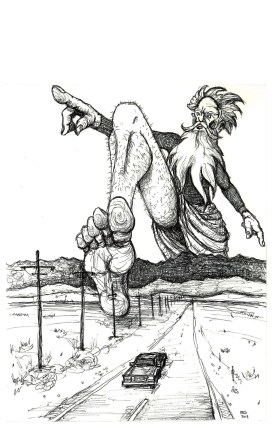 You just can’t read this and not want to know more. It’s obvious this isn’t going to be your average, everyday story, and you must read on in anticipation of what will come next. It’s clear this will be a story of epic proportions, and Bowels does not disappoint. God’s Body is an Armageddon story like no other; a post apocalyptic tale of good vs. evil in the best of pulp fantasy traditions, if such traditions existed. Bowles pulls out all the stops, using humor, irony and contemplation of the human condition to tell his tale with skill and craftsmanship. Everything about this story is of epic scale.
I’m not going to give you a rundown of this story line because the whole thing was such an entertaining read that I wouldn’t want to give out any spoilers, but what I will tell you is that in addition to the wonderful writing talent of Bowles, the artistic craftsmanship of Writer’s of the Future illustrator Pat R. Steiner accompanies this story with some truly awesome illustrations like the one seen here.
A truly original story that puts a new twist to an age-old theme. Written with skill and talent in a literary work of true craftsmanship, God’s Body is like nothing else you’ve ever read. I give it five epic quills.

Kaye Lynne Booth does honest book reviews on Writing to be Read in exchange for ARCs. Have a book you’d like reviewed? Contact Kaye at kayebooth(at)yahoo(dot)com.