Book Review: The Clock Maker’s Secret
Posted: June 2, 2023 Filed under: Audio Books, Audiobook Review, Book Review, Books, Crime, Fiction, Mystery, Review Leave a comment
About the Book
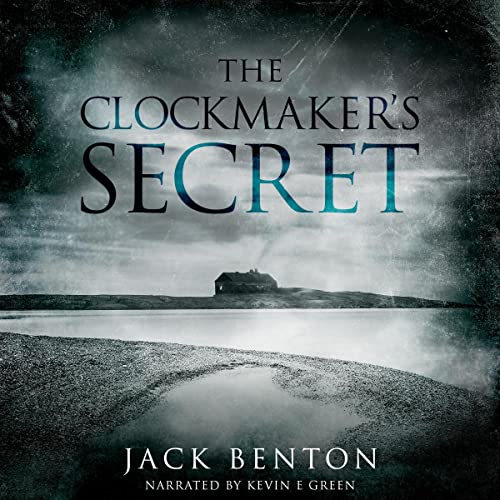
A buried clock holds the key to a decades-old mystery….
On holiday to escape the nightmares of his last case, disgraced soldier turned private detective John “Slim” Hardy comes upon something buried in the peat on Bodmin Moor.
Unfinished, water-damaged, but still ticking, the old clock provides a vital clue to an unsolved missing-persons case.
As Slim begins to ask questions of the tiny Cornish village of Penleven, he is drawn into a world of lies, rumors, and secrets – some of which the residents would prefer to stay buried.
Twenty-three years ago, a reclusive clockmaker left his workshop and walked out onto Bodmin Moor, taking his last, unfinished clock with him. He disappeared.
Slim is determined to find out why.
The Clockmaker’s Secret is the stunning sequel to Jack Benton’s acclaimed debut, The Man by the Sea.
Purchase Links:
Amazon/Audible: https://www.amazon.com/Clockmakers-Secret-Slim-Hardy-Mystery-ebook/dp/B07GSM1LKK
Chirp: https://www.chirpbooks.com/audiobooks/the-clockmaker-s-secret-by-jack-benton
My Review
I listened to the audio book, The Clock Maker’s Secret, by Jack Benton and narrated by Kevin Green. The British voice of Green helps to set you in both time and place, although Benton gives us enough to determine this even if reading a print or digital copy. But I do think Green’s voice adds an extra allure to the story. Benton has skillfully laid out this well-crafted mystery, filled with surprising revelations, as all is not as it seems.
Detective John ‘Slim’ Hardy is on holliday, trying to outrun the demons of his past, but true to his nature, when he finds an old clock buried and hidden, he just can’t resist a good mystery. It’s made by a clockmaker who disappeared many years ago. But there are those in Penleven who perhaps don’t want to see the clock’s secrets revealed. As Slim works to unravel the clock’s mystery, he finds that the clockmaker had a few secrets of his own, and the deeper he gets, the more he wonders if the clockmaker’s secret isn’t best left buried.
A gripping mystery which takes several surprising turns. I give The Clockmaker’s Secret five quills.

_________________________________________________
Important Update
If you have never tried Chirp audiobooks, but would like to, I have great news! Chirp has given me this special link for me to share the above book with new Chirp readers/listeners. So, if you haven’t tried Chirp and you’d like to give The Clockmaker’s Secret a try, click on the link and give it a go: https://www.chirpbooks.com/r/a75333e42889/link
_____________________________
Kaye Lynne Booth does honest book reviews on Writing to be Read in exchange for ARCs. Have a book you’d like reviewed? You can request a review here.
Share this:

Book Review: A Hard Ticket Home
Posted: May 19, 2023 Filed under: Audio Books, Audiobook Review, Book Review, Books, Crime, Fiction, Mystery | Tags: A HArd Ticket Home, Audio Books, Book Review, Brent Hinkley, Crime Fiction, David Housewright, mystery, Writing to be Read 2 CommentsAbout the Book
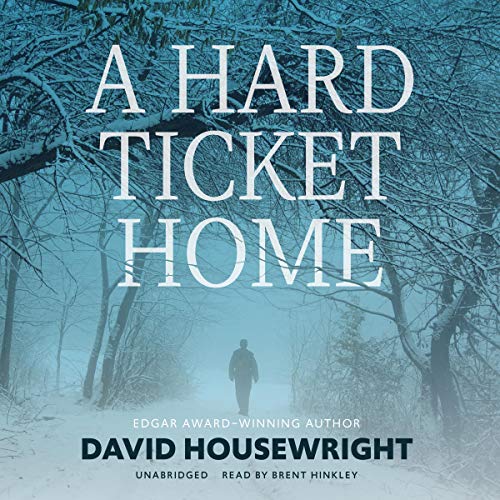
Ex-St. Paul cop Rushmore McKenzie has more time, and more money, than he knows what to do with. In fact, when he’s willing to admit it to himself (and he usually isn’t), Mac is downright bored. Until he decides to do a favor for a friend facing a family tragedy: Nine-year-old Stacy Carlson has been diagnosed with leukemia, and the only one with the matching bone marrow that can save her is her older sister, Jamie. Trouble is, Jamie ran away from home years ago.
Mac begins combing the backstreets of the Twin Cities, tracking down Jamie’s last known associates. He starts with the expected pimps and drug dealers, but the path leads surprisingly to some of the Cities’ most respected businessmen, as well as a few characters far more unsavory than the street hustlers he anticipated. As bullets fly and bodies drop, Mac persists, only to find that what he’s looking for, and why, are not exactly what he’d imagined.
David Housewright’s uncanny ability to turn the Twin Cities into an exotic, brooding backdrop for noir fiction, and his winning, witty hero Rushmore McKenzie, serve as a wicked one-two punch in A Hard Ticket Home, a series debut that reinforces Housewright’s well-earned reputation as one of crime fiction’s stars.
Purchase Links:
Amazon/Audible: https://www.amazon.com/A-Hard-Ticket-Home/dp/B082TLLK5Q/
Chirp: https://www.chirpbooks.com/audiobooks/a-hard-ticket-home-by-david-housewright
My Review
I listened to the audio book A Hard Ticket Home, written by David Housewright and narrated by Brent Hinkley. This book is a cross between your typical detective story and a cozy mystery, with distinctive characters. Hinkley sets the perfect tone, giving it kind of a Mickey Spillane feel, which is perfect for the genre and the story.
Rushmore McKenzie isn’t a cop anymore. He’s a billionaire, but even though he doesn’t need the money, he makes a hobby of playing P.I. When he’s called upon to find the long lost sister, Jamie, of none year old Stacy Carlson, in order to find a possible bone marrow doner and save Stacy’s life, he steps into more than he bargained for. Just as he locates Jamie, she is murdered in hideous fashion, and he finds himself on the middle of a murder mystery as he tries desperately to find Jamie’s missing son, who might be the only one left who could save Stacy’s life. But Mac has drawn attention in his investigation, and now someone is trying to kill him, too.
Filled with twists and turns that keep readers guessing, I give A Hard Ticket Home five quills.
__________________________
Kaye Lynne Booth does honest book reviews on Writing to be Read in exchange for ARCs. Have a book you’d like reviewed? You can request a review here.
Share this:

Book Review: Vanished on Vacation
Posted: January 13, 2023 Filed under: Book Review, Books, Crime, Review, Suspense, Thriller | Tags: Book Review, Jennifer Ruff, Suspense/Thriller, Vanished on Vacation, Writing to be Read 3 Comments
What they’re saying on Amazon
- “Fantastic book with many twists and turns!” – Alese M. Brockman
- “Jennifer outdid herself. Vanished on Vacation needs to be3 made into a movie.” – Kindle Customer
- “Suspense at its best” – Reita Pendry
The Book

As a frantic search for missing student Avery Jennings begins, everyone is hiding something—Avery’s family and friends, the resort’s staff, and its wealthy guests. It’s up to FBI Special Agent Victoria Heslin to dig deeper. Motivated by her own mother’s abduction years ago, she’s determined not to let Avery become another missing person statistic.
The Mexican authorities aren’t cooperating, and Victoria realizes she’s up against something more powerful than she imagined. Taking matters into her own hands, she plunges into a hellish ordeal that will test her strength and courage like never before.
“How much will you risk to find this girl?” the officer asked.
“Whatever it takes,” Victoria answered without hesitation.
Or is it already too late?
Purchase Link: https://www.amazon.com/Vanished-Vacation-Agent-Victoria-Heslin-ebook/dp/B09YJ79K6X/
My Review
Vanished on Vacation, by Jennifer Ruff, is a contemporary thriller that will keep readers on the edges of their seats. I didn’t want to put this book down. I was compelled to keep reading to the very last page.
Women disappear in Mexico all the time, but when a young American girl vanishes without a trace, folks tend to sit up and pay attention. Especially when she is the niece of one of the FBI’s top agents. That’s when agents Hiesling and Rivera are put on the case, and they will leave no stone in Mexico unturned to find young Avery, who disappeared on the last day of her vacation. But when the Mexican authorities suddenly turn cold and uncooperative, they get the feeling they’ve stumbled onto something bigger than just the kidnapping of one girl.
A thoroughly entertaining and suspenseful read. I give Vanished on Vacation five quills.
______________________________________________
Kaye Lynne Booth does honest book reviews on Writing to be Read in exchange for ARCs. Have a book you’d like reviewed? You can request a review here.
Share this:

Chatting with the Pros: Interview with best selling author Kevin J. Anderson
Posted: May 18, 2020 Filed under: Character Development, Chatting with the Pros, Comic Hero, Crime, Fiction, Super Hero, Super Villains, Writing | Tags: Chatting with the Pros, Comic Book Heroes, Kevin J. Anderson, Superheroes, Supervillains, Writing to be Read 2 Comments
I am so pleased to welcome my author guest this month on “Chatting with the Pros”. He is the most prolific writer I know and he’s written numerous books that have made international bestsellers lists. He’s best known for his science fiction and fantasy stories, but he’s done a good amount of writing for hire and lives by the motto of, “I can do that”. I’ve asked him to join me here today as we celebrate superheroes and supervillains, because of one single book that he wrote, Enemies and Allies, which delves into the universe of superheroes, in hopes that he will share with us his unique perspective on this often overlooked genre. Please help me welcome Kevin J. Anderson.

Kaye: When did you know you wanted to be an author?
Kevin: When I was five, even before I could write. I knew I wanted to tell stories.
Kaye: You’ve been on bestseller lists, won multiple-awards for your writing, had your books made into screenplays, published both short fiction and novel length works, collaborated with some big name authors, and started your own independent press. In your own eyes, what has been your greatest writing accomplishment to date?
Kevin: I think the greatest thing is being able to do what I love and actually make a living at it—not getting one thing published, not winning an award, not seeing a movie option on one of your stories, but by being able to do this not as a hobby, but as the thing by which I pay the bills. I’ve been full time for 25 years now. I’m probably unemployable otherwise.
Kaye: Do you remember the first book you ever read?
Kevin: THE TIME MACHINE by HG Wells
Kaye: In Enemies & Allies, who was the most difficult character to write? Why?
Kevin: Superman/Kal-el/Clark. Sometimes he comes off as a simplistic boy scout, but I really think I got to the core of why he’s a superhero, and why he’s very human at the same time.
Kaye: How does writing a superhero or a super villain differ from writing plain old heroes and villains? What makes super heroes so special?
Kevin: They can do bigger, more epic things, which is great fun as a writer, but you also have to give them greater weaknesses. The things they do MATTER to the future of the world and the human race, not just “Gee, who’s going to ask me to prom?”
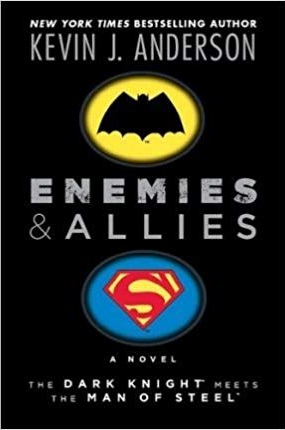
Kaye: In Enemies & Allies, which superhero did you favor, Batman or Superman?
Kevin: I found Batman much easier to write and understand, a gritty lost soul, and so I worked a lot harder to get just as deep into Superman, to flesh him out more, and I think I succeeded in finding a very good balance between the two extremes while keeping them both heroes.
Kaye: What is the hardest part to writing a super villain?
Kevin: Supervillains are fun. You can be as twisted as you want and you can dive into their motivations. Why are they the bad guy?
Kaye: Which would you rather write, a superhero or a super villain? Why?
Kevin: Supervillains. But in most of my writing I try to make it a matter of perspective as to who is the villain and who is the hero. Depends on what side you’re on.
Kaye: Do you see superhero/supervillain qualities coming out through the characters in your other stories? Which stories do you see this in most?
Kevin: I still consider them all as characters, with good sides and bad sides, each with powers or skills. I have only done two superhero books out of my 165 titles, so actually approached it the other way around, bringing all my other writing skills to bear in a novel featuring superheroes.
Kaye: Imagine a future where you no longer write. What would you do?
Kevin: Wait, another apocalypse??? Hmmm, if I couldn’t write, I would be a publisher or a public speaker or a teacher…but I’m already doing those things. In these times, you can’t just be ONE thing. If I had to scrap everything related to the industry, I suppose I would be a forest ranger, because I love the outdoors.
Kaye: Is there anything unique or unusual about your writing process?
Kevin: I get a lot of attention because I do all my writing by dictation, talking into a digital recorder while I hike. But I have been doing it for thirty years, so I don’t consider it unusual at all.
Kaye: Which is your favorite type of writing? Short fiction? Novels? Comic Books? Screenplays? Poetry? Graphic Novels? Why?
Kevin: Novels. I like the big scope, a project I can sink my teeth into and spend lots of time developing it.
Kaye: What advice do you have for aspiring authors?
Kevin: Don’t quit your day job. Keep writing and refining and getting better, and never stop.
Kaye: What do you think is the single most important element in a story?
Kevin: It’s not a single-element thing. It’s like saying which is the most important wheel on your car. You have to get the plot, the characters, the prose, the worldbuilding, the idea, everything.
Kaye: What is the one thing in your writing career that is the most unusual or unique thing you’ve done so far?
Kevin: Probably working with legendary Rush drummer Neil Peart to convert the last Rush album, Clockwork Angels, into a bestselling novel. One of my proudest accomplishments.
I want to thank Kevin for joining me today and sharing his insight into the making of a superhero or supervillain, and his thoughts on writing. Kevin is currently working in the fantasy realm, with his newest thoughts on Gods and Dragons. You can learn more about Kevin and his books at WordFire Press or on his Amazon author page.
Also, Kevin’s convention bookstore is no longer traveling, so there are a lot of signed copies of his books in inventory right now, as well as some obscure and hard to find books. Some sets discounted to half-price or even more, including all six original Dune books for $30. You can check out the selection at http://www.wordfireshop.com.
Join me next month, when we will be delving into speculative fiction, and my “Chatting with the Pros” author guest will be Dave Wolverton.
Like this post? Let me know in the comments. You can be sure not to miss any of Writing to be Read’s great content by subscribe to e-mail or following on WordPress. If you found this content helpful or entertaining, please share.
Share this:

“Missing: Murder Suspected”: True Crime Stories Brought to Life
Posted: January 10, 2020 Filed under: Book Review, Books, Crime, Nonfiction | Tags: Austin Stone, Book Review, Ed Stone, Nonfiction, True Crime, Writing to be Read 3 Comments
Missing: Murder Suspected is a true crime trilogy written by Austin Stone, compiled and edited by his son, Edmund J.A. Stone after his father’s death. In his investigative style of writing, similar to that of Truman Capote, Austin Stone has managed to bring the characters of each story to life in the reader’s mind in grisly detail.
A chicken farmer who buries a love struck woman beneath one of his chicken coops. A surgeon prone to fits of rage kills his wife and nanny, dismembering their bodies and concocting elaborate stories to account for their absence from his home. A firefighter kills his abusive wife in the heat of a moment, disposing of her body in a shroud of burlap sacks. These are murders which took place in the early 1900’s, and Stone offers a glimpse into the lives and motivations of the people involved through his telling.
If you like cold case type of stories, you will find these stories intriguing. There was too much telling and not enough showing for my own tastes, but giving the journalistic style, I don’t see how this could have been avoided. I give Missing: Murder Suspected three quills.

Kaye Lynne Booth does honest book reviews on Writing to be Read in exchange for ARCs. Have a book you’d like reviewed? Contact Kaye at kayebooth(at)yahoo(dot)com.
Share this:

A Farewell Tribute to Tom Johnson
Posted: November 11, 2019 Filed under: Author Profile, Books, Children's Books, Crime, Fiction, Interview, Nonfiction, Pulp Fiction, Super Hero, Uncategorized, Writing | Tags: Children's Stories, Children's Writing, Crime Fiction, Farewell Tribute, Pulp Fiction, Science Fiction, Super Heroes, Tom Johnson, Writing to be Read 27 Comments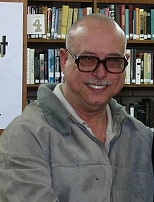
Last week, we lost a dear friend of mine and a member of the Writing to be Read author family, Tom Johnson. Tom was a multi-genre writer for most of his life, mostly pulp fiction in the traditions of the classics, but in recent years, he dedicated himself to children’s fiction, with the intentions of creating stories for today’s children which reflect old fashioned values and morals in the traditions of the stories his mother read to him as a child. Tom took part in Round 2 of my “Ask the Authors” blog series, (which will become a published book by WordCrafter Press soon), and I interviewed Tom about his children’s stories back in 2018. He had some great things to say about writing for children that may be relevant here, since the Writing to be Read theme for November is young adult and children’s fiction. With that in mind, I’m reprinting that interview in part here, (you can read the full interview here), as we remember our friend and fellow author. Tom may be gone, but his wisdom lives on. This is what writing for children meant to him.


Kaye: Although in the past, you’ve written and published many different genres, you are currently writing only children’s stories. So, let’s talk about that. Tell me a little about your stories.
Tom: My children stories are about 1k and meant as bedtime tales, and to be read in classroom or library settings. They are short stories with little morals to teach children something about life.
Kaye: Are they a series or stand alone?
Tom: They are a series, and published in anthologies about once a year. There have been four anthologies so far. I was invited to participate beginning in volume #3. The anthology is called Wire Dog Storybook. Here is the background. True story. A young girl, Ellen Walters, asked her father, David Walters, if she could have a dog, and he said, “No.” So she found an old wire hanger and shaped it to resemble a dog, and called it wire dog. David Walters was fascinated by her ingenuity and created the Wire Dog storybooks. So the stories usually feature Ellen and Wire Dog, but always Wire Dog. Five of my stories have been published so far, and I’ve written three more for the 2018 yearbook when it comes out at the end of the year.
Kaye: What age group are they aimed at?
Tom: I feel that we should begin reading to our children by age one. With that in mind, my stories are aimed at the age group of 1 to 5. However, older children will enjoy the stories, as do adults.
Kaye: What differences do you see between writing for children and writing adult fiction?
Tom: Adult fiction usually means, “no holds barred”, while writing children stories you want to stay away from violence, horror, and adult themes. Keep in mind, young children absorb what they hear quickly, and some themes could have an adverse effect on young minds. When writing for children we must keep this in mind.
Kaye: What appeals to you about writing for children?
Tom: Do you remember the old radio show for kids, Let’s Pretend ? It produced shows for children that acted out fairy tales and light adventures – nothing as harsh as today’s cartoons that are aimed at our youth. Well, I have the chance to import my love for adventure in tales easily understood by young people; children who some day may also experience that same love to pass on to their children. Stories that give our children a moral to live by, not “It’s clobbering time!” Or Pow! Bang! Boom! It’s something my mother did for me when I was little, and now I have the same opportunity, and I’m not going to pass it up.
Kaye: You have wanted to write for children since you were little and your mother used to read to you.
Tom: Oh, yes. I hope that mothers are still reading to their children. They learn at such a young age, and we’re missing an opportunity if we fail them when they’re young. They will never forget what they learn as children, it’s when their minds are growing and grasping at everything. I think one of the first words they learn is, “Why?”
Kaye: What were your favorite children’s stories?
Tom: Really, I would have to look them up in the book of fairy tales on my shelf. There were so many she read to me. Knights saving young damsels come to mind. I remember one particular fairy tale where the princess was on a glass mountain, and the young knight had to save her. She watched each day as a knight riding brown horse attempts to scale the glass mountain, then a knight on a white horse, and so on, until the final day when a knight riding a great steed scales the mountain, and we find out that he was the knight on the brown horse, the white horse, etc. It wasn’t the color of the horse, but the persistence of the knight that finally achieved the goal.
Kaye: In what ways do the stories you write emulate those favorites from your childhood?
Tom: Like the fairy tale I mentioned above, my stories will also have a similar moral – it’s not the color of the horse, or the knight’s armor, but his persistence that wins the hand of the princess. Do the right thing, for the right reason. Persevere. If you don’t succeed today, try and try again.
The stories that we hear and read in childhood often stick with us into our later years. Even though Tom wrote other fiction through the years, as he grew older, it was the stories that his mother read to him as a child that inspired him. That’s what writing children’s fiction is all about.

Tom’s other works included pulp, crime and science fiction stories right up there with the best, and many may be familiar with his promotions for them on Facebook. His covers seem to reach out and grab your attention. He published over eighty books during the span of his career. In that previous interview, Tom claimed that Alien Skies was born from his most unusual inspiration and the Guns of the Black Ghost was written as a homage to Walter Gibson’s The Shadow radio drama. You can read my review of Pangaea: Eden’s Planet here.
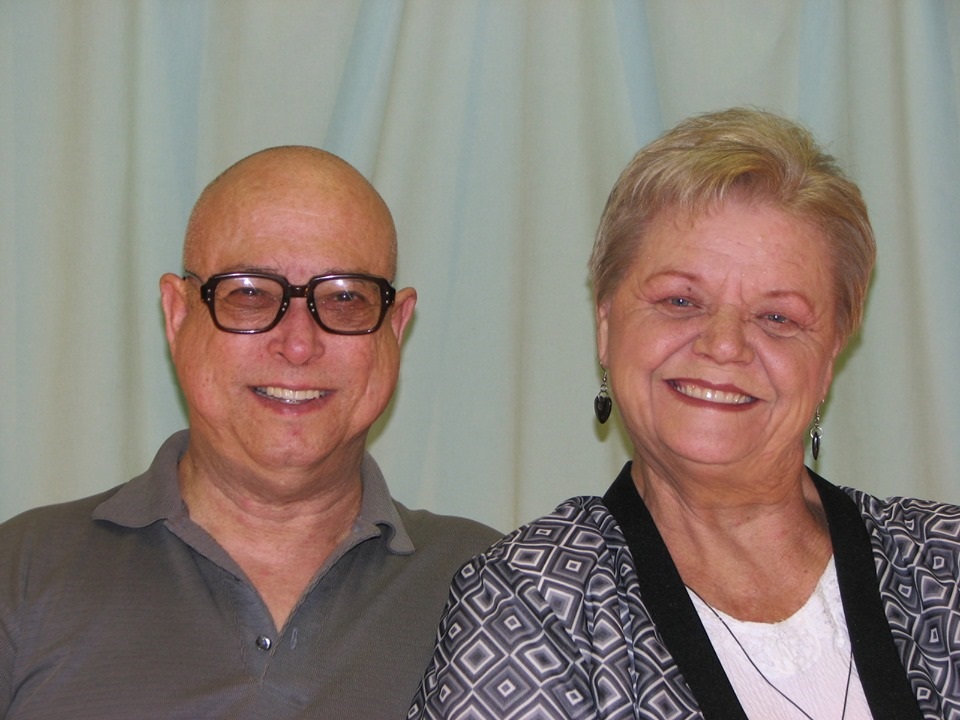
Writing was a big part of Tom’s life. It was important to him. But, Tom was more than just a talented and dedicated writer. He was also a loved life partner to his lovely wife Ginger. She was supportive of his writing, and I believe she edited some, or perhaps all of his work. With Ginger at his side, Tom lived a life doing what he loved – bringing his characters to life.
Tom, farewell. You will live on through the plethora of books and stories you’ve left us with, but you will still be greatly missed.
Are you a Tom Johnson fan? If so, feel free to leave a few words in the comments telling us what Tom meant to you, or share a memory, or just tell me which of his books is your favorite. Thank you all for joining me in saying good-bye.
Share this:

Interview with noir author Michael Pool
Posted: July 29, 2019 Filed under: Author Profile, Books, Crime, Fiction, Hard-Boiled Crime Fiction, Interview, Noir, Writing | Tags: Crime Fiction, Michael Pool, Noir, Noir crime fiction, Rose City, Texas Two Step, Writing to be Read 4 Comments
My guest today is a talented author, whom I happen to know personally. He was a part of my M.F.A. cohort at Western State Colorado University, and I had the privilege of , being present for his reading from his thesis novel, which was released this past year and fit in with this month’s Crime Fiction genre theme for review, Rose City. A P.I. by day, it’s no surprise that he writes crime fiction. What was a surprise to me was his talent for writing noir with true craftsmanship, which is why I invited him to join me here. Please help me welcome noir author, Michael Pool.
Kaye: Would you share briefly your writer’s journey? How did you get to where you are today?
Michael: A lot of writing, haha. I’ve been writing fiction since my very early twenties, however, I did take about 5 years in my late twenties where I barely wrote at all. In my 30’s I finally decided to take it more serious and began focusing on building a career through longer works. Prior to that, I’d mostly written short fiction. Though I still enjoy short stories, these days I mostly write novels, with a recent focus on detective fiction.
Kaye: Noir fiction takes a look at the darker side of human behaviors and generally features corruption and loose, (or lack of), morals. Why is it your chosen genre?
Michael: Well, I guess first I would say that it’s not my chosen genre. These days I definitely gravitate toward detective novels.
It’s a sub-genre that I have written in quite a lot, however. I would put Texas Two-Step as more of a pure crime novel, although it fits the Elmore Leonard vision of noir to a large degree. Rose City is a Southern Gothic Mystery.
However, I am attracted to noir stories because I like seeing the world through the eyes of an anti-hero. No matter the criminal, they are always the star of their own movie, and always see themselves as the justified “good guy.” What noir does really well is show that there is enough dirt to go around, and thus it turns notions of good and evil on their heads, leaving the reader with the distinct understanding that there are no good and bad people, only good and bad choices.
All of us are always teetering on the edge of destroying ourselves through our shortcomings and noir is all about that process, making it entertaining, if horrifying, to read.
Kaye: What is the biggest challenge in writing noir for you?
Michael: I’m not sure I see it as challenging. I’ve always been a fan of the underdog, and I consider the down and out to be my people in so many ways. I love capturing the world from the view of men and women with their backs against the wall, many of whom have just enough ruthlessness in them to cause catastrophic damage in the pursuit of (often) vein goals which are not necessarily good for them.
Kaye: What is the most fun about writing noir?
Michael: I always joke that I’m a bit of a dark and stormy person, so I like that noir’s tone allows lots of room for that darkness and allows for a lot of intense, violent, complicated conflicts to arise in the narrative.
Kaye: Rose City was your thesis project in your M.F.A. program, but it is also the companion novel to Texas Two-Step. Can you tell me a little about both books and explain how they are related?
Michael: Both books are set in the fictional East Texas locale, Teller County. They are related only by their setting and a shared villain in common. Without giving too much away, there is a villain who skates on consequences in Texas Two-Step that may finally get his in Rose City.
Interestingly, Rose City was written first, as a graduate school thesis. For whatever reason, Texas Two-Step was published first. They can be read in any order.
 Texas Two-Step is a “One last crime” story involving a couple of jam-band obsessed Denver pot growers who, after getting pushed out of the market by legal marijuana, have one last big crop to sell, and turn to an old but reckless associate down in Texas to move the harvest. They soon find themselves tangled up with real, violent criminals in a cat-and-mouse game where everyone involved has an agenda, and a rogue Texas Ranger is on their trail, desperate to nail their associate. It’s a multiple point-of-view book with lots of humor and a satisfying climax.
 Rose City is a “prodical son returns” story where the protagonist, Cole Quick, has left Teller County 14 years earlier after being robbed of a stash of fronted cocaine, taking with him his local debutante girlfriend, whose family all but disowned her as a result. The book picks up 6 months after her untimely death from breast cancer. Cole returns to Teller County for his estranged, abusive father’s funeral, and soon finds himself caught up in his old debt, as well as tasked with proving an old friends death was murder, rather than a vicious murder-suicide. To get back out of town alive, he has to take on the entire crooked town’s structure and bring it down to rubble.
Rose City was the first full novel I had ever written. And, honestly, it was a mess for a long time. Five years of good edits have turned it into a really great novel. It’s emotional, suspenseful, and moves forward at a non-stop pace. It deals with themes of racism, classism, corruption, abuse, and self-destruction in a way that is compassionate but takes a hard eye to the reality these kinds of problems crop up in.
Kaye: In Rose City, Cole Quick has a dark past that he thought he left behind. But a trip back to his home town finds him down and out, and vulnerable. There’s a lot more going on than he is aware of in his old stomping grounds, and almost without realizing what’s happening, he’s swept up into it, and it becomes a matter of survival for him to discover what really happened to his best friend, Jimmy. Are noir protagonists all average guys who get swept up by circumstance and have to fight their way out?
Michael: I don’t think noir protagonists are all average guys. In fact a whole bunch of them are anything but, they’re self-destructive fringe characters living by their own moral codes, and bound for trouble of their own making.
But all of my characters tend to be average men and women caught in extraordinary scenarios. I’m not much for thrillers with superhuman protagonists, and my writing tends to put a lot of focus on everyday people and their relationships, with the understanding that crime and total destruction are always in the peripheral of our lives, whether we believe it or not. I use crime as a lens to explore the human condition, because it’s an integral part of the human experience. We live in societies with rules, both good and arbitrary, and we all find ourselves running up against those in some ways. But some men and women won’t just accept things the way they are, and that to me is the kind of person who will make a good protagonist.
Kaye: You are the founder and editor-in-chief of Crime Syndicate Magazine. Can you tell me about that? What was your motivation to start it? What can readers find there? What are your goals for it in the future?
Michael: I put Crime Syndicate down about a year ago, just didn’t have time for it anymore. Crime Syndicate did focus a lot on short noir fiction, and there are some incredibly good stories in the three issues I put out. I’m happy to have had the experience, but I’m a writer at heart, not an editor.
Kaye: Noir characters are always flawed in some way. How flawed should a noir character be?
Michael: The important thing is not how flawed, it’s more that their flaw be something that will drive them to make decisions that are not necessarily good for them, and in fact the best noir characters have a flaw that is in direct opposition to their needs, causing a sense of inner conflict that will drive the story to a dark ending.
Kaye: If you could have lunch with any noir author, alive or dead, who would it be? Why?
Michael: I suppose a Dashiel Hammett or Ross MacDonald. Neither are really “noir” authors. I’d put them both more as hardboiled detective writers. But both have been major influences on my writing. I work as a private investigator, and in Hammett I get a very clear sense that he knows the work (which makes sense, because he was a Pinkerton at one time). With McDonald, I love the way he uses the detective as a lens to look at family dynamics and the effects changing social issues and dynamics have on families. It’s something I naturally do in my own writing, and I’d love to pick his brain about process.
Kaye: You are a Jiu-jitsu instructor. Are any of your characters skilled in martial arts?
Michael: Not really, for some reason! I am working on a modern pulp P.I. series (I’m calling it Gonzo P.I. as a style), and that character, Rick Malone, does have some jiu-jitsu experience, which he puts to good use from time to time. But in a lot of ways Rick is also a broken man and an outcast, so he’s still very far from the superhuman or hyper-capable protagonists I was talking about earlier. I love jiu-jitsu, and of course it does show up from time to time in my action scenes!
Kaye: In addition to book length works, you also write short fiction. Your works have been included in several anthologies. Which do you prefer? Why?
Michael: As I mentioned, I mostly write novels now. I prefer them because there is a market for them, haha. No, honestly, I agree with readers on why they prefer novels, and particularly series. When you fall in love with a protagonist you want to spend more time with that protagonist as a reader, and as a writer, I feel the same way. It can be hard to spend a year at a time on the same project, but the end result is more satisfying and makes it much further out into the universe.
Kaye: What parts of you, do your readers get to see in your characters?
Michael: Compassionate but conflicted and flawed characters in my books all have a big piece of me in them. I’m highly emotional, and have had plenty of dark experiences in my personal life. Those experiences crop up in less-than-direct ways in my writing, but anytime you reach an emotional moment in one of my books, you’re definitely interacting with the deepest parts of me as a writer and human being. To me that is a vital part of why I write in the first place.
Kaye: Your books feature intricate storylines that are well thought out. What’s your writing process like? How do you create your plots?
Michael: I’m an outliner these days. I stray from the outline often, but I mark out plot beats in advance as much as possible, and adjust them as I go. I literally keep a beat sheet for each book to make sure I’m staying on pace and on task. I find structure to be freeing rather than limiting. To understand why story structure is so vital you have to understand why humans began to tell stories in the first place, then you can see why structure evolved the way it did, and use that information to create the ever-elusive “uniquely familiar” plot lines that resonate with readers.
Kaye: What is your greatest writing accomplishment to date?
Michael: That’s a tough one! I feel like my greatest accomplishment is just getting to where I am. I feel poised to break through to a larger audience with this next project, finally, but more than that, I feel like I’ve finally become a skilled, adept long-form fiction writer.
Kaye: What are you working on now? What’s next for Michael Pool?
Michael: Right now I’ve just finished the first book in a new P.I. series, Throwing Off Sparks, and am at work on book two, tilted Daughters of the Republic. Both feature my obsessive female East Texas P.I., “Rowdy” Riley Reeves. Riley’s origin story, “Weathering the Storm,” is slated for release as part of The Eyes of Texas anthology on 10/21/2019. Within a paragraph of starting that story I knew she would become a series character, and I’m REALLY excited to share this new series with the world, I think it brings something totally new to detective fiction.
I’m also working on a pulp P.I. novel I mentioned earlier, also the first in a series, called Catfish Quarum. It is set in Colorado and features down-and-out drug-addled P.I. Rick Malone. A second book in that series is currently in the outline stage, titled One Way Out. I have big hopes for this series, it allows me to be goofy and serious all in the same breath, and to really capture a lot of uniquely Colorado social issues and characteristics. Look for it over the next couple years. I wish that were faster, but publishing is its own complicated process, unfortunately.
I want to thank Michael for sharing with us today. I think he has helped to define noir and differentiate it from the other sub-genres of crime fiction. If you’d like to learn more about Michael or his books, you can visit his author site, or his Amazon author page.
Like this post? Let me know in the comments. You can be sure not to miss any of Writing to be Read’s great content by subscribe to e-mail or following on WordPress.
Share this:

“Awesome Tales #10”: An awesome tribute to pulp fiction of old
Posted: July 25, 2019 Filed under: Book Review, Classics, Crime, Fiction, Pulp Fiction, Stories | Tags: Awesome Tales #10, Crime Fiction, Pulp Fiction, Quintin Peterson, Review, Short Fiction, Short Stories, Writing to be Read 7 Comments
You just don’t see a lot of pulp magazines anymore in the classic tradition from days of old, but Awesome Tales is a modern pulp magazine pulp fans will take delight in. If your a fan of the dazzling heroes and diabolical villians of the classic pulp traditions, Awesome Tales #10 takes you on a refreshing trip down memory lane with four masterfully written contemporary tales, by four different authors, told in classic pulp form and style.
“No Virtue in Patience”, by John L. French is a futuristic pulp story with tech gangs and computer generated card tournaments. A heist of the biggest solitaire game in town, with a proize of a solid gold deck of cards.
“No Patience for Fools” by Aaron Rosenberg offers a different perspective on the solitaire tournament of the previous story. Cleverly crafted to tell the same story from the opposite side of the law, it has a surprise ending, as well.
In “Broken Doll” by Quintin Peterson, tough guy bionic P.I. Luther Kane sets out to save a one-legged streetwalker named Gypsy, and maybe his own guilt ridden self, but he learns the classic lesson all P.I.s should know the hard way: never trust anyone.
“Give Them a Corpse Part 2” by Rich Harvey is the second part of a three part story featuring the Domino Lady, a classic masked superheroine, complete with crime fighting skills and secret identity, fights against the classic villians of The Black Legion. Like all good cloak and dagger crime fighting serials, this story easily stands alone.
Every one of the stories in Awesome Tales #10 are well-crafted and entertaining. They will satisfy hardcore pulp fans and maybe even earn the genre a few new fans. I give it five quills.

Kaye Lynne Booth does honest book reviews on Writing to be Read in exchange for ARCs. Have a book you’d like reviewed? Contact Kaye at kayebooth(at)yahoo(dot)com.
Share this:

July: On the hunt for crime fiction
Posted: July 23, 2019 Filed under: Books, Crime, Fiction, Hard-Boiled Crime Fiction, Noir, Pulp Fiction, Suspense, Tension, Writing | Tags: Awesome Tales #10, Crime Fiction, Crime Novels, Hard-boiled fiction, Jenifer Ruff, Jim Nesbitt, Michael Pool, Noir, Noir crime fiction, Pulp Fiction, Quintin Peterson, Rose City, The Numbers Killer, Writing to be Read 2 Comments
The crime fiction genre covers a lot of ground. By definition, crime fiction involves mystery to be solved, usually who the killer is, or a quest to figure out some type of diabolical plot. Crime fiction stories involve pretty high stakes, and therefore a lot of suspense. Often there is a ticking clock to ratchet the tension even higher. And of course, there is always a crime of some sort to be solved, or prevented; some sort of wrong to be righted.
Crime fiction is a broad term which includes many sub-genres, which focus on the investigation of a crime and the apprehension of a suspect, either by law enforcement agents, as in The Numbers Killer, by my “Chatting with the Pros” author guest, Jenifer Ruff or by a tough guy P.I., as in hardboiled crime fiction such as Jim Nesbitt writes, with his tough guy P.I., Ed Earl Burch in The Best Lousy Choice and the two previous books in that series.
Hardboiled heroes are memorable. Who doesn’t know of Sam Spade or Mike Hammer and their cynical tough-guy images? They are usually down on their luck, or at least between clients. They are often heavily flawed, often self-destructive, but a ladies man none-the-less, with a love them and leave them attitude and the snappy dialog of the 1920’s. Hardboiled fiction was birthed by Carrolle John Daly and Dashielle Hammett in the 20’s, and carried on by authors such as Raymond Chandler and Mickey Spillane.
In noir crime fiction, the protagonist is usually an extremely flawed, average guy. He’s usually down and out, or perhaps on a downward spiral in a situation that seems bleak and hopeless. He’s a self-destructive hero, who ends up going against all odds to fight corruption and injustice, not because it is his job, but for strictly personal motivations, which are usually not in his own best interests. An excellent example of this is found in Rose City, by Michael Pool (See my interview with Michael next Monday, the 29th).
And of course, the classic crime fiction is pulp, such as Quintin Peterson writes in Awesome Tales #10 . From pulp, we get our classic heroes and fiendish evil villains. It’s from pulp that comic book super heroes and super villains arose, which is yet, another sub-genre of crime fiction, which has expanded with a life of its own to super colossal proportions.
We went on a hunt for crime fiction, and we found quite a bit. I learned a lot and I hope you did to. Now, I’m looking forward to August in a quest for mysteries and mystery authors. My “Chatting with the Pros” guest will be New York Times bestselling author, Gilly Macmillan. I’ll also be interviewing mystery author Gerald Darnell. And I’ll be reviewing a mystery anthology, Death Among Us, as well as a search and rescue mystery, Murder on the Horizon, by M.L. Rowland, and a paranormal cozy, Broomsticks and Burials, by Lilly Webb. I hope you’ll join me.
Like this post? Let me know in the comments. You can be sure not to miss any of Writing to be Read’s great content by subscribe to e-mail or following on WordPress.













Mind Fields: Crime Thrillers And Mystery Media
Posted: May 20, 2022 | Author: artrosch | Filed under: Books, Commentary, Crime, Fiction, Mind Fields, Mystery, Thriller | Tags: Arthur Rosch, Crime Fiction, Henning Mankell, James Lee Burke, Mind Fields, mystery, Suspense/Thriller, Writing to be Read | 3 CommentsI read everything. I read fiction, non fiction, biography, history, psychology. If libraries were edible there would be few surviving libraries. I would have been a Godzilla-like creature with an insatiable appetite for books, “The Monster That Devoured Libraries”. I’ve been reading voraciously since I was eight years old. I started my reading career with historical fiction, then turned to sci-fi and Fantasy. I detoured into crime fiction and mysteries but I put them down in my twenties and never returned until I saw the film “The Girl With The Dragon Tattoo”. That rekindled my lust for good thrillers and I checked out the late Stieg Larsen’s epic trilogy. Then I turned to the somber depths of Henning Mankell, author of the Wallander mystery series.
Mankell is sixty four years old. I find this fact very much in his favor. I like reading authors who’ve got some worldly experience, who are old enough to recognize the body’s fragility and are beginning to be on speaking terms with death.
Henning Mankell spends half of his year living in Maputo, Mozambique. He is director of a drama troupe called Teatro Del Avenida. What, I wonder, could be better food for a writer’s mind than to open himself to a world so utterly alien to his native experience?
Stockholm/Maputo, Stockholm/Maputo… here is a successful writer who is seriously engaged with the world. He’s not hiding in some comfy Swedish estate, churning out formulaic mystery books. His writing is many layers deep.
Mankell’s best-selling character, Chief Inspector Wallander, is a frustrating man. He’s frustrating to his daughter, he’s frustrating to his colleagues; he’s especially frustrating to himself. Somehow he never seems to get to that vulnerable place that allows his feelings to surface. He looks like a man tormented by an itch that he can never scratch. He walks around with three days’ growth of beard on his face, his shirt tails are hanging out, his eyes are bleary.
Somehow he always catches the killer, by thrashing his way through obscure connections, chasing ancient traumas, exposing religious zealotry and the classic motive to many a murder, old fashioned desire for revenge. Wallander’s like a gloomy Colombo. He always has one more question.
Mankell’s prose is austere and controlled. It evokes the Swedish countryside, from its thousands of Baltic islands to its birch forests and vast yellow fields of mustard and flax. Mankell also takes non-Swedish readers into the Swedish mind-set via references to Swedish history and attitudes.
There is a nostalgia for an “old” Sweden. Just as we in the U.S. have pre and post Nine Eleven mind-sets, the Swedes divide their recent history into periods before and after the assassination of their prime minister Olaf Palme in 1986. The crime was never solved and remains a collective national trauma.
Any sensitive reading of Mankell requires this awareness of the Swedish world-view. Americans are not great in being aware of other cultures and other histories. This is an opportunity to absorb Swedish culture from one of its iconic writers.
James Lee Burke
A quote from the novel Swan Peak:
I flat out love James Lee Burke’s writing. He’s another writer with some miles on his old frame. His best selling series characters, Detective Dave Robicheaux and Clete Purcell are two of the most colorful non-heroes in crime fiction. Most of Burke’s novels move in and around New Orleans and the bayou country. The area’s history is like a character in itself. The ghosts of civil war personalities haunt the landscape. Burke’s stories draw on the family feuds and crimes from the past. His plots involves the great great great grandchildren of plantation owners and slaves. James Lee Burke’s writing is an invocation of living memory.
Certain structures appear in Burke’s narratives. There’s always an aristocratic family whose roots go back to ante-bellum times. This family has entanglements within the black community. The family is also “mobbed up”, albeit quietly, with the Giacano people in New Orleans.
People whose grandparents were slaves still work for this family. Some old blues man who plays the local dives witnessed a killing forty years ago. He won’t talk about it; he never talks about the “doings of white folk”. Dave can pry bits of information from the reluctant guitar man when he promises not to reveal his source. All the same, there’s a possibility that the old blues man’s body will float out of the bayou some time down the road.
Dave is a recovering alcoholic. The longing, the nostalgia for a shot of Johnny Walker in a glass of beer, is so authentic that Burke’s nascent alcoholism is clear as an empty decanter.
Burke knows the landscape of longing, of grief for an addiction that provided so much comfort yet brought so much destruction. This is why James Lee Burke is so good as a writer: he’s honest about who he is and his “real” personality bleeds across into his characters with perfect fidelity.
Here they are, the inhabitants of James Lee Burke’s fictional world. Dave Robicheaux, Vietnam vet and PTSD sufferer. Alcoholic. A cop who resents authority. Habitue of AA meetings when the pressure builds. Lover of his wife and his daughter Alafair and his tame three legged raccoon Tripod and his un-neutered warrior cat, Snuggles. Best friend of Clete Purcell, a de-frocked homicide cop who now does skip tracing for bondsmen Nig Rosewater and Wee Willie Bimstine.
Clete is enormous, powerful, aggressive, self indulgent and frequently teeters on the brink of losing his self control. He is described as “an elephant falling down a stairs”. He still drinks and pushes Dave’s patient loyalty to the boundary. A fellow Vietnam vet, fellow PTSD patient, Clete was Dave’s partner in the homicide division of New Orleans Police Department.
In the old days they were called “The Bobbsey Twins.”
Burke mixes up all these characters to create stories with perfect pacing and addictive tension. He describes the color of light in Bayou Teche, the sound of the rain as it blows in from the Gulf. Someone out there creeping around the roots of the drowned trees is leveling a telescopic site onto Dave’s forehead. That someone may be a psychopathic ex-prison guard from Angola Penitentiary, a “gun bull”, a racist of the old stripe who once prodded prison laborers from the saddle of his horse, carrying a shotgun and ready to use it.
Burke’s villains have a whiff of sulfur about them, they aren’t quite human, they have a Satanic indifference to human suffering and a quick toughness that seems invincible.
These are some of the scariest villains in fiction. These are just a few reasons why you should read James Lee Burke.
His heroes are flawed, his villains terrifying, his victims pathetic and mute, his settings historic and laced with the colors of Spanish moss and the distant growl of alligators.
_______________________________________________________________________________
Arthur Rosch is a novelist, musician, photographer and poet. His works are funny, memorable and often compelling. One reviewer said “He’s wicked and feisty, but when he gets you by the guts, he never lets go.” Listeners to his music have compared him to Frank Zappa, Tom Waits, Randy Newman or Mose Allison. These comparisons are flattering but deceptive. Rosch is a stylist, a complete original. His material ranges from sly wit to gripping political commentary.
Arthur was born in the heart of Illinois and grew up in the western suburbs of St. Louis. In his teens he discovered his creative potential while hoping to please a girl. Though she left the scene, Arthur’s creativity stayed behind. In his early twenties he moved to San Francisco and took part in the thriving arts scene. His first literary sale was to Playboy Magazine. The piece went on to receive Playboy’s “Best Story of the Year” award. Arthur also has writing credits in Exquisite Corpse, Shutterbug, eDigital, and Cat Fancy Magazine. He has written five novels, a memoir and a large collection of poetry. His autobiographical novel, Confessions Of An Honest Man won the Honorable Mention award from Writer’s Digest in 2016.
More of his work can be found at www.artrosch.com
Photos at https://500px.com/p/artsdigiphoto?view=photos
_______________________________________________________________
Want to be sure not to miss any of Arthur’s “Mind Fields” segments? Subscribe to Writing to be Read for e-mail notifications whenever new content is posted or follow WtbR on WordPress. If you find it interesting or just entertaining, please share.
Share this: