Incorporating reading into Christmas activities
Posted: December 9, 2020 Filed under: Uncategorized 49 Comments
In exactly two weeks and two days it will be Christmas day. I enjoy this time of year as there is a lot of focus in my life on sharing, giving, and charity. My firm and my church undergo various outreach and charity programmes to help a large spectrum of underprivileged schools, churches, and families.
This year, the Community Service Initiative team at work organised gifts for 100 school children who were graduating from a nursery school. The gift packs included a selection of party foods and one of my Sir Chocolate Books. These were packed into a good quality school satchel so the children have one to use for school next year. A few volunteers from my office, suitable sanitised and masked, went to the school to help give out the gifts.
Christmas time is also traditionally a time when families gather. Every year, my mother and I host a large family lunch-time gathering at which we serve a traditional hot meal of roast lamb, roast potatoes and a large variety of vegetables. This year we are expecting 16 adults and 7 children for the day. My son, Michael, has undertaken to cook the meat and the vegetables this year as he has become a lot more confident with his cooking skills.
In addition to the Christmas meal, I always make the Christmas treats and puddings.
The preparation of a large meal and a few desserts are great learning opportunities for children. They can help you read the recipes and information on the the packets, boxes, and tins containing the various ingredients.
Aside from reading, there are a number of other benefits to baking with children, as follows:
- Baking enhances fine motor skills. Get your children to mix, knead, stir, roll-out, cut-out and decorate. These activities all help with the development of fine motor skills;
- Teaches children math’s. Measuring liquids and weighing or measuring dry ingredients teach children about mass and volume. Heating the oven imparts information about temperatures and sometimes a conversion is required for a recipe from Fahrenheit to Celsius. There can also be conversions from pounds, ounces and pints to grams and milliliters.
- Illustrates scientific principles. The combination of certain food items results in specific chemical reactions which are instructive and interesting.
- Increases focus and intention. Children need to concentrate throughout the baking exercise or the ingredients will not be added correctly and the baked items may not turn out well.
- Teaches life skills. Cooking and baking are life skills which facilitate the growth of independence in children.
How to make a home-made Christmas cracker
I recently read Frugal Seeds Christmas Edition: 101 Ways to Celebrate the Holiday Season on a Budget by Charlie Lee Austin which includes a large number of fun activities to do with children during the Christmas season.
One of the ideas was to make home-made Christmas crackers.
You will need scissors, empty toilet roll inners, crinkle paper cut into rectangles that are large enough to gather and tie on both ends of the toilet roll inners, three chocolates per cracker, curling florists ribbon, and sticky tape.
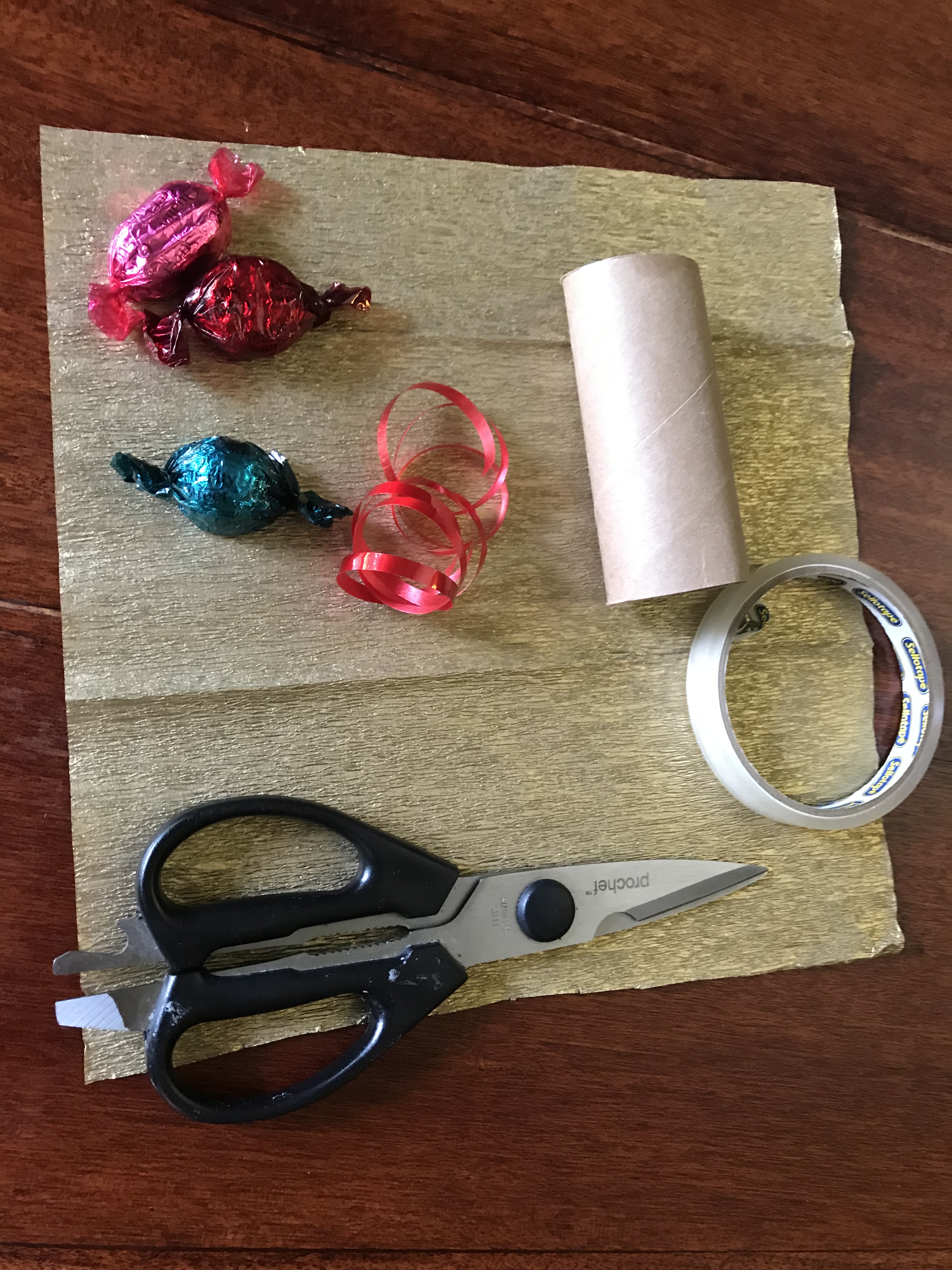
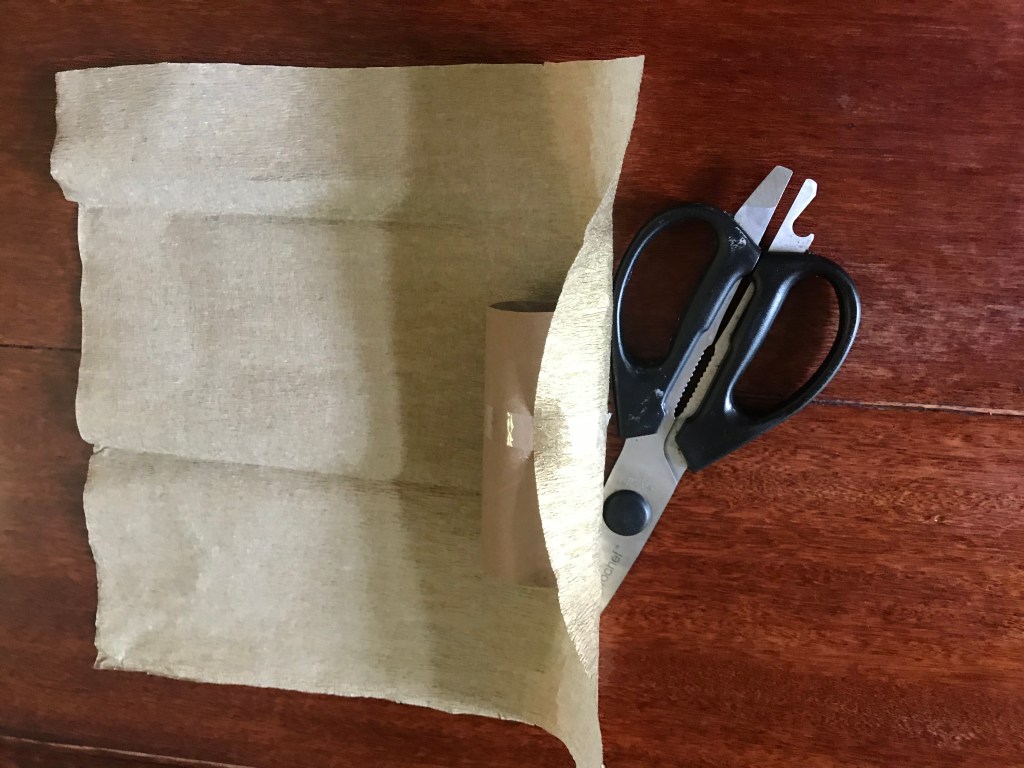
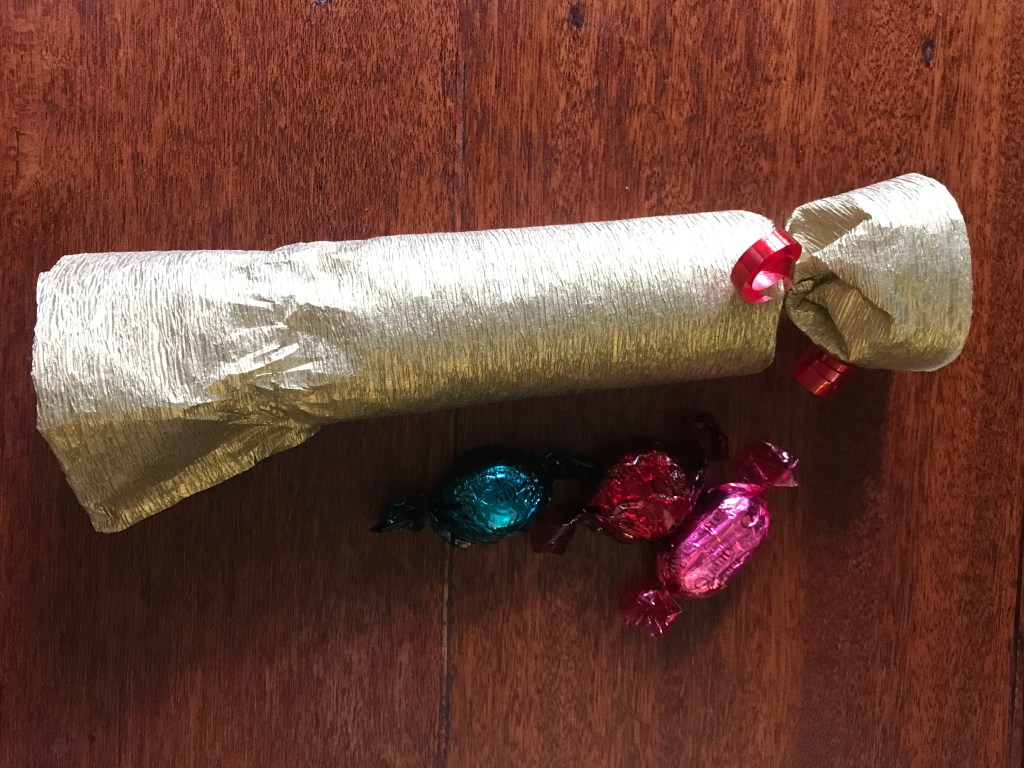
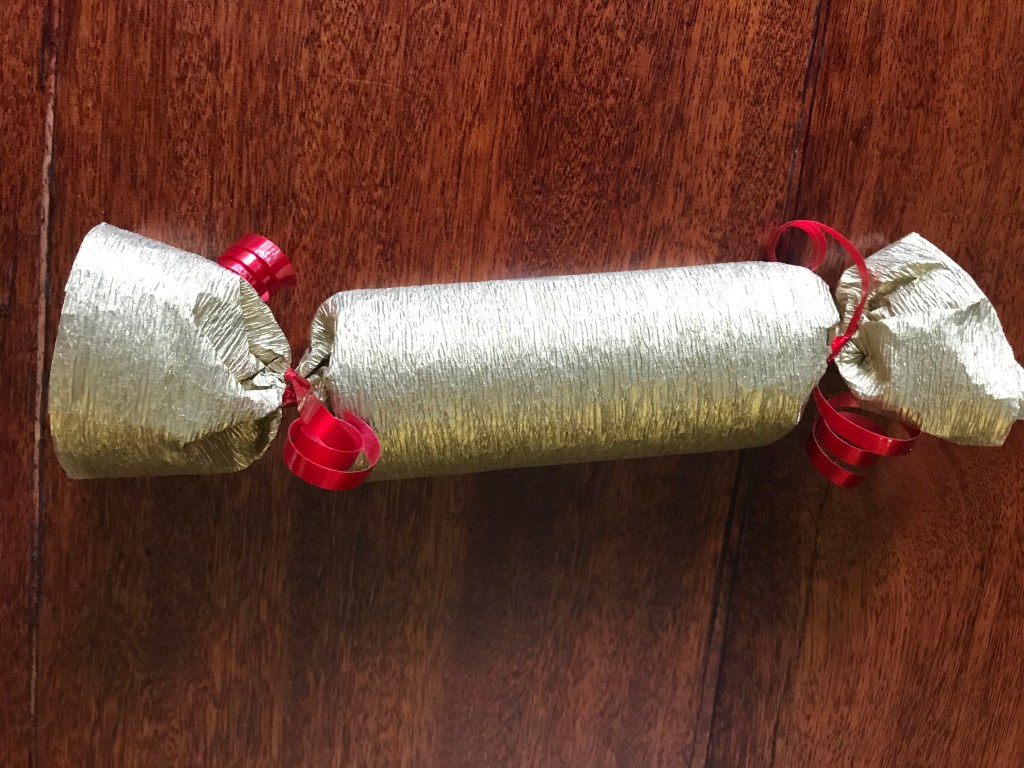
Cut the crinkle paper into rectangles as show in the pictures. Use a piece of sticky tape to attached the edge of the crinkle paper to the toilet roll inner. Gather one of the ends and tie with curling florists ribbon. Run the ribbon over the edge of the blade of the scissors to make the ends curl. Insert your chocolates into the cracker. Gather the remaining end and tie with curling florist ribbon.
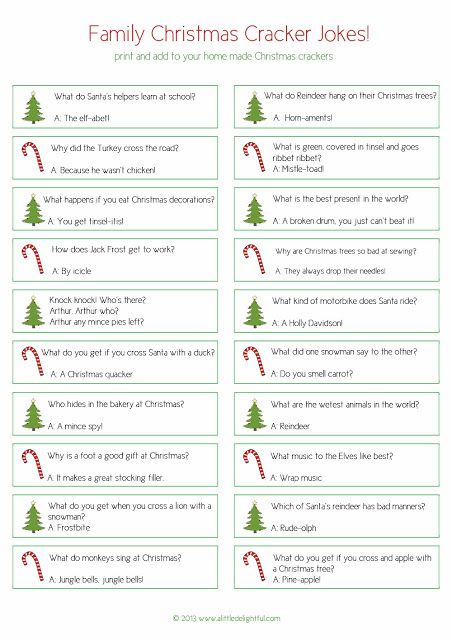
To add an additional reading and writing exercise to this activity, search on the internet for some fun Christmas jokes for Christmas crackers [there are lots on Pinterest]. Get your child to write out the joke and insert it into the Christmas cracker. On Christmas day the children can take turns reading the jokes to each other.
My review of Frugal Seeds Christmas Edition by Charlie Lee Austin
This little book is packed with fun and economical ways of celebrating Christmas with children, friends and family. It has a strong Christian orientation and some of the activities relating to the Bible, but there are many other ideas that can be enjoyed by people of any religious orientation.
Reading the ideas presented in this book reminded me of two of my favourite childhood books. Little Women when the girls decide to play a variation of pilgrims progress and also when they celebrate Christmas without their father, who is fighting in the war, and all decide what gifts to buy their Marmee. I was also taken back to the glorious days when I read What Katy Did for the first time. My favourite scenes in this book are when Katy decides to make all sorts of Christmas gifts for her siblings and best friend. She creates a Christmas tree decorated with home-made decorations like popcorn strings and they children have a poetry reading evening where they all read a poem they have written.
The suggestions in this book are simple and yet so much fun to make. The ideas include making a pinata from clay pots and paper mache, making Christmas crackers from toilet roll innards, and making Christmas candles.
A great book of activity ideas to entertain young young children over the holiday period.
Purchase link
Merry Christmas
Wishing you all a Merry Christmas and lets hope for a great New Year with an end to the pandemic.
About Robbie Cheadle

Robbie Cheadle has published nine books for children and one poetry book. She has branched into writing for adults and young adults and, in order to clearly separate her children’s books from her adult books, is writing for older readers under the name Roberta Eaton Cheadle.
Robbie Cheadle’s Sir Chocolate children’s picture books are written in sweet, short rhymes which are easy for young children to follow and are illustrated with pictures of delicious cakes and cake decorations. Each book also includes simple recipes or biscuit art directions which children can make under adult supervision. Her books for older children also incorporate recipes that are relevant to the storylines.
Roberta Eaton Cheadle’s supernatural stories combine fabulous paranormal elements with fascinating historical facts.
Children’s picture books – available as a square book and an A5 book (co-authored with Michael Cheadle):
Sir Chocolate and the strawberry cream story and cookbook
Sir Chocolate and the baby cookie monster story and cookbook
Sir Chocolate and the sugar dough bees story and cookbook
Sir Chocolate and the Condensed Milk River story and cookbook
Sir Chocolate and the Sugar Crystal Caves story and cookbook
Sir Chocolate and the Fondant Five story and cookbook
Sir Chocolate and the Ice Cream Rainbow Fairies story and cookbook
Middle school books:
Silly Willy Goes to Cape Town (includes five fun party cake ideas)
While the Bombs Fell (co-authored with Elsie Hancy Eaton)
Poetry book:
Open a new door (co-authored with Kim Blades)
Supernatural fantasy YA novel:
Through the Nethergate
Horror Anthologies (edited by Dan Alatorre):
Spellbound
Nightmareland
Dark Visions
Paranormal Anthologies (edited by Kaye Lynne Booth):
Spirits of the West
Whispers of the Past
Murder mystery Anthology (edited by Stephen Bentley)
Death Among Us
Find Robbie Cheadle
Blog: https://bakeandwrite.co.za/
Blog: robbiesinspiration.wordpress.com
Twitter: BakeandWrite
Instagram: Robbie Cheadle – Instagram
Facebook: Sir Chocolate Books
Want to be sure not to miss any of Robbie’s “Growing Bookworms” segments? Subscribe to Writing to be Read for e-mail notifications whenever new content is posted or follow WtbR on WordPress.
Share this:

Meet poet, Balroop Singh, and a review of Magical Whispers
Posted: November 28, 2020 Filed under: Uncategorized 57 Comments
Today, I have the pleasure of featuring talented poet, Balroop Singh, as my Treasuring Poetry guest. Balroop has shared some lovely thoughts about poetry and her favourite poems. My review of her latest book, Magical Whispers, is included at the end of the post.
You can find out more about Balroop Singh and her poetry on her lovely blog here: https://balroop2013.wordpress.com/about/
What is your favourite poem?
How can you have one poem as a favorite? They have been changing with my growing years. From Rumi to Rudyard Kipling to Maya Angelou, poetry has always evoked images of romanticism, realism and Sufism and I got carried away with those images depending on the phase of my life.
As a youngster, I liked ‘Stopping By Woods on a Snowy Evening’ by Robert Frost. It acquainted me with the beautiful images and simple style of writing a poem, inspired me to read more poetry, nudged me to keep the promises that we make to ourselves. It also calls upon the reader to focus, to brush aside the distractions and temptations and move ahead.
As a student of English Literature, I fell in love with the nature poetry of William Wordsworth, as his poems told me to carry the beauty of nature in the “inward eye” and feel the “bliss of solitude” in “vacant or in pensive mood.” His Daffodils entrances me even today. I must’ve read it a thousand times!
‘The Little Black Boy’ by William Blake became my favorite when I taught it to my students. The emotional appeal to end racism that the poet makes in this poem is still relevant. His imagery is exceptional and his simple, convincing style moved me. Then I stumbled across ‘If’ by Rudyard Kipling and it became my all time favorite. The values it imparts resonate with me.
Slowly the alleys I walked down widened into avenues of observation and experience and I discovered more poems of human interest. Poetry that focuses on what lies within a human heart, combined with imagination and imagery from nature appeals to me.
Recently I stumbled across this gem, an outstanding poem written in 1932. It demonstrates an incredible power to assuage loss and anguish. Though the poet had written it for her friend who could not visit her mother’s grave due to disturbing times, its popular appeal can be judged from the fact that it was read by the father of a young soldier, who had been killed by a bomb in Northern Ireland.
“Do not stand at my grave and weep,
I am not there, I do not sleep.
I am in a thousand winds that blow,
I am the softly falling snow.
I am the gentle showers of rain,
I am the fields of ripening grain.
I am in the morning hush,
I am in the graceful rush
Of beautiful birds in circling flight,
I am the starshine of the night.
I am in the flowers that bloom,
I am in a quiet room.
I am in the birds that sing,
I am in each lovely thing.
Do not stand at my grave and cry,
I am not there. I do not die.” – Mary Elizabeth Frye
This poem conjures a thousand images of nature to lift the gloomy mood, which fades away in the wake of so much positivity. Read it twice and you would be transported into a different world. My heart misses a beat each time I read it.
Life seems have come a full circle, as once again, a poem written in a simple style has appealed so much to me.
If you could choose to write like any well-known poet, who would it be?
Robert Frost and William Wordsworth have been my early influences but now I would like to write like Adrienne Rich, an American poet, essayist and feminist who could criticize conservative attitudes of the society through her works. Just look at her powerful poetry:
Aunt Jennifer’s Tigers by Adrienne Rich
“Aunt Jennifer’s tigers prance across a screen,
Bright topaz denizens of a world of green.
They do not fear the men beneath the tree;
They pace in sleek chivalric certainty.
Aunt Jennifer’s finger fluttering through her wool
Find even the ivory needle hard to pull.
The massive weight of Uncle’s wedding band
Sits heavily upon Aunt Jennifer’s hand.
When Aunt is dead, her terrified hands will lie
Still ringed with ordeals she was mastered by.
The tigers in the panel that she made
Will go on prancing, proud and unafraid.”
What tugs at my heart is the message of subjugation that these lines convey in a very succinct manner. ‘Massive weight’ symbolizes aunt Jennifer’s ordeals in an unhappy marriage. At the same time, it also hints at the inability of the patriarchs to control the mind of women. Aunt Jennifer may be tied by societal norms, she could have been dominated by the “master,” (a symbol for her husband) but the art she creates with her ivory needle symbolizes freedom – “tigers prance,” “they do not fear the men.”
Only symbols speak in her poetry. The way hope and despair merge in this poem is outstanding. There are very few poets who focus on social and political themes with the fervor of Adrienne Rich.
I have tried a similar style: (An excerpt from Emerging From Shadows)
FLYING HIGH
The path I chose, I follow it with pride
Thorny monsters monitor my trail
I know I can brush them aside
Each one reminds me of you.
Each spike strengthened me.
Unrequited love is not my shriek
I know this love let me grow
I know obscure alleys scream louder.
Respect, reverence, self-esteem
Are my basic requisites.
I refuse to be a competitor
Who struggles for personal rights.
The stumble, the search stirred me.
Questions that haunted my sleep
Clamor and clutter… all that robs my peace
Elevates me, helps me detach!
I am no longer tied to the cliffs.
Threats don’t hold any ground
I have decided to fly high
On the winds of cool complacence.
Who has the audacity to ask?
Who can misconstrue my intrepid intentions?
Who can doubt my positive power?
No one can sway my dauntless decision.
© Balroop Singh
Meet the poet
Balroop Singh, a former teacher and an educator always had a passion for writing. She is a poet, a creative non-fiction writer, a relaxed blogger and a doting grandma. She writes about people, emotions and relationships. Her poetry highlights the fact that happiness is not a destination but a chasm to bury agony, anguish, grief, distress and move on! No sea of solitude is so deep that it can drown us. Sometimes aspirations are trampled upon, boulders of exploitation and discrimination may block your path but those who tread on undeterred are always successful.
When turbulences hit, when shadows of life darken, when they come like unseen robbers, with muffled exterior, when they threaten to shatter your dreams, it is better to break free rather than get sucked by the vortex of emotions.
A self-published author, she is the poet of Sublime Shadows of Life , Emerging From Shadows, Timeless Echoes and Moments We Love – all widely acclaimed poetry books. She has recently published Magical Whispers, another poetry book. She has also written When Success Eludes, Emotional Truths Of Relationships Read FREE with Kindle Unlimited and Allow Yourself to be a Better Person. Balroop Singh has always lived through her heart. She is a great nature lover; she loves to watch birds flying home. The sunsets allure her with their varied hues that they lend to the sky. She can spend endless hours listening to the rustling leaves and the sound of waterfalls. The moonlight streaming through her garden, the flowers, the meadows, the butterflies cast a spell on her. She lives in San Ramon, California.
My review of Magical Whispers by Balroop Singh

What Amazon says
I wait for whispers; they regale my muse. Whispers that can be heard by our heart, whispers that ride on the breeze to dispel darkness and ignite hope. I’m sure you would hear them through these poems if you read slowly.
‘Magical Whispers’ would transport you to an island of serenity; beseech you to tread softly on the velvety carpet of nature to feel the ethereal beauty around you. The jigsaw of life would melt and merge as you dive into the warmth of words.
In this book, my poems focus on the whispers of Mother Nature, whispers that are subtle but speak louder than words and breathe a quiet message.
Each day reminds us
It’s the symphony of surroundings
That whispers life into us.
My review
Magical Whispers is a beautiful collection of freestyle poems from a talented poet. Each of the 73 poems speaks to a special event or sight in nature or an experience in life’s journey with a ‘whispered’ undertone of emotion. The poems are divided into two sections, with the first mainly about the magic of our natural environment and the second about the magic of our human lives.
Two wonderful examples of this undercurrent of whispered emotion are as follows:
“Whispers that stood walled,
That could dispel his darkness
Now they seethe and speak
Louder than his voice.”
From Secret Whispers
“They made me who I am
A reclusive introvert.
They told me I don’t have rights,
I was born to be controlled.”
From A Loner
The poet makes use of the most delightful imagery. Her writing is so lovely it is difficult to select one illustrative example, but this is a paragraph that particularly struck me while reading this book:
“What how they gleam
And say adieu to the sun
But shimmer with delight
In moonlight!”
From Did You Hear the Whisper?
A lovely book of poetry and one I highly recommend.
Purchase Magical Whispers
Share this:

The joy of nursery rhymes: Twinkle, twinkle little bat
Posted: November 11, 2020 Filed under: Children's Books, Growing Bookworms, Literacy, Nursery Rhymes, Reading | Tags: Growing Bookworms, Literacy, Nursery Rhymes, Reading, Robbie Cheadle, Writing to be Read 56 Comments
“Twinkle, twinkle, little star
How I wonder what you are
Up above the world so high
Like a diamond in the sky
Twinkle, twinkle little star
How I wonder what you are”
Do you remember the words of this nursery rhyme? It has always been one of my favourites and the first one I remember hearing as a child. There was something about it that captured my imagination. Today, the words of this nursery rhyme are imprinted on my brain and remind me of the Blue Fairy in Pinocchio, one of my favourite childhood books.
When I was 9 years old, Alice in Wonderland was my favourite book [it still is a favourite and I have a number of different copies of it]. The words of Lewis Carroll’s adaption of Twinkle twinkle little star stayed with me and is still the version I think of first.

I had difficult babies. They were both real ‘howlers’. Gregory cried so much I gave all my baby stuff away when he was three months old and the promised reprieve from the endless crying didn’t happen. It turned out he was a ‘six-monther’. Terence had to work hard to convince me to have another baby and then Michael turned out to be a howler too. His health issues were even more challenging and he was in hospital numerous times during his first two years of life.
But, I digress … back to nursery rhymes. I used to recite nursery rhymes to my kids while I carried them around. They howled and I recited. It kept both of us sane.
Both of my sons have good vocabularies and literacy skills and both are musical. Reading up on the useful benefits of nursery rhymes for children, I think all the reciting I did may have helped enhance these skills.
The five major benefits of nursery rhymes are as follows:
They help develop language and literacy skills:

The help develop phonemic awareness – children hear the words said and learn to pronounce them. A lot of nursery rhymes include unusual and funny words and phrases.

Nursery rhymes help build word memory and articulation. They are full of rhyming words and include words and groups of sounds you don’t encounter in everyday speech.

Nursery rhymes help develop creativity in children by encouraging them to imagine the scene in their heads. Just think of this one:
The Owl and the Pussy-Cat
BY EDWARD LEAR
The Owl and the Pussy-cat went to sea
In a beautiful pea-green boat,
They took some honey, and plenty of money,
Wrapped up in a five-pound note.
The Owl looked up to the stars above,
And sang to a small guitar,
“O lovely Pussy! O Pussy, my love,
What a beautiful Pussy you are,
You are,
You are!
What a beautiful Pussy you are!”
II
Pussy said to the Owl, “You elegant fowl!
How charmingly sweet you sing!
O let us be married! too long we have tarried:
But what shall we do for a ring?”
They sailed away, for a year and a day,
To the land where the Bong-Tree grows
And there in a wood a Piggy-wig stood
With a ring at the end of his nose,
His nose,
His nose,
With a ring at the end of his nose.
III
“Dear Pig, are you willing to sell for one shilling
Your ring?” Said the Piggy, “I will.”
So they took it away, and were married next day
By the Turkey who lives on the hill.
They dined on mince, and slices of quince,
Which they ate with a runcible spoon;
And hand in hand, on the edge of the sand,
They danced by the light of the moon,
The moon,
The moon,
They danced by the light of the moon.
Source: The Random House Book of Poetry for Children (1983)
Finally, nursery rhymes teach children to listen, a very important life skill.
I am finishing off this post with a video of a recital of the poem Television by Roald Dahl. It is hilarious and epitomizes my thoughts about children and the modern trend of television and video/TV games.
About Robb,ie Cheadle
Hello, my name is Robbie, short for Roberta. I am an author with seven published children’s picture books in the Sir Chocolate books series for children aged 2 to 9 years old (co-authored with my son, Michael Cheadle), one published middle grade book in the Silly Willy series and one published preteen/young adult fictionalised biography about my mother’s life as a young girl growing up in an English town in Suffolk during World War II called While the Bombs Fell (co-authored with my mother, Elsie Hancy Eaton). All of my children’s book are written under Robbie Cheadle and are published by TSL Publications.
I have recently branched into adult and young adult horror and supernatural writing and, in order to clearly differential my children’s books from my adult writing, I plan to publish these books under Roberta Eaton Cheadle. My first supernatural book published in that name, Through the Nethergate, is now available.
I have participated in a number of anthologies:
- Two short stories in Spellbound, a collection of horror stories edited by Dan Alatorre;
- Two short stories in Spirits of the West, A Wordcrafter Western Paranormal Anthology edited by Kaye Lynne Booth;
- Two short stories in #1 Amazon bestselling anthology, Dark Visions, a collection of horror stories edited by Dan Alatorre;
- Three short stories in Death Among Us, an anthology of murder mystery stories, edited by Stephen Bentley;
- Three short stories in #1 Amazon bestselling anthology, Nightmareland, a collection of horror stories edited by Dan Alatorre; and
- Two short stories in Whispers of the Past, an anthology of paranormal stories, edited by Kaye Lynne Booth.
I also have a book of poetry called Open a new door, with fellow South African poet, Kim Blades.
Find Robbie Cheadle
Blog: https://bakeandwrite.co.za/
Blog: robbiesinspiration.wordpress.com
Twitter: BakeandWrite
Instagram: Robbie Cheadle – Instagram
Facebook: Sir Chocolate Books
Want to be sure not to miss any of Robbie’s “Growing Bookworms” segments? Subscribe to Writing to be Read for e-mail notifications whenever new content is posted or follow WtbR on WordPress.
Share this:

Meet author and poet Geoff Le Pard and a review
Posted: October 24, 2020 Filed under: Book Review, Interview, Poetry, Treasuring Poetry | Tags: Author Profile, Book Review, Geoff Le Pard, Poetry, Treasuring Poetry, Writing to be Read 55 CommentsToday, I am delighted to welcome author and poet, Geoff Le Pard to Writing to be Read as my “Treasuring Poetry” guest for October.
Geoff is sharing some interesting information about his favourite poem and poetry and I am sharing my review of Geoff’s inaugural poetry book, The Sincerest Form of Poetry.
Welcome Geoff
My favourite poem
Of course, everyone will say this is impossible, there are too many and that is true. But put on the spot I will plump for High Flight by John Gillespie Magee. You may not have heard of Magee and that’s probably because he was killed in WW2 in 1941 aged 21. I suppose I am drawn to the poignant and the powerful, having enjoyed the WW1 poets, if that’s the right word – Wilfred Owen, Siegfried Sassoon et al – from when I was introduced to them. There’s something raw about the emotions they carve out of a few lines, often the passion or despair that, because it is coming from someone so young, who is probably experiencing such exhilaration for the first time it is clean and honest and timeless.
High flight
Oh! I have slipped the surly bonds of Earth
And danced the skies on laughter-silvered wings;
Sunward I’ve climbed, and joined the tumbling mirth
Of sun-split clouds, — and done a hundred things
You have not dreamed of — wheeled and soared and swung
High in the sunlit silence. Hov’ring there,
I’ve chased the shouting wind along, and flung
My eager craft through footless halls of air . . .
Up, up the long, delirious burning blue
I’ve topped the wind-swept heights with easy grace
Where never lark, or ever eagle flew —
And, while with silent, lifting mind I’ve trod
The high untrespassed sanctity of space,
Put out my hand, and touched the face of God.
This is a paean to the excitement of flight, of the sense of rapture and wonder that being alone in the cloud-smudged skies gives him. His freedom. Battle of Britain pilots had a very short life expectancy which he would have known. He would have sat waiting for the call, to scramble. He would have taken to the air full of fear and adrenaline, seen his friends and colleagues blasted out of the sky and felt relieved and guilty that he was glad it wasn’t him and desperate that it was them. I can imagine the intensity of the Mess, the quiet voices, the unspoken terrors, the shared desperation that being on the ground forced him to confront. And even though taking to the air meant an almost inevitable appointment with death, it also took him away from the mundane realities of life as a pilot. He could give rein to the child he still was, tumbling, living, on the edge, but to the full. Every sense heightened, every nerve and sinew stretched to the max. Those images would be burned, seared into his imagination. And once again he’d return, be a man, debrief the day, go through the appalling motions of paying his respects and yet, for the sake of his own sanity not really engaging in the awfulness of the loss, of what his friends’ families and loved ones would be going through and knowing that these moments could be his soon enough. So he losses himself in a sonnet that captures those few moments of true freedom when death, like the ME109 behind him is breathing down his neck. I admit I have no faith, a happy committed and convinced atheist, but even I can understand his last sentiment, in those moments, in that bounteous, beautiful firmament when he can feel he is so near his Maker, so enraptured by His creation that he can touch it.
I have never experienced war but my parents did and I can put my poetry-loving father in that plane and imagine him finding the same extraordinary inspiration that Magee found. And it’s a sonnet, too, the perfect format for this love poem, a love of life, a love of the person to whom he is writing, a love of what it is just to be, to be in the moment and breath and take in something of the wonder of being alive and aware.
I have goosebumps every time I read this as I’m there in that plane, not sure if I’m about to be ripped apart by some egregious unnecessary act of slaughter, yet, just then I’m like him, delirious with the gift I’ve been given to be alive.
My favourite poet
Again it is an almost impossible question. There are those, like Magee who wrote the one poem and while that is delightful, I think we must consider a poet with a proper oeuvre and decide across several examples. So who I am drawn to and who uniformly triggers in me the delight response? Some poets have been so prolific that they almost count themselves out by failing to maintain a uniform appeal – I can’t fault their quality. I’d include Wordsworth, Kipling, Thomas and Duffey in that list.
So, I’m going to default to the poet whose poetry collections I’ve amassed more than any other: Roger McGough. I was first aware of McGough in 1975 when I went to University and a friend took me to my first poetry slam, of Liverpool poets. McGough read from his book ‘Sporting Relations’ and I laughed and was hooked. Since then I’ve read so many and been struck by the combination of off-beat humour, much like my own, his quirky punning, again which I do a lot and his oblique view of the human condition. If Douglas Adams or Terry Pratchett, whose novels I absorb like nectar wrote poetry, then McGough might be their inspiration.
This one, from Sporting Relations is a case in point. Read out loud there’s some simple humour but it is when you see it, realise it’s also playing on the absurdities of English spelling that the poet’s visualization becomes clear. And you still have the last line of punning word play with ‘grass’. Simple, effective, accessible and fun. That’s the sort of poetry I aspire to write.
Cousin Angelina owned a yacht
And smoked pacht a lacht.
So when things got haght,
Away sailed Angelina (so regal)
To where the grass was greener (and legal)
Thank you, Geoff, for visiting here today and sharing these thoughts and poems.
Review of The Sincerest Form of Poetry
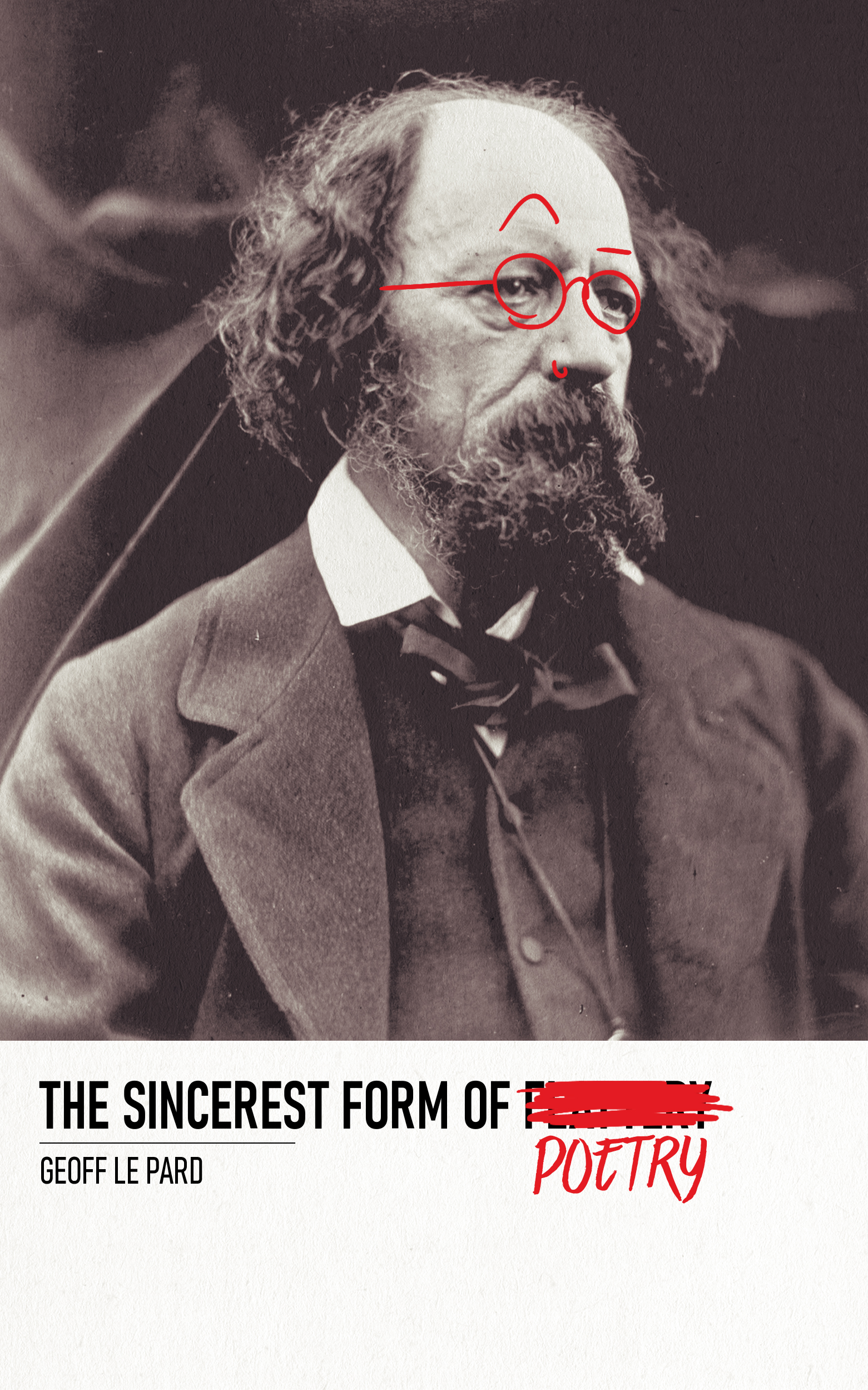
My review
I know Geoff Le Pard as an author of hilarious books that frequently poke fun, in the tongue-in-cheek way of the British, at many of the situations and achievements we humans hold the most dear during the course of our short lives. I am a big fan of this type of humour and have enjoyed several Geoff’s short stories and pieces of flash fiction. Geoff’s writing has another side to it, a more serious and family orientated side which also comes through in some of his books and writing.
The unusual book of poetry by Geoff Le Pard is his inaugural poetry book and is a mix of these two sides of his writing. The poems forming the first part of this books are a hilariously slapstick take-off of the works of many famous English poets. The poet has reproduced the exact tempo and rhythm of the original poem, replacing the original wording with his own amusing poetic descriptions of topical events and circumstances.
My favourite of these poems was the very first one in the book, which is based on one of my favourite poems, The Listeners by Walter de la Mare. The Listeners tells the story of an unnamed traveler who approaches an abandoned house which seems to be occupied by ghosts. In Le Pard’s version, the public toilet is held up for discussion and probing commentary. Here is an extract from The Relief of Waterloo:
“Is there anybody there, said the traveller
To open up this loo?
It’s surely wrong that one must pay,
For our numbers one and two.
***
It’s not a function of the state
To limit where I go.
My body ain’t so politic
But it has some rights, you know.”
The second part of the book is devoted to sonnets which generally have a more sophisticated and serious flavour. One of my favourite poems in this second part is The Hand That Guides. Here are a few lines to give you a sense of the poet’s sonnets:
“I continually try to do it my way,
To give into weakness of flesh and of soul
But you hold my love tight, I cannot stray
And we remain linked, two parts of one whole.”
If you enjoy poetry, in all its varying shapes and forms, you should not miss out on this collection.
Purchase The Sincerest Form of Poetry
Amazon US: https://www.amazon.com/Sincerest-Form-Poetry-Geoff-Pard-ebook/dp/B08HJRJHWC
Amazon UK: https://www.amazon.co.uk/Sincerest-Form-Poetry-Geoff-Pard/dp/B08KH3QWWB
About Geoff Le Pard
Geoff Le Pard (not Geoffrey, except to his mother) was born in 1956 and is a lawyer who saw the light. He started writing (creatively) in 2006 following a summer school course. Being a course junkie he had spells at Birkbeck College, twice at Arvon and most recently at Sheffield Hallam where he achieved an MA in Creative Writing. And what did he learn? That they are great fun, you meet wonderful people but the best lessons come from the unexpected places. He has a line of books waiting to be published but it has taken until now to find the courage to go live. He blogs at https://geofflepard.com/ on anything and everything. His aim is for each novel to be in a different style and genre. Most people have been nice about his writing (though when his brother’s dog peed on the manuscript he was editing, he did wonder) but he knows the skill is in seeking and accepting criticism. His career in the law has helped prepare him.
About Robbie Cheadle
Hello, my name is Robbie, short for Roberta. I am an author with seven published children’s picture books in the Sir Chocolate books series for children aged 2 to 9 years old (co-authored with my son, Michael Cheadle), one published middle grade book in the Silly Willy series and one published preteen/young adult fictionalised biography about my mother’s life as a young girl growing up in an English town in Suffolk during World War II called While the Bombs Fell (co-authored with my mother, Elsie Hancy Eaton). All of my children’s book are written under Robbie Cheadle and are published by TSL Publications.
I have recently branched into adult and young adult horror and supernatural writing and, in order to clearly differential my children’s books from my adult writing, I plan to publish these books under Roberta Eaton Cheadle. My first supernatural book published in that name, Through the Nethergate, is now available.
I have participated in a number of anthologies:
- Two short stories in Amazon horror anthology, Spellbound, compiled by Dan Alatorre;
- Two short stories in #1 Amazon bestselling horror anthology, Dark Visions, and three short stories in #1 Amazon bestselling horror anthology, Nightmareland, both edited by Dan Alatorre;
- Three short stories in Death Among Us, an anthology of murder mystery stories, edited by Stephen Bentley; and
- Two short stories in Whispers of the Past, an anthology of paranormal stories, edited by Kaye Lynne Booth.
I also have a book of poetry called Open a new door, with fellow South African poet, Kim Blades.
Find Robbie Cheadle
Blog: https://www.robbiecheadle.co.za/
Blog: robbiesinspiration.wordpress.com
Twitter: BakeandWrite
Instagram: Robbie Cheadle – Instagram
Facebook: Sir Chocolate Books
Want to be sure not to miss any of Robbie’s “Treasuring Poetry” segments? Subscribe to Writing to be Read for e-mail notifications whenever new content is posted or follow WtbR on WordPress. If you found it interesting or entertaining, please share.
Share this:

Chapter books versus short stories for children
Posted: October 14, 2020 Filed under: Books, Children's Books, Fiction, Growing Bookworms, Reading, Stories | Tags: #Childrensfiction, Growing Bookworms, Reading, Short Stories, Writing to be Read 34 CommentsI was having a conversation with my sister recently. Her younger son has recently been diagnosed with dyslexia and he finds reading difficult. He is an incredibly bright young man and I believe he is frustrated by his reading barrier. I experienced this same frustration with my younger son, Michael, who has an auditory processing learning barrier.
Our conversation led to a discussion about books and the fact that her son avoids reading as much as possible. He becomes difficult and even rude in an attempt to escape the hardship of having to try to read.
I recall similar behaviour by my son, so I am deeply sympathetic. It is incredibly difficult to remain patient and kind when your child is going against you at every turn.
I gave my sister some advice based on my own experience with teaching Michael to read. I advised her to try tandem reading, which I wrote about previously here: https://writingtoberead.com/2019/02/13/alternating-reading-with-your-child/, combined with short stories and not chapter books.
Chapter books are wonderful, but they are longer and more complex, they have more characters and often include sub-plots. When a child is struggling to read due to a reading barrier, it makes their reading slower. They also have to expend a lot of energy and focus on understanding and interpreting each word. The result of this is that it is much more difficult for the child to follow the greater story as they are distracted by the word-by-word struggle. If the child can’t appreciate the story, he or she doesn’t learn to love the written word and enjoy the delights of reading. The storyline disappears in the battle to conquer each sentence.
My advice to Hayley was to chose age appropriate books which encompass a short story within each chapter and to read the story in tandem with her son with the goal of finishing one complete story every night.
I discovered that the child doesn’t have to read a huge amount to benefit. I started off with Michael reading a paragraph but even a few sentence was fine if he struggled. When he’d read a bit, I took over and finished that page and the next one. This helped the story to progress and engaged him in the plot.
He then had another turn. At the end of the story, we had achieved something great together. We had read and enjoyed a whole story. There is a great sense of accomplishment in that and Michael could remember the details of the story because I kept it moving along. He developed a love of reading.
He still likes to be read to, but at 15 years old, I am not always a fan of the books he’s interested in, so I buy him audio books. As a result, Michael enjoys and appreciates reading and books and has a good vocabulary.
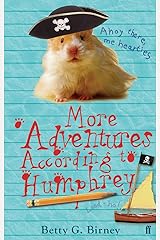
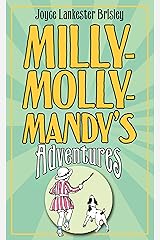
Some examples of books with a story per chapter are as follows:
The Humphrey the Hamster book series by Betty G. Birney: https://www.amazon.com/Betty-G-Birney/e/B001ILME1S
The Milly-Molly-Mandy books by Joyce Lankester Brisley: https://www.amazon.com/Milly-Molly-Mandy-Storybook-Joyce-Lankester-Brisley/dp/0753474719
Mary Poppins by P.L. Travers: https://www.amazon.com/P-L-Travers/e/B000APNNWW
![Mary Poppins: The Original Story (Mary Poppins series Book 1) by [P. L. Travers]](https://m.media-amazon.com/images/I/51fn80jRDYL.jpg)
About Robb,ie Cheadle
Hello, my name is Robbie, short for Roberta. I am an author with seven published children’s picture books in the Sir Chocolate books series for children aged 2 to 9 years old (co-authored with my son, Michael Cheadle), one published middle grade book in the Silly Willy series and one published preteen/young adult fictionalised biography about my mother’s life as a young girl growing up in an English town in Suffolk during World War II called While the Bombs Fell (co-authored with my mother, Elsie Hancy Eaton). All of my children’s book are written under Robbie Cheadle and are published by TSL Publications.
I have recently branched into adult and young adult horror and supernatural writing and, in order to clearly differential my children’s books from my adult writing, I plan to publish these books under Roberta Eaton Cheadle. My first supernatural book published in that name, Through the Nethergate, is now available.
I have participated in a number of anthologies:
- Two short stories in Spellbound, a forthcoming collection of horror stories edited by Dan Alatorre;
- Two short stories in the forthcoming Spirits of the West, A Wordcrafter Western Paranormal Anthology edited by Kaye Lynne Booth;
- Two short stories in #1 Amazon bestselling anthology, Dark Visions, a collection of horror stories edited by Dan Alatorre;
- Three short stories in Death Among Us, an anthology of murder mystery stories, edited by Stephen Bentley;
- Three short stories in #1 Amazon bestselling anthology, Nightmareland, a collection of horror stories edited by Dan Alatorre; and
- Two short stories in Whispers of the Past, an anthology of paranormal stories, edited by Kaye Lynne Booth.
I also have a book of poetry called Open a new door, with fellow South African poet, Kim Blades.
Find Robbie Cheadle
Blog: https://bakeandwrite.co.za/
Blog: robbiesinspiration.wordpress.com
Twitter: BakeandWrite
Instagram: Robbie Cheadle – Instagram
Facebook: Sir Chocolate Books
Want to be sure not to miss any of Robbie’s “Growing Bookworms” segments? Subscribe to Writing to be Read for e-mail notifications whenever new content is posted or follow WtbR on WordPress.
Share this:

Meet poet and author D. Avery plus review
Posted: September 26, 2020 Filed under: Book Review, Books, Interview, Poetry, Review, Treasuring Poetry | Tags: Author Interview, Book Review, D. Avery, Poetry, Robbie Cheadle, Treasuring Poetry, Writing to be Read 60 Comments
Today, I am delighted to welcome poet and author D. Avery. Ms Avery is the creator of the fun and well-known characters Kid and Pal who frequent Carrot Ranch Literary Community She also has her own blog where she shares her flash fiction, poetry and other literary endeavours. You can find her blog here: https://shiftnshake.wordpress.com/.
At first I was thrilled to be asked to participate in Treasuring Poetry with Writing to be Read and Robbie Cheadle. Then I read the questions! Too hard! Actually, I misread the questions and was flustered enough to consider who my favorite poet might be, let alone poem.
Robbie’s questions led me down many a rabbit hole, but perhaps not so many as I might have if I were under the same roof as my collection of poetry books. I’m not, so I let my mind travel and recall those shelves and what I have read lately. Often times my favorite poet or poem is simply the one in front of me, so recently I have enjoyed Conrad Aiken and Mary Oliver. But a favorite poet?
Still mistakenly contemplating a poet as opposed to a poem, and still unable to name just one, I at least realize I tend to most admire traditional Japanese poetry as well as the work of Rumi and of Hafiz. I like a short poem that makes me say, “Ah!” or even “Awe…” then “Ha!” If I could peruse my shelves I’d give my favorite examples, probably from a book called Japanese Death Poems; either that or I’d be lost in re-reading that treasure. As it is, this assignment got me re-reading Hafiz’s The Gift, translated by Daniel Ladinsky, and from that I came to see that many of Mary Oliver’s poems are in that Sufi vein, poems that, like Hafiz, are conversational yet intimate, not just with the reader, but with the subject, God. Now there’s a rabbit hole. But closer to home and in some ways more comfortable for their hominess are the poems of Robert Frost. He too writes with the wit and wisdom, often with a quiet humor, that I admire in the Sufis. Here are two lines from the New England bard:
We dance round in a ring and suppose,
But the secret sits in the middle and knows.
Robert Frost poems are accessible yet have subtleties and layers that can provide that ‘Ah ha’ that gives a poem staying power. As well as displaying an understanding of the spiritual aspects of his world Frost’s poems also reveal a keen observer’s eye for nature. There are many examples, and I never tire of reading Frost, but a favorite poem? I will not choose a favorite. But here are forty-eight syllables in eight lines, Nothing Gold Can Stay:
Nature’s first green is gold,
Her hardest hue to hold.
Her early leaf’s a flower;
But only so an hour.
Then leaf subsides to leaf.
So Eden sank to grief,
So dawn goes down to day.
Nothing gold can stay.
Some will say this poem is about impermanence and the fleeting nature of time. Leaves certainly change their hues in Frost’s New England, and he shows that he has observed this deeply, daily, for the emerging and unfolding leaves of spring and early summer cannot simply be called green, they are in fact shades of yellow and gold, and those might be preceded by cream and yellow flowers. Ah, he’s so observant. And dawn begins golden; “dawn goes down” makes one think of sunset, but it is just day, a day less sparkly than the golden dawn that begat it perhaps. Yes, time flies, but there is much implication in this poem of falling. So Eden sank to grief/ So dawn goes down to day/ Nothing gold can stay. There is nothing extraneous in this short poem; Eden sinking to grief is intentional, making this poem about humanity’s separation from nature, our fall from our golden potential when we were green and new in the world. This poem, without explicitly using seasonal words, has spring and fall entwined, so while that does show the fleeting nature of time, it is also a reminder of the seasons of our lives, and the hues we hold, the hues we live and die by. Just now in Frost’s old stomping grounds the leaves are turning back from summer greens to fall golds, and those colorful autumn leaves will fall, (for nothing gold can stay), but I wonder if that last line offers a bit of hope, the potential of knowing bright hues once more before the onset of winter.
I hope that addresses well enough the first three questions. As far as writing like any well-known poet, I choose— me! But I am not a well-known poet…
I admire many poets and many styles. I think any poet whom we admire is worth examining and, to an extent, imitating. That is what many of the poetry writing prompts do, they encourage us to try out different forms and styles of poetry, to pay attention to syllables and rhyme schemes and such. I sometimes see a form or style that is new to me and try it as a challenge and to learn something new. It’s all good, as long as you are building your own poeming muscles and not trying to write someone else’s poem. We tend to follow the recipe the first time we make a new dish. But then we get flexible and make the dish our own. In poeming too, we are aware that ours isn’t the only way to express the ingredients we find to hand, and we should want to find our own voice. In many ways free verse is the most challenging and difficult poetic form for me. How do you know when it’s done, if it’s done right, if there are no “rules”? That having been said, I am not against bending or even breaking the rules, but they have to be there in the first place for that to work.
Since I was nine years old I have occasionally been blessed by the magical balm of someone saying, “I liked your poem”. It’s a huge thing. I am not a singer or dancer or a visual artist. But sometimes I make pictures with words, and sometimes those words have a rhythm and a cadence or a tone that works, that strikes a chord. It is good to feel like a poem has performed well. And I have come to truly appreciate all the other lesser-known (not yet household names) poets that put their work out on their blogs. From you all I have learned so much and have been shown the great potential and creativity of poeming, and the assurance that poetry is alive and well.
D. Avery
My review of For the Girls by D Avery
This is the first book of poetry by D. Avery I have read and it was a wonderful experience. For the Girls really spoke to me as it is about the path of breast cancer many women walk. By reading these poems, I was able to follow this traumatic journey from diagnosis, through treatment and to remission for many, and death for a few.
The poems in For the Girls capture the concerns aroused by potential discover, the shock of a malignant diagnosis, the support offered by some of the staff at the treatment clinics and the comfort of firm friendships. The also disclose the pain of emotional upheaval being ignored and staff treating a patient with kind impatience.
Some of the verses/poems that struck me the most in this books are as follows:
“Unless.
Some of us have to get them off our chests.
And learn living without them.
Except.
Some, dear friends, couldn’t live.
With or without them.”
from The Girls
“There’s another intruder who lacks
Even the decency of mice or rats
that at least show themselves at night
To show they’ve been in the house all along,
only sometimes out of sight.
Why would you suspect your own house?
Relax, there’s nothing, or maybe only a mouse.
Why would you suspect there’s something there
Quiet as anxiety, maybe under the stairs
or up in the attic, just biding its time
A squatter in the house you blithely call “mine”?
from Intrusion
This collection of poems is freestyle and very bitter sweet. The insightfulness of the poet brought tears to my eyes and brought back memories of ladies I’ve known who’ve walked this same frightening path.
Purchase For the Girls by D Avery
About D Avery
D. Avery (196?-20??) has long been a compulsive poet. Despite a very important day job educating public school children, she is often distracted by this compulsion, as well as by life’s great questions, such as “Kayak, or bike?”. Though she has come to realize that nothing difficult is ever easy, she believes that it’s all good.
About Robbie Cheadle
Hello, my name is Robbie, short for Roberta. I am an author with six published children’s picture books in the Sir Chocolate books series for children aged 2 to 9 years old (co-authored with my son, Michael Cheadle), one published middle grade book in the Silly Willy series and one published preteen/young adult fictionalised biography about my mother’s life as a young girl growing up in an English town in Suffolk during World War II called While the Bombs Fell (co-authored with my mother, Elsie Hancy Eaton). All of my children’s book are written under Robbie Cheadle and are published by TSL Publications.
I have recently branched into adult and young adult horror and supernatural writing and, in order to clearly differential my children’s books from my adult writing, I plan to publish these books under Roberta Eaton Cheadle. My first supernatural book published in that name, Through the Nethergate, is now available.
I have participated in a number of anthologies:
- Two short stories in #1 Amazon bestselling anthology, Dark Visions, a collection of horror stories edited by Dan Alatorre;
- Three short stories in Death Among Us, an anthology of murder mystery stories, edited by Stephen Bentley;
- Three short stories in #1 Amazon bestselling anthology, Nightmareland, a collection of horror stories edited by Dan Alatorre; and
- Two short stories in Whispers of the Past, an anthology of paranormal stories, edited by Kaye Lynne Booth.
I also have a book of poetry called Open a new door, with fellow South African poet, Kim Blades.
Find Robbie Cheadle
Blog: https://www.robbiecheadle.co.za/
Blog: robbiesinspiration.wordpress.com
Twitter: BakeandWrite
Instagram: Robbie Cheadle – Instagram
Facebook: Sir Chocolate Books
Want to be sure not to miss any of Robbie’s “Treasuring Poetry” segments? Subscribe to Writing to be Read for e-mail notifications whenever new content is posted or follow WtbR on WordPress. If you found it interesting or entertaining, please share.
Share this:

The great Roald Dahl
Posted: September 9, 2020 Filed under: Books, Children's Books, Fantasy, Fiction, Growing Bookworms, Reading | Tags: #Reading, Charlie and the Chocolate Factory, George's Marvelous Medicine, Growing Bookworms, James and the Giant Peach, Roald Dahl, Writing to be Read 43 Comments
September 13 is the birthday of Roald Dahl, children’s writer extraordinaire. Of course, Roald Dahl also wrote for adults and I have read and enjoyed a number of his adult stories, including my favourite, Lamb to the Slaughter.
I believe he is best known, however, for his children’s books which are filled with his unusual imagery, imagination and his wacky sense of humour. Roald Dahl is guaranteed to appeal to the most reluctant child reader and his books are a terrific way to get them engaged in a good story which will entertain you as the parent too.
My favourite Roald Dahl book is The Witches, but today, I am going to focus on Michael’s and Gregory’s favourite Roald Dahl books.
Michael’s favourite – James and the Giant Peach
James and the Giant Peach is all about a young English lad who is orphaned at an early age due to an escaped rhinoceros from the zoo eating both his parents. James is sent to live with his Aunt Spiker and Aunt Sponge, who are the most horrible pair imaginable and treat him very badly.
One afternoon when James has been banished from the house by his selfish and mean aunts, he meets an old man in the garden who gives him a packet of magic green wriggly things which he says will change James’ life. Unfortunately, James drops the bag and all the wriggly magical things escape into the ground under an old peach tree.
The next morning, when James wakes up, there is a peach growing on the tree. It grows and it grows and James soon becomes embroiled in an amazing adventure.
I enjoyed this book because it features a number of human sized insects: Miss Spider, Miss Ladybird, the Old-Green-Grasshopper, the Earthworm, the Glowworm, and my personal favourite, the Centipede. This book teaches youngsters all about these amazing creatures and goes a long way towards demystifying them and making them seem really interesting and appealing. This is a refreshing change from the usual disdain that insects are treated with and they use their special talents, like the ability to spin thread, to save the day.
You can purchase James and the Giant Peach here: https://www.amazon.com/James-Giant-Peach-Colour-Roald-ebook/dp/B01LOHTSAU

Gregory’s favourite – George’s Marvellous Medicine
I say this is Gregory’s favourite Roald Dahl book, but it is more accurate to say its my mother’s favourite. My mother loves this story and has listened to it many times with both Gregory and Michael.
George’s Grandma lives with his family and a more tyrannical and awful old lady you will never find in the whole of England. Grandma is set in her ways, takes nasty medication and spends her time complaining, grousing, grouching, grumbling and griping.
One day, George’s parents go out leaving him in charge of looking after Grandma, including administering her medication. George decides to make her his own medicine as the old one isn’t doing the trick. Anything he makes could only be an improvement. All sorts of amazing things go into George’s medicine and when he gives it to the old woman, it has the most marvelous and amazing impact on her.
This is a story filled with vivid imagination and fun.
You can purchase George’s Marvellous Medicine here:
https://www.amazon.com/Georges-Marvellous-Medicine-Roald-Dahl-ebook/dp/B002VISNF8

Charlie and the Chocolate Factory
Charlie and the Chocolate Factory is one of Roald Dahl’s most famous books for children and has been made into a movie twice. My personal favourite of the two movies is the older musical with Gene Wilder.
Here is my favourite song from this movie:
The oompa loompa violet beauregarde song
If you would like to find out more about Roald Dahl, you can do so on the official Roald Dahl website here: https://www.roalddahl.com/home/teachers
And on his fan site here: https://www.roalddahlfans.com/
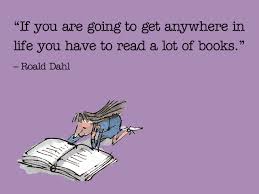
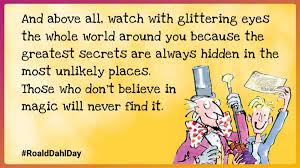
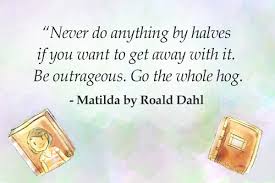
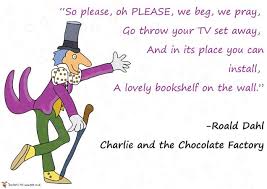
Official quotes from Roald Dahl Books
About Robbie Cheadle
Hello, my name is Robbie, short for Roberta. I am an author with seven published children’s picture books in the Sir Chocolate books series for children aged 2 to 9 years old (co-authored with my son, Michael Cheadle), one published middle grade book in the Silly Willy series and one published preteen/young adult fictionalised biography about my mother’s life as a young girl growing up in an English town in Suffolk during World War II called While the Bombs Fell (co-authored with my mother, Elsie Hancy Eaton). All of my children’s book are written under Robbie Cheadle and are published by TSL Publications.
I have recently branched into adult and young adult horror and supernatural writing and, in order to clearly differential my children’s books from my adult writing, I plan to publish these books under Roberta Eaton Cheadle. My first supernatural book published in that name, Through the Nethergate, is now available.
I have participated in a number of anthologies:
- Two short stories in Spellbound, a forthcoming collection of horror stories edited by Dan Alatorre;
- Two short stories in the forthcoming Spirits of the West, A Wordcrafter Western Paranormal Anthology edited by Kaye Lynne Booth;
- Two short stories in #1 Amazon bestselling anthology, Dark Visions, a collection of horror stories edited by Dan Alatorre;
- Three short stories in Death Among Us, an anthology of murder mystery stories, edited by Stephen Bentley;
- Three short stories in #1 Amazon bestselling anthology, Nightmareland, a collection of horror stories edited by Dan Alatorre; and
- Two short stories in Whispers of the Past, an anthology of paranormal stories, edited by Kaye Lynne Booth.
I also have a book of poetry called Open a new door, with fellow South African poet, Kim Blades.
Find Robbie Cheadle
Blog: https://bakeandwrite.co.za/
Blog: robbiesinspiration.wordpress.com
Twitter: BakeandWrite
Instagram: Robbie Cheadle – Instagram
Facebook: Sir Chocolate Books
Want to be sure not to miss any of Robbie’s “Growing Bookworms” segments? Subscribe to Writing to be Read for e-mail notifications whenever new content is posted or follow WtbR on WordPress.
Share this:

Meet poet, Frank Prem, and learn his thoughts about poetry
Posted: August 22, 2020 Filed under: Uncategorized 52 CommentsToday, talented poet, Frank Prem, has joined me to share about his favourite poem, why he likes it and what it means to him. His thoughts are very inspiring.
Frank shares a lot of his wonderful work on his blog here: https://frankprem.wordpress.com/.
Now, over to Frank.
What is your favourite poem
Usually when I’m invited to contemplate personal favourites among poets and their poetry I hark back to contemplate what the godfathers of Australian poetry (A.B. (The Banjo) Patterson and Henry Lawson represent for me. I feel great affection for both these writers as communicators and storytellers in their work.
While I admire their work very much and often refer to Patterson’s Clancy of the Overflow (http://www.wallisandmatilda.com.au/clancy-of-the-overflow.shtml), or Lawson’s short story The Drover’s Wife (http://www.eastoftheweb.com/short-stories/UBooks/DrovWife.shtml) as examples of work that inspires me in my own storytelling efforts, today my contemplations have led me toward more contemporary writing and more personal inspiration.
Some years back, when I was in the first flush of joy at recognising myself as a poet – that experience of looking into a mirror and seeing a different self gazing back – I spent all my free moments pursuing the threads and trails of writing and learning what it meant to be a writer. I haunted the spoken word poetry scene of Melbourne at the time (around 1999, or thereabouts), to learn and to hone and develop.
The great and acknowledged master of Australian poetry at that time (and right through until his death in 2019) was Les Murray. He was a big man in every respect and it happened that he was visiting Melbourne to speak and to do some readings of his own work in a range of locations across one weekend.
I didn’t much about Murray at the time, but made it my business to haunt his footsteps from venue to venue, and to be in every one of his audiences. Maybe to ask a question.
It was quite an experience and one of the poems that he read had a huge impact on me, as a budding and aspiring writer. Watching and listening to Murray read it was a marvellous experience, and one that I still reflect back on from time to time, and wonder if the way that my writing has evolved owes more or less to that occasion.
The poem that so involved me is called An absolutely ordinary rainbow. My source for the poem (below) is http://www.lesmurray.org/index.htm
An Absolutely Ordinary Rainbow
The word goes round Repins,
the murmur goes round Lorenzinis,
at Tattersalls, men look up from sheets of numbers,
the Stock Exchange scribblers forget the chalk in their hands
and men with bread in their pockets leave the Greek Club:
There’s a fellow crying in Martin Place. They can’t stop him.
The traffic in George Street is banked up for half a mile
and drained of motion. The crowds are edgy with talk
and more crowds come hurrying. Many run in the back streets
which minutes ago were busy main streets, pointing:
There’s a fellow weeping down there. No one can stop him.
The man we surround, the man no one approaches
simply weeps, and does not cover it, weeps
not like a child, not like the wind, like a man
and does not declaim it, nor beat his breast, nor even
sob very loudly—yet the dignity of his weeping
holds us back from his space, the hollow he makes about him
in the midday light, in his pentagram of sorrow,
and uniforms back in the crowd who tried to seize him
stare out at him, and feel, with amazement, their minds
longing for tears as children for a rainbow.
Some will say, in the years to come, a halo
or force stood around him. There is no such thing.
Some will say they were shocked and would have stopped him
but they will not have been there. The fiercest manhood,
the toughest reserve, the slickest wit amongst us
trembles with silence, and burns with unexpected
judgements of peace. Some in the concourse scream
who thought themselves happy. Only the smallest children
and such as look out of Paradise come near him
and sit at his feet, with dogs and dusty pigeons.
Ridiculous, says a man near me, and stops
his mouth with his hands, as if it uttered vomit—
and I see a woman, shining, stretch her hand
and shake as she receives the gift of weeping;
as many as follow her also receive it
and many weep for sheer acceptance, and more
refuse to weep for fear of all acceptance,
but the weeping man, like the earth, requires nothing,
the man who weeps ignores us, and cries out
of his writhen face and ordinary body
not words, but grief, not messages, but sorrow,
hard as the earth, sheer, present as the sea—
and when he stops, he simply walks between us
mopping his face with the dignity of one
man who has wept, and now has finished weeping.
Evading believers, he hurries off down Pitt Street.
Les Murray- The Weatherboard Cathedral, 1969
What is your interpretation of this poem?
This poem, in my interpretation, at least, is describing a kind spiritual awe and fascination bestowed on the most commonplace event. Someone (a man) weeping in a public place.
Every moment of every day someone – so many someone’s – is weeping. When might that be an event worthy of attention from a passing stranger, intent on personal business, and important matters?
When is the commonplace worthy of wonder?
The poem has me holding my breath, as I view the scene and watch the spectators thronging to worship, or condemn or simply to gawk before discussion at another time. Perhaps over dinner in the evening.
An ordinary event (rainbow) on the walkways of the main business centre in Sydney that no one can ignore.
What emotions does this poem invoke in you?
In reading, or listening to this poem being read, I feel the emotions swirling through the crowd – the curiosity and the wonder, the incredulity and intolerance. The wondering of what it could be about, how to stop it. Why did he stop weeping just when he did?
I am caught up in the narrative and inclined towards grief, but I don’t know quite why. Like the children, this poem caused me to sit at Murray’s feet.
If you could choose to write like any well-known poet, who would it be?
I go to some lengths, nowadays, to avoid reading any well known poet’s work too deeply. I feel so overfull of my own stories and writing imperatives that I fear, a little, being too influenced by any other powerful storyteller.
This work of Murray’s and some other of his material speaks to me, particularly when read aloud, as though it came from my own pen, in small ways and through small familiarities. Murray tells stories and peppers them with layers of meaning, or of question. He can be read at many levels, while retaining a lived contemporary feel within the work.
Literature without the excess baggage.
That is the kind of writing that I aspire to. Storytelling that can be spoken as conversational tale, and read as meaningful verse.
What is special to you about this poet’s writing style?
The power of Murray’s free verse is inspirational. There is no question that he is giving us capita ‘P’ poetry, but it is in a free verse form. There is such art in achieving the sharp brevity of ‘show, don’t tell’, within the confines of a fully fledged short story, as the piece above is.
Murray’s death (29 April 2019) is a huge loss to contemporary literature, I think.
Vale, Les.
A Kiss for the Worthy – Poetry book
Book review
A Kiss for the Worthy is the second book in a trilogy of poetry books, each inspired by a poem by a well-known and loved poet. In this, Book 2, Frank selected Leaves of Grass by Walt Whitman and used each line to write a poem of his own creation and inspiration.
I enjoyed this book very much and found the poems to be of a lighter tone than those included in Book 1. These poems revolve very much around the I, of the poem, and his interaction with nature and the world around him. The poems about with energy and his joy in what he sees and hears and also in the strength and endurance of his own body.
An example of this physical joy in nature is illustrated in this extract from be this (with kisses):
“turn your face
up
to feel the sun
pouring
warm and light
and good upon it”
And also in this beautiful extract from inhale (my heart):
“and where I strode
I raised
with salt flecks
in froth
and in the bubbles”
I really recommend this book of uplifting poetry to lovers of this genre.
Purchase A Kiss for the Worthy by Frank Prem
About Robbie Cheadle
Hello, my name is Robbie, short for Roberta. I am an author with six published children’s picture books in the Sir Chocolate books series for children aged 2 to 9 years old (co-authored with my son, Michael Cheadle), one published middle grade book in the Silly Willy series and one published preteen/young adult fictionalised biography about my mother’s life as a young girl growing up in an English town in Suffolk during World War II called While the Bombs Fell (co-authored with my mother, Elsie Hancy Eaton). All of my children’s book are written under Robbie Cheadle and are published by TSL Publications.
I have recently branched into adult and young adult horror and supernatural writing and, in order to clearly differential my children’s books from my adult writing, I plan to publish these books under Roberta Eaton Cheadle. My first supernatural book published in that name, Through the Nethergate, is now available.
I have participated in a number of anthologies:
- Two short stories in #1 Amazon bestselling anthology, Dark Visions, a collection of horror stories edited by Dan Alatorre;
- Three short stories in Death Among Us, an anthology of murder mystery stories, edited by Stephen Bentley;
- Three short stories in #1 Amazon bestselling anthology, Nightmareland, a collection of horror stories edited by Dan Alatorre; and
- Two short stories in Whispers of the Past, an anthology of paranormal stories, edited by Kaye Lynne Booth.
I also have a book of poetry called Open a new door, with fellow South African poet, Kim Blades.
Find Robbie Cheadle
Blog: https://www.robbiecheadle.co.za/
Blog: robbiesinspiration.wordpress.com
Twitter: BakeandWrite
Instagram: Robbie Cheadle – Instagram
Facebook: Sir Chocolate Books
Want to be sure not to miss any of Robbie’s “Treasuring Poetry” segments? Subscribe to Writing to be Read for e-mail notifications whenever new content is posted or follow WtbR on WordPress. If you found it interesting or entertaining, please share.
Share this:

Meet poet Kevin Morris and a review of his latest book, Light and Shade; serious (and not so serious) poems
Posted: July 25, 2020 Filed under: Book Review, Poetry, Treasuring Poetry | Tags: Book Review, Kevin Morris, Poet Interview, Poetry, Robbie Cheadle, Treasuring Poetry, Writing to be Read 43 CommentsToday, I am very excited to share poet, Kevin Morris’, thoughts about poetry and his favourite poem. I met Kevin a few years ago soon after I started my blog and I was immediately captivated by his interesting poetry which frequently presents new angles on current events and even some historical events. I have read and enjoyed a number of his lovely poetry books, including his latest book, Light and Shade; serious (and not so serious) poems which I have reviewed later in this post.
Over to Kevin
Choosing a favourite poem is a difficult task, as my head is full of poems, many of which are favourites of mine. However, as I have to make a choice, my favourite poem is Vitae Summa Brevis Spem Nos Vetat Incohare Longam, by Ernest Dowson, which runs thus:
“They are not long, the weeping and the laughter,
Love and desire and hate:
I think they have no portion in us after
We pass the gate.
They are not long, the days of wine and roses:
Out of a misty dream
Our path emerges for a while, then closes
Within a dream.”
Dowson’s poem deals poignantly with the brevity of life. We are here for a short time. Our lives are full of “weeping”, “laughter”, “love”, “desire” and “hate”. But all of these are but a passing show for, when we “pass the gate” (the gate signifying the entrance to the land of the dead), all are loves, joys and sorrows are at an end, and we are no more.
Whilst the poem invokes in me a feeling of sadness (it is, after all about the shortness of existence), my primary response to Dowson’s lines is one of admiration. I say admiration for he sums up admirably, in 2 short verses the brevity of life. Other writers expend pots of ink on the subject of our mortality, but Dowson gets to the heart of the matter in a mere 8 lines of poetry.
I never deliberately copy any of the well-known poets. Although, doubtless their work impacts on my writing.
Whilst Dowson’s poem has a Latin title (a language unfamiliar to many people, including me), the message and style of his poem is simple, and it’s the poem’s very simplicity which I so admire.
Thank you, Kevin, for sharing your favourite poem and your reasons for loving it. Your choice greatly interested me as the brevity of life and the inevitability of death is common topic in your own poetry.
My review of Light and Shade; serious (and not so serious) poems
What Amazon says
Life is full of light and shade. For to be human is to experience joy, beauty, love, pain and laughter. This collection reflects all facets of human experience. hence the title Light and Shade; serious (and not so serious) poems.
My review
Light and Shade; serious (and not so serious) poems is another delightful collection of poems by talented poet, Kevin Morris.
Section 1 – Love, nature and time includes poems written mainly in freestyle, that tell of these aspects of human life. Each poem has a streak of melancholy running through it which is extremely effective – a bit like biting on tinfoil – in the way it highlights the underlying certainty of death even in the midst of life. There are a few poems that hint at the trauma of the coronavirus and the related lockdown.
One particular extract that demonstrates this is from a poem called “Oh Creature of Night”:
‘Twas a strange thing
To hear.
Yet I
Felt no fear
But pondered on your incongruous cry,
And a virus, invisible to the eye.”
Section 2 – Humour
The second part of the book comprises of amusing takes on life. I personally prefer the poems with the underlying dark undertones, but these are a lovely and light relief. A large number of these poems comprise of limericks, a form of poetry that the author excels at. One of the verses that entertained me from this section of the book, also relates to Covid-19, and goes as follows:
“Sunscreen on skin
Is no sin.
The birds sing
For it is spring.
One may go outside
But woe betide
The man who offers resistance
To the concept of social distance.”
From At a Time of Social Distancing.
I highly recommend this book of poetry to all poetry lovers who enjoy unpacking meaning and delighting in subtle messages of humour and darkness.
Purchase Light and Shade; serious (and not so serious) poems
Kevin’s recently released poetry collection, Light and Shade: Serious (and Not so Serious) Poems is available from Amazon as follows:
For amazon.com customers please click here https://www.amazon.com/Light-Shade-serious-not-poems-ebook/dp/B08B4X3GVX/ (for the Kindle edition), and here https://www.amazon.com/dp/B08B37VVKV/ (for the paperback).
For amazon.co.uk customers please follow this link https://www.amazon.co.uk/Light-Shade-serious-not-poems-ebook/dp/B08B4X3GVX/ (for the Kindle edition), or click here https://www.amazon.co.uk/dp/B08B37VVKV/ (for the paperback).
About Kevin Morris
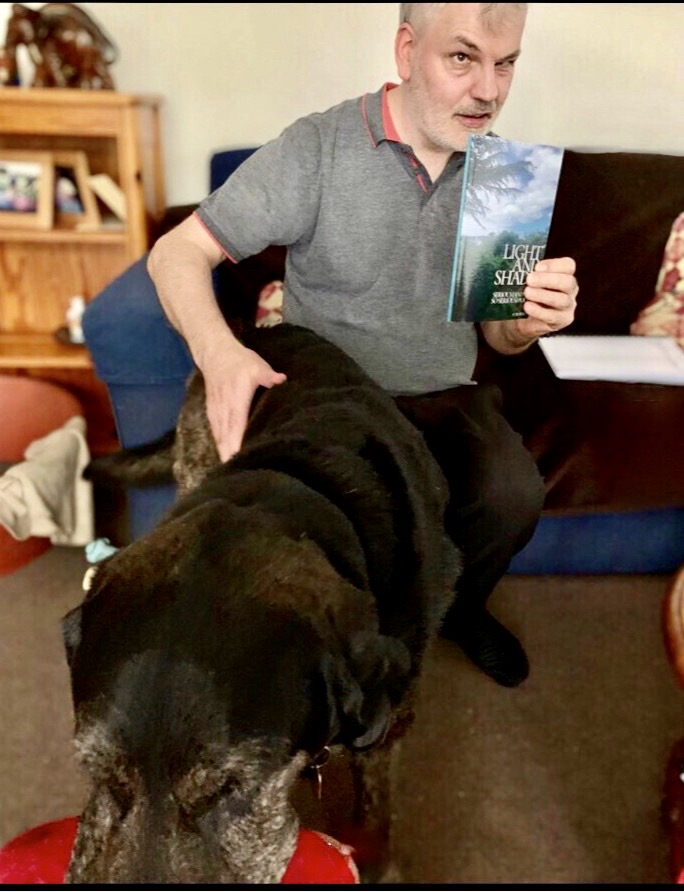
Kevin Morris was born in the city of Liverpool, United Kingdom, on 6 January 1969.
Having graduated from University College Swansea with a BA in history and politics and a MA in political theory, Kevin moved to London where he has lived and worked since 1994.
Being visually impaired, Kevin uses software called Job Access with Speech (JAWS), which converts text into speech and braille enabling him to use a Windows computer or laptop.
Contact Kevin Morris
Links:
Blog: https://kmorrispoet.com/
Twitter: https://twitter.com/drewdog2060_
About Robbie Cheadle
Hello, my name is Robbie, short for Roberta. I am an author with six published children’s picture books in the Sir Chocolate books series for children aged 2 to 9 years old (co-authored with my son, Michael Cheadle), one published middle grade book in the Silly Willy series and one published preteen/young adult fictionalised biography about my mother’s life as a young girl growing up in an English town in Suffolk during World War II called While the Bombs Fell (co-authored with my mother, Elsie Hancy Eaton). All of my children’s book are written under Robbie Cheadle and are published by TSL Publications.
I have recently branched into adult and young adult horror and supernatural writing and, in order to clearly differential my children’s books from my adult writing, I plan to publish these books under Roberta Eaton Cheadle. My first supernatural book published in that name, Through the Nethergate, is now available.
I have participated in a number of anthologies:
- Two short stories in #1 Amazon bestselling anthology, Dark Visions, a collection of horror stories edited by Dan Alatorre;
- Three short stories in Death Among Us, an anthology of murder mystery stories, edited by Stephen Bentley;
- Three short stories in #1 Amazon bestselling anthology, Nightmareland, a collection of horror stories edited by Dan Alatorre; and
- Two short stories in Whispers of the Past, an anthology of paranormal stories, edited by Kaye Lynne Booth.
I also have a book of poetry called Open a new door, with fellow South African poet, Kim Blades.
Find Robbie Cheadle
Blog: https://www.robbiecheadle.co.za/
Blog: robbiesinspiration.wordpress.com
Goodreads:
Twitter: BakeandWrite
Instagram: Robbie Cheadle – Instagram
Facebook: Sir Chocolate Books
Want to be sure not to miss any of Robbie’s “Treasuring Poetry” segments? Subscribe to Writing to be Read for e-mail notifications whenever new content is posted or follow WtbR on WordPress. If you found it interesting or entertaining, please share.
https://www.goodreads.com/author/show/6879063.K_Morrishttps://www.goodreads.com/author/show/6879063.K_Morrishttps://www.goodreads.com/author/show/6879063.K_Morris










The future of education
Posted: August 12, 2020 | Author: robbiesinspiration | Filed under: AI Technology, Commentary, Education, Growing Bookworms, Opinion, Parenting | Tags: Education, Growing Bookworms, Parenting, Robbie Cheadle, Writing to be Read | 64 CommentsIn March 2020 the world went mad. A new virus called Covid-19 started spreading rapidly among humans and by the end of that month most countries were engaged in a horrible new way of life called lock down. As with many other countries, lock-down in South Africa started with the closure of our schools.
The schools were given a minimum period of four business days to prepare for lock down and, in the case of my sons’ school, a home school programme. Fortunately, their school had seen the way the wind was blowing and had started preparing for a potential closure period earlier in the month. Even so, the teaching staff were not afforded much time to get themselves ready to go completely on-line with teaching.
On Thursday, the 18th of March my sons started on-line learning. It wasn’t badly implemented, despite the short timeline, and they had had Google classroom meetings hosted by their teachers, on-line assignments, YouTube video sessions and a lot of other help with all of their subjects.
At the end of March their school closed for the holiday and the teachers worked diligently to make improvements to the on-line programme. School reopened on the 6th of May and my boys continued with their on-line learning until the closure of the second term on Friday, 31 July. They even wrote examinations for two weeks under lock down conditions.
A few weeks ago, a good blogging friend of mine, Jim Borden, a university lecturer wrote this post https://jborden.com/2020/07/19/can-what-you-do-be-replicated-by-technology/. One of the questions he asks in this post is the replacement of teachers by Artificial Intelligence (“AI”) and on-line learning likely. A most interesting question, especially in light of the current scenario where millions of children have all been testing out this theory. So what do I think after my 11 week baptism of hell with home schooling? Does it make sense to replace teachers with AI?
My answer is a resounding NO! There are some advantages to an on-line learning programme. It would be much cheaper. There would be no need of large buildings to accommodate students and all the related furniture. There would be no need for cleaners, caterers and caretakers.
It would also be easier, I wouldn’t need to sit in traffic every day taking them to and from school.
It would also be far less time consuming as there would be no distractions in the form of socialising, team sports, individual sports, debating, chess, clubs and the numerous other things that fill up a child’s school day. It has also been proven statistically that children retain more information that they learn through on-line learning than in a classroom [personally, I’m not completely convinced about the correctness of this particular statistic].
So why then don’t I believe teaching works as well on-line as in the classroom?
I believe that all children, from the youngest to the oldest in our school system, need the human interaction with a teacher and their peers in order to stay emotionally balanced and motivated. People are social animals and they find isolation very difficult. My younger son has told me repeatedly that he misses his friends and the routine of the school day.
Even my older son, who is highly motivated and diligent has found it difficult to stay focused and disciplined during the lockdown period. The lack of routines and contact with other learners and teachers makes it feel a bit purposeless, even if it isn’t.
I also believe the children learn a lot from socialising. Working and life isn’t all about output and sitting at a computer on your own all day. It is about learning to work in teams and motivate others to deliver to deadlines. It is also about brain storming and working together to problem solve. These are all life skills that you cannot learn alone in front of your computer.
I am not going to go into the benefits of sport and extra curricular activities here, but they are numerous and the lack of these past times over the past five months has been has been very trying for children, and adults too.
Of course, there are also the other more basic issues that make on-line learning difficult. Many children lack access to the technology required for on-line learning, including a reliable internet and a computer. No everyone has these, but even if they did, it would not change my view on the relevance of teachers and teaching in a physical situation.
What do you think? Do you think teachers could be replaced by AI and on-line learning programmes? Has your view on this changed over the past few months? Let me know in the comments.
I made a Covid-19 memories cake recently which caricatured the nursery rhyme, The Old Woman Who Lived in a Shoe. I created a young mother with a washing basket full of clothing outside her shoe home. Her many children are all sitting, socially distanced, home schooling. They all have laptops and headsets.
About Robbie Cheadle
Hello, my name is Robbie, short for Roberta. I am an author with seven published children’s picture books in the Sir Chocolate books series for children aged 2 to 9 years old (co-authored with my son, Michael Cheadle), one published middle grade book in the Silly Willy series and one published preteen/young adult fictionalised biography about my mother’s life as a young girl growing up in an English town in Suffolk during World War II called While the Bombs Fell (co-authored with my mother, Elsie Hancy Eaton). All of my children’s book are written under Robbie Cheadle and are published by TSL Publications.
I have recently branched into adult and young adult horror and supernatural writing and, in order to clearly differential my children’s books from my adult writing, I plan to publish these books under Roberta Eaton Cheadle. My first supernatural book published in that name, Through the Nethergate, is now available.
I have participated in a number of anthologies:
I also have a book of poetry called Open a new door, with fellow South African poet, Kim Blades.
Find Robbie Cheadle
Blog: https://bakeandwrite.co.za/
Blog: robbiesinspiration.wordpress.com
Goodreads:
Twitter: BakeandWrite
Instagram: Robbie Cheadle – Instagram
Facebook: Sir Chocolate Books
Want to be sure not to miss any of Robbie’s “Growing Bookworms” segments? Subscribe to Writing to be Read for e-mail notifications whenever new content is posted or follow WtbR on WordPress.
Share this: