Growing Bookworms – Are there benefits to repetitive reading?
Posted: August 11, 2021 Filed under: Books, Growing Bookworms, Literacy, Reading | Tags: Growing Bookworms, Reading, Robbie Cheadle, teaching reading, Writing to be Read 48 Comments
“As adults, we know that you might read a complex book and, if you read it again, it allows you to absorb all the different elements over time. It’s true for children too. Not only do children love having the familiarity of their favourite books but the repetition is so valuable.”
DR ELIZABETH WESTRUPP
When my boys were young, they liked to have the same book read to them over and over again. With Greg it was the Farmyard Tales about Poppy and Sam and their dog called Rusty.
Greg was about two and a half years old when he went through this repetitive reading stage. Every afternoon when I got home from work, he would ask me to read Farmyard Tales to him. It was fortunate for me as I was pregnant at the time and busy working on a big transaction; Greg’s love of these books enabled me to rest a lot more than I would have been able to if he’d wanted to play outside.
You can find out more about Poppy and Sam here:
Michael went into this book reading stage later. He was about five years old when he decided he loved The Enchanted Wood series by Enid Blyton. I read this book to him so many times I learned sections of it off by heart. Michael also loved the Famous Five series also by Enid Blyton. Thankfully, I was smart enough to get the audio books of the whole series and so I didn’t have to read these to him repetitively. He liked Five go off in a caravan the best and his listening to this story nearly drove me mad eventually.

Back to today’s question: Is repetitive reading good for children?
According to a number of child psychologists repetitive reading does have some important benefits, in particular, children take longer to encode information that older children and adults and they forget faster. Repetitive reading helps young children to remember patterns, new and unusual words, and connect key concepts in the story. In other words, repetition helps develop better comprehension.
Repetitive reading also helps children learn to see things from a different perspective and undergo a different learning experience if you add some new nuances into your reading of the same story. It also helps make reading a story for the 20th time more fun.
Two other benefits of repetitive reading are as follows:
1. Children develop language fluency through repetition. It also helps them to learn sequencing and understanding the two concepts of timing and placing in a story;
2. Repetitive reading also helps develop confidence when a child knows the story and is able to remember what happens next. It also enables the child to re-tell the story to peers or a younger sibling.
Some books that are fun to read over and over again to children are the Dr Seuss books. I always find those books a lot of fun to read, even though I have read them many times, including to my own younger siblings.
I’m going to end off with a great quote from Dr Seuss:
“The more that you read, the more things you will know. The more that you learn, the more places you’ll go.” ― Dr. Seuss, I Can Read With My Eyes Shut!
About Robbie Cheadle

Robbie Cheadle is a South African children’s author and poet with 9 children’s books and 2 poetry books.
The 7 Sir Chocolate children’s picture books, co-authored by Robbie and Michael Cheadle, are written in sweet, short rhymes which are easy for young children to follow and are illustrated with pictures of delicious cakes and cake decorations. Each book also includes simple recipes or biscuit art directions which children can make under adult supervision.
Robbie has also published 2 books for older children which incorporate recipes that are relevant to the storylines.
Robbie has 2 adult novels in the paranormal historical and supernatural fantasy genres published under the name Roberta Eaton Cheadle. She also has short stories in the horror and paranormal genre and poems included in several anthologies.
Robbie writes a monthly series for https://writingtoberead.com called Growing Bookworms. This series discusses different topics relating to the benefits of reading to children.
Robbie has a blog, https://robbiesinspiration.wordpress.com/ where she shares book reviews, recipes, author interviews, and poetry.
Find Robbie Cheadle
Blog: https://www.robbiecheadle.co.za/
Blog: robbiesinspiration.wordpress.com
Twitter: BakeandWrite
Instagram: Robbie Cheadle – Instagram
Facebook: Sir Chocolate Books
_____________________________________________________________________________________________________________________
Want to be sure not to miss any of Robbie’s “Growing Bookworms” segments? Subscribe to Writing to be Read for e-mail notifications whenever new content is posted or follow WtbR on WordPress.
Share this:

Treasuring Poetry: Meet poet and author Miriam Hurdle
Posted: July 16, 2021 Filed under: Book Review, Books, Interview, Poetry | Tags: Author Interview, Book Review, Miriam Hurdle, Poetry, Robbie Cheadle, Treasuring Poetry, Writing to be Read 126 Comments
Today, I am delighted to host poet and author Miriam Hurdle for the July edition of Treasuring Poetry.

Welcome Miriam Hurdle
Hi Robbie,
I’m delighted to be your guest on Writing to be Read to talk about poetry.
Which of your own poems is your favourite
Among the published poems in Songs of Heartstrings: Poems of Gratitude and Beatitude, several poems are my favorites in equal measure for different reasons. One is in the section of Songs of Marriage, one in Songs of Tribute, and one in Songs of Inspiration.
The time I wrote this post, my heart turns to the poem “Healthy Grieving” in the section of Songs of Tribute.
Healthy Grieving
Randy and my husband were true friends.
No appointment needed for
a barbeque, a movie or a game, just
knocked on each other’s door.
The conversation could go anywhere,
no worry about apologies.
When one needed a helping hand,
the other one is always there.
Twelve years was a long time,
such true friendship rarely came by.
People say, “Big boys don’t cry.”
I don’t know why.
Boys have emotion, as we all do.
My husband had never cried,
not until after Randy died.
What inspired you to write this particular poem?
There is a narrative precedes the poem. I wrote the poem to pay tribute to our neighbor, my husband’s best friend who died of a mountain bike accident. Here is the excerpt.
I remember on January 3, 2016. Randy joined us to celebrate my husband’s birthday. We had lunch and saw Star Wars at Irvine Spectrum. It was on Saturday.
The following Sunday, eight days later, his relative came over to tell us that Randy had a mountain bike accident. He and a gym buddy ventured on a long mountain bike ride. The bike hit a vast gap and made a somersault flip. He got thrown off the bike, fell forward and hit the ground, and smashed his head and face.
They rushed him to the close by emergency room but pronounced him dead as soon as the ambulance reached the hospital.
Randy was our neighbor who lived two doors down the street. He was my husband’s best friend for twelve years, ever since he came back to live with his parents. They worked out at the gym together. They enjoyed the Friday movie and pizza day for a while.
After my husband got a mountain bike, he also got one. They biked on the trails in the city. On special occasions, a barbecue dinner was in order. He came over to our house for game nights regularly. A year before he passed away, they switched to another restaurant to hang out in the bar, and I became their designated driver.
Randy was a lighthearted guy, a wonderful friend, a caring son. We missed him very much.
Which genre of poetry do you enjoy writing the most and why?
Whereas a “form” defines the way a poem arranges sounds, rhythms, or its appearance on the page, “genre” is something like the poem’s style. Many poetic genres have a long history, and new poems almost always seek to explore a new aspect of the traditional style and thus to redefine the genre.
Traditionally, there are nine genres of poetry. Three of them remain in the newer inclusion of poetry genres. They are narrative poetry which tells a story, lyric poetry which is musical in tone, and dramatic poetry which is a long dramatic monologue or persona poem.
I would say I enjoy writing narrative poetry genre. Regardless of the poetry forms, I like to write poems that tell the stories. The poem I included above is a good example in which I shared the story of the friendship between my husband and Randy.
As far as poetry form, I enjoy writing free verse which is free of rules and regulations. It doesn’t follow a consistent rhyme scheme, meter or musical structure. For the fun of learning, I also write blank verse which follows a stricter structure with precise meter. In addition to Haiku, Tanka, I have written a Shakespearean Sonnet, a Pantoum, several acrostic poems, two Villanelle, and one one-syllable poem (all the words used in the entire poem are single syllable words).
Which genre of poetry do you enjoy reading the most?
I enjoy reading narrative and lyric poetry including poetic song lyric. One example of narrative poetry is a poem by the American Poet Linda Pastan in which she tells a story about her daughter.
To a daughter leaving home
When I taught you
at eight to ride
a bicycle, loping along
beside you
as you wobbled away
on two round wheels,
my own mouth rounding
in surprise when you pulled
ahead down the curved
path of the park,
I kept waiting
for the thud
of your crash as I
sprinted to catch up,
while you grew
smaller, more breakable
with distance,
pumping, pumping
for your life, screaming
with laughter,
the hair flapping
behind you like a
handkerchief waving
goodbye.
This poem is about the poet teaching her daughter to ride a bicycle. The title suggests that her daughter is now old enough to leave home. Pastan cleverly extends the metaphor of the bike as part of life’s journey. When I read this poem, I identify with the poet the joy of parenthood, with the sentiment of missing my daughter when she grew up and has gone on to her own journey.
I can’t talk about poetry without talking about music. I’m a singer of classical, traditional, and some older pop music and memorized many song lyrics for solo performances. The poetic song lyrics influence the flow of my poetry writing.
Examples of poetic song lyrics are, “Yesterday” by the Beatles, “Memory” from the Musical Cats written by Trevor Nunn, and “Killing Me Softly” written by Norman Gimbel & Charles Fox.
What is your favourite poem?
My favorite poem is a popular one by Robert Frost. Its signature phrases have become so ubiquitous, so much a part of the individual life and business alike. I like it because of its message applicable in my life.
I have come to crossroads many points in my journey. As reflected by Frost, I couldn’t take “both,” tried to look down both paths “as far as I could.” Many times, they both were “equally” “fair” but no guarantee. Ultimately, it was my decision that “made all the difference.” Knowing that I would never “come back,”, I willingly took the responsibility for the road I chose to travel with no regret.
The Road Not Taken
Two roads diverged in a yellow wood,
And sorry I could not travel both
And be one traveler, long I stood
And looked down one as far as I could
To where it bent in the undergrowth;
Then took the other, as just as fair,
And having perhaps the better claim,
Because it was grassy and wanted wear;
Though as for that the passing there
Had worn them really about the same,
And both that morning equally lay
In leaves no step had trodden black.
Oh, I kept the first for another day!
Yet knowing how way leads on to way,
I doubted if I should ever come back.
I shall be telling this with a sigh
Somewhere ages and ages hence:Two roads diverged in a wood, and I—
I took the one less traveled by,
And that has made all the difference.
I would like to include the trailer for Songs of Heartstring created by Diana W. Peach at https://mythsofthemirror.com
Songs of Heartstrings Amazon https://www.amazon.com/dp/B07K1S47W9
About Miriam Hurdle
Miriam Hurdle is a member of the Society of Children’s Book Writers and Illustrators (SCBWI). She published four children’s books at twenty-six years old. Her poetry collection received the Solo “Medalist Winner” for the New Apple Summer eBook Award and achieved bestseller status on Amazon.
Miriam writes poetry, short stories, memoir, and children’s books. She earned a Doctor of Education from the University of La Verne in California. After two years of rehabilitation counseling, fifteen years of public-school teaching and ten years in school district administration, she retired and enjoys life with her husband in southern California, and the visits to her daughter, son-in-law, and granddaughters in Oregon. When not writing, she engages in blogging, gardening, photography, and traveling.
Find Miriam Hurdle
Website/Blog: https://theshowersofblessings.com
Amazon Author’s Page: https://www.amazon.com/Miriam-Hurdle/e/B07K2MCSVW
Goodreads: https://www.goodreads.com/author/show/17252131.Miriam_Hurdle
Twitter: https://twitter.com/mhurdle112
Facebook: https://www.facebook.com/Miriam-Hurdle-Author-100123351515424
My review of Songs of Heartstrings: Poems of Gratitude and Beatitude

Songs of Heartstrings is a collection of poems and essays featuring the vast array of life experiences by the author. Miriam Hurdle has encountered both the best and the worst of life through the death of her husband’s close friend, her own treatment for cancer, the birth of her daughter and the close relationship of her parents. Her wonderful joy in life and strong faith in her religion shine through in her poetry and give a lot of insight into her strong spirit and ability to stay positive despite the curve balls life has thrown her way.
This book also demonstrates Miriam’s love of nature and features poems about her garden, a hummingbird and even a spider. Her photographs and pictures are lovely and compliment the prose.
My review of Tina Lost in a Crowd

Tina Lost in a Crowd is a charming book for children about two young school friends who attend a busy concert with Tina’s parents and get lost on their way to the restroom.
I enjoyed the character of Tina, a lovely and friendly girl who demonstrated politeness and respect towards both her teacher and her parents as well as consideration towards her friend. She has sufficient presence of mind not to panic in the scary situation of being lost in a big crowd.
The depiction of Tina’s family life and her mother’s interest in her and eagerness to plan some fun family outings for the summer vacation are heart warming and lovely to see in a children’s book. I liked the fact that Tina’s mother made a picnic for her family and Tina’s friend, Erica, to enjoy at the concert with good, wholesome food.
The illustrations in this book are a real treat and every page is a visual delight. I would recommend this book to parents and caregivers who like books that encourage good family values and level headedness by children in difficult situations.
About Robbie Cheadle
Robbie Cheadle is a South African children’s author and poet with 9 children’s books and 1 poetry book.
The 7 Sir Chocolate children’s picture books, co-authored by Robbie and Michael Cheadle, are written in sweet, short rhymes which are easy for young children to follow and are illustrated with pictures of delicious cakes and cake decorations. Each book also includes simple recipes or biscuit art directions which children can make under adult supervision.
Robbie has also published 2 books for older children which incorporate recipes that are relevant to the storylines.
Robbie has 2 adult novels in the paranormal historical and supernatural fantasy genres published under the name Roberta Eaton Cheadle. She also has short stories in the horror and paranormal genre and poems included in several anthologies.
Robbie writes a monthly series for https://writingtoberead.com called Growing Bookworms. This series discusses different topics relating to the benefits of reading to children.
Robbie has a blog, https://robbiesinspiration.wordpress.com/ where she shares book reviews, recipes, author interviews, and poetry.
Find Robbie Cheadle
Blog: https://www.robbiecheadle.co.za/
Blog: robbiesinspiration.wordpress.com
Twitter: BakeandWrite
Instagram: Robbie Cheadle – Instagram
Facebook: Sir Chocolate Books
_____________________________________________________________________________________________________________________
Want to be sure not to miss any of Robbie’s “Treasuring Poetry” segments? Subscribe to Writing to be Read for e-mail notifications whenever new content is posted or follow WtbR on WordPress.
Share this:

Growing Bookworms: Handwriting skills for children, Part 2
Posted: July 14, 2021 Filed under: Education, Growing Bookworms, Literacy, Reading, Teaching Writing, Writing, Writing Tips | Tags: Growing Bookworms, Handwriting, Robbie Cheadle, Teaching Writing, Writing to be Read 61 Comments
Last month, I discussed the reasons why handwriting is still important for both children and adults. You can read that post here: https://writingtoberead.com/2021/06/09/raising-bookworms-handwriting-skills-for-children-part-1/
Today, I am going to focus on strategies to improve handwriting.
The age of the child determines the best strategies for improving handwriting.
For a beginner writer in the early grades, the following strategies are useful to help children practice their handwriting and gain confidence with writing:
Make handwriting fun
There are a few ways you can make practicing handwriting more fun. You can give your child a fun or special pencil to use to practice writing. A stripped one or a pencil covered in flowers or cars. You can also play simple games that involve writing like hangman, word puzzles and anagrams.
I started writing the Sir Chocolate series of books with Michael to help him improve his handwriting. He used to write out the stories as we made them up. He tried very hard to write nicely in these little books we created.
Develop fine motor skills
Developing your child’s fine motor skills by drawing and painting, playing with play dough, cutting, threading, sand play, lego and building blocks are all great ways of encouraging children to manipulate small objects.


Correct pencil grip
Make sure your child is holding the pencil in a pincer grip and also using both hands to control the paper.
Here is a fun video song to help children with the correct pencil grip:
The correct equipment
Some children struggle to hold a regular pencil and do better with a shorter, smaller, or kid-sized pencil. Give your child an eraser so that s/he is confident and not afraid of making mistakes.
Use writing everywhere
You can practice handwriting in lots of fun places. You can write in the sand on the beach or on a foggy window or mirror. You can write in chalk on the driveway and you can even write on fondant with an edible ink pen.
About Robbie Cheadle
Robbie Cheadle is a South African children’s author and poet with 9 children’s books and 1 poetry book.
The 7 Sir Chocolate children’s picture books, co-authored by Robbie and Michael Cheadle, are written in sweet, short rhymes which are easy for young children to follow and are illustrated with pictures of delicious cakes and cake decorations. Each book also includes simple recipes or biscuit art directions which children can make under adult supervision.
Robbie has also published 2 books for older children which incorporate recipes that are relevant to the storylines.
Robbie has 2 adult novels in the paranormal historical and supernatural fantasy genres published under the name Roberta Eaton Cheadle. She also has short stories in the horror and paranormal genre and poems included in several anthologies.
Robbie writes a monthly series for https://writingtoberead.com called Growing Bookworms. This series discusses different topics relating to the benefits of reading to children.
Robbie has a blog, https://robbiesinspiration.wordpress.com/ where she shares book reviews, recipes, author interviews, and poetry.
Find Robbie Cheadle
Blog: https://www.robbiecheadle.co.za/
Blog: robbiesinspiration.wordpress.com
Twitter: BakeandWrite
Instagram: Robbie Cheadle – Instagram
Facebook: Sir Chocolate Books
_____________________________________________________________________________________________________________________
Want to be sure not to miss any of Robbie’s “Growing Bookworms” segments? Subscribe to Writing to be Read for e-mail notifications whenever new content is posted or follow WtbR on WordPress.
Share this:

Treasuring Poetry – If by Rudyard Kipling and The Listeners by Walter de la Mare
Posted: June 19, 2021 Filed under: Poetry, Treasuring Poetry | Tags: Poetry, Poetry Collection, Poetry Treasures, Robbie Cheadle, Treasuring Poetry, Writing to be Read 51 CommentsThis month I am featuring my own favourite poems and a poem and picture from my forthcoming poetry book, Behind Closed Doors. I hadn’t intended to feature my own work this month, but sometimes life happens and so I am making the best of it.
If by Rudyard Kipling
I love the poem If by Rudyard Kipling because it is so inspiring and uplifting. The objective of the poem was to give his son advice and instruction on how to live a happy and successful life. I relate strongly to this advice possibly because I have two sons.
My favourite lines are as follows:
“If you can bear to hear the truth you have spoken
Twisted by knaves to make a trap for fools,
Or watch the things you gave your life to, broken,
And stoop and build ’em up with worn-out tools.”
The first two lines above warn that his son must learn to endure his own words twisted by dishonest and harmful people in order to serve their own agendas. The second two lines explain the importance of being able to cope with failure and pick yourself up and carry on, even if what you fail at has been your life’s work.
Both of these situations are ones that everyone comes across in life – people who are willing to walk on you in order to serve their own purposes and failure. How we deal with the resulting disillusionment and disappointment has a huge bearing on our lives going forward.
I like to re-read this poem as a reminder to myself to stay strong and on my chosen path in life.
You can listen to my recital of this poem here:
The Listener by Walter de la Mare
In summary, this poem is about a traveler who comes to a house on a moonlit night and knocks on the door. He demands that the door be opened but he receives no answer.
We discover that the traveler has made a promise to return to the occupants of the house, but he has been prevented from doing so until the current time. It is too late and the occupants are gone. He clearly feels some guilt because he cries “Tell them I came, and no one answered, That I kept my word…”
I love this poem because of its supernatural undertone. There is a mystery that runs through the poem and you feel the whisper of ghosts in the imagined echoes of the listener’s words.
You can listen to my recital of this poem here:
Which of these two poems do you like best?
This is a poem from my poetry book, Open a new door.
The Thunderstorm
A deluge of rain tumbles from the sky
like a bucket turned upside down
the beggars impervious to its ferocity
faces impassive, no fear or frown.
***
Young boys stand on the roadside
eyes smoldering with hunger’s pain
need forcing them to continue standing
despite the lightening and drenching rain.
***
One holds a bedraggled cardboard sign
the other a tattered polystyrene cup
each hoping a passerby will pause
and give something to eat or sup.
***
A young mother stands shivering
an old umbrella sheltering her child
his eyes huge and frightened
he’s never laughed or even smiled.
***
In the middle of an intersection
an old man stands bent and alone
his head bowed in supplication to the torrent
he doesn’t complain, sigh or moan.
***
It’s rare to see the elderly on the street
poverty means many don’t live that long
my heart fills with a wrenching pain
for this anguished society to which I belong.
***
At the traffic light outside my offices there are a collection of beggars and window washers. One old man stands in the middle of the intersection. It is hard to extend any aid to him as it is not a good place to slow down. This motely crew is there every day, come rain or shine.
I have a new poetry collection coming out soon. Here is the cover, designed by the amazing Teagan Riordain Geneviene

About Robbie Cheadle
Robbie Cheadle is a children’s author and poet.
The Sir Chocolate children’s picture books, co-authored by Robbie and Michael Cheadle, are written in sweet, short rhymes which are easy for young children to follow and are illustrated with pictures of delicious cakes and cake decorations. Each book also includes simple recipes or biscuit art directions which children can make under adult supervision.
Robbie has also published books for older children which incorporate recipes that are relevant to the storylines.
Robbie writes a monthly series for https://writingtoberead.com called Growing Bookworms. This series discusses different topics relating to the benefits of reading to children.
Robbie has a blog, https://robbiesinspiration.wordpress.com/ where she shares book reviews, recipes, author interviews, and poetry.
Find Robbie Cheadle
Blog: https://www.robbiecheadle.co.za/
Blog: robbiesinspiration.wordpress.com
Twitter: BakeandWrite
Instagram: Robbie Cheadle – Instagram
Facebook: Sir Chocolate Books
Want to be sure not to miss any of Robbie’s “Treasuring Poetry” segments? Subscribe to Writing to be Read for e-mail notifications whenever new content is posted or follow WtbR on WordPress.
Share this:

Growing Bookworms: Handwriting skills for children, Part 1
Posted: June 9, 2021 Filed under: Growing Bookworms, Parenting, Writing | Tags: Growing Bookworms, Handwriting, Handwriting vs. typing, Robbie Cheadle, Writing to be Read 106 CommentsWhy handwriting is still important
As technology becomes increasingly important in our modern lives, writing by hand with a pen has become less common. Writing on a computer is easy and allows us to move text about, delete and add text, and save sections in a separate place for future use. We are also able to access our writing from a number of devices. I access my email and blogs from all three of my laptops, both of my iphones, and my ipad. This all makes writing so much simpler, so why do our education systems still focus on handwriting? Why not let the children use laptops and ipads to write?
Cognitive benefits
Writing notes by hand improves language skills. Writing by hand takes longer than typing and forces the writer to slow down their thought process and consider the words more. When you write by hand you spend more time thinking about the structure of the writing, the spelling of words, and they way you are using them.
Writing information down also aids our memory. I knew this without consulting the research confirming that writing creates unique pathways in the brain causing people who take notes by hand to remember the content better than those who type up their notes. Like me, my oldest son, Gregory, came to this realisation on his own and writes copious and detailed notes. His effort and dedication reflects in his academic results.
Creative writing benefits
A lot of writers still use notebooks to record and flesh out their ideas by hand. When we write longhand our ideas flow better and we are less distracted by the need to keep editing our work as we go along. When we write by hand we follow the flow of the idea and leave the editing until later.
I write most of my poetry by hand, but I do type up my prose so I know the above is true. I just can’t stop myself from continuously editing.
My son, Michael, writes by hand. He has a book in which he writes down his thoughts and ideas when the spirit moves him. When it comes to school assignments, he writes his stories on a laptop and I am always amazed at how many more mistakes and errors he makes when using a laptop than when writing by hand.
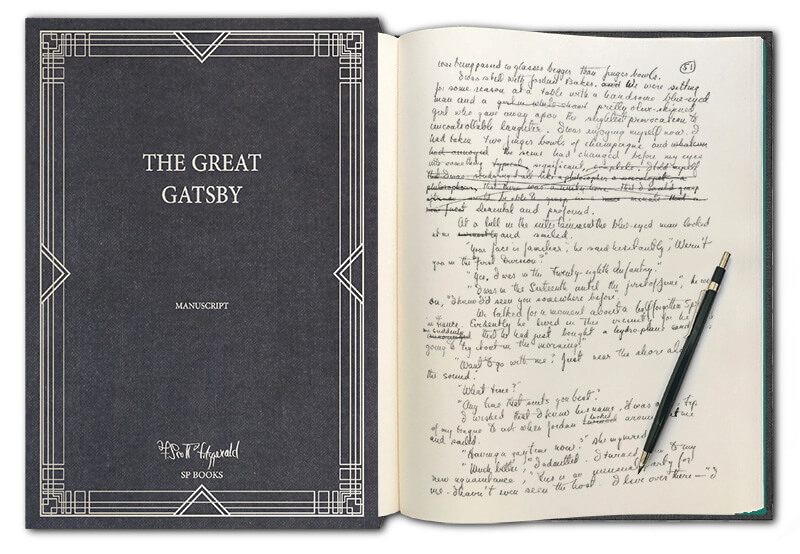
Picture credit: https://www.spbooks.com/67-the-great-gatsby-9791095457428.html
Handwriting is less restrictive
This point links to the one above about writing by hand freeing our minds and creative processes from the need to edit. I don’t write my prose by hand but I do record my frameworks and basic ideas by hand. I like to use mind maps which set out my story process. I have noticed that Michael does the same when plotting.
Again, I must emphasis that using and electronic devise to brainstorm is fraught with distractions. These are our own fault as we have our social media, email, and other notifications coming through on our devices. Every time I get an email or notification from Facebook, it pops up on my screen and my eyes automatically go to the pop up and read it.
Handwriting is part of our identity and our culture
Our handwriting is unique to us and forms a part of our identity. Even people like me whose writing is difficult for others to read, still put our personal stamp on handwritten work (my writing is difficult to read because I cannot resist adding curls and whirls all over the place; my writing is a work of art).
Writing is also an important part of our culture and our development as a species, it is the foundation of our learning and progress.
If you are interested in learning a bit more about the role of handwriting in our lives and culture, Rebecca Budd has a lovely podcast entitled The Trio on Letter Writing which discusses this topic in detail.
Quotes about writing
I think of my drawing style like handwriting: it’s a mix of whatever handwriting you’re born with, plus bits and pieces you’ve pilfered from other people around you. – Roz Chast
Poets don’t draw. They unravel their handwriting and then tie it up again, but differently. – Jean Cocteau
Somehow I started introducing writing into my drawings, and after a time, the language took over and I started getting very involved with the handwriting and then the look of the handwriting. – Patti Smith
About Robbie Cheadle
Robbie Cheadle is a children’s author and poet.
The Sir Chocolate children’s picture books, co-authored by Robbie and Michael Cheadle, are written in sweet, short rhymes which are easy for young children to follow and are illustrated with pictures of delicious cakes and cake decorations. Each book also includes simple recipes or biscuit art directions which children can make under adult supervision.
Robbie has also published books for older children which incorporate recipes that are relevant to the storylines.
Robbie writes a monthly series for https://writingtoberead.com called Growing Bookworms. This series discusses different topics relating to the benefits of reading to children.
Robbie has a blog, https://robbiesinspiration.wordpress.com/ where she shares book reviews, recipes, author interviews, and poetry.
Find Robbie Cheadle
Blog: https://www.robbiecheadle.co.za/
Blog: robbiesinspiration.wordpress.com
Twitter: BakeandWrite
Instagram: Robbie Cheadle – Instagram
Facebook: Sir Chocolate Books
_____________________________________________________________________________________________________________________
Want to be sure not to miss any of Robbie’s “Growing Bookworms” segments? Subscribe to Writing to be Read for e-mail notifications whenever new content is posted or follow WtbR on WordPress.
Share this:

Treasuring Poetry: Meet author and poet M J Mallon
Posted: May 15, 2021 Filed under: Author Profile, Book Review, Books, Interview, Poetry, Review, Treasuring Poetry | Tags: Author Interview, Book Review, M.J. Mallon, Mr. Sagittarius, Robbie Cheadle, Treasuring Poetry, Writing to be Read 60 CommentsMy Treasuring Poetry guest today is talented author and poet M J Mallon. I am delighted to host Marje here and hope you enjoy her thoughts on poetry and her favourite poem.
Which of your own poems is your favourite?
This was such a difficult decision, I have at least three favourites! I narrowed it down to the robin. The robin and the dragonfly are my spirit animals and trees are also a huge inspiration. I’ve written about all of these and more in Mr. Sagittarius.

Bench,
A bird,
Red-breasted,
So, tame you rest,
Beside me robin,
Two friends on a park bench,
One human, one of nature,
I appreciate your kind time,
Until you away… exploring far,
Hinting at possibilities you go.
I wonder what you notice in your world.
And why you choose that ground to explore,
When you could have stayed here with me,
In mindful meditation.
Maybe you’ll visit me,
Christmas day, perhaps?
To bring good cheer,
Until then,
Peace to, You.
What inspired you to write this particular poem?
I’d been studying mindfulness at the sixth form college where I work. Mindfulness is the act of observing and using the full array of our senses meditatively to become more at one with ourselves. I’ve discovered that this is a fantastic practice to adhere to. It benefits an author’s creativity by making you more aware of the nuances of your surroundings. I’m fortunate in that I work near the botanical gardens in Cambridge, so I often visit and walk and observe the wonder of nature taking photographs of the trees, flowers, animal and insect visitors. Over time, I collected these photographs and wrote poems about them. These, along with various seasonal and short pieces of fiction feature in Mr. Sagittarius. It is a joyful celebration of siblings, magic, loves, nature, the seasons and the circle of our lives.
Which genre of poetry do you enjoy writing the most and why?
I love writing poetry about life in all its vibrant colours. I am often inspired by photography, (I am a keen amateur photographer – my grandfather and uncle were professional photographers,) or I use images I discover as prompts, often via Colleen Chesebro’s poetry challenge: https://wordcraftpoetry.com/
Specifically, I enjoy writing poems about nature, trees, flowers, love and Halloween! Halloween poems also feature in Mr. Sagittarius. Halloween is an autumnal activity, (and often a childhood one,) so it links well with the seasonal/circle of life, aspect of my poetry writing.
Which genre of poetry do you enjoy reading the most?
I enjoy reading short form poetry. It is so expressive and brilliant. I love how short verses of poetry convey so much detail in so few words. I enjoy haiku, and tanka, as well as poems that form a pattern on the page. I also enjoy longer forms as you will see from my choice of favourite poem.
What is your favourite poem?
I have always loved Ode To Autumn by John Keats. I can almost taste the words. They are magnificent—that first line: Season of mists and mellow fruitfulness —draws you in and makes you long to read more.
Ode To Autumn by John Keats
Season of mists and mellow fruitfulness,
Close bosom-friend of the maturing sun;
Conspiring with him how to load and bless
With fruit the vines that round the thatch-eves run;
To bend with apples the moss’d cottage-trees,
And fill all fruit with ripeness to the core;
To swell the gourd, and plump the hazel shells
With a sweet kernel; to set budding more,
And still more, later flowers for the bees,
Until they think warm days will never cease,
For Summer has o’er-brimm’d their clammy cells.
2.
Who hath not seen thee oft amid thy store?
Sometimes whoever seeks abroad may find
Thee sitting careless on a granary floor,
Thy hair soft-lifted by the winnowing wind;
Or on a half-reap’d furrow sound asleep,
Drows’d with the fume of poppies, while thy hook
Spares the next swath and all its twined flowers:
And sometimes like a gleaner thou dost keep
Steady thy laden head across a brook;
Or by a cyder-press, with patient look,
Thou watchest the last oozings hours by hours.
3.
Where are the songs of Spring? Ay, where are they?
Think not of them, thou hast thy music too,—
While barred clouds bloom the soft-dying day,
And touch the stubble-plains with rosy hue;
Then in a wailful choir the small gnats mourn
Among the river sallows, borne aloft
Or sinking as the light wind lives or dies;
And full-grown lambs loud bleat from hilly bourn;
Hedge-crickets sing; and now with treble soft
The red-breast whistles from a garden-croft;
And gathering swallows twitter in the skies.
https://allpoetry.com/Ode-To-Autumn
Mr Sagittarius by M J Mallon
About Mr Sagittarius
Twin brothers Harold and William love the magic of the natural world.
When Harold dies he leaves a simple memorial request.
Will his brother William and his sister Annette honour it?
Or, will the garden work its magic to ensure that they do.
A magical story expressed via an original compilation of poetry and prose with photographic images.
#Poetry #Prose #Photography #NaturalWorld #Trees #Magic #Spirit #Animals #CircleofLife #Humour #Halloween #Cats #Buddha
My review of Mr Sagittarius
Mr Sagittarius is a beautiful collection of poems and short stories, set in the lovely gardens of Cambridge and linked by the visits and experiences of a family of twin brothers and their younger sister.
The story starts with William visiting the weeping willow tree in the garden, a place that was special to his twin brother, Harold, who has recently passed away. William sees Harold’s spirit in a dragonfly that he chats to and finds solace in their one-sided communication.
This is a few lines from a poem about the dragonfly:
“Ancient, sweet fellow
Sacred magic bestower,
Change tumbling on fragile wings.”
When William returns home, he has an altercation with his sister, Annette. During their spat Annette reveals that she has always felt left out and overlooked by her twin brothers. This revelation leads to William and Annette becoming closer and visiting the garden together. Not long after, William passes on and Annette is left alone. She visits the garden and communicates with the spirits of both her brothers over the course of the rest of her long life.
The visits of the siblings to the garden are captured in lovely verse. This is an example I really enjoyed:
“I dream in colour
But now everything is dark
Where has the light gone?
Oh, cruel leafy canopy,
No green meadow, just blue thoughts.”
My favourite of the short stories was The Old Man of Snow and The Snow Snake. This is a story about making good choices in life and rejecting greed. I enjoyed the tale and the descriptive writing.
Mr Sagittarius is a gorgeous book full of delightfully depictive poems and short stories and decorated with striking photographs. This is a book that lovers of poetry, mystery, and wonder will love.
Purchase Mr Sagittarius: Poetry and Prose
About M J Mallon
I am a diverse author who blogs at: https://mjmallon.com. My interests include writing, poetry, photography, and alternative therapies. My favourite genres to write are: Fantasy YA, Paranormal, Ghost and Horror Stories and I love writing various forms of poetry and micro poetry – haiku and Tanka and flash fiction.
I am proud to be included in the best selling horror anthology Nightmareland which received best seller status with best-selling author Dan Alatorre at the helm.
It is one of my greatest pleasures to read and I have written over 100 reviews: https://mjmallon.com/2015/09/28/a-z-of-my-book-reviews/
About Robbie Cheadle
Robbie Cheadle is a children’s author and poet.
The Sir Chocolate children’s picture books, co-authored by Robbie and Michael Cheadle, are written in sweet, short rhymes which are easy for young children to follow and are illustrated with pictures of delicious cakes and cake decorations. Each book also includes simple recipes or biscuit art directions which children can make under adult supervision.
Robbie has also published books for older children which incorporate recipes that are relevant to the storylines.
Robbie writes a monthly series for https://writingtoberead.com called Growing Bookworms. This series discusses different topics relating to the benefits of reading to children.
Robbie has a blog, https://robbiesinspiration.wordpress.com/ where she shares book reviews, recipes, author interviews, and poetry.
Find Robbie Cheadle
Blog: https://www.robbiecheadle.co.za/
Blog: robbiesinspiration.wordpress.com
Twitter: BakeandWrite
Instagram: Robbie Cheadle – Instagram
Facebook: Sir Chocolate Books
Want to be sure not to miss any of Robbie’s “Treasuring Poetry” segments? Subscribe to Writing to be Read for e-mail notifications whenever new content is posted or follow WtbR on WordPress.
Share this:

Growing bookworms: The importance of historical fiction for kids
Posted: May 12, 2021 Filed under: Books, Children's Books, Fiction, Growing Bookworms, Historical Fiction, Reading | Tags: #Reading #Childrensfiction, Growing Bookworms, Historical Fiction, Reading, Robbie Cheadle, Writing to be Read 55 CommentsWhen I was in high school, history was an unpopular subject. It was so unpopular, in fact, that when the time came for the Grade 9’s to chose their subjects for Grade’s 10 to 12, the school paired history with typing, home economics and business economics so that the girls who chose this less academic combination were compelled to take history. This was how I ended up in a history class with mainly girls who hated the subject. I loved history and I took it through choice. My other subjects were maths, accountancy, and science. In South Africa, English and Afrikaans were compulsory subjects at the time.
I never really understood why my peers didn’t like history as it was a subject always loved. I’ve said it here before, however, that I was a very wide reader from a very young age and I read a lot of books set in the past. Among my favourite books by a South African author, were the collections of short stories by Herman Charles Bosman. This is what Wikipedia has to say about Herman Charles Bosman:
Herman Charles Bosman (5 February 1905 – 14 October 1951) is widely regarded as South Africa’s greatest short-story writer. He studied the works of Edgar Allan Poe and Mark Twain and developed a style emphasizing the use of satire. His English-language works utilize primarily Afrikaner characters and highlight the many contradictions in Afrikaner society during the first half of the twentieth century.
On reflection, I realised that I have acquired a love of history because all the books I had read allowed me to include the facts and dates I learned into the fascinating backdrop I had acquired of life at the time. I could visualise the homes, lives, and loves of the Afrikaner people I learned about during the sections on the Great Trek and the Boers wars though my reading of Charles Bosman’s works. I also read books by South African Boer War veteran, Deneys Reitz.
My learning of international history including the French Revolution, the Industrial Revolution (including the Luddite uprisings), and the Tudor period were coloured by my reading of certain books, in particular, A Tale of Two Cities by Charles Dickens, and Shirley and Jane Eyre by Charlotte Bronte. I found it easy to remember my history because I entwined it with my understanding of life at the times as presented by these great novels.
I was delighted when I discovered that history is a popular subject at the college for boys my sons both attend. Gregory chose to take history to matric (along with IT, maths, advanced maths and science which shows that its mixes well with any subject combination) and Michael looks set to follow in his footsteps.
I am bowled over by their history curriculum and the amazing why they learn about the past through source documents, cartoons, and many other interactive and interesting modes compared to my school days of rote learning. My sons are also taught history from the perspective of how historical events have influenced the present which makes this subject a lot more useful. It helps them to see how people’s actions and reactions have set the path for the future and resulted in both the good and bad in society we see today.
I believe it is vital for kids to understand history in an expansive and wide context so that they can value the freedoms and benefits their forefathers fought and die to leave as their legacy. For example, what young girl would not value her vote if she knew about the suffering and hardships of the suffragettes who paved the way for the achievement of this equality for women.
I wonder how many British children know that compulsory education for children aged 5 to 14 years was only introduced in 1918. How many American children know that compulsory education laws were only passed by 1900 and then only in 32 states, with the other states following by 1930. 1930! That’s less than 100 years ago.
Modern children are so fortunate to have an education and the opportunities for self improvement that come with it. It isn’t equal for all yet, but there are lots of people who believe passionately in educating children and who work really hard to implement change and improvements in education.
Understanding and learning about real people in a historical context makes their passions, sufferings and beliefs so much more compelling. It is difficult to hold on to prejudice if you’ve read novels like I am David by Anne Holm, The Diary of a Young Girl by Anne Frank, and Cry the Beloved Country by Alan Patton.


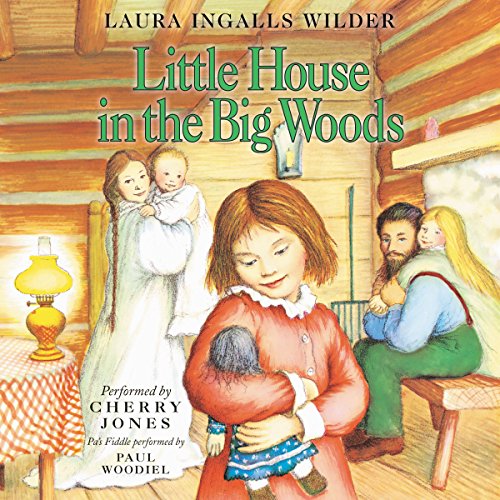
Historical books also teach children interesting information about how people survived in the past. I’ve always remembered the chapter from Little House in the Big Woods by Laura Ingalls Wilder when Pa cleaned his gun and made bullets. There is also a chapter about how Ma made butter and coloured it yellow. Little House on the Prairie has a scene when Ma is helping Pa build their new log cabin and a log falls on her foot. The difficulties and dangers of life on the frontier were illustrated; there was no help to be had for an injury or if the family fell ill.
I learned a lot about the limitations of medical knowledge in the mid to late 1800s through my reading of the What Katy Did series by Susan Coolidge. I will never forget Katy falling out of the swing or Amy contracting, and nearly dying from, Roman fever. Such scenes induce great feelings of empathy and compassion in the reader.

It is for all these compelling reasons that I wrote While the Bombs Fell, a fictionalised biography of my mom’s life as a young girl growing up in a small English town during World War II. I wanted to capture and preserve her memories of life for ordinary people living through this extraordinary time so that others, children in particular, could read it and remember how life was during that time.
What are your thoughts about historical fiction for both children and adults? Do you see value in learning about history in through a good story?
About Robbie Cheadle
Robbie Cheadle is a children’s author and poet.
The Sir Chocolate children’s picture books, co-authored by Robbie and Michael Cheadle, are written in sweet, short rhymes which are easy for young children to follow and are illustrated with pictures of delicious cakes and cake decorations. Each book also includes simple recipes or biscuit art directions which children can make under adult supervision.
Robbie has also published books for older children which incorporate recipes that are relevant to the storylines.
Robbie writes a monthly series for https://writingtoberead.com called Growing Bookworms. This series discusses different topics relating to the benefits of reading to children.
Robbie has a blog, https://robbiesinspiration.wordpress.com/ where she shares book reviews, recipes, author interviews, and poetry.
Find Robbie Cheadle
Blog: https://www.robbiecheadle.co.za/
Blog: robbiesinspiration.wordpress.com
Twitter: BakeandWrite
Instagram: Robbie Cheadle – Instagram
Facebook: Sir Chocolate Books
Want to be sure not to miss any of Robbie’s “Growing Bookworms” segments? Subscribe to Writing to be Read for e-mail notifications whenever new content is posted or follow WtbR on WordPress.
Share this:

Treasuring Poetry – Meet poet and author Elizabeth Merry and a review
Posted: April 17, 2021 Filed under: Uncategorized 47 CommentsToday, I am delighted to introduce you to author and poet, Elizabeth Merry. I came across Elizabeth’s poetry and writing quite recently and was bowled over by her powerful words and messages.
Welcome Elizabeth

First, I would like to send a million thanks to Robbie Cheadle for this opportunity; it is much appreciated.
My favourite poem from my own collection is The Red Petticoat, which I wrote for my mother. When I was very young, anyone with relations in America was always on the lookout for parcels. Besides the red petticoat I remember winter coats for my sister and myself. Mine was grey and red check and hers was chocolate brown with pompoms – I was so jealous of those pompoms! Well, here is the poem:
THE RED PETTICOAT
I remember the rustle
Of the red, exotic petticoat
The pick of a parcel
From America
Delight crackled in her hair
Exploded in a sudden flush
On her alabaster skin
The lighthouse sweep and beam
Of her glad eyes
Lit us all, haloed the room
Where we stood in a row
To admire
Long left that room, that house
The woman has gathered her years
Carefully, tucked them primly away
Scented and folded neatly
Facing the rest
With a lifted chin
A grin and a new hat
The glow of the red petticoat
About her still.
I don’t favour any particular genre, although when I read through the collection it seems that most of them are about my own life – I’m sure that says something about me – not too complimentary! However, I do have a love for writing haikus, especially when I’m out walking along the river, counting syllables under my breath! And as opposed to the poems, the haikus are generally about nature, the river itself, and all the trees and plants along its banks. I’m lucky to have many lovely walks right beside where I live.
Sometimes it takes a long time to write a poem; it arrives in separate words and phrases on different days, weeks, months even. Other times it appears almost complete and all at once; you hardly have to work on it, just write it down.
For my own reading pleasure I appreciate poems that I can understand. At school (a long time ago) we were taught how to interpret poems; the teachers explaining what the poet meant, and what he (it was always a “he” in those days) was referring to – it could be something from Greek or Roman mythology. Just because a poem is easy to understand doesn’t mean it isn’t clever or wonderful. My favourite poem is one of Séamus Heaney’s which illustrates exactly what I mean. Here it is:
DIGGING
Between my finger and my thumb
The squat pen rests; snug as a gun.
Under my window, a clean rasping sound
When the spade sinks into gravelly ground;
My father, digging. I look down
Till his straining rump among the flowerbeds
Bends low, comes up twenty years away
Stooping in rhythm through potato drills
Where he was digging.
The coarse boot nestled on the lug, the shaft
Against the inside knee was levered firmly.
He rooted out tall tops, buried the bright edge deep
To scatter new potatoes that we picked,
Loving their cool hardness in our hands.
By God, the old man could handle a spade.
Just like his old man.
My grandfather cut more turf in a day
Than any other man on Toner’s bog.
Once I carried him milk in a bottle
Corked sloppily with paper. He straightened up
To drink it, then fell to right away
Nicking and slicing neatly, heaving sods
Over his shoulder, going down and down
For the good turf. Digging.
The cold smell of potato mould, the squelch and slap
Of soggy peat, the curt cuts of an edge
Through living roots awaken in my head.
But I’ve no spade to follow men like them.
Between my finger and my thumb
The squat pen rests.
I’ll dig with it.
Isn’t that sublime? Although some of Heaney’s poems are extremely long and convoluted and steeped in the classics of Irish and European tradition, the poems in this, his first, collection, are accessible to anyone, and are filled with a sort of magic. Death of a Naturalist was published in 1966. Heaney received the Nobel Prize in 1995. Again I would like to thank Robbie for this opportunity I have enjoyed the experience very much.
Minus One: With Haikus and Other Poems: The Story of a Life by Elizabeth Merry
What Amazon says

This collection sums up the life of the poet. It begins with memories of her parents, in The Red Petticoat: “The lighthouse sweep and beam/Of her glad eyes/Lit us all, haloed the room/Where we stood in a row/To admire.” And in Minus One: “Your absence grips my throat/Chokes my breath . . . How much of you is me/Stretching to close the circle?” Other poems cover growing up and speak of friends and lovers, moving forward to parenthood and beyond, to old age in Bones: “Don’t look too close/Disintegration has begun/And death will lend it speed/Until my bones are bare and/Waiting for the second coming . . . ” And to death in Mortality: “Tombstones/Pale and cold/Line up, waiting/For my name . . . ” Throughout the collection there are sections of Haikus, many with accompanying photographs: “Child of my child, I/scoop you up and hug you, breathe/you in and keep you.” References to the sea and the harbour move through this collection, lending a special atmosphere. These poems are filled with the many emotions of our lives and will appeal to all of us.
My review
This is a beautiful collection of poetry about the life of the poet including both great moments and sad moments. The poetry comprises of freestyle poems and some lovely and moving haikus which are accompanied by beautiful photographs.
I have not as yet lost anyone very close to me so the first poem Minus One was very compelling for me. I could imagine the pain of loss in these words:
“My magic circle broken
Minus one
The first one
To close his eyes”
The rest of this poem brought tears to my eyes.
The small dark man was quite a frightening poem. A tale of a man who has become bitter and angry due to life burdens. He has lost his way and turned to alcohol for solace. Such a disappointment for his children who remember better days. A few compelling lines:
“We waited – wary
His face shut tight against us
Like a fist”
There is a sense of loss but joy in memory in the poem In a Yellow Dress:
“If I could put you
In a frame
And freeze forever
Those wanton curls”
My favourite haiku in this collection reminds me of my own sons when they were little … and even now that they are big lads. There is nothing more emotional than your child or, I imagine, you grandchild:
“Child of my child, I
scoop you up and hug you, breathe
you in and keep you”
Purchase Minus One: With Haikus and Other Poems: The Story of a Life by Elizabeth Merry
New Children’s books by Elizabeth Merry
Elizabeth has just released two new books for middle school children.
Ghosts in Trouble

Blurb
Lizzie blamed Cormac. Stealing the silver tea-set was all his idea, and now they can’t get into heaven until it’s returned to Old Whelan. They need help, but who can they turn to?
“I’ve just thought, Cormac. That awful cousin of yours, Imelda. The house is hers now. Hers and poor Dermot’s and those noisy twins, David and Dora.”
Might it be possible for them to make friends with the twins?
“Lizzie stopped short as the front door was suddenly thrown open and in rushed the cold, night air, followed by two large children who tripped over the boxes in the hall and fell down laughing.”
Things get even more complicated when the villain, John the Pots, gets involved. He wants the tea-set for himself; he could sell it for a lot of money.
“Someone moved in the dark. Someone who peered and moved, his eyes raking the house and garden . . . “
All seems lost until Cormac and Lizzie meet Jamesy, an old ghost who knows a lot, and has an idea, but will it work . . .
Felix finds out

Blurb
Hennessy is the school caretaker. He is also a devious thief and a bully. Felix is ten years old, a quiet boy, and small for his age. How is he to find out what Hennessy is up to? ‘Felix wondered where Hennessy was. As he thought of the tall figure in the heavy anorak, his mouth went suddenly dry, his heart leaping and banging, his whole face squeezed up with frowns.’But when a new girl arrives at the school, Felix watches her closely; this could change everything. She might suit as an accomplice.'”Hello, I’m Samantha. Is your name really Felix? That’s a good name, I think.”‘Can Felix and his new friend find out what Hennessy is up to, and save Uncle Eddie’s job? Samantha has a plan!
Share this:

Growing Bookworms – Digital versus print books for children
Posted: April 14, 2021 Filed under: Books, Children's Books, Literacy, Reading | Tags: Books, digital vs print, Growing Bookworms, Literacy, Reading, Robbie Cheadle, teaching reading, Wriiting to be Read 50 CommentsI have been giving some thought lately to book marketing, especially the marketing of books aimed at children. While selling more books is obviously of interest to me as a writer of children’s books, I am also interested in the most advantageous ways of imparting information to, and developing a love of learning and reading in young children. This duel interest led me to an investigation of electronic books and the pros and cons of children reading using an electronic platform like a computer or an app on a tablet.
I wanted to know, firstly, if children were interested in reading ebooks.
The answer to that first question was a resounding yes, children are definitely interested in reading ebooks. Modern children are surrounded by technology and it is becoming more and more central to their lives. Lately, not only do children use cell phones and tablets to communicate with each other, and as a source of entertainment and research for school projects, they are using it to do their school lessons and virtually visit with relatives and friends.
Since the advent of the pandemic, many children are seeing their parents working on-line at home and using Zoom to engage with their colleagues instead of face-to-face meetings, so it is hardly surprising that children are interested in ebooks. It is a natural progression.
Ebooks for children are also easily accessible, cheap, have a narrator who reads the story, and have interactive features such as animated pictures, music, sound effects, and links on the screen that connect to games or additional information about the story or pictures. I must admit, I have noticed this link feature in non-fiction books I have read recently and I also like it. I can click on the link and find out more about the source of a picture or listen to a YouTube video about a specific aspect of the book.
My second investigation looked at the pros and cons of ebooks for children.
The pros
- children learn early literacy skills from good quality ebooks that include relevant interactive features such as a dictionary, words that are highlighted when the narrator reads them, and games and pictures that help explain the story;
- children interact longer with their parents when reading an ebook together;
- children can read an ebook over and over again on their own which improves literacy and fluency;
- children can read an ebook independently which may encourage them to read more often; and
- ebooks are cheap and accessible.
The cons
- parents often feel they should reduce their children’s screen time and have a resistance to ebooks;
- parents think their children can have the book read to them by the narrator and spend less time reading to [and bonding with] their children;
- parents get distracted by the interactive features and end up focusing on them instead of the story itself;
- children learn less about the story from an ebook, in particular they do not remember the order of events as well as they do when reading a paper book; and
- the interactive features in an ebook may be distracting to the child.
My overarching takeaway from the above which is a summary of all the articles I read on this subject is that, as with paper books, children benefit the most from ebooks when they read them with a parent or caregiver who spends time taking to the child about the story. This is exactly the same benefit that a child receives from reading a paper book with a parent.
The general view is that parents either take the view that their input is not required for ebooks due to the narrator who reads the story to the child, or the parents get distracted away from the detail of the story by the interactive features and so the wrong information dominates the parent/child engagement.
In homes where the parents do not spend time reading with/to their children, it is believed that ebooks can play a bigger role in assisting children to learn to read as it provides a way of achieving the reading of a story without parental input.
I’ve always read to both my boys. I read with Gregory until he was 6 1/2 years old and wanted to read on his own and I read with Michael every day until he was 12. Some evenings I still read with Michael [his book] and we often sit and read our own books together. It is still a pleasant time and reading separate books at the same time means I don’t have to suffer through Rick Riordan books all year round.
If you are interested in finding free digital children’s books for primary students, you can find three recommended websites here: https://learningattheprimarypond.com/blog/3-websites-with-free-digital-childrens-books-for-primary-students/

I have not attempted to download any of the free ebooks from Oxford Owl but these are the book series I used to teach my sons to read. I had the paper copies.
What are your thoughts on ebooks for children? Have you tried them? Let me know in the comments.

If you have spare Easter eggs you can learn how to make a fun Easter chick here: https://www.youtube.com/watch?v=Bod4B029_xw
OR you can download the instructions here: https://robbiesinspiration.wordpress.com/how-to-make-baby-chick-using-an-easter-egg/
About Robbie Cheadle
Robbie Cheadle has published nine books for children and one poetry book. She has branched into writing for adults and young adults and, in order to clearly separate her children’s books from her adult books, is writing for older readers under the name Roberta Eaton Cheadle.
Robbie Cheadle’s Sir Chocolate children’s picture books are written in sweet, short rhymes which are easy for young children to follow and are illustrated with pictures of delicious cakes and cake decorations. Each book also includes simple recipes or biscuit art directions which children can make under adult supervision. Her books for older children also incorporate recipes that are relevant to the storylines.
Roberta Eaton Cheadle’s supernatural stories combine fabulous paranormal elements with fascinating historical facts.
Children’s picture books – available as a square book and an A5 book (co-authored with Michael Cheadle):
Sir Chocolate and the strawberry cream story and cookbook
Sir Chocolate and the baby cookie monster story and cookbook
Sir Chocolate and the sugar dough bees story and cookbook
Sir Chocolate and the Condensed Milk River story and cookbook
Sir Chocolate and the Sugar Crystal Caves story and cookbook
Sir Chocolate and the Fondant Five story and cookbook
Sir Chocolate and the Ice Cream Rainbow Fairies story and cookbook
Middle school books:
Silly Willy Goes to Cape Town (includes five fun party cake ideas)
While the Bombs Fell (co-authored with Elsie Hancy Eaton)
Poetry book:
Open a new door (co-authored with Kim Blades)
Supernatural fantasy YA novel:
Through the Nethergate
Horror Anthologies (edited by Dan Alatorre):
Spellbound
Nightmareland
Dark Visions
Paranormal Anthologies (edited by Kaye Lynne Booth):
Spirits of the West
Whispers of the Past
Murder mystery Anthology (edited by Stephen Bentley)
Death Among Us
Find Robbie Cheadle
Blog: https://bakeandwrite.co.za/
Blog: robbiesinspiration.wordpress.com
Twitter: BakeandWrite
Instagram: Robbie Cheadle – Instagram
Facebook: Sir Chocolate Books
Want to be sure not to miss any of Robbie’s “Growing Bookworms” segments? Subscribe to Writing to be Read for e-mail notifications whenever new content is posted or follow WtbR on WordPress.
Share this:

Treasuring Poetry: Meet poet and author, Ritu Bhathal, and read about her thoughts on poetry
Posted: March 20, 2021 Filed under: Book Review, Books, Interview, Poetry, Review, Treasuring Poetry | Tags: Book Review, Poet Interview, Poetic RITUals, Poetry, Poetry Collection, Ritu Bhathal, Treasuring Poetry, Writing to be Read 61 CommentsToday, I am delighted to feature Ritu Bhathal, talented poet and author, as my Treasuring Poetry guest. Ritu has a lovely poetry book, Poetic RITUals, a romance, Marriage Unarranged, and is a contributor to This is Lockdown, compiled and edited by MJ Mallen.
Which of your own poems is your favourite?
There are a lot of poems I have written, which resonate, but one of my favourites will always be this one:
From Twinkle To Reality
Let me take you down that road,
Much travelled through eternity
The journey to become a mum,
From twinkle to reality.
The plans you make at a young age,
Full of gurgles and laughter,
The horror as you realise,
What really does come after!
The fun of trying,
The monthly wait.
The disappointment,
That feeling, you hate…
The years of trying,
Full of hospitals and checks,
The medication taking you over,
You feel like total wrecks…
Then finally, the day comes
That positive is clear
The goal that you were aiming for,
Has suddenly come near.
The months of fascination,
Your changing body grows
The feeling of satisfaction
That only you can know.
Those pain-filled days, or hours
To reach the prize you sought
The feeling of satisfaction
That this little bundle brought.
I gaze at you in wonder
Are you really here?
I’m overwhelmed with happiness
And a tiny bit of fear.
Will I be able to give to you
All you want and need?
As you look at me, wide eyed
Snuggled close while you feed.
Little blessing, sent from God
My heart is filled with joy
I will do all I can for you,
My darling baby boy.
And so the cycle continues
The waits and checks again
We’re gifted with a gorgeous girl
After a little more pain.
My life is here with me right now
Some twinkles from my eyes.
But I’ll never forget those twinkles
That now, do grace the skies…
A lovely poem, Ritu, that all parents can relate to. I can see why it is your favourite.
What inspired you to write this particular poem?
This poem is dedicated to my wonderful children, recognising the struggles to have them, and remembering my 2 angels lighting the sky at night. The words just came to me, one day, as I was running a bath. The poem formed within ten minutes, and garnered a great interest on my blog when I published it, and on my anthology, Poetic RITUals.
Which genre of poetry do you enjoy writing the most and why?
I have learned a lot about poetry, since I began blogging. I do love simple rhyming couplets and four-line rhyming verses, but I also love the succinct haiku, senryu and tanka forms. It’s amazing how much you can convey in such few syllables.
Which genre of poetry do you enjoy reading the most?
I don’t have a favourite genre of poetry to read. I find that, depending on the subject, all forms can appeal. Sometimes freeform poetry speaks to me, sometimes it is the simple abab rhymes. And who doesn’t love a limerick?
What is your favourite poem?
I have to say I don’t have a strict favourite poem, but I am a huge fan of Pam Ayres.
Here is a great one!
YES I’LL MARRY YOU MY DEAR
Yes, I’ll marry you, my dear.
And here’s the reason why.
So I can push you out of bed,
When the baby starts to cry.
And if we hear a knocking,
And it’s creepy and it’s late,
I hand you the torch, you see,
And you investigate.
Yes I’ll marry you, my dear,
You may not apprehend it,
But when the tumble-drier goes
It’s you that has to mend it.
You have to face the neighbour
Should our labrador attack him,
And if a drunkard fondles me
It’s you that has to whack him.
Yes, I’ll marry you, my dear,
You’re virile and you’re lean,
My house is like a pigsty
You can help to keep it clean.
That little sexy dinner
Which you served by candlelight,
As I just do chipolatas,
You can cook it every night!!!
It’s you who has to work the drill
And put up curtain track,
And when I’ve got PMT, it’s you who gets the flak,
I do see great advantages,
But none of them for you,
And so, before you see the light,
I DO, I DO, I DO!!
Haha, Ritu, you had better hope Hubby Dearest does not read this.
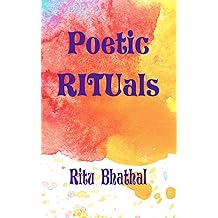
Poetic RITUals
What Amazon says
Delve into a book of verse exploring different topics and different genres, all with a RITUal twist.
A collection of poetry drawing on the experiences of the writer, ranging from matters of the heart, love for the family, situations in life and some verses written with a humorous twist.
My review
This is a delightful book of poetry with a lot of variety in the tone and content of the poems. They are all written from a very human perspective and cover the day-to-day life of a Mother of two, wife and employee with a lovely twist of humour. As all of these things myself, I found the verses to be very relatable. The book is divided into four sections which each deal with different aspects of life, namely, Family RITUals, Life rituals, Rituals of the heart and Rituals to make you smile.
Who could not enjoy such words as the following:
“Snuggled close while you feed.
Little blessing, sent from God
My heart is filled with joy”
This took me right back to those first days as a Mother and the closeness of cuddling your new-born and breastfeeding.
“A cough or sniffle, fever, rash
You wish you could
make them well
but other than love, and Calpol
It’s a parent’s
Form of Hell”
As a Mother of a child with a chronic illness, this verse had me nodding my head in agreement and feeling Ritu’s anguish.
I would recommend this book which is a keeper. A book to delve into for a smile when life gets heavy going.
Purchase Poetic RITUals
Other books
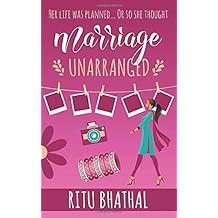
You can read my review of Marriage Unarranged here: https://www.amazon.com/gp/customer-reviews/R1UMFET10EPA4M
You can read my review of This is Lockdown here: https://www.amazon.com/gp/customer-reviews/R10H47WGGWTVWT
About Ritu Bhathal
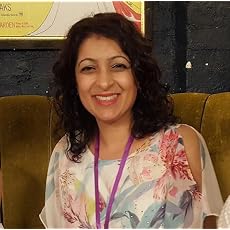
Ritu Bhathal was born in Birmingham in the mid-1970s to migrant parents, hailing from Kenya but with Indian origin. This colourful background has been a constant source of inspiration to her.
From childhood, she always enjoyed reading. This love of books is credited to her mother. The joy of reading spurred her on to become creative in her writing, from fiction to poetry. Winning little writing competitions at school and locally encouraged her to continue writing.
As a wife, mother, daughter, sister, and teacher, she has drawn on inspiration from many avenues to create the poems that she writes.
A qualified teacher, having studied at Kingston University, she now deals with classes of children as a sideline to her writing!
Ritu also writes a blog, www.butismileanyway.com, a mixture of life and creativity, thoughts and opinions, which was awarded first place in the Best Overall Blog category at the 2017 Annual Bloggers Bash Awards, and Best Book Blog in 2019.
Ritu is happily married and living in Kent, with her Hubby Dearest, and two children, not forgetting the fur baby Sonu Singh.
About Robbie Cheadle
Robbie Cheadle has published nine books for children and one poetry book. She has branched into writing for adults and young adults and, in order to clearly separate her children’s books from her adult books, is writing for older readers under the name Roberta Eaton Cheadle.
Robbie Cheadle’s Sir Chocolate children’s picture books are written in sweet, short rhymes which are easy for young children to follow and are illustrated with pictures of delicious cakes and cake decorations. Each book also includes simple recipes or biscuit art directions which children can make under adult supervision. Her books for older children also incorporate recipes that are relevant to the storylines.
Roberta Eaton Cheadle’s supernatural stories combine fabulous paranormal elements with fascinating historical facts.
Children’s picture books – available as a square book and an A5 book (co-authored with Michael Cheadle):
Sir Chocolate and the strawberry cream story and cookbook
Sir Chocolate and the baby cookie monster story and cookbook
Sir Chocolate and the sugar dough bees story and cookbook
Sir Chocolate and the Condensed Milk River story and cookbook
Sir Chocolate and the Sugar Crystal Caves story and cookbook
Sir Chocolate and the Fondant Five story and cookbook
Sir Chocolate and the Ice Cream Rainbow Fairies story and cookbook
Middle school books:
Silly Willy Goes to Cape Town (includes five fun party cake ideas)
While the Bombs Fell (co-authored with Elsie Hancy Eaton)
Poetry book:
Open a new door (co-authored with Kim Blades)
Supernatural fantasy YA novel:
Through the Nethergate
Horror Anthologies (edited by Dan Alatorre):
Spellbound
Nightmareland
Dark Visions
Paranormal Anthologies (edited by Kaye Lynne Booth):
Spirits of the West
Whispers of the Past
Murder mystery Anthology (edited by Stephen Bentley)
Death Among Us
Find Robbie Cheadle
Blog: https://bakeandwrite.co.za/
Blog: robbiesinspiration.wordpress.com
Twitter: BakeandWrite
Instagram: Robbie Cheadle – Instagram
Facebook: Sir Chocolate Books
Want to be sure not to miss any of Robbie’s “Treasuring Poetry” segments? Subscribe to Writing to be Read for e-mail notifications whenever new content is posted or follow WtbR on WordPress.