A Tribute to My Son
Posted: September 19, 2016 Filed under: Memoir, Nonfiction, Writing | Tags: Grief, Michael Daniel Lee Booth, Nonfiction, Suicide, True Story, Writing 15 Comments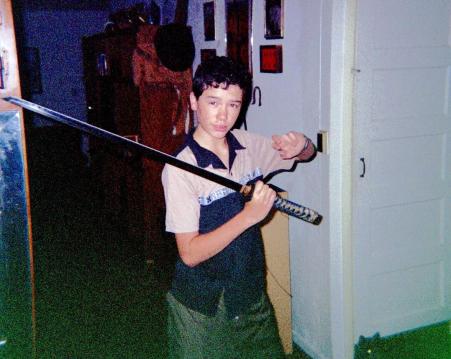
Wednesday the 21st is the 8th anniversary of the death of my son, Michael Daniel Lee Booth. Since his death, September has always been a pretty difficult month for me. His birthday was the 9th. He had just turned nineteen when he took his own life. I relate well to the song by Green Day, “Wake Me Up When September Ends”, but of course, I can’t sleep the whole month away. It’s just not practical. So, instead I try and find some way to cope by honoring him in some way.
Since his death, I’ve talked a lot about how I want to write a book that will tell his story, and mine too I suppose, or at least the story of how his death affected me, and changed my life. When I first began thinking about it, I referred to it as a memoir, but it has to be more than that because there are so many others his death affected. I keep putting off writing it because I’m not sure I’m ready to dredge up all the memories that writing his story would bring. Some of them are still so painful it seems as if they only occurred yesterday.
For a long time after Mike died, it seemed that he was the only thing I could write about, and many of those writings will eventually be incorporated into the book. For now though, I’d like to make this blog post in honor of him, and share with you the eulogy I wrote. I stood up and read it at his funeral with tears streaming down my face, my heart breaking inside of me. People said it was brave of me to get up there and read it in front of all those that attended his funeral, and there were a lot. But for me, it was just something that I had to do. After all, I am a writer and he was my son.

Michael Daniel Lee Booth
When Mike Booth said, “I love you”, it was forever. And when he called you his friend, you knew you could depend on him to stand by you, no matter what. He loved to try new things, to explore and to learn. He had a love for life and for all that he held sacred. Mike strove for excellence in all that he did, and lived by a code of honor that was extremely tough to uphold. His Christian upbringing was intermixed with Hindu and Buddhist beliefs to make up the tapestry of his own personal belief system that was disciplined and unyielding. When he made mistakes, Mike was harder on himself than anyone else ever could have been.
When he got mixed up with the wrong people and things, he made some poor choices. He did not deny what he had done, but instead stood up and accepted the punishment that was given to him. He tried to make amends for his wrongs and was on his way to accomplishing that goal. He expressed great sorrow for his errors, and inflicted emotional punishment on himself over and above what the law could ever require of him.
He had a strong will and could accomplish anything that he set his mind to, including learning to speak Japanese and perform martial arts skillfully, all on his own. Mike had a love for Japanese culture and he could have lived off of green tea and sushi. His knowledge and skills were gladly shared with those who wished to learn. Mike had a love for nature and enjoyed all kinds of outdoor activities, including skiing, hunting, fishing and hiking. His imagination was endless and he created stories and drawings that reveal a talent far beyond his tender youth.
Mike was so much to so many people; a loving son, a dependable big brother, a doting little brother, a respectful grandson, a loyal friend and a devoted husband. He loved his dog, Zaar, who was a companion and loyal friend to him. Mike was sensitive, and hurt so easily and so deeply, yet he was too strong willed to ever let it show outwardly. Only through his writing, can we glimpse the love that he embraced or the pain that he felt. When he loved, he loved with all of his being. Mike was fun loving and enjoyed spending time with those that were important in his life. He had beautiful curls and the most wonderful smile that could light up my heart whenever I saw it. Mike turned 19 three weeks ago. He had a whole life ahead of him. He was much too young to be called home to God.
Like this post? Subscribe to Writing to be Read for e-mail notifications whenever new content is posted.
Share this:

“DeadPool” works on so many levels
Posted: September 16, 2016 Filed under: Film Review, Super Hero | Tags: Action, Anti-Hero, Dead Pool, Film Review, Review, Super Hero 1 Comment
This week I had the pleasure of watching the movie, Dead Pool. (Not the one with Clint Eastwood as Dirty Harry, the 2016 one about the Marvel Comic character.) This movie was so much what I expected, but also so much which I didn’t expect. In Dead Pool, Marvel has given us an anti-hero we can’t help but stand behind.
Right away, in the first scene we learn that Dead Pool, aka Wade Wilson, has an axe to grind against someone named Francis. The rest of the first half of the movie is spent giving us the backstory, so we understand the reason that axe is so sharp. Our villain, Francis, aka Ajax, not only tortures Wade in some extremely cruel and unusual ways, but in essence, he steals his life from him, forcing him to mutate in ways that make it so he can never go back. Believing that he’s lost the one thing that means the most to him, his super-sexy girlfriend, Vanessa, (and she’s not even a super hero, she’s just human), Wade takes on the identity of Dead Pool and will stop at nothing to make Francis cough up the cure.
In the movie description, Dead Pool is described as coming out of the experiment with “a ‘dark, twisted’ sense of humor, but I maintain the sense of humor was there in Wade, an ingrained part of him that even mutation couldn’t change. As we get to know Wade through flashbacks, it’s apparent that he is the perfect anti-hero, not real likeable, an ex-special forces killing machine turned mercenary. But, we also see that he has redeeming qualities through his obvious love for Vanessa and his ultimate, unselfish sacrifice, walking out of her life rather than burden her with his terminal cancer. Even though he’s not the most likeable guy, it’s hard not to empathize with him.
Okay, so his character is snarky. This may or may not be a redeeming quality. He says whatever is on his mind, prompting many chuckles from viewers, he says the things average folks might want to say, and behaves in ways which are undesirable. But the guy is honest and straight forward, in a smarmy kind of way. He makes it clear that he’s no hero and he is not out to help anyone but himself, in his quest to get Vanessa, and his life, back. You’ve got to give him credit, even if he is kind of a jerk at times. One more reason why he is the perfect anti-hero.
In fact, his character reminds me a lot of the characters Jim Carey plays, especially in the way he talks incessantly and often doesn’t think about the possible consequences before opening his mouth, or his totally outrageous behaviors. The trait certainly ticks off Francis/Ajax, creating a tension between the two adversaries, which leads to Francis/Ajax pushing harder to cause Wade’s mutation. So, in fact, Wade brings his circumstances down upon himself. In fact, that may be Wade’s fatal flaw, but he doesn’t seem to ever learn when to keep his trap shut. But then, that could be because for an immortal, a flaw really can’t be fatal.
Wade/Dead Pool may not be the most likeable character, but Francis/Ajax, the villainous character who forced the mutation on him, is even more unlikeable. In fact, it’s easy to actively dislike Francis with his super-fast reflexes and total inability to feel anything, making him a truly bad guy, and providing us with yet another reason to root for Dead Pool. No doubt that’s why Francis/Ajax is the villain. His lack of feeling also makes him the perfect adversary for Dead Pool, who heals super-fast, but feels the all pain, both physical and emotional. They balance each other out.
I’m not usually a big fan of digital imaging. I think most of it comes off looking pretty fakey. However, knowing Dead Pool came from the world of comics, I think I expected it to not be realistic and the digital imagery works for me. Comic book characters are expected to do things that seem totally unreal. They have super powers that allow them to do these outrageous things.
Which brings us to the discussion of Dead Pool’s super powers. I’m not sure exactly how his mutation has affected him or amazing feats he is able to perform beyond miraculous healing, accelerated movements and super human strength. Although they are alluded to, they are not spelled out for us. He doesn’t breathe flames or shoot webbing to swing from building on. Apparently, he puts his red tights on one leg at a time, like the rest of us, (no phone booth transformations for this guy). He uses weapons to defeat his adversaries and feels pain when he’s injured, just like a regular Joe. And he knows his limitations, too, calling on the help of Colossus and Nagasonic Teenage Warhead when the going gets tough and Vanessa’s life is on the line.
In many ways, Dead Pool was your basic super hero movie. Guys with super powers get out there and punch the crap out of one another. On the other hand, it wasn’t what I expected in a super hero at all. Dead Pool doesn’t save the world, or even his city, and his motivations are selfish. I think this movie was well written with interesting and colorful characters who are full of surprises, is filled with action, and is very entertaining. I give Dead Pool four quills. 
Share this:

Fear is a Writer’s Best Friend
Posted: September 12, 2016 Filed under: Uncategorized 1 Comment
That’s right. That’s what I said. If we’re writers, fear is our best friend. Now I’m not talking about all those personal fears we might have: fear of failure, fear of success, fear that no one will like what we write. No, those fears must be pushed to the side and we must carry on in spite of them, but whether we write books or screenplays, we must have fear to make each story work.
Every character must have a fatal flaw or something they are afraid of that must be overcome to complete their character arc. One solid rule in every story is that the character must change by the end of the story, and if the character is perfect, there is no room for change and nothing to challenge the character so he/she can prove what they are made of. Without a challenge, or conflict, there is no tension, and no story, or at least not a very good one.
Of course, there are always external challenges to be overcome, but there must also be an inner challenge, through which the character changes. Often the external challenge is the vehicle that brings about the inner challenge. If the character has a fear of heights, they might have to cross a log across a deep chasm to save a small child from a serial killer. Saving the child is the external challenge, but it requires the character to face her biggest fear in order to complete the task, and once the character faces her fear, she will forever be transformed. Thus, both the story arc and her personal character arc are completed.
Sometimes, it isn’t the external challenge of the story arc itself, but a lesson that is learned along the way that brings about the change in the character. In my western novel, Delilah, my protagonist has had experiences which make her feel that she has let down those whom she loves, making her afraid of getting too close to others. Her quest for revenge against the men who raped her and left her for dead, abducting her young ward leads her into Leadville, where she meets some very colorful characters, who teach her how to love again. In this case, the external challenge of revenge does nothing to help her overcome her fear of forming attachments, but those she meets along the way do.
One of my screenwriting professors had a nifty way of showing how the internal challenge and the external challenge and the character’s fear or flaw are always related. Before we could begin to write our screenplay, he would have us make a character triangle, where we noted three things. The first was the character’s want, which is usual an external thing that the character strives for throughout the story. Next, he’d have us note what the fear or flaw to be overcome is, and as I said, every character must have at least one. Last, he would have us note what it is that the character really needs, and this is usually an internal change or lesson the character needs to learn. Although the character may get what she thinks she wants, like Delilah, who thinks she wants revenge, achieving what she needs is what causes the internal change within and she must face her fear to do that.
So, go on. Get busy writing. What are you afraid of?
Share this:

You’d have to be crazy to want this “Dream Job”
Posted: September 9, 2016 Filed under: Book Review, Books, Fiction | Tags: Book Review, Dream Job, Janet Garber 3 Comments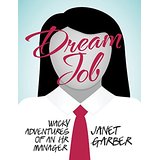
Dream Job: Wacky Adventures of an HR Manager, by Janet Garber, is a quirky romance with a light rhythm which readers fall into easily, moving the story along at a mellow clip. Although at times the dialog seems a bit stilted, Garber’s characters are just peculiar enough to make it work.
Melie Khol is great at solving everyone’s problems except her own, holding others off at a distance. Her “dream job” is really more of a nightmare – dealing with disgruntled employees, investigating allegations of bad behavior in the office, and disciplining culprits of the worst offenses. Melie handles all the unlikely events that occur in her wacky workplace as if they were just a matter of course, but even the best HR Manager has her limits.
She thinks she’s looking for love, or at least companionship, or… okay, maybe just descent sex, but like most of us homo-sapiens, she’s fooling herself. Melie knows her life is lacking something, but she’s not going to find it in the man from her daily subway commute, who she calls Ponytail Man because she finds his hair attractive, and who turns out to be a slug. She thinks She thinks she might find it with Ted, the guy she spends weekends in the country with, but he says he doesn’t do relationships.
As she ponders her non-relationship with Ted, problems at work keep her hopping. Melie has a big secret that could be her undoing if revealed in the ongoing company-wide background checks, her boss is murdered and everyone is suspect, including her, her new supervisor is sexually harassing her, and demands are flying at her from every direction. It all unfolds in a final meltdown of hilarious proportions and a happily ever after worthy of any good romance novel.
Dream Job will keep you smiling and perhaps even invoke a few chuckles. A thoroughly entertaining read. I give Dream Job: Wacky Adventures of an HR Manager five quills. 
Share this:

Why Writing is a Labor of Love
Posted: September 5, 2016 Filed under: Writing | Tags: Kaye Lynne Booth, Writing, Writing Process 1 Comment Labor Day weekend. Many people headed for the mountains or the shore to spend one last long weekend to say goodbye to summer. It’s the last weekend of tourist season. Time to get back to the serious business called life. The kids go back to school and the adults head back to the daily grind of making a living.
Of course, writer’s don’t always get three day weekends or take vacations, because for writers, everything we do is an experience which can be drawn off of and written about.
Every place we visit and everything we do can be written about in some capacity. Every activity can be used in some capacity to fuel our writing habit. It may only be an idea that serves as a seed, which grows into story with so much nurturing. It might be the foundation for a how-to article. It could even be your next travel article.
I started out with gardening how-tos on e-How.com through demand studios. Most writers simply love to write. For me, writing is a way of life, my passion, perhaps even my obsession. When I can’t write, I feel lost, as if I no longer know who I am. This lesson was recently driven home to me when my computer crashed. I was out of a computer for about three weeks before I could get a new one, and in the interim, although I could not get it into a file, I went back to writing long hand. The ideas don’t stop coming just because I have no means to prepare them for publication.
For writers like myself, although life tries to make it about the money when the bills come due, it never really is. For me, writing is a labor of love and I can’t think of a better way to labor right through Labor Day. Can you?
Like this post? Subscribe by email to receive notification each time there is a new post is made. Never miss out on Writing to be Read.
Share this:

“Victorian”: A Ghostly Story Packed Full of Secrets
Posted: September 2, 2016 Filed under: Book Review, Books, Speculative Fiction, Young Adult | Tags: Book Review, Books, Fiction, Ghosts, Jordan Elizabeth, Review, Secrets, Victorian, Young Adult 1 Comment
Victorian, by Jordan Elizabeth, is a truly unique YA story featuring not one, but two young girls, Celeste and Weronica, who each have a dark secret hidden in the past that keeps them closed off to others. When they both get jobs at a historical fair in a strange old village which harbors secrets of its own, things turn interesting, as each one learns to trust again with the help of the fair’s colorful cast of characters and the ghosts of the past.
Elizabeth’s characters are realistic and believable. Weronica acts as if she’s self assured, but worries more about what others think of her than she lets on. She shares only enough to keep curiosity at bay, keeping her ghosts close and the secrets they hold even closer. Celeste really just wants to belong, but fear that her secret will be revealed causes her to hold others at bay. Her ghosts are really those of the historic village, but they hold the key to unlocking her secrets, as well as unraveling the mysterious past of the village.
This well-crafted story builds just the right amount of suspense to keep the pages turning, as it alternates between the two co-protagonist’s points of view. The story line is easy to follow, the village setting becoming a character in and of itself. Victorian is well worth the read.
I give Victorian four quills. 
Share this:

“A Shot in the Dark” is a Wild Ride
Posted: August 26, 2016 Filed under: Action/Adventure, Book Review, Books, Fantasy | Tags: A Shot in the Dark, Action, Book Review, Books, Fantasy, Fiction, Jesse James Dawson, K. A. Stewart, Review 1 Comment
It’s not every day we have a demon hunter for a friend. Not unless you are a friend of Jesse James Dawson, that is. In A Shot in the Dark, by K. A. Stewart, an annual weekend camping trip turns into a fight for survival for Jesse and his friends. Jesse must wager everything, including his soul as he faces off with an old adversary, full of new and improved deadly surprises in the remote Colorado mountain retreat.
A Shot in the Dark is an action filled story dealing in matters, not only of life and death, but of heaven and hell. In dealing with questions of good and evil, the answers aren’t always black and white, but often lie somewhere in the gray. Now the only question is, will Jesse’s friends still be his friends if they live through this supernatural wilderness adventure.
Stewart’s likable characters and unusual villains make settling in for this demon hunting tale quite enjoyable. Antagonist Jesse James Dawson and his friends pull out all the stops, combining traditional weaponry, magic and religion to battle the minions of the underworld, but can he bring all his friends home safely?
As the second book in Stewart’s Jesse James Dawson series, I give A Shot in the Dark three quills.

Share this:

Writing the Way that Works for You
Posted: August 22, 2016 Filed under: Writing | Tags: Writing, Writing to be Read 7 Comments
There are many ways to write story. In his book, On Writing, author Stephen King claims he started out as a kid, printing out stories on a drum printer in his basement, using grape jelly for ink. Some of us older generation writers remember hammering out our stories on manual or electric typewriters, whiting out the errors and going back to manually making corrections.
With the dawn of the technological revolution the way we write changed for most of us. At the 2012 Writing the Rockies Conference, author Kevin J. Anderson told how he wrote while hiking through the hills surrounding the Gunnison Valley by using a hand held digital recorder to dictate his story, then having his assistant transcribe it and type it up on the computer for him. I tried his method, but found I needed to see the words on the page, or screen in front of me.
No one way is right. Different methods work for different writers. When I first started writing I wrote everything long hand, then typed it out on an electric typewriter. The advantage to this methods was that by the time I typed it up, it was like a second draft and I could edit and make changes as I went. The downside was the enormous amount of White Out I went through, because I’m a lousy typist and the incredible amount of time it took to produce a piece of work worthy of submission. It was so bad, I actually gave up on writing for several years, until I discovered the world of computers in 2008. Computers allowed me to edit as I write, and although I’ve been cautioned against it by many of my college professors, I still do it. It works for me and produces first drafts that require minimal amount of editing.
Unfortunately, my computer recently crashed. My son, who is also my techie, has been unable to fix it. He thinks I fried my mother board. Bottom line – I need a new computer, and I’m forced to go back to writing everything long hand once more, at least until I can get a new one. But, what I’m finding, is that writing long hand requires a different mind set for me than writing on the computer. Robin touched on this, as well, in last week’s Weekly Writing Memo on Overcoming the Blank Page.
On the computer, I can multi-task, switching to online research or other activities when I get held up for words. Writing long hand, if I get held up, I find myself staring off into space to gather my thoughts. It also seems more difficult to me, but that may be because I have to transfer my words from page to screen whenever I can get access to public computers at the library.
All of this got me thinking about the different ways there are to write and what works for others. How do you like to write? Are you an old school writer who still writes long hand? Do you use more than one method, writing different stories in different ways as Robin suggested? Leave a comment and let me know. If nothing else it will be interesting.
Share this:

I’ve Come A Long Way, Baby
Posted: August 15, 2016 Filed under: Writing | Tags: Kaye Lynne Booth, Writing 4 Comments
Everything I’ve ever done in life, I’ve done my own way, usually depending on myself and no one else. One thing anyone who knows me can tell you is I’m persistent. When I set out to achieve something, I don’t stop until I do. It has been no different with writing. But I’m discovering that I need a little help with this endeavor.
I had a bad experience with a student teacher in the English department as an undergrad, so just when I was beginning to learn that I liked writing and maybe English should be my major, I was soured on the whole idea by the feeling that the field was too subjective for me, and I chose to major in psychology instead.
But after I’d been out of college for a few years, I discovered not only that I had a love for the written word, but also that I had some talent for it. I started out writing poetry, which I’ve since learned, is not my strong suit, but even there, I don’t do too bad. I sold my first poem to Dusk & Dawn Magazine in 1996 for $5. Problem was, that didn’t even cover all the postage I had spent submitting, and I couldn’t afford to play the starving artist. I had a family to help support. There were others to consider. So, writing went onto a back burner, just simmering for about twelve years.
Then, I discovered the Internet and rediscovered my abilities for writing as new opportunities presented themselves. The rise of the Web actually changed the entire publishing industry over time, opening up all kinds of new opportunities for writers, including, but not limited to, self-publishing, marketing via social media, vanity presses, and content mills. As blogs and websites grew in number, more content was needed than ever before. Problem was, I’m technologically challenged. Slowly, over time, I have learned to use social media to my advantage a little, and I’ve learned to use many of the writing sites and content mills to make minimal amounts of money.
One of the coolest things happened in my writing endeavors didn’t involve any money at all. I had one of my poems featured in a painting by artist Mitch Barrett and displayed and sold at the Kaleidoscope Gallery in Battlesea Park, London. (There’s a lengthy story behind how this came about, which I may relate in a future blog post. Anyone who knows me is surely tired of hearing it.
As a freelancer, I became the Southern Colorado Literature Examiner for Examiner.com, which didn’t really pay, but offered opportunity to meet other writers, get free books for review and obtain credits for my portfolio. I also cranked out articles for other content mills which did pay, at least a little, which added to my skill set, diversifying my writing talents, and I was published in Freeman, which was a bit more profitable.
I thought I was quite fortunate when I was able to obtain a publisher for one of my children’s stories, Heather Hummingbird Makes a New Friend. After seven wasted years, it turned out I was not so fortunate, since my book still wasn’t published. But we learn from experience.
Still struggling to launch my writing career, I discovered the low residency MFA program for Creative Writing offered by Western State and I applied. Maybe I couldn’t do it on my own, but I would learn what I needed to know, one way or another. And I have learned a lot. I’ve learned about my own writing process. When I started at Western, I’d never even thought about it. I’m not even sure I was aware I had a process, but I did and still do. Now I’m just more aware of it. I learned how to craft my words to be pleasing to the ear. I learned how to read aloud in front of an audience, and I’ve learned that I do it well.
Last summer, I completed my emphasis in genre fiction and read from my thesis novel, Playground for the Gods: Book 1: The Great Primordial Battle. I’ve learned how to treat my writing as a business, at least in theory, although I’m still trying to get it off the ground. And I’ve learned how advances and royalties work, and that you have to sell a lot of books before you will ever receive royalties.
And I learned that screenwriting is where the big money is. When I took genre screenwriting for my out of concentration class, I also learned that it was fun, it came pretty easy to me and I was fairly good at it. So, instead of graduating, I stayed in school for another year to get a second emphasis in screenwriting. What I’m learning this year, is that there’s a lot of competition on screenwriting and it’s tough to get a break. You practically have to live in L.A. to get anywhere. Yet, I am determined to make all the money I now owe for my schooling pay off. I haven’t given up yet, and I don’t intend to now.
I’m currently shopping my thesis novel and two of my children’s stories, five short stories, and various poems. I’ve also finished my western novel, Delilah. At Western, thanks to my instructor, Russell Davis drawing us out of our comfort zones, (and maintaining as much discomfort for us as possible), I discovered that I enjoy writing in the western genre, and although it is not one of the bestselling markets, I do it well. I’ve also published a western flash fiction story, I Had to Do It, on Zetetic: A Record of Unusual Inquiry.
I’m working hard, through this blog and social media, to build a writer’s platform and gain a following to make myself look more appealing to agents and publishers. Here’s where you, my readers come in, because you can help. Without my readers, my writing just sits there on the page, not doing much of anything. You are my writer’s platform. You are my following.
Many people don’t realize that liking a link on Facebook, while cool, doesn’t really help the author grow their platform unless they actually read the post and subscribe by email. What does help, is if you’ll take the time to read the post here, on my Writing to be Read site, and subscribe to the blog. That’s what shows how large my reader following is, and it does my heart good to watch as it grows.
You can also like the post below it, with all the “share” buttons, but you must have a WordPress account. If you don’t have one, you can sign up for one, but then, of course, you will have a blog to maintain, so be sure you know what you’re getting into. I’m guessing that many people just like the link on Facebook to show their support, but they don’t actually click on the link and read the post. But, if you leave a comment, I’ll be able to tell that you read it, and if you subscribe, it will show you liked what you read. You’ll make my day.
If you’d like to show even more support, you can buy my short science fiction story, Last Call. If you like it, write a review on Amazon. And, you can follow me on Facebook, Twitter, LinkedIn, or Pintrest. Help an old writer get a break.
Your support is always appreciated. Thank you for being a reader of my work. After all, for me, it’s not really about money. It’s about Writing to be Read.
Like this post? Subscribe to Writing to be Read for e-mail notifications whenever new content is posted.



















Creating Story Equals Problem Solving
Posted: August 8, 2016 | Author: kayelynnebooth | Filed under: Commentary, Opinion, Writing | Tags: Creative Fiction, Fiction, Writing, writing advice | 1 CommentWriters are problem solvers. That’s what we do. Solve problems. It doesn’t matter whether you’re fleshing out a plotline for your latest novel or working up a beat sheet for a screenplay, our job is to figure out how to avoid or circumvent any obstacles that prevent your characters from reaching their goals. Of course, we also create some of the obstacles on purpose, because that is another thing that we do. We put our main characters through hell.
But, that’s not all. I’m also talking about things like faulty logic, which makes it impossible for your characters to do something you need them to do in the story, or things that don’t make sense or pull the reader out of the story, or when there’s too big of a stretch, too much disbelief to be suspended. These are the hurdles we, as writers, must overcome to not just tell the story, but to tell the story well.
Problem solving. That’s what creating story comes down to, and it’s our job, as story creators, to shape the story to make sense, have plausibility and flow smoothly. It’s our job to think through plot lines and make the story work by our clever crafting of words. It’s our job to make sure each character completes their personal story arc, and ensure that the main story arc flows through to the desired conclusion. It’s our job to help the main characters face their fears, overcome their fatal flaws and conquer any obstacles we throw at them along the way. And, it’s our job to be sure the story is believable and makes sense.
Does a story have to have eloquent language? No, although some do. Does it have to have a happy ending? Only if it is a romance. Does it have to make us laugh? If it’s a comedy, but humor is allowed in almost every genre.
There are things a story does have to have. Every story does have to have a beginning, middle and end. At least the main story arc and those of your main characters must be completed, moving the story along and showing character growth and transformation.
A story does have to have a certain logic to it, and it has to have characters who are relatable enough to make your audience care. There are ways to do both, and so much more, if you know how to write a well-crafted story. Robin Conley has made some great suggestions on how to make your audience care in her Weekly Writing Memo, each Wednesday, (or Thursday), here on Writing to be Read.
So, the next time you’re applying for a writing gig, be sure to put down problem solver as one of your many impressive skills. You won’t be lying. Creating Story = Problem Solving.
Share this: