Pros and Cons of Traditional vs. Independent vs. Self-Publishing (Part 2): Interview with Self-Published author, Tim Baker
Posted: October 24, 2016 Filed under: Action/Adventure, Books, Fiction, Opinion, Promotion, Publishing, Writing | Tags: Action, Blindogg Books, Books, independent publishing, marketing, Novels, Opinion, promotion, Publishing, Self-Publishing, Tim Baker, Traditional Publishing, Writing 3 Comments
Today I want to talk a little about definitions, because people often independent publishing as an umbrella term to cover authors who are self-published, as well as those authors who are published through an independent publishing house. I’m guilty of this, too, as the title for this article series does not differentiate, although the series will be looking at all three options. From here on out, I will differentiate between self-published and independently published authors, and refer to smaller presses as independent presses vs, the larger publishing houses, which shall be referred to as traditional publishers.
In Part 1 of this series, I interviewed self-published author Jeff Bowles to get his thoughts on the publishing industry as an emerging author today. Today’s interview is with Tim Baker, the author of nine novels, two novellas, and a collection of short stories, all self-published under his own brand, Blindogg Books. I’ve had the privilege of reviewing many of those books and can tell you he writes a well crafted story. His publishing credits include Living the Dream, Water Hazard, Backseat to Justice, No Good Deed, Unfinished Business, Eyewitness Blues, Pump It Up, Full Circle, Dying Days, with Armand Rosamillia, and Path of a Bullet. You can contact Tim Baker or find out more about his work by visiting his website at blindoggbooks.com.
Kaye: Would you share your own publishing story with us?
Tim: My love for reading came early in life when I discovered Treasure Island and The Adventures of Huckleberry Finn at the age of ten.
A high school journalism class and a creative writing course in college turned my love of reading into a love of writing. In 1988, I began writing a book called Full Circle, which combined my love of writing with my interest in Karma. A chain of events caused the unfinished, handwritten manuscript to be tucked into a box. During the ‘90s, my time was divided between raising my son, owning a home and building a career in engineering, leaving no time for writing. It remained untouched until February of 2015 when I dusted it off and completed it for release in November 2015.
By the time I moved to Florida in 2006, my dream of penning a novel was all but forgotten…until one night when a dream rekindled my passion for writing.
Then, in April 2007, I had a dream about two old friends and a submerged box of gold bars. The next day I found himself trying to figure out the story behind the dream. By the end of that day, the impetus of a story had formed and I had scribbled out two chapters in a spiral notebook.
One year later, my first novel, Living the Dream, was complete and the dam had burst — I soon followed up with my second novel Water Hazard.
Kaye: When did you know you wanted to be an author?
Tim: The funny thing is that I never really wanted to be an author – at least not consciously.
Even though I’ve always enjoyed reading and writing…it wasn’t until after my first book was published that I realized I was an author. All of a sudden I was an author – which was fine, because by then I had come to the realization that I loved writing.
Kaye: What made you decide to self-publish?
Tim: It wasn’t until after I completed the manuscript for my first novel (Living the Dream) that I started thinking about having it published. After a year of research I had learned a great deal about the differences between traditional publishing and indie publishing, and I decided that indie suited me better – primarily because I had read dozens of accounts about the overwhelming odds of landing a traditional publishing contract. I was not thrilled with the prospect of putting the fate of my novel in the hands of somebody who could shoot it down for any reason at all. This just didn’t seem fair.
Kaye: How did Blindogg Books come about?
Tim: Blindogg Books came about because my research taught me that indie authors need a brand for marketing purposes. I also learned that there are at least 3 other published authors named Tim Baker…so I decided to go with something other than my name.
During the 90s I raised and socialized puppies to be guide dogs for the blind…eventually I picked up the nickname “blind dog” which was changed to blindogg for internet identity reasons. When I needed a name for my brand I thought Blindogg Books had a nice ring to it. (for more info on this go to my blog)
Kaye: What do you see as the pros and cons of independent publishing?
Tim: I’ve had this conversation with many people and I like to sum it up this way;
Independent publishing is a “good news/bad news” situation. The good news is that anybody can publish a book – the bad news…anybody can publish a book. The vast majority of indie authors produce quality work, however the fate of their work depends on the book buying public, so when potential readers read one of the few indie works that just wasn’t ready for publication (for whatever reason) they tend to paint all indie authors with the broad brush of low quality. So even though it’s very easy to have your work published, it’s very difficult to convince readers who have had a bad experience that your work is worthy of their money.
Kaye: What do you see as the pros and cons of traditional publishing?
Tim: Not having any experience in the traditional world I can only speculate. I have to think that having the power of a large publishing house behind you for promotion and advertising is a nice relief from self-promotion. I also think it would be nice to get a big advance for a book. On the down side, I wouldn’t want to work under a contract which dictates when I have to finish a book. I’ve also heard that those big advances are only good if you sell enough books to cover the amount advanced. Obviously we all think our work will sell – but if it doesn’t (for whatever reason) I’d hate to have to give money back!
Kaye: What do you see as the pros and cons of independent publishing?
Tim: I’ve had this conversation with many people and I like to sum it up this way;
Independent publishing is a “good news/bad news” situation.
The good news is that anybody can publish a book – the bad news…anybody can publish a book.
The vast majority of indie authors produce quality work, however the fate of their work depends on the book buying public, so when potential readers read one of the few indie works that just wasn’t ready for publication (for whatever reason) they tend to paint all indie authors with the broad brush of low quality. So even though it’s very easy to have your work published, it’s very difficult to convince readers who have had a bad experience that your work is worthy of their money.
Kaye: How much work do you contract out? Book Covers? Editing? Etc…?
Tim: Everything!! I write it – then let others do the things I’m not qualified to do. This includes editing, formatting (for kindle and paperback) and cover design/layout. Many indie authors try to do these things themselves, but I would rather pay somebody to do it because I know they’ll do a much better job than I will and I won’t be wasting my time doing something that somebody else could do in half the time, leaving me more time for writing and marketing.
The most important one of the lot (in my opinion) is editing. Any money spent on a qualified editor is money well spent. Hiring your high school English teacher or a friend/relative who is “really good at English and reads a lot” will not give you a professional quality job.
Nobody knows more than me how difficult it is to fork out hundreds of dollars foran editor, but I want my books to be the best they can be.
Kaye: So, you’re saying self-published books that aren’t of good quality stigmatize the reputation of independently published books in general?
Tim: Yes. Readers, like all consumers, don’t want to waste money on sub-par products, so if they buy an indie book that is poorly written, edited or formatted they are likely to assume that this is the level of quality for all indie books.
Kaye: Do you think one of the major contributing factors to this stigma is authors who don’t want to spend money to have their books professionally edited? Or do you see other causes?
Tim: Absolutely. This is one of my biggest pet peeves. As I said above, many indie authors think editors are like dentists – a necessary evil. I think a qualified editor is more like a good tailor. You can buy a suit off the rack and it might look decent, but a suit that is professionally tailored will make you look outstanding – and people will notice the difference!
This is not to say there aren’t other causes.
People who write a book without trying to learn even the most basic “rules” lower the bar for all of us. I hate using the word rules, let’s say guidelines…whatever you want to call them – they are critical to producing a book that will make people want to read your next one. These days there is no excuse for not learning how to write a good book. There are a gazillion websites and blogs out there devoted to teaching people how to write – use them. Most of them are free.
But – the best way to learn how to write is to read. Learn from the good books as well as the bad…
Kaye: How much non-writing work, (marketing & promotion, illustrations & book covers, etc…), do you do yourself for your books?
Tim: I don’t have an exact number, but my conservative estimate is that for every hour I spend writing – I spend three hours marketing. I tell people all the time – writing the book is the easy part…selling it is where the work starts.
Kaye: Would you recommend your chosen path to publication, to emerging writers? Why or why not?
Tim: I’m not sure how to answer that – mostly because my path wasn’t chosen as much as it was found. I had no idea what I was doing – so I did lots of research – the most valuable of which was learning from other writers. So for any emerging writers who may be reading this I can only say this…there is a ton of information at your fingertips. The internet and especially social media can help you find the path best suited for you. Get out there and tap into it. Ask questions, do your research and learn from those who went before you.
I want to thank Tim for sharing his thoughts on the publishing industry and his advice with us. Be sure to check out next weeks interview with self-published author, Arthur Rosch, on Writing to be Read.
Did you like this post? Subscribe to email for notification each time a new post is made on Writing to be Read.
Share this:

Only the Killer Knows Who is “Chosen to Die”
Posted: October 21, 2016 Filed under: Book Review, Books, Thriller | Tags: Book Review, Chosen to Die, Fiction, Lisa Jackson, Thriller Leave a comment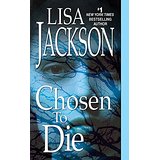
In Chosen to Die, by Lisa Jackson, Detective Regan Pescoli has been following every lead in order to reveal the identity of a serial killer who prays on young women traveling through Montana wilderness, disabling them, gaining their trust, and eventually leaving them to die in the deathly cold of winter. The killer leaves a cryptic message, revealed one letter at a time with each victim. Jackson crafts her tale to masterfully mount the suspense as each new piece to the puzzle falls into place until the killer’s identity is finally revealed.
The stakes are raised and the clock is ticking, when Pescoli discovers she’s been chosen to die and the hunter becomes the hunted. She must find a way to save herself and bring the fiend to justice before he chooses to do away with her. Nick Santana, the man she’s been dating, will stop at nothing to find her. Detective Selena Alverez is also determined to figure out who the killer is and find her partner before it’s too late, but the clock is ticking and no one but the killer knows when Pescoli’s time will be up as the body count rises.
I give Chosen to Die four quills. 
Kaye Lynne Booth does honest book reviews on Writing to be Read, and she never charges for them. Have a book you’d like reviewed? Contact Kaye at kayebooth(at)yahoo(dot)com.
Share this:

What Amazon’s New Review Policies Mean to “Writing to be Read”
Posted: October 17, 2016 Filed under: Book Review, Books | Tags: Amazon, Books, Goodreads, Honest Book Reviews, Reviews, Writing to be Read 6 Comments
Originally, Part 2 of my Pros and Cons of Traditional vs. Independent vs. Self-Publishing series was scheduled for today. The series will continue next week, but today I need to talk about the new changes in Amazon’s review policies, because it may directly affect the authors of the books I review.
Two of my reviews have recently been pulled by Amazon. The reason given was that I hadn’t spent at least fifty dollars on Amazon this month. Under their old review policy, if you had ever made one purchase on Amazon, you were eligible to post a review. I also noticed it posted that their review policy now states right on the review site that they do not accept reviews that are done with a free copy as compensation.
There are two issues here. One, I’m offering a free honest review, but it doesn’t make good sense for me to spend fifty dollars a month just so I can post them on Amazon. I don’t my reviews think I have ever spent fifty dollars on Amazon in one month. I am a starving writer, after all.
The other issue is the fact that I do offer reviews in exchange for a free copy of the book. It’s what I do. And I had been previously advised to state in my review that, “I received an ARC copy of this book in exchange for an honest interview.” This was supposed to make it so Amazon would accept the review, because it was right there out front where everyone could see, like a big disclaimer. Now, including this information will get my review kicked back.
Besides that, I don’t believe in paid revues. As a reviewer, I would feel obligated to give only favorable reviews if they were bought and paid for. I don’t give bad reviews often, but if I do give an honest opinion of the book, even if it doesn’t shine a positive light on the work. This new policy of Amazon’s will disqualify almost every review I give.
So, from here out authors please be aware when submitting a book for review, that while I have in the past submitted basic reviews to Goodreads and Amazon, I can no longer guarantee the Amazon posting. I don’t plan to start making purchases on Amazon for the privilege of posting. I can’t afford to do that, and I don’t think I should have to. But, I do plan to keep doing honest book reviews and posting them on my blog. Since Amazon has recently acquired Goodreads, there may be problems in the future if they adopt the same review policies there, but until that time, I plan to continue posting basic reviews on Goodreads. I can also post on Barnes & Noble and Smashwords if requested.
I know that Amazon rating is like gold to authors today, where the majority of the market trends are determined by reviews there, and I’m all about helping out my fellow authors, so it pains me to be unable to provide this service any longer. I can only hope that it won’t discourage authors from submitting books for review. I will also continue to heavily promote my reviews on Facebook, Twitter, LinkedIn, Google+, Pintrest and Tumblr, just as I always have.
So that’s where my reviews sit at this time, and I may still have an upset author here and there, who didn’t see this post. But, hopefully, this post will make what authors can expect from my reviews clear, so there will be no misunderstandings in the future. I want to thank all the authors who have sent books for review in the past, especially for their patience when my review que got backed up due to technical difficulties, of which, I have many. Ask that authors submitting books for future review, do so with the understanding that the review appearing on Amazon is not guaranteed
Kaye Lynne Booth does honest book reviews on Writing to be Read, and she never charges for them. Have a book you’d like reviewed? Contact Kaye at kayebooth(at)yahoo(dot)com.
Share this:

“Wrinkles” – A Diverse Story of True Love, Friendship and Faith
Posted: October 14, 2016 Filed under: Book Review, Books, Opinion, Uncategorized | Tags: Book Review, Books, characters, Fiction, Inspiration, Mian Mohsin Zia, Novels, Reviews, Wrinkles, Writing 1 Comment
While representing his company at the expo, Xavier meets the woman in the next booth, Anna, and before you know it, he believes he’s fallen in love with her. Xavier doesn’t know why Anna is keeping him at a distance, never allowing him to get too close, but he is relentless in his pursuit of her and enlists his mother’s advice and the help of his friends to win her heart.
I had trouble buying into some of the occurrences in Wrinkles: A True Love Story, by Mian Mohsin Zia, but I realize a lot of this can be attributed to the fact that the culture in the story is very different from mine. Because I’ve never been to Africa, where the story is set, many of the events and customs portrayed in this book were foreign to me, making it seem strange. I may not have understood it all, but the story was compelling and touching, and I just may have learned a few things about other cultures and religions which I wasn’t previously aware of. I loved that it carried the underlying theme of integration, racial and religious tolerance.
Xavier’s relationship for his mother goes way beyond parental respect, but there are glimpses of an insecure little boy residing in the big man. This is his fatal flaw. Xavier’s biggest fear is that of losing his mother, whom he refers to as his “Lifeline”. His respect for his mother makes him a more endearing, as the doting son.
Descriptions are vivid, but they relate too many unnecessary details. We don’t need to know all the colors of clothing, color of pacifier, what materials their clothes are made from, etc… The story is repetitive and states the obvious quite a bit. Everything is spelled out for us, not giving the reader credit for being able to follow along.
There were other problems with Wrinkles, concerning formatting, punctuation, and grammar. The dialog is very stiff and formal, with dialog tags which are either missing or misplaced, there are subtle switches in point of view, a slight case of adverbitis, and a passive voice. I have put down books in cases where problems such as these, but the characters are likable enough for me to overlook them and keep reading.
What really sticks out the most for me though, was the fact that the last piece of dialog from Faith, Xavier’s mother, doesn’t ring true to her character. Throughout the whole story, she has always taught honesty, through verbal lessons and through example, and here she promises the young boy that they all be with him forever, when he asks questions about aging. Of course, we all know it would be impossible for the adults in the family to remain with him forever. The point is it isn’t true and it comes from a major character, who has been pillar of honesty thus far.
Overall, I saw some problems with this book, but the uplifting theme, heart touching story, likable characters, and compelling romance plot still make it an enjoyable read. I give Wrinkles: A True Love Story three quills.

Kaye Lynne Booth does honest book reviews on Writing to be Read, and she never charges for them. Have a book you’d like reviewed? Contact Kaye at kayebooth(at)yahoo(dot)com.
Share this:

The Pros and Cons of Traditional vs. Independent Publishing: Interview with Jeff Bowles, self-published author
Posted: October 10, 2016 Filed under: Books, Promotion, Publishing | Tags: Godling, independent publishing, Jeff Bowles, Publishing, Traditional Publishing 6 Comments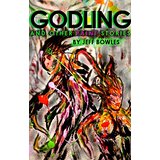
In my post last week, Today’s Authors Wear Many Hats, I talked a little about the roles authors play in the publishing process vary between traditional and independent publishing. It got me thinking about how much the publishing process has changed since the days when I sold my first poem in 1997, before computers, the internet, and the digital revolution hit the scene.
I remember back in 2010, when I first started doing the Southern Colorado Literature Examiner gig, independent publishing, (or self-publishing, was frowned upon, the general feeling being that if you could write, you’d be able to get a traditional publisher. Digital media was still fairly new, but it opened up opportunities that made it so virtually anyone could get a book published. But, self-published authors were generally thought to be author want-to-bes, lacking in the talent and ability, so they had to publish their own book.
Over time, opinion toward self-published authors has changed, but I think it has been a long, hard struggle for self-published authors. Amazon came along and said, “Pssst! Hey! Yeah you. You got a manuscript you want to get published? You can sign on with us and publish your book for free.” Suddenly, anyone could publish a book, and just about anyone did. There were those who just want to get their book out quick and not spend the time or money required to put out a quality piece of literature, who have further tarnished the name of independently-published authors. But there truly are some fine authors out there who have chosen to self-publish in spite of the stigma attached to independent publishing, who have proven that the quality of an independently published book can be every bit as good as those put out by traditional publishers.
It was only within the last five or six years that feelings toward self-publishing have shifted. While earning my M.F.A. I watched the opinions of my professors, who are all successfully published authors change over time, from warning against self-publishing to viewing it in a more acceptable light and actually presenting it as a viable option for today’s emerging authors.
With all this in mind, I’ve asked both authors and publishers to share their thoughts on both self-publishing and traditional publishing, for this, Pros and Cons of Self-Publishing vs. Traditional Publishing article series. I hope you’ll join me as I delve into this discussion with some representative players in the publishing game.
My first interview is with self-published author, Jeff Bowles, who has had numerous short stories published by in reputable publications such as Stupefying Stories Showcase, PodCastle,Nashville Review, The Threepenny Review, Pseudopod, and Spark: a Creative Anthology. He recently self-published his collection of short stories, Godling and Other Paint Stories on Amazon. Jeff was also one of my cohorts in the Creative Writing program at Western State,so he now has his M.F.A. with emphasis in genre fiction. He is a talented writer, with a self-proclaimed god complex, who has written some amazing stories.
Kaye: You’ve had quite a bit of short fiction published. Are there any publishing credits I didn’t mention in my introduction?
Jeff: My first short story appeared in an academic student arts journal called Riverrun, I also recently made a sale to Black Static also.
Kaye: When did you know you wanted to be an author?
Jeff: I knew when I met my wife. I was a musician before, though I’d always wanted to be an author of some sort since I could remember. We wanted to have a family someday so I just decided working from home as a writer would always be better than touring as a singer/songwriter. I began my professional writing career about eight years ago now, I guess. Never looked back, but believe me there have been times I’ve wanted to. The very first story I wrote was in the third grade and it was a nice little piece of Star Wars fan fiction, in which Uncle Owen comes back to life as a dark Jedi assassin with wolf fur. Luke was gonna be in trouble, man!
Kaye: As a rising author, are you in favor of traditional publishing, self-publishing or a combination of both?
Jeff: I think a combination of both is definitely the way to go, though traditional publishing will always be the best as far as I’m concerned. If you’ve got the resources and you can snag reviews and distribute advanced copies of your work to the right people, self-pubbing is a damn fine way to get seen. But as an industry, we’re predicated on the big sales to the big publishers. I’d recommend young writers do their best to place their material with the largest publishers they can, and then if all else fails, get your stuff out there via Amazon or Barnes & Noble or some other online service.
Kaye: What do you see as the pros and cons of independent publishing?
Jeff: The major pro is that it’s easy to do these days. Every sale you make comes to you and if you’re good at self promotion, you can make a major dent in your readership just by being out front and being you. The major con is that the traditional publishing industry will always have more resources to throw around for their big name authors, which means if you can get to that place, you’ll never want for an audience and you may not have to do too much legwork yourself.
Kaye: What do you see as the pros and cons of traditional publishing?
Jeff: As far as pros go, it’s the industry that can get you a spot in the NYT Bestsellers list, though the odds of that happening are always going to be slim. Cons of traditional publishing include the realization that as a new author, you’re going to be sidelined a bit in favor of writers who’ve been around the block a few times. You will still have to do most, if not all of your own promotional work, though distribution and rights management will most likely be on autopilot. Get yourself a good literary agent to negotiate your contracts and make sure you keep working your butt off after that first book hits the market. When it comes to short story sales, traditional publishing is definitely still the name of the game. If you can get your work published under the umbrella of a large publisher, you definitely should.
Kaye: How much non-writing work, (marketing & promotion, illustrations & book covers, etc…), did you have to do yourself to publish your book?
Jeff: There are a ton of resources these days for marketing and promoting a book. Amazon has it’s own internal advertising service which puts your work right in people’s faces over their Kindles, and Facebook and Google also allow for promotions which can be seen by thousands of eyes a day. I painted the cover of my book myself, and the interior design was mine as well. If you haven’t got any artistic ability you can hire craftspeople on the internet to help you put an amazing-looking book together. I was kind of lucky in that it hasn’t cost me much at all to produce Godling and Other Paint Stories, but if I had a bit more money, I know I could very easily be doing more. The sky’s the limit with this stuff. Your marketing potential will be matched by your time and resources.
Kaye: Would you recommend other authors publish independently? Why or why not?
Jeff: I would certainly recommend it. I think in a perfect world you’d want to be doing maybe 70% to 80% of your publishing via the traditional model, but I don’t know that I’d want to give up self-publishing entirely, just because it allows for so much flexibility. I’ve got material in my personal archive that’s never seen the light of day and I know for a fact much of it would be too risky for a traditional publisher. You can kind of stick your experiments and B-sides on Amazon at anytime. I love that about modern publishing. No matter what you do, you’ve got the ability to get your work seen, and that’s the ultimate high for a writer.
I want to thank Jeff Bowles for sharing his thoughts with us here on Writing to be Read, and I hope you will all drop by in the following weeks to hear from more authors, both independently and traditionally published, and publishers, too, to see how opinions vary on traditional vs. independent publishing models.
Like this post? Subscribe to Writing to be Read for e-mail notifications whenever new content is posted.
Share this:

“Under a Brass Moon”: A Cool Collection of Steampunk and Science Fiction Stories
Posted: October 7, 2016 Filed under: Book Review, Fiction, Science Fiction, Speculative Fiction, Steampunk, Stories | Tags: Benjamin Spurduto, Book Review, Fiction, G.Miki Hayden, James Wymore, Jessica Gunn, Jordan Elizabeth, Short Fiction, Under a Brass Moon 1 Comment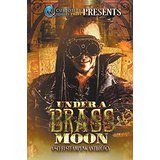
Under A Brass Moon: A Sci-Fi Steampunk Anthology is not quite as big the last anthology by Curiosity Quills Press which I reviewed, Chronology, but it is still pretty big. Unlike Chronology, which was full of pleasant surprises for me, Under a Brass Moon was just what it promised to be in the title: a collection of sci-fi and steampunk stories, and every story had elements of one or both genres.
The biggest contributor is YA author Jordan Elizabeth, who had six stories featured. Included is a Cogling short story, Upon Which Victor Viper Sat, which is a steampunk ghost story. (See my review of Cogling here.) A cursed hotel, where spirits are trapped. When Lady Rachel Waxman’s chest of paper cranes is stolen from Edna, she is determined to get them back, even if it means she must face a cursed hotel with trapped spirits and a desperate boy, willing to do anything, even murder, to regain his family’s fortune. Maiden in the Clock Tower is a stand-alone love story, along the lines of a fairy tale, with a rather sweet Happily Ever After. The other four short stories are companion stories to her Treasure Chronicles series, of which I also had the pleasure of reviewing Treasure Darkly. They Call Her Treasure is a humorous piece, sure to rouse a chuckle or two, but the other three, Treasure in the Field, Run of the Treasure and The Other Face of Treasure fell short for me, as if they weren’t finished and the promise of the premise wasn’t quite fulfilled. It’s a problem I find a lot in writing short fiction.
The second biggest contributor is James Wymore, with four stories: Sherriff Anderson’s Steam Deputies, a steampunk western shootout with steam powered deputies; Gearhead, a story of victory from apparent defeat when a captured gearhead knight tricks the Baron and steals his captured war machine; Vault, a magical steampunk story of witches and wizards and trapped spirits; and The Dark Glass, a tale of Jinda, an orphan girl, and her brother, who dream of escape from the care of the mean old butler who has been assigned with their care, but when Jinda discovers the key that leads to the treasure their father left them and escape is close at hand, the story ends. Like the Treasure Chronicle short stories of Jordan Elizabeth, mentioned above, this short story fails to deliver on the promise of the premise.
One of the problems with short stories is that it is hard to get in a full story arc with so few words. Other stories from this collection which left me feeling there should be more include Talking Metal, by W. K. Pomeroy, Fritz Finkel and the Marvelous Mechanical Thing, by award winning author Lorna Macdonald Czarnota, (We get to see why the two can’t be together, the obstacles their love faces. We get to see the grand measures taken in leiu of courtship, because it is a short story. There is a realization that she feels the same way he does, but steps to achieve the goal are only alluded to. The reader is left feeling cheated and wanting more.), Lucky Escape for Goldilocks Girl, by Irish writer Perry Mcdaid, (This protagonist had the feel of a female steampunk Robin Hood, promising to be an exciting story, but alas, it falls short of delivering on the premise.), and Queen of Cobwebs, by Jeremy Mortis, (A mechanical spider vampire tale. The protagonist is not very proactive and is rescued by outside intervention. This tale had the potential to be really good, but didn’t follow through.) Another story that didn’t quite do the trick for me were Harvester, by poet and author Amberle L. Husbands, a story about sentient plants, which lost me totally.
Under the Brass Moon also features two steampunk time travel stories: A Connecticut Yankee in Queen Victoria’s Court, by G. Miki Hayden, and Hour of Darkness, by Ashley Pasco; and two steampunk spy stories: Kung Pow Chicken for Pygmalion, by fantasy and science fiction author D.J. Butler, and The Poison We Breathe, by Christine Baker. For a steampunk ghost story, check out Calliope, by award winning author Terri Karsten, and for a great not-love story, try Henry the Tailor, by Grant Eagar. Upcoming writer Nick Lofthouse also does a passable science fiction story where the future isn’t so promising in Vacant.
My favorite stories from Under the Brass Moon include The Iron Face of God, by freelance writer and author Benjamin Spurduto, which is a pretty good steampunk mystery. It kept my interest. The story didn’t really let on to the motive for the murders, but maybe that’s okay with this one.
Also on my favorites list is Ethereal Coil, by MG/YA novelist S.A. Larsen, where nothing is as it appears, and The Women of Lastonia, by Lorna Marie Larson, which is a science fiction story that takes readers to outer space and planets far away. A Gulliver’s Travels of outer space, but this starship crew break the first rule of space travel when they rebel against the planet’s distasteful laws, which dictate they give up one of their shipmates or interfere with the evolution of the alien species.
Last but not least, my favorite story from this collection is The Balloon Thief, by New Adult author Jessica Gunn, a steampunk heist story where everyone is after the treasure and no one is who they seem. This story is well written and quite enjoyable.
Overall, the stories in this collection were entertaining, but many of them left me disappointed just due to the fact that I didn’t feel they had a full story arc and there should have ben more. Even the ones which left me wanting more, were entertaining stories, though not all were enchanting. I give Under the Brass Moon three quills.

Kaye Lynne Booth does honest book reviews on Writing to be Read, and she never charges for them. Have a book you’d like reviewed? Contact Kaye at kayebooth(at)yahoo(dot)com.
Share this:

“The Goat Children”: Once You’re There, You May Never Come Back
Posted: September 30, 2016 Filed under: Book Review, Books, Fiction, Young Adult | Tags: Book Review, Books, Creative Fiction, Jordan Elizabeth, The Goat Children, Young Adult Fiction 1 Comment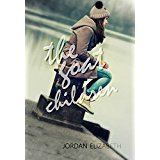
The Goat Children, by Jordan Elizabeth, is a journey into the world of dementia, as a seventeen year old cares for her aging grandmother out of love. The flashbacks are endearing, allowing readers to understand the relationship between grandmother and granddaughter better. It is a touching story which will tug at the heartstrings of its readers.
It was a pleasure to review this book, and a pleasant surprise to read this venture outside the steampunk genre for Jordan Elizabeth. The Goat Children is a well-crafted tale about a young girl and her struggles to take care of her grandmother in order to allow her to remain in her home, a tale many families with elderly member may relate well to. I can say, from almost twenty years’ experience as a senior caregiver, Jordan’s portrayal of dementia is accurate and realistic, and she handles the subject truthfully, yet with sensitivity.
The Goat Children are products of her grandmother’s dementia… or are they? No spoilers here. All I will say about the ending is that I didn’t see it coming and perhaps I was a little bit shocked by it at first, yet it was the perfect ending for this story.
I recommend The Goat Children and give it four quills.

Kaye Lynne Booth does honest book reviews on Writing to be Read, and she never charges for them. Have a book you’d like reviewed? Contact Kaye at kayebooth(at)yahoo(dot)com.
Share this:

Which Comes First, the Story or the Theme?
Posted: September 26, 2016 Filed under: Fiction, Movies, Screenwriting, Writing | Tags: Creative Fiction, Fiction, Screenwriting, Writing, Writing to be Read 2 Comments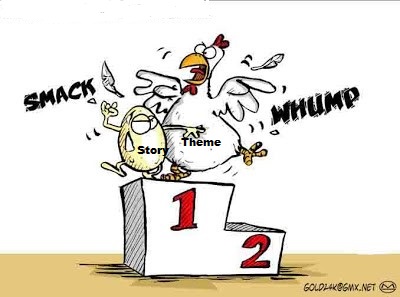
I asked Robin to do a post on theme for last week’s Writing Memo, as a compliment to my post here. She did a great job of explaining what theme is and how to bring it out in your story. She talked about how to identify your theme, how to bring your theme out in your writing and how multiple themes can be, and often are, woven into a single story. After reading her post, it sounded so easy.
One of the most difficult parts of writing, for me, is determining what my story’s theme is. The theme is what your story or screenplay is really about, and it isn’t always obvious. Often you really have to think about the story as a whole and look for the underlying theme. Or at least, I do.
Die Hard is a story about a man, John McClane, (Bruce Willis), trying to save his marriage, but when her office party is taken hostage, it becomes a story about survival – survival of the good guys, as well as survival of the marraige. (Yes, I see the irony in the fact that Robin and I both chose to use Die Hard in our examples.) Survival is what the story is really about.
 Lethal Weapon may be a buddy cop movie about the two cops getting the bad guys, but Roger Murtaugh, (Danny Glover), is struggling with aging and his approaching retirement, and his partner, Martin Riggs, (Mel Gibson), is struggling with the loss of his wife and certain suicidal urges. Dealing with aging and the end of life is what the movie is really about. But the underlying theme is not always easy to pick up on under all the shoot ’em up, good guy – bad guy stuff.
While pursuing my screenwriting emphasis for my M.F.A., one of the things that I was taught was how to breakdown the structure of a movie into different parts, or beats. My professor and screenwriting advisor, J.S. Mayank, had us use the structure model presented in the Save the Cat books by Blake Snyder. Professor Mayank had us watch a lot of movies and read a whole lot of screenplays and break their structures down, and one of the things I learned from this, is that in almost every movie, one of the characters states the theme in their dialog, usually by page five. As a general rule, it’s true. And if you can figure out what the movie is really about, you can put your finger on which line of dialog that is, however, that’s not always an easy thing to do.
For one thing, the line of dialog that states the theme usually doesn’t do it outright. To do so would make the dialog feel forced, untrue to what the character would say. For instance, the line that states the theme in Lethal Weapon is, “Your beard is getting gray. It makes you look old.” Coming from Roger Murtaugh’s daughter, as his family serves his 50th Birthday Cake while he takes a bath works well, but it doesn’t come out and say, “You’re getting ready to retire and your life is coming to an end. How are you going to deal with it?” It’s said and gone, and most viewers probably didn’t even catch that it was the theme stated unless they were looking for it.
These exercises in screenwriting were very helpful to me, but they required that I view movies in a whole new way. (We did a similar thing in my genre fiction classes, dissecting different novels to see what methods the authors used to portray their stories and how effective they are. And when you critique as you read, it’s a lot different than just reading to enjoy the story.) Most people watch movies for entertainment, right? I always had. But when you are doing structure analysis, you have to concentrate more on how it’s put together than you do on what happens in the story. And to figure out what the theme is, you have to watch, or read in the case of screenplays, with a philosophical eye to discover what the story is really about.
Th at’s where I had problems, especially when I was watching the actual movie, rather than reading the screenplay. I always sat down to watch a movie and immediately immersed myself in the story. Before I knew it, I would look up and realize the first five pages of script must be long past and I had failed to identify the line of dialog in which the theme was stated. It was the thing with reading screenplays. I found myself reading and re-reading those first five pages, searching desperately for the line that would tell me what the whole movie was about. I didn’t understand how I could be expected to pick out a line of dialog that stated what the movie was really about before I’d read the entire screenplay. And the sad thing is, I was no better at picking out theme in my own writing and writing a line of dialog to state it.
Here’s where I digress from Robin. You cannot decide what you want your theme to be and then write a story to fit. At least, I can’t. It won’t work. For me, theme must evolve from the story naturally, not the other way around.
When I decided to write, Bonnie, my screenplay for my thesis, I thought I was writing a story about two young kids who chose to live on the wrong side of the law in order to cope with the circumstances of living in the depression. But Bonnie is different than other renditions of the Bonnie and Clyde story, because it is told from Bonnie’s perspective, and before I had finished it, I found that what it is really about is Bonnie’s love for Clyde. Their love is my underlying theme. Just as love is the underlying theme in a story about a huge ocean liner that hit an iceberg and sank into the ocean, sending most of the passengers to their deaths. And just as it worked for James Cameron, when he wrote Titanic, I think it works for Bonnie. Love is what it is really about, the underlying theme.
The point here is, I didn’t set out to write a story about a young girl’s amazing love. That is what evolved from my story about a young couple’s choice to embark on a life of crime. Love was Bonnie’s motivation. Undying love was my theme and I didn’t even know it until I was more than halfway through writing the screenplay. This is why I say theme is the most difficult part of writing for me, whether I’m writing a novel or a screenplay.
But, I still say writing to the theme is more difficult. The theme must emerge naturally from the story, whether you’re writing for the page or the screen. If I just write the story, being true to my characters, the theme will come to the surface of its own accord. But, that’s me. Obviously, it’s different for Robin, who likes to identify her theme before she begins the story and finds ways to bring the theme out. Which comes first for you?
Like this post? Subscribe to Writing to be Read for e-mail notifications whenever new content is posted.
Share this:

“Godling and Other Paint Stories”: Contemplate the Meanings
Posted: September 23, 2016 Filed under: Book Review, Books, Fiction, Stories | Tags: Book Review, Books, Creative Fiction, Fiction, Godling, Jeff Bowles 3 Comments
Godling and Other Paint Stories, by Jeff Bowles, is a collection of six short stories all thematically tied together by a very thin thread of paint, or more specifically, colors. In the ingenious mind behind these stories, it probably doesn’t seem far-fetched that paints would be self-aware, or that dogs could evolve into thinking talking animals with human-looking lips, but your average reader will take a look at these stories and say, “Wow!” But one thing these stories will make readers do, is ponder possibilities, because frankly, as an author with a God-thing going on, Bowles conceives of some really heavy concepts, the kind that really make you think.
The collection starts out with Godling, a science fiction tale of a God machine, which gave up its humanity for love, and may, or may not, be able to reunite to become whole once more. (With short stories, you really can’t have spoiler alerts, because they give away the whole thing, so you’ll have to read the story to find out what happens.)
Next is Traffic Patterns, a tale of a sentient traffic light that is granted godhood, for a time. And, Making Paint as a Means of Impermanence is filled with some truly disturbing images of how an attempt to gain immortality turns into an ever renewing ritual to maintain an impermeable existence. Wild Dogs of Buffalo is a canine Godfather, excuse me, I meant Dog Father. Anyway, I love it. It’s a truly entertaining read.
God, the Little Artist – An artist’s heaven. This is not the first time that author Bowles has killed God off in his stories. The main character is Mr. Williams. As in Robin? That’s what I kept picturing in my mind as I read this story. Robin Williams talking to the large baby God whose time is running out, as if perhaps God ages backward. When I’d finished, all I could think was Robin Williams as God. Now that’s scary. But, maybe it’s just me. (No spoiler alerts. Again read the story.)
Dr. Julianus Techt’s 5 Easy Steps to Building a Better You is an instruction manual on how to sell your soul in order to improve on God’s handiwork, which is you. Only Jeff Bowles would create such a story. As you read these stories, when you come to this last, do not… I repeat, DO NOT try this at home.
Godling and Other Paint Stories will be released on Amazon on September 25th, 2016. I highly recommend you grab a copy. Overall, this collection of short stories are all easy, enjoyable reads, which will give reader’s brains lots of food for thought. They are strange and unusual, but Jeff’s writing talent is such that it doesn’t take much to suspend your disbelief. I give Godling and Other Paint Stories five quills.

Kaye Lynne Booth does honest book reviews on Writing to be Read, and she never charges for them. Have a book you’d like reviewed? Contact Kaye at kayebooth(at)yahoo(dot)com.



















Today’s Authors Wear Many Hats
Posted: October 3, 2016 | Author: kayelynnebooth | Filed under: Books, Commentary, Opinion, Promotion, Publishing, Writing | Tags: Books, Opinion, promotion, Writing | 5 CommentsIn days gone by, authors needed only to wear a “Writer’s Hat”, their agent taking care of finding a publisher for their work, the publisher taking care of the actual publication and all of the marketing and promotion. But, today’s author has seen the rise of Amazon and digital publishing, and a surge in the self-publishing industry as a whole. The surge in the self-publishing industry brought about many changes, including what an author’s role is in the publication process. The rise of Amazon and digital publishing changed the way readers consumed the written word and the ways in which a writer’s works reach the general public, and boosted their book’s potential readership to a global scale.
With traditional publishing, an author writes a novel or has an idea for a book, in the case of non-fiction, so they query publishers to if they can find one who is interested in their work. When they finally receive a letter expressing a publisher’s interest in their work, amid all the letters of rejection, they send their complete manuscript o the publisher, or in the case of non-fiction, they finish writing their book and then send it. Then they wait some more while other read and ponder their work, and then pass judgement on it. If they are accepted they may receive an advance, but some publishers only offer royalties. My M.F.A. professor, Russel Davis advised, “Get as big an advance as you possibly can because chances are you’ll never see any royalties.” He advised this because he knows the advance is just that, and it must be paid back before any royalties can be owed you, so that advance may be all you ever get for your book, unless of course it goes viral and hits all the best seller lists. (Hey, stranger things have happened.)
The rise of digital publishing offered more publishing choices than ever before. Now an author can publish their book digitally or in print, or both. The rise of Amazon, with their 70% royalty for authors made it possible for authors to publish their work with very little out of packet expense, and Amazon’s market spans the globe, offering a much broader potential readership than would have been possible before. Amazon does offer any advance, in exchange for a higher percentage of royalties, so you still have to sell a lot of books to make any real money, although small amounts will trickle in from time to time.
Other changes Amazon and digital publishing brought about may not have been quite so positive. Amazon doesn’t charge the author up front to publish a book, so anyone can afford to publish with Amazon, and anyone did. There was a rise in the number of authors who chose to self-publish, but many of them weren’t any good, or were just too lazy to have their book edited and revise it before publication. The result was a lot of poor quality books out there, giving self-published authors a bad reputation in “reader world”. And that’s where it counts. Although many good authors self-publish high quality books, you know the old cliché, all it takes is one bad author the reputation of the whole bunch.
So, which way is better, independent or traditional publishing? I still don’t know, but be on the lookout for a series of articles that look at the pros and cons of each, “Traditional vs. Independent Publishing”, which will delve into this question further. I suspect it will depend on what your individual needs are, and what you’re expectations from publication are. I plan to interview authors and publishers to find out the answers. To be sure you don’t miss them, subscribe by email in the upper right hand corner, and you’ll receive notification every time there is a new post.
For now, it looks like either way an author chooses to go, he or she had better purchase a hat rack, because it doesn’t like we’ll be hanging any of them up for good any time soon. On top of writing, authors today must also know how to market and promote our work, build an author platform, create book trailers, and those of us who are gifted with artistic talent even illustrate their own books and design their own book covers. For now, it looks like that’s what we have to do to publish our books successfully.
Like this post? Subscribe to Writing to be Read for e-mail notifications whenever new content is posted.
Share this: