Explorations in Uncharted Territory
Posted: July 9, 2012 Filed under: Writing | Tags: "Adventures in Writing", Writing Leave a comment
Writing to be Read
Note to Readers: Due to a lack in Internet access, it has been way more than a week since my last post. This post is one that I had written, but was unable to post in a timely manner. I apologize to readers for my extended absence, but things should get back on track now. I hope you will bear with me.
Those who have been following this blog recently know that I have been using Beth Barony’s Adventures in Writing to develop my own writing skills. While doing the exercises from her book, I have discovered that I am just not an outline type of writer. I began by trying to make an outline for a story that I’ve been rolling around in my head. It soon occurred to me that I really don’t know how to make an outline for a story. In my opinion, it is better to use a story arc or a timeline to illustrate how events will unfold. That’s not to say that I am particularly adept at making story arcs, but I think that I will probably learn to use that skill when I start working on my MFA in Creative Writing through Western State, in July.
To me, an outline is more appropriate for nonfiction, so I decided to start over and do an outline for a nonfiction book that I have been researching for, and have already begun writing. Before beginning my outline, I decided to go back and take a look at what I had previously written and I realized that I actually had some pretty good stuff that was mostly usable. I didn’t end up with an outline, but I did write a new introduction and rewrite my original introduction as a chapter, instead. In the midst of all this, I started thinking that perhaps what I needed wasn’t an outline, per se, but some basic organization. So, I also created a basic table of contents with what I have so far, (which is sort of like an outline), listing the chapter titles that I have so far. It turns out that I already have seven partial chapters and now I have them better organized both in my mind, and in print.
Thus, I chose to set aside the fiction story to work on as I earn my MFA and use Adventures in Writing to develop and hone my nonfiction book. It should be an interesting exploration into uncharted territory for me. It presents a good challenge, as Barony suggests allowing a year to completion for first book writers, and my timeline allows for about seven weeks, as I want to finish before I begin graduate school. She offers a Project Timeline Chart in the Appendix for those that wish to finish their books in 8-12 weeks, so I think it might be possible to accomplish this if I stick to the time and word count goals that I set for myself in the exercises. Rewriting makes it difficult to measure word count, but I have faithfully put in more than my minimum daily time that I set as my goal thus far. Barony also suggests listing five to twelve main events that happen, (or in my case points that I want to make), stating that if you can’t list at least five, that perhaps you should be writing an article or short story instead. To my surprise, (and pleasure), I found that my five points from the exercise, together with my seven chapter titles, and the subsections that I had already broken some of my chapters into, made up a book structure that actually resembles an outline. Huh? Maybe I am an outline writer after all.
Share this:

Adventures in Writing
Posted: May 2, 2012 Filed under: Fiction, Writing | Tags: Fiction, goals, Journal Entries, Novels, Writing, writing exercise 2 Comments Last week I started reading The Writer’s Adventure Guide: 12 stages to Writing Your Book, by Beth Barany. The first stage that she outlines involves beginning where you are, but you must discover where that is first. The first exercise involves a 20 minute timed writing that discusses what writing means to you, what your goals are as a writer, and identifying your strengths and weaknesses which stand in your way or help you to meet those goals. She asked that you look at both the inner strengths and weaknesses, as well as those presented by the outer world around you. Part of the objective of this exercise is to help you begin viewing yourself as a writer, and although I’ve been doing that for a long time, I chose to do the exercise anyway. You never know when you may discover something unexpected by doing an exercise that you don’t think you really need. So, the following is the results of that first exercise for me, but I have great ambitions, so I didn’t stop at twenty minutes, but followed it through until I had covered all the areas suggested.
I am a writer. I live to write. Writing makes me feel free, because I can express myself through it. When I write, I can block out the outer world as I explore the inner world of the story or poem. My goal is to become a paid author, able to make enough to support my family and finance my writing career. I see myself 10 years from now traveling from place to place giving lectures, teaching workshops and signing books. I would also like to be attending conferences and workshop to increase my knowledge about writing, as I feel that writers must always continue to learn and grow and to develop their craft.
When I’m not writing, I am reading. I love being the Southern Colorado Literature Examiner and doing my blog, Writing to be Read, because I get to meet other authors and do book reviews. I also do book reviews for Webb Weavers. Doing book reviews puts me into both of the elements that I love. I get to read good books and then write the reviews for them. It’s the best of both worlds. Plus, by functioning in these capacities, I am able to increase my own visibility within the literary community.
Of course, this all revolves around the assumption that I will be a successful author by that time. I already have a children’s book being published, which I am waiting for with much anticipation. I have others written that will follow in the series, that are just lack polishing. Since I already have a publisher for the first book, I think that the chances are good that they will agree to publish the other in the series. I am waiting to submit the second story though, because I want to enter it in a Writer’s Digest writing contest. I truly feel this story is good enough to possibly win. I also have other children’s stories that wouldn’t fit into the series, but I think they might be good enough to stand alone.
In addition, I am planning to attend college this summer to get my MFA in creative writing, which will lend credibility for me as a teacher and help me to complete my novel. I have the story in my head, but I don’t know where to start to put it all in print. In the past I have written short stories and poetry. I have always just sat down and begun writing and the stories just have flowed out for me, but a novel length story presents a challenge, because it requires more detail and more than one or two characters be developed. Acquiring my MFA will help me to gain the skills that I need to overcome my weakness and write the novel that is now, only in my mind.
One day, I also plan to put together a collection of my best poetry, with illustrations. Publishers for poetry may be more difficult to find than they are for books or children’s stories, so I might consider self-publishing my poetry collection, maybe even as an E-book. E-books seem to be the rage these days. I wonder if poetry does well in the E-book format? I think that it might.
Also, in my head, there lies a memoir about my son Michael and his tragic death at the tender age of 19. I have begun many times to write such a book, but there are so many loose ends still, three and a half years later, that I don’t know how to end it. Even a memoir has to have an end to the story, does it not? Before one can see the tragedy of his death for what it is, they must understand who he was, which requires details about his childhood. I can remember details about his life as if they had occurred yesterday, but how much of this actually needs to be relayed to readers? No one will ever know Mike the way that I did, no matter how many words I put down on the page, or how eloquently I relay those details. That’s the problem. Because my words don’t seem to me to express what I want to say adequately, I always end up putting this project down only to start over at a later date, maybe from a different approach, but ultimately with the same results. I have been working on a nonfiction book, as well. It is still in the research stages, but I need to get a better idea of how I want to present the information. Again, I think an outline might help me to clarify my direction in my own mind.
As I said, I have thought of myself as a writer for many years. This exercise did make me look at my unfinished projects and evaluate the reasons why they are unfinished. I do fine with short stories, but longer books are intimidating to me. I think that outlining my story ideas might help in this area. As far as my memoir goes, I think I may still be too close to the story in real life. It isn’t over for me, and I don’t know if it ever will be truly. There are so many questions that I may never have the answers to. I think I need to let more time go by before I attempt to tackle that particular writing project.
So, I did come out with a better idea of my weaknesses and some ways to overcome them, or at least deal with them. I also was able to look at my strengths and the actions that I am taking that push me closer to my goal. My discoveries in this area pleased me. I think the things that I am already doing or have planned for the immediate future are a good start in the right direction.
The rest of the exercise consists of being aware of how my goals might change over the next week, now that I am more aware. Again I will follow through with the exercise, although I don’t think that they will change much. Barony instructs to start your book in this coming week, as well. For me, that will entail constructing an outline and exploring my characters. I’ll keep you posted on my progress, so be sure to drop back in for next week’s blog post.
Share this:

Author Tim Baker tells how to “kickstart” your writing project
Posted: April 15, 2012 Filed under: Promotion, Writing | Tags: fund raisers, independent publishing, Kickstarter, Pump It Up, Tim Baker, Writing 3 CommentsToday, I’d like to let my readers know about a new site, called Kickstarter, that may be very useful to struggling authors, who are looking for ways to fund their publishing costs for their books. So I’ve invited someone who knows about the site and its program to tell you all about it. My friend, author Tim Baker has agreed to do a guest blog for us and tell us about this interesting fund raising program. Many of you may remember Tim from the profile that I did on him earlier this year. He is an independent author who has written and published five wonderfully entertaining books, and is currently looking to fund his most recent one, Pump It Up, through the Kickstarter program. Please welcome Tim as he tells us more about it, and feel free to ask questions or leave comments.
 Kickstarter is a public web site where artists of all kinds can seek private funding for projects. It isn’t limited to writing. Funding has been secured for independent films, CDs, art projects, video game creation and, of course, novels and graphic novels. Just about anything “art” related can be funded. It is one of a number of sites which uses a relatively new concept called “crowd-funding”.
To start, the artist fills out a general information proposal on the site – giving the basic information of his project—what it is, why he needs funding, what he plans to do with the money, etc. The Kickstarter people review this proposal and decide if the project meets their guidelines. Assuming it does, the artist then writes a full blown project outline describing in detail what he/she wants to do. The inclusion of a video is recommended and pictures also help. The artist should also explain to potential supporters why he needs this money, what it will be used for and any other pertinent information. Then the artist must create “rewards” which serve as incentive to entice backers.
Since one of the rules of Kickstarter is that there can be no monetary payback or financial rewards (you can’t promise people a share in your profits or a percentage of sales) it is common to offer unique rewards. In my case I offered a variety of e-book packages, hard copy packages, etc.
A time frame is set by the artist as to how long he/she will leave the project active. Kickstarter recommends 30 days but you can go as long as 90 if you like.
Once the project is posted, it is then the responsibility of the artist to spread the word and solicit backers. This is where the artist must rely on the potential viral power of the internet.
There are a couple of limitations on the types of projects for which one can seek funding. No pornographic material, no “hate” material and no “fund my life while I create” projects.
The only true “rub” in the whole thing is this: Kickstarter is an “all-or-nothing” deal.
If you seek $1000 to fund a project and you select a 30 day time frame… if you do not raise the $1000 by the end of the 30 days, you get nothing – and the people who have pledged support pay nothing.
This seems unfair at first…people instinctually ask “why can’t I keep the money I raise?”
This is done to protect the backers.
If you claim that you will need $1000 and you only secure $750 – it is conceivable that you may not be able to “complete” your project as described. This would mean people donated money to an incomplete project. It would also mean your rewards may never happen.
All In all – Kickstarter is a great idea and really takes supporting independent artists to the next level.
For more information you can read the guidelines on the site and feel free to view (and share) my project to see a typical listing. http://www.kickstarter.com/projects/blindogg/pump-it-up-a-novel-by-tim-baker .
Thank you, Tim for all the great information on Kickstarter. One question that I had, was what if you raise more money for your project than the goal that you have set. Tim’s answer was that the artist gets to keep any money that they raise, as long as the initial goal is met. It sounds like a great way to help fund writing projects, although other types of artists may find it useful, as well. I hope all my readers will click on the link above and check out Tim’s page for his project, and don’t forget to make a pledge to help Tim meet his goal. Pump It Up is a great book, well worth your contributions. You can read my review of Pump It Up here:
https://kayelynnebooth.wordpress.com/2012/03/10/get-wrapped-up-in-tim-bakers-pump-it-up/
Share this:

Hurry Up and Wait
Posted: April 9, 2012 Filed under: Poetry, Writing | Tags: Poetry, Writing Leave a comment My fingers fly across the keys
As fast as they can go.
I hit publish and wonder why
The Internet is so slow.
Hurry up and wait!
Hurry up and wait!
Seems that’s all I ever do.
If my computer would go faster
I’d already be through.
I watch the little hour-glass
That tells me it’s working hard
But nothing seems to happen
From what I’ve seen so far.
Hurry up and wait!
Hurry up and wait!
Seems that’s all I ever do.
If my computer would go faster
I’d already be through.
I have stories bouncing in my head
Just waiting to be written down.
My computer won’t go faster
No matter how I scowl and frown.
Hurry up and wait!
Hurry up and wait!
Seems that’s all I ever do.
If my computer would go faster
I’d already be through.
Copyright ©2009 Kaye Lynne Booth
I published this on the old blog in 2009. Just thought I’d reprint it today to share with my new readers. Hope you like it.
Share this:

The Process Takes Time
Posted: January 2, 2011 Filed under: Uncategorized | Tags: Children's Books, Publishing, Writing 6 Comments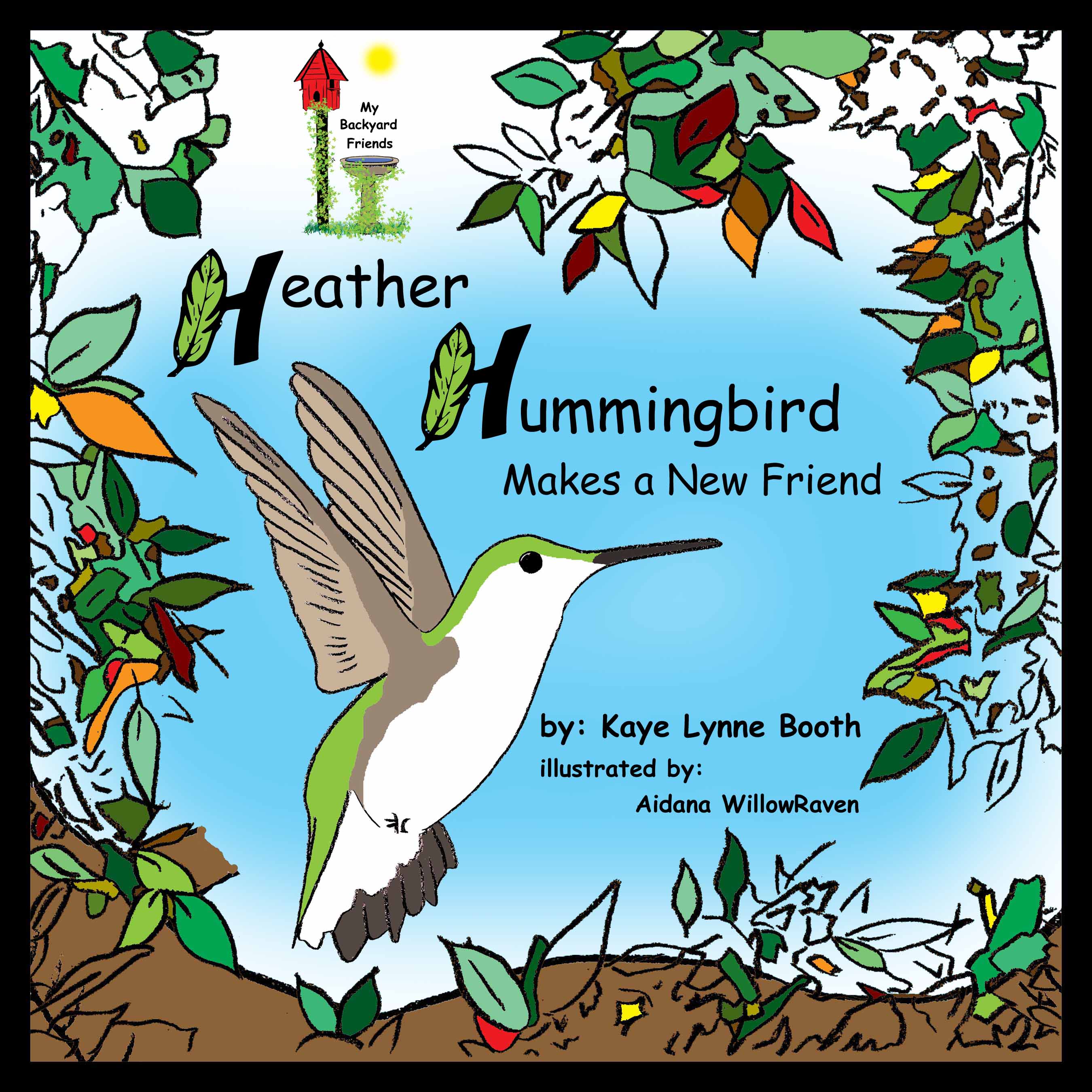 I signed the contract for Heather Hummingbird Makes a New Friend last month. This was a big step for me. I held on to the contract for almost a month before signing it, researching publishing contracts to be sure I was getting a fair deal and making sure that the author’s responsibilities were not unreasonable. I had never contracted a book to be published before, and so I was probably being overly cautious. This is the moment all writer’s hope for, being able to say that you have a publisher, right? So, why has it taken so long for me to share it with my readers?
I have to admit that my stomach did flip-flops when the contract arrived. I read over the whole thing and then set it aside for a few days, while I let the reality sink in. I actually had a publisher offering me a contract on a book that I wrote. Wow! It had been three years since I first signed the contract with my agent/illustrator that would start the illustration process. Although, at least a year of that time was a delay brought on by the death of my son, I was beginning to wonder if this day would ever come. Now here it was.
I was thrilled and excited once I convinced myself that it was the real deal, and I began to research what should be included in a publishing contract. All the legal terminology was pretty much mumbo jumbo to me. I wrote my illustrator/agent to verify that the parts outlining the illustrator’s share of the profits, (always assuming that there will be profits), were not in conflict with the contract I had signed with her three years ago. She assured me that it was not. After doing some online research, I was satisfied that what I had in front of me was a fairly standard publishing contract, which required me to do nothing unreasonable. As the author, I am expected to make promotional efforts, as is more and more common in these days of digital media, but the publisher was committing to do their share as well. It seemed fair. Finally, I gathered my courage and visited a notary, so that my signature could be witnessed and all would be official.
So why wasn’t I crowing from the rooftops, announcing this joyous occasion? Although I was pleased with the way things were going for the book, I was still hesitant to make the official announcement. I think perhaps it was because the projected date of release is October of 2012. That seems so far away right now. I have friends and readers that have been with me since I started this quest three years ago, that are patiently waiting for this book to come out, so they can get their copy. How do I tell these folks that have stuck by me that it’s going to be almost two more years before they will have that opportunity? Those that wanted a copy for their child or grandchild may find that the child in question has advanced past the age when Heather Hummingbird will bring screams of delight. I have to admit, it is a little disheartening.
But, it made me realize just how long this whole process of getting published takes. Sure, I had read the tales of other authors, which give lengthy wait times between start and the actual release date, but I don’t think it really sank in for me. I still envisioned my book being swept up by a publisher, like a princess being swept away by a prince in a fairy tale. “….And it was read joyously by children everywhere and made huge royalties ever after”. Okay, so maybe I was off into the clouds a little, but the reality of having a contract has brought me right back down to earth. Don’t get me wrong. I am pleased that I do have a contract and will wait for the release, perhaps a little impatiently. So for all of you that have been waiting with me, we have a ways to go still. Hopefully, that group will grow over the next two years, so if you haven’t been waiting with us, but would like to now, I welcome you. When you read those authors that are telling you that it takes time to be published, believe them. It does. All we can do now, is wait.
Share this:

It’s Up to You, the Reader
Posted: December 22, 2010 Filed under: Book Review, Writing | Tags: Aunt Lou, Book Review, Books, Children's Books, Chosen, Chris Keys, Cynthia Vespia, Demon Hunter, Fiery Dragons, Fishing Trip, Ghost Stories, I'll be There to Write the Story, Laura Resau, Midnight Ride of Blackwell Station, Mishka Zacharin, Mosquito, Naked Edge, New Year's Resolutions, Poetry, Raw Edges, Reprisal!, Review, Ruby Notebook, Secret to Lyinig, Spirit Lens, The Last Lie, The Truth Comes Out, Thomas Merton, Tim Baker, Water Hazard, Writing 2 CommentsNew Years is almost here and what writer doesn’t include in their list of resolutions a resolve to improve their writing? In 2010, I had the privilege of reviewing many truly good reads, by some really awesome authors. With 2011 just around the corner, I thought it might be beneficial to take a look at those reviews to see what worked and what didn’t. The only problem is I don’t really have an unbiased opinion, so I thought that I’d leave it up to you. So, here are links to twenty-two book reviews, both here and on the Southern Colorado Literature Examiner. Please take a look at them, if you haven’t already, and then vote for the ones that you think are the best in the comments section. You can choose more than one, but please include a brief explanation as to why you liked each particular review, or why you didn’t, so that I can identify areas that might need some work. If you read the book, do you agree or disagree with my review? I will approve all comments as long as they are not downright nasty. Next week I will publish a list of the top reviews, according to you, the readers. I couldn’t do it without you.
“The Ruby Notebook” holds the key to many secrets
When “Mosquito” gets hold of you, it sucks you in and doesn’t let go
Anna Strong is a force to be reckoned with in “Chosen”
Storyline in “The Truth Comes Out” keeps readers guessing
You’ll think twice about water after reading “Water Hazard”
“Reprisal! The Eagle Rises” gives readers something to think about
“I’ll Be There to Write the Story” – A true tale that will touch your heart and stir your spirit
“The Last Lie”: a perplexing tale that will keep readers guessing
“Why Did This Happen to Me, Aunt Lou?” Inspires and Delights
“Killing the Cobra” is packed with action
“The Midnight Ride of Blackwell Station” is delightfully entertaining for all ages
“The Secret to Lying” holds the key to more than one secret
“Raw Edges: A Memoir”: a journey of self discovery and revelation
“Star in the Forest”, a glimpse of reality through a young girl’s eyes
Pamela Clare brings another sizzling romance in, “Naked Edge”
“The Spirit Lens”, a spellbinding tale that will captivate readers
“From the Spleen of Fiery Dragons”, by Mishka Zacharin
From the Old Blog to the New – Reviews of “Demon Hunter: The Chosen One” and “Demon Hunter: Seek and Destroy”
“The Fishing Trip: A Ghost Story”, by Chris Keys
“Beneath the Mask of Holiness” depicts the human side of Thomas Merton
“The Secret of Everything” is an absolute must read
Share this:

Inside the Editing Process
Posted: November 25, 2010 Filed under: Uncategorized | Tags: Editing, Writing Leave a commentOkay, I know I have been negligent in giving this blog the tender loving care that it deserves. I have been negligent in a lot of things lately, due to my husband’s illness and the care that he has required. I’ve taken leave from work, as well as cutting back time for writing and editing, but I’m trying hard to get back into the swing of things, so let’s talk about my latest endeavor. Did you catch it back there? Yep, I said editing. This has been a new and glorious prospect for me, because I’ve discovered that I am pretty good at it, and I’m learning a lot about writing, by looking at it from an editor’s perspective.
I never realized how much work really goes into the editing process. That was the first thing that I learned. I guess I hadn’t thought about it before, but it’s not just making a few corrections and sending it back to the author for repair. Oh, no. After that, the author sends the rewritten version back and you have to edit the whole thing again. Now this may sound like a pain, but I also learned that it is well worth it, for half the time I find things that I missed the first time around, or even change corrections that I had suggested back, because they didn’t have the effect that I thought they would. Many chapters go back for rewrites and then, re-editing four or five times, before I can call them good and put them in my finished folder. This is why they say you shouldn’t try to edit your own work, at least not on the final manuscript—authors can’t be objective enough about their own words, because they are too close to it. Through editing, I’ve been learning what to do in my own works, as well as what not to do. Here are some helpful things that I have learned so far, through my editing, about the writing process.
• I learned that sometimes autocorrect fixes things that don’t need fixing.
The computer program doesn’t recognize that you are writing dialog,
and sees a period as the end of the sentence, capitalizing the next word,
regardless of whether it should be or not. I’ve been constantly fighting
with this in my own writing, as well as when editing the work of others.
It also fails to pick up on things that need correcting. The computer
doesn’t distinguish between “Their” and “There”, or “Your” and “You’re”.
As long as the word has a legitimate spelling, the autocorrect doesn’t
perceive it as being wrong, even if it is wrong for the context of the
sentence.
• I learned that if you work with people and can be reasonable with
pricing and flexible with financing, you are often more likely to get
the job. I guess that is true for anything, not just editing, but I do
think it makes a difference. And I look at it this way; doing the job
for a little less than I would have liked and accepting payment in
installments, is better than losing the job because it is overpriced,
and not getting paid at all. I also think that this is one way in which I
can help out my fellow writers, and I’m all for that!
• I learned that sometimes, I can get so into the writing, that I take
liberties and actually suggest ways to reword things, instead of just
suggesting ways that it might be changed. So far this hasn’t been a
problem, but I can see where it could be. I’ll have to be careful not
to step on any author toes.
• I learned that while the bottom line is that the author is the boss, I have
been amazed at times, at how willing the author may be to take my
suggestions to heart. It brings a smile to my face each time I see one of
my suggestions implemented, and makes me feel good to know that I
might actually be making a difference that improves the work’s chances
of being published.
• I learned that when I feel like I’m going to scream if I have to read
chapter two one more time, it’s time to put it down and move onto
the next chapter. That’s when I need to pick up a chapter from the
file that is still waiting for first edit, and read something fresh that I
haven’t scrutinized so many time that I lost count. And… there is
such a thing as over analyzing and it is easy to do. I’ll have to be
careful not to pick each chapter to death.
• I learned that I like editing. I was hesitant at first to get into the editing
side of the business, because I’d never done it before. No experience.
But how are you going to get experience?…. Exactly! So far, I think I’m
holding my own. (By the way, it also felt great to be able to add copy
editing services to my website as I redesigned it, and to find my name
listed in the acknowledgements of the book as someone who helped
make it happen.)
• I learned that if I do too much editing at one time, I start making
changes and correcting spelling and punctuation in everything I
read. I have to remember to consciously switch mental gears,
when I’m reading for pleasure, rather than business. Somehow, I
don’t think Stephen King would be as interested in my suggestions
as my clients are.
Well, that’s what I have learned so far about editing. I have no doubt that I’ll learn more, as time passes and I edit more manuscripts, and of course, I will share it here, in hopes that it might help you to learn something, or at least make you chuckle.
Share this:

Listening to Experience
Posted: November 16, 2010 Filed under: Writing | Tags: Books, Writing, writing advice Leave a commentNo two writers are alike, and what works for one, may not necessarily work for another. On the other hand, every successful author was once a writer, just starting out. We’ve all been there. Some of us are still there. So, why not learn from those that have moved on and achieved a degree of success? With this in mind, I have composed a list of the top twenty writer’s tips for all to learn from. Some, I have found through Internet research, while others were given me personally, while doing author profiles for my Southern Colorado Literature Examiner column. Often, these author quotes may seem to be saying the same thing as other authors have said before them. I figured that if I was hearing it again and again, from more than one successful author, then maybe it is worth taking special note of, so I have included them all, even if the advice is similar to what others have said.
My Top Twenty Writer Tips
• “Write what you love, and love to write. Honestly, I can think of nothing more important and more true.” Susan Orlean, author of The Orchid Thief (“Q&A: Susan Orlean”, Editor Unleashed)
• “read widely in your chosen genre, to see what kind of writing and stories are being published.” Beth Groundwater, author of the Claire Hanover Gift Basket Designer Mystery series (“Beth Groundwater – Success is no Mystery”, Southern Colorado Literature Examiner)
• Never give up – “after being rejected by 89 agents before the 90th one signed me on, I advise every writer who is looking for an agent to query at least 100 before giving up, especially if you’re getting feedback and full-manuscript requests” (“Beth Groundwater – Success is no Mystery”, Southern Colorado Literature Examiner)
• “Read a lot first — I read 100 novels my last year in law school and 200 more over the next couple of years after that. I wasn’t educated and didn’t know what had been done.” Kent Nelson, author of The Touching that Lasts and numerous others (“Kent Nelson – A True Southern Colorado Author”, Southern Colorado Literature Examiner)
• “If there’s a formula for writing a “successful novel” I don’t know it. If you’re serious about it, you write the best book you’re capable of, for your own reasons, according to your own lights. I think it’s as impossible as that.” Kent Haruf, author of Plainsong (“Kent Haruf: Colorado Author Touches the Heart”, Southern Colorado Literature Examiner)
• “Write what you know…I think once you write in and or about something
you’re truly passionate about, the work will show it.” Cicily Janus, author of The New Face of Jazz (“Cicily Janus Helping Fellow Writers Along the Way”, Southern Colorado Literature Examiner)
• “I wasn’t the best writer I knew when I was a teenager. I knew many, many
writers who were much, much better than I was. But most of them stopped
writing somewhere along the way. So part of what you can do to be a
writer is just keep writing.” Jessy Randall, author of The Wondora Unit (“The Literary World of Jessy Randall”, Southern Colorado Literature Examiner)
• “The best piece of writing advice I ever got was to write the sort of story you always wanted to read.” Todd Mitchell, author of young adult novel and finalist for the Colorado Book Award, The Traitor King (his website)
• “Don’t give up, if you truly believe and love this work, then work harder. Go back and re-edit your manuscript a third time. Make it stronger. Take a chance and go deeper with the emotions.” Romance author Lorhainne Eckhart (“Interviewing Romance Author Lorhainne Eckhart”, Talk About My Favorite Authors: Our Opinions About the Authors We Love to Read, Jordan, Phoebe, 8/25/2009)
• Start with a promise and then make sure to follow through and deliver to your readers. Jessica Page Morrell, veteran writing coach and author (“Start with a Promise”, Editor Unleashed)
• Learn to write excellent query letters, as this is where you sell your work and yourself. Sue Midlock, writer and illustrator (Personal communication)
• “Make sure that by the time you have one novel published, you have the next half-written,” she said. “Always be a moving target.” Author, Iris Murdough, quoted by author Amanda Craig, “Starting A New Novel – or being a moving target”(Aug. 6, 2009, Amanda’s Blog)
• “Two things are important to remember:
#1 Once the book is published, it no longer belongs to us. It belongs to each individual reader.
#2 The book is not the writer who wrote it. Your book is not you. You are not the book.” Colorado Springs romance author, Barbara O’Neal (“Preparing for Publication Anxiety”, Writer Unboxed)
• “Read, read, read. And write, write, write. Then rewrite, rewrite, rewrite. Subscribe to the magazines you want to be published in. Don’t give up.” Annie Dawid, author of AND DARKNESS WAS UNDER HIS FEET: STORIES OF A FAMILY (“Westcliffe author Annie Dawid is always on the go” Southern Colorado Literature Examiner)
• “Invest in your profession. Take classes, attend workshops, join a supportive critique group, participate in professional writers’ organizations and as early as you possibly can, go to workshops and conferences (SCBWI, Chautauqua, and Highlights Founders Workshops). Look into correspondence courses such as those offered by The Institute of Children’s Literature. And, if you are serious about becoming a top quality children’s writer, consider finding the $20,000 to enroll in a low residency MFA program in writing children’s Literature.” Young adult author of the Santa Fe Trail Trilogy, Mary Peace Finley (“Award winning children’s author Mary Peace Finley brings history alive for young readers” Southern Colorado Literature Examiner)
• “Join writers’ organizations, get in a critique groups, enter writing contests, write every day, finish projects, then submit them to agents and publishers. Submit a lot, and stick with it through the rejections (I once got twelve in one day). While submitting one project, work on another. Keep writing. Keep writing. Keep Writing.” Mystery author, Robert Spiller (“Author Robert Spiller writes what he knows” Southern Colorado Literature Examiner)
• “Discover your writing life style. Do you work best with a strict routine, writing on a set schedule? Does your writing respond best when the muses call or when the mood is right? There’s no right way to approach writing. Find what works for you, and when you do, honor your commitment with the space, equipment and undisturbed focus it deserves.” Young adult author of the Santa Fe Trilogy, Mary Peace Finley (E-mail interview, September 1, 2009)
• “ if you don’t love it, you won’t persist through the hard bits and you won’t dig deeper to fund the truth of your characters and the logic of your plot.” Fantasy author, Carol Berg (“Epic fantasy author, Carol Berg lives a writer’s fantasy of success”, Southern Colorado Literature Examiner)
• “Subscribe to Writer’s Digest. Read writers who specialize in helping other writers get started, like James Scott Bell and Randy Ingermanson. Go to a writer’s conference–or two or three. The more you learn, the more it’ll help you. But the best is to read what you love and then write better than those you’re reading. Tough orders, but what it takes these days to get published…” Christian Fiction author, Lisa Tawn Bergren. (“Heavenly inspiration keeps author Lisa Tawn Bergren running at a fast pace”, Southern Colorado Literature Examiner)
• “Don’t look to people like me for guidance. Publishing exists in a starkly different world than it did twenty years ago. The strategies that were successful for me would probably doom a hopeful writer today. What endures? Good stories, intriguing characters, quality writing. What is required beyond that? Determination, tenacity, and a thick skin.”, bestselling mystery/thriller series author, Stephen White (“Bestselling series success was an unexpected surprise for Colorado author, Stephen White”, Southern Colorado Literature Examiner)
Share this:

Good Grief
Posted: October 29, 2010 Filed under: Writing | Tags: Emotions, Grief, Passion, Writing Leave a commentGrief is one of the most intense emotions in the spectrum of human emotions. Grief has driven men to murder and suicide, out of feelings of complete and utter despair. It is also one of the most powerful motivational tools a writer can have.Grief inspires such passionate, heartfelt writing, that its sincerity cannot be doubted. Even in fictional writing, touching, emotional scenes can be created by drawing on personal grief, and injecting feelings to produce a very convincing work. After all, we draw on our own experiences in everything write, so why wouldn’t this powerful emotion that stirs anguish and passion within us, become inspiration for some of our most moving creations?
Oh, sure. Anger and love rank up there in the highly inspiring motivations, as well, but there is something about grief that just grabs a hold of a person and latches on. Grief is not easily shaken. In fact, just thinking about a time when we grieved for the loss of a loved one is enough to bring those feelings back up close to the surface in an instant, no matter how long it has been since that loss was suffered. Now, I am not suggesting that anyone go and kill off a loved one for the sake of a story, but I am saying that when you have grief, you should learn to tap into it and channel the emotion into your writing.
When my son died two years ago, it didn’t seem like I would ever be able to write again, my sorrow was so overwhelming. While making preparations for his funeral, however, the matter of his eulogy came up, and I knew that I had to write it. It wouldn’t have been right to let someone else. The eulogy that I wrote was overflowing with the essence of who my son was and my feelings of loss, now that he was gone. That was the beginning of a long list of poetry and short stories that I have since written, that all draw on my grief from that same loss, as well as a good start on a memoir about his life and how he died. That collection has turned out to be some of my most moving work.
A well written book or story that has been inspired by grief brings tears to the eyes of readers. Grief is a strong and pungent emotion; it can become almost an addiction that you can’t get away from, no matter how hard you try, because it just won’t let go of you. Many writers drink in that bitter nectar and then channel it into something beautiful; something moving; something heart stirring. Written words of sorrow and despair have the ability to reach out from the page and grab readers, catching them unaware, and arousing their own sorrows and grief within themselves. Writers have realized this since the very origins of literature, when the grief of Gilgamesh, over the death of his friend, stirs in him a fear of death and a realization that he himself will someday die, which in turn, prompts him to journey into the realm of the Gods and the underworld, searching for eternal life.
So, the next time you feel tears brimming in your eyes, after you grab a tissue, rush to your notebook or keyboard and start writing. You never know when your grief will produce a passionate, moving story that will stir reader’s emotions and rock your world when it goes viral. I know. I’m still waiting for it, too, but don’t give up hope. It could happen!
Share this:

Comments are a Girl’s Best Friend
Posted: August 30, 2010 Filed under: Writing | Tags: Networking, promotion, Writing 2 CommentsOh, I know that it’s supposed to be diamonds, but as a writer, in today’s self-promoting market, comments are my diamonds. Every writer has heard the advice given to write for your readers, but how do we do that without knowing who are readers are? As writers, we need feedback to determine if what we have said has value to our readers, or if we have totally missed the mark. Reader comments serve as that feedback, and let us know that what we have written is actually being read. It is a wonderful feeling to know that someone has taken the time to read what we have worked so hard to produce, even if the feedback is negative. Of course, there are other ways to express appreciation when you read something that you like, such as the “Like” buttons on Facebook and LinkedIn, or by “sharing” on any of the social networks, or “Tweeting” it on Twitter, but the author doesn’t always get to know about these gestures. That doesn’t mean they are not appreciated by the writer, but we get to see comments and reply, when appropriate.
Every site that I publish on has a place for comments, but for some reason, I get relatively few. I don’t know if no one is reading my work, or if I’m just boring my readers to death! When this blog was on Today.com, I received comments that let me know if I should publish similar types of posts or take the blog in a different direction. Since I moved the blog to WordPress, I haven’t experienced such good fortune. However, it isn’t just here on this site. Readers of my Southern Colorado Literature Examiner page and on Hubpages have remained silent lately, as have the readers of the articles, stories and poetry that I have published through Triond, which have individual URLs. On the Examiner site, comments serve another purpose, as well. Examiner uses comments as one of the criteria to determine how much I get paid per viewing of my page, along with the number of subscribers and the quality of my readers, (which I am not sure how they determine).
I am aware of the value of comments, so I try to read blogs that I particularly like as often as possible, and I comment frequently. Many of my author friends can tell you that this is true, because some of them have some really great writing blogs, which I also subscribe to, including: Earth, Air, Fire and Ink – by Buena Vista memoirist, Maria Weber; A Writer Afoot – by Colorado Springs author, Barbara O’Neal; Walking Nature Home – by Salida author, Susan J. Tweit; Beth Groundwater’s blogspot – by Colorado Springs mystery author, Beth Groundwater; Blog of Fascination – by a very unique author, Art Rosch; The Writing Bug – by Northern Colorado Writers members, Kerrie Flanagan, Trai Cartwright, Jennifer Carter, Jenny Sunstedt, and Brooke Favero; The Urban Muse – by freelance writer, Susan Johnston; and Writer Unboxed – a blog about the business and craft of writing genre fiction that has made the Writer’s Digest “101 Best Websites for Writers” for four years running.
So, readers, while you are here, ( or when visiting any of my other sites), please take the time to post a comment to let me know if my writing has interested you, moved you or put you t o sleep. Note that both this site and my Examiner site have the option of subscribing to email, so that you are notified by email each time that I publish. It doesn’t cost anything, and is a small gesture that will let me know that you like what I write. Comments and/or subscriptions at any of my sites will be greatly appreciated. They will help me determine what types of writing I should publish in the future and it’s a lot cheaper than diamonds.