Weekly Writing Memo: Know Your Theme
Posted: September 22, 2016 Filed under: Fiction, Screenwriting, Stories, Uncategorized, Weekly Writing Memo, Writing, Writing Tips | Tags: Fiction, Screenwriting, Writing, writing advice, Writing Process 2 Comments Every story, whether intentional or not, has a theme within it. A theme is not necessarily a moral or lesson, but rather it is what your story is about at its core. Finding the theme of your story can sometimes take some work, as can making the theme come through in your writing, but it’s not as hard as it might seem.
What is your theme?
To find your story’s theme, ask yourself what your story is about. Maybe you won’t be able to break it down into a neat answer, but as long as you can answer the question you have the first step to finding your theme.
For example, let’s say you’re writing Die Hard. Your story would be about a cop who travels to visit his wife out of town, and ends up having to stop a terrorist plot. So what is the theme of this story? Well, it can be broken down in a lot of ways if you think about what the general terms of the story are: good triumphing over evil (cop vs villains), one man against the world (John vs the terrorists), or even how greed can lead to your downfall (the terrorists refusing to give up even though they’re losing because they’re determined to get the money).
The key to figuring out your story’s theme is to think about the larger concepts and the plot of your story, then try to break them down into simple terms as shown above. These larger ideas are the core of your story, and they help tell your audience what type of story it is. If you’re doing this and you are having trouble deciding what the main theme from your options is, ask yourself which potential theme if removed would completely change the story. The one that can’t be removed, and the one that is the biggest overall concept of the story, is your main theme.
How to show your theme?
Showing your theme throughout your story should not be hard. In Die Hard the theme of good triumphing over evil happens consistently. John is determined to do what’s right and to stop the bad guys, and despite all the trouble and missteps that happen, he ultimately always comes through. Even when he loses, it’s just further motivation for him to come back at the bad guys with even more vehemence so he can win. So for your own story, think of what your theme is and how your main character can represent that theme in some way.
Other ways to show your theme is to use something called mirroring. This is when you show the theme through minor secondary characters throughout the story. Sticking with the Die Hard example, you can see some minor mirroring of the theme “one guy against the world” when you look at the local cop who is stuck outside the building and is trying to help John. This cop is fighting against all the others to get John help and is the lone voice in the crowd. By showing your theme through these small mirroring acts you are also adding another layer of plot to your story.
You don’t always have to have the minor characters experience the same outcome as your protagonist either. You can use minor characters to show what the other possible outcome of your theme could be for your protagonist. For example, if your theme is good triumphing over evil, you could have a minor character lose to the evil to show the consequences if your character fails.
Can you have multiple themes?
As is clear with the Die Hard example, there is always a potential for there to be multiple themes in your story. Of course there should be one main theme that is the core of your story, but there can also be some minor themes that help build up your story as well. Maybe good vs evil is your main theme, but then you have themes involving love or, like in Die Hard, greed. These kinds of minor themes can contribute to your plot, as well as help deepen your characters, and many of them will appear without you having to force them into the story. If you look at your subplots, you should be able to see some of the themes that are present in them and bring them out a bit more so they are stronger.
Final Note
In general, it’s a good idea to know what your theme is before you start your story so you can keep your writing consistent. Sometimes, however, the theme comes out and is discovered as you write the story. Alternatively, you can also start your story thinking the theme is one thing, but as you write you discover it is really something else. This is fine, and happens all the time, but if it happens this way make sure you go back once you’re finished writing and make sure everything is consistent throughout the story. The most important thing about the theme of your story is that you’re consistent, and the clearer the theme is in your mind when you start writing, the easier this will be to do.
Robin Conley offers great writing advice most Wednesdays on Writing to be Read. If you just can’t wait until next week to find out more, you can pop into her blog, Author the World, for more tips, or a weekly writing prompt.
Share this:

A Tribute to My Son
Posted: September 19, 2016 Filed under: Memoir, Nonfiction, Writing | Tags: Grief, Michael Daniel Lee Booth, Nonfiction, Suicide, True Story, Writing 13 Comments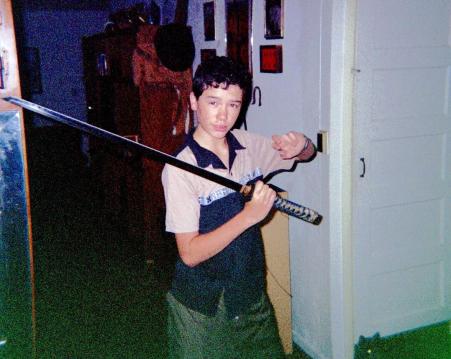
Wednesday the 21st is the 8th anniversary of the death of my son, Michael Daniel Lee Booth. Since his death, September has always been a pretty difficult month for me. His birthday was the 9th. He had just turned nineteen when he took his own life. I relate well to the song by Green Day, “Wake Me Up When September Ends”, but of course, I can’t sleep the whole month away. It’s just not practical. So, instead I try and find some way to cope by honoring him in some way.
Since his death, I’ve talked a lot about how I want to write a book that will tell his story, and mine too I suppose, or at least the story of how his death affected me, and changed my life. When I first began thinking about it, I referred to it as a memoir, but it has to be more than that because there are so many others his death affected. I keep putting off writing it because I’m not sure I’m ready to dredge up all the memories that writing his story would bring. Some of them are still so painful it seems as if they only occurred yesterday.
For a long time after Mike died, it seemed that he was the only thing I could write about, and many of those writings will eventually be incorporated into the book. For now though, I’d like to make this blog post in honor of him, and share with you the eulogy I wrote. I stood up and read it at his funeral with tears streaming down my face, my heart breaking inside of me. People said it was brave of me to get up there and read it in front of all those that attended his funeral, and there were a lot. But for me, it was just something that I had to do. After all, I am a writer and he was my son.

Michael Daniel Lee Booth
When Mike Booth said, “I love you”, it was forever. And when he called you his friend, you knew you could depend on him to stand by you, no matter what. He loved to try new things, to explore and to learn. He had a love for life and for all that he held sacred. Mike strove for excellence in all that he did, and lived by a code of honor that was extremely tough to uphold. His Christian upbringing was intermixed with Hindu and Buddhist beliefs to make up the tapestry of his own personal belief system that was disciplined and unyielding. When he made mistakes, Mike was harder on himself than anyone else ever could have been.
When he got mixed up with the wrong people and things, he made some poor choices. He did not deny what he had done, but instead stood up and accepted the punishment that was given to him. He tried to make amends for his wrongs and was on his way to accomplishing that goal. He expressed great sorrow for his errors, and inflicted emotional punishment on himself over and above what the law could ever require of him.
He had a strong will and could accomplish anything that he set his mind to, including learning to speak Japanese and perform martial arts skillfully, all on his own. Mike had a love for Japanese culture and he could have lived off of green tea and sushi. His knowledge and skills were gladly shared with those who wished to learn. Mike had a love for nature and enjoyed all kinds of outdoor activities, including skiing, hunting, fishing and hiking. His imagination was endless and he created stories and drawings that reveal a talent far beyond his tender youth.
Mike was so much to so many people; a loving son, a dependable big brother, a doting little brother, a respectful grandson, a loyal friend and a devoted husband. He loved his dog, Zaar, who was a companion and loyal friend to him. Mike was sensitive, and hurt so easily and so deeply, yet he was too strong willed to ever let it show outwardly. Only through his writing, can we glimpse the love that he embraced or the pain that he felt. When he loved, he loved with all of his being. Mike was fun loving and enjoyed spending time with those that were important in his life. He had beautiful curls and the most wonderful smile that could light up my heart whenever I saw it. Mike turned 19 three weeks ago. He had a whole life ahead of him. He was much too young to be called home to God.
Like this post? Subscribe to Writing to be Read for e-mail notifications whenever new content is posted.
Share this:

Weekly Writing Memo: What’s in a Name
Posted: September 14, 2016 Filed under: Screenwriting, Stories, Uncategorized, Weekly Writing Memo, Writing, Writing Tips | Tags: Creative Fiction, Fiction, Writing, Writing Process 4 Comments Through all my conversations with other writers, I’ve learned that there seems to be two camps of people when it comes to naming characters, places, and things in stories. One group thinks that the names don’t matter, while the other spends hours finding just the right meaning for each name in their world. Personally, I think it depends on the story, as well as whatever it is you are naming. I do believe main characters should have names that mean something, or at the very least, ‘fit’ the character’s story, but I don’t think everything in your story has to have deeper meaning. If you want to give the people, places, and things you name in your story special meaning, there are several ways you can go about it.
Origins
One of the main things I do look at when I am naming something is the origin of the name. What country is the name originally from? What language is it? Is it predominant in a specific religion, or culture? These kinds of details can help you pick names that have more history behind them to help with whatever you are naming. If you have a character that you want to have an Irish background, then a name with a touch of Irish history would be perfect. It doesn’t have to be a historical or cliché name, but it is an option. Another option is to research popular names in Ireland and pick one that way instead. You may end up with a name that isn’t classically Irish, but it will still have a connection to Ireland.
The point of this kind of research for the names you give in your stories is that it creates a built in history for what you are naming. Without telling the reader, you are hinting at where your character might come from and what their family connections are. Now of course people in real life are often given names with no connection to their roots, and you can use this in your story as well if you want, but by making a deliberate choice to either use the name or not you are making every element of your story count. So be deliberate, and if you decide to go against your characters origins, then make that part of the story as well even if it’s a minor part.
Preconceptions
Something else you can use to your advantage when naming a character, place, or thing in a novel are known preconceptions about the name you use. For example, if you use a name from a myth, many people will recognize it and have certain ideas about that character. Zeus is a mighty god with great power, who also happens to be a bit of a player, and a character named Zeus might be suspected of having some of those traits. There are all sorts of fables and legends out there from every different culture and time period, and even if you use one that doesn’t have meaning to the majority of the population it will still help deepen your character. The point is that it is another layer for a reader to find, and the ones that do will love the touch.
Beyond past myths, you can also use names from modern pop culture and such. Big names like Kanye or Justin are well known enough that they also have immediate pre-conceptions to them. Maybe in another 20 years they won’t have the same impact on your readers as pop culture changes, but for modern readers you can use names like those to paint a picture of who your character is. Big public names have personas around them, and if you’re writing a character with a similar attitude you can use those pre-existing ideas to help nudge your reader in a certain direction before they know anything else about your character.
Meanings
One of the final elements you can use when naming things in your stories is symbolism. There are all sorts of names and words that have deeper meaning beyond them besides the word itself. Most names have some alternate meaning to them when you research the original language they came from. These sorts of meanings can be used to speak to the type of person your character is going to be. If you have a surprisingly brave character, then choosing a name that secretly means bravery could be a subtle nod to readers who know that. These are the kind of details that won’t change anything in the story for the most part, but they can add another layer of meaning to your story. It can be especially useful when naming objects in fantasy worlds.
Final Notes
No matter your take on naming in stories, it’s important to consider what the minor details of naming can do for your story. The small touches can often give a story the extra boost to make it something special. As a reader, I know I enjoy the small details that I discover later on about a story, such as deeper meanings in names, and it only makes me enjoy the story more. If you do go the special naming route, however, I find it works best if you don’t go too obvious with the symbolism in the name. You want it to be a small touch, not a neon sign in your audience’s face. Ultimately, if you find a special name is something that will add to your story, then use it, if not, then don’t. It’s your story, so you have to decide what benefits it the most. Trust your instincts and you’ll be fine.
Share this:

Weekly Writing Memo: Networking
Posted: September 7, 2016 Filed under: Promotion, Screenwriting, Uncategorized, Weekly Writing Memo, Writing, Writing Tips | Tags: Fiction, promotion, Publishing, Screenwriting, Writing, writing advice, Writing Process 3 Comments Sorry I have been missing the last few weeks. As you might have seen on Author the World, I unexpectedly moved to Los Angeles and haven’t had a lot of time to do posts. This week’s post is all about networking. Networking is a major element of having a writing career, and it takes some practice to really learn the right and wrong ways to network.
The most important thing to remember when networking is that you shouldn’t be doing it to use people, and you shouldn’t be doing it to be selfish. Good networking is about being genuine. The best way to network is to approach each networking relationship you make with the attitude of how you can help each other, rather than focusing on how they can help you. The best kinds of networking relationships are mutually beneficial, and maintaining this kind of attitude helps these relationships stay healthy and fulfilling.
Building your Network
You can build your network literally anywhere, it’s all about meeting people and learning about them. If you know who people are, what they do, and what kinds of people they know, you can keep them in mind for later if something comes up they can help with. For writing, often times you can make networking connections in writing groups, classes, at conferences, or even in random places like coffee shops and hair salons. The important thing is to keep your eyes open for people you can help, and for people that may be able to help you. Remember, things need to go both ways, and sometimes the act of offering help to someone can lead to unexpected connections. Ultimately, all networking contacts break down into four different types that can each be beneficial in their own way.
The Introducer
The Introducer may not have any work for you, and may not be someone who is going to offer you advice, but they do know people you want to know and they will help you meet them. These kinds of contacts are always useful to maintain because they help broaden your network, and they can help introduce you to other parts of the writing world you may not be familiar with. One of the best way to meet new people is through a middle-man who can introduce you because it can cut out the awkward process of trying to force a meeting with a stranger. If you’re going to be the Introducer for someone else, remember to make sure you give each person’s name, and then try to share what they have in common or why you think they should talk so you can help jump start the conversation.
The Mentor
The mentor is someone who has been where you are and knows a lot about the business. They are the perfect sort of person who can offer you advice, and give you guidance that will make navigating the writing world easier. Maybe they won’t be able to get you a job, or introduce you to new people, but they will help you find answers to the random questions and issues you run into. Just make sure you don’t burden your mentor by asking too much of them, or wasting their time with easy questions that you could have found out anywhere. They may only have so much free time, so make sure to figure out how much help they are willing to give you and to stick within that range. If you are going to be a mentor, be clear up front what you are willing to do for the person you’re helping, but also try to remember what it was like when you were where they are.
The Helper
The Helper is someone who has an opportunity for you that could potentially help your career, whether it’s a job or an interview doesn’t matter, it’s someone that can put you in line for a job or a writing sale. These kinds of connections are incredibly valuable because they are what give your career a boost. The important thing to remember when meeting people who offer you these types of opportunities is to make the most of them, and to make sure you don’t misrepresent yourself to the person setting it up, because if you waste it or lie it could prevent the person from ever offering you another opportunity again.
The Teammate
In some ways, these are the most valuable networking connections you can make. The Teammate is someone who is going through the same stuff you are at the same time. They are someone you can bounce ideas off of, or trade writing with. They are on your side and you are mutually trying to help each other reach your goals. For writing, having people you can talk writing with is incredibly important, as is having people around who understand what you’re going through. If you are a teammate to someone, make sure the help isn’t going one way. If you find yourself asking too much and not doing anything in return, then try to find a balance.
Final Notes
Ultimately, networking is about broadening the connections you have in your industry, and maintaining those connections by trying to keep things mutually beneficial for all involved. Even if you can’t help someone the moment they help you, always try to keep them in mind and return the favor when you can. One of the most important elements of networking is that the people around you see that you are a part of the cycle of helping, and that you aren’t just a vacuum sucking up all the favors you can get without returning anything. People will quickly notice if you only ever seem to receive help, so the more you can be a part of the cycle the better.
Share this:

Why Writing is a Labor of Love
Posted: September 5, 2016 Filed under: Writing | Tags: Kaye Lynne Booth, Writing, Writing Process 1 Comment Labor Day weekend. Many people headed for the mountains or the shore to spend one last long weekend to say goodbye to summer. It’s the last weekend of tourist season. Time to get back to the serious business called life. The kids go back to school and the adults head back to the daily grind of making a living.
Of course, writer’s don’t always get three day weekends or take vacations, because for writers, everything we do is an experience which can be drawn off of and written about.
Every place we visit and everything we do can be written about in some capacity. Every activity can be used in some capacity to fuel our writing habit. It may only be an idea that serves as a seed, which grows into story with so much nurturing. It might be the foundation for a how-to article. It could even be your next travel article.
I started out with gardening how-tos on e-How.com through demand studios. Most writers simply love to write. For me, writing is a way of life, my passion, perhaps even my obsession. When I can’t write, I feel lost, as if I no longer know who I am. This lesson was recently driven home to me when my computer crashed. I was out of a computer for about three weeks before I could get a new one, and in the interim, although I could not get it into a file, I went back to writing long hand. The ideas don’t stop coming just because I have no means to prepare them for publication.
For writers like myself, although life tries to make it about the money when the bills come due, it never really is. For me, writing is a labor of love and I can’t think of a better way to labor right through Labor Day. Can you?
Like this post? Subscribe by email to receive notification each time there is a new post is made. Never miss out on Writing to be Read.
Share this:

Writing the Way that Works for You
Posted: August 22, 2016 Filed under: Writing | Tags: Writing, Writing to be Read 7 Comments
There are many ways to write story. In his book, On Writing, author Stephen King claims he started out as a kid, printing out stories on a drum printer in his basement, using grape jelly for ink. Some of us older generation writers remember hammering out our stories on manual or electric typewriters, whiting out the errors and going back to manually making corrections.
With the dawn of the technological revolution the way we write changed for most of us. At the 2012 Writing the Rockies Conference, author Kevin J. Anderson told how he wrote while hiking through the hills surrounding the Gunnison Valley by using a hand held digital recorder to dictate his story, then having his assistant transcribe it and type it up on the computer for him. I tried his method, but found I needed to see the words on the page, or screen in front of me.
No one way is right. Different methods work for different writers. When I first started writing I wrote everything long hand, then typed it out on an electric typewriter. The advantage to this methods was that by the time I typed it up, it was like a second draft and I could edit and make changes as I went. The downside was the enormous amount of White Out I went through, because I’m a lousy typist and the incredible amount of time it took to produce a piece of work worthy of submission. It was so bad, I actually gave up on writing for several years, until I discovered the world of computers in 2008. Computers allowed me to edit as I write, and although I’ve been cautioned against it by many of my college professors, I still do it. It works for me and produces first drafts that require minimal amount of editing.
Unfortunately, my computer recently crashed. My son, who is also my techie, has been unable to fix it. He thinks I fried my mother board. Bottom line – I need a new computer, and I’m forced to go back to writing everything long hand once more, at least until I can get a new one. But, what I’m finding, is that writing long hand requires a different mind set for me than writing on the computer. Robin touched on this, as well, in last week’s Weekly Writing Memo on Overcoming the Blank Page.
On the computer, I can multi-task, switching to online research or other activities when I get held up for words. Writing long hand, if I get held up, I find myself staring off into space to gather my thoughts. It also seems more difficult to me, but that may be because I have to transfer my words from page to screen whenever I can get access to public computers at the library.
All of this got me thinking about the different ways there are to write and what works for others. How do you like to write? Are you an old school writer who still writes long hand? Do you use more than one method, writing different stories in different ways as Robin suggested? Leave a comment and let me know. If nothing else it will be interesting.
Share this:

Weekly Writing Memo: Overcoming the Blank Page
Posted: August 17, 2016 Filed under: Books, Fiction, Publishing, Stories, Uncategorized, Weekly Writing Memo, Writing | Tags: Creative Fiction, creative process, Fiction, Screenwriting, Writing, writing advice, Writing Process 1 Comment Sometimes when it comes to writing, the hardest thing to overcome is the simplest. One such example of this is to overcome the intimidation of a blank page and to simply get started. Those first moments when you sit down in front of the page and tell yourself you’re going to write can be huge, and overwhelming. All sorts of thoughts can pass through your head that make putting the first words down on the page near impossible. Am I good enough? Do I have anything to say? How do I do this? Will anyone want to read it? Etc. These kinds of thoughts can stop your writing in its tracks before you even begin. Knowing how to overcome the blank page can be vital, and while there isn’t a method that works for everyone, there are several things that I find work well.
Free Write First
One of the easiest ways I find to get into writing is to simply allow myself to free write for a while. Even if I have a specific story idea in mind, I will sometimes think of my character or my setting and just write whatever comes to mind. It doesn’t always flow in a pretty way, or even make sense, but it does allow me to explore the characters or setting without restrictions and it gets me writing. Once I start putting words on the page, focusing them becomes easier. I also find that just getting started on the act of writing makes some of the tension around writing dissipate. So however you do it, get started by freewriting and getting words on the page. Even if you have to start by writing about your day or something, see where the freewriting takes you. Once you no longer have a blank page, it’s easier to focus on creating something cohesive that you can turn into a story.
Copy Someone Else
This is a method that has been around for a while, and was even used in the movie Finding Forrester. When you are just getting started writing and struggling, try grabbing a random book and copying down the first paragraph of it. As you are writing, let your mind wander, and when you’re comfortable, stop copying and start making it your own. Sometimes using someone else’s work to get you started writing can help you transition into your own work. Just remember to go back once you finish and to change the beginning so it is no longer copying the original author’s work. The key to this is that it gets words on the page, and in making what you write your own.
Make A Rough Outline
When I have a specific story idea in mind, but am struggling to get started, I find that writing down 3-5 bullet points of where I want the immediate section of story I’m working on to go helps. Usually I will do this when I start each chapter. I grab a piece of paper and jot down the 3-5 key moments of the chapter that form the arc of it, then when I write I have “goals” to write toward. It’s just enough outlining to keep the story focused while I’m writing, but not so much that people who hate outlining will feel like they’ve over planned anything.
It works for me because I prefer abbreviated outlines, and it allows me to discover how the characters get from one big moment to the next as I write. So take a few moments to create a small arc for what you want to write, and then let yourself write to those points. It’ll help you visualize what you’re planning to write, and it’ll give you points in the story to write toward. Just try not to make your bullet points too broad, or you can end up feeling lost as to where to start again.
Try a Different Medium
One of the last things I try when I’m struggling to write is to switch mediums. Sometimes I find that I just can’t write a certain story at the computer, and instead I end up writing with a notepad and pen. It seems silly, but just switching mediums like that can actually help get you started. Sometimes I think the notepad works better than the computer when I’m struggling because the notepad feels less permanent and professional. I’m just jotting down ideas! Not writing for real! Which isn’t true at all, but it feels that way. So allow yourself to try a different medium and see if it changes anything. At the very least, switching to something like a notepad where you can do things by hand can allow you to doodle and jot ideas to brainstorm while you are working on getting to the real writing. Which can be just as productive.
Final Notes:
The final thing to remember if you are stuck on the white page is that you don’t have to start by writing right away. If writing simply isn’t working, trying outlining or researching or brainstorming for your story. If you do those things, you’ll still be working on your story in some way, and maybe it’ll help you feel more confident so you can get started. Just remember, at some point you have to stop doing these things and get to the writing, so don’t procrastinate too long!
Share this:

I’ve Come A Long Way, Baby
Posted: August 15, 2016 Filed under: Writing | Tags: Kaye Lynne Booth, Writing 4 Comments
Everything I’ve ever done in life, I’ve done my own way, usually depending on myself and no one else. One thing anyone who knows me can tell you is I’m persistent. When I set out to achieve something, I don’t stop until I do. It has been no different with writing. But I’m discovering that I need a little help with this endeavor.
I had a bad experience with a student teacher in the English department as an undergrad, so just when I was beginning to learn that I liked writing and maybe English should be my major, I was soured on the whole idea by the feeling that the field was too subjective for me, and I chose to major in psychology instead.
But after I’d been out of college for a few years, I discovered not only that I had a love for the written word, but also that I had some talent for it. I started out writing poetry, which I’ve since learned, is not my strong suit, but even there, I don’t do too bad. I sold my first poem to Dusk & Dawn Magazine in 1996 for $5. Problem was, that didn’t even cover all the postage I had spent submitting, and I couldn’t afford to play the starving artist. I had a family to help support. There were others to consider. So, writing went onto a back burner, just simmering for about twelve years.
Then, I discovered the Internet and rediscovered my abilities for writing as new opportunities presented themselves. The rise of the Web actually changed the entire publishing industry over time, opening up all kinds of new opportunities for writers, including, but not limited to, self-publishing, marketing via social media, vanity presses, and content mills. As blogs and websites grew in number, more content was needed than ever before. Problem was, I’m technologically challenged. Slowly, over time, I have learned to use social media to my advantage a little, and I’ve learned to use many of the writing sites and content mills to make minimal amounts of money.
One of the coolest things happened in my writing endeavors didn’t involve any money at all. I had one of my poems featured in a painting by artist Mitch Barrett and displayed and sold at the Kaleidoscope Gallery in Battlesea Park, London. (There’s a lengthy story behind how this came about, which I may relate in a future blog post. Anyone who knows me is surely tired of hearing it.
As a freelancer, I became the Southern Colorado Literature Examiner for Examiner.com, which didn’t really pay, but offered opportunity to meet other writers, get free books for review and obtain credits for my portfolio. I also cranked out articles for other content mills which did pay, at least a little, which added to my skill set, diversifying my writing talents, and I was published in Freeman, which was a bit more profitable.
I thought I was quite fortunate when I was able to obtain a publisher for one of my children’s stories, Heather Hummingbird Makes a New Friend. After seven wasted years, it turned out I was not so fortunate, since my book still wasn’t published. But we learn from experience.
Still struggling to launch my writing career, I discovered the low residency MFA program for Creative Writing offered by Western State and I applied. Maybe I couldn’t do it on my own, but I would learn what I needed to know, one way or another. And I have learned a lot. I’ve learned about my own writing process. When I started at Western, I’d never even thought about it. I’m not even sure I was aware I had a process, but I did and still do. Now I’m just more aware of it. I learned how to craft my words to be pleasing to the ear. I learned how to read aloud in front of an audience, and I’ve learned that I do it well.
Last summer, I completed my emphasis in genre fiction and read from my thesis novel, Playground for the Gods: Book 1: The Great Primordial Battle. I’ve learned how to treat my writing as a business, at least in theory, although I’m still trying to get it off the ground. And I’ve learned how advances and royalties work, and that you have to sell a lot of books before you will ever receive royalties.
And I learned that screenwriting is where the big money is. When I took genre screenwriting for my out of concentration class, I also learned that it was fun, it came pretty easy to me and I was fairly good at it. So, instead of graduating, I stayed in school for another year to get a second emphasis in screenwriting. What I’m learning this year, is that there’s a lot of competition on screenwriting and it’s tough to get a break. You practically have to live in L.A. to get anywhere. Yet, I am determined to make all the money I now owe for my schooling pay off. I haven’t given up yet, and I don’t intend to now.
I’m currently shopping my thesis novel and two of my children’s stories, five short stories, and various poems. I’ve also finished my western novel, Delilah. At Western, thanks to my instructor, Russell Davis drawing us out of our comfort zones, (and maintaining as much discomfort for us as possible), I discovered that I enjoy writing in the western genre, and although it is not one of the bestselling markets, I do it well. I’ve also published a western flash fiction story, I Had to Do It, on Zetetic: A Record of Unusual Inquiry.
I’m working hard, through this blog and social media, to build a writer’s platform and gain a following to make myself look more appealing to agents and publishers. Here’s where you, my readers come in, because you can help. Without my readers, my writing just sits there on the page, not doing much of anything. You are my writer’s platform. You are my following.
Many people don’t realize that liking a link on Facebook, while cool, doesn’t really help the author grow their platform unless they actually read the post and subscribe by email. What does help, is if you’ll take the time to read the post here, on my Writing to be Read site, and subscribe to the blog. That’s what shows how large my reader following is, and it does my heart good to watch as it grows.
You can also like the post below it, with all the “share” buttons, but you must have a WordPress account. If you don’t have one, you can sign up for one, but then, of course, you will have a blog to maintain, so be sure you know what you’re getting into. I’m guessing that many people just like the link on Facebook to show their support, but they don’t actually click on the link and read the post. But, if you leave a comment, I’ll be able to tell that you read it, and if you subscribe, it will show you liked what you read. You’ll make my day.
If you’d like to show even more support, you can buy my short science fiction story, Last Call. If you like it, write a review on Amazon. And, you can follow me on Facebook, Twitter, LinkedIn, or Pintrest. Help an old writer get a break.
Your support is always appreciated. Thank you for being a reader of my work. After all, for me, it’s not really about money. It’s about Writing to be Read.
Like this post? Subscribe to Writing to be Read for e-mail notifications whenever new content is posted.
Share this:

Weekly Writing Memo: A Matter of Time
Posted: August 10, 2016 Filed under: Fiction, Screenwriting, Uncategorized, Weekly Writing Memo, Writing, Writing Tips | Tags: Fiction, Writing, Writing Process 1 Comment Something that almost every story deals with is the passing of time. It’s natural, and to be expected. What every writer needs to focus on is how to show the passing of time, and when to skip time in a story. These two things can be a huge pitfall in a story. If you tell too much of the story and don’t skip time when you need to, then the story can feel sluggish and boring. If you skip too much time the audience can feel like they’re missing things, and you can take away from the tension of the action. There’s a careful balance to time in every story, so the key is finding it for yours.
When to Skip Time
In general, you should skip time when nothing is happening in the story. Any time you have huge chunks of time passing with no conflict going on, you need to get the story moving and skip ahead if possible. There should always be some form of conflict going on in your story, so whenever it’s lacking you’ve either missed a plotline, started in the wrong place, or need to find a way to skip ahead. Look at this time period and see what happens in it that you absolutely need to show your reader, then find a way to show it elsewhere or to compress it down.
Sometimes you can also skip time when you are telling a story in a nonlinear way. Some stories work better if you can jump ahead and then go back to a flashback or something, so look at your conflict and see if it is best told linearly, or if skipping around in time can help you create more tension within the story. You want to maximize the tension and conflict, so if you can do this by telling the story in a new way, then you should try.
How to Skip Time
There are endless stories to use as reference for skipping time (Time Traveler’s Wife; Looper; Lord of the Rings). One of the key things to remember when skipping time is that you need to find a way to show that time has passed. In films, this is usually done with visual elements such as scenery changes, characters aging, seasons changing, etc. In fiction, this can be shown through some of those elements as well, but you can also use words that help show this. Mention the time passing, or use cueing phrases that help guide the reader (Ex – Months later; Kiera was 16 when she finally returned to the village…). Whatever you do, always find a way to show the time change unless you have a reason not to.
Sometimes in stories the writer will skip time by using a montage to show the key moments that happen during the transition, ending with the characters at the point in time where the story continues. Other times, the writer will just skip ahead and start the story at the point in the future where they want it to be. The method to use depends on what happens during the time skip. If something vital happens, then try to find a way to show it either in a flashback later, or before skipping time. As long as there is a key story element, then it needs to be shown. So figure out what matters to the story, and where the conflict is, and you’ll know which elements to show and which to skip.
Final Notes
Obviously there are a lot of moments in a story where exciting action isn’t happening that are still important, so don’t think that you need to skip all these. Those moments can still have character development and conflict. Internal conflict is just as important as external conflict, so make sure you aren’t skipping all that. If you find yourself skipping a lot of time in your story, it might also be time to look at if you’re starting in the right place. If you start your story later, can you still show all the information that you’re skipping over in some way? Usually the answer is yes. Whatever you decide, just remember that you can always ask for a second opinion if needed. Overall, just remember to consider the conflict, the character development, and how your story will change if you skip time. If you do those three things, you should be able to figure out what you need to do.




















Creating Story Equals Problem Solving
Posted: August 8, 2016 | Author: kayelynnebooth | Filed under: Commentary, Opinion, Writing | Tags: Creative Fiction, Fiction, Writing, writing advice | 1 CommentWriters are problem solvers. That’s what we do. Solve problems. It doesn’t matter whether you’re fleshing out a plotline for your latest novel or working up a beat sheet for a screenplay, our job is to figure out how to avoid or circumvent any obstacles that prevent your characters from reaching their goals. Of course, we also create some of the obstacles on purpose, because that is another thing that we do. We put our main characters through hell.
But, that’s not all. I’m also talking about things like faulty logic, which makes it impossible for your characters to do something you need them to do in the story, or things that don’t make sense or pull the reader out of the story, or when there’s too big of a stretch, too much disbelief to be suspended. These are the hurdles we, as writers, must overcome to not just tell the story, but to tell the story well.
Problem solving. That’s what creating story comes down to, and it’s our job, as story creators, to shape the story to make sense, have plausibility and flow smoothly. It’s our job to think through plot lines and make the story work by our clever crafting of words. It’s our job to make sure each character completes their personal story arc, and ensure that the main story arc flows through to the desired conclusion. It’s our job to help the main characters face their fears, overcome their fatal flaws and conquer any obstacles we throw at them along the way. And, it’s our job to be sure the story is believable and makes sense.
Does a story have to have eloquent language? No, although some do. Does it have to have a happy ending? Only if it is a romance. Does it have to make us laugh? If it’s a comedy, but humor is allowed in almost every genre.
There are things a story does have to have. Every story does have to have a beginning, middle and end. At least the main story arc and those of your main characters must be completed, moving the story along and showing character growth and transformation.
A story does have to have a certain logic to it, and it has to have characters who are relatable enough to make your audience care. There are ways to do both, and so much more, if you know how to write a well-crafted story. Robin Conley has made some great suggestions on how to make your audience care in her Weekly Writing Memo, each Wednesday, (or Thursday), here on Writing to be Read.
So, the next time you’re applying for a writing gig, be sure to put down problem solver as one of your many impressive skills. You won’t be lying. Creating Story = Problem Solving.
Share this: