I saw Dan Antion’s post on No Facilities for this week’s CWWC Challenge, and since I live and play on dirt roads, this challenge is right up my alley, so to speak, I thought I’d join in on this one.
Here’s this week’s challenge: Dirt roads or dirt pathways or trails [Bonus if Red is Included]
And here are some of the dirt roads along my way and some things found on them:
En route to Cripple Creek, ColoradoBarrel cactus getting ready to bloom on property where I live. Blooms will be red when they open. (Don’t know if that counts)Dirt road transportation: electric bikeMcCoy Gulch cutoff, Cotopaxi, ColoradoDirt path around Sands Lake, Salida, ColoradoWild flowers add color. These are black-eyed susans.Heavy duty transportation on rough and rocky dirt roads. ATV above Hillside, Colorado.Me and my Jeep JK near Cripple Creek, Colorado.Old cabin above Hillside, Colorado.
I recently completed the research and outline for Marta, the third book in my Women in the West Adventure series. Or maybe I should say, I completed the outline, because the research will continue as I work through the writing. The research is never finished until the book is finished. In any case, one of the things I love about writing historical fiction is researching different times and learning about the people and their true life adventures.
With the Women in the West, each book features a historical female character which the protagonist meets during the course of the tale. Delilah meets Baby Doe Tabor, saloon girl turned high society mistress, in Leadville, Colorado. Sarah made the acquaintance of Big Nose Kate, Doc Holliday’s gun toting companion, in Glenwood Springs, Colorado. And Marta…, well I originally had a different journey in mind for Marta, until I discovered the very interesting historical figure of actress and Union spy, Pauline Cushman, and I knew that was who Marta would have to meet.
You’d think that writing a historical characters might be easier than creating fictional ones from scratch. After all, you may save time by having a ready-made history to draw from. But, all you really have is the recorded history to draw from, and when dealing with semi-famous or infamous characters, recorded history can be very sketchy. It is the Author’s job to do the research and find as many pieces as possible, and then, try to fit those pieces together to give a clear picture of that ready-made history I mentioned above. And if there are still pieces missing when you’ve finished, you may still have to create character to fill in those missing pieces.
For the character of Pauline Cushman, in Marta, I read the rather biased 1865 biography, reprinted in 2019, written by Ferdinand L. Sarmiento, Life of Pauline Cushman: The Celebrated Union Spy and Scout, which tells the tale, at least in part, of her time working with the Union Army during the American Civil War. Since Marta takes place in 1890, many years after the war ended, I had to search the Internet for any information I could find about Pauline’s later life, as well.
In 1890, Pauline separated from her third husband in Arizona. The next information I could find on her, found her dying in poverty in El Paso, Texas, in 1893. So, Pauline could have been traveling from Arizona to El Paso at the same time as Marta was traveling there from Colorado, and that is how they meet in my story. They share a train ride from Antonito, Colorado to Santa Fe, New Mexico.
From there, the story is fictionalized and the character of Pauline is based in my knowledge of her previous experiences, the actual events which occured in the real Pauline’s life. Likewise, her actions in the story are reflective of her life events, if I write them to be true to character. That’s my goal as I prepare to put my story to the page.
Something else I like to do when researching historical fiction is to go to the locations in the book, or travel the route my characters would have taken to get a feel for the landscape and terrain. This helps me in describing settings, although at times, I’ve found it difficult to imagine the location as it was at the time of the story, which is often quite different from what it is today. While the present day Glenwood Springs, Colorado has many tourist attractions, include the Glenwood Springs Hot Springs Pool, in 1887, when Sarah takes place, there were hot springs scattered all up and down the banks of the Colorado River, and the Ute Indians considered the area to be big medicine. It looked a lot different. I made many visits there, to the many small museums there, and I made the trek up to Doc Holliday’s gravesite to learn as much as I could about the history of the area.
For Marta, I hope to be able to take the historic train from Antonito, Colorado. Although today, it only runs as far as Chaco, New Mexico, it ought to be far enough to get a feel for the landscape along the route and also some ideas about what my characters might experience as they embark on that leg of their journey.
About Kaye Lynne Booth
For Kaye Lynne Booth, writing is a passion. Kaye Lynne is an author with published short fiction and poetry, both online and in print, including her short story collection, Last Call and Other Short Fiction; and her paranormal mystery novella, Hidden Secrets; Books 1 & 2 of her Women in the West adventure series, Delilah and Sarah, and her Time-Travel Adventure novel, The Rock Star & The Outlaw,as well as her poetry collection, Small Wonders and The D.I.Y. Author writing resource.
Kaye holds a dual M.F.A. degree in Creative Writing with emphasis in genre fiction and screenwriting, and an M.A. in publishing. Kaye Lynne is the founder of WordCrafter Quality Writing & Author Services and WordCrafter Press. She also maintains an authors’ blog and website, Writing to be Read, where she publishes content of interest in the literary world.
_______________________________________
Did you know you can sponsor your favorite blog series or even a single post with an advertisement for your book? Stop by the WtbR Sponsor Page and let me advertise your book, or you can make a donation to Writing to be Read for as little as a cup of coffee, If you’d like to show your support for this author and WordCrafter Press.
_____________________________________
This segment of “Writer’s Corner” is sponsored by theRobbie’s Inspiration blog site, where you can find ideas on writing and baking with hostess, Robbie Cheadle.
It’s that time of year again, and the WordPress subscription and Writingtobe Read domain are coming up for renewal. I have until the end of July to come up with the money to renew, and the WordCrafter coffers are empty.
As followers of the blog know, Writing to be Read has some really great content. You may be a fan of one of my monthly or bi-monthly blog series: “Writer’s Corner”, “Review in Practice”, or “Everyone is a Critic”. Or perhaps you come here to enjoy the very popular blog series by Robbie Cheadle: “Read and Cook”, “In Touch with Nature”, or “Treasuring Poetry”. Or maybe you enjoy something by our single series authors, like Arthur Rosch’s “Mind Fields”, or DL Mullan’s “Undawntech”, or Lindsey Martin-Bowen’s “Writing Practice with Lindsey. Or maybe you just visit for my hard hitting book reviews that call them like I see them. Whatever the reason thar you visit or follow Writing to be Read, I want you to be able to keep coming back for more.
As avid readers of this blog, I’m asking for your help through this fund raiser. Below, you will find a list of books from the WordCrafter catalog, and for a small donation of as little as $10, you can pick any book of your choice and I’ll send you a free digital copy in appreciation of your support. If you wish make a larger donation, you may do so by clicking up to increase the amount. You may pick one book for each $10 donated.
/
2025 Fund Raiser
Support Writing to be Read with a donation.
$10.00
You can make a donation through the portal above. Then choose a book or two from the list and email your choices for your free book(s) to KLBWordCrafter@gmail.com. I’ll send you a Bookfunnel link for your book(s) as a thank you. Easy peasy.
Whispersof the Past paranormal anthology
Spirits of the West paranormal anthology
Where Spirits Linger paranormal anthology
Once Upon an Ever After dark fantasy anthology
Refracted Reflections dark fiction anthology
Visions dark fiction anthology
Midnight Roost dark fiction anthology
Midnight Garden dark fiction anthology
Hidden Secrets paranormal mystery by Kaye Lynne Booth
Last Call and Other Short Fiction, short story collection by Kaye Lynne Booth
Delilah, western historical women’s fiction by Kaye Lynne Booth
Sarah, western historical women’s fiction by Kaye Lynne Booth
The Rock Star & The Ourlaw, time travel adventure by Kaye Lynne Booth
Small Wonders poetry collection by Kaye Lynne Booth
Poetry Treasures 4: In Touch with Nature poetry anthology
Poetry Treasures 5: Small Pleasures poetry anthology
I am appreciative of your readership and your support. So, let’s gear up for another year of great content from Writing to be Read and WordCrafter Press.
_________________________________
Did you know you can sponsor your favorite blog series or even a single post with an advertisement for your book? Stop by the WtbR Sponsor Page and let me advertise your book, or you can make a donation to Writing to be Read for as little as a cup of coffee, If you’d like to show your support for this author and WordCrafter Press.
_________________________________
This post sponsored by WordCrafter Quality Writing & Author Services.
Whether it’s editing, publishing, or promotion that you need, WordCrafter Quality Writing & Author Services can help at a price you can afford.
Most fiction writers realize Character & Conflict remain essential elements in writing fiction. And those concepts can work to make a poem more engaging, too. Thus, this month’s practice offers hints for creating characters—and conflict, which remain essential in moving fiction along.
First,create a mind map for at least the main characters in your novel, short story, or poem. How?
Using the point-of-view for each character, fill in the “answers” to these questions:
1. I hate . . .
2. I love . . .
3. I need . . .
4. I fear . . .
5. I am drawn to . . .
6, I get shivers from . . .
Once you’ve set up this “map,” for you main character(s), think about each character’s flaws. For example, what might urge a character to make a choice opposite from what he or she would normally do? (Remember, each character is a hero or heroine in his or her own mind.)
Consider, too, how seasons and landscapes may serve as characters that motivate the human characters. Remember: TENSION (or CONFLICT) is ESSENTIAL to move fiction along. Thus, a character must WANT something at a story’s onset—and some person, place, or situation, must block him or her from getting it. Thus, the character must try a different ploy.
Dialogue, too, can create conflict as strong as action can. (In fact, many successful stories create as much—or even more—conflict with words as with action.
Again, much of this can work in poems, especially when the poet uses an archetype for either the persona—or a character the persona loves, hates, fears, is drawn to, or all of the preceding situations.
Have fun with this—and see if it helps move a story, chapter, or poem along. Remember: writing must HOOK the reader with a character in conflict with others, a situation, or him or herself.
About Lindsey Martin-Bowen
On Halloween 2023, redbat books released Lindsey Martin-Bowen’s 7th poetry collection, CASHING CHECKS with Jim Morrison. Her 4 th collection, Where Water Meets the Rock, was nominated for a Pulitzer; her 3rd, CROSSING KANSAS with Jim Morrison was a finalist in the QuillsEdge Press 2015-2016 Contest. In 2017, it won the Kansas Writers Assn award, “Looks Like a Million.” Writer’s Digest gave her “Vegetable Linguistics” an Honorable Mention in its 85th Annual (2017) Contest. Her Inside Virgil’s Garage (Chatter House Press 2013) was a runner-up in the 2015 Nelson Poetry Book Award. McClatchy Newspapers named her Standing on the Edge of the World (Woodley Press/Washburn University) was one of the Ten Top Poetry Books of 2008. It was nominated for a Pen Award.
___________________
Did you know you can sponsor your favorite blog series or even a single post with an advertisement for your book? Stop by the WtbR Sponsor Page and let me advertise your book, or you can make a donation to Writing to be Read for as little as a cup of coffee, If you’d like to show your support for this author and WordCrafter Press.
___________________
This segment of “Lindsey’s Writing Practice” is sponsored by WordCrafter Quality Writing & Author Services.
Whether it’s editing, publishing, or promotion that you need, WordCrafter Quality Writing & Author Services can help at a price you can afford.
With his acknowledged individual storytelling expertise, D. M. Mitchell pens yet another taut psychological thriller with a difference that twists and turns to its deliciously devious and unexpected conclusion. Discover for yourself why D. M. Mitchell is being hailed as one of the most exciting new writers of thriller and supernatural tales in the UK.
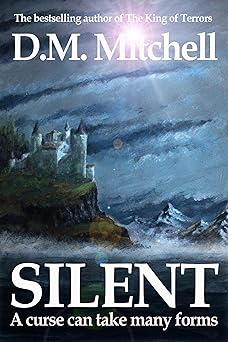
My Review of Silent
I purchased a digital copy of Silent, by D.M. Mitchell after reading his story, Mouse. You can read my review of Mouse here: ( ). All opinions stated here are my own. And I have to say, D.M. Mitchell is quickly becoming a new favorite for me.
After reading Mouse, I wasn’t sure what to expect out of Silent, because D.M. Mitchell seems to be full of surprises. But this was such a fun and entertaining story that I can’t tell you how much I enjoyed it. It has a gothic horror flavor that helps to create an atmosphere of mystery and intrigue. The novel is set in 1927’s Hollywood, with a slight detour when the protagonist, Rick Mason, inherits a mysterious Slavonian castle, and a curse, not long after the story begins, expertly piquing the reader’s curiosity and setting the mysterious gothic tone for the rest of the book.
Rick Mason is a down on his luck motion picture actor, looking for his big break when he meets Betsy Bellamy, also looking for fame and fortune, and falls in love, in spite of the disapproval of her brother Davey, who currently writes screenplays. But life is about to change for Rick.
In Silent, D.M. Mitchell has masterfully created a modern mystery with a Gothic horror flavor which captured my attention from cover to cover. A good story with a surprise ending, but you’ll get no spoilers here. I give it five quills.
____________________________
Kaye Lynne Booth does honest book reviews on Writing to be Read in exchange for ARCs. Have a book you’d like reviewed? You can request a review on the Book Review tab above.
I have a conceit, i.e. that I should hold the title as “The World’s Most Fucked Up Person”. The only problem is that all of you would also like to hold this same title. Don’t try to con me. I know what you think. The only reason I know what you think is that it’s the same thing that I think.
Or. I used to think. When I recognized that each of us claims this title as the most neurotic person on Earth, I began to have more confidence in myself. Surely, I reasoned, if I am exactly the same amount of fucked up as everyone else, then I must belong to this Family of Man. I’m human. And we all know that there is great dignity to being human. We are builders of pyramids, makers of satellites and space ships.
I have a very weird relationship with food. The first time I grasped that I was deeply crazy was when I began to eat huge amounts of food. I indulged especially in sweets. If I were to make a pie chart of my life (and refrain from eating it), I’m sure it would show huge chunks of time in the bulimia/anorexia’ zone. The worst of my food disorders followed me through adolescence; years seventeen through twenty two. I was out in the world, trying to maneuver by being on or near college campuses.
I had a sneaky way of being anorexic. I deluded myself into thinking that this was a spiritual discipline. I was drawn to exotic food disciplines, like Macrobiotics. It would get me high, exalt me spiritually. By eating small portions of brown rice and onions, chickpeas in barley, I was the paragon of yogic discipline. This was who I wanted myself to be. I got skinny. I weighed 125. On top of this I was taking LSD and smoking weed. I was deep into my purpose, my destiny of becoming a musician of salvation and a figure of reverence. The things that young people think: oh my god!
Then I came to a breaking point. After a year of Macrobiotics I had such a craving for a peanut butter and jelly sandwich that I bought the ingredients and took them back to my hidey hole. “What are you doing?” I asked myself. “This is a self betrayal, this is the opposite of Macrobiotic food. You asshole, what a failure you are!” So I ate it. Then I ate something else sweet and gooey. Then I couldn’t stop eating every kind of junk food on the planet. I had been like a spring ready to snap. Boing!
I was so ashamed of myself. This was 1967, before eating disorders had been invented. I was a pioneer. My bulimia wasn’t the pukey kind. It was the Exercise Freakishly type of bulimia, the one where on alternate days I would purge with sweat and effort, then follow with a day of relentless eating: an entire apple pie, backed up by a half gallon of ice cream. After that came the cookies, and so forth. One day exercising. One day binge eating. Back and forth, one followed the other, for more than a year. I looked for help. I went to the college shrink. He said, “I don’t know what’s happening to you and I can’t help you. Besides, you’re not even enrolled as a student at this college”
I lost weight during this time. My waist was a twenty nine or thirty. I was living in a vacant student’s quarter, avoiding the security guys and bedding down with a pad and sleeping bag. I got money from my dad. I worked as a stable boy at a local horse ranch. A stable boy.
I had my drums stashed at the university’s music building in a practice room. I practiced there for hours every day, getting high by all means and experimenting with the limits of my technique. That was the point of not going to college. I let my dad pay for semesters at Western Reserve or Wayne State and then I would slip down to Yellow Springs from Cleveland and hang out with people who talked to trees. I would practice all the time, working through the famous “Stick Control” book and listening to Coltrane records.
This was a pleasant period that lasted about a year. I think that I’m conflating two different periods of time. It doesn’t matter. That’s the way memory works when it sort of fails to work. I think there’s a memory bank in the brain and it gets filled up and needs to be purged once in a while. It’s all just story anyway. Life truly is fiction, it has to be. I just want a subject to write about and my life has been so bizarre that it qualifies as the stuff of novels. That poor guy (that is, myself) didn’t know what lay ahead. He thought that if he took enough acid, did yoga, ate rice and played the drums then he would launch himself into nirvana. It’s not a bad plan, really. The problem was that I was fractured psychologically, harboring behaviors that would shame me again and again.
These were adolescent ordeals, but they were precursors to my future. In 1967 my eighteen year old self dreamed of cosmic unity while the biggest thing that lay ahead of me was heroin addiction. I interrogated my psyche by reading about psychology. After that came years of therapy. I was determined to save myself.
It took a long time, but none of it can be repudiated. It’s lucky I’m still alive and well.
I’m still slightly food disordered. I control, compensate, manage. Mostly I exercise.
I get a lot of exercise.
________________
About Arthur Rosch
Arthur Rosch is a novelist, musician, photographer and poet. His works are funny, memorable and often compelling. One reviewer said “He’s wicked and feisty, but when he gets you by the guts, he never lets go.” Listeners to his music have compared him to Frank Zappa, Tom Waits, Randy Newman or Mose Allison. These comparisons are flattering but deceptive. Rosch is a stylist, a complete original. His material ranges from sly wit to gripping political commentary.
Arthur was born in the heart of Illinois and grew up in the western suburbs of St. Louis. In his teens he discovered his creative potential while hoping to please a girl. Though she left the scene, Arthur’s creativity stayed behind. In his early twenties he moved to San Francisco and took part in the thriving arts scene. His first literary sale was to Playboy Magazine. The piece went on to receive Playboy’s “Best Story of the Year” award. Arthur also has writing credits in Exquisite Corpse, Shutterbug, eDigital, and Cat Fancy Magazine. He has written five novels, a memoir and a large collection of poetry. His autobiographical novel, Confessions Of An Honest Man won the Honorable Mention award from Writer’s Digest in 2016.
Did you know you can sponsor your favorite blog series or even a single post with an advertisement for your book? Stop by the WtbR Sponsor Page and let me advertise your book, or you can make a donation to Writing to be Read for as little as a cup of coffee, If you’d like to show your support for this author and WordCrafter Press.
____________________________________
This segment of “Mind Fields” is sponsored by the Roberta Writes blog site, where you can find the poetry, photos, videos, and book reviews by Robbie Cheadleand so much more.
When tragedy took everything from Violet, she left home and never looked back. Until now. Her mother’s funeral.
Violet hopes she can settle her mother’s affairs and quietly return to the life she built after that day. Until she sees him. Skeeter Johnson. The boy who shot her in the face.
In a moment, her past returns to haunt her. A past she thought she left behind. A past, she comes to discover, full of her mother’s secrets.
I received a free digital copy of Her Mother’s Secrets from the WMG Books newsletter. All opinions stated here are my own.
This short story, Her Mother’s Secrets, by best selling author Kristine Kathryn Rusch, is a mystery of the mind. When Violet inherits her mother’s house, she inherits her mother’s secrets, as well. But those secrets may be the key to the missing parts of Violet’s life, the parts she lost during and after the ‘incident’ that changed her life forever.
Her Mother’s Secrets is a different type of mystery that delves into the tricks one’s mind can play. A delightful tale which can be read in a single sitting. I give it five quills.
________________
Kaye Lynne Booth does honest book reviews on Writing to be Read in exchange for ARCs. Have a book you’d like reviewed? You can request a review on the Book Review tab above.
Today, I am delighted to host blogger and hostess of Story Chat about which she says the following: “Story Chat is more than a writing challenge. It is a unique and proven online program that encourages interaction between authors and readers. It’s part writers group, part beta readers, part fun fiction, and pure enjoyment.”
Robbie, thank you so much for inviting me to be on your blog. It is such an honor. I’ve spent a lot of time reading and researching poetry since you sent these questions to me, so it’s taken me a long time to come up with the answers.
What is your favourite style of poetry to read i.e. haiku, ballad, epic, freestyle, etc.?
I adore reading tankas, but my favorite style to read is freestyle, words that are natural without the constraints of order.
What is your favourite poem in your favourite style to read?
Mary Oliver is a new author to me, but well-known to many. I picked her because I have so many favorites among our friends, and I don’t want to choose. Mary Oliver published poetry from 1963 to 2015 before she passed in 2019. She was well known for her observations of the natural world, tying them to deep emotions or emotional events, as you can see in the following poem.
Gethsemane
By Mary Oliver
The grass never sleeps.
Or the roses.
Nor does the lily have a secret eye that shuts until morning.
Jesus said, wait with me. But the disciples slept.
The cricket has such splendid fringe on its feet,
and it sings, have you noticed, with its whole body,
and heaven knows if it ever sleeps.
Jesus said, wait with me. And maybe the stars did, maybe the wind wound itself into a silver tree, and didn’t move,
maybe
The lake far away, where once he walked as on
a blue pavement,
lay still and waited, wild awake.
Oh the dear bodies, slumped and eye-shut, that could not
What I loved about this poem is that it takes a familiar biblical event way outside the box. When you saw the title, Gethsemene, did you think about the grass sleeping or the wind winding itself into a silver tree? I didn’t, until her poem suggested that I think about it.
How can I train myself to think past and around the outer edges of my topic? That is my goal this year.
What is your favourite style of poetry to write?
I like free style, acrostic, limericks, and tankas best. But I also enjoy other syllabic poems and some of the French form poetry when I want a challenge. What I want to improve this year are some of the nuances that I’ve missed in writing syllabic poetry as well as thinking outside the box with freestyle poems.
What is your favourite of your own poems?
Messages From the Cat (free verse)
Poems, no longer innocent kittens,
Intentionally sneak up on you at night,
Concise imagery padding silently across the carpet,
Weaving its way into your dreams.
Rhyming couplets stealthily leap onto your bed,
Pretending they would curl at your feet for a long nap,
Or lie warm against the curve of your spine,
But instead, they pounce on your head, tearing it open.
If you cry out, call for help,
Precise verses slip away, leaving only an open gash.
Life’s language drips from the wound.
You jump to consciousness, capture each phrase
As it percolates from your throbbing skull
Like slush melting away from Frosty on a sunny day.
At sunrise, linguistic gems gleaming,
Iambic felines sun themselves
In a streaming hot shower of midmorning light,
Licking their forms to glistening perfection,
For all to stroke with admiration,
While you trod off to work,
Exhausted from your sleepless scratch with immortality.
Please tell us about your poetry book, Embracing the Power to Live. How did this book come about? What would you like readers to take away from this collection?
You’ve asked several important questions, Robbie. I hope I’ll answer the first question as I answer the second and third ones.
I’ve written (and kept) poems since the 1980s when my first husband and I moved to Visalia, California, to pastor a tiny church in the rural community of Ivanhoe, California. At that time, I experimented with different styles of poetry, most of which were out of date, but writing them challenged me.
After I retired in 2012, I wanted to write a book, but my blog led me in a different direction. Arcadia Books contacted me because of some of my posts about Woodlake, California. Five months later, they published my book, Images of America Woodlake.
Then I tried fiction, and struggled for years trying to write a bestseller that would become the next Netflix series. That didn’t happen.
I loved blogging, and that’s what I did best, so I gave up my dream of publishing a book of my own work until I met Colleen Chesebro and had a year of writing Haiku and other syllabic poetry under my belt. Meanwhile, several of my blogging friends started publishing poetry books. I was intrigued. Normally, I struggled to read a whole book of poetry. However, Robbie, when I read your book, Lion Scream, that changed for me. I was not ready for this poem. I had to put the book aside and wait for my heart to calm down. I had never read such moving poetry in my life.
As I read the poem aloud to a friend, while I prepared for this interview, it brought tears to my eyes and made my stomach churn. I wanted my poems to matter, but I didn’t have an agenda. So, I fell back on what I do naturally, which is to encourage people to do what they do best.
When I picked my word of the year for this year, the title fell into place. I wanted to create something that would be uplifting to others and would help them fulfill their own dreams. So, somehow, I had to go from the poems I had written about random topics and pull them together with new poems that would minister to people’s souls and encourage them to find their own creativity.
I drew a lot from Sunflower Tanka and Cindy Georgakas’s book Celebrating Poetry. As I read her book, I fell in love with certain poems and the titles of poems. For example, isn’t her title “Messages from the Moon” a great title? The idea of the moon sending me messages set my imagination on fire. It became “Messages from the Cat” in Embracing the Power to Live. There were no similarities in the poetry or the subject, but I loved the title.
I have already started to realize the joy that comes from reaching the goal of helping others. I’ve shared on social media and my blog about my neighbor Dan Daniels. Dan started writing poetry at age 11 when he was a rough and tumble New York City kid in a large family. He started working at about age seven.
As he handed me an aged sheet of paper with a typewritten poem, he told me I was only the second person he had ever shared his poem with. I was blown away. He is now in his 80s, and he and his wife inspired one of the poems in my book, “Aging Gracefully.” This is his poem, and I am proud to announce that you are now collectively the third person he is sharing it with.
Stand Amongst the Flowers Gentle
By Dan Daniels
Stand amongst the flowers gentle
Look and smell and feel their power
How they light the day with beauty
Not long enough to stay an hour.
Stand amongst the flowers gentle
Let them fill your soul inspired
Touch them all with love and kindness
Nothing more of you required.
Nature all around us speaks
We, who hear, must answer strongly
Love all that nature has to give
Stand amongst the flowers gentle.
Robbie, I can’t wait to read what your readers say about Dan’s poem. When I called to ask permission to use his poem, he and his wife were sitting in their living room reading Embracing the Power to Live and talking about where he might have hidden the other poems he wrote through the years. Dan has Parkinson’s Disease, so I am going to help him publish them in a small book that he can give to his family as part of his legacy to them.
Another friend called me the week the book came out to tell me she was ordering it for a couple of relatives of hers who had stopped communicating with each other and with her. She thought somehow my book might encourage them to start talking. Helping Dan come out of his poetry shell and helping people find ways to communicate their feelings exemplifies the reasons I wrote the book, Embracing the Power to Live.
Thank you again for inspiring and encouraging me, and for inviting me to take part in this project. It means so much to me.
Thank you, Marsha, for this wonderful interview. It is truly amazing how much you have gained from being part of this on-line poetry community. I am deeply honoured that my poem resonated with you and thank you for the contribution of Dan’s gorgeous poem as well as detailing how Sunflower Tanka and Celebrating Poetry inspired and guided you.
My review of Embracing the Power to Live
Picture caption: Cover of Embracing the Power to Live featuring a painting of a teenage girl stepping through a door
What Amazon says
Embracing the Power to Live is a poetic journey of a woman’s perseverance despite life’s hard knocks. This collection taps into the true spirit of poetry—reaching ordinary people with the message that they are enough. Some poems hold profound meaning. Others are included simply for the fun of playing with words – a joy reborn when she stepped into the world of syllabic poetry. Told by different authority figures in her life that she would never marry or achieve her dreams, the author defied the discouraging voices. Her poetry shatters shame uplifts the spirit, and encourages readers to embrace the strength to do the same. This collection isn’t a self-help guidebook—it’s an invitation to laugh, weep, grow, and live together, connecting hearts through poetry. Embracing the Power to Live is for anyone who seeks to rise above a spinning world to gain strength, perspective, and a new beginning.
My review
This is a most unusual and enjoyable collection of poems, photographs, memories, and religious quotes that collectively tell the story of the poet’s life. A most interesting memoir, the poet has not shied away from sharing her human experience in all its marvelous highs and compelling lows. The short paragraphs embellishing the poems with additional colour and memories are enlightening and the photographs make the whole experience more visual and vivid.
This book is presented in different chapters, each focusing on different aspects of life and living to highlight and reveal in. While the poems are all encompassing and share moments of sadness and discomfort, the collective package is a positive experience of finding contentedness and peace to support the poet on her journey through life in all its manifestations. Religion, the poet’s guiding light, is threaded throughout the book as a common thread of hope and support.
I am sharing one poem, It’s hard being semi smart (pantoum) which I feel embodies the spirit of this book and its relatability to us all.
It’s hard being semi-smart because, It’s so hard to choose. I have many skills with several flaws And activities that enthuse.
It’s so hard to choose Because I’m sort of good. And activities that enthuse Make me think I should.
Because I’m sort of good, I try to do too much. Makes me think I should, But nothing has the master’s touch.
I try to do too much. I have many skills with several flaws. But nothing has the master’s touch. It’s hard being semi-smart because.
In closing, I must mention the cover of this book which I think is gorgeous.
Picture caption: Marsha Ingrao’s author photograph featuring her in a blue top with her dog against a setting sun background.
Marsha’s newest book, Embracing the Power to Live, a poetry anthology and memoir, is set to come out in late May or early June. She is the contributing editor for Story Chat Volumes I and II. Previous works include a chapter in This Is How We Grow (2023) by Yvette Prior, contributions to Sunflower Tanka, a Poetry Anthology by Colleen Chesebro and Robbie Cheadle (2024), and Images of America: Woodlake – Arcadia Publishing (August 13, 2015), available on Amazon. In addition, Ingrao published numerous poems and articles. She has blogged since 2012.
She earned a Bachelor of Arts, Teaching, and Administrative Credentials from Fresno State University. As a bilingual teacher, she earned a CLAD Certificate. While employed at Tulare County Office of Education, she earned her Master’s in Curriculum and Instruction from Fresno Pacific University. At the county office, she developed curriculum for Migrant Education and later served as a History Consultant for the county’s Educational Resource Services.
Ingrao believes in lifelong learning. Today, she remains active as a blogger, writer, photographer, and history buff.
She grew up in Indiana and Oregon, moved as an adult to Colorado, then near the Giant Sequoias. After living in Arizona for four years, she and her husband, Vince, her dog, Goldie, and her cat, Moji, have recently returned to the land of the big trees in California.
About Robbie Cheadle
Picture caption: Robbie Cheadle author picture
South African author and illustrator, Robbie Cheadle, has written and illustrated sixteen children’s books, illustrated a further three children’s books, and written and illustrated three poetry books. Her work has also appeared in poetry and short story anthologies.
Robbie also has two novels and a collection of short stories published under the name of Roberta Eaton Cheadle and has horror, paranormal, and fantasy short stories featured in several anthologies under this name.
You can find Robbie Cheadle’s artwork, fondant and cake artwork, and all her books on her website here: https://www.robbiecheadle.co.za/
________________________
Did you know you can sponsor your favorite blog series or even a single post with an advertisement for your book? Stop by the WtbR Sponsor Page and let me advertise your book, or you can make a donation to Writing to be Read for as little as a cup of coffee, If you’d like to show your support for this author and WordCrafter Press.
__________________________
This segment of “Treasuring Poetry” is sponsored by WordCrafter Press and the Poetry Treasures series.
Back in February, I reviewed the first two seasons of the Showtime series, Yellowjackets. You can read that review here. They left us with the hope of rescue for our teenaged girls within grasp, but dashed away in a shocking singular act from which there is no going back. And their adult counterparts seem to wrap things up and set their pants to rest following the death of Natalie.
Upon writing that review, I couldn’t imagine what was in store in the next season and anxiously awaited the premiere of season 3. I have to say that I was not disappointed. Season 3 is filled with surprising twists which I could never have guessed for both groups of characters.
Another old teammate makes an appearance on the scene in the present as Shawna seems to be out of control in the present. And I have to wonder what Walter is up to as makes appearances throughout the season, yet remains mysterious in the background.
And things get tense for our teenagers with the addition of new characters, and changes in group dynamics, things get more desperate as winter once more approaches and return to civilization locked out of reach once again.
So now, I must wait for Season 4 to find out what happens. But, wait. What? They haven’t decided to make Season 4 yet? But, how can they do that? They can’t leave us on two fantastic cliffhanger endings and then just decide not to make Season 4 and leave viewers hanging, can they? This must be how many readers felt when George R.R. Martin didn’t finish the Game of Throwns series. But the thing is, Yellowjackets was written as a five season series, so the material is available, and the question is does the series generate enough revenue to continue it, which these days, is determined mainly by the sponsorship, rather than viewers, so there is a chance that fans of the series will be left in the lurch.
About Kaye Lynne Booth
For Kaye Lynne Booth, writing is a passion. Kaye Lynne is an author with published short fiction and poetry, both online and in print, including her short story collection, Last Call and Other Short Fiction; and her paranormal mystery novella, Hidden Secrets; Books 1 & 2 of her Women in the West adventure series, Delilah and Sarah, and her Time-Travel Adventure novel, The Rock Star & The Outlaw,as well as her poetry collection, Small Wonders and The D.I.Y. Author writing resource.
Kaye holds a dual M.F.A. degree in Creative Writing with emphasis in genre fiction and screenwriting, and an M.A. in publishing. Kaye Lynne is the founder of WordCrafter Quality Writing & Author Services and WordCrafter Press. She also maintains an authors’ blog and website, Writing to be Read, where she publishes content of interest in the literary world.
_______________________________
Did you know you can sponsor your favorite blog series or even a single post with an advertisement for your book? Stop by the WtbR Sponsor Page and let me advertise your book, or you can make a donation to Writing to be Read for as little as a cup of coffee, If you’d like to show your support for this author and WordCrafter Press.
________________________________
This segment of “Everyone is a Critic” is sponsored by the My Backyard Friends Kid’s Book Series and WordCrafter Press.
The My Backyard Friends kid’s book series is inspired by the birds and animals that visit the author Kaye Lynne Booth’s mountain home. Beautiful illustrations by children’s author, poet, and illustrator, Robbie Cheadle, bring the unique voices of the animal characters to life.
With his acknowledged individual storytelling expertise, D. M. Mitchell pens yet another taut psychological thriller with a difference that twists and turns to its deliciously devious and unexpected conclusion. Discover for yourself why D. M. Mitchell is being hailed as one of the most exciting new writers of thriller and supernatural tales in the UK.
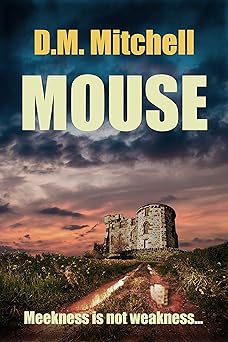
I purchased a free a digital copy of Mouse, by D.M. Mitchell via KindofBook. All opinions stated here are my own.
The best kind of mystery story is one with lots of red herrings and misdirection. Mouse is just such a book. This story kept me guessing until the very last pages. Every time I thought I knew who the killer was, Mitchell sent me off in a different direction, and the discovery of who the real killer was at the end came as a complete surprise. Bravo! To author D.M. Mitchell.
I found this psychological thriller to be most entertaining and challenging. It was well crafted, leaving no loose ends, and filled with surprises. The characters are unique and, if not likeable, at least relatable. There is enough mystery in this story to keep me guessing at, not only who the killer is, but also at character motivations. Just trying to figure these odd ducks out, to keep the pages turning, but I didn’t guess who the killer was until I came to the surprise twist at the end.
We have a cast of characters who I found to be curious, but their oddness picqued my curiosity and kept me reading. There’s the timid woman, Laura Leech, who seems to be a topic of speculation in the village. At the least, eccentric, and possibly homicidal, or so it is thought by locals, she is of particular interest to several other characters. Vince, the head projectionist at the Empire Theater, is completely infatuated with her, and Casper Young, a con man who would like to get to know her for his own reasons.
I liked Mouse enough to purchase another book by D.M. Mitchell, so watch for my review of Silent in the coming weeks.
Mystery and intrigue are interwoven with colorful and unusual characters to create a page turner you won’t be able to put down until all is revealed. I give Mouse five quills.
________________________________
Kaye Lynne Booth does honest book reviews on Writing to be Read in exchange for ARCs. Have a book you’d like reviewed? You can request a review on the Book Review tab above.


























Mind Fields: My Eating Disorders
Posted: June 23, 2025 | Author: artrosch | Filed under: Commentary, essays, Mind Fields | Tags: Arthur Rosch, Eating Disorders, Mental Health, Mind Fields, Writing to be Read | Leave a commentKeeping The Faith (While Completely Fucked Up)
Arthur Rosch
January 22, 2021, The Year Of The Great Fungus
I have a conceit, i.e. that I should hold the title as “The World’s Most Fucked Up Person”. The only problem is that all of you would also like to hold this same title. Don’t try to con me. I know what you think. The only reason I know what you think is that it’s the same thing that I think.
Or. I used to think. When I recognized that each of us claims this title as the most neurotic person on Earth, I began to have more confidence in myself. Surely, I reasoned, if I am exactly the same amount of fucked up as everyone else, then I must belong to this Family of Man. I’m human. And we all know that there is great dignity to being human. We are builders of pyramids, makers of satellites and space ships.
I have a very weird relationship with food. The first time I grasped that I was deeply crazy was when I began to eat huge amounts of food. I indulged especially in sweets. If I were to make a pie chart of my life (and refrain from eating it), I’m sure it would show huge chunks of time in the bulimia/anorexia’ zone. The worst of my food disorders followed me through adolescence; years seventeen through twenty two. I was out in the world, trying to maneuver by being on or near college campuses.
I had a sneaky way of being anorexic. I deluded myself into thinking that this was a spiritual discipline. I was drawn to exotic food disciplines, like Macrobiotics. It would get me high, exalt me spiritually. By eating small portions of brown rice and onions, chickpeas in barley, I was the paragon of yogic discipline. This was who I wanted myself to be. I got skinny. I weighed 125. On top of this I was taking LSD and smoking weed. I was deep into my purpose, my destiny of becoming a musician of salvation and a figure of reverence. The things that young people think: oh my god!
Then I came to a breaking point. After a year of Macrobiotics I had such a craving for a peanut butter and jelly sandwich that I bought the ingredients and took them back to my hidey hole. “What are you doing?” I asked myself. “This is a self betrayal, this is the opposite of Macrobiotic food. You asshole, what a failure you are!” So I ate it. Then I ate something else sweet and gooey. Then I couldn’t stop eating every kind of junk food on the planet. I had been like a spring ready to snap. Boing!
I was so ashamed of myself. This was 1967, before eating disorders had been invented. I was a pioneer. My bulimia wasn’t the pukey kind. It was the Exercise Freakishly type of bulimia, the one where on alternate days I would purge with sweat and effort, then follow with a day of relentless eating: an entire apple pie, backed up by a half gallon of ice cream. After that came the cookies, and so forth. One day exercising. One day binge eating. Back and forth, one followed the other, for more than a year. I looked for help. I went to the college shrink. He said, “I don’t know what’s happening to you and I can’t help you. Besides, you’re not even enrolled as a student at this college”
I lost weight during this time. My waist was a twenty nine or thirty. I was living in a vacant student’s quarter, avoiding the security guys and bedding down with a pad and sleeping bag. I got money from my dad. I worked as a stable boy at a local horse ranch. A stable boy.
I had my drums stashed at the university’s music building in a practice room. I practiced there for hours every day, getting high by all means and experimenting with the limits of my technique. That was the point of not going to college. I let my dad pay for semesters at Western Reserve or Wayne State and then I would slip down to Yellow Springs from Cleveland and hang out with people who talked to trees. I would practice all the time, working through the famous “Stick Control” book and listening to Coltrane records.
This was a pleasant period that lasted about a year. I think that I’m conflating two different periods of time. It doesn’t matter. That’s the way memory works when it sort of fails to work. I think there’s a memory bank in the brain and it gets filled up and needs to be purged once in a while. It’s all just story anyway. Life truly is fiction, it has to be. I just want a subject to write about and my life has been so bizarre that it qualifies as the stuff of novels. That poor guy (that is, myself) didn’t know what lay ahead. He thought that if he took enough acid, did yoga, ate rice and played the drums then he would launch himself into nirvana. It’s not a bad plan, really. The problem was that I was fractured psychologically, harboring behaviors that would shame me again and again.
These were adolescent ordeals, but they were precursors to my future. In 1967 my eighteen year old self dreamed of cosmic unity while the biggest thing that lay ahead of me was heroin addiction. I interrogated my psyche by reading about psychology. After that came years of therapy. I was determined to save myself.
It took a long time, but none of it can be repudiated. It’s lucky I’m still alive and well.
I’m still slightly food disordered. I control, compensate, manage. Mostly I exercise.
I get a lot of exercise.
________________
About Arthur Rosch
Arthur Rosch is a novelist, musician, photographer and poet. His works are funny, memorable and often compelling. One reviewer said “He’s wicked and feisty, but when he gets you by the guts, he never lets go.” Listeners to his music have compared him to Frank Zappa, Tom Waits, Randy Newman or Mose Allison. These comparisons are flattering but deceptive. Rosch is a stylist, a complete original. His material ranges from sly wit to gripping political commentary.
Arthur was born in the heart of Illinois and grew up in the western suburbs of St. Louis. In his teens he discovered his creative potential while hoping to please a girl. Though she left the scene, Arthur’s creativity stayed behind. In his early twenties he moved to San Francisco and took part in the thriving arts scene. His first literary sale was to Playboy Magazine. The piece went on to receive Playboy’s “Best Story of the Year” award. Arthur also has writing credits in Exquisite Corpse, Shutterbug, eDigital, and Cat Fancy Magazine. He has written five novels, a memoir and a large collection of poetry. His autobiographical novel, Confessions Of An Honest Man won the Honorable Mention award from Writer’s Digest in 2016.
More of his work can be found at www.artrosch.com
Photos at https://500px.com/p/artsdigiphoto?view=photos
___________________________________
Did you know you can sponsor your favorite blog series or even a single post with an advertisement for your book? Stop by the WtbR Sponsor Page and let me advertise your book, or you can make a donation to Writing to be Read for as little as a cup of coffee, If you’d like to show your support for this author and WordCrafter Press.
____________________________________
This segment of “Mind Fields” is sponsored by the Roberta Writes blog site, where you can find the poetry, photos, videos, and book reviews by Robbie Cheadle and so much more.
Share this: