Growing Bookworms – Meet prolific children’s book author, Janice Spina, and a review #GrowingBookworms #readingcommunity #childrensfiction
Posted: February 14, 2024 Filed under: Book Review, Books, Children's Books, Growing Bookworms, Interview, Review | Tags: Children's Books, Growing Bookworms, Janice Spina, Robbie Cheadle, The Case of the Sad Mischievous Ghost, Writing to be Read 50 Comments
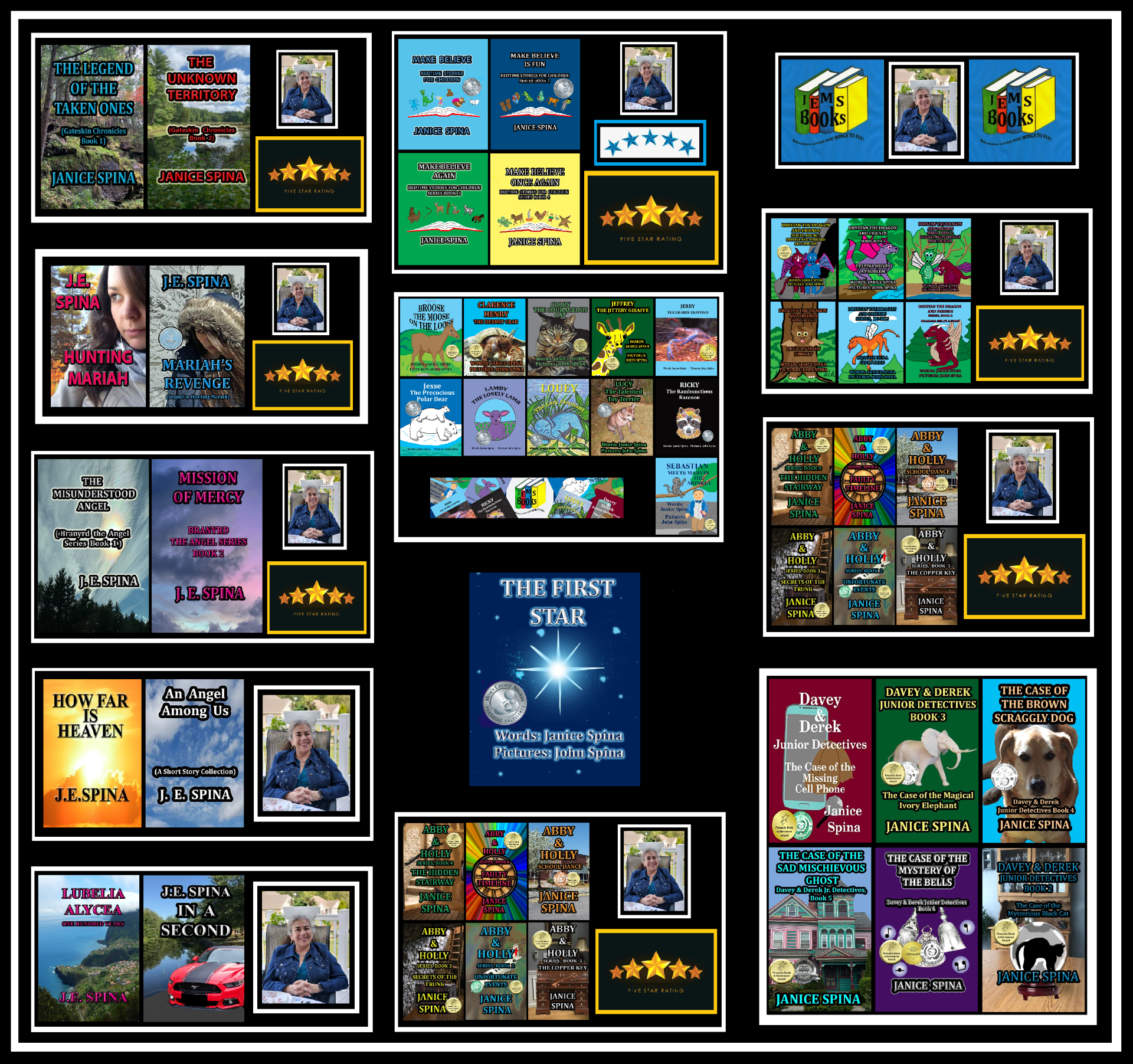
My featured guest for this month’s Growing Bookworms post is prolific children’s book author, Janice Spina. Janice also writes for adults as J.E. Spina. This is an overview of Janice’s books:
Welcome Janice!
Tell us a bit about your books and your history of writing for children
I have always love writing poetry since a young child. When I wrote my first book, Louey the Lazy Elephant,I had to put it into rhyme. I find that children love rhyming; it keeps them interested if there is a cadence to the story.
I have 22 children’s books at present. Most of them are in rhyme and all of them carry important life lessons and family values. I first began writing for children but branched out later on into MG/PT/YA and novels for 18+. I have books about animals, dragons, and even short stories in a series of six stories per book for children ages 5-8 called Bedtime Stories for Children Series. Some of my stories in this series are based on experiences while others are purely from my overwrought imagination.
A number of your children’s books feature animals and creatures. Are these stories based on personal experience with these creatures?
Many of my children’s books are dedicated to individuals or based on imaginary animals or real-life pets that I have had in the past such as: Jerry the Crabby Crayfish – a pet blue crayfish, Lamby the Lonely Lamb – dedicated to my granddaughter and her stuffed lamby, Jesse the Precocious Polar Bear – dedicated to a little boy I met while vacationing in Aruba, Sebastian Meets Marvin the Monkey – dedicated to my youngest grandson and his stuffed monkey, Colby the Courageous Cat – dedicated to my daughter’s cat, Jeffrey the Jittery Giraffe – dedicated to a little boy who was nervous about loud noises, Clarence Henry the Hermit Crab – a pet hermit crab we once had, Lucy the Talented Toy Terrier – my first dog, The First Star – dedicated to my two children when they were young. I hope to continue to create stories to delight and entertain children for uyears to come along with my husband’s help creating the beautiful illustrations and covers.
The illustrations in your picture books are lovely. Your husband helps you with your illustrations. How much input do you put into the illustration process?
My husband, John, does do the illustrations and covers for all of my children’s books. He also creates the covers for all the other books I publish. Thank God for him! I would be lost without him.
I had to convince him to do this many years ago beginning in 2013. He told me that he wasn’t an illustrator but would give it a try after I told him how much it would cost to hire someone who was an illustrator. John has a quirky sense of humor. I do give him plenty of input about each illustration and cover, much to his chagrin. We don’t always agree on each one and therefore there are many revisions. But I am always pleased with what he creates as the finished product and give him an ample number of kudos online when I present his work.
What do you like best about writing for children?
I love writing for children. What I like best is to see children reading and enjoying my books or anyone’s books. The joy in their faces when they read or are read to is priceless. Reading is so important at an early age and not only for children but also for adults.
I love to hear from parents that their children loved one of my books and look forward to reading more. That is why I write. Receiving positive feedback in reviews is another way to make authors happy and give them an early Christmas gift.
Children – preschool to grade 3 are like sponges soaking up all kinds of things. My goal is to create entertaining and good, clean stories that are educational and full of important life lessons and family values that will stay with them for a lifetime. I hope my stories will enhance their reading experience, increase their reading levels, help to encourage them to become lovers of reading, and create readers and thinkers of tomorrow.
I also write for middle-graders, preteens, and young adults. This age group is a difficult group to entice into reading. They are always absorbed into the newest technology such as X-Box and video games, etc. I create stories in series for this age-group that have plenty of magic, mystery, suspense, wizards, ghosts, and time travel. It is a tough job but I will continue to do all I can to encourage this age-group to read.
What is your favourite children’s book or series for children?
Of all my 22 young children’s books my favorite is still, Louey the Lazy Elephant. This was the first book John illustrated. I love the crayon drawings that he created and how sweet and innocent he made Louey look. It is one of my most popular books alongside Jerry the Crabby Crayfish.
My favorite MG/PT book is Davey & Derek Junior Detectives Series Books 1-6. I had such fun creating the twins and their twin-telepathy, adventures, magic, mystery, ghosts and even time travel. Kids enjoy this series but so do adults.
I was requested by a few readers to offer a series for girls after Davey and Derek were so popular. That is why I wrote Abby & Holly Series Books 1-6. These books are enjoyed by both girls and boys.
There are more stories in my head waiting to be written down, so stay tune for many more to come for all ages.
Thank you so much, Robbie, for inviting me as a guest. I thoroughly enjoyed answering your questions and sharing a little bit about myself and my books with you and your readers.
Thank you, Janice, for being a delightful guest.

My review of The Case of the Sad Mischievous Ghost (Davey & Derrick Jr. Detectives Book 5) by Janice Spina

This is the fifth book in the Davey and Derek Junior Detective Series. Davey and Derek, who are warlocks under the tutelage of their aunt, a witch, have already solved four mysterious cases and they have gained a reputation as detectives. Abby and her cousin, Holly, seek them out at school. The two girls believe the house they have recently moved into, called the Sheridan House after its previous owner, is haunted by a ghost. They have experienced some strange happenings. Davey and Derek agree to investigate and see if they can discover the source of the strange happenings and visitations.
With some advice from their Aunt Gigi, the pair set out to determine the cause of the girls’ anxiety. They embark on an intriguing adventure including cold spots, ghostly forms, and secret tunnels.
This book was reminiscent for me of the Secret Seven adventures series by Enid Blyton which I read as a young girl. It is full of the same energy and excitement as Enid Blyton’s books, but the Davey and Derek Junior Detective Series incorporates a taste of magic and the supernatural which appeals to modern children. This series also tackles topical issues faced by 21st century youngsters. The language is appropriate for the target audience and will keep young readers engaged and interested.
I enjoyed the subtle demonstrations of respect and family values incorporated throughout this book, which send an excellent message to young readers. An enjoyable book with an interesting storyline.
You can purchase The Case of the Sad Mischievous Ghost (Davey & Derrick Jr. Detectives Book 5) from Amazon US here: https://www.amazon.com/Mischievous-Ghost-Davey-Junior-Detectives-ebook/product-reviews/B072QBJ7LC
About Janice Spina
Janice Spina is a multi-award-winning author with 45 books of which there are 22 children’s books,12 MG/PT books and two books in a YA series with four more coming over the next few years, seven novels and a short story collection for 18+ written under J.E. Spina. She is also a copy editor, blogger, book reviewer and supporter of fellow authors. Her husband, John, is her illustrator and cover creator. Watch for more books to come over the next few years.
Jance has received the following awards for her books:
10 Mom’s Choice Awards – Silver Medals, 5 Readers’ Favorite Book Awards – Silver Medal, Bronze Medal, Honorable Mention and Finalist, 21 Pinnacle Book Achievement Awards, 1 AUTHORSDB – Cover Contest, 2 Book Excellence Award Finalists, 2 Top Shelf Awards – First Place & Runner up, one Maincrest Media Award
Her logo is Jemsbooks – books for all ages! Her motto is – Reading Gives You Wings to Fly! Come soar with Jemsbooks! Happy reading!
Janice loves to hear from readers and appreciates and happily welcomes reviews.
Find Janice Spina
About Robbie Cheadle
Award-winning, bestselling author, Robbie Cheadle, has published fifteen children’s book and two poetry books. Her work has also appeared in poetry and short story anthologies.
Robbie also has two novels published under the name of Roberta Eaton Cheadle and has horror, paranormal, and fantasy short stories featured in several anthologies under this name.
The eleven Sir Chocolate children’s picture books, co-authored by Robbie and Michael Cheadle, are written in sweet, short rhymes which are easy for young children to follow and are illustrated with pictures of delicious cakes and cake decorations. Each book also includes simple recipes or biscuit art directions which children can make under adult supervision.
Robbie and Michael’s new Southern African Safari Adventures series is aimed at teaching young children about Southern African wildlife in a fun and entertaining way. Each book contains a rhyming verse story about a particular animal, as well as illustrations by Robbie Cheadle, photographs and links to video footage about that animal.
Robbie’s blog includes recipes, fondant and cake artwork, poetry, and book reviews. https://robbiesinspiration.wordpress.com/
Share this:

In Touch With Nature – Giraffes chew bones and lions eat grass #animalkingdom #natureconservation
Posted: January 24, 2024 Filed under: Animals, In Touch With Nature, Nature, Wildlife | Tags: In Touch With Nature, Predators and Prey, Robbie Cheadle, Wildlife, Writing to be Read 107 Comments
Kaye and I are starting a new series this year entitled “In Touch With Nature”. We will be sharing information about the natural environment, and I will include some of my nature videos, artworks, and photographs.
For any writers, poets and authors who have an interest in nature conservation and our natural environment, I have joined the Society of Environmental Authors and Journalists. You can find out more about it here: Society of Environmental Authors and Journalists – Robbie Cheadle
For this first post in this series, I am discussing the topic of herbivores and carnivores.
The Oxford dictionary defines a herbivore as an animal that feeds on plants.
National Geographic expands on this to say that a herbivore is an organism that mostly feeds on plants. Herbivores range in size from tiny insects such as aphids to large, lumbering elephants. You can read more on this topic here: Herbivore (nationalgeographic.org)
Conversely, Oxford defines a carnivore as an animal that feeds on other animals.
National Geographic says: “A carnivore is an organism that eats mostly meat, or the flesh of animals. Sometimes carnivores are called predators.” You can read more here: https://education.nationalgeographic.org/resource/carnivore/

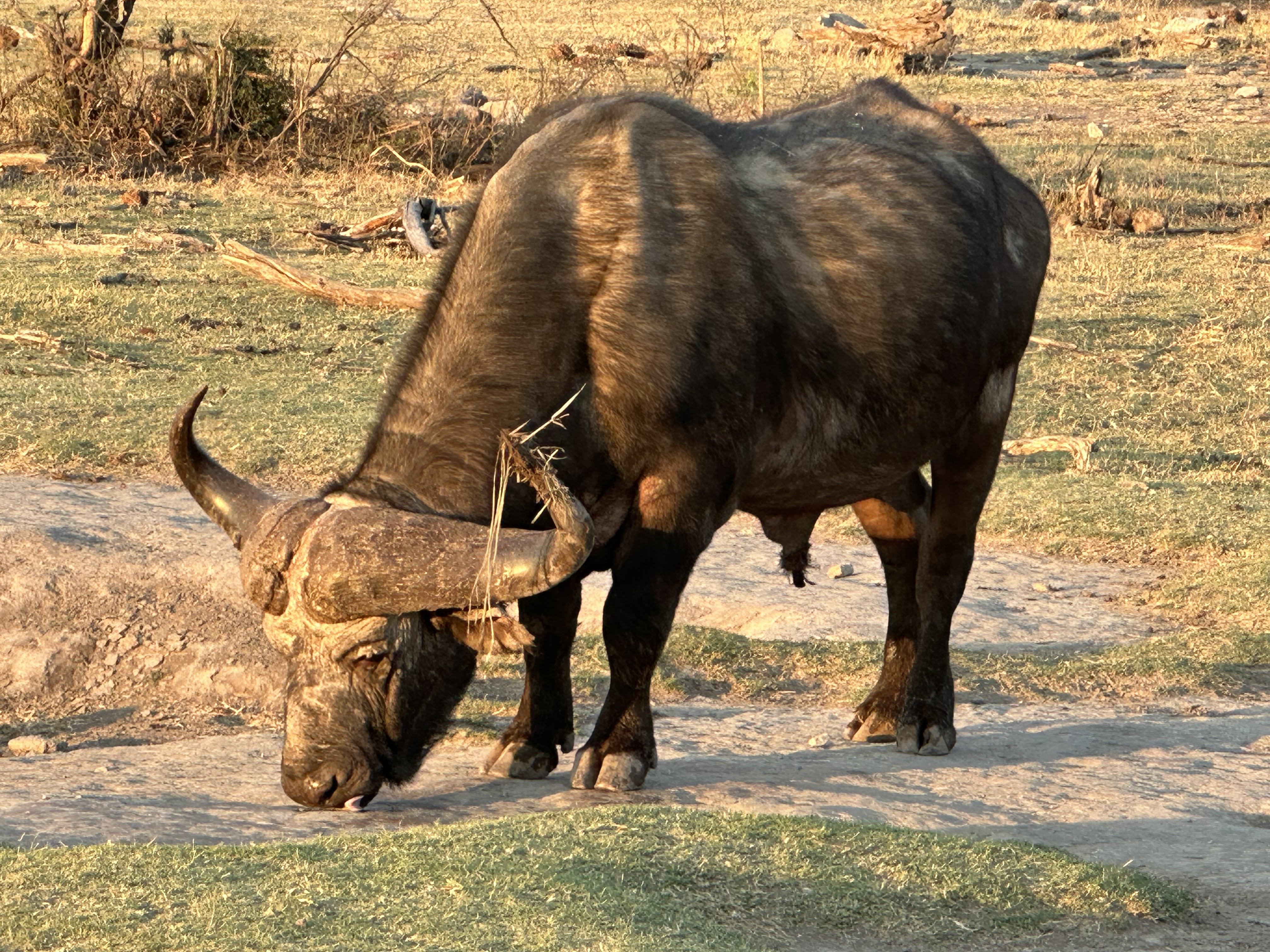
With the above in mind, did you know that many herbivores chew on bones? It’s true. Giraffes, red deer, reindeer, camels, wildebeest, kudu, gemsbok, and sable antelopes, as well as domestic cows and sheep, are not the strict vegans we think they are. They have all been observed to consume bones in a practice called osteophagy.
These animals do not actually eat the bones or break them open to eat the marrow inside, they only chew on dry bones and only when they are mineral deprived. Chewing bones provides herbivores with essential nutrients, phosphorus, and a bit of sodium.
Phosphorus is an essential mineral for all animals. This mineral plays an important role in the formation of the skeletal system and is necessary for certain biological processes including energy metabolism, protein synthesis, cell signaling, and lactation. A lack of phosphorus results in delayed growth and failure to regenerate new bone as well as problems with the reproductive system.
Another way herbivores obtain essential minerals and other elements they need is natural licks, also called salt licks. These licks can be natural but many are artificial and created by humans for the animals. You will see deer, moose, elephants, hippos, rhinos, tapirs, woodchucks, fox squirrels, mountain goats, porcupines and frugivorous bats all making use of natural or artificial licks to obtain phosphorus and biometals (sodium, calcium, iron, zinc, and other trace elements).
A further surprise is that lions sometimes eat small amounts of grass to extract certain nutrients they need. As their digestive system is designed to digest meat, they cannot digest the grass fully and often vomit soon after eating it.
Some of the reasons a lion may eat grass are as follows:
- It helps provide them with a source of water;
- It helps maintain their body weight;
- It helps keep them cool in hot weather;
- It helps settle stomach aches; and
- Its an easy way for a lion to get nutrients.
Lions are versatile. This means that if they are hunting in dry regions like the Kalahari Desert, lions may eat plants and fruits as an alternate source of water. Lions don’t drink very much.
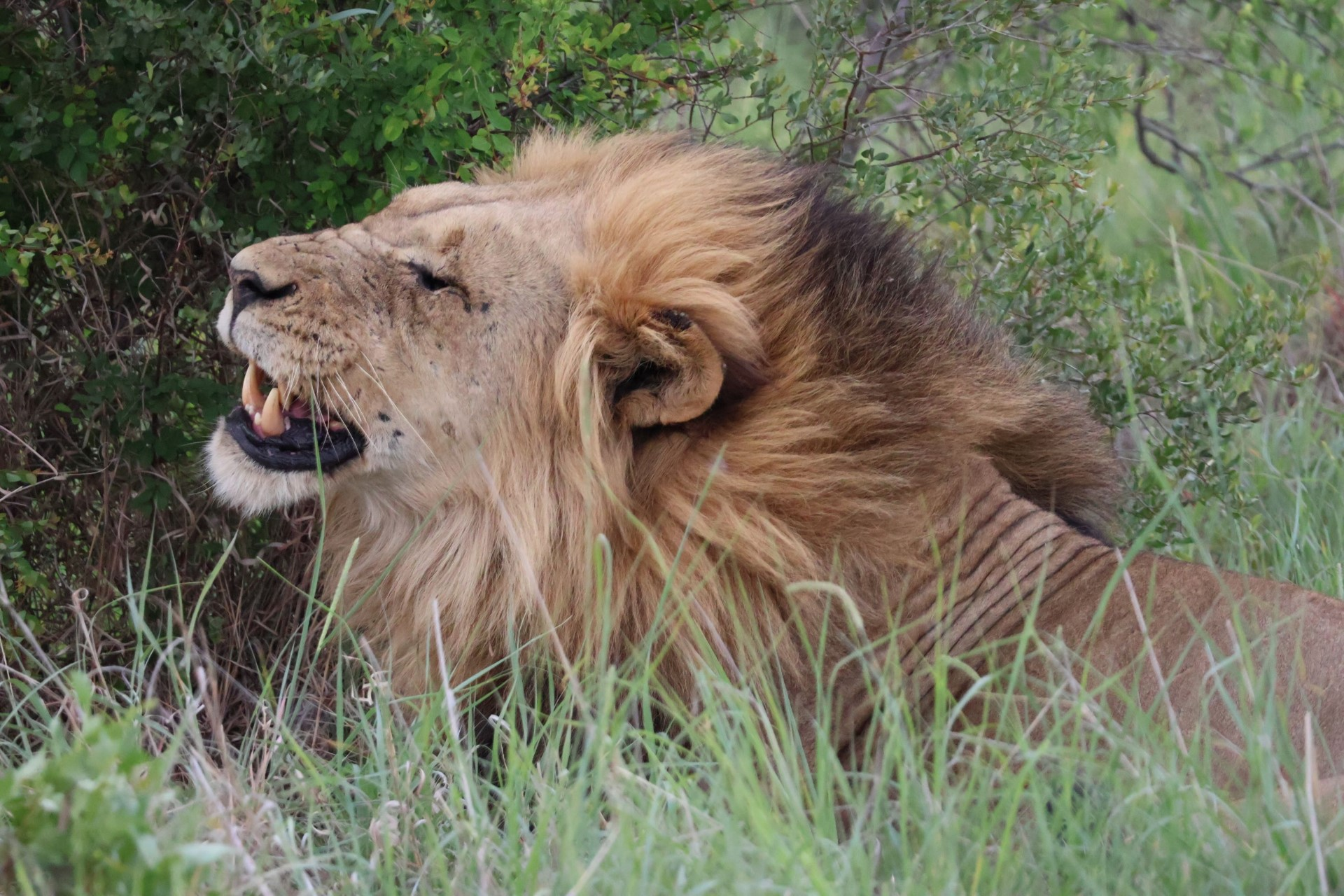

Domestic dogs and cats also sometimes eat grass for the same reasons as lions. Just like lions, they usually vomit after eating it.
Animals are adaptable and find ways to meet their dietary needs. There are few perfect examples of herbivores or carnivores in the wild.
Here are a few of my YouTube wildlife videos:
This black maned lion walked right past our vehicle:
About Roberta Eaton Cheadle

Award-winning, bestselling author, Roberta Eaton Cheadle, is a South African writer and poet specialising in historical, paranormal, and horror novels and short stories. She is an avid reader in these genres and her writing has been influenced by famous authors including Bram Stoker, Edgar Allan Poe, Amor Towles, Stephen Crane, Enrich Maria Remarque, George Orwell, Stephen King, and Colleen McCullough.
Roberta has two published novels and has horror, paranormal, and fantasy short stories included in several anthologies. She is also a contributor to the Ask the Authors 2022 (WordCrafter Writing Reference series).
Roberta also has thirteen children’s books and two poetry books published under the name of Robbie Cheadle, and has poems and short stories featured in several anthologies under this name.
Roberta’s blog features discussions about classic books, book reviews, poetry, and photography. https://roberta-writes.com/.
Find Roberta Eaton Cheadle
Blog: https://wordpress.com/view/robertawrites235681907.wordpress.com
Twitter: https://twitter.com/RobertaEaton17
Facebook: https://www.facebook.com/robertawrites
Amazon: https://www.amazon.com/Roberta-Eaton-Cheadle/e/B08RSNJQZ5
_____________________________________________________________________________________________
Want to be sure not to miss any of Robbie’s “In Touch With Nature” segments? Subscribe to Writing to be Read for e-mail notifications whenever new content is posted or follow WtbR on WordPress. If you found it interesting or entertaining, please share.
Share this:

Check it out! Robbie Cheadle on the subject of book covers over at Story Empire
Posted: January 17, 2024 Filed under: Book Covers, Books, Women's Fiction | Tags: Book Covers, Robbie Cheadle, Story Empire 9 Comments
Share this:

Growing Bookworms – The importance of character names in children’s fiction #GrowingBookworms #childrensfiction
Posted: January 10, 2024 Filed under: Children's Books, Fiction, Growing Bookworms | Tags: Character Names, characters, Enid Blyton, Growing Bookworms, Names, Robbie Cheadle, The Land of Far Beyond, Writing to be Read 57 CommentsThe name of a child is important to him/her as well as to their community.
From an individual point of view, a child’s name plays an important role in the advertisement and maintenance his/her self identity. The first word most children learn to write is their name. Some children and adults chose to be known by a nickname and others prefer to use their full name.
From a parental perspective, the name they chose is often symbolic of their hopes and dreams for that child. Some families practice namesaking or the naming of a child after the father or grandfather. The practice of namesaking is much more common in male children than in female children. Namesaking can be positive for a child, but it can also result in high expectations being placed on the child if the person after whom they are named is a high performer. Namesaking often happens in wealthy families and royalty and comes with an expectation for the child to live up to the accomplishments of the previous generation/s. John Jacob Astor IV and his son, John Jacob Astor VI, come to mind when I think of failures to live up to an inherited moniker.
From a community point of view, names often have religious or cultural significance. In these circumstances, the name of a child can impact the way in which they are accepted by, and integrate into, a community. Names also have meanings which can be important. I remember smiling when meeting a heavily pregnant lady with the name of Chastity.
Based on the above, it is obvious that the name of a character / characters in a children’s book are important. The names will immediately tell the child a lot about the character and the child will also make assumptions based on the names, as follows:
- the religion of the character/s – does the character have a Biblical name or a Hebrew name or a Muslim name?
- the ethnic background of the character – does the character have an Irish, Spanish, English, American, or Japanese name? In South Africa, there are 11 official languages and each group of language speakers has its own traditional names. For example, popular Afrikaans names are Pieter, Willem, Hans, and Mariska and popular Zulu names are Amahle, Bongani, Lindiwe, and Dumisani.
- does the character use a nickname or their full name? I have always been called Robbie although my full name is Roberta. Both my sons chose to use their full names of Gregory and Michael.
- a name can also tell you about a character’s employment or social position. For example, a lot of native African people who work in service industries chose to either use European names instead of their traditional names or they use a short form that is easier for customers to say and remember.
English author, Enid Blyton, made great use of names in her children’s books. You can always tell what type of character you are dealing with from their names. You can also usually get a good idea about the genre and type of story from her naming conventions, as follows:
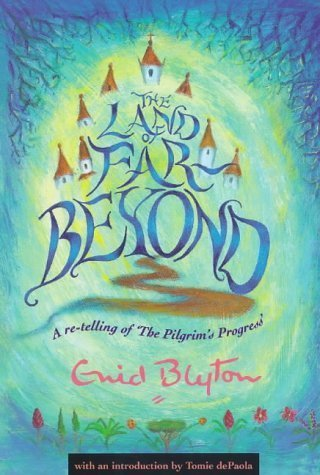
The Land of Far-Beyond is a Christian allegory and tells the story of a boy named Peter and his two sisters, Anna and Patience, who travel from the City of Turmoil to the City of Happiness in the Land of Far-Beyond. The three children carry the heavy burdens of their bad deeds on their backs. With them are two other children, Lily and John, and five adults—Mr Scornful, Mr Fearful, Dick Cowardly, Gracie Grumble and Sarah Simple.
The Enchanted Wood series of three books tells of the adventures of three children who live near the Enchanted Wood. One day they discover a great tree that reaches right up into the clouds called the Faraway Tree. The children climb the Faraway Tree and discover that it is inhabited by magical people, including Moon-Face, Silky, The Saucepan Man, Dame Washalot, Mr. Watzisname, and the Angry Pixie, whose houses are built in holes in the great trunk.
I have tried to make good use of names in my children’s book series. Sir Chocolate and Lady Sweet were intended to clearly indicate that the books are fantasy and are about sweet treats. All the illustrations are made from cake and fondant art and the books all include recipes.
Neema the Misfit Giraffe was intended to make it obvious that the book has an African setting. The name, Neema, means grace in Swahili. Neema’s companion, Amhale, has a Zulu name which means the beautiful one.

What are your thoughts on names in children’s fiction? Do you think they are important? Let me know in the comments.
About Robbie Cheadle
Award-winning, bestselling author, Robbie Cheadle, has published fifteen children’s book and two poetry books. Her work has also appeared in poetry and short story anthologies.
Robbie also has two novels published under the name of Roberta Eaton Cheadle and has horror, paranormal, and fantasy short stories featured in several anthologies under this name.
The eleven Sir Chocolate children’s picture books, co-authored by Robbie and Michael Cheadle, are written in sweet, short rhymes which are easy for young children to follow and are illustrated with pictures of delicious cakes and cake decorations. Each book also includes simple recipes or biscuit art directions which children can make under adult supervision.
Robbie and Michael’s new Southern African Safari Adventures series is aimed at teaching young children about Southern African wildlife in a fun and entertaining way. Each book contains a rhyming verse story about a particular animal, as well as illustrations by Robbie Cheadle, photographs and links to video footage about that animal.
Robbie’s blog includes recipes, fondant and cake artwork, poetry, and book reviews. https://robbiesinspiration.wordpress.com/
Share this:

Treasuring Poetry Special Remembrance Month Edition: Poet, Frank Prem, discusses his war poetry #poetrycommunity #warpoetry #TreasuringPoetry
Posted: November 15, 2023 Filed under: Book Review, Books, Collection, Interview, Poetry, Review | Tags: Book Review, Frank Prem, From Volyn to Kherson, Interview, Poetry, Poetry Collection, Review, Robbie Cheadle, Treasuring Poetry, War, War Poetry, Writing to be Read 51 CommentsToday, I am delighted to welcome prolific and masterful poet, Frank Prem, back to Treasuring Poetry. Frank writes incredibly relatable poetry that covers a wide variety of topics relevant to modern life including the bush fires that raged in Australia a few years ago, Devil in the Wind, working as a psychiatric nurse in an institution, The New Asylum: A Memoir of Psychiatry, as well as collections about war. I have read Frank’s beautiful and moving collections about World War 1, Sheep on the Somme, and the war in the Ukraine, From Volyn to Kherson: Interpretations of the War in Ukraine. Frank also writes romantic poetry, interpretive modern poetry and verse books for children. In the nicest way, nothing is safe from Frank’s poetic pen.

Tell us a bit about your war poetry collections
I developed an interest in the First World War many years ago and was particularly interested in the stories of Australian soldiers and their seeming need to volunteer to fight half a world away on the basis of loyalty to the British Empire and the Mother Country that was England, but also on the basis of a kind of chivalric principle. A moral fever that swept the nation.
I came across books that were written in the more modern historical style of telling stories to illustrate events – using the example of an identified soldier, from an identified town, with family details and background, then tracing their movements into the war and its various theatres and actions.
I found I was able to understand these individuals a little better and to empathise with them and their loved ones a little more than I otherwise could.
I also found myself interested in using images for my own poetic inspiration and that led me to the images held by Australia’s War Memorial. There was one image in particular that started me looking at pictures taken during the war. The image was of a white cross in a field of muddy and bloody craters. The cross marked the grave of Captain Ivor Margetts, much loved and respected by the men he led in battle. By the following day the cross and the grave were gone. They’d been blown to hell by the shelling.
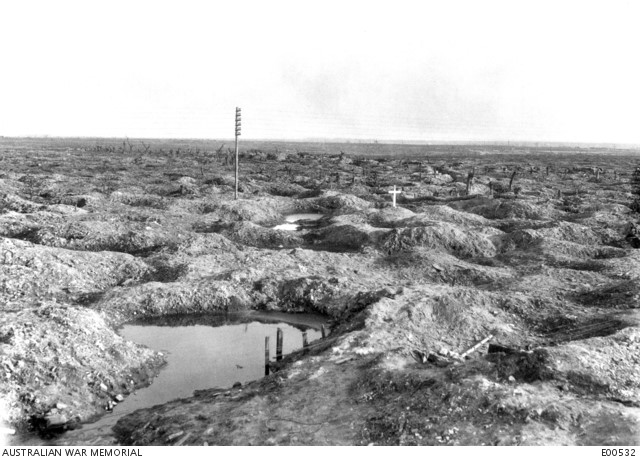
I was tremendously moved by this, and as I searched for a version of that particular image online, I encountered many more, each with a poignant story to tell and many were destined to feature in my book Sheep On The Somme (https://www.amazon.com.au/Sheep-Somme-World-Picture-Poetry/dp/1925963144 ).
More recently, I found myself watching the sabre rattling over the Ukraine that was being perpetrated by Russia and was reminded very clearly of reading I’d done long ago about the beginnings of the Spanish Civil War back in the late 1930s and of the rise of Right-Wing Fascism in Europe during that same period of the 1930s. I was struck by the similarities and the ways in which those events and movements evolved into what became World War II. It was – and remains – quite concerning to see these way events continue to unfold.
As the news and pictures of Russia’s military build-up on the Ukraine border kept emerging, along with the seeming inability on the part of Ukraine to do anything to stop it, I watched events more and more closely.
When Ukraine’s borders were finally breached, there were more photographers and journalists on the spot than has ever been the case previously in a conflict. We were flooded with formal and informal news and masses of un-curated and un-censored images.
During the first nine weeks of the conflict I became engrossed in reading the news and studying the images. And – of course – I began to write.
I produced 3 volumes of poetry interpreting the Ukraine war – two of them will not be released because they used images taken by journalists in the field and I don’t have rights to use those images. The volumes (Bullets Into The Starichi Sky and I Call The Hole The War) sit on my private bookshelf here in my writing studio.
The third volume – From Volyn to Kherson – is a collection of poems in which I have attempted to use such talent for empathy as I possess to interpret the news stories I was reading in a way that enabled any of my own readers to get a sense of what the invasion and the conflict was like as an experience for the everyday people of Ukraine. What if it happened here, in my town? What would it be like to have seventy kilometres of armoured assault vehicles coming to surround and destroy my home town? Or yours?
I like readers to know where the inspiration for these writings has come from and so each individual poem is referenced and has a link to the online sources that I relied on in my writing. After nine weeks I was a little burnt out and had to stop writing, but I follow events over there diligently and worry about what I see happening in the wider world and which still so resembles the events of the 1930s.
What draws you to writing about wars?
I’ve encroached a little on this question with my answer above, I think, but I’ll try to elaborate a little more.
In my professional life I was a psychiatric nurse. Back (so many years ago) when I was a student nurse one of the areas of interaction with patients that was taught and stressed was empathy.
As I understood it, empathy was the ability to walk in another person’s shoes. To see things from the perspective of the other person, but not to necessarily sympathise, or accept, merely to understand in order to be able to reflect that understanding back to the patient.
The patients that came my way in psychiatry were invariably involved in and generally overwhelmed by personal chaos. This might have been due to illness, or it might have been due their life being in a mess they could not resolve. They might have been psychotic, depressed, suicidal, or experiencing any number of out-of-control situations.
That tool of empathy has stayed with me, I think, and now reveals itself in my writing. The experience of chaos by a person finds itself being reflected back in my writings.
I think it is in this way that I am attracted to attempt to unravel what a person may be feeling or experiencing in a war zone. Similarly, I find myself writing a lot about the human toll of natural disasters that come close to me or to my little place in the world.
I have always tried to develop my understanding of these things by writing my way through them. To help myself and any subsequent reader to understand by feeling what is happening through my words.
Tell us a bit about how you use photographs and newspaper articles to assist with writing your war poems
With newspaper articles, I try to extract the meat of the story. That part of the article that is the actual purpose – the reason that it is a story in the first place.
Often enough, there is human interest in the genesis of the article. I then allow the information to assemble itself in a way that I can present it to a reader. For example
What is grandmother doing in the kitchen? Is she cooking Sunday lunch? No. She is cooking Molotov cocktails for others to throw at invading vehicles. And . . . wouldn’t you or I, each do the same if this was happening in our back yard?
With an image, I anticipate that it will have a story to tell. I try not to impose myself and my own current thoughts or fears or desires on it, but to allow the story to be whatever comes.
For example, a golden paper daisy with a bright glow might well have a story to tell that reflects light, and the sun. But equally, it might be a harbinger – a prophet of some kind that draws attention to itself in order to be heard. I don’t know in advance what the story will be, but I try to keep myself out of its road and not to shape the narrative too much.
I have come to know, also, that each image will have a different story to tell to each viewer, so to the extent that I can, I try to facilitate a receptive space for that to occur through what I end up writing. I’ll give an example of how I find a story in a tiny image taken during wartime over a hundred years ago.

The image above is the view from inside a German army dugout in World War I – around 1916. It is from within this space that a small group of individuals fought their war.
When I look at this image, I notice a few things and I feel a few things. In no particular order:
- From pitch darkness up into light. A very small doorway.
- Claustrophobia.
- Fear.
- The smell of habitation. Bodily odours – where would the latrine have been?
- The knowledge of death and destruction and battle rage just outside
- Movement of the ground as shells fall outside. Perhaps close.
- Maybe the sound of enemy troops approaching the bunker to destroy it.
- What of family. Has this soldier (have I) written them a note to say goodbye?
I don’t have a personal experience of war, but I know what fear feels like. I know claustrophobia and the smells of my own body . . . and so on. I can draw on these to understand a little of what the soldier in the dugout might have felt.
The willingness to engage with these elements that come from the image allow me to engage my empathy and to allow a story – which the image itself contains – to be told.
What is your own favourite war poem?
I think that my personal favourite of my own written war poems is one that hasn’t featured in a book to date, but was written to be read for a spoken-word poetry slam 2 years ago. The criteria were that it needed to be 2 minutes reading time or less and to include the term ‘full circle’.
The poem told stories in word pictures and referenced images, without actually including them, if that makes sense. I have since recorded it for my YouTube channel and included there the images that the poem references, spanning both World War I and the current Ukraine war.
The link to the poem on YouTube is here: https://www.youtube.com/watch?v=JI3vRaTg0tI .
The text of the poem is below:
THE TRUTH OF TIME
(AS TOLD BY THE PICTURES)
picture 1
a group
of soldiers
are hanging out
of the doors
and windows
of a moving train
leaving Egypt
heading
to the western front
ready
for a stoush
a bit
of a barney
it’s time
to come to grips
with the enemy
and they’re cherry ripe
for a
blue
picture 2
dimitriy
is holding olga –
tightly –
on the platform
a blue train
is nearly ready to leave
she’ll go
to poland
across the border
dimitriy
will join his friends
in the territorials
a week
to practice
how to hold a rifle
and to learn
first aid
then away
he must forget
to be an accountant
he’s
a front-line fighter
now
picture 3
a heap of rubble –
bricks
and half-bricks
timber and concrete
and dust –
lies as a mound
among mounds
it is
a streetscape
an avenue
of homes
destroyed by artillery
a soldier –
rifle
slung over a shoulder –
picks his way
toward camera
there is nothing left
that might hold
use
or meaning
picture 4
the village near kyiv
is a series
of mounds
rubble
that was homes
and houses
a month or so
ago
a woman
is sifting
searching
for something –
anything –
that might
have a use
it’s all been destroyed
by missiles
and artillery
she hasn’t found
a lot
that will be helpful
~
pictures
pictures
they won’t
let me sleep
in the night
they shout at me
that we have come
full circle
and the ukraine
is in 1916 all over again
Who is your favourite war poet?
I can’t honestly say I have a favourite war poet, but I have read with a deep sense of connection stories such as All Quiet on the Western Front by Erich Maria Remarque with its empathy for the soldiers of the day. Here is the Wikipedia link: https://en.wikipedia.org/wiki/All_Quiet_on_the_Western_Front .
What is your favourite war poem?
I’m aware of many of the great poet writers of the First World War, such as Owen, Sassoon, Brook and Graves, among others, but for my response to this question I have to refer you and readers to a song that I first encountered back when I was a teenager (50 years, who would ever have thought . . .).
The song was performed by a wonderful English Folk ensemble called Steeleye Span, and the song is called Fighting For Strangers. Here is the YouTube link: https://www.youtube.com/watch?v=JI3vRaTg0tI
YouTube Links
In addition to the links given above, I would welcome viewers, new followers (if any so desire) comments and feedback on my YouTube Channel, where there a re a number of video readings from my war poetry collections (and natural disasters and psychiatry and others). Click on the link below to be taken along to the Playlists available on the Channel.
https://www.youtube.com/@frankprempoetandauthor726/playlists
Robbie and readers, thanks so much for having me along to chat for November’s Treasuring Poetry post.
My review of From Volyn to Kherson: Interpretations of the War in Ukraine

This book is a ‘hard’ read. It exposes the realities of war; the filth, the noise, the fear, and the destruction and death. No civilian wants war, it is something that is imposed on individuals because of factors outside of the man on the street’s control. Civilians, however, bear the brunt of war as the women lose their husbands and sons. The entire population generally loses its collectively homes, food stability, economic stability, access to sanitation, food, and healthcare. Many countries and populations never recover from wars and their populations become unwanted refugees. The sympathy of the unaffected world shrinks rapidly when wars and the resultant refugees impacts on their economies, making the slices of the economic pie for their own populations smaller.
The war in Ukraine hit me especially hard when I read about the Russian soldiers who froze to death in their tanks. Although the Russians were the instigators and aggressors in this war, many of those young men are the same ages as my own two sons, and their dreadful fate couldn’t fail to stir compassion. Young men frequently have a glamorous and inaccurate picture of war when they enlist or are called up. The realities of war quickly displace these notions but it is already too late.
A few stirring stanzas from this collection of freestyle poems:
From fallen (quietly weeping)
“here it is safe
safe enough
to shed
a tear”
From the metro (is also home)
“let the fear
fall away
for a moment while
the anthem
sounds”
From vasylkiv (is fighting on)
This footnote made me shiver: “People used to think about new car or iphone, but nobody was thinking about peace. Now, we are dreaming of it. When old people used to wish each other peace, we didn’t understand what they meant. Now we do.”
and finally, from in okhtyrka (the tsentral’ne)
“they are preparing
the cemetery now
in okhtyrka
adriy
and his platoon
are gone
vacuum bombed
air taken
out
of them
and then
they died”
This is a beautiful and emotion book of poems that will change the way you view war forever.
You can find out more about Frank Prem here:

You can find out more about Frank Prem on his website here: https://frankprem.com/
and on his wordpress blog here: https://frankprem.wordpress.com/blog/
On amazon US here: https://www.amazon.com/stores/Frank-Prem/author/B07L61HNZ4
About Robbie Cheadle
Award-winning, bestselling author, Robbie Cheadle, has published fourteen children’s books and two poetry books. Her work also features in several poetry and short story anthologies.
Robbie also has two novels published under the name of Roberta Eaton Cheadle and has horror, paranormal, and fantasy short stories featured in several anthologies under this name.
The eleven Sir Chocolate children’s picture books, co-authored by Robbie and Michael Cheadle, are written in sweet, short rhymes which are easy for young children to follow and are illustrated with pictures of delicious cakes and cake decorations. Each book also includes simple recipes or biscuit art directions which children can make under adult supervision.
Robbie and Michael Cheadle have recently launched a new series of children’s books called Southern African Safari Adventures. The first book, Neema the Misfit Giraffe is now available from Amazon.
Robbie’s blog includes recipes, fondant and cake artwork, poetry, and book reviews. https://robbiesinspiration.wordpress.com/
You can find example of Robbie Cheadle’s artwork in her art gallery here: https://www.robbiecheadle.co.za/art-gallery/
Share this:

Growing Bookworms – War in Children’s Literature: yes or no? #GrowingBookworms #childrensliterature #warbooks
Posted: November 8, 2023 Filed under: Books, Children's Books, Classics, Fiction, Growing Bookworms, Historical Fiction | Tags: Children's Books, Growing Bookworms, Historical Fiction, Robbie Cheadle, War and children, Writing to be Read 68 Comments
The world is full of conflict currently, and this has been the case throughout the reign of ‘civilized man’ on this beautiful planet of ours.
According to save the children US, a total of 93,236 children have been killed or maimed in conflicts in the last ten years (this figure is from November 19, 2020 before the two recent conflicts centering around Ukraine and Israel), which equates to 25 children (an averaged size school classroom) of children every day.
These children were mainly victims of airstrikes, shelling, landmines, and other explosive weapons used in populated areas.
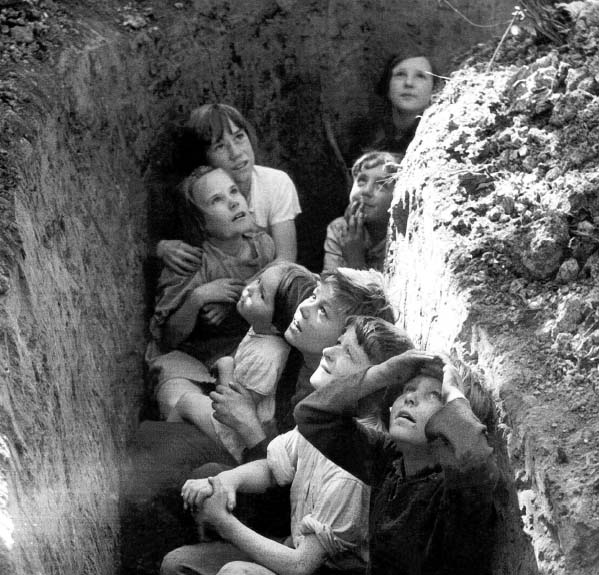
War and conflict is a very real factor of human society. Wars displace people and create refugees; people who are unable to continue living in their homes and carrying on with their daily lives because of violence. Refugees are a huge concern and area of focus in Western society.

With these thoughts and figures in mind, I ask, should children read books about war?
My answer is yes. Books and stories are a way of teaching empathy, understanding, and raising awareness.
Jennifer Armstrong is quoted as saying: “if we don’t encounter war in the safe way, by experiencing it through literature and art, how will we be moved to avoid the real thing? Reading about was doesn’t imply an endorsement of it: it’s a way of acknowledging part of the human experience that has been with us since the days of the Trojan War and long before. If you really want to teach young readers about peace, give them books about war.”
Jennifer Armstrong is the author of over 50 books for children from kindergarten through to high school. She is best known for writing historical fiction. You can read more about Jennifer Armstrong here: https://en.wikipedia.org/wiki/Jennifer_Armstrong
To:You
Mon 2023/11/06 09:29
Isaac Bashevis Singer wrote: “Children think about and ponder such matters as justice, the purpose of life, the why of suffering. They often find it difficult to make peace with the idea that animals are slaughtered so that man can eat them. They are bewildered and frightened by death. They cannot accept the fact that the strong should rule the weak.” You can read more about Isaac Bashevis Singer here: https://www.encyclopedia.com/people/literature-and-arts/hebrew-literature-biographies/isaac-bashevis-singer
I’ve always been fascinated by war and have been reading about children and adults in war situations since I was a young girl. These are a few of the books about war and conflict situations I was given by Sister Agatha when I was a young student (10, 11 and 12 years old) at Holy Cross Convent in George in the Western Cape of South Africa:
The Diary of a Young Girl by Anne Frank
Discovered in the attic where she spnt the last years of her life, Anne Frank’s remarkable diary has become a world classic—a powerful reminder of the horrors of war and an eloquent testament to the human spirit.
In 1942, as Nazis occupied Holland, a thirteen-year-old Jewish girl and her family fled their home in Amsterdam and went into hiding. For the next two years, until their whereabouts were betrayed to the Gestapo, they and another family lived cloistered in the secret upstairs rooms of an old office building. Cut off from the outside world, they faced hunger, boredom, the constant cruelties of living in confined quarters, and the ever-present threat of discovery and death.
In her diary Anne Frank recorded vivid impressions of her experiences during this period. By turns thoughtful, moving, and amusing, Anne’s account offers a fascinating commentary on human courage and frailty and a compelling self-portrait of a sensitive and spirited young woman whose promise was tragically cut short.
I am David by Anne Holm
David escapes from the concentration camp where he has spent his entire life and flees across Europe. He is utterly alone – who can he trust? What will await him? And all the while, how can he be sure that they won’t catch up with him…David learns that his polite manner, his haunted eyes and his thin features are strange to other people. He must learn to fend for himself in this strange new world.
When Hitler Stole Pink Rabbit by Judith Kerr
This semi-autobiographical classic, written by the beloved Judith Kerr, tells the story of a Jewish family escaping Germany in the days before the Second World War.
This beautiful new edition celebrates the fifty year anniversary of an adventure that Michael Morpurgo called “The most life-enhancing book you could ever wish to read.”
Suppose your country began to change. Suppose that without your noticing, it became dangerous for some people to live in it any longer, and you found, to your surprise, that your own father was one of those people. This is what happened to Anna in 1933.
Anna is too busy with her schoolwork and tobogganing to listen to the talk of Hitler. But one day she and her brother Max are rushed out of Germany in alarming secrecy, away from everything they know. Their father is wanted by the Nazis. This is the start of a huge adventure, sometimes frightening, very often funny and always exciting.
Judith Kerr wrote When Hitler Stole Pink Rabbit fifty years ago, based on her own journey, so that her own children would know where she came from and the lengths to which her parents went to keep her and her brother safe. It has gone on to become a beloved classic that is required reading for many children all over the world and is an unforgettable introduction to the real-life impact of the Second World War.
Number the Stars by Lois Lowry
A powerful story set in Nazi occupied Denmark in 1943. Ten-year-old Annemarie Johansen is called upon for a selfless act of bravery to help save her best-friend, Ellen – a Jew.
It is 1943 and for ten-year-old Annemarie Johansen life is still fun – school, family, sharing fairy stories with her little sister. But there are dangers and worries too – the Nazis have occupied Copenhagen and there are food shortages, curfews and the constant threat of being stopped by soldiers. And for Annemarie the dangers become even greater… her best-friend Ellen is a Jew. When Ellen’s parents are taken away to be ‘relocated’ by the Nazis, Ellen is taken in by Annemarie’s parents and suddenly Annemarie’s family are under threat too.
Annemarie has to call upon all her resources for courage and bravery as she helps her friend make a daring escape.
A Newbery Medal winner by an acclaimed author *For readers from 8 to 12 *
I still enjoy reading children’s books about war, and have written one, While the Bombs Fell, myself. These are few I’ve enjoyed.
War Horse by Michael Morpurgo
Michael Morpurgo has a number of children’s books that centre around war and conflict situations. This blurb is for War Horse.
An unforgettable tale of war, redemption, and a hero’s journey. It is 1914, and Joey, a farm horse, is sold to the army and thrust into the midst of World War I on the Western Front. When Joey is dragged away, his heart aches for Albert, the farmer’s son he is forced to leave behind. In the army the beautiful red-bay horse is trained to charge the enemy, drag heavy artillery, and carry wounded soldiers not much older than Albert off the battlefields. Amongst the clamoring of guns, and while plodding through the cold mud, Joey wonders if the war will ever end. And if it does, will he ever find Albert again? War Horse joins the Scholastic Gold line, which features award-winning and beloved novels. Includes exclusive bonus content!
Elizabeth’s War by DL Finn
It’s April of 1917, and World War I has reached Elizabeth’s family on their wheat farm in North Dakota. Although the battles are being fought overseas, the war has affected her in ways she couldn’t have imagined. Elizabeth is thrust into a new role after her brother and father leave the farm to do their part in the war. And she’s only eleven years old! Having almost died as a toddler, Elizabeth has been babied most of her life. Now she must learn to help out around the farm; cooking, cleaning, and tending to the garden and livestock. No longer can she run from her responsibilities, as she did when her horse Rosie was giving birth. There were complications during the delivery, and Elizabeth panicked and froze. The foal didn’t make it. Elizabeth faces her biggest challenge yet as a huge Christmas Eve snowstorm rages outside, cutting her family off from any help; and her mother is about to have a baby! Her brother and sister are laid up with chicken pox. Does Elizabeth face her fears or run from them? Can she help her family, who need her more now than ever? Or will she retreat like she did when Rosie needed her?
You can find out more about DL Finn’s latest book here: https://dlfinnauthor.com/2023/10/30/new-release-the-destination-harbor-pointe-series-book-3-dlfinnauthor-harborpointeseries-storyempire-writingcommunity-whattoread/
My Gentle War: Memoir of an Essex Girl by Joy Lennick
The affection Joy Lennick nee Mansfield felt and feels for Wales is immediately evident in this charming memoir.
Separated in World War 11 from her parents – with her father serving in the Royal Air Force abroad and her mother working in munitions – she finds herself living on a mountain with her two brothers. It is a world away from the cosy environment of her home in Dagenham, Essex.
You can read one of Joy Lennick’s blog posts here: https://joylennick.wordpress.com/2017/12/21/a-labyrinth-of-meanings/
While the Bombs Fell by Robbie Cheadle and Elsie Hancy Eaton
What was it like for children growing up in rural Suffolk during World War 2? Elsie and her family live in a small double-storey cottage in Bungay, Suffolk. Every night she lies awake listening anxiously for the sound of the German bomber planes. Often they come and the air raid siren sounds signalling that the family must leave their beds and venture out to the air raid shelter in the garden. Despite the war raging across the English channel, daily life continues with its highlights, such as Christmas and the traditional Boxing Day fox hunt, and its wary moments when Elsie learns the stories of Jack Frost and the ghostly and terrifying Black Shuck that haunts the coastline and countryside of East Anglia. Includes some authentic World War 2 recipes.
The ebook of While the Bombs Fell is available from Lulu.com here: https://www.lulu.com/shop/robbie-cheadle-and-elsie-hancy-eaton/while-the-bombs-fell/ebook/product-23768958.html?page=1&pageSize=4

You can find out more about the South African concentration camps in my book, A Ghost and His Gold. IT IS NOT FOR CHILDREN. https://tslbooks.uk/product/a-ghost-and-his-gold-roberta-eaton-cheadle/
About Robbie Cheadle
Award-winning, bestselling author, Robbie Cheadle, has published fifteen children’s book and two poetry books. Her work has also appeared in poetry and short story anthologies.
Robbie also has two novels published under the name of Roberta Eaton Cheadle and has horror, paranormal, and fantasy short stories featured in several anthologies under this name.
The eleven Sir Chocolate children’s picture books, co-authored by Robbie and Michael Cheadle, are written in sweet, short rhymes which are easy for young children to follow and are illustrated with pictures of delicious cakes and cake decorations. Each book also includes simple recipes or biscuit art directions which children can make under adult supervision.
Robbie and Michael’s new Southern African Safari Adventures series is aimed at teaching young children about Southern African wildlife in a fun and entertaining way. Each book contains a rhyming verse story about a particular animal, as well as illustrations by Robbie Cheadle, photographs and links to video footage about that animal.
Robbie’s blog includes recipes, fondant and cake artwork, poetry, and book reviews. https://robbiesinspiration.wordpress.com/
Share this:

Dark Origins – A Journal of the Plague Year by Daniel Defoe based on the Great Plague of London, 1665 #DarkOrigins #readingcommunity #history
Posted: October 25, 2023 Filed under: Books, Dark Origins, Fiction, Historical Fiction | Tags: A Journal of the Plague Year, BookReview, Daniel Defoe, Dark Origins, Robbie Cheadle, Writing to be Read 28 Comments
Overview

A Journal of the Plague Year by Daniel Defoe is a most interesting book particularly in light of the recent Covid-19 pandemic that swept the world.
It is written in the first-person as a first hand account of the protagonist’s, identified as H.F. and described as an unmarried saddler, experiences during the great plague that afflicted London in 1665. The story is fiction but it contains detailed statistics of the death bills as the plague started to take hold and over the months of its duration, charts, data and extracts from government documents which make it read like the non-fictional personal diary of someone who was recording the facts and figures of the time.
When the plague first comes to the city, it is contained to certain parishes and is staved off by the colder winter weather, but when late spring and summer arrive, the numbers of the infected and the dead increase significantly. The protagonist is aware that the rich are leaving the city, but he is very religious and believes that God wants him to stay.
He describes how the poor are tricked into purchasing preventative medicines and charms by quack doctors, fortune tellers, and other tricksters. It is interesting that he picks this thread up again later in the book and states that all of these ‘pretenders’ succumb to the plague.
H.F. describes in detail the horror of the plague. How infected people go mad and run naked through the streets until they drop down dead. He describes how the authorities implement a system of the shutting up of houses in terms of which when any member of a household was identified as having being infected, the entire household were locked up in the house and a watchman placed outside the door so they could not escape. The protagonist is not in favour of this system as it results in all the inhabitants of the household becoming infected and dying of the plague. It also results in a lot of desperate bids to escape shut up houses that resulted in the plague spreading further. Interestingly enough, a similar attempt to keep people in their homes during the Covid-19 pandemic also didn’t achieve the expected success and resulted in a huge amount of resistance by people.
H.F. depicts a governing structure in the city that is sympathetic to the situation of the poor and ensures that people have access to bread at a reasonable price throughout the duration of the plague. He goes into a lot of detail about the price of bread versus the weight of the loaves before the plague. The city is kept free of bodies which are collected at night and taken to mass graves.
The protagonist also goes into a lot of detail about the effect of the plague on the people of the city. The grief experienced by survivors who have lost their entire families and who follow their dead loved ones and throw themselves into the mass graves and other ‘infected’ people who effectively kill themselves because of the pain the disease is inflicting on them.
The narrator tells a lengthily story about three brothers who leave the city to escape the plague and meet up with a small band of other people also leaving. The difficulties experienced by Londoners who left the city and attempted to live in the countryside while the plague raged are detailed. The suspicion and lack of welcome by the rural villages and town who do not wish to accept any Londoners into their areas for fear of their carrying the plague, and the lack of shelter, food, and other amenities. The three brothers and their band manage to make a success of it with some help from a local wealthy landowner. They actually outlive a lot of the villagers when the plague does spread out of London and into the surrounding countryside.
Reading this book after the Covid-19 pandemic was fascinating. The parallels between this event more than 350 years ago in London and the experiences and reactions of people during the time of the pandemic are have a dreadful similarity. People turn to religion and to quack remedies, people resist the attempts by authorities to contain the disease by findings ways to escape from their homes, people suffer depression and loss.
This book is certainly not for everyone as it is filled with facts and figures, but I found it very interesting and appreciated the historical information shared.
The Great Plague of 1665 – 1666

The plague that broke out in London in 1665 was the worst outbreak to effect England since the black death of 1348. It is believed at approximately 15% of the population of London died. The recorded deaths were 68,596 but it is believed at least 100,000 people died. The population of the city in 1665 was 460,000.
The plague was carried by fleas on rats and they were attracted to the poorer parts of the city where rubbish and waste filled the streets.
There were three types of plague:
- Bubonic plague that caused swellings (buboes) in the lymph nodes found in the armpits, groin and neck. These sufferers experienced headaches, vomiting and fever. Sufferers had a 30% chance of dying within two weeks.
- Pneumonic plague which attacked the lungs and spread to other people through coughing and sneezing; and
- Septicaemic plague which occurred when the bacteria entered the blood. The chances of survival of this type of plague were very slim.

The treatments and methods of prevention were privative. Patients were bled with leeches. The air was cleansed using smoke and heat as people thought bad air caused the distemper. Children were encouraged to smoke to ward off bad air. Some people sniffed a sponge soaked in vinegar.
When the winter arrived, the plague started to decrease. Scientists believe this was due to people developing a stronger immunity to the disease rather than the great fire of London on 2 September 1666, making any notable impact through the destruction of houses within the walls of the city and on the banks of the River Thames. Many of the plague deaths had occurred in the poorest parishes outside the city walls
On The Plague Year: London, 1665
By DM Lovic
In London Town, the children played, the kittens purred, the flowers bloomed,
The adults laughed, the horses neighed, for no one knew they all were doomed.
Yes, all within the world was right when Death sneaked into town that night.
Beneath a haunted summer moon, upon a flute that whistled flat,
He played a slow, hypnotic tune that summoned every flea and rat
Who came from cellar, slum and glade to march the Devil’s plague parade.
Searching streets from side to side, the weakest souls with sword he struck,
Then left a token on their hide to signify the loss of luck.
For no one touched would e’er be saved, ‘twas six mere hours from spot to grave.
The wealthy fled to distant hills, doors were bolted, shutters locked,
But none could stop the morbid chills when death stood on the stoop and knocked.
Inside, they wept and fought with fate but, patiently, he’d smile and wait.
Sickness turned into despair, howls of terror, dreadful shrieks,
They echoed through the London air for weeks and weeks and weeks.
But panicked cries and wailing tears were only music to his ears.
One ghastly year that madness reigned and when Death fin’ly had withdrawn,
The price was tallied and explained: one hundred thousand souls were gone.
And London Town, in stark reverse, returned to life without the curse.
On city streets, the children played, the kittens purred, the flowers bloomed,
The adults laughed, the horses neighed, for every soul knew he was doomed.
From: The Poetry Nook
About Roberta Eaton Cheadle
Award-winning, bestselling author, Roberta Eaton Cheadle, is a South African writer and poet specialising in historical, paranormal, and horror novels and short stories. She is an avid reader in these genres and her writing has been influenced by famous authors including Bram Stoker, Edgar Allan Poe, Amor Towles, Stephen Crane, Enrich Maria Remarque, George Orwell, Stephen King, and Colleen McCullough.
Roberta has two published novels and has horror, paranormal, and fantasy short stories included in several anthologies. She is also a contributor to the Ask the Authors 2022 (WordCrafter Writing Reference series).
Roberta also has thirteen children’s books and two poetry books published under the name of Robbie Cheadle, and has poems and short stories featured in several anthologies under this name.
Roberta’s blog features discussions about classic books, book reviews, poetry, and photography. https://roberta-writes.com/.
Find Roberta Eaton Cheadle
Blog: https://wordpress.com/view/robertawrites235681907.wordpress.com
Twitter: https://twitter.com/RobertaEaton17
Facebook: https://www.facebook.com/robertawrites
Amazon: https://www.amazon.com/Roberta-Eaton-Cheadle/e/B08RSNJQZ5
_____________________________________________________________________________________________
Want to be sure not to miss any of Robbie’s “Dark Origins” segments? Subscribe to Writing to be Read for e-mail notifications whenever new content is posted or follow WtbR on WordPress. If you found it interesting or entertaining, please share.
Share this:

Treasuring Poetry – Meet the poet, Merril D Smith, and a book review #poetry #poetrycommunity #bookreview
Posted: October 18, 2023 Filed under: Book Review, Books, Interview, Poetry, Review, Treasuring Poetry | Tags: Book Review, Merril D. Smith, Poet Interview, Poetry, River Ghosts, Robbie Cheadle, Treasuring Poetry, Writing to be Read 65 CommentsToday, I am delighted to welcome talented poet, Merril D Smith as my October Treasuring Poetry guest. Merril has recently launched River Ghosts, a beautiful book of poetry which I have reviewed below.
Tell me a bit about your poetry collection, River Ghosts. What inspired the poetry in this book? Does it have a particular theme?
I had submitted a chapbook to Nightingale & Sparrow Press, which was longlisted, but ultimately not chosen for publication. The editor gave me some positive feedback, and I decided I would submit a full-length manuscript the following year. Of course, I did not expect a pandemic, nor that my mom would die from it in April 2020 during the first wave and lockdown. By that time, she was in a nursing home, and we were not allowed to be with her. I compiled River Ghosts in the months after her death with some already written poems—some published—and some new poems.
I walk by the Delaware River nearly every morning. Sometimes I go to a nearby park, which is also a historic battle site. The battle took place during the American Revolution, and there is an eighteenth-century house there. Recently, they’ve found more remains of soldiers—Hessians who fought for the British. If ghosts exist, I think they are at rivers, which carry so much history, and because of the battle and soldiers killed, I imagine them here.
So, the collection’s title comes from my musings about rivers and ghosts, including the ghosts of memory. However, I don’t think River Ghosts is all about sadness and grief by any means! I also want to mention that my older child, Jay Smith, designed the cover art, and the book is dedicated to my mother’s memory.
Do you do a lot of editing of your poetry or does the poem manifest itself fully formed?
That really depends. I nearly always do some editing, even for poems written for prompts. Sometimes, I go back to poems though, and I revise them. Then again, I’ve had some poems published that I pretty much wrote and sent off.
What do you find to be the most effective way of sharing your poetry with fellow poetry lovers?
I don’t know about effective. I suppose more people read my poetry on my blog, especially in response to a prompt, than anywhere else. I’ve also shared poems on Twitter /X for Top Tweet Tuesday (run by Black Bough Poetry), and I’ve read at some online open mics.
Do you think poetry is still a relevant form of expressing ideas in our modern world? If yes, why?
I think it’s relevant. I think I’ve read there’s been an upsurge in poetry, both reading and writing. Perhaps that’s because of social media and Covid lockdowns. I think most people enjoy poetry, especially if it’s read. For example, so many people were energized by Amanda Gorman’s reading of her poem, “The Hill We Climb,” at the inauguration of President Joe Biden in 2021. She is the youngest poet to have read a poem at a US presidential inauguration, and she is also an activist.
Which of your own poems is your favorite and why?
I don’t have a favorite anything—book, movie, song, or poem– it depends on my mood. But I will share one of my favorites from River Ghosts. “Moon Landing” was originally published by Black Bough Poetry.
Moon Landing
On that warm July night,
my father watched moonstruck
as Neil Armstrong took his giant leap.
I remained firmly earthbound,
watching our new puppies in the TV screen light,
their small black and white bodies tumbling,
stepping hesitantly into their futures.
Now—ensorcelled by moon-glow—
I plummet back, landing my time-rocket
on the rocky surface of memory.
Which poem by any other poet that you’ve read, do you relate to the most and why?
Again, I can’t say there is any poem that I relate to the most. I like many different types of poetry.
I think this is the poem I wish I had written. You will see in a way it’s connected to the poem of mine that I shared. “My God, It’s Full of Stars” is by Tracy K. Smith, who was US Poet Laureate, and who won a Pulitzer Prize for her collection Life on Mars.
My God, It’s Full of Stars by Tracy K. Smith
We like to think of it as parallel to what we know,
Only bigger. One man against the authorities.
Or one man against a city of zombies. One man
Who is not, in fact, a man, sent to understand
The caravan of men now chasing him like red ants
Let loose down the pants of America. Man on the run.
Man with a ship to catch, a payload to drop,
This message going out to all of space. . . . Though
Maybe it’s more like life below the sea: silent,
Buoyant, bizarrely benign. Relics
Of an outmoded design. Some like to imagine
A cosmic mother watching through a spray of stars,
Mouthing yes, yes as we toddle toward the light,
Biting her lip if we teeter at some ledge. Longing
To sweep us to her breast, she hopes for the best
While the father storms through adjacent rooms
Ranting with the force of Kingdom Come,
Not caring anymore what might snap us in its jaw.
Sometimes, what I see is a library in a rural community.
All the tall shelves in the big open room. And the pencils
In a cup at Circulation, gnawed on by the entire population.
The books have lived here all along, belonging
For weeks at a time to one or another in the brief sequence
Of family names, speaking (at night mostly) to a face,
A pair of eyes. The most remarkable lies.
2.
Charlton Heston is waiting to be let in. He asked once politely.
A second time with force from the diaphragm. The third time,
He did it like Moses: arms raised high, face an apocryphal white.
Shirt crisp, suit trim, he stoops a little coming in,
Then grows tall. He scans the room. He stands until I gesture,
Then he sits. Birds commence their evening chatter. Someone fires
Charcoals out below. He’ll take a whiskey if I have it. Water if I don’t.
I ask him to start from the beginning, but he goes only halfway back.
That was the future once, he says. Before the world went upside down.
Hero, survivor, God’s right hand man, I know he sees the blank
Surface of the moon where I see a language built from brick and bone.
He sits straight in his seat, takes a long, slow high-thespian breath,
Then lets it go. For all I know, I was the last true man on this earth. And:
May I smoke? The voices outside soften. Planes jet past heading off or back.
Someone cries that she does not want to go to bed. Footsteps overhead.
A fountain in the neighbor’s yard babbles to itself, and the night air
Lifts the sound indoors. It was another time, he says, picking up again.
We were pioneers. Will you fight to stay alive here, riding the earth
Toward God-knows-where? I think of Atlantis buried under ice, gone
One day from sight, the shore from which it rose now glacial and stark.
Our eyes adjust to the dark.
Continue reading here: https://www.poetryfoundation.org/poems/55519/my-god-its-full-of-stars
Here is the last part of the poem with a reading by Tracy K. Smith:
My review of River Ghosts

River Ghosts is the perfect name for this beautiful collection, which gives the reader glimpses into the poet’s life in the present, shadowed by memories, and coloured by traditions and behaviours passed down by her parents, and the ancestors that came before them. It is, in essence, an insight into the factors that make the poet who she is, and that have shaped her thoughts, ideas, and actions.
I found the ideas of loss contained in this book, interwoven with the concepts of long-lasting memories and loved ones living on through us, their offspring, compelling and delightful. For me, it made the overwhelming thought of the losses that must come, more bearable. Love, and the family traditions and behaviours we continue to honour, and pass down to our own children and grandchildren, bind us strongly to those who came before and to those who will come after. I love that idea.
A few examples of beautiful stanzas and/or lines:
“a tiny glove in the street,
the small hand grows colder
now unclasped from a larger one.”
From Observe, And Again
Above and about, dreams soar –
I pluck one from a thousand –
of red petals crushed beneath rocks
after a storm, like blood drops growing, glowing”
From Almost, and Never
“Once some brilliant star breathed time
in the after-wake of explosion and danced across a universe
exploring eternity”
From And If Always Lives
This poetry collection is a wonderful investment of time and mental energy.
River Ghosts Amazon US purchase link: https://www.amazon.com/gp/product/B09WZ8F9XJ
About Merril D. Smith

Merril D. Smith is a poet living in southern New Jersey. Her work has been published in poetry journals and anthologies, including Black Bough Poetry, Acropolis, Anti-Heroin Chic, The Storms, Fevers of the Mind, Humana Obscura, and Nightingale and Sparrow. She holds a Ph.D. in American history from Temple University in Philadelphia and is the author/editor of numerous books on gender, sexuality, and history. Her full-length poetry collection, River Ghosts (Nightingale & Sparrow Press) was Black Bough Poetry’s December 2022 Book of the Month.
Twitter: @merril_mds
Instagram: mdsmithnj
Blog: merrildsmith.org
US Amazon Link for River Ghosts: https://www.amazon.com/River-Ghosts-Merril-D-Smith/dp/B09WZ8F9XJ
UK Link: https://www.amazon.co.uk/River-Ghosts-Merril-Smith-ebook/dp/B09XKLDG6Q
Share this:

Dark Origins – The Road by Cormack McCarthy, a novel set in a post apocalyptic world with a drastically altered climate #darkorigins #TheRoad #readingcommunity
Posted: September 27, 2023 Filed under: Apocalyptic, Books, Dark Origins | Tags: Apocalyptic, Climate change, Cormack McCarthy, Dark Origins, Robbie Cheadle, The Road, Writing to be Read 48 CommentsCormack McCarthy’s novel, The Road, is set in a world that has been devastated by a cataclysmic event resulting in a drastically altered climate. The story begins in the middle with a father and his son travelling along a seemingly endless road in bitterly cold conditions and pushing their limited food and other supplies in a shopping cart. The world around them is completely grey from the dull grey sky overhead to the grey, ash covered wasteland they are travelling through. All the trees, plants and crops have been burned or scorched and there are no living creatures anywhere. It gets progressively colder as the pair’s journey continues and they are always hungry. The only food available is tinned or canned food they can scavenge from the desolate and abandoned houses they pass. The repetition of the word grey in all descriptions of the environment symbolises the bareness of the landscape
The following quotes describe the landscape depicted in The Road:
““Nothing. Where all was burnt to ash before them no fires were to be had and the nights were long and dark and cold beyond anything they’d yet encountered. Cold to crack the stones. To take your life. He held the boy shivering against him and counted each frail breath in the blackness.”
“He walked out in the gray light and stood and he saw for a brief moment the absolute truth of the world. The cold relentless circling of the intestate earth. Darkness implacable. The blind dogs of the sun in their running. The crushing black vacuum of the universe. And somewhere two hunted animals trembling like ground-foxes in their cover. Borrowed time and borrowed world and borrowed eyes with which to sorrow it.”
“The soft black talc blew through the streets like squid ink uncoiling along a sea floor and the cold crept down and the dark came early and the scavengers passing down the steep canyons with their torches trod silky holes in the drifted ash that closed behind them silently as eyes.”
As the story progresses, the details of the night of the catastrophe that ended civilization, and the rapid descend of the survivors into savagery’s following the scorching of the entire planetary ecology, are shared through memories of the father. This aspect of the book is similar to the degeneration of the school boys in William Goldings book, Lord of the Flies. Survivors have gathered in groups many of which have resorted to cannibalisms to supplement limited food supplies. It quickly becomes apparent that aside from the threats presented by the cold and hunger, other people pose an even greater danger to the travelers. In addition to all these obstacles, the father is very sick. He is suffering from some sort of lung disease, possibly lung cancer or a form of tuberculosis, which may have been caused by the ash in the air. The pair wear masks to filter the air they breath.
The Road acts as a warning about the irreversible and drastic consequences of climate change. This message is continuously driven home by the them of the certainty of death in a dying world. Death lurks at the edges of the father’s and son’s lives continuously. It takes many potential forms: the terrible cold, the father’s sickness, starvation due to the lack of food, and the evil cannibals’ patrolling the countryside. All of these are inescapable dangers for the pair and they will continue for the rest of their lives. The Earth is dead and is no longer able to sustain life.
I have focused on the themes of climate change and the death of Earth for this discussion as my purpose was to examine it against the backdrop of the current extreme weather being experienced around the globe resulting in flooding, fires, droughts, earthquakes and similar catastrophes.
For completeness sake, I will also mention that although the main conflict of the book is the struggle to stay alive in the adverse circumstances, there are also themes of hope and love. The entire purpose of the journey is one of hope to survive in the expected better climate at the coast. The father also constantly expresses his belief that their are good guys like them somewhere in the world. The boy is also depicted as an extremely empathetic and kind person despite the formidable nature of his circumstances.
The book ends on a relatively uplifting note with the boy finding ‘the good guys’ his father spoke about.
There is a movie of The Road and this is the trailer:
About Roberta Eaton Cheadle
Award-winning, bestselling author, Roberta Eaton Cheadle, is a South African writer and poet specialising in historical, paranormal, and horror novels and short stories. She is an avid reader in these genres and her writing has been influenced by famous authors including Bram Stoker, Edgar Allan Poe, Amor Towles, Stephen Crane, Enrich Maria Remarque, George Orwell, Stephen King, and Colleen McCullough.
Roberta has two published novels and has horror, paranormal, and fantasy short stories included in several anthologies. She is also a contributor to the Ask the Authors 2022 (WordCrafter Writing Reference series).
Roberta also has thirteen children’s books and two poetry books published under the name of Robbie Cheadle, and has poems and short stories featured in several anthologies under this name.
Roberta’s blog features discussions about classic books, book reviews, poetry, and photography. https://roberta-writes.com/.
Find Roberta Eaton Cheadle
Blog: https://wordpress.com/view/robertawrites235681907.wordpress.com
Twitter: https://twitter.com/RobertaEaton17
Facebook: https://www.facebook.com/robertawrites
Amazon: https://www.amazon.com/Roberta-Eaton-Cheadle/e/B08RSNJQZ5
_____________________________________________________________________________________________
Want to be sure not to miss any of Robbie’s “Dark Origins” segments? Subscribe to Writing to be Read for e-mail notifications whenever new content is posted or follow WtbR on WordPress. If you found it interesting or entertaining, please share.
Share this:

Treasuring Poetry: Meet poet, Selma Martin, and a review of her poetry book, In The Shadow of Rainbows: A Collection of Songs of Presence
Posted: September 20, 2023 Filed under: Book Review, Books, Collection, Interview, Poetry, Review, Treasuring Poetry | Tags: Book Review, Books, In The Shadow of Rainbows, Interview, Poetry, Robbie Cheadle, Selma Martin, Writing to be Read 70 CommentsToday I am delighted to introduce poet, Selma Martin, who has just published a beautiful book of poetry entitled In The Shadow of Rainbows.
Selma has started her interview with a quote and a truly lovely commentary about my book, Lion Scream. I have included it because it is so kind of Selma to have written it, and I appreciate her comments and review a great deal, but please remember that this post is about Selma and her poetry and gorgeous book.
Poems are made by fools like me
But without support, I’ve nowise to be
Robbie, you’ve no idea how much my enthusiasm level has risen just at the thought of being here with you for this interview. I’m truly honored. And I wish to begin by telling you that I respect you all the more after completing your lovely poetry collection, Lion Scream which I read from start to finish several times. What a lovely book you blessed the world with, Robbie. May we all continue to find grace and compassion in books that enlighten our optimistic approach to everything our world is experiencing at the moment. As someone once wrote, the solutions are there when the problems are recognized. I think that collectively we’ve come to recognize that we have a big problem. So it’s my sincere hope that in this lifetime we figure out where we should put our collective efforts. Your book provides a venue to initiate constructive markers of where we need to start. And together work to narrow the gap between our two realities. Yes, there are two realities:
- Objective reality – “the world out there.” The world of your senses
- Subjective reality – “the world in here.” The world of our minds; the world of emotions and feelings–composed of thoughts, opinions and judgments, and emotions.
I stand by what I wrote on Amazon: Your book is a must-read!
Now onto the questions that I’m ever so happy to respond to:
You have recently released your first poetry collection, In the Shadow of Rainbows. What inspired the poetry in this book? Does it have a particular theme?
SELMA: Inspiration waits for us at every corner, and one is always hoping that it will pat us on the shoulder and remain with us for the duration of the journey. For me, it got a nudge after I completed my 60th trip around the sun. Nothing is more inspiring than realizing that I have lived more life than I have left to live. This is the truth. And the only gauge I went by with my collection was to amass sixty poems. Well, I wrote more than sixty, thinking that a few wouldn’t make the cut but my editor, Ingrid Wilson of Experiments in Fiction allowed me a little more than sixty; sixty-four resulted. I am grateful.
As I mentioned in the book, I set sail without a strict theme but kept the faith that one would appear. That of shadows was so strong that at one point I fancied naming the collection Shadows, Whispers, and Echoes. But then, as I mention in the book, an old memory of finding rainbows on my eyelashes acted as my rudder and so there you have it: In The Shadow of Rainbows. I think the title fits the theme so well. Deep bow to my editor. Deep bow to my cover photographer.

Do you do a lot of editing of your poetry or does the poem manifest itself fully formed?
SELMA: Oh my, let me quote from a haiku from Tachibana Genjiro(1665-1718): I write, erase write, erase again, and then a poppy blooms.
It’s a lot of writing, deleting, and rewriting indeed. And even after my poppy blooms I still find incidents where I wish to start over. So, yes, I do lots of editing; and no, so far no poem has ever manifested itself fully formed for me.
What do you find to be the most effective way of sharing your poetry with fellow poetry lovers?
SELMA: Writing and sharing my work here on WordPress is the only way I know and feel comfortable sharing my work with other poetry lovers. I’m fully aware that there are other online magazines where I can share my work, but for some reason, I hold back from going the distance because sometimes I don’t feel deserving enough. Or perhaps it is that I need to feel a connection to my readers like I’ve begun to feel with my readers here on WordPress?
Also, there is the issue of time and timing. I never want to overdo it; I think we need variety, and so I refrain from posting even on my website at times.
At the moment, I’ve created a beautiful respectful relationship with the Editor of Masticadores USA, Barbara Leonhard, and so I sometimes submit my work there. I’m so grateful that Barbara helps me to reach other audiences and I’m working hard to jump on the bandwagon the next time someone calls for submissions to an anthology that fits my writing.
Do you think poetry is still a relevant form of expressing ideas in our modern world? If yes, why?
Poetry is not new–we know this. It’s the oldest, or at least one of the oldest forms of intimate expressions we humans have had. In today’s fast-paced society, the extraordinary value of the word hasn’t diminished. (Take that, emojis) and we humans will never be irreverent to this art form. Poetry will always rank high in relevance as long as there exist people like you and me. Me think so.
Which of your own poems is your favorite and why?
Oh, no no no. I don’t have a favorite; I like them all, really I do! But I will share one and honestly hope you find it to your taste.
Slice of Life
Flanked between two wanings, I live you,
planting the light hours with loving acts,
for you, for us, for our ménage,
and when I meet the dusk, filled,
ready for our mingling at the table,
where we swap slices of lived moments
of the same day, hearts swell replete.
I chose one of the shortest poems in the collection to share with you. It’s strategically placed as the penultimate poem in the book, and I’m happy to elucidate on this poetry form that touched me.
In its true form, it’s a Kwansaba poem, an African-American verse form of praise: a praise poem that celebrates family. The Kwansaba (Swahili kwan -first fruit/saba -principle) was created in 1995 by Eugene B. Redmond, East St. Louis Poet Laureate and professor of English at Southern Illinois University-East St. Louis. The form was developed in honor of the celebration of Kwanzaa. The poetic form adopts the number 7 from Kwanzaa’s Nguzo Saba (7 principles) as well as embraces its roots in the South African tradition of the Praise Poem.
The 7 principles of Kwanzaa are unity, self-determination, collective work and responsibility, cooperative economics, purpose, creativity, and faith. Each day of the celebration focuses on one of the principles. Isn’t this just such a beautiful principle? I think it is, as all the principles take off at unity which starts at the family level.
I wrote it originally for a dVerse prompt in December 2021–then, I abbreviated some words to meet the exact count of sevens but changed it a bit for clarity to include in the book. It’s about family, and I hope you like it.
Which poem by any other poet that you’ve read, do you relate to the most and why?
SELMA: Oh, you got me on this question again, Robbie. There are so many poems to choose from. And I relate to them when I read them. Indeed it’s like asking which is your favorite color today or your favorite sunset… but I will share one of the poems I like. As to why this poem, I dare say it’s because I love it when we enter this season. Also, I adore the poet’s style and the vernacular he uses in this gorgeous poem. I found it on Poetry Foundation to share here with you. Take a look:
When the Frost is on the Punkin
BY JAMES WHITCOMB RILEY (1849–1916) When the frost is on the punkin and the fodder’s in the shock,
And you hear the kyouck and gobble of the struttin’ turkey-cock,
And the clackin’ of the guineys, and the cluckin’ of the hens,
And the rooster’s hallylooyer as he tiptoes on the fence;
O, it’s then’s the times a feller is a-feelin’ at his best,
With the risin’ sun to greet him from a night of peaceful rest,
As he leaves the house, bareheaded, and goes out to feed the stock,
When the frost is on the punkin and the fodder’s in the shock.
They’s something kindo’ harty-like about the atmusfere
When the heat of summer’s over and the coolin’ fall is here—
Of course we miss the flowers, and the blossums on the trees,
And the mumble of the hummin’-birds and buzzin’ of the bees;
But the air’s so appetizin’; and the landscape through the haze
Of a crisp and sunny morning of the airly autumn days
Is a pictur’ that no painter has the colorin’ to mock—
When the frost is on the punkin and the fodder’s in the shock.
The husky, rusty russel of the tossels of the corn,
And the raspin’ of the tangled leaves, as golden as the morn;
The stubble in the furries—kindo’ lonesome-like, but still
A-preachin’ sermuns to us of the barns they growed to fill;
The strawstack in the medder, and the reaper in the shed;
The hosses in theyr stalls below—the clover over-head!—
O, it sets my hart a-clickin’ like the tickin’ of a clock,
When the frost is on the punkin and the fodder’s in the shock!
Then your apples all is gethered, and the ones a feller keeps
Is poured around the celler-floor in red and yeller heaps;
And your cider-makin’ ’s over, and your wimmern-folks is through
With their mince and apple-butter, and theyr souse and saussage, too! …
I don’t know how to tell it—but ef sich a thing could be
As the Angels wantin’ boardin’, and they’d call around on me—
I’d want to ’commodate ’em—all the whole-indurin’ flock—
When the frost is on the punkin and the fodder’s in the shock!
***
I love love love this poem. Golly, Robbie, I hope you liked it too.
My review of In The Shadow of Rainbows by Selma Martin
A most enjoyable collection of poems that seeks to find the upliftment, or silver lining, in the ordinary and everyday experiences of people, including the poet herself. The poems acknowledge human failings and short comings but attempt (successfully I thought) to put them into perspective and find the happiness and joy in life despite the imperfections humans, as a species, tend to exhibit when faced with challenges and dealing with experiences, both good and bad.
A few short quotations from some of my favourite poems in the collection are as follows:
“perfect specimens
of imperfection
you and I” from Give Back
“When death comes
I want to be led into eternity
curious, full of joy” from When Death Comes
“One fine day, I recognized the smell of summer,
the languid air of the somnolent noon,
so I rose and walked away from the wheelchair
hands outstretched, to the hollycocks there.” from Angel August
All of us experience ups and downs in life. Anything that can help us find perspective thereby gaining understanding and solace, is worth embracing. This book does that and is an inspired and inspiring read.
About Selma Martin

Selma Martin is a retired English teacher with 20 years of teaching children ESL. She believes in people’s goodness and in finding balance in simple living. She lives in Japan with her husband of thirty-three years. In 2018, Selma participated in a networking course whose final lesson was to publish a story on Amazon. After many failed attempts, she completed the course and self-published her short story, Wanted: Husband/Handyman, in 2019. Later, collaborating with peers from that course, she published Wanted: Husband/Handyman in an anthology, Once Upon A Story: A Short Fiction Anthology. Selma has published stories on Medium for many years, in MasticadoresUSA, The Poetorium At Starlight, Short Fiction Break, and Spillwords. After her first NaPoWriMo 2021, Selma writes poetry on her website, selmamartin.com, and in July 2023, published a debut poetry collection on Amazon.
You can find Selma, selmawrites, on Twitter, Instagram, and Facebook. But if you wish to engage and create a meaningful interaction with Selma: add value, nurture trust, and share engaging content from the ordinary perspective of someone navigating life in today’s fast-paced culture, you may join her once-a-month pen pal newsletter.
Other ways of contacting Selma
EMAIL: selma@selmamartin . com OR selmagogowrites@gmail .
INSTAGRAM: https://www.instagram.com/selmawrites/
TWITTER/X: https://twitter.com/SelmaWrites
About Robbie Cheadle
Award-winning, bestselling author, Robbie Cheadle, has published thirteen children’s book and three poetry books. Her work has also appeared in poetry and short story anthologies.
Robbie also has two novels published under the name of Roberta Eaton Cheadle and has horror, paranormal, and fantasy short stories featured in several anthologies under this name.
The ten Sir Chocolate children’s picture books, co-authored by Robbie and Michael Cheadle, are written in sweet, short rhymes which are easy for young children to follow and are illustrated with pictures of delicious cakes and cake decorations. Each book also includes simple recipes or biscuit art directions which children can make under adult supervision.
Robbie’s blog includes recipes, fondant and cake artwork, poetry, and book reviews. https://robbiesinspiration.wordpress.com/




















