Pros and Cons of Traditional vs. Independent vs. Self-Publishing (Part 3): Interview with Self-Published Author Arthur Rosch
Posted: October 31, 2016 Filed under: Books, Fiction, Memoir, Opinion, Publishing, Self-Publishing, Writing | Tags: Art Rosch, Book, Books, Fiction, Novel, Novels, Publishing, sci-fi, Self-Publishing, Writing 3 Comments
Your at a dinner party, chatting with other guests when someone asks what you do. You say that you’re an author and everyone is adequately impressed. It’s not every day you meet a bonefide author. Then you mention that you are self-published, and suddenly they all have somewhere better to be.
Self-publishing carries with it a certain stigma. In part, it may be due to a certain number of poor quality self-published books that flooded the market with the rise in popularity of the self-publishing market. With the rise of digital media, almost over night, it was no longer necessary to seek out and captivate a traditional publisher, and anyone, whether they write well or not, could become an author. In the beginning, as it is with most rising trends, self-publishing was a rather expensive proposition, and many authors didn’t have a whole lot to invest, so they skimped by on costs by skipping things like professional editing. Some maybe had their mother or their aunt or their brother give it a once over, but none of them had a trained eye. Others didn’t even do that, believing that their writing was so good, it didn’t need to be edited, or perhaps they were just out to make a buck, and didn’t really care if they put out a quality book. But, for whatever reasons, a lot of less than good quality self-published books made their way out into the market, marring the reputation of the self-publishing industry.
Companies like Amazon and Smashwords put another bump in the industry when they offered authors yet another avenue for publication with the e-book. Digital publishing was cheaper and easier than publishing print copies. In fact, it is virtually free to publish digitally, freeing up funds to be used for things like editing in order to create a quality piece of literature. Of course, there will always be those who are just in it for the money and don’t really care if the book they put out there is good quality, as long as it makes them money. They’re the types that will take advantage of the savings of digital publication to line their own pockets and still won;t bother to pay an editor. They are the authors that wouldn’t survive in the digital publishing world, but hopefullly, there are less of them now.
Despite the stigma attached to self-publishing, there are many talented self-published authors out there, who care about creating and publishing a quality literary product. Today’s interview is with self-published author, Arthur Rosch, who puts whatever time and effort is required into his books, sometimes taking years to complete them. Art is a talented writer. His publishing credits include his travel memoir, The Road has Eyes: A Relationship, An RV, and a Wild Ride through Indian Country, his literary novel, Confessions of an Honest Man, and his epic science fiction novel, The Gods of the Gift. Art shares a positive outlook on self-publishing with previously interviewed self-published authors, Tim Baker and Jeff Bowles. Here, Art shares his thoughts on the publishing industry with his very generous answers, as he candidly relates his own publishing journey.
Kaye: Would you share your own publishing story with us?
Art: I’ve been reading for pleasure since I was five.years old I remember the day I learned to read. It came like a lightning bolt. Aha! So that’s how it works! I made the connection between letters and the sounds they represented. It was my third week in kindergarten. I hated school but I loved to read books. I started by reading historical novels. The other kids were reading “Dick And Jane Go To The Farm”.
When I was fifteen I fell madly in love with a girl. She wanted certain attributes in a boyfriend. One of those requirements was that said boyfriend should be a poet. So, I began to write poetry to please my girlfriend. She turned out to be far less faithful than the process of writing. I gave up on the girl and stuck with the writing. When I was twenty five I was seized by the ambition to write a novel. The project became a science fiction novel called THE GONGS OF SPACE. It was awful. It did, however, attract the interest of literary agent Scott Meredith. I signed a two year contract, and proceeded to write more novels. None of them sold. I had plenty of imagination but lacked some fundamental skills in the craft of writing.. I also needed more life experience.
I’m old enough to remember the “old” model of publishing. I had an entree into that world of agents, editors and publishers. A short story of mine won Playboy Magazine’s Best Story Of The Year Award. I had my fifteen minutes of fame. All the doors were open.
Playboy invited me (with an expense account) to their twenty fifth anniversary party.. I came away with a pocket full of business cards from important people in the publishing industry. Unfortunately, at that time I was dabbling in drugs. That dabble turned into a roaring addiction that derailed me for twenty years. I wrote during those decades. I wrote a lot. But I was like the Hubble Telescope before it was repaired. I couldn’t focus. I had a wonderful opportunity that I wasted by making a very bad choice. This kind of blunder is the stuff of life. I admit, I screwed up. I prefer to regard that interval in my life as “experience”. It was my Dark Night Of The Soul I had lost my family, my home, my possessions and my dignity. But I learned from my suffering.
What can a writer do without insight into the human condition? What decent writer is not also an observer and a psychologist?. My addiction years were loaded with with lessons. I sank to the bottom of the social order. I was on the streets, completely mired in the human experience. I learned from the streets. I learned hard. Then I had to put myself back together.
Addiction is one of the central pillars of my life narrative. I wanted to heal myself, so I went into a long therapy and read everything I could find about family dynamics, addiction and obsession.. Some writers need to spend an apprenticeship in the realm of compulsion, irrationality, bad choices and failure. By the time I was in my mid forties I had a thorough apprenticeship under my belt.
When I surfaced from that underworld, I started looking for an agent. A whole generation of agents had come and gone. The publishing world had changed. I was now (by my own evaluation) a fine writer with a distinctive voice. Agents weren’t interested in me. I wrote hundreds of query letters. I had three novels and a memoir that were ready for editing and representation. I got rejections again and again. How many times did I read the same phrases? “Not quite right for us”, “good luck with your writing career”, “though you write well, I couldn’t quite fall in love with this project.”
It’s likely that you’ve also read these phrases.. In 2001 I wrote to the Scott Meredith Agency in an attempt to re-kindle some kind of relationship. My letter was answered by the head editor. Meredith had passed away and the agency continued under a new owner. My novel, CONFESSIONS OF AN HONEST MAN was well under way. The editor loved the manuscript and offered to work with me. I was not a client of the agency. I was a side-project. The editor, B.N. Malzberg., charged no fee, and worked with me on his own time. The guidance he provided helped to make CONFESSIONS OF AN HONEST MAN into a mature and viable novel.
Still, no agents wanted to represent me. It was an odd situation. Malzberg didn’t have the authority to bring me on board. I don’t know why. I never will. I’m grateful to Mr. Malzberg for the help he gave me in bringing that wonderful novel to fruition.
Kaye: What are your thoughts on the self-publishing industry?
Art: I spend a lot of time writing my novels. Some of my books have been in process for thirty years. THE GODS OF THE GIFT, a sci fi epic, was begun in 1978 and wasn’t completed until 2012. Nowadays the book scene is so competitive that a writer needs to have an extensive body of work. Writers are forced to view their works as Product. The more product you have, the more you can sell. I have to learn to write more quickly. My travel memoir, THE ROAD HAS EYES, was finished in a year. Now I’m writing a crime novel. In a month I’ve racked up 20,000 words. I do all my own cover designs. I hire out the formatting. I mostly self-edit but that’s not really a good idea. It’s better to join a writing group and share your work with your peers. Better still, hire a good editor.
It’s useful to identify one’s “brand” with a genre. It’s also good to write series. The reading audience loves series. My crime novel will be a series based on the characters I’ve invented. I have a fantasy trilogy in the works. Book One is complete. Book Two, the sequel, is under way. I’m not known as a genre writer. With good reason. My portfolio consists of one memoir, one literary novel, three sci fi novels and a crime novel-in-progress. I also have nearly three hundred blog posts in the form of reviews, poems and essays. My “brand recognition” doesn’t stick. Fortunately I have relationships with magazines like Across The Margin and Exquisite Corpse. ATM has published a lot of my work. I’ve also published as a photographer with magazines like
Shutterbug and Popular Photography. I had a centerfold in CAT FANCY. Our beautiful cat, Agate, was shown without her clothes. Agate didn’t care. She never wears clothes. We don’t believe in dressing up animals to look like people.
Kaye: Why did you choose to self-publish your books?
Art: Four years ago I began to explore the self-publishing world. Getting a book published is easy. Marketing the book is another matter. I’m not a good marketer. I plunged into the crazy world of podcasts, webinars and the pitches of various book marketing gurus. I was trying to get a basic grip on marketing strategies. The problem is that the parameters for marketing change so fast that it’s impossible to know how to approach the world of self-promotion.. Also, I was broke. Marketing costs money. I spent $1500 on paid-for reviews and marketing “helpers”. These investments weren’t completely useless, but they didn’t do much to boost my sales.
I would estimate that at least $5000 is required for a marketing budget. That’s just for starters. If you’re lucky, and if you have some talent, your investment will begin to show returns fairly quickly. You’re going to need a knack for business promotion. Marketing a self published book requires patience. Patience. Patience. Just don’t give up. You’re going to encounter a lot of rejection and a lot of discouragement. It goes with the profession of writing.
Kaye: How much non-writing work, (marketing & promotion, illustrations & book covers, etc…), do you do yourself for your books?
Art: The first thing I do every day is drop a Tweet about one of my books. Twitter is free. Facebook is…well, not quite free. As the world’s population increases, so do the number of writers competing for a piece of the audience pie. I’ve learned, to my dismay, that you don’t have to be a good writer to be successful. You just have to be a good story teller. Many popular writers tell the same story over and over again. They hit on a formula that works, and they milk it. I don’t have it in me, to be a lazy writer. I pour my heart and soul into everything I do. My books enjoy modest sales. My platform is almost non–existent. It will take time to develop my platform until it’s something more than a few Popsicle sticks taped together.
Most of my “writing time” is actually study time. When I write, I write. But I spend three or four hours a day studying marketing. And I’ll admit I’m confused. The major advertising venues change their parameters suddenly and arbitrarily. Facebook had an advertising algorithm that was favorable to the writer. Then they changed the algorithm. The amount of pay changed downward. Same with Amazon, same with Google. It’s like writing in an earthquake. The ground shifts under our feet. But that’s life, isn’t it? The ground always shifts under our feet. The one thing you can count on is CHANGE.
Kaye: Would you recommend self-publishing to aspiring authors?
Art: Traditional publishing now resembles self-publishing so much that it’s difficult to pry them apart. If you sign a contract with a big house you’re still going to have to do your own marketing. If you’re a major name, that’s different. Steven King doesn’t do his own marketing. But Arthur Rosch will indeed have to market, whether he’s self published or under contract to Random House. So…why not self publish? Statistics reveal that self publishing is garnering an ever-increasing market share. There’s no longer a stigma attached to self publishing.
Don’t give up. Persist. Stay with what you love, and if you love writing, then, you must write. Right?
You can visit my book website at roschbooks.com. My e-books are $2.99. I signed up for the Amazon KDP promotion but I haven’t seen any benefit. Next step will be to publish real paperback books. I recommend self-publishing for the simple reason that many of us have no choice. It’s so difficult to hook an agent these days that you might as well fish for salmon in the local park’s swimming pool.
I want to thank Art for sharing his story with us. Be sure and check in next week on Writing to be Read, when I’ll talk with traditionally published children’s author, Stacia Deutsch and get her views on the publishing industry.
Did you like this post? Subscribe to email and be notified each time a new post is made here on Writing to be Read.
Share this:

Pros and Cons of Traditional vs. Independent vs. Self-Publishing (Part 2): Interview with Self-Published author, Tim Baker
Posted: October 24, 2016 Filed under: Action/Adventure, Books, Fiction, Opinion, Promotion, Publishing, Writing | Tags: Action, Blindogg Books, Books, independent publishing, marketing, Novels, Opinion, promotion, Publishing, Self-Publishing, Tim Baker, Traditional Publishing, Writing 3 Comments
Today I want to talk a little about definitions, because people often independent publishing as an umbrella term to cover authors who are self-published, as well as those authors who are published through an independent publishing house. I’m guilty of this, too, as the title for this article series does not differentiate, although the series will be looking at all three options. From here on out, I will differentiate between self-published and independently published authors, and refer to smaller presses as independent presses vs, the larger publishing houses, which shall be referred to as traditional publishers.
In Part 1 of this series, I interviewed self-published author Jeff Bowles to get his thoughts on the publishing industry as an emerging author today. Today’s interview is with Tim Baker, the author of nine novels, two novellas, and a collection of short stories, all self-published under his own brand, Blindogg Books. I’ve had the privilege of reviewing many of those books and can tell you he writes a well crafted story. His publishing credits include Living the Dream, Water Hazard, Backseat to Justice, No Good Deed, Unfinished Business, Eyewitness Blues, Pump It Up, Full Circle, Dying Days, with Armand Rosamillia, and Path of a Bullet. You can contact Tim Baker or find out more about his work by visiting his website at blindoggbooks.com.
Kaye: Would you share your own publishing story with us?
Tim: My love for reading came early in life when I discovered Treasure Island and The Adventures of Huckleberry Finn at the age of ten.
A high school journalism class and a creative writing course in college turned my love of reading into a love of writing. In 1988, I began writing a book called Full Circle, which combined my love of writing with my interest in Karma. A chain of events caused the unfinished, handwritten manuscript to be tucked into a box. During the ‘90s, my time was divided between raising my son, owning a home and building a career in engineering, leaving no time for writing. It remained untouched until February of 2015 when I dusted it off and completed it for release in November 2015.
By the time I moved to Florida in 2006, my dream of penning a novel was all but forgotten…until one night when a dream rekindled my passion for writing.
Then, in April 2007, I had a dream about two old friends and a submerged box of gold bars. The next day I found himself trying to figure out the story behind the dream. By the end of that day, the impetus of a story had formed and I had scribbled out two chapters in a spiral notebook.
One year later, my first novel, Living the Dream, was complete and the dam had burst — I soon followed up with my second novel Water Hazard.
Kaye: When did you know you wanted to be an author?
Tim: The funny thing is that I never really wanted to be an author – at least not consciously.
Even though I’ve always enjoyed reading and writing…it wasn’t until after my first book was published that I realized I was an author. All of a sudden I was an author – which was fine, because by then I had come to the realization that I loved writing.
Kaye: What made you decide to self-publish?
Tim: It wasn’t until after I completed the manuscript for my first novel (Living the Dream) that I started thinking about having it published. After a year of research I had learned a great deal about the differences between traditional publishing and indie publishing, and I decided that indie suited me better – primarily because I had read dozens of accounts about the overwhelming odds of landing a traditional publishing contract. I was not thrilled with the prospect of putting the fate of my novel in the hands of somebody who could shoot it down for any reason at all. This just didn’t seem fair.
Kaye: How did Blindogg Books come about?
Tim: Blindogg Books came about because my research taught me that indie authors need a brand for marketing purposes. I also learned that there are at least 3 other published authors named Tim Baker…so I decided to go with something other than my name.
During the 90s I raised and socialized puppies to be guide dogs for the blind…eventually I picked up the nickname “blind dog” which was changed to blindogg for internet identity reasons. When I needed a name for my brand I thought Blindogg Books had a nice ring to it. (for more info on this go to my blog)
Kaye: What do you see as the pros and cons of independent publishing?
Tim: I’ve had this conversation with many people and I like to sum it up this way;
Independent publishing is a “good news/bad news” situation. The good news is that anybody can publish a book – the bad news…anybody can publish a book. The vast majority of indie authors produce quality work, however the fate of their work depends on the book buying public, so when potential readers read one of the few indie works that just wasn’t ready for publication (for whatever reason) they tend to paint all indie authors with the broad brush of low quality. So even though it’s very easy to have your work published, it’s very difficult to convince readers who have had a bad experience that your work is worthy of their money.
Kaye: What do you see as the pros and cons of traditional publishing?
Tim: Not having any experience in the traditional world I can only speculate. I have to think that having the power of a large publishing house behind you for promotion and advertising is a nice relief from self-promotion. I also think it would be nice to get a big advance for a book. On the down side, I wouldn’t want to work under a contract which dictates when I have to finish a book. I’ve also heard that those big advances are only good if you sell enough books to cover the amount advanced. Obviously we all think our work will sell – but if it doesn’t (for whatever reason) I’d hate to have to give money back!
Kaye: What do you see as the pros and cons of independent publishing?
Tim: I’ve had this conversation with many people and I like to sum it up this way;
Independent publishing is a “good news/bad news” situation.
The good news is that anybody can publish a book – the bad news…anybody can publish a book.
The vast majority of indie authors produce quality work, however the fate of their work depends on the book buying public, so when potential readers read one of the few indie works that just wasn’t ready for publication (for whatever reason) they tend to paint all indie authors with the broad brush of low quality. So even though it’s very easy to have your work published, it’s very difficult to convince readers who have had a bad experience that your work is worthy of their money.
Kaye: How much work do you contract out? Book Covers? Editing? Etc…?
Tim: Everything!! I write it – then let others do the things I’m not qualified to do. This includes editing, formatting (for kindle and paperback) and cover design/layout. Many indie authors try to do these things themselves, but I would rather pay somebody to do it because I know they’ll do a much better job than I will and I won’t be wasting my time doing something that somebody else could do in half the time, leaving me more time for writing and marketing.
The most important one of the lot (in my opinion) is editing. Any money spent on a qualified editor is money well spent. Hiring your high school English teacher or a friend/relative who is “really good at English and reads a lot” will not give you a professional quality job.
Nobody knows more than me how difficult it is to fork out hundreds of dollars foran editor, but I want my books to be the best they can be.
Kaye: So, you’re saying self-published books that aren’t of good quality stigmatize the reputation of independently published books in general?
Tim: Yes. Readers, like all consumers, don’t want to waste money on sub-par products, so if they buy an indie book that is poorly written, edited or formatted they are likely to assume that this is the level of quality for all indie books.
Kaye: Do you think one of the major contributing factors to this stigma is authors who don’t want to spend money to have their books professionally edited? Or do you see other causes?
Tim: Absolutely. This is one of my biggest pet peeves. As I said above, many indie authors think editors are like dentists – a necessary evil. I think a qualified editor is more like a good tailor. You can buy a suit off the rack and it might look decent, but a suit that is professionally tailored will make you look outstanding – and people will notice the difference!
This is not to say there aren’t other causes.
People who write a book without trying to learn even the most basic “rules” lower the bar for all of us. I hate using the word rules, let’s say guidelines…whatever you want to call them – they are critical to producing a book that will make people want to read your next one. These days there is no excuse for not learning how to write a good book. There are a gazillion websites and blogs out there devoted to teaching people how to write – use them. Most of them are free.
But – the best way to learn how to write is to read. Learn from the good books as well as the bad…
Kaye: How much non-writing work, (marketing & promotion, illustrations & book covers, etc…), do you do yourself for your books?
Tim: I don’t have an exact number, but my conservative estimate is that for every hour I spend writing – I spend three hours marketing. I tell people all the time – writing the book is the easy part…selling it is where the work starts.
Kaye: Would you recommend your chosen path to publication, to emerging writers? Why or why not?
Tim: I’m not sure how to answer that – mostly because my path wasn’t chosen as much as it was found. I had no idea what I was doing – so I did lots of research – the most valuable of which was learning from other writers. So for any emerging writers who may be reading this I can only say this…there is a ton of information at your fingertips. The internet and especially social media can help you find the path best suited for you. Get out there and tap into it. Ask questions, do your research and learn from those who went before you.
I want to thank Tim for sharing his thoughts on the publishing industry and his advice with us. Be sure to check out next weeks interview with self-published author, Arthur Rosch, on Writing to be Read.
Did you like this post? Subscribe to email for notification each time a new post is made on Writing to be Read.
Share this:

The Pros and Cons of Traditional vs. Independent Publishing: Interview with Jeff Bowles, self-published author
Posted: October 10, 2016 Filed under: Books, Promotion, Publishing | Tags: Godling, independent publishing, Jeff Bowles, Publishing, Traditional Publishing 6 Comments
In my post last week, Today’s Authors Wear Many Hats, I talked a little about the roles authors play in the publishing process vary between traditional and independent publishing. It got me thinking about how much the publishing process has changed since the days when I sold my first poem in 1997, before computers, the internet, and the digital revolution hit the scene.
I remember back in 2010, when I first started doing the Southern Colorado Literature Examiner gig, independent publishing, (or self-publishing, was frowned upon, the general feeling being that if you could write, you’d be able to get a traditional publisher. Digital media was still fairly new, but it opened up opportunities that made it so virtually anyone could get a book published. But, self-published authors were generally thought to be author want-to-bes, lacking in the talent and ability, so they had to publish their own book.
Over time, opinion toward self-published authors has changed, but I think it has been a long, hard struggle for self-published authors. Amazon came along and said, “Pssst! Hey! Yeah you. You got a manuscript you want to get published? You can sign on with us and publish your book for free.” Suddenly, anyone could publish a book, and just about anyone did. There were those who just want to get their book out quick and not spend the time or money required to put out a quality piece of literature, who have further tarnished the name of independently-published authors. But there truly are some fine authors out there who have chosen to self-publish in spite of the stigma attached to independent publishing, who have proven that the quality of an independently published book can be every bit as good as those put out by traditional publishers.
It was only within the last five or six years that feelings toward self-publishing have shifted. While earning my M.F.A. I watched the opinions of my professors, who are all successfully published authors change over time, from warning against self-publishing to viewing it in a more acceptable light and actually presenting it as a viable option for today’s emerging authors.
With all this in mind, I’ve asked both authors and publishers to share their thoughts on both self-publishing and traditional publishing, for this, Pros and Cons of Self-Publishing vs. Traditional Publishing article series. I hope you’ll join me as I delve into this discussion with some representative players in the publishing game.
My first interview is with self-published author, Jeff Bowles, who has had numerous short stories published by in reputable publications such as Stupefying Stories Showcase, PodCastle,Nashville Review, The Threepenny Review, Pseudopod, and Spark: a Creative Anthology. He recently self-published his collection of short stories, Godling and Other Paint Stories on Amazon. Jeff was also one of my cohorts in the Creative Writing program at Western State,so he now has his M.F.A. with emphasis in genre fiction. He is a talented writer, with a self-proclaimed god complex, who has written some amazing stories.
Kaye: You’ve had quite a bit of short fiction published. Are there any publishing credits I didn’t mention in my introduction?
Jeff: My first short story appeared in an academic student arts journal called Riverrun, I also recently made a sale to Black Static also.
Kaye: When did you know you wanted to be an author?
Jeff: I knew when I met my wife. I was a musician before, though I’d always wanted to be an author of some sort since I could remember. We wanted to have a family someday so I just decided working from home as a writer would always be better than touring as a singer/songwriter. I began my professional writing career about eight years ago now, I guess. Never looked back, but believe me there have been times I’ve wanted to. The very first story I wrote was in the third grade and it was a nice little piece of Star Wars fan fiction, in which Uncle Owen comes back to life as a dark Jedi assassin with wolf fur. Luke was gonna be in trouble, man!
Kaye: As a rising author, are you in favor of traditional publishing, self-publishing or a combination of both?
Jeff: I think a combination of both is definitely the way to go, though traditional publishing will always be the best as far as I’m concerned. If you’ve got the resources and you can snag reviews and distribute advanced copies of your work to the right people, self-pubbing is a damn fine way to get seen. But as an industry, we’re predicated on the big sales to the big publishers. I’d recommend young writers do their best to place their material with the largest publishers they can, and then if all else fails, get your stuff out there via Amazon or Barnes & Noble or some other online service.
Kaye: What do you see as the pros and cons of independent publishing?
Jeff: The major pro is that it’s easy to do these days. Every sale you make comes to you and if you’re good at self promotion, you can make a major dent in your readership just by being out front and being you. The major con is that the traditional publishing industry will always have more resources to throw around for their big name authors, which means if you can get to that place, you’ll never want for an audience and you may not have to do too much legwork yourself.
Kaye: What do you see as the pros and cons of traditional publishing?
Jeff: As far as pros go, it’s the industry that can get you a spot in the NYT Bestsellers list, though the odds of that happening are always going to be slim. Cons of traditional publishing include the realization that as a new author, you’re going to be sidelined a bit in favor of writers who’ve been around the block a few times. You will still have to do most, if not all of your own promotional work, though distribution and rights management will most likely be on autopilot. Get yourself a good literary agent to negotiate your contracts and make sure you keep working your butt off after that first book hits the market. When it comes to short story sales, traditional publishing is definitely still the name of the game. If you can get your work published under the umbrella of a large publisher, you definitely should.
Kaye: How much non-writing work, (marketing & promotion, illustrations & book covers, etc…), did you have to do yourself to publish your book?
Jeff: There are a ton of resources these days for marketing and promoting a book. Amazon has it’s own internal advertising service which puts your work right in people’s faces over their Kindles, and Facebook and Google also allow for promotions which can be seen by thousands of eyes a day. I painted the cover of my book myself, and the interior design was mine as well. If you haven’t got any artistic ability you can hire craftspeople on the internet to help you put an amazing-looking book together. I was kind of lucky in that it hasn’t cost me much at all to produce Godling and Other Paint Stories, but if I had a bit more money, I know I could very easily be doing more. The sky’s the limit with this stuff. Your marketing potential will be matched by your time and resources.
Kaye: Would you recommend other authors publish independently? Why or why not?
Jeff: I would certainly recommend it. I think in a perfect world you’d want to be doing maybe 70% to 80% of your publishing via the traditional model, but I don’t know that I’d want to give up self-publishing entirely, just because it allows for so much flexibility. I’ve got material in my personal archive that’s never seen the light of day and I know for a fact much of it would be too risky for a traditional publisher. You can kind of stick your experiments and B-sides on Amazon at anytime. I love that about modern publishing. No matter what you do, you’ve got the ability to get your work seen, and that’s the ultimate high for a writer.
I want to thank Jeff Bowles for sharing his thoughts with us here on Writing to be Read, and I hope you will all drop by in the following weeks to hear from more authors, both independently and traditionally published, and publishers, too, to see how opinions vary on traditional vs. independent publishing models.
Like this post? Subscribe to Writing to be Read for e-mail notifications whenever new content is posted.
Share this:

Weekly Writing Memo: Networking
Posted: September 7, 2016 Filed under: Promotion, Screenwriting, Uncategorized, Weekly Writing Memo, Writing, Writing Tips | Tags: Fiction, promotion, Publishing, Screenwriting, Writing, writing advice, Writing Process 3 Comments Sorry I have been missing the last few weeks. As you might have seen on Author the World, I unexpectedly moved to Los Angeles and haven’t had a lot of time to do posts. This week’s post is all about networking. Networking is a major element of having a writing career, and it takes some practice to really learn the right and wrong ways to network.
The most important thing to remember when networking is that you shouldn’t be doing it to use people, and you shouldn’t be doing it to be selfish. Good networking is about being genuine. The best way to network is to approach each networking relationship you make with the attitude of how you can help each other, rather than focusing on how they can help you. The best kinds of networking relationships are mutually beneficial, and maintaining this kind of attitude helps these relationships stay healthy and fulfilling.
Building your Network
You can build your network literally anywhere, it’s all about meeting people and learning about them. If you know who people are, what they do, and what kinds of people they know, you can keep them in mind for later if something comes up they can help with. For writing, often times you can make networking connections in writing groups, classes, at conferences, or even in random places like coffee shops and hair salons. The important thing is to keep your eyes open for people you can help, and for people that may be able to help you. Remember, things need to go both ways, and sometimes the act of offering help to someone can lead to unexpected connections. Ultimately, all networking contacts break down into four different types that can each be beneficial in their own way.
The Introducer
The Introducer may not have any work for you, and may not be someone who is going to offer you advice, but they do know people you want to know and they will help you meet them. These kinds of contacts are always useful to maintain because they help broaden your network, and they can help introduce you to other parts of the writing world you may not be familiar with. One of the best way to meet new people is through a middle-man who can introduce you because it can cut out the awkward process of trying to force a meeting with a stranger. If you’re going to be the Introducer for someone else, remember to make sure you give each person’s name, and then try to share what they have in common or why you think they should talk so you can help jump start the conversation.
The Mentor
The mentor is someone who has been where you are and knows a lot about the business. They are the perfect sort of person who can offer you advice, and give you guidance that will make navigating the writing world easier. Maybe they won’t be able to get you a job, or introduce you to new people, but they will help you find answers to the random questions and issues you run into. Just make sure you don’t burden your mentor by asking too much of them, or wasting their time with easy questions that you could have found out anywhere. They may only have so much free time, so make sure to figure out how much help they are willing to give you and to stick within that range. If you are going to be a mentor, be clear up front what you are willing to do for the person you’re helping, but also try to remember what it was like when you were where they are.
The Helper
The Helper is someone who has an opportunity for you that could potentially help your career, whether it’s a job or an interview doesn’t matter, it’s someone that can put you in line for a job or a writing sale. These kinds of connections are incredibly valuable because they are what give your career a boost. The important thing to remember when meeting people who offer you these types of opportunities is to make the most of them, and to make sure you don’t misrepresent yourself to the person setting it up, because if you waste it or lie it could prevent the person from ever offering you another opportunity again.
The Teammate
In some ways, these are the most valuable networking connections you can make. The Teammate is someone who is going through the same stuff you are at the same time. They are someone you can bounce ideas off of, or trade writing with. They are on your side and you are mutually trying to help each other reach your goals. For writing, having people you can talk writing with is incredibly important, as is having people around who understand what you’re going through. If you are a teammate to someone, make sure the help isn’t going one way. If you find yourself asking too much and not doing anything in return, then try to find a balance.
Final Notes
Ultimately, networking is about broadening the connections you have in your industry, and maintaining those connections by trying to keep things mutually beneficial for all involved. Even if you can’t help someone the moment they help you, always try to keep them in mind and return the favor when you can. One of the most important elements of networking is that the people around you see that you are a part of the cycle of helping, and that you aren’t just a vacuum sucking up all the favors you can get without returning anything. People will quickly notice if you only ever seem to receive help, so the more you can be a part of the cycle the better.
Share this:

2016 Write the Rockies Conference Growing with Success
Posted: July 26, 2016 Filed under: Writing | Tags: Alan Wertes, Broughton Coburn, Creative Fiction, Fiction, J.D. Payne, J.S. Mayank, James Gunn, Michael Brody, Poetry, Publishing, Rebecca McEwen, Review, Robin Wayne Bailey, Russell Davis, Screenwriting, Western State Colorado University, Writing, Writing Conference, Writing the Rockies Confernce, Writing to be Read 1 Comment

When I attended my first Writing the Rockies Conference at Western State Colorado University, back in 2012, it was a three day event, with panels and workshops on genre fiction, screenwriting, and poetry. It had a couple of publishing workshops, too, but the poetry symposium was a major event. You could sign up for critiques and pitch sessions with small presses and agents, and they served delicious sack lunches made by Western State’s great kitchen staff. Every year since, the conference has gotten bigger, including more and more great events for authors, poets, screenwriters and publishers future.
The 2016 Writing the Rockies Conference has continued in that growth trend. Director of Western State’s M.F.A. in Creative Writing program and head organizer of the conference, David J. Rothman tells us that Writing the Rockies is now the most diverse of all college hosted writing conferences, boasting writing workshops, keynotes and panels, 3-day intensive workshops and critical seminars in five individual concentrations: genre fiction, screenwriting, creative nonfiction, publishing, in addition to their wonderful poetry symposium. It is now five day event, which takes advantage of inspirational surroundings of the beautiful Gunnison Valley, with one whole day for group hikes in the beautiful area surrounding near-by Crested Butte. Gone are the sack lunches of the past, but the food is still good, with Western’s kitchen staff providing both breakfast and lunch for conference attendees.
The conference is so packed full of wonderful writing events and opportunities that no one can do them all. Aspiring writers must pick and choose those events that will be most beneficial to them. I had the pleasure of attending events in all five concentrations, creating a well-rounded educational experience, from which I learned a lot.
I started off with the genre fiction panel, which featured three former presidents of the Science Fiction & Fantasy Writers of America – authors James Gunn, Robin Wayne Bailey and Russell Davis gave a grand overview of the history of SFWA and the science fiction genre. I was also privileged to attend the screenwriting panel, featuring screenwriters for both feature films and television – J.D. Payne, Alan Wartes and J.S. Mayank, where we discussed how to take notes on your screenplay or series, who to take notes from, and ways to politely disregard notes that are detrimental to the structure of your script.
Unfortunately, I was unable to attend Conference Keynote, by George Sibley, or the Poetry Keynote, by Julie Kane on Wednesday evening. If they were anywhere near the quality and usefulness of the four Keynotes I did hear, then I have truly missed out.

Fulcrum Press Editor Rebecca McEwen
Publishing Keynote Speaker
The Publishing Keynote was given by Fulcrum Press editor, Rebecca McEwen, who talked about the value of small presses and when you might want to consider submitting press that is not among the big five. According to McEwen, there are currently 30 small independent publishers in Colorado.

Author Robin Wayne Bailey
Genre Fiction Keynote Speaker
The Creative Nonfiction Keynote was delivered by author Broughton Coburn, who has created story from many of the events in his extraordinary life and turned them into bestselling books. His touching story of bringing an elderly Indian woman to America with him, brought smiles to all faces in the audience. He talked about finding common threads in your true-life story which can then be used to tie things together as you put the story on the page.
Author Broughton Coburn
Creative Nonfiction Keynote Speaker
Author Robin Wayne Bailey, gave an inspiring Genre Fiction Keynote on the importance of life experience in writing, and how moving writing can be, coming near to tears himself as he spoke of times past as he recounted parts of his own personal history for emphasis. And, there were chuckles from the audience throughout screenwriter J.D. Payne’s Screenwriting Keynote on the journey to becoming a screenwriter, ways to handle the criticism and rejection that are so very prominent in the Industry, and how to take notes, another big part of writing for television or film.

Screenwriter J.D. Payne
Screenwriting Keynote Speaker
I attended a genre fiction workshop and two screenwriting workshops, since these are my major concentrations. The first screenwriting workshop, led by screenwriter, Mary Beth Fielder, was on the transformational arc that every story and every major character needs to have. She talked about looking at the subtext to indicate what’s really going on in each scene, and how to use basic human needs to determine what your characters goals are.
The second screenwriting workshop, on creating conflict, was led by screenwriter J.S. Mayank, pointing out that in story we do the opposite of what we do in real life. In real life, we tend to avoid conflict, while in story we invite it. To provide examples of scenes with well-crafted conflict, video clips from several different movies were shown, some that made us laugh, others that made us want to cry.
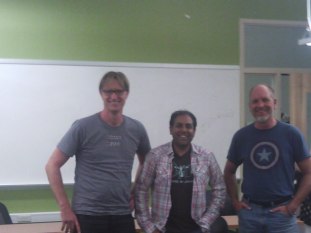
J.D. Payne, J. S. Mayank, and Alan Wartse
Screenwriting Panel at the
2016 Writing the Rockies Conference
The genre fiction workshop, on creating complex female characters, led by women’s fiction author Candace Nadon. She talked about the female stereotypes used in creating female characters, and ways to recognize and avoid them in your writing. Most of her advice for creating strong female characters, was in the form of what not to do, proving that there is a fine line to balance strength and feminity.
Screenwriter and co-organizer of the Crested Butte Film Festival, Michael Body was both educational and entertaining in his screening lecture. He used actual clips submitted to the festival for consideration. Two of the clips were humorous, but the other one was just plain bad, illustrating well the many reasons films do, or don’t get into film festivals. The bad one was so bad that the audience elected not to finish watching it.

Screenwriter Michael Brody
Co-Founder of The Crested Butte Film Festival
Along with everything else, the talent featured at the Writing the Rockies Conference also grows each year. In addition to the genre fiction and screenwriting names above, this year’s poetry symposium featured were renowned poets and critics, such as A.M. Juster, Jan Schreiber, John Talbot, Bruce Bennett, Christopher Norris, Emily Grosholz, Thomas Cable, Paul Edwards, Natalie Gerber, Niles Ritter, Frederick Turner, Richard Wakefield, and Robert Maranto.
Of the thirty publishers in Colorado today, at least seven were represented at the 2016 Writing the Rockies Conference: Conundrum Press Publisher, Caleb Seeling; Fulcrum Press editor, Rebecca McEwen; Slant News editor, Kyle Harvey; Dave Trendler, of VeloPress; Fred Ramey of Unbridled Books; Lithic Press Publisher, Danny Rosen; and Senior Acquisitions Editor of NavPress, David Zimmerman.
Creative Nonfiction is a new concentration which was added this year, featuring award-winning author, Kase Johnstun; essayist, Kelsey Bennett; and nature writer, Alissa Johnson. Genre fiction authors not mentioned above included Clay Reynolds; children’s author, Stacia Deutsch; and speculative fiction author, Michaela Roessner.
The 2016 Writing the Rockies Conference appeared to be a great success. It holds many opportunities for aspiring writers, and 2017 promises to have e1ven more, becoming larger and more prestigious than ever before. I anticipate 2017 conference attendees will have quite a treat in store.
Like this post? Subscribe to Writing to be Read for e-mail notifications whenever new content is posted.
Share this:

Hybrid Publishers – What are they all about?
Posted: June 6, 2016 Filed under: Books, Publishing, Writing | Tags: Books, Delilah, Hybrid Publishers, Publishing, Writing 5 Comments
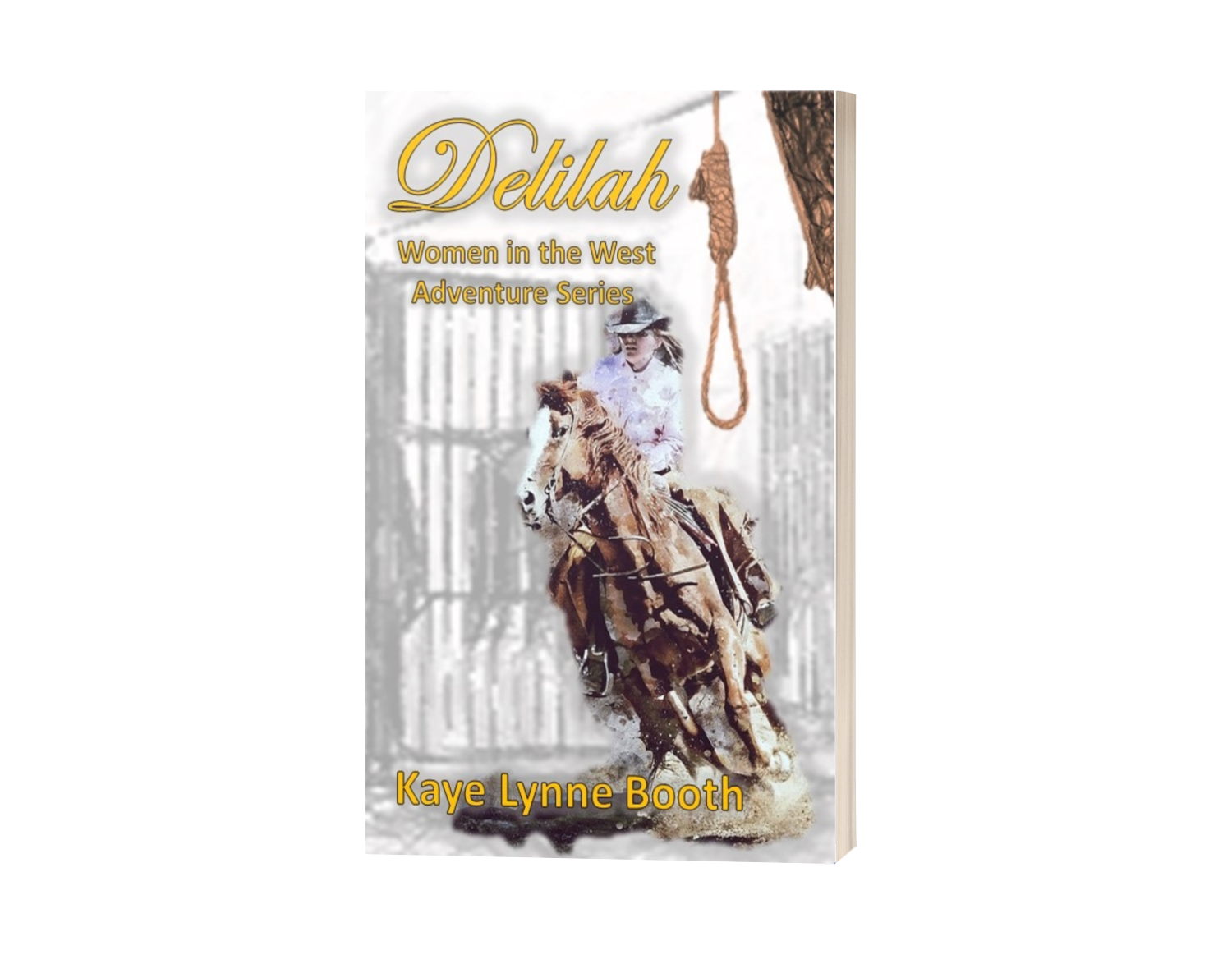
After the publisher I was so sure would take Delilah, didn’t, I did what I was taught in my M.F.A. classes and turned around and sent out another query to another publisher. I didn’t want to leave it sitting idle, so I turned around and sent it out again the same day to the first publisher I found that looked like they might be interested in a Western with a female protagonist. In a little over three weeks, I received a request for the full manuscript and was, of course, elated. The thing is, this publishing house isn’t one of the big 5, or even a small independent publisher, but a hybrid publisher.
We had discussed briefly hybrid publishers in one of my classes on the business of writing, but as I am now faced with the possibility of being offered a contract by one such entity, I felt it might be a good idea to delve a little deeper in order to understand what publishing through a hybrid publisher might entail.
I had a hard time finding anything recent on the subject, with most articles dating back between 2012 and 2014. It seems the term “hybrid publisher” can mean either an author who has works published both traditionally and self-published, or a publishing house that “splices” together elements of self-publishing and small press traditional publishing in any number of ways, according to published indie author and blogger, A.K. Taylor, in her August 6th, 2012 article on The Newbie Author’s Guide, “Rise of the Hybrid Publisher”. For our purposes here, we are talking about hybrid publishing houses rather than hybrid authors, although if they accept Delilah, and I accept their terms, I may someday be one of the later, as well.
According to Brooke Warner, publisher of She Writes Press, in her April 9, 2015 article on The Blog at HuffPost Books, “Hybrid Publishing: Getting a Handle on the New Middle Ground”, hybrid contracts are nothing new, they just aren’t widespread knowledge. Many traditional and independent publishers have been cutting hybrid deals where the author pays all or part of the publishing costs up front for years. What Warner calls partnership publishing allows authors to pay up front for publishing costs and receive a high percentage of the royalties, while the publishing house offers traditional distribution and qualify to submit books to traditional review channels to aide in marketing and drive sales.
Hybrid publishing work in much the same way. I found that there are several hybrid publishing houses out there. All offer some combination of traditional publishing services and benefits of self-publishing. According to Taylor’s article, there are certain things all hybrid publishers have in common:
- Author is involved in the whole publishing & marketing processes.
- Publisher offers traditional publishing and traditional marketing channels
- Royalties from 50 -100% (considerably higher than royalties offered by most traditional publishers)
- Quality craftsmanship
- Shorter contract duration (1-5 years) than traditional publishers, and then rights revert back to author
All hybrid publishers have some type of submission process, but some offer a traditional-type publishing contract, with only a small advance, if any, while others require authors to pay all or part of the publishing expenses up front. I suspected this would be dependent on whether they are a P.O.D. publisher, (publish on demand), or do a traditional print run, although according to the former publisher of Writer’s Digest, Jane Friedman, there are hybrid publishing houses who do not require the author to pay up-front expenses, although the do provide a traditional print run, and even traditional marketing services. In her Publishers Weekly article, May 15, 2015, “Not All Hybrid Publishers are Created Equal: How Authors Should Evaluate Their Choices”, she states that the services offered, as well as royalties and costs vary. It’s important to be sure that the publishing route you choose is going to produce a high quality product.
The publishing house that is considering Delilah may go either way once they have assessed my manuscript, assuming of course that they love it and can’t wait to offer me a contract. They may opt to offer me a contract similar to a traditional contract with no up-front cost to me, or they might chose to offer me a contract more like a self-publishing contract, requiring I pay all or part of the publishing expenses out of pocket.
As far as I could determine, when considering a contract with a hybrid publisher the following five areas should be kept in mind when determining whether the publishing house is right for you. These are the areas I will look at if I am offered a contract for Delilah.
- Speed of Publishing Process – I’m not a patient person, so quick results are appealing to me. I backed out of a contract with a P.O.D. publisher for one of my children’s books, after five years with no results. I like to make things happen and be able to see my hard work come to fruition, preferably before I’m dead.
- Type of Income/Out of Pocket Expense – I’m a starving artist, so of course, an advance would be preferable to covering the publishing expenses out of pocket. The cost was one reason I have shied away from self-publishing models. The idea of larger percentages in royalties is also appealing.
- Traditional print run or P.O.D. – I like the idea of the traditional print run, because it allows the author access to copies for review or to have on hand at signings and other writing events. With P.O.D. publishing, that stuff can get expensive. Plus the above mentioned experience with P.O.D. publishing has made me leery of it.
- Editing services – I believe one thing that gives self-published authors a bad rep are the authors who don’t think they need to have their manuscripts professionally edited before publishing, therefore putting out a poor quality book. Every book should be well edited before publishing, so I feel having editing services available could be invaluable.
- Marketing and promotional services – This is an area where I’m not great at. I’m a writer, not a sales person, although if I believe in something, I usually have good results when selling it, and I do believe in my writing. None-the-less, this is not one of my strong points, so I would take all the help I can get.
It appears that today’s author has three publishing choices, which is two more than author of the past had. More choices means more opportunity for success. In a January 8, 2014 Forbes article, “How Hybrid Publishers Innovate to Succeed”, David Vinjamuri gave this breakdown of the differences between traditional publishing, independent or self-publishing, and hybrid publishing.
- Traditional publishers pay big advances, but move like sea turtles on land. Extremely long process. You have to move at their pace, (a year or more from acceptance).
- Self-publishers/Independent publishers – Large royalties, P.O.D. Author pays all publishing costs up front.
- Hybrid Publishers – Better royalties than traditional publishing, but not as good as self-publishing. Much faster publishing process than traditional publishers, (4 to 6 weeks). Although generally do not pay large advances, many don’t require any money up front from the author. Hybrid publishers pay few if any salaries.
Every author dreams of being traditionally published, but traditional publishing is tough. You have to have thick skin and be able to handle repeated rejections. The only thing I have against self-publishing is the expense. I write to make money, and I have to sell something before I have money to spend. Hybrid publishing seems to me like it might be the best of both worlds and definitely something to consider.
During my M.F.A. courses, I wrote with the belief that I would find a traditional publisher for my work. Although we briefly discussed hybrid publishing and self-publishing, both were glossed over, leaving the impression that they weren’t really options for professional writers. But now that I’m faced with trying to get my work out there, I’m learning that they might be options I should consider. (I’ve already experimented with self-publishing with my short story, Last Call, in e-Book format on Amazon, but haven’t seen a lot of results from it.)
Many of the students in my classes were young, in their twenties and thirties. They may have time to build a career and wait to be discovered, but I am fifty-two years old. I don’t have all that time. I want to make my writing work for me while I’m still alive to enjoy it. So, if this publisher does come back with an offer for Delilah, I’ll consider it. You bet I will. Now I have enough knowledge about hybrid publishers to make an informed decision. Wish me luck.
Like this post? Subscribe to Writing to be Read for e-mail notifications whenever new content is posted.
Share this:

What Ever Happened to Heather Hummingbird?
Posted: March 25, 2016 Filed under: Children's Books, Stories, Writing | Tags: Children's Books, Ethan Eagle, Heather Hummingbird, Kaye Lynne Booth, Publishing, Writing 5 Comments
There are some of you who have been following my writing endeavors for some years. If you’re among that crowd, you’ll remember when I announced I had a publisher for one of the books in the My Backyard Friends series of children’s stories. I was very excited and proud to broadcast on the book’s progress at the time, but I haven’t mentioned Heather Hummingbird for quite a while now. It dawned on me the other day that there are many of you who were waiting for the release of the book. I even had a list of pre-orders in anticipation of it. You deserve an explanation as to what happened to Heather, so let me tell you what happened.
All through my limited writing career, I have done things on my own. A negative experience as an undergrad turned me away from a major in English that would have sent me down the path to becoming a writer the right way, and I got a major in Psychology, which I’ve never really found a use for instead. And when I first set out to be a writer, I failed miserably, because I couldn’t afford the submission process via snail mail, which is all there was back then. Yeah, I’m an old lady.
But the development of the Internet changed all that, opening up opportunities for writers that didn’t exist previously, and I began writing a series of children’s stories with animal and bird characters based on the creatures that visited the backyard of my Colorado mountain home on a daily basis. I met an illustrator online. She’d become a member of a social writing site, called Writer’s World, which I was administrator of. She offered me a very affordable deal to illustrate that first book, Heather Hummingbird Makes a New Friend, with beautiful handcrafted illustrations. I immediately fell in love with the cover illustration she produced, and down the road, she arranged for the publisher she worked for to offer me a contract.
Now you see why I was excited? I thought that was the best stroke of luck to ever hit me. I had a publisher fresh out of the gate. I was ecstatic. I spread the good news across all of my social networks, announcing to the world that Heather Hummingbird was coming. Little did I know, I had embarked on a nightmarish fiasco into the world of publishing.
When the publishing date the following year came and went, and nothing happened, they said it had been pushed back. And it was pushed back again and again for the next two years, each time I broadcast to my friends and readers the updated release date. But I wasn’t hearing anything from the publisher or the illustrator. She’d sent me three illustrations and the cover, but that was it. Nothing more was forthcoming, and no explanations.
If I wanted to know what was going on with my book, I had to contact them via e-mail and ask. They didn’t even tell me when the release dates were pushed back unless I wrote to inquire. In 2013, the release date passed, although all edits had been completed, my illustrator answered an inquiry, saying the date had been pushed back again and she was no longer able to illustrate by hand. She sent me a digitally illustrated cover and ask if this would be acceptable. I didn’t like this cover as much as the original, but I thought it would do, so I agreed to have her do the digital illustrations.
The next release date came and went, and when I inquired, the publisher sent back an email informing me I would be getting a different illustrator. I inquired as to the reason for this change, thinking perhaps my illustrator was no longer with the publishing house, but this was not the case. For some unknown reason they had decided to have someone else produce my illustrations, which I had already paid the original illustrator for.
At this point, I was more than slightly annoyed. I expressed my displeasure in the arrangement and the publisher got snotty and said she would release me from the contract. So, that is how it was resolved, and I’m still trying to collect my money from the original illustrator. It feels foolish to say that seven years since Heather started out on her venture, I’m stuck with two covers and three illustrated pages, none of which I can use, no illustrator and no publisher. But that’s it in a nut shell. I still don’t have a published book.
So, where is Heather now, and what lies in her future? Well, I shopped her around to a few publishers, to no avail. At Western State I was taught that you have to get back up on the horse, so after one rejection, I pulled up the manuscript and re-read it with fresh eyes, in order to revise before sending it out again. On that pass, something profound struck me. Heather Hummingbird Makes a New Friend, was not Heather’s story at all. It wasn’t Heather who learned a life lesson in this story, but rather, she was the teacher. So, I did the revisions, rewrote the synopsis, and changed the title to Ethan Eagle Makes a New Friend. After all, Ethan is the character that learns about friendship from Heather. Once that was done, I launched it into the submission process once more, so we’ll see.
There you have it. I don’t know how many are out there who even remember there was a Heather Hummingbird book, but at one time I had a whole list of pre-orders from people wanting the book. I am sorry that I wasn’t able to fill those orders, and I thank all of you for your support. If anything ever does come of Ethan and Heather, you, my readers, will be the first to know. Thanks for hanging in with me.
Share this:

The Process Takes Time
Posted: January 2, 2011 Filed under: Uncategorized | Tags: Children's Books, Publishing, Writing 6 Comments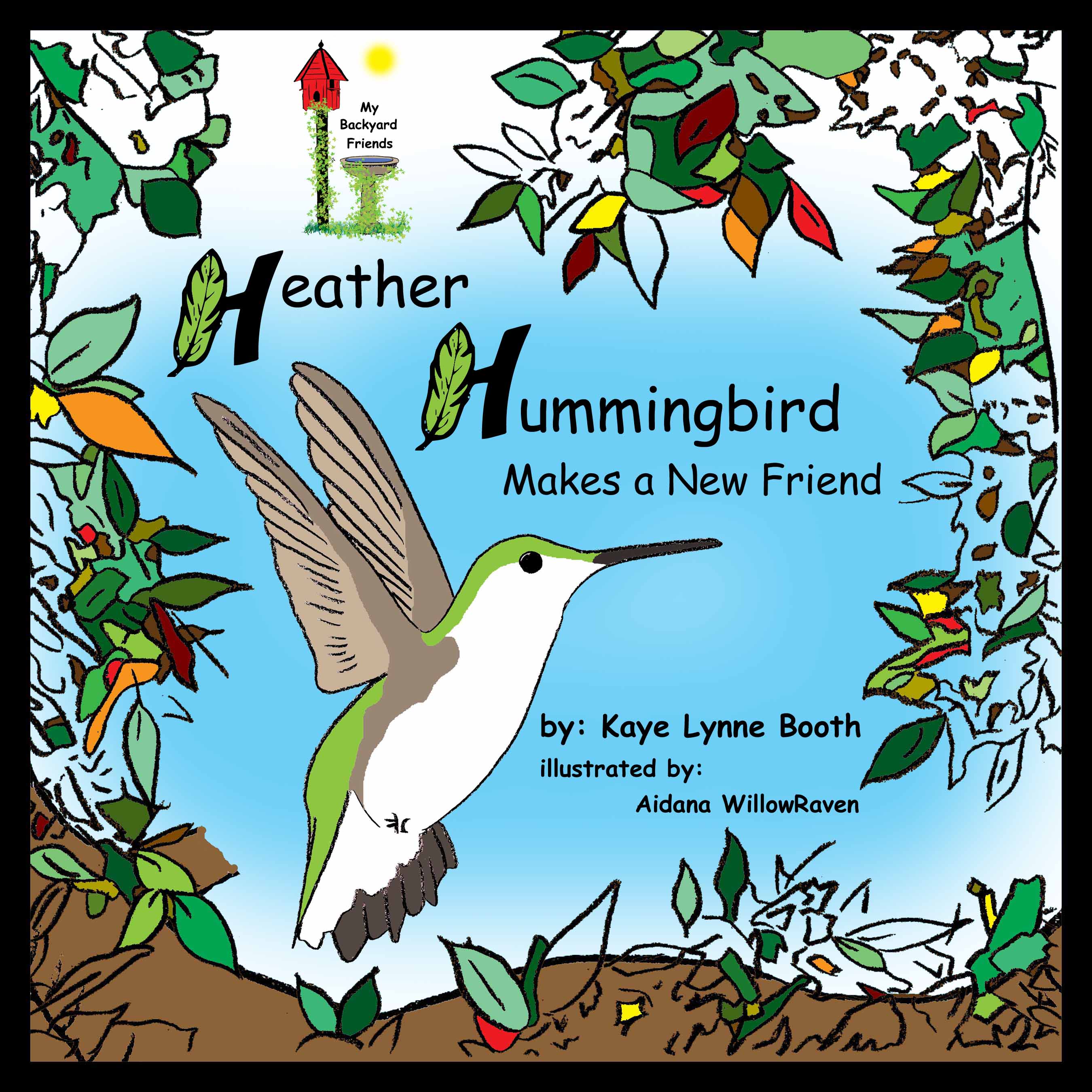 I signed the contract for Heather Hummingbird Makes a New Friend last month. This was a big step for me. I held on to the contract for almost a month before signing it, researching publishing contracts to be sure I was getting a fair deal and making sure that the author’s responsibilities were not unreasonable. I had never contracted a book to be published before, and so I was probably being overly cautious. This is the moment all writer’s hope for, being able to say that you have a publisher, right? So, why has it taken so long for me to share it with my readers?
I have to admit that my stomach did flip-flops when the contract arrived. I read over the whole thing and then set it aside for a few days, while I let the reality sink in. I actually had a publisher offering me a contract on a book that I wrote. Wow! It had been three years since I first signed the contract with my agent/illustrator that would start the illustration process. Although, at least a year of that time was a delay brought on by the death of my son, I was beginning to wonder if this day would ever come. Now here it was.
I was thrilled and excited once I convinced myself that it was the real deal, and I began to research what should be included in a publishing contract. All the legal terminology was pretty much mumbo jumbo to me. I wrote my illustrator/agent to verify that the parts outlining the illustrator’s share of the profits, (always assuming that there will be profits), were not in conflict with the contract I had signed with her three years ago. She assured me that it was not. After doing some online research, I was satisfied that what I had in front of me was a fairly standard publishing contract, which required me to do nothing unreasonable. As the author, I am expected to make promotional efforts, as is more and more common in these days of digital media, but the publisher was committing to do their share as well. It seemed fair. Finally, I gathered my courage and visited a notary, so that my signature could be witnessed and all would be official.
So why wasn’t I crowing from the rooftops, announcing this joyous occasion? Although I was pleased with the way things were going for the book, I was still hesitant to make the official announcement. I think perhaps it was because the projected date of release is October of 2012. That seems so far away right now. I have friends and readers that have been with me since I started this quest three years ago, that are patiently waiting for this book to come out, so they can get their copy. How do I tell these folks that have stuck by me that it’s going to be almost two more years before they will have that opportunity? Those that wanted a copy for their child or grandchild may find that the child in question has advanced past the age when Heather Hummingbird will bring screams of delight. I have to admit, it is a little disheartening.
But, it made me realize just how long this whole process of getting published takes. Sure, I had read the tales of other authors, which give lengthy wait times between start and the actual release date, but I don’t think it really sank in for me. I still envisioned my book being swept up by a publisher, like a princess being swept away by a prince in a fairy tale. “….And it was read joyously by children everywhere and made huge royalties ever after”. Okay, so maybe I was off into the clouds a little, but the reality of having a contract has brought me right back down to earth. Don’t get me wrong. I am pleased that I do have a contract and will wait for the release, perhaps a little impatiently. So for all of you that have been waiting with me, we have a ways to go still. Hopefully, that group will grow over the next two years, so if you haven’t been waiting with us, but would like to now, I welcome you. When you read those authors that are telling you that it takes time to be published, believe them. It does. All we can do now, is wait.