Treasuring Poetry Special Remembrance Month Edition: Poet, Frank Prem, discusses his war poetry #poetrycommunity #warpoetry #TreasuringPoetry
Posted: November 15, 2023 Filed under: Book Review, Books, Collection, Interview, Poetry, Review | Tags: Book Review, Frank Prem, From Volyn to Kherson, Interview, Poetry, Poetry Collection, Review, Robbie Cheadle, Treasuring Poetry, War, War Poetry, Writing to be Read 51 CommentsToday, I am delighted to welcome prolific and masterful poet, Frank Prem, back to Treasuring Poetry. Frank writes incredibly relatable poetry that covers a wide variety of topics relevant to modern life including the bush fires that raged in Australia a few years ago, Devil in the Wind, working as a psychiatric nurse in an institution, The New Asylum: A Memoir of Psychiatry, as well as collections about war. I have read Frank’s beautiful and moving collections about World War 1, Sheep on the Somme, and the war in the Ukraine, From Volyn to Kherson: Interpretations of the War in Ukraine. Frank also writes romantic poetry, interpretive modern poetry and verse books for children. In the nicest way, nothing is safe from Frank’s poetic pen.

Tell us a bit about your war poetry collections
I developed an interest in the First World War many years ago and was particularly interested in the stories of Australian soldiers and their seeming need to volunteer to fight half a world away on the basis of loyalty to the British Empire and the Mother Country that was England, but also on the basis of a kind of chivalric principle. A moral fever that swept the nation.
I came across books that were written in the more modern historical style of telling stories to illustrate events – using the example of an identified soldier, from an identified town, with family details and background, then tracing their movements into the war and its various theatres and actions.
I found I was able to understand these individuals a little better and to empathise with them and their loved ones a little more than I otherwise could.
I also found myself interested in using images for my own poetic inspiration and that led me to the images held by Australia’s War Memorial. There was one image in particular that started me looking at pictures taken during the war. The image was of a white cross in a field of muddy and bloody craters. The cross marked the grave of Captain Ivor Margetts, much loved and respected by the men he led in battle. By the following day the cross and the grave were gone. They’d been blown to hell by the shelling.
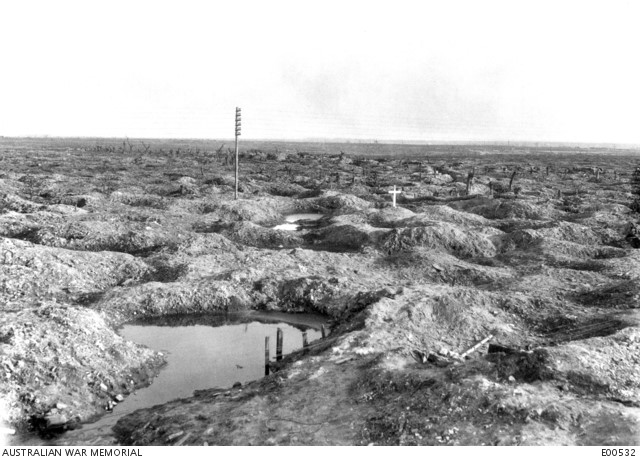
I was tremendously moved by this, and as I searched for a version of that particular image online, I encountered many more, each with a poignant story to tell and many were destined to feature in my book Sheep On The Somme (https://www.amazon.com.au/Sheep-Somme-World-Picture-Poetry/dp/1925963144 ).
More recently, I found myself watching the sabre rattling over the Ukraine that was being perpetrated by Russia and was reminded very clearly of reading I’d done long ago about the beginnings of the Spanish Civil War back in the late 1930s and of the rise of Right-Wing Fascism in Europe during that same period of the 1930s. I was struck by the similarities and the ways in which those events and movements evolved into what became World War II. It was – and remains – quite concerning to see these way events continue to unfold.
As the news and pictures of Russia’s military build-up on the Ukraine border kept emerging, along with the seeming inability on the part of Ukraine to do anything to stop it, I watched events more and more closely.
When Ukraine’s borders were finally breached, there were more photographers and journalists on the spot than has ever been the case previously in a conflict. We were flooded with formal and informal news and masses of un-curated and un-censored images.
During the first nine weeks of the conflict I became engrossed in reading the news and studying the images. And – of course – I began to write.
I produced 3 volumes of poetry interpreting the Ukraine war – two of them will not be released because they used images taken by journalists in the field and I don’t have rights to use those images. The volumes (Bullets Into The Starichi Sky and I Call The Hole The War) sit on my private bookshelf here in my writing studio.
The third volume – From Volyn to Kherson – is a collection of poems in which I have attempted to use such talent for empathy as I possess to interpret the news stories I was reading in a way that enabled any of my own readers to get a sense of what the invasion and the conflict was like as an experience for the everyday people of Ukraine. What if it happened here, in my town? What would it be like to have seventy kilometres of armoured assault vehicles coming to surround and destroy my home town? Or yours?
I like readers to know where the inspiration for these writings has come from and so each individual poem is referenced and has a link to the online sources that I relied on in my writing. After nine weeks I was a little burnt out and had to stop writing, but I follow events over there diligently and worry about what I see happening in the wider world and which still so resembles the events of the 1930s.
What draws you to writing about wars?
I’ve encroached a little on this question with my answer above, I think, but I’ll try to elaborate a little more.
In my professional life I was a psychiatric nurse. Back (so many years ago) when I was a student nurse one of the areas of interaction with patients that was taught and stressed was empathy.
As I understood it, empathy was the ability to walk in another person’s shoes. To see things from the perspective of the other person, but not to necessarily sympathise, or accept, merely to understand in order to be able to reflect that understanding back to the patient.
The patients that came my way in psychiatry were invariably involved in and generally overwhelmed by personal chaos. This might have been due to illness, or it might have been due their life being in a mess they could not resolve. They might have been psychotic, depressed, suicidal, or experiencing any number of out-of-control situations.
That tool of empathy has stayed with me, I think, and now reveals itself in my writing. The experience of chaos by a person finds itself being reflected back in my writings.
I think it is in this way that I am attracted to attempt to unravel what a person may be feeling or experiencing in a war zone. Similarly, I find myself writing a lot about the human toll of natural disasters that come close to me or to my little place in the world.
I have always tried to develop my understanding of these things by writing my way through them. To help myself and any subsequent reader to understand by feeling what is happening through my words.
Tell us a bit about how you use photographs and newspaper articles to assist with writing your war poems
With newspaper articles, I try to extract the meat of the story. That part of the article that is the actual purpose – the reason that it is a story in the first place.
Often enough, there is human interest in the genesis of the article. I then allow the information to assemble itself in a way that I can present it to a reader. For example
What is grandmother doing in the kitchen? Is she cooking Sunday lunch? No. She is cooking Molotov cocktails for others to throw at invading vehicles. And . . . wouldn’t you or I, each do the same if this was happening in our back yard?
With an image, I anticipate that it will have a story to tell. I try not to impose myself and my own current thoughts or fears or desires on it, but to allow the story to be whatever comes.
For example, a golden paper daisy with a bright glow might well have a story to tell that reflects light, and the sun. But equally, it might be a harbinger – a prophet of some kind that draws attention to itself in order to be heard. I don’t know in advance what the story will be, but I try to keep myself out of its road and not to shape the narrative too much.
I have come to know, also, that each image will have a different story to tell to each viewer, so to the extent that I can, I try to facilitate a receptive space for that to occur through what I end up writing. I’ll give an example of how I find a story in a tiny image taken during wartime over a hundred years ago.

The image above is the view from inside a German army dugout in World War I – around 1916. It is from within this space that a small group of individuals fought their war.
When I look at this image, I notice a few things and I feel a few things. In no particular order:
- From pitch darkness up into light. A very small doorway.
- Claustrophobia.
- Fear.
- The smell of habitation. Bodily odours – where would the latrine have been?
- The knowledge of death and destruction and battle rage just outside
- Movement of the ground as shells fall outside. Perhaps close.
- Maybe the sound of enemy troops approaching the bunker to destroy it.
- What of family. Has this soldier (have I) written them a note to say goodbye?
I don’t have a personal experience of war, but I know what fear feels like. I know claustrophobia and the smells of my own body . . . and so on. I can draw on these to understand a little of what the soldier in the dugout might have felt.
The willingness to engage with these elements that come from the image allow me to engage my empathy and to allow a story – which the image itself contains – to be told.
What is your own favourite war poem?
I think that my personal favourite of my own written war poems is one that hasn’t featured in a book to date, but was written to be read for a spoken-word poetry slam 2 years ago. The criteria were that it needed to be 2 minutes reading time or less and to include the term ‘full circle’.
The poem told stories in word pictures and referenced images, without actually including them, if that makes sense. I have since recorded it for my YouTube channel and included there the images that the poem references, spanning both World War I and the current Ukraine war.
The link to the poem on YouTube is here: https://www.youtube.com/watch?v=JI3vRaTg0tI .
The text of the poem is below:
THE TRUTH OF TIME
(AS TOLD BY THE PICTURES)
picture 1
a group
of soldiers
are hanging out
of the doors
and windows
of a moving train
leaving Egypt
heading
to the western front
ready
for a stoush
a bit
of a barney
it’s time
to come to grips
with the enemy
and they’re cherry ripe
for a
blue
picture 2
dimitriy
is holding olga –
tightly –
on the platform
a blue train
is nearly ready to leave
she’ll go
to poland
across the border
dimitriy
will join his friends
in the territorials
a week
to practice
how to hold a rifle
and to learn
first aid
then away
he must forget
to be an accountant
he’s
a front-line fighter
now
picture 3
a heap of rubble –
bricks
and half-bricks
timber and concrete
and dust –
lies as a mound
among mounds
it is
a streetscape
an avenue
of homes
destroyed by artillery
a soldier –
rifle
slung over a shoulder –
picks his way
toward camera
there is nothing left
that might hold
use
or meaning
picture 4
the village near kyiv
is a series
of mounds
rubble
that was homes
and houses
a month or so
ago
a woman
is sifting
searching
for something –
anything –
that might
have a use
it’s all been destroyed
by missiles
and artillery
she hasn’t found
a lot
that will be helpful
~
pictures
pictures
they won’t
let me sleep
in the night
they shout at me
that we have come
full circle
and the ukraine
is in 1916 all over again
Who is your favourite war poet?
I can’t honestly say I have a favourite war poet, but I have read with a deep sense of connection stories such as All Quiet on the Western Front by Erich Maria Remarque with its empathy for the soldiers of the day. Here is the Wikipedia link: https://en.wikipedia.org/wiki/All_Quiet_on_the_Western_Front .
What is your favourite war poem?
I’m aware of many of the great poet writers of the First World War, such as Owen, Sassoon, Brook and Graves, among others, but for my response to this question I have to refer you and readers to a song that I first encountered back when I was a teenager (50 years, who would ever have thought . . .).
The song was performed by a wonderful English Folk ensemble called Steeleye Span, and the song is called Fighting For Strangers. Here is the YouTube link: https://www.youtube.com/watch?v=JI3vRaTg0tI
YouTube Links
In addition to the links given above, I would welcome viewers, new followers (if any so desire) comments and feedback on my YouTube Channel, where there a re a number of video readings from my war poetry collections (and natural disasters and psychiatry and others). Click on the link below to be taken along to the Playlists available on the Channel.
https://www.youtube.com/@frankprempoetandauthor726/playlists
Robbie and readers, thanks so much for having me along to chat for November’s Treasuring Poetry post.
My review of From Volyn to Kherson: Interpretations of the War in Ukraine

This book is a ‘hard’ read. It exposes the realities of war; the filth, the noise, the fear, and the destruction and death. No civilian wants war, it is something that is imposed on individuals because of factors outside of the man on the street’s control. Civilians, however, bear the brunt of war as the women lose their husbands and sons. The entire population generally loses its collectively homes, food stability, economic stability, access to sanitation, food, and healthcare. Many countries and populations never recover from wars and their populations become unwanted refugees. The sympathy of the unaffected world shrinks rapidly when wars and the resultant refugees impacts on their economies, making the slices of the economic pie for their own populations smaller.
The war in Ukraine hit me especially hard when I read about the Russian soldiers who froze to death in their tanks. Although the Russians were the instigators and aggressors in this war, many of those young men are the same ages as my own two sons, and their dreadful fate couldn’t fail to stir compassion. Young men frequently have a glamorous and inaccurate picture of war when they enlist or are called up. The realities of war quickly displace these notions but it is already too late.
A few stirring stanzas from this collection of freestyle poems:
From fallen (quietly weeping)
“here it is safe
safe enough
to shed
a tear”
From the metro (is also home)
“let the fear
fall away
for a moment while
the anthem
sounds”
From vasylkiv (is fighting on)
This footnote made me shiver: “People used to think about new car or iphone, but nobody was thinking about peace. Now, we are dreaming of it. When old people used to wish each other peace, we didn’t understand what they meant. Now we do.”
and finally, from in okhtyrka (the tsentral’ne)
“they are preparing
the cemetery now
in okhtyrka
adriy
and his platoon
are gone
vacuum bombed
air taken
out
of them
and then
they died”
This is a beautiful and emotion book of poems that will change the way you view war forever.
You can find out more about Frank Prem here:

You can find out more about Frank Prem on his website here: https://frankprem.com/
and on his wordpress blog here: https://frankprem.wordpress.com/blog/
On amazon US here: https://www.amazon.com/stores/Frank-Prem/author/B07L61HNZ4
About Robbie Cheadle
Award-winning, bestselling author, Robbie Cheadle, has published fourteen children’s books and two poetry books. Her work also features in several poetry and short story anthologies.
Robbie also has two novels published under the name of Roberta Eaton Cheadle and has horror, paranormal, and fantasy short stories featured in several anthologies under this name.
The eleven Sir Chocolate children’s picture books, co-authored by Robbie and Michael Cheadle, are written in sweet, short rhymes which are easy for young children to follow and are illustrated with pictures of delicious cakes and cake decorations. Each book also includes simple recipes or biscuit art directions which children can make under adult supervision.
Robbie and Michael Cheadle have recently launched a new series of children’s books called Southern African Safari Adventures. The first book, Neema the Misfit Giraffe is now available from Amazon.
Robbie’s blog includes recipes, fondant and cake artwork, poetry, and book reviews. https://robbiesinspiration.wordpress.com/
You can find example of Robbie Cheadle’s artwork in her art gallery here: https://www.robbiecheadle.co.za/art-gallery/
Share this:

A Lovely Review for “Small Wonders”
Posted: June 22, 2023 Filed under: Book Review, Books, Collection, Poetry, Review | Tags: Book Review, Kaye Lynne Booth, Poetry, Poetry Collection, Small Wonders, WordCrafter Press 6 Comments
Thank you Baydreamer- Lauren Scott. ❤ ❤ ❤
Share this:

Small Wonders: Release and Pre-Order
Posted: May 10, 2023 Filed under: Advertising, Book Promotion, Book Release, Books, Collection, Poetry, Reflections | Tags: BookRelease, Kaye Lynne Booth, Poetry Collection, Pre-order, Small Wonders, WordCrafter Press 7 Comments
Purchase and Pre-Order Link: https://books2read.com/u/b6WZ6E
About the Book
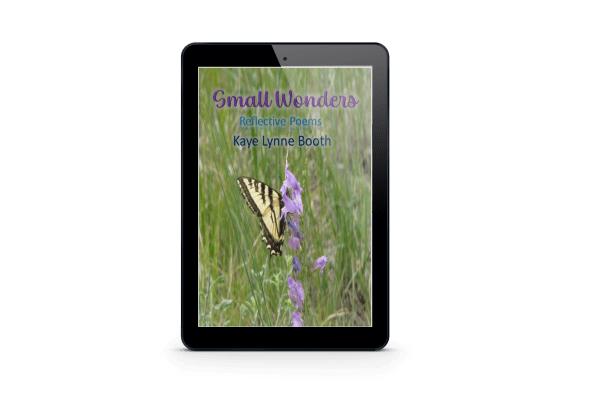
The world is filled with amazing things, if we will just stop a moment and take notice. In this vast universe, we are but tiny individuals, filled with awe and amazement. From reflections on first love, to reflections on growing old. The poems within these pages express a lifetime of unique reflections on Small Wonders.
Share this:

Writer’s Corner: Revisiting Poetry – A Look Back
Posted: April 3, 2023 Filed under: Books, Collection, Poetry, Women's Fiction and Poetry, word play, WordCrafter Press, Writing | Tags: Kaye Lynne Booth, Poetry, Poetry Collection, Writer's Corner, Writing to be Read 7 Comments
It All Started with Poetry
When I first started writing, I wrote poetry. In fact, my first sale of my writing, back in 1996, was for a poem. I wrote on a manual typewriter and submitted via snail mail, (I know. I’m dating myself terribly.). My poem, “A Prayer for Guidance” was published in a small poetry magazine called Dusk & Dawn, which is no longer in publication, and I made a whole $5 from it, but boy, was I ever proud of that sale.
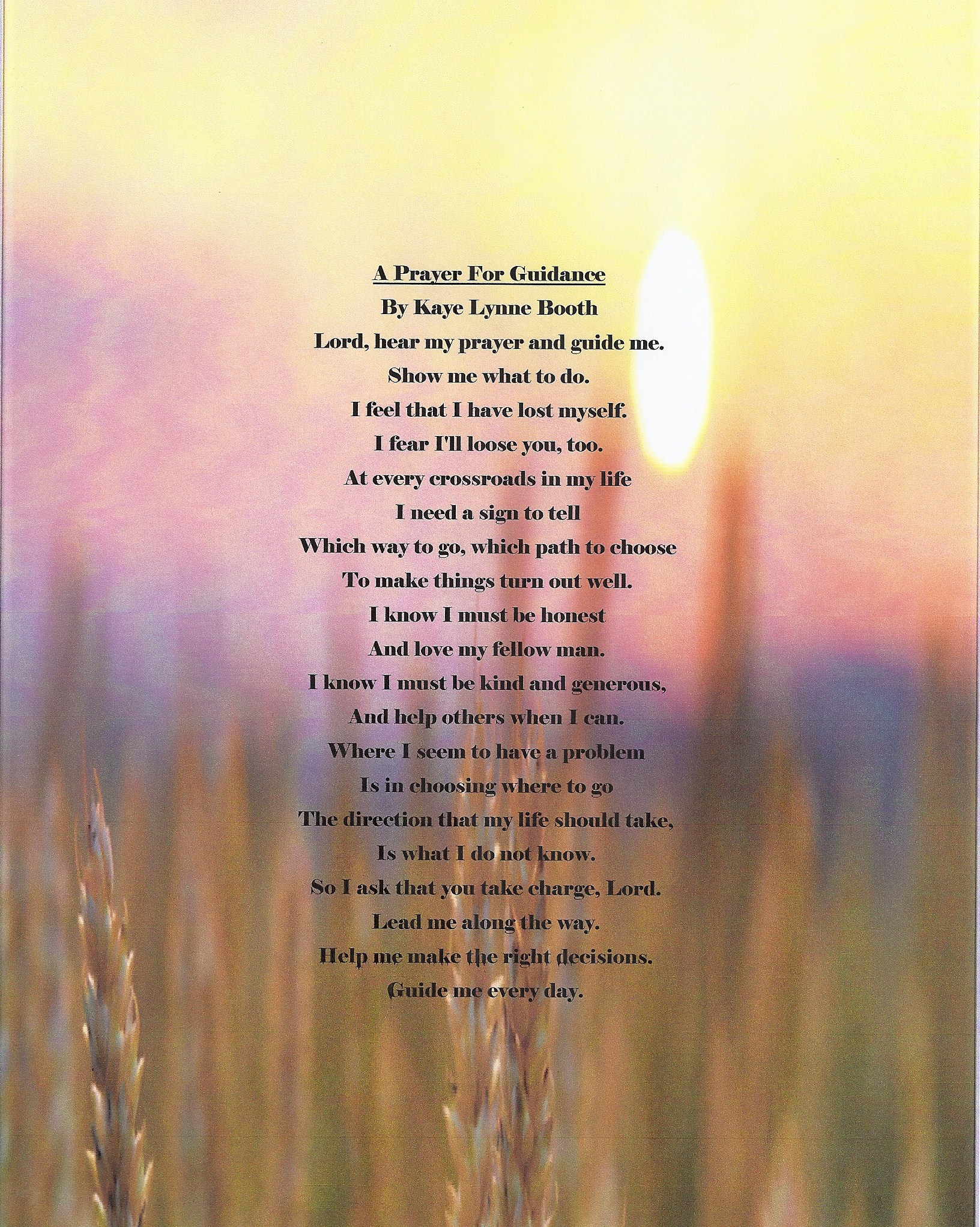
I put my poetry on backgrounds, like the one above for my very first writing event. It was a local event that a friend saw advertised in the paper and said, “You should see if you can get a table. I called and got a table at the event, then realized I had nothing to offer at my table. I hadn’t yet published a book or anything, so I printed up my poetry on backgrounds , which I sold at my table for $5 a piece, and made almost $100.
For that event, I had a poem called “Voices” about the different voices that speak in my head, and as I was searching for backgrounds, I came across a painting of the same title, that I knew was the perfect background for this poem. So I poked around on the internet until I found a way to contact the artist, Mitchell Barret, and sent him an email, requesting to use his painting as my background. I was more than surprised when I recieved a phone call from him all the way from England. You must understand that this was right at the beginning of the internet era, and I still had a land line with long distance charges, so a call from another contentent was a pretty big deal to me, and I absolutely adored his English accent, although I had to ask him to repeat himself a couple of times during the call. He gave me permission to use his painting for the writing fair, and we conversed for a while, sparking up a friendship that was one of my first internet networking experiences.

Poetry & Art
In a later contact, Mitch said he was working on a series of paintings and he would like to include some poetry with them. He sent me the sketches for the paintings, and I wrote a poem for him. “Intimacy and the Harliquin Dance”. To my knowledge only one of those paintings ever came to fruition, but he did use a portion of my poem in his painting, which he titled “Intimacy”. The painting was on display and was sold at the Keliedescope Gallery, in Battle Sea Park, London in 2010.

After Michael
When my son died in 2009, I wrote poetry almost constantly. When I wasn’t physically putting words to page, I was putting my feelings to verse in my head. I wrote enough poetry about Michael and my loss of him to fill a chapbook. It was my way of processing my grief, I think. I don’t know if any of it was really good, but I felt it to be some of the most powerful writing I’d ever done.
Most of my poetry was rhyming, and by this point, I had taking some creative writing courses, where my poetry professor informed me ryhming poetry was no longer in vogue. Because of the rhyming, sing-song style of my poetry, it was evaluated by one critic as childish. And perhaps it is a bit childish. Rhyming poetry is fun to write. I’m a big fan of Sid Shelden and Dr. Suess, after all.
When I enrolled at Western State Colorado Unversity to earn my M.F.A. in Creative Writing, my focus shifted away from poetry and I began writing fiction, which has taken up my energies ever since, but I’ve never lost my love for poetry. I still submitted poetry here and there, even getting a few published in magazines such as Colorado Life Magazine, and anthologies such as Manifest West #5: Serenity and Severity. I just wasn’t writing anything new in the poetry realm.
Renewed Interest
A couple of years ago, I came across a book by Colleen Chesebro, WordCraft Prose & Poetry: The Art of Crafting Syllabic Poetry, which delves into the art of syllabic poetry. I couldn’t read this book without dabbling with the different forms myself, reviving my love for poetry all over again. (See my “Review in Practice” of WordCraft Prose & Poetry here.) And I used my newfound poetry skills to answer a creative challenge posed on the blog of Teagan Riordan Geneviene with a Shadorma poem with an image.

Now that my M.A. in publishing is completed, I find a have more time in which to ponder the words which I place on the page, and play with poetry. For that is what poetry ultimately is – play with words. I don’t mean that it shouldn’t be taken seriously, but that creating with words, no matter the form it takes, should be fun and satisfying for the creator, and poetry offers a wider license for this than do other forms of writing. This is known over at Colleen M. Chesebro’s WordCraft Poetry blog, where every Tuesday brings a #TankaTuesday challenge involving syllabic poetry, introducing readers with all kinds of new poetic forms. And so, I’ve been revisiting poetry once again, playing with sllybic poetry and rhymes. (I still love rhyming poetry, even if it is out of fashion.)
A New Poetry Collection on the Horizon
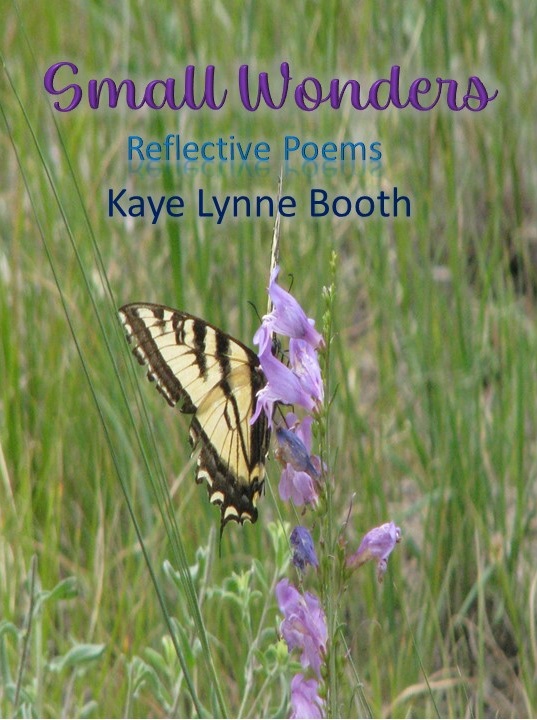
As I look through the poetry I’ve done in the past, I’m finding a plethora of poetry that needs to be shared. So, in addition to the two novels, and two anthologies which I had planned to publish through WordCrafter Press in 2023, I’m going to publish my first collection of poetry, some old, some new; some rhyming, some syllibic, and maybe even some freestyle to be included. It will take me down an old road to go through the poetry already written, and over a new road to experiment with forms of poetry both new and old, and the process of compiling the collection will be fun. Heck, it may even get me an invitation to be a guest on “Treasuring Poetry” with Robbie Cheadle.
To me, poetry is word play at its finest. What does poetry mean to you?
____________________________________________________________
Poetry Treasures 3: Passions in April
April is National Poetry Month here in the U.S., so it is fitting that the release of the annual Poetry Treasures anthology, from WordCrafter Press comes sometime in April each year. This year’s volume will be Poetry Treasures 3: Passions. It will be released on April 18, 2023, and is available now for preorder.
Preorder Link: https://books2read.com/u/b5qnBR

Passions treasures within.
Open the cover
and you will discover
the Poetry Treasures
of guests on
Roberta Eaton Cheadle’s
2022 “Treasuring Poetry” blog series
on Writing to be Read.
Included are treasures from:
Patty Fletcher, D. Wallace Peach, Yvette Prior,
Penny Wilson, Colleen M. Chesebro, Abbie Taylor,
Yvette Calliero, , Smitha Vishwaneth,
Chris Hall, Willow Willers, Rosemerry Wahtola Trommer,
and Roberta Eaton Cheadle
_______________________________________________________

For Kaye Lynne Booth, writing is a passion. Kaye Lynne is an author with published short fiction and poetry, both online and in print, including her short story collection, Last Call and Other Short Fiction; and her paranormal mystery novella, Hidden Secrets. Kaye holds a dual M.F.A. degree in Creative Writing with emphasis in genre fiction and screenwriting, and an M.A. in publishing. Kaye Lynne is the founder of WordCrafter Quality Writing & Author Services and WordCrafter Press. She also maintains an authors’ blog and website, Writing to be Read, where she publishes content of interest in the literary world.
___________________________________________________________
Want exclusive content? Join Kaye Lynne Booth & WordCrafter Press Readers’ Group for WordCrafter Press book & event news, including the awesome releases of author Kaye Lynne Booth. She won’t flood your inbox, she NEVER will sells her list, and you might get a freebie occasionally. Get a free digital copy of her short story collection, Last Call and Other Short Fiction, just for joining.
Share this:

WordCrafter Press Celebrates National Poetry Month
Posted: April 1, 2023 Filed under: Anthology, Book Promotion, Books, Collection, Poetry, Promotion, WordCrafter Press | Tags: Arthur Rosch, Behind Closed Doors, Feral Tenderness, National Poetry Month, Poetry, Poetry Anthology, Poetry Collection, Poetry Treasures, Poetry Treasures 2: Relationships, Robbie Cheadle, WordCrafter Press 3 Comments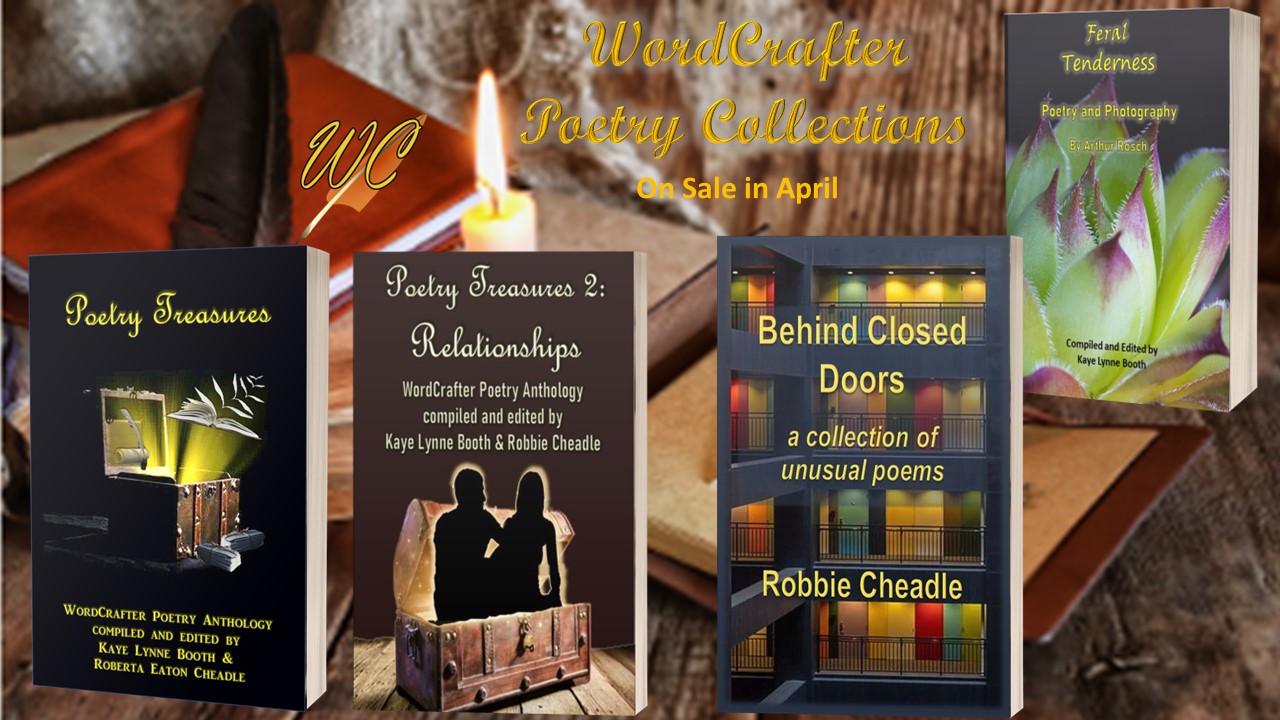
Celebrating National Poetry Month
April is National Poetry Month here in the U.S. and WordCrafter Press is celebrating the joy of the written word by putting four WordCrafter Press poetry books on sale for the whole month! You can get your copy of your favorite from your favorite book distributor.
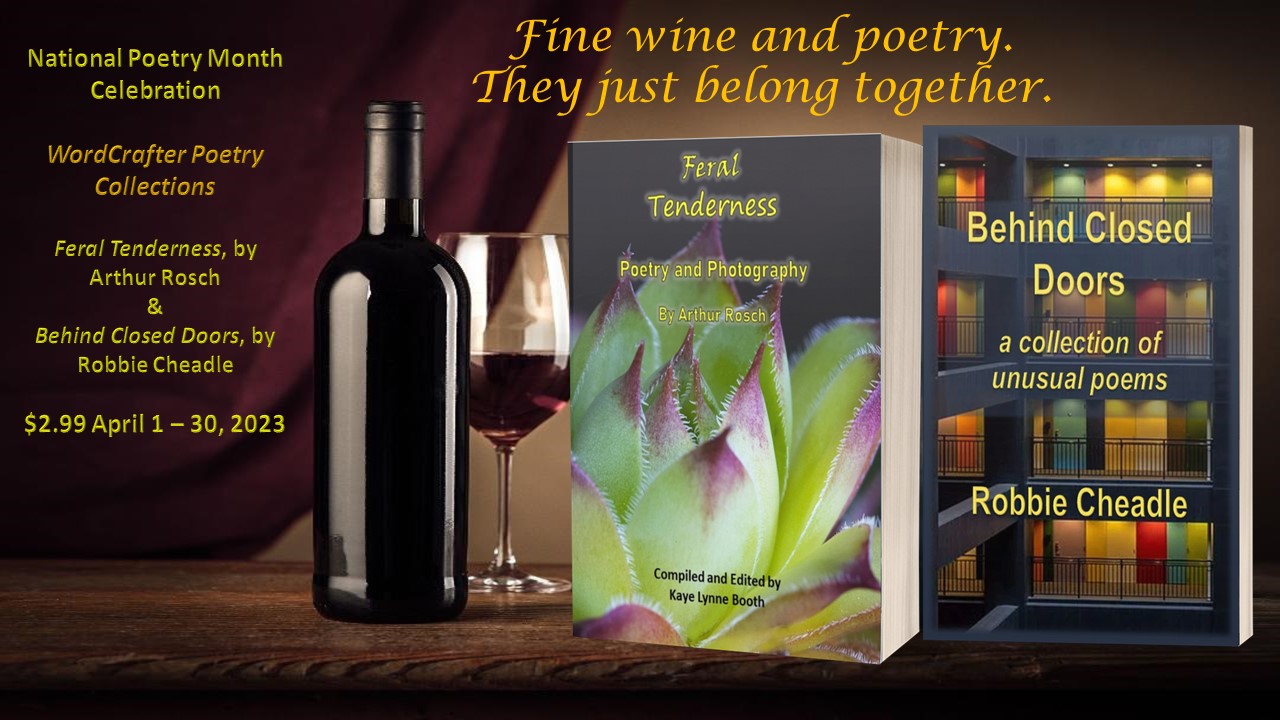
Behind Closed Doors, by Robbie Cheadle

Poetry Treasures 2: Relationships anthology
Share this:

Poetry Treasures 2: Available now!
Posted: April 9, 2022 Filed under: Book Promotion, Book Release, Books, Poetry, Treasuring Poetry, WordCrafter Press | Tags: Arthur Rosch, Colleen M. Chesebro, D.Avery, Elizabeth Merry, Harmony Kent, JulesPaige, Lauren Scott, Leon Stevens, Lynda McKinney Lambert, M.J. Mallon, Miriam Hurdle, Poetry Collection, Poetry Treasures 2: Relationships, Robbie Cheadle, Treasuring Poetry, WordCrafter Press 44 Comments
Yes! It’s finally here.
If, like me, you thoroughly enjoy Robbie Cheadle’s “Treasuring Poetry” blog series and can’t wait for her posts to come out each month, then you’ll be as excited as I am to learn that Poetry Treasures 2: Relationships is available at your favorite book distributors now!
Relationships are golden and each of
Arthur Rosch, Elizabeth Merry, D Avery, Robbie Cheadle, Harmony Kent, Lauren Scott, JulesPaige,
Leon Stevens, Colleen M. Chesebro, Miriam Hurdle,
M J Mallon, and Lynda McKinney Lambert
pay poetic tribute to their most intense
personal moments.
That’s right folks. Now you can get this wonderful collection of poetic gems by Robbie and her 2021 “Treasuring Poetry” guests all in one place. We’ll be doing a book blog tour April 25 – May 1 so you can learn more about the amazing treasures contained within, but you don’t have to wait.
Just click on the Books2Read Universal Book Link (ULB) to find your copy at your favorite book distributor now!: https://books2read.com/u/3kP8aK
Share this:

Treasuring Poetry – Meet poet and author Harmony Kent and my review
Posted: September 18, 2021 Filed under: Book Review, Books, Interview, Poetry, Treasuring Poetry | Tags: Author Interview, Book Review, Poetry, Poetry Collection, Robbie Cheadle, Writing to be Read 102 Comments
Today, I am delighted to feature poet and author Harmony Kent as my guest for Treasuring Poetry. I have read one of Harmony’s fictional books and her non-fiction book, Creative Solutions for the Modern Writer: Inspirational Tools to Fire Your Imagination, and they are both excellent. I have read and reviewed her poetry book, Slices of Soul: A Collection of Contemporary Poetry.
Welcome Harmony!
Which of your own poems is your favourite?
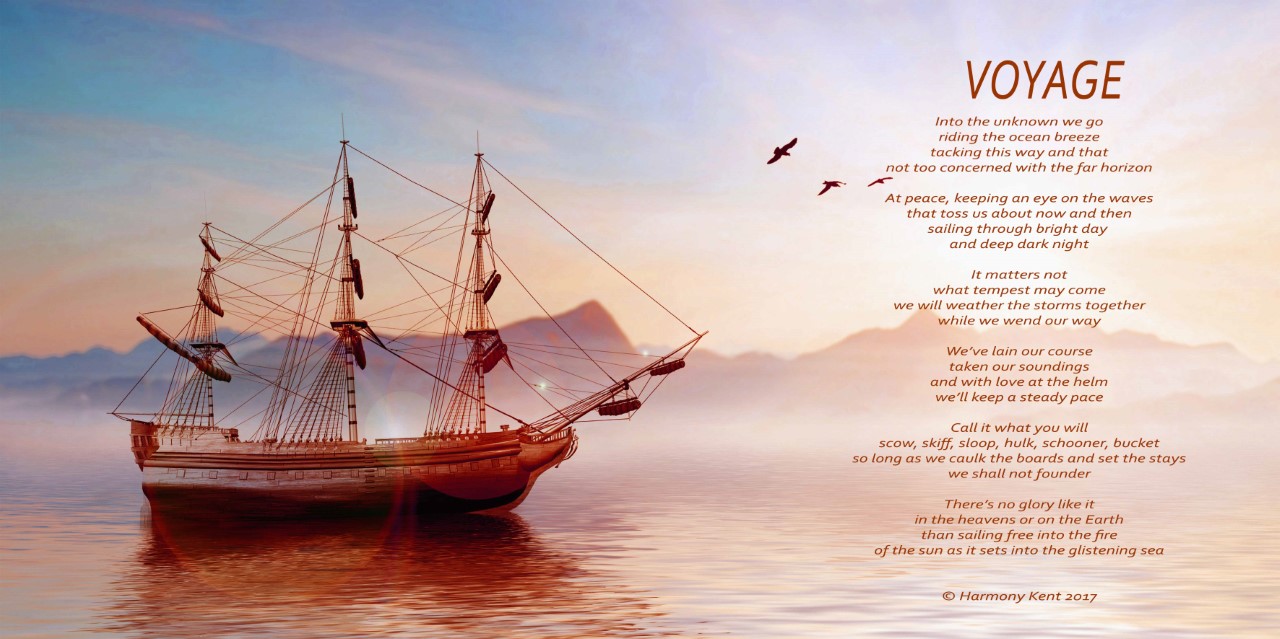
VOYAGE
Into the unknown we go
riding the ocean breeze
tacking this way and that
not too concerned with the far horizon
At peace, keeping an eye on the waves
that toss us about now and then
sailing through bright day
and deep dark night
It matters not
what tempest may come
we will weather the storms together
while we wend our way
We’ve lain our course
taken our soundings
and with love at the helm
we’ll keep a steady pace
Call it what you will
scow, skiff, sloop, hulk, schooner, bucket
so long as we caulk the boards and set the stays
we shall not founder
There’s no glory like it
in the heavens or on the Earth
than sailing free into the fire
of the sun as it sets into the glistening sea
What inspired you to write this particular poem?
When I met the love of my life, right away, we both went through some tough personal times. Those hardships brought us closer, and we’ve now been married for two years.
Which genre of poetry do you enjoy writing the most and why?
Some form of Haiku, because it forces me write with brevity and choose my words with utmost care.
Which genre of poetry do you enjoy reading the most?
As with my writing, my reading is eclectic. I enjoy a broad range of styles and genres.
What is your favourite poem?
Auguries of Innocence by William Blake
To see a World in a Grain of Sand
And a Heaven in a Wild Flower
Hold Infinity in the palm of your hand
And Eternity in an hour
A Robin Red breast in a Cage
Puts all Heaven in a Rage
A Dove house filled with Doves & Pigeons
Shudders Hell through all its regions
A dog starved at his Masters Gate
Predicts the ruin of the State
A Horse misused upon the Road
Calls to Heaven for Human blood
Each outcry of the hunted Hare
A fibre from the Brain does tear
A Skylark wounded in the wing
A Cherubim does cease to sing
The Game Cock clipped & armed for fight
Does the Rising Sun affright
Every Wolfs & Lions howl
Raises from Hell a Human Soul
The wild deer, wandering here & there
Keeps the Human Soul from Care
The Lamb misused breeds Public Strife
And yet forgives the Butchers knife
The Bat that flits at close of Eve
Has left the Brain that wont Believe
The Owl that calls upon the Night
Speaks the Unbelievers fright
He who shall hurt the little Wren
Shall never be beloved by Men
He who the Ox to wrath has moved
Shall never be by Woman loved
The wanton Boy that kills the Fly
Shall feel the Spiders enmity
He who torments the Chafers Sprite
Weaves a Bower in endless Night
The Caterpillar on the Leaf
Repeats to thee thy Mothers grief
Kill not the Moth nor Butterfly
For the Last Judgment draweth nigh
He who shall train the Horse to War
Shall never pass the Polar Bar
The Beggars Dog & Widows Cat
Feed them & thou wilt grow fat
The Gnat that sings his Summers Song
Poison gets from Slanders tongue
The poison of the Snake & Newt
Is the sweat of Envy’s Foot
The poison of the Honey Bee
Is the Artists Jealousy
The Princes Robes & Beggars Rags
Are Toadstools on the Misers Bags
A Truth that’s told with bad intent
Beats all the Lies you can invent
It is right it should be so
Man was made for Joy & Woe
And when this we rightly know
Through the World we safely go
Joy & Woe are woven fine
A Clothing for the soul divine
Under every grief & pine
Runs a joy with silken twine
The Babe is more than swaddling Bands
Throughout all these Human Lands
Tools were made & Born were hands
Every Farmer Understands
Every Tear from Every Eye
Becomes a Babe in Eternity
This is caught by Females bright
And returned to its own delight
The Bleat the Bark Bellow & Roar
Are Waves that Beat on Heavens Shore
The Babe that weeps the Rod beneath
Writes Revenge in realms of Death
The Beggars Rags fluttering in Air
Does to Rags the Heavens tear
The Soldier armed with Sword & Gun
Palsied strikes the Summers Sun
The poor Man’s Farthing is worth more
Than all the Gold on Africs Shore
One Mite wrung from the Labrers hands
Shall buy & sell the Misers Lands
Or if protected from on high
Does that whole Nation sell & buy
He who mocks the Infants Faith
Shall be mocked in Age & Death
He who shall teach the Child to Doubt
The rotting Grave shall neer get out
He who respects the Infants faith
Triumphs over Hell & Death
The Childs Toys & the Old Man’s Reasons
Are the Fruits of the Two seasons
The Questioner who sits so sly
Shall never know how to Reply
He who replies to words of Doubt
Doth put the Light of Knowledge out
The Strongest Poison ever known
Came from Caesars Laurel Crown
Nought can Deform the Human Race
Like to the Armours iron brace
When Gold & Gems adorn the Plow
To peaceful Arts shall Envy Bow
A Riddle or the Crickets Cry
Is to Doubt a fit Reply
The Emmets Inch & Eagles Mile
Make Lame Philosophy to smile
He who Doubts from what he sees
Will ne’er Believe do what you Please
If the Sun & Moon should Doubt
They’d immediately Go out
To be in a Passion you Good may Do
But no Good if a Passion is in you
The Whore & Gambler by the State
Licenced build that Nations Fate
The Harlots cry from Street to Street
Shall weave Old England’s winding Sheet
The Winners Shout the Losers Curse
Dance before dead England’s Hearse
Every Night & every Morn
Some to Misery are Born
Every Morn and every Night
Some are Born to sweet delight
Some are Born to sweet delight
Some are Born to Endless Night
We are led to Believe a Lie
When we see not Thro the Eye
Which was Born in a Night to perish in a Night
When the Soul Slept in Beams of Light
God Appears & God is Light
To those poor Souls who dwell in Night
But does a Human Form Display To those who Dwell in Realms of day
https://www.poetryfoundation.org/poems/43650/auguries-of-innocence
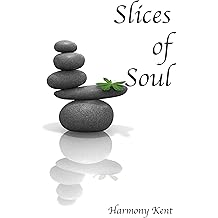
Slices of Soul: A Collection of Contemporary Poetry
What Amazon says
Slices of Soul is a collection of contemporary poetry from author Harmony Kent that will both delight and call for deeper reflection. ‘Phantoms’ gives a gritty account of pain that you can never catch. ‘Enough’ expresses the contentment of Zen. ‘Diamonds’ shows the beauty to be found on a drab and rainy day. While ‘The Alchemist’ shows you how a guitar can turn lead into gold. This wonderful arrangement of fifty poems takes you from the abstract of Zen to the melody of music, and will reach into your mind, your heart, and your soul.
My review
Slices of Soul is a compelling and unusual collection of poetry which certainly does give the reader glimpses into the complex soul and unusual life of the poet.
I think it is important to note that the poet spent 13 years living in a Zen Buddhist Temple and that the poems featured in this book were written, during and after this period in her life. I believe that her spiritualism and surroundings had a bearing on the thoughts and ideas expressed through the poems in this book.
The poems are divided into sections: Shaved Head, written during her time at the Zen Buddhist Temple, Short Hair, written during the transitional period of her changing life circumstances, and Long Hair which effectively covers all the remaining sections in the book and were written after she’d adjusted to her new life.
I felt the tone of the poems changed over the course of the book from intense reflections on life, to studies of nature, to fierce expressions of emotion, to gentler articulations of love and contentment.
The two poems that impacted me the most in this collection are from the first two sections of the book, Shaved Hair and Short Hair:
The Path
The ten directions all merge into one
this winding road leads nowhere
and goes straight there
Lost and Found
Deep dark depths
I got lost on purpose
this desolate place
the only way
to get my bearings
Poetry lovers who like poems that make you think about things and see them differently will appreciate this book.
Purchase Slices of Soul
Amazon Author Page Harmony Kent
About Harmony Kent
Harmony Kent is an award winning multi-genre author. Her publications include:
The Battle for Brisingamen (Fantasy Fiction) AIA approved
The Glade (Mystery/Thriller) AIA Approved/BRAG Medallion Honouree/New Apple Literary Awards Official Selection Honours 2015
Polish Your Prose: Essential Editing Tips for Authors (Writing/Editing) New Apple Literary Awards Top Medallist Honours 2015
Finding Katie (Women’s Fiction)
Slices of Soul (Contemporary Poetry)
Interludes 1 & Interludes 2 (Erotic Short Stories)
Moments (Short Stories and Poetry)
Jewel in the Mud (Zen Musings)
Backstage (Erotic Romance)
FALLOUT (Apocalyptic/post-apocalyptic Dystopia) BRAG Medallion Honouree
The Vanished Boy (Psychological Thriller)
As well as being an avid reader and writer, Harmony also offers reviews and supports her fellow authors. Harmony works hard to promote and protect high standards within the publishing arena. She is always on the look out for talent and excellence, and will freely promote any authors or books who she feels have these attributes. Harmony lives in Cornwall, England.
twitter: @harmony_kent
Goodreads: https://www.goodreads.com/HarmonyK
About Robbie Cheadle

Robbie Cheadle is a South African children’s author and poet with 9 children’s books and 1 poetry book.
The 7 Sir Chocolate children’s picture books, co-authored by Robbie and Michael Cheadle, are written in sweet, short rhymes which are easy for young children to follow and are illustrated with pictures of delicious cakes and cake decorations. Each book also includes simple recipes or biscuit art directions which children can make under adult supervision.
Robbie has also published 2 books for older children which incorporate recipes that are relevant to the storylines.
Robbie has 2 adult novels in the paranormal historical and supernatural fantasy genres published under the name Roberta Eaton Cheadle. She also has short stories in the horror and paranormal genre and poems included in several anthologies.
Robbie writes a monthly series for https://writingtoberead.com called Growing Bookworms. This series discusses different topics relating to the benefits of reading to children.
Robbie has a blog, https://robbiesinspiration.wordpress.com/ where she shares book reviews, recipes, author interviews, and poetry.
Find Robbie Cheadle
Blog: https://www.robbiecheadle.co.za/
Blog: robbiesinspiration.wordpress.com
Twitter: BakeandWrite
Instagram: Robbie Cheadle – Instagram
Facebook: Sir Chocolate Books
_____________________________________________________________________________________________________________________
Want to be sure not to miss any of Robbie’s “Treasuring Poetry” segments? Subscribe to Writing to be Read for e-mail notifications whenever new content is posted or follow WtbR on WordPress.
Share this:

Welcome to the WordCrafter “After the Fires of Day” Book Blog Tour
Posted: September 6, 2021 Filed under: Blog Tour, book marketing, Book Promotion, Book Review, Books, Poetry | Tags: After the Fires of Day, Alphonse de Lamartine, Cendrine Marrouat, Haiku, Kahlil Gibran, Poetry, Poetry Collection, WordCrafter Book Blog Tours 12 Comments
To start off the WordCrafter After the Fires of Day Book Blog Tour, we’ve got an interview with poet and author Cendrine Marrouat and a review of her wonderful poetry collection and tribute to the inspiring poets, After the Fires of Day: Haiku Inspired by Kahlil Gibran & Alphonse de Lamartine. I hope you will all follow the tour this week and visit each of the tour stops to learn more about this inspired this inspired poet who is herself inspiring.

Cendrine Marrouat is a French-born Canadian photographer, poet, and the multi-genre author of more than 30 books. In 2019, she founded the PoArtMo Collective and co-founded Auroras & Blossoms with David Ellis. A year later, they launched PoArtMo (Positive Art Month and Positive Art Moves) and created the Kindku and Pareiku, two forms of poetry.
Cendrine is also the creator of the Sixku, the Flashku, and the Reminigram. Cendrine writes both in French and English and has worked in many different fields in her 17-year career, including translation, language instruction, journalism, art reviews, and social media.
My Interview with author and poet, Cendrine Marrouat
Kaye: What inspired you to create After the Fires of Day: Haiku Inspired by Kahlil Gibran & Alphonse de Lamartine?
Cendrine: My love for the haiku and my passion for the beautiful words of Kahlil Gibran and Alphonse de Lamartine.
I had always wanted to release something similar to After the Fires of Day. I had many ideas. However, a project like this, which pays homage to two literary giants, was tricky and required a thoughtful approach.
At the beginning of my career, I tried to emulate Gibran’s style—to no avail. But it was not a useless pursuit. It taught me important lessons about my own style and how to incorporate emotions in my work.
Emotions is actually the keyword here. In the late 2010s, I had this idea: An author always leaves a part of themselves, their “energy”, in their works. So why not “borrow” that and go from there?
It’s what I did for After the Fires of Day.
Kaye: Why do you think the haiku is such a powerful poetry form?
Cendrine: Many people limit the haiku to its syllable count. Words are treated like an afterthought, when they are actually the most important element of the poem. In North America, the haiku is misunderstood by the general public.
The haiku freezes a scene in time while implicitly revealing its author’s innermost feelings at that precise moment. It is an intimate, albeit complex form of poetry that speaks to the human experience in more ways than one.
To write a memorable haiku, you need to understand: the importance of conciseness and simple language; and how to leverage the seasonal reference (‘kigo’) and “cutting word” (‘kireji’) to evoke a specific mood.
Kaye: What made you choose Kahlil Gibran and Alphonse de Lamartine as sources of inspiration for After the Fires of Day? And for the people who have never read them, is there a specific book or piece of writing you would recommend?
Cendrine: I chose them because everything in their bodies of work inspires me. Their styles and the flow of their words tug at my creative heartstrings and make me want to write.
The Prophet is the best introduction to Gibran’s work. As far as Lamartine is concerned, you should start with his most famous poem, The Lake.
For the people interested in learning more about Gibran and Lamartine, they can visit my blog. I recently ran a mini-series of posts on each writer.

My Review

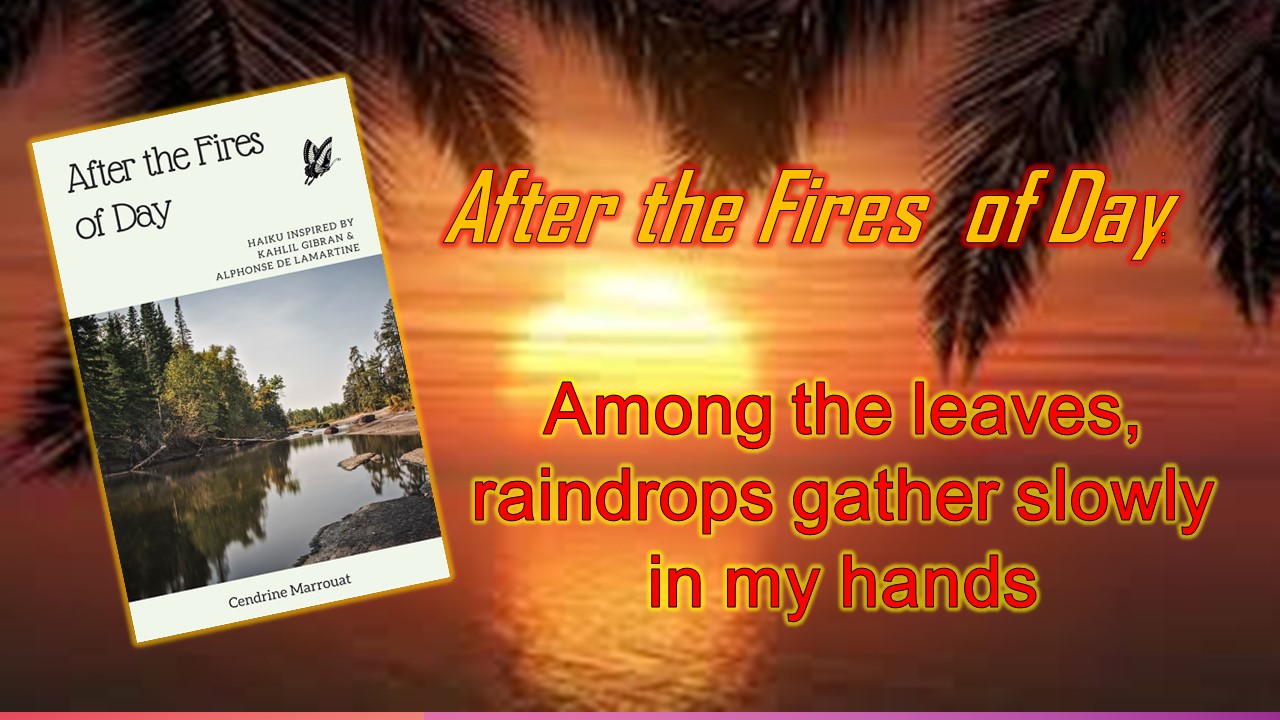
After the Fires of Day: Haiku Inspired by Kahlil Gibran and Alphonse de Lamartine is both a tribute of admiration to two wonderful poets and a collection of Haikus by Cendrine Marrouat, the expressions of her own unique voice and style of Haiku, in which their inspirations can be seen.
I was familiar with Kahlil Gibran’s work, but Alphonse de Lamartine was new to me. I am thankful to Cendrine Marrouat for the introduction to this poet. The poetic words of Marrouat’s beautiful Haikus bring me back to when I was introduced to the Haiku poetry, in the fourth grade. At that time, I felt that the sheer simplicity of the Haiku was lovely, although my fourth-grade mind didn’t yet understand that it was the ability of the words to capture and conjure a moment in nature so exquisitely that sent so much awe flowing through me.
I’ve included my favorite poem from this collection below. I think this Haiku speaks to me because my son, Michael, was born and died in September and since his death, September has always been a hard month for me to face. Marrouat’s Haiku allows me to look at the month of September with more positivity. The vivid imagery reminds me of what it is like to wait in anticipation of cooler days and fall colors.
Valley sits in gold,
Reflections in water
Welcome September.
While reading the Haiku poetry of Cendrine Marrouat, I couldn’t help but smile as her words summoned vivid images in my mind, which is exactly what a quality haiku should do. I give After the Fires of Day: Haiku Inspired by Kahlil Gibran and Alphonse de Lamartine five quills.
Book your WordCrafter Book Blog Tour today!
Share this:

Day 5 of the WordCrafter “Behind Closed Doors” Book Blog Tour
Posted: August 27, 2021 Filed under: Blog Tour, book marketing, Book Promotion, Book Review, Books, Guest Post, Poetry, Review, WordCrafter Book Blog Tours | Tags: Behind Closed Doors, Poetry, Poetry Collection, Robbie Cheadle, WordCrafter Book Blog Tours Leave a comment
We’re wrapping up the WordCrafter Behind Closed Doors Book Blog Tour over at Zigler’s News with a guest post by poet and author Robbie Cheadle and a review by Victoria Zigler. Please join us to learn a bit more about the author and her book.
http://ziglernews.blogspot.com/2021/08/behind-closed-doors-collection-of.html
______________________________________________________________________________________
Book your WordCrafter Book Blog Tour today!
Share this:

Day 4 – WordCrafter “Behind Closed Doors” Book Blog Tour
Posted: August 26, 2021 Filed under: Blog Tour, Book Covers, book marketing, Book Promotion, Book Review, Books, Guest Post, Poetry, WordCrafter Book Blog Tours | Tags: Behind Closed Doors, Book Review, Poetry, Poetry Collection, Robbie Cheadle, WordCrafter Book Blog Tours 1 CommentDay 4 of the WordCrafter Behind Closed Doors Book Blog Tour finds us over at Miriam Hurdle’s Showers of Blessings blog site with a guest post by author and poet Robbie Cheadle and a lovely review of Robbie’s latest book, Behind Closed Doors, a collection of unusual poetry. Drop in and learn more about this fascinating poetry collection and its author.
_____________________________________________________________________________________________________
Book your WordCrafter Book Blog Tour today!



















