Posted: February 18, 2019 | Author: kayelynnebooth | Filed under: Author Profile, Biographies, Books, Chatting with the Pros, Creative Nonfiction, Nonfiction, Writing, Writing to be Read | Tags: Biographies, Chatting with the Pros, Creative Nonfiction, Mark Shaw, Nonfiction, Writing to be Read |

In February, Writing to be Read is taking at look at nonfiction authors and their works. I’m pleased to say that my guest on Chatting with the Pros this month is nonfiction author Mark Shaw. Mark has been a traditionally published author for many years, following a successful career in journalism. He’s written biographies on sports greats, priests, accused criminals in high profile cases, as well as books about golf and pilots, and writing instruction. Today, he champions those for whom justice has not been served, his most recent book being Denial of Justice, which outlines the events surrounding the and deaths of J.F.K., Lee Harvey Oswald, Jack Ruby and Dorothy Kilgallen, which is a sequel to The Reporter Who Knew Too Much, which is Kilgallen’s story, and both books have been optioned for visual media and a script is currently being developed. Let’s welcome him and see what he has to say.

Kaye: Could you share a brief history of your author’s journey for those who are not familiar with you or your work? How did you get to where you are today?
Mark: It’s difficult for me to even believe that Denial of Justice was my 27th book. I never had any experience with writing, no classes, no workshops, etc. when I first wrote a book about Mike Tyson’s rape trial in 1992. What I fell in love with was the research, the writing process, and the chance to make people stop and think about important historical issues. That’s what keeps me going, looking for subjects now that deal with justice and injustice.
Kaye: In your books, you use your investigative reporting skills to dig deep and reveal little or unknown facts until you can tell the whole tale. Many of your books have brought some surprising details to the public eye. How do you choose the subjects for your books?
Mark: I like to say the book ideas come to me. Most of the time, I get an idea for a book at 3 a.m. and quickly write down a thought about it on some note cards I keep by my bed. All of my book titles have come that way as well. Writers need to keep their eyes open, many book ideas float right in front of us if we pay attention.
Kaye: After the story of Dorothy Kilgallen, The Reporter Who Knew Too Much, had a great reception and is now being prepared to be told through visual media. Was any of this a surprise to you, or did you think this story might be a best seller as you were writing it?
Mark: I had no idea Dorothy’s name was still magic, that a book about her would touch so many reader’s emotions and become a bestseller. I’ve heard from people around the world about the book, still do today, two-plus years after the book was published. It’s been amazing experience for sure.
Kaye: You recently released Denial of Justice, which digs even deeper into Dorothy’s story. How did you know there was more to be found regarding her story?
Mark: Those readers I mention sent me tips about new information about Dorothy’s life and times and her death and a file I kept just kept getting thicker until I realized there was a second book for those who read the first one and did not. Now I feel as if I have told the complete story about her although some new information still comes my way.
Kaye: As mentioned above, the Dorothy Kilgallen story in The Reporter Who Knew Too Much is going to be portrayed on the screen. Are there plans to include Denial of Justice to be portrayed visually or perhaps be included in the screen version already planned?
Mark: Both books were optioned for the big or little screen.
Kaye: How is that going so far?
Mark: There is no filming yet of The Reporter Who Knew Too Much. It is still in the development phase with a script being completed. I am quite excited about Dorothy’s story being on the big or small screen since if that happens, more and more people will know about this remarkable woman. I like to say a book is like a written megaphone to the world but a film or TV series reaches even more people.
Kaye: In addition to several books which revolve around J.F.K. and his circles, you’ve also written about sports icons such as Larry Bird, Jack Nicklaus, Pete Dye and Don Larson. You’ve told the tales of suffering and discrimination during the holocaust, and you’ve written the biography of a priest, books on golfing and a how-to book on writing. What motivates you to write the stories that you write?
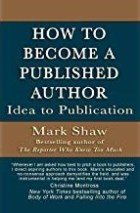 Mark: Again, the chance to make people stop and think, although some books have been more for entertainment purposes. Regardless, my books have a controversial slant to them, and that is important, something aspiring authors should seek to achieve. In my book about the publishing process that I use when aspiring authors hire me as a consultant, How to Become a Published Author: Idea to Publication, this is the type of practical advice I provide based on all of my
 experience.
Kaye: Have you ever written a book of fiction?
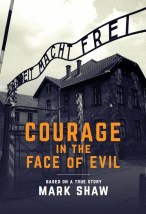 Mark: Yes, Courage in the Face of Evil is based on a true story, a Holocaust diary that is both disturbing and inspirational in nature, but I had to add certain elements that cause it to enter the world of fiction. I have also created a crime series called Vicker Punch: Lawyer on the Brink that is fiction, but based on my years as a criminal defense lawyer handling murder cases, and a book that is a sequel to a famous work of fiction.
Kaye: How do you see writing nonfiction differing from fiction in the publishing arena?
Mark: Fiction is much more fun, let the imagination loose without worrying about footnotes, etc. Just let it go and let the characters tell whatever the story is they want to tell. This said, for a first time author, getting fiction published these days is much more difficult that non-fiction since with fiction the star of the book is the author while with non-fiction the star of the book is the story.
Kaye: What is the biggest challenge in writing nonfiction for you?
Mark: How to tell the story once I have done all of my research.
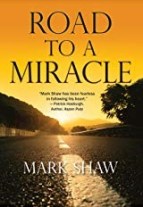 Kaye: Tell me a little about Road to a Miracle? The book is listed on Amazon for $57.73. I have to wonder what type of book rates a price like that?
 Mark: That’s nuts, and there are other editions of the book at a much less cost. The book is my road through the amazing life I have been blessed to live to the point of finding a daughter and two grandchildren I never knew existed a few years ago. Truly a miracle.
Kaye: I believe your stories are successful because they all hit emotional chords in your readers. How do you portray the emotional elements of your story so that they will touch your readers?
Mark: I tell writers I work with to be certain, whether fiction or non-fiction, to show the reader what’s happening, not tell them. That’s how the emotion comes through, how the reader connects with the story. Remember, a book is like a conversation with the reader but the author is not there so the emotion must be shown not told.
Kaye: In How to Become a Published Author, you talk about the importance of titles and subtitles. How do you come up with titles and subtitles for your books? How important are subtitles?
Mark: The book ideas come to me and the titles in the middle of the night when whatever spirit it is that is guiding my life, whispers in my ear. I quickly write down the idea on note cards I keep by my bed.
Many good books and movies have never seen the light of day due to bad titles. They need to be catchy, like TRWKTM, Denial of Justice, Miscarriage of Justice, The Poison Patriarch, etc. Don’t have too much experience with books based on true stories or fiction but Courage in the Face of Evil is striking as is Victor Punch: Lawyer on the Brink.
Re subtitles, not as important as titles but add to the description of the book. Again, I’m quite proud of the subtitles for my books. They certainly add to the allure of the story.
Kaye: Many of your books are collaborations. Is it difficult to write a book with someone else? Why collaborate? What are the pros and cons?
Mark: No, during the early part of my getting some footing as a writer, I had collaborations, but no more. This said, working with someone famous to tell their story is a good way to show writing skill and the ability to tell a good story. That’s key to establishing a reputation, as is writing biographies if a writer wants to enter the world of non-fiction.
Kaye: You were a criminal defense attorney and legal analyst for the news media covering the Mike Tyson, O.J. Simpson and Kobe Bryant cases, and you have a book about Tyson, Falsely Accused. Are there books about O.J. and Koby in the future? If not, what separates Tyson out from the others?
Mark: Injustice is the key word for the Tyson book since he did not get a fair trial. That thread has been woven through almost every book I’ve written in the last ten years or so, Miscarriage of Justice, Beneath the Mask of Holiness, Melvin Belli: King of the Courtroom, The Poison Patriarch, TRWKTM and now Denial of Justice, which relates actually to four people, JFK, Oswald, Jack Ruby and Dorothy Kilgallen. All were denied justice.
Kaye: What’s in the future for Mark Shaw?
Mark: Only the good Lord knows but I am truly the most blessed man on the face of the earth and for sure, I want to help as many writers as possible become published, to realize their publishing dreams.
I want to thank Mark for sharing with us today. He’s given us some insight into the world of a nonfiction author. You can learn more about Mark or his books at the links below.
You can catch the monthly segment “Chatting with the Pros” on the third Monday of every month in 2019, or you can be sure not to any of the great content on Writing to be Read by signing up by email or following on WordPress.
Posted: September 10, 2018 | Author: kayelynnebooth | Filed under: Books, Memoir, Nonfiction, Poetry, Writing, Writing Inspiration | Tags: Memoir, Michael Daniel Lee Booth, Mother's Grief, Nonfiction, Teen Suicide |

September is a month that I’d prefer to skip over if I could. It is not an easy month for me and hasn’t been for the last ten years. My son Michael was born on September ninth, he died on September 21 at the age of nineteen, and he was buried on September twenty-eighth. Had he lived, he would have been 30 years old yesterday. Since his death the Green Day song, Wake Me Up When September Ends, has held a special personal meaning for me, because it would be preferrable to go to sleep and not wake up until September was over each year. But of course, that isn’t possible and so, I plod through the month, struggling with my emotions, and life goes on. I haven’t forgotten, and I don’t miss him any less as time goes on, but I am now able to prevent my loss from consuming my life, as it did at first.
After he died, I felt his story needed to be told, but I couldn’t bring myself to do it, even though most of what I wrote during the first two years concerned him in one way or another. The wounds were still too fresh and I couldn’t distance myself from the situation enough to write it. I always knew that it was a tale that needed to be told, and I knew I was the only person who could write it, so I saved all the files and the photos, as well as physical momentos and hand written stories and poems written by my son.
As I mentioned in a recent post, It’s All a Matter of Time, I’ve begun compiling the plethora of journals, stories, poetry and visual images I have accumulated in releation to my son, so tuning out the world and hoping September will go away is not going to work this year. I’ve gathered these materials over the past ten years since his death and they are my works, as well as his, and eventually, it will all be included in my memoir about his life and death, His Name Was Michael: How I Lost My Son to Teen Suicide. After a decade, it is time for his story to be told. The pre-writing preparations have begun and I hope to have it ready for publication by this time next year.
This September will be filled with many tears, as I read through all the materials I’ve gathered and/or written for this book. To put it all together I must read through every piece of writing and go through all the photos of him. I’m not saying that it will be easy for me, because it won’t. In fact, it will probably be one of the most difficult things I’ve ever written, but there is no one else who can do it. It’s all up to me and I feel it’s got to be written.
Michael’s story is many stories wrapped up into his tale. His story will tell the tale of an amazingly unique young man in love, who made some poor choices. It will tell who Michael Daniel Lee was and who he might have been one day, had he lived. It will tell of a mother’s grief and attempts at denial. It will tell of the coping mechanisms employed just to make it through each day after the loss of a child. It will tell of a son, who was also my best friend, and a sense of loss that is undescribable, unknowable, unfathomable. It will tell of an epidemic that sweeps through our world taking young people who have their whole lives ahead of them.
Below is the eulogy that I wrote, which I read standing before a mortuary filled with mourners for my son one week after his death. It’s one piece in the tapestry of writing that will be used to illustrate Michael’s brief time on this Earth. I hope it will pique your interest and encourage you to read the book when it comes out, hopefully by this time next year. If you’d be interested in pre-ordering the book, leave a comment letting me know and I’ll put you on the list, making sure you get your copy when the time comes. It would be great to know that someone is interested, and that I will be writing this for someone other than myself.

Michael Daniel Lee Booth
When Mike said, “I love you”, it was forever, and when he called you his friend, you knew you could depend on him to stand by you, no matter what. He loved to try new things, to explore and to learn. He had a love for life and for all that he held sacred. Mike strove for excellence in all that he did, and lived by a code of honor that was extremely tough to uphold. His Christian upbringing was intermixed with Hindu and Buddhist beliefs to make up the tapestry of his own personal belief system that was disciplined and unyielding. When he made mistakes, Mike was harder on himself than anyone else ever could have been.
When he got mixed up with the wrong people and things, he made some poor choices. He did not deny what he had done, but instead stood up and accepted the punishment that was given to him. He tried to make amends for his wrongs and was on his way to accomplishing that goal. He expressed great sorrow for his errors, and inflicted emotional punishment on himself over and above what the law could ever require of him.
He had a strong will and could accomplish anything that he set his mind to, including learning to speak Japanese and perform martial arts skillfully, all on his own. Mike had a love for Japanese culture and he could have lived off of green tea and sushi. His knowledge and skills were gladly shared with those who wished to learn. Mike had a love for nature and enjoyed all kinds of outdoor activities, including skiing, hunting, fishing and hiking. His imagination was endless and he created stories and drawings that reveal a talent far beyond his tender youth.
Mike was so much to so many people; a loving son, a dependable big brother, a doting little brother, a respectful grandson, a loyal friend and a devoted husband. He loved his dog, Zaar, who was a companion and loyal friend to him. Mike was sensitive, and hurt so easily and so deeply, yet he was too strong willed to ever let it show outwardly. Only through his writing, can we glimpse the love that he embraced or the pain that he felt. When he loved, he loved with all of his being. Mike was fun loving and enjoyed spending time with those that were important in his life. He had beautiful curls and the most wonderful smile, which could light up my heart whenever I saw it. Mike turned 19 three weeks ago. He had a whole life ahead of him. He was much too young to be called home to God.
Like this post? Subscribe to Writing to be Read for e-mail notifications whenever new content is posted or follow WtbR on WordPress.
Posted: June 1, 2018 | Author: kayelynnebooth | Filed under: Biography, Book Review, Books, Nonfiction | Tags: Biography, Book Review, Concentration camps, Courage, Courage in the Face of Evil, Mark Shaw, Nazi Germany, Nonfiction, Survivor, True Story |
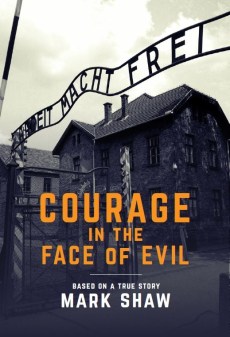
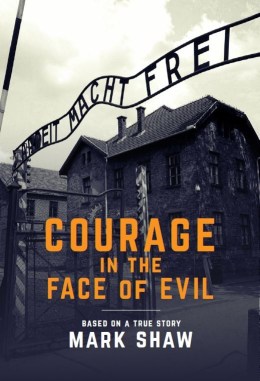
Courage in the Face of Evil, by Mark Shaw is the compelling story of a concentration camp survivor, drawn from her own journals from the time. Shaw skillfully captures Vera’s voice and brings readers into the camp, placing us there to stand witness to the horrors that its captives faced from day to day.
When German Christian Vera Konig is caught aiding the Jews in Nazi Germany, she never dreamed she would spend the next eight years in the concentration camp. What followed was a daily struggle for life and death, for herself and for those all around her. Others drew on her strength and courage, as well as her kindness. A true story of heroism in the face of the worst imaginable circumstances. Vera Konig demonstrates true Courage in the Face of Evil.
Courage in the Face of Evil will touch you in the depths of your soul. So skillfully crafted is this book, that your heart will break each time another friend is lost and cringe at every pain and injustice Vera is forced to suffer. You will cheer for each small battle Vera wins. You will rejoice when the allied troops arrive and Vera and her friends are saved. I give Courage in the Face of Evil five quills.

Kaye Lynne Booth does honest book reviews on Writing to be Read in exchange for ARCs at no charge. Have a book you’d like reviewed? Contact Kaye at kayebooth(at)yahoo(dot)com.
Posted: April 30, 2018 | Author: kayelynnebooth | Filed under: Author Profile, Biography, Book Review, Books, Inspirational, Interview, Nonfiction, Writing | Tags: Author Interview, Biographies, Courage in the Face of Evil, Mark Shaw, Nonfiction, The Repoorter Who Knew Too Much |

Once in a while, we come across an author who makes us see things differently through their writing. Mark Shaw is one such author, whose writing has a ring of truth to it that makes readers see those he writes about as real people with complex stories, who opens our eyes and makes us see truths that were always there, just below the surface, but we didn’t see before. I had the pleasure of reviewing two of his books. As the Southern Colorado Literature Examiner, I reviewed Beneath the Mask of Holiness, the compelling biography of a true life monk torn between his love of God and his love of a woman. And here, on Writing to be Read, I reviewed The Reporter Who Knew Too Much,
the true life story of journalist Dorothy Kilgalen, who was investigating the JFK assination, which I recently learned will be made into a movie or a television mini-series, and a follow-up book, which Mark plans to release this fall. I also have the privelage of reviewing his latest book, to be released in June, Courage in the Face of Evil, the story of a German Christian woman, Vera Konig, who spent eight years in the concentration camps and whose courage and spirit brought her and several others through the ordeal. I’m pleased to be interviewing Mark here today. I think you will find him and his writing as interesting as I have.
Kaye: What is the one thing in your writing career that is the most unusual or unique thing you’ve done so far?
Mark: No question that it is the Dorothy Kilgallen story, that Dorothy has “spoken” to me from the hereafter, guiding my research and writing of her story so that the truth may be told about what happened to this true patriot who gave up her life to print the truth about the JFK assassination. What an inspiration she is to young journalists with some many people saying to me, “I wish we had a reporter with integrity like Dorothy today.”
Kaye: So the buzz in the air is that the Dowdle Brothers, who brought us the Waco mini-series, have optioned for your book, The Reporter Who Knew Too Much. This book is the true story of journalist Dorothy Kilgallen back in the 1960’s, (I know I reviewed this book, but for the life of me I can’t find it to refer back to for refreshing the details). I think every author at some point dreams of having their story portrayed on film. Can you describe what it felt like, as an author, to learn that this deal was in the works?
Mark: No one, my agent, my publisher, me, anyone thought Dorothy’s story could be a bestseller but somehow the book touched the emotions of so many people with at last count, my having received more than 500 emails from people around the world who have gained a respect and love for her. At one point, I told my wife that even after having written 20+ books, this one has made feel like a real author, that someone my writing this book connected with readers like none before it. And when I learned that respected filmmakers like the Brothers Dowdle wanted to adapt the book to the big or small screen, it brought tears to me because every author does dream of this happening. Best of all, these men of integrity have the passion to tell the story of a reporter of integrity, the perfect match.
Kaye: You know Dorothy Kilgallen was a great journalist and sets an example for us as writers, but she also was a forerunner at a time when women were still struggling to be heard. Any thoughts on that?
Mark: In the day and age when Dorothy was attempting to position herself as a top-flight reporter, she faced quite a challenge because women were not supposed to ride in the back seat of a car, but BEHIND the car. But she never let that stop her, she worked harder than any of the men who challenged her driving ambition and she did so with integrity at every turn. This is why I believe she was truly the first female media icon, television star on What’s My Line, ace reporter, respected columnist, acclaimed investigative reporter, radio program host, author, etc. No wonder the New York Post called her “the most powerful female voice in America.” Dorothy certainly was that and a good mother to her children, as well who never saw her being a female as an obstacle, but in fact a true blessing.

Kaye: In The Reporter Who Knew Too Much, you reveal facts that point to Dorothy Kilgallen’s death being a murder, along with an elaborate conspiracy and cover up. What originally led your own research in this direction?
Mark: Amazingly enough, I never intended to write this book but during my writing a biography of Melvin Belli, Jack Ruby’s attorney, a close friend of his said Belli told him, “They’ve killed Dorothy, now they will go after Jack Ruby.” I could not get this quote out of my mind and that led to researching Dorothy’s life and times and her death. Along the way, I believe she guided my efforts to secure the truth about what happened to her, her spirit being felt so many times when I wondered whether I could find that truth. She selected me to tell her story, that’s for sure so she can get the justice she deserves.
Kaye: The investigation was actually reopened due to compelling information which you brought forth through your research. Now, there’s been follow-up research, and the results are found in Denial of Justice: Dorothy Kilgallen, Abuse of Power and the Most Compelling JFK Assassination Investigation in History. Are you at liberty to talk about the findings?
Mark: I continue to fight for Dorothy’s rights as the victim of a homicide to the extent that I fired off a ten page letter to the NY DA’s office demanding they re-open the investigation into her death based on new evidence that will be in the follow-up book to be released this fall after my new book, Courage in the Face of Evil is released in June. In the follow-up book, there is new evidence regarding Ron Pataky, the chief suspect in her death, additional details about what happened in the townhouse where Kilgallen lived on the day she died from her butler’s daughter, shocking new information about the JFK assassination never revealed before and admission by Dorothy’s daughter to the effect, “My mother was murdered.”
Kaye: Dorothy Kilgallen was investigating several possibilities of conspiracy in the JFK assassination, and it seemed she was getting close to uncovering something big regarding this. You also presented a few theories on why Kilgallen might have been murdered, and by whom. Are we any closer to answering any of those questions now?
Mark: Yes, the shocking information about the JFK assassination in the new book will indicate what Dorothy learned that made her even more of a threat to those who were complicit in JFK’s death. This material has never been published before.
Kaye: How does a book get optioned? Can you tell us how it worked for you? Did you send in a copy of your book with a cover letter to pitch it? Or did somebody read your book and call you up out of the blue to say they wanted to make a movie out of it?
Mark: Drew Dowdle told me he heard about the book from a friend and then listened to the audio version before telling his brother John about it. They contacted me about the rights and then I connected them with Frank Weimann, my literary agent in NYC. The deal took sometime to complete because they were finishing up WACO, a terrific if disturbing series, but finally it was completed. I had a glass of champagne with my wife to celebrate.
Kaye: You have extensive research into this project. You have a major investment in the book, and now you will get to see it played out on screen. Who would you like to see cast into the leading role? Who do you envision as Dorothy Kilgallen?
Mark: On the Dorothy Kilgallen Facebook page, followers debated who could play Dorothy and among the selections were Nicole Kidman, Cate Blantchett, and Sally Hawkins. I’ve said all of these would be terrific but wish that Meryl Streep was a bit younger since she’s as feisty as Dorothy was.
Kaye: Your next book, Courage in the Face of Evil will be published in June. What about this story attracted you?
Mark: This is a very disturbing yet inspiration book based on a true story as chronicled in a Holocaust diary kept by a German Christian woman who was a true angel of mercy at Ravensbruck Concentration Camp. The theme, so relevant these days since there is so much hate in the world, revolves around how love may overcome hate when human survival is at stake. More about the book may be learned at Mark Shaw: Courage In The Face Of Evil .
Kaye: Your books, especially the recent ones, seem to focus on defending people, on justice and injustice. Is this true?
Mark: Yes, certainly, I defend Dorothy’s rights as a victim to get the justice she deserves and in Courage in the Face of Evil, I defend the main character’s decision to trust the enemy, a Nazi prison guard, so as to save the life of a little Russian orphan who will be killed unless the guard saves her. I’ve done this with other books as well, for instance, in the Melvin Belli book, I even defended Jack Ruby because he did not get a fair trial. In fact, Dorothy believed this to be true as well as will be documented in “Denial of Justice.” My defending those denied justice comes from my days as a criminal defense lawyer since everyone deserves a fair shake, even an assassin like Jack Ruby.
Kaye: I know research is a big part of your writing. Due to the fact that you write biographies, it has to be. But I have to ask, how did you find Vera’s story? (You did an amazing job with it, btw.) How much did you have to add or take out from her journals?
Mark: Years ago, I was contacted by the daughter of the woman whose story I tell in “Courage in the Face of Evil.” I was able to read the diary and was captivated with the story, the raw emotion, the bravery, the determination to survive, the willingness to save lives no matter the danger. Capturing “Vera’s” voice was the key and except for the final 5% or so of the book where I added material based on what the daughter told me “Vera’s” intentions were regarding the prison guards after the war, the account is absolutely true.
And now for a fun question:
Kaye: Which author/screenwriter/poet, dead or alive, would you love to have lunch with?
Mark: No question here, Ernest Hemingway.
I want to thank Mark for chatting with me about your books. I’m sure it will be quite exciting to see one of your books put on film. Whether they make it a movie or a television mini-series, it is really quite a treat. Be sure to catch my June 1st review of Courage in the Face of Evil, a gripping and compelling book. can learn more about Mark Shaw and his books here: http://www.markshawbooks.com/
Like this post? Subscribe to Writing to be Read for e-mail notifications whenever new content is posted or follow WtbR on WordPress.
Posted: June 2, 2017 | Author: kayelynnebooth | Filed under: Books, Nonfiction, Self-Help | Tags: Dr.Christine Rose, Nonfiction, Self-Help, Stress, Stress Management, Writing to be Read |

Stress: How Stress Affects Your Life and How to Manage It, by Dr. Christine Rose, provides useful information which could be life changing if utilized. The book provides a basic overview of stress and its effects on the human body, and several methods of dealing with stress.It covers the different aspects of stress well. It tells readers what stress is, how our bodies respond to stress and why they respond that way, and what the effects of stress on the body are, as well as how it might be controls to make us happier and healthier readers.
Dr. Rose neither talks over, nor talks down to, her readers, but uses layman’s terms that are easy to both read and understand. The suggested methods of managing stress are not new, but they are practical and effective. I give Stress: How Stress Affects Your Life and How to Manage It four quills.

Kaye Lynne Booth does honest book reviews on Writing to be Read in exchange for ARCs at no charge. Have a book you’d like reviewed? Contact Kaye at kayebooth(at)yahoo(dot)com.
Posted: September 19, 2016 | Author: kayelynnebooth | Filed under: Memoir, Nonfiction, Writing | Tags: Grief, Michael Daniel Lee Booth, Nonfiction, Suicide, True Story, Writing |
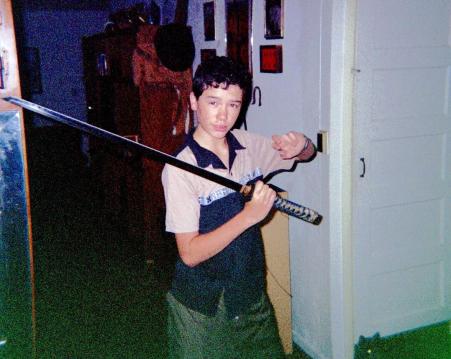
Wednesday the 21st is the 8th anniversary of the death of my son, Michael Daniel Lee Booth. Since his death, September has always been a pretty difficult month for me. His birthday was the 9th. He had just turned nineteen when he took his own life. I relate well to the song by Green Day, “Wake Me Up When September Ends”, but of course, I can’t sleep the whole month away. It’s just not practical. So, instead I try and find some way to cope by honoring him in some way.
Since his death, I’ve talked a lot about how I want to write a book that will tell his story, and mine too I suppose, or at least the story of how his death affected me, and changed my life. When I first began thinking about it, I referred to it as a memoir, but it has to be more than that because there are so many others his death affected. I keep putting off writing it because I’m not sure I’m ready to dredge up all the memories that writing his story would bring. Some of them are still so painful it seems as if they only occurred yesterday.
For a long time after Mike died, it seemed that he was the only thing I could write about, and many of those writings will eventually be incorporated into the book. For now though, I’d like to make this blog post in honor of him, and share with you the eulogy I wrote. I stood up and read it at his funeral with tears streaming down my face, my heart breaking inside of me. People said it was brave of me to get up there and read it in front of all those that attended his funeral, and there were a lot. But for me, it was just something that I had to do. After all, I am a writer and he was my son.

Michael Daniel Lee Booth
When Mike Booth said, “I love you”, it was forever. And when he called you his friend, you knew you could depend on him to stand by you, no matter what. He loved to try new things, to explore and to learn. He had a love for life and for all that he held sacred. Mike strove for excellence in all that he did, and lived by a code of honor that was extremely tough to uphold. His Christian upbringing was intermixed with Hindu and Buddhist beliefs to make up the tapestry of his own personal belief system that was disciplined and unyielding. When he made mistakes, Mike was harder on himself than anyone else ever could have been.
When he got mixed up with the wrong people and things, he made some poor choices. He did not deny what he had done, but instead stood up and accepted the punishment that was given to him. He tried to make amends for his wrongs and was on his way to accomplishing that goal. He expressed great sorrow for his errors, and inflicted emotional punishment on himself over and above what the law could ever require of him.
He had a strong will and could accomplish anything that he set his mind to, including learning to speak Japanese and perform martial arts skillfully, all on his own. Mike had a love for Japanese culture and he could have lived off of green tea and sushi. His knowledge and skills were gladly shared with those who wished to learn. Mike had a love for nature and enjoyed all kinds of outdoor activities, including skiing, hunting, fishing and hiking. His imagination was endless and he created stories and drawings that reveal a talent far beyond his tender youth.
Mike was so much to so many people; a loving son, a dependable big brother, a doting little brother, a respectful grandson, a loyal friend and a devoted husband. He loved his dog, Zaar, who was a companion and loyal friend to him. Mike was sensitive, and hurt so easily and so deeply, yet he was too strong willed to ever let it show outwardly. Only through his writing, can we glimpse the love that he embraced or the pain that he felt. When he loved, he loved with all of his being. Mike was fun loving and enjoyed spending time with those that were important in his life. He had beautiful curls and the most wonderful smile that could light up my heart whenever I saw it. Mike turned 19 three weeks ago. He had a whole life ahead of him. He was much too young to be called home to God.
Like this post? Subscribe to Writing to be Read for e-mail notifications whenever new content is posted.
Posted: May 23, 2016 | Author: kayelynnebooth | Filed under: Commentary, Fiction, Nonfiction, Writing | Tags: Creative Fiction, Fiction, Nonfiction, Writing, writing advice, Writing Process |

As an emerging writer, I hear that advice a lot. I think we all do. But what does it really mean? Before a writer can write about a subject or topic, she must experience it. Which is not to say that it isn’t possible to research a subject and then write about it as if you’re an expert, or at least know what you’re talking about, but it is saying that when you experience something, you must own the emotional aspects associated with it, and that will come through in your writing.
Now you know why I am not a travel writer. I wish I were, but I don’t travel often. Travel writers get paid big bucks. No, I’m a prime example of a starving artist. I work menial labor jobs to scratch out a living, and seek out cheap entertainment. But I do write what I know.
When I started out freelancing, I knew one thing. I loved to write, and I wanted to find a way to make a living at it. When I filled out the application for Examiner.com, I had to pick a category to write on. I chose writing, and as the Southern Colorado Literature Examiner, I covered writing events in southern Colorado and wrote author profiles and book reviews for Colorado authors. I served in this capacity for six years, not because I was getting rich off it, but because I loved what I was doing. I met many Colorado authors, most of whom I’m still in contact with, I got free ARC copies of books for review and I occasionally was able to attend some great writing events, such as the 2013 Pike’s Peak Writers’ Conference, 2012 Writing the Rockies Conference and Performance Poetry Readings, with wonderful poets such as word woman, Rosemerry Wahtola Trommer. The money was never an issue for me, (I maybe made a whole $20 during the whole six years I wrote for Examiner), but the perks were great. It may have actually played a role in my acceptance to Western State Colorado University as a graduate student in their low-residency Creative Writing program, since I had interviewed and written a three part profile on the then director of their poetry concentration, David J. Rothman. But I digress.
When I applied to write for Demand Media writing How-to articles, they didn’t have a lot of call for articles to do with writing, so I had to think. What else did I know? I started out with simple things like How to Put a Chain Back on a Huffy 10-speed Bicycle. I’ve always been an avid gardener, since I helped my grandfather plant petunias when I was a little girl, so I ended up writing a lot of gardening How-tos, like How to Grow Vegetables in a Bathtub. The topics I wasn’t as familiar with required a minimal amount of research, like The Best Potting Soils for a Vegetable Garden and I had references at hand to look up anything I needed. At $8 per article, the research had to be minimal. If I spent too much time researching, the time spent wouldn’t prove to be profitable.
As I mentioned, I don’t do a lot of traveling, and my entertainment is limited by my pocketbook, but I’ve learned to write about the things I do know. You won’t catch me writing about the Emmies, or the Oscars, or $100 a ticket charity fundraisers, because I’ll never be at one of those events and I know very little about them. What you will see me writing about are weird, off the wall things like, How Writing is Like Building a Storage Shed, or Getting in Shape for Writing, which combines my own experience, with building or exercise, with my knowledge of writing.
Of course, that doesn’t work with everything. My experiences on this day involved digging a ditch. Somehow, that just doesn’t seem as creative building a shed. But I could always write a fictional story in which the characters dig a ditch. You see, “write what you know” applies to fiction, too. My whole children’s series, My Backyard Friends, feature characters based on the birds and wildlife that frequently visit my mountain home. I wrote a short story one time that developed from a visit to Lake DeWeese, not far from my home. It was about a woman who walks naked into a waterfall and disappears. The funny thing about that story, titled, The Woman in the Water, was that my narrator turned out to be male, giving it a very interesting twist. But it was still based on the experience I had, hiking up to the top of the dam, and then sitting, gazing down into the waterfall.
It really is important to write what you know, for although some can “fake it” convincingly with just research, in most cases, the readers know. When the words on the page don’t feel genuine, like they’ve come from deep within the author, readers can’t quite buy in to what they’re being told, whether it is something being explained to them in an article, or a fictional story they’re being asked to believe. And if readers can’t buy in to the story, or feel the authority in the author’s voice, they are often left feeling unsatisfied, with the promise of the premise unfulfilled.
In short, what is really meant when someone says “write what you know”, is that you should draw from your own experiences, whether they be many or few, and inject a little bit of yourself with words that come from deep within into your writing. Let the readers feel the same emotions you feel when you write about your topic, or create your story. Write honestly, and the readers will feel that, too.
Like this post? Subscribe to Writing to be Read for e-mail notifications whenever new content is posted.
Posted: May 6, 2016 | Author: kayelynnebooth | Filed under: Book Review, Nonfiction | Tags: Art Rosch, Book Review, Books, Nonfiction, The Road Has Eyes |
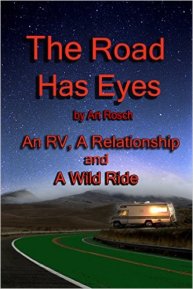
The Road Has Eyes – A Relationship, An RV and A Wild Ride Through Indian Country by Art Rosch is much more than a travel journal. It’s a memoir of a journey, both physical and spiritual, across country and into a new and different way of life. It begins in a relic RV that got them where they were headed, amidst mega doses of anxiety, then moves into a more modern RV that brings them back across the country to settle in to a new, downsized way of life. Along the way, readers get to know the author and his quirky companion, who traces her Native American heritage and links psychically with feral cats and other animals.
The tale is obviously told from an honest and heartfelt perspective, with a relaxed tone that’s easy to read. Rosch’s down to earth sensibilities and ability to see the humor in things, including himself, make this commentary on humanity a fun and amusing read. I found this book to be very entertaining, evoking more than a few chuckles as the pages turned. I can’t wait to start reading another of Rosch’s books, Confessions of an Honest Man. Check back here for my review on that one. I give The Road Has Eyes – A Relationship, An RV and A Wild Ride Through Indian Country four quills.














Write What You Know
Posted: May 23, 2016 | Author: kayelynnebooth | Filed under: Commentary, Fiction, Nonfiction, Writing | Tags: Creative Fiction, Fiction, Nonfiction, Writing, writing advice, Writing Process | 1 CommentAs an emerging writer, I hear that advice a lot. I think we all do. But what does it really mean? Before a writer can write about a subject or topic, she must experience it. Which is not to say that it isn’t possible to research a subject and then write about it as if you’re an expert, or at least know what you’re talking about, but it is saying that when you experience something, you must own the emotional aspects associated with it, and that will come through in your writing.
Now you know why I am not a travel writer. I wish I were, but I don’t travel often. Travel writers get paid big bucks. No, I’m a prime example of a starving artist. I work menial labor jobs to scratch out a living, and seek out cheap entertainment. But I do write what I know.
When I started out freelancing, I knew one thing. I loved to write, and I wanted to find a way to make a living at it. When I filled out the application for Examiner.com, I had to pick a category to write on. I chose writing, and as the Southern Colorado Literature Examiner, I covered writing events in southern Colorado and wrote author profiles and book reviews for Colorado authors. I served in this capacity for six years, not because I was getting rich off it, but because I loved what I was doing. I met many Colorado authors, most of whom I’m still in contact with, I got free ARC copies of books for review and I occasionally was able to attend some great writing events, such as the 2013 Pike’s Peak Writers’ Conference, 2012 Writing the Rockies Conference and Performance Poetry Readings, with wonderful poets such as word woman, Rosemerry Wahtola Trommer. The money was never an issue for me, (I maybe made a whole $20 during the whole six years I wrote for Examiner), but the perks were great. It may have actually played a role in my acceptance to Western State Colorado University as a graduate student in their low-residency Creative Writing program, since I had interviewed and written a three part profile on the then director of their poetry concentration, David J. Rothman. But I digress.
When I applied to write for Demand Media writing How-to articles, they didn’t have a lot of call for articles to do with writing, so I had to think. What else did I know? I started out with simple things like How to Put a Chain Back on a Huffy 10-speed Bicycle. I’ve always been an avid gardener, since I helped my grandfather plant petunias when I was a little girl, so I ended up writing a lot of gardening How-tos, like How to Grow Vegetables in a Bathtub. The topics I wasn’t as familiar with required a minimal amount of research, like The Best Potting Soils for a Vegetable Garden and I had references at hand to look up anything I needed. At $8 per article, the research had to be minimal. If I spent too much time researching, the time spent wouldn’t prove to be profitable.
As I mentioned, I don’t do a lot of traveling, and my entertainment is limited by my pocketbook, but I’ve learned to write about the things I do know. You won’t catch me writing about the Emmies, or the Oscars, or $100 a ticket charity fundraisers, because I’ll never be at one of those events and I know very little about them. What you will see me writing about are weird, off the wall things like, How Writing is Like Building a Storage Shed, or Getting in Shape for Writing, which combines my own experience, with building or exercise, with my knowledge of writing.
Of course, that doesn’t work with everything. My experiences on this day involved digging a ditch. Somehow, that just doesn’t seem as creative building a shed. But I could always write a fictional story in which the characters dig a ditch. You see, “write what you know” applies to fiction, too. My whole children’s series, My Backyard Friends, feature characters based on the birds and wildlife that frequently visit my mountain home. I wrote a short story one time that developed from a visit to Lake DeWeese, not far from my home. It was about a woman who walks naked into a waterfall and disappears. The funny thing about that story, titled, The Woman in the Water, was that my narrator turned out to be male, giving it a very interesting twist. But it was still based on the experience I had, hiking up to the top of the dam, and then sitting, gazing down into the waterfall.
It really is important to write what you know, for although some can “fake it” convincingly with just research, in most cases, the readers know. When the words on the page don’t feel genuine, like they’ve come from deep within the author, readers can’t quite buy in to what they’re being told, whether it is something being explained to them in an article, or a fictional story they’re being asked to believe. And if readers can’t buy in to the story, or feel the authority in the author’s voice, they are often left feeling unsatisfied, with the promise of the premise unfulfilled.
In short, what is really meant when someone says “write what you know”, is that you should draw from your own experiences, whether they be many or few, and inject a little bit of yourself with words that come from deep within into your writing. Let the readers feel the same emotions you feel when you write about your topic, or create your story. Write honestly, and the readers will feel that, too.
Like this post? Subscribe to Writing to be Read for e-mail notifications whenever new content is posted.
Share this: