“Gyre”: A Science Fantasy Romance novel worth reading
Posted: April 20, 2018 Filed under: Book Review, Books, Fantasy, Fiction, romance, Science Fiction | Tags: Atlantis, Fantasy, Fiction, Gyre, Jessica Gunn, Lemuria, romance, Science Fiction Leave a comment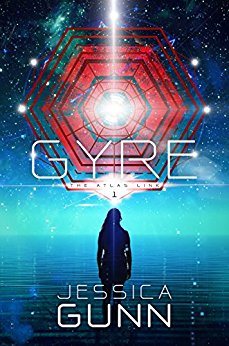
Gyre, by Jessica Gunn is the first book in her Atlas Link series. It is the story of Chelsea, a descendent of Atlantis, who is just discovering her amazing powers and Trevor, a Lemurian descendent, who should be her mortal enemy, but instead falls for her in a big way. See? Boy meets girl, but there is no way they can be together, yet they will fight against all the odds, and even against family to prove them all wrong. Now if that isn’t the recipe for a perfect romance, I don’t know what is. As they are traveling aboard a top secret naval submarine complete with cloak, I think Gunn has the science fiction elements and Lemurians and Atlanteans with super powers pretty much covers the fantasy realm. If it sounds confusing, read the book. It’s actually a pretty good genre combination.
Chelsea is discovering her powers. First super strength, which she was able to ignore, or deny, but now she keeps teleporting to a location near Trevor any time she gets stressed. The problem is, Trevor is on a top secret U.S. Naval Sub cruising the ocean depths, but on that vessel also may lie the answers to Chelsea’s unasked questions about who she is really and she might learn to control her newfound powers. Unlike Chelsea, Trevor is aware of his heritage as a Lemurian, but he refuses to get involved in the war his people are wageing with the Atlanteans. He just can’t believe the girl he’s falling for is his innate enemy, and he’s able to keep it all under control until they find an Atlantean outpost filled with valuable artifacts on the ocean floor. It seems everybody wants those artifacts for their own reasons, and we can only guess who will get them, and where Chelsea will end up.
This story is well-written, with minimal telling of the tale. The characters are likeable, except for Trevor’s friend and fellow Lemurian, Valerie, who is a bit difficult to figure out, but I think that’s done on purpose to throw readers off the trail. I give Gyre four quills.

Kaye Lynne Booth does honest book reviews on Writing to be Read in exchange for ARCs at no charge. Have a book you’d like reviewed? Contact Kaye at kayebooth(at)yahoo(dot)com.
Share this:

“A Cat Came Back”: an unusual tale of transformation
Posted: April 6, 2018 Filed under: Book Review, Books, Fiction, Humor | Tags: A Cat Came Back, Book Review, Fiction, Humor, Simone Martel, Transformation Leave a comment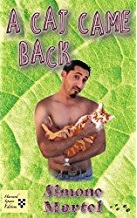
A Cat Came Back, by Simone Martel is a quirky little tale about a woman who finds herself in the body of a cat. Most of us, put in the same position, would panic and try to figure a way to get our own body back, but not Eliza. She accepts what has happened as a a matter of course. All she wants is for someone to see her for who she really is, and at first, it seems that being in this cat body might not be such a bad thing, since her boyfriend, Stu, takes one look at the cat and knows she’s in there. But, being recognized for who you are isn’t always easy, you have to keep working at it, especially when the only sounds that come out of your mouth are purrs, yowls and hisses.
A thoroughly entertaining story of transformation that offers a few surprises and the occasional chuckle. It’s light and quirky and funny. Not your typical body switching out of the bottle tale. I give A Cat Came Back four quills.

Share this:

“Blood in the Water”: A Crazy Crime Novel
Posted: March 2, 2018 Filed under: Book Review, Books, Fiction | Tags: Blood in the Water, Book Review, Fiction, Tim Baker 1 Comment
Author Tim Baker has done it again and Flagler Beach is the setting for another crazy crime caper, Blood in the Water. Ike helps a friend with a seach for sunken treasure that leads to a thirty year old cold case, which strangely enough is tied to a murder investigation his girlfriend, Val, has undertaken. Can they bring done the killer and solve the cold case before he learns they are on his trail and puts a stop to their plans? No spoilers here. You’ll have to read the book to find out.
As usual, Tim Baker has turned out a fun and extremely entertaining read. Readers will root for the good guys and boo whenever the villian appears. Hidden identities, missing persons, sunken treasure and lots of danger. This book has it all.
I give Blood in the Water five quills.

Share this:

Leaving Eva/Losing Eva: A story of loss and seperation
Posted: February 16, 2018 Filed under: Book Review, Books, Fiction, romance | Tags: Book Review, Drama, Fiction, Jenifer Sivec, Leaving Eva, Losing Eva Leave a comment
Leaving Eva and its sequel Losing Eva, by Jennifer Sivec, are a sad and tragic tale that evokes strong emotional response in the telling. This touching story may be true to life, covering the lives of not one, but several dysfunctional generations of women and the men in their lives, over the course of time. It is a tale where one tragic action by one self-centered girl dominoes into many heart-wrenching losses in a saga where nobody wins. While each book easily stands alone, together they tell a story of loss and tragedy that will bring all but those with hearts of stone to their knees. There is so much heartbreak within these two stories that they left me longing for a sequel, one titled Loving Eva, where at least one woman of the Harper family might finally find happiness.
One spoiled rich girl, Ellie, and a series of poor choices, leads to a life of abuse and neglect for her daughter, Eva, whom she abandons at a very young age. Losing Eva is the story of that young girl’s life, spent searching for love that seems to be just beyond her grasp. Losing Eva is the story of how once found, she constantly struggles to keep that love, and how it always seems to slip through her fingers. In addition, these books tell the story of all the others who are effected, both directly and indirectly, by Ellie’s initial decisions and the lessons, both learned and missed, from them.
This is a story you won’t want to put down. Sivec’s characters are well developed and she makes you care about them. You will hope for positive life experiences for them and root for them when they succeed, especially for the main character, Brynn. The plot is full of surprises and rivets you to your seat to find out what will happen next.
My only problem is the head hopping. In places it gets to be so bad that I had to stop and go back to figure out who’s POV I was in. At times the viewpoint changed mid-paragraph, which really made me have to stop and reread. Regardless of the recurring confusions that this caused, and the fact that it is one of my biggest pet peeves, this story was so powerfully told that it brought me to tears on more than one occasion. The Harper generational saga is woven like an intricate narative tapestry through the lifetime of one hauntingly tragic Harper woman.
Grab a box of tissue when you settle in to read Leaving Eva and Losing Eva. I give this story set four quills.

Kaye Lynne Booth does honest book reviews on Writing to be Read in exchange for ARCs at no charge. Have a book you’d like reviewed? Contact Kaye at kayebooth(at)yahoo(dot)com.
Share this:

Exposition: Telling vs. Showing
Posted: January 22, 2018 Filed under: Books, Dialogue, Exposition, Fantasy, Fiction, Science Fiction, Writing | Tags: Exposition, Fiction, Show vs. Tell, Writing, Writing to be Read Leave a comment
A writer should show the reader, rather than tell the reader. Help them form a mental picture in their minds. Put them into the story. How many times have we all been told this? Finding a balance between showing and telling is a hard thing to do, but to be a good writer we must strive to achieve that balance.
I’m a person who likes to think big, and in my writing it’s no different. As many of you know, in graduate school, my genre fiction thesis project was the first book in my Playground for the Gods science fantasy series, In the Beginning. But, what you may not know is that my original thesis proposal was for what turned out to be the third book, only in my mind it was the only book and it spans back beyond prehistoric time. While preparing my thesis proposal the feedback that I recieved from instructors and cohorts time and again, was that my proposal would require too much exposition unless I created an epic tomb of unfathomable porportions, way beyond the scope of my thesis requirements, and impossible to complete in the time allowed.
The main problem was that there was a lot of background that I felt the reader needed to understand where the character was coming from in the now of the story. Most of that information was being communicated to my readers through exposition. The story wasn’t taking them back to relive the scene, it was simply filling them in on what they needed to know, because the story I wanted to tell spanned over billions of years. That’s a lot of backstory. That’s exposition.
Robin Conley saw a similar problem in her review of the movie Batman vs. Superman: Dawn of Justice, “Almost all of these really big elements deserved a proper set up because they are major story parts that will potentially carry over… The long exposition and set up in the film makes the story drag and hard to stay involved, no matter how many interesting elements there are.”  Robin explains what exposition does and why we don’t want too much of it. Too much exposition is like coming in in the middle of a film you’ve already seen, and filling in other viewers on what is happening, instead of letting them watch the film and figure it out for themselves.
That was the problem with my PfG story – way too much exposition. It happens all the time. And it’s easy to overlook it when you’re the author. Which is exactly what I had done with my thesis. I had that story outlined and plotted, but I kept having to stop and fill in the background details with exposition. And exposition tells your readers something, but it doesn’t provide a mental image for them. It doesn’t pulace them in the scene. Action and dialog accomplish those tasks quite well. And my cohorts and instructors were right, although at the time, I didn’t want to believe them.
My solution was to turn my story into a four part series. Hence the Playground for the Gods series was born. All that backstory, which had come out mostly in exposition, became a story of its own, one that I could show my readers, rather than telling them about it. My original story idea will eventually be book three, and although I did have to write the whole first book instead of the story I set out to tell for my thesis, that story outline is still waiting for me to put it in story form.
Of course, that isn’t the only way to solve problems of exposition, but this can be applied without creating entire novels. You simply expand on some scenes to eliminate exposition and create a longer story, chosing those scenes that are most vital to the story. You can also chose to leave certain information out, thus eliminating exposition without lengthening, and perhaps even shortening your story. It is a delicate balance, but as the writer, you must do what the story needs to achieve it. What works for one story may not necessarily be the answer for another.
So, how much exposition is too much? That’s a very subjective question, but generally speaking, if you’re telling your reader what happened, with a few lines of glib dialog thrown in here or there, then you have too much exposition. Your reader wants to get lost in the book, and for that, they need a story that is told in such a way that they feel like they are there.
We’ve all read stories like that. For me, it’s Anne Rice. I may have never been to New Orleans, but after reading some of her books, I feel like the Garden District and the French Quarter are old frieinds. I can smell the magnolia blossoms, and see the old plantation houses as if I’d been there. That’s the kind of story we, as authors, strive to write, regardless of the genre we write in. It’s the kind of story that has the perfect balance, using exposition only when absolutely necessary to fill in details, providing plenty of action and dialog to fill in the rest. It’s a delicate balance, but one we must all strive for.
Until next time, Happy Writing!
Like this post? Subscribe to Writing to be Read for e-mail notifications whenever new content is posted or follow WtbR on WordPress.
Share this:

“24 Minutes” may seem like forever
Posted: December 15, 2017 Filed under: Book Review, Books, Fiction | Tags: 24 Minutes, Book Review, Fiction, Tim Baker, Workplace Violence 2 Comments
All too often these days we turn on the news to hear there’s been another incidence of gun violence with massive death tolls. Employers are now providing training for what to do in the event they are faced with an act of work place violence as standard procedure, using scenarios that would never have occurred to us in times past, and the media is filled with experts offering possible explanations for such tragedy while the rest of us scratch our heads trying to figure it all out.
Now, author Tim Baker takes us there, offering a glimpse of what it might be like to be faced with an act of violence when a gunman lays siege on a corporate office, in his latest novel, 24 Minutes, to be released in January. As the reader is introduced and follows Tim’s characters as they battle their own fear and are faced with life or death decisions, it is impossible not to wonder how you would react, if faced with a similar situation. The whole scenario unravels quickly, lasting a mere 24 minutes, but for the characters of this tale, it may be their last. Going through the event with them, 24 Minutes may seem like forever, and you won’t want to wait to see what happens next and learn who the real heroes are.
Tim Baker addresses social issues which are prominant in our society today, offering an inside view illustrating the many sides of human nature which reveal themselves under pressure. A fast paced slowed to a readable tempo for maximum enjoyment. I give 24 Minutes four quills.

Kaye Lynne Booth does honest book reviews on Writing to be Read in exchange for ARCs at no charge. Have a book you’d like reviewed? Contact Kaye at kayebooth(at)yahoo(dot)com.
Share this:

“Kistishi Island”: An Unbelievable YA Journey
Posted: August 18, 2017 Filed under: Book Review, Books, Fantasy, Fiction, Young Adult | Tags: Book Review, Fantasy, Fiction, Jordan Elizabeth, Kistishi Island, Young Adult 3 Comments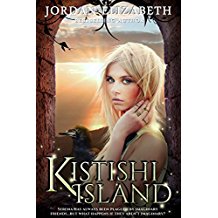
I recently had the pleasure of reading Kistishi Island, by Jordan Elizabeth. This YA novel was a well-written story, with a plot that comes full circle. Although the names are a bit difficult to pronounce, the characters are interesting and likable, especially Corvo (goddess of crows, and Krieg, goddess of war). The main character, Serena, is portrayed to be a teenager with depth, but still a teen, and you won’t be able to help but like her.
When Serena talks to her imaginary friends, they just don’t feel imaginary. The kids at school taunt her and she winds up in trouble all the time. Her aunt thinks she’s crazy and wants to send her to an asylum, her mom is off on archaeological digs all the time and is never around, and her imaginary friends are the only friends she has.
What will happen if she learns her imaginary friends are really goddesses watching over her? We’re about to find out, when she runs away to the Island of Kistishi to find her mom, where the walls of the ruins suck you into underground dwellings and other people see her friends, too. Besides learning that her friends aren’t imaginary, Serena also learns that she is capable of depending on herself, and that she’s capable of having real friends.
This story is well-crafted and perfect for YA readers, (or older readers who secretly love YA stories but don’t want to admit it). It is a fun and exciting read. I give Kistishi Island four quills.

Share this:

“Darkscapes”: Stories That Will Keep You Reading
Posted: August 11, 2017 Filed under: Book Review, Books, Fiction, Science Fiction, Speculative Fiction, Stories | Tags: Anthology, Book Review, Curiosity Quills Press, Darkscapes, Fiction, Science Fiction, Short Storie, Speculative Fiction 1 Comment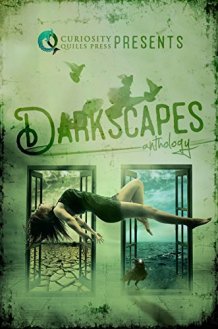
Darkscapes is a top quality anthology of short stories put out by Curiosity Quills Press. I must say, this anthology delivers on the promise of the premise. The title says that the stories within may be on the darker side of things, where danger lays hidden beneath the layers of the mind’s eye. The cover image tells me I’m in for some rather unusual stories, ones that go to places which may defy logic. And, having read many books produced by Curiosity Quills Press, the fact that they published this book says it’s a collection of good quality, well-written stories. And that my friends, is exactly what I got – all of the above.
There are twenty-one stories contained in this collection, too many to be able to discuss all of them here. So, I will give you a brief overview of the six, yes six, stories which I deemed to deserve a five quill rating, meaning the authors of these stories have done an exemplary job of storytelling. Keep in mind that these stories are the best of the best in this collection, but all of them are good reading.
The first story in the anthology, Exley Avenue, is an extremely well-written ghost story of sorts, with a surprise ending. Going between the 1920’s and the twenty-first century, storytellers Jordan Elizabeth and W.K. Pomeroy unravel the unsavory history of the stone castle on Exley Avenue, when several bodies are uncovered on the premises.
Further into the collection is a cute noirish story, with an unlikely P.I. for a protagonist, which is sure to keep you chuckling until the end is Skeleton Jim, by J.R. Rain. Noir with humor is the only way to describe this bizarre tale. But, rest assured, Skeleton Jim always gets his man, (and the girl, for some reason). Things are no different when the client, Lucy Newman, hires him to find out if she killed her abusive husband, and who is blackmailing her, Jim may have his work cut out for him. No bones about it. (Skeleton humor. Har, har, har.)
Then, there is The Giovanni Effect, by Robert J. Defendi, an extremely well-crafted story with excellent world building. Readers will live this one. On a desert outpost planet where sand and wind are constants, Allred and his wife and child are the planets only occupants. They’ve always known others might come, but when a ship lands on the planet Allred is forced to put their emergency plans to the test. The planet’s harsh atmosphere may be the death of him, or it might just be his savior.
The forth story, Landing a Job in the Private Sector, by Rena Rocford, kept the pages turning with the best of them. Furies are conditioned assassins, but when Boxy, an enslaved fury acquires an organic ship that is loyal to her, and becomes a rogue mercenary, she learns that everything is negotiable, even under pressure.
The fifth five quill story is Out of Sight, by Mathew S. Cox. Sima is a street kid, who wakes up to find she’s been relocated to another planet and her pod crashed. She all alone, with no supplies, no clothes and no idea where she is. But then she discovers three other children who were sent here, as well, and she has more to worry about than just her own survival.
The One You Feed, by Katie Young was the last story in this collection to fall into my best of the best list. This was a well-written werewolf story, which left me wanting more. Dupree is haunted by more than just werewolves. As he spins his tale for the cowboy he just hired on with at the last rodeo, we learn more about the ghosts who haunt his past, and the curse that controls his future.
The above mentioned stories are, in my opinion, the best stories in this collection. However, they are all entertaining tales. I wouldn’t rate any of the stories in this collection with less than three quills. They really are that good. The smashing cast of talented authors whose work appears in this anthology also includes: Richard Roberts, Ann M. Noser, Randy Attwood, Nathan Croft, Tegan Wren, James Wymore, J.P. Sloan, Andrew Buckley, Darin Kennedy, J.E. Anckorn, Piers Anthony, B.C. Johnson, S.E. Bennett, Mark W. Woodring, and Benjamin Sperduto.

Overall, I give Darkscapes four quills.
Kaye Lynne Booth does honest book reviews on Writing to be Read in exchange for ARCs at no charge. Have a book you’d like reviewed? Contact Kaye at kayebooth(at)yahoo(dot)com.
Share this:

Monthly Memo: The Flashback vs. The Flash Forward
Posted: July 13, 2017 Filed under: Fiction, Monthly Writing Memo, Movies, Mystery, Science Fiction, Screenwriting, Screenwriting, Stories, Uncategorized, Weekly Writing Memo, Writing, Writing Tips | Tags: Fiction, flash forward, flashback, flashbacks, Screenwriting, Stories, Writing, writing tip, Writing Tips 2 Comments
In last month’s memo I talked about ways you can use flashbacks in stories and it led to a discussion about flash forwards and a request from Kaye that I do a post about them, so I decided to focus on the difference between flashbacks and flash forwards. I’m going to primarily use films and TV shows for examples as the film/TV examples are easy to visually show what I mean.
(Disclaimer: I don’t own the rights to any of these video clips or shows. I apologize in advance for some of the quality of the clips but they were the only ones I could find at times. Many of these shows mentioned are on Netflix, so I recommend watching there if possible.)
Flashbacks:
A flashback is almost any moment when a story jumps from the present time of the story to show you something that happened in the past. It’s not just talking about the past, but actually showing the events that happened. The flashback can be just a quick glimpse, or it can be a very long section of the story.
Flashback Example 1 – The Usual Suspects:
This film opens with the explosion on the ship and then moves forward to Kevin Spacey in the police station being interviewed. When he starts telling the story of how all the “usual suspects” were rounded up the film flashes back to show this happening, and the story continues in the flashback time period until the end of the film when we return to Kevin Spacey in the police station again.
Flashback Example 2 – Forest Gump:
This one is pretty straightforward that it’s cutting to a flashback. Forest is in the present moment talking about things that happened in his past from his childhood to adulthood, and we constantly hear his voice over and see him in present day on the bench talking about his past.
Flashback Example 1 – Breaking Bad Season 1 Episode 1:
Again, we start in the present time where Walt is crashing the RV and already cooking meth, then we very clearly jump back after the opening credits several weeks in time to when he was a normal school teacher. The main story of this first episode is all flashback with the opening and ending being the present moments.
Flash Forwards:
Flash forwards are tiny glimpses of the possible future within a story. Basically you get a glimpse of the future and then return to the present afterward. This future glimpse doesn’t have to be true, and it doesn’t HAVE to happen, it’s just a glimpse of what COULD happen and the audience has to keep watching to see if it does.
This technique is often used in stories involving anything with psychics. The key is the events haven’t happened yet, and may never happen depending on how the present continues to unfold. It’s a glimpse of the potential future, but the story is still taking place in the present day and will return to present day once the future glimpse is over.
Flash Forward Example 1 – The Dead Zone (film)
When Christopher Walken shakes Martin Sheen’s hand he gets a vision of the potential future. We see clips of what Martin Sheen may do, but we don’t know if it will happen or not because it hasn’t happened yet, all we know is that it’s possible to happen. Once the flash forward is over we return to the present moment where Christopher Walken is.
Flash Forward Example 2 – Scrooged:
When Bill Murray leaves the elevator he gets several glimpses of the possible future he will encounter if he doesn’t change his ways. Again, these are all brief flash forwards showing potential future moments. It’s a little different because it seems like Bill Murray is in the flash forwards, but he has no ability to change them while he’s there so it’s still a flash forward to a potential future if he doesn’t change his ways in the present.
Flash Forward Example 3 – Terminator 2
When she lays her head down, Sarah Connor has a dream vision of the future if machines are allowed to get out of control. This vision is a potential future and is the motivation for her to try to stop this outcome with her actions in the present.
Flash Forward Example 4 – FlashForward TV Show Season 1 Episode 1:
This episode actually has a flash forward AND a flashback in it. I’ve started this clip right before the flash forward moment where the protagonist gets a glimpse of his future and then wakes up after the accident, but if you scroll back to the very opening of the episode you’ll see that the story starts with the accident, then there is a flashback to 4 hours earlier leading up to the accident again to show what caused it (which was actually the flash forward). Are you confused? I know, it’s a lot.
The flash forward is the glimpse of the potential future that the main character may experience at some point later on, and then you return to the present moment. The opening sequence at the start that shows the accident is NOT technically a flash forward because it’s not a glimpse of the future, it’s where the story is NOW. Then we flashback to 4 hour earlier to see how we got there and how the accident happened.
Flash Forward Example 5 – Sherlock Holmes (film)
This fight scene is a type of micro flash forward because it tells us what will happen moments before it does, even though it’s in verbal form. It’s more of an abbreviated flash forward because it’s verbal and it’s similar to how flash forwards are often used in fiction. The narrator gives the reader a glimpse of what will be to come, but we’re still in the present moment of the story where it hasn’t actually happened yet.
Distinguishing Between the Two:
Most of the time it’s pretty easy to tell whether something is a flashback or a flash forward because it’s in the middle of the story and the story either jumps forward or back for a short time before returning to the present. However, the one area that seems to cause the most confusion is when the flashback or flash forward is used immediately at the opening of a story. Is the story starting in a flash forward? Is the main story all in flashback? What is happening? To figure out whether you’re seeing a flashback or a flash forward, think about where the scene is currently taking place and where the protagonist is in the present.
If you look at the openings of Forest Gump and Breaking Bad, both are happening as we watch and we’re not seeing a future possible event, we’re seeing the events as they happen to the protagonist, then we (the audience) jump back to see how the protagonist got to that present moment, but all of it has already happened and the protagonist is still in the present at that opening scene waiting for us to catch up to him.
Flash forward scenes are events that have NOT happened yet, and may not happen, and when they end we are returned to the present moment where the story is taking place and the protagonist is currently. Everything between that present moment and the future event we saw has not happened yet, and may not happen, but that is why we’re watching to find out. The present moment may eventually lead to that flash forward moment, but there’s no guarantee.
One of the few times a show can open with a flash forward is if it opens with a psychic event such as a dream or prophecy where we get a glimpse of what may or may not happen before a character pops awake or something and reveals it all was a vision or dream. Then the rest of the show builds to reveal whether it is something that is going to happen or not.
Neither Flashbacks nor Flash forwards:
There are a few other story methods that some people confuse with flash forwards and flashbacks but one of the main ones I want to mention is time travel such as in the Back to the Future Series. This and other time travel stories are tricky areas because it is easy to say we’re flashing back because we’re going back in time, but that’s not true in most stories I can think of.
A flashback involves looking back at past events that have already happened exactly as the person remembers them happening, while most time travel stories involve a character physically going back to these past events such as Marty does, and having influence on those events. This makes it not a flashback because Marty has the ability to change things if he does something wrong. That means the events aren’t set and aren’t just a memory of what happened, they’re fluid and changing. Flashbacks are memories of what happened prior to the present so they can’t be changed unless someone is misremembering something or lying. Marty is physically there and it’s his present time even if he’s physically living in the past, and he can make mistakes (and does) that change the future, so it’s not a flashback.
The other thing I wanted to point out is that just because a story goes forward in time doesn’t mean it’s a flash forward. A flash forward is a glimpse into the future but it doesn’t move the story TO the future. When your story jumps forward in time to a future point, if the story continues from that point on and isn’t just a glimpse of that future time, then what you have is a forward time jump and not a flash forward.
Final notes
Every now and then you’ll see someone define those opening scene moments where we start the story at a major event as a flash forward because it shows a “future” event and then immediately goes back in time after to where a huge chunk of the story takes place. But these stories that start with a major event and then go back in time almost always say something like “x time earlier” which establishes that the first scene is the present time period and everything afterward is in the past, making everything after that opening scene a flashback.
Ultimately, if you’re asking “what happened to get us here?” then you’re probably about to see a flashback to find out. However, if you’re asking “what WILL happen to get us here?” then you’re watching a flash forward and you will return to the present to find out as events unfold.
Share this:

“Unpredictable Webs” Keeps Readers Guessing
Posted: July 7, 2017 Filed under: Book Review, Books, Fiction, Thriller | Tags: Book Review, Books, Darlene Quinn, Fiction, Thriller, Unprdictable Webs Leave a comment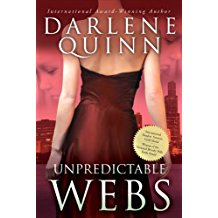
Unpredictable Webs by international award winning author, Darlene Quinn, is an intricately plotted and tightly woven story of mystery and intrigue. A vivid cast of characters, who all think they know what’s best keep the pages turning. Although the book is a single piece in a much larger tapestry, it easily works as a stand alone for those who have not read other books in Quinn’s Web series.
As moguls of a major department store chain, Conrad and Ashleigh Taylor are open targets for attacks from all directions. Whether from protesters, who don’t want the iconic name of John Stewart’s to be swallowed whole by their Jordan’s conglomerate, or predators who see only dollar signs when they consider the wealthy couple, the threats are always near. When one predator goes after one of their twin teenage girls in a kidnapping gone awry, there is no telling what will happen next, and the Taylors will stop at nothing to get their daughter back.
Unpredictable Webs is a complex tale of suspense, which keeps readers on their toes with skilled crafting and well developed plot. I give it four quills.

Kaye Lynne Booth does honest book reviews on Writing to be Read in exchange for ARCs at no charge. Have a book you’d like reviewed? Contact Kaye at kayebooth(at)yahoo(dot)com.




















