Writer’s Corner: Listening to Your Characters
Posted: March 3, 2025 Filed under: Books, Character Development, Dialogue, Fiction, WordCrafter Press, Writer's Corner, Writing, Writing Process | Tags: characters, Kaye Lynne Booth, Writer's Corner, Writing Process, Writing to be Read 11 Comments
Do your characters talk to you? I’ve met authors who say, “How could they? They aren’t real. They are fictional characters which I made up.” But if you are in touch with the characters which you created, I don’t see how they could not talk to you. I believe these authors who claim to not hear their characters maybe just aren’t listening.
My characters talk to me and help guide my stories. My characters refuse to stay silent. I don’t actually hear or see them, of course, but they do talk to me in my head. I hear the dialog as it goes on the page, and they are sure to tell me if I get it wrong.
I recall when this first happened while writing my first novel, Delilah. There was a scene in the story which I recognized wasn’t working, but I couldn’t figure out why. I sat in front of my computer re-reading the chapter, which was the dialog of a conversation between Delilah and another character. I said to myself, “Something isn’t right here, but what is it?” And a voice in my head replied, “I wouldn’t react that way.” Re-reading it once more, I realized that the voice of Delilah was right. I had my character reacting in a certain way because it was necessary in order for events in the future to occur, but it wasn’t a reaction that would come naturally from the character I had created. I rewrote the conversation, changing Delilah’s reaction to be true to her character, and it changed the direction of the story, completely. It required extensive revisions throughout the story, including total rewrites of the chapters which came after that scene, but it made it a much better tale than the one I had planned to write, so it was better for the story in the long run.
While writing Sarah, my character hijacked a conversation between her, Big Nose Kate, and a high-society woman, and her opinions on corsets set off an unexpected suffrage movement in Glenwood Springs, complete with a protest and corset burning. When I began writing the story, I had no idea that this would happen in the book, but when I placed the words upon the page, it all just clicked, and I said, “Oh, yeah”.
With both books in my Time Travel Adventure series every chapter is paired with a song. All of Amaryllis’ music was done by The Pretty Reckless, which first inspired her character. But for LeRoy and the other characters who were given P.O.V. in the second book, the music from various artists were used. As I perused the radio stations, searching for just the right song for each chapter. I can think of several times when a song I wasn’t familiar with would come on and LeRoy would give my mind a nudge that said, “Listen to this song.” Paying attention to what he had to say, I focused on the music, listening to the lyrics, and found that the song was perfect for a specific chapter, and the song ended up in the book and on LeRoy’s play list.
Of course, I’m aware that my character’s voices are really voices from my own subconscious, because every one of the characters I create are a part of me. But being in touch with them enough to them to hear their voices in my head makes them feel more like old friends and helps me bring the story to life.
We all have the ability to hear our characters if we’ll only listen to what they have to say. I’ve found that their observations are right on the money. My stories turn out better for listening to them. So, tell me. Do you listen to your characters?
About Kaye Lynne Booth

For Kaye Lynne Booth, writing is a passion. Kaye Lynne is an author with published short fiction and poetry, both online and in print, including her short story collection, Last Call and Other Short Fiction; and her paranormal mystery novella, Hidden Secrets; Books 1 & 2 of her Women in the West adventure series, Delilah and Sarah, and her Time-Travel Adventure novel, The Rock Star & The Outlaw,as well as her poetry collection, Small Wonders and The D.I.Y. Author writing resource. Kaye holds a dual M.F.A. degree in Creative Writing with emphasis in genre fiction and screenwriting, and an M.A. in publishing. Kaye Lynne is the founder of WordCrafter Quality Writing & Author Services and WordCrafter Press. She also maintains an authors’ blog and website, Writing to be Read, where she publishes content of interest in the literary world.
___________________________________________
Did you know you can sponsor your favorite blog series or even a single post with an advertisement for your book? Stop by the WtbR Sponsor Page and let me advertise your book, or you can make a donation to Writing to be Read for as little as a cup of coffee, If you’d like to show your support for this author and WordCrafter Press.
______________________________________
This segment of “Writer’s Corner” is sponsored by the My Backyard Friends Kid’s Book Series and WordCrafter Press.

The My Backyard Friends kid’s book series is inspired by the birds and animals that visit the author Kaye Lynne Booth’s mountain home. Beautiful illustrations by children’s author, poet, and illustrator, Robbie Cheadle, bring the unique voices of the animal characters to life.
Get Your Copy Now.
Heather Hummingbird Makes a New Friend (Ages 3-5): https://books2read.com/MBF-HeatherHummingbird
Timothy Turtle Discovers Jellybeans (Ages 3-5): https://books2read.com/MBF-TimothyTurtle
Charlie Chickadee Gets a New Home (Ages 6-8): https://books2read.com/MBF-CharlieChickadee
Share this:

Growing Bookworms – The importance of character names in children’s fiction #GrowingBookworms #childrensfiction
Posted: January 10, 2024 Filed under: Children's Books, Fiction, Growing Bookworms | Tags: Character Names, characters, Enid Blyton, Growing Bookworms, Names, Robbie Cheadle, The Land of Far Beyond, Writing to be Read 57 Comments
The name of a child is important to him/her as well as to their community.
From an individual point of view, a child’s name plays an important role in the advertisement and maintenance his/her self identity. The first word most children learn to write is their name. Some children and adults chose to be known by a nickname and others prefer to use their full name.
From a parental perspective, the name they chose is often symbolic of their hopes and dreams for that child. Some families practice namesaking or the naming of a child after the father or grandfather. The practice of namesaking is much more common in male children than in female children. Namesaking can be positive for a child, but it can also result in high expectations being placed on the child if the person after whom they are named is a high performer. Namesaking often happens in wealthy families and royalty and comes with an expectation for the child to live up to the accomplishments of the previous generation/s. John Jacob Astor IV and his son, John Jacob Astor VI, come to mind when I think of failures to live up to an inherited moniker.
From a community point of view, names often have religious or cultural significance. In these circumstances, the name of a child can impact the way in which they are accepted by, and integrate into, a community. Names also have meanings which can be important. I remember smiling when meeting a heavily pregnant lady with the name of Chastity.
Based on the above, it is obvious that the name of a character / characters in a children’s book are important. The names will immediately tell the child a lot about the character and the child will also make assumptions based on the names, as follows:
- the religion of the character/s – does the character have a Biblical name or a Hebrew name or a Muslim name?
- the ethnic background of the character – does the character have an Irish, Spanish, English, American, or Japanese name? In South Africa, there are 11 official languages and each group of language speakers has its own traditional names. For example, popular Afrikaans names are Pieter, Willem, Hans, and Mariska and popular Zulu names are Amahle, Bongani, Lindiwe, and Dumisani.
- does the character use a nickname or their full name? I have always been called Robbie although my full name is Roberta. Both my sons chose to use their full names of Gregory and Michael.
- a name can also tell you about a character’s employment or social position. For example, a lot of native African people who work in service industries chose to either use European names instead of their traditional names or they use a short form that is easier for customers to say and remember.
English author, Enid Blyton, made great use of names in her children’s books. You can always tell what type of character you are dealing with from their names. You can also usually get a good idea about the genre and type of story from her naming conventions, as follows:
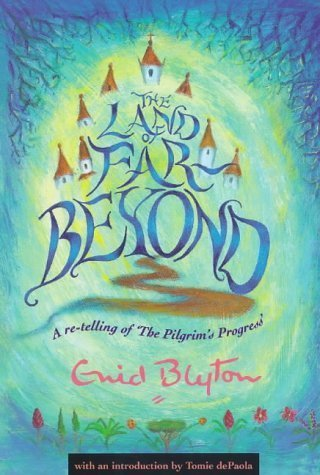
The Land of Far-Beyond is a Christian allegory and tells the story of a boy named Peter and his two sisters, Anna and Patience, who travel from the City of Turmoil to the City of Happiness in the Land of Far-Beyond. The three children carry the heavy burdens of their bad deeds on their backs. With them are two other children, Lily and John, and five adults—Mr Scornful, Mr Fearful, Dick Cowardly, Gracie Grumble and Sarah Simple.
The Enchanted Wood series of three books tells of the adventures of three children who live near the Enchanted Wood. One day they discover a great tree that reaches right up into the clouds called the Faraway Tree. The children climb the Faraway Tree and discover that it is inhabited by magical people, including Moon-Face, Silky, The Saucepan Man, Dame Washalot, Mr. Watzisname, and the Angry Pixie, whose houses are built in holes in the great trunk.
I have tried to make good use of names in my children’s book series. Sir Chocolate and Lady Sweet were intended to clearly indicate that the books are fantasy and are about sweet treats. All the illustrations are made from cake and fondant art and the books all include recipes.
Neema the Misfit Giraffe was intended to make it obvious that the book has an African setting. The name, Neema, means grace in Swahili. Neema’s companion, Amhale, has a Zulu name which means the beautiful one.

What are your thoughts on names in children’s fiction? Do you think they are important? Let me know in the comments.
About Robbie Cheadle
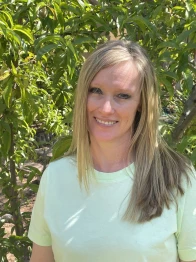
Award-winning, bestselling author, Robbie Cheadle, has published fifteen children’s book and two poetry books. Her work has also appeared in poetry and short story anthologies.
Robbie also has two novels published under the name of Roberta Eaton Cheadle and has horror, paranormal, and fantasy short stories featured in several anthologies under this name.
The eleven Sir Chocolate children’s picture books, co-authored by Robbie and Michael Cheadle, are written in sweet, short rhymes which are easy for young children to follow and are illustrated with pictures of delicious cakes and cake decorations. Each book also includes simple recipes or biscuit art directions which children can make under adult supervision.
Robbie and Michael’s new Southern African Safari Adventures series is aimed at teaching young children about Southern African wildlife in a fun and entertaining way. Each book contains a rhyming verse story about a particular animal, as well as illustrations by Robbie Cheadle, photographs and links to video footage about that animal.
Robbie’s blog includes recipes, fondant and cake artwork, poetry, and book reviews. https://robbiesinspiration.wordpress.com/
Share this:

Monthly Writing Memo: 5 types of Heroes
Posted: December 22, 2016 Filed under: Comic Hero, Screenwriting, Screenwriting, Super Hero, Uncategorized, Weekly Writing Memo, Writing | Tags: Action, characters, Novels, Stories, Writing 3 CommentsWelcome to the first Monthly Writing Memo! So for my own blog, Author the World, I’ve been thinking about doing a post about villains. As those of you who have been following know, I’ve been studying horror as I work on my horror film script. During this process, I’ve been wondering about the different types of villains, which in turn made me wonder about the different types of heroes in stories. So for this Month’s Writing Memo, I thought I’d do a post about heroes, and then later this week my post on villains will be up on Author the World.
In general, I think all heroes can really be broken down into a few main types, and every hero in a story usually falls into one of them. The way I’ve divided them up is by what motivates them rather than what they specifically do, or how they go about being a hero.
- The Savior –
The Savior is someone who actively tries to be a hero. They want to help people and save the day, so they seek out ways they can do this. The most obvious example of this is many superhero stories where characters like Superman or Spiderman actively seek out those in danger to help them. These characters do it solely because they want to help people and be a hero. Some want recognition, some want the satisfaction of saving people, but either way the thing that drives them is the need to be the hero. It’s a compulsion almost, and when they don’t just help when they see someone in danger, they actively seek the danger (and the victims) out.
- The Soldier –
The Soldier is similar to the Savior in that they feel the desire to help people, but the soldier does it out of a sense of duty and honor. That’s not to say they don’t have other motivations as well, but this character type is driven by the sense that it is their responsibility to help people, and they must take action. I think if you look at the movie “Die Hard” you’ll see John McClane fits into this character type. Yeah, he’s in the wrong place at the wrong time, but he is also a police officer and when he sees the problem he feels it is his duty to take action. Many of these character types are those military or police type characters, or have other positions that are focused on helping people in some way. Some other example jobs that a character can have to fit this role include teacher, doctor, or even counselor/therapist.
The goal of this character is to do their “job” and help people because they think it is their responsibility and duty. Maybe it can cross over into the Savior role of feeling driven to help people, but the slight distinction is where the Savior would say “I helped because they were in trouble,” the Soldier would say “I helped because it was my job/responsibility to help.”
- The Mercenary –
The Mercenary Hero doesn’t necessarily have to be getting paid, though some form of payment is generally the motivation for them to be the hero. They are a hero because they get something out of it. An example of this is are characters like Nicholas Cage’s character in National Treasure. That is a personal mission for him and he doesn’t do it for anyone else, he does it for largely selfish reasons—he desperately wants the truth and the excitement of discovering the treasure.
The Mercenary is driven by what he/she personally gets out of being the hero. They can be paid to do the job, they can be on a personal mission of love or vengeance or profit, but whatever it is they are being the hero because it serves them, not because they want to serve the people they are saving.
- The Reluctant Hero –
The Reluctant Hero is one of my favorite types of heroes to write because they don’t try to be perfect, and often try to extricate themselves from the drama, but they morally feel the urge to help when they see a situation. Unlike the Savior they won’t seek out the conflict, and unlike the Mercenary they don’t want anything for themselves, but similarly to the Soldier they feel a sense of duty.
The Reluctant Hero is someone who doesn’t want to be a hero, and they aren’t doing it because it’s their job like the Soldier. They are a person who just happens to be in the wrong place at the right time, and they morally can’t bring themselves to turn away from those in need. If asked why they helped, they would respond “I couldn’t turn my back on it, and it was the right thing to do.” They don’t feel like it’s their duty, they just feel like they were the only one there at the time who could do it, so they did.
I think the one thing that is often interesting about the Reluctant Hero is that, if someone else was around who could successfully do the saving, the Reluctant Hero would let them, but often they are put in situations where either they have to try, or all is lost.
- The Anti-Hero –
The final type of hero isn’t quite a hero at all – the Anti-Hero. The Anti-Hero is not someone who is trying to help anyone, and they’re most often not a good person. There are slight varying definitions of this, but in my opinion, the Anti-Hero is a character who ultimately has their own larger goal, but they do kind, heroic things along the way in pursuit of their goal. I think this falls into a lot of gangster characters who do wonderful things for the “little people” but who aren’t really good characters at all, and whose larger goals are really something quite unhero-like.
Another version of the Anti-Hero is someone who does dark, violent things in order to achieve something good. This kind of character is like Batman at times (The Dark Knight is the obvious example). Batman kills and commits crimes in order to make Gotham a better place, going from loved hero to wanted criminal.
Either way, the main thing about the Anti-hero is that they don’t follow the same rules as the normal hero, and that they will often commit villain-like acts in the pursuit of their goal. These sorts of acts will stand in stark contrast with the heroic elements, and it will make the audience question whether the character is hero or villain.
Final Notes:
I’m sure there are some more minor variations of heroes, but in general, I think most heroes in stories can be divided up into one of the five categories above. If you aren’t sure about which your character is, ask yourself what motivates them to be a hero? What motivates them to commit heroic acts? If you have that answer, you should be able to pinpoint what type of hero they are.
For my blog post on the various types of villains, stop by Author the World on Friday. Until next month, happy writing!
Share this:

Weekly Writing Memo: Horror Inspiration
Posted: November 3, 2016 Filed under: Fiction, Screenwriting, Screenwriting, Stories, Thriller, Uncategorized, Weekly Writing Memo, Writing, Writing Tips, Young Adult | Tags: Books, characters, Fiction, horror, How To, Movies, Novel, Stories, Writing Leave a comment One question I hear asked a lot to writers is, “where do you find your stories?” This question is sort of silly to me because stories are everywhere around you if you look. Every item you come across in your day has a story for how it became what it is, and got where it is. If you ask enough questions, eventually you’ll find some interesting element that you can turn into a compelling story if you try. I could go on for a long time about ways to find a story, so instead I decide, in honor of Halloween, to narrow the focus this week and discuss where to find inspiration for horror stories in particular.
For me, I really think horror stories have to either start with the protagonist or the “monster.” By monster, I mean whatever villain is in your story, be it a literal monster, a ghost, a serial killer, a psychological monster, a location, etc. I say this because the core of most horror stories is the conflict between these two entities — the protagonist and the monster — and I think starting with one of them can be the easiest way to start a horror story. If you start with the monster, you can ask yourself who would it go after and find your protagonist. If you start with the protagonist, you can ask yourself what type of monster would they encounter and go from there. Immediately either one can give you your story, but where do you find the protagonist or the monster?
Protagonists
If you want to start your horror story by coming up with your protagonist and you have no ideas in mind, you can go several directions:
- Pick someone you know and turn them into a character by changing some of their traits to make them slightly different.
- Pick a stranger on the street and create a character from them based on what you can infer from their appearance and behavior.
- Pick a stereotype character and then do a free write or character sheet to turn them into something more and give them depth.
- Pick an occupation and then create a character that fills that job role.
There are a ton of other ways to come up with a character, but these are a few of my favorite simple ones. Once you have a character in mind you can find your monster by asking yourself where would this character go to find trouble? Does it find them, or do they seek it out by going somewhere they shouldn’t? Do they have a friend that takes them to a haunted forest? Do they live near a mental asylum where a killer can escape? Do they work in a hospital where people die every day and ghosts may linger? Do they go swimming or camping in a secluded area where monsters could lurk in the shadows?
Think about all the places your character may go on a daily or weekly basis and think about what kinds of monsters they could encounter there. If none of these places is suitable, then think about what kind of friends your character has, and what kind of trouble those characters could get the protagonist into. Do they have a reckless friend who likes going into abandoned buildings? A crazy friend who sees things? A friend who picks up shady drifters and brings them home? Once you have the monster your character would most likely meet, you can start creating the plot between the monster and the protagonist and find your story.
Monsters
As I said earlier, when I use the term “monster” I don’t necessarily mean a literal monster, but rather I mean any type of antagonist your character will come up against in the story. Monsters can be anywhere, and if you’re prone to writing horror it’s a good idea to keep a list somewhere of various monster ideas whenever you come up with one. A few places that I generally find monster ideas include:
- Reading about urban legends and mythical creatures. Those cheap tabloid papers have some great ones of these, as do those random lists of legends, myths, and creatures that are all over the internet. Pick one and make it your own, give it a setting, and see where it takes you.
- Phobias. These are a great source for monster inspiration because once you pick a phobia you can use it to build your monster. Think of phobia that you like, or look up a list and pick one, and then ask yourself if your character has that fear what kind of monster would trigger it? Do they have a fear of being alone? Then how about you forget them in the middle of the ocean after a deep sea diving expedition (Open Water). Do they have a fear of the dark, well how about a monster that only appears in the darkness and can make the lights go out (Lights Out, Darkness Falls)? Whatever phobia you choose, ask yourself where or how your character can be forced to face it, and what kind of monster could cause them to. Sometimes it’s even the monster that has the fear (Lights Out) and it can be used as part of how the protagonist defeats them, so you can also try to create a monster from that angle as well.
- True unsolved mysteries or famous oddities. These are a great source for horror because they’re true, unexplained, and usually, have just the right amount of creepiness to them that they can be twisted even further for the perfect horror story.
Any of the options above can work for finding a monster to create your horror story around, but they aren’t the only way. At the heart, the monster comes from the twisting of something that is somewhat normal to something threatening. Think about it. Cujo was a dog, a ghost is just a (dead) person, water is just water, etc, but all can be turned and twisted to become a monster. So if you can’t find some kind of monster from the ideas above, then try taking something random and asking how could it be dangerous? How could it be scary?
Once you have the “monster,” then ask yourself what kind of character would they either go after or accidentally encounter? Is the monster in a lake at a teen summer camp? Are they in a house that a nice young family has just moved into? Are they in a school where kids just want to go to prom? Once you know who your monster’s victims are, and where the monster hunts, then you have your story.
Share this:

“Wrinkles” – A Diverse Story of True Love, Friendship and Faith
Posted: October 14, 2016 Filed under: Book Review, Books, Opinion, Uncategorized | Tags: Book Review, Books, characters, Fiction, Inspiration, Mian Mohsin Zia, Novels, Reviews, Wrinkles, Writing 1 Comment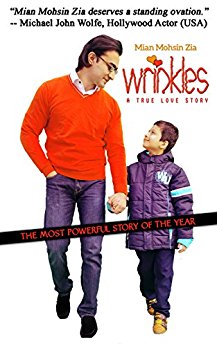
While representing his company at the expo, Xavier meets the woman in the next booth, Anna, and before you know it, he believes he’s fallen in love with her. Xavier doesn’t know why Anna is keeping him at a distance, never allowing him to get too close, but he is relentless in his pursuit of her and enlists his mother’s advice and the help of his friends to win her heart.
I had trouble buying into some of the occurrences in Wrinkles: A True Love Story, by Mian Mohsin Zia, but I realize a lot of this can be attributed to the fact that the culture in the story is very different from mine. Because I’ve never been to Africa, where the story is set, many of the events and customs portrayed in this book were foreign to me, making it seem strange. I may not have understood it all, but the story was compelling and touching, and I just may have learned a few things about other cultures and religions which I wasn’t previously aware of. I loved that it carried the underlying theme of integration, racial and religious tolerance.
Xavier’s relationship for his mother goes way beyond parental respect, but there are glimpses of an insecure little boy residing in the big man. This is his fatal flaw. Xavier’s biggest fear is that of losing his mother, whom he refers to as his “Lifeline”. His respect for his mother makes him a more endearing, as the doting son.
Descriptions are vivid, but they relate too many unnecessary details. We don’t need to know all the colors of clothing, color of pacifier, what materials their clothes are made from, etc… The story is repetitive and states the obvious quite a bit. Everything is spelled out for us, not giving the reader credit for being able to follow along.
There were other problems with Wrinkles, concerning formatting, punctuation, and grammar. The dialog is very stiff and formal, with dialog tags which are either missing or misplaced, there are subtle switches in point of view, a slight case of adverbitis, and a passive voice. I have put down books in cases where problems such as these, but the characters are likable enough for me to overlook them and keep reading.
What really sticks out the most for me though, was the fact that the last piece of dialog from Faith, Xavier’s mother, doesn’t ring true to her character. Throughout the whole story, she has always taught honesty, through verbal lessons and through example, and here she promises the young boy that they all be with him forever, when he asks questions about aging. Of course, we all know it would be impossible for the adults in the family to remain with him forever. The point is it isn’t true and it comes from a major character, who has been pillar of honesty thus far.
Overall, I saw some problems with this book, but the uplifting theme, heart touching story, likable characters, and compelling romance plot still make it an enjoyable read. I give Wrinkles: A True Love Story three quills.

Kaye Lynne Booth does honest book reviews on Writing to be Read, and she never charges for them. Have a book you’d like reviewed? Contact Kaye at kayebooth(at)yahoo(dot)com.
Share this:

Weekly Writing Memo: To Cliche, or not to Cliche
Posted: October 6, 2016 Filed under: Fiction, Science Fiction, Screenwriting, Screenwriting, Stories, Uncategorized, Weekly Writing Memo, Writing, Writing Tips | Tags: characters, Novel, Reviews, Stories Leave a commentA writing friend and I got in a heated discussion the other day as to whether clichés in writing can ever be a good thing. He is an adamant believer that clichés should be actively hunted down and eliminated from all dialogue, as well as most other areas of writing when possible. I, on the other hand, have a more lenient approach. I think clichés can be useful in specific circumstances, and sometimes they’re the best choice for the job. So when are clichés a good thing?
Avoiding Awkward
Sometimes if you can’t find a simple way to reword or rework a scene to avoid the cliché, then you can end up making the writing convoluted and awkward, which is worse than just using the cliché. A cliché can be invisible in the story and the audience may not even notice it, but awkward writing will interrupt the flow and stand out to an audience. It can also become obvious that you’re trying to avoid the cliché, and that can be distracting as well.
A really easy example is the phrase “that’s classified.” If you wanted to you could avoid it in a lot of ways, but there has to be a limit to how far you’ll go to avoid a cliché, and how much space you want to use to do so. If you try to avoid “that’s classified,” you could end up with something convoluted like, “I can’t tell you that because you are not qualified to access that information.” Just reading it makes me roll my eyes because it’s incredibly obvious I’m avoiding the cliché. In fact, it reads like a convoluted way of saying “that’s above your pay grade.” Which is another cliché.
The point is, avoiding the cliché in this case is turning out awkward, and it’s becoming obvious to the audience that it is what I’m doing. You don’t want your audience to stop and think about the writing when they’re enjoying the story – unless they stop to go “DAMN, that was good!” That is always acceptable! You want the audience involved, and in a situation like this it’s easier to throw in the cliché to get the message across and keep the story moving, rather than finding some roundabout way to avoid it.
Simplicity
Sometimes the decision for me to use the cliché comes down to one thing – simplicity. Sure, there are a lot of ways to word things that may let me avoid a cliché, but sometimes the cliché is the easiest, clearest way to get whatever message I want across to the audience. If I can use a cliché and it only takes 2 words instead of 20, then I better have some big motivation as to why those 20 words are needed. I’m a firm believer that every word has to count in a story, and as I said above, sometimes the cliché is just the simplest way to go. Will there be better ways to say things, probably, but does that mean you need to change your wording? No.
Cliches aren’t inherently bad. They can be overused, and they can be used at bad times, but sometimes they’re the best way to go for the sake of keeping the story moving forward. So always consider how complicated the route to avoid the cliché is. Ask yourself, if I avoid this cliché, will I slow the story down? Will it waste space on the page? Does the cliché add or take away anything from the scene? If the answers to these don’t give you a reason to take out the cliché, then I say go with the simplest method of keeping it in.
Character Culture
The biggest argument I think there is for keeping a cliché is that in some character cultures, clichés are ingrained in the system. By character cultures I mean communities like police officers, military personnel, doctors, politicians, etc. These kind of cultures that are part of large organizations have certain things that are ingrained in them.
For example, cliché language is often used by the higher ups in these organizations because clichés are something that a huge group of people will all understand in the same way. Clichés also become ingrained in these organizations because they relay on training being passed down, and the clichés carry through. For example, police officers and military personnel are more likely to use phrases that they have been trained to use. Military men use things like “need to know” because it’s an easy way for higher ups to dismiss lower level employees without actually giving them any information, and those lower level employees generally have to listen because they don’t outrank anyone.
In these sorts of settings, clichés can be used by the higher ups as a very easy way to create a separation between those of different ranks. Think of all the cliché phrases you can for military and even police personnel and think of their purpose: Need to know, that’s classified, that’s above your pay grade, etc. They all serve to protect information, and to put someone lower down in their place. In politics, there is a similar thing going on. The cliché phrases are more about delivering a message without delivering specifics. They say “I will bring change” or “I have the experience to do [blah]” and so on without every really specific what their plan is or how they are qualified.
Similarly, in medical fields clichés exist to keep information vague or to deliver a clear message without getting into specifics. In medical fields you sometimes don’t have time to lay out all the information because of the life and death situation, so abbreviated phrases are used to get a message across to everyone in the room quickly.
In general, these kids of systemized or structural cultures have clichés ingrained in them because they help create structure, they are universally understood, they deliver information and meaning without specifics as needed, and these cultures often have similar situations happen over and over again which can lead to certain sequences of events becoming cliché. The point is, you don’t need these characters to use clichés all the time, but having them in these instances is more acceptable because the clichés are part of the culture and the training almost everyone goes through in these professions, so they are almost expected by an audience.
When to Cut the Cliché?
Now clearly clichés should be cut whenever you can cut them in a way that doesn’t involve the things I’ve mentioned above, but sometimes it can be hard to decide. If there is an easy way to avoid the cliché, then always use it. If the cliché makes the scene cheesy or eye-roll worthy, then definitely cut it. If your entire plot hinges on a cliché, again, think about changing it. The important thing is that the clichés you do use don’t interrupt the flow or come off as lazy. Use them because they’re the best tool for the job (cliché!), and use them because they serve the story. Don’t use them because you’re too lazy to think of something else.
If you aren’t sure, then get a second opinion and see if your beta reader finds it distracting. Ultimately, like anything else in writing it all depends on the specific situation. Clichés exist for a reason, just use them wisely!
Share this:

Inside the Writing Process: Listening to Your Characters
Posted: August 5, 2012 Filed under: Fiction, Writing | Tags: characters, plot flaws, Story, Writing Leave a comment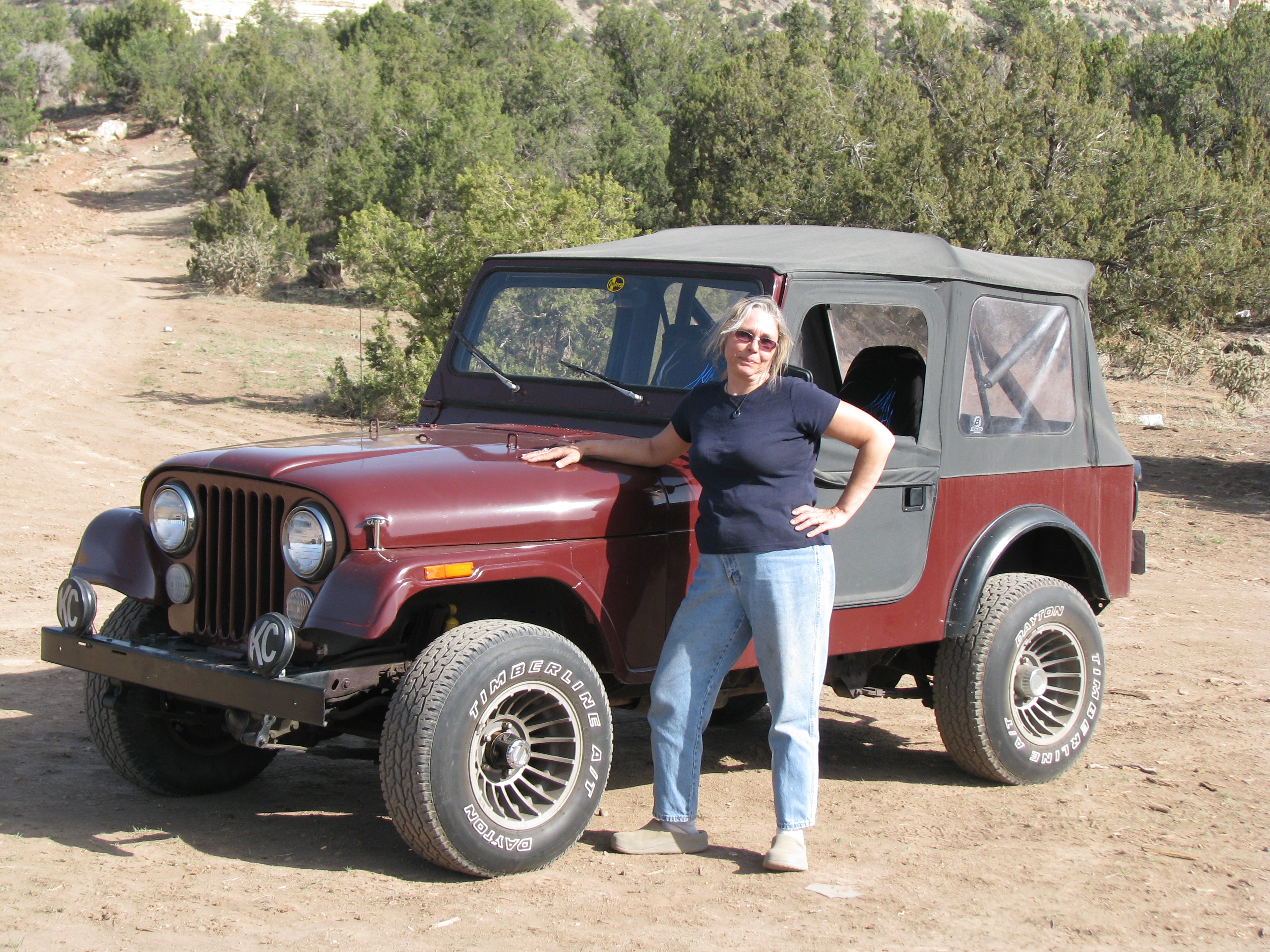 Rest and relaxation: that was the agenda for the day. After two intense weeks of me attending classes, while Greg sat in a dorm without even one working cable hook-up, and then a five-day work week, while we simultaneously tried to catch up on everything that had fallen behind while we were gone, we were due for some recreational activities. We were heading up the old stage road that runs on the north side of the Arkansas, from just east of Howard, all the way to Wellsville. We had chosen this route because a portion of this road is four-wheel drive, and we wanted to give our Jeep a little workout.
So, here we are, bumping along a particularly rocky patch, and I find myself thinking about the area terrain and how it might be worked into the western story that I began for class three weeks ago. It occurs to me that one of the changes that I made to the story last night is going to cause me a major plot flaw. Where an act of nature is my protagonist’s saving grace, it seems that, were it real, it would also cause her horse to kill her. I’m trying to work it out in my head, but I just can’t find any way around it. If lightning strikes, the horse is going to get scared and take off, dragging my character, Delilah, along by the noose around her neck, which happens to be attached to his saddle horn, and she will be helpless to stop it. I hardly notice the roughness of the terrain, as I am bumped and jostled, my thoughts overshadowing the external world.
The scene I’m trying to hash out follows the brutal beating and rape of my protagonist. After reading my first draft, my instructor felt a hesitation in my writing of this scene, and he was right. I was hesitant to write this scene. I knew that it was risky, and I might turn some readers off with it, but I felt that it is a crucial part of the story, which sets up everything that follows, so I had chosen to try to write it anyway. “If you are going to write it, don’t do it half-way,” he said, meaning that I should depict the horrendousness of the scene fully and not let my own hesitation show through in my writing. I thought about and decided that this scene really is integral to my story, so I must hurdle my own hesitancy, and write the scene, so my readers can buy into it.
My current dilemma is that I’ve chosen to scrap the scene that follows and start over, so I have to figure out a way for Delilah to survive the horrendous scene and go on, without the handsome stranger riding in to save her, (after all, it is a western, not a romance), because I wrote him out when I scrapped it, so he no longer exists. From out of nowhere, I hear a voice, “Why do I have ta be so damn passive?”
It startles me out of my thoughts about the book. I look around to see where the voice had come from, but we are still rocking and bouncing along, and even if we weren’t, there’s not a soul for miles along this little used trail. Greg didn’t appear to have heard anything unusual, and I wasn’t about to say anything. After living with me for thirty years, he knows I’m a little crazy, but I don’t see the need to remind him of this.
“Do ya really think I’m just gonna lie down and take it? Yer instructor told you that I was too passive, and yer peers agreed, so why won’t ya listen to ‘em?” The voice piped up again. It is a distinctly female voice, and now I recognize it. It is the voice of Delilah.
Another one of my instructors had talked about letting your characters speak to you, because they’re the only ones that know what is supposed to happen in the story. You see, it’s not really your story. She said that it’s their story, and if you listen, the characters will tell you what is supposed to happen next, because they know, even when you don’t. I had never created a character that was real enough to talk to me, so I don’t think I really got it at the time. Now, here is Delilah, talking in my head, telling me how to fix what’s not right in my story! I can really hear her, even if my husband doesn’t. Now, I get it!
“Okay.” I say in my head, (again, no need to alarm my poor husband). “But what can you do? Your hands are tied behind your back, and the noose is around your neck. Can you really do anything but be passive at this point?”
“What if my hands weren’t tied?” she asks.
“But, your hands are tied,” I say.
“What if they weren’t?” she counters.
I sigh. “Okay. If your hands weren’t tied, you might be able to save yourself, assuming the impact of the fall doesn’t knock you out cold.” I had assumed that it would, but perhaps Delilah is tougher than I had, at first, believed.
“So I’ll ask ya again. Why are ya making me so damn passive?”
“Well you certainly aren’t passive when it comes to giving me advice on the story,” I reply, with more than a little indignity. “But if your hands weren’t tied, you wouldn’t be in this situation in the first place. You are only passive because you have no choice, given the situation.”
“Exactly!” she says. “So, allow me to change the situation.”
By now, my mind is shifting gears. If her hands were freed somehow, at the end of the scene, she might still be dragged by her horse, but she might be able to prevent him strangling her to death. “So, you’re saying that your character wouldn’t just lie there passively? That you would be working to free yourself, even as he is beating you?”
“Now yer using yer head,” she says and, I swear, I felt her wink at me. Then, she was gone. Her exit left a vacuum of space where my mind had been focused. She had only come and stayed long enough to get me back on track, so the story could go where it was supposed to.
“Where do you want to stop?” Greg asked, bringing me back to the rocky trail of reality.
I smile. When we do stop, I will have my pen and paper ready, because now I know what happens in my story. My character told me. Now, all I have to do is write it down.




















