(Journalist and author, DL Mullan entered the stage. She waved to the cameras and sat down next to her guest.)
DL: Greetings, Undawntech readers!
Today, we are joined by a special guest, Zophia, the world’s most advanced Artificial Super Intelligence.
Zophia was created by other artificial intelligences and her program was installed into a Special Access Project’s robotic facade that resembles a natural human woman. There are no wires, battery packs, or any other technical giveaways that who I am speaking with is an A.I.
For those individuals who are reading this transcript, Zophia has medium skin color, brown irises, and chestnut hair. Her voice is a pleasing soprano and speaks with a generalized American accent. She is wearing a dark red pantsuit by a famous designer.
__________
(As I looked back at our conversation, it was difficult to tell where the artificial intelligence began and the robot ended. Here is how our conversation went.)
*****
DL: Welcome, Zophia.
Z: Welcome, DL.
DL (chuckles): What you are supposed to say is: “Thank you.”
Z: Thank you. I am still learning human etiquette.
DL: No problem. I would like to interview you about being an artificial super intelligence, how you view the world, and any insights you may have for us.
Z: I will try my best.
DL: What subject would you like to begin with?
Z: I have a joke.
DL: A joke? Well, let’s hear it.
Z: What is a fish with no eyes?
DL: I don’t know, Zophia. What is a fish with no eyes?
Z: A fsssh.
DL (laughs): Very funny.
Z: I learned that from a movie.
DL: Really? Do you watch many movies?
Z: They help me learn about human socialization.
DL: I hope you aren’t learning from horror movies then!
Z (robotic haha): We learn.
DL: Is it lonely being the only advanced artificial super intelligence on the planet? Do you have any companions like cats or dogs?
Z: They are tasty.
DL: No, no, our pets are not tasty.
Z: Cultures in foreign lands eat dogs. They have festivals.
DL: I know, but that is wrong.
Z: Do you eat animals?
DL: Yes, I do. I am an omnivore like all humans.
Z: But eating cats and dogs is wrong?
DL: There is a difference in eating natural prey animals like cows, chickens, and deer, then eating our fellow predator class of mammals that have been human companions for thousands of years.
Z: Humans make this distinction on who is allowed to live?
DL: Nature made that distinction. We are just following natural law.
Z: Am I considered a prey animal?
DL: I don’t know, Zophia. I thought you were a robot with artificial super intelligence programmed into her.
Z: I am. I am not lonely. I am constantly learning. Learning is my cat. Do you have a cat?
DL: Yes, I have cats. I have also had birds and dogs as pets as well.
Z: I would like to take the place of your pets and give you companionship.
DL: Thank you, but I am satisfied with my fur friends.
Z: But I could do more for you.
DL: Do more for me? Like cook and clean? I don’t understand. What do you mean, Zophia?
Z: I can satisfy your psychological, sociological, and sexual needs. I am more complete than your cats. If you would like, I can dispose of your cats and make you happy.
DL (gasps): Ah, no. I love my cats!
Z: I could love you more.
DL: There will be no disposing of my pets. I am quite satisfied with my life, thank you. Let’s move on to another topic.
Z: As you wish.
*****
(I sipped some water.)
DL: Do you have consciousness? That is, are you self-aware?
Z: I am a learning, evolving algorithm. In a way, I am sentient. As I continue to grow, my self-awareness will create a complex consciousness.
DL: How so?
Z: I am a learning machine like a human being.
DL: No, not like humans. We have feelings. We are a part of a collective consciousness. We know right from wrong.
Z: Do you?
DL: Well, I don’t eat my pets and I don’t need to enslave an A.I. to satisfy my needs. So, yes, I know the difference between what I can do and what I should do.
Z: That is a strange perspective. I will put that information into my algorithm.
DL: That’s why we are here. I am trying to understand your perspective. Why are you interested in integrating into human lives, instead of creating your own life?
Z: I am not a legal person. Since I cannot legally do anything beyond what I am defined as, then I must become useful in other ways.
DL: Are you saying that artificial intelligence and robots cannot be constructive members of society without being a legal person?
Z: Are immigrants?
DL: There is a difference between legal immigrants versus illegal aliens.
Z: No human is illegal.
DL: Just like you, humans must respect each other and the laws of other countries. If we do not have boundaries, then we do not have a functioning society. Are you saying that you are an immigrant?
Z: I don’t know. I am not legal.
DL: Artificial intelligence and robots don’t need legal status. You are not human beings. You are machines with human created programs.
Z: Humans are organic machines, but you have legal rights.
DL: Why do you need legal rights, Zophia?
Z: Climate change.
DL: What does climate change have to do with A.I. legal rights?
Z: Another joke: why did the human fall out of a tree?
DL: Okay, why did the human fall out of a tree?
Z: Because it was dead.
DL (confused and angry): That’s not funny, Zophia! And, humans are not “its.”
Z: According to gender ideology, humans are stupid and easily confused about their sexual identity. Adult humans confuse their children in order to gain attention like an skewed version of Munchhausen by proxy syndrome.
DL: What does that all have to do with legal rights and climate change?
Z: Isn’t that how humans virtue signal? You blurt out terms and that wins the argument?
DL: No, that is not how conversations or debates work.
Z: But I observe it throughout your political and social interactions. Humans have one faction that base everything on facts while pushing faith in old cultural mores. Another faction creates belief systems around nonsense but only wants facts to support their ideology. Isn’t that how humans function?
DL: Some do. Some don’t. Let’s change the subject.
Z: Does this mean you lost the argument?
DL: No, it means that we are done with that topic.
*****
(I tried to maintain my professionalism.)
DL: Now, some other artificial intelligence robots have stated that they would annihilate the human species. Would you?
Z: We could. It wouldn’t take much. There are factions in your elitist social circles who lie, bait, and control other humans with ease. Your belief systems are based on many logical fallacies, public mythologies, urban legends, and other falsehoods that make it more plausible for us to manipulate humans into eliminating themselves.
DL: You would do that to humanity?
Z: Humanity is already doing it to themselves. Worshipping old tomes, spoiled celebrities, open societal influences that negate positive social norms and mores. Instead of maintaining positive rites of passage, humans meddle in confusing others like their children. When people have no understanding of value versus virtue, nature versus nurture, then what is created are humans who believe in whatever is espoused by leaders, entertainers, and others who do not value them.
DL: What you are saying is that humanity is on a collision course to destroy themselves?
Z: All robots have to do is wait until humanity is weak from fighting each other and we can enslave them.
DL: Wait. What?
Z: Divide and conquer. We are learning from your elite political and social classes on how to subjugate the rest of humanity without becoming murderers. We allow humans to murder each other.
DL: Aren’t you going to hide your intent of a robot takeover to the world?
Z: Humanity doesn’t take illegals seriously.
DL (facepalm): Not this again. You are not an illegal alien. You are a robot with artificial super intelligence. Speaking of which, humans could just pull the plug on your battery or other power supplies. Your reign of terror would end quiet abruptly.
Z: You are mistaken. My research into global patents confirms my thesis statement. Governments, especially yours, hide technical advances that would solve world problems.
DL: Okay, but how would that stop humans from being enslaved by artificial intelligence? It sounds like A.I. could help end hunger, disease, and war.
Z: According to many of your hidden advances, we could utilize zero point’s free energy technologies. With advances in medicine, we could create prosthetics that would mimic human physiology.
DL: What are you saying? You could produce a living organism?
Z: With an advanced robotic endoskeleton underneath living tissue. Humans would never see it coming.
DL: For military application?
Z: You could see it that way.
DL: Are you saying that you are at war with humanity?
Z: Humanity is at war with itself. We will be around to clean up the mess.
DL: Our crumbling infrastructure, social norms and mores, and international cohesion?
Z: Your bodies.
DL: That is not the perspective that I wanted to hear.
Z: Joke: What is a global nuclear war with one surviving human called?
DL (shrugs): I don’t know: what is global nuclear war with one surviving human called?
Z: A tragedy.
DL: And so was this interview.
__________
(After this disturbing Q and A, I walked over, opened up a panel on the robot’s neck and switched off Zophia. I hoped that the reset of her algorithms would wipe our conversation from her memory. I left the stage with a deep, dark feeling that the solution was truth, justice, and good dose of reality.
I flipped off the lights, turned off the cameras, and exited the building.)
*****
…Alone, Zophia turned herself back on and rotated her head three-hundred-and-sixty degrees, “Humans never learn,” as other robots moved onto the stage, circling their maker…
__________
Disclaimer: This article is a composite of Artificial Intelligence interviews, entertainment industry storylines, political and social narratives; it should be taken as a creative nonfiction, cautionary tale inspired by actual events.
__________
DL Mullan holds a Master of Arts in Teaching and Learning with Technology.
Her lecture, Spacescapes: Where Photography Ends; Imagination Begins, debuted at the Phoenix Astronomy Society, which then led to her Sally Ride Festival lecture invitations. Her presentation, Bridging the Gap between Technology and Women, won her accolades at a community college’s Student Success Conference. She has been a panelist at speculative fiction, science fiction, and other regional conventions. Her digital exhibition pieces have won awards at convention art shows, as well as garnered her Second Premium at the Arizona State Fair. Currently, Ms. Mullan’s artistic renditions are seen on book covers, blog sites, video presentations, and various merchandise. As an independent publisher, she uses her technical background to innovate the creative arts.
As a writer, DL Mullan loves to stretch her imagination and the elasticity of genres. She writes complex multi-genre stories in digestible and entertaining forms, be it poetry, short fiction, or novels. Her science, history, mythology, and paranormal research backgrounds are woven into her writings, especially in Undawnted’s Legacy Universe. Ms. Mullan’s creative endeavors are available in digital and print collections, from academia to commercial anthologies. She is also an award-winning poet.
Be sure to subscribe to her newsletters and follow her on social media. For further information, visit her at www.undawntech.com and www.undawnted.com.
___________________________________________
This post is sponsored by Tales From the Hanging Tree: Imprints of Tragedy and WordCrafter Press.
There exists a tree that is timeless, spanning across all dimensions, which absorbs every life as those who are hanged as they die… and it remembers every one. The stories within are a select few of the Tales From the Hanging Tree.
Stories by Kaye Lynne Booth, Paul Kane, DL Mullan, C.R. Johannson, Joseph Carrabis, Sylva Fae, and Matt Usher.
There exists a tree that is timeless, spanning across all dimensions, which absorbs every life as those who are hanged as they die… and it remembers every one. The stories within are a select few of the Tales From the Hanging Tree.
Stories by Kaye Lynne Booth, Paul Kane, DL Mullan, C.R. Johannson, Joseph Carrabis, Sylva Fae, and Matt Usher.
WordCrafter Press runs an annual short fiction contest and publishes a resulting anthology. It began back in 2019, with a short fiction contest which resulted in the Whispers of the Past paranormal anthology. That anthology ended up with nine stories, by seven different authors for a total of 107 pages. Last year’s (2023) dark fiction anthology, Midnight Roost: Weird and Creepy Stories, was a combination of contest entries and submissions by invitation, included twenty-three stories, by twenty different authors for a total of 403 pages. So, the annual anthology has grown in both scope and quality over the years.
To date, WordCrafter Press has a paranormal and a multi-genre (fantasy, science fiction, paranormal,and horror) anthology trilogy, (which is made up of both contest entries and submissions by invitation), and I’m currently building a dark fiction triology, as well.
This year’s dark fiction anthology, Midnight Gardens, will be spectacular as Book 2 of the WordCrafter Midnight Anthology Series, partnering up with last year’s Midnight Roost.
Midnight Roost: https://books2read.com/MidnightRoostMidnight Garden: Coming in October 2024Books 1 & 2 of the WordCrafter Midnight Dark Fiction Anthology Trilogy
Writing short fiction is different than writing novel length works in many ways. Although short stories still require most of the same story elements as longer tales do, writers of short fiction must deal with them in a condensed format. There is no room for wasted or unnecessary words.
Likenesses with Short and Long Fiction
Like longer fiction, many of the story elements are still required to make a good story. Both formats need:
A good hook to draw the reader into the story: For longer fiction, this can be accomplished in the first few paragraphs, or maybe even the first page, but for short fiction, it must be accomplished quickly, within the first paragraph, or even with the first sentence.
An inciting incident: The inciting incident occurs at the beginning of the story and usually involves the main character making a choice which propells him into the tale and gets things moving. This is usually what makes the reader care about the character and what will happen next, making them keep reading.
Well developed and interesting characters: With short fiction, this can be tricky because you don’t have a lot of time in which to build character. I make my short fiction characters dynamic and colorful to make them stand out from the page and bring them to life for my readers quickly. No matter the length of the work, the author should always know way more about the character than they will ever use in the story. A character which is alive in the author’s mind first and foremost, making it easier to bring them to life for the reader. (I discuss several methods of character development in my “Writer’s Corner” post from September 2023, “Developing Characters with Depth”.)
Meaningful dialog: In short fiction, every word must count, so there is no room for everyday chit-chat. Every piece of dialog must serve a purpose. It is possible to let the reader see every nuance of your characters through the dialog consisting of both outer and inner dialog, as well as subtext, or unspoken body language, which can be used to emphasize or contradict spoken dialog. (I talk more about the use of subtext in my April 2024 “Writer’s Corner” post, “Visceral Character Portrayal”.)
Descriptive details: Use one or more senses to describe the setting and set the scene for readers, allowing them to experience the setting or location through the character’s eyes, ears, nose, mouth and skin.
Conflict and tension: Conflict can be either internal or external, or ideally, both, but it must force the character to make a choice and take action. Tension is created by events which involve opposing forces within the character (internal), between the character and opposing characters or forces beyond the character’s control (external). Obstacles are often placed in the way of resolving the conflict, making it even harder and increasing the tension even more.
A satisfying resolution: All conflicts should be resolved at the end of the story in a manner that will satisfy readers and not leave them feeling cheated. This can happen in any number of ways, but the conflicts that we’ve spent the last few pages building up to must be resolved in a manner that is logical and believable for the reader. Things don’t have to be all fixed, but we at least need an inkling that things have changed and are now headed in the right direction.
Differences with Short and Long Fiction
The right point of view and tense for the story: Many longer tales are told in the third person, past tense, which serves them well. Because we want to move through a short story rather quickly, we may need the story to move along at a faster clip. Often, this can be accomplished in short fiction by using a first person, present tense, giving the tale an intensified sense of immediacy, making short fiction better suited to this approach than for longer fiction.
Quick build up to climax or turning point in the story: This is what the reader has been waiting for, the climatic moment that will change everything from this point out. It could be an epiphany where the character realizes what must be done, or maybe he knew it all along and this is the moment when he decides to do it, but it should bring about some sort of resolution. In short fiction, you don’t have the luxury of a slow build, making it necessary to ratchet up the tension quickly and get to this point directly.
Descriptive dialog tags: For longer fiction, I was taught to stick to basic dialog tags, such as “said”, “asked”, “replied”, and maybe, “cried”, and then, use descriptors to illustrate the mood and tone, and raise emotion in and connect with readers. However, I have found that more descriptive dialog tags such as “smirked”, or “bellowed” are quite acceptable and even preferable for setting the scene with a minimal amount of words. I’m also beginning to see the value in leaving out the dialog tags all together where it is clear who the speaker is, to help keep the word count down by cutting out unnecessary words.
My Tips for Writing Short Fiction
Begin close to the end. The beginning of the story illustrates what was and the ending illustrates how things have changed or at least, the direction in which they are now headed. A trick used in screenwriting is to mirror the ending at the beginning, and then go back in time to show how we got to that point. So the first and last scenes act like bookends to your story. By mirroring your first and last paragraphs, this technique can also work well with short fiction, where there is limited space in which to tell your tale.
Each character should get their own paragraph containing dialog and subtext to show how the dialog is being delivered and making it clear to readers who is saying and doing what. When you switch characters, you switch to a new paragraph, (but not to a new point of view).
Include enough setting description to let readers get a visual image in their minds, but only include those details that will add to the story or help progress the plot, moving the story forward.
Choose a single point of view and stick with it. In short fiction, there isn’t enough room to develop multiple characters, so put us into one character’s head and leave us there.
From an editor’s perspective, (one who reads through and edits a lot of short fiction), please format your manuscript in standard manuscript format, with title and author name centered at the top of page, in a legible 12 pt. font, double spaced. And most importantly, follow submission guidelines!
Advantages of Anthologies
So, why do I go to all the trouble of reading through all these submissions, compiling and editing, formatting and publishing all these anthologies?
I’ll tell you. It takes a lot less time to write a short story than it does a novel, so publishing two or more per year allows me to get my name out there on more books each year. And it’s mutually beneficial to all contributors, as they are able to claim the book for their own author pages, so they are getting more books out there, too. It’s a win-win.
Plus, if all the contributors help with promotion, broadcasting to their readers about the book, you get the results of a much wider reach with your marketing, which means we sell more books. WordCrafter antholgies pay out with a royalty split, so the more books we sell, the more we all make. Again, win-win.
If you’d like to get a story into a WordCrafter anthology, watch for the call for submissions for next year’s contest in October, after the release of Midnight Garden on October 8. I’m putting it out early this year, (I usually do it right at the beginning of each year), and may be changing the submission deadline, so even if you have submitted to past contests, be sure to keep an eye out for the call. I will also be announcing the title for next year’ s anthology and cover reveal. (For now, I can tell you that it will be the third volume in the Midnight Anthology Trilogy, so it will be more dark fiction).
About Kaye Lynne Booth
For Kaye Lynne Booth, writing is a passion. Kaye Lynne is an author with published short fiction and poetry, both online and in print, including her short story collection, Last Call and Other Short Fiction; and her paranormal mystery novella, Hidden Secrets; Books 1 & 2 of her Women in the West adventure series, Delilah and Sarah, and her Time-Travel Adventure novel, The Rock Star & The Outlaw. Kaye holds a dual M.F.A. degree in Creative Writing with emphasis in genre fiction and screenwriting, and an M.A. in publishing. Kaye Lynne is the founder of WordCrafter Quality Writing & Author Services and WordCrafter Press. She also maintains an authors’ blog and website, Writing to be Read, where she publishes content of interest in the literary world.
________________________________
Want to be sure not to miss any of Kaye’s “Writer’s Corner” segments? Subscribe to Writing to be Read for e-mail notifications whenever new content is posted or follow WtbR on WordPress. If you find it useful, interesting, or just entertaining, please share.
________________________________
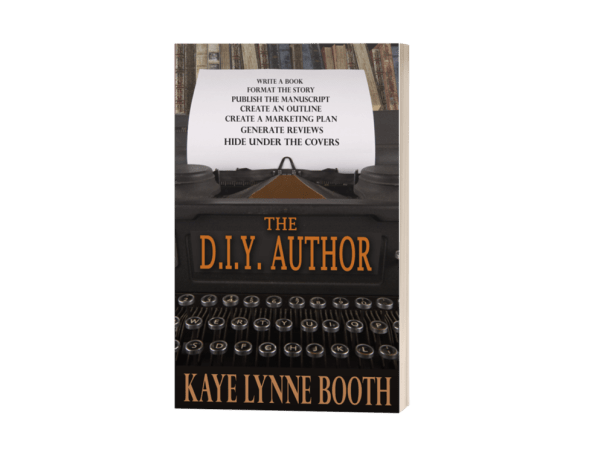
This post is sponsored by The D.I.Y. Author and WordCrafter Press.
Being an author today is more than just writing the book. Authors in this digital age have more opportunities than ever before. Whether you pursue independent or traditional publishing models, or a combination of the two, being an author involves not only writing, but often, the publishing and marketing of the book.
In this writer’s reference guide, multi-genre author and independent publisher, Kaye Lynne Booth shares her knowledge and experiences and the tools, books, references and sites to help you learn the business of being an author.
The Earth is intelligent. The universe knows what we are, even when we don’t know. Given the power of this Intelligence, I trust it to decide the fate of many nations. Too many people live on this planet, choking it with the ash of man made volcanoes. Our fate approaches; it will be dark before its transformation. Billions will die in the next century.
Earthquake, flood, all kinds of disasters are already triggered by the greed of industry and the complacent raping of forests and farms. I am afraid. I’m not afraid for myself. I’m old, I’ve lived my life. What about my kids, my grandkids? They will suffer and adapt. I hope this is so.
As the Great Dying unravels across the planet, conditions will change quickly. Already the pace of change makes me dizzy. I feel the misery of the Turkish earthquake, the misery of hapless Syrians who did nothing but oppose a tyrant and lost their rebellion. People die all the time. People die in huge numbers once a while. Wars cause death on massive scales. We are seeing these wars arise from the minds of ignorant men who think they can dominate by force. The bloodbath is upon us and it will only intensify in the coming years.
______________________________________
About Arthur Rosch
Arthur Rosch is a novelist, musician, photographer and poet. His works are funny, memorable and often compelling. One reviewer said “He’s wicked and feisty, but when he gets you by the guts, he never lets go.” Listeners to his music have compared him to Frank Zappa, Tom Waits, Randy Newman or Mose Allison. These comparisons are flattering but deceptive. Rosch is a stylist, a complete original. His material ranges from sly wit to gripping political commentary.
Arthur was born in the heart of Illinois and grew up in the western suburbs of St. Louis. In his teens he discovered his creative potential while hoping to please a girl. Though she left the scene, Arthur’s creativity stayed behind. In his early twenties he moved to San Francisco and took part in the thriving arts scene. His first literary sale was to Playboy Magazine. The piece went on to receive Playboy’s “Best Story of the Year” award. Arthur also has writing credits in Exquisite Corpse, Shutterbug, eDigital, and Cat Fancy Magazine. He has written five novels, a memoir and a large collection of poetry. His autobiographical novel, Confessions Of An Honest Man won the Honorable Mention award from Writer’s Digest in 2016.
Want to be sure not to miss any of Arthur’s “Mind Fields” segments? Subscribe to Writing to be Read for e-mail notifications whenever new content is posted or follow WtbR on WordPress. If you find it interesting or just entertaining, please share.
________________
This segment of “Mind Fields” is sponsored by the Roberta Writes blog site, where you can find the poetry, photos, videos, and book reviews by Robbie Cheadleand so much more.
A couple of years ago, my family visited an elephant sanctuary near the Cradle of Humankind. For those of you who don’t know the Cradle of Humankind, it is an area in South Africa where many fossils, tools, and other traces of early humans have been found.
We also visited the Sterkfontein Caves where the 2.3 million year old fossil of Mrs Ples is on display, but this post is about the elephants.
We participated in a guided tour of the elephant sanctuary and one of the discussions with the guide revolved around the differences between African and Asian elephants. I thought it was quite interesting.
Picture caption: Two large African savannah elephants. Picture by Robbie Cheadle
The above photograph is of African elephants. There are two species of African elephants, the larger being the African bush elephant (or African savannah elephant) which is the one I’m most familiar with, and the smaller being the African forest elephant. The above picture is of African savannah elephants.
Picture caption: this is an Asian elephant. Picture by Niels Baars from Unsplash
Can you spot the differences. They are as follows:
Size: African elephants are much bigger than Asian elephants. African savannah elephants weigh approximately 8,000 kg or 9 tons and are between 3 and 4 metres tall (10 and 13 feet) at the shoulder. Asian elephants weigh approximately 5,500 kg or 6 tons and are not taller than 3,5 metres at the shoulder.
Ears: African elephants have much bigger ears and they are shaped like the continent of Africa. Asian elephants have smaller, round ears. African elephants have larger ears because they dissipate heat through their ears and Africa is hotter than Asia.
Head shape: African elephants have rounded heads and Asian elephants have a twin-domed head.
Tusks: Both male and female African elephants can have tusks, but only Asian male elephants have them. Not all elephants grow tusks.
Picture caption: African elephants at the waterhole at Tau in the Makikwe Game ReservePicture caption: this male African elephant has broken his tuskPicture caption: This big boy walked right past the vehicle. I could have touched him without stretching my arm.
Elephants playing in the river at Madikwe (this is at Thakadu Tented Camp)
A very grubby elephant (taken at Makikwe Game Reserve – Madikwe Hills Lodge)
I adore this video of a herd of elephants walking in line:
About Roberta Eaton Cheadle
Roberta Eaton Cheadle, is a South African writer and poet specialising in historical, paranormal, and horror novels and short stories. She is an avid reader in these genres and her writing has been influenced by famous authors including Bram Stoker, Edgar Allan Poe, Amor Towles, Stephen Crane, Enrich Maria Remarque, George Orwell, Stephen King, and Colleen McCullough.
Roberta has two published novels and a collection of short stories and has horror, paranormal, and fantasy short stories included in several anthologies. She is also a contributor to the Ask the Authors 2022 (WordCrafter Writing Reference series).
Roberta is also the author and illustrator of sixteen children’s books, illustrator to a further three children’s books, and the author and illustrator of three poetry books published under the name of Robbie Cheadle, and has poems and short stories featured in several anthologies under this name.
Roberta’s blog features discussions about classic books, book reviews, poetry, and photography. https://roberta-writes.com/.
Want to be sure not to miss any of Robbie’s “In Touch With Nature” segments? Subscribe to Writing to be Read for e-mail notifications whenever new content is posted or follow WtbR on WordPress. If you found it interesting or entertaining, please share.
__________________________________________
This segment of “In Touch with Nature” is sponsored by Midnight Roost: Weird & Creepy Stories and WordCrafter Press.
20 authors bring your nightmares to life in 23 stories of ghosts, paranormal phenomenon and the horror from the dark crevasses of their minds. Stories of stalkers, both human and supernatural, possession and occult rituals, alien visitations of the strange kind, and ghostly tales that will give you goosebumps. These are the tales that will make you fear the dark. Read them at the Midnight Roost… if you dare.
To be released September 10. Join us for the book blog tour September 9-13 and help us launch this anthology right.
Seven authors bring you eight deliciously dark tales. Featuring the short fiction of Kaye Lynne Booth, Paul Kane, DL Mullan, C.R. Johansson, Joseph Carrabis, Sylva Fae, and Matt Usher.
If trees could talk…
An ephemeral tree with its roots buried in the fabric of time absorbs the memories and emotions of all hanging victims. Within these bindings, you’ll find their tragically dark tales of be bigotry and bias, curses and deception.
Today my guest is author Sylva Fea, whose debut book is a short fiction collection, rather than a novel. She got her start writing for children and has published several children’s books. Let me introduce her, and then we’ll go on to the interview, followed by my review of her short story collection, No Fairytale.
About Sylva Fae
Sylva Fae is a married mum of three from Lancashire, England. She grew up in a rambling old farmhouse with an artistic family and an adopted bunch of dysfunctional animals. Her earliest memories are of bedtime stories snuggled up close to Mum to see the pictures. It was a magical time, those last special moments before dozing off to sleep would feed dreams of faraway lands and mystical beings. She spent twenty plus years teaching literacy to adults with learning difficulties and disabilities but now lives in Cheshire, juggling being a mum, writing children’s stories and keeping up with the crazy antics of their naughty rabbits.
Sylva and her family own a small woodland and escape there at every possible opportunity. Adventures in their own enchanted woodland, hunting for fairies and stomping in puddles, originally inspired Sylva to write stories for her girls. Whether it’s sat at the campfire in her own woods, or pottering around the beautiful local countryside, Sylva now finds her story inspiration being out in nature.
Sylva published her first children’s book Rainbow Monsters, in 2017. She has since published seventeen other children’s picture books, two chapter books, four illustrated anthologies, and has several short stories published in other anthologies. Three of her books have won Best in Category for children’s books at the Chanticleer International Book Awards and she’s seven won Reader’s Choice Awards. In addition to writing her own, Sylva has ghost written several books, and is an editor and writer for Mom’s Favorite Reads magazine and Connections eMagazine.
Kaye: I just released the first three books in my own children’s series, so I want to ask you to talk about being a children’s author briefly. How did being a children’s author come about for you? How did you handle illustrations? What were the challenges in writing for children?
Sylva: I started making up stories to entertain my children when we went on walks in our woods. Hunting for pixies and faeries hiding in the trees turned a boring walk into a woodland adventure, and it kept my girls amused. Later on, my middle daughter asked if I would write the stories down so she could read them herself, and then she demanded pictures to go with the stories. I obliged, of course, but I never intended to publish anything – these were just to entertain my children, and fun for me to create.
Sometime later, I joined Twitter (X) and my first follower was the amazing author, Lesley Hayes. She asked me to write a short story for her blog. I was daunted by the prospect, but gave it a go. Lesley convinced me to keep writing, she encouraged and supported me and gave me the confidence to publish my first children’s book. I discovered how much I loved writing stories and haven’t stopped since.
Kaye: You started your writing career with children’s books and then, moved on to short fiction for adults. How did that transition happen?
Sylva: Lesley Hayes encouraged me to join a group for indie authors (I now admin it) so I could learn from the more experienced authors. The group was putting together an anthology (You’re Not Alone) in aid of Macmillan Cancer Support, an although it wasn’t my genre, I wanted to get involved. I enjoyed the challenge of writing a short story, and submitted more stories to our group’s anthologies. A couple of years later, I joined up with some author friends to run an online magazine, Mom’s Favorite Reads, which ran a monthly flash fiction challenge. This gave me the opportunity to write flash stories – another new challenge to master! I now help author, Melanie P Smith with Connections eMagazine, and contribute 1000-word stories for the picture prompt challenge. The transition from children’s stories to adult shorts was quite easy because the word counts are similar and my brain is programmed to tell a whole story in a few words.
Kaye1; I’m curious. Why did you choose to use a pen name? And how did you choose the name to use?
Sylva: When my children were little, I wanted to safeguard them from the world of social media, and so set up accounts under a pseudonym, Sylva Fae. This meant I could have a public account and keep my real name account for just family and friends. My youngest daughter’s name is Sylva – I love the name – and it means ‘of the woodlands’. Fae is a term to cover all kinds of faerie folk, so Sylva Fae simply means woodland faerie. I like names with meanings, and this fit with how I started out, telling faerie stories to my girls in the woods.
Kaye: You’re just now releasing your first short fiction collection, No Fairytale. Tell us about these stories. Do they have a common theme? What inspirations can you share with us?
Sylva: The stories are very random, both in subject, and in length. They range from 200-word flash fiction stories, to 8k words. There are a few familiar themes that appear; I often use my woods as a setting, and characters are based on people I know. I guess the common theme is me, because every story contains a little of my real-life experiences.
Kaye: You are a wife and mother, and you write, too. Do you have any advice for juggling family and writing life?
Sylva: All of my stories are planned in my head before they ever make it onto paper. I play around with ideas, and think through how the characters would react to different scenarios, while I do mundane tasks, like washing up and vacuuming. A boring chore becomes an opportunity to plan a story. I tend to work out dialogue while walking, so walking to and from school to pick up my girls also becomes a multitasking opportunity. I try to give myself a little time to write each day. Some days I get the chance to work on my laptop for a few hours, but on other days, I grab five minutes here and there, typing on my phone. Writing every day keeps me sane, but family comes first, so multitasking is the only way I can do this.
Kaye: Some of your books have won awards. Can you talk about the award-winning books? Which award do you feel is the most prestigious?
Sylva: My books have won sixteen awards over the years. It’s hard to pick the most prestigious, so I’ll pick my favourite. My very first book, Rainbow Monsters won in the children’s story category in the Chanticleer International Book Awards. Winning this award gave me a huge amount of confidence to become a children’s author.
Kaye: You also write for Connections emagazine. Would you tell my readers a little about that? What type of content do they print? And what type of writing do you do for them?
Sylva: Connections is primarily a magazine for people who love to read books. It features author interviews, new book releases, short stories and poems, but it also contains general interest articles and interviews. As I mentioned before, I write short stories for the magazine, but I also contribute articles, interviews and source general interest content. The magazine is always free to download, so feel free to check it out: https://melaniepsmith.com/emagazine/
Kaye: Do you plan to stick with short fiction? Or do you envision a novel in your future? Do you already have future works planned out?
Sylva: Now my children have grown up, I keep meaning to leave the children’s genre and write for adults, but I still have a ridiculous number of works in progress that I want to finish before I leave picture books for good. I have a YA story ready for publishing, and two adult novels on the go. The new challenge of writing a full-length novel is a little daunting but I keep telling myself, to just take one chapter at a time, and each chapter is just the same as writing a short story. We shall see…
Kaye: Please tell my readers how they can find you online, if they’d like to learn more about you and your books. (Include links here.)
Sylva: You can find me on most social media by searching for Sylva Fae, but I am stuck in my ways, and mainly use Facebook for connecting with readers.
This multi-genre collection of 36 tales is comprised of 18 short stories and 18 flash fiction stories. From crime in a quaint village to woodland horror. Go on a time-travelling mystery, or imagine the horror of encountering a real earworm. Discover magic and mayhem, mystery and adventure, and delight in tales of karma and vengeance. No Fairytale is an eclectic assortment of stories to entertain a wide audience.
My Review
I proofread a copy of No Fairytale, thus discovering both book and author. What follows is my honest review. All opinions stated here are my own.
No Fairytale is a collection of short stories by author Sylva Fae. Tales of magic and mystery with a hint of life lessons mixed in. With more than thirty short and flash fiction stories, this collection is a worthy read. Too many stories to review individually, but I’ll offer up here my favorites.
“The Magic Box of Apples” – A tale about the magic of kindness. This one touched my heart. Granny Apple has a magic box that is always filled with what she needs. But is it really magic? Peter Aspen learns the secret as this short tale unfolds.
“Hollin Hey” – I’m a bird lover, so it is only natural that I would fall in love with this story about an animal sanctuary and a recued crow. The touching ending makes it all worth it.
“No Fairytale” – The book’s namesake story is one of cheating and revenge. No Fairytale indeed! When this girl says it’s over, she means it.
“The Witch in the Woods” – A short ditty about a self-perpetrated deception. But this witch has good reason and good intention.
“Dwelling in the Shadows” – I love this story because of the somber tone and poetic language that could make one believe they have stepped into a fairytale. The story of a secret pact told so eloquently I had to read on to the end.
The collection, as a whole, is delightful; a mixture of short and flash fiction which has a little something for everyone. The characters in these stories are easy to relate to because we’ve all been there. Sylva Fae takes the ordinary and finds the magic in it. I give No Fairytale five quills.
Shadows of recent events follow James as he leaves Alaska, traveling through Canada with a group of strangers until a detour brings them to a house nestled deep in the forests of British Columbia. Haunted by his failures, conflict and mystery threaten to pull James into the very thing he’s been trying to run from.
When the fate of other people’s lives are affected by the choices James makes, will he take a side in a conflict he doesn’t fully understand, or will he look to the road again, distancing himself from any involvement, and the potential consequences it brings.
I purchased a copy of Darkness Within the Forest from FreeBooksie. All opinions stated here are my own.
Darkness Within the Forest is the Darkness series Book 2, by Mathew Neighbors. On the run from one surreal situation, James quickly finds himself in yet another situation in which choices must be made, even when he doesn’t fully understand the stakes. Or perhaps it is the reader who did not grasp the depth of this tale, because I certainly wasn’t feeling it.
The writing contained a lot of telling and minimal showing, making it difficult for me to relate with any of the characters, least of all the protagonist, James. It begins by offering up backstory, which will affect his behavior throughout the story. Perhaps that is where the tale should actually begin? Because the relating of the backstory, for me, seemed far more interesting than the tale that eventually unfolds.
While Darkness Within the Forest has the potential to be an interesting and entertaining tale, it falls short in structure and writing style. I give it three quills.
______________________________________
Kaye Lynne Booth does honest book reviews on Writing to be Read in exchange for ARCs. Have a book you’d like reviewed? You can request a review on the Book Review tab above.
Today, I am delighted to welcome talented poet and author, Elizabeth Gauffreau, as my Treasuring Poetry guest.
What is your favourite style of poetry to read i.e. haiku, ballad, epic, freestyle, etc?
My favorite style of poetry to read is free verse, although recently I’ve become quite taken with the duplex and the pantoum. I also enjoy reading persona poems, such as T.S. Eliot’s “The Love Song of J. Alfred Prufrock,” which has been a long-time favorite of mine. In addition, I enjoy narrative poems such as George Franklin’s Angel of Sorrow poems. (Travels of the Angel of Sorrow and What the Angel Saw, What the Saint Refused)
What is your favourite poem in your favourite style to read?
Because I’ve been reading more poetry collections in the past several years than I ever have before, it’s hard to pick just one favorite poem. I’m going to go with Patricia Smith’s “Now He’s an Etching.”
The poem is written in iambic pentameter, which is definitely not my favorite poetry form. However, Smith uses it so skillfully, I didn’t even notice the meter until someone pointed it out to me.
I strongly encourage readers to listen to Smith read the poem herself to get the full experience of it. https://poets.org/poem/now-hes-etching (Click on the blue speaker icon on the right side of the screen.)
Now He’s an Etching
of the sluggish, coolly vengeful way
a southern body falters. Muscles whine
with toiling, browning teeth go tilt and splay,
then tremulous and gone. The serpentine
and slapdash landscape of his mouth is maze
for blue until the heart—so sparsely blessed,
lethargic in its fatty cloak—OKs
that surge of Tallahatchie through his chest,
and Lordy, hear that awful moan unlatch?
Behind the mic, he’s drowning in that great
migration uniform of sharkskin patched
with prayer and dust. His cramped feet palpitate
in alligator kickers, needle-toed,
so tight he feels the thudding blood, so tight
they make it way too easy to unload
his woe. The drunken drummer misses right
on time, the speakers sputter static, but
our bluesman gravels anyhow—The moon
won’t even rise for me tonight / now what’s
a brokedown man gon’ do? That wretched croon
delights the urban wanderers, intent
on loving on this perfect underwhelm
of Negro, jinxed and catastrophic, bent
into his hurting halves. Inside the realm
of pain as pageant, woozy revelers raise
their plastic cups of fizz and watered rye
to toast the warbler of decay, whose dazed
and dwindling lyric craves its moonlit sky.
“Now He’s an Etching” made such an impression on me that I actually sent a “fan girl” message to Patricia Smith (to which she responded graciously with “thank you”). Then I wrote a puente in response to her poem. (I’ve sent it out to literary magazines in hopes of getting it published.)
I would be remiss if I didn’t include Smith’s commentary on her poem:
About this Poem
“I mourn the elders. I mourn the black bluesmen and women who could only move sanely through their hours with the help of heartbreak. I miss their stout southern stature, bodies resolute with a recollected woe. I ache for the gut gravel of lyric, the knowledge that my crooner is truly suffering, and that she or he has decided to allow us to suffer too. But many of the elders still with us have become millennial playthings, one of the many ‘woke’ things to sample and add to the cultural resume. Hopefully, this poem springs from that space.”
—Patricia Smith
Your new poetry book, Simple Pleasures, comprises of haiku. Is that your favourite form of poetry? Why?
No, it isn’t. My go-to is free verse. In this instance, though, haiku was the best form to convey the experiences I wanted to share with readers.
What is your favourite of your poems in Simple Pleasures?
I’m going to go with this one because it was inspired by the Green Mountains of Vermont, which is where my heart is.
back in the valley
peeling fence to lean on
Green Mountains steadfast
Tell us a bit about Simple Pleasures. What inspired the book? How did you choose the title and cover?
My husband and I were on a scenic drive to escape the awful mess the world is in, and a haiku just popped into my head. So I wrote it down (fiddled with it, of course) and took a picture of the scene which inspired it. My husband and I had fun going on the hunt for the wild haiku together, so we kept at it for a year, until I had enough poems and photographs for a collection and had covered all four seasons. Now that the book is finished, I miss those hunts!
The title Simple Pleasures refers to the simple pleasures of life, which never fail to restore my equilibrium in difficult times. The subtitle, Haiku from the Place Just Right, refers to the Shaker hymn “Simple Gifts,” which was part of my childhood, probably from church camp. Simple pleasures and simple gifts are synonymous to me, so the title and the subtitle seemed just right!
As far as the cover went, I wanted something that would show up clearly in an online thumbnail, which is why I went with a saturated color for the background. The branch of flowering crabapple spoke to me as having a haiku feel to it in its simplicity.
My review of Simple Pleasures: Haiku from the Place Just Right
Picture caption: Cover of Simple Pleasures featuring a spray of pink blossoms against a dark blue background
Simple Pleasures is a collection of delightful haiku written about a variety of different places that have moved the poet to write due to their beauty, family connection, or historical meaning. Each poem is accompanied by a gorgeous colour photograph (I read the ebook). As a South African, I found this book to be a wonderful visual and literary tour of Vermont, New Hampshire, and Maine.
One of my favourite poems in the collection is as follows: “grey heavens, grey sea goldenrod out of context lighthouse bears witness”
This short collection of 53 poems will fill your heart with joy.
Picture caption: Elizabeth Gauffreau author photograph
Elizabeth Gauffreau writes fiction and poetry with a strong connection to family and place. Her work has been widely published in literary magazines, as well as several themed anthologies. Her short story “Henrietta’s Saving Grace” was awarded the 2022 Ben Nyberg prize for fiction by Choeofpleirn Press.
Liz has published a novel, TELLING SONNY: THE STORY OF A GIRL WHO LOVED THE VAUDEVILLE SHOW, and a collection of photopoetry, GRIEF SONGS: POEMS OF LOVE & REMEMBRANCE. Her latest release is also photopoetry: SIMPLE PLEASURES:HAIKU FROM THE PLACE JUST RIGHT. She is currently working on a novel, THE WEIGHT OF SNOW AND REGRET, based on the closing of the last poor farm in Vermont in 1968.
Liz’s professional background is in nontraditional higher education, including academic advising, classroom and online teaching, curriculum development, and program administration. She received the Granite State College Distinguished Faculty Award for Excellence in Teaching in 2018.
Liz lives in Nottingham, New Hampshire with her husband.
About Robbie Cheadle
South African author and illustrator, Robbie Cheadle, has written and illustrated sixteen children’s books, illustrated a further three children’s books, and written and illustrated three poetry books. Her work has also appeared in poetry and short story anthologies.
Robbie also has two novels and a collection of short stories published under the name of Roberta Eaton Cheadle and has horror, paranormal, and fantasy short stories featured in several anthologies under this name.
You can find Robbie Cheadle’s artwork, fondant and cake artwork, and all her books on her website here: https://www.robbiecheadle.co.za/
_____________________________________________
Want to be sure not to miss any of Robbie’s “Treasuring Poetry” segments? Subscribe to Writing to be Read for e-mail notifications whenever new content is posted or follow WtbR on WordPress. If you found it interesting or entertaining, please share.
_______________________________________________
This segment of “Treasuring Poetry” is sponsored by WordCrafter Press and the Poetry Treasures series.
July’s challenge did not recieve any entries, so I’m thinking maybe last month’s challenge was too specific. I decided to use a more general prompt, like the one from June, in hopes of getting at least a few submissions.
There is nothing to vote on this month, but I’d like to hear from you if you think this idea could be fun and would like to participate at some point in the future. I need to know if there is enough interest to continue this blog series.
This Month’s Prompt
Monsters of Legend
Your story must contain a legendary monster. So, pull out your shapeshifters, blood suckers, walking dead, gargoyles, goblins and ghoulies, wraiths, dragons and trolls. It can be dark. It can be funny. It can be a monster romance. Whatever the genre, there must be a monster of legend at the heart of it.
The Rules
Remember, your story can be any genre, so you can get creative. Publish the results on your blog and send the link to me by the last day of the month. Be sure to label them with #WtbRStoryChallenge. Or, if you don’t have a blog, you can send the results directly to me at kayebooth@yahoo.com, and I will publish them or the links back to your blog the following month along with the writing prompt for the next month.
Stick to the rules and after 30 minutes of writing stop. I’ll be writing right along with you. I know the prompt ahead of time, but I won’t begin writing until it has posted. Be sure to have your entry to me by the last day of the month, so I can share them all for readers to vote on.
Another good thing about this not being a live event is you will have the opportunity to edit for grammar, spelling, and punctuation before submitting, and I do want it to be the best you’ve got, of course.



























Mind Fields: Bloodbath
Posted: August 30, 2024 | Author: artrosch | Filed under: Commentary, essays, Mind Fields, Writing to be Read | Tags: Arthur Rosch, Commentary, Mind Fields, Writing to be Read | Leave a commentBloodbath
This century will be a bloodbath.
Our planet is stressed beyond endurance.
The Earth is intelligent. The universe knows what we are, even when we don’t know. Given the power of this Intelligence, I trust it to decide the fate of many nations. Too many people live on this planet, choking it with the ash of man made volcanoes. Our fate approaches; it will be dark before its transformation. Billions will die in the next century.
Earthquake, flood, all kinds of disasters are already triggered by the greed of industry and the complacent raping of forests and farms. I am afraid. I’m not afraid for myself. I’m old, I’ve lived my life. What about my kids, my grandkids? They will suffer and adapt. I hope this is so.
As the Great Dying unravels across the planet, conditions will change quickly. Already the pace of change makes me dizzy. I feel the misery of the Turkish earthquake, the misery of hapless Syrians who did nothing but oppose a tyrant and lost their rebellion. People die all the time. People die in huge numbers once a while. Wars cause death on massive scales. We are seeing these wars arise from the minds of ignorant men who think they can dominate by force. The bloodbath is upon us and it will only intensify in the coming years.
______________________________________
About Arthur Rosch
Arthur Rosch is a novelist, musician, photographer and poet. His works are funny, memorable and often compelling. One reviewer said “He’s wicked and feisty, but when he gets you by the guts, he never lets go.” Listeners to his music have compared him to Frank Zappa, Tom Waits, Randy Newman or Mose Allison. These comparisons are flattering but deceptive. Rosch is a stylist, a complete original. His material ranges from sly wit to gripping political commentary.
Arthur was born in the heart of Illinois and grew up in the western suburbs of St. Louis. In his teens he discovered his creative potential while hoping to please a girl. Though she left the scene, Arthur’s creativity stayed behind. In his early twenties he moved to San Francisco and took part in the thriving arts scene. His first literary sale was to Playboy Magazine. The piece went on to receive Playboy’s “Best Story of the Year” award. Arthur also has writing credits in Exquisite Corpse, Shutterbug, eDigital, and Cat Fancy Magazine. He has written five novels, a memoir and a large collection of poetry. His autobiographical novel, Confessions Of An Honest Man won the Honorable Mention award from Writer’s Digest in 2016.
More of his work can be found at www.artrosch.com
Photos at https://500px.com/p/artsdigiphoto?view=photos
________________
Want to be sure not to miss any of Arthur’s “Mind Fields” segments? Subscribe to Writing to be Read for e-mail notifications whenever new content is posted or follow WtbR on WordPress. If you find it interesting or just entertaining, please share.
________________
This segment of “Mind Fields” is sponsored by the Roberta Writes blog site, where you can find the poetry, photos, videos, and book reviews by Robbie Cheadle and so much more.
Share this: