Each month, writer Jeff Bowles offers practical tips for improving, sharpening, and selling your writing. Welcome to your monthly discussion on Craft and Practice.
The Ultimate Tool in the Toolkit
Remember when you were a kid and you had to lie to your parents? Maybe you trashed the house while they were away, dented the passenger-side door of their new car, or perhaps you can go back even farther with me and you remember drawing with crayons on the wall or stealing the last cookie from the cookie jar.
Whatever you did, I’ll bet you had to tell one heck of a story to get out of trouble. Maybe it worked, maybe it didn’t. Odds are, if you told a real whopper, they grounded you for a week. Too many details, or maybe too few. Too many working components you couldn’t keep track of, or maybe you introduced logic gaps and they picked the damn thing apart on you, literary-critic-style. The key all along would’ve been balance, believability mixed with a healthy dose of surprise. And boy were they surprised. What lovely colors you added to their wall.
As storytellers, we often do something similar, draw all over the walls and then spin an incredible yarn about it. Although, if you feel the need to call us liars, remember that the preferred technical term is “professional liars”. Story synthesis relies on your reasoning skills, ability to drive a narrative in fun and creative ways, and your talent for convincing your readers everything happened just like you said.
Story synthesis applies to every level of the storytelling process, from brainstorming and outlining to drafting and revisions. It applies to character histories, plot details, scene details, dialogue choices, and you must believe me when I tell you this, if you can’t synthesize spare parts on the fly in an organic, natural, and logical manner, you’ll leave your readers cold, and no one wants cold readers, now do they? In very real terms, story synthesis is the most important tool in the toolkit, one not every author has developed to its full potential.
It’s a bit of a magic act, a spell you’ve got to cast on yourself. It happens while you’re writing, which of course means it must be at least somewhat subliminal and unconscious. What we’re really talking about here, though, is completion and resonance. Do all the different parts of your story add up? Do they make sense in context? Does anything come out of left field? Or conversely, is your story just too milk toast?
Story synthesis isn’t hard as such, because your brain synthesizes concepts from disparate elements all day long anyway. It does, however, require a bit of practice to do well, especially if you’re writing a long-form story, like a novel. Much as a spider would, your job as an author is to take all the loose threads you’ve spun and collect them together into a coherent web. This is why it’s usually a bad idea to abandon a project and then pick it up again later. Those threads might be lost on you. The process by which you were synthesizing the narrative died an untimely death, and now you can’t pick your way through and reassemble it, at least not in the same manner.
Story emerges from character, unless you’re outlining too heavily, in which case story emerges from, well, an outline. What’s the difference? In one scenario, it appears to the reader that your characters are making their own choices. In the other, it’s clear you’ve rigged the deck, and that the whole experience is artificial. In my experience, people who rely too heavily on outlines doubt their ability to synthesize story in a natural way. Either that or they think outlining will save them time and effort. As Stephen King once said, “Outlines are the last resource of bad fiction writers who wish to God they were writing masters’ theses.”
At any one moment in the process, ask yourself what your characters want and how, reasonably so, they can go about getting it. The rest will flow from that, though not effortlessly, so don’t get it twisted. Maybe you’ve written yourself into a corner. A common enough situation. And though you’ve had a general plan all along, something ended up rushed and malformed. You may need to go off the rails to land back on your feet. So to speak. I say blow the whole thing to pieces. Do something to really shake yourself loose. You’ve got to navigate your own twisting waterways with grace, or put another way, all those balls you’ve tossed into the air? They’d better be in your hands and not on the floor by the end of your routine.
Don’t be afraid. Some of the best writing you’ll ever produce will be wholly unexpected. Be the trapeze artist, the reed in the wind. Be willing to exert a little nonchalant flexibility when you feel most worried all your herculean efforts have gone up in smoke. The synthesis of your tale into something readable and engaging begins when you relinquish a little control and trust your creativity and rational mind. Because really, it requires both.
Synthesis in this context applies most especially to story climaxes, the worst of the worst, the hardest to pull off. Sure, beginnings are tricky, and middles are a tough nut to crack, but the endings, oh, the endings. I’d like you to imagine a pot of boiling stew. Now imagine your readers watched you cook this amazing stew from start to finish. They watched you cut up the veggies and meat, saw you season everything and stand at the stove for hours, stirring and tweaking. They’re even aware you’ve been taste testing, which is important because it means they trust that you at least find the flavor remarkable.
But let’s say that stew wasn’t synthesized properly. Maybe you were working off a recipe and failed to notice it needed certain improvements, or maybe it just came to you and you rushed the chopping and cutting. Potato pieces the size of peas. Celery stocks that may as well be whole. If dinner doesn’t go well, it hardly matters what you think you did or how well you think you did it. I mean just look. You left a whole pile of carrots sitting on the cutting board. Why didn’t you throw those in? And that beef broth you only used half of? It probably explains why your stew tastes like wet cardboard.
You see? Good story synthesis means combining all of your disparate and seemingly unconnected ingredients together creatively, confidently, logically. In fact, if you do find yourself in no man’s land over a piece of fiction, get excited, because it means you’ve got the opportunity to pull off something truly magical. As you’re writing, keep track of everything you still have to pay off. You know what a payoff is, right? If someone mentions a mountain in Chapter One and we never see its summit, not even by Chapter Forty, that’s not a good payoff. You might even keep a list running so you miss not a single opportunity to pull one more good thread together.
Like the man said, “Not all who wander are lost.” I urge you to get lost in your writing this month. Check and see that this particular superpower is performing at peak levels. And remember, good story synthesis isn’t about shock and awe, not necessarily. It’s about balance, inevitability, structural harmony. Plus tons of shock and awe. You wouldn’t want people to get bored, now would you? I’ll be back in September with more Craft and Practice. Good hunting, everybody.
Jeff Bowles is a science fiction and horror writer from the mountains of Colorado. The best of his outrageous and imaginative work can be found in God’s Body: Book One – The Fall, Godling and Other Paint Stories, Fear and Loathing in Las Cruces, and Brave New Multiverse. He has published work in magazines and anthologies like PodCastle, Tales from the Canyons of the Damned, the Threepenny Review, and Dark Moon Digest. Jeff earned his Master of Fine Arts degree in creative writing at Western State Colorado University. He currently lives in the high-altitude Pikes Peak region, where he dreams strange dreams and spends far too much time under the stars. Jeff’s new novel, Love/Madness/Demon, is available on Amazon now!
Check out Jeff Bowles Central on YouTube – Movies – Video Games – Music – So Much More!
Want to be sure not to miss any of Craft and Practice with Jeff bowles segments? Subscribe to Writing to be Read for e-mail notifications whenever new content is posted or follow WtbR on WordPress
Today, talented poet, Frank Prem, has joined me to share about his favourite poem, why he likes it and what it means to him. His thoughts are very inspiring.
Usually when I’m invited to contemplate personal favourites among poets and their poetry I hark back to contemplate what the godfathers of Australian poetry (A.B. (The Banjo) Patterson and Henry Lawson represent for me. I feel great affection for both these writers as communicators and storytellers in their work.
Some years back, when I was in the first flush of joy at recognising myself as a poet – that experience of looking into a mirror and seeing a different self gazing back – I spent all my free moments pursuing the threads and trails of writing and learning what it meant to be a writer. I haunted the spoken word poetry scene of Melbourne at the time (around 1999, or thereabouts), to learn and to hone and develop.
The great and acknowledged master of Australian poetry at that time (and right through until his death in 2019) was Les Murray. He was a big man in every respect and it happened that he was visiting Melbourne to speak and to do some readings of his own work in a range of locations across one weekend.
I didn’t much about Murray at the time, but made it my business to haunt his footsteps from venue to venue, and to be in every one of his audiences. Maybe to ask a question.
It was quite an experience and one of the poems that he read had a huge impact on me, as a budding and aspiring writer. Watching and listening to Murray read it was a marvellous experience, and one that I still reflect back on from time to time, and wonder if the way that my writing has evolved owes more or less to that occasion.
The poem that so involved me is called An absolutely ordinary rainbow. My source for the poem (below) ishttp://www.lesmurray.org/index.htm
An Absolutely Ordinary Rainbow
The word goes round Repins,
the murmur goes round Lorenzinis,
at Tattersalls, men look up from sheets of numbers,
the Stock Exchange scribblers forget the chalk in their hands
and men with bread in their pockets leave the Greek Club:
There’s a fellow crying in Martin Place. They can’t stop him.
The traffic in George Street is banked up for half a mile
and drained of motion. The crowds are edgy with talk
and more crowds come hurrying. Many run in the back streets
which minutes ago were busy main streets, pointing:
There’s a fellow weeping down there. No one can stop him.
The man we surround, the man no one approaches
simply weeps, and does not cover it, weeps
not like a child, not like the wind, like a man
and does not declaim it, nor beat his breast, nor even
sob very loudly—yet the dignity of his weeping
holds us back from his space, the hollow he makes about him
in the midday light, in his pentagram of sorrow,
and uniforms back in the crowd who tried to seize him
stare out at him, and feel, with amazement, their minds
longing for tears as children for a rainbow.
Some will say, in the years to come, a halo
or force stood around him. There is no such thing.
Some will say they were shocked and would have stopped him
but they will not have been there. The fiercest manhood,
the toughest reserve, the slickest wit amongst us
trembles with silence, and burns with unexpected
judgements of peace. Some in the concourse scream
who thought themselves happy. Only the smallest children
and such as look out of Paradise come near him
and sit at his feet, with dogs and dusty pigeons.
Ridiculous, says a man near me, and stops
his mouth with his hands, as if it uttered vomit—
and I see a woman, shining, stretch her hand
and shake as she receives the gift of weeping;
as many as follow her also receive it
and many weep for sheer acceptance, and more
refuse to weep for fear of all acceptance,
but the weeping man, like the earth, requires nothing,
the man who weeps ignores us, and cries out
of his writhen face and ordinary body
not words, but grief, not messages, but sorrow,
hard as the earth, sheer, present as the sea—
and when he stops, he simply walks between us
mopping his face with the dignity of one
man who has wept, and now has finished weeping.
Evading believers, he hurries off down Pitt Street.
Les Murray- The Weatherboard Cathedral, 1969
What is your interpretation of this poem?
This poem, in my interpretation, at least, is describing a kind spiritual awe and fascination bestowed on the most commonplace event. Someone (a man) weeping in a public place.
Every moment of every day someone – so many someone’s – is weeping. When might that be an event worthy of attention from a passing stranger, intent on personal business, and important matters?
When is the commonplace worthy of wonder?
The poem has me holding my breath, as I view the scene and watch the spectators thronging to worship, or condemn or simply to gawk before discussion at another time. Perhaps over dinner in the evening.
An ordinary event (rainbow) on the walkways of the main business centre in Sydney that no one can ignore.
What emotions does this poem invoke in you?
In reading, or listening to this poem being read, I feel the emotions swirling through the crowd – the curiosity and the wonder, the incredulity and intolerance. The wondering of what it could be about, how to stop it. Why did he stop weeping just when he did?
I am caught up in the narrative and inclined towards grief, but I don’t know quite why. Like the children, this poem caused me to sit at Murray’s feet.
If you could choose to write like any well-known poet, who would it be?
I go to some lengths, nowadays, to avoid reading any well known poet’s work too deeply. I feel so overfull of my own stories and writing imperatives that I fear, a little, being too influenced by any other powerful storyteller.
This work of Murray’s and some other of his material speaks to me, particularly when read aloud, as though it came from my own pen, in small ways and through small familiarities. Murray tells stories and peppers them with layers of meaning, or of question. He can be read at many levels, while retaining a lived contemporary feel within the work.
Literature without the excess baggage.
That is the kind of writing that I aspire to. Storytelling that can be spoken as conversational tale, and read as meaningful verse.
What is special to you about this poet’s writing style?
The power of Murray’s free verse is inspirational. There is no question that he is giving us capita ‘P’ poetry, but it is in a free verse form. There is such art in achieving the sharp brevity of ‘show, don’t tell’, within the confines of a fully fledged short story, as the piece above is.
Murray’s death (29 April 2019) is a huge loss to contemporary literature, I think.
Vale, Les.
A Kiss for the Worthy – Poetry book
Book review
A Kiss for the Worthy is the second book in a trilogy of poetry books, each inspired by a poem by a well-known and loved poet. In this, Book 2, Frank selected Leaves of Grass by Walt Whitman and used each line to write a poem of his own creation and inspiration.
I enjoyed this book very much and found the poems to be of a lighter tone than those included in Book 1. These poems revolve very much around the I, of the poem, and his interaction with nature and the world around him. The poems about with energy and his joy in what he sees and hears and also in the strength and endurance of his own body.
An example of this physical joy in nature is illustrated in this extract from be this (with kisses):
“turn your face
up
to feel the sun
pouring
warm and light
and good upon it”
And also in this beautiful extract from inhale (my heart):
“and where I strode
I raised
with salt flecks
in froth
and in the bubbles”
I really recommend this book of uplifting poetry to lovers of this genre.
Purchase A Kiss for the Worthy by Frank Prem
About Robbie Cheadle
Hello, my name is Robbie, short for Roberta. I am an author with six published children’s picture books in the Sir Chocolate books series for children aged 2 to 9 years old (co-authored with my son, Michael Cheadle), one published middle grade book in the Silly Willy series and one published preteen/young adult fictionalised biography about my mother’s life as a young girl growing up in an English town in Suffolk during World War II called While the Bombs Fell (co-authored with my mother, Elsie Hancy Eaton). All of my children’s book are written under Robbie Cheadle and are published by TSL Publications.
I have recently branched into adult and young adult horror and supernatural writing and, in order to clearly differential my children’s books from my adult writing, I plan to publish these books under Roberta Eaton Cheadle. My first supernatural book published in that name, Through the Nethergate, is now available.
I have participated in a number of anthologies:
Two short stories in #1 Amazon bestselling anthology, Dark Visions, a collection of horror stories edited by Dan Alatorre;
Three short stories in Death Among Us, an anthology of murder mystery stories, edited by Stephen Bentley;
Three short stories in #1 Amazon bestselling anthology, Nightmareland, a collection of horror stories edited by Dan Alatorre; and
Two short stories in Whispers of the Past, an anthology of paranormal stories, edited by Kaye Lynne Booth.
I also have a book of poetry called Open a new door, with fellow South African poet, Kim Blades.
Want to be sure not to miss any of Robbie’s “Treasuring Poetry” segments? Subscribe to Writing to be Read for e-mail notifications whenever new content is posted or follow WtbR on WordPress. If you found it interesting or entertaining, please share.
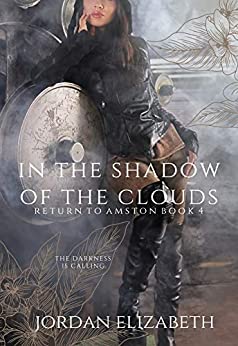
In the Shadow of the Clouds, by Jordan Elizabeth is book 4 in her Return to Amston series, but it works equally well as a stand alone novel. It’s a top rate steampunk adventure with a dash of romance. I’m familiar with the steampunk worlds of this author, and always find her steampunk tales engaging and entertaintaining. (See my review of Runners & Riders, the first book in the series.) This story is no exception.
For Bianca, life hasn’t been easy. After being ignored by her indifferent mother, being turned out into the streets by the madame of the brothel where her mother makes her living, and being sold off by her grandparents to be the bride of an oppressive man, it is no wonder she trusts no one and feels as if there is nowhere where she really belongs. But when her husband dies unexpectedly, she inherits his airship company and sees a way to provide a living for herself, if she can straighten out the mess he left it in. And she’s just headstrong enough to do it with the help of her handsome young pilot.
Charlie hired on as pilot in hopes of one day regaining the air ship company, which once belonged to his family, who were killed by cloud pirates when he was just a boy. He flies every trip with an eye out for an opportunity to exact revenge on those who attacked his family’s air ship so many years ago. He denies the feelings developing for his boss, but when cloud pirates capture Bianca and Charlie rescues her, he learns what truly happened to his family and why, he gets an unexpected surprise that could change his entire life.
In the Shadow of the Clouds is an exceptional YA tale of young romance and adventure. Thoroughly entertaining. This is one of those stories that leaves you smiling. I give it five quills.
In the Shadow of the Clouds is available on Amazon.
Kaye Lynne Booth does honest book reviews on Writing to be Read in exchange for ARCs. Have a book you’d like reviewed? Contact Kaye at kayebooth(at)yahoo(dot)com.
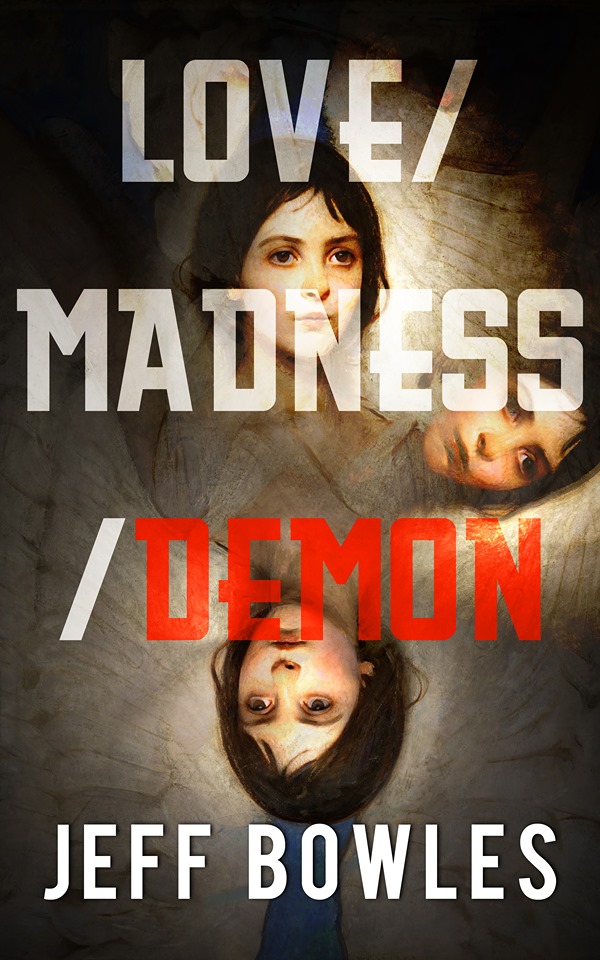
Love/Madness/Demons, by Jeff Bowles might make you question everything you ever thought you believed or disbelieved. This fictional tale was inspired by true life experiences. Are there forces at work that steer our destiny? Is life just a matter of predetermined fate? Does freewill even play a part in our lives? These are questions I’m sure we’ve all pondered at one time or another, and this tale of eternal love and betrayals will bring them once again to the forefront of the reader’s mind.
Arthur and Madeline are twin flames, soul mates, who have encountered each other again and again through many different lifetimes, and are destined to be together once more in this life. Arthur believes he’s in love with Madeline, and it makes no difference that he is married to Allissa, whom he once thought that he loved, and maybe still does. But, stalking his soul mate has not been effective in convincing her to leave her husband, Stuart, and his bizarre behavior lands him in a mental hospital. Is he losing his mind or are the voices that he hears really there? Why does the voice of Madeline tell him to do things that can only succeed in away everyone he cares for?
Madeline is happily married to Stuart, and although she has a fondness in her heart for Arthur, whom she met in college, she doesn’t understand his behavior any more than Arthur’s wife does. She turns her strange experiences with Arthur into a story, with fictiona; characters, whom it seems, have all crossed over into reality and want her dead.
The reader is given some insight, with glimpses into the dimensions of the divine, so we know that Arthur and Madeline are indeed being influenced by higher powers who aren’t necessarily out for their best interests. Destructive forces threaten to destroy their lives and all that they care about, and they are helpless to stop the events which have been put into motion. Or perhaps, they are the only ones who can stop it.
An intricately woven story of heaven and hell and the earthly realm in between, Love/Madness/Demon will keep the pages turning as the story of Madeline and Arthur and their connections to one another unfolds, and the forces of evil turn up the heat. I give it five quills.
Kaye Lynne Booth does honest book reviews on Writing to be Read in exchange for ARCs. Have a book you’d like reviewed? Contact Kaye at kayebooth(at)yahoo(dot)com.
The phrase “summer movie season” has a totally different meaning this year, doesn’t it? Point of fact, there really isn’t one. For the most part, cinemas have shut down all over the world, but that doesn’t mean people aren’t still watching movies at home. Maybe it’s old favorites with your Netflix subscription. Just chilling on the couch with your family, windows open to cool the house after a hot summer day … doing whatever it is people are doing to stay the heck away from Coronavirus.
Don’t worry. I’m not judging. I’ve literally forced myself to watch the entire Skywalker Saga on Disney+ four times. That’s a lot of lightsaber fights. A lot of them.
So here’s the deal. Writing to be Read is primarily a book blog. We talk about writing, literacy, try to keep you up to date on stuff you might want to read, and there’s room for some offhand conversations here and there as well. Normally, this time of year brings us a deluge of film releases, many of which are based on bestselling books (assuming you don’t get pelted by Marvel and DC before you make it to the popcorn stand). Now that the only real new releases are coming via the timely advent of at-home video streaming, pickings are slim, but I’ve come to you today to discuss a new movie based on a bestseller that is … well, let’s just say it’s more pop culture spiritual life coach than YA dystopia or gritty crime thriller.
The Secret, a book that teaches readers about the Law of Attraction, released in 2006 and summarily took the world by storm. It was later turned into an equally popular documentary, and eventually, a full-range self-help empire of near Tony-Robins-like proportions.
For those unfamiliar, the core teaching of The Secret is that we can have anything we want, as long as we keep a positive mental attitude, focus on desired outcomes rather than undesired ones, and basically have faith that the universe will provide exactly what we want, if perhaps not in the way we expect it. Plenty of people say it’s silly, ludicrous, wishful thinking, but there are many, especially in the New Age spiritual community, who hold The Secret as gospel.
Back in 2006, a bright and shining period in time compared to how 2020 has felt so far, the notion seemed plausible and exciting. After all, isn’t it determination and perhaps something outside ourselves, call it luck or grace or even the divine, that brings things into our lives right when we need them most? But then don’t bad things happen to us, too? And isn’t it cruel to blame people for their misfortunes by insinuating a negative mindset brought it to them?
Well, maybe. But that doesn’t stop the machine from churning. Now, with our movie theaters shuttered and barren like ghost towns, the international self-help brand The Secret has produced a feature film: The Secret: Dare to Dream. It’s a real Hollywood flick. It’s got movie stars, a genuine movie script, pretty yet bland domesticized locations. What it lacks, however, is the basic knowledge that pop spirituality, proselytization, and popcorn entertainment kinda don’t mix.
In recent years, there’s been a resurgence, a kind of renaissance, in Christian filmmaking. God’s Not Dead, The Case For Christ, I Can Only Imagine, these are movies of moderate budget, moderate expectations, that hit their audience and generally seem to work for them. The Secret: Dare to Dream is interested in riding in on a similar horse, although with a little veiled new agey-ness to go along with it.
Regardless of what you believe, surely you must admit that when entertainment becomes preachy it’s just not as, well, entertaining. And Dare to Dream does become preachy. Pretty darn quickly. That’s the whole point, right?
Miranda Wells (Katie Holmes) is a single mom and local restaurant manager who could seriously use a new house and a more positive outlook on life. When she literally runs into a guy called Bray (Josh Lucas) and damages the front fender of her van, Bray turns into mister fix-it, and as far as the filmmakers are concerned, enters the action specifically to transform Miranda’s life using the Law of Attraction. There’s more plot happening here than that, of course. There’s a superstorm, a hell of a lot of home damage (which Bray also volunteers to fix), and something of a love triangle.
Katie Holmes and Josh Lucas in The Secret: Dare to Dream
I’m assuming people who are interested in this movie already believe in the Law of Attraction. Here’s a little “secret” for you. I sort of do, too, though the miraculous and unbelievable circumstances that tie Dare to Dream’s plot together have certainly never happened in my conscious daily experience. Still, I do believe in miracles, and I certainly believe our focus determines our reality. But some readers of The Secret have complained over the years that the book is way too dreamy. And you know what? This stuff is supposed to be ancient esoteric wisdom anyway, so what the hell is it doing in my Josh Lucas romance?!
That’s right, I forgot to mention Dare to Dream has love on the brain, and it takes a halfway decent stab at it, too. Not a total fail as a romance. Only problem is that educational tone, that preachiness, it pervades the entire proceedings. It’s clear that the negative people in the movie are on the wrong end of things, and it’s also clear this Bray fella is the proverbial music man of their lives, barging in and singing his song, improving everything with the utmost maximum charm at his disposal. Which is a lot of charm, as you can imagine.
Simple, right? Which is exactly what The Secret says about changing your life. In some ways, this is barely a movie, and it really ought to be pondered if books of a pseudo-spiritual nature, self-help-oriented and considered pure pablum by many, has any serious business being turned into a film Amazon wants me to Roku for $20.
I say it does not. But that doesn’t mean faith, positivity, and focus and determination are bad for us or don’t belong at the center of our popular storytelling. It’s just that transparent allegory—and trust me, this is the most transparent allegory you’ll ever find—turns people off. At least The Secret: Dare to Dream makes no bones about what it is.
I’m just waiting for the Deepak Chopra/Eckhart Tolle mashup superhero movie coming next year. It’ll be explosive. Or completely at peace. Depends on your point of view.
Jeff’s Movie Reviews gives The Secret: Dare to Dream a 6/10
Jeff Bowles is a science fiction and horror writer from the mountains of Colorado. The best of his outrageous and imaginative work can be found in God’s Body: Book One – The Fall, Godling and Other Paint Stories, Fear and Loathing in Las Cruces, and Brave New Multiverse. He has published work in magazines and anthologies like PodCastle, Tales from the Canyons of the Damned, the Threepenny Review, and Dark Moon Digest. Jeff earned his Master of Fine Arts degree in creative writing at Western State Colorado University. He currently lives in the high-altitude Pikes Peak region, where he dreams strange dreams and spends far too much time under the stars. Jeff’s new novel, Love/Madness/Demon, is available on Amazon now!
Check out Jeff Bowles Central on YouTube – Movies – Video Games – Music – So Much More!
Want to be sure not to miss any of Jeff’s Pep Talk segments? Subscribe to Writing to be Read for e-mail notifications whenever new content is posted or follow WtbR on WordPress
In March 2020 the world went mad. A new virus called Covid-19 started spreading rapidly among humans and by the end of that month most countries were engaged in a horrible new way of life called lock down. As with many other countries, lock-down in South Africa started with the closure of our schools.
The schools were given a minimum period of four business days to prepare for lock down and, in the case of my sons’ school, a home school programme. Fortunately, their school had seen the way the wind was blowing and had started preparing for a potential closure period earlier in the month. Even so, the teaching staff were not afforded much time to get themselves ready to go completely on-line with teaching.
On Thursday, the 18th of March my sons started on-line learning. It wasn’t badly implemented, despite the short timeline, and they had had Google classroom meetings hosted by their teachers, on-line assignments, YouTube video sessions and a lot of other help with all of their subjects.
At the end of March their school closed for the holiday and the teachers worked diligently to make improvements to the on-line programme. School reopened on the 6th of May and my boys continued with their on-line learning until the closure of the second term on Friday, 31 July. They even wrote examinations for two weeks under lock down conditions.
A few weeks ago, a good blogging friend of mine, Jim Borden, a university lecturer wrote this post https://jborden.com/2020/07/19/can-what-you-do-be-replicated-by-technology/. One of the questions he asks in this post is the replacement of teachers by Artificial Intelligence (“AI”) and on-line learning likely. A most interesting question, especially in light of the current scenario where millions of children have all been testing out this theory. So what do I think after my 11 week baptism of hell with home schooling? Does it make sense to replace teachers with AI?
My answer is a resounding NO! There are some advantages to an on-line learning programme. It would be much cheaper. There would be no need of large buildings to accommodate students and all the related furniture. There would be no need for cleaners, caterers and caretakers.
It would also be easier, I wouldn’t need to sit in traffic every day taking them to and from school.
It would also be far less time consuming as there would be no distractions in the form of socialising, team sports, individual sports, debating, chess, clubs and the numerous other things that fill up a child’s school day. It has also been proven statistically that children retain more information that they learn through on-line learning than in a classroom [personally, I’m not completely convinced about the correctness of this particular statistic].
So why then don’t I believe teaching works as well on-line as in the classroom?
I believe that all children, from the youngest to the oldest in our school system, need the human interaction with a teacher and their peers in order to stay emotionally balanced and motivated. People are social animals and they find isolation very difficult. My younger son has told me repeatedly that he misses his friends and the routine of the school day.
Even my older son, who is highly motivated and diligent has found it difficult to stay focused and disciplined during the lockdown period. The lack of routines and contact with other learners and teachers makes it feel a bit purposeless, even if it isn’t.
I also believe the children learn a lot from socialising. Working and life isn’t all about output and sitting at a computer on your own all day. It is about learning to work in teams and motivate others to deliver to deadlines. It is also about brain storming and working together to problem solve. These are all life skills that you cannot learn alone in front of your computer.
I am not going to go into the benefits of sport and extra curricular activities here, but they are numerous and the lack of these past times over the past five months has been has been very trying for children, and adults too.
Of course, there are also the other more basic issues that make on-line learning difficult. Many children lack access to the technology required for on-line learning, including a reliable internet and a computer. No everyone has these, but even if they did, it would not change my view on the relevance of teachers and teaching in a physical situation.
What do you think? Do you think teachers could be replaced by AI and on-line learning programmes? Has your view on this changed over the past few months? Let me know in the comments.
I made a Covid-19 memories cake recently which caricatured the nursery rhyme, The Old Woman Who Lived in a Shoe. I created a young mother with a washing basket full of clothing outside her shoe home. Her many children are all sitting, socially distanced, home schooling. They all have laptops and headsets.
Old woman and her home schooling childrenHere is a close up of the home schooling children
About Robbie Cheadle
Hello, my name is Robbie, short for Roberta. I am an author with seven published children’s picture books in the Sir Chocolate books series for children aged 2 to 9 years old (co-authored with my son, Michael Cheadle), one published middle grade book in the Silly Willy series and one published preteen/young adult fictionalised biography about my mother’s life as a young girl growing up in an English town in Suffolk during World War II called While the Bombs Fell (co-authored with my mother, Elsie Hancy Eaton). All of my children’s book are written under Robbie Cheadle and are published by TSL Publications.
I have recently branched into adult and young adult horror and supernatural writing and, in order to clearly differential my children’s books from my adult writing, I plan to publish these books under Roberta Eaton Cheadle. My first supernatural book published in that name, Through the Nethergate, is now available.
I have participated in a number of anthologies:
Two short stories in #1 Amazon bestselling anthology, Dark Visions, a collection of horror stories edited by Dan Alatorre;
Three short stories in Death Among Us, an anthology of murder mystery stories, edited by Stephen Bentley;
Three short stories in #1 Amazon bestselling anthology, Nightmareland, a collection of horror stories edited by Dan Alatorre; and
Two short stories in Whispers of the Past, an anthology of paranormal stories, edited by Kaye Lynne Booth.
I also have a book of poetry called Open a new door, with fellow South African poet, Kim Blades.
Want to be sure not to miss any of Robbie’s “Growing Bookworms” segments? Subscribe to Writing to be Read for e-mail notifications whenever new content is posted or follow WtbR on WordPress.
I dropped the ball. I did. It’s true. Many of you may have noticed that posts by me have been virtually non-existant the past couple of months, including regularly scheduled book reviews, theme posts and author interviews, as well as my “Chatting with the Pros” monthly series. I’m sure you’ve all been in a spot at one time or another, when you’ve been completely overwhelmed by responsibilities and obligations. That has been me for the past few months. Me, I’m a go-getter. I set a goal and bulldog my way to it, when need be. I have a habit of taking on many projects simultaneously, but I also follow through on what I start.
But, circumstances often change and unforeseen burdens may be laid upon our shoulders when we least expect it, and we find ourselves juggling more than we can handle. Or at least, I have. Between work, school, my writing and promotions, and personal responsibilities, it seemed more than I could accomplish and something had to give. Actually, I pushed it to the limit until just about everything gave and I was spinning my wheels and getting a lot of nothing done.
I may have dropped the ball, but I’m anticipating the results when it splashes. Sometimes a big splash just makes a mess that needs cleaning up, but a placed splash can water and nourish the surrounding vegetation. Certainly, the regular schedule for Writing to be Read has been disrupted, and the monthly genre themes have gone out the window. I know I have authors I was scheduled to interview who are probably wondering what happened, whom I need to contact. There is some mess to clean up here. But you see, a big splash can be a good thing. That’s why I’m developing a plan, postponing graduation, and re-inventing, or at least making alterations to the WordCrafter brand, including Writing to be Read.
That’s where you come in. I need your help. As I consider various changes, I need to know how my readers would likely respond to them. Please take them time to respond to any or all of the following questions in the comments.
What types of posts do you enjoy most on Writing to be Read? Author interviews, commentaries, book reviews?
If I made Writing to be Read a paid blog plan, would readers be willing to help pay for the site on a donation basis? Would you be willing to subscribe for a small fee?
Would there be interest if I made the “Chatting with the Pros” series into a podcast? Or do you prefer written interviews such as those currently featured here?
Would you like to see more author and poet interviews? More book or screen reviews? A blog series on screenwriting?
Which monthly blog series is your favorite: “Chattting with the Pros”, “Words to Live By”, “Growing Bookworms”, “Jeff’s Movie Reviews”, “Craft and Practice”, “Treasuing Poetry”, “Mind Fields”, or “Arthur’s Visual Media Reviews”?
As you might guess from the above, there are changes coming for Writing to be Read and for WordCrafter. I’ve got a great team of bloggers, whom I can always count on, and their posts are all that has kept WtbR going these past few months. My thanks go out to Robbie Cheadle, Jeff Bowles and Art Rosch for providing great content and keeping things rolling during the absence of content from me. As always, you’ll be seeing the scheduled segments from the Writing to be Read team members, even if my posts may still be a little sketchy for a while. Stay tuned for updates and please, be patient. If I can make it all work together, I think it will be worth the wait.
Like this post? Let me know in the comments. You can be sure not to miss any of Writing to be Read’s great content by subscribe to e-mail or following on WordPress. If you found this content helpful or entertaining, please share.
The first Wednesday of every month, writer Jeff Bowles muses on life, creativity, and our collective destinies as makers of cool stuff. You’re a writer, but have you ever thought about how or why? Here are some words to live by.
BE HERE NOW (Sanity for the Modern Writer)
What does a successful writing career look like to you? Have you ever thought about it? Do you believe you need one in order to call yourself a real writer? It may seem like a foreign notion to you, but many burgeoning authors won’t even acknowledge their favorite creative pastime in a serious way until they’ve sold a few short stories, picked up that dream book contract, or collected enough poems to turn into a collection.
I was like that when I was just starting out. I never gave myself credit for doing the work. In general I have this problem, as I understand it. People are always mystified by my apparent inability to cut myself slack. I refused to call myself a real writer until I’d made my first professional-level short story sale. That took seven years, and the funny thing is, it didn’t make me as happy as I thought it would. Oh sure, I was ecstatic for about an afternoon. But then things went back to normal, and a feeling of unease crept over me, the subtle realization that although I’d finally arrived at my destination, I hadn’t moved an inch.
In the last few years, I’ve experienced something of a paradigm shift when it comes to these things. You see, I finally had to admit to myself that no matter how many accolades I could garner, no matter how many times I saw my name in print, the writing itself often made me feel miserable, worn-out, and sometimes, just plain fed-up.
Do you have this same issue? Never give yourself credit for a job well done? Do you feel like a bit of a failure because you haven’t managed to reach your major writing goals yet? Trust me, you aren’t alone. You know the grass is always greener, don’t you? Imagine wandering into that other pasture, that creative promised land you cherish so dearly, only to find weeds and impassable thicket. Yes, you should make and maintain goals, because of course, you might not accomplish anything at all otherwise. And yes, each of us should dare to dream. I can’t stress that enough. Dreaming isn’t the problem. It takes a great beaten child of an adult to believe dreams are for fools.
But why dream if you’re only going to use it as a benchmark for your future happiness? Let’s say you’ve been writing off and on for twenty-five years, and you’ve yet to publish anything important. From the outside looking in, it may appear as though you wasted all that time. Your friends and family may not take your dreams seriously, or even worse, they may openly mock or criticize you for them. First off, if this is the case, you really owe it to yourself to find some new friends. Secondly, how do they know you didn’t enjoy every last second of those “wasted” twenty-five years? How do they know you didn’t have the time of your life, and in fact, wouldn’t trade a second of it for all the gold in Fort Knox?
The truth of the matter is if you can’t be happy with your work now, odds are you won’t be happy later. I mean that. Seeing your name in print will give you fleeting pleasure, but the more you see it, the less it’ll impress. You’ll have to trust me on this, and I’d like you to read this next part very closely, nothing you do in this life will make you happy if happiness eludes you here and now. Signing copies of your latest book or being able to share a cool story with the world via a very impressive and illustrious magazine or anthology, all of that is super cool. But after the proverbial new car smell wears off, you may feel a startling sense of anxiety and emptiness. Especially once you realize, aw hell, now I have to do it all over again.
Like I said, dreaming isn’t the problem. Expectations, however, will kill you every time. Because human beings often believe they cannot be happy until and unless something specific comes their way. I can’t be happy until I’ve found the love of my life. I can’t be happy until I buy my family a new house. I can’t be happy until I’m a bestseller. It’s always the destination that drives us. We so very rarely seem interested in the journey to get there.
Do me a favor the next time you sit down to write. Take your seat, open up your laptop (or grab your pen and paper, if you’re old school) and just sit there. Close your eyes if you’re so inclined. Be present in the moment, don’t think about the work ahead as a chore or a means to an end. Think of the work as the end itself. You are alive right now. Miracle enough for anyone with their priorities straight and their sanity intact. From the infinitesimal outer regions of statistically impossible microspace, you have arrived in all your glory. You’re breathing right now. Your butt is firmly planted in that chair, and you, my friend, are about to lay down some of the best writing of your life.
You can approach this moment as the incredible phenomenon it is. You can set your fingers to the keyboard and put one word after another, and you can experience an act of personal, almost spiritual fulfillment. Not because you expect this piece of writing to set the world on fire, but because for you, this passion, this instant, it’s all there is.
Be here now, as they say. The future will take care of itself, and as for the past, let’s just say ruminating on it too much is a recipe for disaster. No, now is all you have, and now is all you need. Dance like no one’s watching. Remember that many successful authors suffer from what we call impostor syndrome, which is a real shame if you ask me. What is a writing impostor? I mean really, what is one? A writer, set in terms even a chimpanzee could understand, is someone who writes. It’s as simple as that, isn’t it?
You’re not an impostor. You’re not anything more or less than the writer doing the thing, writing, and writing, and writing some more. And that truly is enough, no matter where you find yourself in terms of success or recognition or even money. Great pleasure and joy can be found in the simplest things, and though I’d never call writing a simple activity, profession, pastime, hobby, loving and fond nuisance, or obsession, the truth is—and you know this deep down in your heart of hearts—no outside thing, no future goal, no perfect outcome will give you the satisfaction you’re looking for.
If not now, when? If not now, when? If not now, when?
Slow down for a moment. Consider how lucky you are, how fortunate, how present and aware and full of life, and then go ahead and rock it out, lay down those beautiful words. I won’t keep you. You’ve got important and timely truths to express, new worlds to birth and share with us, and if you don’t do it, who will?
Until next month, everyone. I hope you can see the value of letting the present be, just be. You may never accomplish your goals, live your dreams, be anything more subjectively impressive than you are right now. But should it matter? Or should you simply learn to love yourself, your work, your creativity, now, now, now?
Peace! Joy! And don’t forget to proofread!
Jeff Bowles is a science fiction and horror writer from the mountains of Colorado. The best of his outrageous and imaginative work can be found in God’s Body: Book One – The Fall, Godling and Other Paint Stories, Fear and Loathing in Las Cruces, and Brave New Multiverse. He has published work in magazines and anthologies like PodCastle, Tales from the Canyons of the Damned, the Threepenny Review, and Dark Moon Digest. Jeff earned his Master of Fine Arts degree in creative writing at Western State Colorado University. He currently lives in the high-altitude Pikes Peak region, where he dreams strange dreams and spends far too much time under the stars. Jeff’s new novel, Love/Madness/Demon, is available on Amazon now!
Check out Jeff Bowles Central on YouTube – Movies – Video Games – Music – So Much More!
Want to be sure not to miss any of Jeff’s “Words to Live By” segments? Subscribe to Writing to be Read for e-mail notifications whenever new content is posted or follow WtbR on WordPress. If you found this useful or just entertaining, please share.
When I watch a movie from the Marvel Comics empire I have to remind myself NOT to view this material with an adult mind. It’s better to watch with minds like those of my grandchildren, aged ten and thirteen.
Last night we watched “Ant Man And The Wasp”. My grandkids loved it. I endured it. Marvel movies are bloated with filler, that is, every “BOP! POW! And WHAM!” takes up screen time and makes for a longer film. Each mighty punch sends characters toppling end over end until they land with such force that their booties excavate the pavement or shatter all the windows in an office building. Such destruction! Miraculously, no one is crushed by the falling buses or lethal shards of sky scraper glass. unless that injury is an important plot device. Otherwise, the hordes of innocent bystanders are blessed with hair’s-width escapes from catastrophe.
It seems to me that good writers are those who go the extra mile. Lazy writers are those who go right up to the mile before the EXTRA MILE, then dust their hands together and stop. That’s what’s frustrating about Marvel movies. The producers know that they can inject a liberal amount of fake fighting and harmless destruction into the script. How much? Fifteen minutes? Twenty? Maybe half an hour of combat-without-consequences?. IF (and we are) raising children with this stuff establishes a dangerous idea, that is, “THERE ARE NO REAL CONSEQUENCES”. There are just provisional outcomes that can always be changed by using a time machine or some deus ex machina, some easy way out. Kids absorb this data hungrily and without critical thinking. They love the bop!bam! stuff and don’t seem to be frustrated by the relative emptiness of the script.
“Ant Man And The Wasp” deals with some heayy concepts, like the world of Quantum Mechanics, the realm of the minute sub-quark particles. The visuals are pretty amazing in their depictions of these mysterious areas. “Someone” I thought (but did not speak aloud) has been smoking some DMT or ingesting psilocybin.”. I took a few moments to explain Quantum Mechanics to my grandkids. They’re super-bright little people who are inherently more evolved than I am. But they’re still kids. I have to tell myself to chill; watch the Marvel Universe with a clear mind and just have fun. The kids understood my explanation of quantum reality as “part of a continuum, from the mighty sizes of galaxies to the infinitesimal sizes of sub atomic particles. BUT..if you live in any of these places then it all looks normal-sized to you and your friends”. Right? Right.
A few minutes ago my grand-daughter came into my office and asked “Whatcha doing, Poppa Art?” I said that I was writing a review of the movie we saw last night. I explained my point of view and she seemed to grasp that a world in which no one REALLY dies is a bit fatuous. I explained that Marvel’s tactics remove the real terror from their productions. We all know that none of the heroes will die. That there’s always some last-minute rescue, or the sequel will resuscitate the seemingly annihilated people.
Haven’t our movies and TV shows always been like this? The soft-peddle American media archives are full of plots with happy endings. The hero always triumphs; the frustrated couple always get their passionate kiss. Yeah, it’s always been like this but in 2020 we are seeing the maturation of world-shaking technology that is changing the tenor or our lives from the ground up.. There’s more technology, more ways to soften the blows of so-called REALITY. As if to compensate, REALITY amps up the blows, grows more furious with each passing year.
For my grandkids, I fear that reality has never been less real.
The soundtrack of “Ant Man And The Wasp” brings a relentless rhythmic figure, a continuous percussive BAH BAH bu BUH BUMP BUMP that induces an excited state in the viewer. It is so pernicious that my sleep was disturbed last night until I got up at around three in the morning and quietly played some Joni Mitchell. THAT was the last thing I heard before returning to bed and snoring away the next four hours. It’s important to understand this level of aural hygiene. The last sounds you hear remain in your head until you hear something else. If you want to sleep, you need to ditch the agitating sounds in favor of something soothing. It works that way for me, anyway.
I explained the thrust of this essay to my granddaughter: that none of the heroes REALLY die and that makes the movies way less scary. I think she grasped my point but I don’t really know. The universes in which we live are so different. We’re family, we’re close but I can’t escape the sense that people live light years apart despite being in the same room.
I’m less worried about the future when I see how these kids cope. Quantum Mechanics? They don’t care; its just something people say that means invisibly tiny stuff, like stuff that makes bacteria look HUGE by comparison!
They get it. They know that bacteria are too small to see, so why not even smaller stuff that makes invisible germs look huge?
If we take care not to squash the imaginations of these grandchildren, they will be better prepared for the turbulent future that is roaring towards them with all of its dangers.
A Midwesterner by birth, Arthur Rosch migrated to the West Coast just in time to be a hippie but discovered that he was more connected to the Beatnik generation. He harkened back to an Old School world of jazz, poetry, painting and photography. In the Eighties he received Playboy Magazine’s Best Short Story Award for a comic view of a planet where there are six genders. The timing was not good. His life was falling apart as he struggled with addiction and depression. He experienced the reality of the streets for more than a decade. Putting himself back together was the defining experience of his life. It wasn’t easy. It did, however, nurture his literary soul. He has a passion for astronomy, photography, history, psychology and the weird puzzle of human experience. He is currently a certified Seniors Peer Counselor in Sonoma County, California. Come visit his blogs and photo sites. www.artrosch.com and http://bit.ly/2uyxZbv.
Want to be sure not to miss any of Art’s “Mind Fields” segments? Subscribe to Writing to be Read for e-mail notifications whenever new content is posted or follow WtbR on WordPress. If you find it interesting or just entertaining, please share.

















The future of education
Posted: August 12, 2020 | Author: robbiesinspiration | Filed under: AI Technology, Commentary, Education, Growing Bookworms, Opinion, Parenting | Tags: Education, Growing Bookworms, Parenting, Robbie Cheadle, Writing to be Read | 64 CommentsIn March 2020 the world went mad. A new virus called Covid-19 started spreading rapidly among humans and by the end of that month most countries were engaged in a horrible new way of life called lock down. As with many other countries, lock-down in South Africa started with the closure of our schools.
The schools were given a minimum period of four business days to prepare for lock down and, in the case of my sons’ school, a home school programme. Fortunately, their school had seen the way the wind was blowing and had started preparing for a potential closure period earlier in the month. Even so, the teaching staff were not afforded much time to get themselves ready to go completely on-line with teaching.
On Thursday, the 18th of March my sons started on-line learning. It wasn’t badly implemented, despite the short timeline, and they had had Google classroom meetings hosted by their teachers, on-line assignments, YouTube video sessions and a lot of other help with all of their subjects.
At the end of March their school closed for the holiday and the teachers worked diligently to make improvements to the on-line programme. School reopened on the 6th of May and my boys continued with their on-line learning until the closure of the second term on Friday, 31 July. They even wrote examinations for two weeks under lock down conditions.
A few weeks ago, a good blogging friend of mine, Jim Borden, a university lecturer wrote this post https://jborden.com/2020/07/19/can-what-you-do-be-replicated-by-technology/. One of the questions he asks in this post is the replacement of teachers by Artificial Intelligence (“AI”) and on-line learning likely. A most interesting question, especially in light of the current scenario where millions of children have all been testing out this theory. So what do I think after my 11 week baptism of hell with home schooling? Does it make sense to replace teachers with AI?
My answer is a resounding NO! There are some advantages to an on-line learning programme. It would be much cheaper. There would be no need of large buildings to accommodate students and all the related furniture. There would be no need for cleaners, caterers and caretakers.
It would also be easier, I wouldn’t need to sit in traffic every day taking them to and from school.
It would also be far less time consuming as there would be no distractions in the form of socialising, team sports, individual sports, debating, chess, clubs and the numerous other things that fill up a child’s school day. It has also been proven statistically that children retain more information that they learn through on-line learning than in a classroom [personally, I’m not completely convinced about the correctness of this particular statistic].
So why then don’t I believe teaching works as well on-line as in the classroom?
I believe that all children, from the youngest to the oldest in our school system, need the human interaction with a teacher and their peers in order to stay emotionally balanced and motivated. People are social animals and they find isolation very difficult. My younger son has told me repeatedly that he misses his friends and the routine of the school day.
Even my older son, who is highly motivated and diligent has found it difficult to stay focused and disciplined during the lockdown period. The lack of routines and contact with other learners and teachers makes it feel a bit purposeless, even if it isn’t.
I also believe the children learn a lot from socialising. Working and life isn’t all about output and sitting at a computer on your own all day. It is about learning to work in teams and motivate others to deliver to deadlines. It is also about brain storming and working together to problem solve. These are all life skills that you cannot learn alone in front of your computer.
I am not going to go into the benefits of sport and extra curricular activities here, but they are numerous and the lack of these past times over the past five months has been has been very trying for children, and adults too.
Of course, there are also the other more basic issues that make on-line learning difficult. Many children lack access to the technology required for on-line learning, including a reliable internet and a computer. No everyone has these, but even if they did, it would not change my view on the relevance of teachers and teaching in a physical situation.
What do you think? Do you think teachers could be replaced by AI and on-line learning programmes? Has your view on this changed over the past few months? Let me know in the comments.
I made a Covid-19 memories cake recently which caricatured the nursery rhyme, The Old Woman Who Lived in a Shoe. I created a young mother with a washing basket full of clothing outside her shoe home. Her many children are all sitting, socially distanced, home schooling. They all have laptops and headsets.
About Robbie Cheadle
Hello, my name is Robbie, short for Roberta. I am an author with seven published children’s picture books in the Sir Chocolate books series for children aged 2 to 9 years old (co-authored with my son, Michael Cheadle), one published middle grade book in the Silly Willy series and one published preteen/young adult fictionalised biography about my mother’s life as a young girl growing up in an English town in Suffolk during World War II called While the Bombs Fell (co-authored with my mother, Elsie Hancy Eaton). All of my children’s book are written under Robbie Cheadle and are published by TSL Publications.
I have recently branched into adult and young adult horror and supernatural writing and, in order to clearly differential my children’s books from my adult writing, I plan to publish these books under Roberta Eaton Cheadle. My first supernatural book published in that name, Through the Nethergate, is now available.
I have participated in a number of anthologies:
I also have a book of poetry called Open a new door, with fellow South African poet, Kim Blades.
Find Robbie Cheadle
Blog: https://bakeandwrite.co.za/
Blog: robbiesinspiration.wordpress.com
Goodreads:
Twitter: BakeandWrite
Instagram: Robbie Cheadle – Instagram
Facebook: Sir Chocolate Books
Want to be sure not to miss any of Robbie’s “Growing Bookworms” segments? Subscribe to Writing to be Read for e-mail notifications whenever new content is posted or follow WtbR on WordPress.
Share this: